IB DP Biology- C3.2 Defense against disease - IB Style Questions For SL Paper 1A -New Syllabus
Question
Which type of cell belongs to the innate (non-specific) immune system?
A. Phagocytes
B. B-lymphocytes
C. T-lymphocytes
D. Helper T-cells
▶️ Answer/Explanation
✅ Answer: (A) Phagocytes
Question
What property of antibiotics makes them effective in the treatment of infectious diseases?
A. They stimulate the production of antibodies.
B. They block metabolic pathways in prokaryotes.
C. They block the metabolic processes in viruses.
D. They inhibit mitosis in eukaryotes.
▶️ Answer/Explanation
Answer: (B) They block metabolic pathways in prokaryotes.
Explanation:
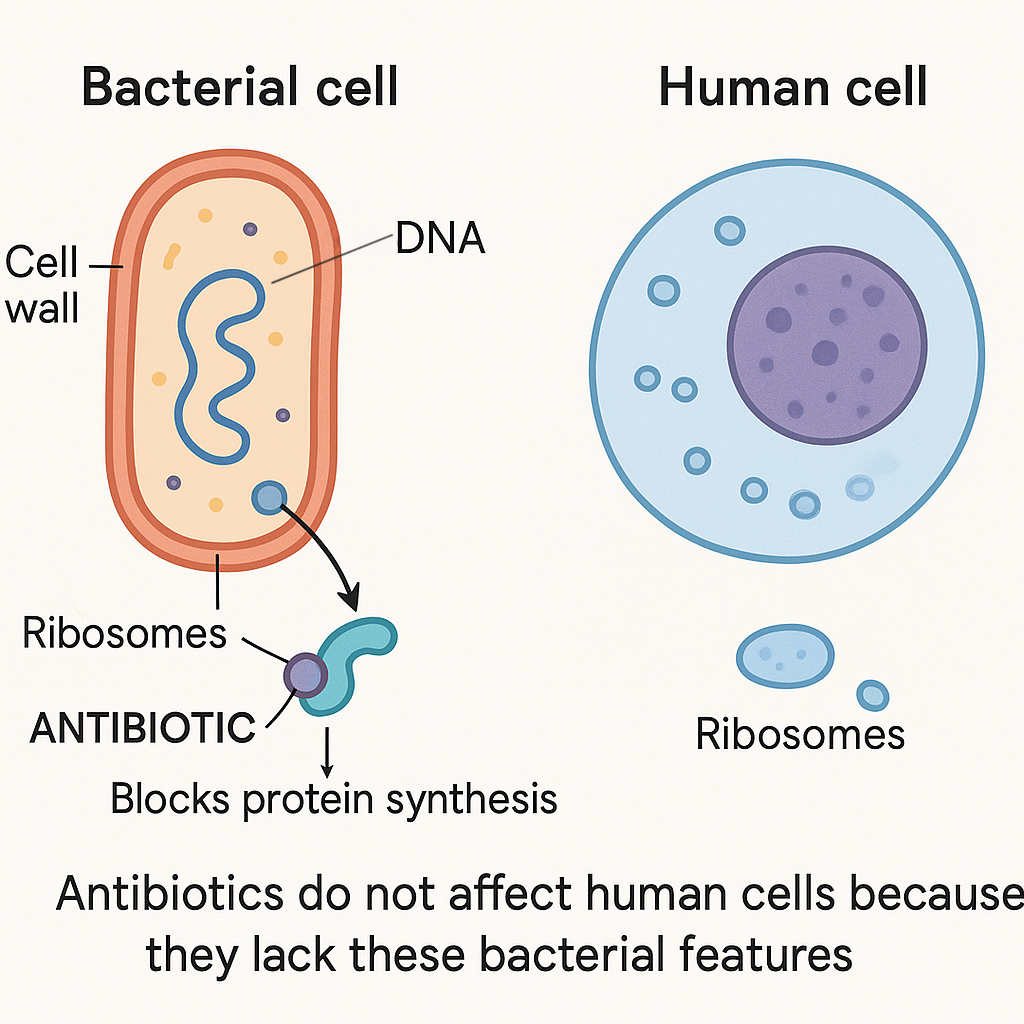
Antibiotics are effective because they selectively target metabolic pathways or cell structures that exist in prokaryotic cells (bacteria) but not in human cells. Examples include:
• Inhibiting bacterial cell wall synthesis
• Blocking bacterial ribosomes to stop protein synthesis
These differences allow antibiotics to kill or stop bacteria without harming human cells.
Option Evaluation:
A. Incorrect — Antibody production is done by the immune system, not antibiotics.
B. Correct — Antibiotics target pathways unique to bacteria.
C. Incorrect — Viruses lack their own metabolic pathways, so antibiotics cannot affect them.
D. Incorrect — Antibiotics do not inhibit mitosis in eukaryotes; that would damage human cells.
✅ Answer: (B)
Question
Which function is primarily associated with helper T-cells in the immune system?
(B) Activation of other cells in the immune system
(C) Antibody production
(D) Retention as memory cells
▶️ Answer/Explanation
Correct Answer: \( \boxed{\mathbf{B}} \)
Helper T-cells release cytokines that activate B-cells, cytotoxic T-cells, and macrophages, coordinating the body’s immune response. They do not directly produce antibodies or carry out phagocytosis.
