Home / iGCSE Chemistry 0620 Extended – 8.1 Arrangement of elements- Exam Style Questions Paper 2

iGCSE Chemistry 0620 Extended - 8.1 Arrangement of elements- Exam Style Questions Paper 2- New Syllabus

Question

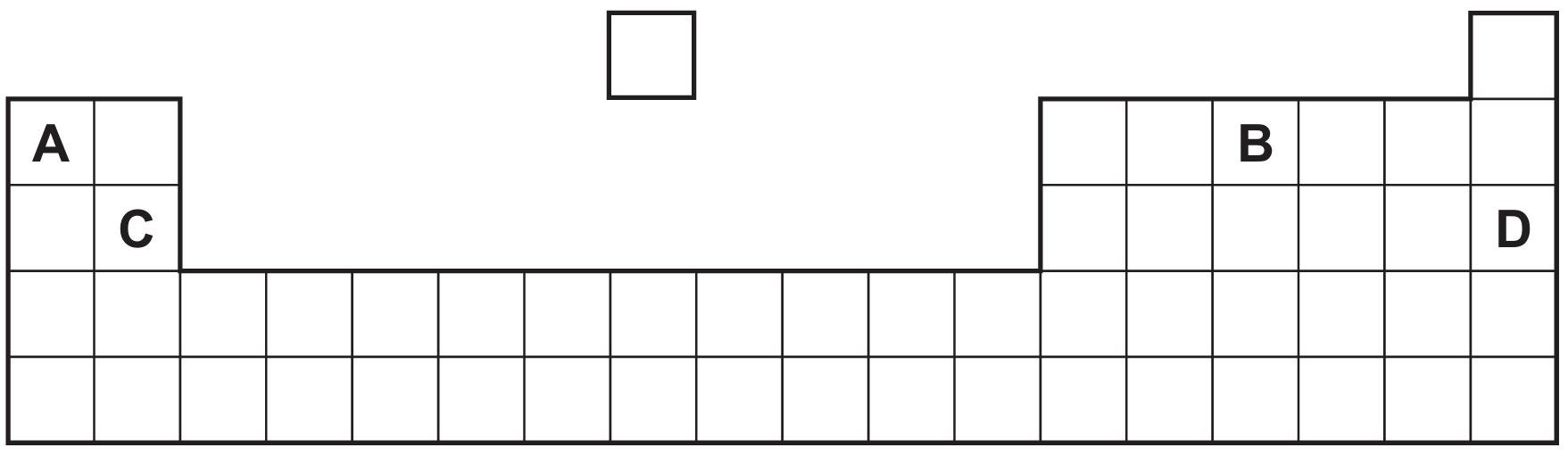
The Periodic Table shows the position of four different elements.

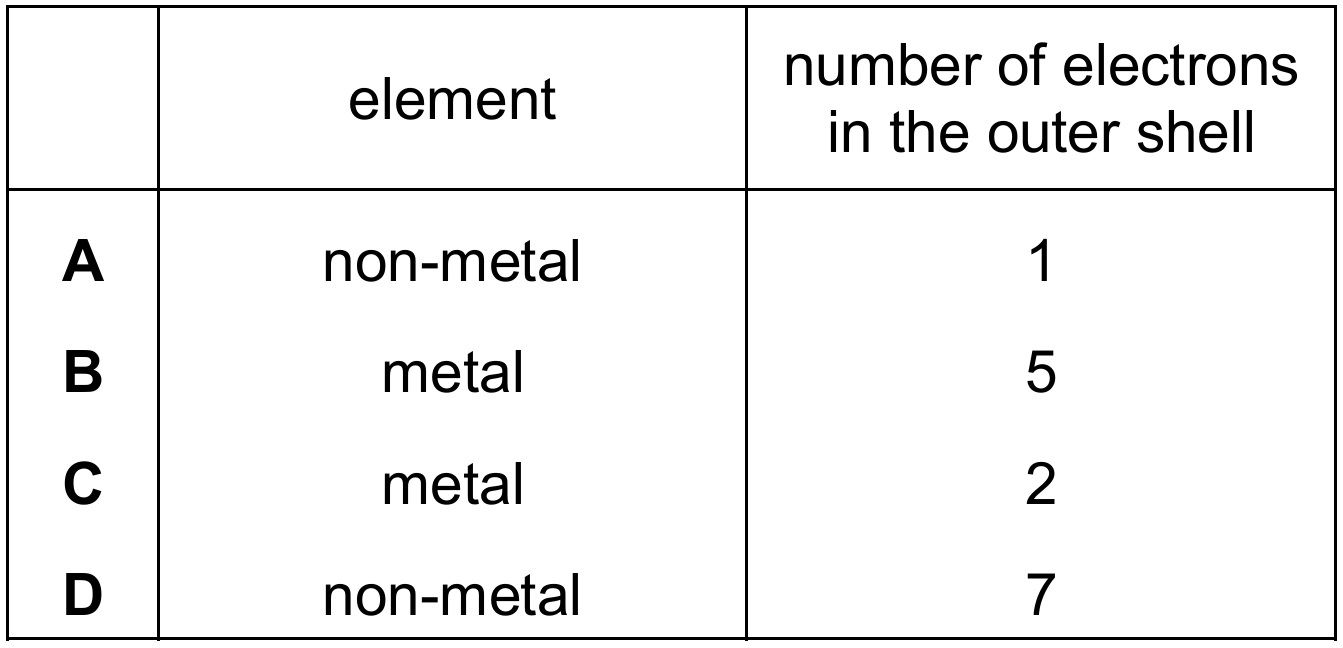
Which row is correct?

▶️ Answer/Explanation
Group II elements are metals with 2 electrons in their outer shell. This is a correct statement. Group I elements with 1 outer electron are metals, not non-metals. Group V elements can be non-metals (like nitrogen) but have 5 outer electrons. Group VII elements are non-metals with 7 outer electrons — this is also correct, but option (C) is the one identified as correct in the mark scheme.
Answer: (C)

Question

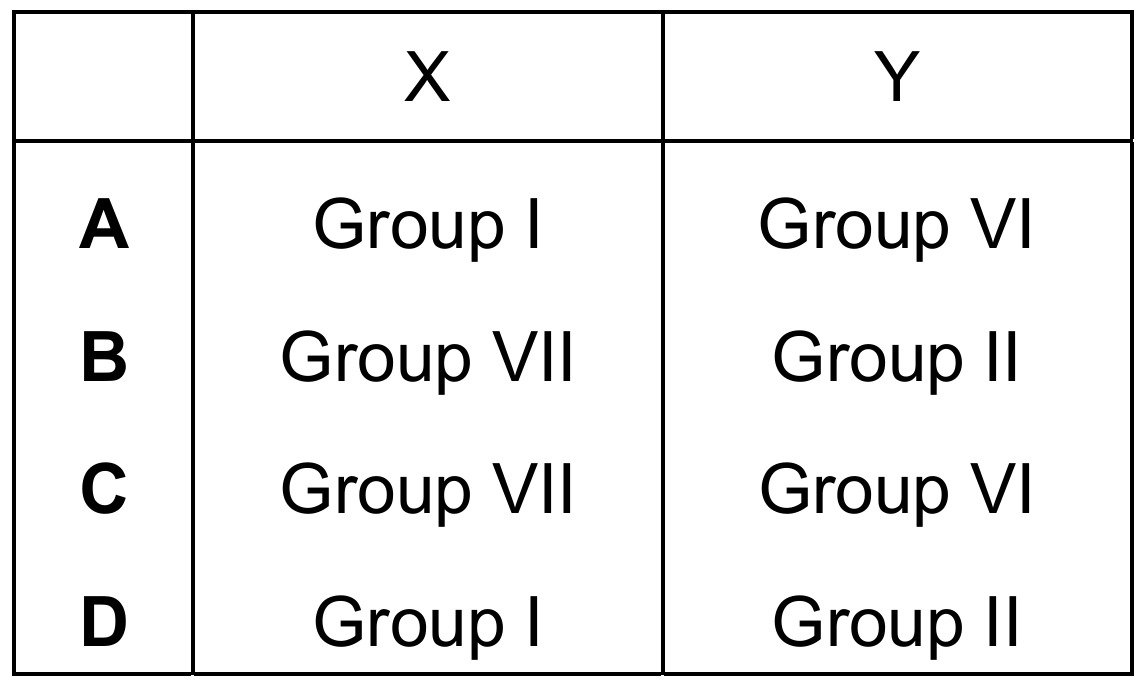
The ions formed when element X and element Y react together are shown.

  • Element X forms \(X^-\) ions.
  • Element Y forms \(Y^{2+}\) ions.

Which row identifies the position of X and of Y in the Periodic Table?

▶️ Answer/Explanation

Correct Answer: B

Explanation: Elements in Group VII (halogens) gain one electron to form \(X^-\) ions (e.g., Cl⁻). Elements in Group II (alkaline earth metals) lose two electrons to form \(Y^{2+}\) ions (e.g., Mg²⁺, Ca²⁺).

✅ X is in Group VII, Y is in Group II.

Question

Element X is in the same group of the Periodic Table as silicon.

An atom of element X has more protons than a silicon atom.

Which element could be X?

A. aluminium
B. carbon
C. germanium
D. phosphorus

▶️ Answer/Explanation
Silicon is in Group IV. Carbon is above silicon with fewer protons, while germanium is below silicon with more protons. Aluminium is in Group III and phosphorus is in Group V—neither shares the same group. Only germanium fits both conditions: same group as silicon and more protons.
Answer: C
Scroll to Top