Home / 0610_m25_qp_12

Question 1

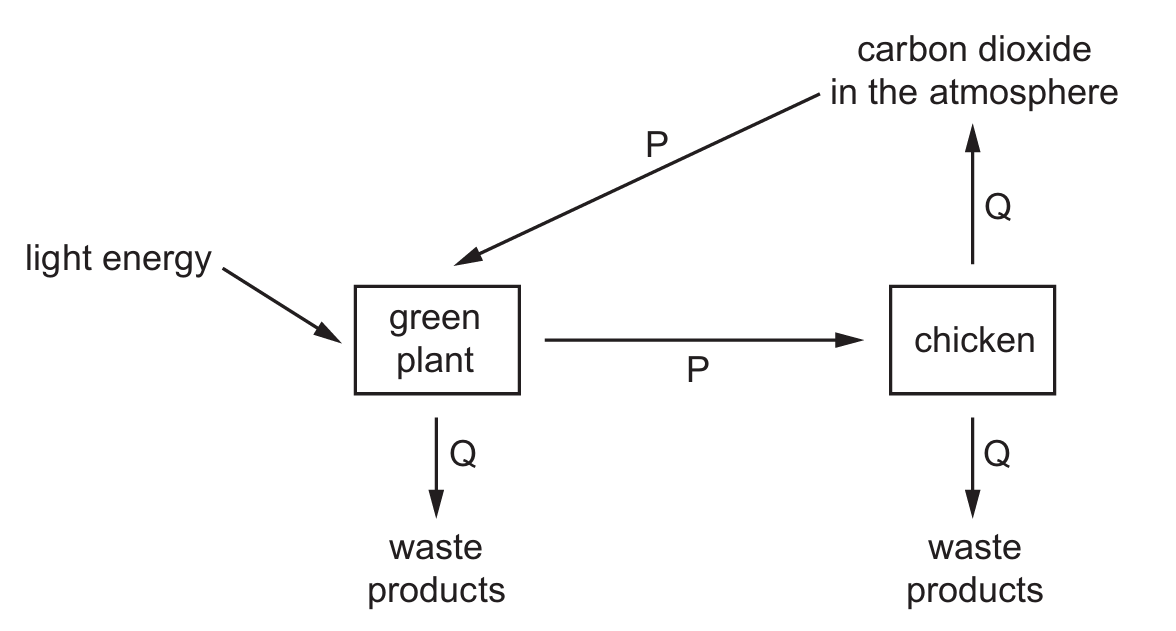
The diagram shows some of the processes carried out by living organisms.
Biological Processes Diagram
Which two characteristics of living organisms are represented by arrows $P$ and $Q$?
A excretion and sensitivity
B nutrition and excretion
C respiration and growth
D sensitivity and reproduction
▶️ Answer/Explanation
Correct Option: B

By observing the flow of the diagram, we can identify the specific biological functions occurring at each label:

1. Identification of Arrow $P$ (Nutrition):
This arrow represents the intake of energy and materials. We see $P$ moving from the atmosphere into the plant (photosynthesis) and from the plant into the chicken (feeding). Both are forms of nutrition.

2. Identification of Arrow $Q$ (Excretion):
This arrow tracks the removal of substances from the organisms. It leads directly to “waste products” and shows the release of $CO_2$ from the chicken. The removal of metabolic waste is the definition of excretion.

Summary:
Since $P$ involves taking in nutrients and $Q$ involves getting rid of waste, option B is the only logical choice.
Question 2

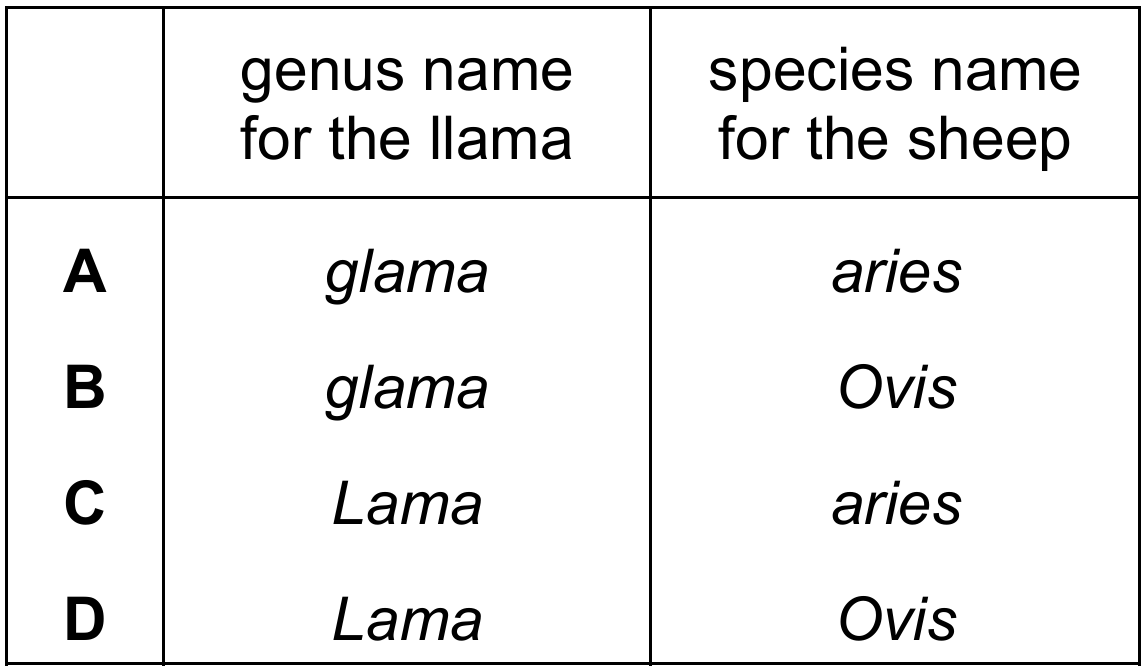
The scientific name for a domesticated llama is Lama glama.
The scientific name for a domesticated sheep is Ovis aries.
What is the genus name for the llama and the species name for the sheep?
▶️ Answer/Explanation
Correct Answer: C

In biological classification, the binomial nomenclature system developed by Carl Linnaeus uses two parts to name every species:

  • The First Name: This is the Genus. It is always capitalized and written in italics (or underlined if handwritten).
  • The Second Name: This is the Specific Epithet (often referred to simply as the species name). It is always lowercase and also written in italics.
Question 3

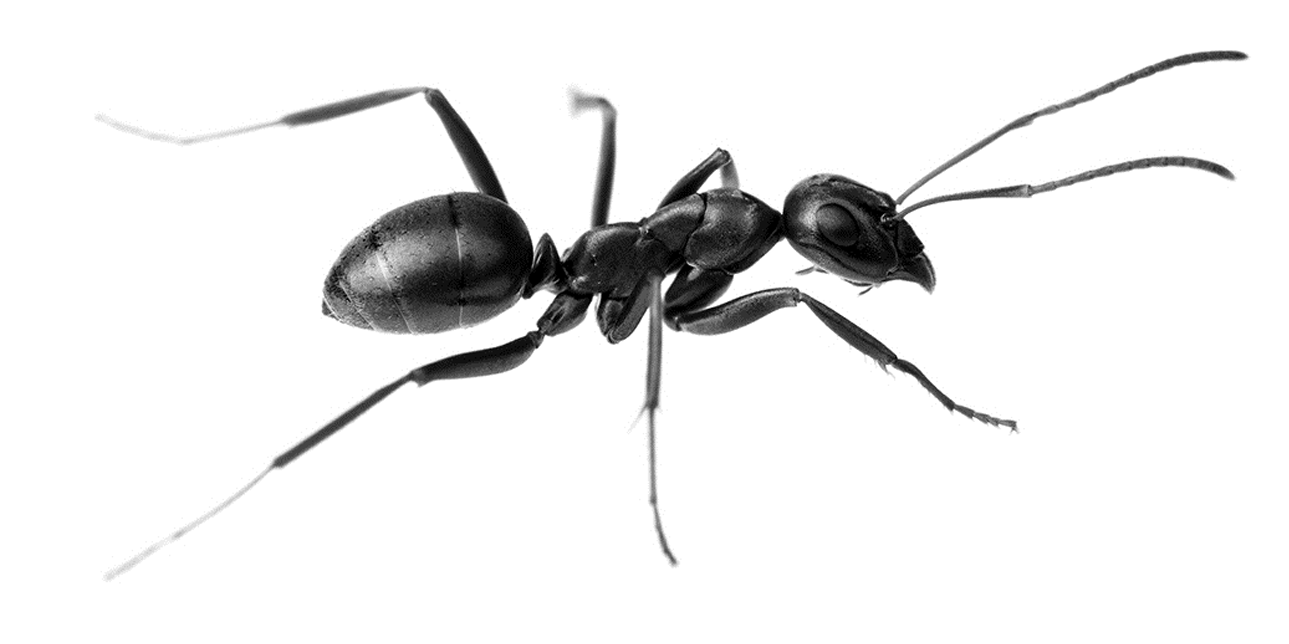
The photograph shows an arthropod, $\textit{Formica fusca}$.
What is the reason for placing $\textit{Formica fusca}$ into the correct group?
  • A It is an arachnid, because the body is in segments.
  • B It is a crustacean, because the legs have joints.
  • C It is an insect, because there are three pairs of legs.
  • D It is a myriapod, because there are two antennae.
▶️ Answer/Explanation
Detailed solution

The correct answer is C.

The organism shown is an ant ($\textit{Formica fusca}$), which belongs to the class Insecta. The defining characteristic that distinguishes insects from other arthropod groups is the presence of three pairs of legs (a total of $6$ legs).
Question 4

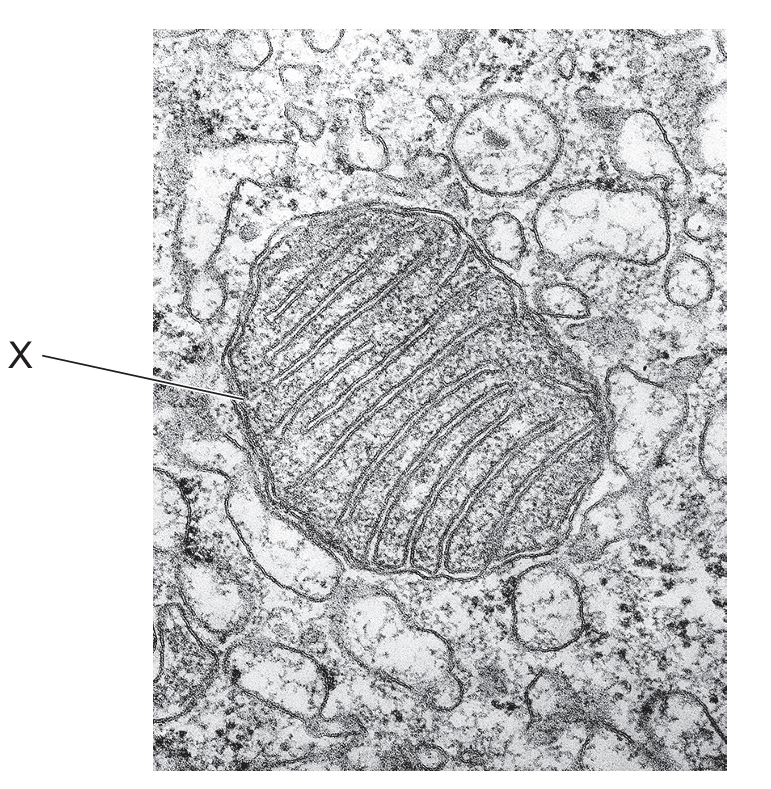
The photomicrograph shows part of an animal cell.
What is the structure labelled \(X\)?
  • A chloroplast
  • B mitochondrion
  • C ribosome
  • D vacuole
▶️ Answer/Explanation
Detailed solution

The correct answer is B.

Identification:
The image displays a transmission electron micrograph (TEM) of an organelle with a distinct double membrane structure. The label \(X\) points to the inner membrane, which is folded inwards to form finger-like projections called cristae. This folded structure is the hallmark characteristic of a mitochondrion. The cristae serve to increase the surface area available for the electron transport chain and ATP synthesis during aerobic respiration.
Question 5

Where are carbohydrates made in a green leaf?
  • A   cell vacuoles
  • B   chloroplasts
  • C   phloem
  • D   xylem
▶️ Answer/Explanation
Detailed solution

Correct Answer: B

Carbohydrates (such as glucose and starch) are produced during the process of photosynthesis. This process takes place within specialized organelles called chloroplasts found in the cells of green leaves.

Question 6

What is the formula for calculating the magnification of specimens?
A   actual size \(\div\) image size
B   actual size \(\times\) image size
C   image size \(-\) actual size
D   image size \(\div\) actual size
▶️ Answer/Explanation
Detailed solution

The correct answer is D.

Magnification is a measure of how much larger a specimen appears compared to its real size. The general formula for calculating magnification is:

$$ \text{Magnification} = \frac{\text{Image size}}{\text{Actual size}} $$

This can also be written as image size \(\div\) actual size.

Question 7

What increases the rate of diffusion of oxygen into a cell?
A   decreasing the concentration gradient
B   decreasing the surface area
C   increasing the diffusion distance
D   increasing the temperature
▶️ Answer/Explanation
Detailed solution

The correct answer is D.

Reasoning:
Diffusion is the net movement of particles from an area of higher concentration to an area of lower concentration. Several factors affect the rate of this passive process:

  • Temperature (Option D): Increasing the temperature increases the kinetic energy of the oxygen molecules. This causes them to move more rapidly and collide more frequently, leading to a faster rate of diffusion into the cell.

Question 8

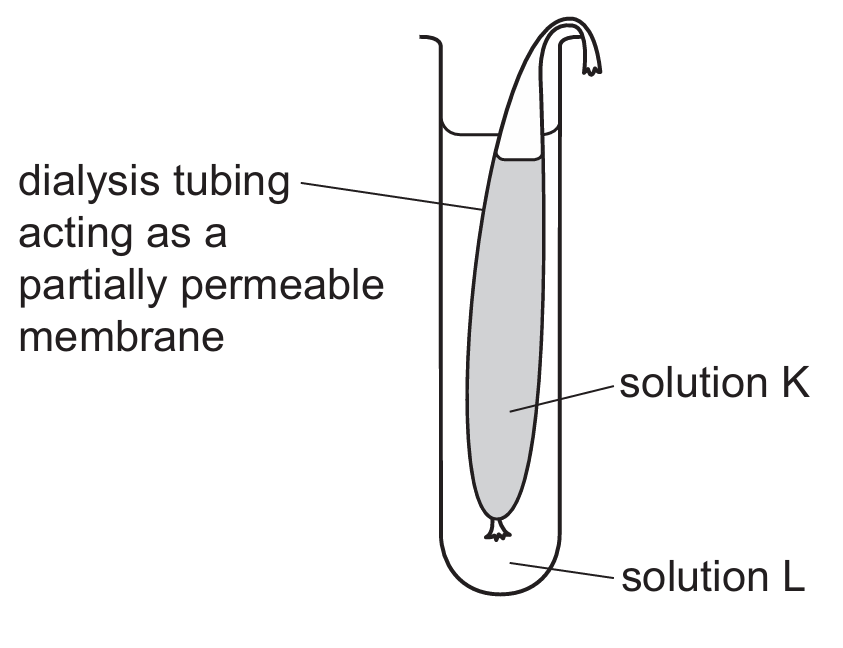
The apparatus shown is used to demonstrate osmosis. 
The mass of the dialysis tubing and contents was \(11.2\text{ g}\) at the start of the demonstration and \(9.4\text{ g}\) at the end.
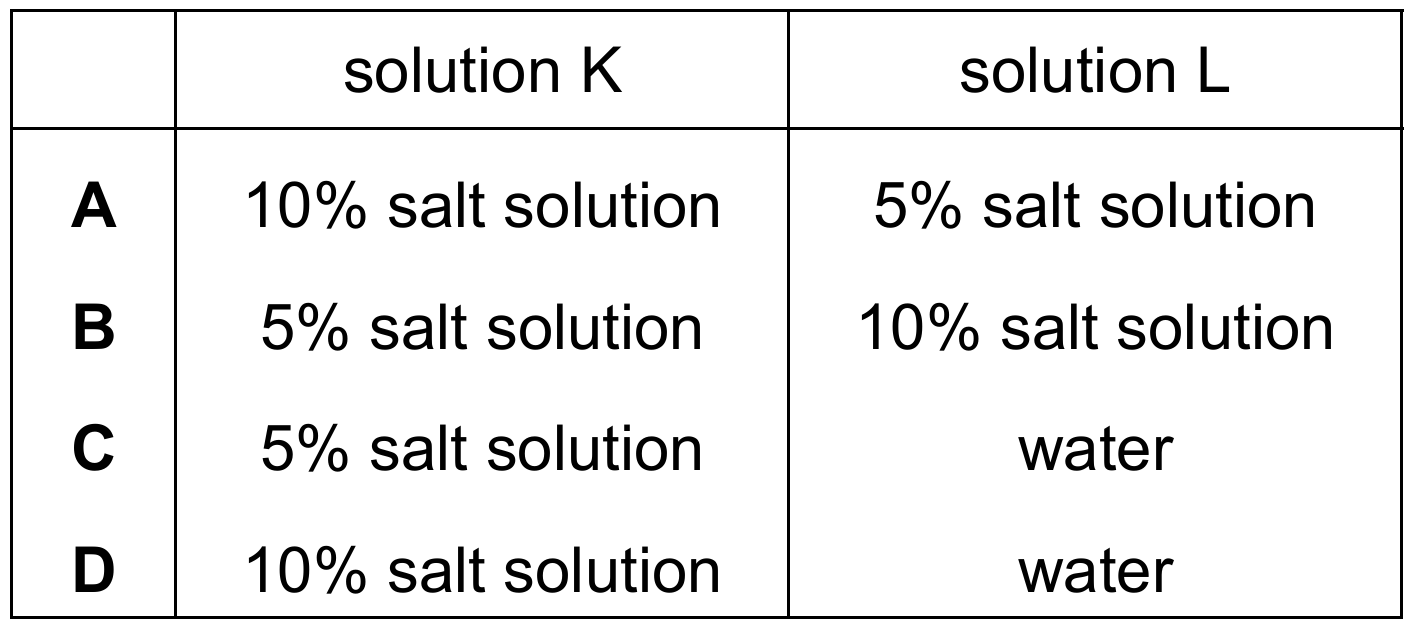
Which solutions would cause this change in mass?
▶️ Answer/Explanation
Detailed solution

The correct answer is B.

1. Analyze the Change in Mass:
The mass of the dialysis tubing decreased from \(11.2\text{ g}\) to \(9.4\text{ g}\). A decrease in mass indicates that water has moved out of the dialysis tubing (Solution K) and into the surrounding beaker (Solution L).

2. Apply the Principles of Osmosis:
Osmosis is the net movement of water molecules from a region of higher water potential (dilute solution) to a region of lower water potential (concentrated solution) through a partially permeable membrane.

3. Determine Concentration Gradients:
For water to leave the tubing, the water potential inside the tubing must be higher than the water potential outside. In terms of solute concentration:

  • Solution K (Inside): Must have a lower salt concentration (more water).
  • Solution L (Outside): Must have a higher salt concentration (less water).
Question 9

A student placed amylase and starch solution in a test-tube.

After some minutes, the student tested samples of the liquid in the test-tube. They recorded the colour of the samples after testing for starch and reducing sugar.

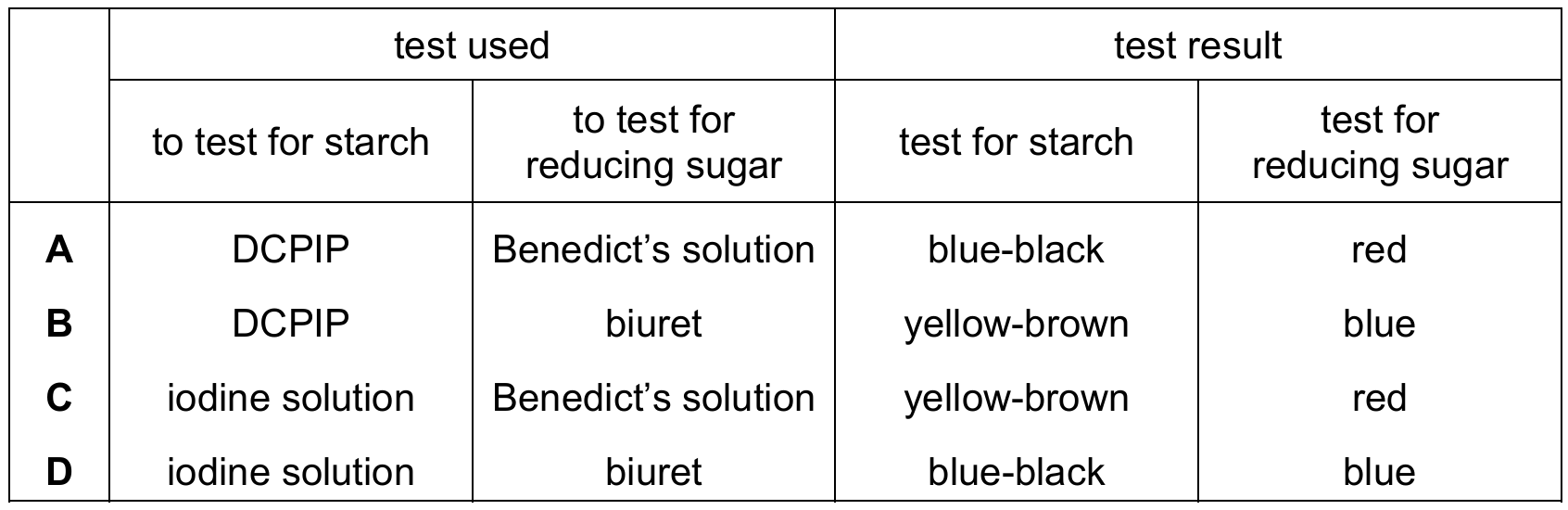
Which row shows the test used and the expected results?

▶️ Answer/Explanation
Detailed solution

The correct answer is C.

To determine the correct answer, we must identify the correct chemical reagents for the specific food tests and understand the enzymatic reaction occurring in the test-tube.

  • The Reaction: Amylase is an enzyme that catalyzes the hydrolysis (breakdown) of starch into reducing sugars (specifically maltose). Since the question states “after some minutes,” we can infer that the enzyme has had time to work, converting the starch into reducing sugar.

1. Identifying the Correct Tests:

  • Test for Starch: The standard reagent used to test for the presence of starch is iodine solution.
    • Positive result (Starch present): Blue-black.
    • Negative result (Starch absent): Yellow-brown (the colour of the iodine solution itself).
  • Test for Reducing Sugar: The standard reagent used to test for reducing sugars (like maltose) is Benedict’s solution.
    • Positive result: A colour change from blue to green, yellow, orange, or red (depending on concentration).
    • Negative result: Blue.

2. Analyzing the Options:

  • A: Incorrect. DCPIP is used to test for Vitamin C, not starch.
  • B: Incorrect. DCPIP is incorrect for starch, and the Biuret test is used for proteins, not reducing sugars.
  • C: Correct.
    • Tests used: Iodine solution (for starch) and Benedict’s solution (for reducing sugar) are the correct reagents.
    • Results: Since amylase has broken down the starch, the starch test should be negative (yellow-brown). Since reducing sugars (maltose) have been produced, the Benedict’s test should be positive (red).
  • D: Incorrect. While iodine is correct for starch, the Biuret test is for proteins, not reducing sugars.
Question 10

Enzyme R digests protein in the stomach.
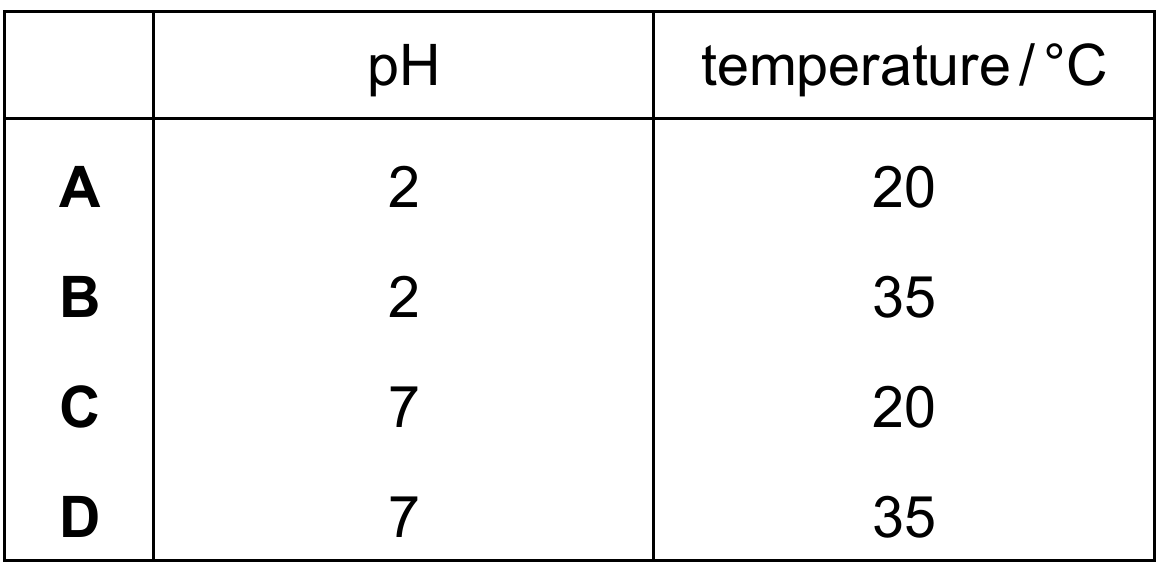
Four test-tubes are set up. Each contains the same amounts of protein and enzyme R. The test-tubes are kept at different levels of pH and temperature, as shown in the table.
In which test-tube will protein digestion be quickest?
▶️ Answer/Explanation

The correct answer is B.

Stomach enzymes like Enzyme R (pepsin) function optimally in highly acidic conditions ($pH \text{ } 2$) created by gastric acid. Furthermore, enzymatic reactions accelerate as temperature increases toward the human biological optimum of approximately $37^\circ\text{C}$ due to increased molecular collisions. While test-tube A has the correct pH, its lower temperature ($20^\circ\text{C}$) results in a slower reaction. Test-tube B provides the ideal combination of an acidic environment and a near-body temperature ($35^\circ\text{C}$), ensuring the highest rate of protein digestion.
Question 11

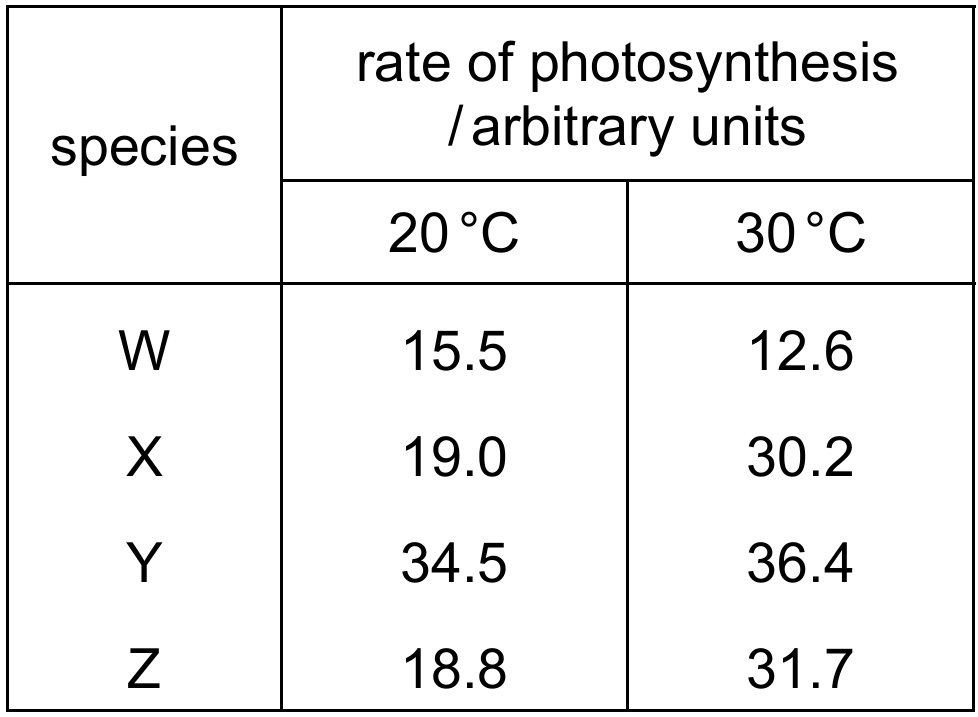
A student investigated the rate of photosynthesis in four species of plants at \(20\,^\circ\mathrm{C}\) and \(30\,^\circ\mathrm{C}\).
All other conditions were kept constant.
The results are shown.

Which statement is a correct conclusion from these data?
  • A   Species W photosynthesises at a lower rate at \(20\,^\circ\mathrm{C}\) than at \(30\,^\circ\mathrm{C}\).
  • B   Species X has the greatest change in rate of photosynthesis between \(20\,^\circ\mathrm{C}\) and \(30\,^\circ\mathrm{C}\).
  • C   Species Y photosynthesises at the highest rate at both \(20\,^\circ\mathrm{C}\) and at \(30\,^\circ\mathrm{C}\).
  • D   Species Z photosynthesises at the highest rate at \(20\,^\circ\mathrm{C}\) and at the lowest rate at \(30\,^\circ\mathrm{C}\).
▶️ Answer/Explanation
Detailed solution

The correct answer is C.

  • Comparing rates at \(20\,^\circ\mathrm{C}\): \(34.5\) (Y) is the highest value in the column.
  • Comparing rates at \(30\,^\circ\mathrm{C}\): \(36.4\) (Y) is the highest value in the column.

Question 12

Which stage of nutrition takes place when food molecules become part of a body cell?
A   absorption
B   assimilation
C   digestion
D   ingestion
▶️ Answer/Explanation
Detailed solution

The correct answer is B (assimilation).

Nutrition occurs in a sequence where food is first taken in (ingestion) and broken down (digestion). These nutrients then pass into the bloodstream (absorption). Assimilation is the final step where these absorbed molecules move from the blood into the actual body cells. Once inside, they are utilized for energy or incorporated into the cell’s structure to build new protoplasm and tissues. This is the specific stage where nutrients truly become part of the body.

Question 13

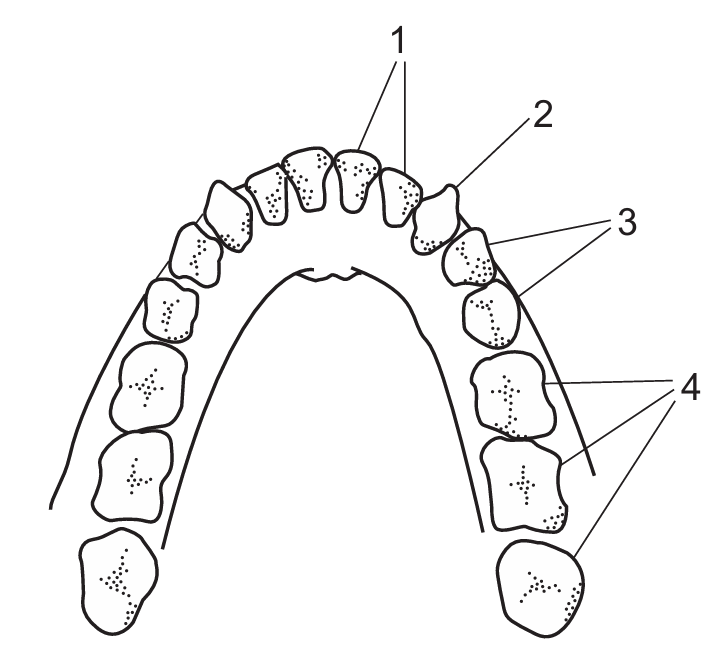
The diagram shows human teeth in the mouth.
Which types of teeth can be used to grind food?
A   (1, 2, 3) and (4)
B   (2, 3) and (4) only
C   (3) and (4) only
D   (4) only
▶️ Answer/Explanation
Detailed solution

The correct answer is C.

To solve this, identify the function of each labeled tooth: 1 represents incisors (cutting) and 2 represents canines (tearing). In contrast, 3 represents premolars and 4 represents molars. Both premolars and molars possess broad, ridged surfaces specifically adapted for crushing and grinding food into a paste. Because both types 3 and 4 share this mechanical function, the correct choice is 3 and 4 only.
Question 14

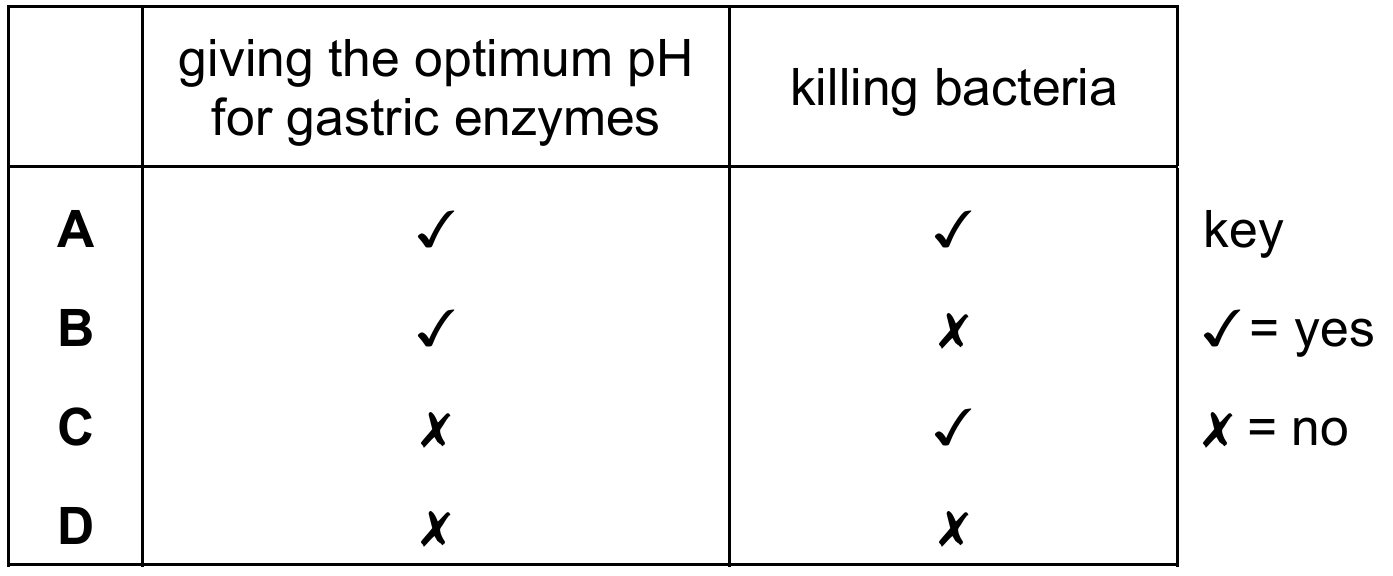
What are functions of the hydrochloric acid in gastric juice?

▶️ Answer/Explanation
Detailed solution

The correct answer is A.

Hydrochloric acid ($\text{HCl}$) in the stomach performs two vital roles in digestion and protection. First, it provides the highly acidic environment (low pH) required to activate pepsinogen into pepsin, the enzyme responsible for protein breakdown. Second, its strong acidity acts as a disinfectant by killing harmful bacteria and pathogens ingested with food. Since $\text{HCl}$ facilitates enzyme activity and provides a sterile environment, Row A is correct.
Question 15

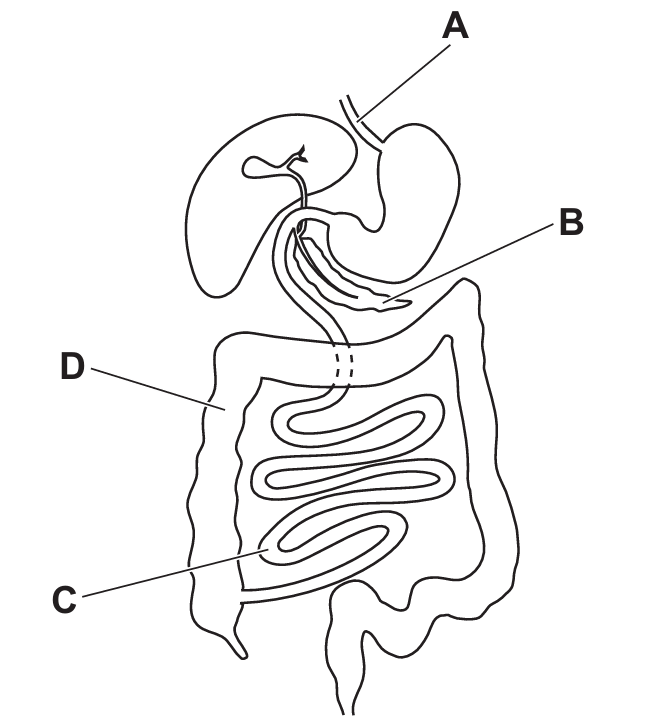
Where does most absorption of nutrients occur?

▶️ Answer/Explanation
Detailed solution

The correct answer is C.

Structure C represents the small intestine, which is the primary site for nutrient absorption. While the esophagus (A) transports food and the pancreas (B) secretes enzymes, the small intestine is uniquely designed with villi and microvilli to maximize surface area for absorbing glucose, proteins, and fats. The large intestine (D) mainly focuses on water recovery. Therefore, nearly 90% of nutrient absorption occurs in the small intestine.
Question 16

Which statement describes a function of xylem in a plant stem?
A   transport of amino acids
B   transport of carbon dioxide
C   transport of mineral ions
D   transport of sucrose
▶️ Answer/Explanation
Detailed solution

The correct answer is C.

Reasoning:
Xylem is a specialized vascular tissue responsible for the upward transport of water and dissolved mineral ions from the roots to the rest of the plant. In contrast, the phloem transports organic nutrients like sucrose and amino acids (Options A and D). Carbon dioxide (Option B) is primarily exchanged through stomata via diffusion. Therefore, only the transport of mineral ions describes a primary function of the xylem vessels in the stem.

Question 17

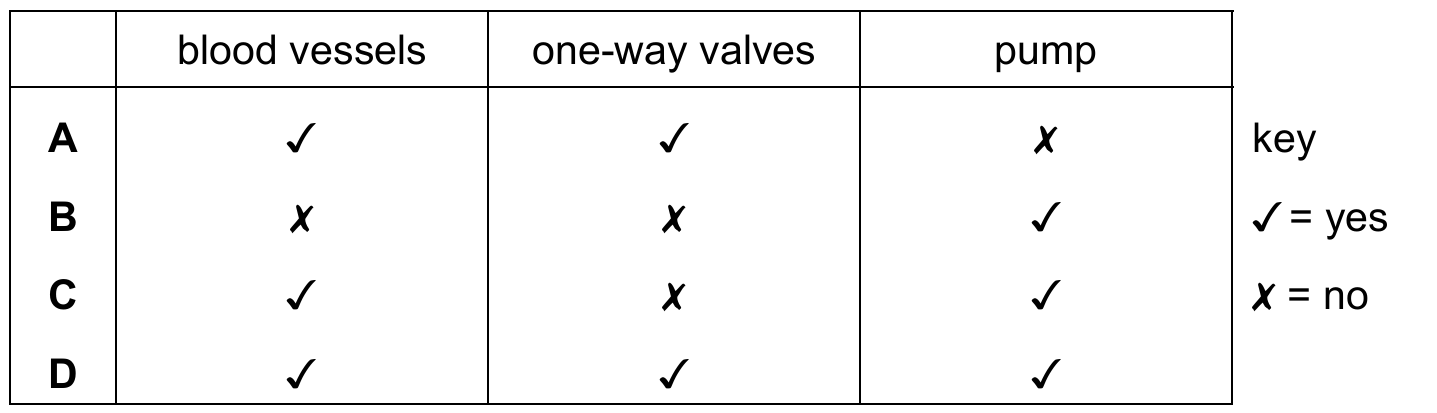
Which row shows the components of the human circulatory system?
▶️ Answer/Explanation
Detailed solution

The correct answer is D.

The human circulatory system is a complex transport network that requires three essential features to function. First, it needs the heart to act as a muscular pump to drive blood flow. Second, it requires a system of blood vessels (arteries, veins, and capillaries) to contain and guide the fluid. Finally, it utilizes one-way valves within the heart and veins to prevent backflow and ensure blood moves in a single direction. Since all three components are integral to the system, Row D is the correct choice.
Question 18

What is a function of white blood cells?
A   antibody production
B   blood clotting
C   transport of oxygen
D   transport of urea
▶️ Answer/Explanation
Detailed solution

The correct answer is A.

Reasoning:

  • White blood cells are essential for the immune system, primarily functioning to defend the body by producing antibodies and engulfing pathogens.
  • Platelets are responsible for blood clotting (B) to prevent excessive bleeding.
  • Red blood cells contain hemoglobin specifically for the transport of oxygen (C).
  • Plasma, the liquid component of blood, facilitates the transport of urea (D) and other dissolved nutrients/wastes.
  • Therefore, antibody production is the only white blood cell function listed.

Question 19

Which substances act as body defences?
  1. mucus
  2. red blood cells
  3. stomach acid

A 1 and 2
B 1 and 3
C 2 and 3
D 3 only

▶️ Answer/Explanation
Detailed solution

The correct answer is B (1 and 3).

Mucus (1) traps pathogens in the respiratory and digestive tracts, while stomach acid (3) kills bacteria ingested with food; both serve as vital primary line defenses. In contrast, red blood cells (2) are specialized for oxygen transport and play no role in immunity. Since white blood cells, not red, are responsible for defense, only options 1 and 3 are correct.

Question 20

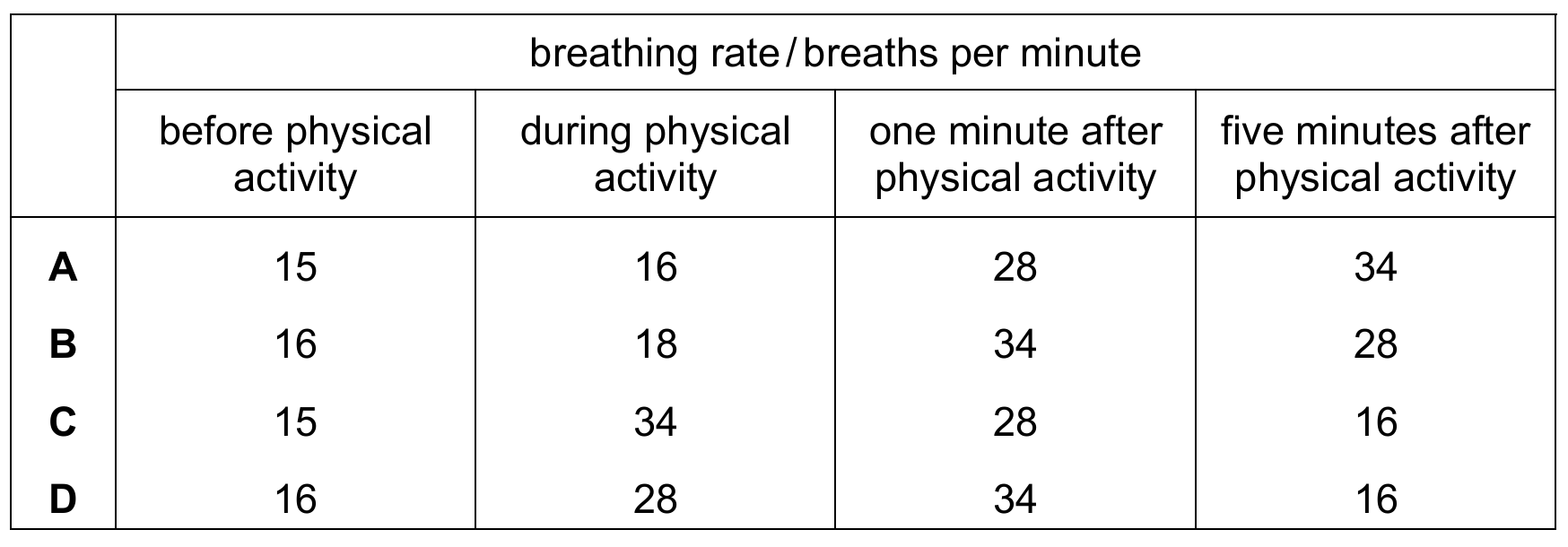
A student investigates the effect of physical activity on their breathing rate.
They record their breathing rate at different times.
Which row shows the change in the breathing rate of the student?
▶️ Answer/Explanation
Correct Answer: C

During physical activity, breathing rate increases significantly to supply more oxygen to muscles and remove carbon dioxide. Row C correctly illustrates this peak during exercise ($15 \rightarrow 34$). Immediately after activity stops, the rate begins to decrease ($34 \rightarrow 28$) as the body starts to recover. Within five minutes, the breathing rate should return to near-resting levels ($16$). Row D is incorrect because the rate cannot continue to rise after exercise stops, while Rows A and B show insufficient increases for physical exertion.
Question 21

Which substance is a gas needed for aerobic respiration?
A carbon dioxide
B glucose
C oxygen
D water
▶️ Answer/Explanation
Detailed solution

The correct answer is C (oxygen).

Reasoning:
Aerobic respiration is the process of breaking down glucose to release energy, which specifically requires oxygen as a reactant. While glucose is also needed, it is a nutrient molecule rather than a gas. Carbon dioxide and water are products of the reaction, meaning they are released rather than required. Therefore, oxygen is the only gaseous substance necessary for the process to occur.

Question 22

Which substance is produced during anaerobic respiration in yeast?
A alcohol
B glucose
C lactic acid
D water
▶️ Answer/Explanation
Detailed solution

The correct answer is A.

Explanation:
In yeast, anaerobic respiration is also known as alcoholic fermentation. During this process, glucose is broken down in the absence of oxygen to produce ethanol (a type of alcohol) and carbon dioxide. Unlike aerobic respiration, water is not produced, and unlike anaerobic respiration in muscles, lactic acid is not formed. This process is essential in brewing and baking, where the ethanol and $CO_2$ are the desired primary products.

Question 23

Where in the human body is urea excreted?
A bladder
B kidneys
C liver
D lungs
▶️ Answer/Explanation
Detailed solution

The correct answer is B (kidneys).

The kidneys are the primary organs responsible for excreting urea. While the liver produces urea from the breakdown of excess amino acids, it is the kidneys that filter this waste from the blood to form urine. The bladder merely acts as a temporary storage site for urine before it leaves the body, and the lungs excrete carbon dioxide rather than nitrogenous waste. Therefore, the physiological process of removing urea from the internal environment occurs specifically within the kidneys.

Question 24

What is the route taken by an electrical impulse in a simple reflex arc?
A effector $\rightarrow$ motor neurone $\rightarrow$ relay neurone $\rightarrow$ sensory neurone $\rightarrow$ receptor
B effector $\rightarrow$ sensory neurone $\rightarrow$ relay neurone $\rightarrow$ motor neurone $\rightarrow$ receptor
C receptor $\rightarrow$ motor neurone $\rightarrow$ relay neurone $\rightarrow$ sensory neurone $\rightarrow$ effector
D receptor $\rightarrow$ sensory neurone $\rightarrow$ relay neurone $\rightarrow$ motor neurone $\rightarrow$ effector
▶️ Answer/Explanation
Detailed solution

The correct answer is D.

A reflex arc follows a specific unidirectional path to ensure a rapid response. It begins when a receptor detects a stimulus and sends an impulse through a sensory neurone to the central nervous system. In the spinal cord, a relay neurone passes the signal to a motor neurone. This neurone carries the impulse to the effector (muscle or gland), which performs the final action. Options A and B are incorrect as they start at the end-point, while C reverses the functional order of the neurones.

Question 25

What is the function of the iris?
A   It carries impulses from the eye to the brain.
B   It controls the amount of light entering the pupil.
C   It focuses the light onto the retina.
D   It refracts light entering the eye.
▶️ Answer/Explanation
Detailed solution

The correct answer is B.

Explanation:
The iris is a muscular diaphragm that regulates light intensity by adjusting the pupil size. In bright light, circular muscles contract to constrict the pupil, protecting the retina from overexposure. In dim light, radial muscles contract to dilate the pupil, allowing more light to enter. Other options are incorrect because the optic nerve (A) carries impulses, while the cornea and lens (C and D) are responsible for refracting and focusing light.

Question 26

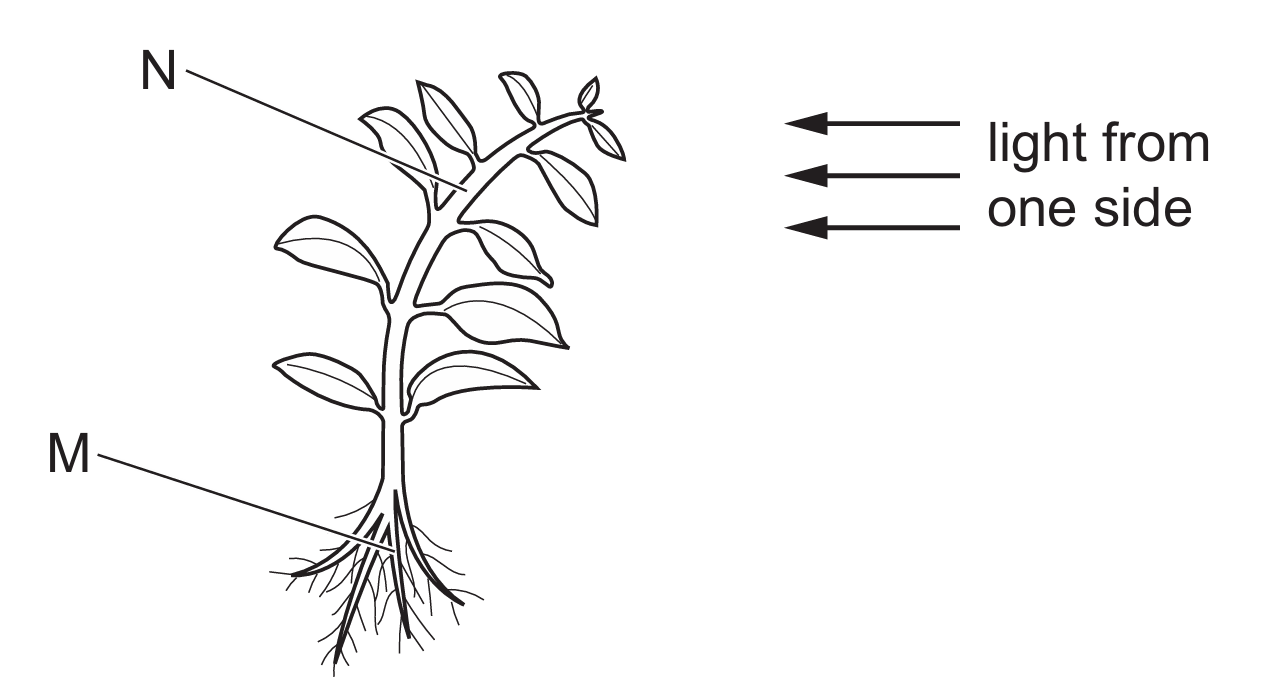
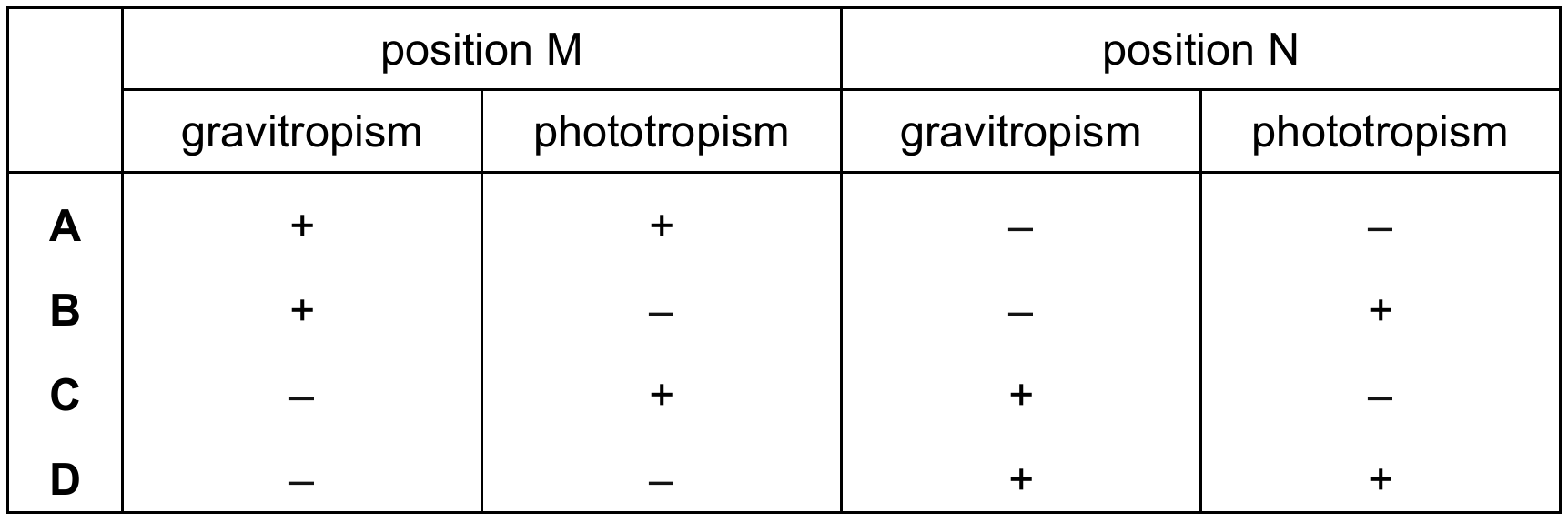
Tropic responses can be positive or negative.
When a plant grows towards the stimulus, the response is positive ($+$).
When a plant grows away from the stimulus, the response is negative ($-$).
The diagram shows a plant exhibiting tropic responses.
Which row states the tropic responses occurring at position M and at position N?
▶️ Answer/Explanation
Detailed solution

The correct answer is B.

At position M (roots), the plant grows towards gravity ($+$ gravitropism) and away from light ($-$ phototropism) to anchor itself and reach water. At position N (shoots), the plant grows against gravity ($-$ gravitropism) and towards light ($+$ phototropism) to maximize photosynthesis.This differential response ensures the plant is correctly oriented for survival. Row B accurately reflects these biological directions, showing positive gravity/negative light responses for roots and the opposite for shoots.
Question 27

A number of plants are produced using asexual reproduction.
Which statement about these plants is correct?
  • A   They are produced from one parent and are genetically different.
  • B   They are produced from one parent and are genetically identical.
  • C   They are produced from two parents and are genetically different.
  • D   They are produced from two parents and are genetically identical.
▶️ Answer/Explanation
Correct Answer: B

Explanation:

Asexual reproduction involves a single parent, meaning there is no fusion of gametes or mixing of DNA. The offspring are produced via mitosis, resulting in new plants that are clones of the original. Consequently, these offspring are genetically identical to their parent. Options involving two parents describe sexual reproduction, and asexual processes do not create genetic variation. Therefore, Option B is the only accurate description.

Question 28

Which structure is pollen transferred from and to during pollination?
A   from anther to ovary
B   from anther to stigma
C   from stigma to ovary
D   from stigma to ovule
▶️ Answer/Explanation
Detailed solution

The correct answer is B.

Reasoning:
Pollination is defined specifically as the transfer of pollen from the anther (the male part) to the stigma (the receptive female part). While pollen eventually facilitates fertilization in the ovary, the initial physical transfer ends at the stigma. Options C and D describe the growth of the pollen tube, which occurs after pollination is complete. Therefore, the movement is always from the pollen-producing anther to the pollen-receiving stigma.

Question 29

In addition to a suitable temperature, what else is always necessary for seed germination?
A   carbon dioxide and sunlight
B   mineral ions
C   sunlight and water
D   water and oxygen
▶️ Answer/Explanation
Detailed solution

The correct answer is D.

Seed germination requires three specific conditions: water, oxygen, and a suitable temperature. Water is essential to soften the seed coat and activate enzymes that break down stored food reserves. Oxygen is required for aerobic respiration to provide the energy (ATP) needed for growth and cell division. Unlike mature plants, germinating seeds do not need sunlight or carbon dioxide because they rely on internal food stores rather than photosynthesis, and they obtain mineral ions from those same reserves initially.

Question 30

What happens to the lining of the human uterus in the days before the release of an egg cell?
A   It breaks down.
B   It is lost from the body.
C   It thickens.
D   It thins.
▶️ Answer/Explanation
Detailed solution

The correct answer is C.

Explanation:

Before the release of an egg (ovulation), the body enters the proliferative phase of the menstrual cycle. Increased levels of the hormone estrogen cause the uterine lining, or endometrium, to repair and grow. This process involves the development of new blood vessels and tissues, causing the lining to thicken. This preparation ensures that the uterus is ready to support the implantation of a fertilized egg. Consequently, options A and B describe menstruation, while C correctly identifies the pre-ovulatory growth.

Question 31

Which term is defined as a length of DNA that codes for a protein?
A   a gene
B   an amino acid
C   an X chromosome
D   a Y chromosome
▶️ Answer/Explanation
Detailed solution

The correct answer is A.

Explanation:

A gene is a specific segment or “length” of DNA that carries the genetic code required to build a protein. While chromosomes (C and D) are large structures that house many genes, the gene itself is the functional unit responsible for a single protein’s synthesis. Amino acids (B) are the building blocks that make up proteins, rather than the DNA sequence itself. Therefore, the term that describes the coding DNA sequence is a gene.

Question 32

Polydactyly is an inherited condition that can occur in cats. It results in the affected offspring having extra toes.
The allele for polydactyly is dominant and is represented by the letter T.
The allele for not having polydactyly is recessive and is represented by the letter t.
A cat with the genotype Tt is bred with a cat with the genotype tt.
What is the probability of the offspring having polydactyly?
A 25%
B 50%
C 75%
D 100%
▶️ Answer/Explanation
Correct Answer: B 
To determine the probability, cross the genotypes Tt (Parent 1) and tt (Parent 2). The Punnett square yields two possible genotypes for the offspring: Tt and tt. Specifically, 50% of the offspring will be Tt (carrying the dominant allele for polydactyly), and 50% will be tt (normal). Since the polydactyly allele (T) is dominant, any kitten with at least one T will express the trait. Thus, there is a 2 out of 4 or 50% chance that an offspring will have extra toes.

Question 33

A student measured the heights of her friends to see how they vary.

Which statements would apply to this type of variation?

1    A range of phenotypes between two extremes will be seen.
2    The variation will be caused by genes and the environment.
3    The variation will be caused by genes only.
4    There will be a limited number of phenotypes with no intermediates.
A    1 and 2
B    1 and 3
C    2 and 4
D    3 and 4
▶️ Answer/Explanation
Detailed solution

The correct answer is A 

Height is an example of continuous variation, characterized by a smooth range of measurements rather than distinct categories. Consequently, Statement 1 is correct as there are infinite intermediates between the shortest and tallest heights. Statement 2 is also correct because continuous traits are polygenic and heavily influenced by environmental factors like nutrition. Statements 3 and 4 describe discontinuous variation, which does not apply to height. Thus, only 1 and 2 are accurate.

Question 34

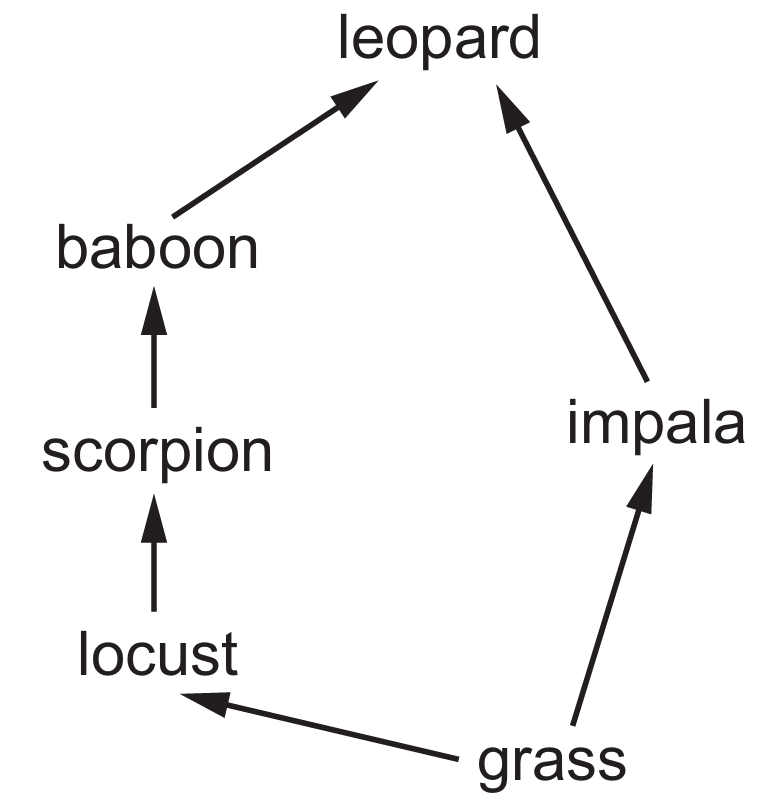
The diagram shows a food web.
At which trophic levels is the leopard feeding?
A first and second
B second and third
C second and fourth
D third and fifth
▶️ Answer/Explanation
Detailed solution

The correct answer is D.

Trophic levels are determined by counting steps from the producer (Grass, Level $1$). In the first path (Grass $\rightarrow$ Impala $\rightarrow$ Leopard), the leopard is the secondary consumer at the third level. In the second path (Grass $\rightarrow$ Locust $\rightarrow$ Scorpion $\rightarrow$ Baboon $\rightarrow$ Leopard), the leopard acts as the quaternary consumer at the fifth level. Therefore, the leopard occupies both the third and fifth trophic levels within this food web.
Question 35

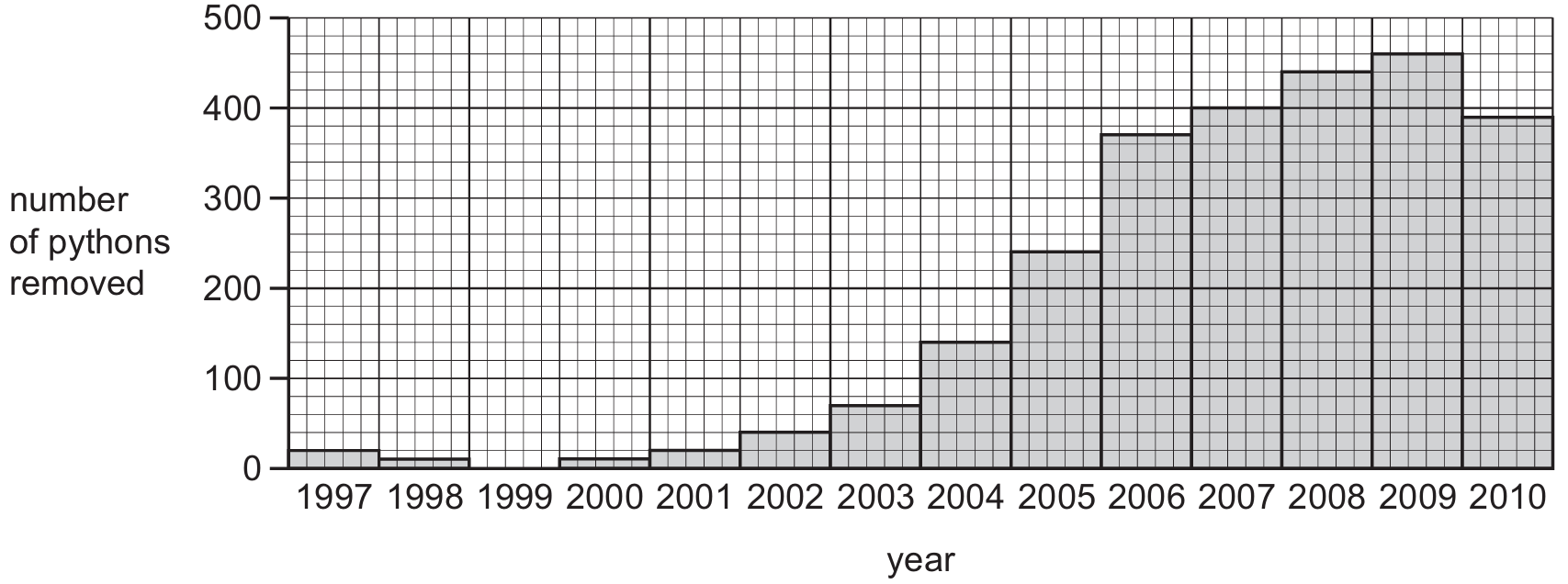
Pythons were accidentally introduced to a region in the $1990$s. Since then, they have reproduced in the wild and become a pest. The number of pythons removed from the wild can give an indication of the population size, as shown.
Which phase of the population growth curve of pythons is shown in $2005$?
A death
B exponential (log)
C lag
D stationary
▶️ Answer/Explanation
Detailed solution

The correct answer is B.

The graph shows the python population progress through distinct growth stages. Between $1997$ and $2000$, the population is in the lag phase with slow, initial growth. By $2005$, the curve shows a steep, rapid increase in the number of pythons removed, which characterizes the exponential (log) phase where resources are plenty and the birth rate is high. This continues until approximately $2008$, where the data begins to level off into a stationary phase. Therefore, $2005$ falls directly within the period of most rapid acceleration.
Question 36

Which statement describes a disadvantage of growing crop plants as a monoculture?
  • A    There is a decrease in biodiversity.
  • B    There is a decrease in the chance of a disease destroying the crop.
  • C    There is a decrease in the use of herbicides.
  • D    There is a decrease in the use of insecticides.
▶️ Answer/Explanation
Detailed solution

The correct answer is A: There is a decrease in biodiversity.

Explanation:

Monoculture involves growing only one type of crop over a large area, which replaces varied natural habitats with a single species. This drastically reduces the variety of plants and animals that can survive in that environment, leading to a loss of biodiversity. Options B, C, and D are incorrect because monocultures actually increase the risk of total crop failure from disease and typically require higher amounts of chemical herbicides and insecticides to manage pests that thrive in such uniform environments.

Question 37

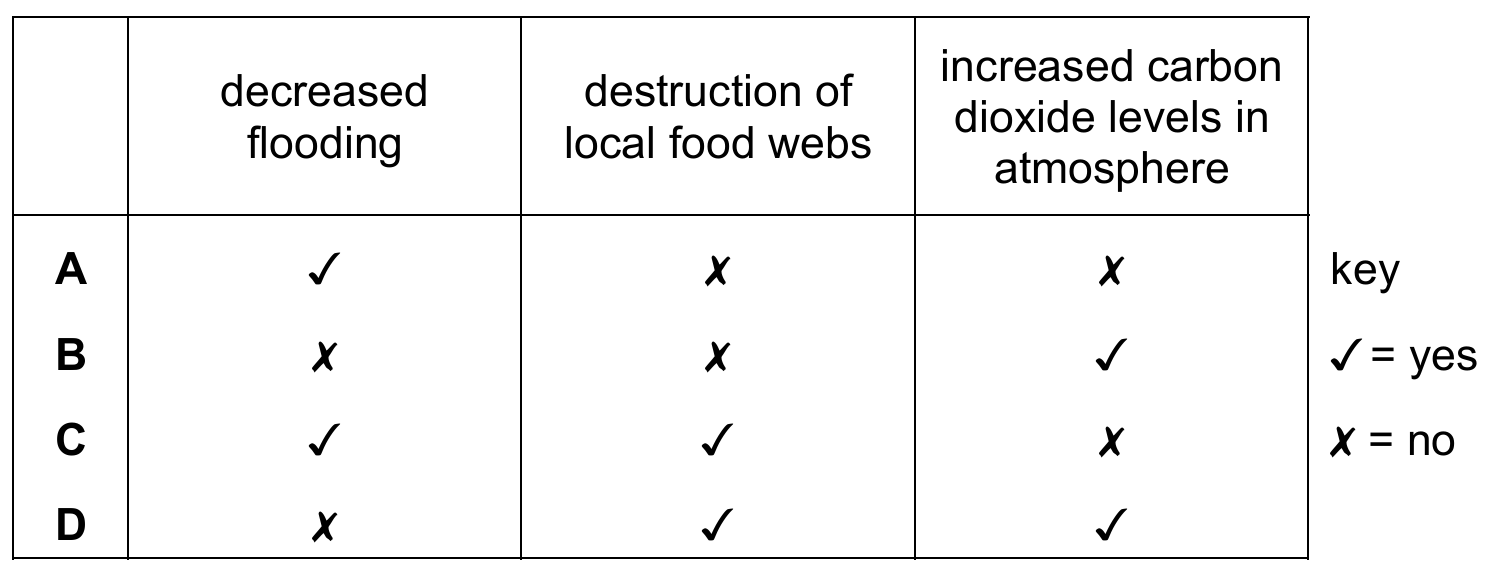
What are the effects of deforestation on the environment?
▶️ Answer/Explanation
Detailed solution

The correct answer is D.

Deforestation increases flooding because the loss of tree roots and leaf litter reduces water infiltration, leading to rapid surface runoff. It destroys food webs by eliminating habitats and primary energy sources for local species. Additionally, it leads to increased $CO_2$ levels since fewer trees are available to absorb the gas through photosynthesis, and carbon stored in wood is released during decay or burning. Therefore, Row D accurately reflects these environmental impacts.

Question 38

Which statement about non-biodegradable plastics in aquatic environments is correct?
  • A As non-biodegradable plastics decompose in aquatic environments, they release carbon dioxide.
  • B Extremely small fragments of non-biodegradable plastics can move up the food chain.
  • C Non-biodegradable plastics in aquatic environments cause an increase in the growth of producers.
  • D Non-biodegradable plastics in aquatic environments decompose quickly.
▶️ Answer/Explanation
Detailed solution

The correct answer is B.

Reasoning:
Non-biodegradable plastics do not break down chemically but instead fragment into tiny particles called microplastics.These fragments are frequently ingested by small marine organisms at the base of the food web. Because they cannot be digested, they persist in the gut and are passed to larger predators when eaten. This allows the plastic to accumulate and move up the food chain to higher trophic levels. Unlike organic waste, these materials do not decompose quickly or release $CO_2$ through biological decay, and they often harm producers by blocking sunlight.

Question 39

Which methods of conservation are used to protect endangered species?
  1. captive breeding programmes
  2. education
  3. habitat destruction
A $1$, $2$ and $3$
B $1$ and $2$ only
C $1$ and $3$ only
D $2$ and $3$ only
▶️ Answer/Explanation
Correct Answer: B ($1$ and $2$ only)

Conservation aims to preserve biodiversity through active support and protection. Captive breeding (1) helps increase population numbers in safe environments, while education (2) raises awareness to prevent further species decline. In contrast, habitat destruction (3) is a primary driver of extinction rather than a method of protection. Therefore, only the first two options are legitimate conservation strategies.

Question 40

Why are bacteria useful in biotechnology and genetic modification?
A   They can cause decomposition.
B   They can make complex molecules.
C   They have a cell wall.
D   They have a slow reproduction rate.
▶️ Answer/Explanation
Detailed solution

The correct answer is B.

Explanation:
Bacteria are ideal for biotechnology because they contain plasmids—small loops of DNA that are easily manipulated to carry foreign genes. By inserting specific genetic sequences, scientists turn bacteria into “biological factories” capable of synthesizing complex molecules like human insulin. Unlike other options, their utility relies on their rapid reproduction and shared genetic code, which allows them to translate human DNA into functional proteins. This process enables the efficient, large-scale production of life-saving medicines and industrial enzymes.

Scroll to Top