Question 1
The relationships of four species of bacteria, $P, Q, R$ and $S$, were compared.
- Species $P$ and $Q$ have a more recent common ancestor than either species has with species $R$.
- Species $S$ developed recently from species $P$.
Which species has the least similar base sequences in their DNA compared to the other three species of bacteria?
(B) $Q$
(C) $R$
(D) $S$
▶️ Answer/Explanation
✅ Answer: (C)
Question 2
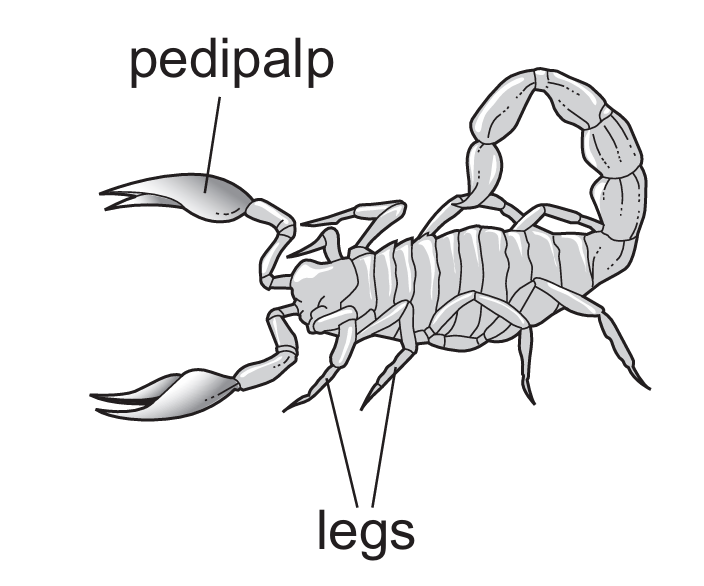
The diagram shows an arthropod.

To which group does it belong?
(B) crustaceans
(C) insects
(D) myriapods
▶️ Answer/Explanation
✅ Answer: (A)
Question 3
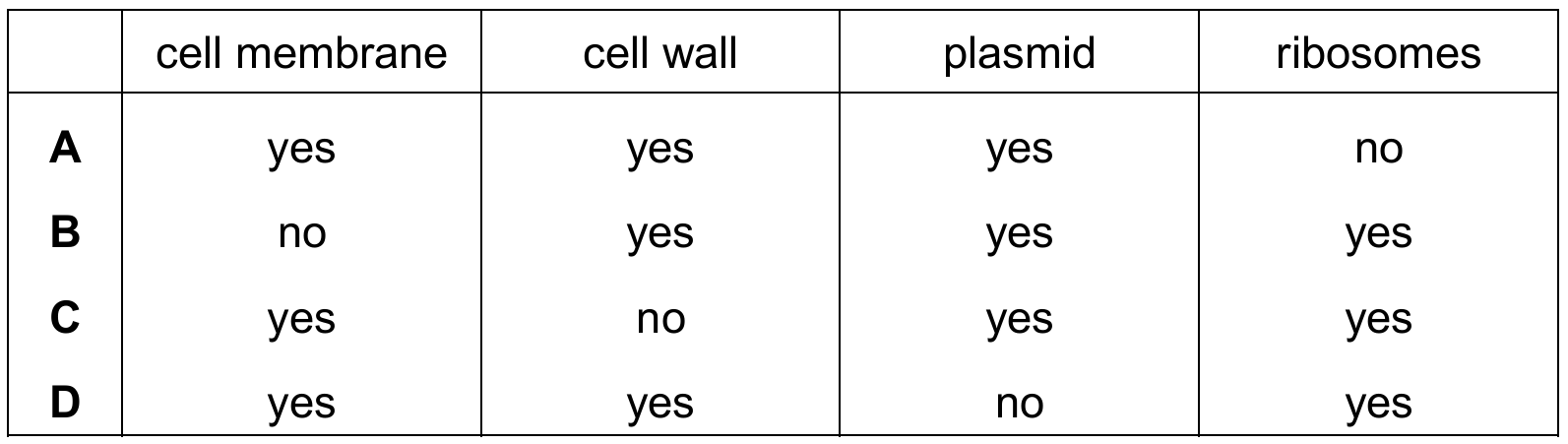
Which structures are found in both plant cells and bacterial cells?

▶️ Answer/Explanation
✅ Answer: (D)
Question 4
A cell is $65 \text{ \mu m}$ across.
What is this measurement in $\text{mm}$?
▶️ Answer/Explanation
To convert from micrometers ($\text{\mu m}$) to millimeters ($\text{mm}$), you need to understand the relationship between the two units. There are $1,000$ micrometers in $1$ millimeter ($1 \text{ mm} = 1,000 \text{ \mu m}$). Therefore, to convert a value from $\text{\mu m}$ to $\text{mm}$, you must divide the value by $1,000$.
Calculation: $\frac{65}{1,000} = 0.065$.
This shift moves the decimal point three places to the left. Starting from $65.0$, one jump makes it $6.5$, two jumps make it $0.65$, and the third jump results in $0.065$. This matches option C.
✅ Answer: (C)
Question 5
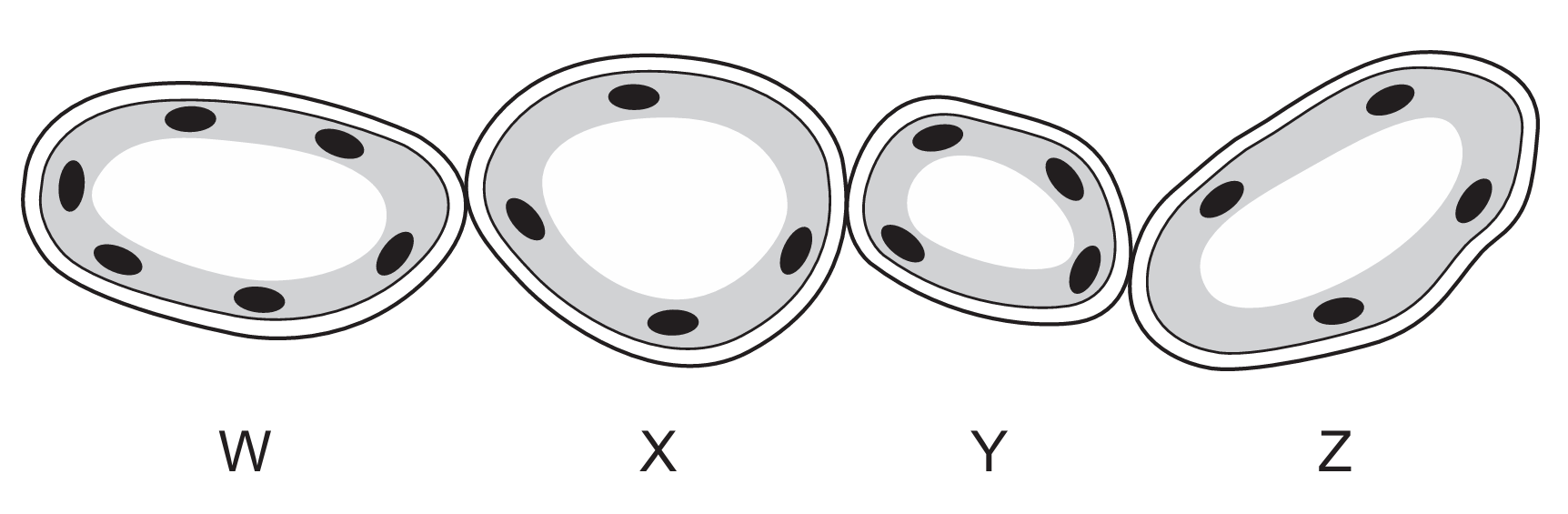
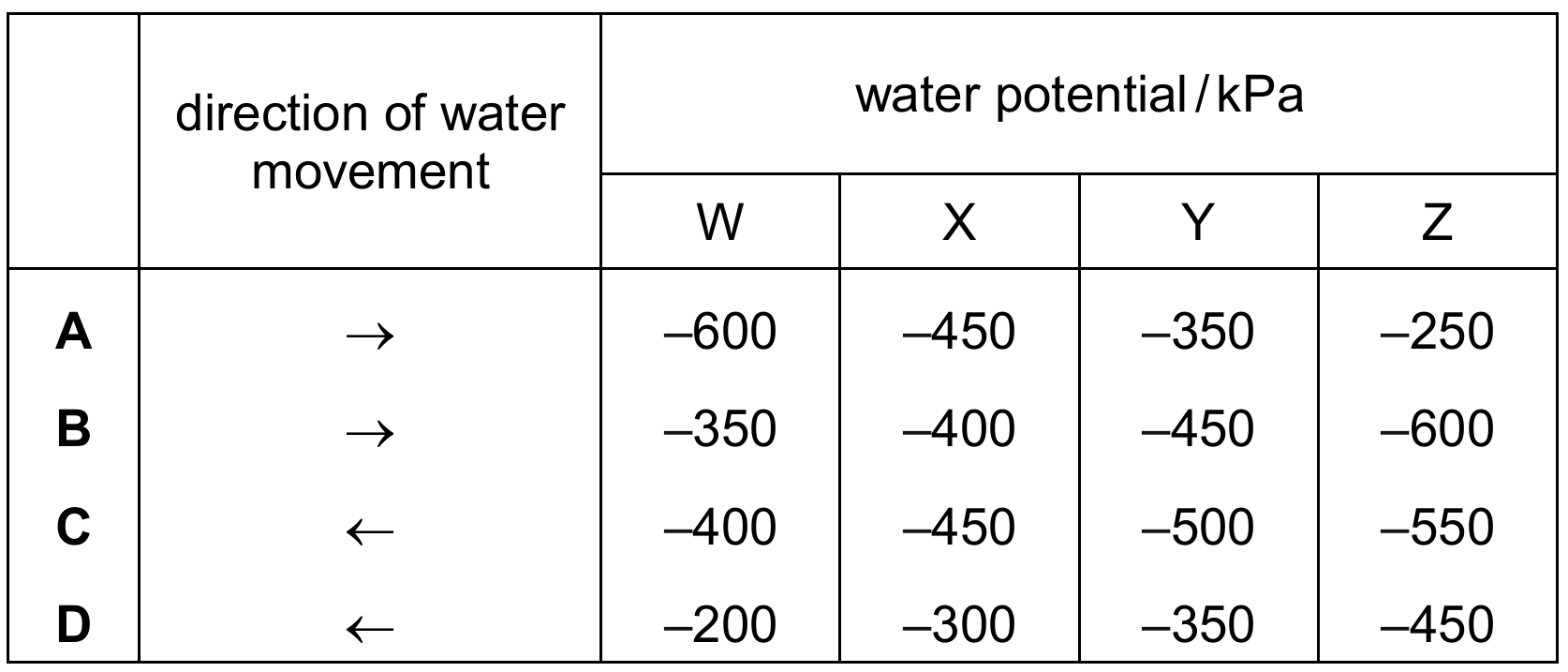
The diagram shows four mesophyll cells, $W$, $X$, $Y$ and $Z$. Water moves through these cells.

Which arrow shows the direction of movement of water through these cells?

▶️ Answer/Explanation
✅ Answer: (B)
Question 6
Three processes are listed.
- $1$ Molecules or ions are moved across membranes.
- $2$ Molecules or ions are moved by protein carriers.
- $3$ Ions are taken up by root hairs.
Which processes can involve active transport?
(B) $1$ and $2$ only
(C) $1$ and $3$ only
(D) $2$ and $3$ only
▶️ Answer/Explanation
✅ Answer: (A)
Question 7
A section of a chromosome contains $4500$ bases. There are $1450$ $G$ bases.
How many $A$ bases are there?
(B) $1450$
(C) $1600$
(D) $2900$
▶️ Answer/Explanation
According to Chargaff’s rules, in a double-stranded DNA molecule, the amount of Guanine ($G$) equals Cytosine ($C$), and Adenine ($A$) equals Thymine ($T$). Given there are $1450$ $G$ bases, there must also be $1450$ $C$ bases. Together, $G + C = 1450 + 1450 = 2900$. Subtracting this from the total gives $4500 – 2900 = 1600$ bases for the $A + T$ pairs. Since $A$ and $T$ are present in equal amounts, we divide by $2$: $1600 \div 2 = 800$. Therefore, there are $800$ Adenine bases.
✅ Answer: (A)
Question 8
Which chemical element is found in proteins but not in carbohydrates?
(B) hydrogen
(C) nitrogen
(D) oxygen
▶️ Answer/Explanation
Carbohydrates are organic compounds consisting primarily of carbon, hydrogen, and oxygen, typically in a $2:1$ ratio of hydrogen to oxygen. Proteins, however, are made of amino acids which contain an amino group ($-NH_{2}$). This means all proteins must contain nitrogen in addition to carbon, hydrogen, and oxygen. While some proteins also contain sulfur, nitrogen is the defining element that distinguishes them from carbohydrates in this list. Carbon, hydrogen, and oxygen are common to both macromolecules, making nitrogen the correct distinguishing factor.
✅ Answer: (C)
Question 9
Which statement describes enzymes?
(B) Enzymes are involved in metabolic reactions.
(C) Enzymes decrease the rate of reaction.
(D) Enzymes have the same shape of active site as their substrate.
▶️ Answer/Explanation
✅ Answer: (B)
Question 10
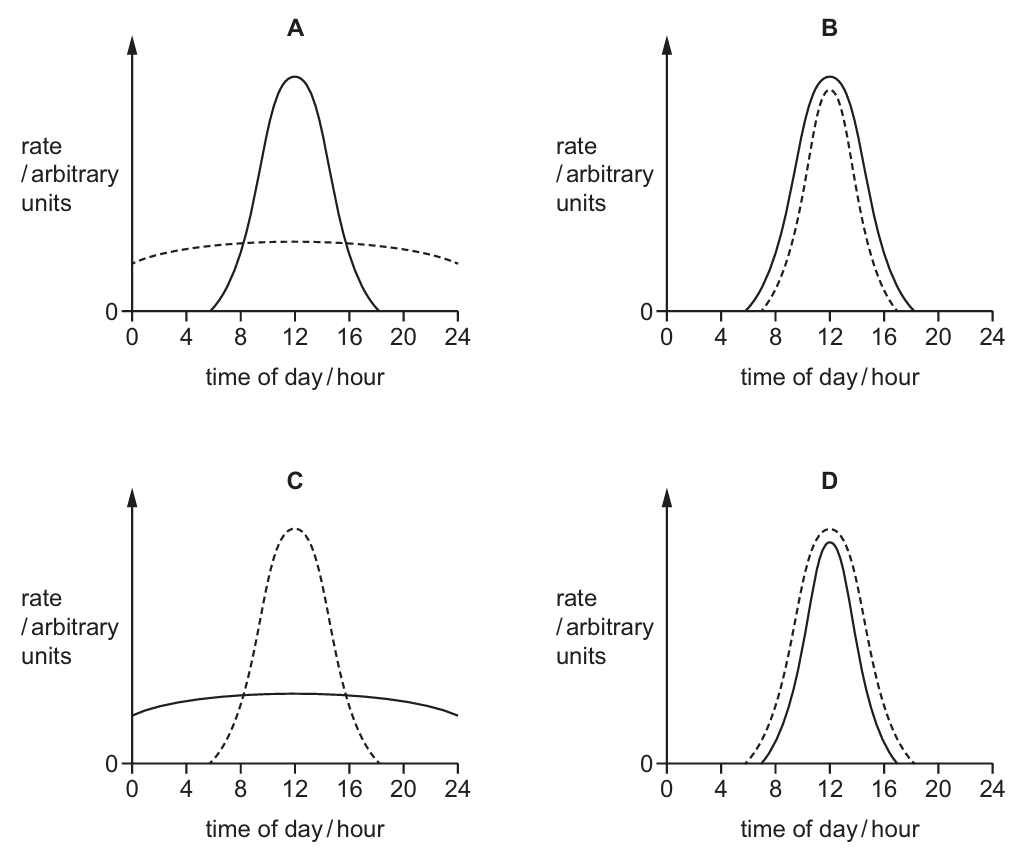
The graphs show how the rate of photosynthesis and the rate of respiration in a plant changed over a $24$-hour period.
Which graph shows the correct rate of photosynthesis and rate of respiration?

▶️ Answer/Explanation
✅ Answer: (A)
Question 11
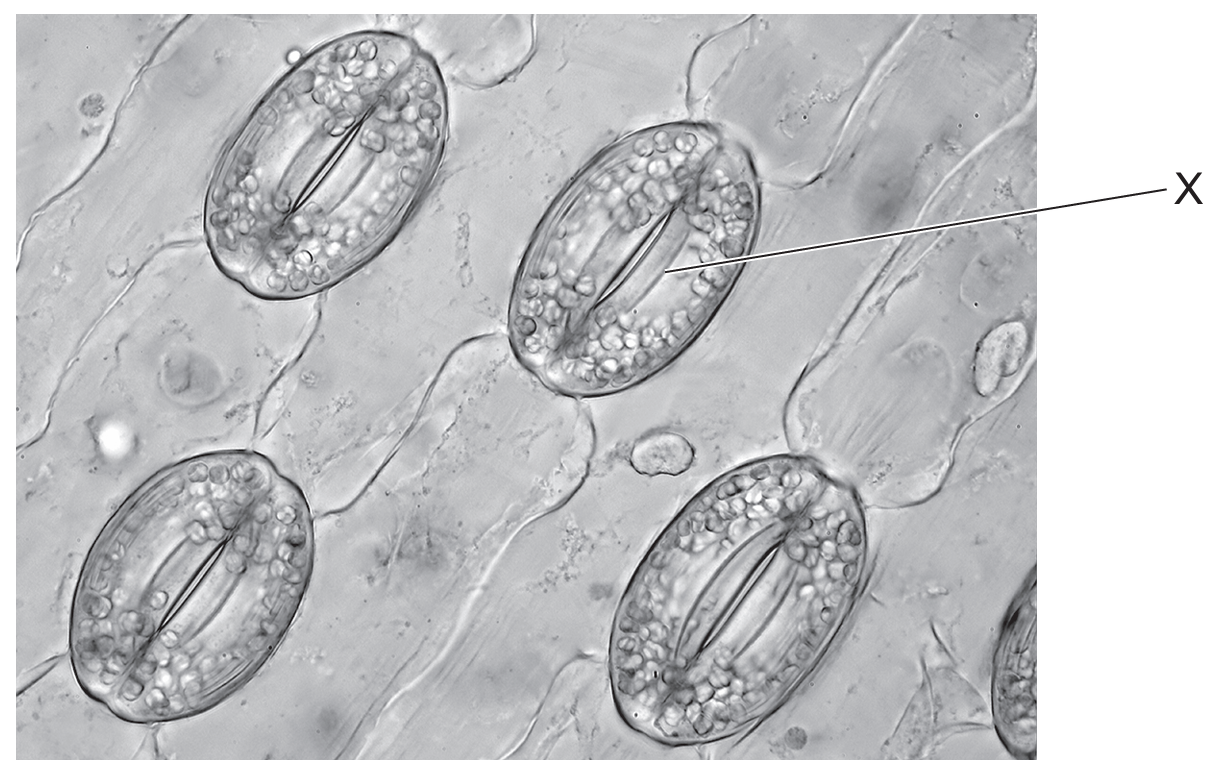
The photomicrograph shows part of the lower surface of a leaf.

What is the structure labelled $X$?
(B) palisade mesophyll cell
(C) spongy mesophyll cell
(D) xylem vessel
▶️ Answer/Explanation
The image displays the lower epidermis of a leaf, characterized by specialized structures for gas exchange. The label $X$ points specifically to one of the bean-shaped cells that flank a small opening or pore. These are guard cells, which control the opening and closing of the stoma (the pore itself). Unlike regular epidermal cells, guard cells contain chloroplasts, which are visible as small grains in the photomicrograph. Options B and C are located in the internal layers of the leaf, and option D is a transport tissue found within vascular bundles, not on the surface.
✅ Answer: (A)
Question 12
A student is told that their diet is not balanced and they may be at risk of developing scurvy.
What should the student do to reduce their risk of scurvy?
(B) The student should drink more milk which will provide more vitamin C.
(C) The student should eat more citrus fruits which will provide more calcium.
(D) The student should eat more citrus fruits which will provide more vitamin C.
▶️ Answer/Explanation
Scurvy is a deficiency disease caused by a lack of vitamin C (ascorbic acid) in the diet. This nutrient is essential for the synthesis of collagen, which helps maintain the health of skin, blood vessels, and gums. Citrus fruits, such as oranges, lemons, and limes, are well-known primary sources of vitamin C. While milk is a good source of calcium, it contains very little vitamin C and would not prevent scurvy. Therefore, increasing the intake of citrus fruits is the most effective way to address this specific deficiency.
✅ Answer: (D)
Question 13
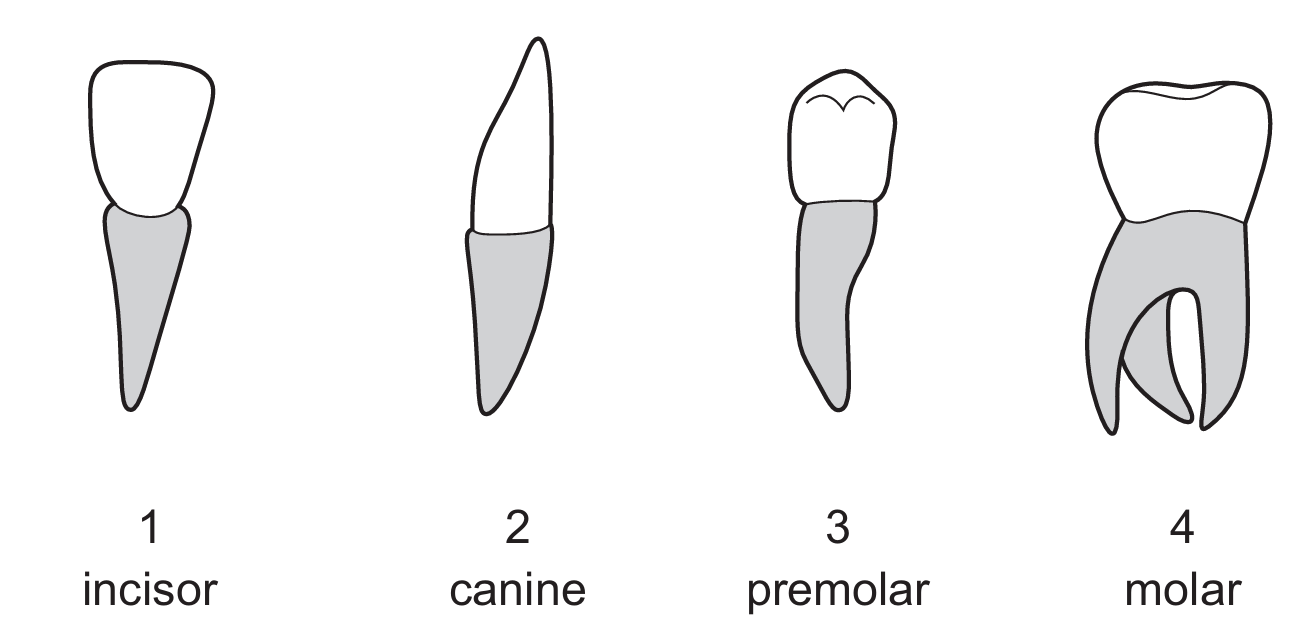
The diagram shows the four types of human tooth.

Which teeth are used for grinding food?
(B) $1$ and $4$
(C) $2$ and $3$
(D) $3$ and $4$
▶️ Answer/Explanation
✅ Answer: (D) $3$ and $4$
Question 14
Which substance causes the change in $pH$ when food enters the small intestine?
(B) bile
(C) gastric juice
(D) trypsin
▶️ Answer/Explanation
✅ Answer: (B)
Question 15
Which conditions cause the highest rate of transpiration?
(B) high temperature, high wind speed and low humidity
(C) low temperature, low wind speed and low humidity
(D) low temperature, low wind speed and high humidity
▶️ Answer/Explanation
Transpiration is the evaporation of water from leaf surfaces, which is driven by a concentration gradient. High temperatures increase the kinetic energy of water molecules, speeding up evaporation. High wind speeds prevent water vapor from accumulating near the leaf, maintaining a steep diffusion gradient between the inside and outside of the leaf. Conversely, low humidity ensures the surrounding air is dry, further maximizing the rate at which water diffuses out of the stomata. Therefore, the combination of hot, windy, and dry conditions results in the maximum water loss.
✅ Answer: (B)
Question 16
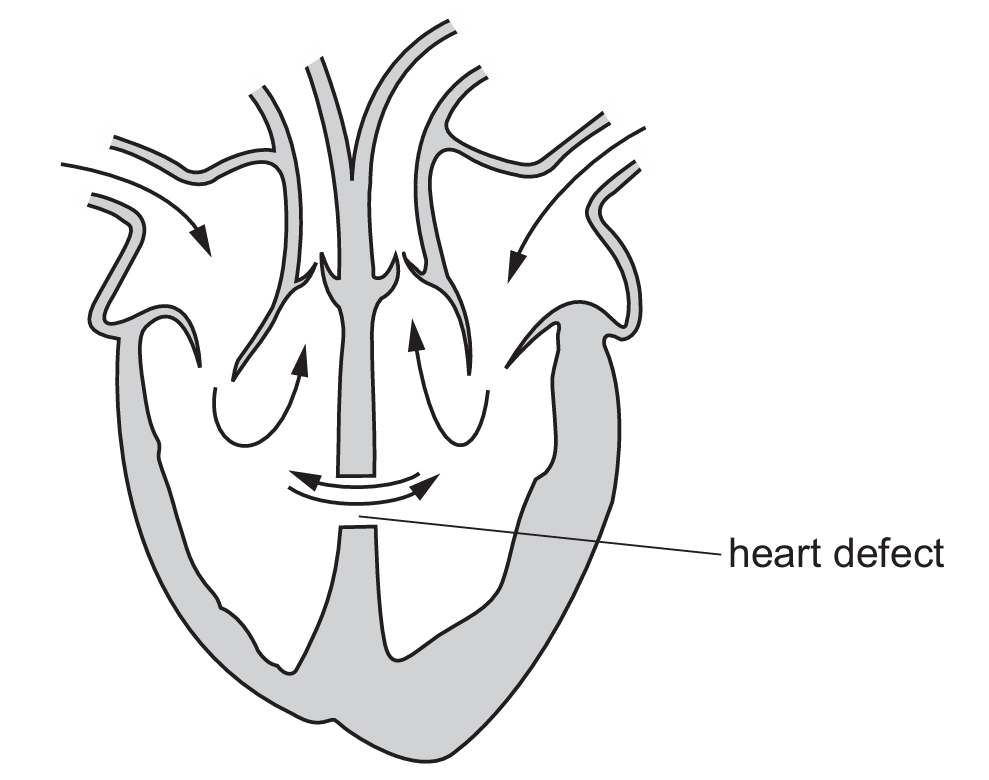
The diagram shows a heart defect that some babies are born with. The arrows indicate direction of blood flow.

Which statement explains why this heart defect might cause the baby to have poor growth?
(B) Blood flows to the lungs at low pressure decreasing rate of gas exchange.
(C) Mixing of blood results in less oxygen available for respiration.
(D) Mixing of blood results in more glucose available for respiration.
▶️ Answer/Explanation
✅ Answer: (C)
Question 17
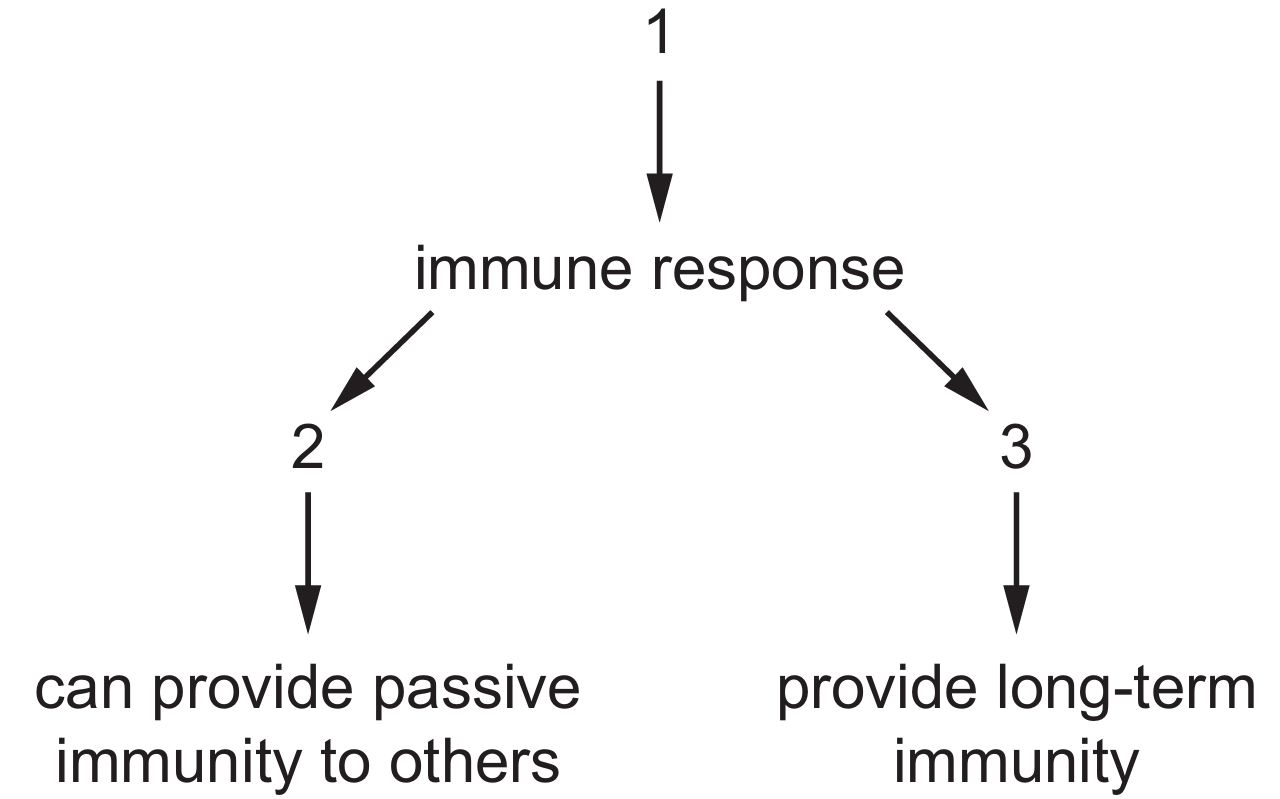
The diagram shows the effect of vaccination on the human body. Three components in the diagram are represented by numbers.

Which components are memory cells?
(B) $2$ and $3$
(C) $2$ only
(D) $3$ only
▶️ Answer/Explanation
✅ Answer: (D) $3$ only
Question 18
What helps to keep the trachea open during breathing?
(B) cilia
(C) external intercostal muscles
(D) larynx
▶️ Answer/Explanation
The trachea, or windpipe, is supported by a series of $C$-shaped rings made of cartilage. This stiff yet flexible tissue provides structural support that prevents the airway from collapsing under the negative pressure created during inhalation. While the other options are part of the respiratory system, they serve different functions:
- Cilia are microscopic hairs that sweep mucus and debris out of the airways.
- External intercostal muscles assist in expanding the ribcage during breathing.
- The larynx is the voice box located at the top of the trachea.
Therefore, cartilage is specifically responsible for maintaining the patency of the tracheal tube.
✅ Answer: (A)
Question 19
Yeast can respire aerobically and anaerobically.
For each molecule of glucose used in yeast, how many more molecules of carbon dioxide gas are produced by aerobic respiration compared with anaerobic respiration?
(B) $2$ more
(C) $4$ more
(D) $6$ more
▶️ Answer/Explanation
To solve this, we compare the balanced equations for both types of respiration in yeast. In aerobic respiration, one molecule of glucose reacts with oxygen to produce $6$ molecules of $CO_{2}$ ($C_{6}H_{12}O_{6} + 6O_{2} \rightarrow 6CO_{2} + 6H_{2}O$). In anaerobic respiration (fermentation), yeast breaks down one molecule of glucose into ethanol and only $2$ molecules of $CO_{2}$ ($C_{6}H_{12}O_{6} \rightarrow 2C_{2}H_{5}OH + 2CO_{2}$). By subtracting the anaerobic yield from the aerobic yield ($6 – 2 = 4$), we find that aerobic respiration produces $4$ additional molecules of carbon dioxide per glucose molecule.
✅ Answer: (C)
Question 20
In a healthy human, in which blood vessel would you find the lowest concentration of urea?
(B) hepatic vein
(C) renal artery
(D) renal vein
▶️ Answer/Explanation
To solve this, consider the organs where urea is produced and removed. Urea is synthesized in the liver, meaning the hepatic vein carries the highest concentration as it leaves the production site. Conversely, the kidneys are responsible for filtering urea out of the blood to be excreted as urine. The renal artery brings urea-rich blood into the kidneys, while the renal vein carries blood away after it has been filtered. Consequently, the blood in the renal vein has the lowest urea content in the entire body.
✅ Answer: (D)
Question 21
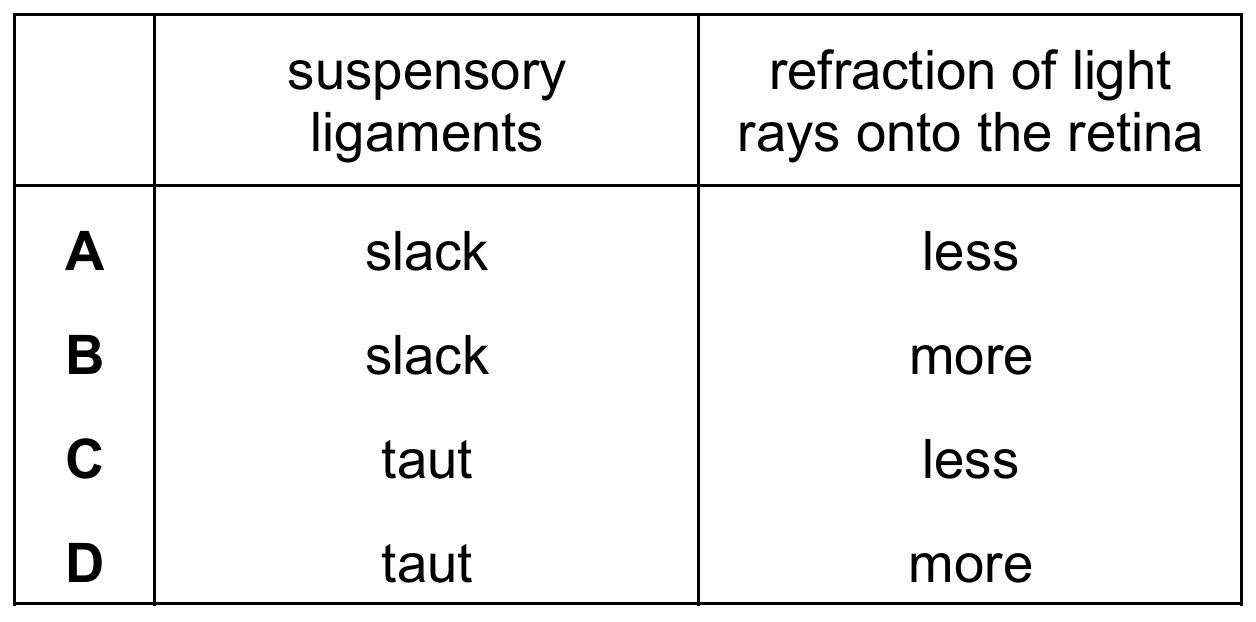
A specific eye condition can cause permanent contraction of the ciliary muscles.
Which row is correct for an eye with this condition compared to an eye without this condition?

▶️ Answer/Explanation
✅ Answer: (B)
Question 22
The liver and the pancreas work together to control the concentration of glucose in the blood.
Which statement is correct?
(B) The liver releases the hormone insulin when blood glucose concentration is too high.
(C) The pancreas does not respond to an increase in blood glucose concentration.
(D) The pancreas responds to a fall in the blood glucose concentration by increasing the release of the hormone glucagon.
▶️ Answer/Explanation
✅ Answer: (D)
Question 23
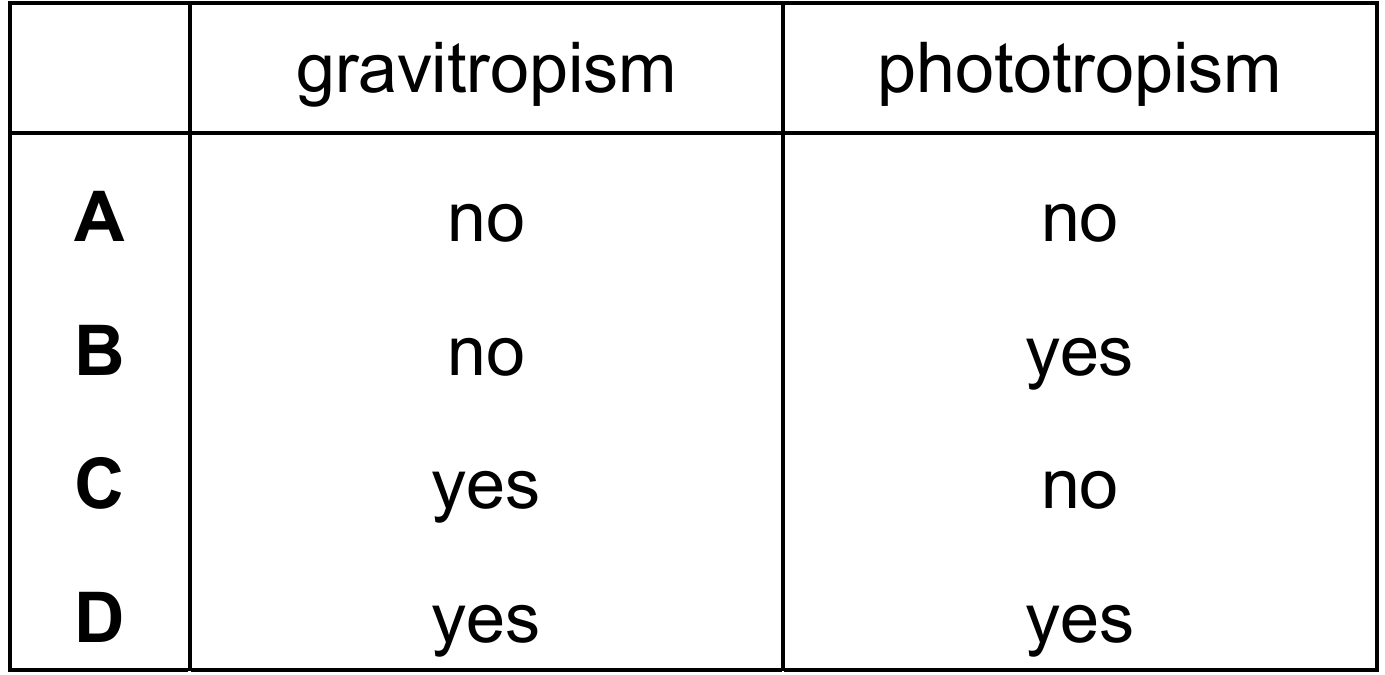
In the dark, plant shoots grow upwards and roots grow downwards.
What causes these responses?

▶️ Answer/Explanation
✅ Answer: (C)
Question 24
What is the reason why antibiotics should be used only when essential?
(B) It increases the natural selection of antibiotic resistant bacteria.
(C) It reduces the artificial selection of antibiotic resistant bacteria.
(D) It reduces the natural selection of antibiotic resistant bacteria.
▶️ Answer/Explanation
Antibiotics act as a selective pressure in a population of bacteria. When antibiotics are used, they kill susceptible bacteria, while those with rare mutations for resistance survive and reproduce. Overusing antibiotics provides more opportunities for this natural selection process to occur, leading to a rise in resistant strains. By using antibiotics only when essential, we limit the exposure of bacteria to the drug, thereby reducing the rate at which natural selection for resistance occurs. This helps preserve the effectiveness of treatments for future infections.
✅ Answer: (D)
Question 25
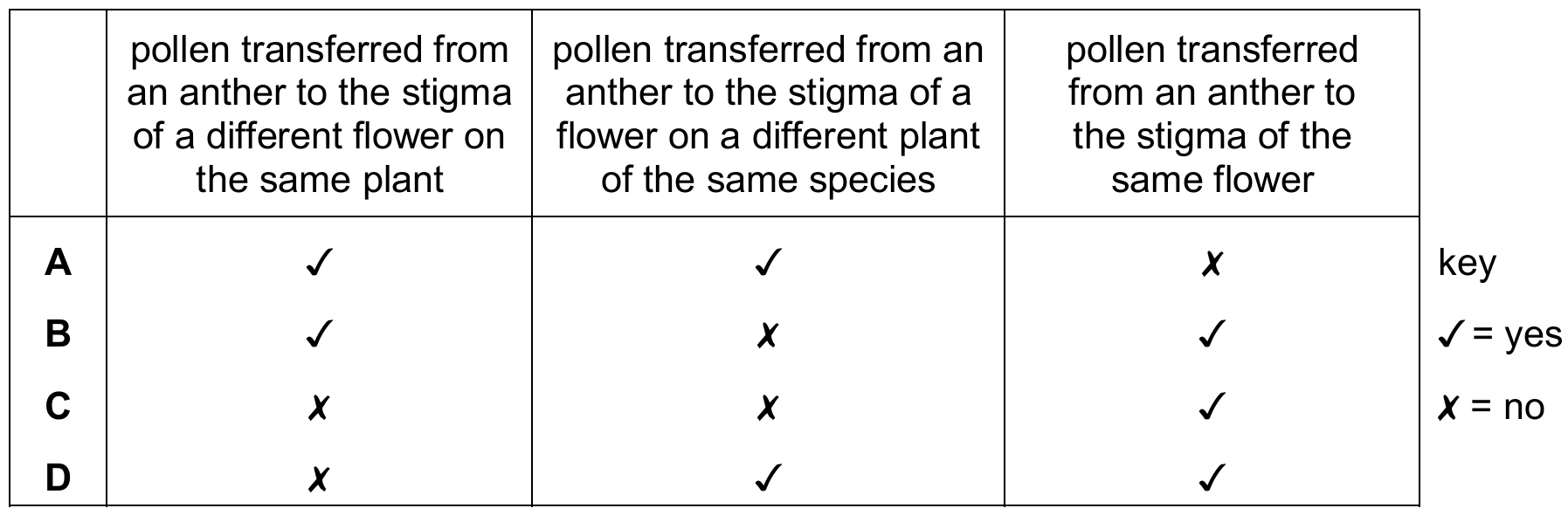
Which row describes self-pollination?

▶️ Answer/Explanation
Self-pollination occurs when pollen from the anther is deposited on the stigma of the same flower or another flower on the same plant. Because the genetic material comes from the same individual, it is considered “selfing.” In contrast, cross-pollination involves the transfer of pollen to a flower on a different plant of the same species. Therefore, a row describing self-pollination must have a “yes” (✓) for transfers within the same flower and between different flowers on the same plant, but a “no” (✗) for transfers to different plants.
✅ Answer: (B)
Question 26
The list shows terms used when describing sexual reproduction.
$2$ female gamete
$3$ ovule
$4$ ovary
$5$ filament
$6$ fertilisation
$7$ haploid
Which terms are used only when describing sexual reproduction in plants?
▶️ Answer/Explanation
✅ Answer: (D)
Question 27
Which statement correctly describes the effect of a hormone in a human menstrual cycle that lasts for $28$ days?
(B) LH stimulates the release of an egg on day $14$.
(C) Oestrogen maintains the uterus lining between days $14$ and $28$.
(D) Progesterone causes the repair and thickening of the uterus lining between days $4$ to $14$.
▶️ Answer/Explanation
In a typical $28$-day menstrual cycle, Luteinizing Hormone (LH) reaches its peak concentration just before the midpoint of the cycle. This “LH surge” triggers ovulation, which is the release of a mature egg from the ovary, typically occurring on day $14$.
The other options are incorrect because: * FSH (Follicle Stimulating Hormone) acts during the follicular phase (days $1$-$14$) to mature the egg, not up to day $21$. * Oestrogen primarily repairs the lining in the first half of the cycle, while Progesterone (produced by the corpus luteum) is responsible for maintaining the lining from day $14$ to $28$. * The repair and thickening between days $4$ and $14$ is stimulated by Oestrogen, not Progesterone.
✅ Answer: (B)
Question 28
What is the main hormone responsible for the development of male secondary sexual characteristics?
(B) insulin
(C) oestrogen
(D) testosterone
▶️ Answer/Explanation
✅ Answer: (D)
Question 29
Which term is defined as a length of DNA that codes for a protein?
(B) chromosome
(C) gene
(D) mutation
▶️ Answer/Explanation
✅ Answer: (C)
Question 30
Which statement about the sex chromosomes is correct?
(B) Men and women can inherit characteristics controlled by genes on the $Y$ chromosome.
(C) Only men can inherit characteristics controlled by genes on the $X$ chromosome.
(D) Only women can inherit characteristics controlled by genes on the $Y$ chromosome.
▶️ Answer/Explanation
In humans, biological sex is determined by the $XY$ system. Females possess two $X$ chromosomes ($XX$), while males possess one $X$ and one $Y$ chromosome ($XY$). Because both males and females have at least one $X$ chromosome, both sexes can inherit and express traits located on it. In contrast, the $Y$ chromosome is typically only present in males, meaning $Y$-linked traits are not inherited by females. Therefore, option (A) is the only scientifically accurate statement.
✅ Answer: (A)
Question 31
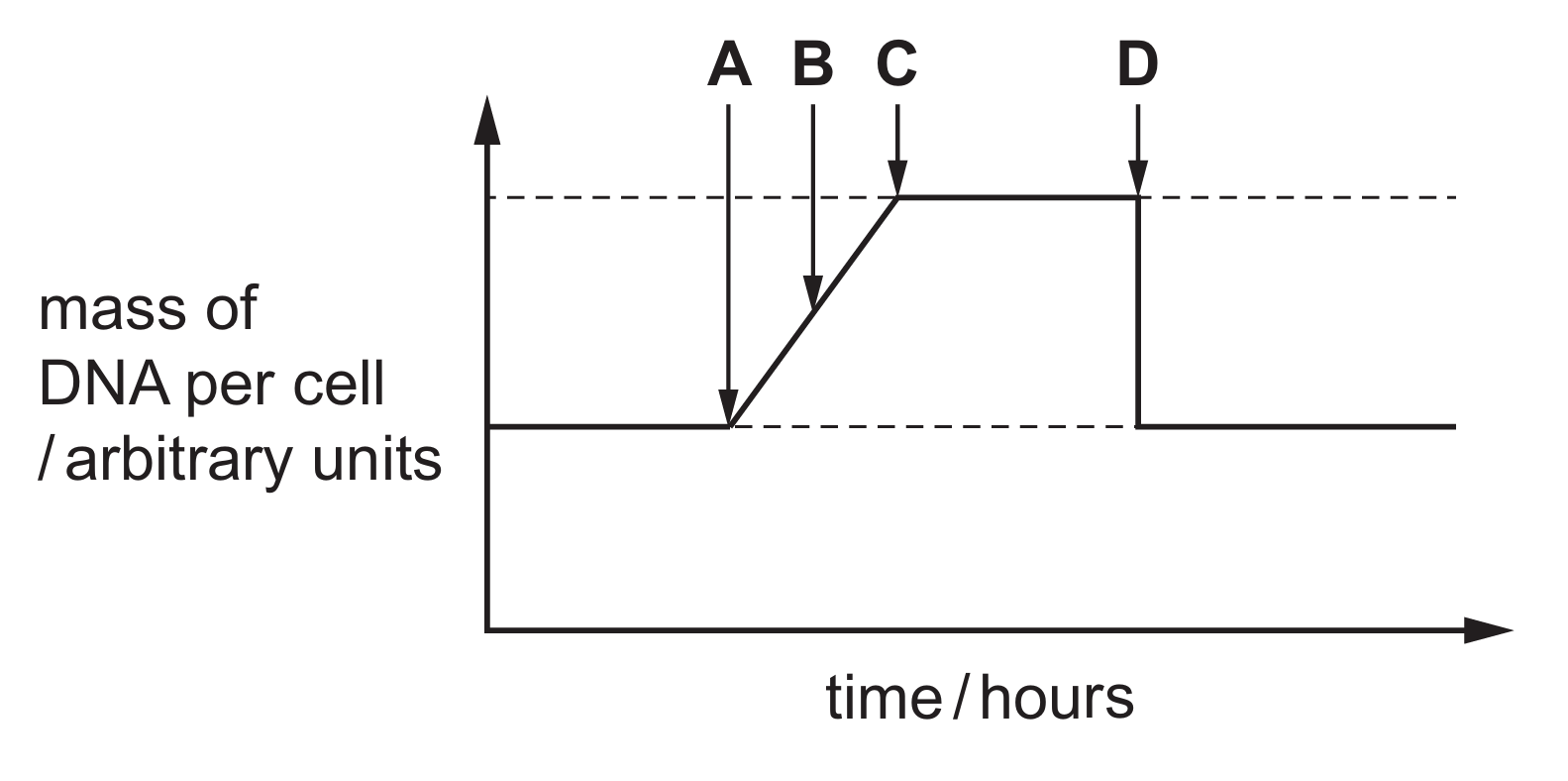
The graph shows how the mass of DNA changes during a mitotic cell division.
Where on the graph are two cells formed?

▶️ Answer/Explanation
During the cell cycle, DNA replication occurs during the S phase of interphase, which is represented by the slope between points $A$ and $C$. At point $C$, the cell has double the original amount of DNA ($2 \times$ mass). This doubled mass remains constant through the $G_{2}$ phase and the early stages of mitosis (prophase, metaphase, and anaphase).
The sudden drop in DNA mass per cell at point D represents cytokinesis, the physical division of the cytoplasm. At this moment, the single parent cell splits into two identical daughter cells. Consequently, the mass of DNA measured per cell returns to the original baseline level because the total genetic material has been partitioned into two separate nuclei.
✅ Answer: (D)
Question 32
A man with blood group $A$ and genotype $I^AI^o$ has a child with a woman who has blood group $B$ and genotype $I^BI^o$.
What is the probability of the child having blood group $O$?
▶️ Answer/Explanation
To find the probability, we use a Punnett square to cross the parents’ genotypes: $I^AI^o \times I^BI^o$. The possible combinations for the offspring are $I^AI^B$ (Type $AB$), $I^AI^o$ (Type $A$), $I^BI^o$ (Type $B$), and $I^oI^o$ (Type $O$). Each of these four combinations has an equal chance of occurring. Since only one out of the four possibilities results in blood group $O$, the probability is $1/4$. This converts to a decimal value of $0.25$.
✅ Answer: (B)
Question 33
What are sources of genetic variation in populations?
(B) meiosis, random mating, asexual reproduction
(C) mitosis, mutation, random fertilisation
(D) mitosis, random fertilisation, asexual reproduction
▶️ Answer/Explanation
Genetic variation arises from processes that shuffle or change DNA. Meiosis contributes through crossing over and independent assortment, while mutations create entirely new alleles. Random mating ensures diverse combinations of these alleles within a population. In contrast, mitosis and asexual reproduction produce genetically identical clones, which limits rather than increases variation. Therefore, option (A) is the only set containing three genuine sources of diversity.
✅ Answer: (A)
Question 34
The food chain shows how energy is transferred to a human.
lettuce $\rightarrow$ snails $\rightarrow$ duck $\rightarrow$ human
Where did the energy in the lettuce come from?
(B) soil
(C) the Sun
(D) water
▶️ Answer/Explanation
The primary source of energy for almost all life on Earth is the Sun. In this food chain, lettuce acts as a producer. Producers use a process called photosynthesis to capture light energy and convert it into chemical energy stored in glucose. While plants like lettuce absorb nutrients from the soil and water for growth, these are not the source of the energy itself. The snails, ducks, and humans then obtain this energy by consuming the level below them. Therefore, the original energy entering this specific biological system started with solar radiation.
✅ Answer: (C)
Question 35
The processes listed affect the concentration of carbon dioxide in the atmosphere.
$2$ increased tree planting
$3$ decreased fossil fuel combustion
$4$ increased fossil fuel combustion
Which processes increase the concentration of carbon dioxide in the atmosphere?
(B) $1$ and $4$
(C) $2$ and $3$
(D) $2$ and $4$
▶️ Answer/Explanation
✅ Answer: (B)
Question 36
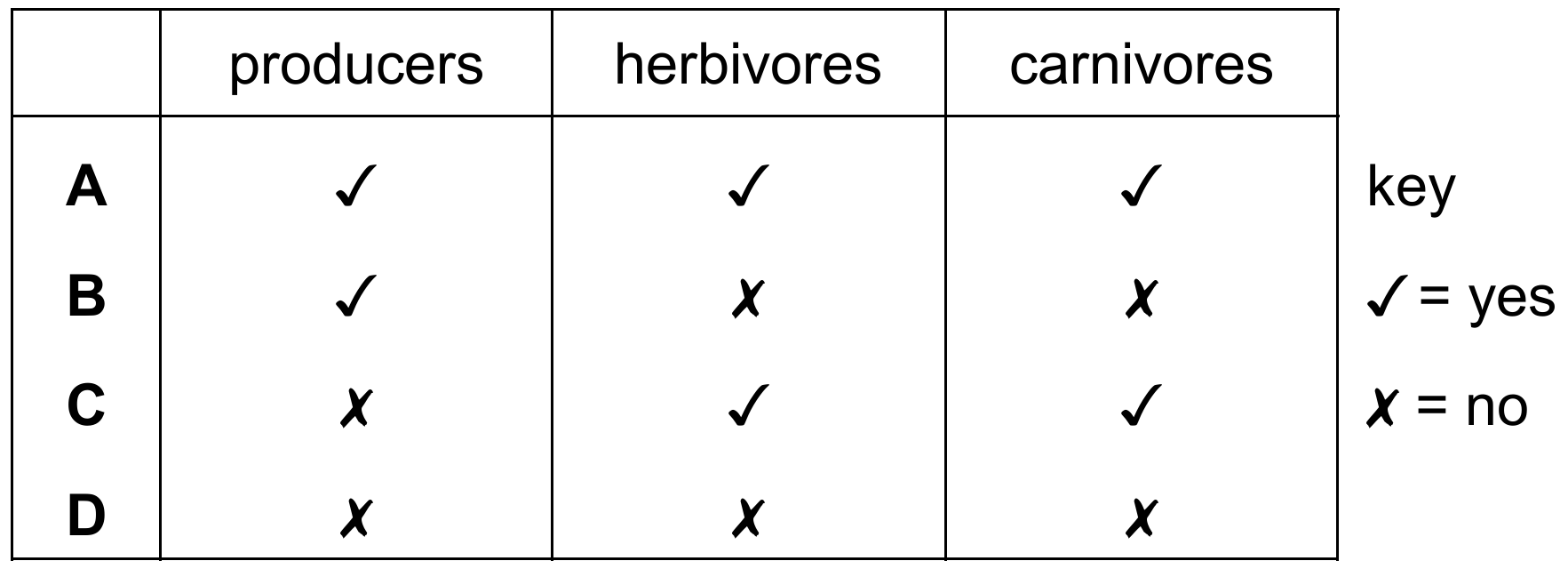
Which organisms can be sources of energy for decomposers?

▶️ Answer/Explanation
✅ Answer: (A)
Question 37
A coral reef contains species such as stony corals, sponges, seahorses and whale sharks.
These species interact with each other and are affected by the temperature, salt concentration and oxygen concentration of the water.
Using all the information given, what is being described?
(B) ecosystem
(C) food web
(D) population
▶️ Answer/Explanation
✅ Answer: (B)
Question 38
What can cause an increase in the size of a rabbit population?
(B) an increase in available food for the rabbits
(C) an increase in pollution in the habitat of the rabbits
(D) an increase in predation of rabbits
▶️ Answer/Explanation
✅ Answer: (B)
Question 39
How does eutrophication lead to the death of fish?
(B) Algae respire instead of photosynthesise.
(C) Decomposer bacteria lower the oxygen concentration in the water.
(D) Fertilisers reduce the availability of nitrates in the water.
▶️ Answer/Explanation
✅ Answer: (C)
Question 40
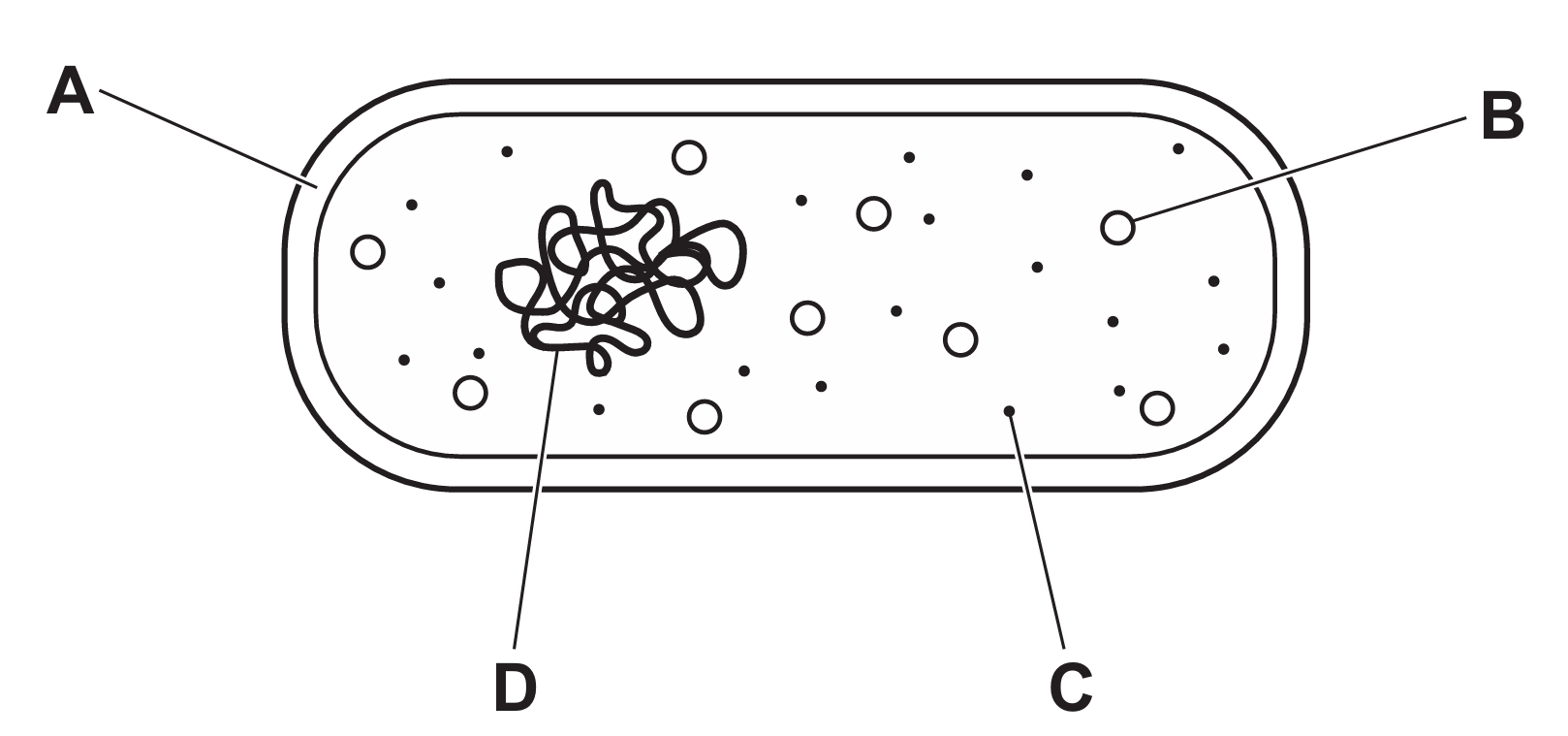
The diagram shows a bacterial cell.
Which cell structure makes bacteria useful in genetic modification?

▶️ Answer/Explanation
✅ Answer: (B)