
Topic: 1.1
Which process occurs both in plants and in animals?
▶️ Answer/Explanation
Ans: A
Excretion is the removal of metabolic waste and occurs in both plants and animals. Phagocytosis (B) is animal-specific, photosynthesis (C) is plant-specific, and transpiration (D) only occurs in plants. Thus, the correct answer is A (Excretion).
Topic: 1.2
Some statements about species are given.
1 Members of a species all look identical.
2 Members of a species belong to the same genus.
3 Members of a species can produce fertile offspring.
4 Species are named using an international system.
Which statements are correct?
▶️ Answer/Explanation
Ans: D
Statement 1 is incorrect because members of a species can show variation. Statements 2 (same genus), 3 (fertile offspring), and 4 (binomial naming system) are all correct. Thus, the correct answer is D (2, 3 and 4 only).
Topic: 2.1
Which structures are found in the cells of all living organisms?
1 cell membrane
2 chloroplast
3 cytoplasm
▶️ Answer/Explanation
Ans: C
Cell membrane (1) and cytoplasm (3) are universal to all cells. Chloroplasts (2) are only found in plant cells and some protists. Thus, the correct answer is C (1 and 3 only).
Topic: 2.2
In the diagram of the palisade cell, the distance between X and Y is 20 mm.
The actual width of the cell between X and Y is 40 μm.
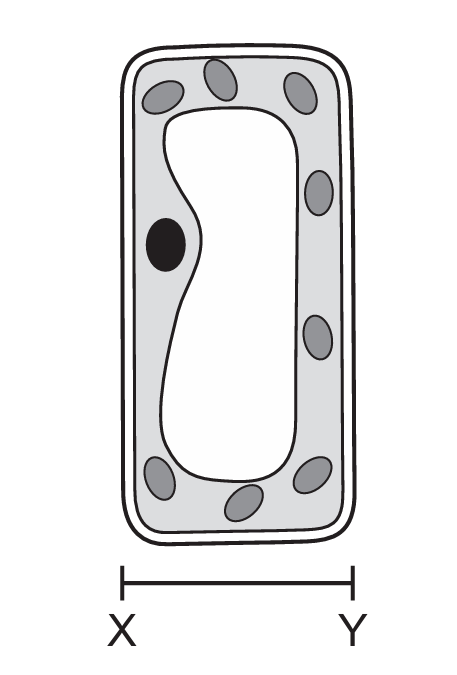
What is the magnification of the diagram?
▶️ Answer/Explanation
Ans: B
Magnification = Image size ÷ Actual size. First convert 20 mm to μm (20,000 μm). Then calculate: 20,000 μm ÷ 40 μm = ×500. Thus, the correct answer is B (×500).
Topic: 3.2
The diagram shows a root hair cell.
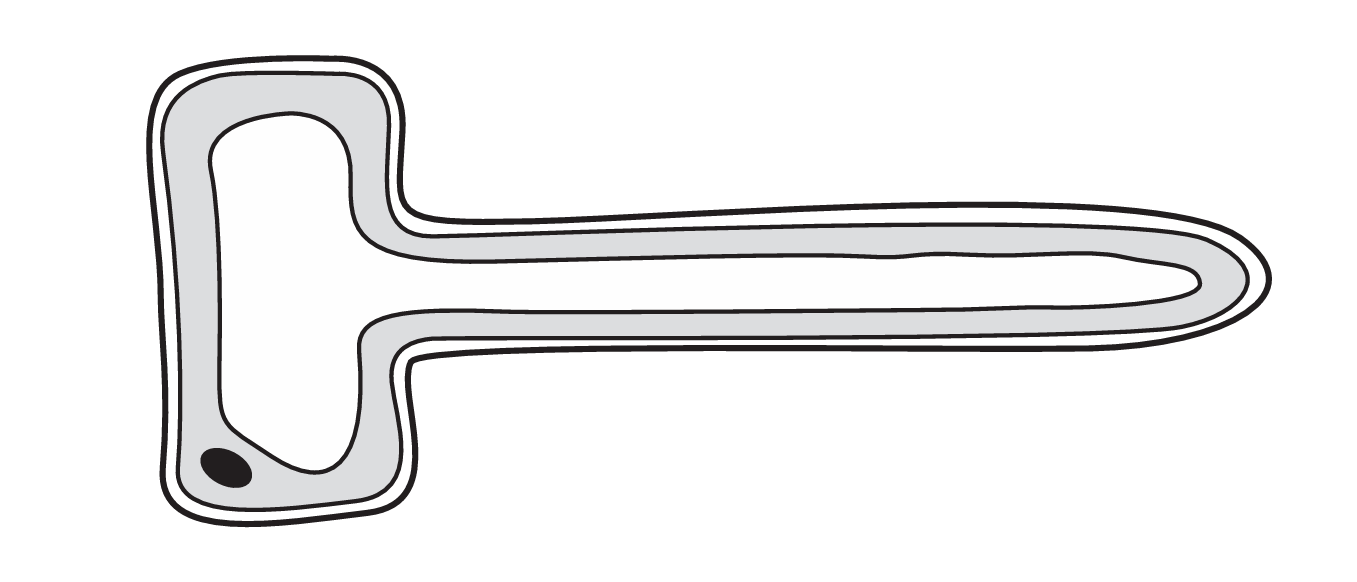
When does water enter the cell by osmosis?
▶️ Answer/Explanation
Ans: D
Water moves by osmosis from high water potential (outside cell) to low water potential (inside cell). This matches option D. Option A describes the solute concentration but not water potential. Thus, the correct answer is D.
Topic: 3.3
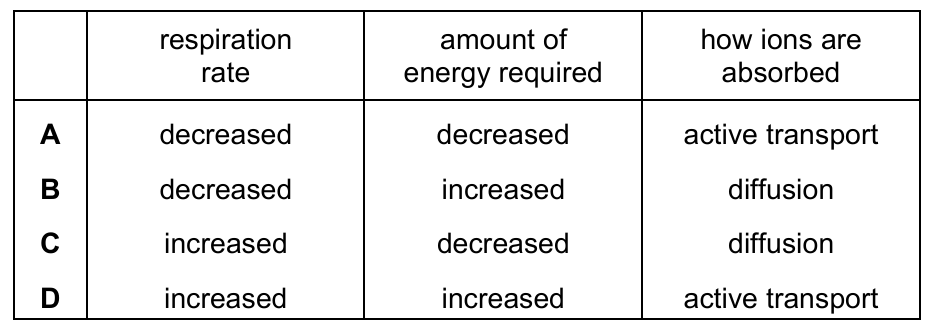
Which row shows the changes that occur during the germination of a seed?
▶️ Answer/Explanation
Ans: D
During germination, respiration rate increases to provide energy for growth, requiring more energy. Ions are absorbed by active transport against concentration gradients. Therefore, the correct row is D.
Topic: 7.5
The diagram shows the human alimentary canal. In which structure is most glucose absorbed into the blood?
▶️ Answer/Explanation
Ans: C
The small intestine (Structure C) is where most glucose absorption occurs, due to its large surface area with villi and microvilli. Other structures either don’t absorb nutrients (A/B) or mainly absorb water (D).
Topic: 17.1
DNA contains pairs of bases.
Which pair shows a correct combination of bases?
▶️ Answer/Explanation
Ans: B
DNA base pairing follows specific rules: Adenine (A) pairs with Thymine (T), and Cytosine (C) pairs with Guanine (G). Therefore, the only correct pair is C and G (B).
Topic: 7.4
In which region of the alimentary canal is maltose digested?
▶️ Answer/Explanation
Ans: C
Maltose is digested by maltase in the small intestine (C). The colon (A) and rectum (B) are involved in water absorption/egestion, while the stomach (D) digests proteins, not carbohydrates.
Topic: 5.1
The graphs show the effect of temperature on enzyme activity. This enzyme has an optimum temperature of 30°C. Which graph shows the effect of temperature on the activity of this enzyme?
▶️ Answer/Explanation
Ans: D
Enzyme activity increases up to the optimum temperature (30°C), then decreases gradually due to denaturation (D). Sharp drops (C) or linear increases (B) are incorrect, as is gradual decline without denaturation (A).
Topic: 6.1
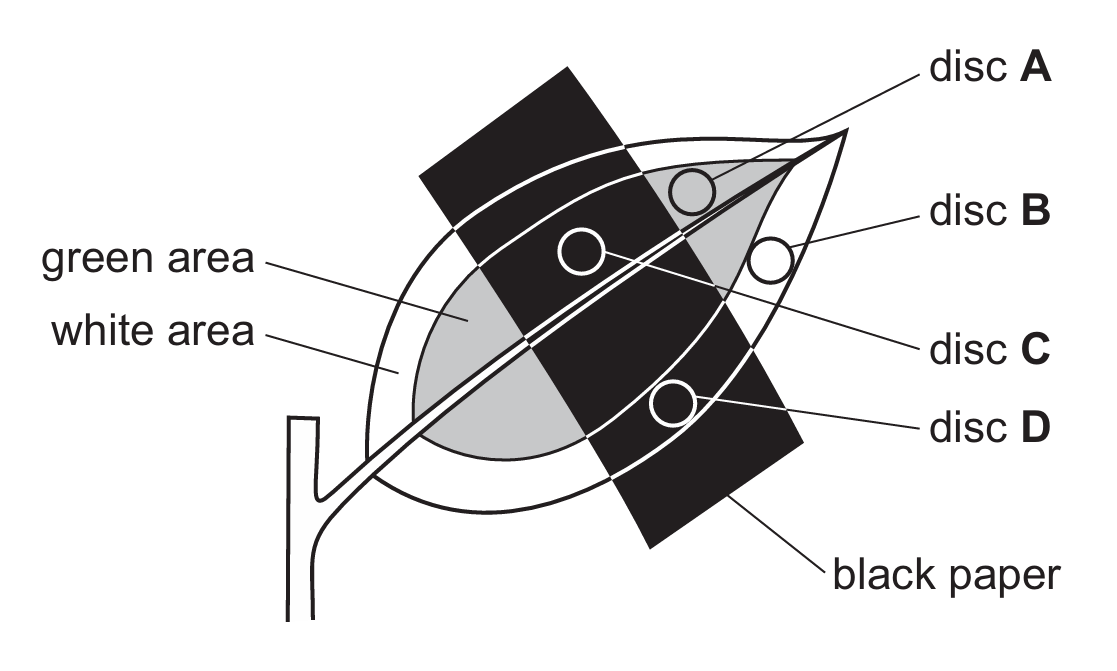
The diagram shows a leaf on a plant used in a photosynthesis experiment. At the start of the experiment, there is no starch in the leaf.
A piece of black paper is attached to the upper surface of the leaf. The plant is placed in bright light for 12 hours. Four discs are then cut from the leaf in the positions shown on the diagram. The discs are tested for starch.
Which disc contains starch?
▶️ Answer/Explanation
Ans: A
Starch is only produced in areas exposed to light (where photosynthesis occurs). Disc A is from the green area not covered by black paper, so it would contain starch. The covered areas (B, C, D) wouldn’t produce starch as light is blocked.
Topic: 6.1
The graph shows the effect of temperature on the rate of photosynthesis.
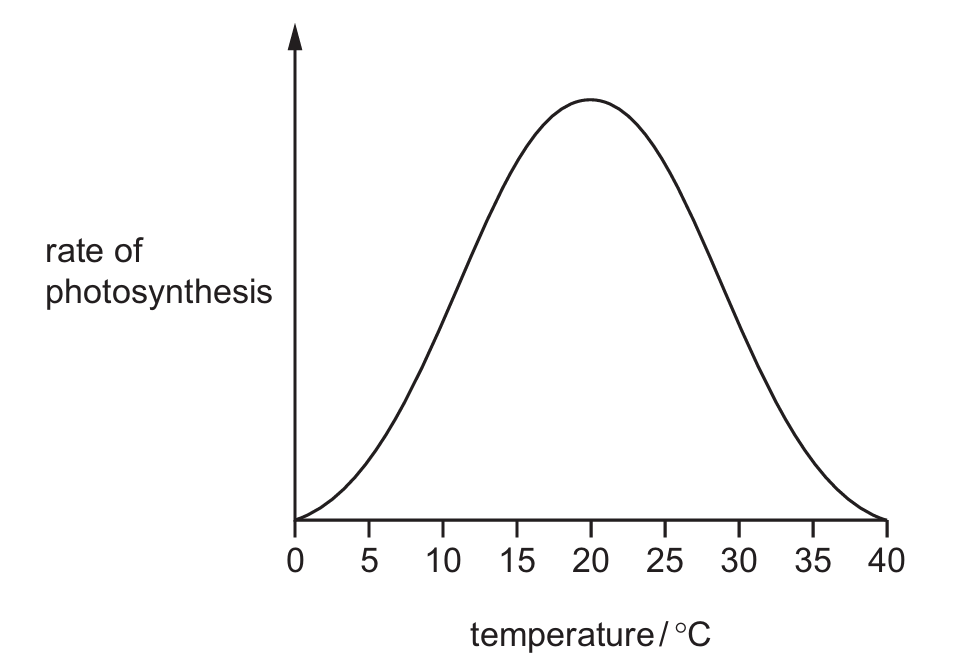
Which statement explains the change in rate of photosynthesis between 15 °C and 20 °C?
▶️ Answer/Explanation
Ans: C
Between 15°C and 20°C, the increasing temperature provides more kinetic energy to molecules, leading to more frequent and successful collisions between enzymes and substrates in photosynthesis. This explains the rising rate of photosynthesis in this temperature range.
Topic: 7.1
The lack of which component of a balanced diet will lead to the development of scurvy?
▶️ Answer/Explanation
Ans: C
Scurvy is caused by a deficiency of vitamin C, which is essential for collagen synthesis. Calcium (A) deficiency affects bones, iron (B) causes anemia, and vitamin D (D) deficiency leads to rickets or osteomalacia.
Topic: 7.2
Which structure is the duodenum?
▶️ Answer/Explanation
Ans: C
The duodenum is the first part of the small intestine that receives chyme from the stomach and secretions from the pancreas and liver. In the diagram, it would be structure C, located just after the stomach.
Topic: 8.3
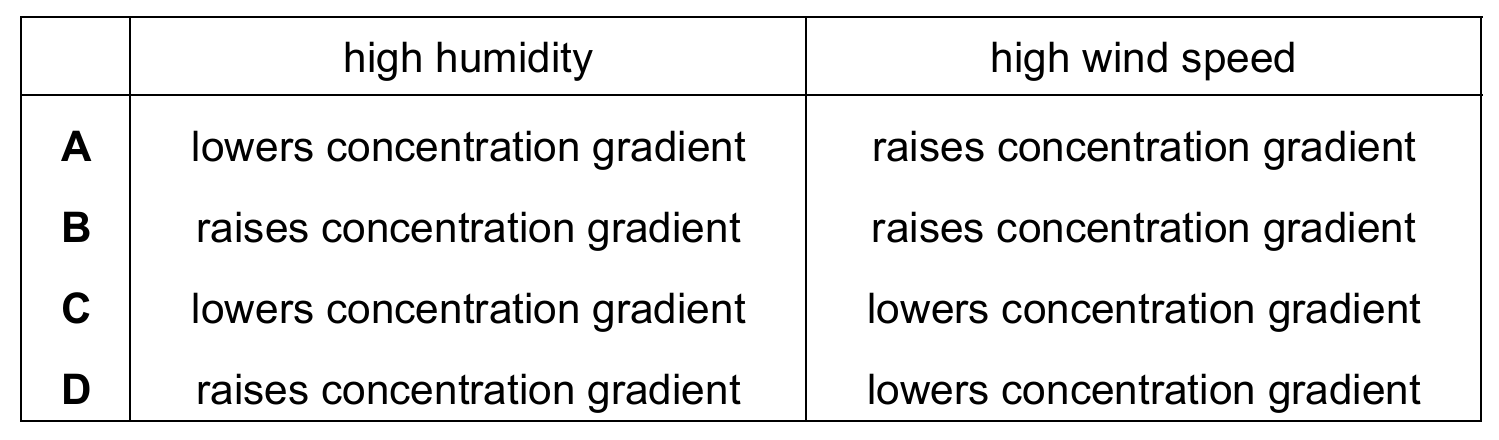
Humidity and wind speed are two factors that affect the rate of transpiration.
How do these two factors affect the concentration gradient of water molecules between the inside of the leaf and the outside atmosphere?
▶️ Answer/Explanation
Ans: A
High humidity lowers the concentration gradient (reduces transpiration) because the air already contains much water vapor. High wind speed raises the gradient by removing water vapor near the leaf surface, maintaining a steep diffusion gradient.
Topic: 8.4
During an investigation into the movement of substances in a plant, a ring of tissue containing the outer part of the transport tissue is removed, as shown.
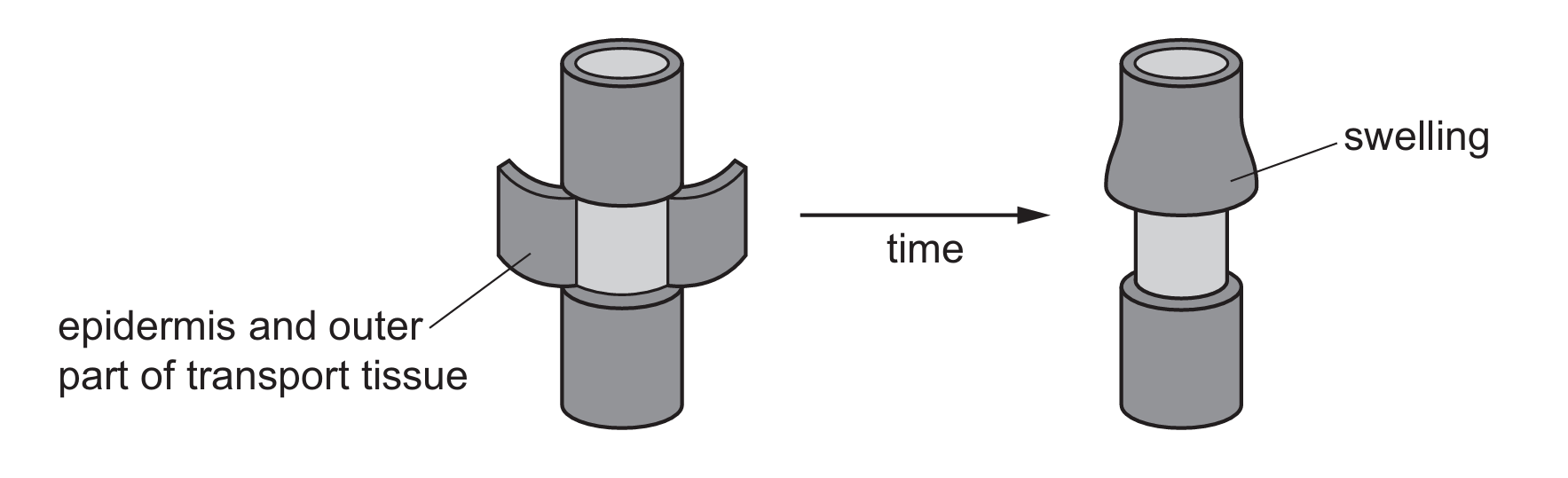
Which statement explains why a swelling develops in the stem?
▶️ Answer/Explanation
Ans: A
Removing the phloem disrupts the flow of sucrose and amino acids, causing them to accumulate above the ring. This leads to swelling (A). Xylem (C/D) transports water/minerals, not organic nutrients.
Topic: 9.2
The diagram shows the human heart. Which label shows the left ventricle?
▶️ Answer/Explanation
Ans: B
The left ventricle (B) is the thick-walled chamber pumping oxygenated blood to the body. It is located at the bottom left of the heart diagram, distinguishable by its muscular wall.
Topic: 9.3
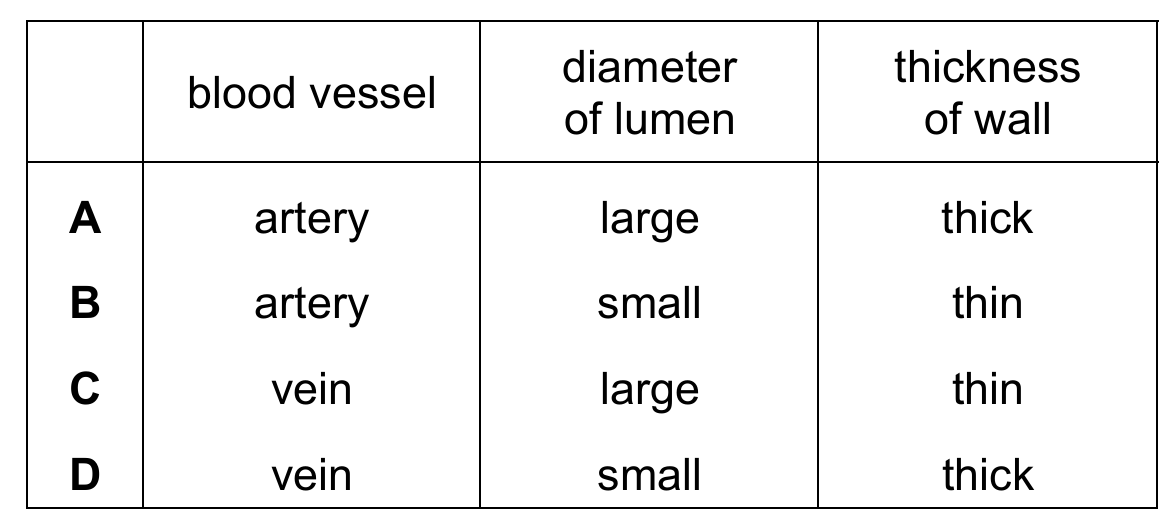
Which row shows the features of an artery or a vein?
▶️ Answer/Explanation
Ans: C
Veins have a large lumen and thin walls (C), while arteries have thick walls and a smaller lumen. Option A describes arteries partially correctly, but veins are better matched in C.
Topic: 10.1
Cholera bacteria in the gut cause secretion of chloride ions which leads to diarrhoea. Which diagram shows the correct movement of chloride ions (Cl⁻) and water (H₂O)?
▶️ Answer/Explanation
Ans: B
Cholera causes Cl⁻ ions to move into the gut lumen, followed by water (osmosis). Diagram D shows this correctly. Others (A/C/D) show reverse or incorrect movements.
Topic: 11.1
Different stages in the process of expiration are listed.
1 Rib cage moves downwards and inwards.
2 Volume of thorax decreases and pressure in lungs increases.
3 Air is pushed out of lungs.
4 Diaphragm and external intercostal muscles relax.
What is the correct order of these stages?
▶️ Answer/Explanation
Ans: D
Expiration begins with muscle relaxation (4), followed by rib cage movement (1), volume decrease (2), and air expulsion (3). Thus, the correct sequence is D (4 → 1 → 2 → 3).
Topic: 12.2
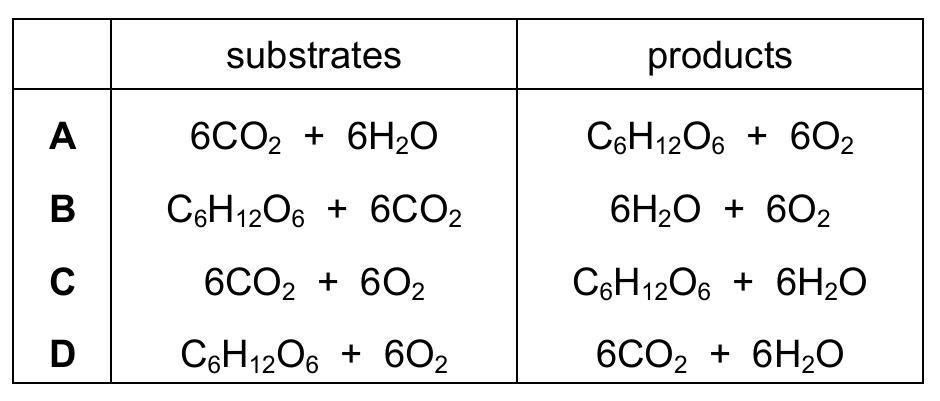
Which row shows aerobic respiration?
▶️ Answer/Explanation
Ans: D
Aerobic respiration uses glucose (C₆H₁₂O₆) and oxygen (O₂) as substrates to produce carbon dioxide (CO₂) and water (H₂O). The correct equation is shown in option D. Other options either reverse the equation (A) or show incorrect combinations (B, C).
Topic: 12.3
In which organ is lactic acid respired aerobically to remove an oxygen debt?
▶️ Answer/Explanation
Ans: C
The liver is responsible for processing lactic acid produced during anaerobic respiration. It converts lactic acid back into glucose or breaks it down completely through aerobic respiration, thus removing the oxygen debt accumulated during intense exercise.
Topic: 13.1
The diagram shows a cross-section of a kidney.
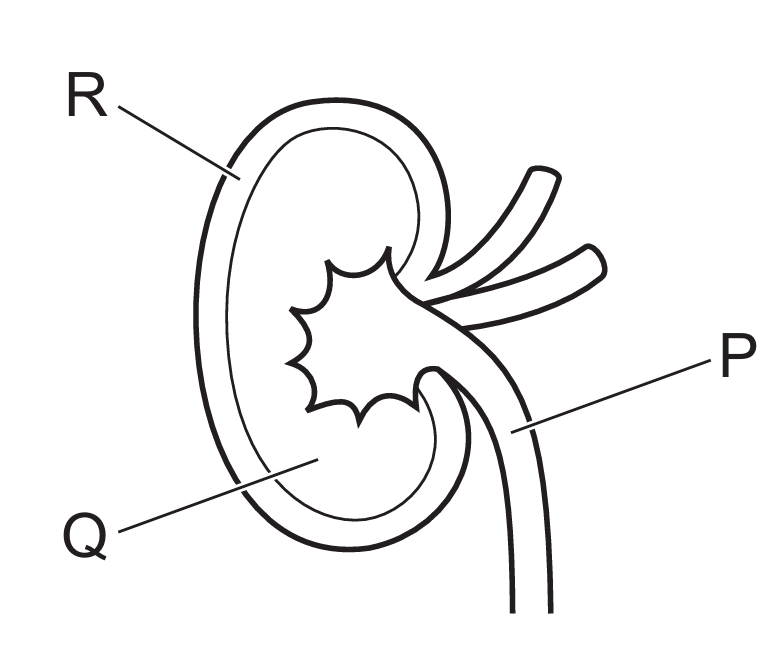
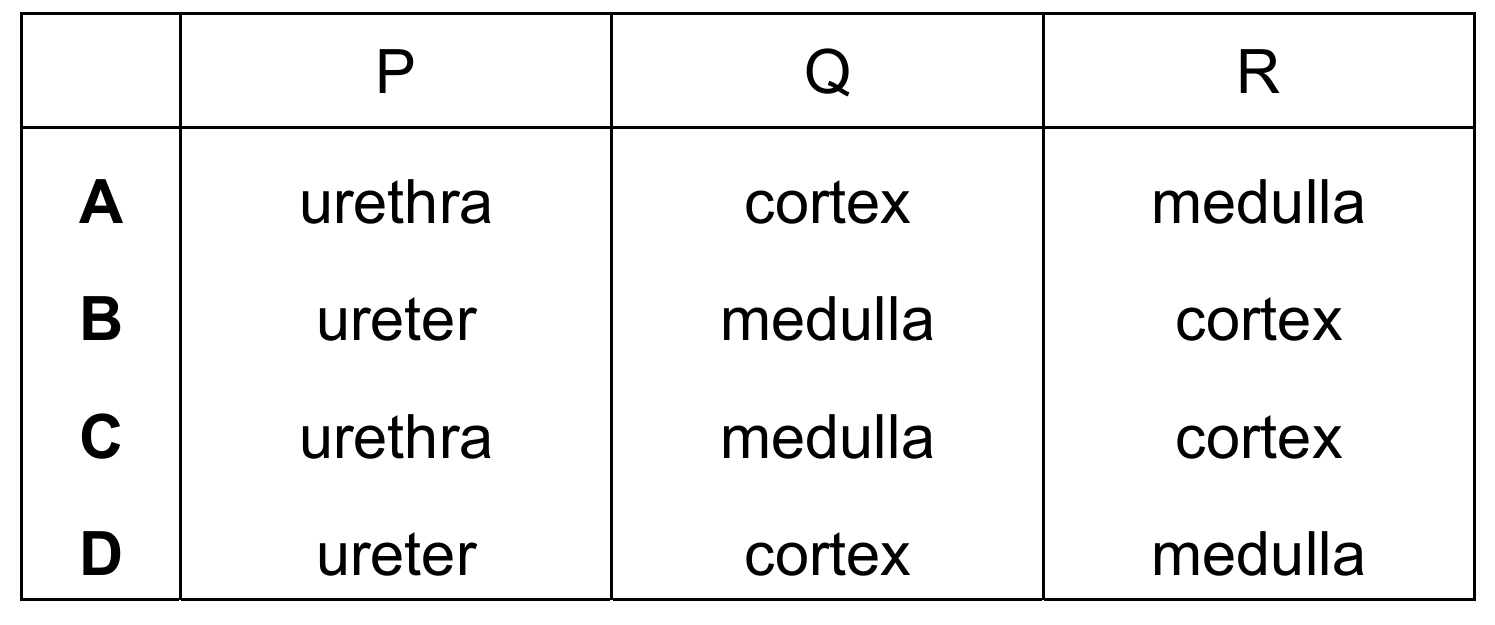
What are the correct names for structures P, Q and R?
▶️ Answer/Explanation
Ans: B
In kidney anatomy, the ureter (P) carries urine to the bladder, the medulla (Q) is the inner region with collecting ducts, and the cortex (R) is the outer region containing nephrons. Option B correctly matches these structures.
Topic: 14.1
Which statement describes what happens during the transmission of an electrical impulse along a reflex arc?
▶️ Answer/Explanation
Ans: A
In a reflex arc, neurotransmitters are released at synapses and bind to receptor proteins on the relay neurone (A). Vesicles (B) store neurotransmitters but don’t bind them. Sensory neurones (C/D) release neurotransmitters but don’t release receptor proteins.
Topic: 14.2
During the pupil reflex in bright light, what describes the actions of the muscles in the iris?
▶️ Answer/Explanation
Ans: A
In bright light, circular muscles contract to constrict the pupil (reduce light entry) while radial muscles relax. This is a protective reflex. Options B-D incorrectly describe the muscle actions – they can’t both contract or relax simultaneously.
Topic: 14.5
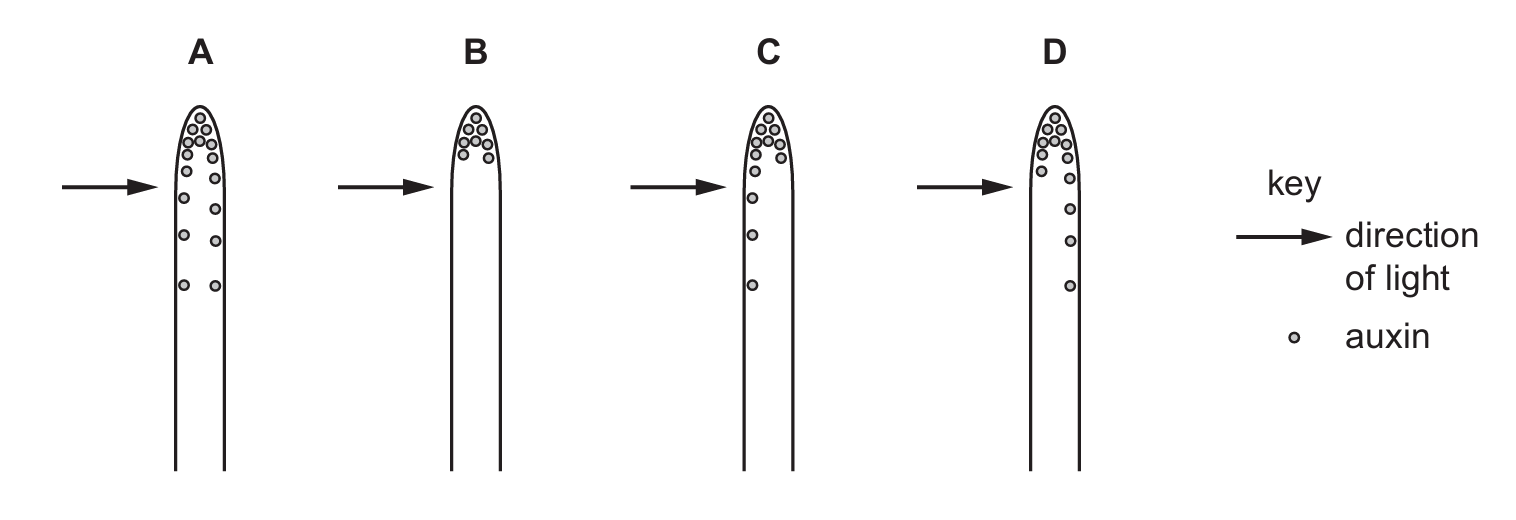
Which distribution of auxin will cause the shoot tip to grow towards the light?
▶️ Answer/Explanation
Ans: D
In phototropism, auxin accumulates on the shaded side of the shoot, causing cells to elongate more on that side and bending the shoot toward light. Option D correctly shows this uneven auxin distribution.
Topic: 16.1
What is an advantage of asexual reproduction in a wild population?
▶️ Answer/Explanation
Ans: B
Asexual reproduction allows rapid population growth since organisms don’t need mates and all individuals can reproduce. While it lacks genetic variation (A/C are disadvantages), the speed of reproduction is its main advantage in favorable conditions.
Topic: 16.3
The diagram shows the structure of part of a flower.
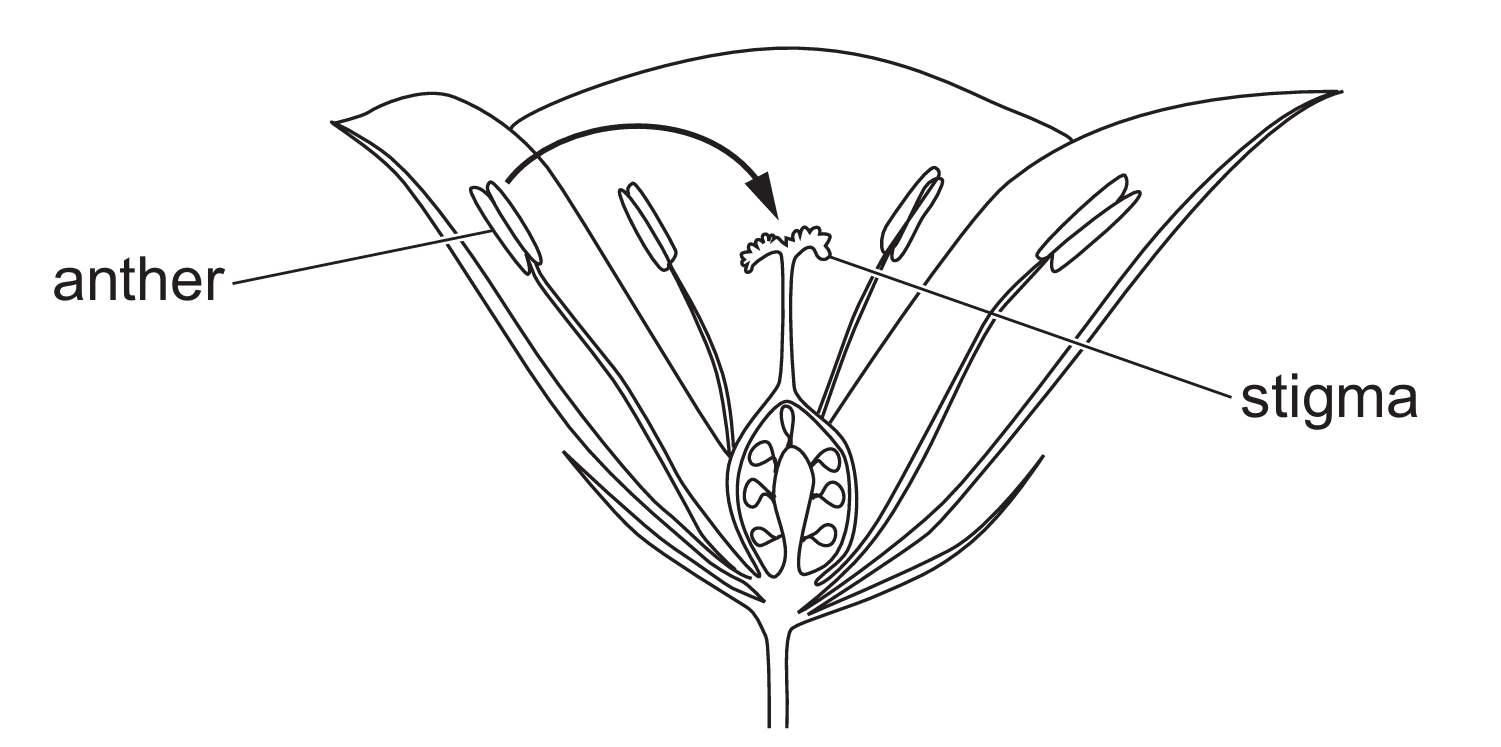
The arrow represents the transfer of pollen.
Which statement about the arrow is correct?
▶️ Answer/Explanation
Ans: C
The diagram shows pollen moving from anther to stigma on the same flower, which is self-pollination. Since the flower has visible anthers and stigma (not typical of wind-pollinated flowers), it’s likely insect-pollinated.
Topic: 16.4
In a sperm cell, which structure contains enzymes that can digest the jelly coat of an egg cell?
▶️ Answer/Explanation
Ans: A
The acrosome at the sperm head contains digestive enzymes needed to penetrate the egg’s protective layers. The flagellum (B) provides movement, mitochondria (C) supply energy, and the nucleus (D) carries genetic material.
Topic: 17.1
The following are involved in protein synthesis.
1 amino acids assembled in order
2 mRNA moves to the cytoplasm
3 mRNA passing through a ribosome
4 DNA in the nucleus
In which order do they become involved when proteins are made?
▶️ Answer/Explanation
Ans: C
Protein synthesis starts with DNA (4) being transcribed to mRNA, which then moves to cytoplasm (2). Ribosomes read mRNA (3) to assemble amino acids (1) in the correct order. So the sequence is 4 → 2 → 3 → 1.
Topic: 17.4
A man of genotype IAIo and woman of genotype IBIo have a child.
What is the chance that the child will have the same blood group as one of its parents?
▶️ Answer/Explanation
Ans: C
The man (IAIo) has blood group A, and the woman (IBIo) has blood group B. Their possible offspring genotypes are: IAIB (AB), IAIo (A), IBIo (B), and ii (O). There’s a 50% chance (1 in 2) the child will have either parent’s blood type (A or B).
Topic: 17.4
A man who has red-green colour blindness has a child with a woman who does not have red-green colour blindness. The child has red-green colour blindness. The man and woman decide to have another child.
What is the percentage probability that their next child will have red-green colour blindness?
▶️ Answer/Explanation
Ans: C
Red-green color blindness is X-linked recessive. The man (XcY) passed his Xc to his daughter (who must be XcX?). The mother must be a carrier (XCXc) since the child is affected. For each subsequent child, there’s a 50% chance of inheriting the Xc from mother (boys would be affected, girls would be carriers).
Topic: 18.1
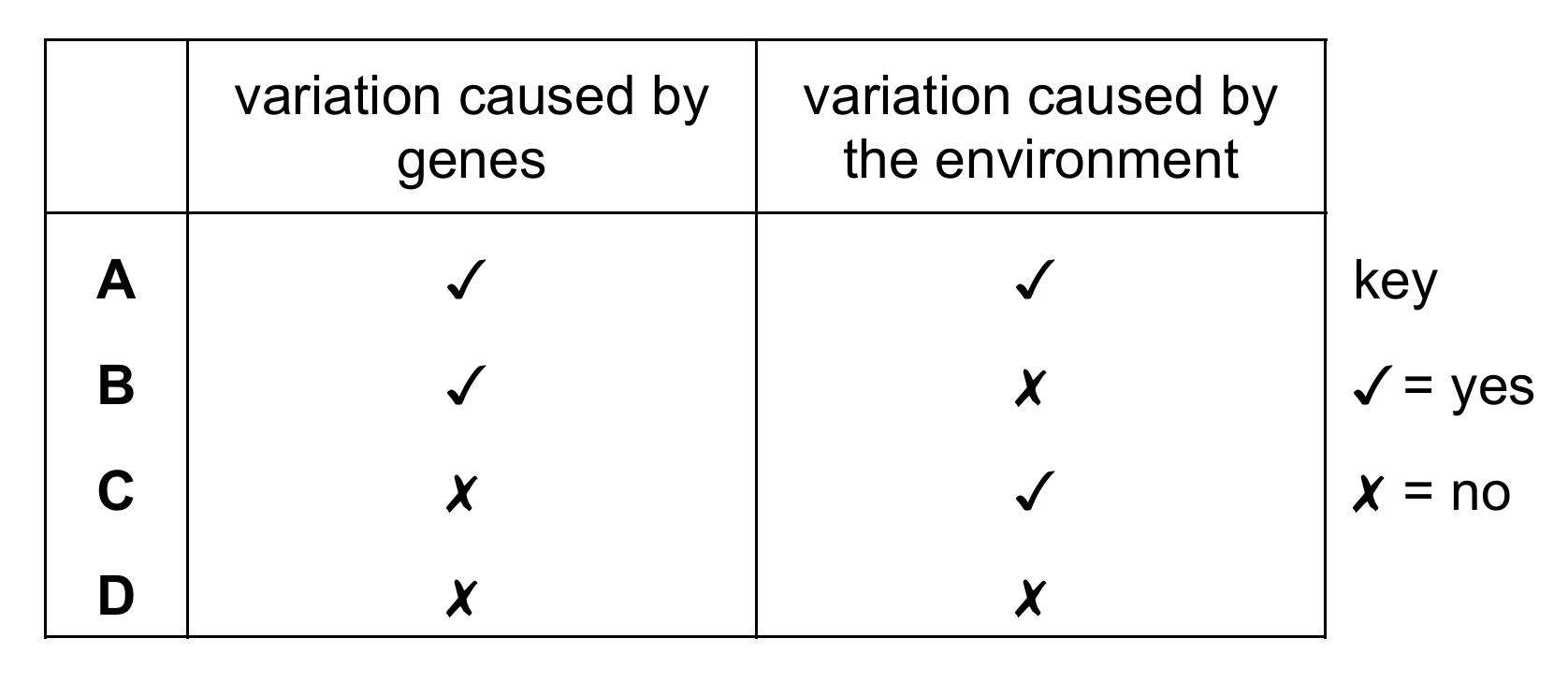
Which types of variation can be inherited?
▶️ Answer/Explanation
Ans: B
Only genetic variation (caused by genes) can be inherited from parents to offspring. Environmental variation (like scars or acquired skills) isn’t passed on through genes. Therefore, the correct answer is B (only variation caused by genes can be inherited).
Topic: 18.2
Which feature is a leaf adaptation for living in a hot, dry desert?
▶️ Answer/Explanation
Ans: A
Desert plants have hairy leaves to trap moist air near the surface, reducing water loss. Large surface area (B) and many stomata (C) would increase water loss, while a thin cuticle (D) would be less effective than a thick one at preventing evaporation.
Topic: 19.1
Which term is used to describe an organism that makes its own organic nutrients?
▶️ Answer/Explanation
Ans: D
Producers (like plants) make their own organic nutrients through photosynthesis. Carnivores (A) eat meat, herbivores (C) eat plants, and decomposers (B) break down dead matter – all are consumers that obtain nutrients from other organisms.
Topic: 19.2
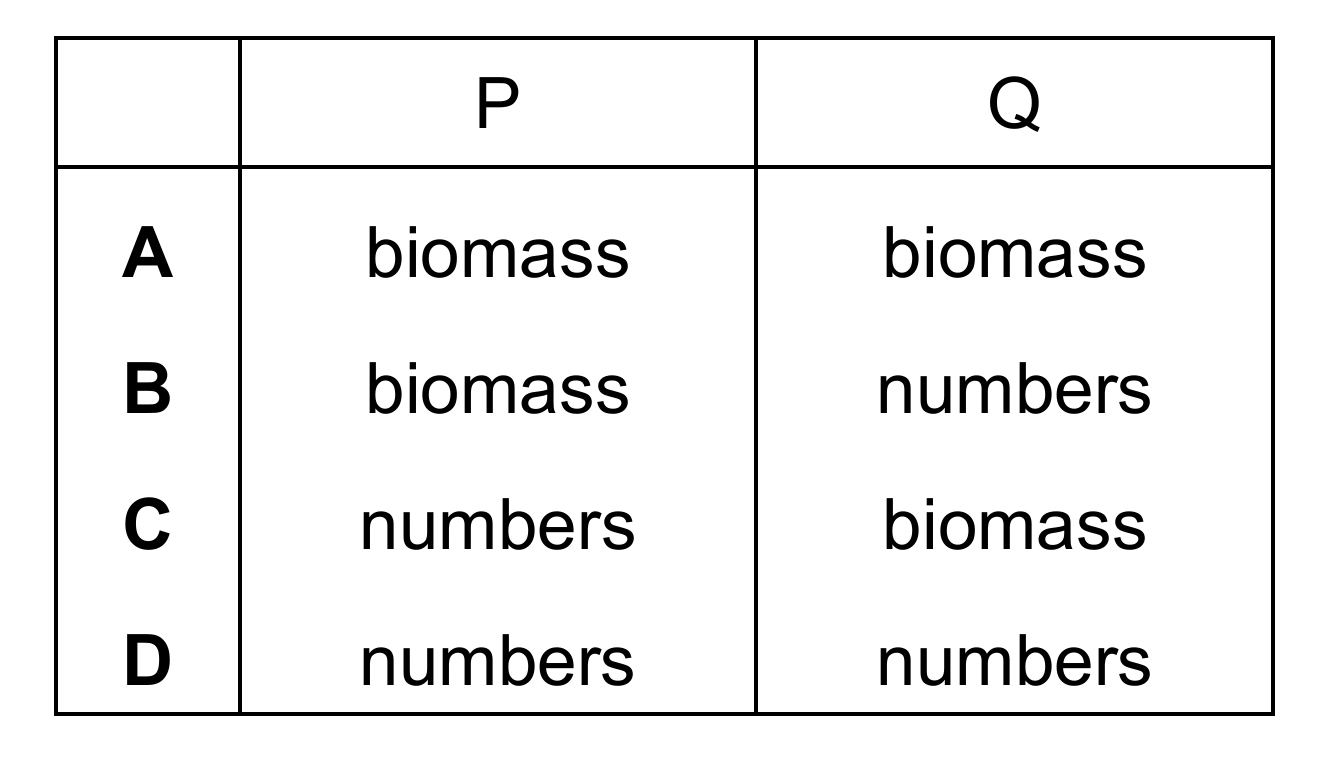
The diagram shows two pyramids based on food chains in which the producer is a large tree.

What do the two pyramids represent?
▶️ Answer/Explanation
Ans: B
For a large tree as producer, the biomass pyramid (P) would be inverted (tree has more biomass than primary consumers). The numbers pyramid (Q) would be upright (fewer trees than consumers). Thus, P represents biomass and Q represents numbers.
Topic: 20.2
What is a negative impact on the environment caused by deforestation?
▶️ Answer/Explanation
Ans: C
Deforestation removes trees that absorb water, leading to increased flooding (C). It actually increases CO₂ (B is wrong) and decreases soil quality (D is wrong). While A is true, it’s not an environmental impact.
Topic: 20.3
The diagram shows the positions of four farms and the concentrations of nitrate at different points in a river.
Which farm is likely to have been using too much fertiliser on its land?
▶️ Answer/Explanation
Ans: A
The farm causing nitrate pollution would be upstream of the highest nitrate concentration. In the diagram, the nitrate spike occurs after farm A, indicating it’s the source of excess fertilizer runoff.
Topic: 21.3
The diagram shows a bacterial cell containing a plasmid.
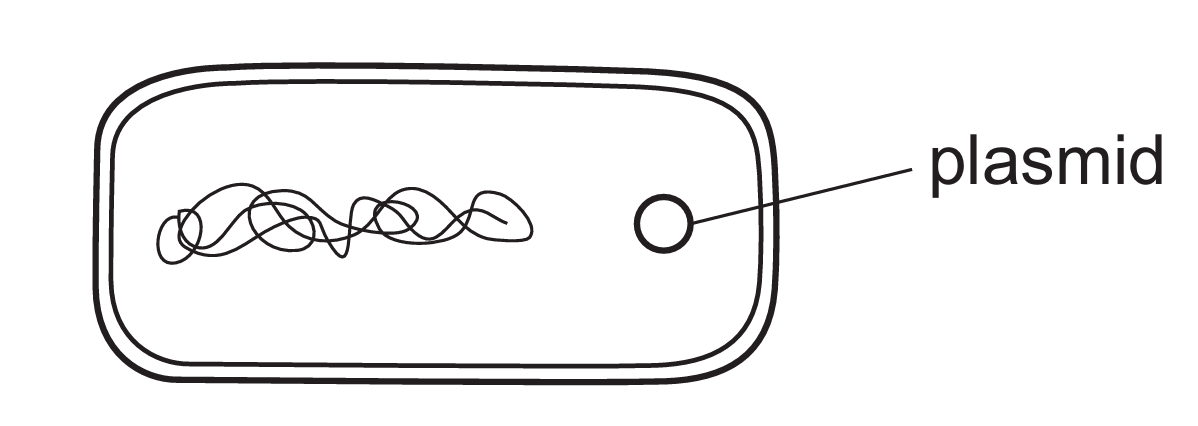
What is inserted into the plasmid if this cell is to be used for the production of insulin?
▶️ Answer/Explanation
Ans: A
For insulin production, the human insulin gene (DNA) is inserted into the bacterial plasmid. The bacteria then reads this human DNA to produce insulin. We don’t insert insulin directly (C) or bacterial DNA (B).
Topic: 21.2
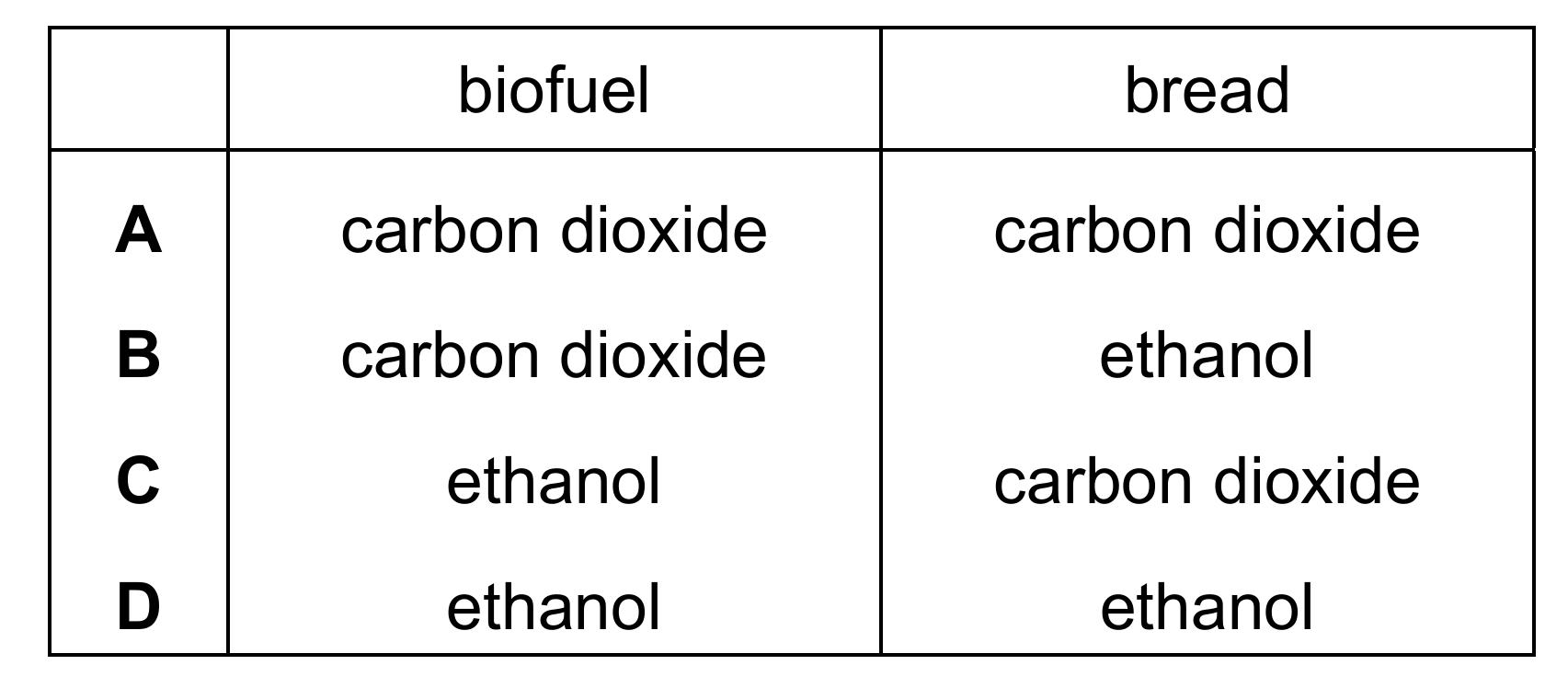
Yeast carries out anaerobic respiration, making carbon dioxide and ethanol as end-products.
Which end-products can be used to make biofuel and bread?
▶️ Answer/Explanation
Ans: C
Ethanol is used as biofuel (first column), while carbon dioxide makes bread rise (second column). The other options either use the wrong product for one purpose or both.