
▶️ Answer/Explanation
(a)(i)
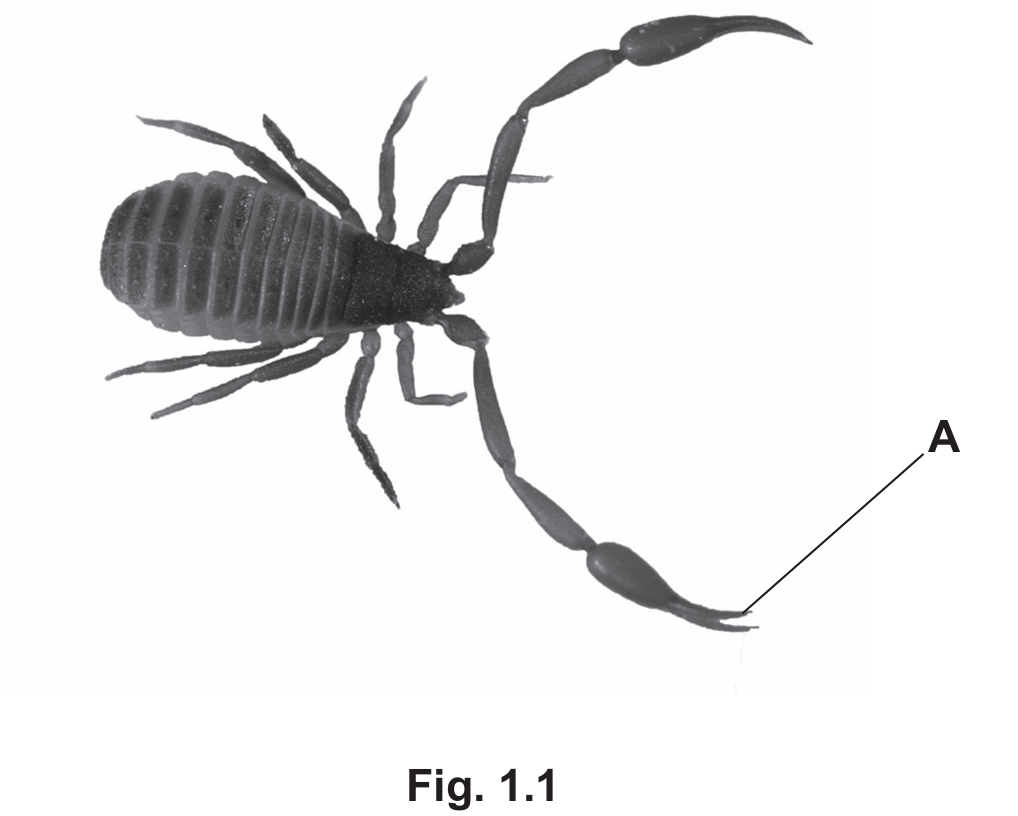
1. Eight legs / four pairs of legs
2. Two-part body (cephalothorax and abdomen)
Explanation: Arachnids like pseudoscorpions can be identified by these key features. They have eight legs (four pairs) unlike insects which have six legs. Their body is divided into two main parts – the cephalothorax (fused head and thorax) and the abdomen, which is different from insects that have three body parts.
(a)(ii)
Animal
Explanation: Arachnids belong to the animal kingdom (Animalia) as they are multicellular, eukaryotic organisms that are heterotrophic (cannot produce their own food).
(b)(i)
An adaptive feature is an inherited feature that helps an organism to survive and reproduce in its environment.
Explanation: Adaptive features are characteristics that organisms inherit from their parents which give them advantages in their specific environment. These features help them survive long enough to reproduce and pass on these advantageous traits to their offspring.
(b)(ii)
The part labelled A (pedipalps/claws) helps in catching prey or for defense.
Explanation: The large claws (pedipalps) are a distinctive feature of pseudoscorpions. These claws are used to capture and hold small prey like mites and insects. They may also be used for defense against predators or in mating displays. The claws contain venom glands to subdue prey, making them an excellent example of an adaptive feature for survival.
▶️ Answer/Explanation
(a)
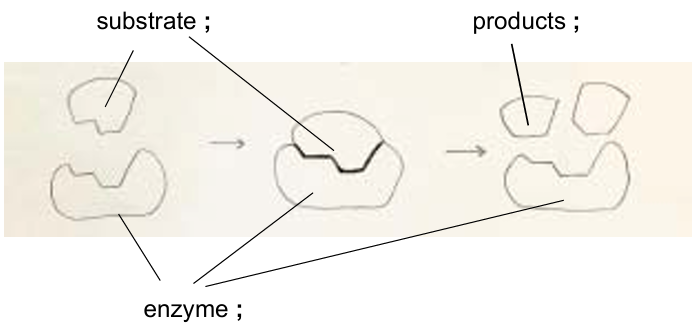
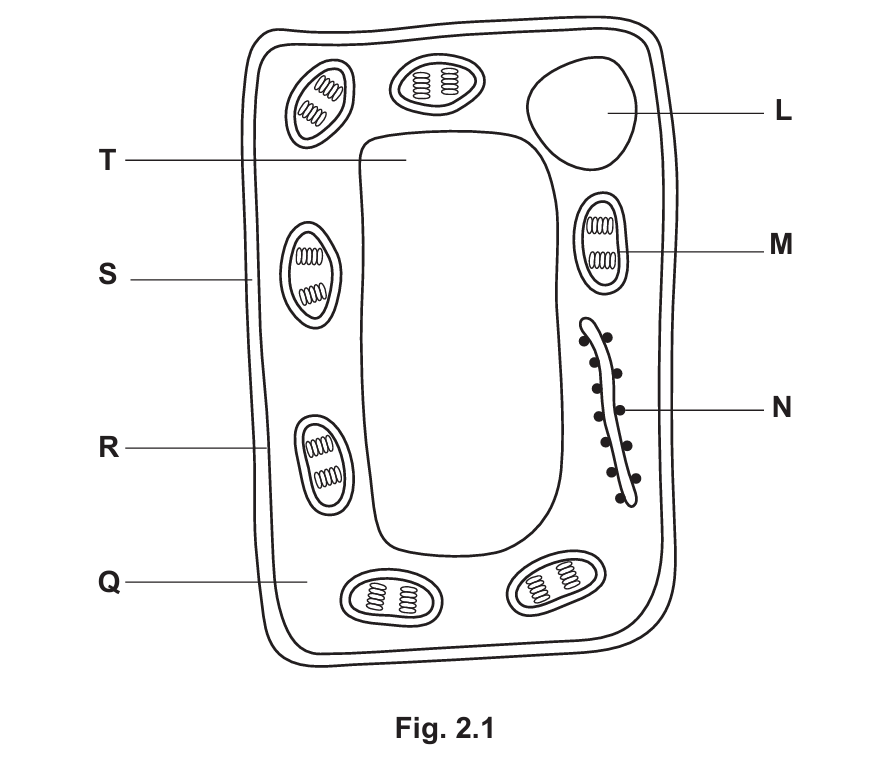
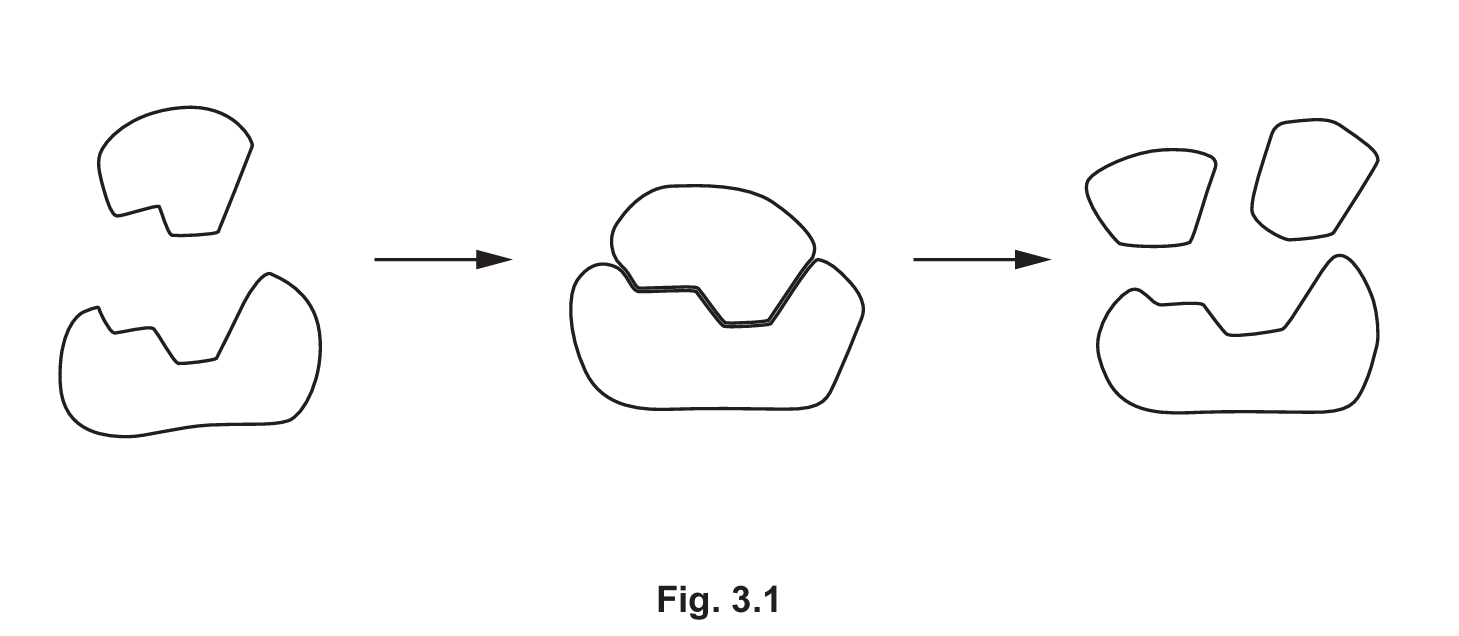
Labels should be added to Fig. 3.1 as follows:
- Enzyme: The protein molecule that catalyzes the reaction
- Substrate: The molecule that binds to the enzyme’s active site
- Product: The molecule(s) formed from the reaction
Explanation: In enzyme action diagrams, the enzyme is typically the larger structure that remains unchanged, the substrate is the molecule being acted upon, and the product is the result of the enzymatic reaction. The enzyme binds to the substrate at its active site, facilitating the chemical transformation.
(b) Enzymes are biological catalysts (usually proteins) that speed up chemical reactions without being used up in the process.
Explanation: Enzymes are protein molecules that act as catalysts in biochemical reactions. They work by lowering the activation energy needed for reactions to occur, thereby increasing the reaction rate. Importantly, enzymes are not consumed in the reactions they catalyze and are highly specific to their substrates due to their unique three-dimensional structures.
(c)(i) lipase
Explanation: Lipase is the enzyme that specifically breaks down fats (lipids) into smaller molecules like fatty acids and glycerol. This makes it effective for removing fat stains. The other enzymes have different substrates: amylase breaks down starch, protease breaks down proteins, and pectinase breaks down pectin.
(c)(ii) Different enzymes are needed because enzymes are specific to their substrates. A single enzyme cannot break down both fats and proteins effectively.
Explanation: Enzyme specificity means each enzyme has a unique active site shape that only fits particular substrate molecules. Lipase can break down fat stains but cannot effectively break down protein stains, which require protease. This is due to the lock-and-key mechanism where only substrates with complementary shapes to the enzyme’s active site can bind and be catalyzed.
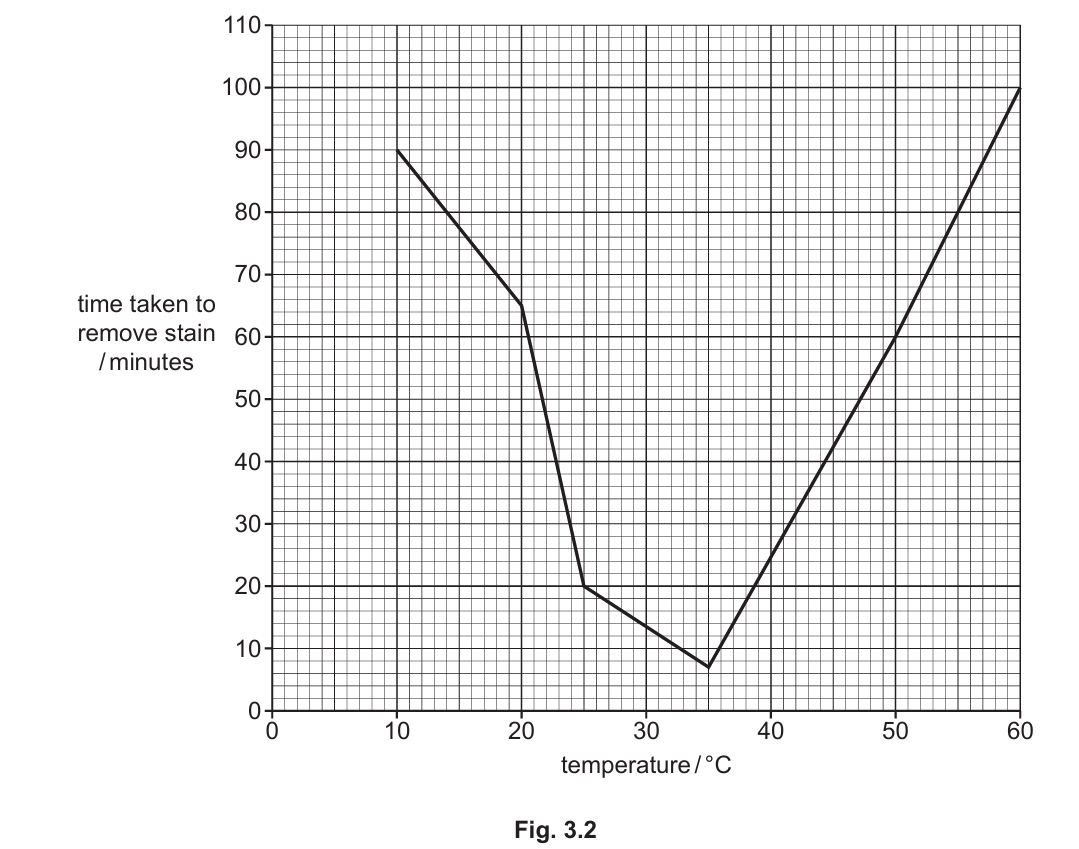
(d)(i) 35°C
Explanation: The optimum temperature is where the enzyme works most efficiently, shown by the shortest time to remove stains (lowest point on the graph). At 35°C, the time taken is minimal, indicating maximum enzyme activity.
(d)(ii) 63-66 minutes
Explanation: At 20°C, the graph shows the time taken is between 63-66 minutes. This longer time compared to the optimum temperature indicates reduced enzyme activity at lower temperatures.
(d)(iii) Between 40°C and 60°C, the enzymes begin to denature, losing their three-dimensional structure and becoming less effective.
Explanation: As temperature increases beyond the optimum, the hydrogen bonds and other weak interactions that maintain the enzyme’s shape begin to break. This causes the active site to change shape (denaturation), making it less complementary to the substrate. The graph shows increasing times for stain removal at these higher temperatures, demonstrating reduced enzyme activity due to denaturation.
▶️ Answer/Explanation
(a)(i) cheese
Explanation: Among the given options, cheese is the dairy product that naturally contains the highest amount of calcium. Dairy products are the richest dietary sources of calcium, with cheese being particularly concentrated.
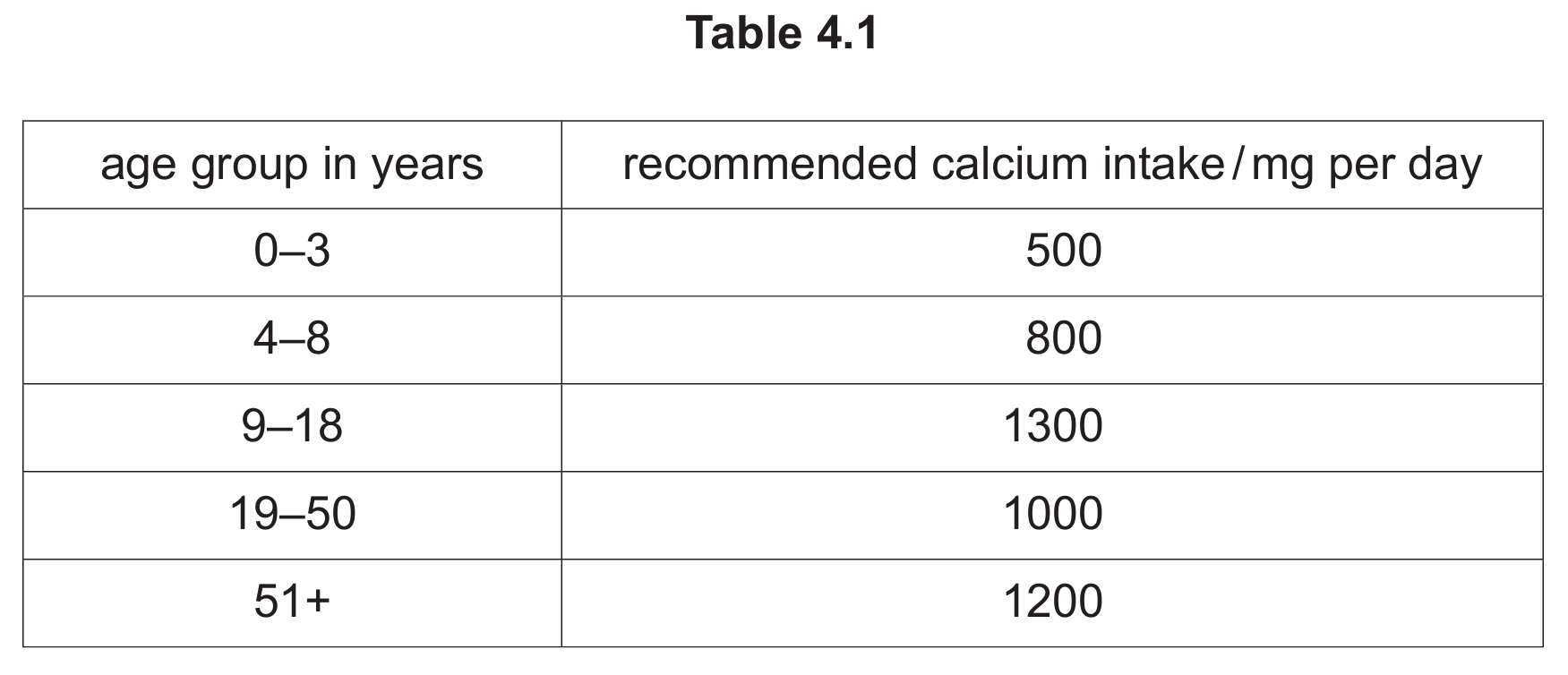
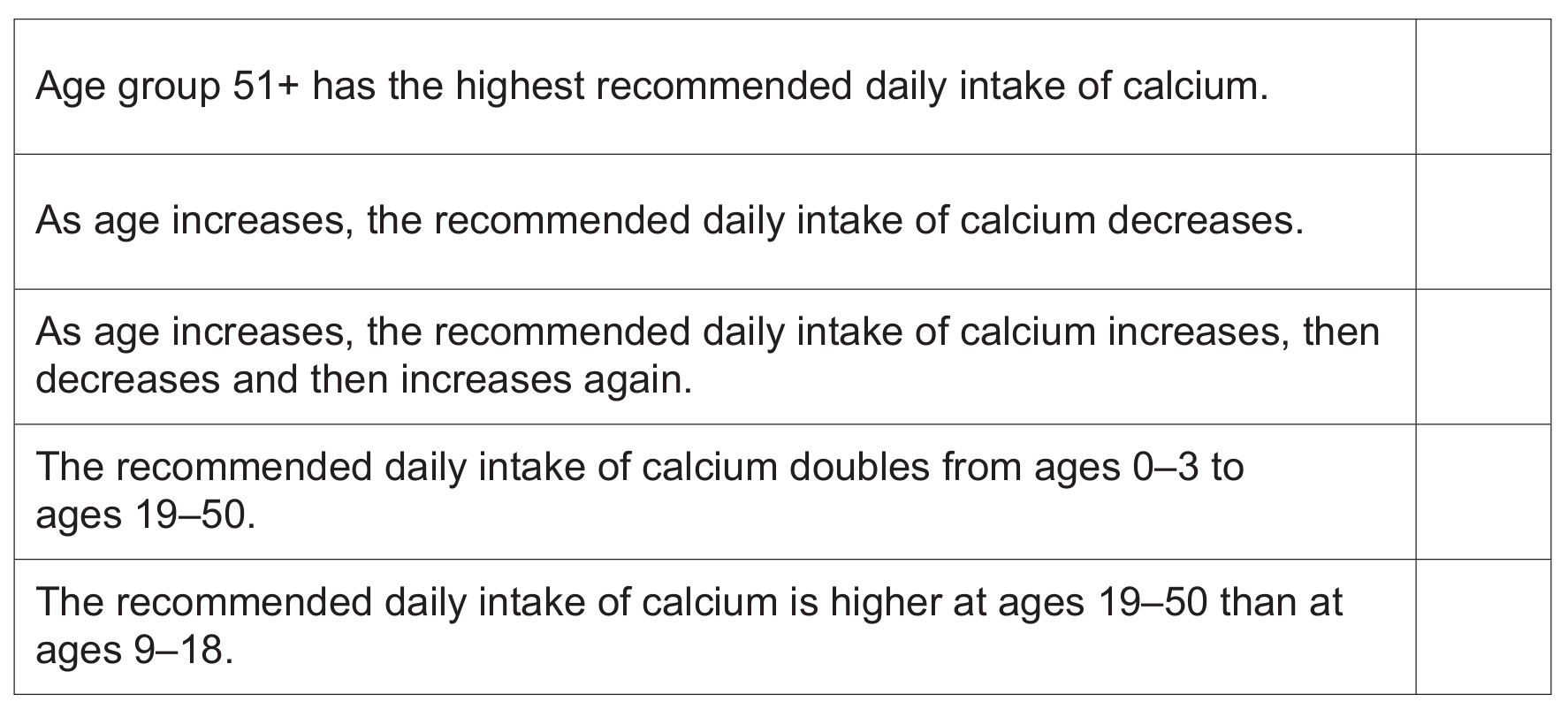
(a)(ii) The two correct statements to tick are:
- As age increases, the recommended daily intake of calcium increases, then decreases and then increases again.
- The recommended daily intake of calcium doubles from ages 0-3 to ages 19-50.
Explanation: The first correct statement describes the pattern: 500→800→1300→1000→1200 mg (increase→increase→decrease→increase). The second is correct because 1000 mg (19-50) is double 500 mg (0-3). The other statements are incorrect based on the data.
(a)(iii) Reasons why calcium requirements vary by age:
- Calcium is essential for bone growth and development, so children and adolescents (9-18) need more during growth spurts.
- Older adults (51+) need more calcium to prevent osteoporosis and maintain bone density as bone loss accelerates with age.
- Young children (0-8) need sufficient calcium for initial bone development but not as much as teenagers.
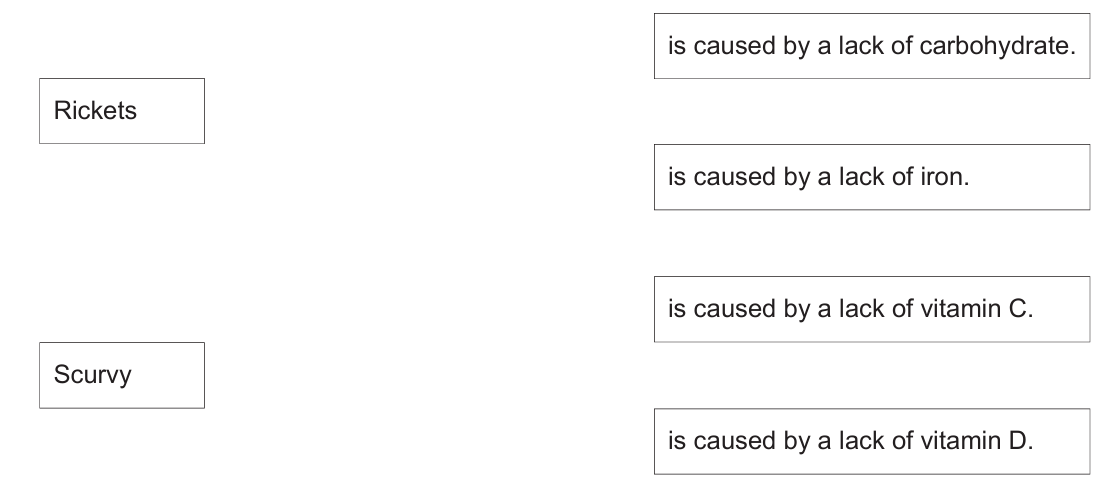
(b) Correct matching:
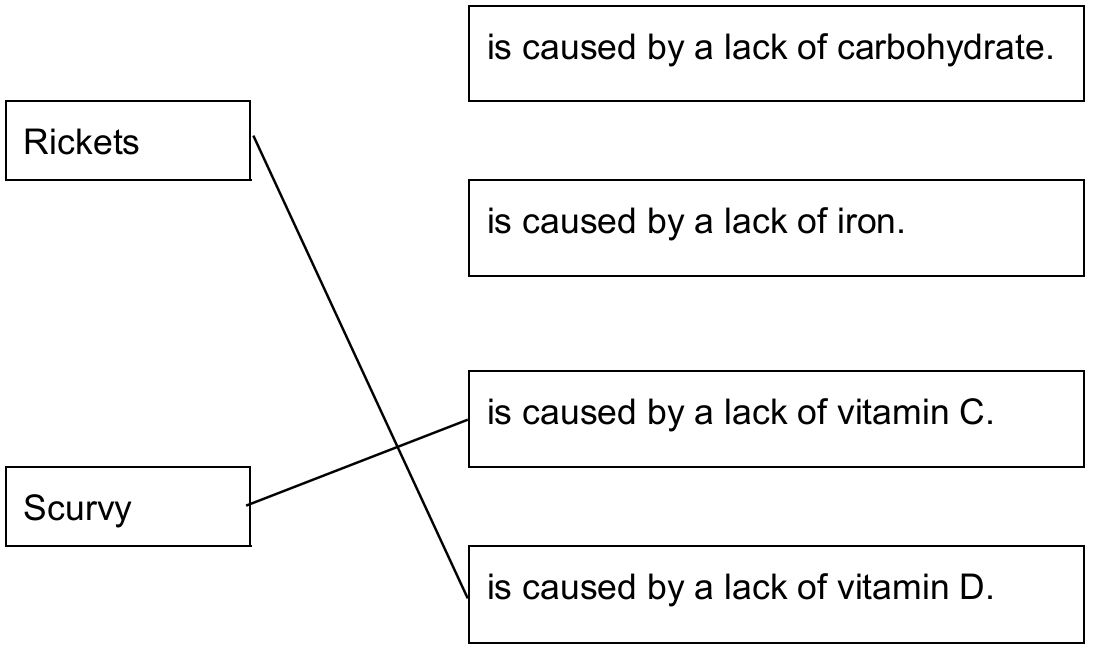
Explanation: Rickets is a bone disorder caused by vitamin D deficiency which affects calcium absorption. Scurvy is caused by vitamin C deficiency and leads to connective tissue problems.
(c)(i) Dietary sources of fibre include: fruits (e.g., apples, bananas), vegetables (e.g., carrots, broccoli), whole grains (e.g., whole wheat bread, brown rice), nuts (e.g., almonds), and seeds (e.g., flaxseeds).
(c)(ii) Fibre is important because:
- It adds bulk to stool, preventing constipation and promoting regular bowel movements.
- It helps maintain a healthy digestive system by supporting beneficial gut bacteria.
- It can help control blood sugar levels and lower cholesterol.
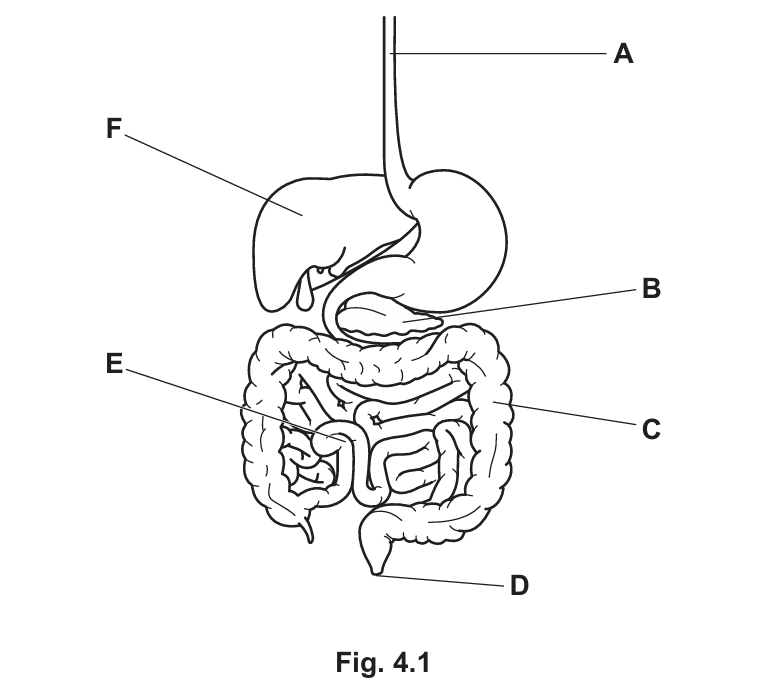
(d)(i) D
Explanation: Egestion (elimination of undigested waste) occurs in the rectum/anus area, which would be labeled D in the diagram.
(d)(ii) C and D
Explanation: Water is primarily absorbed in the large intestine (colon, labeled C) and some additional absorption occurs in the rectum (labeled D) before egestion.
▶️ Answer/Explanation
(a)
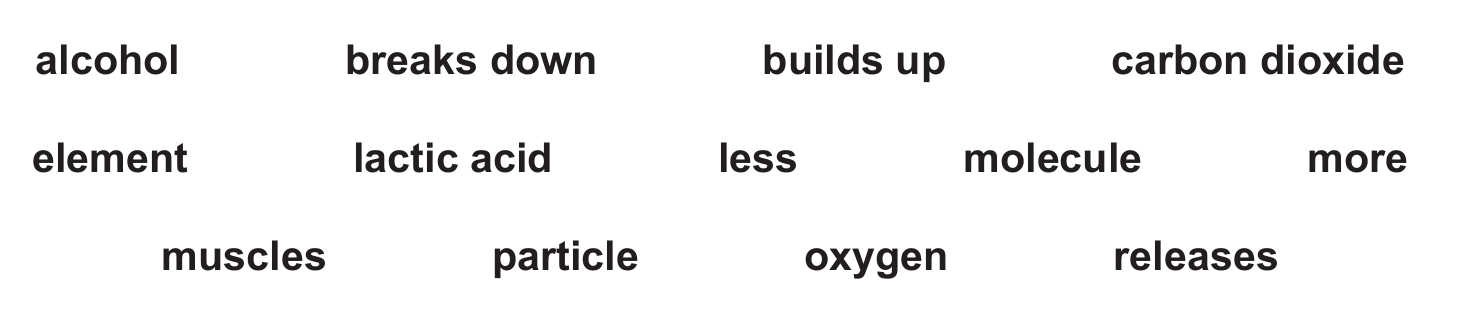
Anaerobic respiration is the chemical reaction in cells that breaks down nutrient molecules to release energy without using oxygen.
Anaerobic respiration releases much less energy per glucose molecule than aerobic respiration.
Lactic acid is produced by anaerobic respiration during vigorous exercise.
Explanation:
Anaerobic respiration is a type of respiration that occurs without oxygen. The first blank requires “breaks down” because this describes the process of breaking nutrient molecules (like glucose) to release energy. The second blank is “oxygen” because this distinguishes anaerobic from aerobic respiration.
The third sentence compares energy yield: anaerobic produces “less” energy per glucose “molecule” compared to aerobic respiration because the glucose isn’t fully broken down without oxygen.
The final blank is “lactic acid” because this is the byproduct of anaerobic respiration in human muscles during intense exercise when oxygen demand exceeds supply.
(b)
glucose → alcohol (or ethanol) + carbon dioxide
Explanation:
In yeast, anaerobic respiration (fermentation) produces different products than in humans. The equation shows glucose being converted into alcohol (ethanol) and carbon dioxide. This process is crucial in baking (where CO₂ makes dough rise) and brewing (where alcohol is the desired product).
Note that the products are different from human anaerobic respiration because yeast uses a different biochemical pathway, resulting in alcohol rather than lactic acid.

▶️ Answer/Explanation
(a)
Any three from:
- Chemical (e.g., taste or smell)
- Sound (hearing)
- Touch/pressure/pain (tactile sensations)
- Temperature (thermal sensations)
Explanation: Our body has various sense organs that detect different stimuli. The nose detects chemical stimuli (smell), ears detect sound waves, skin detects touch/pressure/pain and temperature changes, while the eyes specifically detect light stimuli.
(b)(i)
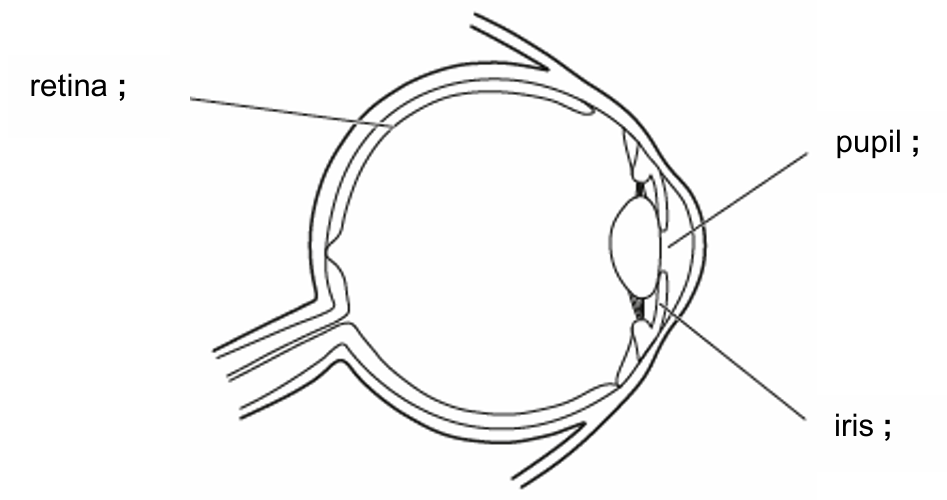
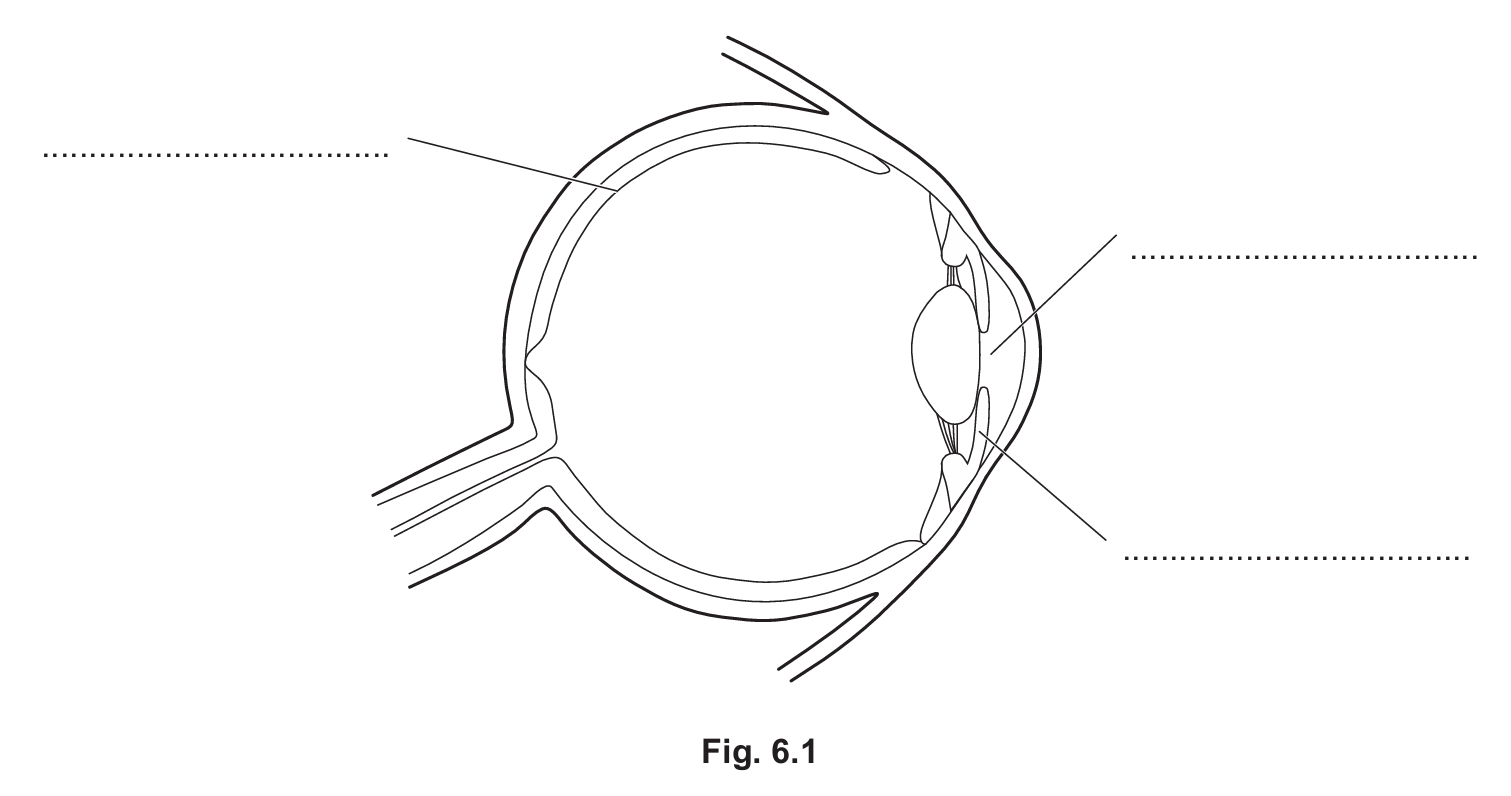
Explanation: The retina is the light-sensitive layer at the back of the eye. The pupil is the opening that allows light to enter the eye, and the iris is the colored part that controls the size of the pupil.
(b)(ii)
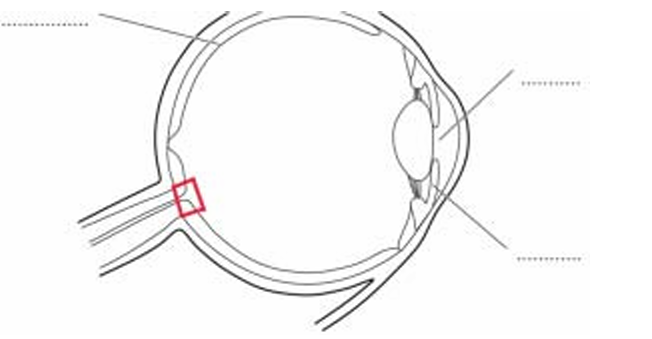
X should be placed where the optic nerve meets the retina (the optic disc).
Explanation: The blind spot is located at the optic disc where the optic nerve exits the eye. There are no photoreceptor cells in this area, so it’s insensitive to light.
(c)(i)
Rays of light reach the front of the eye. Light is refracted through the cornea and the lens focuses light on the retina. Light receptors in the retina detect light and the optic nerve carries impulses to the brain.
Explanation: Light entering the eye is first refracted (bent) by the cornea. The lens then fine-tunes this refraction to focus the light precisely on the retina. Specialized receptor cells (rods and cones) in the retina detect the light and convert it into neural signals that travel via the optic nerve to the brain for processing.
(c)(ii)
The pupil diameter increases (dilates).
Explanation: In dark conditions, the pupil dilates (gets larger) to allow more light to enter the eye and reach the retina. This is an automatic reflex controlled by the iris muscles to optimize vision in different lighting conditions.

▶️ Answer/Explanation
(a)
Answer:
1. The farmer selects goats with the highest milk yield from the herd.
2. These high-yielding goats are bred together.
3. The offspring are evaluated for milk production.
4. The best milk-producing offspring are selected for further breeding.
5. This process is repeated over many generations.
Detailed Explanation:
Selective breeding is a process where humans choose specific animals with desirable traits to produce offspring with enhanced characteristics. In this case, the farmer wants goats that produce more milk.
First, the farmer must identify which goats in the current herd produce the most milk. These become the breeding stock. By mating two high-yielding goats, there’s a good chance their offspring will inherit this trait.
After the first generation is born, the farmer needs to monitor which kids grow up to be the best milk producers. Only these select few should be used for the next round of breeding. This careful selection over multiple generations gradually increases the average milk yield of the herd.
The process requires patience as it takes several generations to see significant improvements. It’s also important to maintain genetic diversity to avoid health problems that can come from too much inbreeding.
(b)
Answer:
1. More economical – produces more food using less space and resources.
2. Easier management – animals are concentrated in one area making feeding and healthcare simpler.
Detailed Explanation:
Intensive livestock farming has several advantages that make it appealing to farmers. Firstly, it’s more economical because you can produce a large amount of food (meat, milk, eggs) in a relatively small space. The animals are kept in confined areas where their movement is limited, so they use less energy and convert more of their food into body mass or milk.
Secondly, intensive farming makes management much easier. With all animals in a controlled environment, farmers can monitor their health more closely, administer medications efficiently, and ensure they’re all receiving proper nutrition. The controlled environment also protects the animals from predators and extreme weather conditions.
Other benefits include more consistent product quality and year-round production unaffected by seasonal changes. However, it’s worth noting that while intensive farming has these advantages, there are also ethical and environmental concerns that need to be considered.
▶️ Answer/Explanation
(a)
Acrosome: The acrosome is a specialized structure at the head of the sperm that contains digestive enzymes. These enzymes are crucial for breaking down the outer layers of the egg (the jelly coat) during fertilization, allowing the sperm nucleus to penetrate and fuse with the egg nucleus.
Mitochondria: Located in the midpiece of the sperm, mitochondria provide the energy required for the sperm’s movement. Through aerobic respiration, they produce ATP which powers the flagellum, enabling the sperm to swim through the female reproductive tract to reach the egg.
(b)
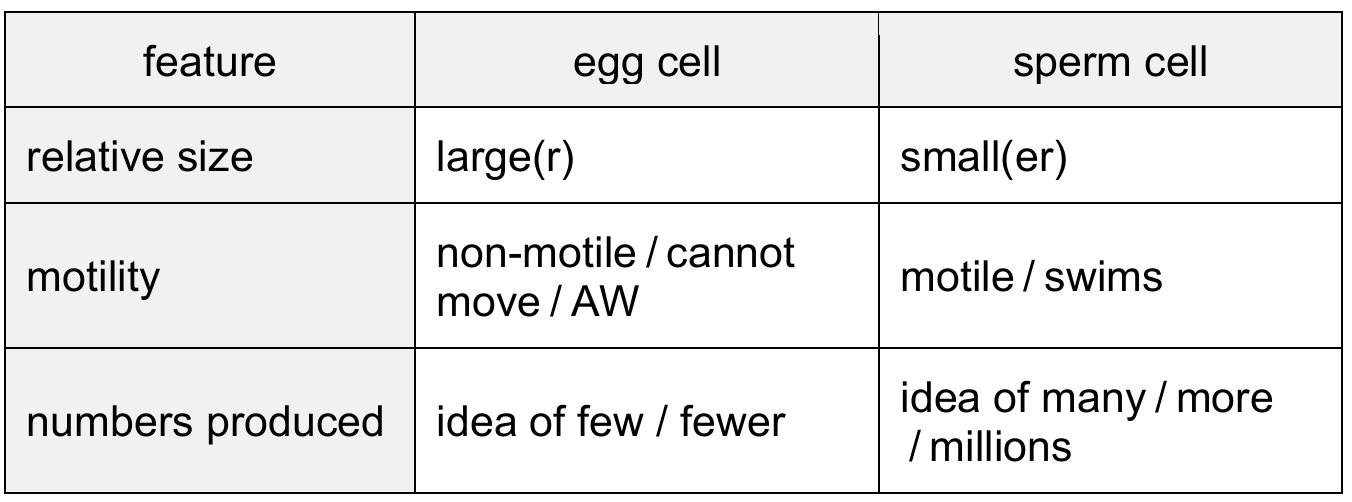
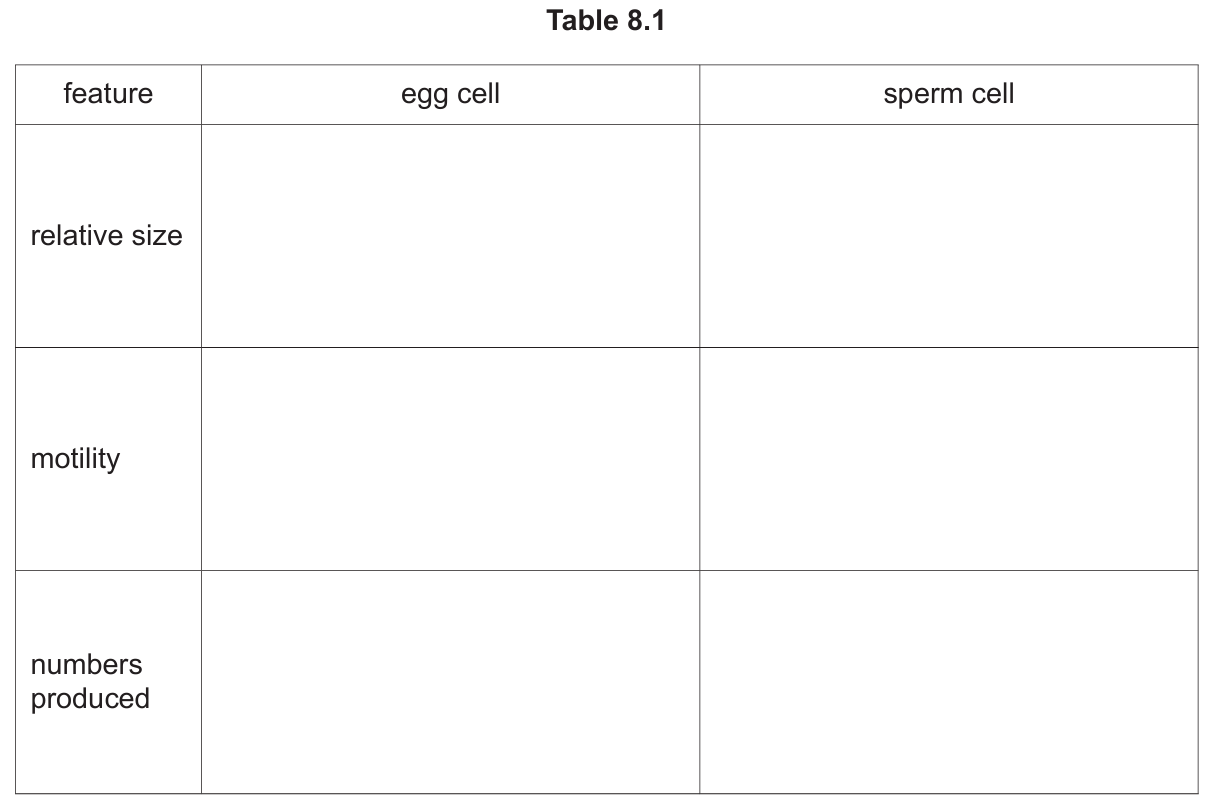
Explanation: Egg cells are among the largest cells in the human body as they contain nutrient reserves for the developing embryo. They are non-motile and relatively few are produced compared to sperm. Sperm cells are much smaller, highly motile with their flagellum, and produced in enormous quantities to increase the chance of fertilization.
(c) 76.7%
Calculation:
Initial number = 1,500,000 eggs
Remaining at puberty = 350,000 eggs
Decrease = 1,500,000 – 350,000 = 1,150,000 eggs
Percentage decrease = (1,150,000 ÷ 1,500,000) × 100 = 76.666…%
Rounded to one decimal place = 76.7%
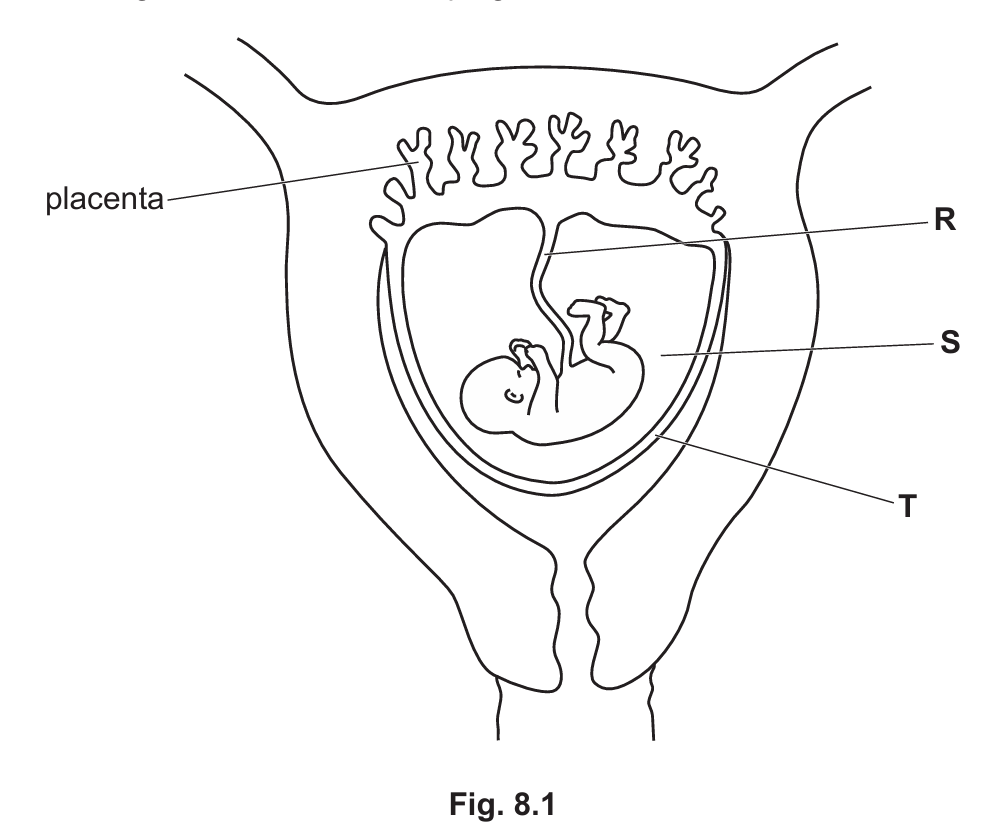
(d)(i) Amniotic sac
(d)(ii)
R (Umbilical cord): Connects the placenta to the fetus, allowing the transfer of nutrients, oxygen, and waste products between the mother and fetus.
S (Amniotic fluid): Provides protection and cushioning for the fetus, acts as a shock absorber, and helps maintain a constant temperature.
(d)(iii) The placenta has multiple crucial functions:
1. It facilitates gas exchange, allowing oxygen to pass from mother to fetus and carbon dioxide to pass back.
2. It transfers nutrients from the mother’s blood to the fetus for growth and development.
3. It removes waste products from the fetal blood which are then excreted by the mother.
4. It acts as a barrier, preventing many harmful substances (though not all) from reaching the fetus while allowing antibodies to pass for immune protection.