
Topic – 1.1
A person touches a hot object and rapidly moves their hand away from the hot object.
Which characteristic of living organisms is this an example of?
A) excretion
B) growth
C) reproduction
D) sensitivity
▶️ Answer/Explanation
Ans: D
The scenario describes a reflex action where a person reacts to a harmful stimulus (heat) by moving their hand away. This demonstrates sensitivity (D), as living organisms detect and respond to environmental changes.
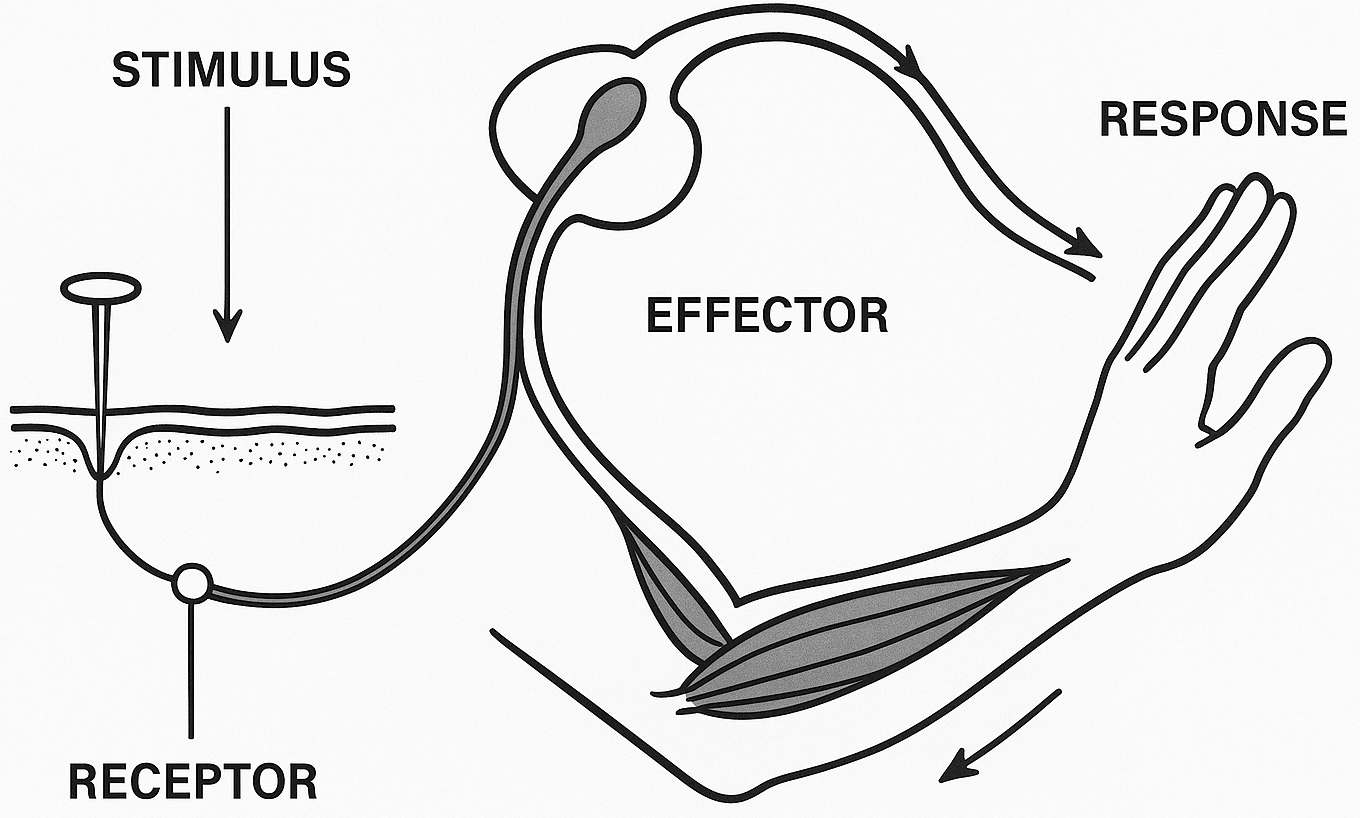
Excretion (A) involves waste removal, growth (B) refers to increase in size, and reproduction (C) is the production of offspring. Since the question highlights a rapid response to a stimulus, the correct answer is D (Sensitivity).
Topic – 21.3
Which types of organisms are used in genetic modification because they have plasmids?
A) arachnids
B) bacteria
C) myriapods
D) ferns
▶️ Answer/Explanation
Ans: B
Bacteria (B) are the correct answer because they naturally contain plasmids – small, circular DNA molecules separate from chromosomal DNA. These plasmids can be easily modified to insert foreign genes.
The other options are incorrect: arachnids (A) and myriapods (C) are arthropods, while ferns (D) are plants – none of these possess plasmids naturally. Bacteria are uniquely suited for genetic modification due to their plasmid DNA and rapid reproduction.
This technique is widely used to produce proteins like insulin, with the modified plasmids instructing bacteria to manufacture the desired compounds.
Topic – 2.1
The list shows some of the structures contained in cells.
- cytoplasm
- cell membrane
- cell wall
- chloroplast
How many of these structures are found in the cells of all living organisms?
A) 1
B) 2
C) 3
D) 4
▶️ Answer/Explanation
Ans: B) 2
The cytoplasm and cell membrane are present in all living cells, whether prokaryotic or eukaryotic. The cell wall is absent in animal cells, and chloroplasts are only found in plant cells and some algae.
Thus, out of the four structures listed, only two (cytoplasm and cell membrane) are universal to all living organisms. The correct answer is B) 2.
Topic – 2.2
A student draws a red blood cell. The diameter of the red blood cell they draw is 20 mm.
The actual diameter of the red blood cell is 0.008 mm. What is the magnification of the student’s drawing?
A) ×0.0004
B) ×0.16
C) ×250
D) ×2500
▶️ Answer/Explanation
Ans: D
Magnification is calculated using the formula:
\[ \text{Magnification} = \frac{\text{Measured size}}{\text{Actual size}} \]
Here, the measured size is 20 mm and the actual size is 0.008 mm. Substituting these values:
\[ \text{Magnification} = \frac{20}{0.008} = 2500 \]
Thus, the magnification of the drawing is ×2500 (D).
Topic – 3.2
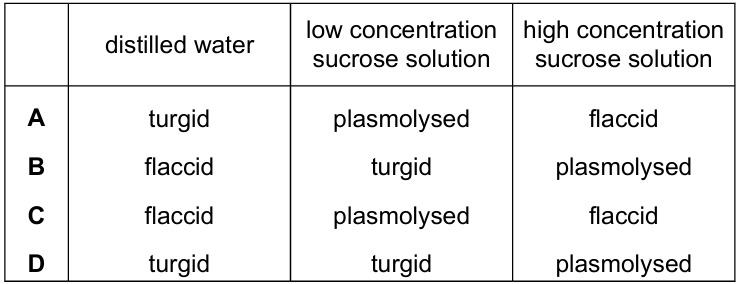
Samples of plant cells from the same species are immersed in three different liquids. The low concentration sucrose solution has a higher water potential than the plant cell cytoplasm. The high concentration sucrose solution has a lower water potential than the plant cell cytoplasm.
What is the state of the cells in the different liquids?
▶️ Answer/Explanation
Ans: D
Explanation:
- Osmosis is the movement of water from a region of high-water potential to low water potential through a semi-permeable membrane.
- Turgid = cell has gained water and is swollen.
- Flaccid = cell is in a balanced state with little water movement.
- Plasmolysed = cell has lost water, membrane pulls away from the wall.
Analysis:
- High concentration sucrose solution: Lower water potential than cytoplasm → water leaves the cell → plasmolysed.
- Low concentration sucrose solution: Higher water potential than cytoplasm → water enters → turgid.
- Distilled water: Highest water potential → maximum water enters → very turgid.
Thus, the correct sequence is Plasmolysed – Turgid – Turgid, matching option D.
| Solution | Cell Condition |
|---|---|
| High concentration sucrose | Plasmolysed |
| Low concentration sucrose | Turgid |
| Distilled water | Turgid |
Topic – 3.3
Which process requires energy from respiration?
A) active transport
B) diffusion
C) osmosis
D) transpiration
▶️ Answer/Explanation
Ans: A) active transport
Explanation:
- Active transport is the movement of substances against their concentration gradient (from low to high concentration).
- This process requires energy from respiration, usually in the form of ATP.
Other options:
B) Diffusion – passive process, no energy needed.
C) Osmosis – passive movement of water, no energy required.
D) Transpiration – passive water loss from leaves, does not use respiration energy.
Detailed Solution: Active transport is the only process among the options that moves molecules against their concentration gradient, requiring energy from respiration. Diffusion (B) and osmosis (C) are passive processes driven by concentration gradients, while transpiration (D) is water movement through evaporation. Thus, the correct answer is A (Active Transport).
Topic – 21.3
The diagram shows the sticky end of the DNA of a plasmid that has been cut by a restriction enzyme.
The unpaired bases are labelled.

What is the correct sequence of the missing bases?
A) CAGTG
B) GTGAC
C) GTCAC
D) CACTG
▶️ Answer/Explanation
Ans: C
The given sticky end sequence is CAGTG. Using complementary base pairing rules:
- C pairs with G
- A pairs with T
- G pairs with C
- T pairs with A
- G pairs with C
Thus, the complementary sequence is GTCAC, making option C correct.
Option A is identical to the given strand, while B and D don’t follow proper base-pairing rules.
Topic – 4.1
A test was performed on a food substance. A positive result was shown by a colour change to blue-black.
What solution was used for the test?
A) biuret solution
B) DCPIP solution
C) iodine solution
D) Benedict’s solution
▶️ Answer/Explanation
Ans: C
The iodine solution (C) is used to test for starch, producing a blue-black colour change when starch is present. This is a distinctive reaction, confirming the correct answer.
Biuret solution (A) tests for proteins (turns purple), DCPIP (B) tests for vitamin C (turns colourless), and Benedict’s solution (D) tests for reducing sugars (turns red/orange/yellow). Since the question describes a blue-black result, the correct choice is C (iodine solution).
Topic – 5.1
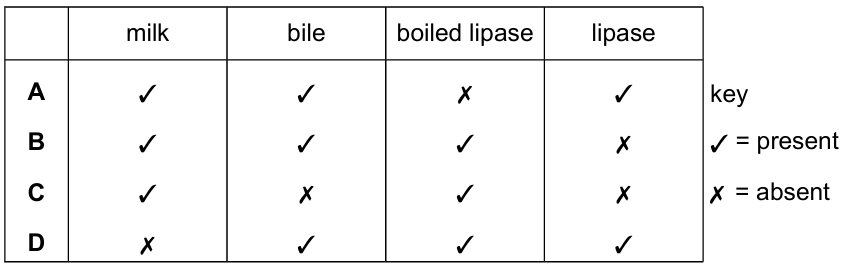
A student investigates the breakdown of fats in milk by lipase. Four test-tubes labelled A, B, C and D are set up.
The table shows the contents of each test-tube.
In which test-tube will the contents become acidic most quickly?
▶️ Answer/Explanation
Ans: A
Test-tube A contains milk (fat source), bile (emulsifies fat), and active lipase (breaks fat into fatty acids). The combination of bile and lipase maximizes fat breakdown, releasing fatty acids and lowering pH rapidly.
In B, lipase is denatured (boiled), preventing fat breakdown. C lacks bile, slowing emulsification. D has no fat (milk), so no fatty acids are produced. Thus, A becomes acidic fastest.
Topic – 6.1
The diagram shows an experiment to investigate the effect of increasing light intensity on the rate of photosynthesis in an aquatic plant.
The rate is found by measuring the rate of bubble release by the plant.
As the light intensity increases, the rate of bubble release increases and then becomes constant.

Which statement describes why the rate of bubble release becomes constant at high light intensities?
A) Carbon dioxide concentration becomes a limiting factor.
B) Light intensity becomes a limiting factor.
C) Oxygen availability becomes a limiting factor.
D) Water availability becomes a limiting factor.
▶️ Answer/Explanation
Ans: A
At high light intensities, photosynthesis initially increases due to greater energy availability. However, when the rate of bubble release (oxygen production) plateaus, it indicates another factor is limiting. Since carbon dioxide is a key reactant in photosynthesis, its limited availability (A) restricts further increase in the rate, even if light intensity continues to rise.
Light intensity (B) cannot be the limiting factor here because the rate stops increasing despite more light. Oxygen (C) is a product, not a limiting reactant, and water (D) is typically abundant in aquatic experiments. Thus, the correct answer is A (Carbon dioxide concentration becomes a limiting factor).
Topic – 6.2
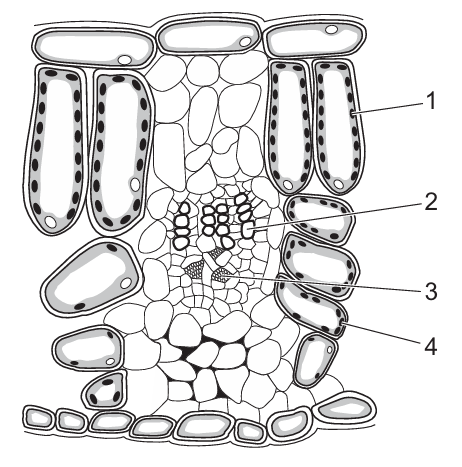
The diagram shows a section through the leaf of a flowering plant.
Where does photosynthesis take place?
A) 1 and 2
B) 1 and 4
C) 2 and 3
D) 3 and 4
▶️ Answer/Explanation
Ans: B) 1 and 4
Photosynthesis occurs primarily in chloroplast-rich cells. The Palisade Mesophyll (1) is densely packed with chloroplasts, making it the main site of photosynthesis. The Lower Epidermis (4) contains guard cells with chloroplasts, which also contribute to photosynthesis.
The Vascular Bundle (2) is involved in transport, not photosynthesis, while the Spongy Mesophyll (3) plays a minor role. Thus, the correct answer is B (1 and 4).
| Label | Structure | Function | Involved in Photosynthesis? |
|---|---|---|---|
| 1 | Palisade Mesophyll | Main site of photosynthesis, packed with chloroplasts | Yes (major role) |
| 2 | Vascular Bundle | Transports water & food (xylem/phloem) | No |
| 3 | Spongy Mesophyll | Some photosynthesis, mostly gas exchange | Yes (minor role) |
| 4 | Lower Epidermis | Has stomata + guard cells (with chloroplasts) | Yes (minor role) |
Topic – 7.2
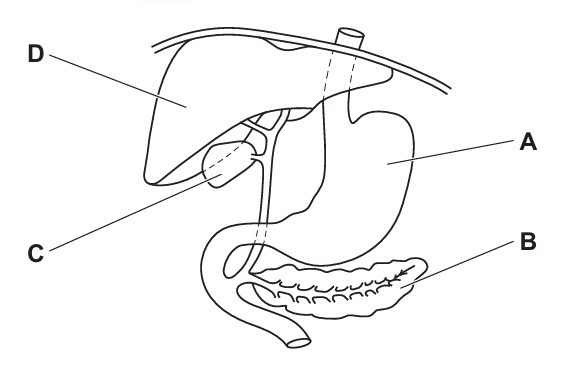
The diagram shows part of the alimentary canal and associated organs.
Which labelled part stores bile?
▶️ Answer/Explanation
Ans: C
The gall bladder (C) stores and concentrates bile, a digestive fluid produced by the liver (D). When needed, bile is released into the small intestine to emulsify fats.
Why not others?
– A (Stomach): Digests food but does not handle bile.
– B (Pancreas): Produces enzymes, not bile.
– D (Liver): Produces bile but does not store it.
Thus, the correct answer is C (Gall bladder).
Topic – 7.5
The list contains statements about villi.
1. Villi increase the efficiency of the absorption of nutrients.
2. Villi increase the efficiency of the alveoli during gas exchange.
3. Villi provide a large surface area.
4. Villi filter urea from the blood.
Which two statements explain the role of the villi in humans?
A) 1 and 2
B) 1 and 3
C) 2 and 4
D) 3 and 4
▶️ Answer/Explanation
Ans: B
Villi are specialized structures in the small intestine that maximize nutrient absorption through two key features: they (1) increase absorption efficiency via microvilli and rich blood supply, and (3) provide enormous surface area (about 30× the intestinal length).
Statements 2 and 4 are incorrect because alveoli are lung structures (unrelated to villi), and urea filtration occurs in kidneys. The correct combination describing villi’s true functions is therefore B (1 and 3).
This adaptation allows humans to absorb about 95% of nutrients from digested food, demonstrating the villi’s crucial role in digestion.
Topic – 7.4
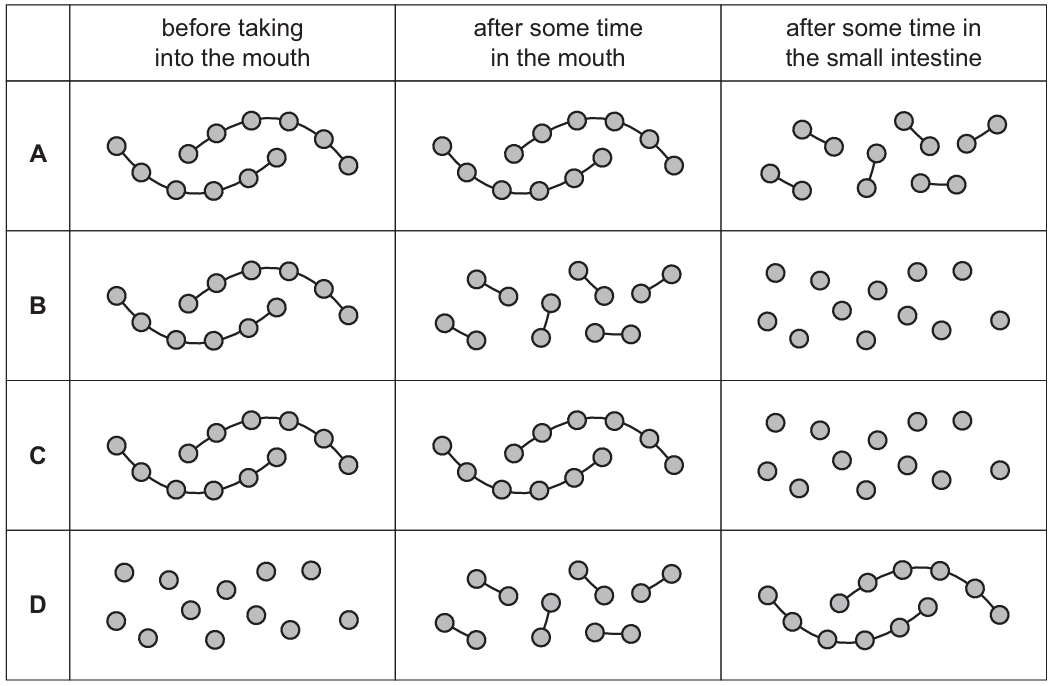
The diagrams show carbohydrate molecules as they pass through the alimentary canal.
Which row represents the molecules correctly?
▶️ Answer/Explanation
Ans: B
Carbohydrate digestion begins with starch (polysaccharides) in the mouth, where salivary amylase breaks it into smaller sugars. In the small intestine, enzymes like pancreatic amylase further break it down into glucose (monosaccharides).
Row B correctly shows this progression: long starch chains → partially broken chains → single glucose units. The other rows either skip digestion stages or show incorrect molecular states.
Topic – 7.4
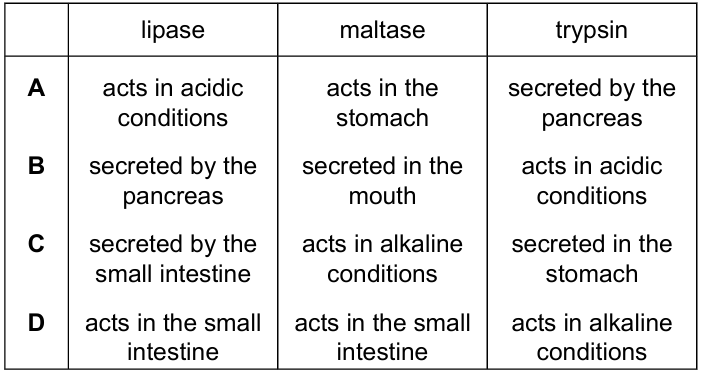
Which row shows correct information about three digestive enzymes in humans?
▶️ Answer/Explanation
Ans: D
The correct functions and sites of action for the enzymes are:
- Lipase breaks down fats into fatty acids and glycerol in the small intestine (alkaline conditions).
- Maltase converts maltose into glucose in the small intestine.
- Trypsin digests proteins into peptides in the small intestine (activated from trypsinogen in alkaline pH).
Option D matches all these descriptions accurately, making it the correct choice.
Topic – 7.1
Which substance found in a healthy diet helps to prevent constipation?
A) fat
B) fibre
C) minerals
D) vitamins
▶️ Answer/Explanation
Ans: B) fibre
Explanation:
Fibre (also called roughage) is a crucial part of a healthy diet that helps prevent constipation.
What fibre does:
- Adds bulk to stool: Fibre absorbs water and makes stool softer and bulkier.
- Stimulates bowel movement: It helps food move smoothly through the digestive system.
- Prevents constipation: By making stools easier to pass, fibre reduces the risk of constipation.
Why the other options are incorrect:
A) Fat: Provides energy, but too much can slow digestion and does not help with constipation.
C) Minerals: Important for body functions (like calcium and iron), but don’t aid digestion directly.
D) Vitamins: Needed for growth and health, but not involved in regulating bowel movement.
Topic – 8.3
When is the transpiration rate of a well-watered plant highest?
A) on a cool, dry, windy day
B) on a cool, wet, windy day
C) on a hot, dry, windy day
D) on a hot, wet, windy day
▶️ Answer/Explanation
Answer: C) on a hot, dry, windy day
Explanation:
Transpiration is the loss of water vapor from a plant, mainly through tiny pores in the leaves called stomata. The rate of transpiration is affected by several environmental factors:
Why C) hot, dry, windy day increases transpiration:
- Hot temperature: Increases evaporation of water from leaf surfaces.
- Dry air: Low humidity means more water vapor can diffuse out of the leaf.
- Windy conditions: Wind moves the moist air away from the leaf surface, maintaining a steep water vapor gradient, which speeds up water loss.
Together, these conditions maximize water loss, so transpiration rate is highest.
Why other options are incorrect:
A) Cool, dry, windy day: Cooler temperatures lower evaporation rate.
B) Cool, wet, windy day: Both cool temperatures and high humidity reduce transpiration.
D) Hot, wet, windy day: High humidity slows water vapor diffusion, even though it’s hot.
Detailed Solution: Transpiration is fastest when environmental conditions promote maximum water loss. Heat increases evaporation, dry air allows more water vapor to escape, and wind removes humid air around the leaf. Thus, C (hot, dry, windy day) creates the highest transpiration rate, while other options have limiting factors like cool temperatures or high humidity.
Topic – 8.4
Which statement is correct for a flowering plant during photosynthesis?
A) The flowers, fruits, leaves and roots are all sources of sucrose.
B) The fruits are a source of sucrose and the flowers are a sink.
C) The leaves are a source of sucrose and the fruits are a sink.
D) The roots are a source of sucrose and the leaves are a sink.
▶️ Answer/Explanation
Ans: C
During photosynthesis, leaves produce glucose, which is converted to sucrose for transport. Thus, leaves are sources of sucrose.
Fruits are sinks because they consume and store sucrose for growth and energy. Other organs like roots and flowers primarily use sucrose rather than produce it.
Option A is incorrect because not all organs are sources. Option B is wrong as fruits are sinks, not sources. Option D is incorrect because roots do not produce sucrose.
Topic – 9.1
What is an advantage of having a double circulatory system?
A) It uses less energy because blood flows through the heart only once in each circuit around the body.
B) Concentration gradients of solutes and gases are kept low.
C) Deoxygenated and oxygenated blood are separated to allow a high rate of oxygen supply to the tissues.
D) It maintains high-pressure blood flow to the lungs and low-pressure blood flow to the body.
▶️ Answer/Explanation
Ans: C
A double circulatory system ensures that oxygenated and deoxygenated blood are kept separate, allowing efficient oxygen delivery to tissues. The heart pumps oxygen-rich blood at high pressure to the body, enhancing metabolic activity.
Option A is incorrect because blood passes through the heart twice per circuit. Option B is wrong because high concentration gradients are maintained for efficient diffusion. Option D reverses the pressures—the lungs receive low-pressure blood, while the body receives high-pressure blood.
Topic – 9.2
The diagram shows the external structure of the human heart.
Which part is blocked in coronary heart disease?

▶️ Answer/Explanation
Ans: B
Coronary heart disease (CHD) occurs when coronary arteries (B) are blocked by fatty deposits (atherosclerosis). These arteries supply oxygenated blood to the heart muscle, and their blockage can lead to angina or heart attacks.
A (Pulmonary artery) carries blood to the lungs, C (Vena cava) returns blood to the heart, and D (Aorta) distributes blood to the body. None of these are directly affected in CHD, making B the correct answer.
Topic – 10.1
One of the symptoms of the disease cholera is diarrhoea. This is due to water loss by osmosis caused by the cholera toxin.
What is the effect of cholera toxins that results in diarrhoea?
A) secretion of chloride ions out of the small intestine lowering the water potential
B) secretion of chloride ions out of the small intestine raising the water potential
C) secretion of chloride ions into the small intestine lowering the water potential
D) secretion of chloride ions into the small intestine raising the water potential
▶️ Answer/Explanation
Ans: C
The cholera toxin forces intestinal cells to secrete chloride ions (Cl⁻) into the lumen of the small intestine. This increases the solute concentration in the intestine, lowering its water potential. As a result, water moves from the body’s cells into the intestine via osmosis, causing severe diarrhoea.
Options A and B incorrectly state chloride ions move out of the intestine. Option D wrongly suggests water potential increases, whereas the addition of ions reduces water potential. Thus, the correct answer is C.
Topic – 10.1
Which statement about immunity is correct?
A) A part of the antibody molecule has the same shape as the antigen it acts on.
B) Babies develop passive immunity from the antibodies they receive in breast milk.
C) Phagocytes produce antibodies.
D) Vaccines contain weakened antibodies.
▶️ Answer/Explanation
Ans: B) Babies develop passive immunity from the antibodies they receive in breast milk.
Passive immunity occurs when antibodies are transferred to an individual rather than produced by their own immune system. Breast milk contains maternal antibodies (e.g., IgA), which provide short-term protection to babies until their immune system matures.
Why other options are incorrect:
- A) Antibodies have a complementary shape (not identical) to antigens for binding.
- C) Phagocytes engulf pathogens; B cells (lymphocytes) produce antibodies.
- D) Vaccines contain weakened/inactive pathogens or their components, not antibodies.
Topic – 11.1
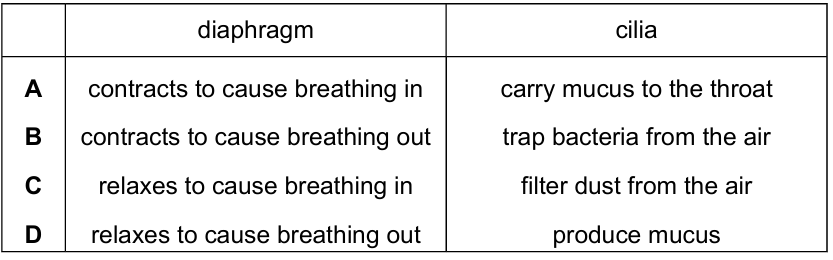
What are the functions of the diaphragm and the cilia in the human gas exchange system?
▶️ Answer/Explanation
Ans: A
Diaphragm’s role:
– Contracts and flattens during inhalation, increasing thoracic volume and decreasing pressure to draw air into lungs.
– Relaxes during exhalation to push air out.
Cilia’s role:
– Tiny hair-like structures that move mucus (containing trapped particles) upward to the throat for removal.
Why others are wrong:
– B: Diaphragm relaxes (doesn’t contract) during exhalation.
– C: Cilia move mucus but don’t directly filter dust.
– D: Goblet cells produce mucus, not cilia.
Topic – 12.3
Vigorous exercise can cause an oxygen debt.
Which process removes the oxygen debt?
A) aerobic respiration of lactic acid in the liver
B) a decrease in breathing rate
C) a decrease in heart rate
D) an increase in blood supply to the skin
▶️ Answer/Explanation
Ans: A
During vigorous exercise, muscles resort to anaerobic respiration, producing lactic acid as a byproduct. The oxygen debt is repaid through aerobic respiration in liver cells, where about 20% of lactic acid is completely oxidized to CO₂ and H₂O, while the remaining 80% is converted back to glucose via the Cori cycle.
Options B and C are incorrect because they describe reduced physiological responses that would actually prevent oxygen debt repayment. Option D relates to thermoregulation rather than metabolic recovery. The correct process (A) requires increased oxygen supply to convert the accumulated lactic acid (C₃H₆O₃) through the equation:
C₃H₆O₃ + 3O₂ → 3CO₂ + 3H₂O + energy
This explains why we continue breathing heavily after exercise stops – to supply the oxygen needed for these metabolic processes.
Topic – 13.1
In healthy people, which substance is completely reabsorbed into the blood from the kidney nephrons?
A) glucose
B) salts
C) urea
D) water
▶️ Answer/Explanation
Ans: A) glucose
In healthy individuals, glucose is completely reabsorbed in the proximal convoluted tubule of nephrons via active transport. This ensures no glucose is lost in urine, as it’s vital for energy production.
Salts (B) and water (D) are selectively reabsorbed based on body needs, while urea (C) is partially excreted as a waste product. Only glucose undergoes 100% reabsorption under normal conditions.
Topic – 14.2
What would be the pupil size and lens shape of a person reading a mobile phone text message in a brightly lit room?
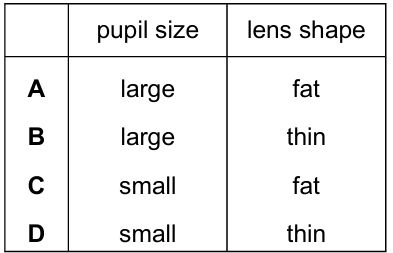
▶️ Answer/Explanation
Ans: C
When reading in bright light:
- Pupil size becomes small (constricts) to reduce light entry and prevent retinal damage.
- Lens shape becomes fat (more convex) to increase refractive power for near vision (accommodation).
This combination matches option C. Other options are incorrect because:
- A: Pupils don’t dilate in bright light
- B: Large pupils contradict thin lens (for distant vision)
- D: Thin lens is for distant objects, not reading
Topic – 14.4
What describes how the body maintains a constant internal temperature on a hot day?
A) Vasoconstriction increases blood flow to the skin surface capillaries.
B) Vasoconstriction decreases blood flow to the skin surface capillaries.
C) Vasodilation increases blood flow to the skin surface capillaries.
D) Vasodilation decreases blood flow to the skin surface capillaries.
▶️ Answer/Explanation
Ans: C) Vasodilation increases blood flow to the skin surface capillaries.
Explanation:
- Vasodilation is the process where blood vessels widen, increasing blood flow to the skin surface. This helps release excess heat through radiation and sweating.
- On hot days, the body uses this mechanism to maintain its core temperature by transferring heat to the environment.
Why other options are incorrect:
A) Vasoconstriction would reduce heat loss (occurs in cold conditions, not hot).
B) While this describes vasoconstriction correctly, it’s the opposite of what happens in heat.
D) Vasodilation always increases blood flow – the description is contradictory.
Key concept: The body uses vasodilation as its primary cooling mechanism, making C the only correct answer.
Topic – 14.3
What would lead to a decrease in blood glucose concentration?
A) increased release of adrenaline
B) increased release of amylase
C) increased release of glucagon
D) increased release of insulin
▶️ Answer/Explanation
Answer: D) increased release of insulin
Explanation:
- Insulin is a hormone produced by the pancreas that lowers blood glucose levels. When you have high blood glucose after eating, insulin is released to help cells absorb glucose and store it as glycogen in the liver, effectively lowering the blood glucose concentration.
Why other options are incorrect:
A) Increased release of adrenaline – Adrenaline raises blood glucose by stimulating the liver to release stored glucose (glycogen). It’s typically released during stress or exercise.
B) Increased release of amylase – Amylase is an enzyme that breaks down carbohydrates into glucose but doesn’t directly affect blood glucose concentration.
C) Increased release of glucagon – Glucagon raises blood glucose levels by stimulating the liver to release glucose into the bloodstream.
Detailed Solution: Insulin (D) is the only hormone among the options that actively lowers blood glucose by promoting cellular uptake and storage as glycogen. Adrenaline (A) and glucagon (C) increase blood glucose, while amylase (B) is a digestive enzyme unrelated to blood sugar regulation. Therefore, the correct answer is D (increased release of insulin).
Topic – 10.1
Which statement about antibiotics is correct?
A) Antibiotics do not affect bacteria but kill viruses.
B) Antibiotics do not affect bacteria or viruses.
C) Antibiotics kill bacteria and kill viruses.
D) Antibiotics kill bacteria but do not affect viruses.
▶️ Answer/Explanation
Ans: D
Antibiotics specifically target bacteria by disrupting their cellular processes (e.g., cell wall synthesis). They have no effect on viruses because viruses lack these structures and replicate using host cells.
Why other options are incorrect:
- A: Incorrect – antibiotics do affect bacteria.
- B: Incorrect – antibiotics do kill bacteria.
- C: Incorrect – antibiotics cannot kill viruses.
Topic – 16.3
The diagram shows the carpel of a flower just after pollination.
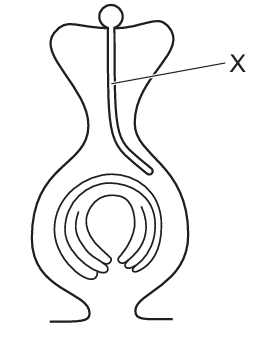
What is the name of the part labelled X?
A) filament
B) ovule
C) pollen tube
D) stigma
▶️ Answer/Explanation
Ans: C
The part labelled X is the pollen tube, which grows from the pollen grain after pollination. Its function is to deliver male gametes to the ovule for fertilization.
Filament (A) is part of the stamen, ovule (B) contains the female gamete, and stigma (D) is where pollen lands. Since X shows the tube growing from pollen, the correct answer is C (pollen tube).
Topic – 16.4
The table shows the percentage of sperm with different abnormalities in samples from a person with normal fertility and two people with low fertility.
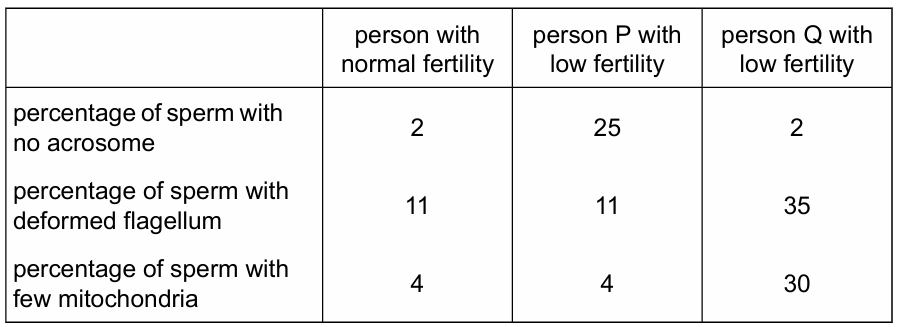
What are the causes of low fertility in person P and person Q?
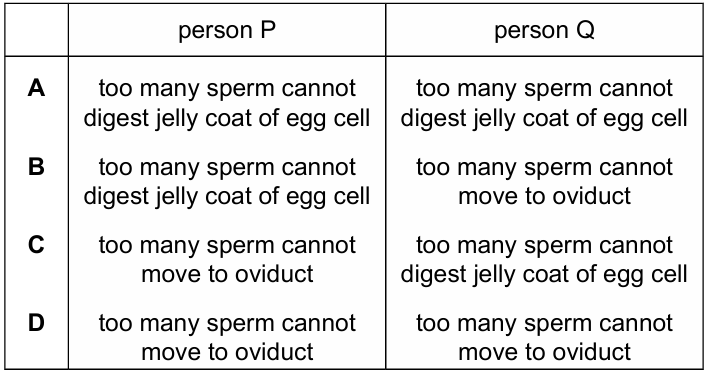
▶️ Answer/Explanation
Ans: B
Person P has 25% sperm without acrosomes (vs 2% normal). The acrosome contains enzymes needed to penetrate the egg’s protective layers, so its absence prevents fertilization.
Person Q has 35% sperm with deformed flagella (vs 11% normal). Flagella enable sperm motility – deformed ones cannot swim effectively to reach the egg.
Option B correctly identifies both issues: acrosome deficiency (P) and motility impairment (Q) as causes of low fertility.
Topic – 17.1
Which word is used to describe stem cells?
A) gametes
B) haploid
C) homozygous
D) unspecialised
▶️ Answer/Explanation
Ans: D
Stem cells are unspecialised (D) because they can differentiate into various cell types (e.g., muscle, nerve) but lack specific functions initially. This plasticity distinguishes them from specialized cells like gametes (A) or haploid cells (B). The term homozygous (C) relates to genetics, not cell differentiation.
Key features of stem cells:
1. Undifferentiated: No specialized role.
2. Potency: Can become multiple cell types.
3. Self-renewal: Divide indefinitely to replenish.
Topic – 16.5
The graph shows the concentration of four hormones during the menstrual cycle.
Which line represents progesterone?

▶️ Answer/Explanation
Ans: B
Progesterone exhibits a distinct pattern during the menstrual cycle:
- It rises sharply after ovulation (around day 14) as the corpus luteum forms.
- Remains elevated throughout the luteal phase (days 15-28) to maintain the uterine lining.
- Declines if fertilization doesn’t occur, triggering menstruation.
In the graph, line B matches this pattern perfectly, showing:
- Low levels in the follicular phase (days 1-13)
- Steep rise post-ovulation
- Sustained high levels before dropping at cycle’s end
This hormonal profile confirms B represents progesterone.
Topic – 17.4
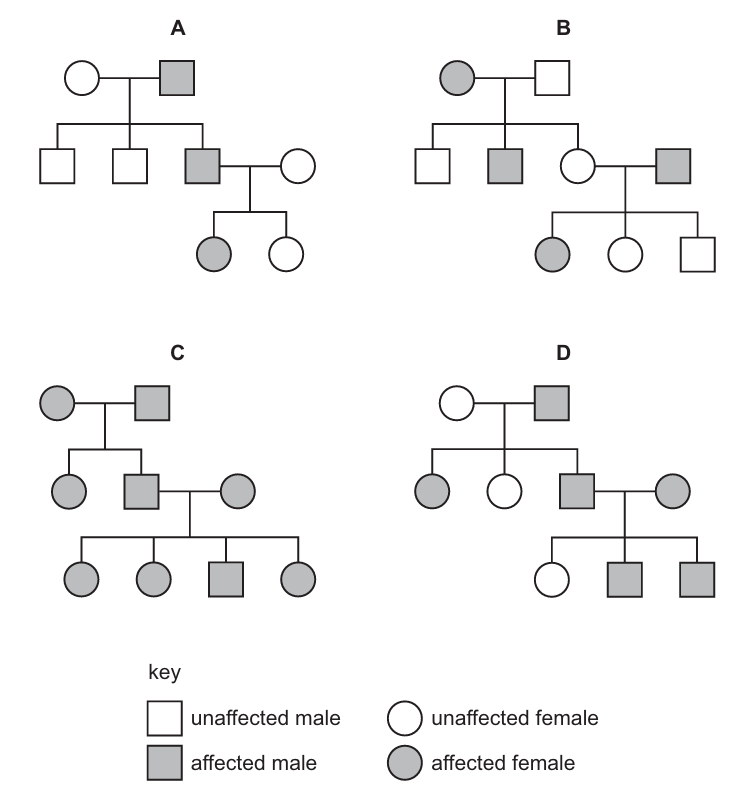
The pedigree diagrams show the pattern of inheritance of a genetic disorder in four families.
This genetic disorder is not sex-linked.
Which pedigree diagram proves that the genetic disorder must be caused by a dominant allele?
▶️ Answer/Explanation
Ans: D
Key observations for dominant inheritance:
– Affected individuals appear in every generation (vertical pattern).
– Affected parents can have unaffected children (Aa × aa → 50% affected).
– At least one affected parent must be present for affected offspring (unlike recessive).
Analysis of options:
– A: Shows unaffected parents with affected child → recessive pattern.
– B: Affected individual has unaffected children → possible in both patterns.
– C: Inconclusive as it fits both patterns.
– D: Clearly shows affected parent passing trait to some children (not all) → definitive dominant pattern.
Thus, D is the only pedigree proving dominant inheritance.
Topic – 17.3
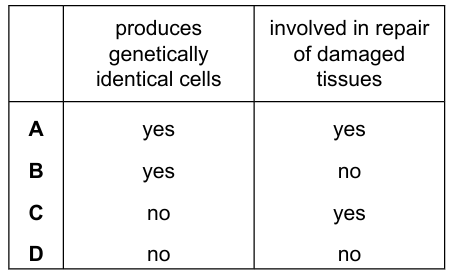
What are correct statements about meiosis?
▶️ Answer/Explanation
Ans: D
Meiosis is a specialized cell division that produces genetically unique haploid gametes through two key mechanisms: crossing over during prophase I and independent assortment of chromosomes during metaphase I. This genetic recombination ensures offspring variation, making the first statement false.
The second statement is also false because tissue repair is accomplished through mitosis, not meiosis. Mitosis produces genetically identical diploid cells for growth and repair, while meiosis is exclusively for sexual reproduction.
Therefore, the correct answer is D (No, no), as meiosis neither produces identical cells nor contributes to tissue regeneration. The diagram shows the reduction from diploid to haploid cells, confirming these fundamental differences from mitosis.
Topic – 18.3
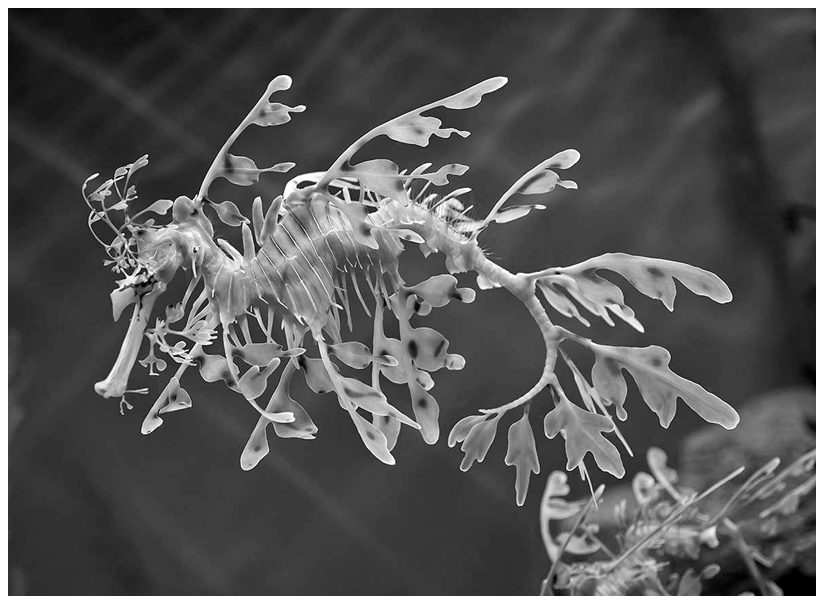
The photograph shows a species of fish called a leafy sea-dragon.
Leafy sea-dragons live in areas of the sea where seaweed is present.
Which statements explain how natural selection caused the leafy sea-dragon species to develop?
1. Leafy sea-dragons that looked like seaweed were better adapted to their environment.
2. Leafy sea-dragons that survived passed on the allele for their appearance to their offspring.
3. Humans selected leafy sea-dragons that looked like seaweed.
A) 1,2 and 3
B) 1 and 2 only
C) 1 and 3 only
D) 2 and 3 only
▶️ Answer/Explanation
Ans: B) 1 and 2 only
The leafy sea-dragon’s seaweed-like appearance evolved through natural selection:
- Camouflage advantage: Individuals resembling seaweed avoided predators better (statement 1).
- Inheritance of traits: Survivors passed these advantageous alleles to offspring (statement 2).
Statement 3 is incorrect because human selection didn’t drive this adaptation – it occurred naturally over generations through differential survival and reproduction.
Topic – 19.1
What is the main source of energy input to biological systems?
A) glucose
B) oxygen
C) plants
D) the Sun
▶️ Answer/Explanation
Ans: D
The Sun is the ultimate energy source for nearly all biological systems because:
- Photosynthetic organisms (plants, algae, cyanobacteria) capture solar energy and convert it to chemical energy (glucose)
- This energy then flows through food chains as organisms consume plants or other organisms
- Even fossil fuels represent stored ancient solar energy
Other options are incorrect because:
- A) Glucose – is a secondary energy carrier, not the original source
- B) Oxygen – helps release energy but doesn’t provide it
- C) Plants – are energy transformers, not the original source
Thus, D (the Sun) is the correct answer as it’s the primary energy input for Earth’s ecosystems.
Topic – 19.3
Which organisms remove nitrate ions from soil?
A) denitrifying bacteria and nitrogen-fixing bacteria in root nodules
B) denitrifying bacteria and plants
C) nitrifying bacteria and plants
D) nitrogen-fixing bacteria in root nodules
▶️ Answer/Explanation
Ans: B) denitrifying bacteria and plants
Explanation:
- Denitrifying bacteria convert nitrates (NO₃⁻) back into nitrogen gas (N₂), removing them from soil.
- Plants absorb nitrates through their roots for protein synthesis and growth, effectively removing them from soil.
Why other options are incorrect:
A) Nitrogen-fixing bacteria convert N₂ to NH₃ (ammonia), not remove nitrates.
C) Nitrifying bacteria convert NH₄⁺ to NO₃⁻ (create nitrates), don’t remove them.
D) Root nodule bacteria fix nitrogen (N₂→NH₃), unrelated to nitrate removal.
Key concept: Only denitrifiers (return N₂ to air) and plants (absorb NO₃⁻) actively remove nitrates from soil.
Topic – 20.2
What are two reasons for organisms becoming endangered?
- habitat destruction
- monitoring
- education
- pollution
- captive breeding programmes
A) 1 and 4
B) 1 and 5
C) 2 and 3
D) 3 and 4
▶️ Answer/Explanation
Answer: A) 1 and 4
Explanation:
- 1. Habitat destruction – Destruction of natural habitats due to human activities (like deforestation, urbanization, or agriculture) leads to loss of shelter and food sources for many species, contributing to endangerment.
- 4. Pollution – Pollution (e.g., water pollution, air pollution, or soil contamination) can harm ecosystems, poison species, or destroy habitats, contributing to the endangerment of organisms.
Why other options are incorrect:
B) 1 and 5 – Captive breeding programs help to conserve species but do not directly cause endangerment.
C) 2 and 3 – Monitoring and education are strategies to prevent species from becoming endangered but do not contribute to their endangerment.
D) 3 and 4 – Education helps to reduce endangerment, and pollution contributes to it, so this is a mix of correct and incorrect reasons.
Detailed Solution: The primary causes of species endangerment are habitat destruction (1) and pollution (4), as they directly harm ecosystems and wildlife. Monitoring (2), education (3), and captive breeding (5) are conservation efforts, not causes of endangerment. Therefore, the correct answer is A (1 and 4).
Topic – 21.3
What is an example of the use of genetic modification in agriculture?
A) choosing cattle to breed so that alleles for high milk yield will be passed on to their offspring
B) increasing food production by using insecticides to improve quality and yield
C) inserting genes into crop plants to improve the nutritional qualities of the plant
D) selecting crop plants with desirable characteristics and crossing these to produce the next generation
▶️ Answer/Explanation
Ans: C
Genetic modification (GM) involves directly inserting foreign genes into an organism’s DNA to introduce new traits. Option C describes this process, where genes are inserted into crops to enhance nutritional value (e.g., Golden Rice with added vitamin A).
Why other options are incorrect:
- A & D: These describe selective breeding, which relies on natural genetic variation rather than direct DNA manipulation.
- B: Insecticide use is a chemical method, unrelated to genetic modification.
Only C represents true genetic modification, where genes are artificially inserted to create transgenic organisms with improved traits.