Question 1
When a herbivore sees a carnivore, which characteristic of living things is involved?
(B) growth
(C) reproduction
(D) sensitivity
▶️ Answer/Explanation
✅ Answer: (D)
Question 2
Which organism has been named using the binomial system?
(B) Polar bear
(C) Red fox
(D) Vulpes vulpes
▶️ Answer/Explanation
The binomial system of nomenclature, developed by Carl Linnaeus, uses two Latin words to identify a species. The first word represents the genus (capitalized) and the second is the specific epithet (lowercase). While “Brown seaweed,” “Polar bear,” and “Red fox” are common names used in everyday language, they vary by region and language. Vulpes vulpes is the formal scientific name for the red fox, following the universal rules of biological classification. Scientific names are typically italicized to distinguish them from regular text.
✅ Answer: (D)
Question 3
Which list contains only arthropods?
(B) arachnids, crustaceans, myriapods
(C) crustaceans, insects, fish
(D) insects, myriapods, reptiles
▶️ Answer/Explanation
Arthropods are invertebrates characterized by having an exoskeleton, a segmented body, and paired jointed appendages. The phylum Arthropoda is primarily divided into four main groups: insects, arachnids, crustaceans, and myriapods.
Option (B) is correct because all three groups listed—arachnids (spiders, scorpions), crustaceans (crabs, lobsters), and myriapods (centipedes, millipedes)—are true arthropods. The other options are incorrect because they include vertebrates: amphibians (A), fish (C), and reptiles (D), which possess internal backbones and do not belong to the arthropod phylum.
✅ Answer: (B)
Question 4
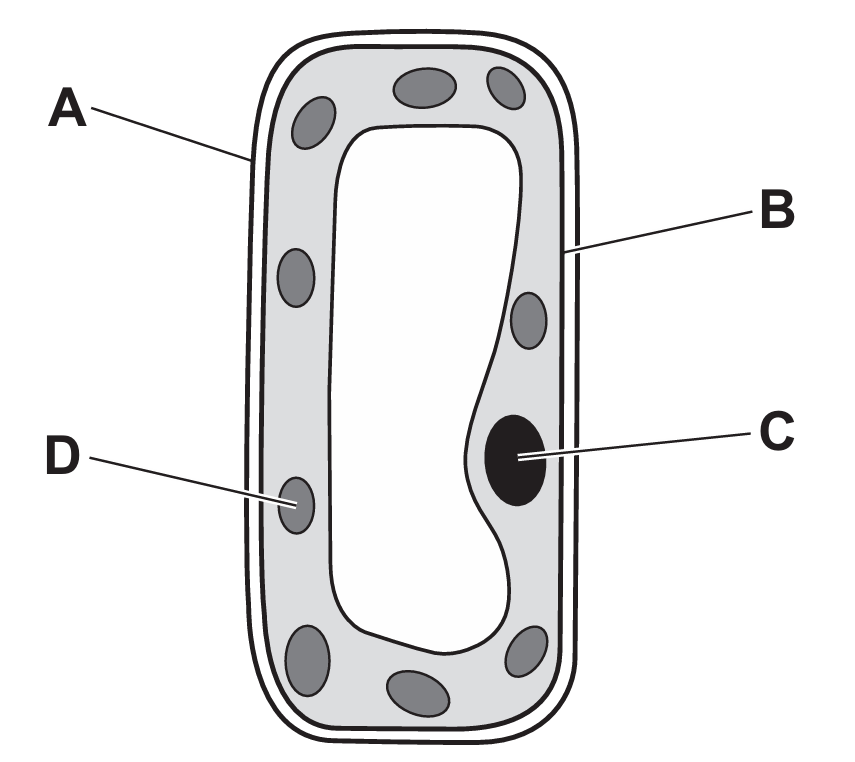
The diagram shows a plant cell.
Which letter identifies where photosynthesis occurs in the cell?

▶️ Answer/Explanation
✅ Answer: (D)
Question 5
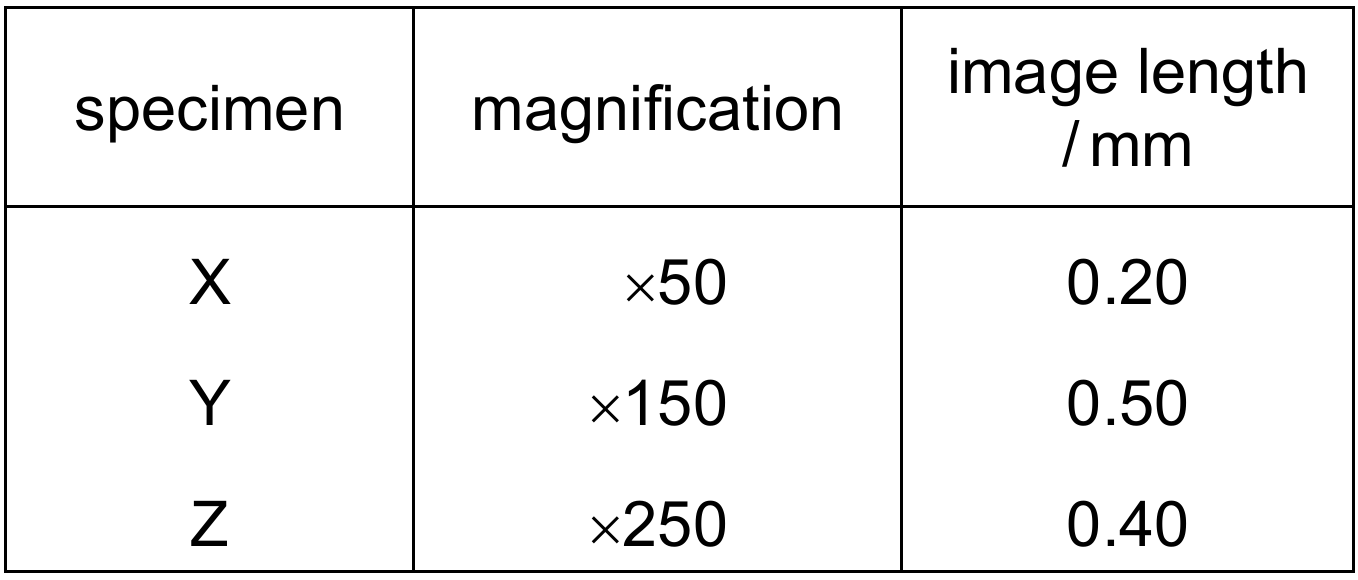
The table shows the magnifications and image lengths of three specimens when seen with a light microscope.

What is the order of increasing actual lengths of the specimens, from smallest to largest?
(B) $X \rightarrow Z \rightarrow Y$
(C) $Y \rightarrow X \rightarrow Z$
(D) $Z \rightarrow Y \rightarrow X$
▶️ Answer/Explanation
* For specimen $X$: $\frac{0.20}{50} = 0.0040$ $mm$.
* For specimen $Y$: $\frac{0.50}{150} \approx 0.0033$ $mm$.
* For specimen $Z$: $\frac{0.40}{250} = 0.0016$ $mm$.
Comparing these values, the smallest is $Z$ ($0.0016$ $mm$), followed by $Y$ ($0.0033$ $mm$), and the largest is $X$ ($0.0040$ $mm$).
Therefore, the order of increasing actual length is $Z \rightarrow Y \rightarrow X$.
✅ Answer: (D)
Question 6
The diagram represents two liquids separated by a partially permeable membrane.

Which statement describes how the molecules will move by osmosis?
(B) Molecules of the dissolved substance move from right to left.
(C) Overall, water molecules move from left to right.
(D) Overall, water molecules move from right to left.
▶️ Answer/Explanation
✅ Answer: (C)
Question 7
Small molecules are used to synthesise large food molecules.
Which statement is correct?
(B) Fatty acids are the basic units of glycogen.
(C) Glycerol is a basic unit of oils.
(D) Simple sugar is the basic unit of protein.
▶️ Answer/Explanation
Large biological molecules (polymers) are built from smaller subunits (monomers). Oils and fats belong to the lipid family, which are typically composed of glycerol and fatty acids. Statement (A) is incorrect because amino acids build proteins, not carbohydrates. Statement (B) is incorrect because glycogen is a polysaccharide made of glucose units. Statement (D) is incorrect because simple sugars (monosaccharides) build carbohydrates, while proteins are made of amino acids. Since glycerol is one of the two primary components required to synthesize a lipid like oil, statement (C) is the only accurate description of a building block relationship.
✅ Answer: (C)
Question 8
A student used biuret reagent to test milk for the presence of protein.
The milk tested positive for protein.
Which colour did the sample change to?
(B) blue-black
(C) brick red
(D) purple
▶️ Answer/Explanation
✅ Answer: (D)
Question 9
Which substances are used for photosynthesis?
(B) carbon dioxide and water
(C) glucose and oxygen
(D) glucose and water
▶️ Answer/Explanation
Photosynthesis is the process by which green plants and certain other organisms transform light energy into chemical energy. During this process, plants take in carbon dioxide ($CO_{2}$) from the air and water ($H_{2}O$) from the soil. These serve as the raw materials (reactants) which, in the presence of sunlight and chlorophyll, are converted into glucose ($C_{6}H_{12}O_{6}$) and oxygen ($O_{2}$).
The balanced chemical equation for this process is:
Since the question asks for the substances used (the reactants), carbon dioxide and water are the correct choices. Glucose and oxygen are the products, not the starting materials.
✅ Answer: (B)
Question 10
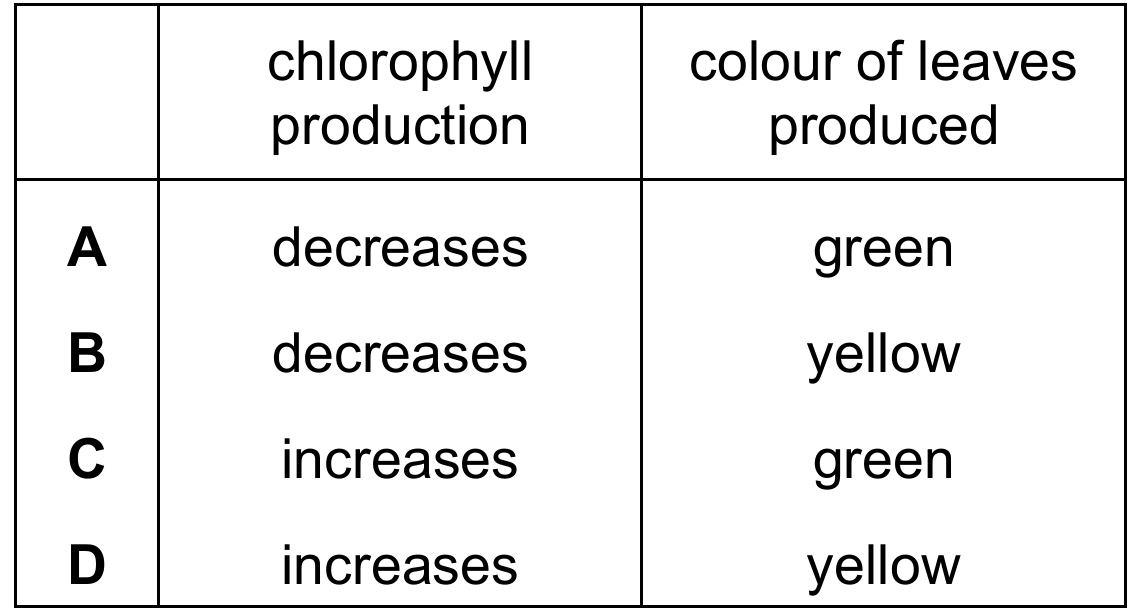
What happens when a plant lacks magnesium ions?

▶️ Answer/Explanation
Magnesium ions are a fundamental component of the chlorophyll molecule, acting as the central atom in its structure. When a plant suffers from a magnesium deficiency, it cannot synthesize enough chlorophyll, leading to a decrease in production. Since chlorophyll is the pigment responsible for the green color of plants, its absence causes the leaves to lose their green pigment and turn yellow, a condition known as chlorosis. This usually starts between the veins of older leaves. Therefore, the correct observation is a decrease in chlorophyll and yellowing of leaves.
✅ Answer: (B)
Question 11
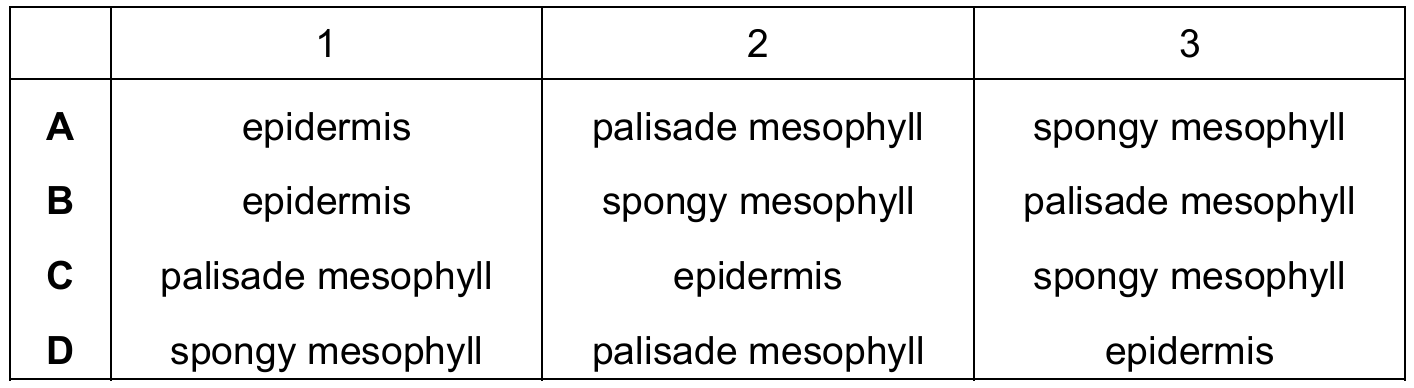
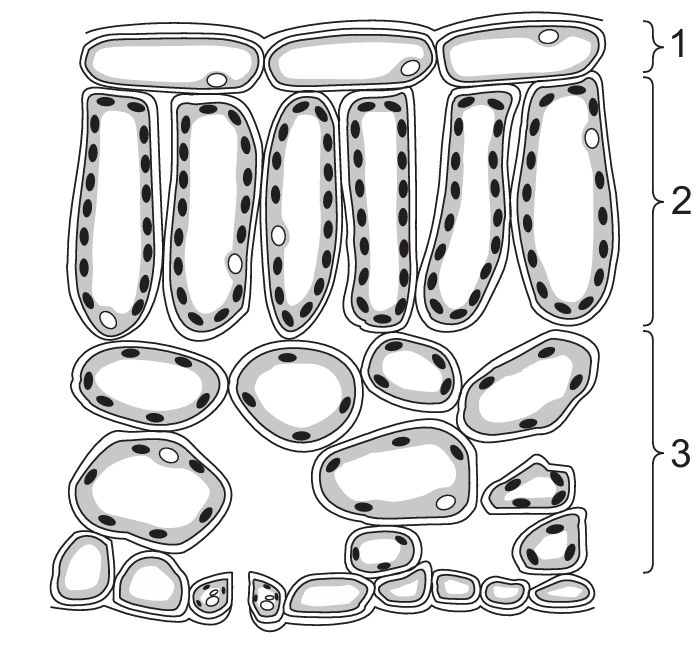
The diagram shows part of a cross-section of a leaf.

What are tissues $1$, $2$ and $3$?

▶️ Answer/Explanation
✅ Answer: (A)
Question 12
A diet contains a lot of plant material, but no meat.
Which dietary component is unlikely to be deficient in this diet?
(B) fibre
(C) protein
(D) vitamin D
▶️ Answer/Explanation
✅ Answer: (B)
Question 13
Which two parts of the mouth are teeth embedded in?
(B) enamel and dentine
(C) gums and bone
(D) pulp and bone
▶️ Answer/Explanation
Teeth are securely anchored in the mouth through a combination of soft and hard tissues. The root of the tooth is seated within sockets in the jawbone (maxilla or mandible), providing structural stability for chewing. Overlying this bone is the gingiva, commonly known as the gums, which provides a protective seal around the neck of the tooth. While structures like cementum help attach the tooth to the bone via ligaments, the “embedding” refers to the surrounding environment of the gums and bone. Options A, B, and D are incorrect because they include internal components of the tooth itself, such as enamel, dentine, or pulp.
✅ Answer: (C)
Question 14
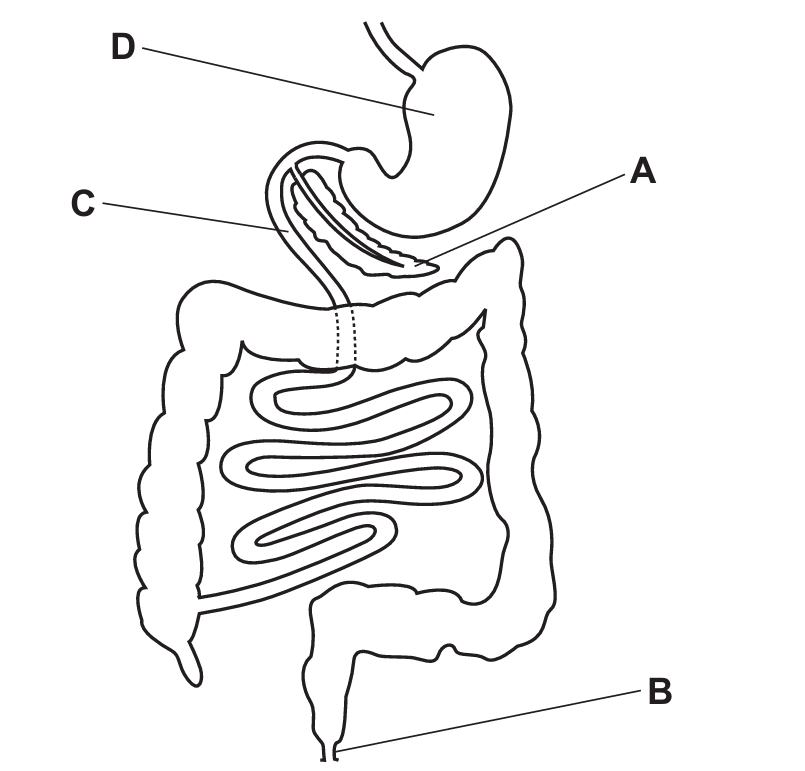
The diagram shows part of the human digestive system.
Where does amylase act on food?

▶️ Answer/Explanation
✅ Answer: (C)
Question 15
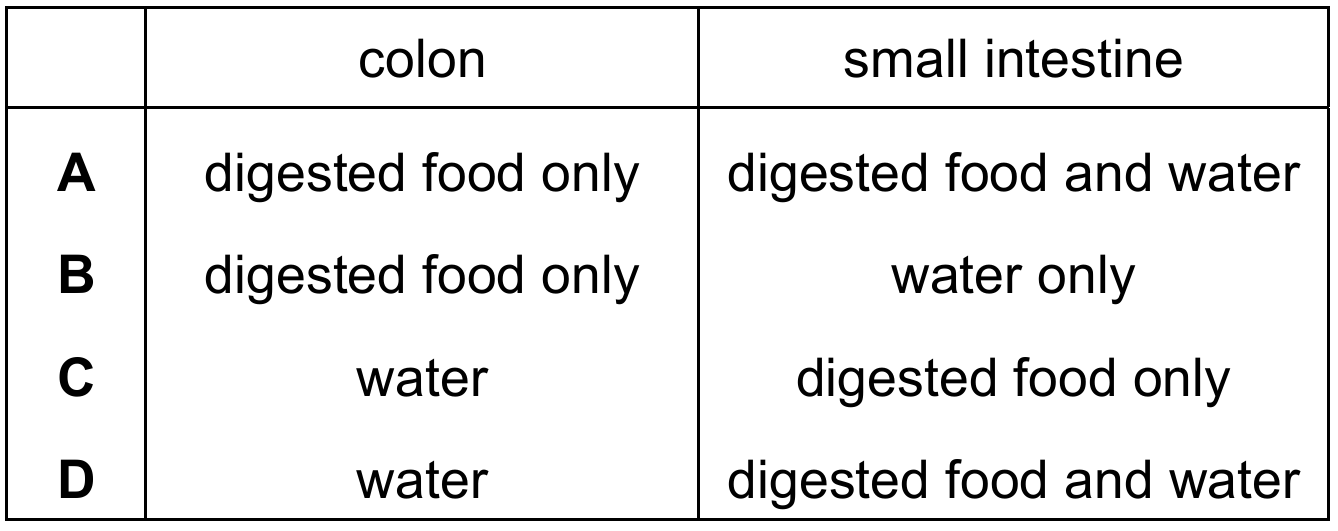
What is absorbed in the colon and the small intestine?

▶️ Answer/Explanation
✅ Answer: (D)
Question 16
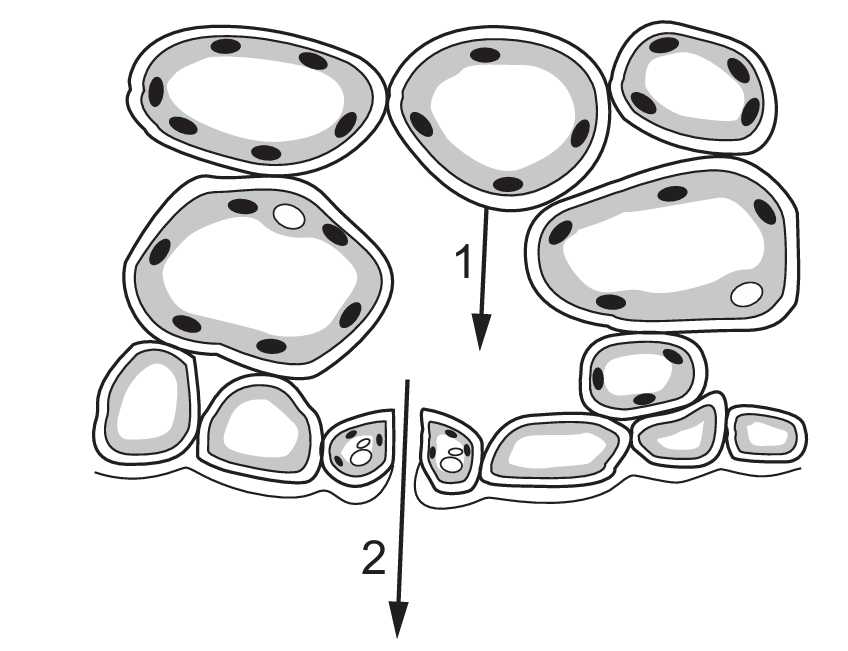
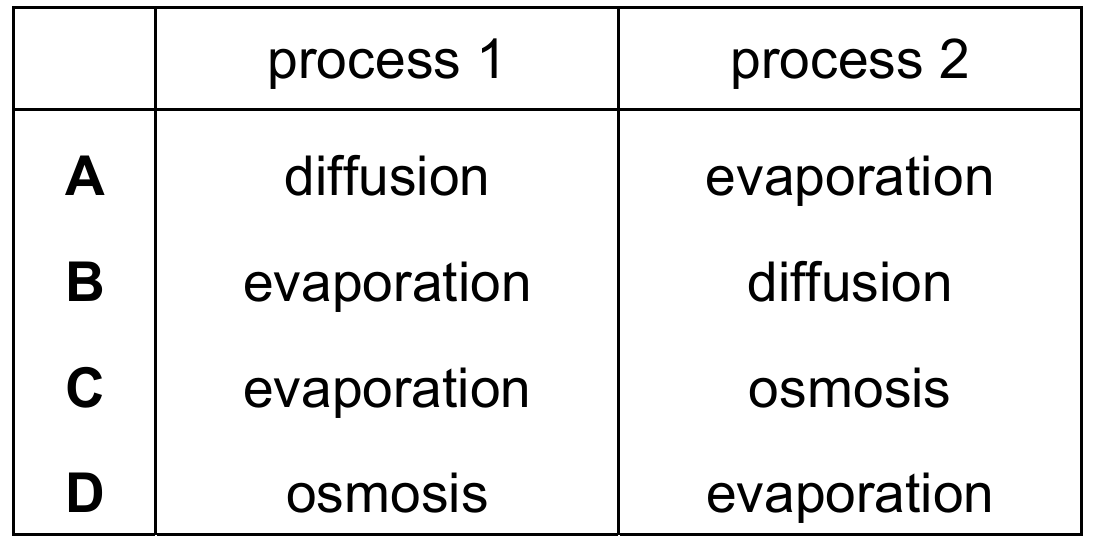
The diagram shows the movement of water molecules from a plant leaf to its environment. Two processes have been numbered.

Which row identifies the numbered processes?

▶️ Answer/Explanation
✅ Answer: (B)
Question 17
The diagram shows a simplified circulatory system in humans.
Which organ represents the pump in this circulatory system?

▶️ Answer/Explanation
In the human double circulatory system, the heart acts as the central pump that drives blood through two main circuits. In this schematic, Organ B represents the heart because it is the intersection point where blood is received from the lungs (Organ A) and pumped out to the rest of the body (Organs C and D).
Following the arrows, we see that blood flows from B to the lungs for oxygenation and then returns to B. From there, B pumps the oxygenated blood to the systemic organs (C and D) before it returns to B again to repeat the cycle. This central positioning and the direction of flow confirm that B is the muscular pump maintaining circulation.
✅ Answer: (B)
Question 18
Which blood vessel transports blood from the lungs to the heart?
(B) pulmonary artery
(C) pulmonary vein
(D) vena cava
▶️ Answer/Explanation
✅ Answer: (C)
Question 19
How can the spread of disease be prevented?
(B) only washing hands after meals
(C) using the same equipment to prepare raw and cooked food
(D) washing hands before and after handling raw food
▶️ Answer/Explanation
✅ Answer: (D)
Question 20
Which substance can be used to test for carbon dioxide?
(B) ethanol
(C) iodine solution
(D) limewater
▶️ Answer/Explanation
Limewater, which is a solution of calcium hydroxide $Ca(OH)_2$, is the standard reagent used to detect the presence of carbon dioxide $CO_2$. When $CO_2$ is bubbled through limewater, it reacts to form calcium carbonate $CaCO_3$, an insoluble white precipitate that turns the solution “milky” or cloudy. In contrast, DCPIP is used to test for Vitamin C, ethanol is used in the emulsion test for lipids, and iodine solution is the specific indicator for starch. Therefore, only limewater provides a visible diagnostic result for carbon dioxide gas.
✅ Answer: (D)
Question 21
Which statement is a correct comparison of aerobic respiration and anaerobic respiration in yeast?
(B) Only anaerobic respiration produces alcohol.
(C) They both produce water.
(D) They both use the reactants glucose and oxygen.
▶️ Answer/Explanation
To find the correct comparison, we must look at the products of both processes in yeast. Aerobic respiration completely breaks down glucose into $CO_{2}$ and $H_{2}O$, while anaerobic respiration (fermentation) in yeast produces ethanol (alcohol) and $CO_{2}$.
- Statement A is incorrect because both types of respiration produce carbon dioxide ($CO_{2}$).
- Statement B is correct; ethanol is a specific byproduct of anaerobic fermentation and is not produced during aerobic respiration.
- Statement C is incorrect because anaerobic respiration in yeast does not produce water ($H_{2}O$).
- Statement D is incorrect because anaerobic respiration occurs in the absence of oxygen ($O_{2}$).
✅ Answer: (B)
Question 22
The diagram shows some of the organs involved in excretion.
Which label is a ureter?

▶️ Answer/Explanation
✅ Answer: (D)
Question 23
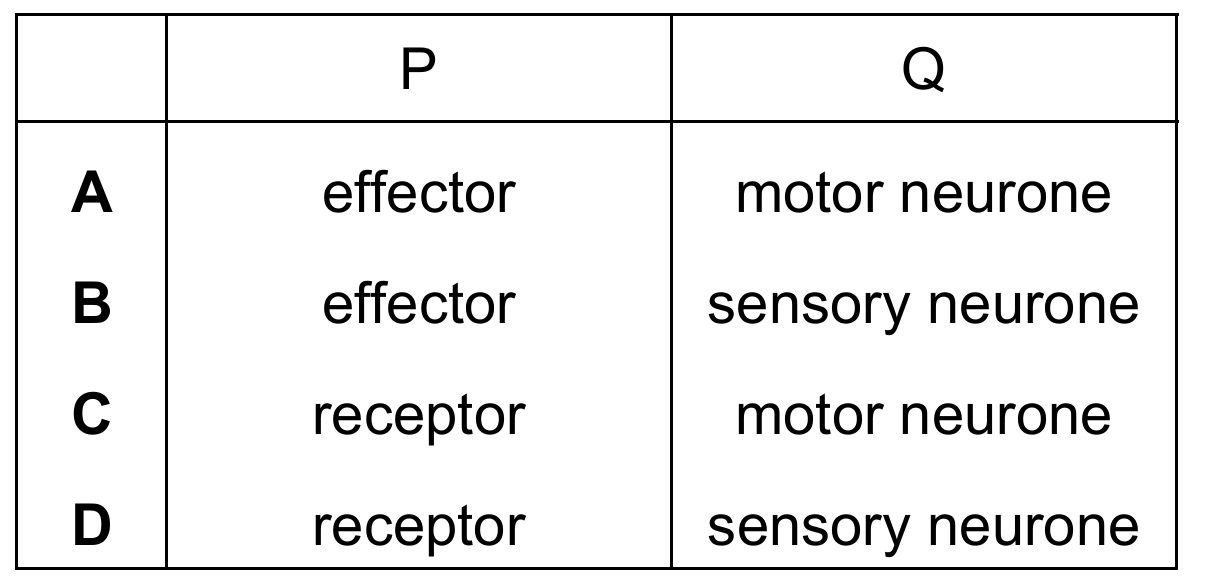
A person touches a hot object which stimulates structure $P$ in the skin. This causes an electrical impulse to be sent through structure $Q$ to the central nervous system.
Which row identifies structures $P$ and $Q$?

▶️ Answer/Explanation
Structure $P$ is a receptor because its role is to detect a stimulus (the hot object) and convert it into an electrical signal. Structure $Q$ is a sensory neurone because it carries that electrical impulse away from the receptor toward the central nervous system (CNS). In a reflex arc, effectors and motor neurones only come into play after the CNS has processed the signal to coordinate a response, such as moving the hand away. Therefore, row D correctly identifies the roles of both structures based on the direction of the impulse.
✅ Answer: (D)
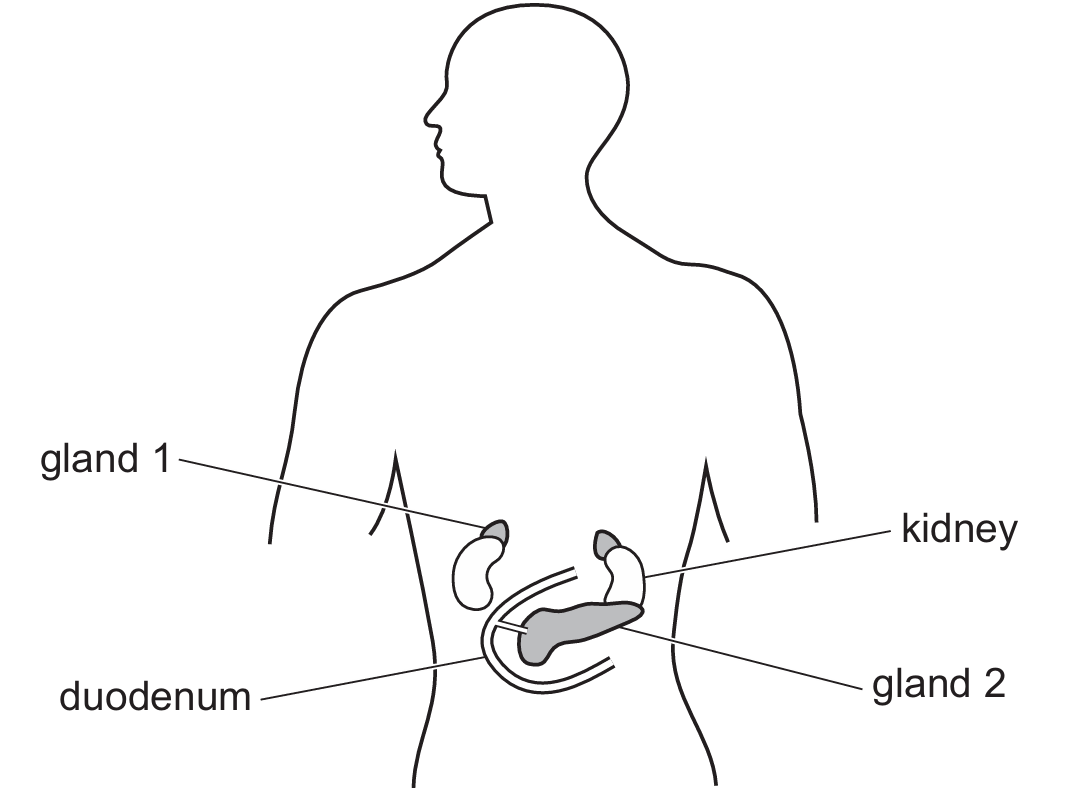
Question 24
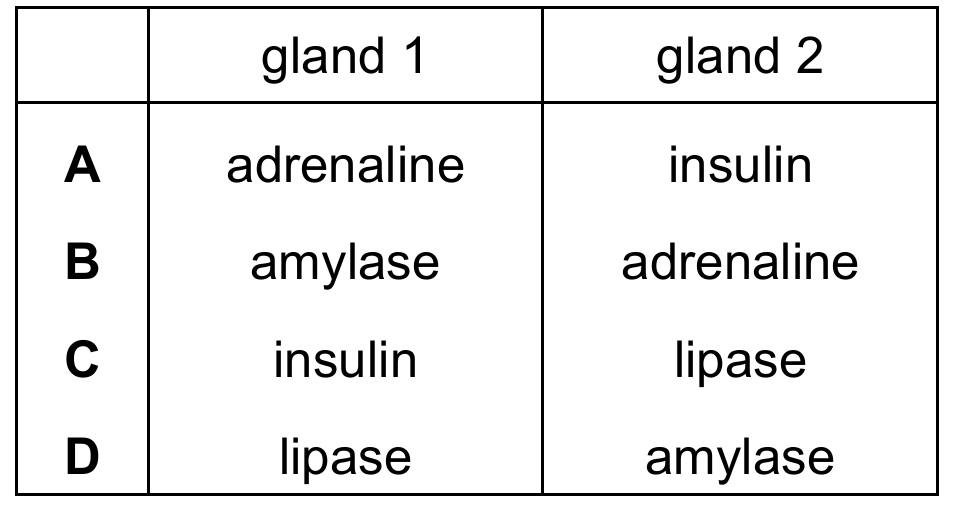
The diagram shows the position of two glands in the body.

Which row states the hormones produced by these glands?

▶️ Answer/Explanation
✅ Answer: (A)
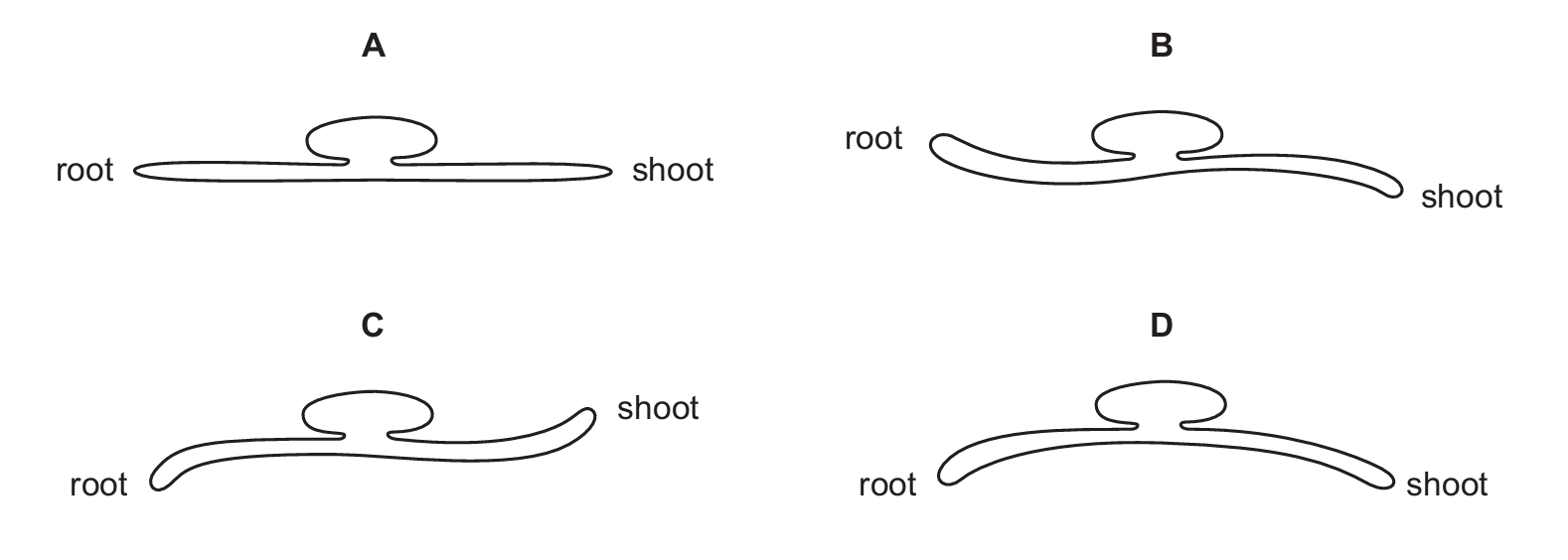
Question 25
A seedling was placed in a horizontal position.
Which diagram shows the expected gravitropic responses in the seedling?

▶️ Answer/Explanation
✅ Answer: (C)
Question 26
The diagram shows a sperm cell.
Which part contains digestive enzymes?

▶️ Answer/Explanation
The correct part is D, which represents the acrosome. The acrosome is a cap-like structure located at the very front of the sperm’s head. It contains specialized digestive enzymes, such as hyaluronidase and acrosin, which are essential for fertilization. These enzymes break down the protective outer layers of the egg cell (the corona radiata and zona pellucida), allowing the sperm to penetrate and deliver its genetic material.
For context: * A is the flagellum (tail) used for swimming. * B is the midpiece containing mitochondria for energy. * C is the nucleus containing the haploid set of chromosomes.
✅ Answer: (D)
Question 27
Which secondary sexual characteristic is associated with testosterone?
(B) facial hair growth
(C) start of the menstrual cycle
(D) widening of hips
▶️ Answer/Explanation
Testosterone is the primary male sex hormone produced in the testes. During puberty, increased levels of testosterone trigger the development of secondary sexual characteristics in males. These include the deepening of the voice, increased muscle mass, and the stimulation of hair follicles leading to facial hair growth. In contrast, options (A), (C), and (D) are characteristics primarily driven by female sex hormones like estrogen and progesterone. Therefore, facial hair growth is the only characteristic listed that is directly associated with testosterone.
✅ Answer: (B)
Question 28
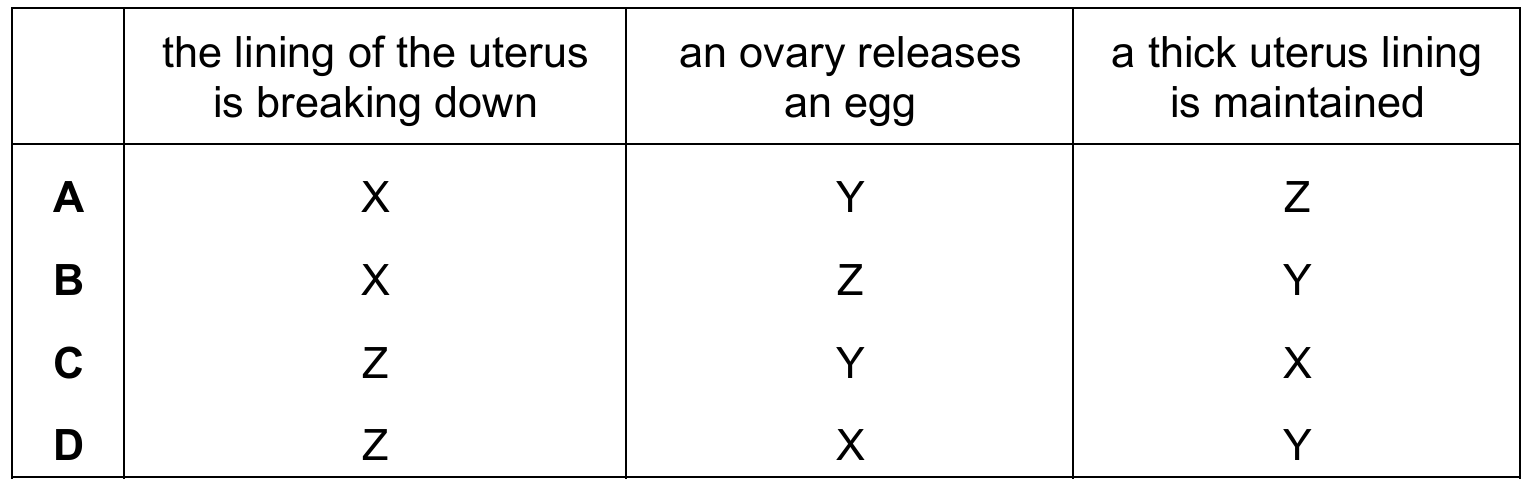
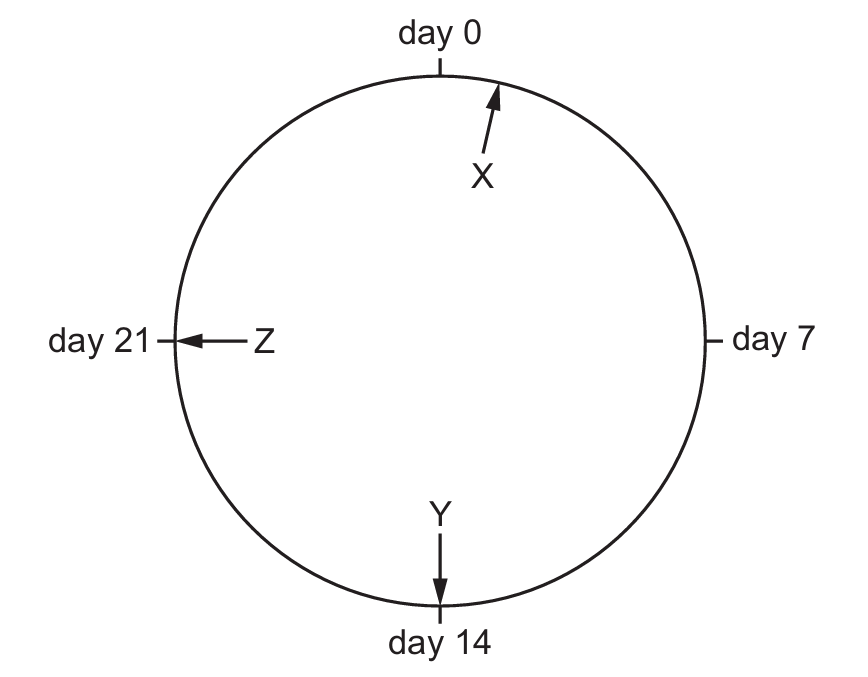
The diagram shows a human menstrual cycle.

What are represented by $X$, $Y$ and $Z$?

▶️ Answer/Explanation
✅ Answer: (A)
Question 29
What is an alternative form of a gene called?
(B) chromosome
(C) genotype
(D) protein
▶️ Answer/Explanation
An allele is one of two or more versions of a DNA sequence at a given genomic location. While a gene determines a specific trait (like eye color), the alleles are the variations of that gene (like blue vs. brown). Organisms inherit one allele from each parent for every gene, and the combination of these alleles determines the specific phenotype.
Other options like “chromosome” refer to the structure that carries the genes, while “genotype” describes the entire genetic makeup. Since “allele” specifically refers to the alternative versions of a single gene, it is the correct term.
✅ Answer: (A)
Question 30
Cystic fibrosis is an inherited condition that occurs when an individual is homozygous for the recessive allele.
If both parents are heterozygous for this characteristic, what is the probability that their first child will have cystic fibrosis?
(B) $25\%$
(C) $50\%$
(D) $100\%$
▶️ Answer/Explanation
✅ Answer: (B)
Question 31
Which characteristic is an example of continuous variation?
(B) body mass in cats
(C) seed colour in pea plants
(D) seed shape in pea plants
▶️ Answer/Explanation
✅ Answer: (B)
Question 32
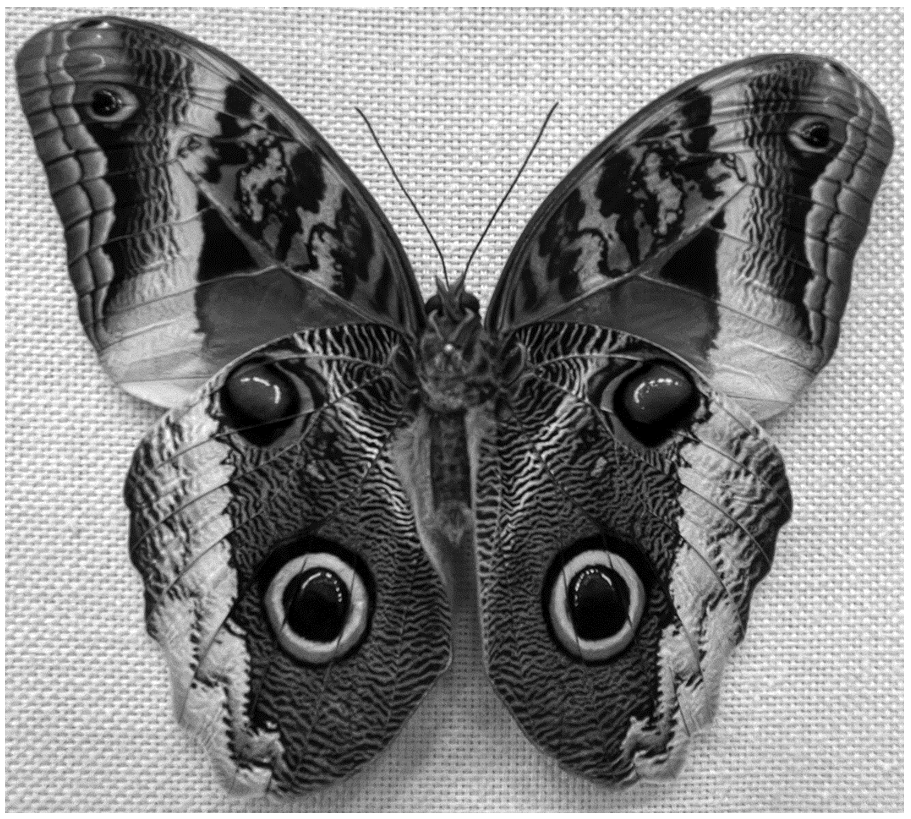
The photograph shows the butterfly Caligo martia.

Which feature is an adaptation to prevent predation?
(B) long antennae to detect flower nectar
(C) spots on the wings that look like large eyes
(D) the pattern on the wings that makes the butterfly easier to see
▶️ Answer/Explanation
✅ Answer: (C)
Question 33
What is the principal source of energy input to biological systems?
(B) photosynthesis
(C) respiration
(D) the Sun
▶️ Answer/Explanation
The primary source of energy for almost all life on Earth is the Sun. Through the process of photosynthesis, producers (like plants and algae) capture solar energy and convert it into chemical energy stored in glucose. This energy then flows through the food chain as consumers eat the plants or other animals. While photosynthesis and respiration are vital biological processes, they are mechanisms of energy conversion and release rather than the original input source. Without the continuous stream of light energy from the Sun, biological systems would eventually run out of the fuel needed to sustain life.
✅ Correct Answer: (D) the Sun
Question 34
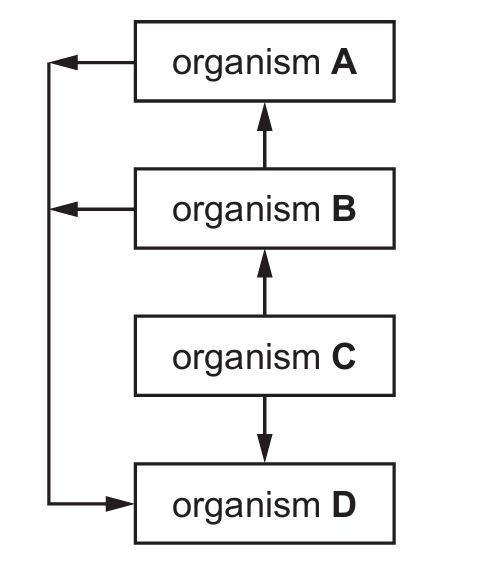
The diagram shows the flow of energy in a food chain.
Which organism is the producer in the food chain?

▶️ Answer/Explanation
✅ Answer: (C)
Question 35
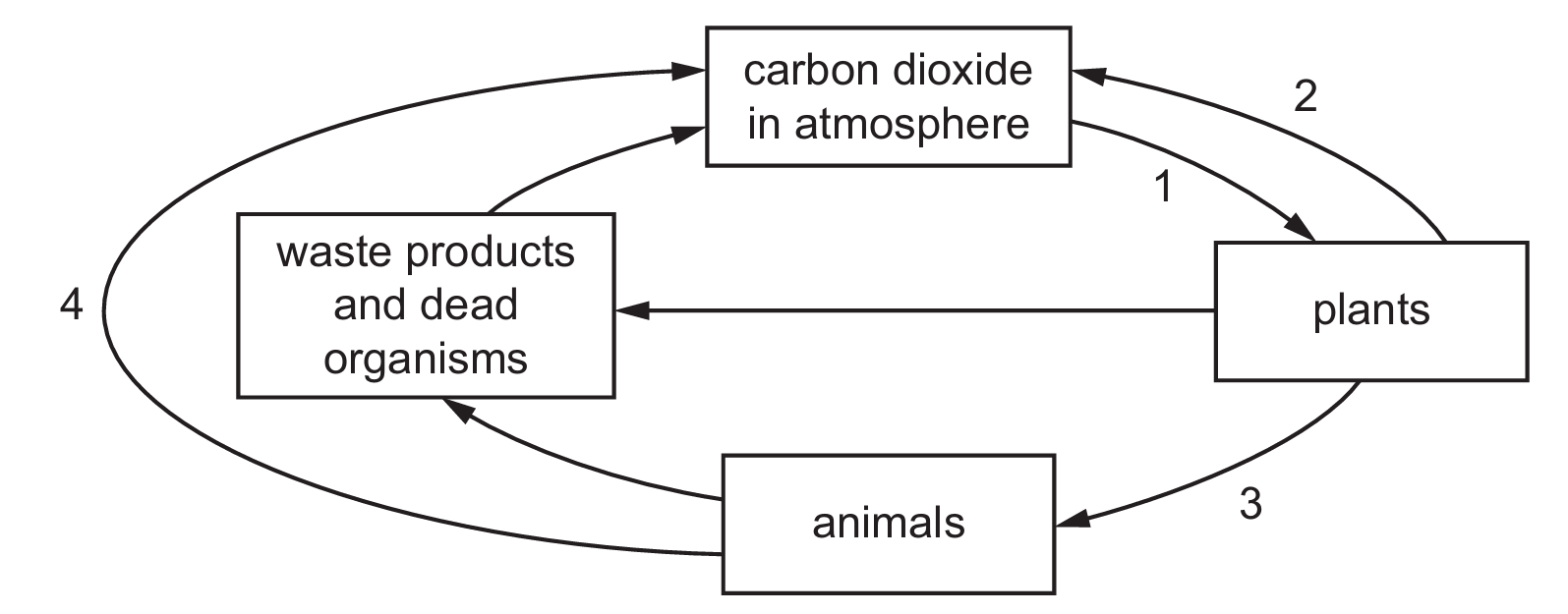
The diagram shows part of the carbon cycle.

Which two numbered arrows represent respiration?
(B) $1$ and $3$
(C) $2$ and $4$
(D) $3$ and $4$
▶️ Answer/Explanation
✅ Answer: (C)
Question 36
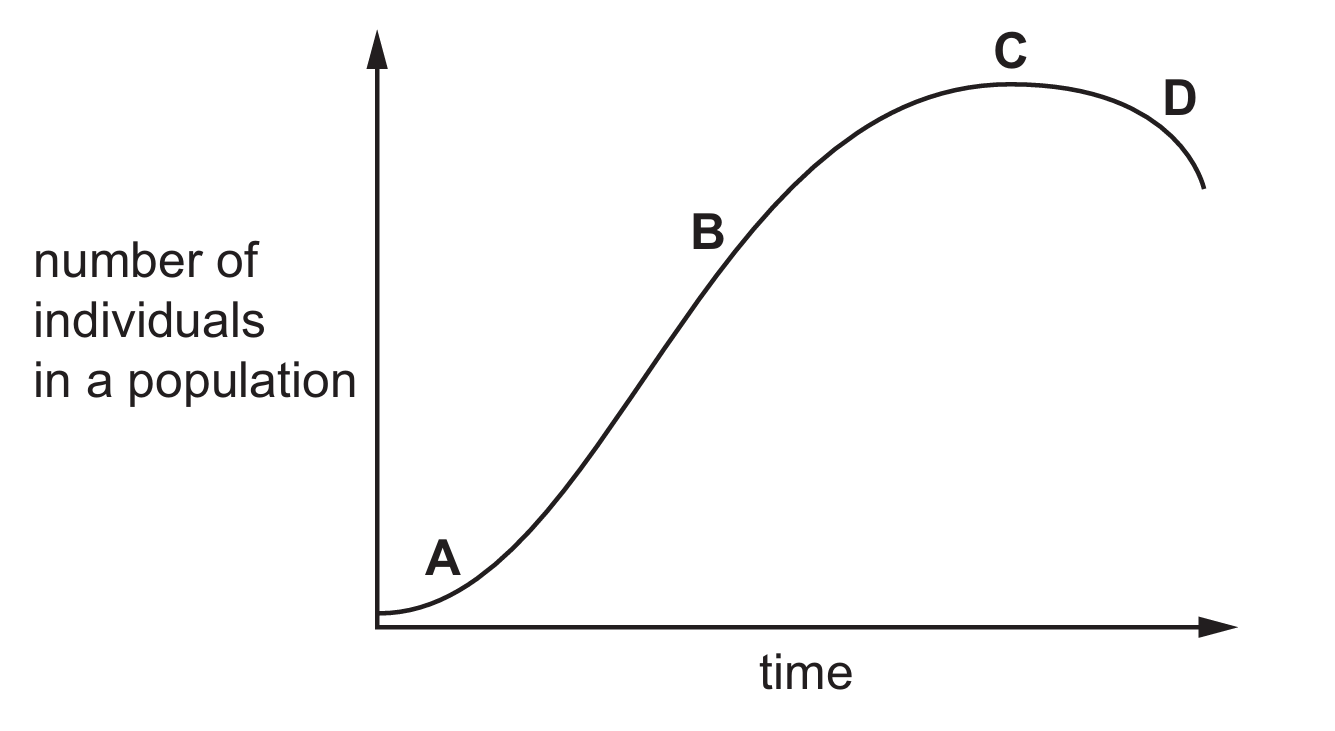
The diagram shows a population curve.
Which letter identifies the lag phase in this sigmoid curve?

▶️ Answer/Explanation
✅ Answer: (A)
Question 37
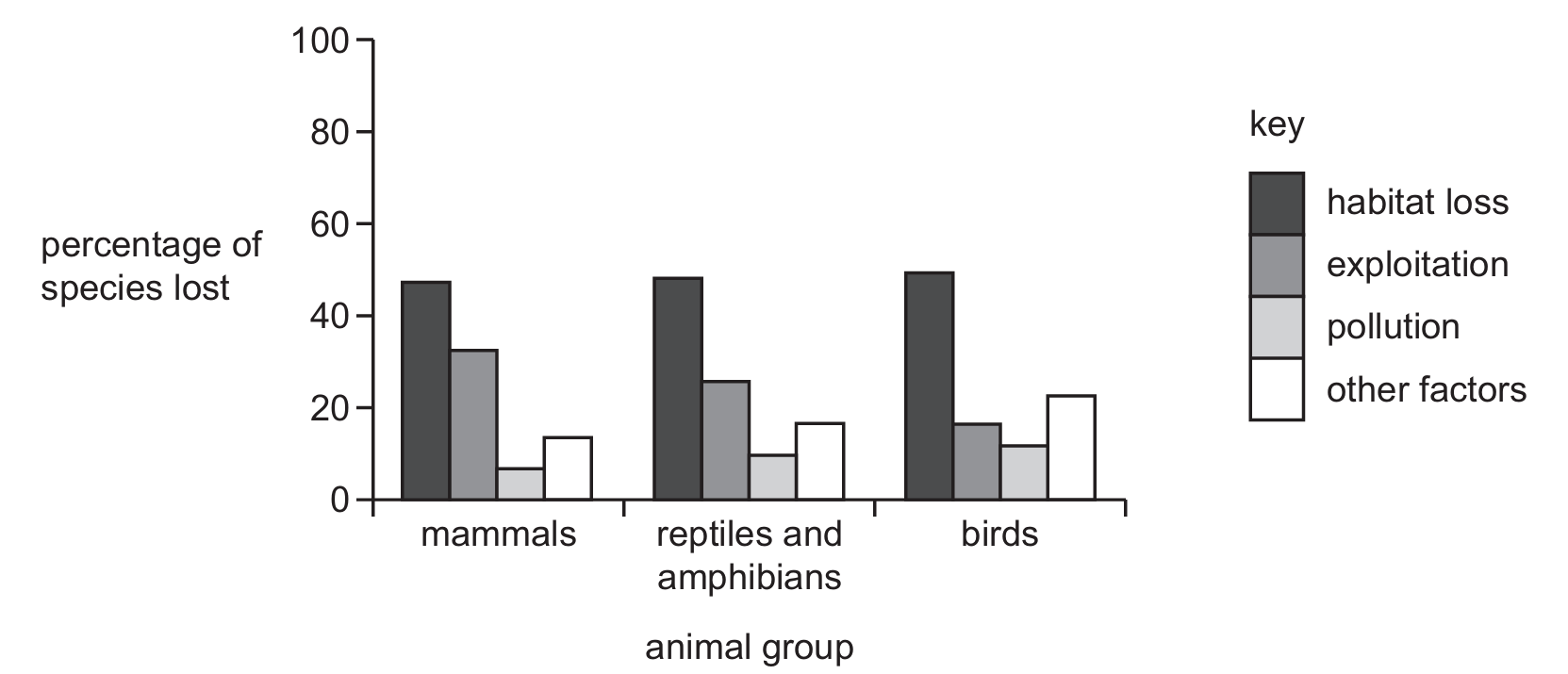
The graph shows the percentage of species lost, in three different animal groups, due to different human activities during the last ten years.

Which activity has caused the highest percentage of species loss overall?
(B) exploitation
(C) pollution
(D) other factors
▶️ Answer/Explanation
✅ Answer: (A)
Question 38
Why are bacteria useful in biotechnology and genetic modification?
2 They have a rapid reproduction rate.
3 They have cell walls.
(B) $1$ and $2$ only
(C) $1$ and $3$ only
(D) $2$ and $3$ only
▶️ Answer/Explanation
✅ Answer: (B)
Question 39
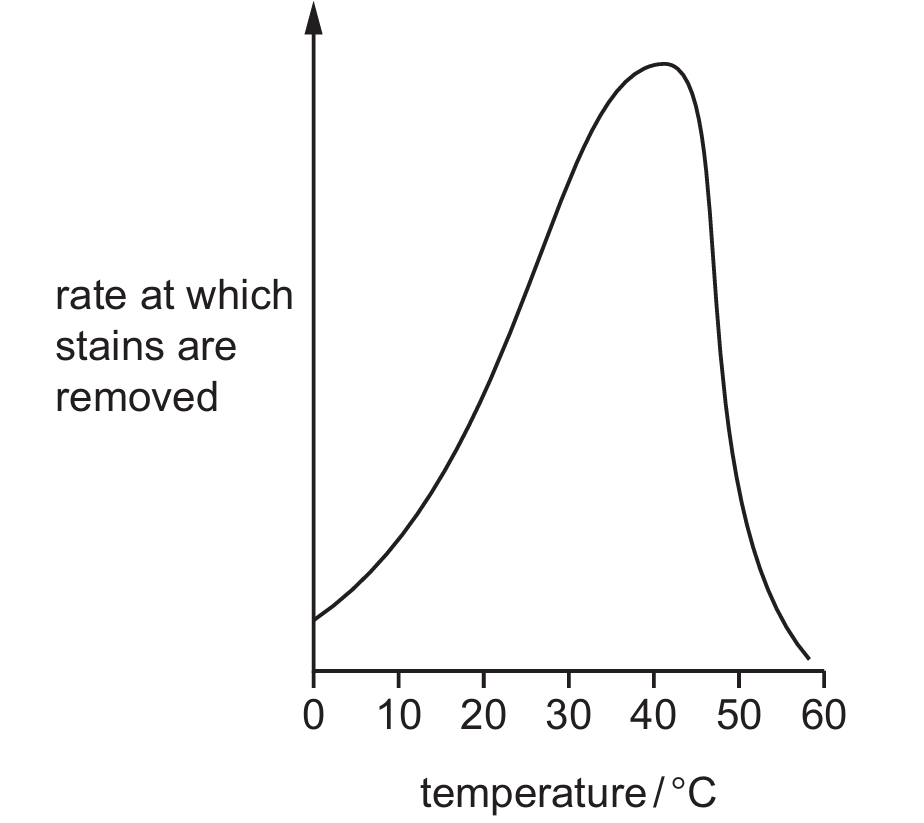
The graph shows how changing the temperature affects the rate of stain removal from clothes, using a biological washing powder.

What does the graph suggest about biological washing powders?
(B) Biological washing powders work best at all temperatures above $40$ °C.
(C) The optimum temperature for the reaction is between $10$ °C and $30$ °C.
(D) There is a directly proportional relationship between the temperature used and the rate at which stains are removed.
▶️ Answer/Explanation
✅ Answer: (A)
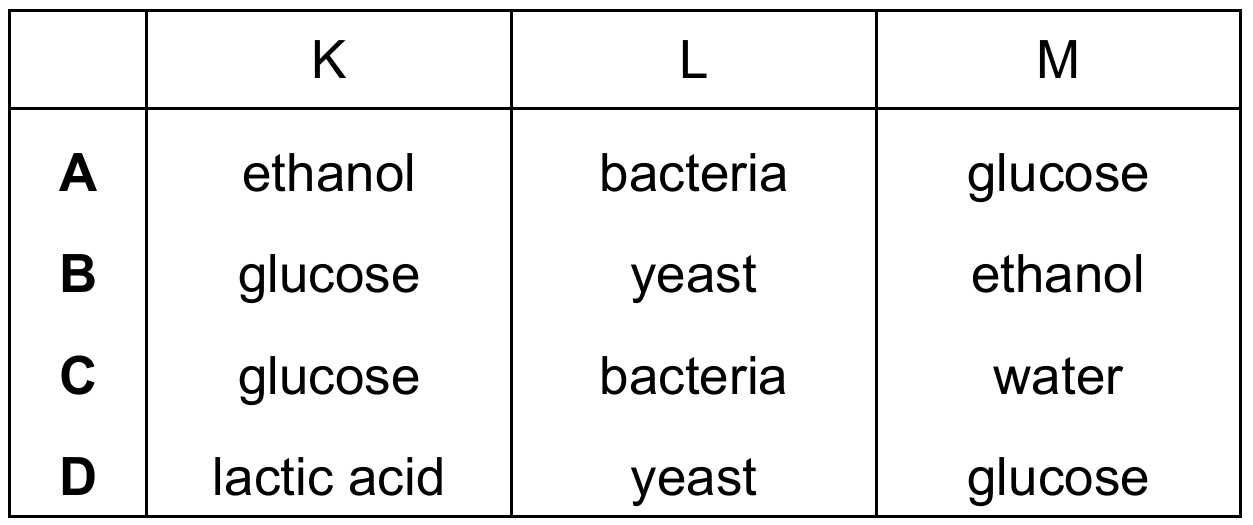
Question 40
The flow chart shows some of the processes involved in making biofuel.

What are represented by $K$, $L$ and $M$ in the diagram?

▶️ Answer/Explanation
✅ Answer: (B)