Home / 0610_s25_qp_13

Question 1

The Venus flytrap is a plant that feeds on insects. When an insect lands on a specially adapted leaf, the leaf folds very quickly and traps the insect. The leaves produce enzymes which digest the insect.

Which characteristics of living organisms are involved?

(A) excretion, growth, nutrition
(B) movement, excretion, nutrition
(C) movement, sensitivity, growth
(D) movement, sensitivity, nutrition
▶️ Answer/Explanation
The description highlights three distinct life processes. First, the plant must detect the insect landing on the leaf, which demonstrates sensitivity (response to stimuli). Second, the leaf “folds very quickly,” which is a clear example of movement. Finally, the production of enzymes to digest the insect implies the process of obtaining food for energy, known as nutrition. Excretion and growth are not explicitly described in this immediate reaction.
Answer: (D)

Question 2

A rat has the scientific name Rattus rattus.

What do the two parts of this name refer to?

(A) genus and species
(B) kingdom and genus
(C) kingdom and species
(D) species and group
▶️ Answer/Explanation
Scientific names follow the system of binomial nomenclature, which assigns a unique two-part name to every organism. The first part of the name represents the genus and is always capitalized (e.g., Rattus). The second part identifies the specific species within that genus and is written in lowercase (e.g., rattus). Therefore, the name Rattus rattus corresponds to the genus and species of the rat.
Answer: (A)

Question 3

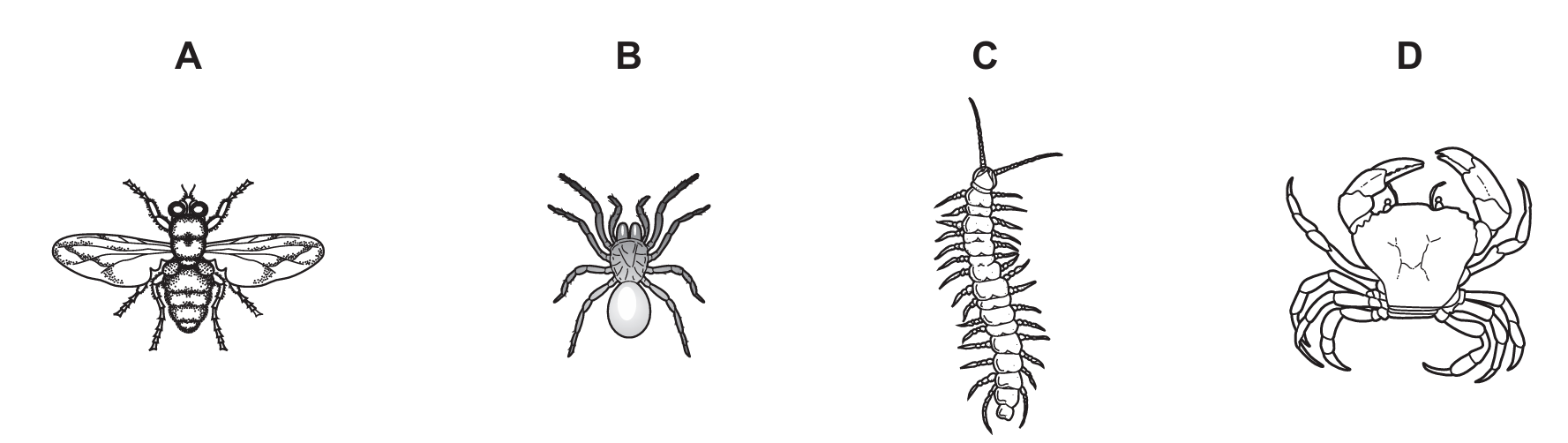
Which of the animals shown is a crustacean?

▶️ Answer/Explanation
To identify the crustacean, we look at the anatomical features of these arthropods. Animal A is an insect (bee/fly) with $3$ pairs of legs and wings. Animal B is an arachnid (spider) characterized by $4$ pairs of legs. Animal C is a myriapod (centipede) with many body segments and pairs of legs. Animal D is a crab, which is a classic example of a crustacean. Crustaceans typically have two pairs of antennae and a hard exoskeleton, often with $5$ or more pairs of legs including pincers.
Answer: (D)

Question 4

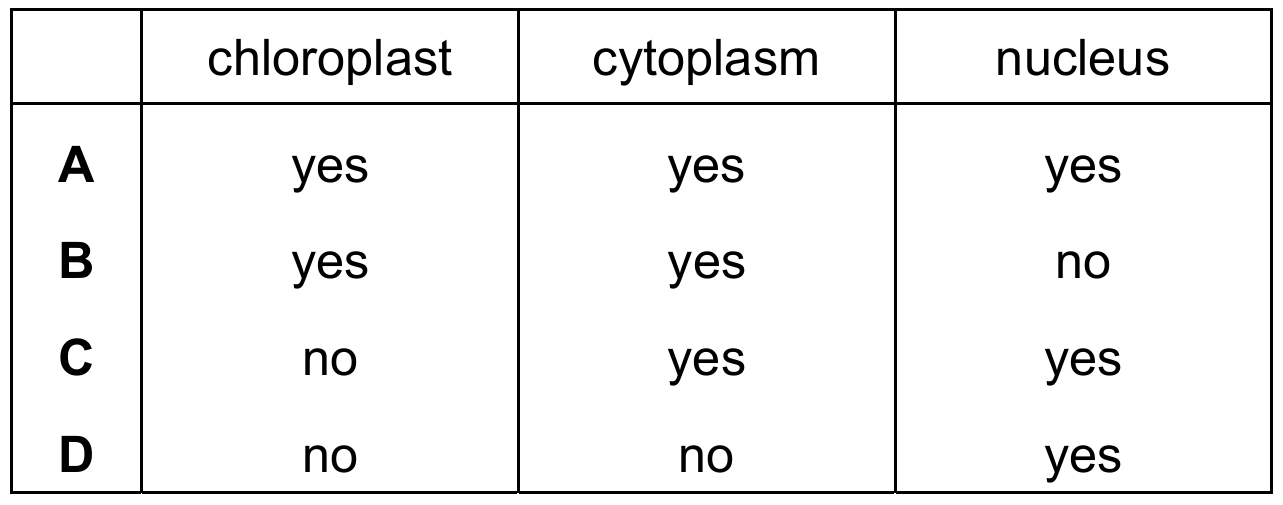
Which features do animal cells share with plant cells?

▶️ Answer/Explanation
To solve this, we must identify which organelles are present in animal cells. Both animal and plant cells are eukaryotic, meaning they both contain a nucleus to house genetic material and cytoplasm where metabolic reactions occur. However, chloroplasts are specialized organelles used for photosynthesis; these are found in plant cells but are not present in animal cells. Therefore, an animal cell has cytoplasm and a nucleus, but no chloroplasts.
Answer: (C)

Question 5

A student makes a drawing of an animal.

The length of the animal in the drawing is $30 \text{ mm}$.

The actual length of the animal is $200 \text{ mm}$.

What is the magnification of the student’s drawing?

(A) $\times 0.15$
(B) $\times 6.67$
(C) $\times 15$
(D) $\times 6000$
▶️ Answer/Explanation
To find the magnification, we use the formula: $$\text{Magnification} = \frac{\text{Size of Image}}{\text{Actual Size of Object}}$$ In this case, the image size (drawing) is $30 \text{ mm}$ and the actual size is $200 \text{ mm}$. By substituting these values into the equation, we get: $$\text{Magnification} = \frac{30 \text{ mm}}{200 \text{ mm}} = 0.15$$ Since the drawing is smaller than the real animal, the magnification factor is less than $1$. This indicates that the drawing has been scaled down rather than enlarged.
Answer: (A)

Question 6

Some pieces of potato plant tissue are placed in a very concentrated sugar solution. Other pieces of potato plant tissue are placed in distilled water.

What happens to the mass of the potato pieces in the two liquids?

▶️ Answer/Explanation

This question tests the concept of osmosis, which is the net movement of water molecules from a region of higher water potential to a region of lower water potential through a partially permeable membrane.

In the concentrated sugar solution (hypertonic), the water potential outside the potato cells is lower than inside. Consequently, water leaves the potato cells by osmosis, causing the mass to decrease.

In distilled water (hypotonic), the water potential outside is higher than inside the potato cells. Water enters the cells by osmosis, causing the cells to become turgid and the overall mass to increase.

Answer: (B)

Question 7

Which statement describes the net movement of particles by active transport in animal cells?

(A) from a higher concentration to a lower concentration across a cell membrane
(B) from a higher concentration to a lower concentration across a cell wall
(C) from a lower concentration to a higher concentration across a cell membrane
(D) from a lower concentration to a higher concentration across a cell wall
▶️ Answer/Explanation
Active transport is the process by which cells move substances against a concentration gradient, meaning from an area of lower concentration to an area of higher concentration. This process requires energy in the form of $ATP$ and involves specialized carrier proteins. Unlike plants or bacteria, animal cells do not possess a cell wall; therefore, all transport occurs across the cell membrane. Consequently, option (C) is the only description that correctly identifies both the direction of movement and the appropriate cellular structure for an animal cell.
Answer: (C)

Question 8

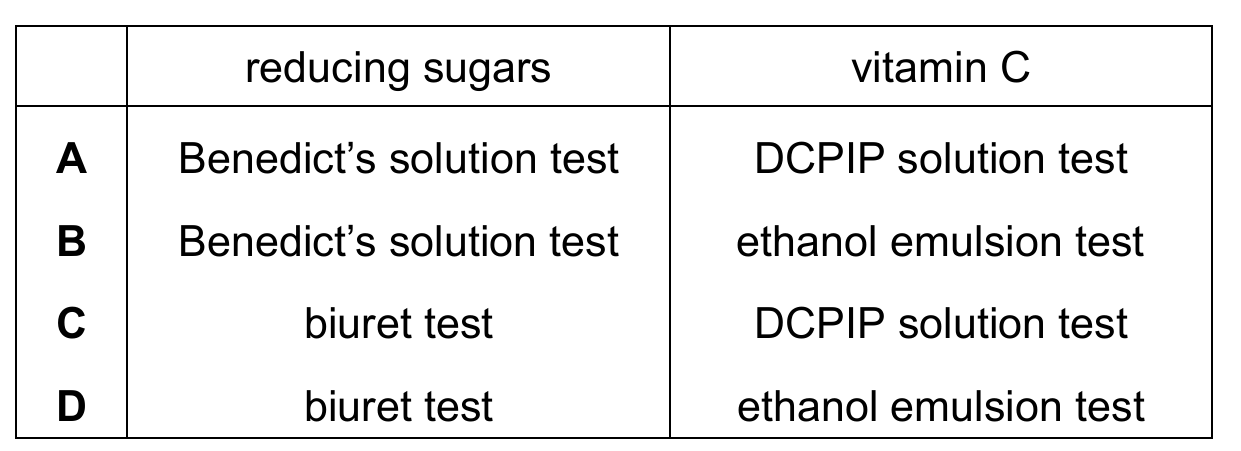
Which chemical tests should a student use to test lemon juice for reducing sugars and vitamin C?

▶️ Answer/Explanation

To identify reducing sugars, the standard food test is the Benedict’s solution test, which involves heating the sample to see a color change from blue to brick-red. For vitamin C (ascorbic acid), the specific test uses DCPIP solution, which decolors from blue to colorless in the presence of the antioxidant. Other options like the biuret test are used for proteins, and the ethanol emulsion test is used for lipids. Therefore, the combination of Benedict’s and DCPIP is the only correct path for testing lemon juice for these specific nutrients.

Answer: (A)

Question 9

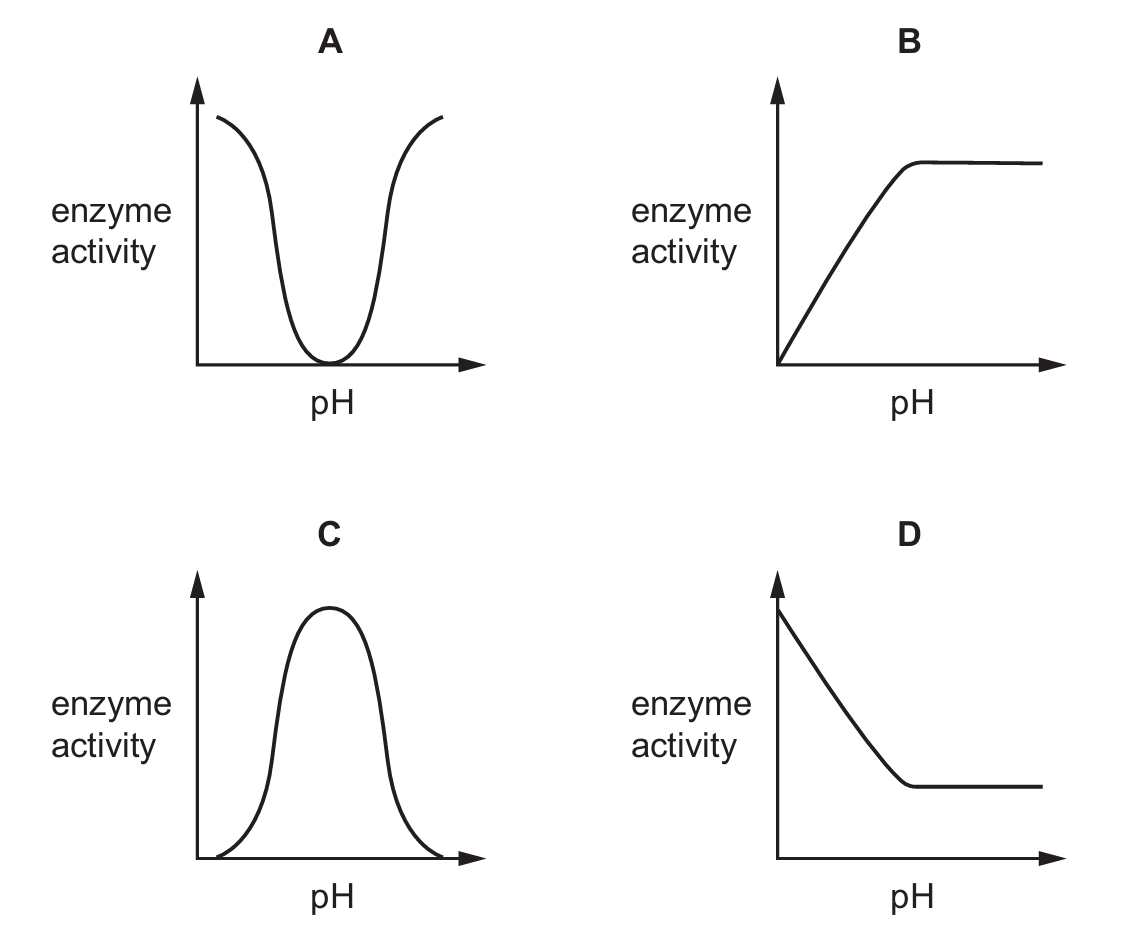
Which graph shows the effect of $pH$ on enzyme activity?

▶️ Answer/Explanation

Enzymes have an optimum $pH$ at which they function most efficiently. As the $pH$ moves away from this optimum—either becoming too acidic or too alkaline—the chemical bonds holding the enzyme’s active site together begin to break. This leads to denaturation, where the active site changes shape and the substrate can no longer fit.

Consequently, enzyme activity is highest at the peak and drops off to zero on either side, creating a characteristic bell-shaped curve. Graph C correctly illustrates this relationship, showing a single clear peak of maximum activity.

Answer: (C)

Question 10

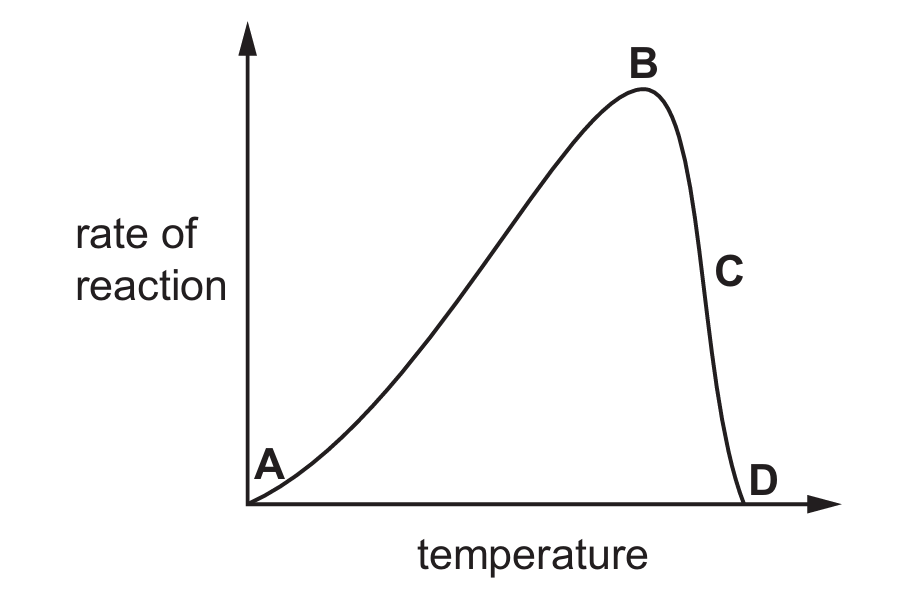
The graph shows the effect of temperature on an enzyme-controlled reaction.

At which point on the graph is the enzyme completely denatured?

▶️ Answer/Explanation
Enzymes are biological catalysts that have an optimum temperature (Point B) where the reaction rate is highest. As temperature increases beyond this point, the kinetic energy causes the weak bonds maintaining the enzyme’s specific 3D shape to break. This process is called denaturation. At Point C, the enzyme’s active site is beginning to deform, causing a rapid drop in activity. By Point D, the rate of reaction has fallen to zero because the enzyme molecules are completely denatured, meaning the active site no longer fits the substrate, and the reaction can no longer occur.
Answer: (D)

Question 11

Which carbohydrate is used to build plant cell walls?

(A) cellulose
(B) glycogen
(C) starch
(D) sucrose
▶️ Answer/Explanation

Cellulose is a complex polysaccharide consisting of thousands of $\beta$-glucose units linked together. Its linear, rigid structure allows it to form tough microfibrils that provide structural support and tensile strength to plant cell walls. While starch and sucrose are used for energy storage and transport in plants, and glycogen is the storage carbohydrate in animals, only cellulose serves as a primary structural component. This makes it the most abundant organic polymer on Earth, essential for maintaining the integrity of plant cells.

Answer: (A)

Question 12

In a cross-section of a leaf, what is the correct order of structures moving from the upper surface of the leaf towards the lower surface of the leaf?

(A) cuticle, epidermis, palisade mesophyll, spongy mesophyll
(B) cuticle, epidermis, spongy mesophyll, palisade mesophyll
(C) epidermis, cuticle, palisade mesophyll, spongy mesophyll
(D) epidermis, cuticle, spongy mesophyll, palisade mesophyll
▶️ Answer/Explanation
The structure of a typical dicotyledonous leaf is organized in layers to optimize photosynthesis and minimize water loss. The outermost layer on the top is the cuticle, a waxy, non-cellular coating that prevents desiccation. Directly beneath the cuticle lies the upper epidermis, a single layer of cells that protects internal tissues. Moving deeper, the palisade mesophyll consists of tightly packed, column-shaped cells rich in chloroplasts to capture maximum sunlight. Below this is the spongy mesophyll, characterized by loosely arranged cells with air spaces to facilitate gas exchange. Therefore, moving from the upper to the lower surface, the sequence follows the order described in option A.
Answer: (A)

Question 13

What is the result of a diet lacking iron?

(A) bleeding gums
(B) poor wound healing
(C) reduced number of red blood cells
(D) weak bones and teeth
▶️ Answer/Explanation
Iron is a fundamental component of hemoglobin, the protein in red blood cells responsible for transporting oxygen throughout the body. When the diet lacks sufficient iron, the body cannot produce enough hemoglobin, leading to a condition known as iron-deficiency anemia. This manifests as a reduced number of functional red blood cells or a lower concentration of hemoglobin within them. Consequently, the blood’s oxygen-carrying capacity is diminished, often causing fatigue and weakness. Other options like bleeding gums or weak bones are associated with deficiencies in Vitamin C or Calcium/Vitamin D, respectively.
Answer: (C)

Question 14

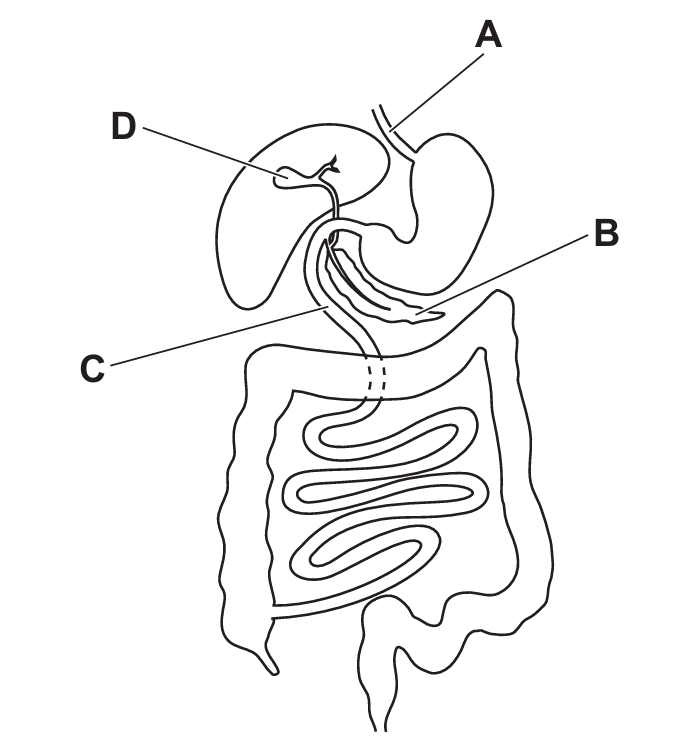
The diagram shows part of the human digestive system.

Where is lipase made?

▶️ Answer/Explanation
Lipase is a digestive enzyme responsible for breaking down fats into fatty acids and glycerol. In the provided diagram, label B points to the pancreas, which is the primary site for the production of pancreatic lipase. While small amounts of lipase are also produced in the mouth and stomach, the bulk of lipid digestion relies on the enzymes secreted by the pancreas into the small intestine. Label A represents the esophagus, C points to the bile duct or duodenum area, and D indicates the gallbladder/liver region. Therefore, the correct site for lipase synthesis among the choices is the pancreas.
Answer: (B)

Question 15

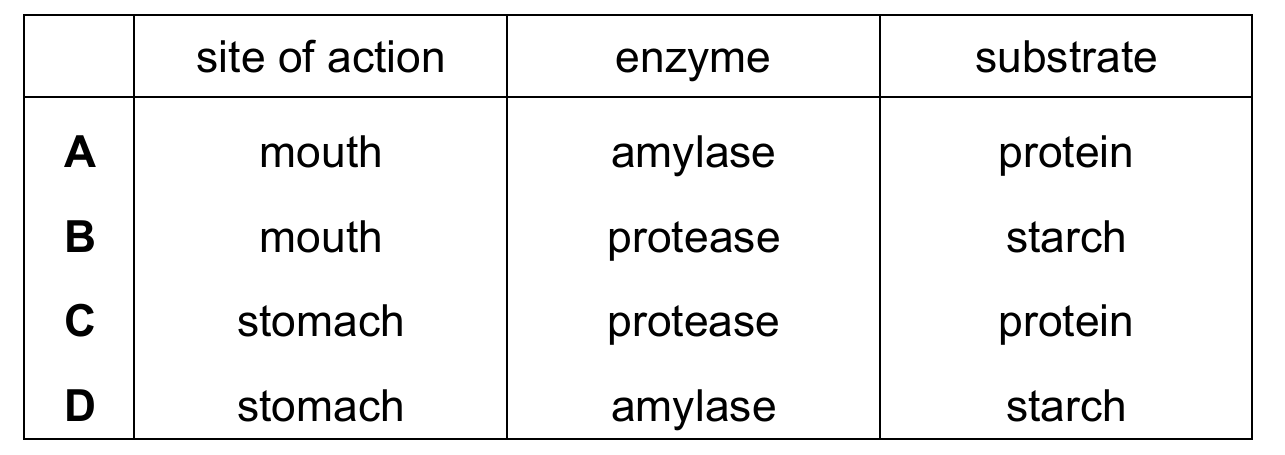
Which row about an enzyme in the alimentary canal is correct?

▶️ Answer/Explanation
The correct row is C. Digestion in the alimentary canal involves specific enzymes acting on specific substrates at designated locations. In the mouth, salivary amylase breaks down starch, not protein (ruling out A and B). In the stomach, the highly acidic environment is ideal for proteases like pepsin to begin the breakdown of proteins into smaller polypeptides. Amylase does not function in the stomach due to the low pH (ruling out D). Therefore, the combination of the stomach as the site, protease as the enzyme, and protein as the substrate is biologically accurate.
Answer: (C)

Question 16

What is the pathway taken by water through a plant?

(A) root cortex cells $\rightarrow$ root hair cells $\rightarrow$ mesophyll cells $\rightarrow$ xylem
(B) root cortex cells $\rightarrow$ root hair cells $\rightarrow$ xylem $\rightarrow$ mesophyll cells
(C) root hair cells $\rightarrow$ root cortex cells $\rightarrow$ mesophyll cells $\rightarrow$ xylem
(D) root hair cells $\rightarrow$ root cortex cells $\rightarrow$ xylem $\rightarrow$ mesophyll cells
▶️ Answer/Explanation
Water enters the plant via root hair cells through osmosis due to a water potential gradient. It then moves through the root cortex cells via the apoplastic or symplastic pathways until it reaches the xylem. The xylem acts as a structural “pipeline,” transporting the water upwards to the leaves through transpiration pull. Finally, the water exits the xylem and enters the mesophyll cells of the leaf, where it is used for photosynthesis or evaporated into the air spaces for transpiration. This sequential flow from soil to leaf makes choice D the only logically sound biological path.
Answer: (D)

Question 17

Which blood vessel transports blood away from the kidney?

(A) pulmonary artery
(B) pulmonary vein
(C) renal artery
(D) renal vein
▶️ Answer/Explanation
In biological systems, the term “renal” specifically refers to the kidneys. To determine the direction of flow, remember that arteries carry blood toward an organ, while veins carry blood away from it back to the heart. The renal artery supplies oxygenated, unfiltered blood to the kidney, whereas the renal vein carries deoxygenated, filtered blood out of the kidney toward the inferior vena cava. Options (A) and (B) are incorrect as “pulmonary” refers to the lungs. Therefore, the vessel transporting blood away from the kidney is the renal vein.
Answer: (D)

Question 18

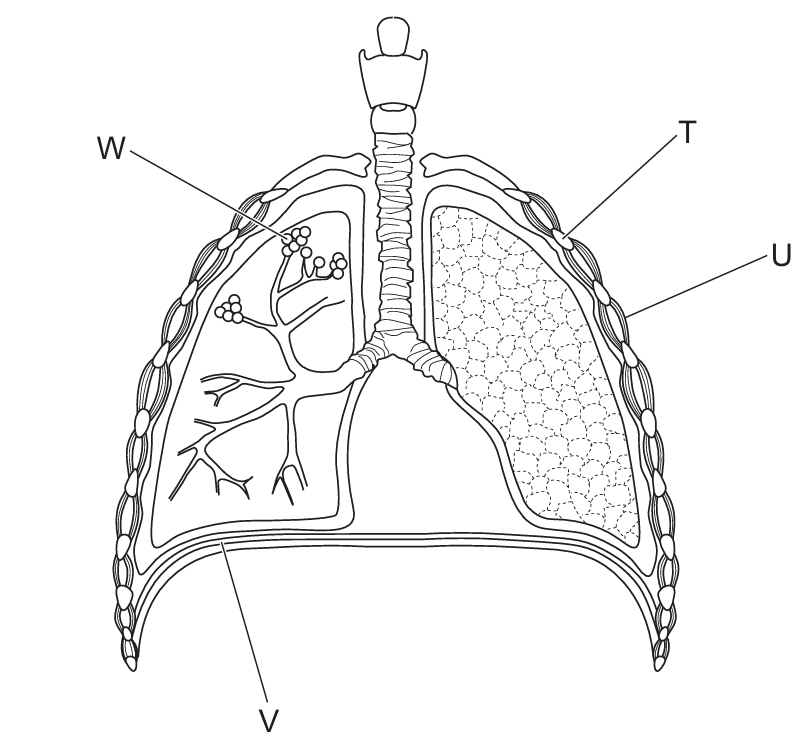
The diagram shows part of the gas exchange system in humans.

Which row identifies the structures in the diagram?

▶️ Answer/Explanation
To identify the correct row, we must match the labels to the anatomical structures of the respiratory system. Label T points to the bone structure of the chest wall, which is the rib. Label U points to the tissue located between the ribs, identifying the intercostal muscle. Label V points to the large, dome-shaped muscular sheet at the base of the thorax, which is the diaphragm. Finally, label W points to the tiny air sacs at the end of the bronchioles where gas exchange occurs, known as the alveoli. Comparing these identifications with the table, row A is the only option that correctly matches all four structures.
Answer: (A)

Question 19

Which structure is the site of aerobic respiration in plant cells?

(A) chloroplast
(B) mitochondrion
(C) nucleus
(D) ribosome
▶️ Answer/Explanation

Aerobic respiration is the process by which cells break down glucose in the presence of oxygen to produce energy in the form of $ATP$. In eukaryotic cells, including plant cells, the majority of this process occurs within the mitochondrion. While plants have chloroplasts for photosynthesis, they still require mitochondria to convert stored energy into a usable form for cellular activities. Other organelles like the nucleus (genetic control) and ribosomes (protein synthesis) serve entirely different functions. Therefore, the mitochondrion is known as the “powerhouse” of the cell for its role in respiration.

Answer: (B)

Question 20

Which substance is a product of anaerobic respiration in human muscles?

(A) alcohol
(B) carbon dioxide
(C) glucose
(D) lactic acid
▶️ Answer/Explanation

Anaerobic respiration occurs in human muscles during vigorous exercise when the oxygen supply is insufficient to meet energy demands. Unlike aerobic respiration, which breaks down glucose fully into carbon dioxide and water, anaerobic respiration in animals involves the partial breakdown of glucose into lactic acid. This process releases a small amount of energy quickly. In contrast, alcohol and carbon dioxide are products of anaerobic respiration in yeast (fermentation), and glucose is the reactant, not the product. Therefore, lactic acid is the only correct metabolic byproduct for human muscle cells in this context.

Answer: (D)

Question 21

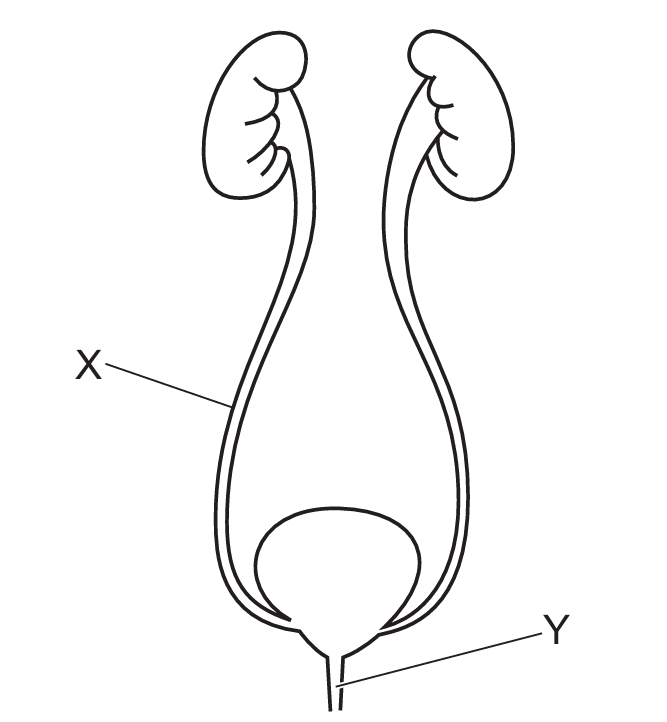
The diagram shows a human organ system.

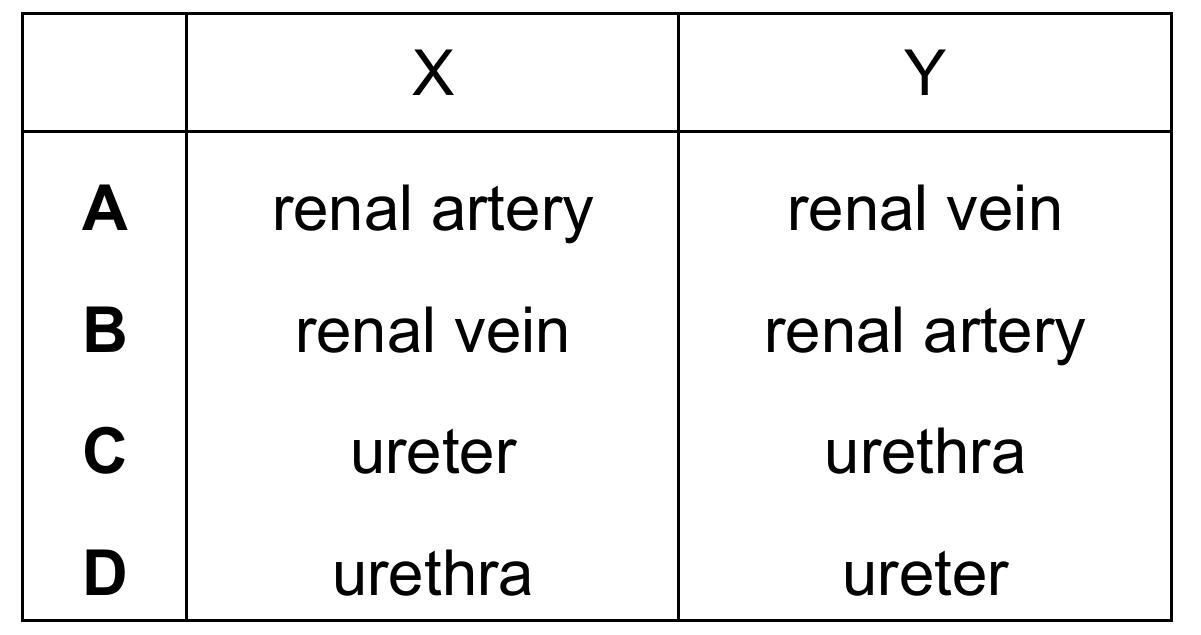
What are the names of structures $X$ and $Y$?

▶️ Answer/Explanation
The diagram illustrates the human urinary (excretory) system. Structure $X$ represents the ureter, which is the muscular tube that transports urine from the kidney to the urinary bladder. Structure $Y$ represents the urethra, the tube through which urine is discharged from the bladder to the outside of the body. Options A and B refer to blood vessels, while Option D reverses the order of the tubes. Therefore, the correct sequence identifying the exit path of waste is ureter then urethra.
Answer: (C)

Question 22

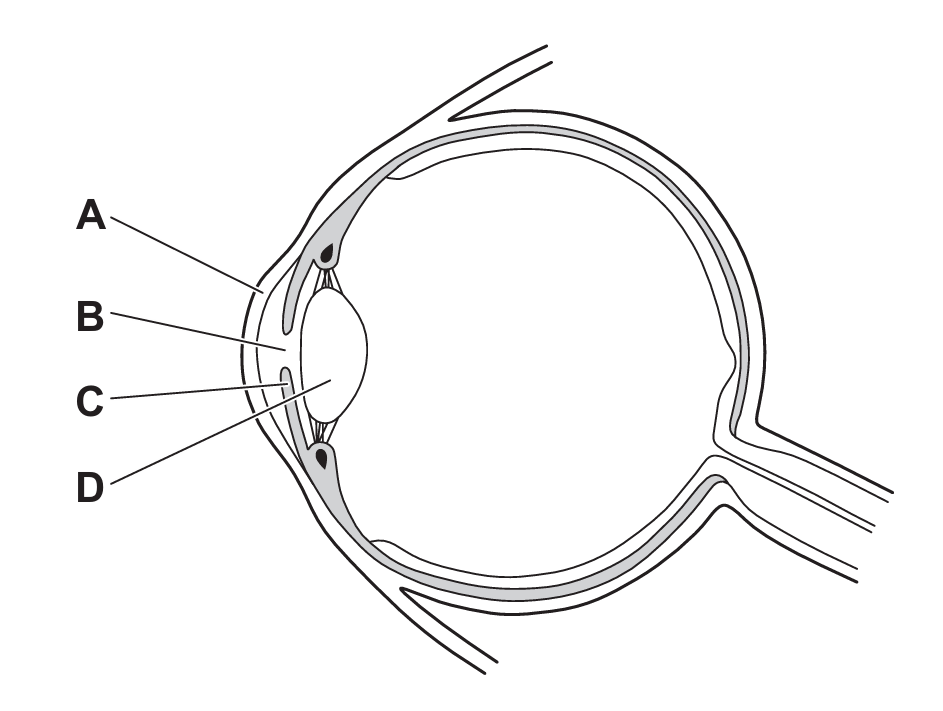
The diagram shows a section through the human eye.

Which label identifies the iris?

▶️ Answer/Explanation
In the provided diagram of the eye, each letter represents a specific anatomical structure. Label A points to the cornea, the transparent outer layer. Label B indicates the pupil, which is the opening that allows light to enter. Label C identifies the iris, the colored muscular structure that controls the size of the pupil. Finally, Label D points to the lens, which focuses light onto the retina. Therefore, the iris is correctly identified by label C.
Answer: (C)

Question 23

Which hormone decreases blood glucose concentration?

(A) adrenaline
(B) glycogen
(C) insulin
(D) oestrogen
▶️ Answer/Explanation

Blood glucose levels are regulated via negative feedback by the pancreas. When blood sugar is high, the pancreas secretes insulin, which stimulates cells to take up glucose and signals the liver to convert excess glucose into stored glycogen. In contrast, adrenaline increases blood sugar for energy during stress, and glycogen is a storage polysaccharide, not a hormone. Oestrogen is primarily involved in the reproductive system. Therefore, insulin is the only hormone listed that functions to lower blood glucose concentration.

Answer: (C)

Question 24

What is the result of asexual reproduction?

(A) genetically different offspring from one parent
(B) genetically different offspring from two parents
(C) genetically identical offspring from one parent
(D) genetically identical offspring from two parents
▶️ Answer/Explanation

Asexual reproduction is a biological process that involves only one parent. Unlike sexual reproduction, it does not involve the fusion of gametes or the mixing of genetic material from two different individuals. Because the offspring inherit their entire DNA from a single source, they are genetically identical to the parent, effectively acting as clones. Processes such as binary fission, budding, and vegetative propagation are common examples of this method. Consequently, there is no genetic variation introduced unless a random mutation occurs.

Answer: (C)

Question 25

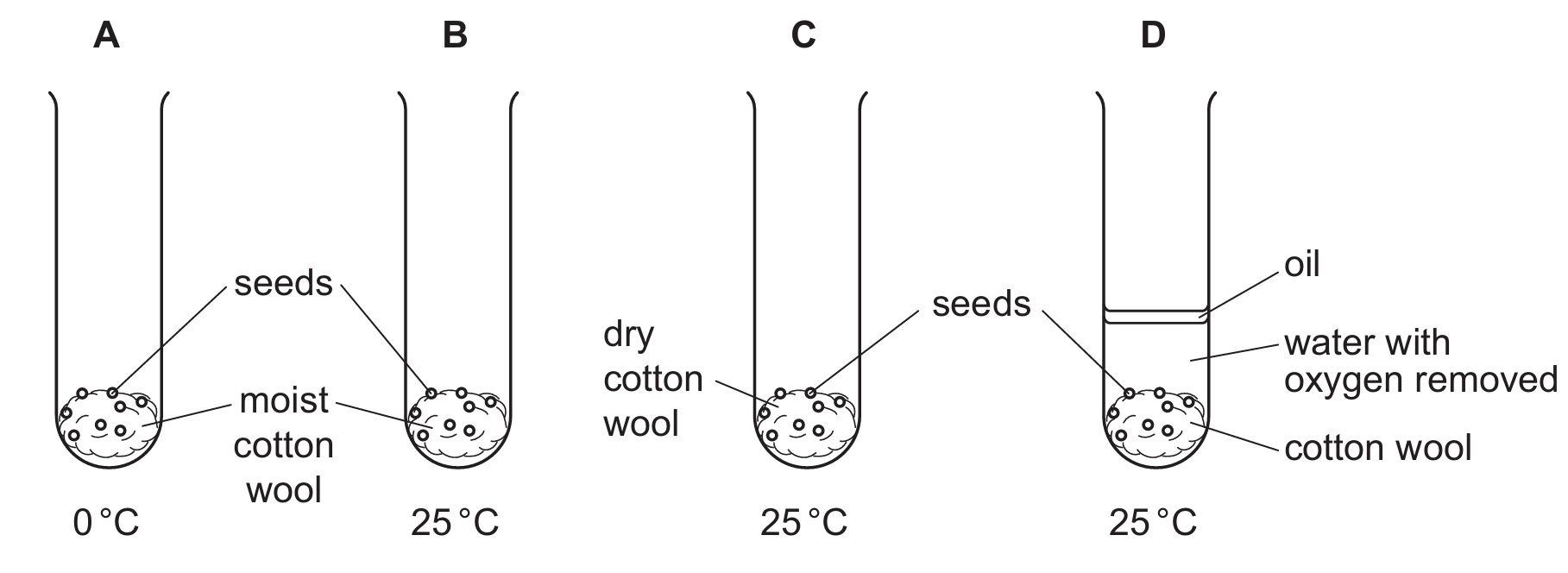
Four test-tubes are set up as shown and placed in the dark. In which test-tube will the seeds germinate first?

▶️ Answer/Explanation
For seeds to germinate, they require three essential conditions: water, oxygen, and a suitable temperature. In setup (A), the temperature is too low ($0$ °C) for enzyme activity. In setup (C), the lack of moisture (dry cotton wool) prevents the seed from swelling and activating metabolism. In setup (D), the layer of oil and boiled water prevent oxygen from reaching the seeds, stopping aerobic respiration. Setup (B) provides all necessary conditions: moisture for hydration, $25$ °C for optimal enzyme function, and access to atmospheric oxygen.
Answer: (B)

Question 26

Where in the human male reproductive system are sperm produced?

(A) penis
(B) prostate gland
(C) scrotum
(D) testes
▶️ Answer/Explanation

Sperm production, known as spermatogenesis, occurs specifically within the testes. Inside the testes are coiled structures called seminiferous tubules where germ cells divide and differentiate into mature spermatozoa. While the scrotum houses the testes to provide a cooler environment for development, it does not produce the sperm itself. The prostate gland contributes fluid to the semen, and the penis serves as the organ for delivery. Therefore, the physiological site of production is the testes.

Answer: (D)

Question 27

A person’s menstrual cycle lasts for $28$ days.

Which statement describes an event in this menstrual cycle?

(A) The ovary releases an egg on day $14$.
(B) The ovary releases an egg on day $21$.
(C) The uterus lining breaks down on days $14$ to $21$.
(D) The uterus lining builds up on days $1$ to $7$.
▶️ Answer/Explanation
In a standard $28$-day menstrual cycle, ovulation—the release of a mature egg from the ovary—typically occurs at the midpoint, which is day $14$. The cycle begins with menstruation (days $1$–$5$), where the uterine lining breaks down and is shed, making option D incorrect. Following this, the lining repairs and thickens. After ovulation on day $14$, the lining continues to thicken and becomes highly vascularized to prepare for potential pregnancy, meaning it does not break down during days $14$–$21$ as suggested in option C. Therefore, the release of the egg on day $14$ is the only accurate description provided.
Answer: (A)

Question 28

An individual has the genotype $Bb$.

What is the correct description of this genotype?

(A) heterozygous, with two different alleles of the same gene
(B) heterozygous, with two different genes of the same allele
(C) homozygous, with two different alleles of the same gene
(D) homozygous, with two different genes of the same allele
▶️ Answer/Explanation
The genotype $Bb$ consists of two different versions of a single gene, known as alleles (one dominant $B$ and one recessive $b$). When an organism has two different alleles for a specific trait, it is described as heterozygous. In contrast, homozygous would mean having two identical alleles, such as $BB$ or $bb$. Options B and D are technically incorrect because “alleles” are versions of a gene, not the other way around. Therefore, the description in option A perfectly matches the biological definition of a heterozygous state.
Answer: (A)

Question 29

Which statement describes inheritance?

(A) organisms which are not pure-breeding
(B) the difference between homozygous and heterozygous genotypes
(C) the genetic information in dominant alleles
(D) the transmission of genetic information from generation to generation
▶️ Answer/Explanation

Inheritance is defined as the process by which genetic information is passed on from parents to their offspring. This biological mechanism ensures that traits and characteristics are carried forward through successive generations via DNA. While terms like “homozygous” or “dominant alleles” describe specific states or types of genetic data, they do not define the overarching process of transfer itself. Option (D) accurately captures this fundamental concept of biological continuity.

Answer: (D)

Question 30

What is a feature of natural selection?

(A) genetic variation within populations
(B) plenty of resources
(C) production of genetically identical offspring
(D) selection by humans
▶️ Answer/Explanation
Natural selection relies on the existence of differences between individuals in a population, known as genetic variation. Without these differences, every individual would have the same chance of survival, and no specific traits could be “selected” over others. When resources are limited, individuals with advantageous variations are more likely to survive and reproduce. Options (B) and (C) actually hinder natural selection, as plenty of resources reduce competition and identical offspring lack the variety needed for adaptation. Option (D) describes artificial selection, not natural selection.
Answer: (A)

Question 31

What is the principal source of energy input to biological systems?

(A) carbon dioxide in air
(B) glucose
(C) minerals in soil
(D) the Sun
▶️ Answer/Explanation

The Sun is the ultimate source of energy for almost all life on Earth. Through the process of photosynthesis, producers like plants and algae capture light energy and convert it into chemical energy stored in organic molecules. While glucose is a vital energy carrier, its energy originates from sunlight. Other options like carbon dioxide and minerals provide necessary matter or nutrients but do not serve as the primary energy input for the entire ecosystem. This flow of energy from the Sun sustains food webs across the planet.

Answer: (D)

Question 32

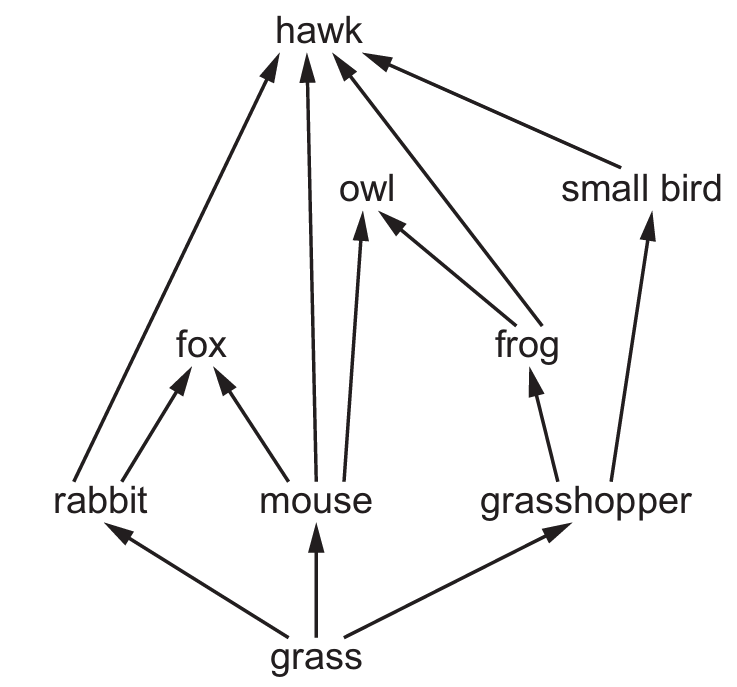
The diagram shows a food web.

Which food chain is part of the food web?

(A) grass $\rightarrow$ frog $\rightarrow$ owl $\rightarrow$ hawk
(B) grass $\rightarrow$ grasshopper $\rightarrow$ frog $\rightarrow$ hawk
(C) grass $\rightarrow$ grasshopper $\rightarrow$ mouse $\rightarrow$ fox
(D) grass $\rightarrow$ rabbit $\rightarrow$ owl $\rightarrow$ fox
▶️ Answer/Explanation
To solve this, we must trace the arrows in the diagram from the producer (grass) to the top predators. Option (B) correctly follows a sequence of arrows present in the web: grass is eaten by the grasshopper, the grasshopper is eaten by the frog, and the frog is eaten by the hawk. Other options fail because they suggest connections that don’t exist; for example, there is no arrow from grass directly to a frog (A), no arrow from a grasshopper to a mouse (C), and no arrow from a rabbit to an owl (D). Therefore, only the second sequence represents a valid pathway for energy flow in this specific ecosystem.
Answer: (B)

Question 33

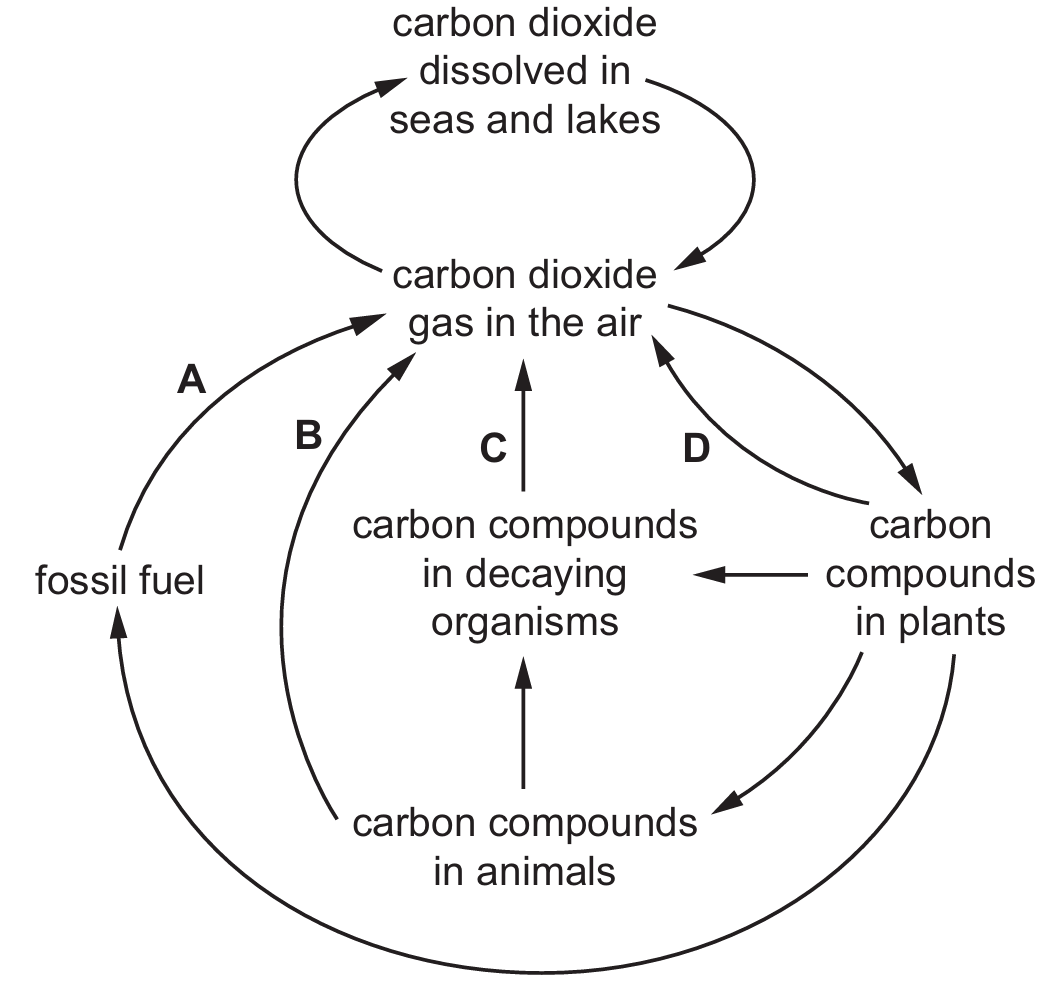
The diagram shows part of the carbon cycle.

Which process produces carbon dioxide from substances made by photosynthesis millions of years ago?

▶️ Answer/Explanation
The question asks for a process involving substances made “millions of years ago.” In the carbon cycle, ancient organic matter from plants and animals that was buried and subjected to heat and pressure over millions of years forms fossil fuels. Arrow A represents the combustion of these fossil fuels, which releases stored carbon back into the atmosphere as carbon dioxide ($CO_2$). In contrast, arrows B, C, and D represent respiration or decomposition from modern organisms, which occur on much shorter timescales. Therefore, process A is the only one linking prehistoric photosynthesis to modern atmospheric carbon.
Answer: (A)

Question 34

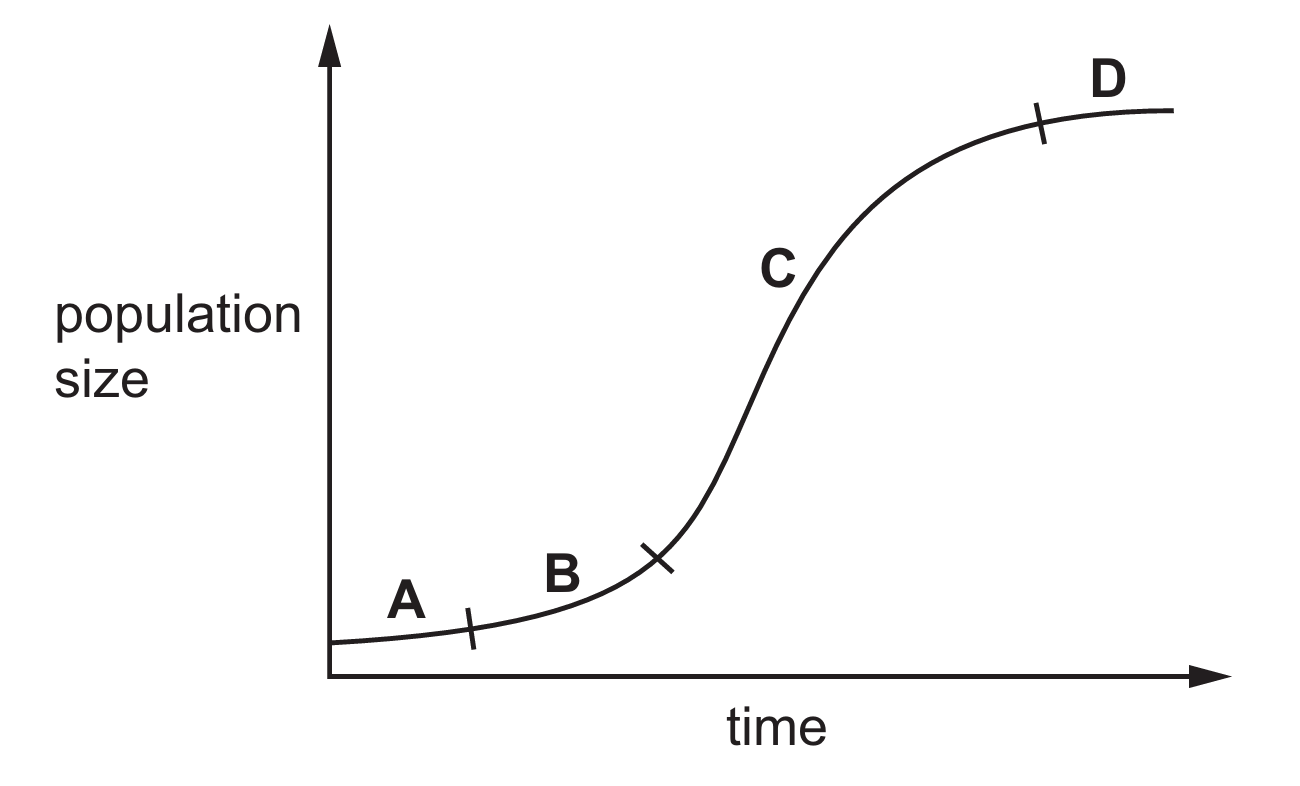
The diagram shows a graph of population growth.

On which part of the graph is the population size limited by the amounts of resources available?

▶️ Answer/Explanation
The graph illustrates a typical sigmoid (S-shaped) growth curve. In the earlier stages ($A$, $B$, and $C$), the population is either establishing itself or growing rapidly because resources are relatively abundant. However, as the population reaches part D, it enters the stationary phase. At this point, the birth rate equals the death rate because the environment has reached its carrying capacity. This stabilization occurs specifically because essential resources like food, water, and space become limited, preventing further net growth.
Answer: (D)

Question 35

Two methods of livestock production are described.

  • method 1 Animals are kept in a small area and their movement is restricted.
  • method 2 Animals are allowed to move freely around a large area.

What is an advantage of method 1 compared with method 2?

(A) increased pollution
(B) increased consumption of food by animals
(C) increased rate of spread of infectious disease
(D) increased yield of animal product
▶️ Answer/Explanation
Method 1 describes intensive farming, where animals are kept in confined spaces. Because their movement is restricted, they lose less energy through muscle contraction and heat generation. This allows more of the energy from their food to be diverted toward growth and the production of meat, milk, or eggs. Consequently, there is an increased yield of animal product per unit of feed. While options (A), (B), and (C) are often consequences of intensive farming, they are disadvantages rather than advantages. Therefore, the primary benefit for the producer is the efficiency of production.
Answer: (D)

Question 36

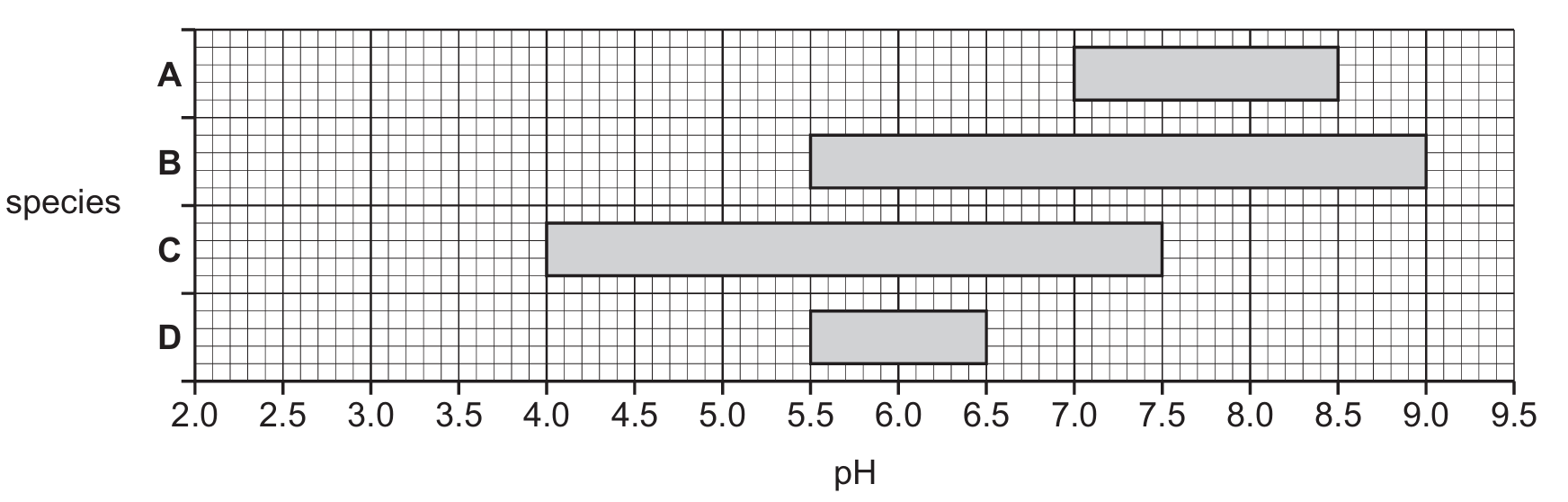
Some species of aquatic insects are able to survive at different ranges of $pH$.

The diagram shows the $pH$ ranges in which four different species are able to survive.

Which species is unable to live in an acidic environment?

▶️ Answer/Explanation
An acidic environment is defined as having a $pH$ value less than $7.0$. Looking at the provided graph, Species A has a survival range starting exactly at $pH$ $7.0$ and extending to $8.5$. Since no part of its survival bar falls below the neutral point of $7.0$, it cannot survive in acidic conditions. In contrast, Species B, C, and D all have survival bars that extend into the range below $7.0$ (e.g., Species C survives down to $pH$ $4.0$). Therefore, only Species A is strictly limited to neutral and alkaline environments.
Answer: (A)

Question 37

Which practice helps to maintain biodiversity?

(A) improving crop yields by using herbicides
(B) increasing crop yields by using insecticides
(C) the protection of habitats
(D) the use of large-scale monocultures
▶️ Answer/Explanation
Biodiversity refers to the variety of all living organisms within an ecosystem. Protecting habitats ensures that different species have the resources and environment they need to survive and reproduce. Practices like using herbicides and insecticides (A and B) often reduce biodiversity by killing non-target plants and insects. Similarly, large-scale monocultures (D) involve growing only one type of crop, which significantly lowers the variety of life in that area. Therefore, habitat conservation is the most effective method for maintaining biological diversity.
Answer: (C)

Question 38

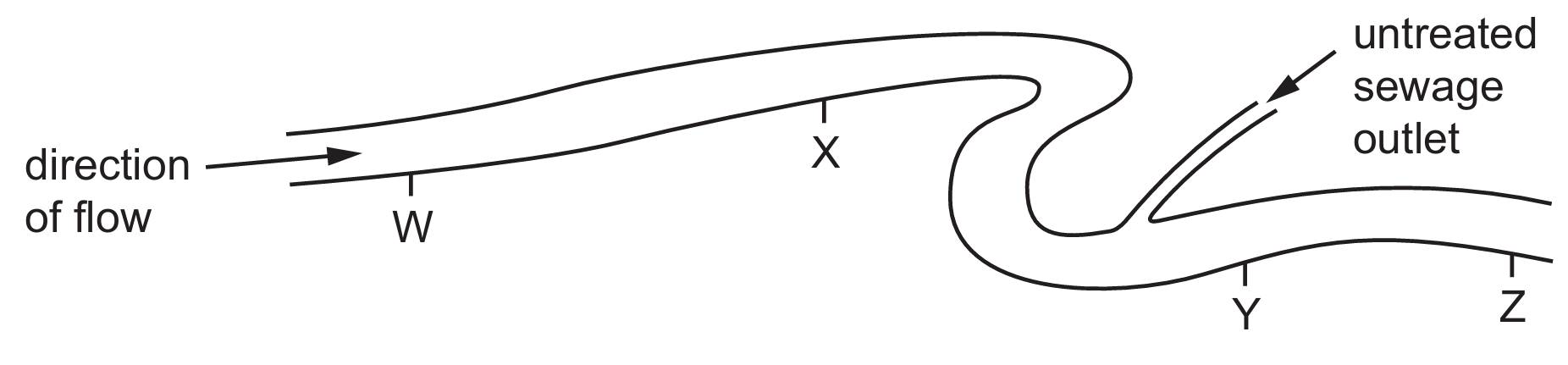
The diagram shows four positions on a river where water samples were taken.

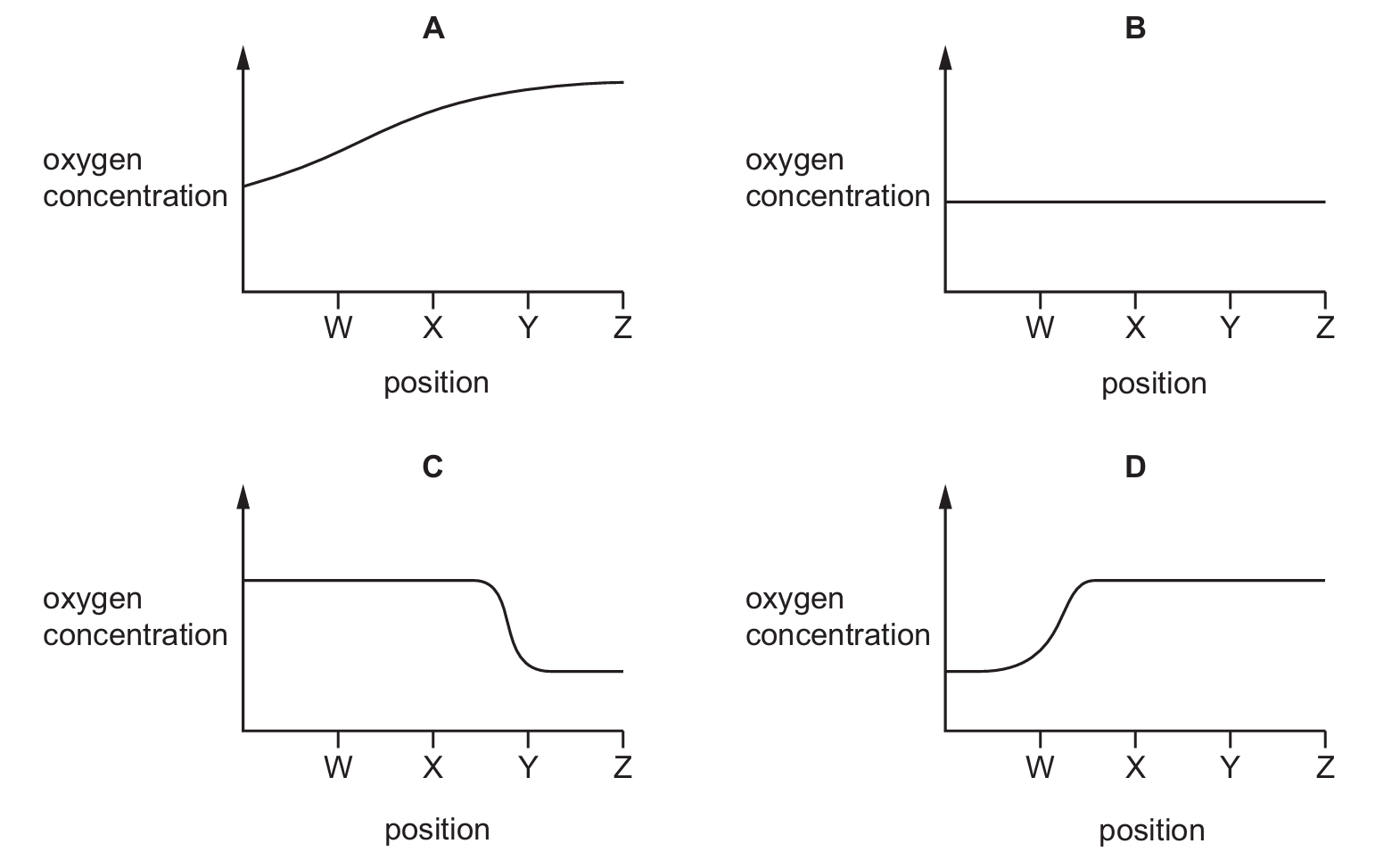
Which graph shows oxygen concentrations in the river?

▶️ Answer/Explanation

This question typically refers to the effect of organic pollution (sewage) entering a river. When organic waste is dumped into a river, aerobic bacteria begin to break it down. This process uses up a significant amount of dissolved oxygen, causing the concentration to drop sharply. As the water moves downstream and the waste is fully decomposed, the oxygen levels gradually recover through aeration. Graph $C$ correctly illustrates this “oxygen sag curve,” showing a sudden decrease in oxygen levels at position $Y$ followed by a lower equilibrium or recovery phase.

Answer: (C)

Question 39

Which feature makes bacteria useful in genetic modification?

(A) can make complex molecules
(B) have a cell membrane
(C) have a cell wall
(D) reproduce slowly
▶️ Answer/Explanation
Bacteria are ideal for genetic modification because they possess the cellular machinery required to synthesize complex organic molecules, such as proteins, based on the genetic instructions inserted into them. A classic example is the production of human insulin. Furthermore, bacteria often contain plasmids—small, circular $DNA$ strands—that are easily manipulated and used as vectors. Their rapid reproduction rate also allows for the quick scaling of production, which contradicts option (D). While they do have cell walls and membranes, these are common to many cell types and are not the specific functional reason they are utilized as biological “factories.”
Answer: (A)

Question 40

Scientists have developed a genetically modified pineapple plant that produces pink fruit.

The pineapple fruit is pink because of increased concentrations of a substance called lycopene. Eating foods containing lycopene may have health benefits for humans.

Which statement describes the purpose of this genetic modification?

(A) to confer resistance to insect pests
(B) to confer resistance to herbicides
(C) to improve the nutritional qualities
(D) to improve the crop yield
▶️ Answer/Explanation
The question states that the genetic modification increases the concentration of lycopene, a substance noted for its potential health benefits for humans. Genetic engineering used to increase specific vitamins, minerals, or antioxidants in a crop is known as biofortification. Options (A), (B), and (D) describe agronomic traits that benefit the farmer or the plant’s survival, whereas adding health-boosting compounds directly benefits the consumer’s diet. Therefore, the primary goal of this modification is to enhance the biological value of the fruit for human consumption.
Answer: (C)
Scroll to Top