Home / 0610_s25_qp_21

Question 1

Which characteristic of living things requires carbon dioxide to diffuse into a leaf?

(A) excretion
(B) movement
(C) nutrition
(D) respiration
▶️ Answer/Explanation
Plants are autotrophic organisms that manufacture their own food through the process of photosynthesis. This process represents the plant’s form of nutrition, as it involves taking in inorganic raw materials to produce energy-rich organic molecules. Carbon dioxide ($CO_2$) is a vital reactant in this process; it diffuses from the atmosphere into the leaf through the stomata. Inside the leaf, it reacts with water ($H_2O$) in the presence of sunlight and chlorophyll to produce glucose. While respiration involves gas exchange, it specifically consumes oxygen and releases carbon dioxide, which is the opposite of what the question describes. Therefore, the intake of carbon dioxide is fundamentally linked to the plant’s nutritional requirements.
Answer: (C)

Question 2

Which set of features is characteristic only of birds?

(A) hair and wings
(B) hard-shelled eggs and feathers
(C) scales and soft-shelled eggs
(D) wings and soft-shelled eggs
▶️ Answer/Explanation
To identify the correct set, we must find features unique to birds (Class Aves). While other animals like bats and insects have wings, feathers are a trait found exclusively in birds. Additionally, birds lay hard-shelled eggs made of calcium carbonate to protect the developing embryo on land. Option A is incorrect because hair is a characteristic of mammals. Options C and D are incorrect because soft-shelled eggs are typical of reptiles and amphibians, and scales (except on legs) are characteristic of reptiles and fish.
Answer: (B)

Question 3

Which structures are found in both plant and animal cells?

(A) cell walls and cell membranes
(B) nuclei and cell walls
(C) cytoplasm and chloroplasts
(D) cell membranes and nuclei
▶️ Answer/Explanation
To identify structures common to both, we must exclude organelles unique to specific kingdoms. Cell walls and chloroplasts are characteristic of plant cells but are absent in animal cells. Options (A), (B), and (C) are incorrect because they include at least one of these plant-specific structures. Both plant and animal cells are eukaryotic, meaning they share fundamental components like a nucleus to house genetic material and a cell membrane to regulate transport. Therefore, the pair “cell membranes and nuclei” represents the correct commonalities between the two cell types.
Answer: (D)

Question 4

A student made the following statements about the movement of ions by active transport.

1. It is the net movement of particles from a low concentration to a high concentration.
2. It is the net movement of particles from a high concentration to a low concentration.
3. It requires the use of energy from respiration.
4. It can only take place in living cells.

Which statements are correct?

(A) 1, 3 and 4
(B) 1 and 4 only
(C) 2 and 4
(D) 2 only
▶️ Answer/Explanation
Active transport is the process of moving substances against a concentration gradient, specifically from an area of low concentration to high concentration (Statement 1). Unlike passive diffusion, this process is “uphill” and requires energy, which is provided in the form of ATP generated during cellular respiration (Statement 3). Because it relies on metabolic energy and specialized carrier proteins embedded in the membrane, it can only occur in living cells (Statement 4). Statement 2 is incorrect as it describes passive transport or diffusion. Therefore, statements 1, 3, and 4 are the correct descriptors.
Answer: (A)

Question 5

A DNA molecule contains pairs of bases.

What is a correct combination of a pair of bases?

(A) A and G (B) C and A (C) G and T (D) T and A
▶️ Answer/Explanation

In a DNA molecule, bases pair up according to the rules of complementary base pairing. Adenine ($A$) always pairs with Thymine ($T$) via two hydrogen bonds, while Cytosine ($C$) always pairs with Guanine ($G$) via three hydrogen bonds. This specific pairing is due to the chemical structure and size of the bases, ensuring the DNA double helix maintains a constant width. Options A, B, and C represent incorrect pairings between purines and pyrimidines that do not naturally bond in a stable DNA strand. Therefore, the only correct pairing listed is Thymine and Adenine.

Answer: (D)

Question 6

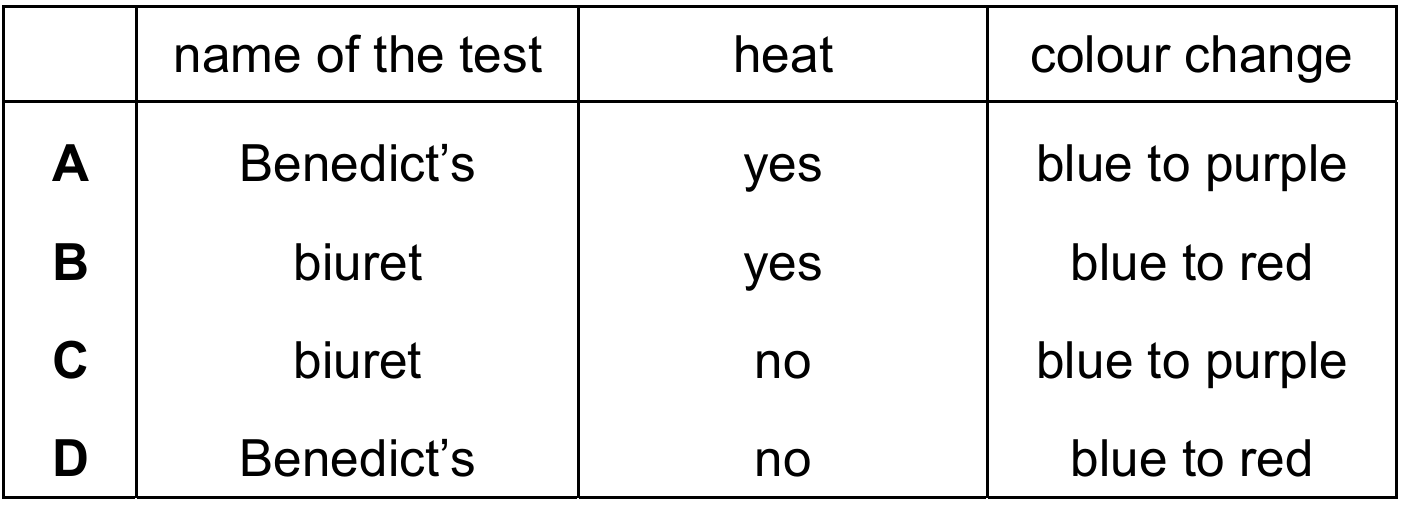
What is the test for protein?

▶️ Answer/Explanation
The standard test for proteins is the Biuret test. This reagent contains copper(II) ions which react with peptide bonds in an alkaline solution to form a mauve or purple-colored complex. Unlike the Benedict’s test for reducing sugars, the Biuret test does not require any heating to produce a result; the color change occurs at room temperature. A positive result is indicated when the solution turns from its initial light blue to purple/lilac. Therefore, option $C$ is the only correct combination of the test name, temperature requirement, and final color change.
Answer: (C)

Question 7

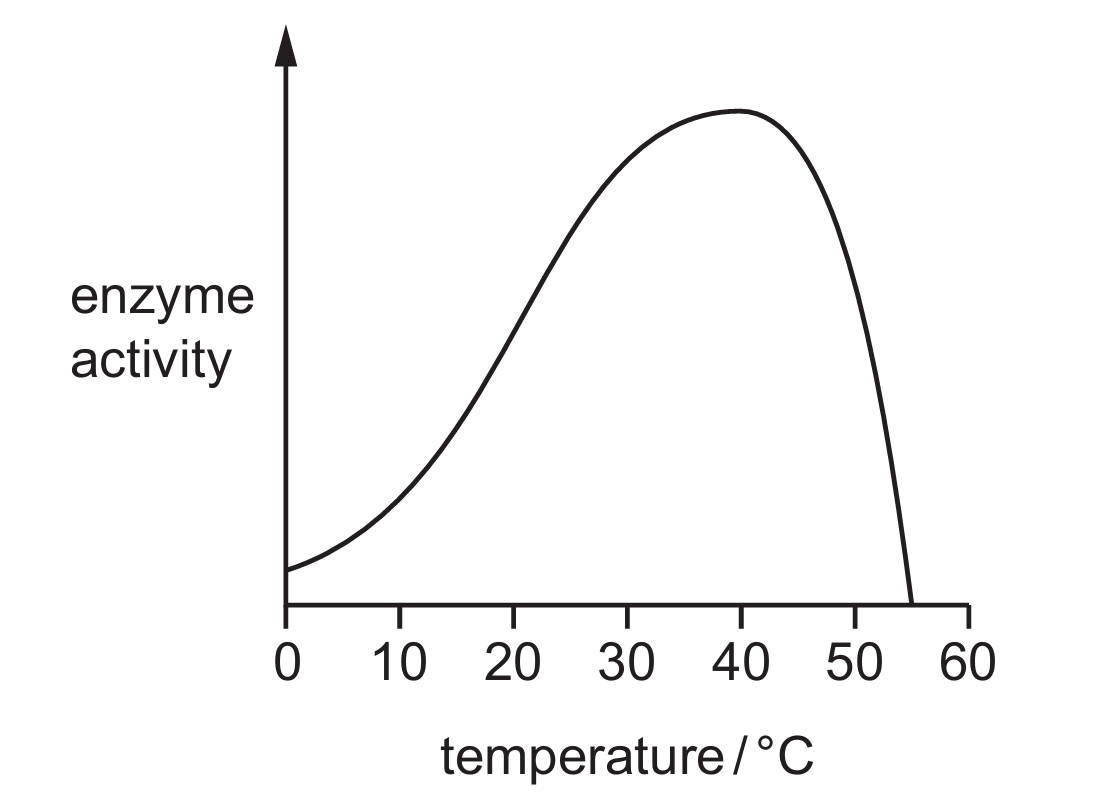
The graph shows how enzyme activity is affected by temperature.

Why is enzyme activity lower at $55$ °C than it is at $40$ °C?

(A) Heat has killed the enzyme.
(B) The enzyme has been used up.
(C) The reactants are moving faster.
(D) The substrate is less likely to fit into the active site.
▶️ Answer/Explanation
Enzymes are proteins with specific 3D shapes, including an active site perfectly molded for a substrate. As temperature rises beyond the optimum (approx. $40$ °C in this graph), the increased kinetic energy causes the chemical bonds holding the protein together to vibrate and eventually break. This process, called denaturation, alters the shape of the active site. Because the substrate can no longer fit into the changed active site, the rate of reaction drops sharply. Note that enzymes are biological molecules, not living organisms, so they are “denatured” rather than “killed.”
Answer: (D)

Question 8

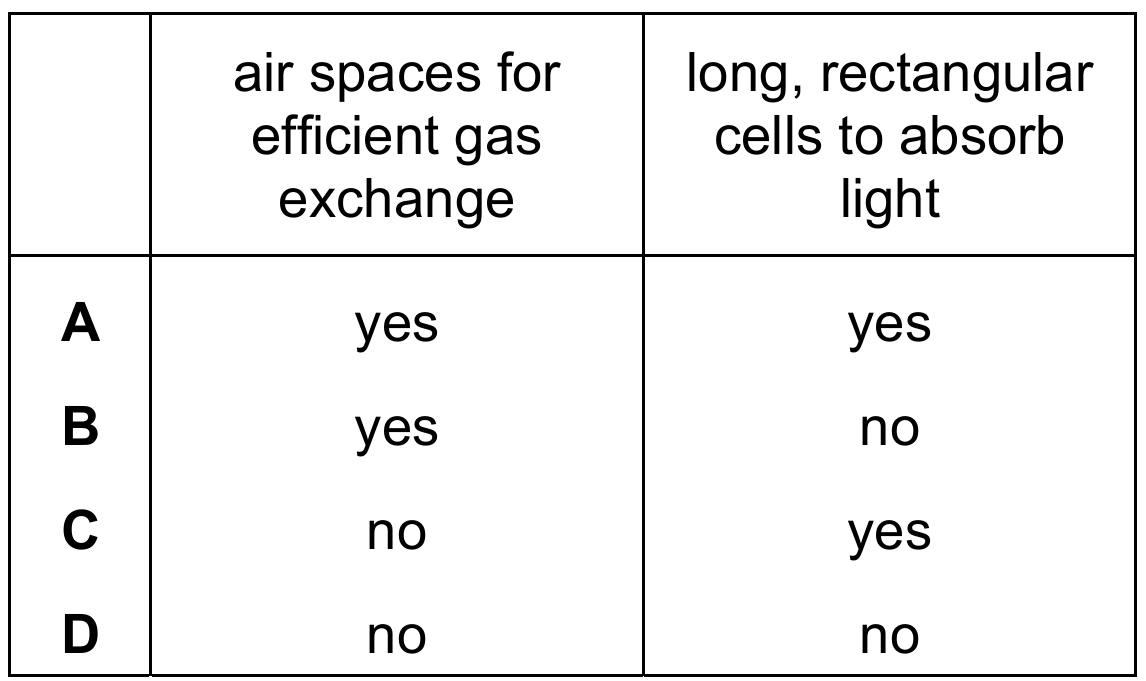
Which descriptions of adaptations for photosynthesis are correct for spongy mesophyll tissue?

▶️ Answer/Explanation
The spongy mesophyll layer is characterized by loosely packed, irregularly shaped cells. This arrangement creates large air spaces, which are essential for the efficient diffusion of gases like $CO_2$ into the cells and $O_2$ out of the leaf. Conversely, “long, rectangular cells” describe the palisade mesophyll, which is packed tightly at the top of the leaf to maximize light absorption. Since spongy mesophyll has air spaces but lacks long rectangular cells, option B is the correct choice.
Answer: (B)

Question 9

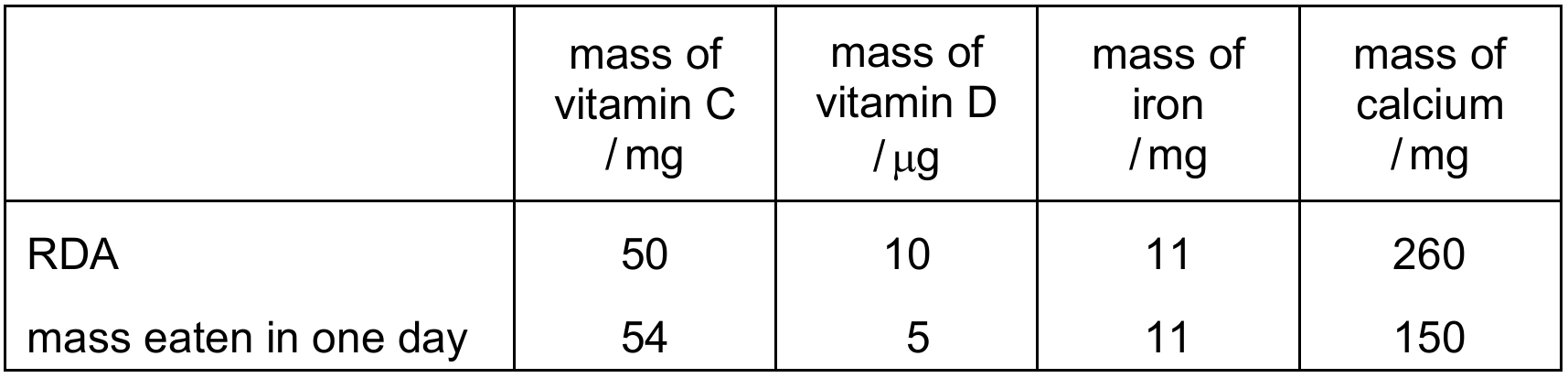
The table shows the recommended daily allowance (RDA) of some nutrients for young children. The table also shows the masses of these nutrients eaten by a child in one day.

Which conditions will the child be at risk of developing if they consume the same diet for a long period of time?

1. anaemia (not having enough red blood cells)
2. rickets
3. scurvy
(A) $1$, $2$ and $3$
(B) $1$ and $2$ only
(C) $1$ and $3$ only
(D) $2$ only
▶️ Answer/Explanation
To determine the risk, we must identify which nutrients are consumed in amounts lower than the RDA. The child consumes $54\,mg$ of Vitamin C (exceeding the RDA of $50\,mg$) and $11\,mg$ of Iron (meeting the RDA of $11\,mg$). Therefore, there is no risk of scurvy or anaemia. However, the child consumes only $5\,\mu g$ of Vitamin D (RDA is $10\,\mu g$) and $150\,mg$ of Calcium (RDA is $260\,mg$). Deficiency in Vitamin D and Calcium over time leads to rickets, characterized by soft or weakened bones. Since only condition $2$ is a risk, the correct option is (D).
Answer: (D)

Question 10

Which term is used for the uptake and use of nutrients by cells?

(A) absorption
(B) assimilation
(C) egestion
(D) ingestion
▶️ Answer/Explanation
The process of nutrition involves several stages: ingestion (taking food in), absorption (moving nutrients into the blood), and egestion (removing waste). Assimilation specifically refers to the movement of digested food molecules into the cells of the body where they are actually used. Once inside the cells, these nutrients become part of the cells or are used for energy and growth. Therefore, while absorption gets nutrients into the body’s circulation, assimilation is the final step of cellular uptake and utilization.
Answer: (B)

Question 11

What is the function of trypsin in digestion?

(A) It catalyses the breakdown of maltose in the mouth.
(B) It catalyses the breakdown of maltose in the small intestine.
(C) It catalyses the breakdown of protein in the small intestine.
(D) It catalyses the breakdown of protein in the stomach.
▶️ Answer/Explanation
Trypsin is a protease enzyme produced by the pancreas in an inactive form called trypsinogen. It is secreted into the duodenum, which is the first part of the small intestine, where it becomes active. Its primary role is to catalyze the hydrolysis of proteins into smaller peptides. While protein digestion begins in the stomach with pepsin, trypsin continues this process in the alkaline environment of the small intestine. It does not act on carbohydrates like maltose, nor does it function in the acidic environment of the stomach.
Answer: (C)

Question 12

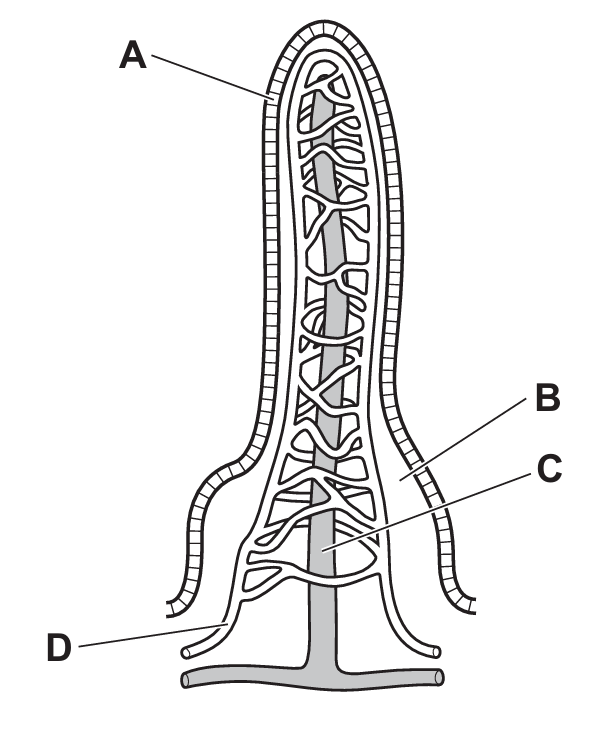
The diagram shows the structure of a villus.

Which label shows a lacteal?

▶️ Answer/Explanation
A villus is a finger-like projection in the small intestine designed to maximize absorption. Label A points to the epithelium, the single layer of cells that facilitates rapid diffusion. Label B indicates the general internal space or goblet cells, while Label D represents the network of blood capillaries that absorb glucose and amino acids. Label C identifies the lacteal, which is the central lymphatic vessel responsible for absorbing fatty acids and glycerol. Because fats are too large to enter the narrow capillaries directly, they are transported via the lymphatic system. Thus, the central vessel marked C is the correct identification for the lacteal.
Answer: (C)

Question 13

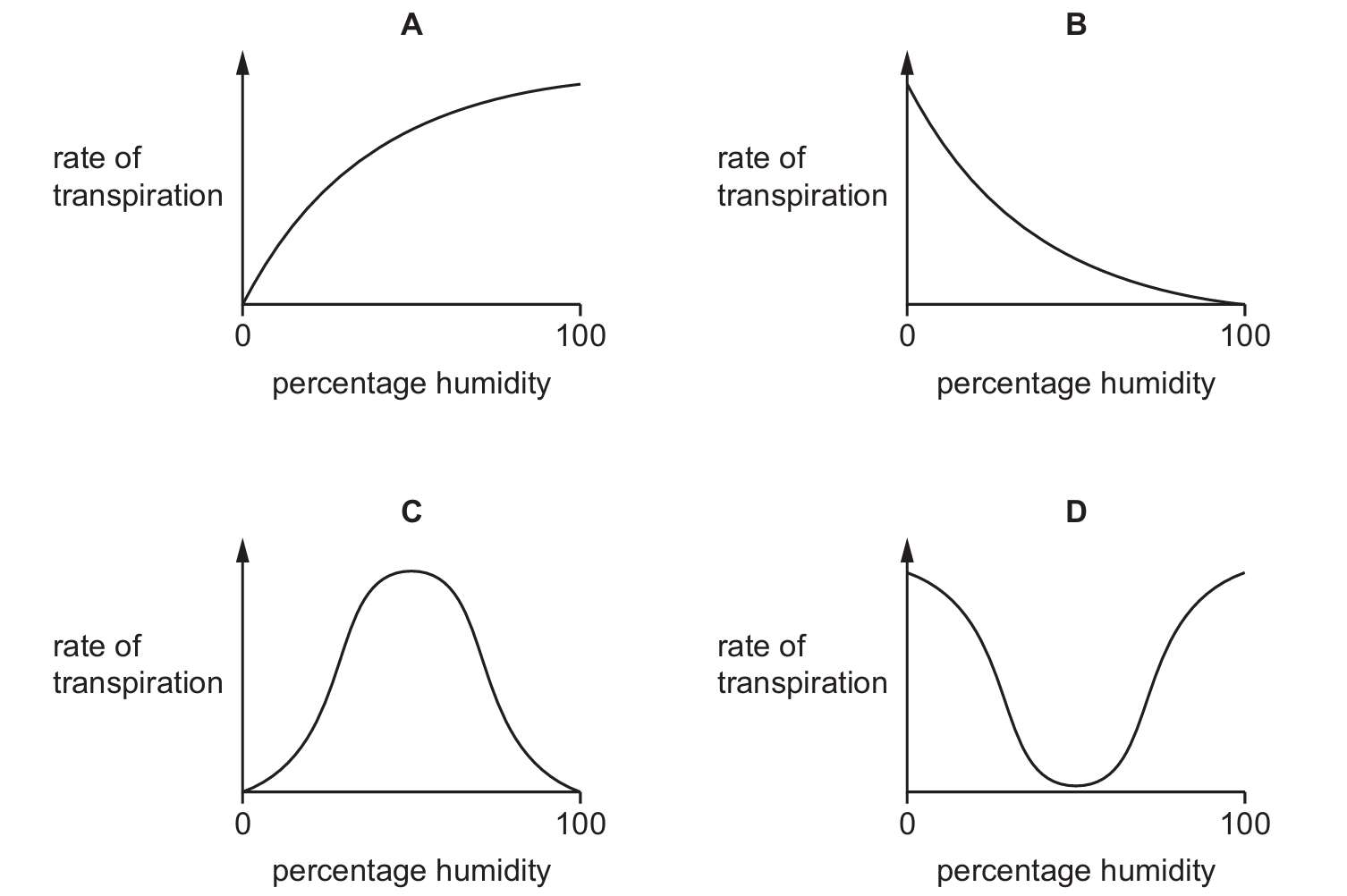
Which graph shows the effect of humidity in the air on the rate of transpiration in a plant?

▶️ Answer/Explanation
Transpiration is the process of water vapor loss from the internal tissues of a plant to the external atmosphere, primarily through the stomata. This movement is driven by a water potential gradient between the moist interior of the leaf and the drier air outside. When the percentage humidity in the air is low ($0\%$), the air is dry, creating a steep concentration gradient that causes water to evaporate rapidly. As humidity increases towards $100\%$, the air becomes saturated with water vapor, significantly reducing the gradient and slowing down the rate of evaporation. Therefore, the rate of transpiration is inversely proportional to the humidity of the surrounding air, which is correctly illustrated by the downward curve in Graph B.
Answer: (B)

Question 14

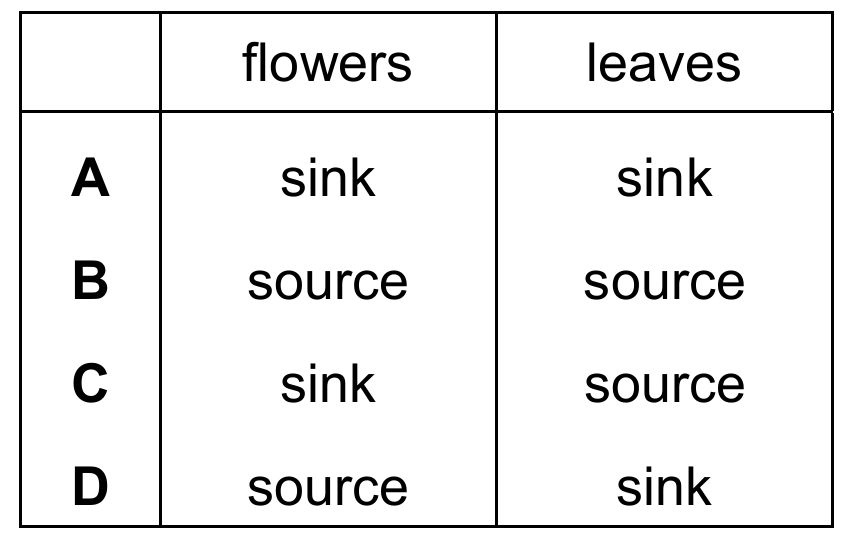
In some countries, spring is the time of year when daffodil plants have green leaves and produce flowers. Which parts of the daffodil plants act as sources and sinks in spring?

▶️ Answer/Explanation
In plant biology, a source is an organ that produces or releases sugars (like mature leaves via photosynthesis), while a sink is an organ that consumes or stores them. In spring, the green leaves are actively photosynthesizing, making them the primary source of sucrose for the plant. The flowers are rapidly developing reproductive structures that do not photosynthesize significantly; instead, they require high amounts of energy to grow and bloom, thus acting as a major metabolic sink. Therefore, sugars are translocated through the phloem from the leaves to the flowers.
Answer: (C)

Question 15

In a fish, what is the sequence of structures that blood passes through after it leaves the heart?

(A) gills $\rightarrow$ muscles $\rightarrow$ heart
(B) gills $\rightarrow$ heart $\rightarrow$ muscles $\rightarrow$ heart
(C) muscles $\rightarrow$ gills $\rightarrow$ heart
(D) muscles $\rightarrow$ heart
▶️ Answer/Explanation

Fish possess a single circulatory system, meaning blood passes through the heart only once during a complete circuit. Deoxygenated blood is pumped from the heart directly to the gills to pick up oxygen and release carbon dioxide. From the gills, the now-oxygenated blood travels straight to the rest of the body, including the muscles, to deliver nutrients and oxygen. Finally, the deoxygenated blood returns to the heart to begin the cycle again. This makes the sequence: Heart $\rightarrow$ Gills $\rightarrow$ Muscles $\rightarrow$ Heart.

Answer: (A)

Question 16

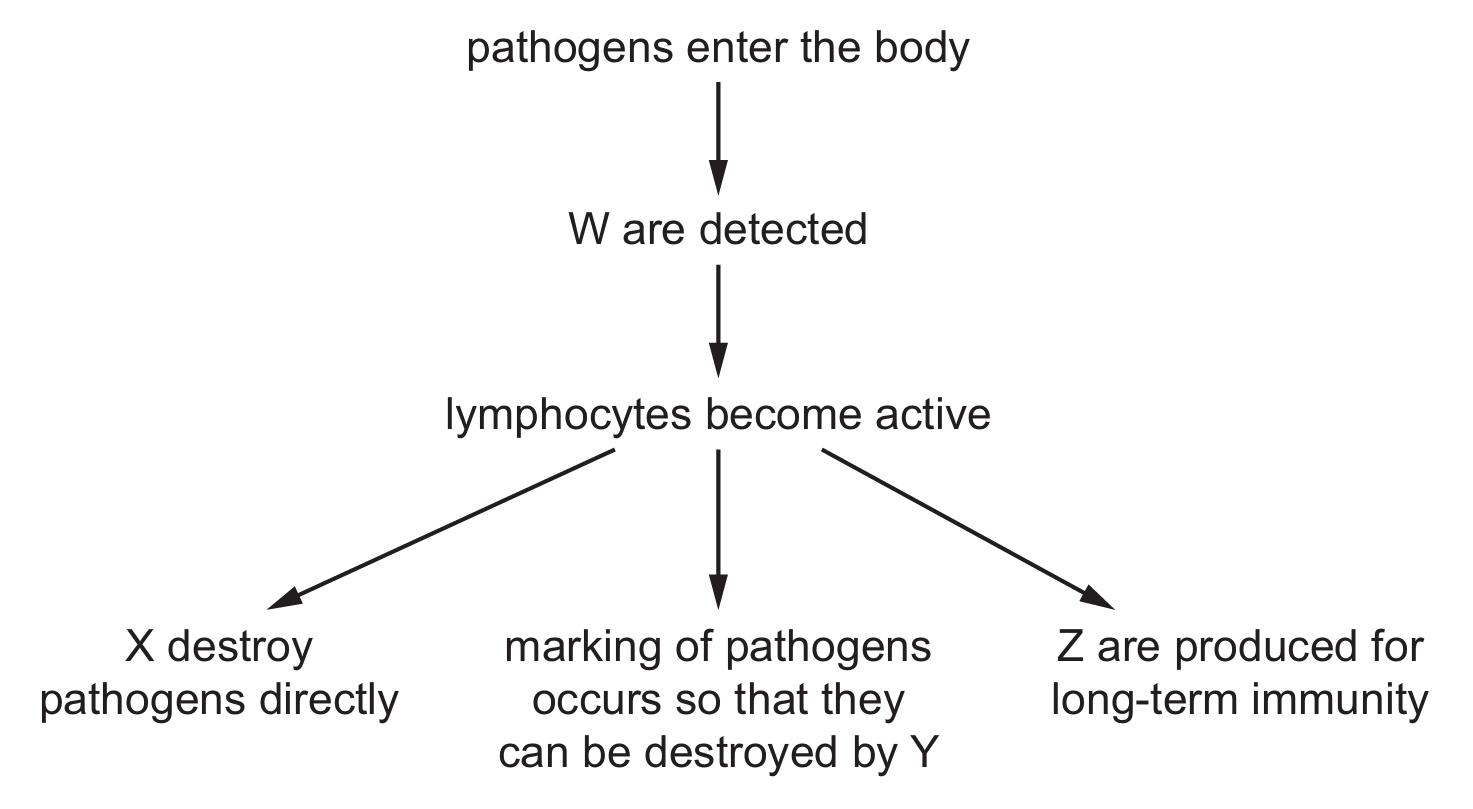
The diagram shows what happens in the body during active immunity.

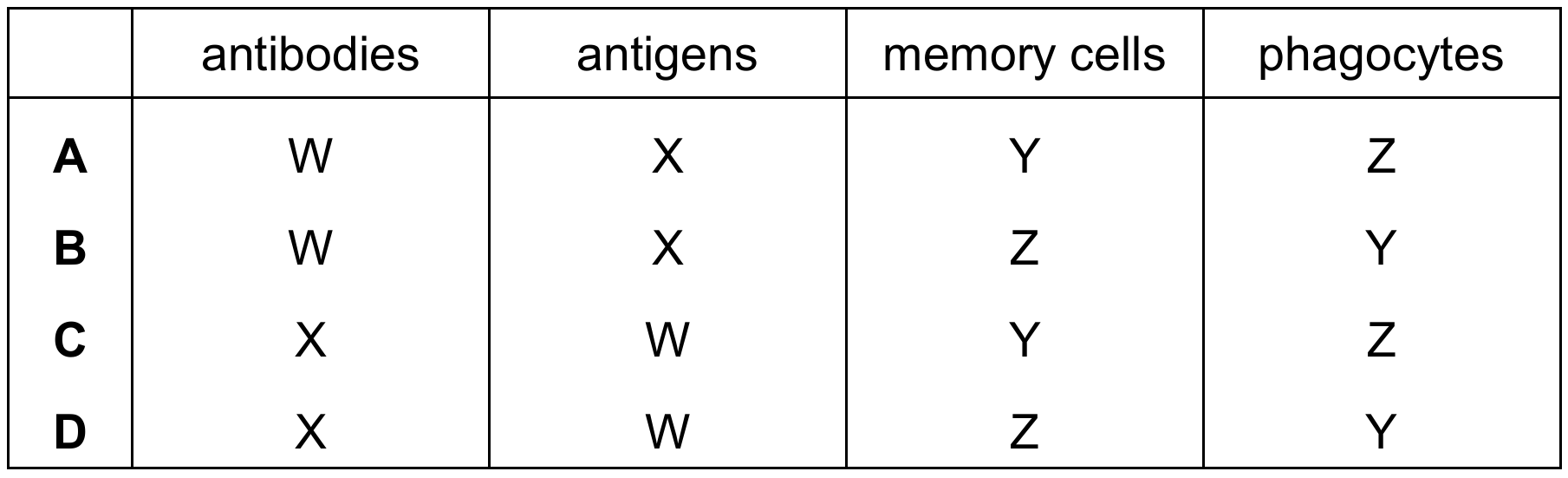
Which structures or cells represent $W$, $X$, $Y$ and $Z$?

▶️ Answer/Explanation
To solve this, we track the immune response sequence: $W$ represents antigens because they are the specific markers on pathogens detected by the body. $X$ represents antibodies, which are proteins produced by lymphocytes that can destroy pathogens directly or mark them. $Y$ represents phagocytes, as they are the cells that engulf and destroy pathogens once they are “marked.” Finally, $Z$ represents memory cells, which remain in the body to provide long-term immunity. Matching these to the table, we find $W = \text{antigens}$, $X = \text{antibodies}$, $Y = \text{phagocytes}$, and $Z = \text{memory cells}$.
Answer: (D)

Question 17

Cholera is a disease caused by a bacterium called Vibrio cholerae which produces a toxin in the infected person’s gut.

What is the effect of this toxin?

(A) The toxin causes loss of water from the gut into the blood.
(B) The toxin causes loss of water from the gall bladder into the blood.
(C) The toxin causes water to enter the gut from the blood.
(D) The toxin causes water to enter the gall bladder from the blood.
▶️ Answer/Explanation
The cholera toxin works by stimulating the secretion of chloride ions ($Cl^-$) from the epithelial cells into the lumen of the small intestine. This creates a high concentration of solutes in the gut, significantly lowering the water potential. Consequently, water moves out of the blood and surrounding tissues into the gut via osmosis to balance the concentration gradient. This massive influx of water leads to the hallmark symptom of cholera: severe, watery diarrhea. This process results in rapid dehydration as the body loses fluids faster than they can be reabsorbed.
Answer: (C)

Question 18

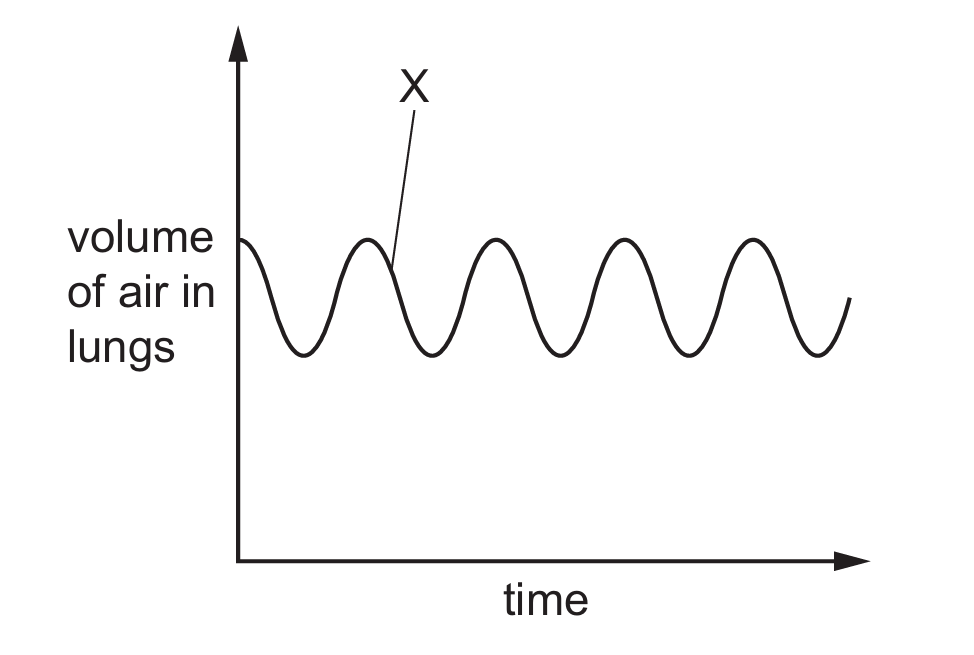
The graph shows how the volume of air in lungs changes when a person is breathing at rest.

Which processes are occurring to change the volume at the point marked $X$?

(A) The diaphragm is relaxing and the external intercostal muscles are relaxing.
(B) The diaphragm is contracting and the internal intercostal muscles are contracting.
(C) The diaphragm is contracting and the internal intercostal muscles are relaxing.
(D) The diaphragm is relaxing and the external intercostal muscles are contracting.
▶️ Answer/Explanation
At point $X$, the graph shows a decrease in the volume of air in the lungs, which indicates the process of exhalation (breathing out). During quiet breathing at rest, exhalation is a passive process driven by the elastic recoil of the lungs. To facilitate this, the diaphragm relaxes and moves upwards into its dome shape, while the external intercostal muscles also relax, allowing the ribcage to move downwards and inwards. These combined actions decrease the thoracic volume and increase the air pressure inside the lungs relative to the atmosphere, forcing air out.
Answer: (A)

Question 19

The processes listed occur in living organisms.

$1$   cell division
$2$   diffusion
$3$   muscle contraction
$4$   osmosis

Which processes require energy from respiration?

(A) $1, 2, 3 \text{ and } 4$
(B) $1 \text{ and } 3 \text{ only}$
(C) $2 \text{ and } 3 \text{ only}$
(D) $3 \text{ and } 4 \text{ only}$
▶️ Answer/Explanation
Respiration provides energy in the form of $ATP$ for active biological processes. Cell division ($1$) requires energy for DNA replication and the movement of chromosomes. Muscle contraction ($3$) is an active process that relies on $ATP$ for the sliding filament mechanism. In contrast, diffusion ($2$) and osmosis ($4$) are passive transport processes that occur along a concentration gradient without the need for metabolic energy. Therefore, only processes $1$ and $3$ require energy from respiration.
Answer: (B)

Question 20

What is a role of the glomerulus?

(A) assembling amino acids into proteins
(B) filtration of water, glucose, urea and ions from the blood
(C) reabsorption of glucose, ions and water back into the blood
(D) removal of the nitrogen-containing part of amino acids to form urea
▶️ Answer/Explanation
The glomerulus is a network of capillaries located at the beginning of a nephron in the kidney. Its primary function is ultrafiltration; high blood pressure forces small molecules like water, glucose, urea, and ions through the capillary walls into the Bowman’s capsule. Larger structures, such as blood cells and proteins, are too big to pass through and remain in the blood. Choice (C) describes the function of the renal tubules, while (D) refers to deamination, which occurs in the liver. Therefore, the glomerulus acts specifically as the initial filter of the blood.
Answer: (B)

Question 21

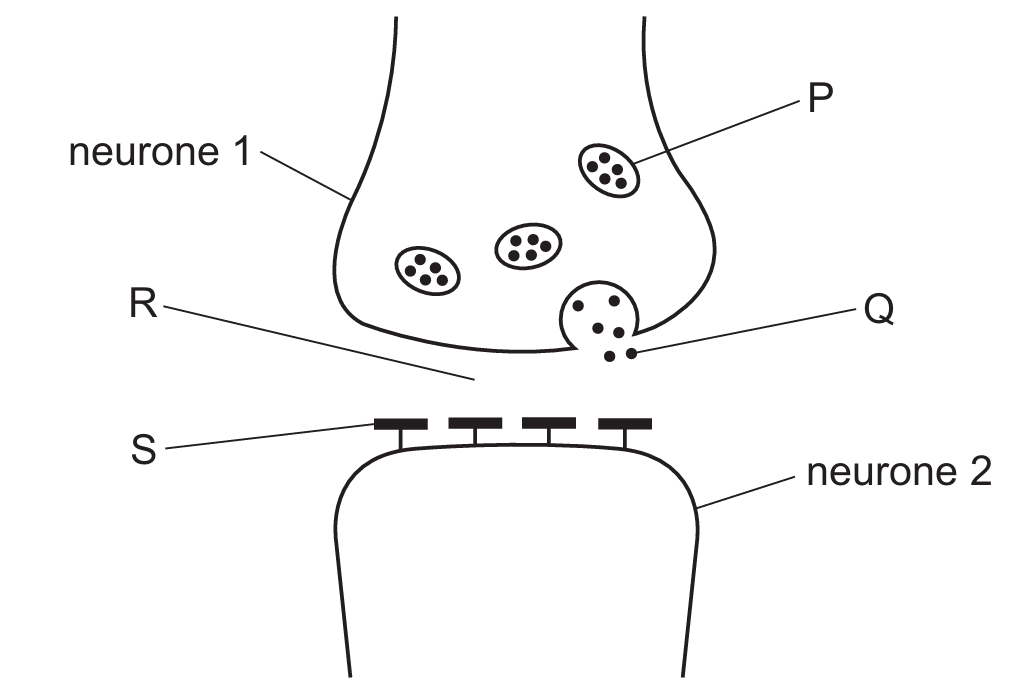
The diagram shows a synapse.

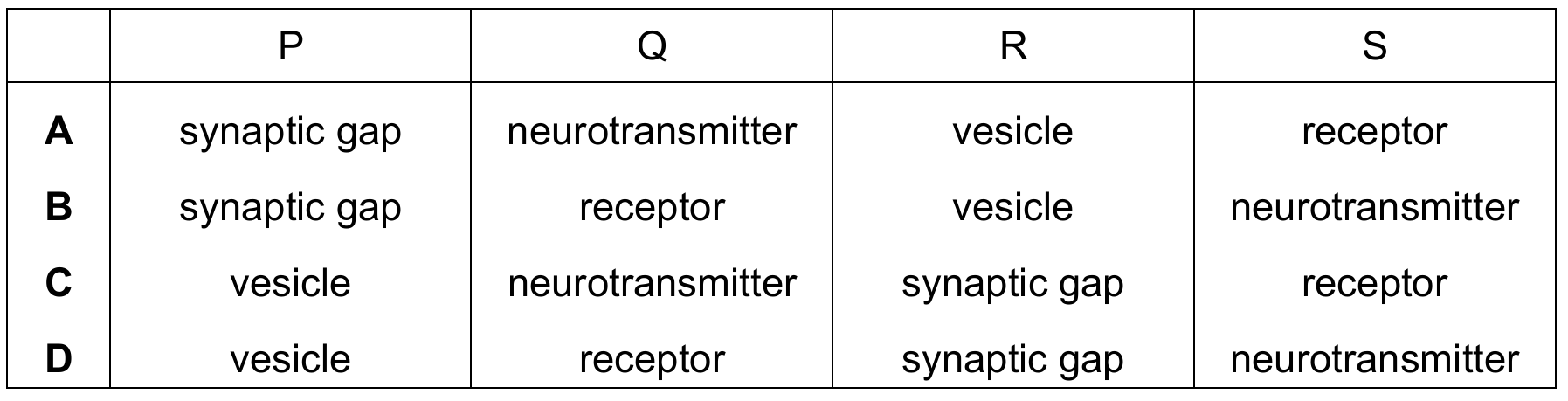
What are the labelled parts?

▶️ Answer/Explanation
The diagram illustrates the junction between two neurones, known as a synapse. Label P identifies the vesicles, which store chemical messengers within the pre-synaptic neurone. Label Q refers to the neurotransmitter molecules being released into the space. Label R is the synaptic gap (or cleft), the physical space across which the chemicals diffuse. Finally, label S points to the receptors on the post-synaptic membrane that bind with the neurotransmitter to trigger an impulse in neurone $2$. Matching these identifications leads to option C.
Answer: (C)

Question 22

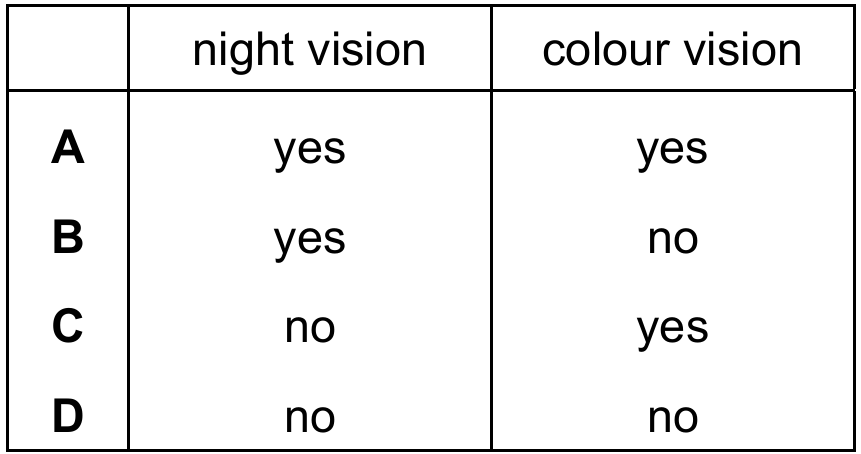
Which row shows the function of rod cells?

▶️ Answer/Explanation

The retina contains two main types of photoreceptor cells: rods and cones. Rod cells are highly sensitive to light, allowing them to function in low-light conditions, which is essential for night vision. However, rods do not detect different wavelengths of light, meaning they do not contribute to colour vision (which is the primary role of cone cells). Since rods enable night vision but not colour vision, row B correctly identifies their function.

Answer: (B)

Question 23

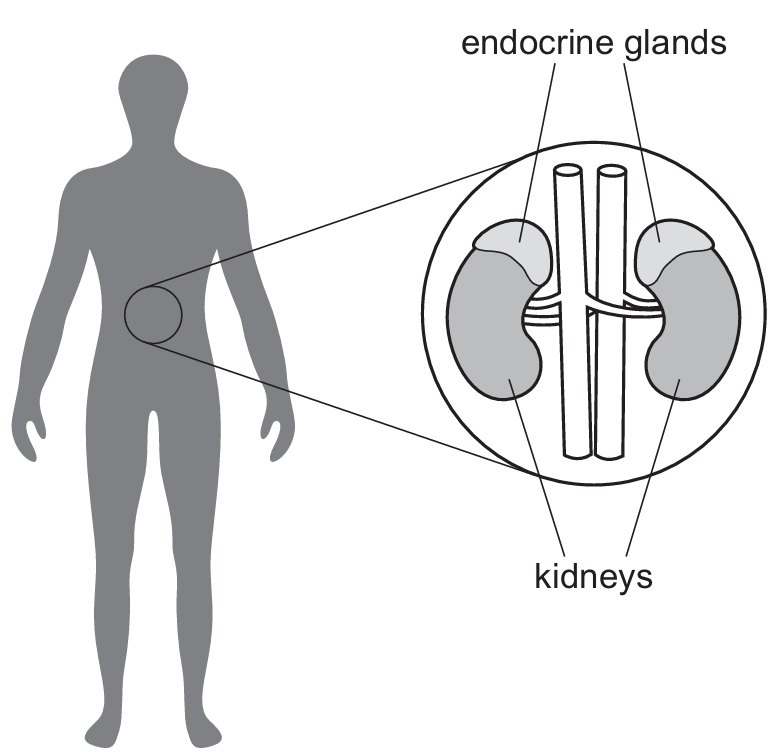
The diagram shows the positions of two endocrine glands in the human body.

What is a response of the body to the hormone released from these glands?

(A) a decrease in heart rate
(B) a decrease in blood glucose concentration
(C) an increase in pupil diameter
(D) the development of secondary sexual characteristics
▶️ Answer/Explanation
The endocrine glands shown sitting atop the kidneys are the adrenal glands. These glands release the hormone adrenaline (epinephrine) during “fight or flight” situations. Adrenaline prepares the body for immediate action by triggering several physiological changes. One of these primary responses is the dilation of the pupils (an increase in pupil diameter) to allow more light into the eyes, improving visual awareness. Other effects include an increase in heart rate and blood glucose levels, making options (A) and (B) incorrect. Secondary sexual characteristics are controlled by sex hormones from the gonads, not adrenaline.
Answer: (C)

Question 24

What is a response of the human body to overheating?

(A) vasoconstriction of arterioles
(B) vasoconstriction of veins
(C) vasodilation of arterioles
(D) vasodilation of veins
▶️ Answer/Explanation
When the body overheats, the thermoregulatory center in the brain triggers mechanisms to lose excess heat. One primary method is vasodilation, where the smooth muscles in the walls of the arterioles near the skin surface relax. This increases the diameter of the vessels, allowing more blood to flow through the capillaries close to the skin. As a result, more thermal energy is transferred from the blood to the environment via radiation and conduction. This process specifically involves arterioles rather than veins to effectively regulate the volume of blood reaching the surface.
Answer: (C)

Question 25

What is an example of phototropism?

(A) the growth of a root in the direction of gravity
(B) the growth of a shoot towards light
(C) the release of energy from glucose using light
(D) the synthesis of glucose using light
▶️ Answer/Explanation

Phototropism is a biological phenomenon where an organism, typically a plant, grows in response to a light stimulus. The term is derived from “photo” meaning light and “tropism” meaning a turning or growth movement. In plants, shoots generally exhibit positive phototropism by growing toward the light source to maximize photosynthesis. This occurs because plant hormones called auxins accumulate on the shaded side of the stem, causing those cells to elongate faster and bend the plant toward the light. Options (C) and (D) describe metabolic processes like respiration and photosynthesis, while option (A) describes geotropism (or gravitropism).

Answer: (B)

Question 26

Which statement describes the effect of antibiotics?

(A) Antibiotics do not affect bacteria or viruses.
(B) Antibiotics kill bacteria but do not affect viruses.
(C) Antibiotics kill both bacteria and viruses.
(D) Antibiotics kill viruses but do not affect bacteria.
▶️ Answer/Explanation

Antibiotics are medications specifically designed to target bacteria by disrupting their cellular processes, such as cell wall synthesis or protein production. Because viruses lack these bacterial structures—instead existing as genetic material encased in a protein coat—they are completely unaffected by antibiotic drugs. Using antibiotics for viral infections like the flu or common cold is ineffective and contributes to the global problem of antibiotic resistance. Therefore, antibiotics are selective only for bacterial pathogens while leaving viral particles intact.

Answer: (B)

Question 27

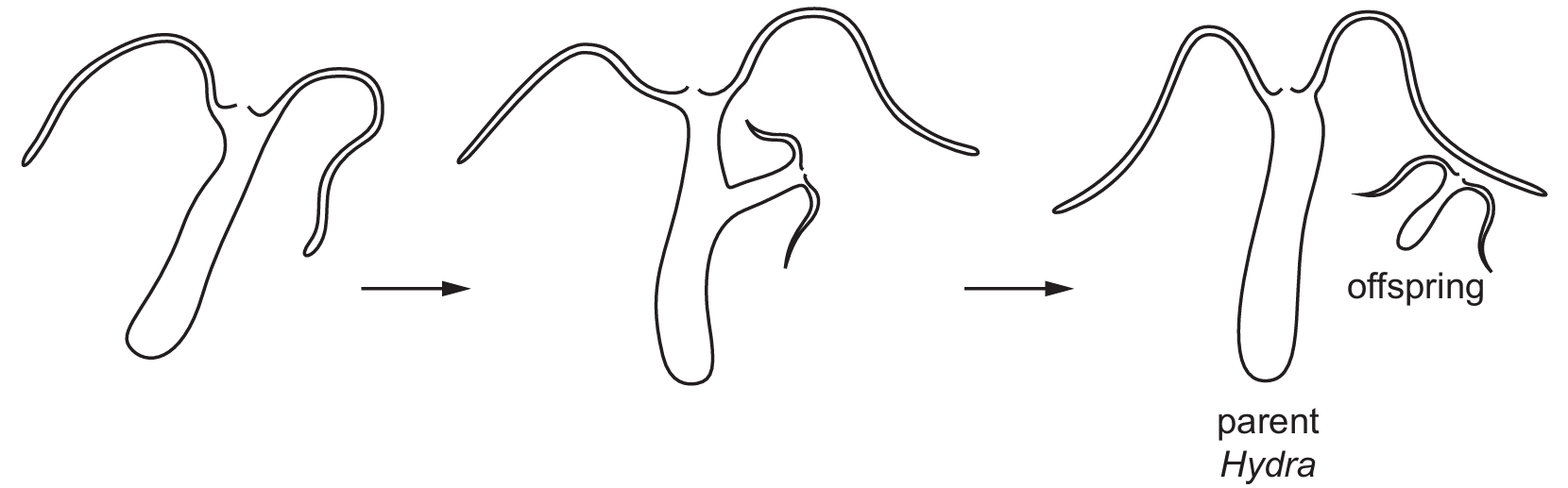
The diagram shows one parent Hydra growing and releasing an offspring from the side of its body.

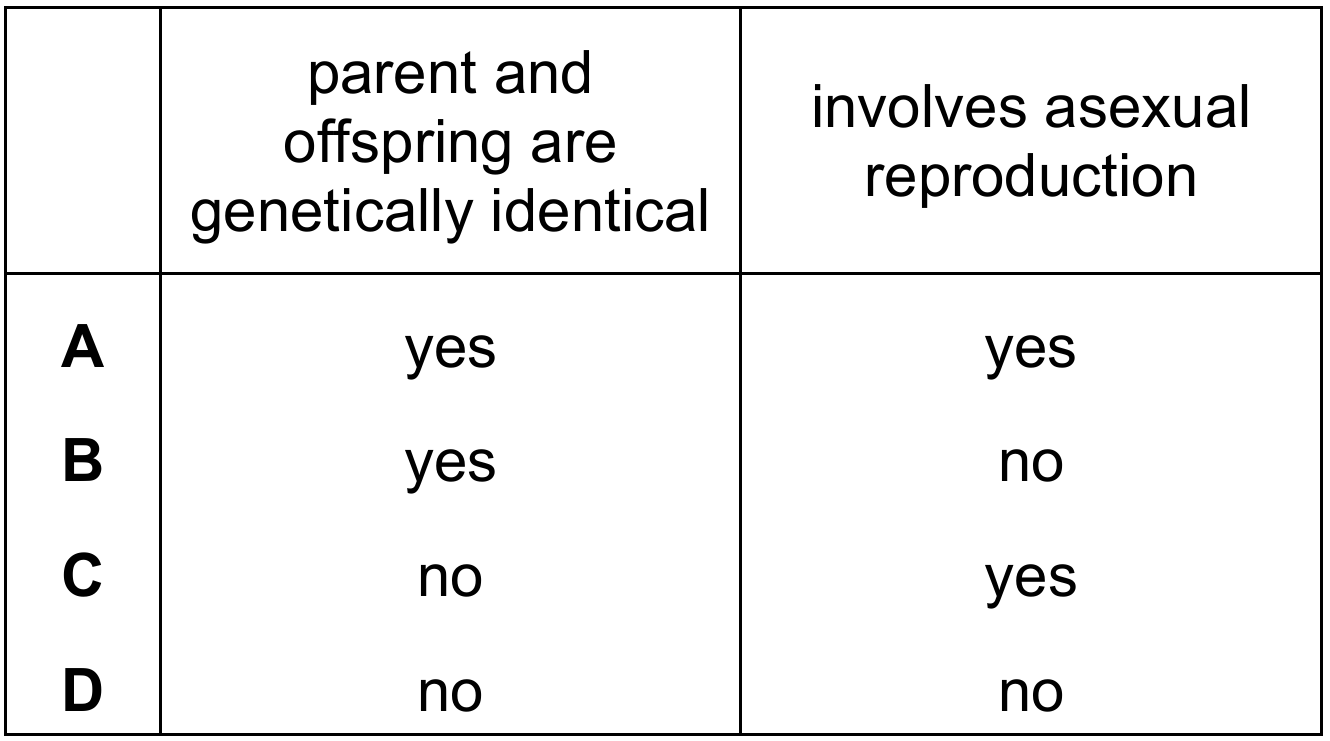
Which row is correct?

▶️ Answer/Explanation
The process shown in the diagram is budding, a form of asexual reproduction where a new organism develops from an outgrowth or bud due to cell division at one particular site. Since only one parent is involved and the process relies on mitosis, the offspring is a biological clone. This means the genetic material is copied exactly, making the parent and offspring genetically identical. Because it does not involve the fusion of gametes, it is classified as asexual reproduction. Therefore, both columns in the table should be marked “yes”.
Answer: (A)

Question 28

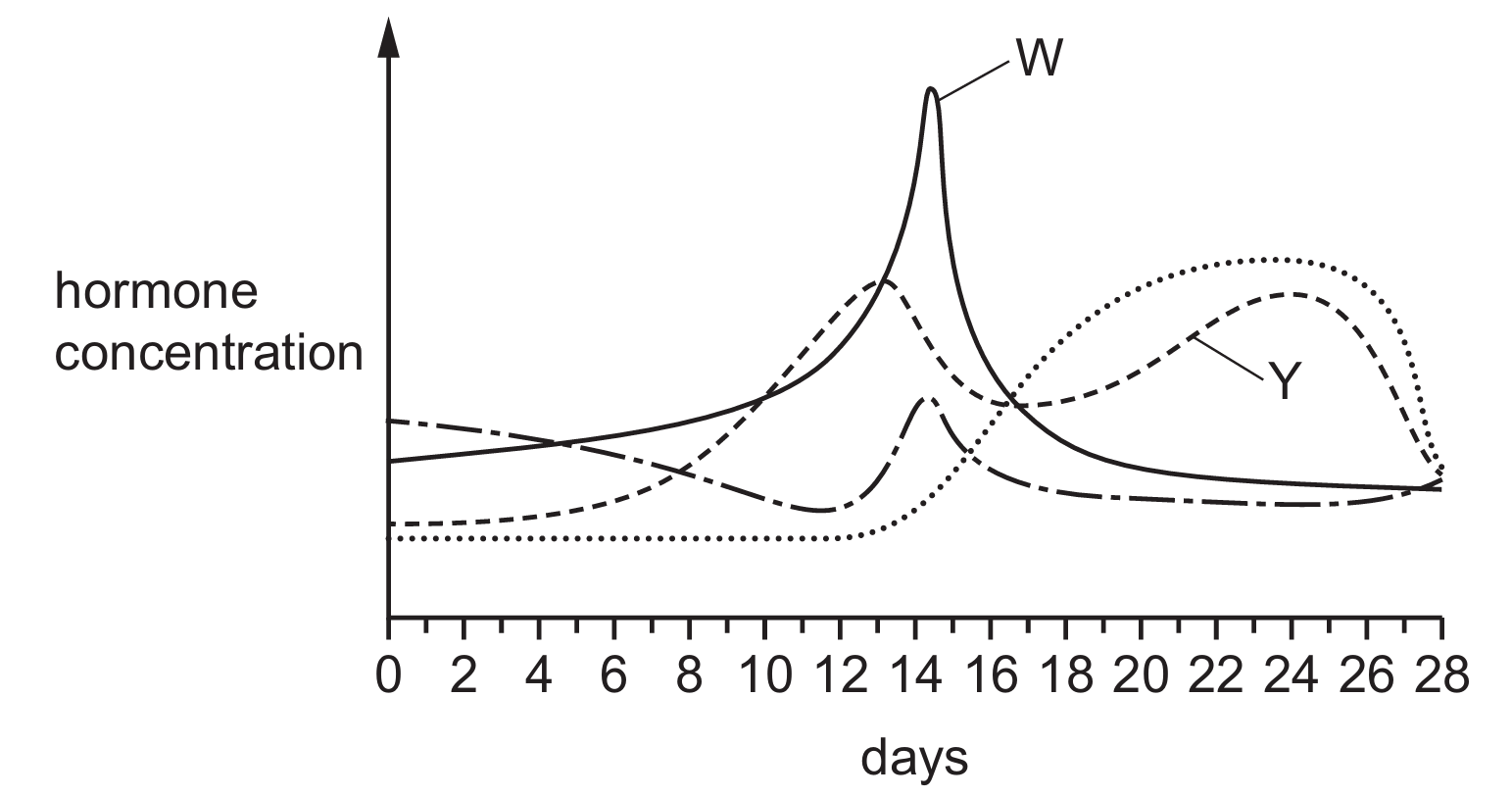
The diagram shows the changing concentrations of some hormones involved in the menstrual cycle.

Which letters identify two of the hormones?

(A) $W$ is FSH and $Y$ is oestrogen.
(B) $W$ is LH and $Y$ is oestrogen.
(C) $W$ is progesterone and $Y$ is FSH.
(D) $W$ is progesterone and $Y$ is LH.
▶️ Answer/Explanation
To identify the hormones, we look at their peak times during the $28$-day cycle. Hormone $W$ shows a massive, sharp surge just before day $14$, which is characteristic of Luteinising Hormone (LH) triggering ovulation. Hormone $Y$ (dashed line) rises during the first half of the cycle, peaks before ovulation, and has a secondary rise later; this identifies it as oestrogen. In contrast, the dotted line represents progesterone, which only peaks significantly during the luteal phase (days $15$–$28$). Therefore, the combination in option B correctly identifies the labeled curves.
Answer: (B)

Question 29

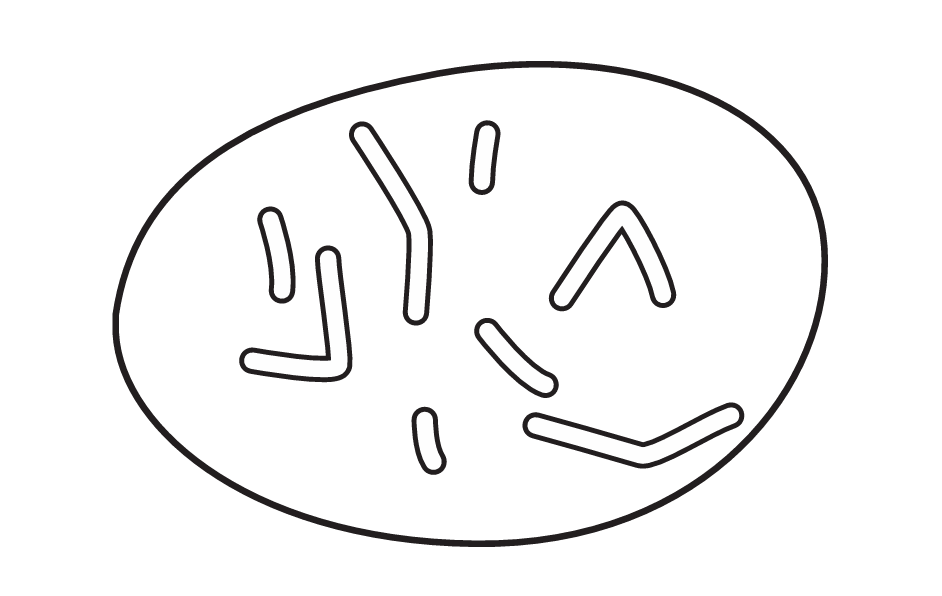
The diagram shows the chromosomes in the nucleus of a cell that divides by mitosis.

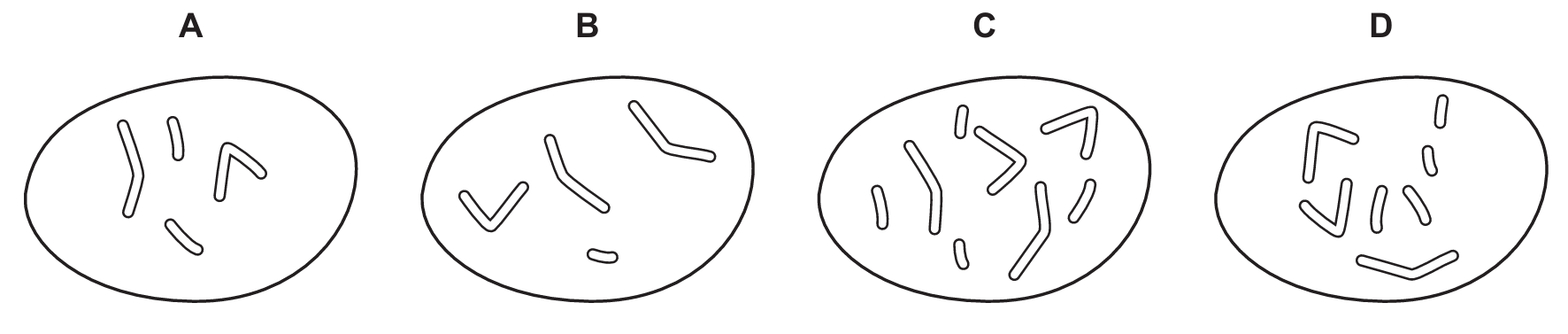
Which diagram shows the chromosomes in the nucleus of one of the daughter cells produced?

▶️ Answer/Explanation
Mitosis is a type of cell division that results in two daughter cells each having the same number and kind of chromosomes as the parent nucleus. In the original diagram, the parent cell contains exactly $8$ chromosomes of specific shapes and sizes. Since mitosis maintains the chromosome number (genetically identical), the correct daughter cell must also contain $8$ chromosomes that match the original set. Diagram C is the only option that maintains this diploid count of $8$ and the correct morphology. Options A, B, and D are incorrect as they show a reduced number of chromosomes, which would be characteristic of meiosis or an error in division.
Answer: (C)

Question 30

A farmer bred together male cattle with white hair and female cattle with red hair. All the offspring produced had roan hair (a mixture of red and white).

He then repeatedly bred together two roan cattle, and the offspring were in the ratio of $1$ red : $2$ roan : $1$ white.

What explains why the farmer obtained this ratio?

(A) The red phenotype is dominant to the white phenotype.
(B) The roan phenotype is an example of codominance.
(C) The roan phenotype is dominant to the red phenotype and the white phenotype.
(D) The white phenotype is dominant to the red phenotype.
▶️ Answer/Explanation

This scenario illustrates codominance, where both alleles in a heterozygote are fully expressed, resulting in a “roan” appearance (mixed red and white hairs). In the first cross, homozygous red ($RR$) and homozygous white ($WW$) parents produce $100\%$ heterozygous roan ($RW$) offspring. When two roan cattle ($RW \times RW$) are bred, the resulting genotypic and phenotypic ratio is $1$ $RR$ (red) : $2$ $RW$ (roan) : $1$ $WW$ (white). Because both colors are visible simultaneously rather than one masking the other or blending into a third color, it confirms codominance.

Answer: (B)

Question 31

Phagocytes and neurones are two types of specialised cell.

Which statements are correct?

$1$ Phagocytes and neurones express the same genes.
$2$ Both types of cell have the same genes.
$3$ Both types of cell only express the genes that make the proteins needed for the cell to function.
(A) $1$ and $2$
(B) $1$ and $3$
(C) $2$ and $3$
(D) $2$ only
▶️ Answer/Explanation

Statement $2$ is correct because almost all cells in an organism are derived from the same zygote via mitosis, meaning they contain the exact same genome. Statement $3$ is also correct because cell differentiation is achieved through selective gene expression; cells only “switch on” the specific genes required for their specialized roles. Statement $1$ is incorrect because if phagocytes and neurones expressed the same genes, they would produce the same proteins and look/function identically, which they do not. Therefore, only statements $2$ and $3$ are true.

Answer: (C)

Question 32

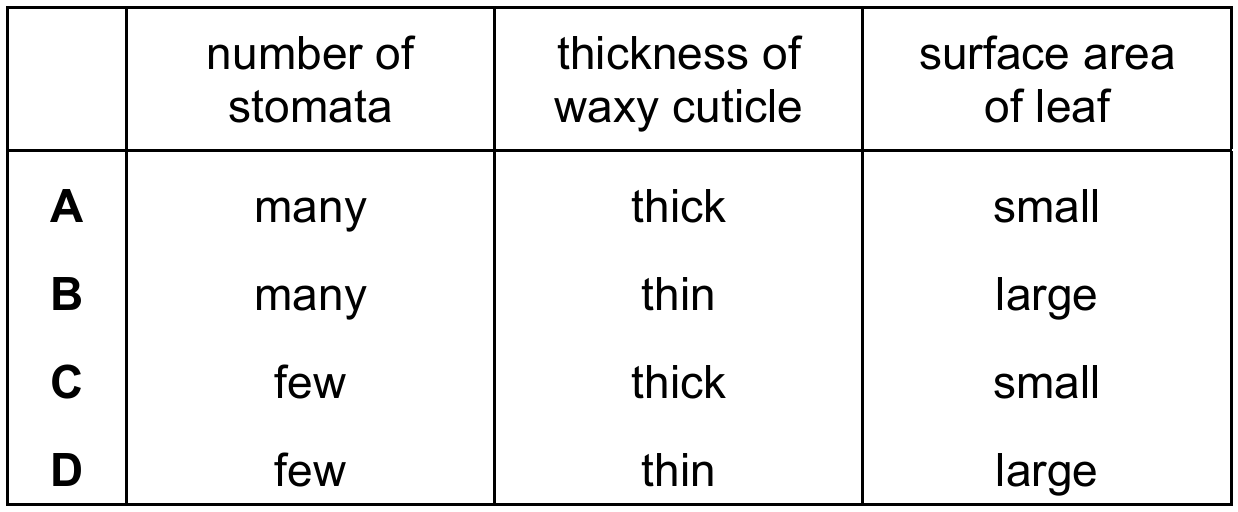
The table shows some features of leaves.

Which leaf is adapted to survive in hot, dry habitats?

▶️ Answer/Explanation
Plants in hot, dry habitats (xerophytes) must minimize water loss through transpiration. A thick waxy cuticle acts as a waterproof barrier to reduce evaporation from the leaf surface. Having fewer stomata reduces the number of pores through which water vapor can escape. Finally, a small surface area (like needles or small leaves) limits the total area exposed to heat and sunlight, further decreasing transpiration rates. Leaf C possesses all three of these water-conserving adaptations.
Answer: (C)

Question 33

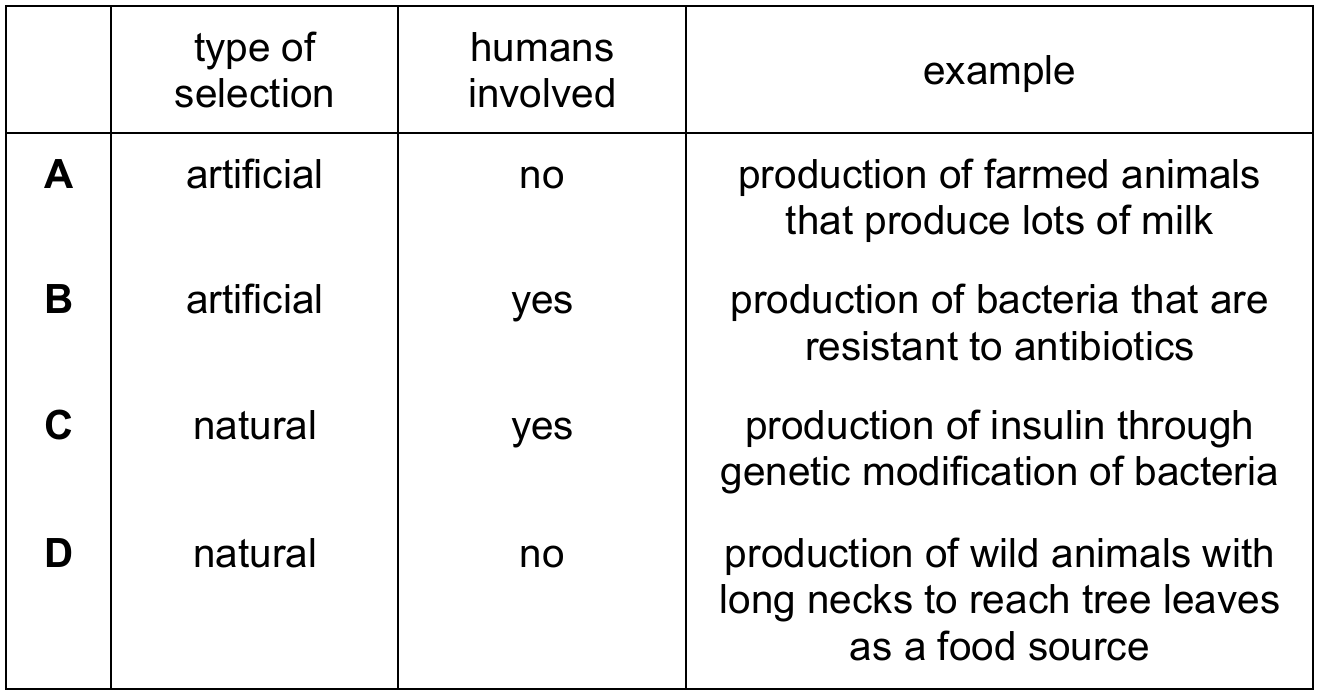
Which row correctly describes a type of selection?

▶️ Answer/Explanation
Natural selection occurs when environmental pressures, rather than human intervention, determine which individuals survive and reproduce. In row D, wild animals developing long necks to reach food is a classic example of adaptation driven by survival needs in the wild. While humans might trigger antibiotic resistance (row B) or farm animals (row A), those are types of artificial selection or unintended human-driven evolution. Genetic modification (row C) is a laboratory technique, not natural selection. Therefore, row D is the only entry where the selection type, the absence of human intent, and the biological example align perfectly.
Answer: (D)

Question 34

Which statement about a pyramid of energy for a food chain is correct?

(A) It shows how energy is lost at each trophic level.
(B) It shows the energy stored at each trophic level.
(C) It shows the input of energy from the principal source.
(D) It shows the total energy stored within an ecosystem.
▶️ Answer/Explanation

A pyramid of energy represents the total amount of energy available at each trophic level in a food chain over a specific area and time. Each tier of the pyramid shows the energy stored in the biomass of those organisms, which is then available to the next level. While energy is indeed lost as heat through respiration (often following the $10\%$ rule), the primary function of the bars in the pyramid is to quantify the actual energy content present at that stage. This is why pyramids of energy are always upright and never inverted, unlike pyramids of numbers or biomass.

Answer: (B)

Question 35

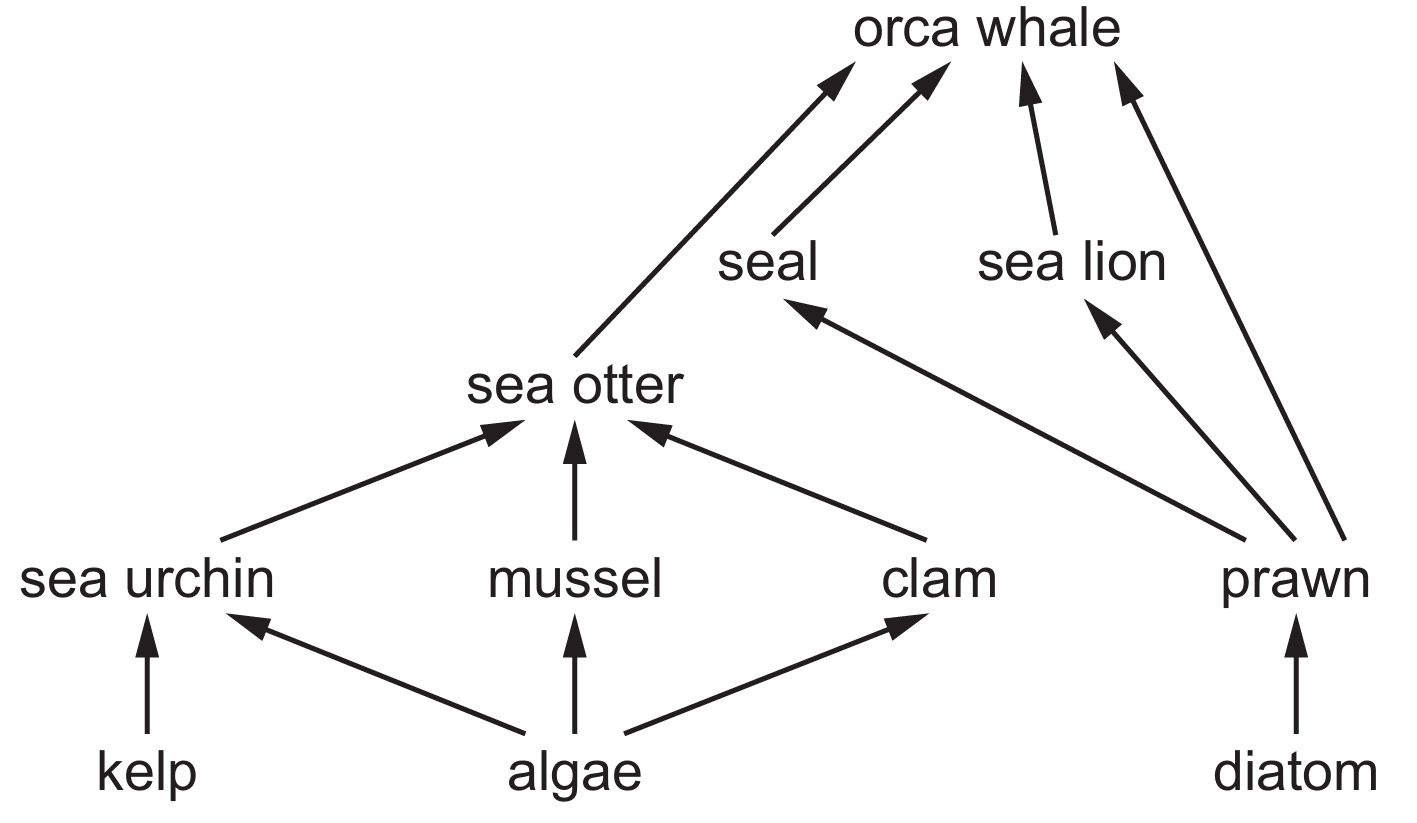
The food web shows part of an ocean ecosystem.

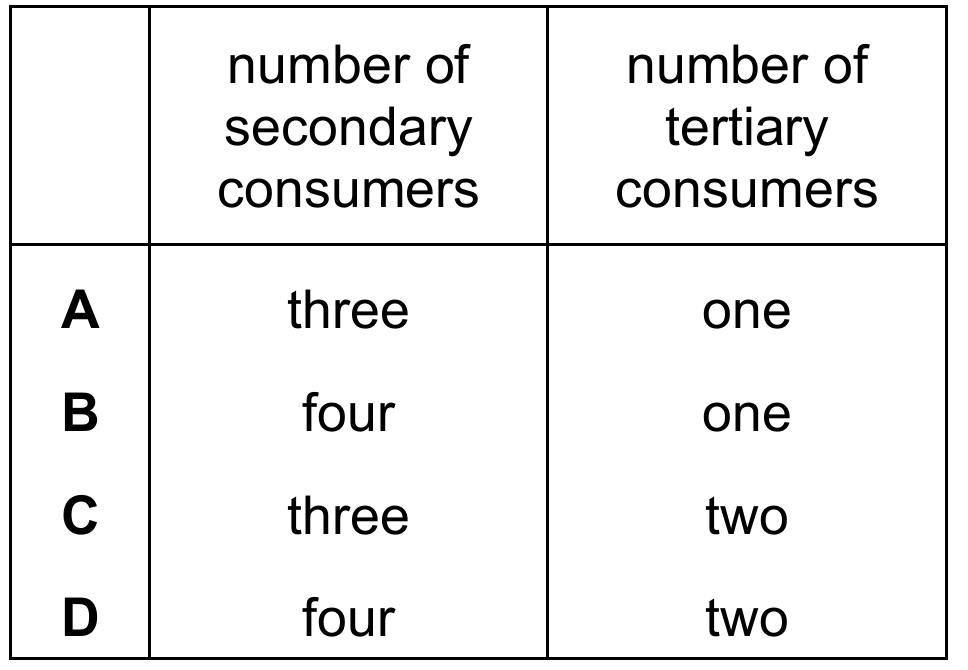
Which row shows the number of secondary consumers and the number of tertiary consumers in the food web?

▶️ Answer/Explanation

To find the number of consumers, we trace the energy flow from the producers (kelp, algae, diatom). Secondary consumers eat the primary consumers (herbivores). In this web, the secondary consumers are the sea otter (eats urchin, mussel, clam), seal (eats prawn), sea lion (eats prawn), and orca whale (when it eats the prawn directly). This gives a total of $4$.

Tertiary consumers occupy the next level by eating secondary consumers. Here, the orca whale acts as the tertiary consumer when it eats the sea otter, seal, or sea lion. Since the orca whale is the only organism at this specific level in these chains, there is $1$ tertiary consumer.
Answer: (B)

Question 36

A student investigated the effect of high temperature on the production of nitrate ions in soil.

Two samples of soil were taken. One sample was heated to $100$ °C.

All the nitrate ions were completely removed from both soil samples.

Ammonium ions were then added to both soil samples.

After two weeks, both soil samples were tested for the presence of nitrate ions.

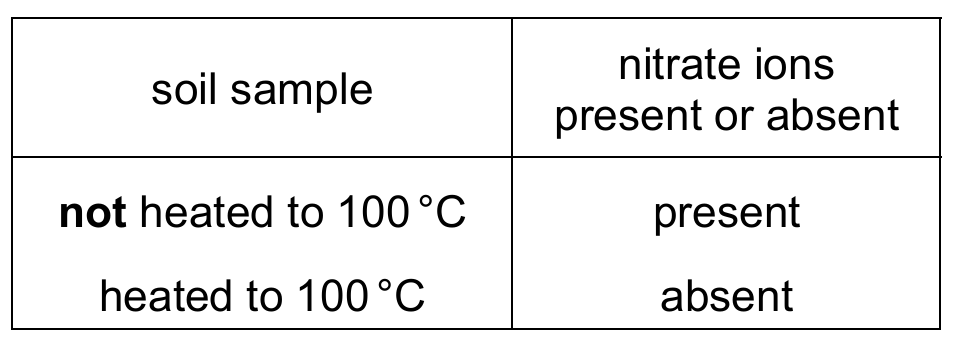
The results are shown.

Which statement explains the results?

(A) Heating the soil broke down the nitrate ions.
(B) Heating the soil increased the activity of denitrifying bacteria.
(C) Heating the soil killed nitrifying bacteria.
(D) Heating the soil killed nitrogen-fixing bacteria.
▶️ Answer/Explanation
The production of nitrate ions from ammonium ions is a biological process called nitrification, which is carried out by specialized soil bacteria. In the control sample (not heated), these bacteria converted the added ammonium into nitrates over the two-week period. However, heating soil to $100$ °C acts as a sterilization method that kills most living organisms, including these bacteria. Since the heated sample failed to produce any nitrate ions, it indicates that the biological agents responsible for the conversion were destroyed. Therefore, the lack of nitrate production is due to the heat killing the nitrifying bacteria.
Answer: (C)

Question 37

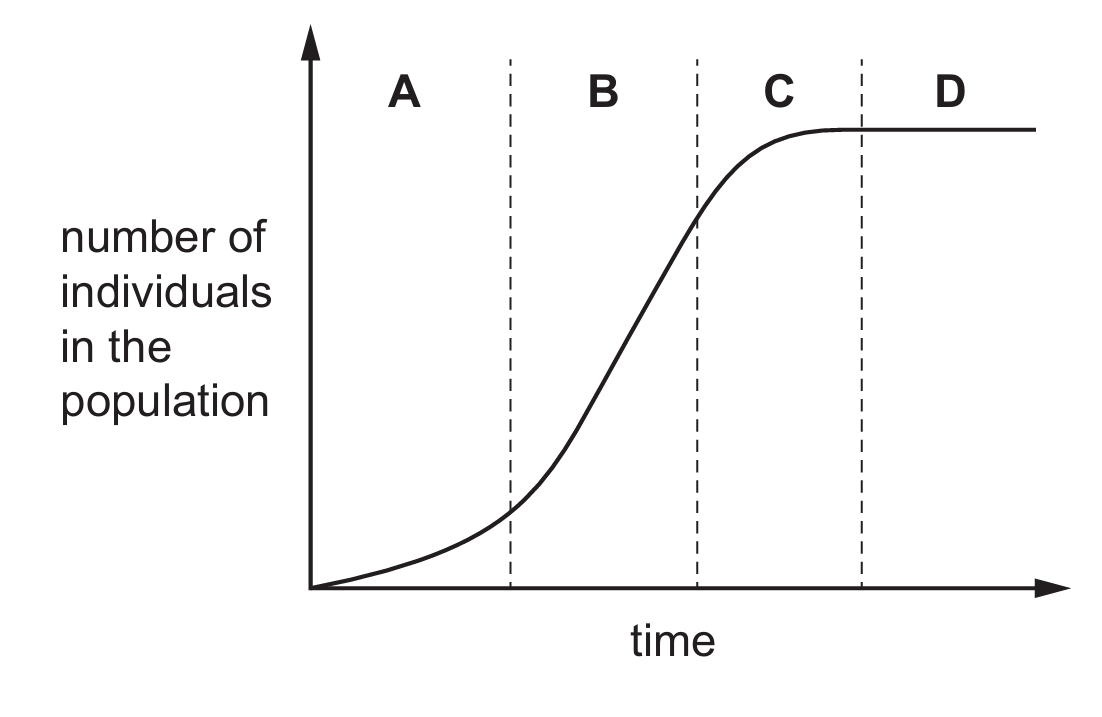
Which letter represents the lag phase in the population graph shown?

▶️ Answer/Explanation
The lag phase is the initial period of a population growth curve where the population size increases very slowly. During this stage, organisms are adapting to their new environment, undergoing intense metabolic activity, and preparing for reproduction rather than actively dividing at a high rate. In the provided sigmoid (S-shaped) growth curve, section A clearly depicts this slow starting phase before the rapid exponential growth seen in section B. As the graph progresses, C represents the deceleration phase, and D represents the stationary phase where the population reaches carrying capacity.
Answer: (A)

Question 38

Which term describes the number of different species living in an area?

(A) biodiversity
(B) conservation
(C) ecosystem
(D) population
▶️ Answer/Explanation
The correct term is biodiversity, which specifically refers to the variety of life in a particular habitat or ecosystem. While “population” refers to individuals of a single species and “ecosystem” includes both living organisms and their physical environment, biodiversity focuses on the richness and variety of species present. High biodiversity is often an indicator of a healthy, resilient environment. In contrast, conservation is the practice of protecting these species, rather than a measure of their variety. Therefore, the number of distinct species in a given area is the primary metric for biological diversity.
Answer: (A)

Question 39

Which source of pollution can cause eutrophication?

(A) carbon dioxide
(B) methane
(C) non-biodegradable plastic
(D) sewage
▶️ Answer/Explanation
Eutrophication is the process where a body of water becomes overly enriched with minerals and nutrients, primarily nitrates and phosphates. Sewage contains high levels of these organic nutrients and detergents, which act as a fertilizer for aquatic plants. When sewage enters a lake or river, it triggers an “algal bloom,” where algae grow rapidly on the surface. This thick layer of algae blocks sunlight from reaching deeper plants, causing them to die. As bacteria decompose the dead organic matter, they consume the dissolved oxygen in the water, leading to the death of fish and other aerobic organisms. While carbon dioxide and methane are greenhouse gases and plastic is a physical pollutant, only sewage provides the nutrient load necessary for this biological collapse.
Answer: (D)

Question 40

Some of the processes involved in the production of insulin by genetic modification are listed.

$1$   cutting of bacterial plasmid DNA with restriction enzymes
$2$   expression in bacteria of the human gene to make insulin
$3$   insertion of recombinant plasmids into bacteria
$4$   multiplication of bacteria containing recombinant plasmids

In which order do these processes occur?

(A) $1 \rightarrow 3 \rightarrow 4 \rightarrow 2$
(B) $2 \rightarrow 1 \rightarrow 3 \rightarrow 4$
(C) $3 \rightarrow 1 \rightarrow 2 \rightarrow 4$
(D) $4 \rightarrow 1 \rightarrow 3 \rightarrow 2$
▶️ Answer/Explanation

The production of human insulin via genetic engineering follows a logical sequence of molecular biology techniques. First, the bacterial plasmid (the vector) must be opened using restriction enzymes ($1$) so the human insulin gene can be spliced in. Once the recombinant plasmid is formed, it is inserted into host bacteria ($3$) through a process called transformation. These transgenic bacteria are then cultured to allow them to multiply ($4$), creating a large population. Finally, the machinery of the grown bacteria is used for the protein expression ($2$), where the human gene is transcribed and translated into actual insulin protein.

Answer: (A)

Scroll to Top