Home / 0610_s25_qp_22

Question 1

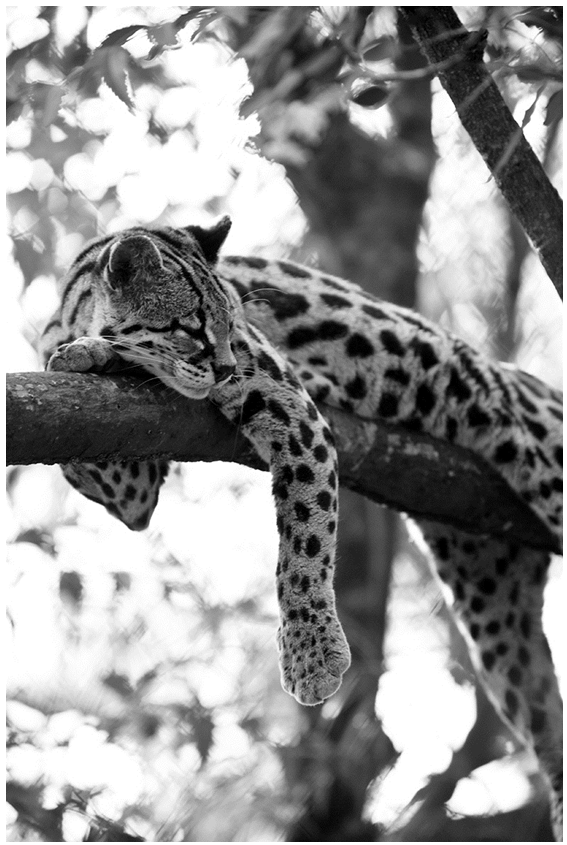
The photograph shows an animal called a margay.

Four processes that occur in the margay are listed:

  • excretion
  • growth
  • digestion
  • respiration

How many of the processes that occur in the margay are characteristics of all living organisms?

(A) $1$
(B) $2$
(C) $3$
(D) $4$
▶️ Answer/Explanation
To solve this, we identify which processes belong to the universal characteristics of life (often remembered by the acronym MRS GREN). Excretion, growth, and respiration are three of these seven fundamental characteristics. While digestion is a process that occurs in the margay to obtain nutrients, it is not considered a universal characteristic itself; rather, “nutrition” is the broader characteristic which may involve different methods (like photosynthesis in plants) that do not require a digestive system. Therefore, only three of the listed processes are universal traits shared by all living things.
Answer: (C)

Question 2

Part of the base sequence of DNA from four species was determined.

species $1$   T C A G G A T T
species $2$   T G A G C A A T
species $3$   T G A G C A A G
species $4$   T G A G G A T T

Which two species are the least closely related?

A   $1$ and $2$ B   $1$ and $3$ C   $2$ and $4$ D   $3$ and $4$
▶️ Answer/Explanation

To determine which species are the least closely related, we must count the number of differences in their DNA base sequences. Species with the highest number of differences share a more distant common ancestor. Comparing species $1$ (T C A G G A T T) and species $3$ (T G A G C A A G), we find differences at the $2^{nd}$, $5^{th}$, $6^{th}$, $7^{th}$, and $8^{th}$ positions, totaling $5$ differences.

In contrast, other pairs have fewer differences: species $1$ and $2$ have $4$ differences, while species $2$ and $3$ differ by only $1$ base. Because the DNA sequence of species $1$ and $3$ is the most divergent among the choices provided, they are the least closely related.
Answer: (B)

Question 3

A single-celled organism has chloroplasts, a cell wall and a nucleus.

Which kingdom is this organism placed in?

(A) fungus
(B) plant
(C) prokaryote
(D) protoctist
▶️ Answer/Explanation
The organism is described as single-celled (unicellular) and contains a nucleus, which identifies it as a eukaryote and rules out prokaryotes. The presence of chloroplasts indicates it can perform photosynthesis, which rules out fungi. While plants have cell walls and chloroplasts, they are typically multicellular organisms. The Kingdom Protoctist serves as a diverse group that includes unicellular eukaryotic organisms that may share characteristics with plants, such as Chlorella or Euglena. Therefore, a single-celled organism with these specific eukaryotic features is classified as a protoctist.
Answer: (D)

Question 4

What is a leaf?

(A) a cell
(B) an organ
(C) an organ system
(D) a tissue
▶️ Answer/Explanation

In the hierarchy of biological organization, an organ is defined as a collection of different tissues that work together to perform specific functions. A leaf fits this description perfectly because it is composed of several specialized tissues, including the epidermis, mesophyll (photosynthetic tissue), and vascular tissues (xylem and phloem). These tissues collaborate to carry out essential processes like photosynthesis and transpiration. While a single cell is the basic unit of life and a tissue is a group of similar cells, the leaf represents a higher level of complexity. Therefore, it is classified as an organ within the plant’s shoot system.

Answer: (B)

Question 5

A student measured the length of a structure using a microscope.

The magnification used was $\times 250$.

The image size of the structure was $5.00 \text{ mm}$.

What was the actual length of the structure?

(A) $1.25 \times 10^3 \text{ mm}$
(B) $1.25 \times 10^3 \text{ \mu m}$
(C) $2.00 \times 10^1 \text{ \mu m}$
(D) $2.00 \times 10^{-5} \text{ \mu m}$
▶️ Answer/Explanation
To find the actual length, we use the formula: $\text{Actual Size} = \frac{\text{Image Size}}{\text{Magnification}}$. Given the image size is $5.00 \text{ mm}$ and magnification is $250$, the calculation is $\frac{5.00}{250} = 0.02 \text{ mm}$. To convert this to micrometers ($\mu\text{m}$), we multiply by $1000$, resulting in $20 \text{ \mu m}$. Expressed in scientific notation, $20$ becomes $2.00 \times 10^1 \text{ \mu m}$. This matches option (C) perfectly.
Answer: (C)

Question 6

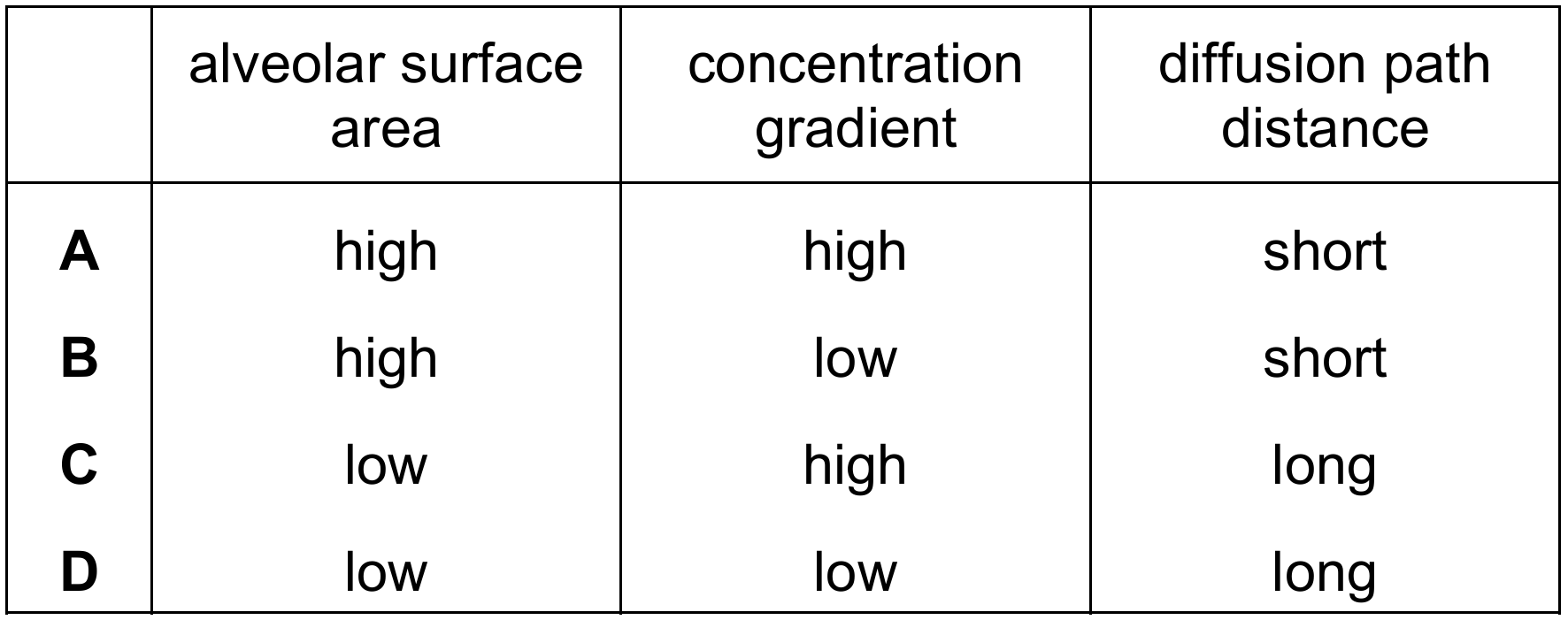
Which row shows the conditions when diffusion of oxygen into the blood is fastest?

▶️ Answer/Explanation
The rate of diffusion is governed by Fick’s Law, which states that diffusion is faster when the surface area is large and the concentration gradient is steep (high). Conversely, diffusion is slower when the diffusion path distance (membrane thickness) is long. Therefore, the fastest diffusion occurs when there is a high surface area for more molecules to pass through, a high gradient to drive the movement, and a short distance to travel.
Answer: (A)

Question 7

Uncooked potato cylinders of identical size were placed in four different liquids for two hours.

The different liquids are listed.

1    pure water
2    a sugar solution that was less concentrated than the contents of the potato cells
3    a sugar solution that was more concentrated than the contents of the potato cells
4    a sugar solution that was the same concentration as the contents of the potato cells

In which liquids will the potato cylinders increase in length?

(A) $1$ and $2$ (B) $1$ and $3$ (C) $2$ and $4$ (D) $3$ and $4$
▶️ Answer/Explanation

This question relates to osmosis, the movement of water from a region of higher water potential to a region of lower water potential across a partially permeable membrane. To increase in length, the potato cells must take in water and become turgid. This occurs when the surrounding liquid is hypotonic (has a higher water potential) relative to the cell sap.

In Liquid 1 (pure water) and Liquid 2 (a dilute sugar solution), the water potential outside the potato is higher than inside. Consequently, water moves into the potato cylinders, causing them to expand. In contrast, Liquid 3 is hypertonic (causing water loss and shrinkage), and Liquid 4 is isotonic (resulting in no net change in length).
Answer: (A)

Question 8

What is the correct definition of enzymes?

(A) carbohydrates that act as biological catalysts
(B) carbohydrates that act as substrates
(C) proteins that act as biological catalysts
(D) proteins that act as substrates
▶️ Answer/Explanation

Enzymes are specialized proteins synthesized by living cells to speed up metabolic reactions. They function as biological catalysts, meaning they lower the activation energy required for a reaction to occur without being consumed in the process. While carbohydrates serve as energy sources or structural components, they do not possess catalytic properties. Similarly, a substrate is the specific molecule that an enzyme acts upon, rather than the enzyme itself. Therefore, the most accurate definition identifies them as protein-based catalysts.

Answer: (C)

Question 9

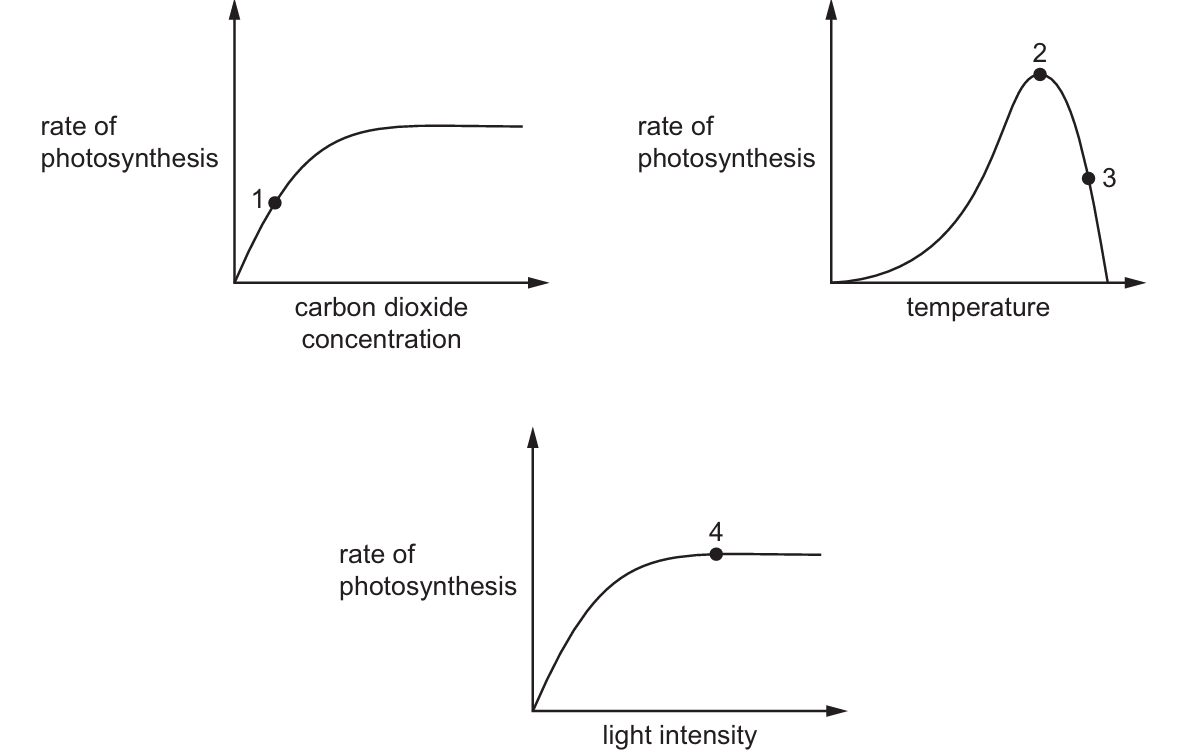
A student investigated how the rate of photosynthesis is affected by carbon dioxide concentration, temperature and light intensity.

The graphs show the results.

What is a correct statement for these results?

(A) Carbon dioxide concentration is a limiting factor at $1$.
(B) No enzymes are denatured at $3$.
(C) Light intensity is a limiting factor at $4$.
(D) Temperature is a limiting factor at $2$.
▶️ Answer/Explanation
A factor is “limiting” if increasing it leads to an increase in the rate of the process. At point $1$ on the first graph, the curve is still rising; therefore, increasing the $CO_{2}$ concentration increases the rate, making it the limiting factor. At point $4$, the curve has flattened out, meaning light intensity is no longer limiting. At point $2$, the rate is at its maximum (optimum), so temperature is not limiting further growth. Finally, at point $3$, the rate is decreasing rapidly because high temperatures cause enzymes to denature and lose their functional shape.
Answer: (A)

Question 10

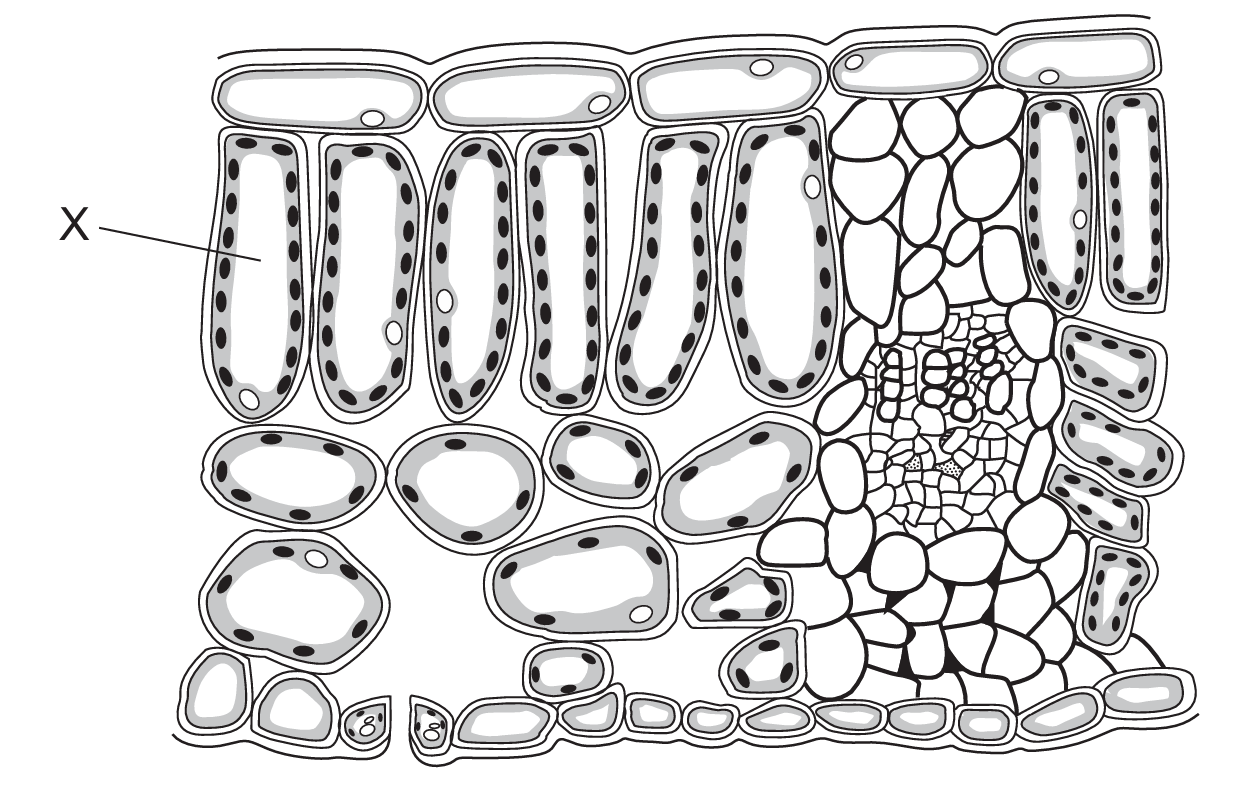
The diagram shows a cross-section of part of a leaf.

What is the cell labelled $X$?

(A) epidermis
(B) guard cell
(C) palisade mesophyll
(D) spongy mesophyll
▶️ Answer/Explanation
The cell labelled $X$ is located directly beneath the upper epidermis. These cells are characteristically columnar (tall and narrow) and arranged closely together in a regular layer to maximize light absorption. This specific tissue layer is known as the palisade mesophyll. Unlike the spongy mesophyll below it, which has large air spaces, the palisade layer contains a high density of chloroplasts, making it the primary site for photosynthesis in the leaf. The epidermis consists of the outer protective layers, and guard cells are found surrounding the stomata on the leaf surface.
Answer: (C) palisade mesophyll

Question 11

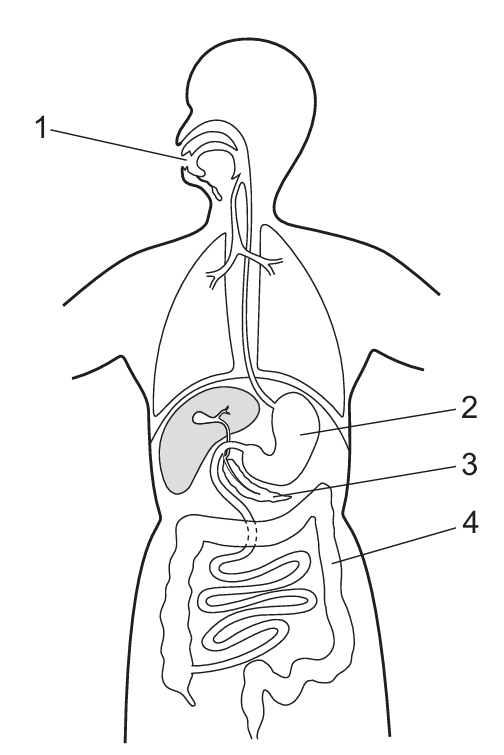
In which parts of the digestive system does physical digestion occur?

(A) $1, 2$ and $3$
(B) $1$ and $2$ only
(C) $2$ and $3$ only
(D) $4$ only
▶️ Answer/Explanation
Physical (mechanical) digestion involves the breakdown of food into smaller pieces without changing its chemical nature. In the mouth (1), teeth perform mastication to grind food. In the stomach (2), muscular walls churn the food (peristalsis) to mix it with gastric juices, further breaking it down physically. While the small intestine (3) involves bile emulsification, the primary sites for significant mechanical churning and grinding are the mouth and stomach. The large intestine (4) is mainly responsible for water absorption rather than digestion.
Answer: (B)

Question 12

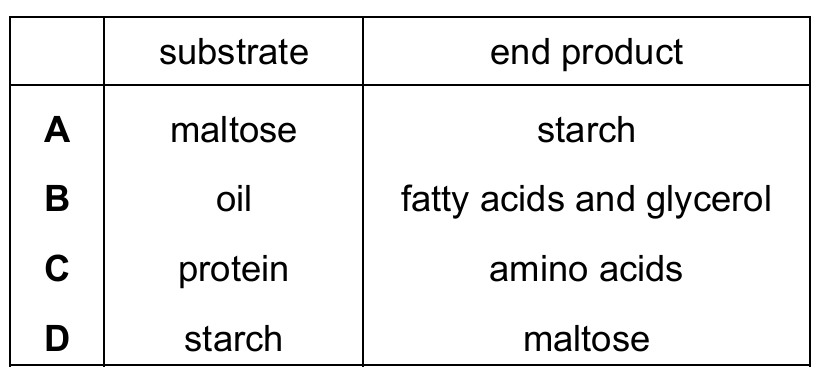
The table shows the substrates and end products in four enzyme-controlled chemical reactions.

Which reaction was controlled by lipase?

▶️ Answer/Explanation
Lipase is the specific enzyme responsible for the digestion of lipids (fats and oils). In reaction B, the substrate is oil, which is a lipid, and the resulting end products are fatty acids and glycerol. This matches the known biochemical pathway where lipase breaks down ester bonds in triglycerides. Reaction C involves protease (breaking protein into amino acids), and reaction D involves amylase (breaking starch into maltose). Reaction A is incorrect as starch is a polymer of glucose, not maltose.
Answer: (B)

Question 13

What is the function of microvilli in the small intestine?

(A) conduction of electrical impulses
(B) increasing surface area for absorption
(C) movement of food particles
(D) movement of mucus
▶️ Answer/Explanation
The primary role of the small intestine is the absorption of nutrients into the bloodstream. To make this process efficient, the inner lining is covered in tiny, finger-like projections called villi, which themselves are covered in even smaller microvilli. These structures significantly expand the total surface area available for diffusion and active transport. By increasing the area of the plasma membrane, more nutrient molecules can be absorbed simultaneously. This ensures that the body maximizes the uptake of glucose, amino acids, and fatty acids from digested food.
Answer: (B)

Question 14

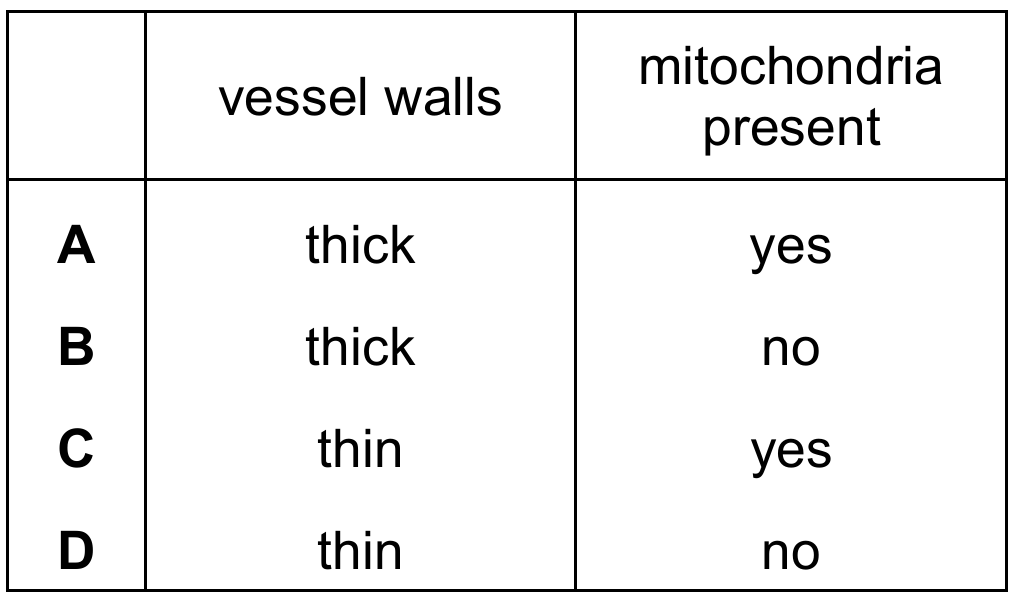
Which row shows the features of xylem vessels?

▶️ Answer/Explanation

Xylem vessels are specialized tissues designed for the efficient transport of water and mineral ions. To withstand the high pressure of the transpiration stream, their walls are thickened with a tough, waterproof substance called lignin. Crucially, mature xylem vessels are dead cells; they lose their protoplasm, including organelles like mitochondria, to form hollow, continuous tubes. This lack of internal structure ensures there is no resistance to the flow of water. Therefore, they have thick walls and no mitochondria.

Answer: (B)

Question 15

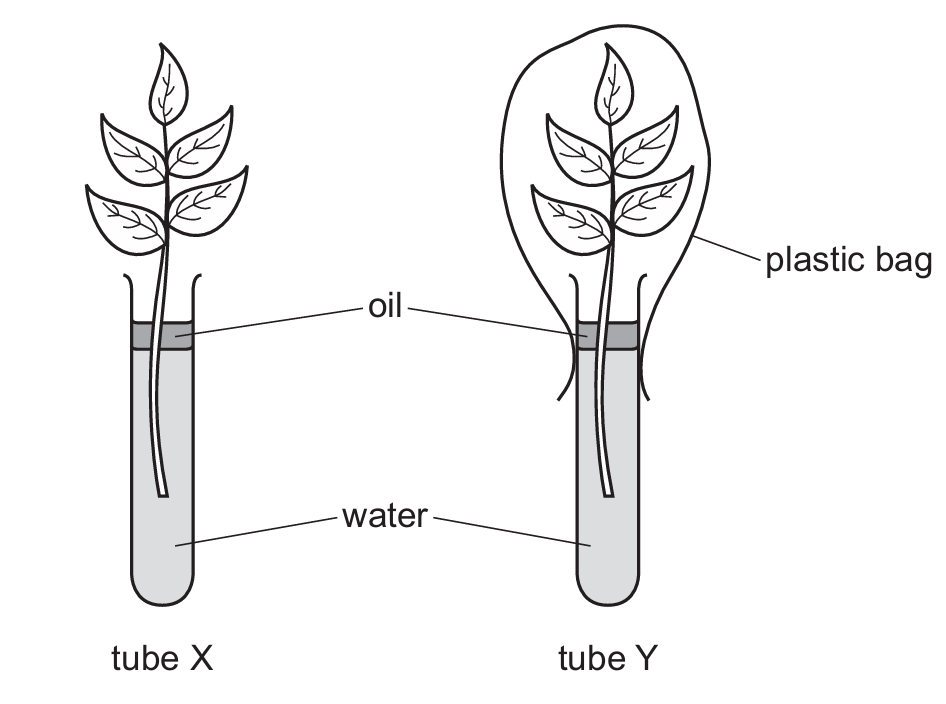
A student wanted to investigate the effect of humidity on transpiration. She set up two sets of apparatus with identical-sized plants of the same species.

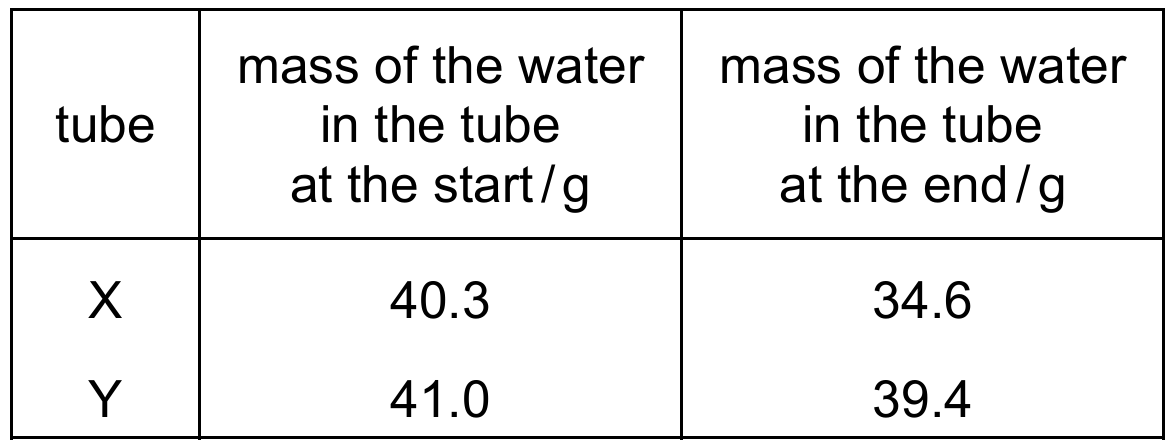
The masses of the water in both tubes were measured at the start of the investigation and again after five days. The table shows the results of the investigation.

Which statement describes and explains these results?

(A) Transpiration in tube $Y$ was higher than in tube $X$ as the plastic bag decreased the humidity.
(B) Transpiration in tube $Y$ was higher than in tube $X$ as the plastic bag increased the humidity.
(C) Transpiration in tube $Y$ was lower than in tube $X$ as the plastic bag decreased the humidity.
(D) Transpiration in tube $Y$ was lower than in tube $X$ as the plastic bag increased the humidity.
▶️ Answer/Explanation
To find the transpiration rate, we calculate the water loss: Tube $X$ lost $40.3 – 34.6 = 5.7$ g, while Tube $Y$ lost only $41.0 – 39.4 = 1.6$ g. This confirms transpiration was lower in tube $Y$. The plastic bag around tube $Y$ traps water vapor released by the leaves, significantly increasing the humidity levels inside the bag. A higher humidity reduces the concentration gradient of water vapor between the leaf interior and the surrounding air. Consequently, the rate of diffusion out of the stomata slows down, leading to lower overall water loss compared to the exposed plant in tube $X$.
Answer: (D)

Question 16

What is an advantage of a double circulatory system?

(A) It allows the mixing of oxygenated and deoxygenated blood.
(B) It can keep blood pressure high in the lungs.
(C) Less carbon dioxide is removed from the body cells.
(D) Oxygen is supplied to body cells by blood at high pressure.
▶️ Answer/Explanation

In a double circulatory system, blood passes through the heart twice for every one complete circuit of the body. This separation allows the heart to pump blood to the lungs at a lower pressure to protect delicate tissues, while pumping blood to the rest of the body at a much higher pressure.

By re-pressurizing the blood after it returns from the lungs, the system ensures that oxygenated blood reaches systemic tissues rapidly and efficiently. This supports a higher metabolic rate, which is essential for maintaining body temperature and high levels of activity. Options A and C describe disadvantages or inefficiencies, while B is incorrect because lung capillaries require lower pressure to prevent fluid buildup.

Answer: (D)

Question 17

Which structure in the heart separates oxygenated and deoxygenated blood?

(A) atrioventricular valve
(B) muscle wall of left atrium
(C) semilunar valve
(D) septum
▶️ Answer/Explanation
The heart is divided into two distinct sides to ensure that blood with high oxygen content does not mix with blood high in carbon dioxide. The septum is the thick muscular wall that runs down the middle of the heart, separating the right atrium and ventricle from the left atrium and ventricle. While valves (options A and C) prevent the backflow of blood between chambers, they do not act as the primary barrier between the two different blood types. Without a fully intact septum, the efficiency of oxygen transport to the body would decrease significantly. Therefore, the septum is the structure responsible for maintaining this vital separation.
Answer: (D)

Question 18

Which row shows the features of a vein?

▶️ Answer/Explanation

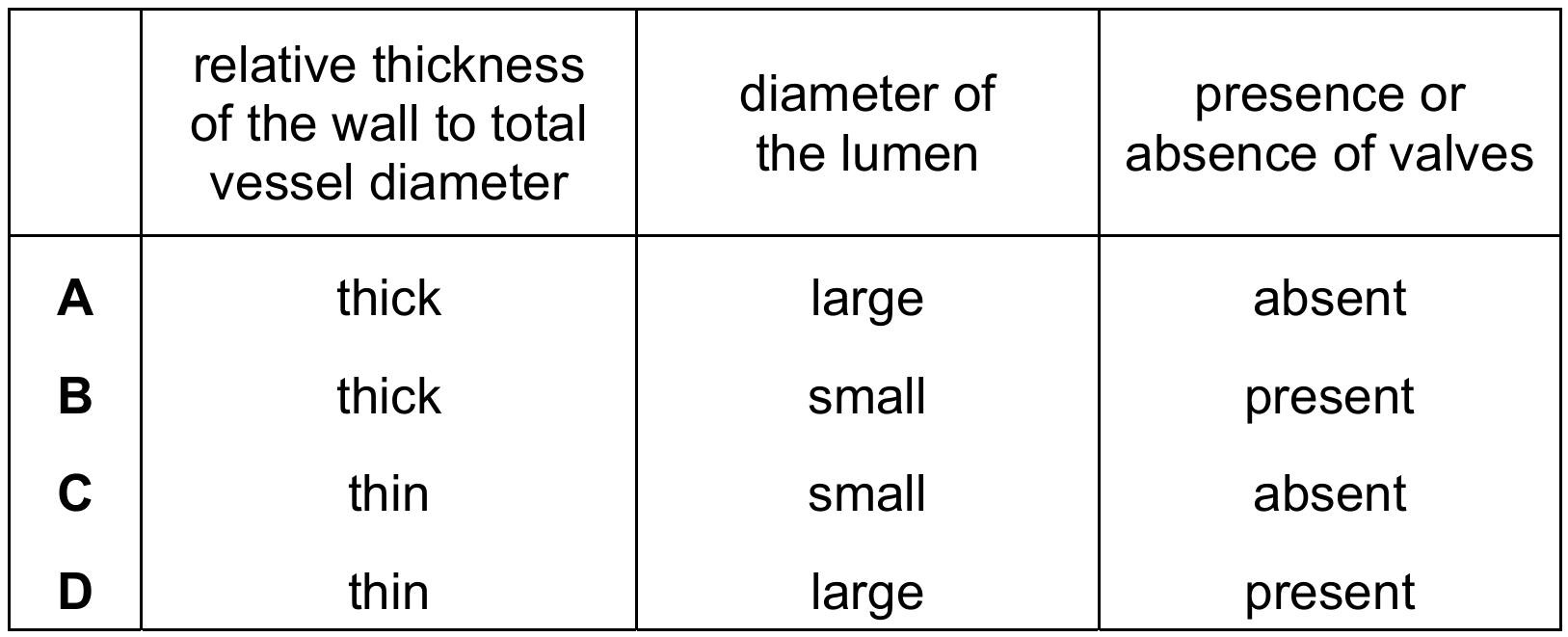
Veins are blood vessels that carry blood toward the heart under low pressure. Because the pressure is significantly lower than in arteries, veins have relatively thin walls. To facilitate blood flow with minimal resistance, they possess a large lumen (internal diameter). Additionally, because blood in veins often travels against gravity, they contain valves to prevent the backflow of blood, ensuring it moves in one direction. These three characteristics—thin walls, large lumen, and the presence of valves—are correctly identified in row D.

Answer: (D)

Question 19

Three statements about immunity are listed.

1   The transfer of antibodies from mother to baby in breast milk is an example of passive immunity.

2   Passive immunity results in long-term immunity because of the production of memory cells.

3   Active immunity is gained after vaccination with antigens.

Which statements are correct?

(A) $1$, $2$ and $3$
(B) $1$ and $2$ only
(C) $1$ and $3$ only
(D) $2$ and $3$ only
▶️ Answer/Explanation

Statement $1$ is correct because passive immunity involves receiving ready-made antibodies, such as those passed through breast milk. Statement $2$ is incorrect because passive immunity is short-term; since the body does not produce the antibodies itself, no memory cells are created. Statement $3$ is correct as active immunity occurs when the immune system is triggered by antigens (via infection or vaccination) to produce its own antibodies and memory cells. Therefore, only statements $1$ and $3$ are accurate.

Answer: (C)

Question 20

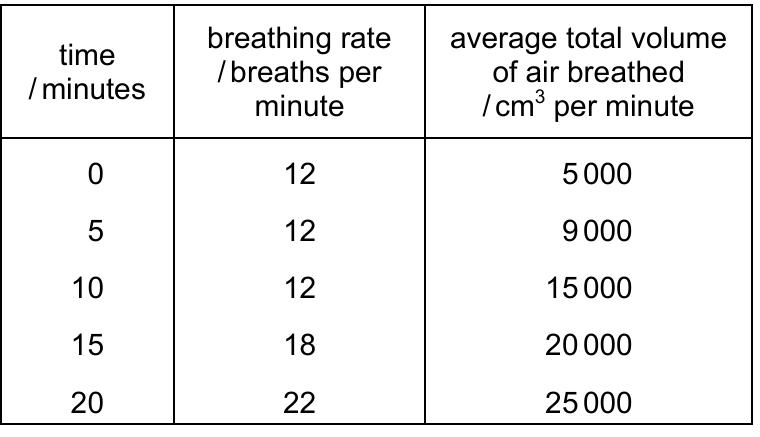
The table shows the breathing rate and the average total volume of air breathed by a student when exercising for $20$ minutes.

Which conclusion can be made from the data in the table about the effect of exercise on breathing?

(A) Between $0$ minutes and $10$ minutes, there is no change to the depth of breathing.
(B) Between $0$ minutes and $10$ minutes, the depth of breathing increases.
(C) Between $10$ minutes and $20$ minutes, there is no change to the rate of breathing.
(D) Between $15$ minutes and $20$ minutes, the depth of breathing decreases.
▶️ Answer/Explanation
To determine the “depth” of breathing (tidal volume), we divide the total volume of air per minute by the breathing rate. Between $0$ and $10$ minutes, the breathing rate remains constant at $12$ breaths/min, but the total volume of air increases from $5000$ to $15000$ $\text{cm}^3$/min. Since more air is being moved in the same number of breaths, each individual breath must be larger. This confirms that the depth of breathing is increasing during this interval. Conversely, option C is incorrect because the rate increases from $12$ to $22$, and option D is incorrect as the total volume continues to rise faster than the rate.
Answer: (B)

Question 21

What is the chemical formula of glucose?

(A) $C_{6}H_{6}O_{6}$
(B) $C_{6}HO_{6}$
(C) $C_{6}H_{12}O_{6}$
(D) $C_{12}H_{12}O_{6}$
▶️ Answer/Explanation

Glucose is a simple sugar and a vital monosaccharide used as a primary energy source in biological organisms. Its molecular structure consists of six carbon atoms, twelve hydrogen atoms, and six oxygen atoms. This ratio follows the general formula for carbohydrates, which is $C_{n}(H_{2}O)_{n}$.

In the case of glucose, where $n=6$, the formula becomes $C_{6}H_{12}O_{6}$. Option (A) lacks sufficient hydrogen, option (B) is missing most hydrogen atoms, and option (D) incorrectly doubles the carbon count. Therefore, option (C) is the only scientifically accurate representation of a glucose molecule.
Answer: (C)

Question 22

After a race, athletes experience oxygen debt.

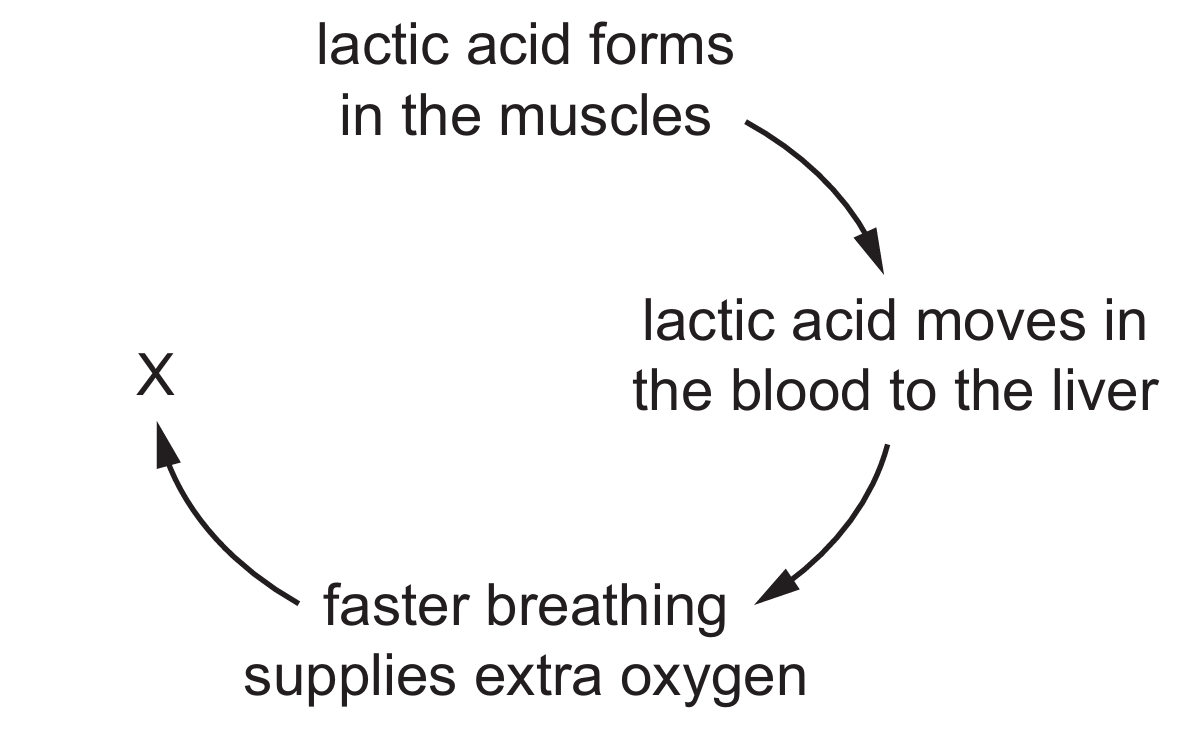
The diagram shows how the oxygen debt is removed.

What happens at $X$?

(A) aerobic respiration of glucose
(B) aerobic respiration of lactic acid
(C) anaerobic respiration of glucose
(D) anaerobic respiration of lactic acid
▶️ Answer/Explanation
During intense exercise, muscles switch to anaerobic respiration, producing lactic acid which causes an “oxygen debt.” After the race, this lactic acid is transported via the blood to the liver. To “pay back” the debt, the body continues to breathe deeply and quickly to provide a surplus of oxygen. In the liver, this extra oxygen is used to break down the lactic acid into carbon dioxide and water through aerobic respiration. Alternatively, some lactic acid may be converted back into glucose. Since the process at $X$ explicitly requires the “extra oxygen” supplied by faster breathing, it must be an aerobic process involving the accumulated lactic acid.
Answer: (B)

Question 23

Which organ produces urea?

(A) bladder
(B) kidney
(C) liver
(D) pancreas
▶️ Answer/Explanation
Urea is produced in the liver as a byproduct of the breakdown of excess amino acids, a process known as deamination. During this process, the highly toxic substance ammonia is converted into the less toxic urea via the urea cycle. Once synthesized, urea is released into the bloodstream. It is then transported to the kidneys, where it is filtered out of the blood and excreted from the body as urine. It is a common misconception that the kidneys produce urea; however, they are only responsible for its removal, not its manufacture.
Answer: (C)

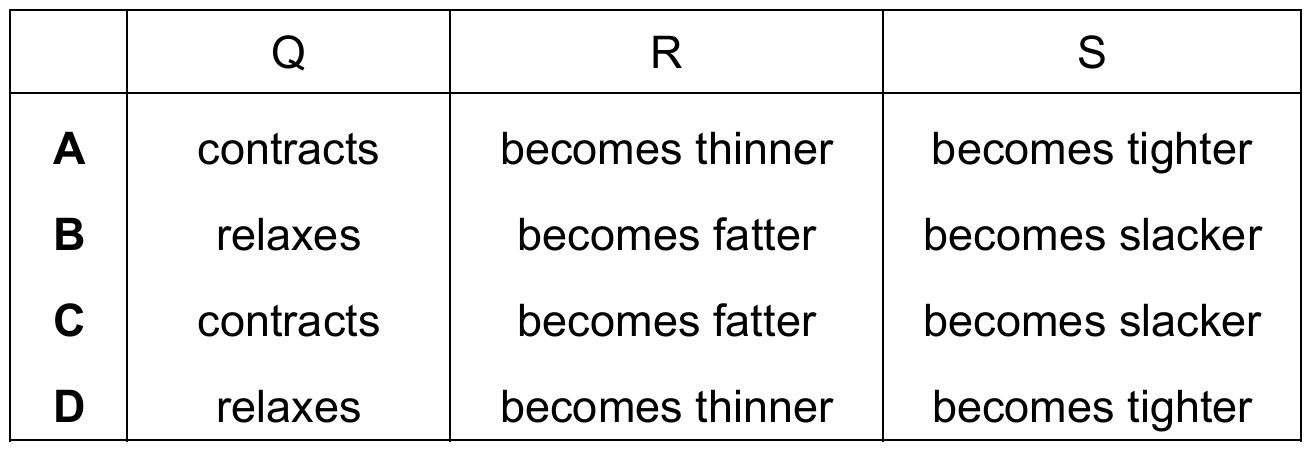
Question 24

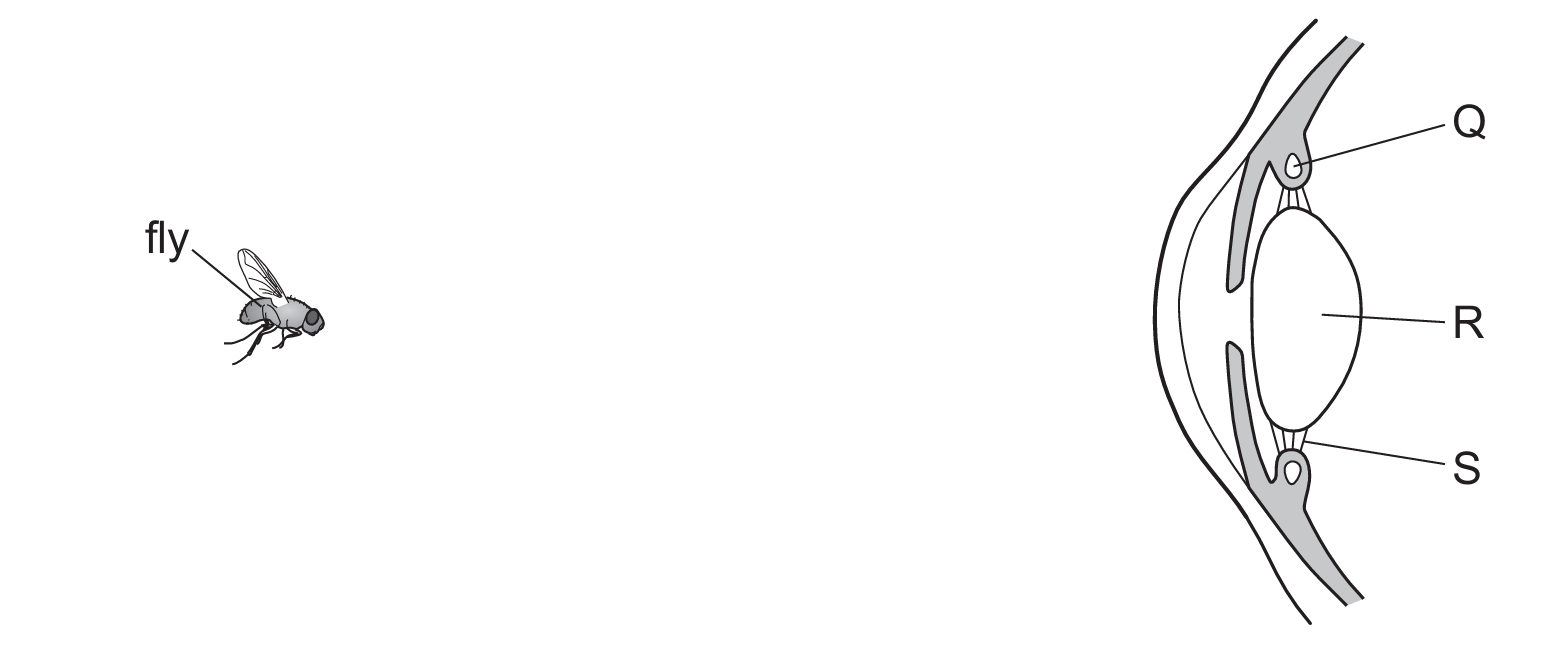
The diagram shows a vertical section through part of a human eye. A fly is coming nearer to the eye. The eye begins to focus the image of the fly on the retina.

How do the labelled parts of the diagram change?

▶️ Answer/Explanation
To focus on a nearby object (the fly), the eye undergoes accommodation. The ciliary muscles (Q) must contract, which reduces the diameter of the ring they form. This contraction causes the suspensory ligaments (S) to lose their tension and become slacker. With the outward pull removed, the elastic lens (R) naturally springs into a more convex or “fatter” shape. This increased curvature increases the refractive power of the lens, allowing the light rays to be focused correctly on the retina.
Answer: (C)

Question 25

Which organ produces glucagon?

(A) adrenal gland
(B) liver
(C) ovary
(D) pancreas
▶️ Answer/Explanation
The pancreas is a dual-function organ acting as both an exocrine and endocrine gland. Within the endocrine portion, specific clusters of cells known as the Islets of Langerhans are responsible for blood sugar regulation. The alpha cells ($\alpha$-cells) in these islets secrete glucagon when blood glucose levels are low. Glucagon then travels to the liver to trigger the breakdown of glycogen into glucose. In contrast, beta cells secrete insulin to lower blood sugar. Therefore, the pancreas is the primary site of glucagon production.
Answer: (D)

Question 26

A young seedling is growing underground.

The shoot grows towards the surface of the ground.

The root grows away from the surface of the ground.

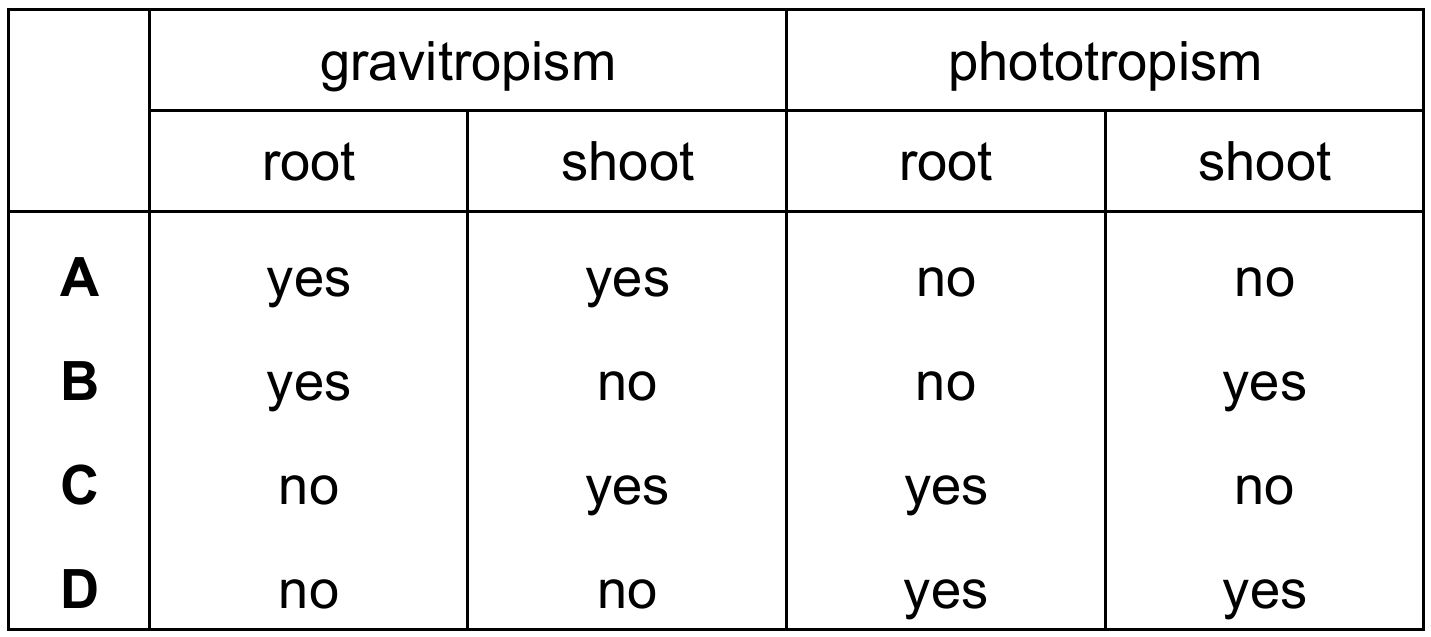
Which row describes the responses involved?

▶️ Answer/Explanation
Since the seedling is growing underground, there is no light stimulus available to trigger a response. Therefore, phototropism (response to light) is not involved for either the root or the shoot. The movement is entirely directed by gravity. The root shows positive gravitropism by growing downward, while the shoot shows negative gravitropism by growing upward toward the surface. Thus, gravitropism is active in both parts, but phototropism is not.
Answer: (A)

Question 27

Clostridium difficile is a species of bacterium that is resistant to many antibiotics.

From $2002$ to $2006$, the number of people in one country infected with Clostridium difficile increased from $1300$ to $6200$ people.

What was the percentage increase in the number of people infected with Clostridium difficile from $2002$ to $2006$ to the nearest whole number?

(A) $21\%$
(B) $27\%$
(C) $79\%$
(D) $377\%$
▶️ Answer/Explanation
To find the percentage increase, we use the formula: $\text{Percentage Increase} = \frac{\text{New Value} – \text{Original Value}}{\text{Original Value}} \times 100$.
First, calculate the actual increase in the number of people: $6200 – 1300 = 4900$.
Next, divide this increase by the original population from $2002$: $\frac{4900}{1300} \approx 3.7692$.
Multiplying by $100$ gives $376.92\%$.
When rounded to the nearest whole number, we get $377\%$. This represents a significant growth in infections over the four-year period.
Answer: (D)

Question 28

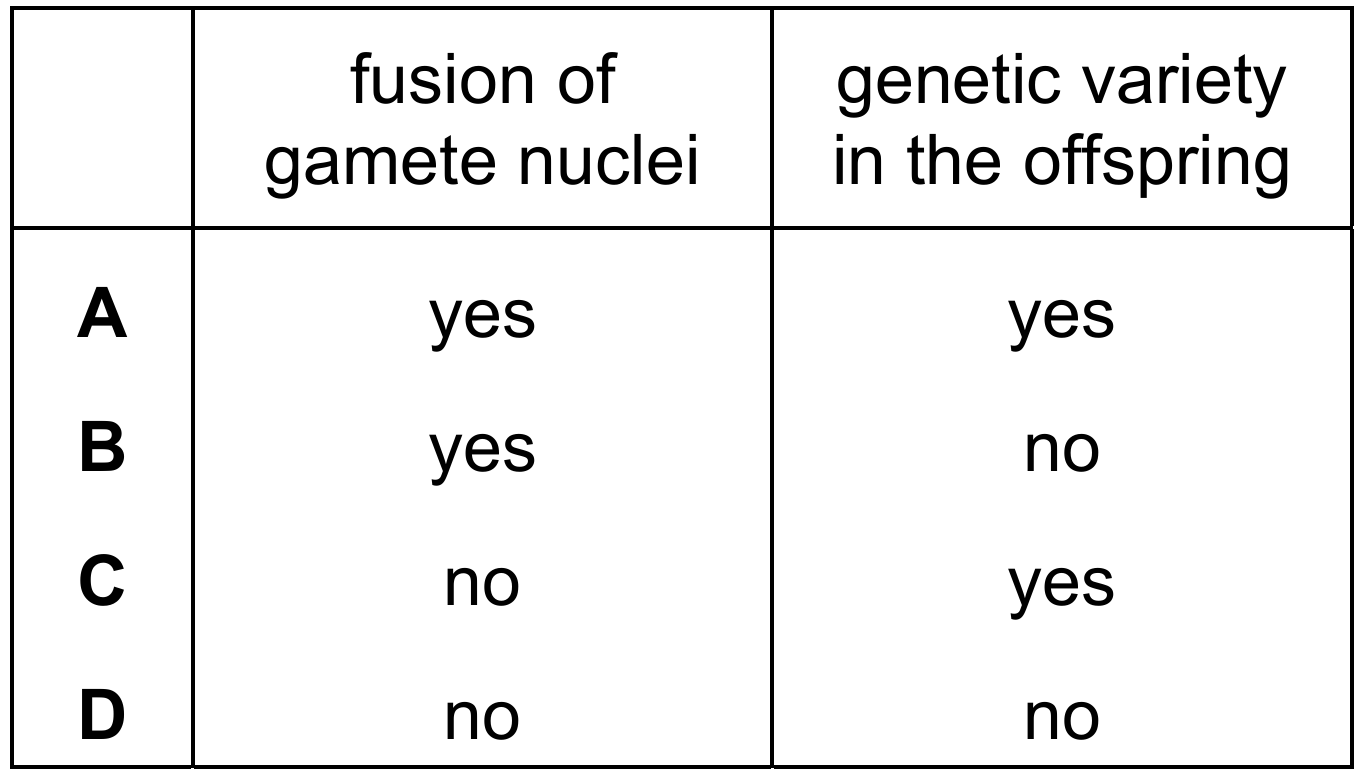
What are the characteristics of asexual reproduction?

▶️ Answer/Explanation

Asexual reproduction involves a single parent and does not require the fusion of gametes (fertilization), so the answer for the first column is no. Since there is no mixing of genetic material from two different parents, the offspring are genetically identical to the parent and to each other (clones). Therefore, there is no genetic variety in the offspring, making the answer for the second column no. This biological process typically relies on mitosis to ensure the DNA is replicated exactly. Only sexual reproduction involves the fusion of nuclei and results in genetic variation.

Answer: (D)

Question 29

Which description of cross-pollination is correct?

(A) the transfer of pollen grains from the anther of one plant to the stigma on a different plant
(B) the transfer of pollen grains from the anther to the stigma on the same plant
(C) the transfer of pollen grains from the stigma of one plant to the anther on a different plant
(D) the transfer of pollen grains from the stigma to the anther on the same plant
▶️ Answer/Explanation
Pollination is defined as the transfer of pollen from the male part of the flower (the anther) to the female part (the stigma). Cross-pollination specifically requires the pollen to travel between two separate plants of the same species, which promotes genetic diversity. Option (B) describes self-pollination, where the transfer happens within a single plant. Options (C) and (D) are biologically incorrect because pollen moves from anthers to stigmas, not the other way around. Therefore, the only accurate description of cross-pollination is the movement of pollen from the anther of one plant to the stigma of another.
Answer: (A)

Question 30

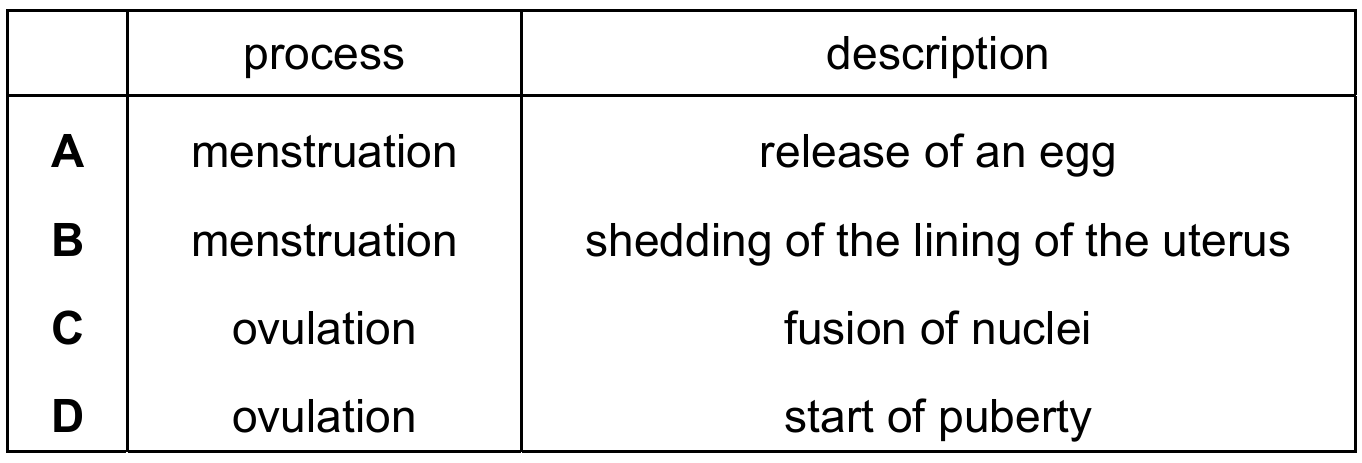
Which row correctly links the named process with its description?

▶️ Answer/Explanation

Menstruation is the phase of the menstrual cycle where the thickened uterine lining (endometrium) breaks down and is discharged from the body. Row B accurately describes this process. In contrast, the “release of an egg” defines ovulation, not menstruation. Furthermore, the “fusion of nuclei” refers to fertilization, and while ovulation occurs after puberty begins, it is a specific monthly event rather than the definition of puberty itself.

Answer: (B)

Question 31

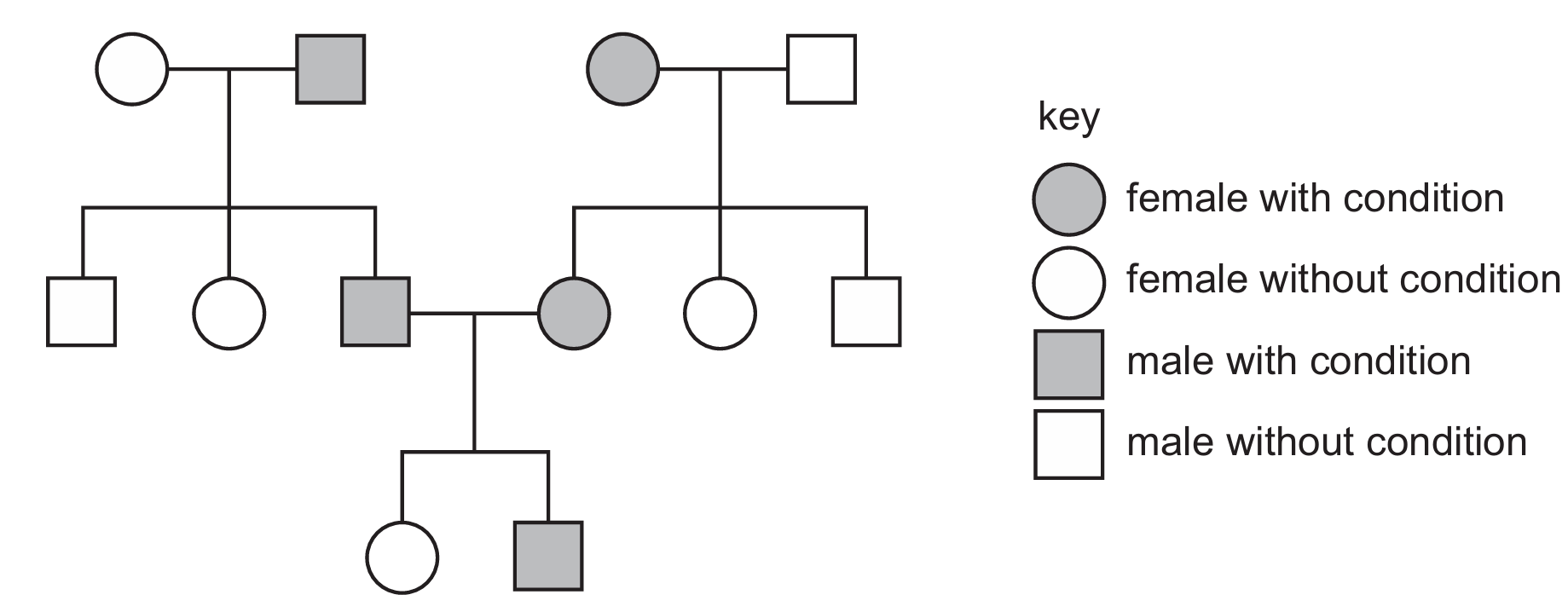
The diagram shows the inheritance of a genetic condition in one family.

What can be concluded about this genetic condition?

(A) The alleles for the condition must be codominant.
(B) It is caused by a dominant allele.
(C) It is caused by recessive alleles.
(D) The alleles for the condition must be sex-linked.
▶️ Answer/Explanation
To determine the mode of inheritance, look at the parents in the second generation who both have the condition. They produce an unaffected daughter. If the condition were recessive, two affected parents (genotype $aa$) could only produce affected offspring ($aa$). Because they produced an unaffected child, the parents must be heterozygous ($Aa$) and the condition must be dominant. The unaffected daughter inherited the recessive “normal” allele from each parent ($aa$). Additionally, it is not necessarily sex-linked because an affected father has an unaffected daughter, which is possible in autosomal dominant inheritance.
Answer: (B)

Question 32

What is a way in which new alleles are formed?

(A) artificial selection
(B) mutation
(C) natural selection
(D) sexual reproduction
▶️ Answer/Explanation

New alleles are created exclusively through mutation, which is a permanent change in the $DNA$ sequence of a gene. While sexual reproduction (D) increases genetic variation by shuffling existing alleles through recombination and independent assortment, it does not create “new” genetic information. Similarly, natural selection (C) and artificial selection (A) only act upon the variations that are already present in a population, favoring certain traits over others. Therefore, mutation is the primary source of all new genetic material and the ultimate driver of evolutionary novelty.

Answer: (B)

Question 33

How does artificial selection differ from natural selection?

(A) Artificial selection changes the characteristics of living things.
(B) Artificial selection is based on genetic variation.
(C) Artificial selection does not involve competition for resources.
(D) Artificial selection occurs over many generations.
▶️ Answer/Explanation

Both natural and artificial selection rely on genetic variation and change the characteristics of populations over generations. However, natural selection is driven by environmental pressures where individuals must compete for limited resources to survive and reproduce. In contrast, artificial selection (selective breeding) is controlled by humans who choose specific individuals for breeding based on desired traits. Because humans provide the necessary food and shelter for these chosen organisms, the survival-of-the-fittest competition seen in the wild is largely removed. Therefore, the absence of resource competition is a key distinguishing factor.

Answer: (C)

Question 34

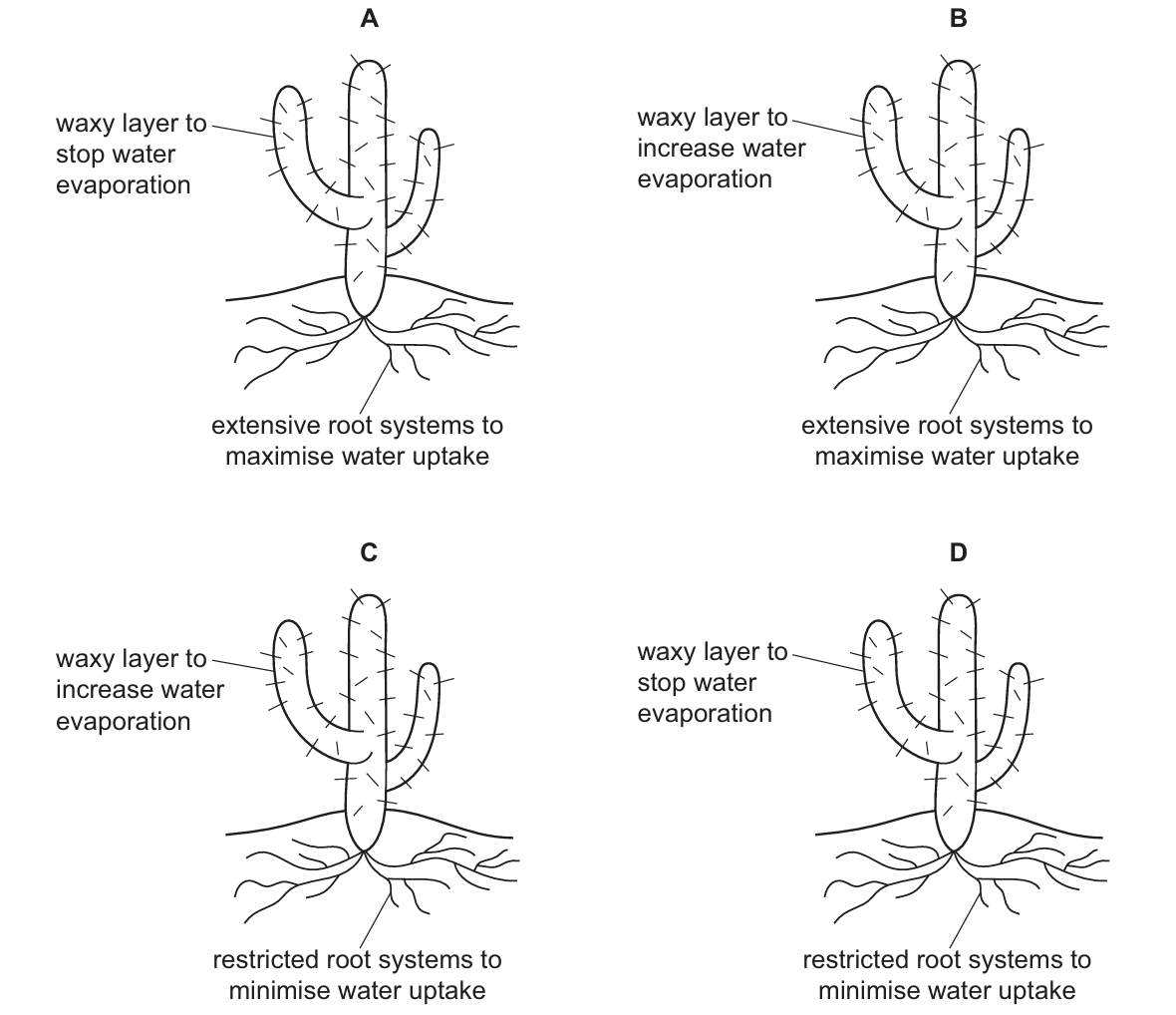
Which diagram of a xerophyte is labelled correctly?

▶️ Answer/Explanation
Xerophytes are plants adapted to survive in arid environments where water is scarce. To conserve water, they possess a thick waxy cuticle on their stems or leaves, which acts as a waterproof barrier to stop (minimize) water evaporation. Additionally, they often develop extensive root systems that spread wide or deep into the soil to maximise water uptake from infrequent rainfall or deep underground tables. Options B and C are incorrect because increasing evaporation would be detrimental, and options C and D are incorrect because restricted roots would limit the plant’s ability to find water in a dry climate.
Answer: (A)

Question 35

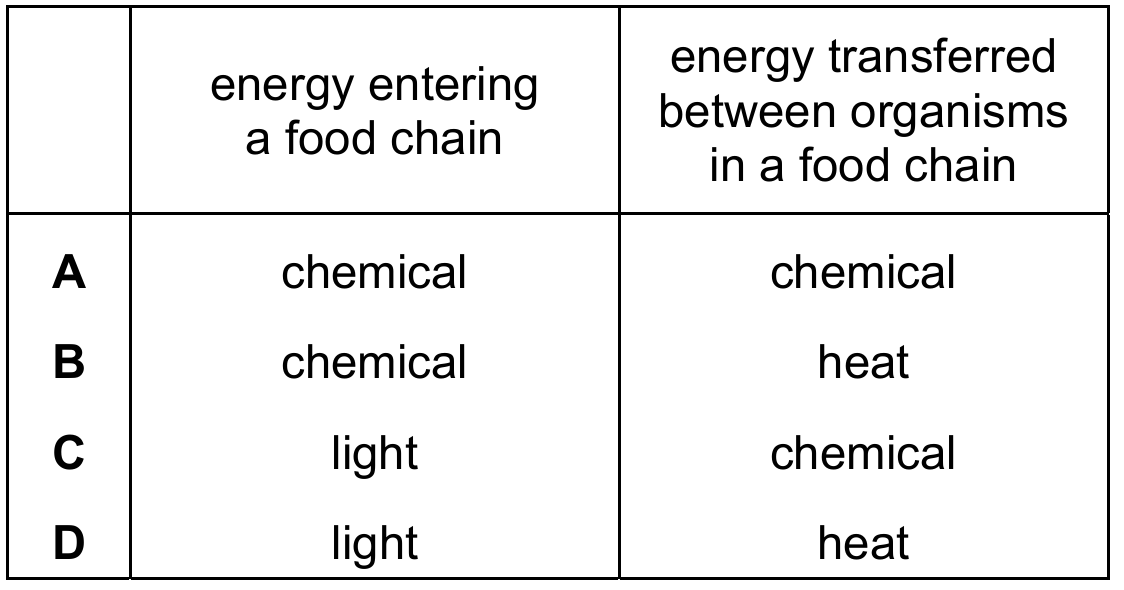
Which row describes the energy flow into and through a food chain that starts with a plant?

▶️ Answer/Explanation

Energy enters most food chains as light energy from the Sun, which plants (producers) capture during photosynthesis to create glucose. This light energy is converted and stored as chemical energy within the organic molecules of the plant. When a consumer eats the plant, or another animal, this stored chemical energy is what gets transferred along the chain. While energy is lost as heat to the environment at each level, the actual transfer of useful energy between organisms occurs in chemical form.

Answer: (C)

Question 36

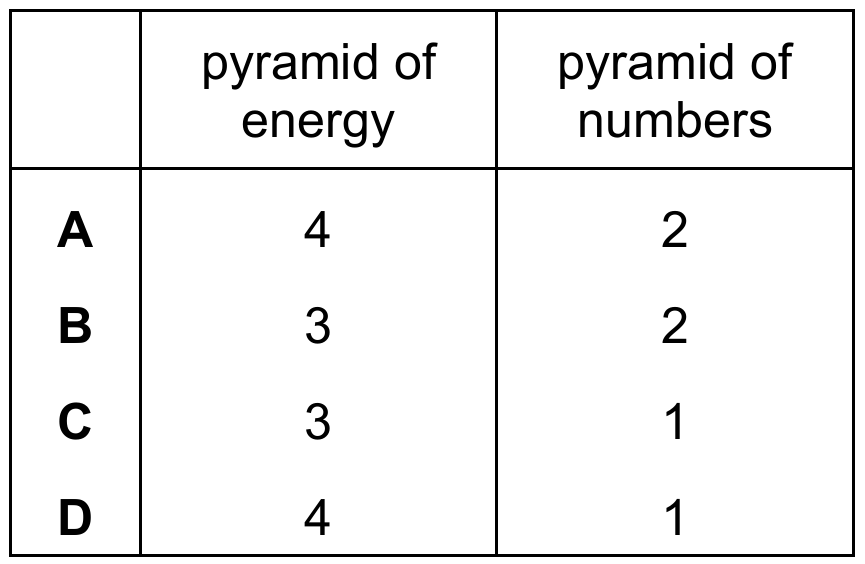
In a food chain, zebras are large mammals that eat grass. The zebras have many insects living on them which suck their blood. Birds eat the insects.

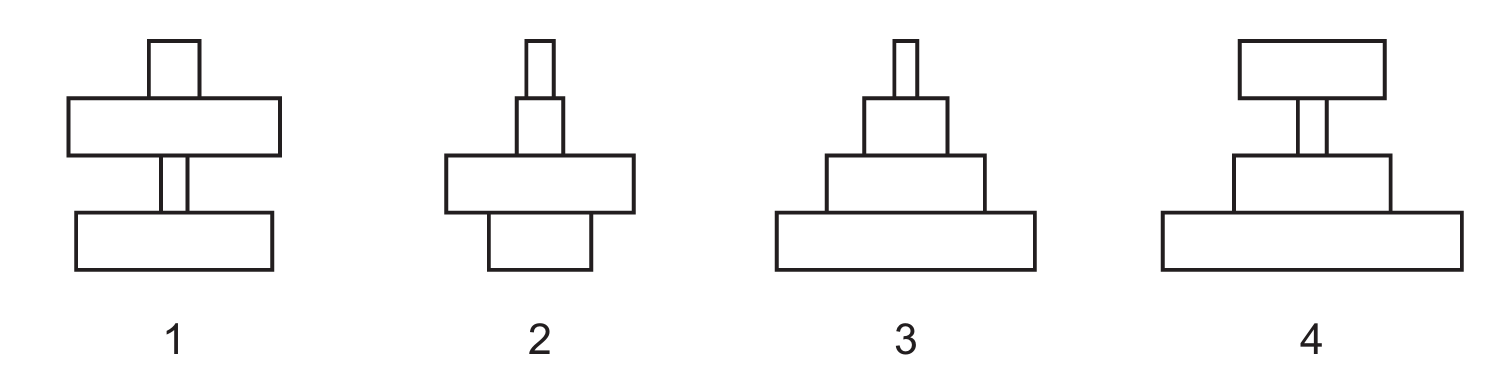
The diagrams show some biological pyramids.

Which row identifies the types of pyramids for this food chain?

▶️ Answer/Explanation
A pyramid of energy always takes a true upright shape (Diagram $3$) because energy is lost at each trophic level (the $10\%$ rule), so it can never be inverted or “top-heavy.” For the pyramid of numbers, the food chain is: Grass $\rightarrow$ Zebra $\rightarrow$ Insects $\rightarrow$ Birds. While there is plenty of grass, there are fewer zebras. However, many insects live on a single zebra, causing the third level to widen significantly. Finally, there are fewer birds than insects. This creates a partially inverted shape where a narrow level (zebras) supports a wider level (insects), matching Diagram $1$.
Answer: (C)

Question 37

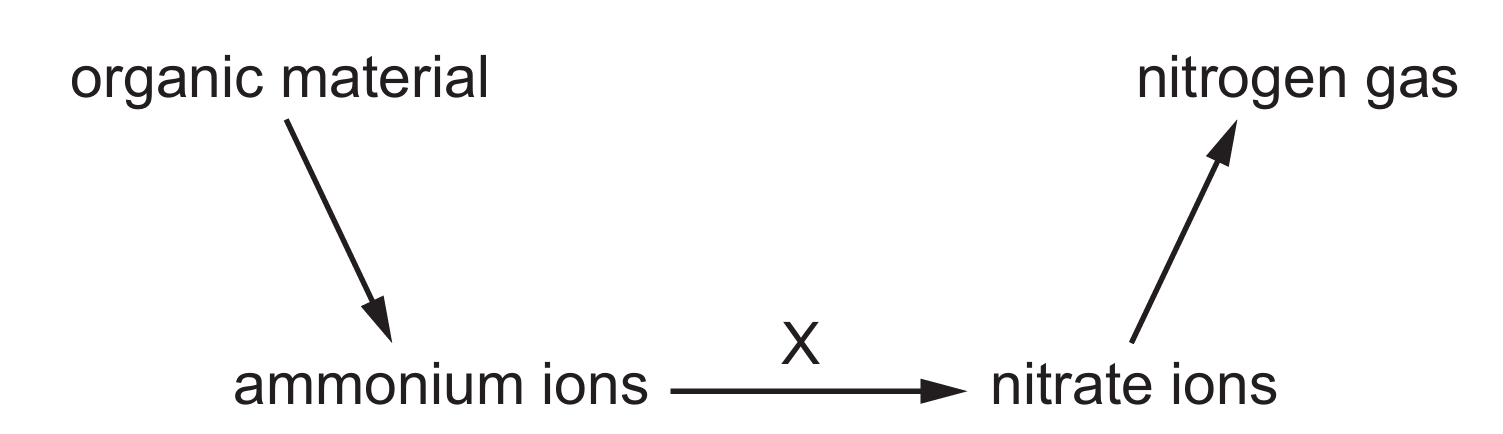
The diagram shows part of the nitrogen cycle.

What is the process labelled $X$ in the diagram?

(A) decomposition
(B) denitrification
(C) nitrification
(D) nitrogen fixation
▶️ Answer/Explanation
The process labelled $X$ represents nitrification. This biological process involves the oxidation of ammonium ions ($NH_4^+$) into nitrites ($NO_2^-$) and subsequently into nitrate ions ($NO_3^-$) by specialized nitrifying bacteria in the soil. Decomposition, or ammonification, is the preceding step where organic material is broken down into ammonium. Conversely, denitrification is the process shown on the right of the diagram, where nitrates are converted back into nitrogen gas ($N_2$). Nitrogen fixation is the process of converting atmospheric $N_2$ into ammonia, which is not what $X$ depicts here.
Answer: (C)

Question 38

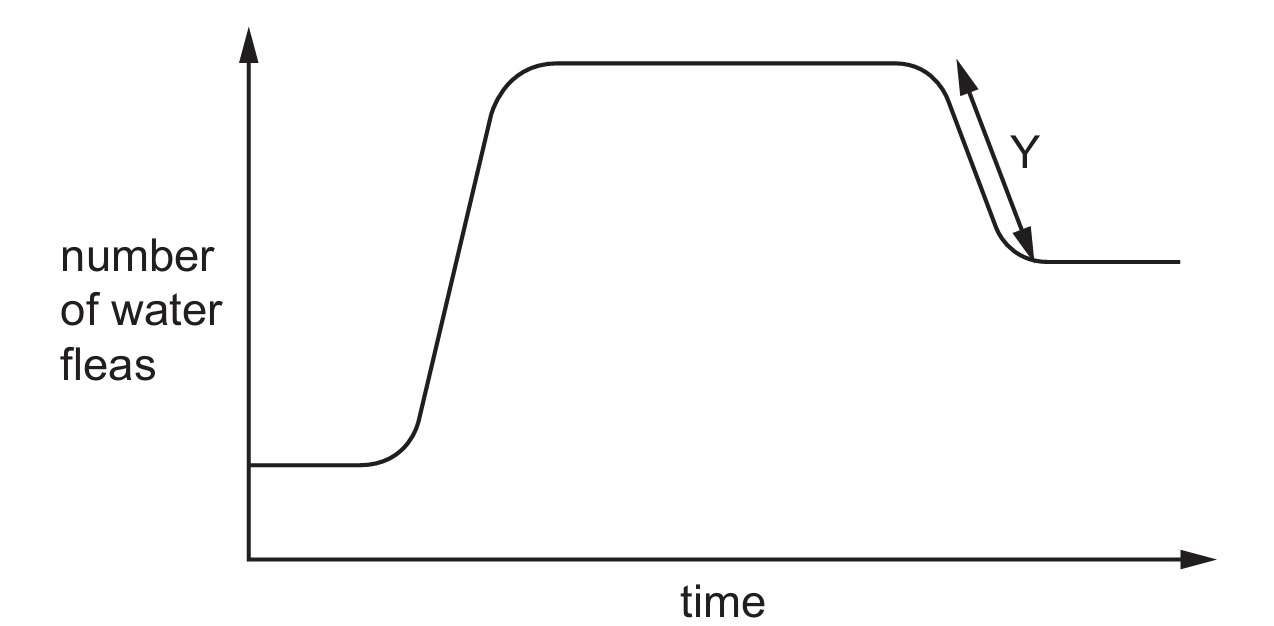
The graph shows the number of water fleas in a newly-created pond.

Which event could be responsible for the shape of the graph at $Y$?

(A) the addition of extra oxygenating plants to the pond
(B) an increase in the birth rate of the water fleas
(C) an increase in the food supply for the water fleas
(D) the addition of predators which feed on water fleas
▶️ Answer/Explanation
The graph represents a population growth curve. At point $Y$, there is a noticeable decrease in the number of water fleas before the population stabilizes at a lower level. Options (A), (B), and (C) are all factors that would typically cause a population to increase or remain high by improving survival conditions or reproductive output. However, the introduction of a predator, as suggested in option (D), increases the death rate and reduces the overall population size. This shift leads to a new, lower carrying capacity for the water fleas within the pond ecosystem.
Answer: (D)

Question 39

When managing fish stocks as a sustainable resource, what is a reason for harvesting only the larger fish of a particular species?

(A) Larger fish are easier to harvest.
(B) Larger fish sell at a higher price.
(C) Smaller fish are eaten by predators.
(D) Smaller fish are too young to breed.
▶️ Answer/Explanation
Sustainable resource management aims to meet current needs without compromising the ability of future generations to meet theirs. In the context of fisheries, maintaining a stable population requires that fish have the opportunity to reproduce before they are caught. Smaller, immature fish have not yet reached reproductive age; if they are harvested prematurely, the “breeding stock” diminishes, leading to a population collapse. By targeting only larger, adult fish, managers ensure that the younger generation survives to reach sexual maturity and replenish the population. While options (A) and (B) might be economically true, they do not relate to the biological “sustainability” of the resource. Option (C) is a natural process and not a management reason for selective harvesting.
Answer: (D)

Question 40

Which features make bacteria useful in biotechnology?

$1$   They are unaffected by antibiotics.
$2$   They do not contain plasmids.
$3$   They make complex molecules.
$4$   They reproduce rapidly.
A   $1$ and $2$ B   $1$ and $4$ C   $2$ and $3$ D   $3$ and $4$
▶️ Answer/Explanation

Bacteria are ideal for biotechnology because they can be engineered to synthesize complex molecules, such as human insulin, which would be difficult to produce chemically. Their ability to reproduce rapidly through binary fission allows for the quick mass production of these desired substances in large fermenters.

Conversely, statements $1$ and $2$ are incorrect: bacteria are generally susceptible to antibiotics (unless specifically engineered for resistance markers), and their plasmids are actually essential tools in biotechnology for transferring foreign DNA. Therefore, only points $3$ and $4$ are correct.
Answer: (D)

Scroll to Top