Home / 0610_s25_qp_23

Question 1

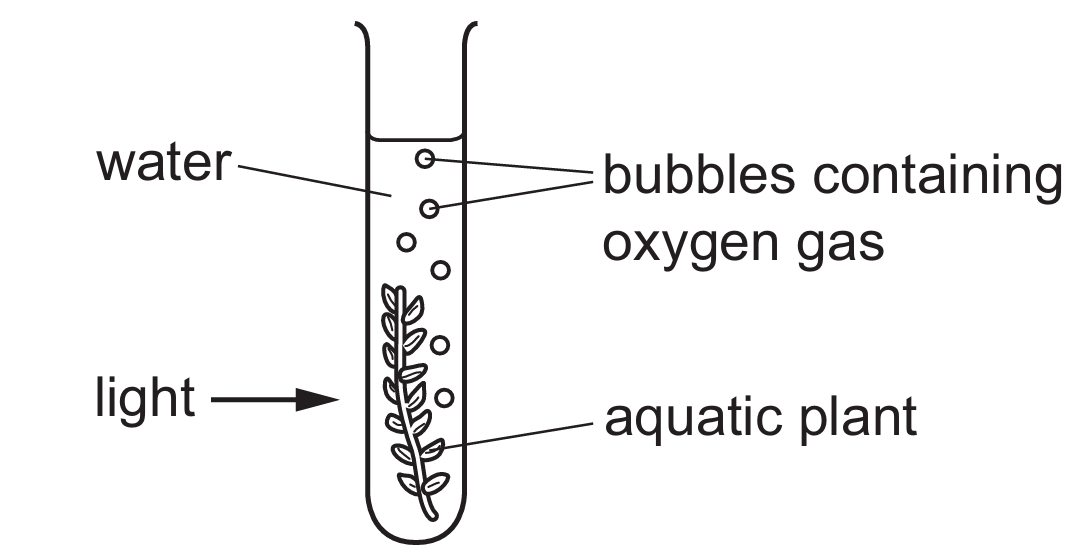
The diagram shows an aquatic plant in light.

What is a characteristic of all living things that is demonstrated in the diagram?

(A) breathing
(B) nutrition
(C) photosynthesis
(D) respiration
▶️ Answer/Explanation

The diagram illustrates an aquatic plant undergoing photosynthesis, as evidenced by the presence of light and the production of oxygen bubbles. While photosynthesis is the specific process shown, the question asks for a characteristic of all living things. Photosynthesis is a form of autotrophic nutrition, where the organism takes in energy and raw materials to produce food.

Options (A) and (C) are incorrect because not all living things breathe or photosynthesize. While all living things perform respiration (D), the diagram specifically highlights the uptake of energy (light) to produce byproduct gas, which is the hallmark of the plant’s nutritional process. Therefore, nutrition is the universal characteristic being demonstrated through the example of photosynthesis.
Answer: (B)

Question 2

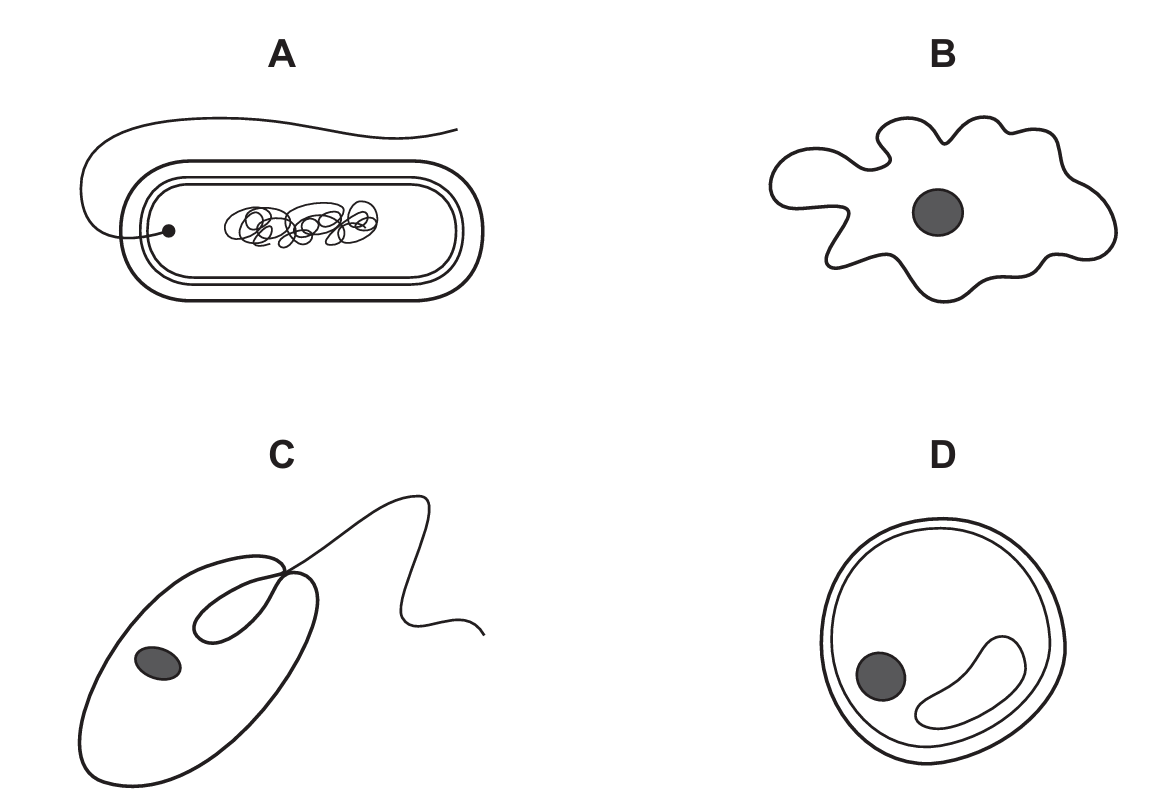
The diagrams show four organisms.

Which organism is a prokaryote?

▶️ Answer/Explanation

Organism A represents a bacterium, which is a classic example of a prokaryote. Unlike eukaryotes, prokaryotes lack a membrane-bound nucleus; instead, their genetic material consists of a circular DNA loop found in a region called the nucleoid, visible as the tangled mass in the center.

In contrast, organisms B, C, and D all contain a distinct, shaded circular structure representing a nucleus. These organisms (likely an amoeba, a flagellated protist, and a yeast or plant cell) are eukaryotes because they sequester their DNA within that nuclear envelope. Organism A also features a flagellum and a cell wall, typical of many bacterial species.
Answer: (A)

Question 3

What happens when plant cells are placed in a sugar solution that has a lower water potential than the cytoplasm of the cells?

(A) The cells gain water and become flaccid.
(B) The cells gain water and become turgid.
(C) The cells lose water and become flaccid.
(D) The cells lose water and become turgid.
▶️ Answer/Explanation
When a plant cell is placed in a solution with a lower water potential (a hypertonic solution), water moves out of the cell down the water potential gradient via osmosis. As the central vacuole loses water, the volume of the protoplast decreases, causing the cell membrane to pull away from the cell wall. This loss of internal pressure (turgor pressure) causes the cell to become soft or limp, a state known as being flaccid. If the process continues, the cell may eventually undergo plasmolysis.
Answer: (C)

Question 4

In a DNA molecule, bonds between pairs of bases hold two strands together. High temperatures can break these bonds to form two single strands of DNA.

The base pair C and G is held together more strongly than the base pair A and T.

Two DNA molecules containing the same number of bases were studied.

  • In DNA molecule $1$, $20\%$ of bases are T.
  • In DNA molecule $2$, $20\%$ of bases are C.

Which DNA molecule would require the lowest temperature to break into single strands?

(A) DNA molecule $1$, because there are more A bases present.
(B) DNA molecule $1$, because there are more G bases present.
(C) DNA molecule $2$, because there are more A bases present.
(D) DNA molecule $2$, because there are more G bases present.
▶️ Answer/Explanation
To find the molecule that breaks at the lowest temperature, we need the one with the fewest G-C pairs, as G-C pairs have three hydrogen bonds while A-T pairs only have two. In DNA molecule $1$, if T is $20\%$, then A must also be $20\%$ (total $40\%$ A-T), leaving $60\%$ for G-C ($30\%$ each). In DNA molecule $2$, if C is $20\%$, then G must also be $20\%$ (total $40\%$ G-C), leaving $60\%$ for A-T ($30\%$ each). Since molecule $2$ has a higher percentage of A-T pairs ($60\%$ vs $40\%$) and a lower percentage of G-C pairs, it is held together more weakly. Furthermore, if G-C is only $40\%$ in molecule $2$, then A must be $30\%$, which is more than the $20\%$ A bases in molecule $1$.
Answer: (C)

Question 5

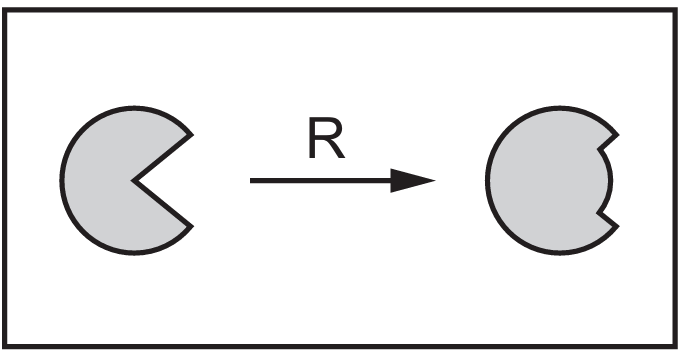
The diagram shows a process involving an enzyme in the human stomach.

The diagram shows another process, $R$, that affects this enzyme.

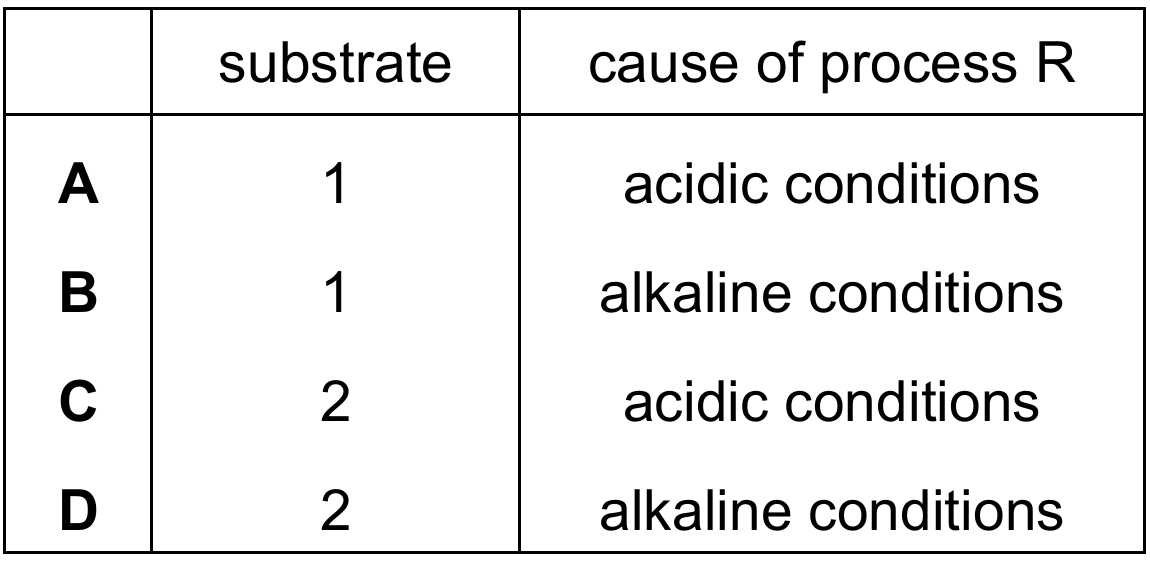
Which row identifies the substrate and the cause of process $R$?

▶️ Answer/Explanation
In the first diagram, the molecule labeled $1$ is the substrate because it binds to the enzyme’s active site and is broken down into products labeled $2$. Since the enzyme is located in the human stomach, it is likely pepsin, which functions optimally in acidic conditions ($pH$ $2$). Process $R$ shows the active site changing shape, a process known as denaturation. This happens when the enzyme is exposed to unfavorable conditions, such as alkaline conditions, which would disrupt the enzyme’s structure and render it inactive.
Answer: (B)

Question 6

What is the balanced chemical equation for photosynthesis?

(A)   $3CO_{2} + 3H_{2}O \rightarrow C_{6}H_{12}O_{6} + 3O_{2}$
(B)   $6CO_{2} + 6O_{2} \rightarrow C_{6}H_{12}O_{6} + 6H_{2}O$
(C)   $6CO_{2} + 6H_{2}O \rightarrow C_{6}H_{12}O_{6} + 6O_{2}$
(D)   $6CO_{2} + 6H_{2}O \rightarrow 6C_{6}H_{12}O_{6} + 6O_{2}$
▶️ Answer/Explanation
Photosynthesis is the process by which plants convert carbon dioxide and water into glucose and oxygen using light energy. To balance the equation, we must ensure the number of atoms for each element is equal on both sides. Glucose ($C_{6}H_{12}O_{6}$) contains 6 carbon atoms, requiring $6CO_{2}$ as a reactant. It also contains 12 hydrogen atoms, necessitating $6H_{2}O$. Summing the oxygen atoms on the reactant side gives 18, which is balanced by the 6 oxygens in glucose and the 12 oxygens in $6O_{2}$. Thus, option (C) correctly represents the balanced stoichiometry.
Answer: (C)

Question 7

A potato was removed from a potato plant. A $5\text{ g}$ cube of potato was cut and put into a beaker of distilled water.

What is the most likely mass of the cube of potato after two hours?

(A) $2\text{ g}$
(B) $4\text{ g}$
(C) $5\text{ g}$
(D) $7\text{ g}$
▶️ Answer/Explanation

This question tests the concept of osmosis, which is the movement of water molecules from a region of higher water potential to a region of lower water potential through a partially permeable membrane. Distilled water has the highest possible water potential (it is $100\%$ water). Since the potato cells contain solutes like sugars and salts, they have a lower water potential than the surrounding distilled water.

Consequently, water will move into the potato cells by osmosis. This influx of water causes the cells to become turgid and increases the overall mass of the potato cube. Since the starting mass was $5\text{ g}$, the mass after two hours must be greater than $5\text{ g}$. Looking at the options, only $7\text{ g}$ represents an increase in mass.
Answer: (D)

Question 8

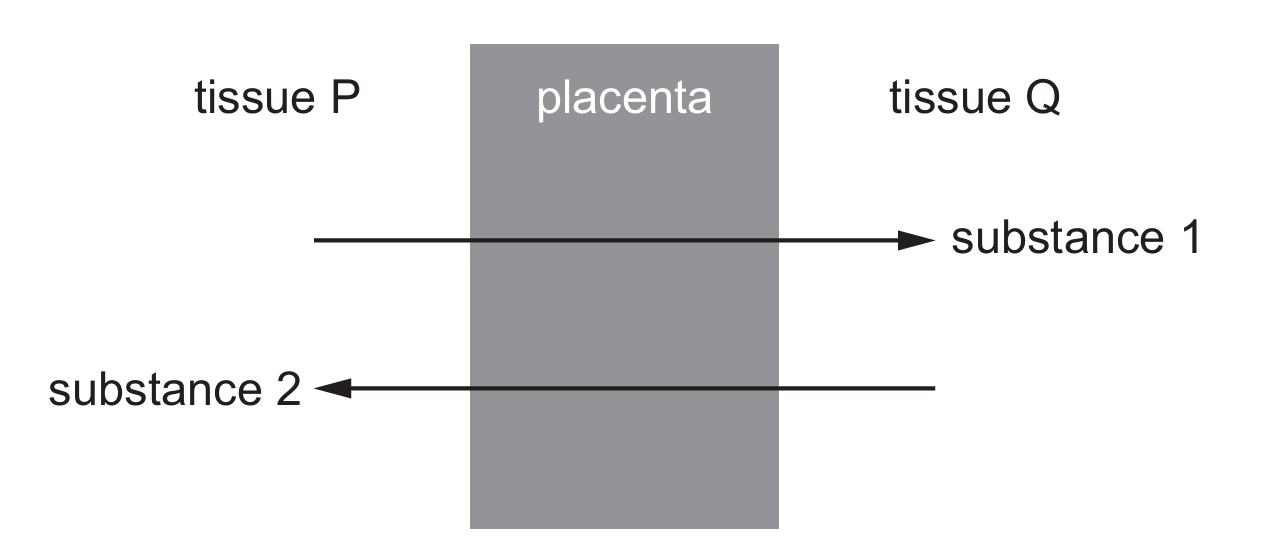
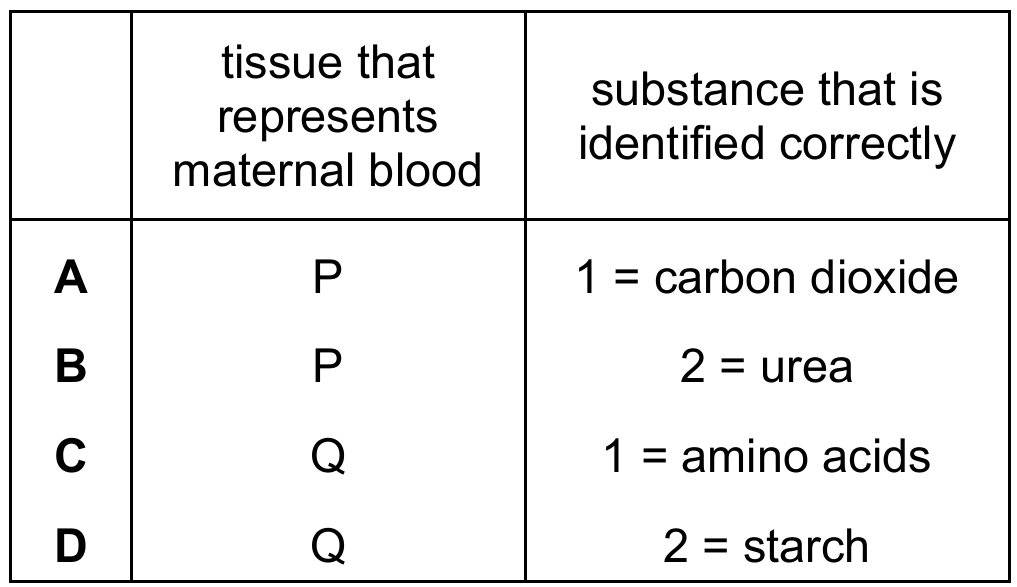
The diagram shows the direction of net movement of two substances across a human placenta.

Which tissue represents maternal blood and which substance is identified correctly?

▶️ Answer/Explanation
In the placenta, nutrients and oxygen move from the mother to the fetus, while waste products move from the fetus to the mother. Substance 1 moves from $P$ to $Q$, and Substance 2 moves from $Q$ to $P$. Since waste products like urea and carbon dioxide are produced by the fetus and must be excreted via the maternal blood, $P$ must represent the maternal side receiving these wastes. Therefore, Substance 2 (moving from $Q$ to $P$) is a fetal waste product like urea. Conversely, $Q$ represents the fetal blood. Starch is never exchanged as it is too large; only glucose is transferred. This confirms that $P$ is the maternal blood and Substance 2 is urea.
Answer: (B)

Question 9

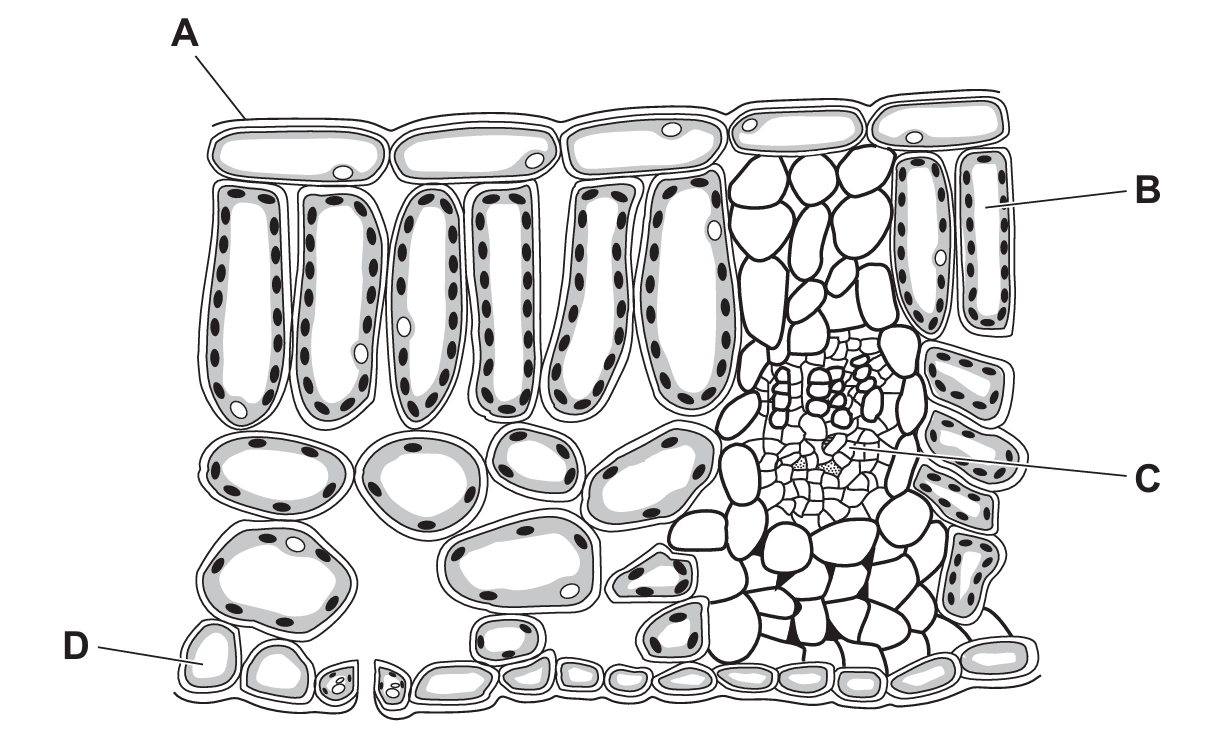
The diagram shows part of a cross-section of a leaf.

Which structure is a palisade mesophyll cell?

▶️ Answer/Explanation
The palisade mesophyll layer is located just below the upper epidermis (A) and is characterized by tall, cylindrical, closely packed cells. Structure B represents a palisade cell, which is specialized for photosynthesis as it contains a high density of chloroplasts and is positioned to receive maximum sunlight. In contrast, C points to the vascular bundle (xylem/phloem), and D indicates a guard cell surrounding a stoma on the lower epidermis. Because B is the elongated cell layer optimized for light absorption, it is the correct identification.
Answer: (B)

Question 10

A person has swollen, bleeding gums and slow wound healing.

This could be caused by a lack of which nutrient in a diet?

     (A) calcium
     (B) fibre
     (C) iron
     (D) vitamin C

▶️ Answer/Explanation

The symptoms described—swollen, bleeding gums and slow wound healing—are classic clinical signs of scurvy, a disease caused by a deficiency of vitamin C (ascorbic acid). Vitamin C is essential for the synthesis of collagen, a structural protein that acts like “glue” for connective tissues, skin, and blood vessels. Without adequate collagen production, the body’s tissues begin to break down, leading to fragile capillaries and an inability to repair skin damage effectively. While iron deficiency causes anemia and calcium deficiency affects bone density, only vitamin C deficiency explains this specific combination of oral and healing issues.

Answer: (D) vitamin C

Question 11

Digested food molecules move into the cells of the body where they are used and become part of the cells.

What is this a definition of?

(A) absorption
(B) assimilation
(C) digestion
(D) ingestion
▶️ Answer/Explanation

The process described is assimilation. While absorption involves the movement of nutrients from the digestive system into the bloodstream, assimilation refers specifically to the movement of those nutrients into the body’s cells to be utilized for energy or growth. In this stage, simple molecules like glucose or amino acids are incorporated into the actual structure of the cell. Digestion is the breakdown of food, and ingestion is simply taking food in. Therefore, the integration into cellular structure defines assimilation.

Answer: (B)

Question 12

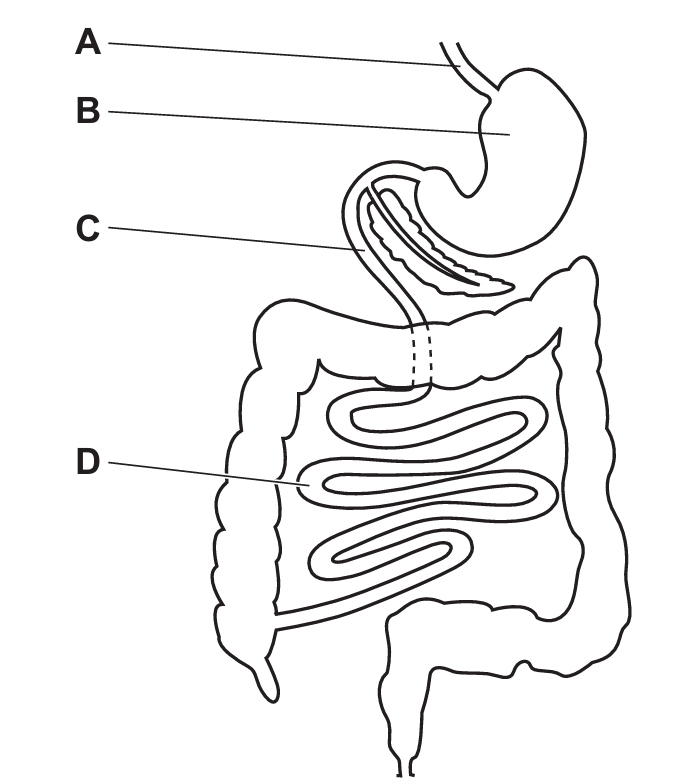
The diagram shows part of the human digestive system.

In which part does protein digestion begin?

▶️ Answer/Explanation
Protein digestion begins in the stomach, which is labeled as B in the diagram. The gastric glands in the stomach lining secrete gastric juice containing hydrochloric acid and the inactive enzyme pepsinogen. The acidic environment (low pH) converts pepsinogen into its active form, pepsin, which starts breaking down proteins into smaller polypeptides. While mechanical digestion happens in the mouth and chemical digestion of carbohydrates begins there via amylase, protein molecules remain intact until they reach the stomach. Subsequent digestion and absorption then continue in the small intestine.
Answer: (B)

Question 13

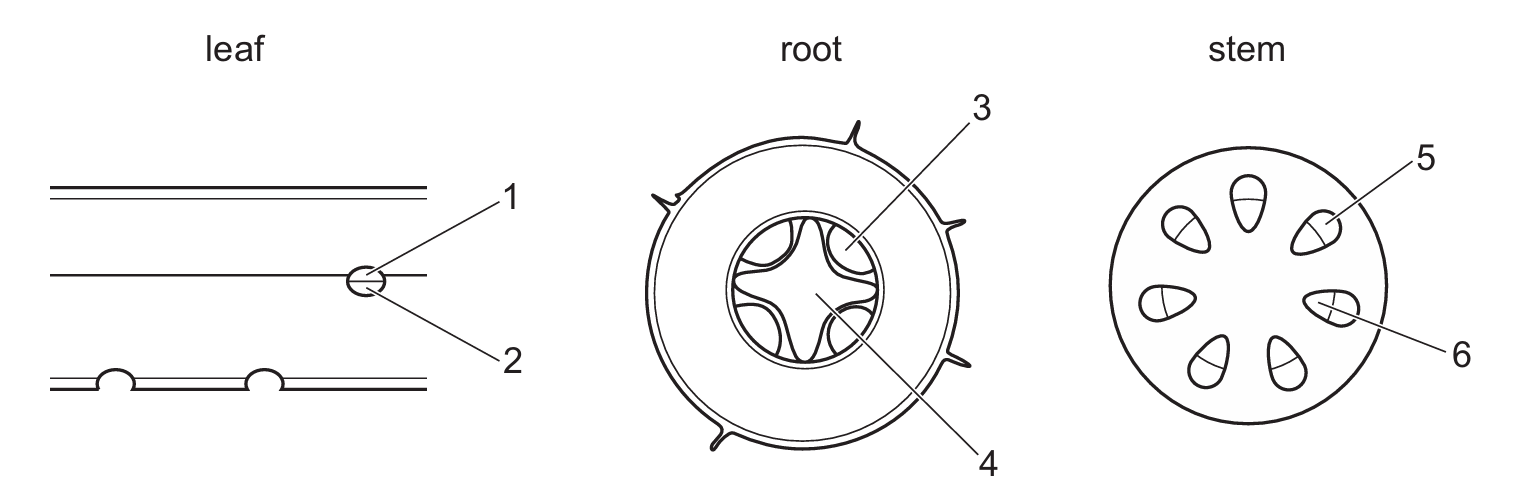
The diagrams show cross-sections of a leaf, a root and a stem.

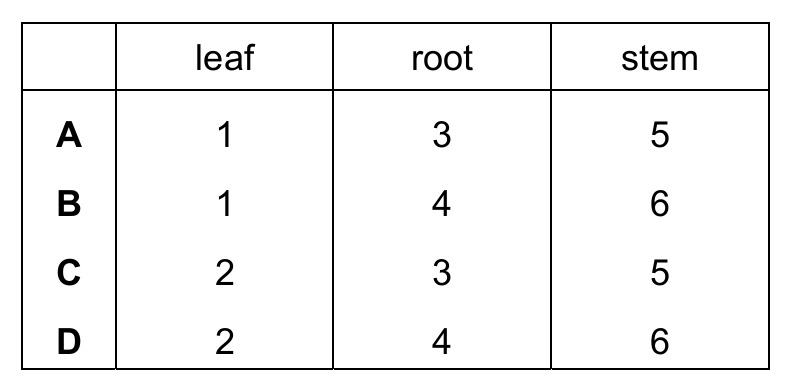
In which row do the numbers represent the xylem in the leaf, the root and the stem?

▶️ Answer/Explanation
To identify the xylem, we look for its characteristic central or internal positioning in vascular bundles. In the leaf, xylem ($1$) is located on the upper side of the vascular bundle to facilitate water transport to the mesophyll. In the root, the xylem ($4$) forms a central X-shaped or star-shaped core to provide structural support. In the stem, the vascular bundles are arranged in a ring where the xylem ($6$) is situated towards the center (inner side) of the stem, while phloem faces the outside. Matching these positions leads to row B.
Answer: (B)

Question 14

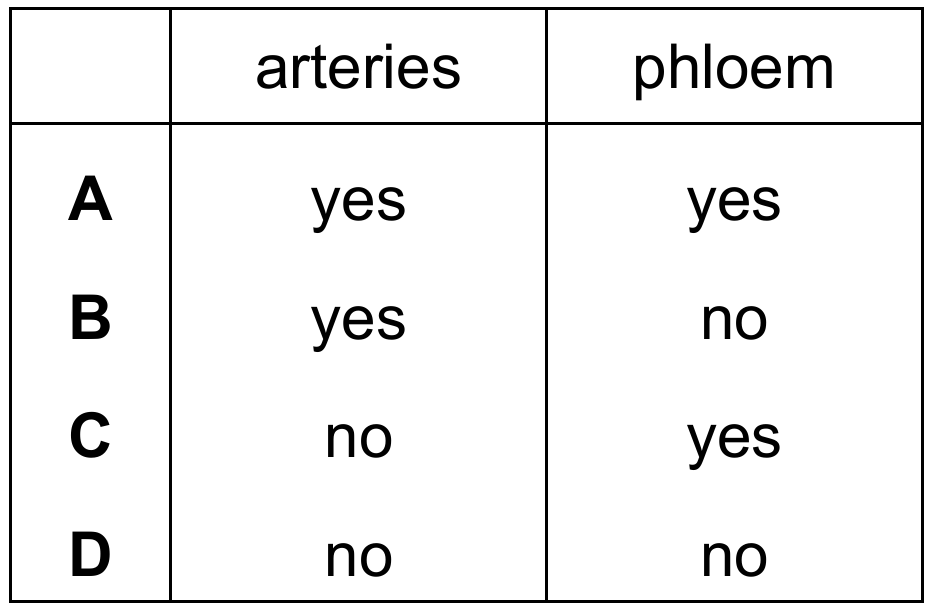
Which structures in humans and in plants normally carry amino acids?

▶️ Answer/Explanation
In humans, amino acids are absorbed into the bloodstream from the small intestine and are transported in the plasma to various cells via arteries. In plants, amino acids (along with sucrose) are transported through the phloem from sources, such as leaves or storage organs, to sinks where they are needed for growth. Since both structures are responsible for the translocation of these nutrients in their respective organisms, the correct answer must indicate “yes” for both columns.
Answer: (A)

Question 15

Through which pathway does blood leave the heart?

(A) through arteries from the atria
(B) through arteries from the ventricles
(C) through veins from the atria
(D) through veins from the ventricles
▶️ Answer/Explanation

To answer this, we must look at the direction of blood flow and the type of vessels involved. Arteries are defined as blood vessels that carry blood away from the heart, while veins bring blood back. In the cardiac cycle, the atria act as receiving chambers that collect blood, whereas the ventricles are the powerful pumping chambers. When the heart contracts, the right ventricle pumps deoxygenated blood to the lungs via the pulmonary artery, and the left ventricle pumps oxygenated blood to the rest of the body via the aorta. Therefore, blood leaves the heart through arteries starting from the ventricles.

Answer: (B)

Question 16

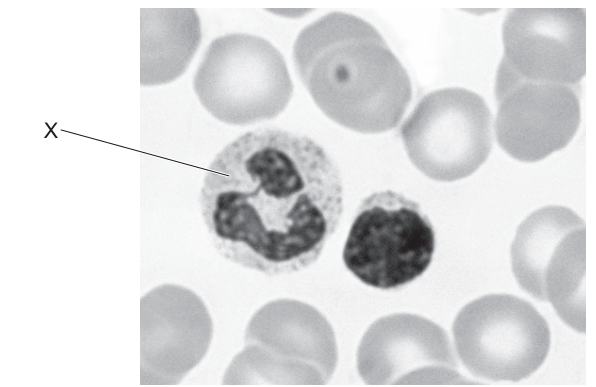
The photomicrograph shows some blood cells.

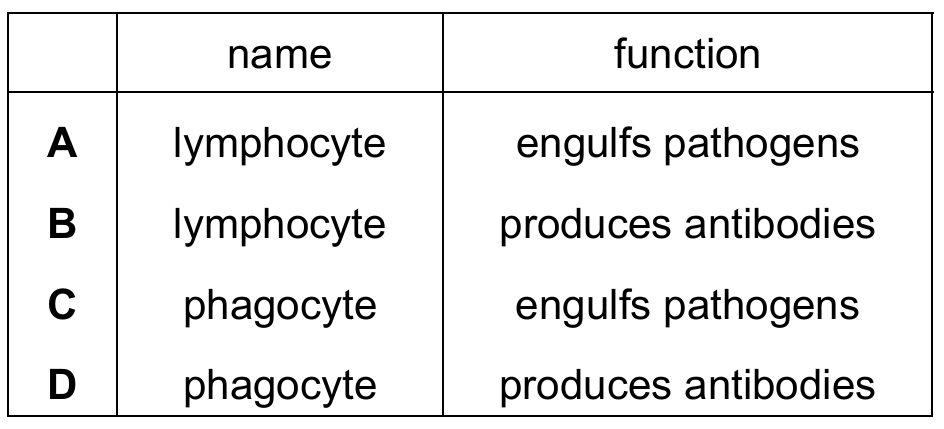
Which row shows the name and function of the cell labelled $X$?

▶️ Answer/Explanation
The cell labelled $X$ is a phagocyte, specifically a neutrophil, identifiable by its characteristic multi-lobed nucleus and granular cytoplasm. In contrast, lymphocytes typically have a large, circular nucleus that fills most of the cell. The primary role of a phagocyte in the immune system is to identify, move towards, and engulf pathogens through a process called phagocytosis. Once engulfed, the pathogen is digested by enzymes. Options $B$ and $D$ are incorrect because antibody production is the function of lymphocytes, not phagocytes.
Answer: (C)

Question 17

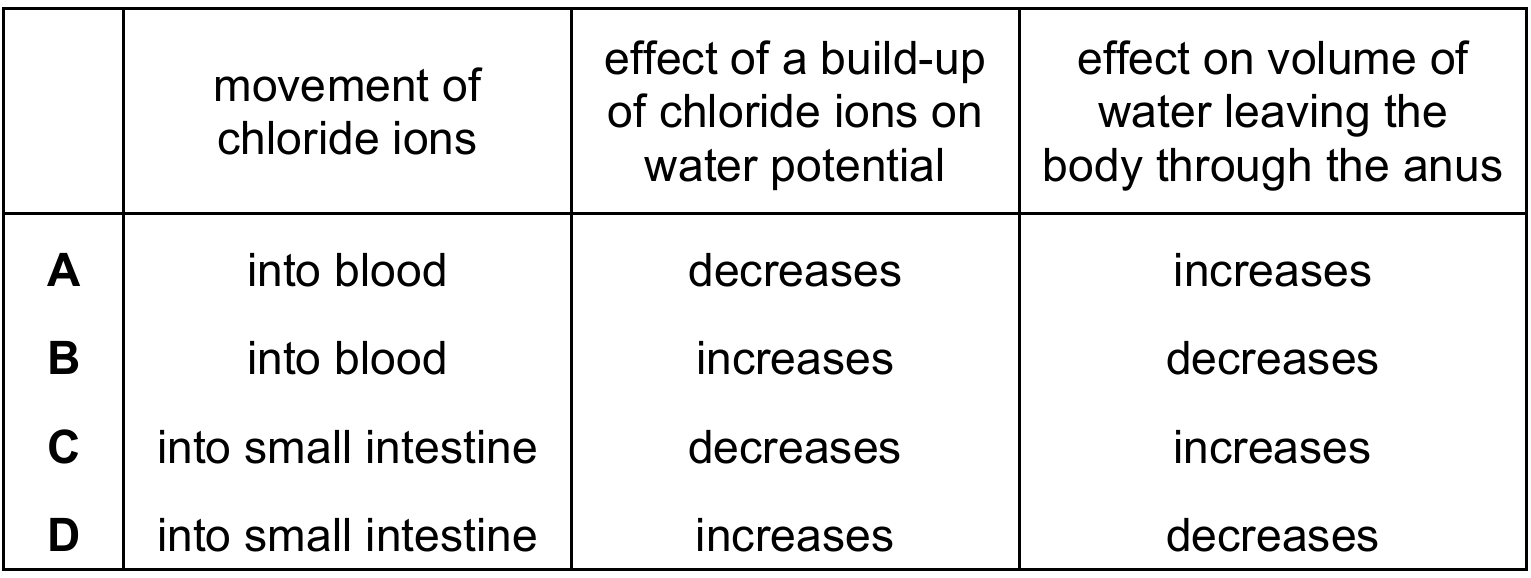
Which row shows the effects of cholera on the human body?

▶️ Answer/Explanation
Cholera is caused by the bacterium Vibrio cholerae, which releases a toxin in the digestive system. This toxin triggers the active secretion of chloride ions ($Cl^-$) from the blood into the small intestine. As the concentration of chloride ions in the intestinal lumen rises, it decreases the water potential of the intestinal contents. Consequently, water moves out of the surrounding tissues and blood into the intestine via osmosis. This massive influx of water results in watery diarrhea, leading to a significant increase in the volume of water leaving the body through the anus.
Answer: (C)

Question 18

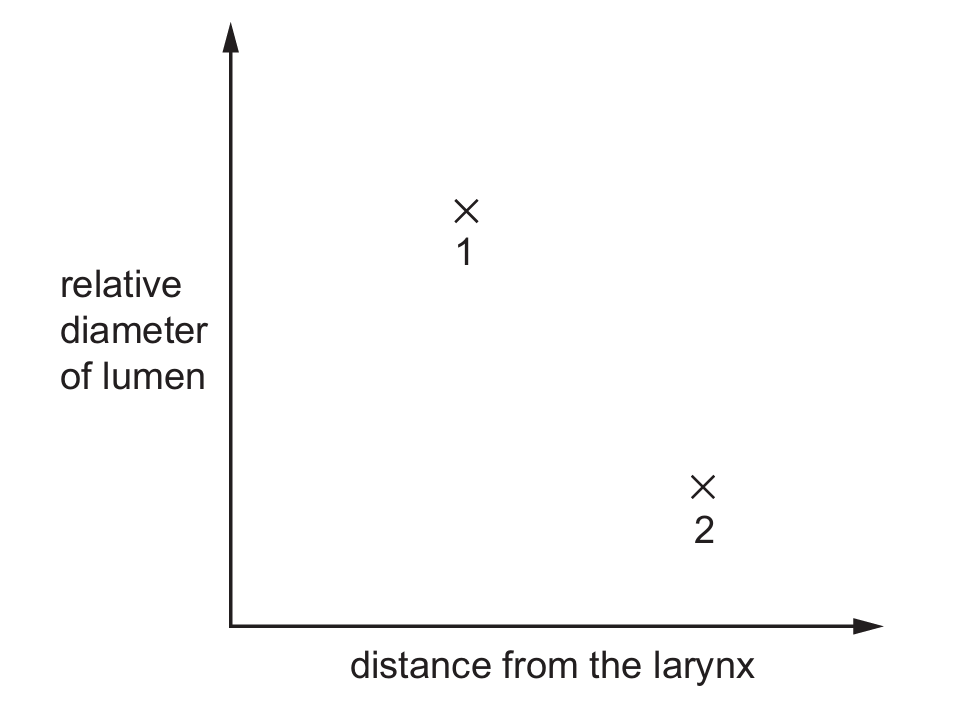
The plotted points, $1$ and $2$, on the graph show two different types of structure in the breathing system of a human.

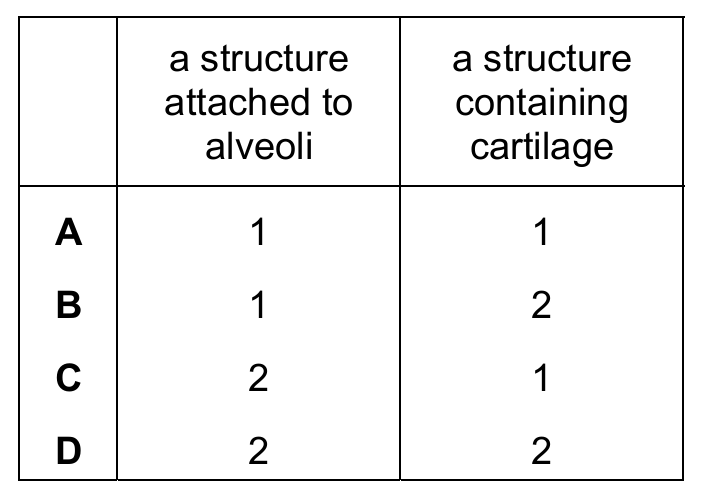
Which row identifies a structure attached to alveoli and a structure containing cartilage?

▶️ Answer/Explanation
To solve this, we must analyze the graph axes: the x-axis represents distance from the larynx and the y-axis represents relative diameter. Structure $1$ is close to the larynx and has a large diameter, which describes the trachea or main bronchi; these structures contain cartilage to keep the airway open. Structure $2$ is far from the larynx and has a much smaller diameter, representing bronchioles. Bronchioles are the structures directly attached to the alveoli but lack cartilage. Therefore, $2$ fits the first column and $1$ fits the second column.
Answer: (C)

Question 19

Which process in plants uses energy from respiration?

(A) cell division
(B) osmosis
(C) photosynthesis
(D) transpiration
▶️ Answer/Explanation

Respiration is the biochemical process that releases energy in the form of $ATP$ from glucose. This energy is required for active processes within the plant. Cell division is an active process that requires energy for DNA replication, the synthesis of new organelles, and the physical separation of the cell.

In contrast, osmosis and transpiration are passive processes that rely on concentration gradients and water potential rather than metabolic energy. Photosynthesis is an anabolic process that primarily uses light energy from the sun, not the chemical energy produced during respiration. Therefore, cell division is the only option listed that directly consumes the $ATP$ generated during respiration.

Answer: (A)

Question 20

Which sequence of statements explains the build-up and removal of an oxygen debt?

1 Anaerobic respiration occurs in muscles during vigorous exercise.
2 Faster and deeper breathing continues after exercise.
3 Glucose is converted to lactic acid.
4 Lactic acid builds up in muscles causing an oxygen debt.
5 Oxygen enables the continued aerobic respiration of lactic acid.

(A) $1 \rightarrow 3 \rightarrow 4 \rightarrow 2 \rightarrow 5$
(B) $1 \rightarrow 3 \rightarrow 2 \rightarrow 4 \rightarrow 5$
(C) $3 \rightarrow 4 \rightarrow 5 \rightarrow 1 \rightarrow 2$
(D) $3 \rightarrow 4 \rightarrow 1 \rightarrow 5 \rightarrow 2$
▶️ Answer/Explanation

The process begins when vigorous exercise triggers anaerobic respiration (1) because oxygen demand exceeds supply. This metabolic pathway converts glucose into lactic acid (3), which accumulates in the muscle tissues and creates an oxygen debt (4). To “repay” this debt after exercise stops, the body maintains faster and deeper breathing (2) to take in extra oxygen. This supplemental oxygen then facilitates the aerobic respiration of lactic acid (5) in the liver, breaking it down into carbon dioxide and water. This logical progression from the cause of the debt to its physiological resolution confirms the sequence.

Answer: (A)

Question 21

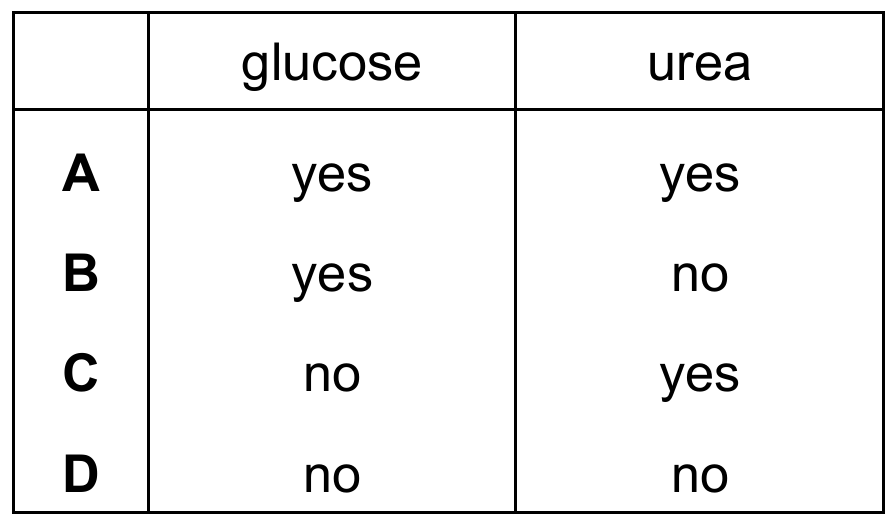
What is filtered out of the blood in the glomerulus and into the nephron?

▶️ Answer/Explanation
Ultrafiltration occurs in the glomerulus, where high pressure forces small molecules out of the blood and into the Bowman’s capsule. This process is non-selective based on “usefulness” and instead depends on molecular size. Both glucose and urea are small enough to pass through the capillary walls and the basement membrane. While urea is a waste product and glucose is a nutrient, both enter the nephron as part of the initial filtrate. Later, $100\%$ of the glucose is typically reabsorbed in the proximal convoluted tubule, but at the point of filtration, both are present.
Answer: (A)

Question 22

What can be broken down to form urea?

(A) amino acids
(B) fatty acids
(C) sugars
(D) vitamins
▶️ Answer/Explanation

Urea is produced in the liver through a process called deamination. When the body has an excess of amino acids, they cannot be stored. The liver removes the nitrogen-containing amino group ($-NH_2$) from the amino acids, converting it into highly toxic ammonia ($NH_3$). To make it safe for transport to the kidneys, the liver quickly converts this ammonia into urea ($CO(NH_2)_2$), which is then excreted in urine. Fatty acids and sugars are primarily composed of carbon, hydrogen, and oxygen, lacking the nitrogen required to form urea.

Answer: (A) amino acids

Question 23

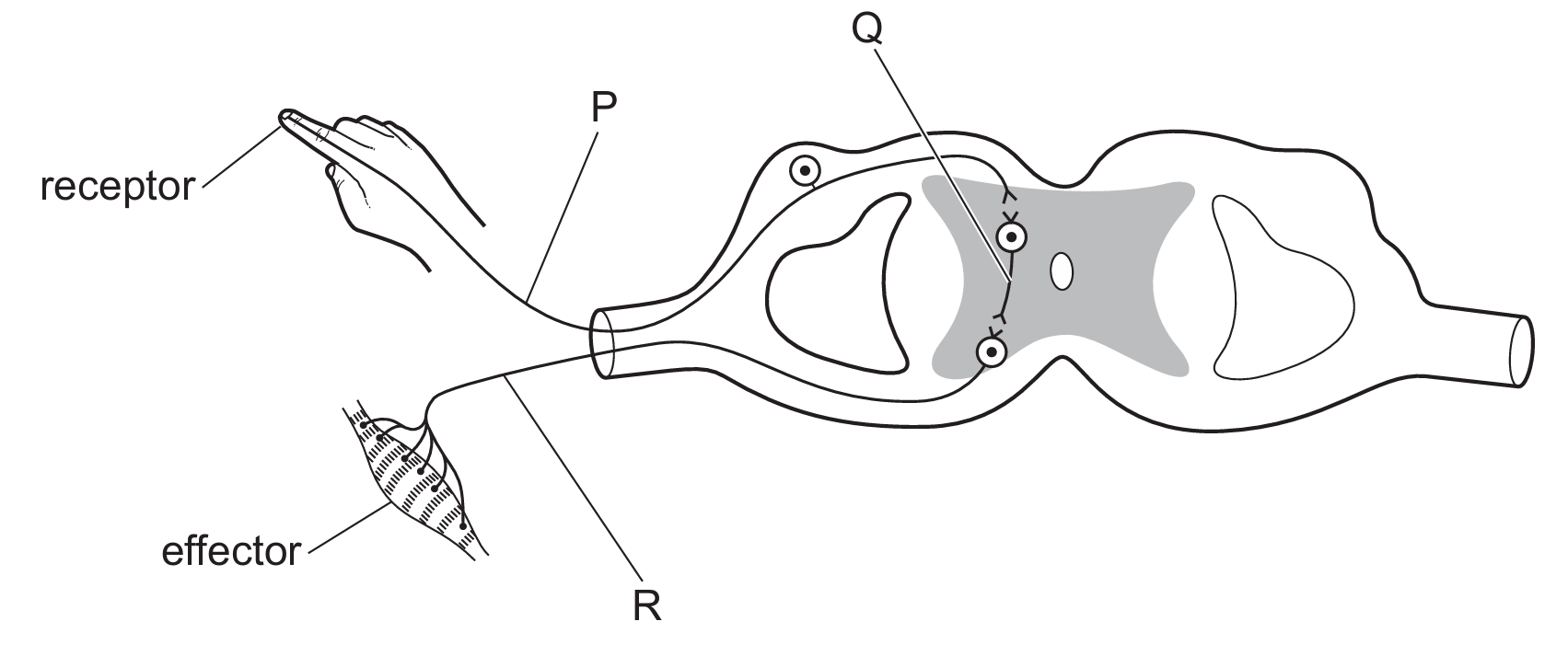
The diagram shows a simple reflex arc.

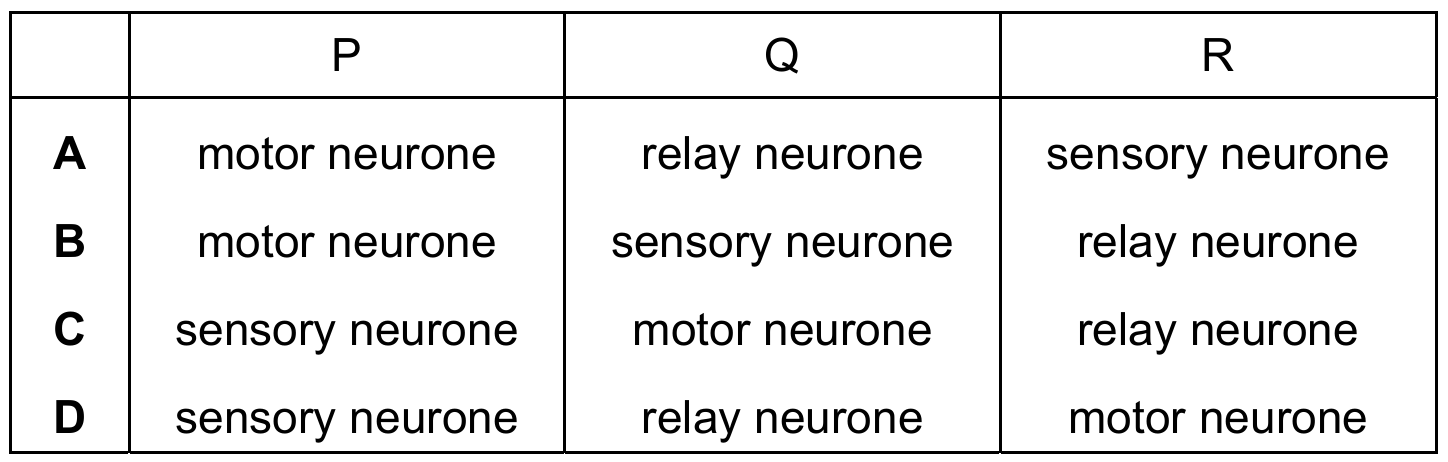
What are the names of the structures labelled $P$, $Q$ and $R$?

▶️ Answer/Explanation
In a reflex arc, the impulse travels from the receptor to the effector in a specific sequence. Structure $P$ is the sensory neurone, which carries the electrical impulse from the receptor to the central nervous system. Structure $Q$ is the relay neurone, located entirely within the spinal cord, connecting the sensory and motor neurones. Finally, structure $R$ is the motor neurone, which transmits the signal to the effector (the muscle) to trigger a response. This sequence ensures a rapid, involuntary reaction to a stimulus. Matches row $D$.
Answer: (D)

Question 24

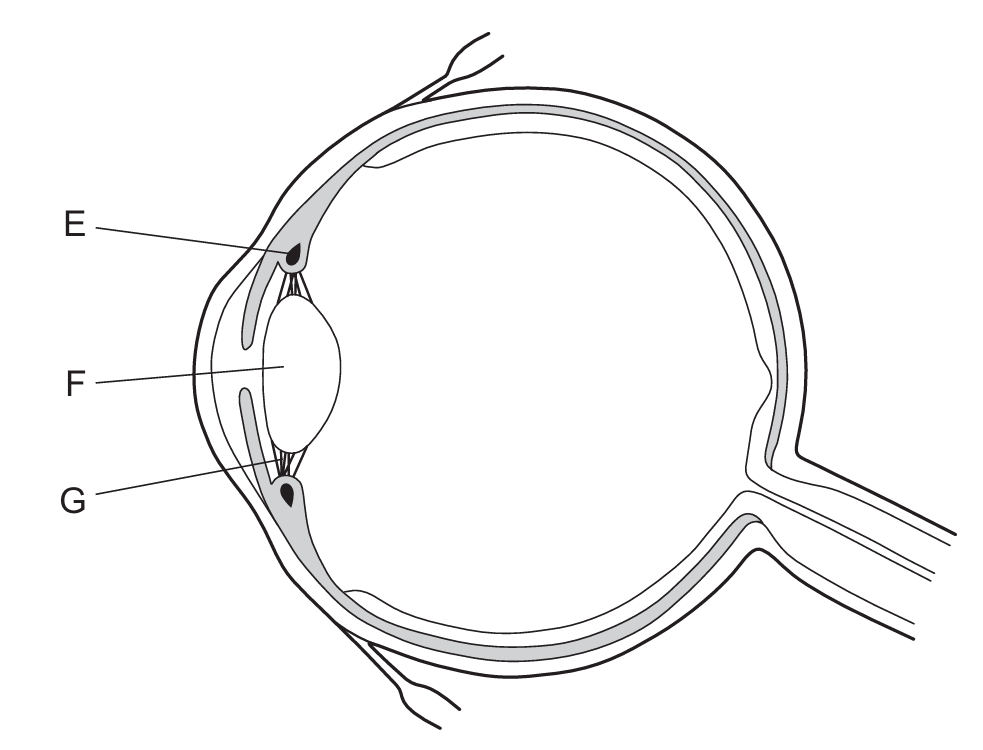
The diagram shows a cross-section of an eye.

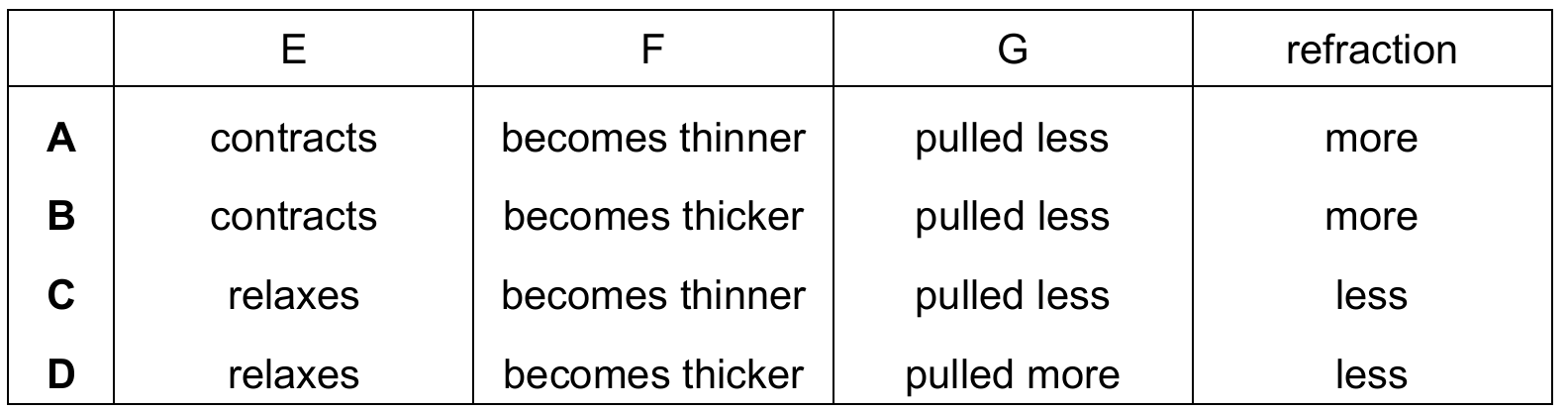
Which row is correct when a person views a near object?

▶️ Answer/Explanation
To view a near object, the eye undergoes accommodation to increase its refractive power. First, the ciliary muscles (E) contract, which reduces the tension on the suspensory ligaments (G), meaning they are pulled less. This allows the lens (F) to spring into a more rounded, thicker shape due to its natural elasticity. A thicker lens has a shorter focal length and causes more refraction of light rays, ensuring they converge accurately on the retina. Row B correctly identifies all these physiological changes.
Answer: (B)

Question 25

Which hormones increase the blood glucose concentration in humans?

(A) adrenaline and glucagon
(B) adrenaline and insulin
(C) glucagon only
(D) insulin only
▶️ Answer/Explanation
Blood glucose levels are regulated by several hormones with opposing effects. Glucagon, secreted by the pancreas, increases glucose levels by stimulating the liver to convert stored glycogen into glucose. Adrenaline (epinephrine) also increases blood glucose during “fight or flight” situations to provide immediate energy to muscles. Conversely, insulin works to decrease blood glucose by promoting its uptake into cells. Since both adrenaline and glucagon act to raise concentration, option (A) is correct.
Answer: (A)

Question 26

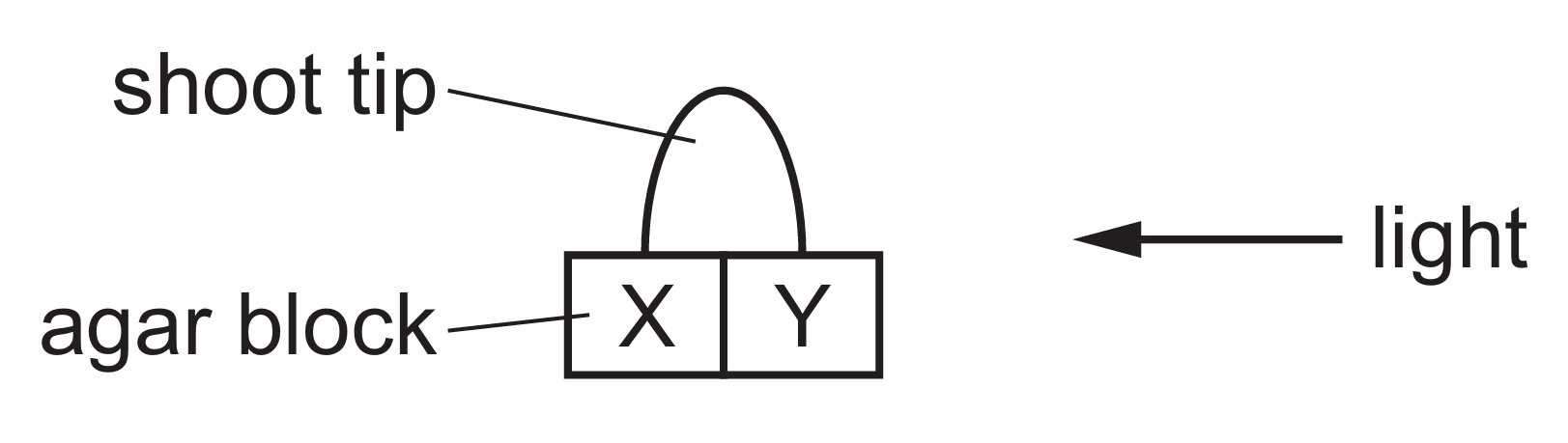
A shoot tip was placed on an agar block. Substances can diffuse through agar. Light was shone on the shoot tip from one direction.

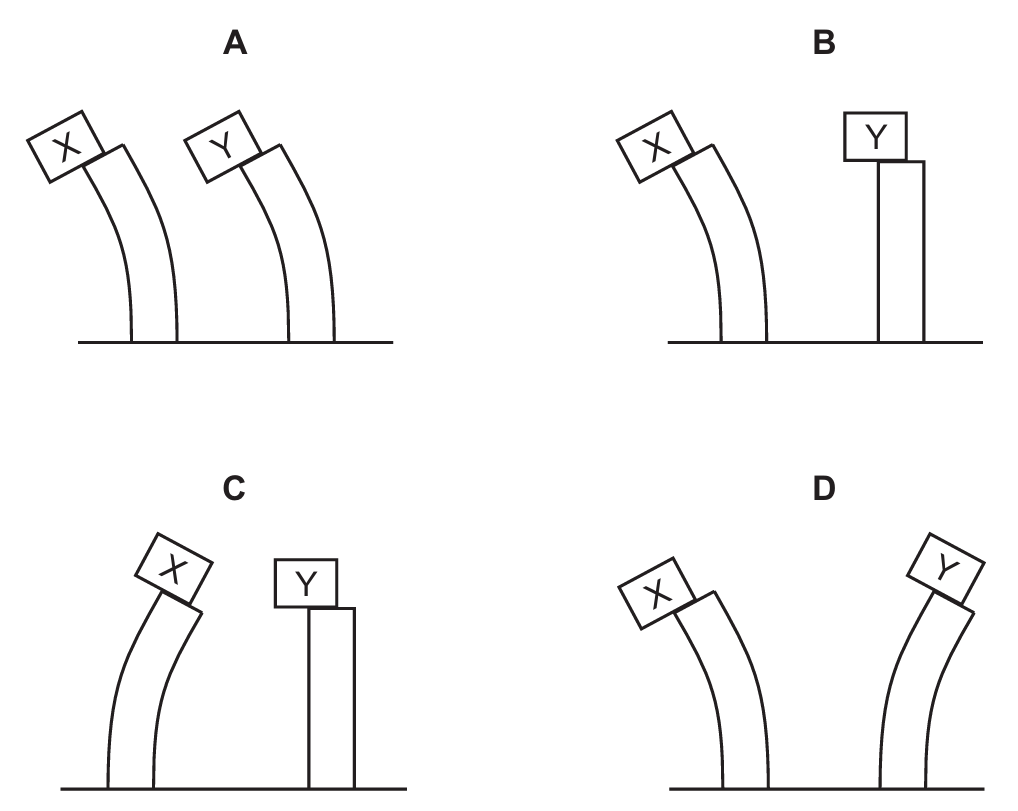
After three days, the agar was cut in half to form blocks $X$ and $Y$. Blocks $X$ and $Y$ were placed on the stems of shoots that had the tips cut off. The agar blocks were kept on the shoot stems for one week. Which set of shoots represents the results after one week?

▶️ Answer/Explanation
When light shines from the right, the plant hormone auxin migrates from the light side toward the shaded side of the shoot tip. Consequently, a much higher concentration of auxin diffuses into block $X$ (the shaded side) compared to block $Y$ (the light side). When these blocks are placed off-center on decapitated stems, the auxin diffuses down into the side of the stem beneath the block, stimulating cell elongation. Since block $X$ contains a high concentration of auxin, it causes the cells on that side to elongate rapidly, resulting in a curvature. Block $Y$, however, contains little to no auxin, meaning no significant elongation occurs and the stem remains straight.
Answer: (C)

Question 27

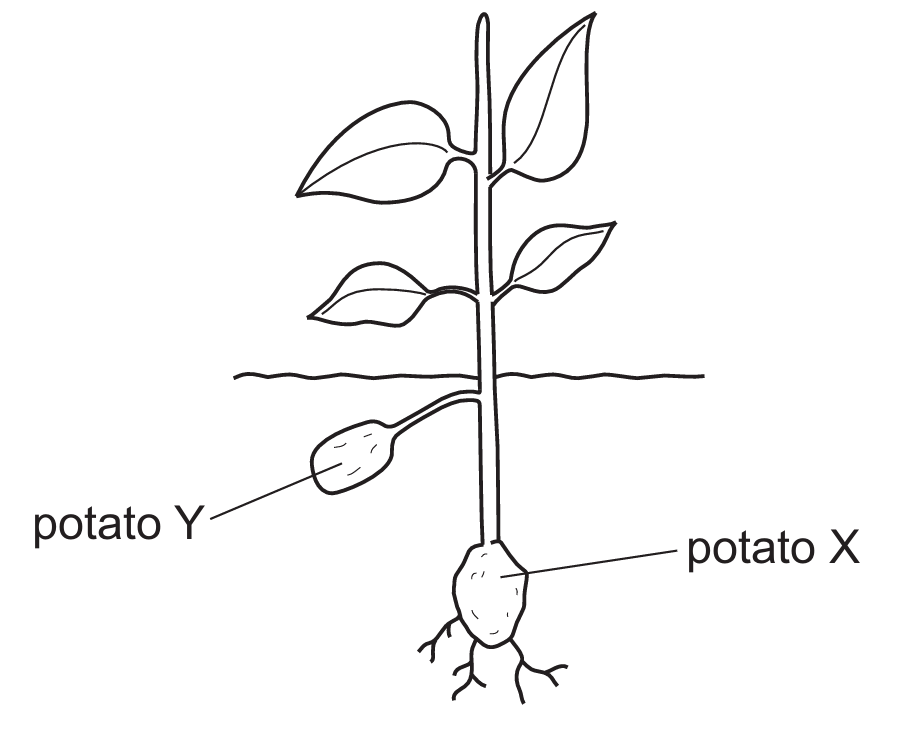
The diagram shows reproduction in a potato plant. Potato $X$ was planted into the ground and a plant grew from it. The plant then produced potato $Y$.

Which statement is correct?

(A) $X$ and $Y$ are genetically different.
(B) $Y$ was produced by asexual reproduction.
(C) $Y$ was produced by sexual reproduction.
(D) $Y$ was produced by the fusion of gametes.
▶️ Answer/Explanation
The diagram illustrates vegetative propagation, a form of asexual reproduction. Potato $X$ is a stem tuber that acts as the parent storage organ. Because $Y$ develops from the lateral buds (eyes) of $X$ through mitosis without the involvement of flowers, seeds, or the fusion of gametes, it is a clone of the parent. Consequently, $X$ and $Y$ are genetically identical rather than different. This process allows the plant to spread rapidly in favorable conditions without the biological “cost” of sexual reproduction.
Answer: (B)

Question 28

Which statement about pollination is correct?

(A) Self-pollination increases the ability of the population to respond to changes in the environment by increasing variation.
(B) Self-pollination increases the ability of the population to respond to changes in the environment by reducing variation.
(C) Self-pollination reduces the ability of the population to respond to changes in the environment by increasing variation.
(D) Self-pollination reduces the ability of the population to respond to changes in the environment by reducing variation.
▶️ Answer/Explanation

Self-pollination involves the transfer of pollen within the same plant, which leads to a high degree of genetic uniformity. Because the offspring are genetically similar to the parent, there is reduced genetic variation within the population. Genetic variation is the raw material for natural selection; without it, a population lacks the diverse traits needed to adapt to new selection pressures, such as climate change or disease. Consequently, a lack of variation reduces the ability of the population to respond or adapt to environmental changes. This makes the population more vulnerable to extinction if conditions shift.

Answer: (D)

Question 29

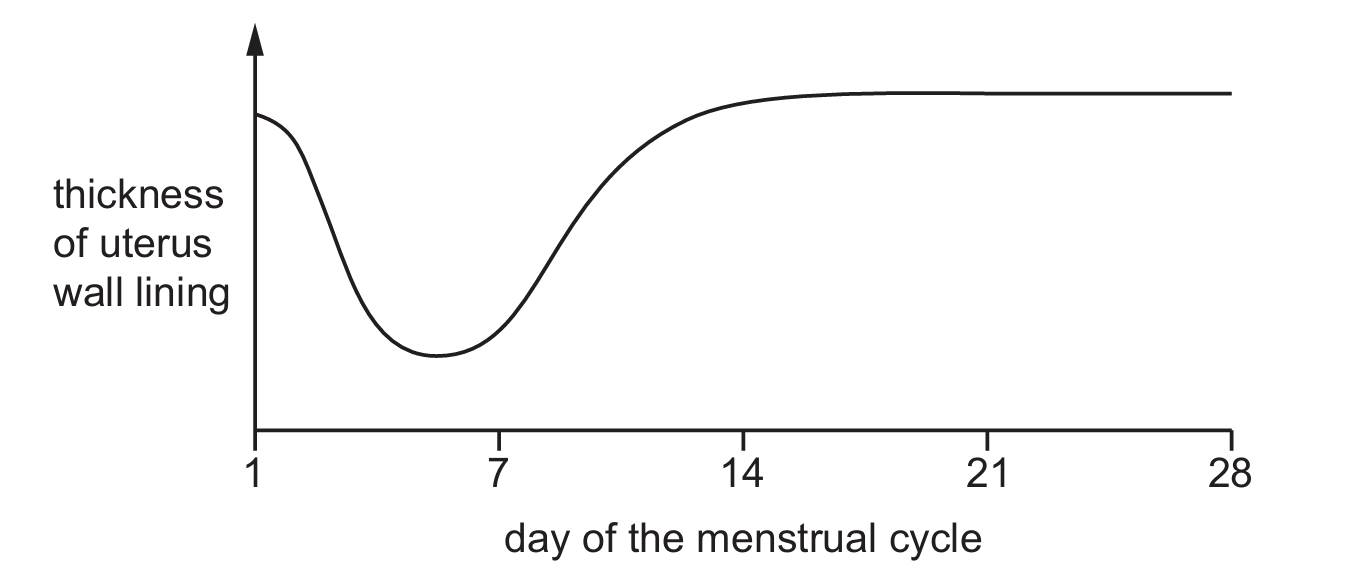
The graph shows changes in the thickness of the lining of the uterus wall during a menstrual cycle.

Which day is the last day of menstruation?

(A) $4$
(B) $8$
(C) $16$
(D) $20$
▶️ Answer/Explanation
Menstruation is the phase of the menstrual cycle where the uterine lining (endometrium) breaks down and is shed, resulting in a decrease in thickness. Looking at the graph, the thickness starts to decrease from Day $1$ and reaches its lowest point around Day $4$ to Day $5$. After this point, the lining begins to repair and thicken again under the influence of estrogen. Since the decline stops and the “trough” of the graph ends around Day $4$, this represents the conclusion of the shedding phase. Therefore, Day $4$ is the most accurate choice for the last day of menstruation.
Answer: (A)

Question 30

Which name is given to different versions of a gene?

(A) allele
(B) chromosome
(C) length of DNA
(D) protein
▶️ Answer/Explanation

An allele is defined as one of two or more alternative forms of a gene that arise by mutation and are found at the same place on a chromosome. While a gene determines a specific trait (like eye color), the alleles represent the specific variations of that trait (like blue vs. brown).

Other options are incorrect because a chromosome is the structure that carries many genes, a length of DNA is a general physical description rather than a biological term for versions, and a protein is the end product produced based on the gene’s instructions. Therefore, allele is the precise term for genetic variations.

Answer: (A)

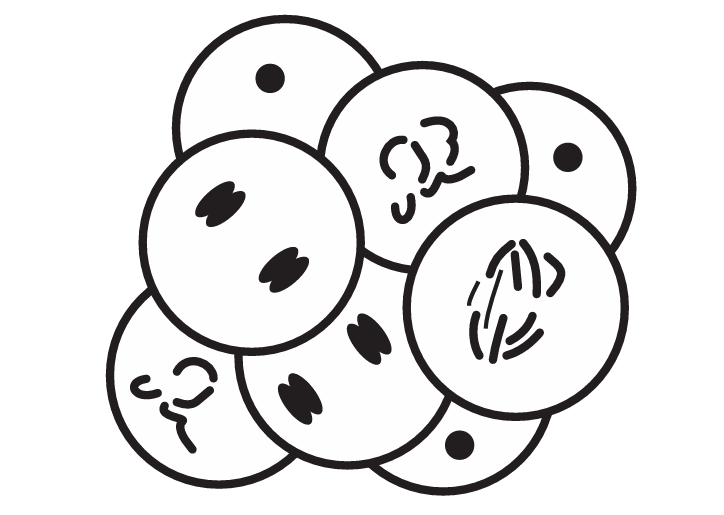
Question 31

The diagram shows the cells of a mammalian embryo shortly after fertilisation.

What is the correct description of these cells?

(A) embryo cells undergoing meiosis
(B) gametes undergoing mitosis
(C) stem cells undergoing mitosis
(D) zygote undergoing meiosis
▶️ Answer/Explanation
The diagram illustrates an embryo in the early stages of cleavage following fertilisation. These early embryonic cells are stem cells because they are undifferentiated and have the potential to develop into various cell types. The process shown is mitosis, as the embryo must grow and increase its cell number while maintaining the diploid ($2n$) chromosome count. Meiosis is incorrect here because it only occurs during the formation of gametes, not during embryonic growth. Since the image shows a cluster of multiple cells, it is no longer a single-celled zygote, making option C the most accurate description.
Answer: (C)

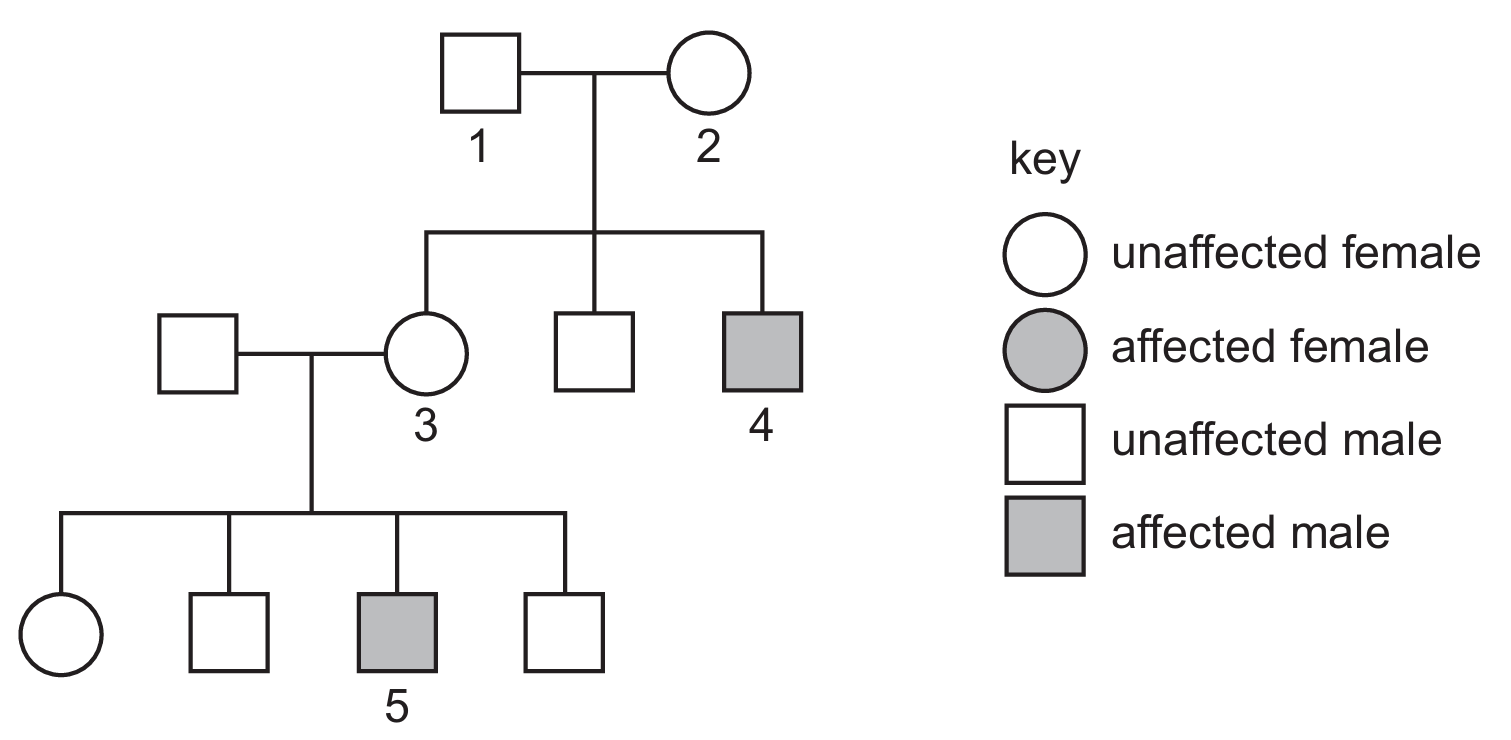
Question 32

The diagram shows the inheritance, in one family, of a sex-linked recessive disease.

Which individuals in the diagram are heterozygous for this disease?

(A) $1$ and $2$
(B) $1$ only
(C) $2$ and $3$
(D) $4$ and $5$
▶️ Answer/Explanation
Since the disease is sex-linked recessive, males ($XY$) cannot be heterozygous; they are either affected or unaffected. Individual $4$ is an affected male, meaning he inherited the recessive allele from his mother, individual $2$. Since individual $2$ is unaffected but has an affected son, she must be a carrier ($X^RX^r$), making her heterozygous. Similarly, individual $3$ is an unaffected female who has an affected son (individual $5$). To pass the recessive allele to her son, individual $3$ must also be a carrier ($X^RX^r$). Individual $1$ is an unaffected male ($X^RY$) and therefore cannot be heterozygous.
Answer: (C)

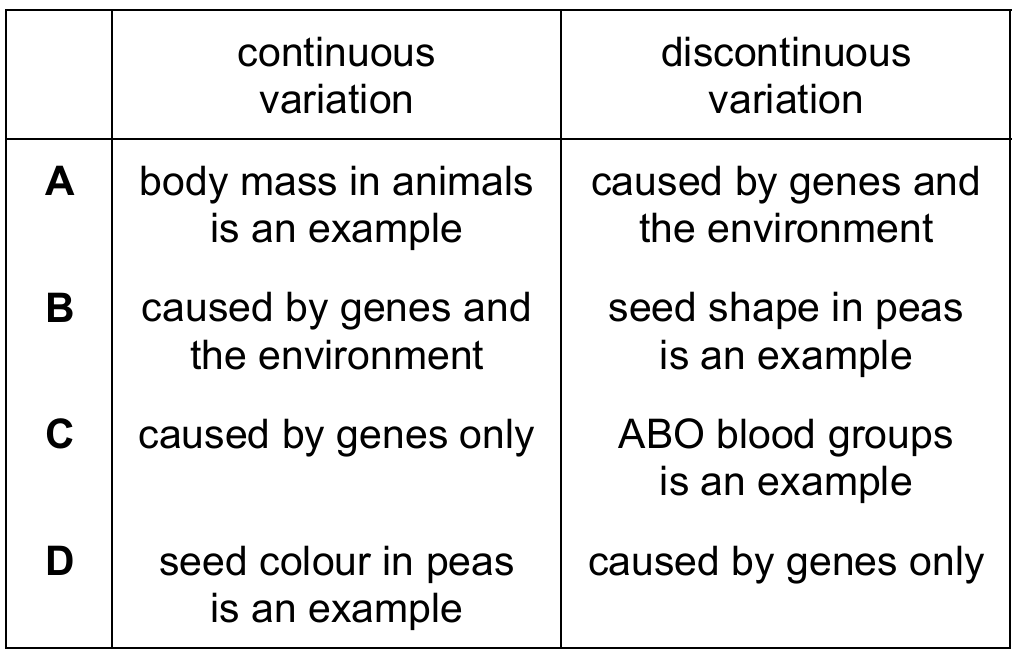
Question 33

Which row describes continuous and discontinuous variation?

▶️ Answer/Explanation
Continuous variation results from the interaction of multiple genes and environmental factors, leading to a complete range of phenotypes (like height or mass). Discontinuous variation is usually controlled by a single gene with few alleles, resulting in distinct categories with no intermediates, such as seed shape (round vs. wrinkled). Row B correctly identifies that continuous variation is influenced by both genetics and environment, while providing a valid example of discontinuous variation in Mendel’s peas.
Answer: (B)

Question 34

Which statements describe an adaptive feature in an organism?

$1$    It helps an organism to survive and reproduce in its environment.
$2$    It always shows continuous variation.
$3$    It is inherited.
A   $1, 2$ and $3$ B   $1$ and $2$ only C   $1$ and $3$ only D   $2$ and $3$ only
▶️ Answer/Explanation
An adaptive feature is an inherited functional characteristic that increases an organism’s fitness. Statement $1$ is correct because adaptation directly improves the chances of survival and successful reproduction. Statement $3$ is also correct because for a trait to be an evolutionary adaptation, it must be genetically determined and passed to offspring. Statement $2$ is incorrect because adaptations can be discrete (discontinuous), such as blood type or specific defensive structures, and are not limited to continuous variation.
Answer: (C)

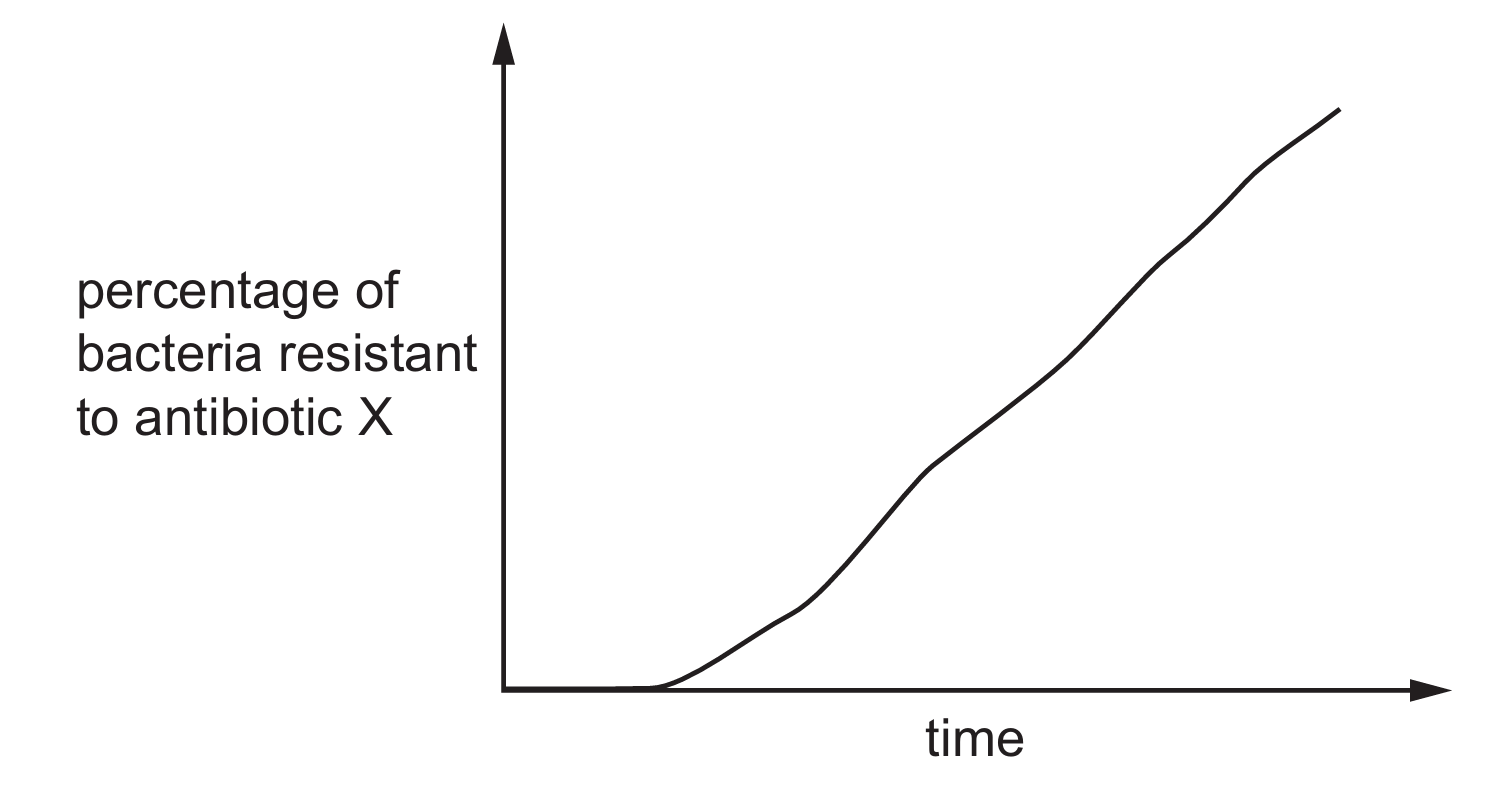
Question 35

The graph shows the change in the percentage of bacteria resistant to antibiotic $X$.

What causes the change shown in the graph?

(A) artificial selection
(B) natural selection
(C) meiosis
(D) random fertilisation
▶️ Answer/Explanation
The graph illustrates the process of natural selection in a bacterial population exposed to an antibiotic. Initially, a random mutation may provide a very small number of bacteria with resistance to antibiotic $X$. When the antibiotic is applied, it acts as a selection pressure, killing the susceptible bacteria while the resistant individuals survive and reproduce. Over time, these resistant bacteria pass on their advantageous alleles to their offspring. As this process repeats over many generations, the proportion of the population that is resistant increases significantly, as shown by the upward curve in the graph.
Answer: (B)

Question 36

The diagram shows the flow of energy, in units of energy, through a food chain.

producers $\longrightarrow$ primary consumers $\longrightarrow$ secondary consumers $\longrightarrow$ tertiary consumers

$1000$ units     $100$ units      $10$ units       $1$ unit

Which percentage of energy is lost between the producers and secondary consumers?

(A) $1\%$
(B) $10\%$
(C) $90\%$
(D) $99\%$
▶️ Answer/Explanation
To find the percentage of energy lost, first identify the energy levels: producers have $1000$ units and secondary consumers have $10$ units. The amount of energy transferred is only $1\%$, calculated as $(\frac{10}{1000}) \times 100$. However, the question asks for the energy lost during this transition. The energy lost is the initial energy minus the final energy: $1000 – 10 = 990$ units. To find the percentage lost, use the formula: $\text{Percentage Lost} = (\frac{\text{Energy Lost}}{\text{Initial Energy}}) \times 100$. This gives $(\frac{990}{1000}) \times 100 = 99\%$. This massive loss occurs because energy is dissipated as heat and used for metabolic processes at each trophic level.
Answer: (D)

Question 37

Which process in the nitrogen cycle can be caused by lightning and bacteria?

(A) deamination
(B) denitrification
(C) nitrification
(D) nitrogen fixation
▶️ Answer/Explanation
Nitrogen fixation is the process of converting inert atmospheric nitrogen ($N_2$) into reactive forms like ammonia ($NH_3$) or nitrates ($NO_3^-$). This occurs through two primary pathways: biological and physical. Nitrogen-fixing bacteria (such as Rhizobium in root nodules) use enzymes to break the strong triple bonds of $N_2$ gas. Alternatively, the high energy from lightning provides enough heat to force $N_2$ to react with oxygen in the air, forming nitrogen oxides that dissolve in rain. Other processes like nitrification and denitrification are strictly biological, while deamination involves the breakdown of amino acids.
Answer: (D)

Question 38

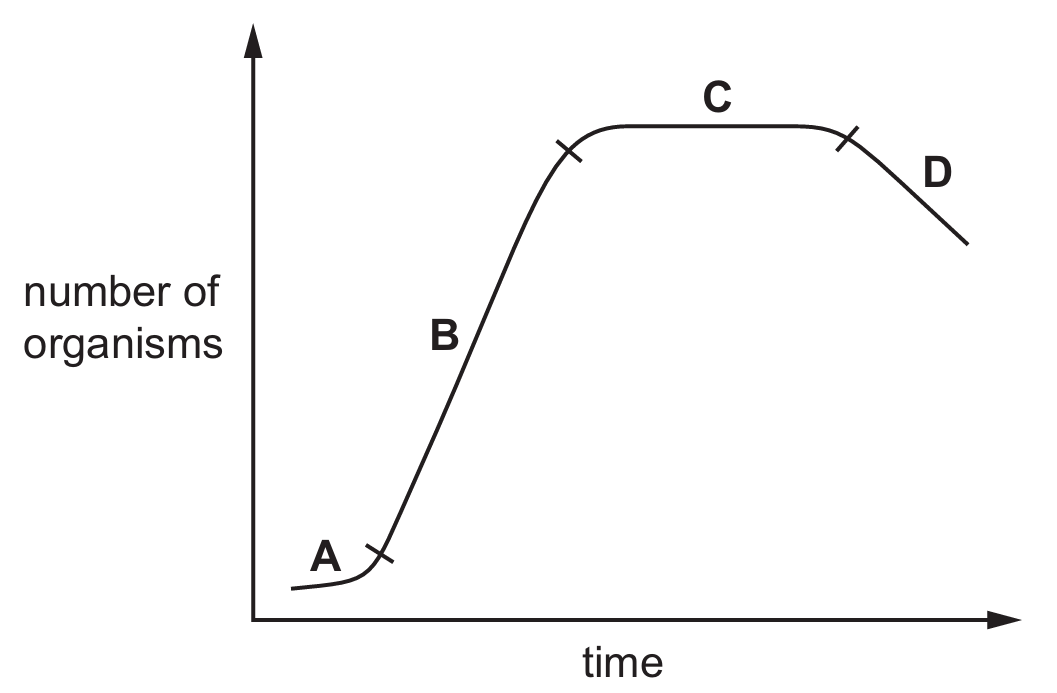
Which phase in the population growth curve shows when death rates are higher than birth rates?

▶️ Answer/Explanation
The graph represents a typical sigmoid growth curve. In Phase A (lag phase), the population grows slowly. Phase B (log phase) shows rapid exponential growth where birth rates greatly exceed death rates. Phase C (stationary phase) occurs when the birth rate equals the death rate, resulting in a plateau. Finally, Phase D represents the decline or death phase. During this stage, the total number of organisms decreases because the environmental resistance (such as lack of food or accumulation of waste) causes the death rate to exceed the birth rate.
Answer: (D)

Question 39

What is a disadvantage of large-scale monocultures of crop plants?

(A) a decrease in use of insecticides
(B) a decrease in fossil fuel emissions
(C) an increase in biodiversity
(D) an increase in risk of disease destroying the entire crop
▶️ Answer/Explanation
Monoculture involves growing a single species of crop over a large area, meaning all plants are genetically similar or identical. Because there is no genetic variation, if a specific pathogen or pest evolves to attack one plant, it can easily spread through the entire population. This lack of biological “roadblocks” significantly increases the risk of a total crop failure. Options A, B, and C are incorrect because monocultures typically require more insecticides, involve heavy machinery that increases emissions, and inherently decrease biodiversity.
Answer: (D)

Question 40

Some processes involved in the production of human insulin by genetic modification are listed.

1. insertion of the human insulin gene DNA into a cut bacterial plasmid

2. bacteria containing recombinant plasmids multiply and make human insulin

3. human insulin gene DNA is isolated using restriction enzymes

4. recombinant plasmids are inserted into bacteria

What is the sequence of these processes in genetic modification?

(A) $1 \rightarrow 3 \rightarrow 2 \rightarrow 4$
(B) $1 \rightarrow 4 \rightarrow 3 \rightarrow 2$
(C) $3 \rightarrow 1 \rightarrow 4 \rightarrow 2$
(D) $3 \rightarrow 2 \rightarrow 1 \rightarrow 4$
▶️ Answer/Explanation
To produce insulin, the specific gene must first be isolated from human DNA using restriction enzymes (Step 3). Once isolated, this gene is inserted into a bacterial plasmid to create a recombinant DNA molecule (Step 1). This recombinant plasmid is then transferred into a host bacterium (Step 4). Finally, these modified bacteria are grown in large quantities so they can multiply and express the gene to synthesize human insulin (Step 2). This logical progression follows the sequence $3 \rightarrow 1 \rightarrow 4 \rightarrow 2$.
Answer: (C)
Scroll to Top