
▶️ Answer/Explanation
(a)(i) Chloroplast
Photosynthesis takes place inside organelles called chloroplasts, which contain the enzymes and pigments necessary for the reaction.
(a)(ii) Chlorophyll
Chlorophyll is the green pigment located inside the chloroplasts. Its function is to absorb light energy required to convert carbon dioxide and water into glucose.
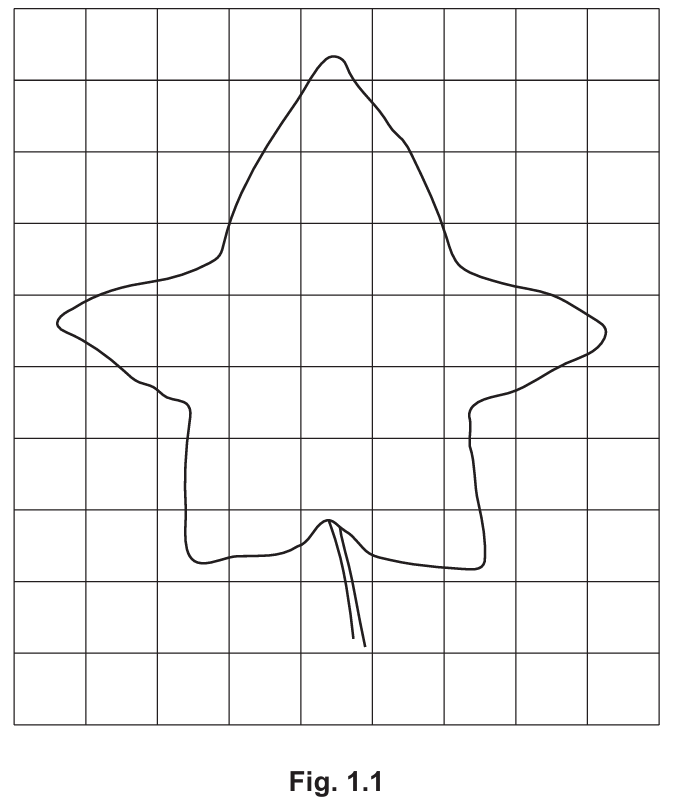
(b)(i) (\text{cm}^2)
Since the side of one square is (1 , \text{cm}), the area of one square is (1 , \text{cm} \times 1 , \text{cm} = 1 , \text{cm}^2). Therefore, the total surface area is measured in square centimeters.
(b)(ii) Explanation of adaptation:
A large surface area allows for maximum absorption of light. By spreading out, the leaf exposes more chloroplasts to sunlight, increasing the rate of photosynthesis.
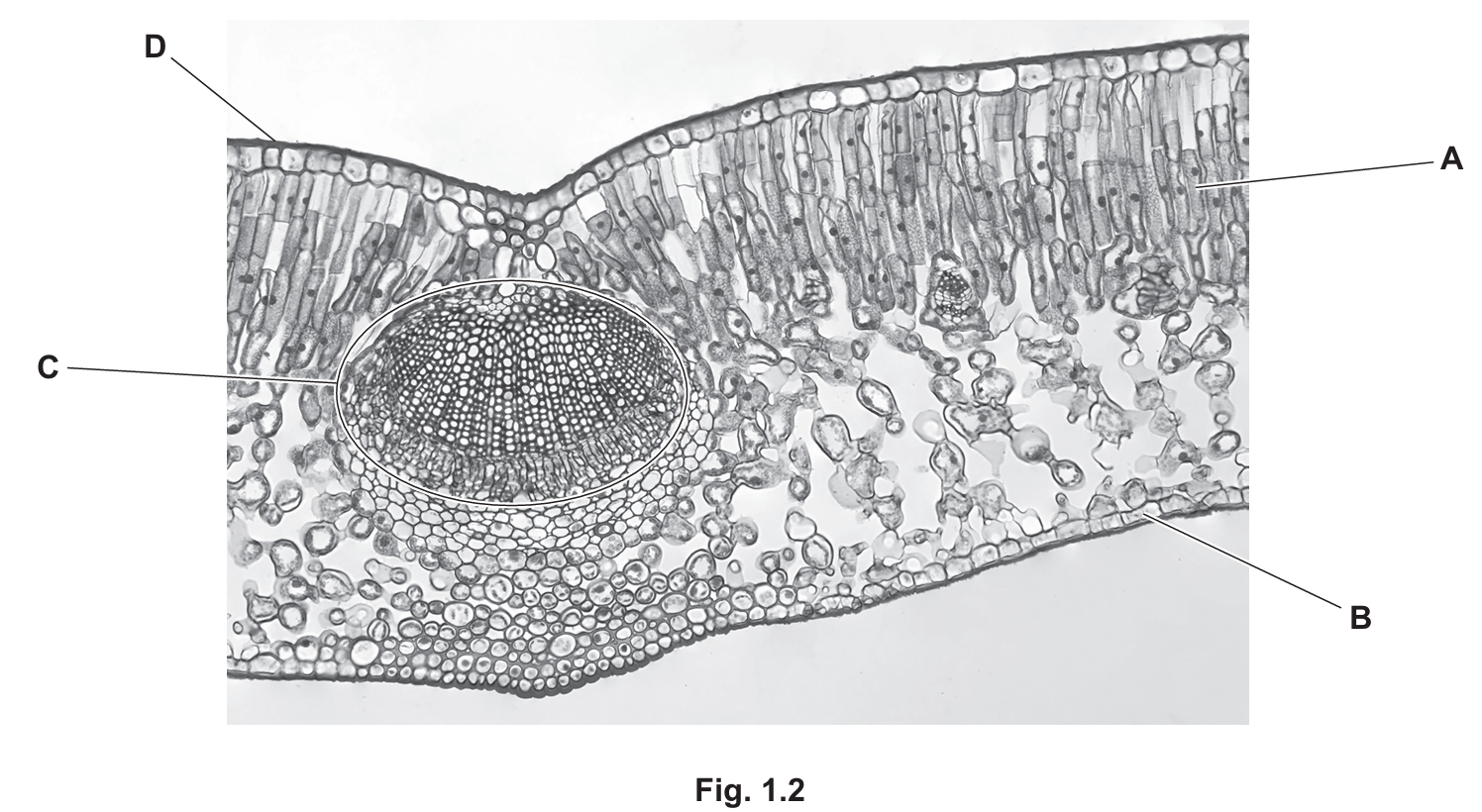
(c)(i) Labels:
A: Palisade mesophyll (The layer of elongated cells packed with chloroplasts near the top of the leaf).
B: Lower epidermis (The protective layer of cells at the bottom of the leaf).
D: Cuticle (The waxy, waterproof layer on the upper surface that reduces water loss).
(c)(ii) Xylem and Phloem
Structure C represents the vascular bundle (vein). It consists of:
- Xylem: Transports water and mineral ions from the roots to the leaves.
- Phloem: Transports soluble sugars (sucrose) and amino acids (translocation).
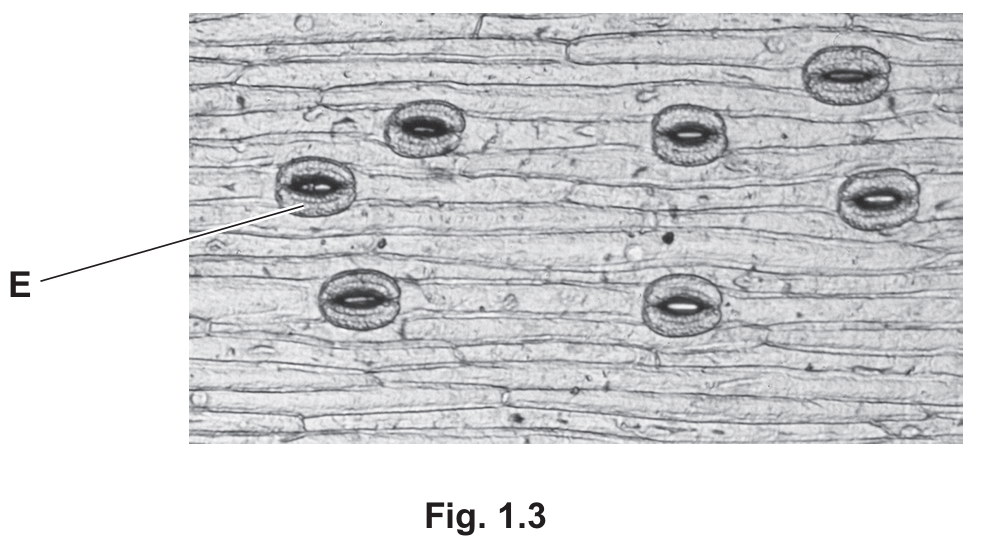
(d)(i) Guard cell
Cell E is a guard cell. These are found in pairs surrounding the stomata (pores) on the leaf surface.
(d)(ii) Adaptation mechanism:
Guard cells control gas exchange by changing shape to open and close the stomata.
- They open the stomata to allow carbon dioxide ((\text{CO}_2)) to diffuse into the leaf for photosynthesis.
- They can close the stomata to prevent excessive water loss via transpiration (e.g., in hot or dry conditions).

▶️ Answer/Explanation
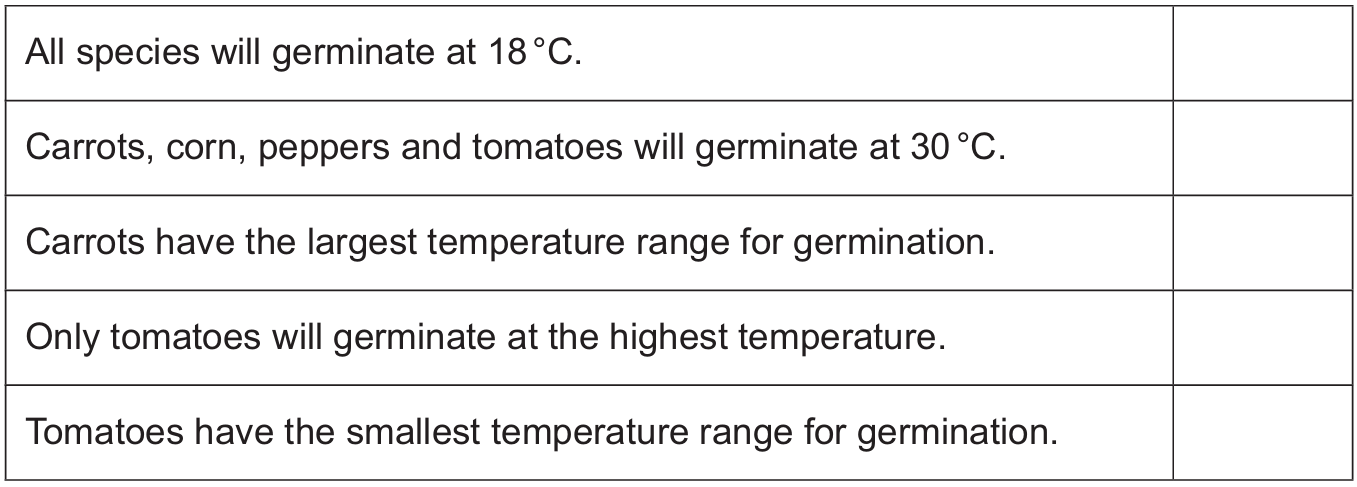
(a)
The correct conclusions are:
- ✅ Carrots have the largest temperature range for germination. (Range: \(29 – 7 = 22^\circ\text{C}\))
- ✅ Tomatoes have the smallest temperature range for germination. (Range: \(35 – 21 = 14^\circ\text{C}\))
(b)(i)
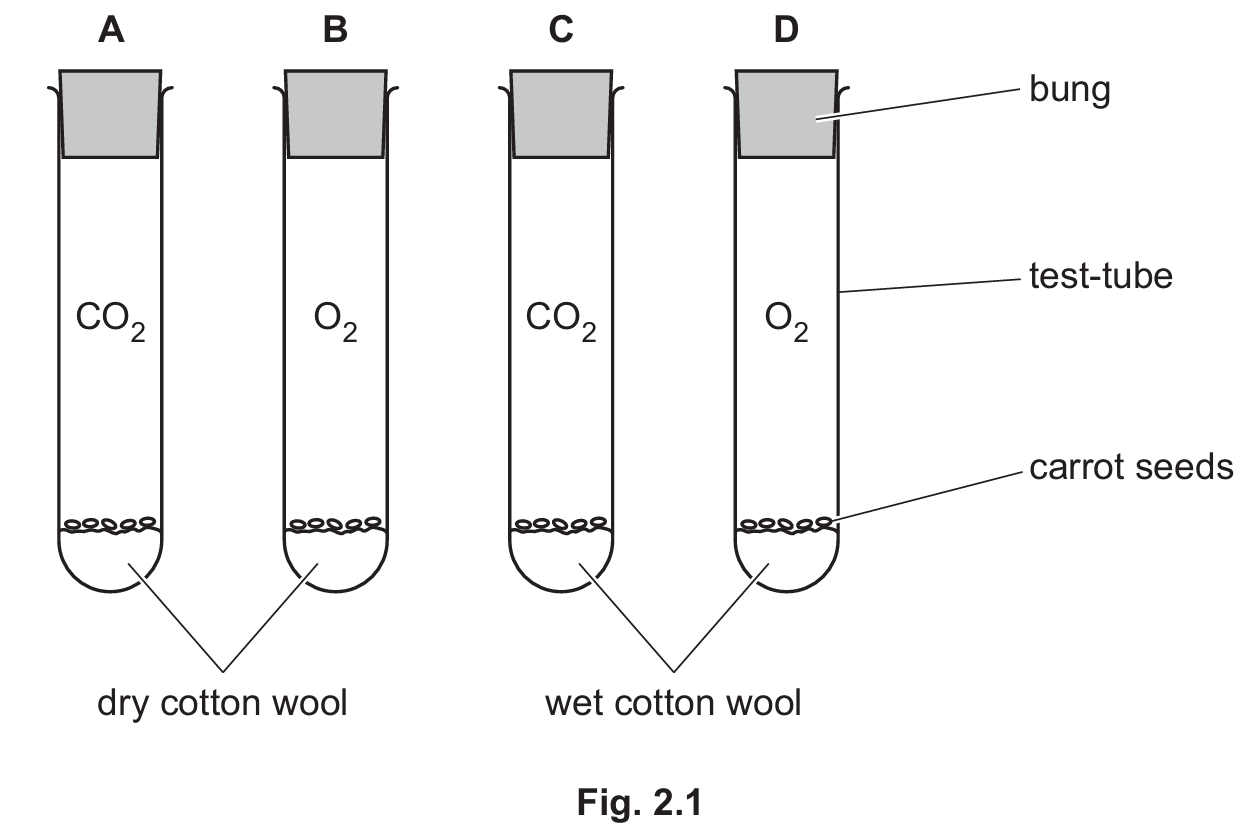
Test-tube: D
Explanation: Germination requires three key factors: water, oxygen, and a suitable temperature. Test-tube D contains wet cotton wool (providing water) and oxygen, making it the only setup with all necessary conditions. Tubes A and C lack oxygen (containing carbon dioxide instead), and Tube B lacks water (dry cotton wool).
(b)(ii)
Prediction: The seeds would germinate faster (or earlier/more quickly).
Reason: A temperature of \(25^\circ\text{C}\) is closer to the optimum temperature for the enzymes involved in germination compared to \(10^\circ\text{C}\). Higher kinetic energy leads to a faster rate of metabolic reactions.
(c)
The plant shoot grows towards the direction of light.
This tropic response is called phototropism.
The plant root grows into the soil towards gravity.
This tropic response is called gravitropism (or geotropism).
Root hairs develop, which increase the uptake of ions / minerals / mineral ions and water.
▶️ Answer/Explanation
(a) Defence via Gastric Juice
Gastric juice contains hydrochloric acid ($\text{HCl}$). This creates an acidic environment (low pH) which kills pathogens (such as bacteria) that are ingested with food. This acts as a chemical barrier preventing infection.
(b) Data Analysis from Fig. 3.1
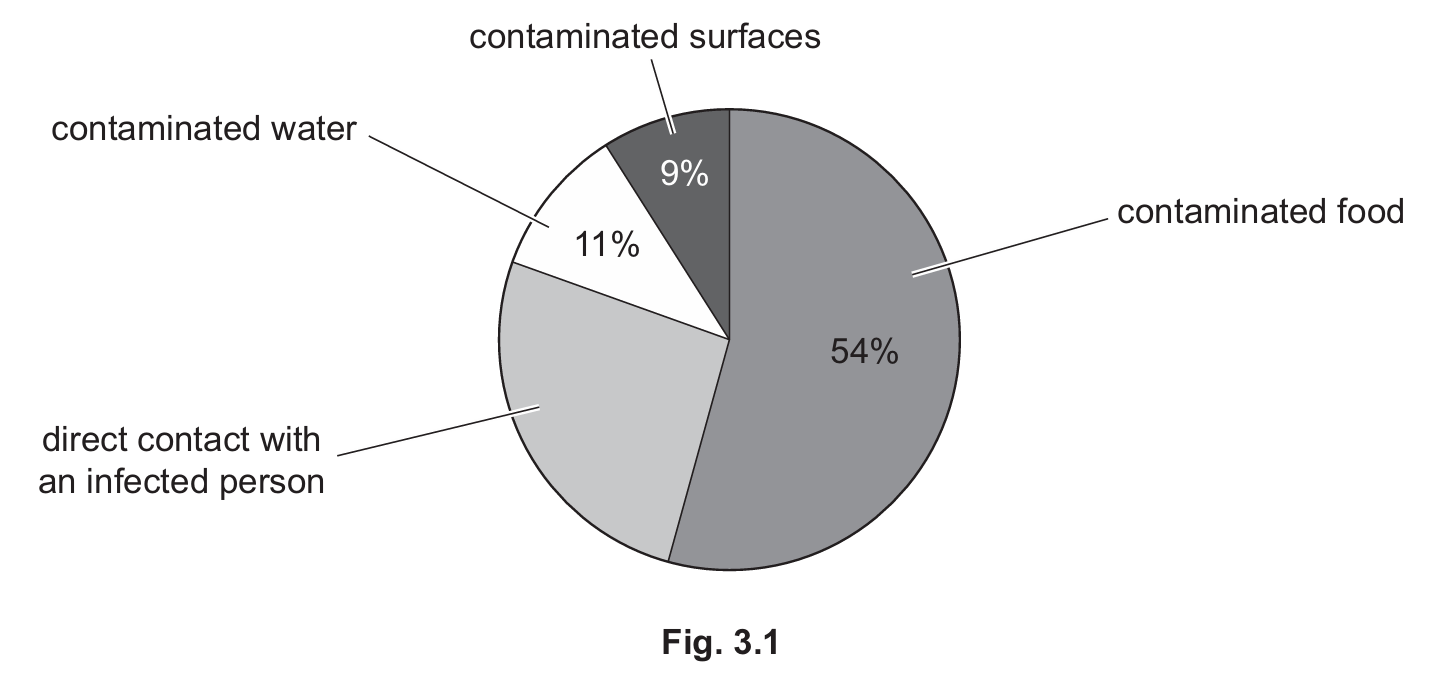
(i) To find the percentage for direct contact, subtract the other modes of transmission from $100\%$:
$$100\% – (54\% + 11\% + 9\%) = 100\% – 74\% = \mathbf{26\%}$$
(ii) The chart states that $11\%$ of cases are from contaminated water. To calculate the number of people out of 300:
$$\frac{11}{100} \times 300 = 0.11 \times 300 = \mathbf{33} \text{ people}$$
(c) Preventing Indirect Transmission
Indirect transmission occurs via contaminated surfaces, food, or water. Preventive measures include:
- Hygienic food preparation: Ensuring food is cooked thoroughly and stored correctly.
- Clean water supply: Boiling or treating water (chlorination) to kill pathogens.
- Personal hygiene: Washing hands thoroughly after using the toilet and before handling food.
- Waste disposal: Proper treatment of sewage to prevent water source contamination.
(d) Respiratory Defences
Body defences that prevent viruses in the air from reaching the lungs include:
- Mucus: Produced by goblet cells in the trachea and bronchi; it traps airborne particles and pathogens.
- Cilia: Hair-like structures on the lining of the airways that beat to sweep mucus (containing trapped pathogens) away from the lungs towards the throat to be swallowed.
- Nose hairs: Trap larger dust particles and pathogens entering the nose.
(e) Bacterium Structure
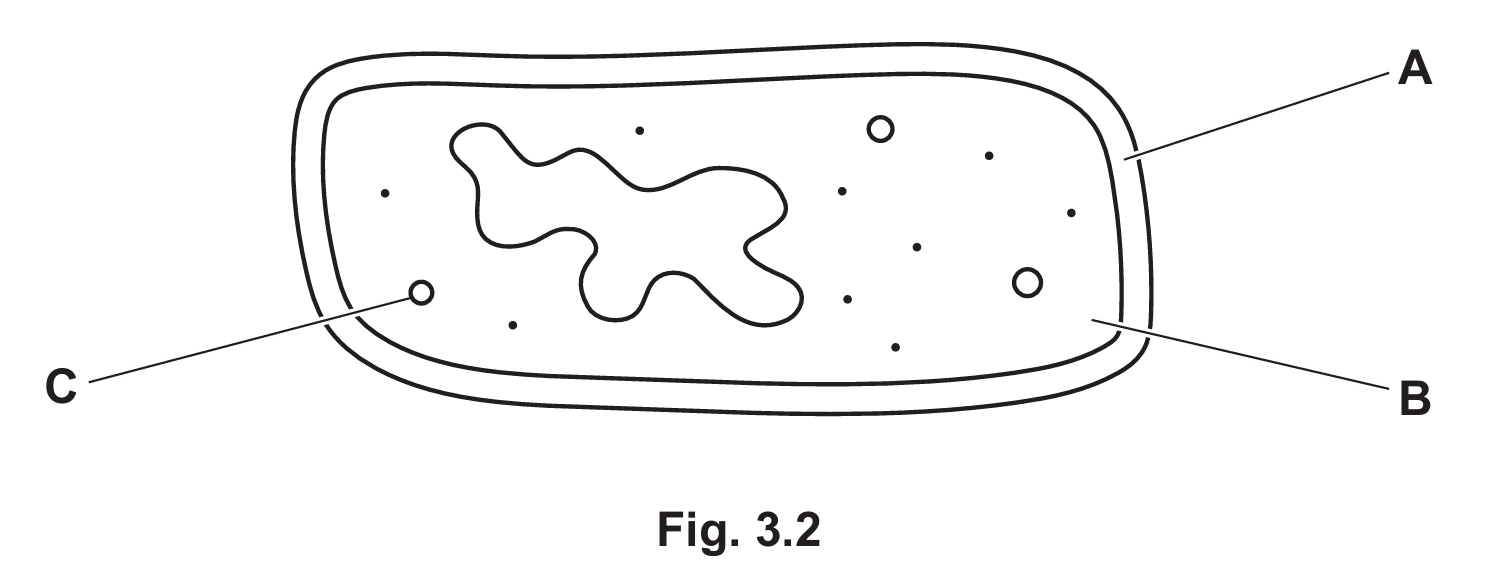
Based on the standard structure of a bacterial cell:
- A: Cell Wall (Provides structural support and protection).
- B: Cytoplasm (Site of metabolic reactions).
- C: Plasmid (Small circular loop of DNA).
▶️ Answer/Explanation
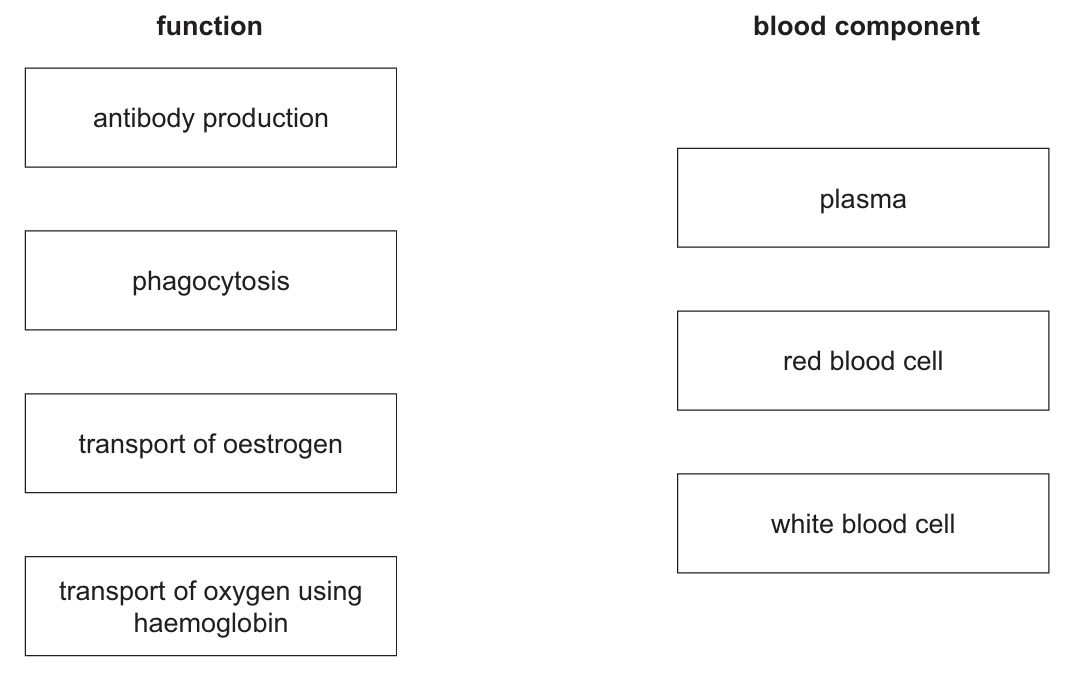
(a) Matching Functions:
• antibody production \(\rightarrow\) white blood cells
• transport of oxygen \(\rightarrow\) red blood cells
• transport of oestrogen \(\rightarrow\) plasma
• phagocytosis \(\rightarrow\) white blood cells
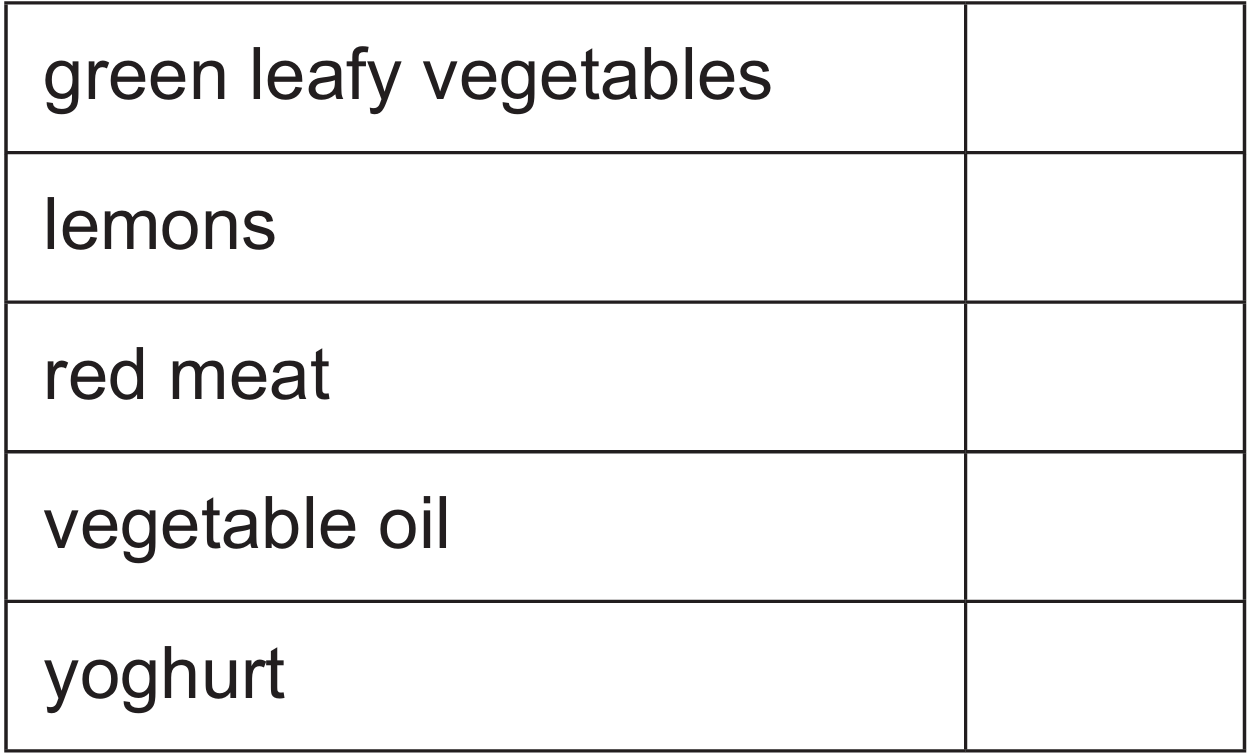
(b) (i) High Iron Foods:
The two correct boxes are:
• green leafy vegetables (\(\checkmark\))
• red meat (\(\checkmark\))
(b) (ii) Roles of Blood Clotting:
1. To prevent blood loss (stop bleeding).
2. To prevent the entry of pathogens (such as bacteria and viruses) into the body.
(c) Main Vessel:
The aorta.
Expert Explanation:
Blood Composition:
• Red blood cells: Contain haemoglobin to bind and transport oxygen from the lungs to respiring tissues.
• White blood cells: Part of the immune system. Phagocytes engulf pathogens (phagocytosis), and lymphocytes produce antibodies to neutralize them.
• Plasma: The liquid component that transports dissolved substances, including hormones (like oestrogen), nutrients (glucose, amino acids), carbon dioxide, and urea.
Clotting: When platelets encounter a damaged vessel, they trigger the conversion of fibrinogen to fibrin. This forms a mesh that traps blood cells, creating a clot to seal the wound and block infection.
Circulation: The aorta is the largest artery, carrying high-pressure, oxygenated blood from the left ventricle to the systemic circulation (the rest of the body).

▶️ Answer/Explanation
(a)
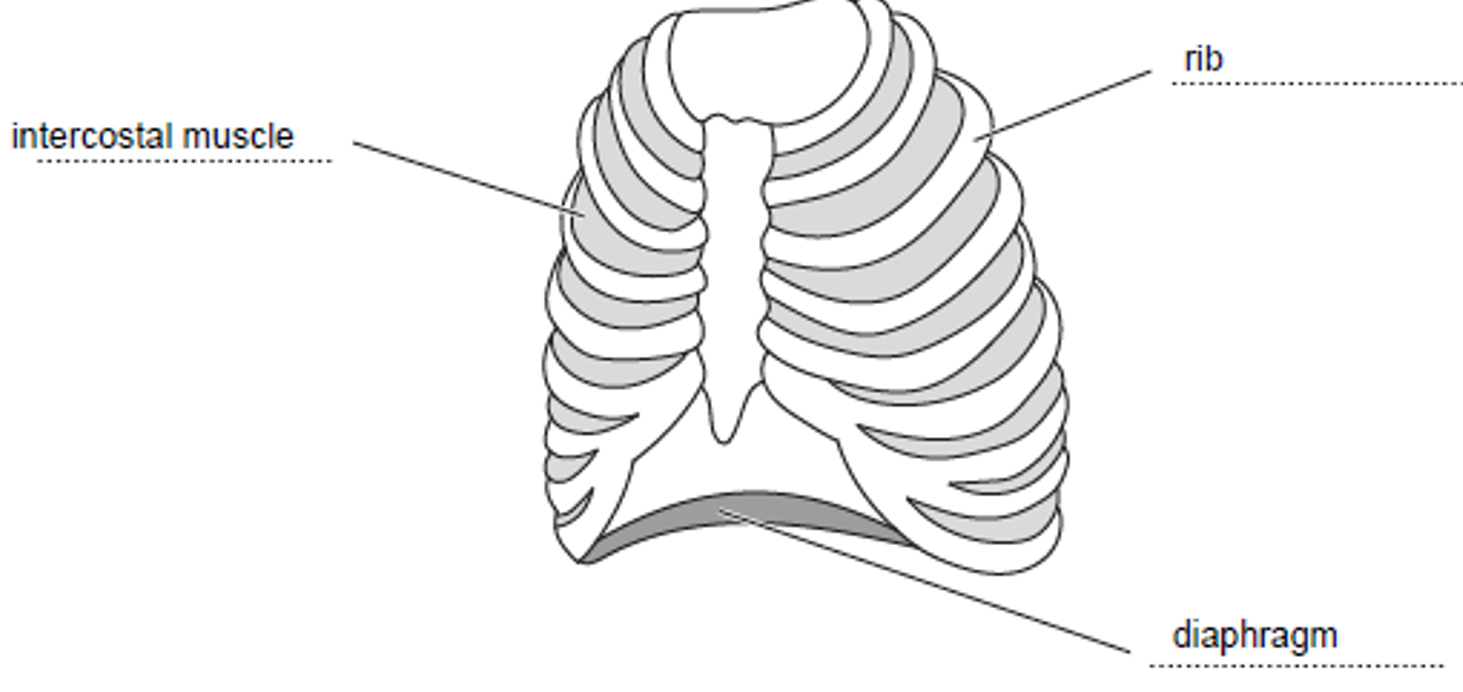
The correctly labelled structures are:
- Top-right label: Intercostal muscle(s)
- Left label: Rib
- Bottom label: Diaphragm
(b)
(i) The correct term to circle is bronchioles.
Explanation: The trachea divides into bronchi, which divide into bronchioles, which finally connect to the alveoli.
(ii) Lungs.
(c)
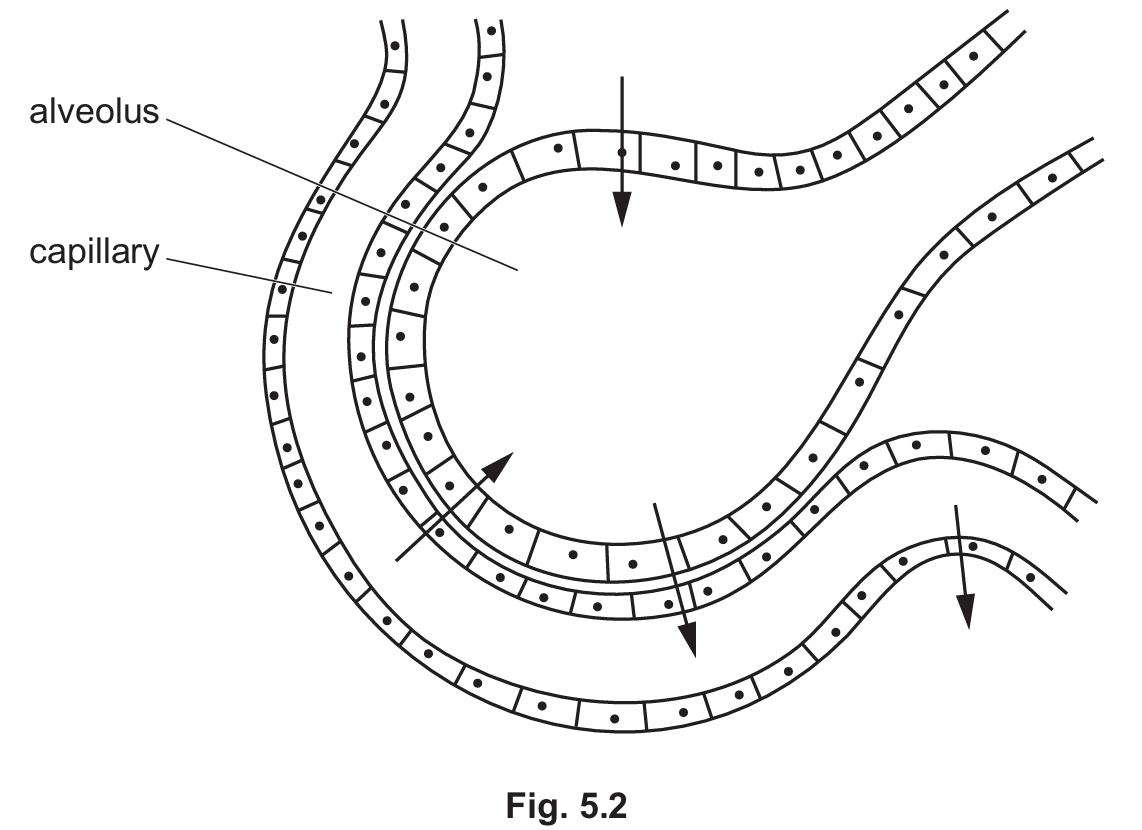
(i) The arrow pointing from the blood capillary into the alveolus (the upward/inward pointing arrow) should be circled.
Explanation: Carbon dioxide is a waste product that diffuses from the high concentration in the deoxygenated blood to the lower concentration in the alveolar air space to be exhaled.
(ii) The features include (any three):
- Large surface area: Millions of alveoli provide a vast area for diffusion.
- Thin walls: The walls are one cell thick, providing a short diffusion distance.
- Good blood supply: A dense capillary network maintains the concentration gradient.
- Moist lining: Allows gases to dissolve before diffusing.
(d)
(i) \(\text{glucose} + \text{oxygen} \longrightarrow \text{carbon dioxide} + \text{water}\)
(ii) Mitochondria (or mitochondrion).
▶️ Answer/Explanation
6 (a)
Diffusion is the net movement of particles from a region of their higher concentration to a region of their lower concentration (down a concentration gradient) .
The energy for diffusion comes from the kinetic energy of the random movement of molecules.
6 (b)(i)
Carbon, hydrogen, oxygen .
Note: All carbohydrates (including starch, glycogen, and cellulose) and fats are made of these three elements.
6 (b)(ii)
Cellulose (or sucrose, fructose) .
Explanation: Plants synthesize cellulose from glucose to build cell walls. Sucrose is also made from glucose for transport in the phloem .
6 (c)(i)
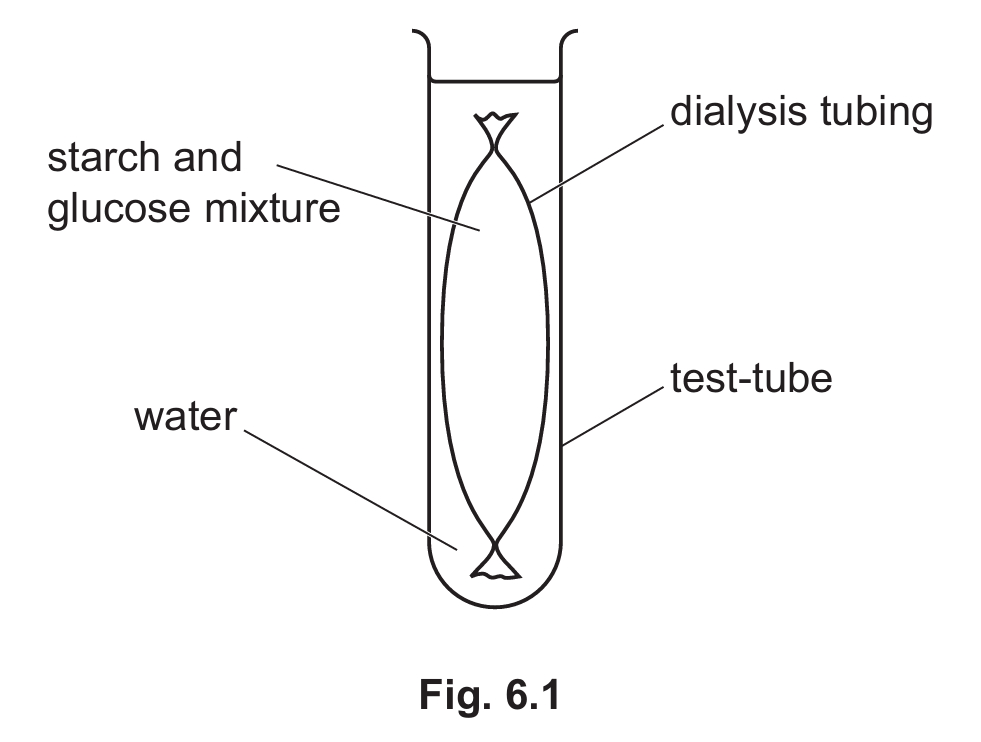
Cell membrane .
Explanation: The dialysis tubing is a partially permeable membrane that controls which substances can enter or leave the model cell, similar to a cell membrane’s function .
6 (c)(ii)
Glucose moved out because it is a small, soluble molecule that can fit through the pores of the dialysis tubing. Starch did not move out because it is a large, insoluble molecule (polymer) that is too big to pass through the pores.
6 (d)
Amylase .
Explanation: Amylase is the enzyme responsible for breaking down starch into simple reducing sugars (maltose).

▶️ Answer/Explanation
(a)(i)
Answer: Elephas
Explanation: In the binomial system of nomenclature (Scientific naming), the name is composed of two parts: the Genus followed by the species. The scientific name given is Elephas maximus. Therefore, Elephas is the genus. Note that genus names must always start with a capital letter.
(a)(ii)
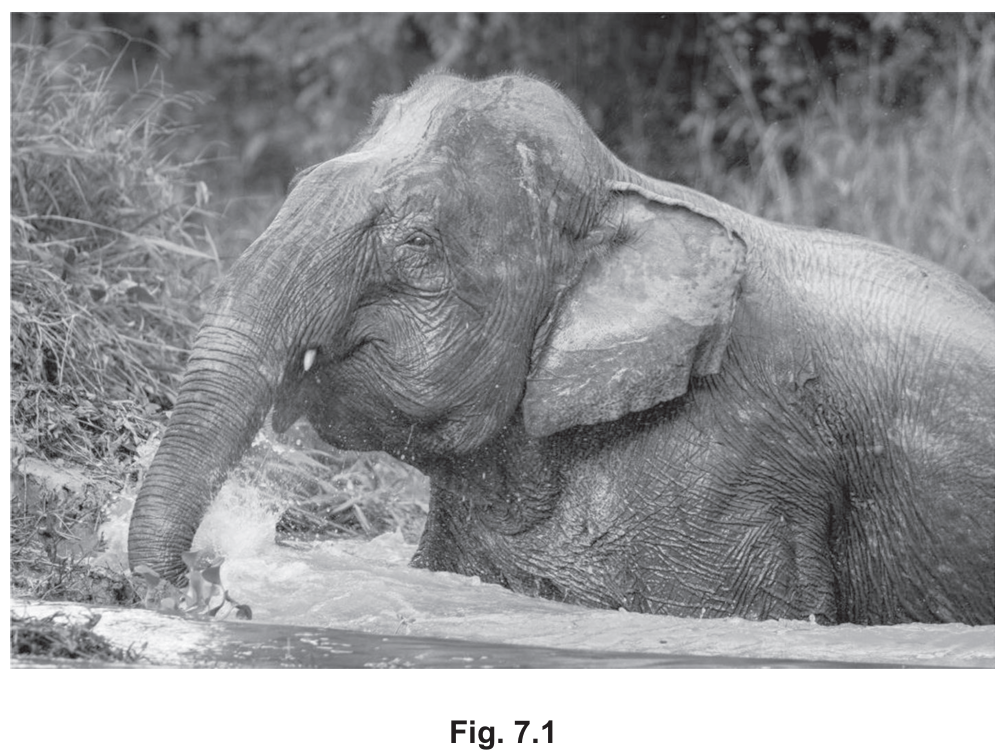
Answer: Hair / external ear / pinna
Explanation: Mammals are distinguished by specific visible features. In the photograph (Fig. 7.1), the presence of hair (even if sparse on an elephant) and the pinna (the external ear flap) are diagnostic features of the class Mammalia.
(b)(i)
Answer: (Bearded) pig
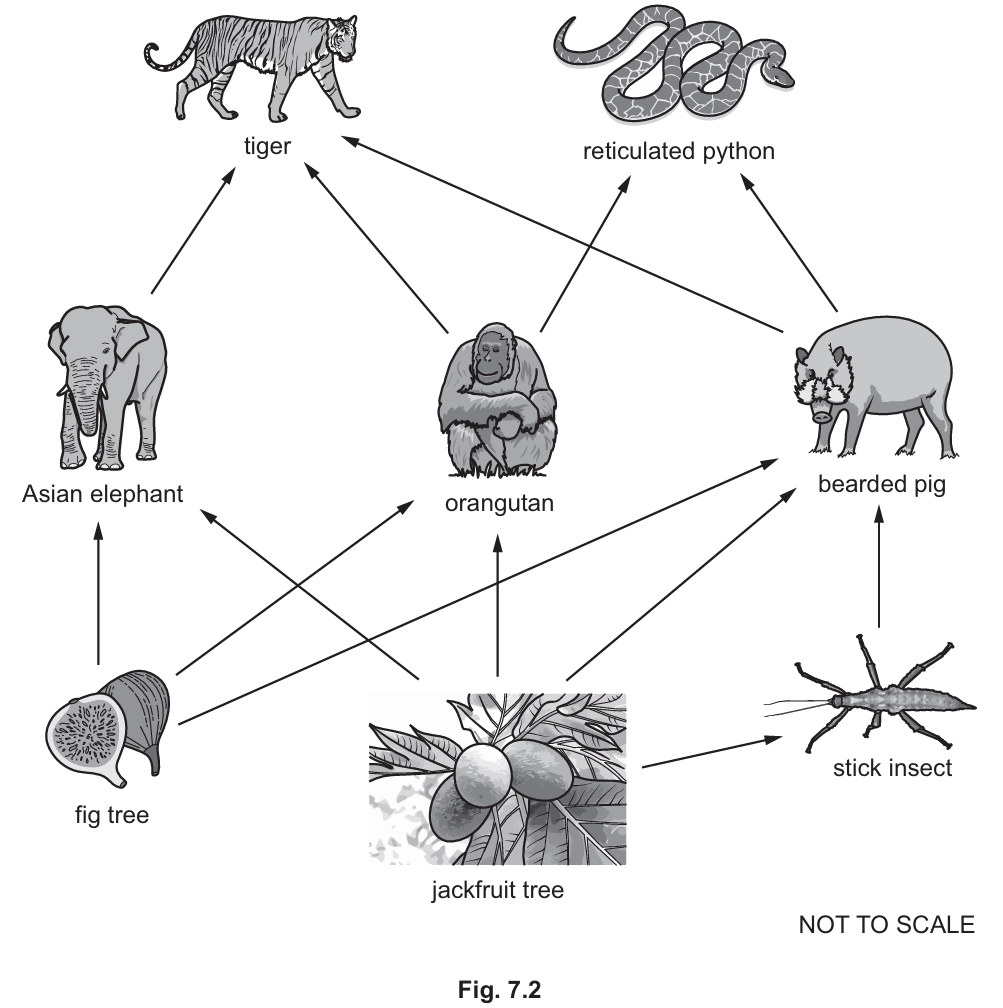
Explanation: An organism that eats both plants and animals is an omnivore. In the food web, arrows point from the food source to the consumer. The bearded pig has arrows pointing to it from the jackfruit tree (plant) and the stick insect (animal), making it both a herbivore and a carnivore (omnivore).
(b)(ii)
Answer: (Reticulated) python OR Tiger
Explanation: A tertiary consumer feeds on secondary consumers (who feed on primary consumers).
Path example 1: Jackfruit tree $\rightarrow$ Stick insect $\rightarrow$ Bearded pig $\rightarrow$ Tiger.
Path example 2: Jackfruit tree $\rightarrow$ Stick insect $\rightarrow$ Bearded pig $\rightarrow$ Python.
In these chains, the tiger and python act as tertiary consumers (4th trophic level).
(b)(iii)
Answer: Fig (tree) OR jackfruit (tree)
Explanation: Producers are organisms that make their own nutrients, usually using sunlight (plants). In a food web diagram, producers are at the base and have no arrows pointing towards them (no predation upon them is shown, or rather, they do not consume others). Both trees listed are producers.
(b)(iv)
Answer: Stick insect
Explanation: Arthropods are invertebrates with an exoskeleton, segmented bodies, and jointed legs. The stick insect fits this description.
(b)(v)
Answer: Fig (tree) / Jackfruit (tree) $\longrightarrow$ Orangutan $\longrightarrow$ Tiger / (Reticulated) python
Explanation: The question requires a chain including the orangutan.
1. The orangutan eats fruit (arrow from Fig or Jackfruit tree).
2. The orangutan is eaten by predators (arrow to Tiger or Python).
Therefore, the sequence is: Producer $\rightarrow$ Primary Consumer (Orangutan) $\rightarrow$ Secondary Consumer.
(b)(vi)
Answer: A unit containing the community of organisms and their environment interacting together.
Explanation: An ecosystem is defined by the interaction between the biotic factors (the community of living organisms) and the abiotic factors (the physical environment) in a specific area.
(c)
Answer:
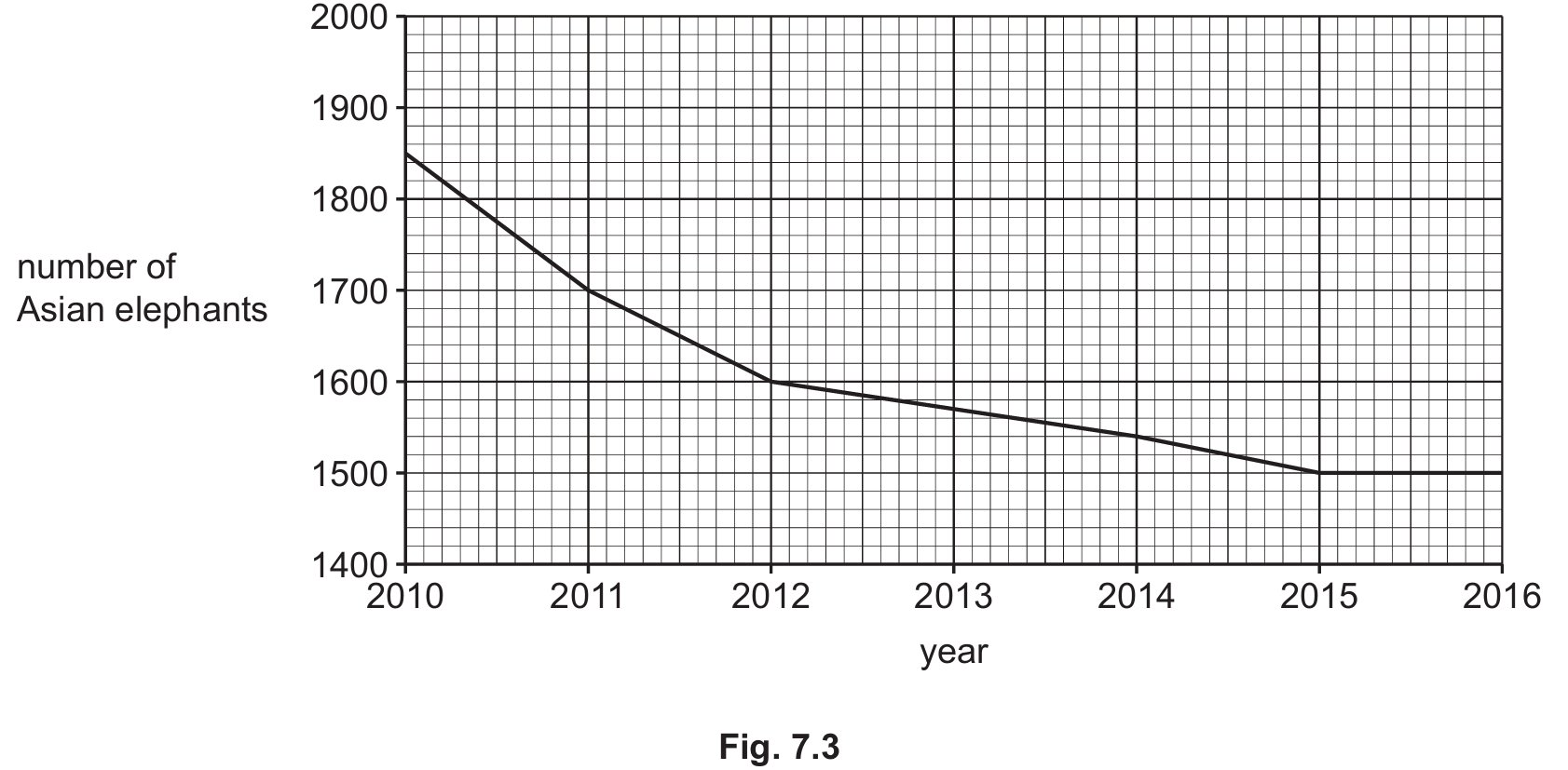
• The population decreases.
• The decrease is from $1850$ to $1500$ (a drop of $350$).
• The population becomes stable / stays the same from $2015$ to $2016$.
• The decrease is most rapid in the first two years ($2010–2012$).
Explanation: When describing a graph, you must state the general trend (decrease) and support it with specific data points extracted from the axes. The graph starts at $1850$ in $2010$ and drops to $1500$ by $2015$, after which the line becomes horizontal (plateaus).
(d)
Answer: (Any three from the following):
• Habitat loss / deforestation / fragmentation
• Loss of food source
• Hunting / poaching / predation / overharvesting
• Climate change / global warming
• Pollution
• Disease
• Introduced species
Explanation: These are the standard biological factors that drive species toward extinction. For elephants specifically, habitat destruction (for farming) and poaching (for ivory) are major drivers, but the mark scheme accepts general valid reasons for organisms becoming endangered.