
▶️ Answer/Explanation
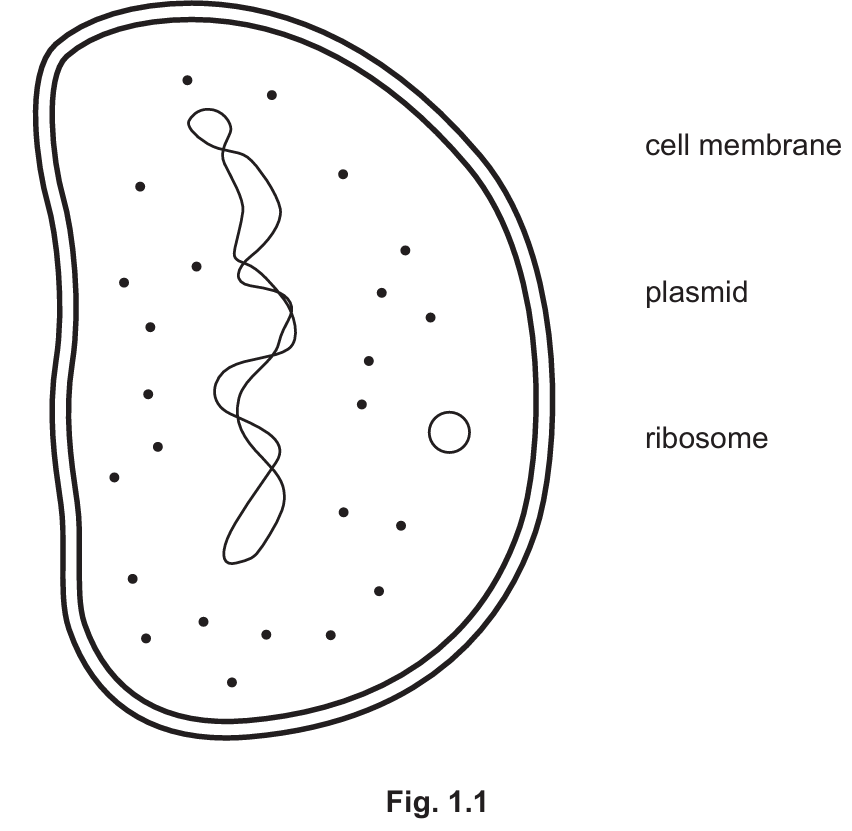
(a)(i) Identification of Structures:
• Cell Membrane: The inner boundary line of the cell (inside the cell wall).
• Plasmid: The small, circular ring of DNA separate from the main genetic material.
• Ribosome: Any of the small dots scattered throughout the cytoplasm.
(a)(ii) Characteristics of Living Organisms:
Any two from: Movement, Respiration, Sensitivity, Growth, Reproduction, Excretion, or Nutrition (often remembered by the acronym MRS GREN).
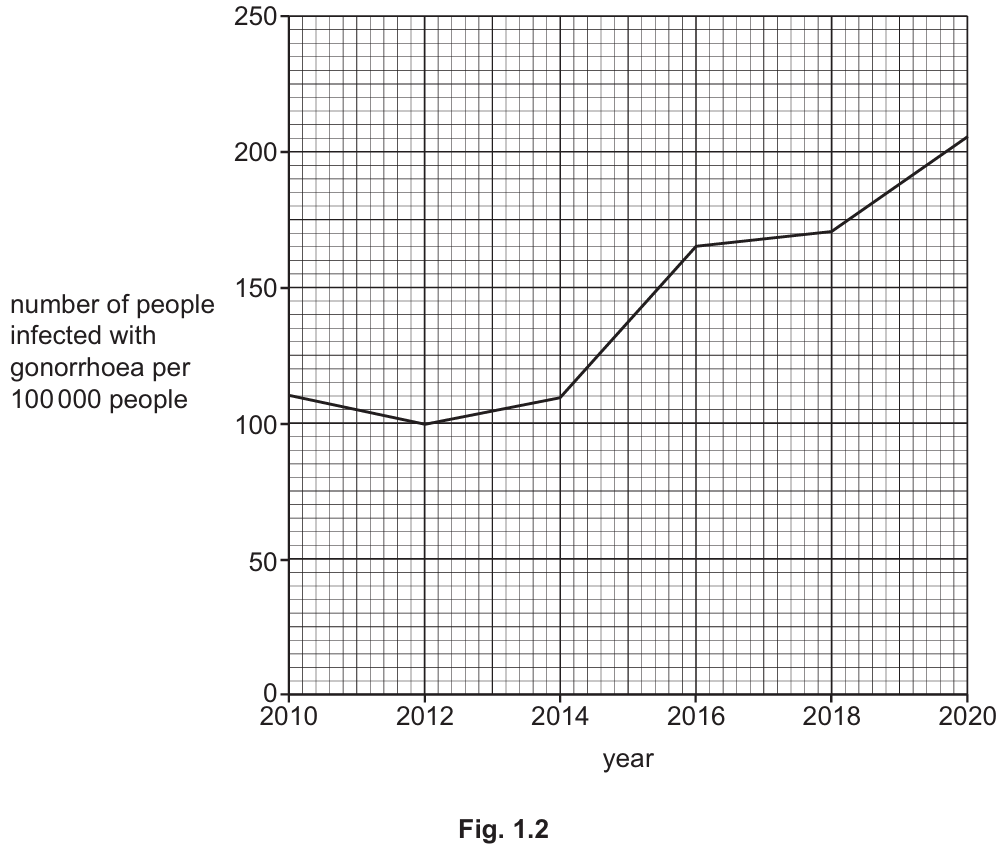
(b)(i) Data Description:
• Overall, the number of people infected increased.
• The two-year period with the largest change is from $2014$ to $2016$ (represented by the steepest part of the slope).
• In $2020$, the number of people infected was $205$ per $100,000$ people.
(b)(ii) Calculation:
From the graph, the rate in $2012$ was $100$ per $100,000$ people.
$$\text{Total infections} = \left( \frac{100}{100,000} \right) \times 800,000 = 800 \text{ people}$$
(c) Antibiotic Effectiveness:
The bacteria have developed antibiotic resistance. This often occurs due to random mutations that allow certain bacteria to survive the treatment and pass on their resistant genes to offspring.
(d) Methods of Control:
• Use of barrier contraception (e.g., condoms or femidoms) to prevent fluid exchange.
• Increased testing and screening to identify and treat asymptomatic carriers.
• Contact tracing to ensure partners of infected individuals are also treated.
• Education regarding safe sex practices and the risks of STIs.
Bacteria are prokaryotic organisms, meaning they lack a nucleus. Instead, their genetic material consists of a main circular chromosome and smaller rings called plasmids, which often carry genes for antibiotic resistance. When we look at population data like Fig. 1.2, we measure the incidence of a disease. The calculation in (b)(ii) uses a ratio; since the rate is “per $100,000$,” and the population is $8$ times that amount ($800,000$), we simply multiply the rate by $8$. Regarding antibiotics, it’s important to understand that individuals don’t become resistant—the bacteria do. This is a classic example of natural selection where the antibiotic acts as a selection pressure.
▶️ Answer/Explanation
(a) (i)
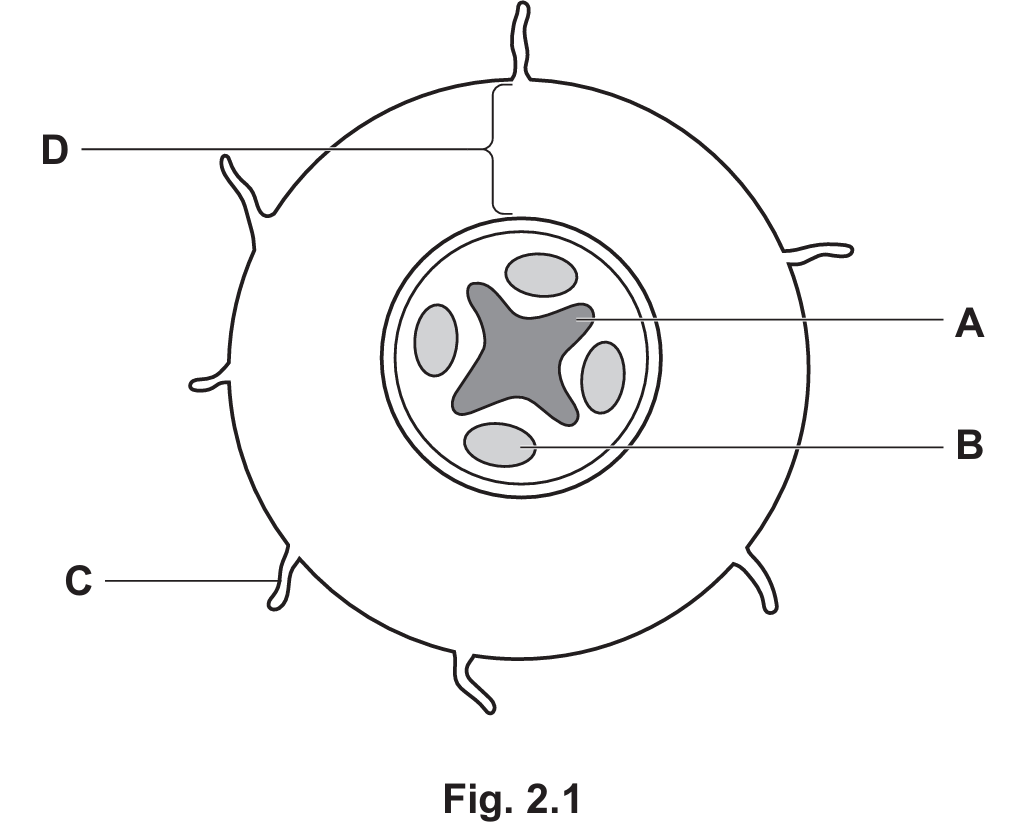
Tissue that transports amino acids: B (Phloem)
Xylem tissue: A
Explanation: In the root of a dicotyledonous plant, the vascular tissues are centrally located. The xylem (A) typically forms a central star shape or cross, and the phloem (B) is located between the arms of the xylem star. Phloem is responsible for the transport of sucrose and amino acids.
(a) (ii)
Name of cells in D: Cortex cells
Explanation: The cortex is the tissue located between the epidermis and the central vascular cylinder. Water passes through root cortex cells on its way to the xylem.
(b)
1. Transport of water and mineral ions
2. Support
Explanation: Xylem vessels have thick walls strengthened with lignin (even though details of lignification are not required for Core, the support function is key). This allows them to withstand pressure and support the plant while transporting water.
(c) (i)
Structure C: Root hair cell
(c) (ii)
Process: Osmosis
(c) (iii)
Feature: Large surface area
Explanation: Root hair cells are adapted for absorption. Their long, hair-like extensions provide a large surface area to maximize the rate of absorption of water and mineral ions from the soil.
(d)
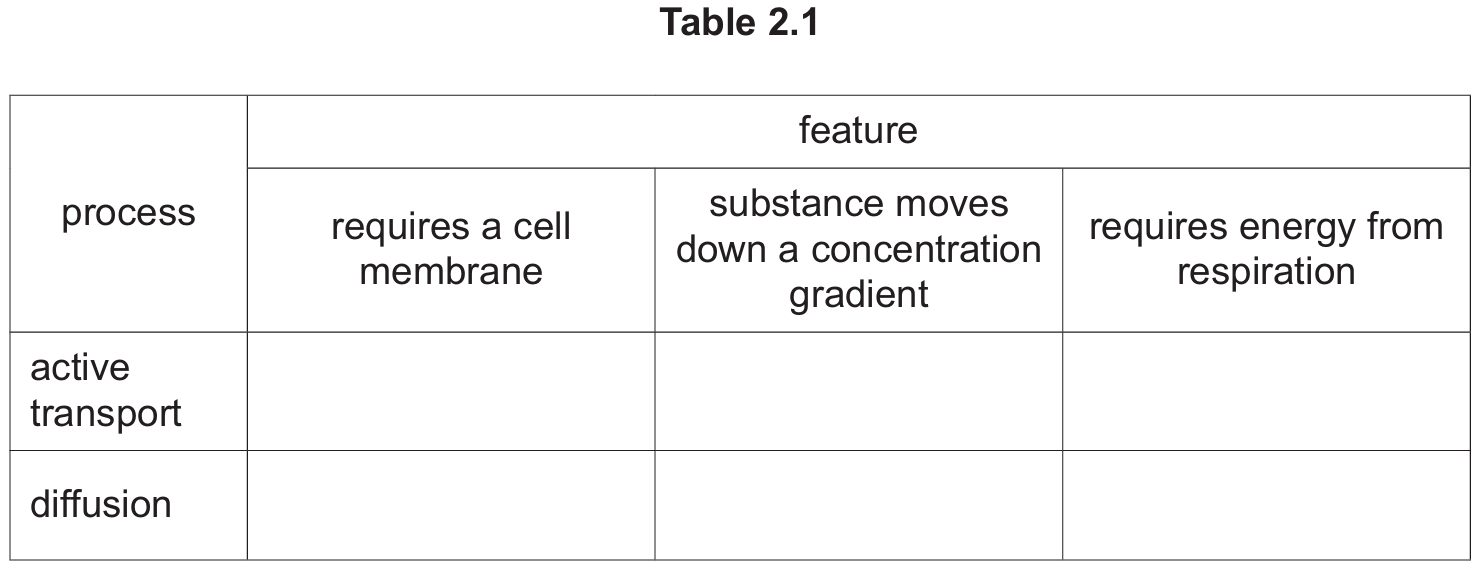
Completed Table 2.1:

Explanation:
Active Transport requires energy (from respiration) to move particles against a concentration gradient, using protein carriers in the cell membrane.
Diffusion is the net movement of particles from a region of higher concentration to lower concentration due to random movement. It does not require energy.
(e)
Structure: Mitochondria
Explanation: Aerobic respiration is the chemical reaction in cells that uses oxygen to break down nutrient molecules to release energy. This process occurs in the mitochondria.
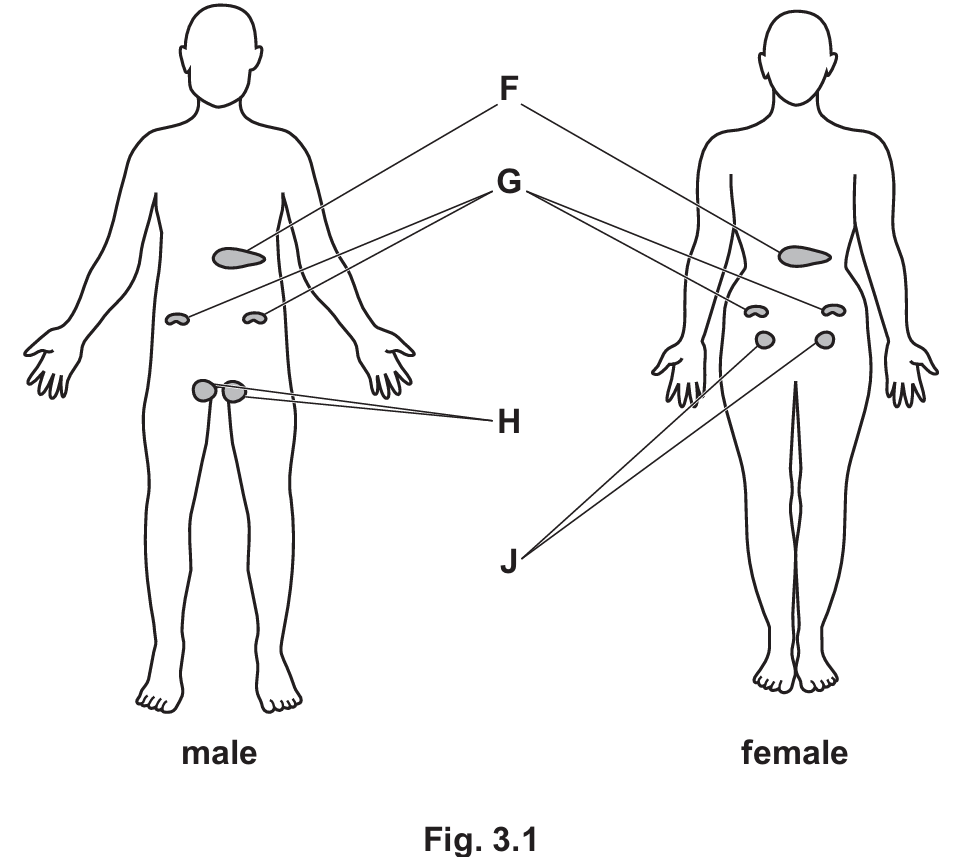
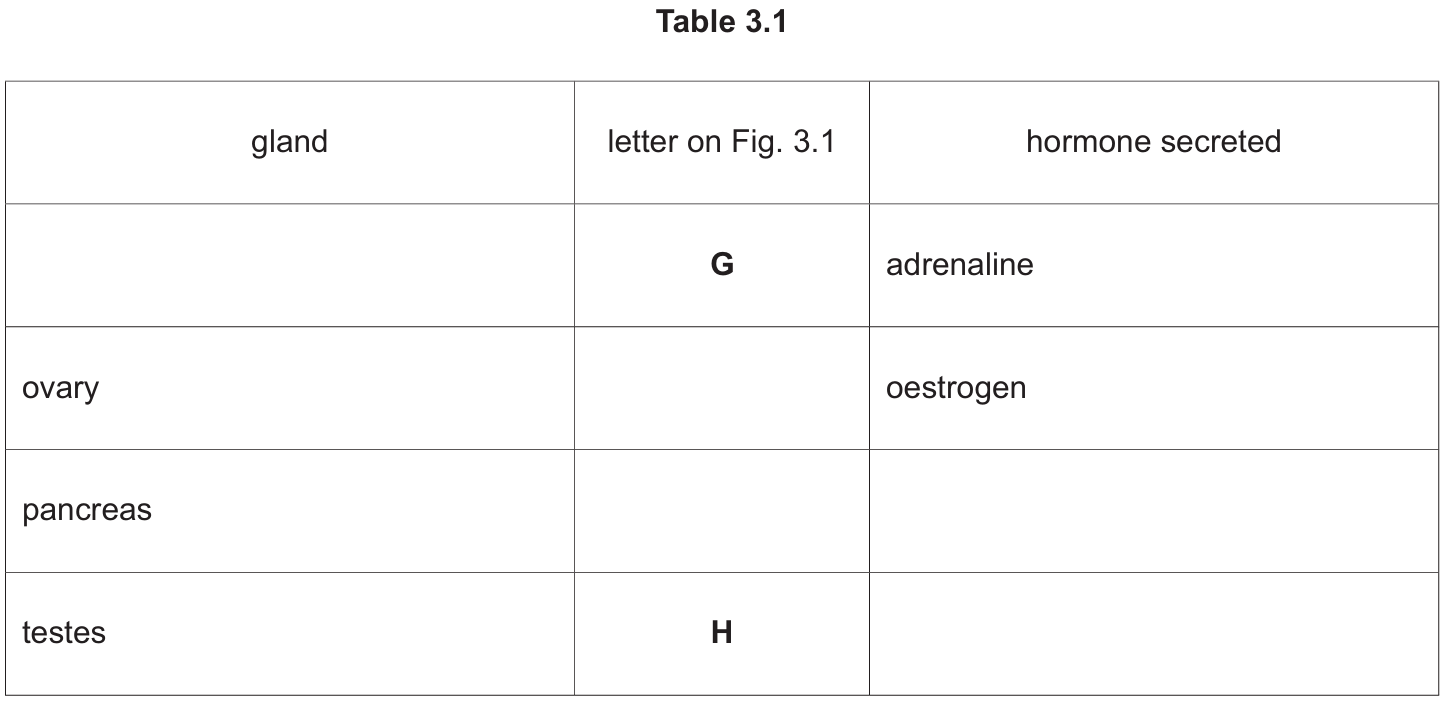
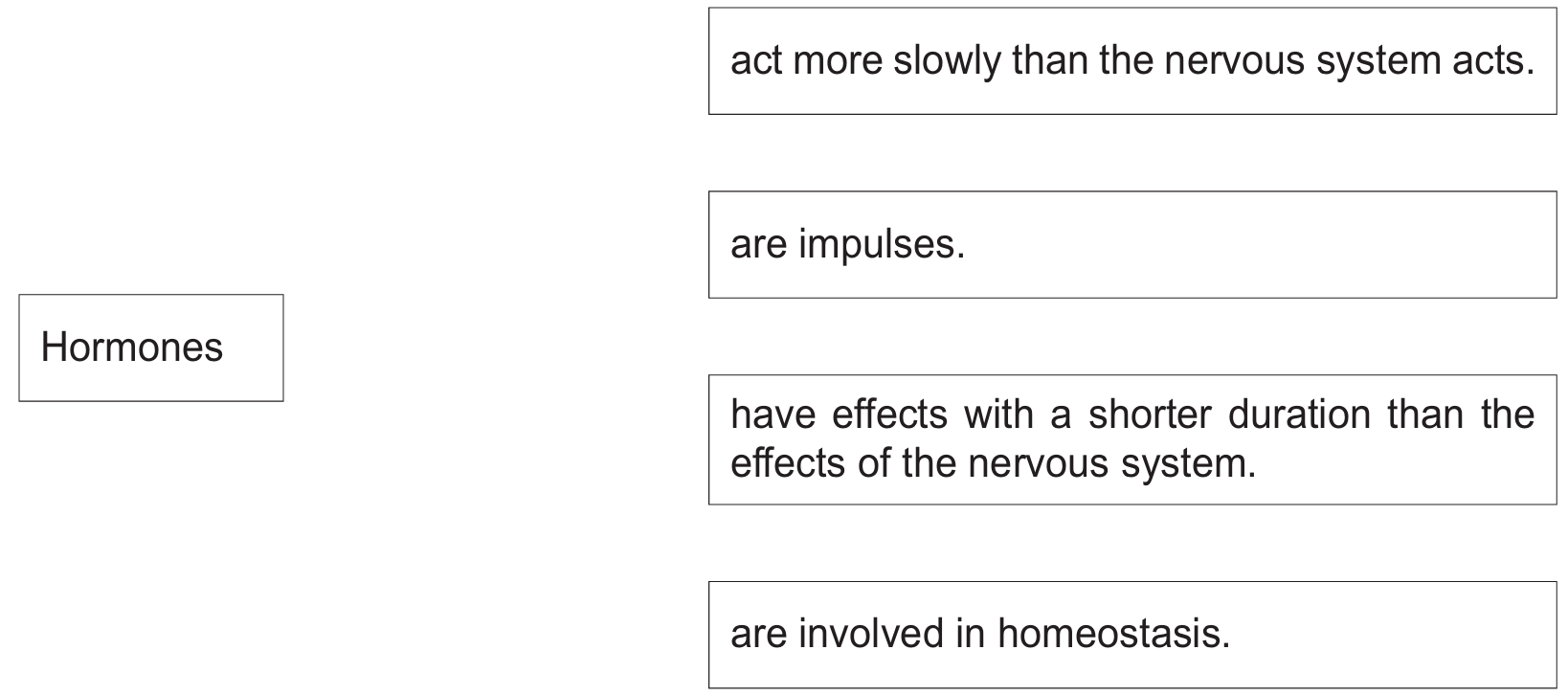
▶️ Answer/Explanation
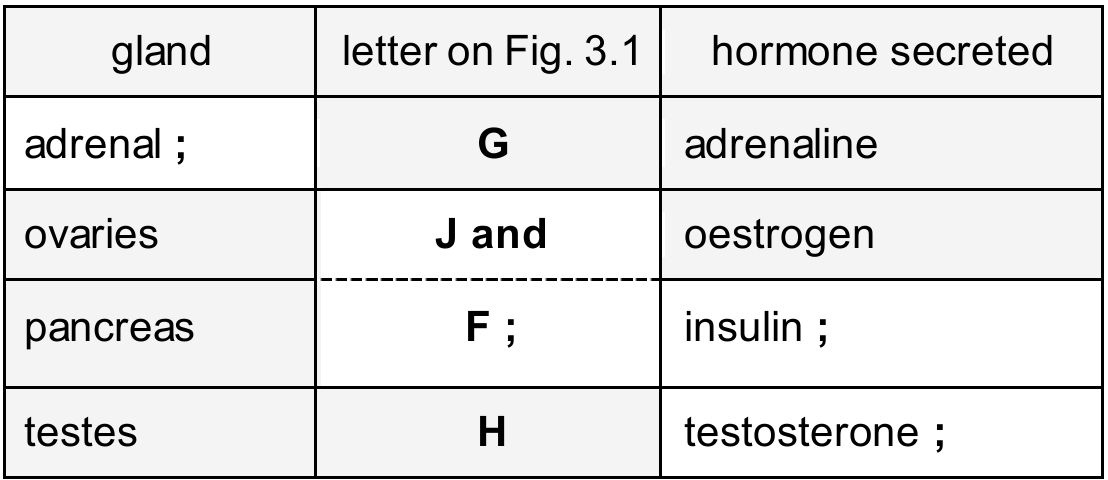
Explanation:
G (Adrenal Gland): Located immediately above the kidneys .
J (Ovary): Located in the lower abdomen of the female diagram .
F (Pancreas): Located behind the stomach, typically leaf-shaped .
H (Testes): Located in the scrotal sac of the male diagram .
A hormone is a chemical substance produced by a gland and carried by the blood, which alters the activity of one or more specific target organs .
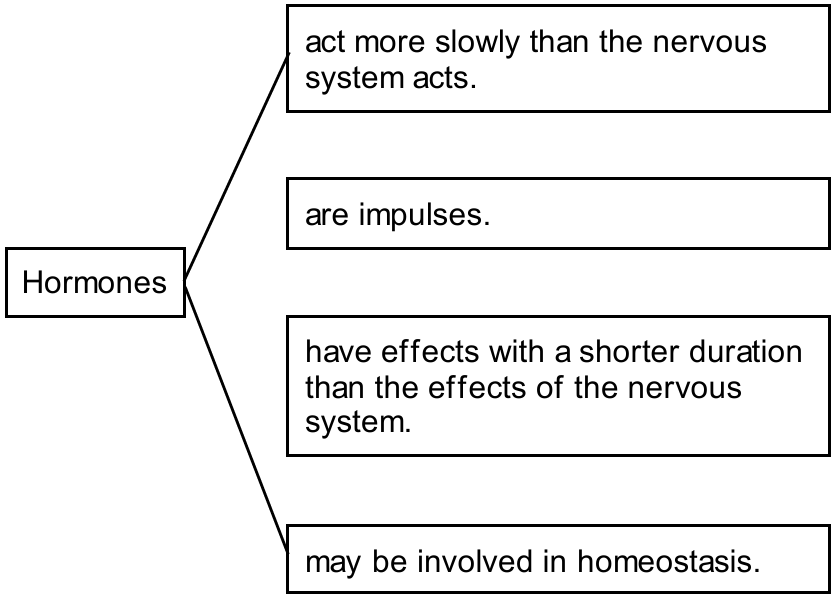
The two correct completions are:
- Hormones act more slowly than the nervous system acts .
- Hormones are involved in homeostasis .
Reasoning: The nervous system uses electrical impulses for rapid, short-term responses, whereas hormonal control is slower and longer-lasting. Many hormones (like insulin) regulate internal conditions (homeostasis).
1. Adrenaline is secreted to prepare the body for action.
(Often called the “fight or flight” response).
2. The heart rate increases to pump more blood containing oxygen to the muscles.
(Muscles need oxygen for aerobic respiration to generate energy).
3. The breathing rate increases to excrete more carbon dioxide from the body.
(High rates of respiration produce (\text{CO}_2) as a waste product, which must be removed).
4. The diameter of the pupils increases to let in more light.
(Dilated pupils improve vision in dim light, helping with situational awareness).
▶️ Answer/Explanation
(a) Word equation for photosynthesis:
\[\text{carbon dioxide} + \text{water} \xrightarrow{\text{light, chlorophyll}} \text{glucose} + \text{oxygen}\]
Note: The arrow typically signifies the presence of light energy and chlorophyll, which are required for the reaction but are not reactants themselves. [cite: 335]
(b)(i) Structure for photosynthesis:
Chloroplasts. [cite_start]These are the organelles within plant cells that contain the machinery necessary for photosynthesis. [cite: 250, 335]
(b)(ii) Pigment name:
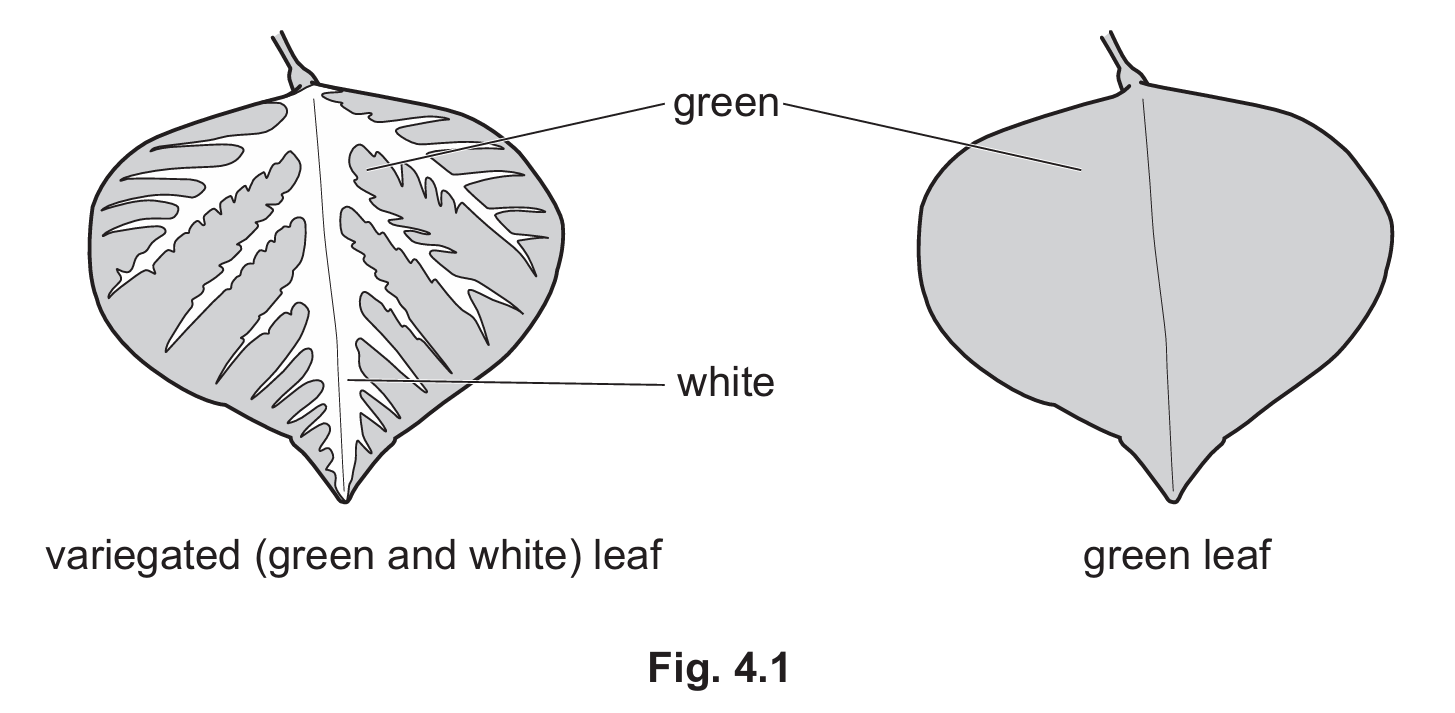
Chlorophyll. This is the green pigment responsible for absorbing light energy. [cite_start]It is absent in the white areas of a variegated leaf. [cite: 335]
(c)(i) Percentage decrease calculation:
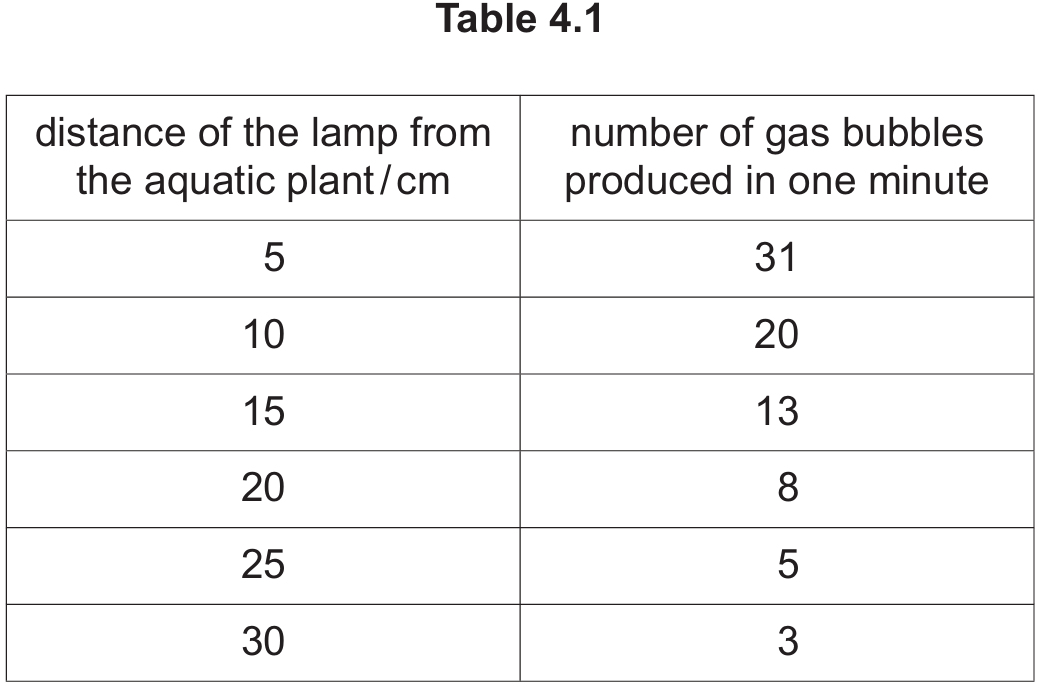
First, identify the number of bubbles at the two specified distances from Table 4.1:
- At \(15 \, \text{cm}\): \(13\) bubbles
- At \(30 \, \text{cm}\): \(3\) bubbles
Calculate the decrease in the number of bubbles: \[\text{Decrease} = 13 – 3 = 10\] Calculate the percentage decrease relative to the starting value (\(15 \, \text{cm}\)): \[\text{Percentage Decrease} = \frac{\text{Decrease}}{\text{Original Value}} \times 100\] \[= \frac{10}{13} \times 100 \approx 76.92\%\] Rounded to a whole number: 77%.
(c)(ii) Describe and explain the results:
Description (What the data shows):
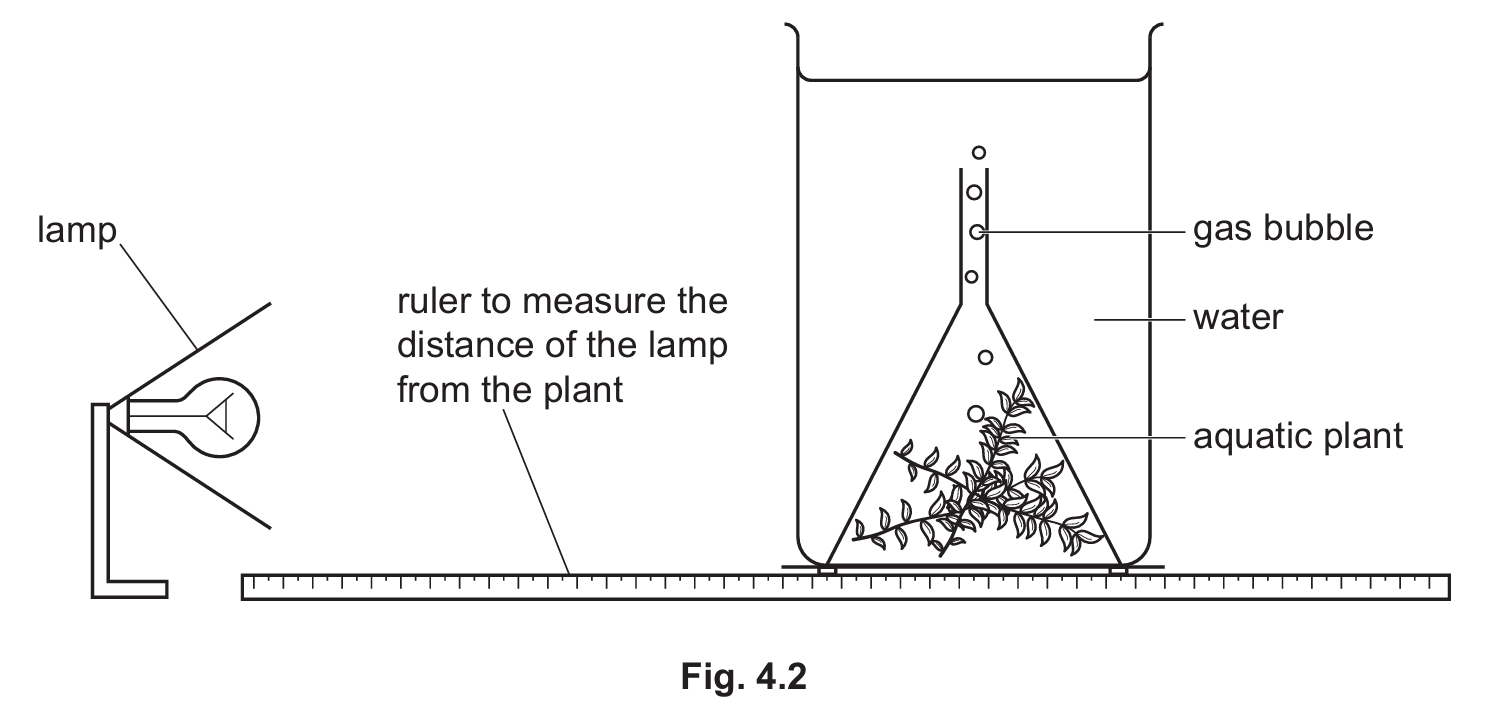
- There is a negative correlation between distance and the rate of bubbling. [cite_start]As the distance of the lamp from the plant increases, the number of gas bubbles produced per minute decreases. [cite: 351]
- For example, at \(5 \, \text{cm}\) there are \(31\) bubbles, dropping to only \(3\) bubbles at \(30 \, \text{cm}\).
Explanation (Why it happens):
- Light Intensity: Light is a limiting factor for photosynthesis. [cite_start]As the lamp moves further away, the light intensity reaching the plant decreases (following the inverse square law). [cite: 351][cite_start]
- Photosynthesis Rate: Less light energy means less energy is available to drive the photosynthetic reaction. [cite: 335]
- Oxygen Production: The bubbles are composed of oxygen gas, which is a product of photosynthesis. [cite_start]Therefore, a lower rate of photosynthesis results in less oxygen being released, leading to fewer bubbles. [cite: 335]
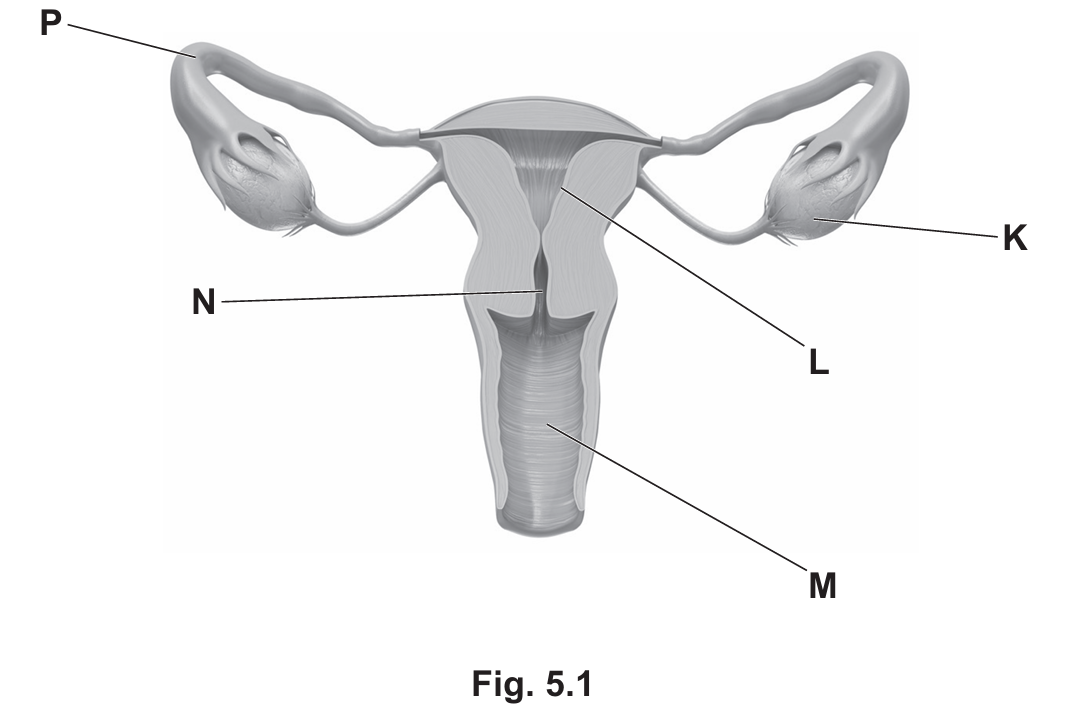
▶️ Answer/Explanation
(a) (i)
The structure that releases egg cells: K
The structure where fertilisation usually occurs: P
The structure where an embryo implants: L
(a) (ii)
L: Uterus
M: Vagina
N: Cervix
(b)
Adaptive features of egg cells include:
- Energy stores: The cytoplasm contains a large amount of nutrients (yolk) to support the zygote after fertilisation until it can implant .
- Jelly coat: A protective outer layer (zona pellucida) that hardens after the entry of a sperm cell to prevent polyspermy (fertilisation by more than one sperm) .
Part (a)(i) – Function Identification:
- K (Ovary): The ovaries are the site of oogenesis (egg production). During ovulation, a mature egg is released from the ovary into the abdominal cavity to be picked up by the oviduct.
- P (Oviduct / Fallopian Tube): This tube connects the ovary to the uterus. Fertilisation (the fusion of sperm and egg) typically happens here as the egg travels toward the uterus.
- L (Uterus Lining / Endometrium): If fertilisation is successful, the zygote divides to form an embryo which embeds (implants) itself into the soft, blood-rich lining of the uterus to develop.
Part (a)(ii) – Anatomy Identification:
- L (Uterus): Often called the womb, this is the muscular organ where the fetus develops.
- N (Cervix): This is the ring of muscle at the lower neck of the uterus that separates it from the vagina. It helps hold the fetus in place during pregnancy and dilates during birth.
- M (Vagina): This is the muscular tube leading from the external genitals to the cervix. It acts as the birth canal and receives the penis during intercourse.
Part (b) – Adaptations:
Egg cells (ova) are highly specialized for their function. Unlike sperm, which are built for motility (movement), eggs are built for survival and development. They are large cells packed with cytoplasm containing energy stores to sustain early division. They also possess a chemical mechanism in their jelly coat that changes immediately upon fertilisation, creating a barrier that ensures only one set of male chromosomes enters the egg.
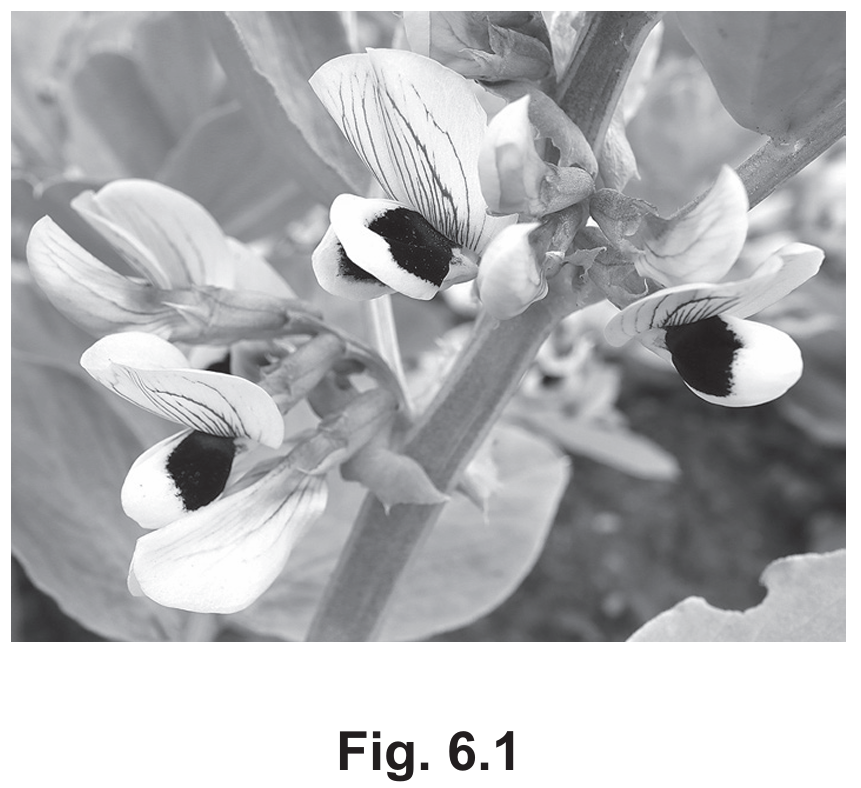

▶️ Answer/Explanation
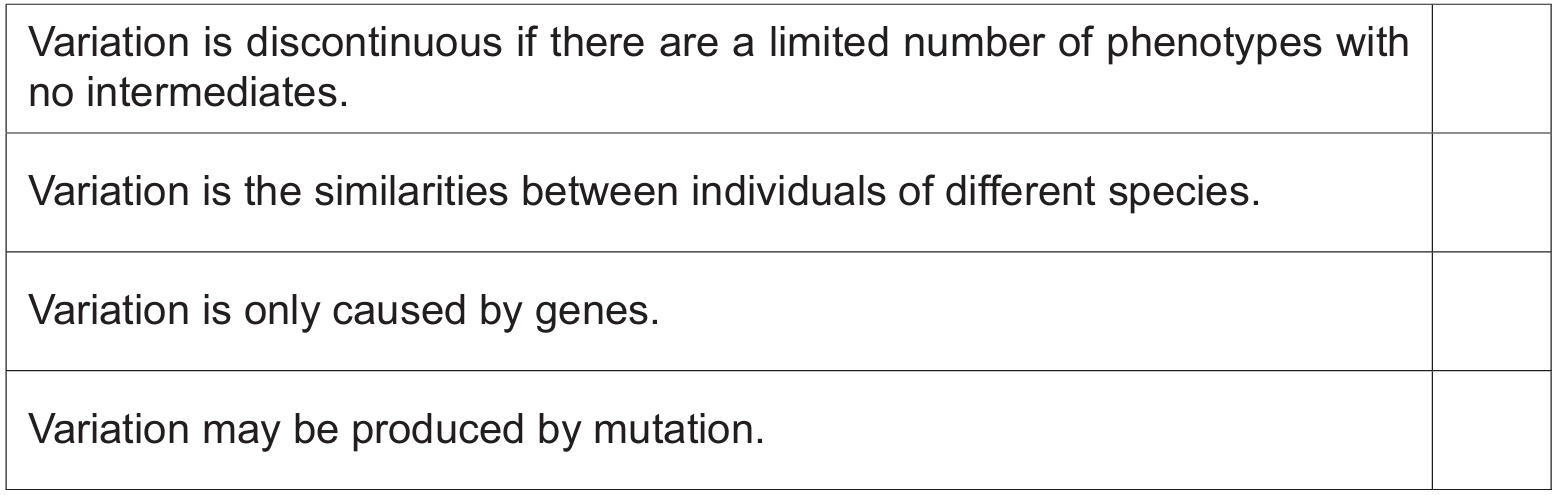
6 (a)
The correct statements are: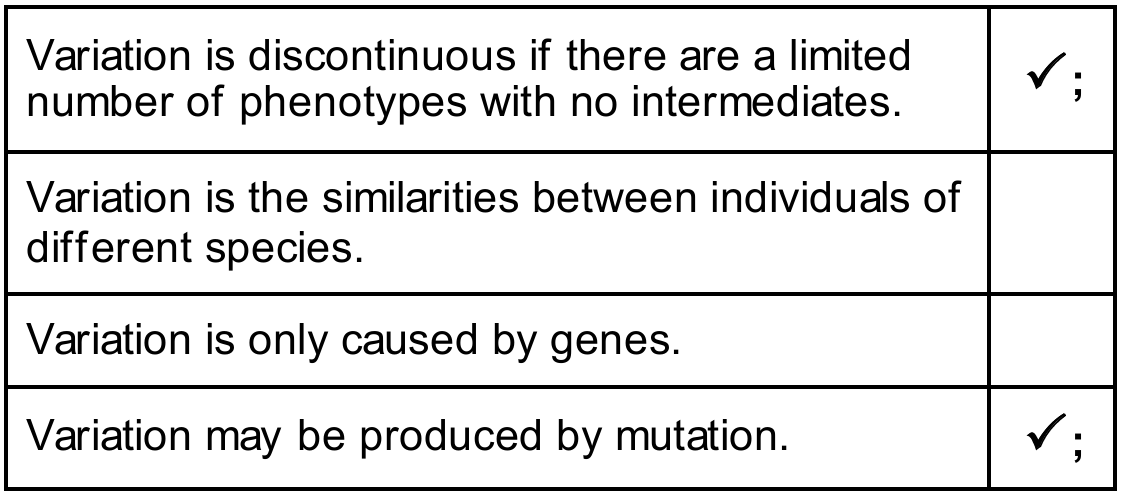
Explanation: Discontinuous variation (such as blood groups) is usually caused by genes only and results in distinct phenotypes with no intermediates. Mutation is a random genetic change and is a source of genetic variation in populations.
(b) (i)
Step 2: Breed (cross) the selected plants (with the highest drought tolerance) together.
Step 3: Select the offspring with the highest drought tolerance and repeat the process for many generations.
Explanation: This describes the process of selective breeding where humans select individuals with desirable features (drought tolerance) and cross them to pass alleles to the next generation.
(b) (ii)
Selective breeding (or artificial selection).
(c) (i)
Vicia
Explanation: According to the binomial system, the scientific name of an organism is made up of two parts showing the genus and species. The first name is the genus and is always capitalized.
(c) (ii)
Punnett Square Calculation:
The plant with yellow spots is recessive (bb), producing only gametes with b. The plant with black spots is heterozygous (Bb) as implied by the gametes in the table header (B and b).

Phenotypic ratio:
The offspring genotypes are 2 Bb (Black spots) and 2 bb (Yellow spots).
Ratio = 1 : 1.
Answer: 1 flowers with black spots : 1 flowers with yellow spots.
▶️ Answer/Explanation
(a)
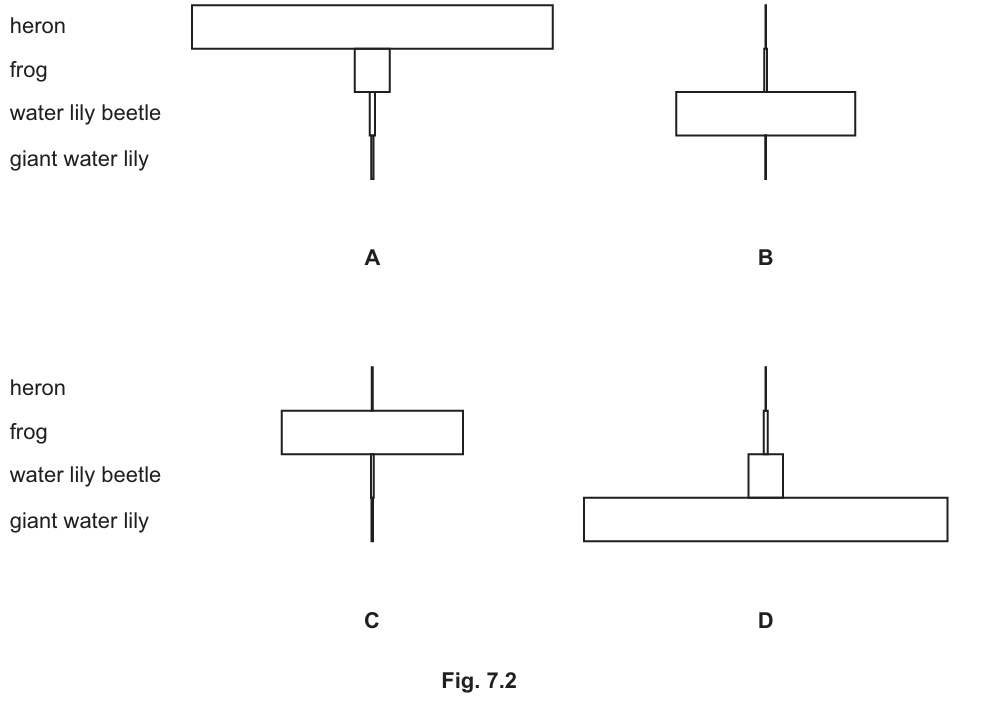
Pyramid of numbers: B
Pyramid of biomass: D
Explanation:
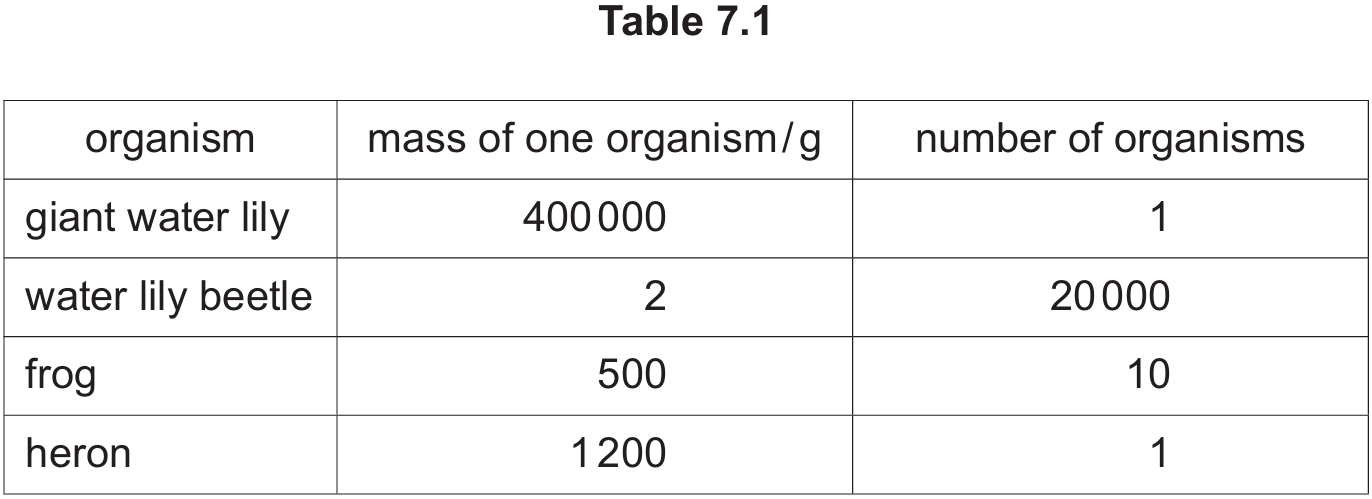
A pyramid of numbers represents the number of organisms at each trophic level. In this chain, there is 1 producer (giant water lily), which supports 20,000 beetles, followed by 10 frogs and 1 heron. This creates a shape with a very narrow base, a wide second level, and a narrowing top, matching diagram B.
A pyramid of biomass represents the mass of living material at each level. The producer has the largest biomass ($400,000 \text{ g}$), followed by the beetles ($20,000 \times 2 = 40,000 \text{ g}$), frogs ($10 \times 100 = 1,000 \text{ g}$), and heron ($150 \text{ g}$). This creates a traditional pyramid shape that gets consistently narrower towards the top, matching diagram D.
(b)
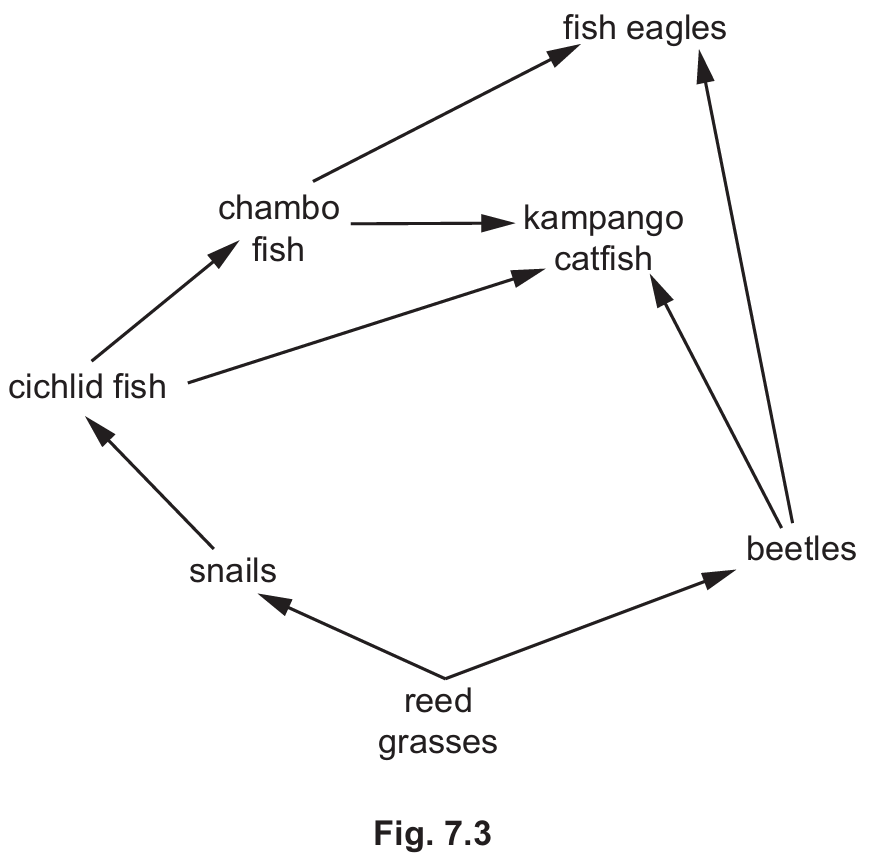
(i) Kampango catfish or fish eagle (or crocodile).
These organisms have arrows pointing to them from the chambo fish, indicating energy transfer.
(ii) 5
Note: The longest food chain shown determines the number of trophic levels. For example: Reed grasses ($1$) $\rightarrow$ Snails ($2$) $\rightarrow$ Cichlid ($3$) $\rightarrow$ Chambo ($4$) $\rightarrow$ Fish eagle ($5$).
(iii)
Feeding at the second trophic level: Snails (or beetles).
These are primary consumers feeding directly on producers (reed grasses/plankton).
Feeding at more than one trophic level: Kampango catfish or fish eagle.
For instance, the fish eagle may eat chambo fish (trophic level 4 or 5 depending on the chain) or cichlids (trophic level 3 or 4).
(c)
Possible reasons for the decrease include:
1. Overharvesting (overfishing) by humans.
2. Habitat destruction or pollution.
3. Introduction of foreign species or an increase in natural predators.
(d)
Endangered species can be conserved by:
* Monitoring and protecting species and habitats.
* Education programs.
* Captive breeding programmes.
* Creating seed banks (for plants).
(e)
A sustainable resource is defined as one which is produced as rapidly as it is removed from the environment so that it does not run out.