
▶️ Answer/Explanation
(a)(i) Sun
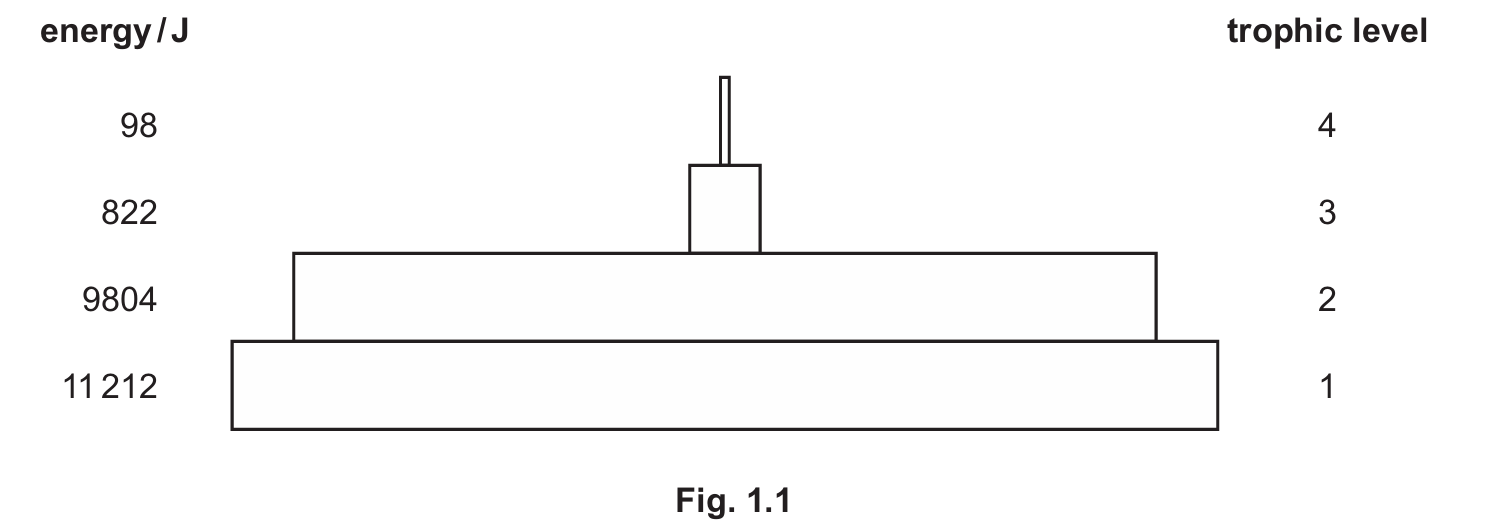
Trophic level \(1\) consists of producers (usually plants or algae). They produce their own organic nutrients via photosynthesis, which utilizes light energy directly from the Sun.
(a)(ii) \(8\) %
To calculate the percentage efficiency of energy transfer between trophic level \(2\) and trophic level \(3\), use the following formula: \[ \frac{\text{Energy at Trophic Level 3}}{\text{Energy at Trophic Level 2}} \times 100 \] Substituting the values from Fig. 1.1: \[ \frac{822}{9804} \times 100 = 8.3843… \% \] The question asks for one significant figure, so \(8.38…\) rounds down to \(8\).
(a)(iii) Energy loss reasons (Any two):
Energy transfer between trophic levels is inefficient (typically only about \(10\%\) is passed on). The loss occurs because:
- Energy is lost as heat during respiration.
- Energy is used for metabolic processes and movement (muscle contraction).
- Not all of the organism in the previous level is eaten (e.g., roots, bones, fur).
- Not all of the consumed material is digested; some is lost in faeces (egestion) or urine (excretion).
(a)(iv) Advantages of Pyramid of Energy:
Compared to a pyramid of biomass, a pyramid of energy provides a more accurate representation of the ecosystem over time because:
- It represents the rate of production rather than a snapshot in time.
- It accounts for organisms that reproduce very rapidly (like phytoplankton) which might have a low biomass at any single moment but high energy productivity (preventing inverted pyramids).
- It allows for meaningful comparisons between different ecosystems.
(b)(i) Area; Time
The biological definition of a population is “a group of organisms of one species living in the same area at the same time.”
(b)(ii) Explanation of Region X (Stationary Phase):
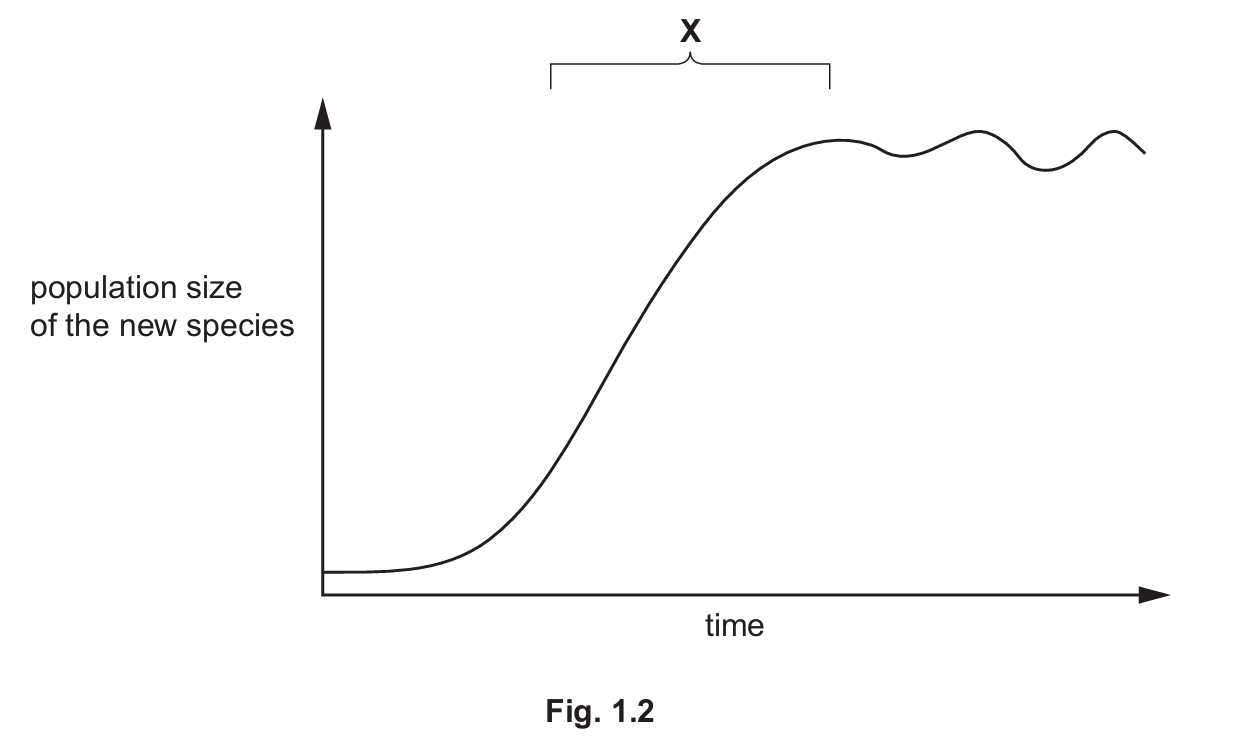
Region X represents the stationary phase of the population growth curve.
- Description: The population size has plateaued; growth has slowed and the population size is fluctuating around a carrying capacity.
- Explanation: At this stage, the birth rate is approximately equal to the death rate. This equilibrium occurs because resources (such as food, space, or water) have become limiting factors. Additionally, competition for these resources has increased, and predation or disease may have risen, preventing further exponential growth.
▶️ Answer/Explanation
(a)
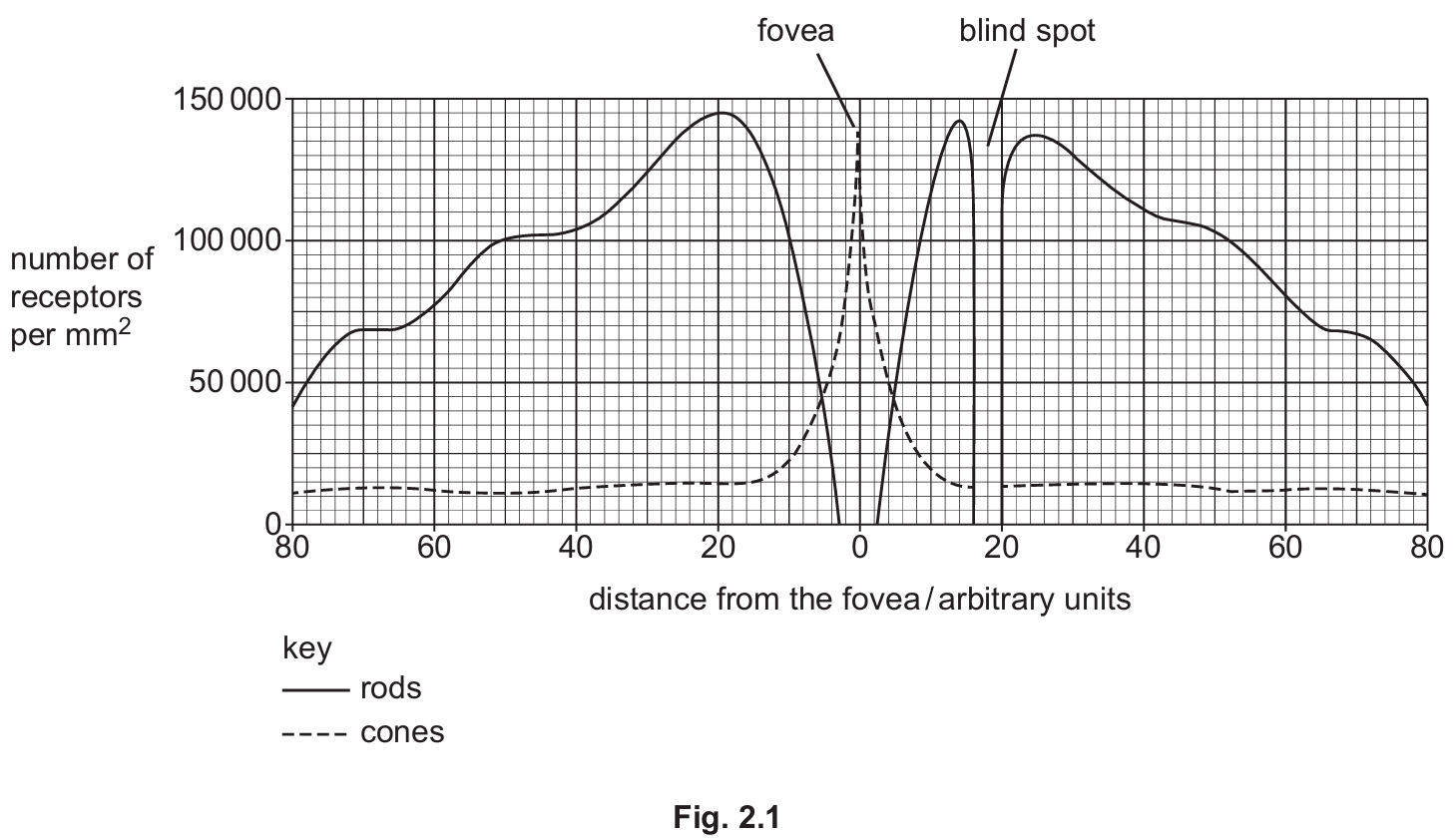
Based on Fig. 2.1, the differences are:
- Overall, there are significantly more rods than cones across the retina.
- The number of cones peaks at the fovea (at \(0\) arbitrary units on the x-axis).
- There are no rods present at the fovea.
- The number of rods peaks on either side of the fovea (around \(20\) arbitrary units) and generally increases as you move towards the fovea before dropping to zero.
- Cones are present in low, relatively constant numbers outside the fovea.
(b)
A nocturnal animal would have a greater number (or proportion) of rod cells compared to a diurnal animal.
Explanation: Rod cells are highly sensitive to low light intensities, making them essential for night vision. Cones, which require brighter light to function and provide colour vision, would be less important; thus, nocturnal animals may have fewer cones.
(c)
(i) Pupil reflex.
(ii) Circular muscle (of the iris).
(iii) Antagonistic action.
Explanation: In bright light, the pupil constricts to limit light entry. This is achieved by the contraction of the circular muscles and the relaxation of the radial muscles. Since these two muscle sets work in opposition, their action is described as antagonistic.
(d)
(i)
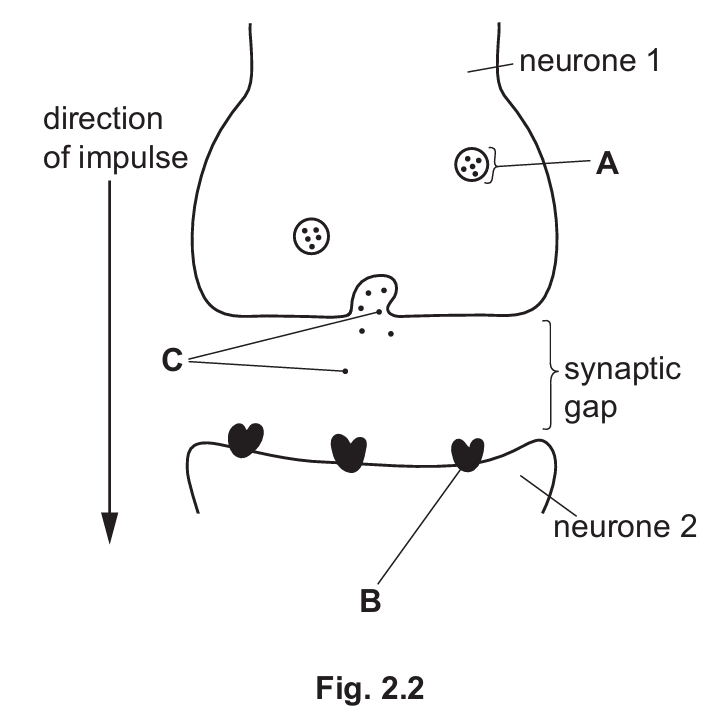
A: Vesicle
B: Receptor (protein)
C: Neurotransmitters
(ii) Part C (neurotransmitters) moves by diffusion. This occurs due to the random movement of particles from an area of higher concentration (released from the vesicle) to an area of lower concentration (across the synaptic gap towards the postsynaptic membrane).
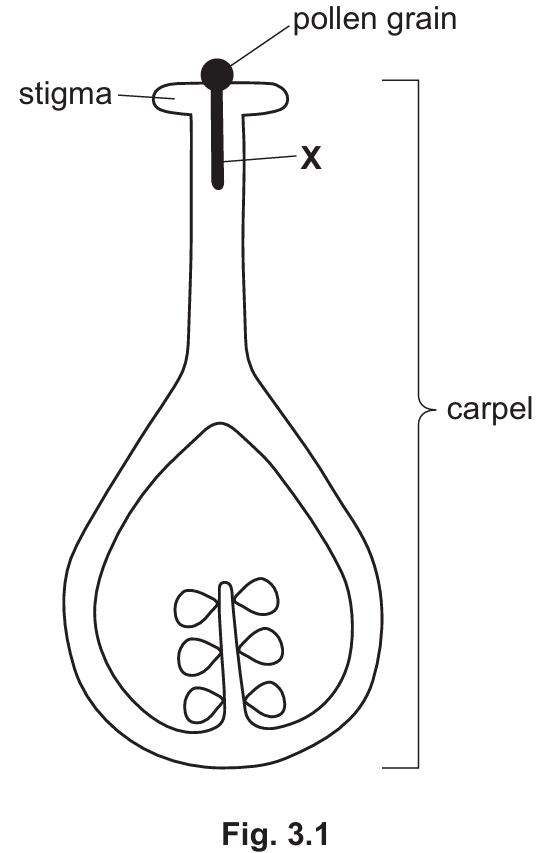
▶️ Answer/Explanation
(a) (i)
The part labelled X is the pollen tube.
(a) (ii)
Following the stage shown, the pollen tube grows down through the style to enter the ovary (specifically the ovule). The male nucleus travels down this tube. Fertilisation occurs when the male nucleus fuses with the female nucleus (inside the ovule).
(b) (i)
Reasons for self-pollination include:
- There may be a lack of pollinators (e.g., insects or wind).
- The plant might be physically isolated from others of the same species.
- It allows the plant to use less pollen and energy compared to cross-pollination strategies.
- It ensures an increased chance of fertilisation and offspring production.
- If the plant is well-adapted to its environment, maintaining the same genetic makeup can be beneficial.
(b) (ii)
The effects of exclusive self-pollination include:
- There is less or no genetic variation within the population.
- The population is less likely to survive or adapt to environmental changes.
- There is less resilience against disease, meaning a disease could spread more quickly and wipe out the population.
- There is an increased risk of extinction.
- There is a higher likelihood of genetic diseases being expressed.
(c)
Two other sources of genetic variation are:
- Mutation (random changes in DNA base sequence).
- Random mating or random pollination.
- Random fertilisation (which specific sperm fuses with the egg).
(d)
Mitosis is a type of nuclear division that results in the production of genetically identical cells. During this process, the replicated chromosomes separate such that the chromosome number is maintained (diploid to diploid). Its roles in organisms include growth, repair of damaged tissues, replacement of cells, and asexual reproduction.
(e)
The unspecialised cells that divide by mitosis are called stem cells.
Part (a): Pollination Mechanics
Once a pollen grain lands on the stigma, it must transport the male gametes to the ovules located at the base of the carpel. It does this by growing a structure called a pollen tube. This tube digests its way through the style, delivering the male nucleus directly to the egg cell for fusion (fertilisation).
Part (b): Evolutionary Trade-offs
Self-pollination is a “safety net.” If a plant cannot find a partner (isolation) or insects are scarce, self-pollination ensures it can still reproduce. However, it results in clones (or near-clones). Genetic variation is crucial for a population’s long-term survival because it increases the probability that some individuals will possess traits allowing them to survive new threats, like a new pest or climate change. Without variation, the entire population is vulnerable.
Part (c): Sources of Variation
While meiosis shuffles existing genes (via crossing over and independent assortment), mutations create entirely new alleles. Furthermore, the randomness of sexual reproduction—which two individuals mate and which specific gametes fuse—adds massive variety to the offspring.
Part (d) & (e): Mitosis & Stem Cells
Mitosis is the process of cell cloning. It is essential when an organism needs to get bigger (growth) or fix a cut (repair), as the new cells must be exact copies of the old ones to function correctly. Stem cells are unique because they retain the ability to divide by mitosis and then differentiate into specialised cells (like nerve or muscle cells) as needed.
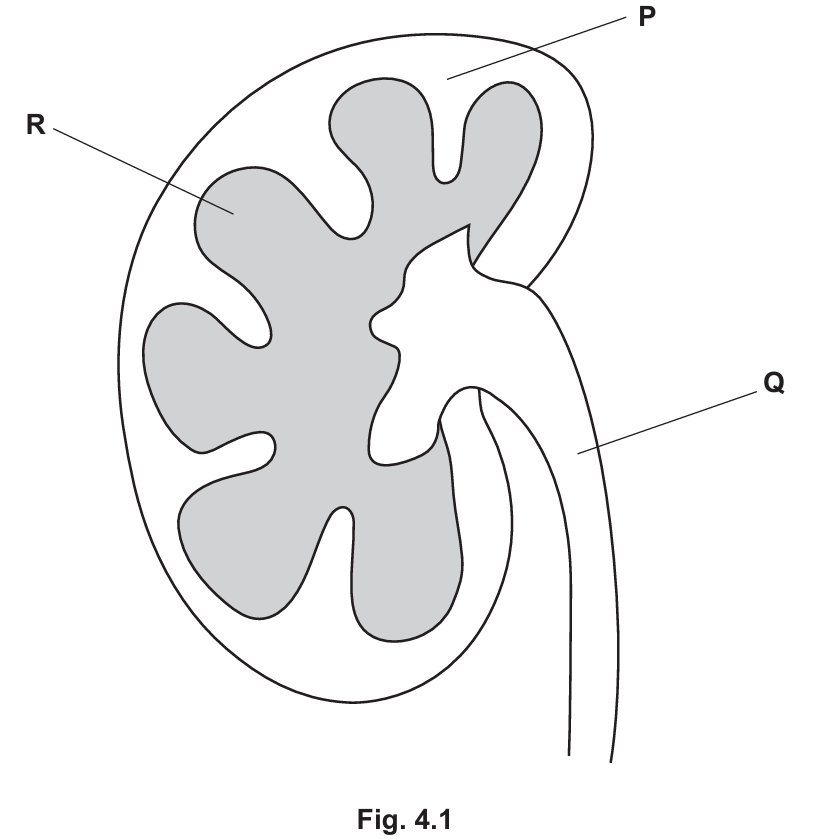
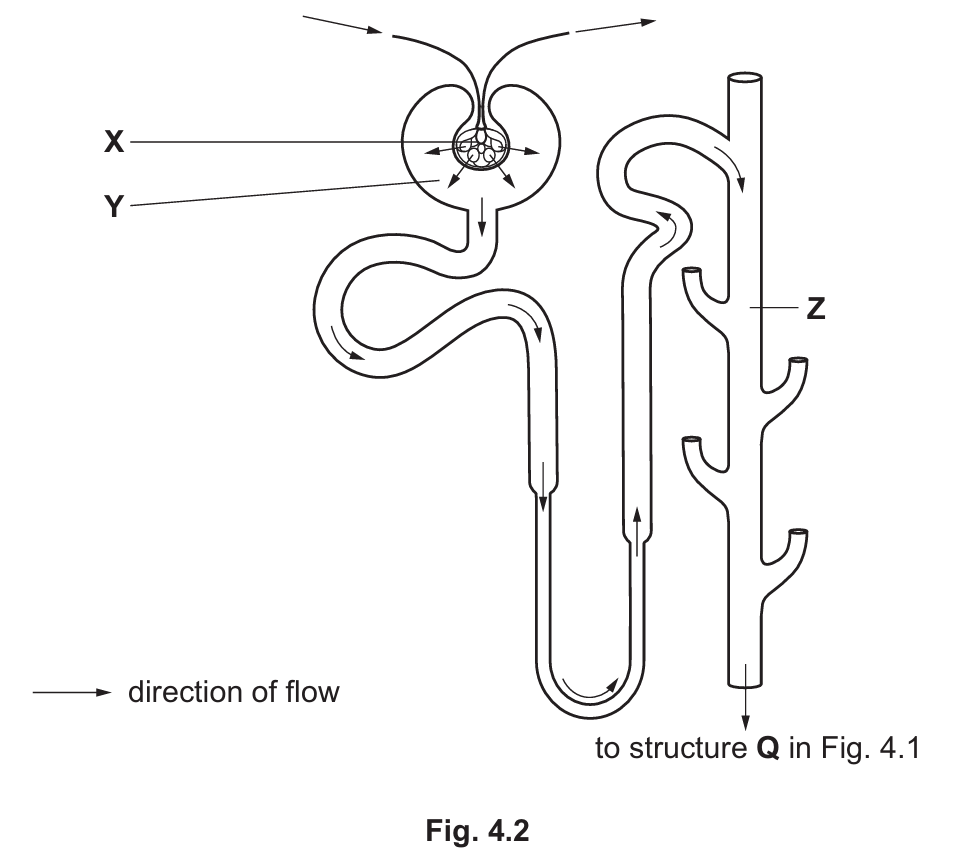
▶️ Answer/Explanation
(a)
Excretion is the removal of waste products of metabolism (chemical reactions in cells including respiration), toxic materials, and substances in excess of requirements from organisms.
(b)
Carbon dioxide (\(CO_2\)).
(c)
- P: Cortex
- Q: Ureter
- R: Medulla
(d)
The composition of fluids changes as it moves through the nephron due to filtration and reabsorption:
- Difference (X vs Y): Structure X (blood in glomerulus) contains blood cells and large proteins, whereas Structure Y (filtrate in Bowman’s capsule) contains glucose, water, urea, and ions, but no large proteins or blood cells.
- Explanation: This is due to ultrafiltration. The basement membrane acts as a filter, allowing small molecules to pass from X to Y but preventing large molecules (proteins/cells) from passing through.
- Difference (Y vs Z): Structure Y contains glucose, but Structure Z (urine in collecting duct) contains no glucose.
- Explanation: All glucose is selectively reabsorbed back into the blood capillaries in the proximal convoluted tubule.
- Difference (Concentration): Structure Z contains a higher concentration of urea and waste ions compared to Y.
- Explanation: As the filtrate moves through the nephron (Loop of Henle and collecting duct), water is reabsorbed into the blood to conserve it, leaving the waste products more concentrated in the urine.
(e)
The liver processes amino acids in the following ways:
- Deamination: The nitrogen-containing part (amine group) of excess amino acids is removed to form urea, which is then excreted by the kidneys.
- Assimilation / Protein Synthesis: Amino acids are built up (synthesized) into new proteins required by the body, such as plasma proteins (e.g., fibrinogen) or enzymes.
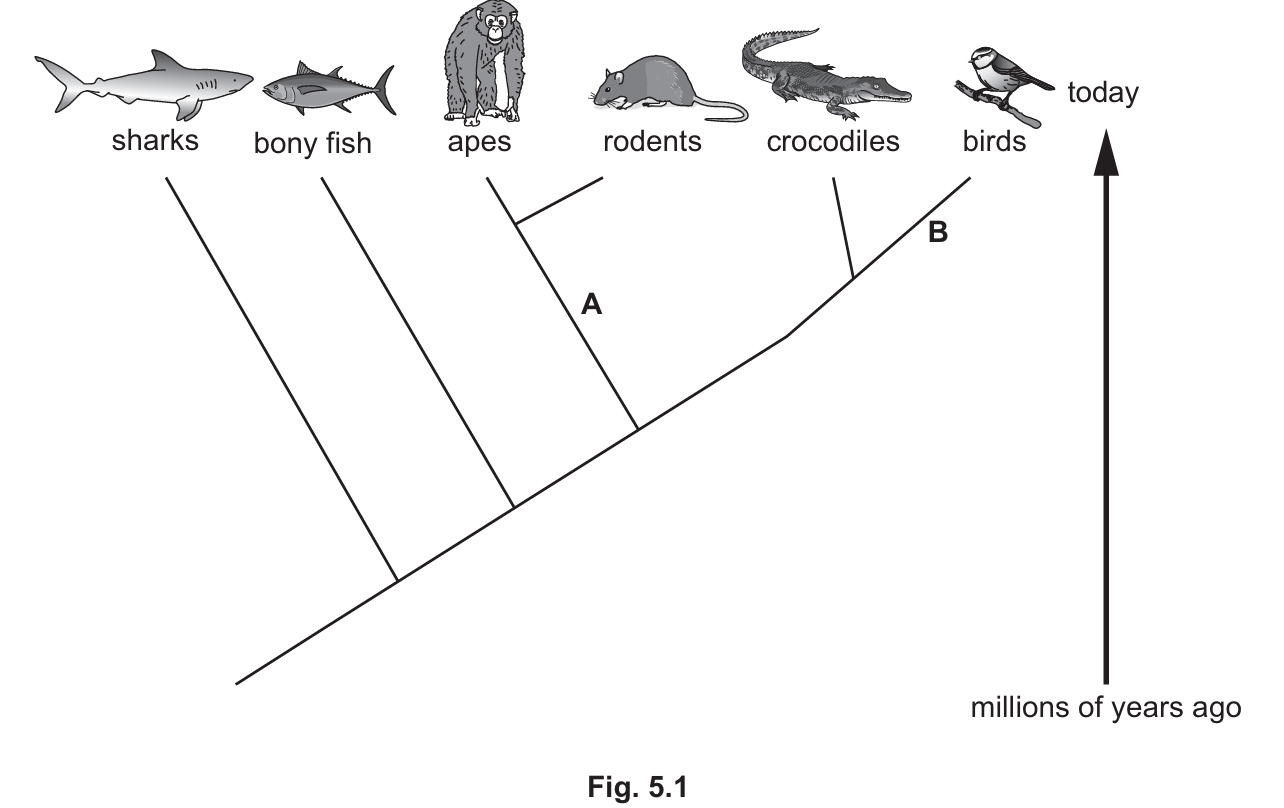
▶️ Answer/Explanation
(a)(i)
A: Hair / external ears (pinnae)
B: Wings / feathers / beaks
Explanation: Point A is the branch leading specifically to apes and rodents. Both of these groups belong to the class Mammalia, and the defining visible features of mammals are the presence of hair/fur and external ears. Point B is the branch leading to birds. The defining visible features for this class are feathers and wings (modified forelimbs).
(a)(ii)
Apes and rodents
Explanation: On an evolutionary tree (cladogram), the most recent common ancestor is represented by the node (branching point) closest to the species in question. Apes and rodents originate from the same specific branch point (labeled A), indicating they split from each other more recently than they split from reptiles, fish, or sharks.
(a)(iii)
Most similar: Birds
Least similar: Sharks
Explanation: Classification reflects evolutionary relationships. Organisms that share a more recent common ancestor have more similar DNA base sequences.
- Birds share the closest node (node B) with crocodiles, indicating they are the closest relatives on this diagram.
- Sharks branched off the earliest (at the far left of the diagram), meaning they are the most distantly related to crocodiles and will have the most accumulated differences in their DNA sequences.
(b)
A DNA molecule consists of two strands (or chains) coiled together to form a double helix. Each strand contains chemicals called bases. There are four bases: Adenine (A), Thymine (T), Cytosine (C), and Guanine (G). These bases pair up in a specific way: A pairs with T and C pairs with G. The strands are held together by bonds between these base pairs.
Explanation: This question requires recalling the fundamental structure of DNA as outlined in syllabus section 4.1. Key points are the double-stranded nature, the specific “twisted ladder” shape (double helix), and the complementary base pairing rules.
(c)
The sequence of bases in DNA (or the mRNA copy) determines the sequence of amino acids. These amino acids are joined together to form proteins (a process called protein synthesis). The specific sequence of amino acids determines the shape of the protein, and the shape determines its function (e.g., the active site of an enzyme). Therefore, by coding for specific proteins, DNA controls cell function.
Explanation: This connects the genetic code (genotype) to the physical traits and functions (phenotype). The “Central Dogma” of biology flows from DNA $\rightarrow$ mRNA $\rightarrow$ Amino Acid Sequence $\rightarrow$ Protein $\rightarrow$ Cell Function.
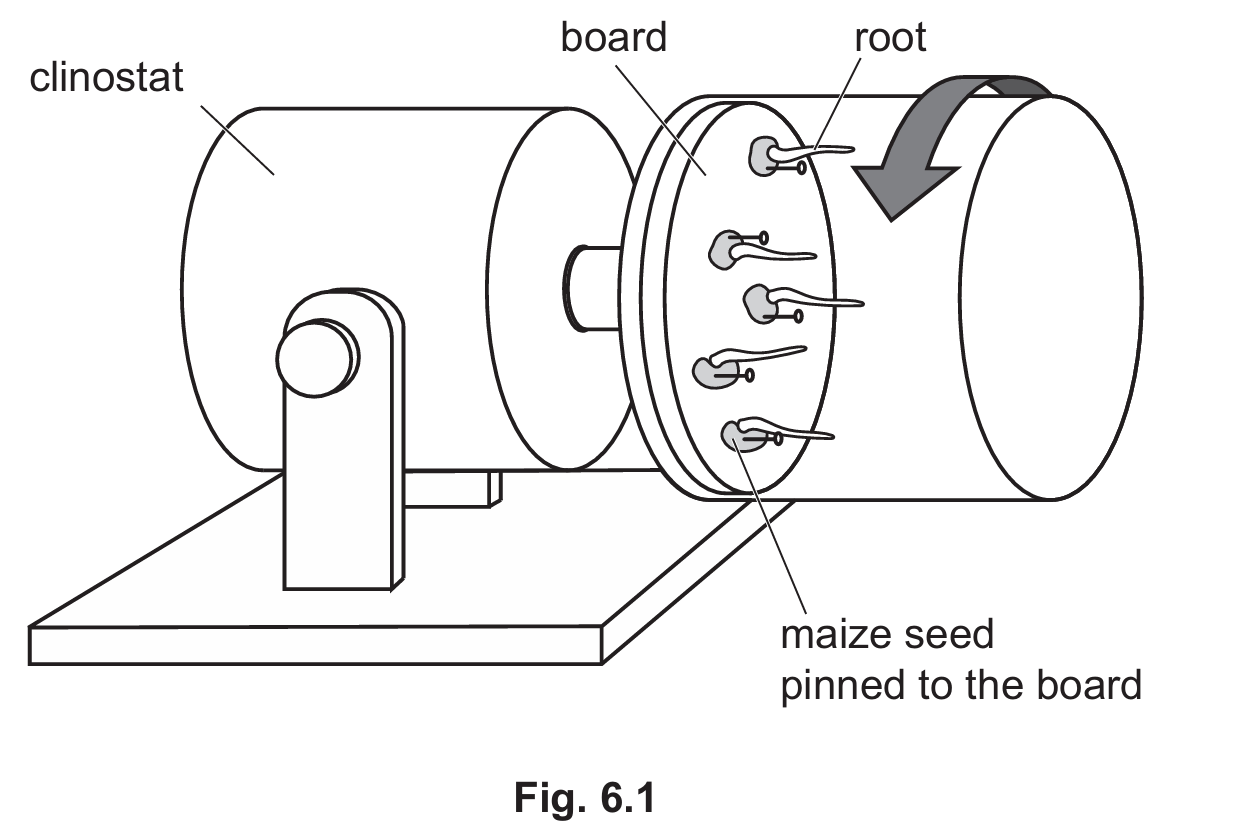
▶️ Answer/Explanation
6 (a) (i)
Auxin is produced in shoot and root tips. The auxin travels down the root by the process of diffusion.
As the clinostat rotates, the effect of gravity on all sides of the root is equal.
This causes the distribution of auxin in the root to be equal (or uniform/even).
Auxin stimulates cell elongation causing the roots to grow horizontally.
6 (a) (ii)
The roots will grow downwards (or towards gravity).
6 (a) (iii)
Phototropism
6 (b)
State: The cells will appear flaccid (no longer turgid) or plasmolysed.
Explain:
• There is a lack of turgor pressure.
• The volume of the cytoplasm or vacuole has decreased.
• This is due to a loss of water from the cells (exosmosis) because the water potential outside the cells is lower than inside.
• The cell membrane may pull away from the cell wall (plasmolysis).
Explanation & Key Concepts:
- Clinostats and Tropisms: A clinostat rotates a plant slowly. This rotation negates the directional stimulus of gravity. Under normal conditions, gravity causes auxin to accumulate on the lower side of a root, inhibiting cell elongation there and causing the root to bend downwards (positive gravitropism). By rotating the plant, gravity acts equally on all sides, resulting in an equal distribution of auxin. Consequently, cell elongation occurs at the same rate on all sides, and the root grows straight (horizontally) rather than bending.
- Wilting and Osmosis: Wilting occurs when water loss (transpiration) exceeds water uptake. This causes water to move out of plant cells by osmosis. As water leaves the vacuole, the cell becomes flaccid (soft) because there is no longer turgor pressure pushing the cytoplasm against the cell wall. If water loss is severe, the cell membrane detaches from the wall, a state called plasmolysis.