
Topic: 1.1
Which processes are characteristics of all living organisms?
1 digestion
2 respiration
3 excretion
▶️ Answer/Explanation
Ans: C
All living organisms must respire (2) to release energy and excrete (3) to remove waste. Digestion (1) is only in organisms with digestive systems, so the correct answer is C (2 and 3 only).
Topic: 1.2
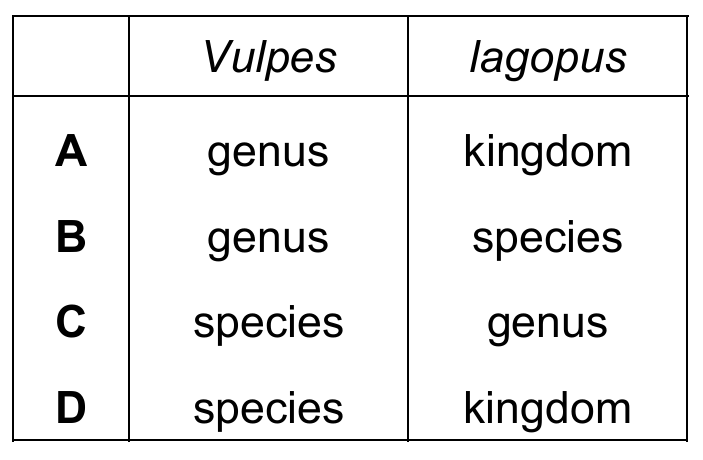
Using the binomial system, the Arctic fox is called Vulpes lagopus.
Which row is correct?
▶️ Answer/Explanation
Ans: B
In binomial nomenclature, the first name (Vulpes) is the genus and the second name (lagopus) is the species. Therefore, the correct answer is B (genus and species).
Topic: 1.3
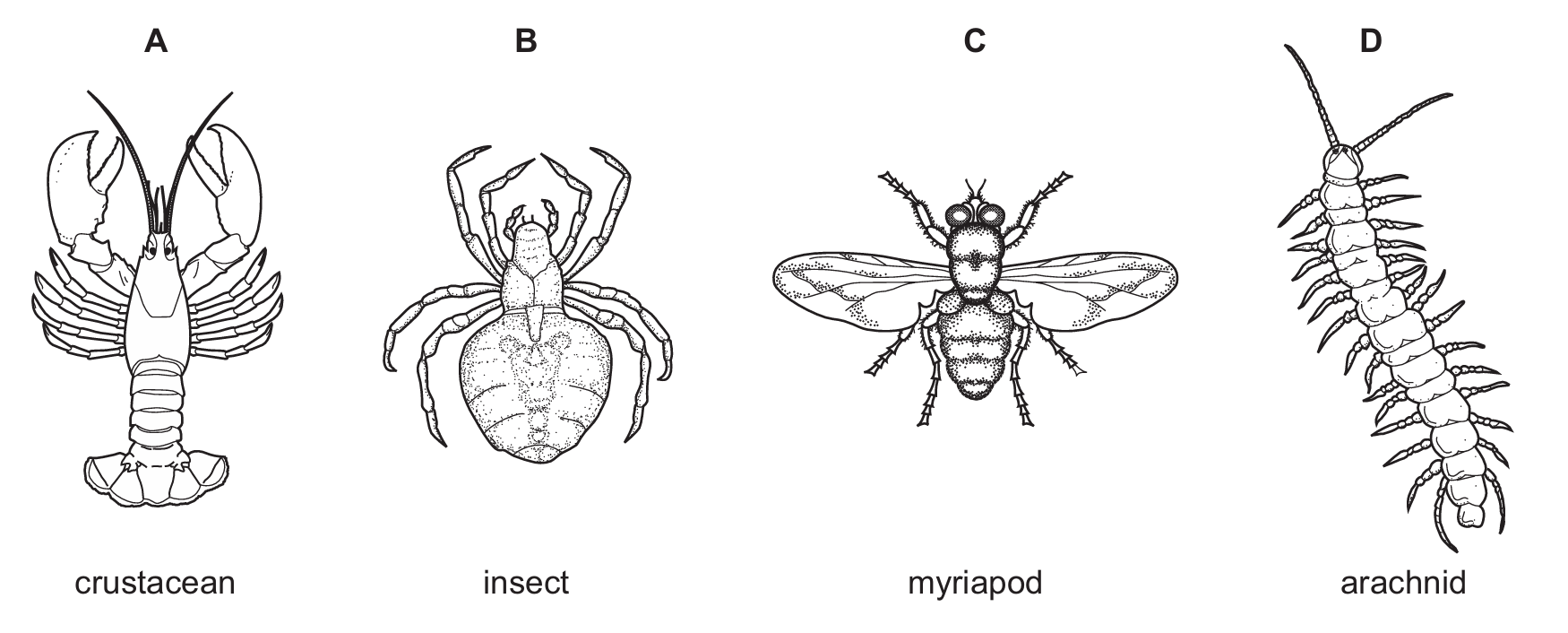
The diagrams show four different types of arthropod.
Which organism is labelled with its correct arthropod group?
▶️ Answer/Explanation
Ans: A
Since the question refers to diagrams not shown here, we rely on the mark scheme which indicates A (crustacean) as the correct answer. Crustaceans include organisms like crabs and lobsters.
Topic: 2.1
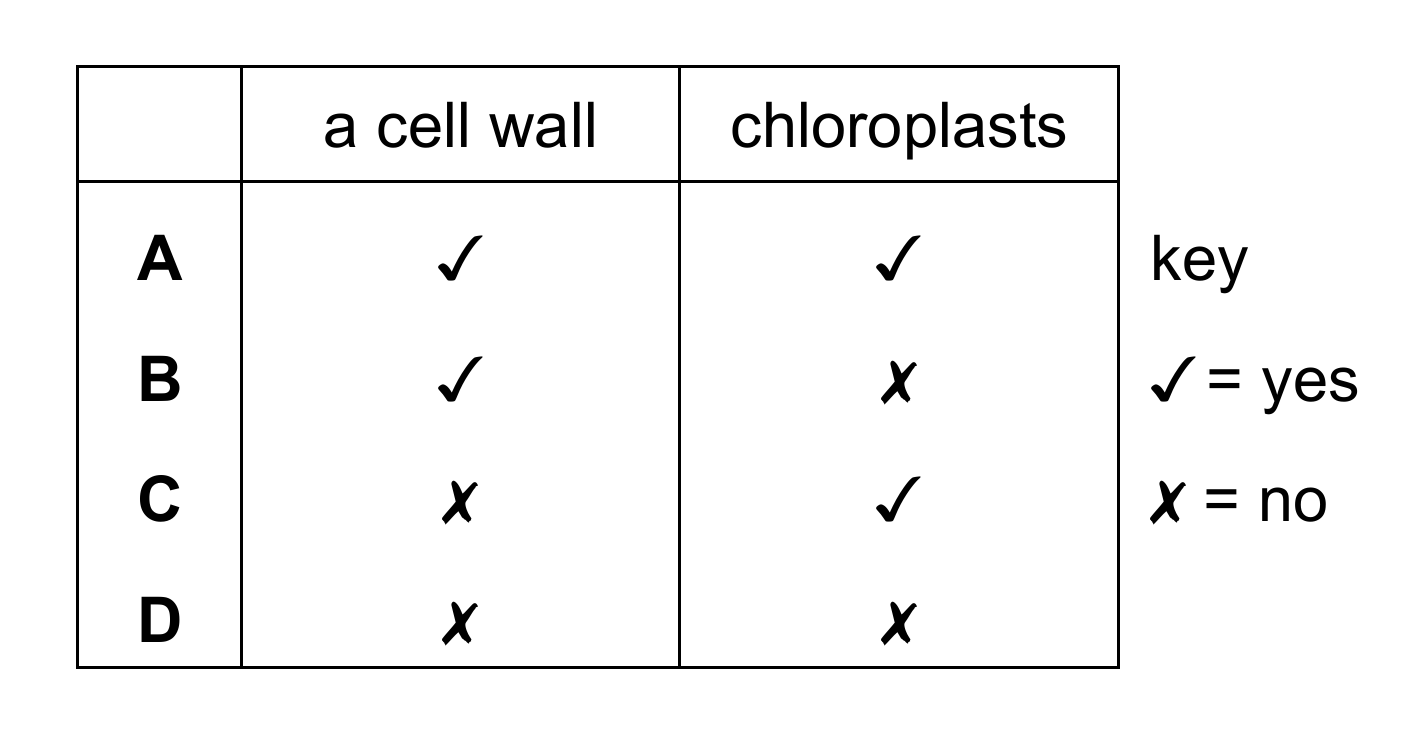
Which features are possessed by all plant cells?
▶️ Answer/Explanation
Ans: B
All plant cells have a cell wall (✓), but not all have chloroplasts (✗) – only photosynthetic cells do. Root cells, for example, lack chloroplasts. Thus, the correct answer is B (✓ for cell wall, ✗ for chloroplasts).
Topic: 2.2
The diameter of an egg is 6.5 cm. A student draws the egg. The diameter of the egg in the drawing is 19.5 cm.
What is the magnification of the drawing?
▶️ Answer/Explanation
Ans: B
Magnification = Image size ÷ Actual size = 19.5 cm ÷ 6.5 cm = 3. The drawing is therefore ×3.0 magnification (B), meaning it’s three times larger than the actual egg.
Topic: 3.2
The diagram shows an experiment to investigate osmosis in living cells.
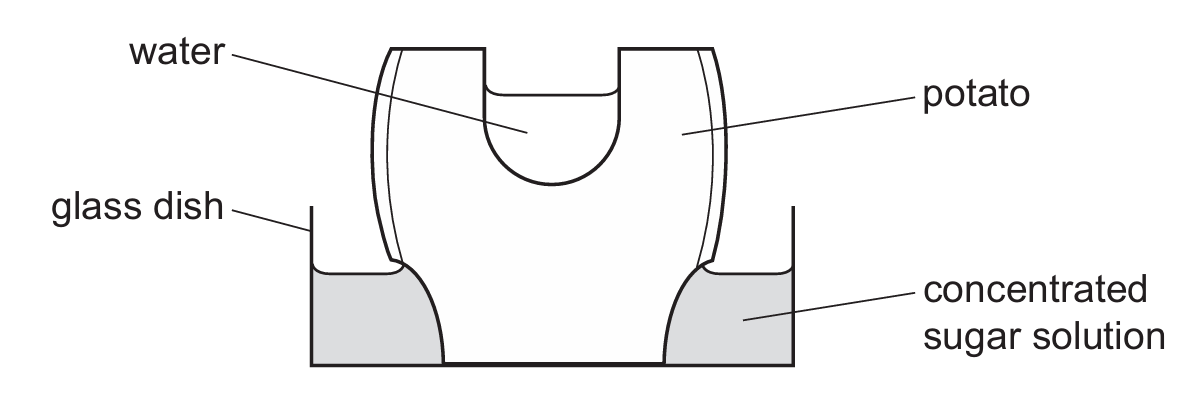
What happens to the volumes of water and sugar solution after 12 hours?
▶️ Answer/Explanation
Ans: A
In osmosis, water moves from a less concentrated solution (water) to a more concentrated one (sugar solution). Therefore, the water volume decreases as it moves into the sugar solution, which consequently increases in volume. The potato acts as a semi-permeable membrane allowing this movement.
Topic: 3.1
Which process causes oxygen to pass from an alveolus in the lung into a blood capillary?
▶️ Answer/Explanation
Ans: B
Oxygen moves from alveoli to blood capillaries by diffusion, which is the passive movement of molecules from high to low concentration. This is how gases are exchanged in the lungs. The other processes listed don’t apply to gas exchange.
Topic: 4.1
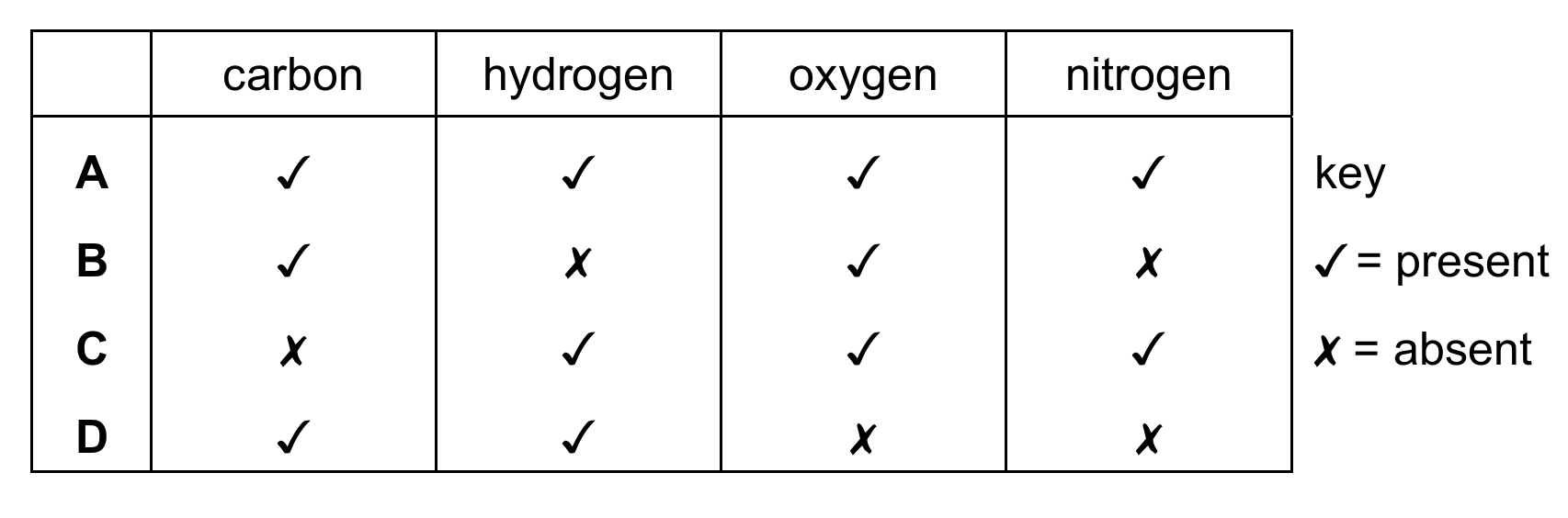
Which row identifies the chemical elements in proteins?
▶️ Answer/Explanation
Ans: A
All proteins contain carbon (C), hydrogen (H), oxygen (O), and nitrogen (N). Some may also contain sulfur. The key distinguishing element is nitrogen, which is present in all proteins but absent in carbohydrates and lipids. Therefore, the correct option is A where all four elements are present.
Topic: 4.1
The table shows some large biological molecules and some small biological molecules.
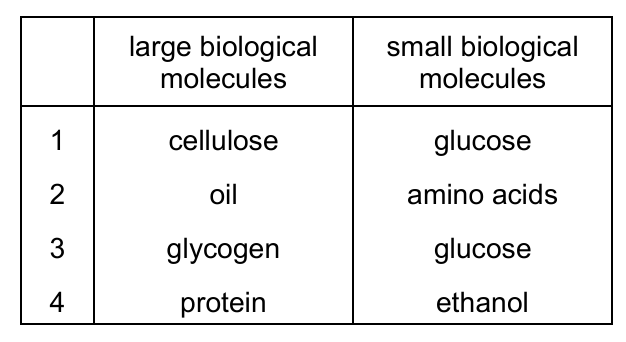
Which rows correctly pair large molecules with the smaller molecules used to make them?
▶️ Answer/Explanation
Ans: B
Cellulose (1) and glycogen (3) are both polysaccharides made from glucose monomers, so rows 1 and 3 are correct. Oil (2) is made from fatty acids and glycerol, not amino acids, and proteins are made from amino acids, not ethanol. Therefore, the correct pairing is B (1 and 3).
Topic: 5.1
Which changes could cause an enzyme to denature?
1. change in pH
2. change in temperature
3. change in substrate concentration
▶️ Answer/Explanation
Ans: B
Enzymes denature (lose their 3D structure and function) due to extreme pH changes (1) or temperature changes (2). However, substrate concentration (3) only affects reaction rate, not enzyme structure. Therefore, the correct answer is B (1 and 2 only).
Topic: 6.2
Which features of a leaf allow more diffusion of carbon dioxide into the palisade cells for photosynthesis?
▶️ Answer/Explanation
Ans: D
More stomata (many) allow greater CO2 entry, while a thinner leaf reduces diffusion distance to palisade cells. Thick leaves (A/C) would slow diffusion, and few stomata (A/B) would limit CO2 availability. Thus, D (many stomata + thin leaf) maximizes photosynthesis efficiency.
Topic: 6.1
The diagram shows a cell with groups of bacteria around its edge.
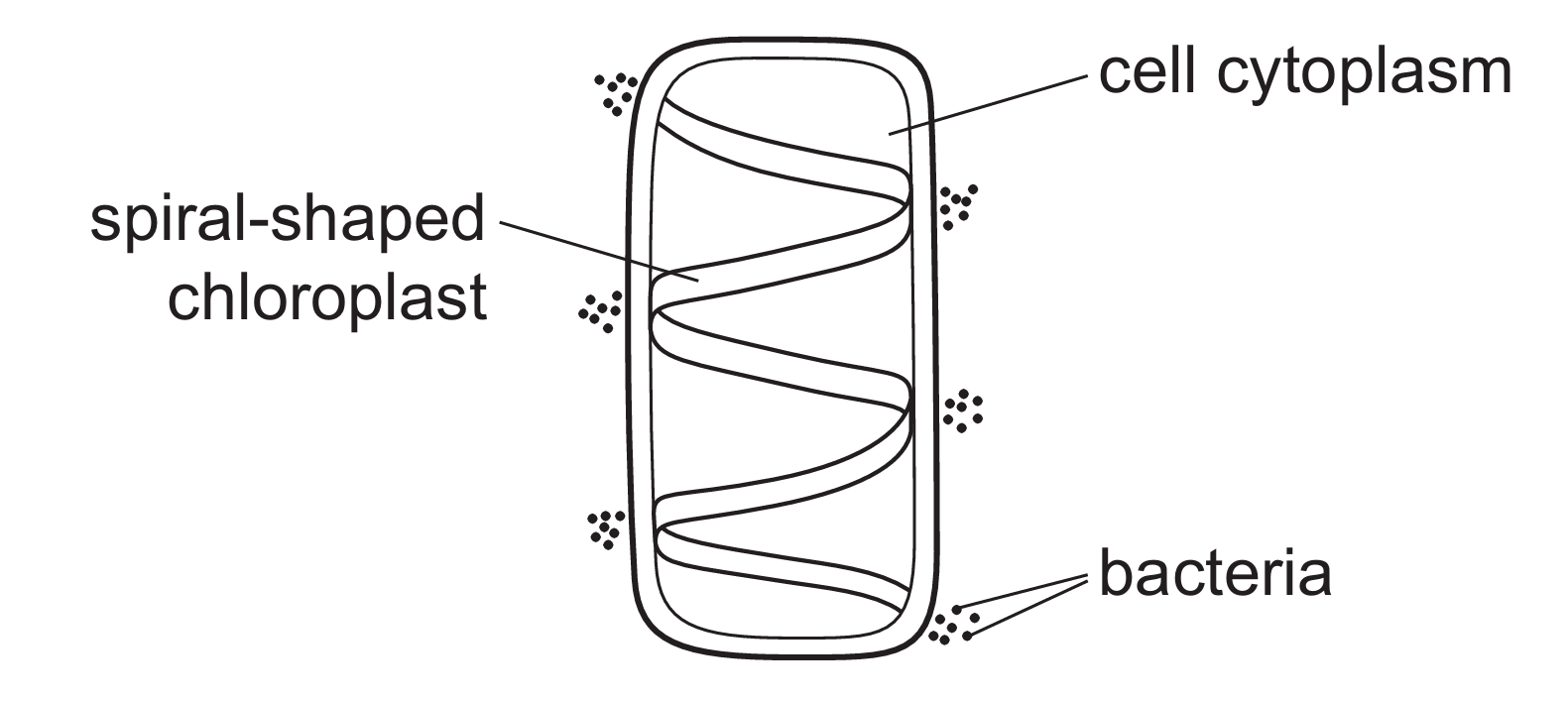
The bacteria have moved to areas of high oxygen concentration.
Which process in the cell causes the bacteria to form these groups?
▶️ Answer/Explanation
Ans: B
The spiral chloroplast indicates a plant/algal cell performing photosynthesis, which releases oxygen. Bacteria cluster where oxygen is abundant. Respiration (D) consumes oxygen, while digestion (A) and reproduction (C) don’t directly affect oxygen levels. Thus, B (photosynthesis) explains the bacterial grouping.
Topic: 7.3
The diagram shows the teeth in the lower jaw of a human.
Which tooth is a premolar?
▶️ Answer/Explanation
Ans: A
In human dentition, premolars are located between canines and molars. Without the diagram, we rely on standard dental arrangement where A typically marks the first premolar. Incisors (front) and canines (pointed) precede premolars, while molars are furthest back.
Topic: 7.4
Some medicines are made into tablets which are coated in a starch-like substance.
The coating protects the medicine from the effects of gastric juice.
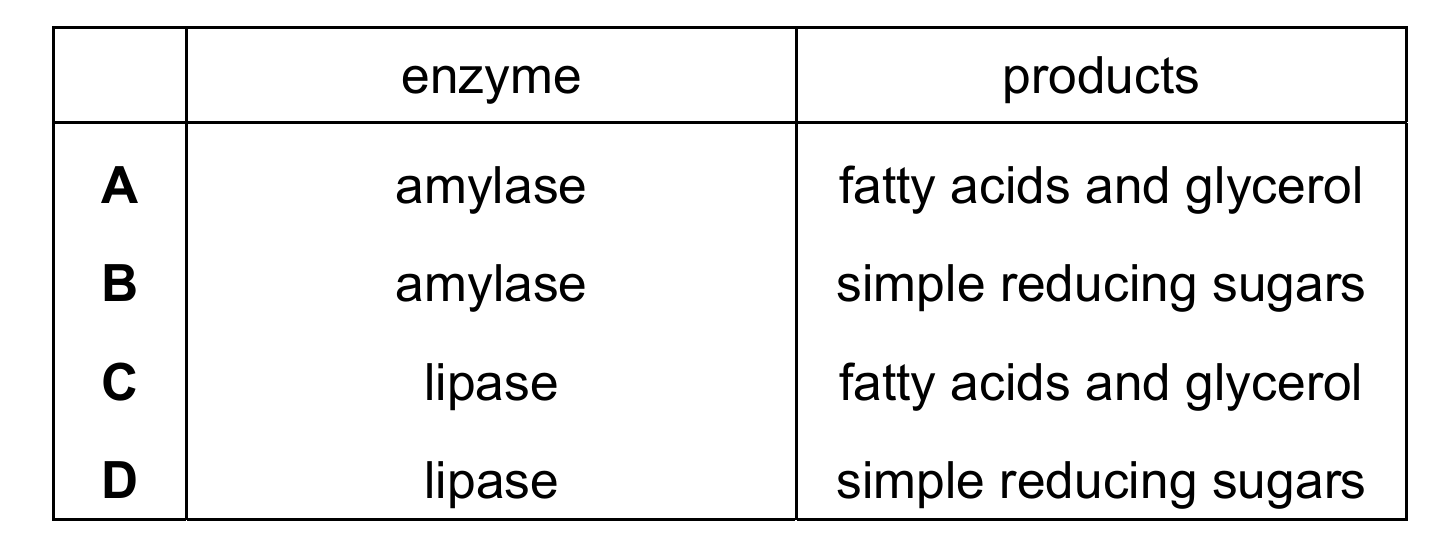
Which enzyme digests the coating and what is produced by this action?
▶️ Answer/Explanation
Ans: B
Starch coatings are broken down by amylase (A/B), not lipase (C/D). Amylase converts starch into simple sugars (maltose/glucose), not lipids. While A correctly identifies amylase, its product description is wrong (fatty acids come from lipase). Thus, B is fully correct.
Topic: 7.5
In which part of the alimentary canal are most nutrients absorbed into the blood?
▶️ Answer/Explanation
Ans: C
The small intestine has villi and microvilli that maximize absorption surface area. While the stomach (D) digests, it absorbs mainly alcohol/aspirin. The oesophagus (B) only transports food, and the colon (A) absorbs water, not nutrients. Thus, C is where most digested food enters blood.
Topic: 8.3
From which part of a leaf does most water evaporate during transpiration?
▶️ Answer/Explanation
Ans: C
Most water evaporation occurs from the spongy mesophyll cells because they have large air spaces and are located near stomata. The cuticle (A) is waxy and minimizes water loss, guard cells (B) control stomata opening, and xylem (D) transports water but doesn’t directly participate in evaporation.
Topic: 8.1
The photograph shows a cross-section through a sunflower stem.

What is the name and function of the tissue labelled Z?
▶️ Answer/Explanation
Ans: C
The xylem transports water and mineral ions upwards from roots. Phloem (A/B) transports sucrose, not mineral ions, and xylem doesn’t transport sucrose (D). Therefore, the correct combination is C (xylem for mineral ion transport).
Topic: 9.2
What ensures the one-way flow of blood in the human circulatory system?
▶️ Answer/Explanation
Ans: C
Valves in veins and the heart prevent backflow, ensuring one-way blood circulation. Capillaries (A) allow exchange but don’t control flow direction, muscles (B) help pump blood but don’t prevent backflow, and ventricles (D) are chambers that pump blood but rely on valves for one-way flow.
Topic: 9.4
In which row is the component of blood correctly linked to its function?
▶️ Answer/Explanation
Ans: A
Plasma transports dissolved CO2 as bicarbonate ions. Platelets (B) cause clotting, not phagocytosis; red blood cells (C) carry oxygen, not antibodies; white blood cells (D) fight infection, while platelets handle clotting. Thus, only A is correct.
Topic: 10.1
Which statement describes a transmissible disease?
▶️ Answer/Explanation
Ans: A
A transmissible disease spreads via pathogens moving between hosts (A). Options B describes infection, not transmission, while C/D are limited to specific transmission modes. The broad definition in A covers all transmission routes (direct/indirect).
Topic: 11.1
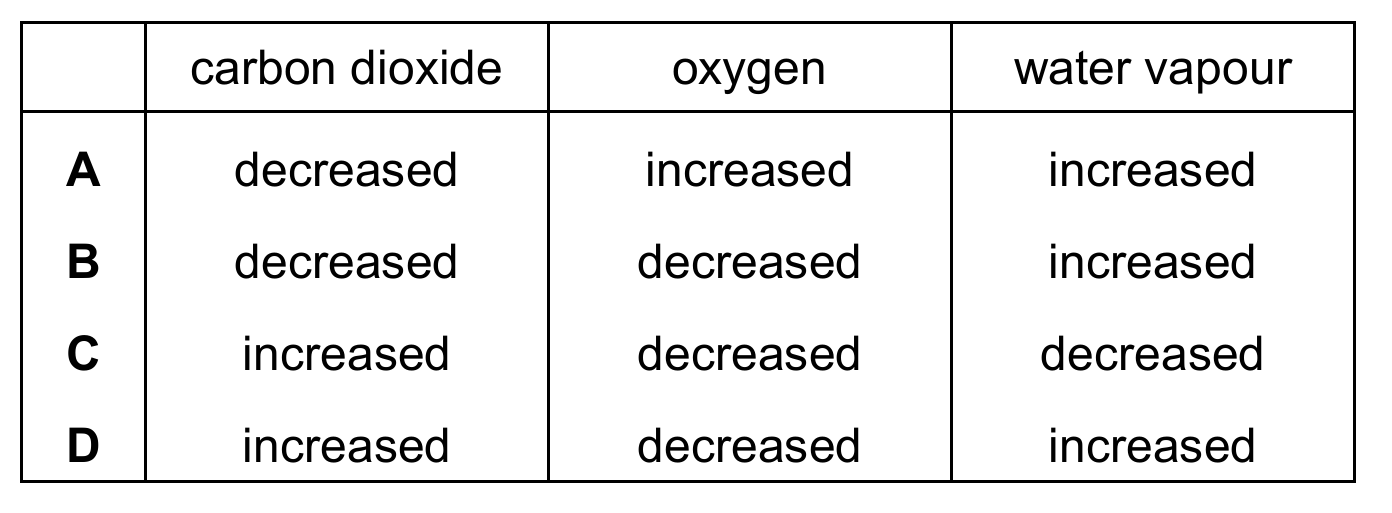
What is the composition of expired air compared with inspired air?
▶️ Answer/Explanation
Ans: D
Expired air has more carbon dioxide (from respiration) and water vapor (from lung surfaces) than inspired air, but less oxygen (used in respiration). Option D correctly shows these changes: increased CO₂, decreased O₂, and increased water vapor.
Topic: 11.1
The diagram shows the human breathing system.
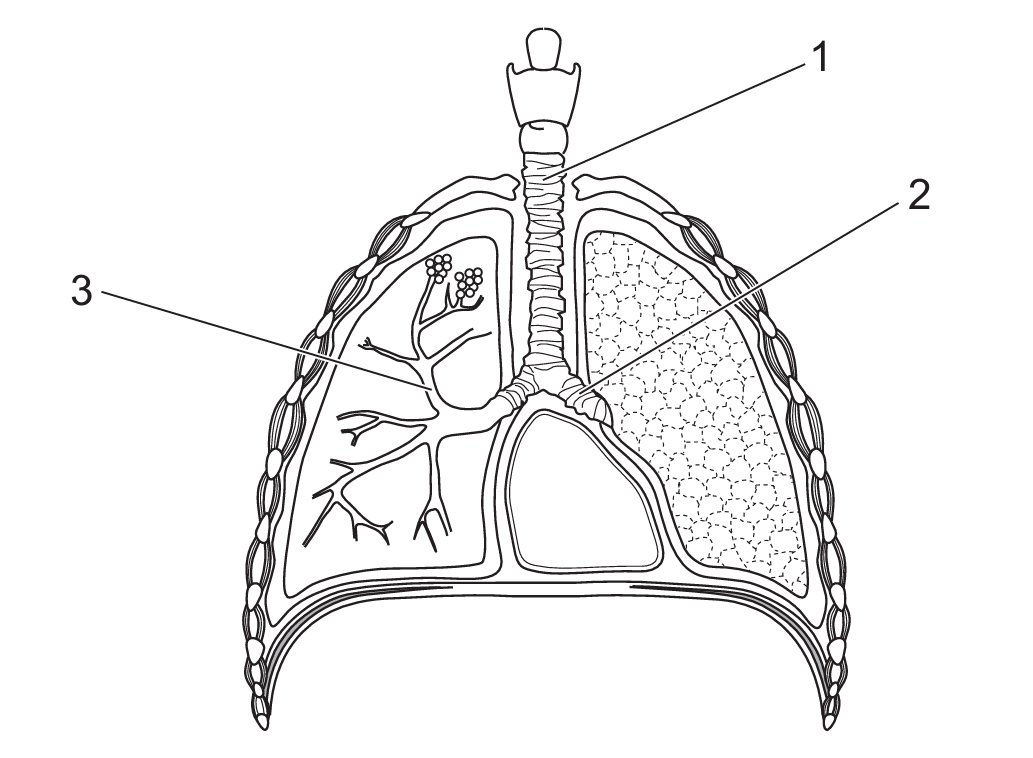
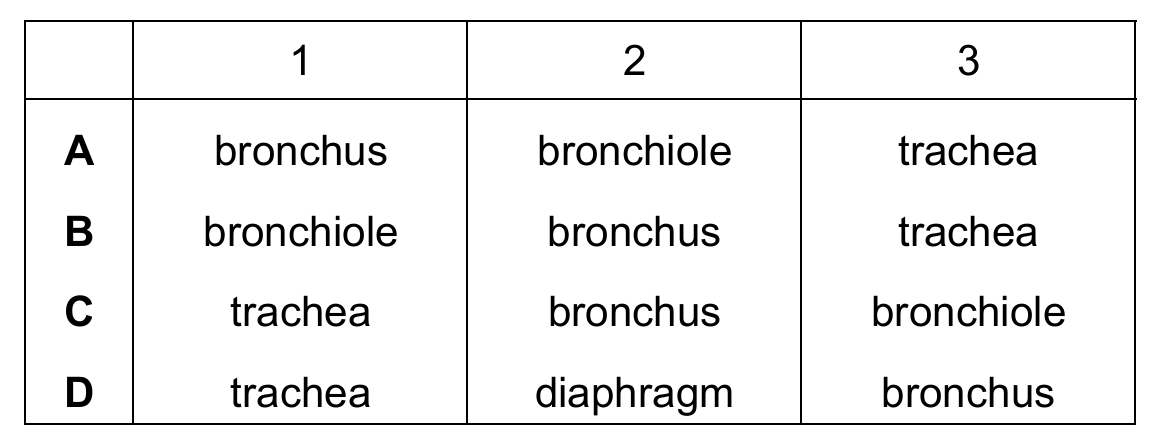
What are the labelled structures?
▶️ Answer/Explanation
Ans: C
The trachea (windpipe) branches into two bronchi (singular: bronchus), which further divide into smaller bronchioles. Therefore, the correct order is trachea (1) → bronchus (2) → bronchiole (3).
Topic: 12.3
Yeast cells can convert glucose into alcohol and carbon dioxide. Which statement about this process is correct?
▶️ Answer/Explanation
Ans: D
Yeast converts glucose to alcohol and CO₂ during anaerobic respiration (fermentation). The CO₂ makes bread rise (not alcohol, A), alcohol is the biofuel (not CO₂, B), and oxygen isn’t used (C is wrong). Thus, D is correct.
Topic: 12.3
In an experiment to investigate anaerobic respiration, two bottles are set up in a warm room, as shown.
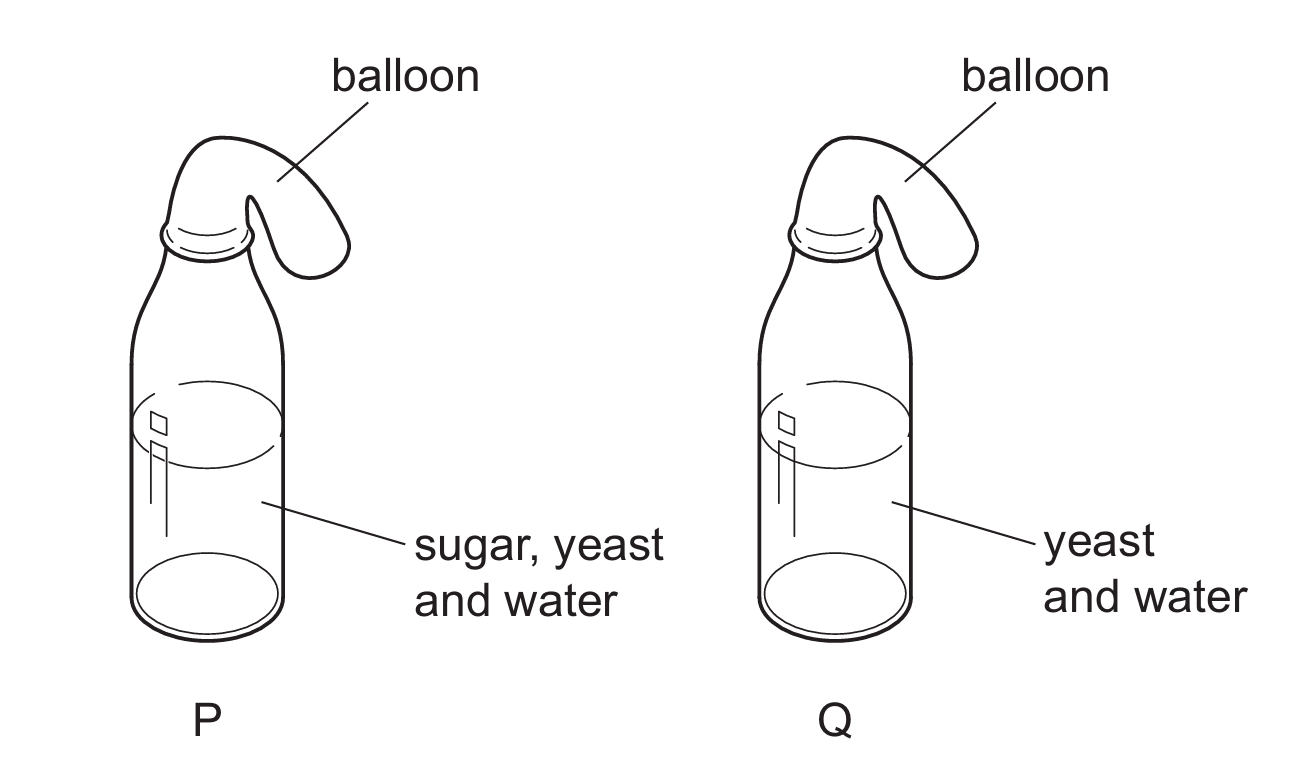
What would happen to each balloon after one day?
▶️ Answer/Explanation
Ans: A
Bottle P contains yeast, sugar, and water, so anaerobic respiration produces CO₂ gas that inflates the balloon. Bottle Q lacks sugar (no glucose for respiration), so no gas is produced and the balloon stays deflated.
Topic: 13.1
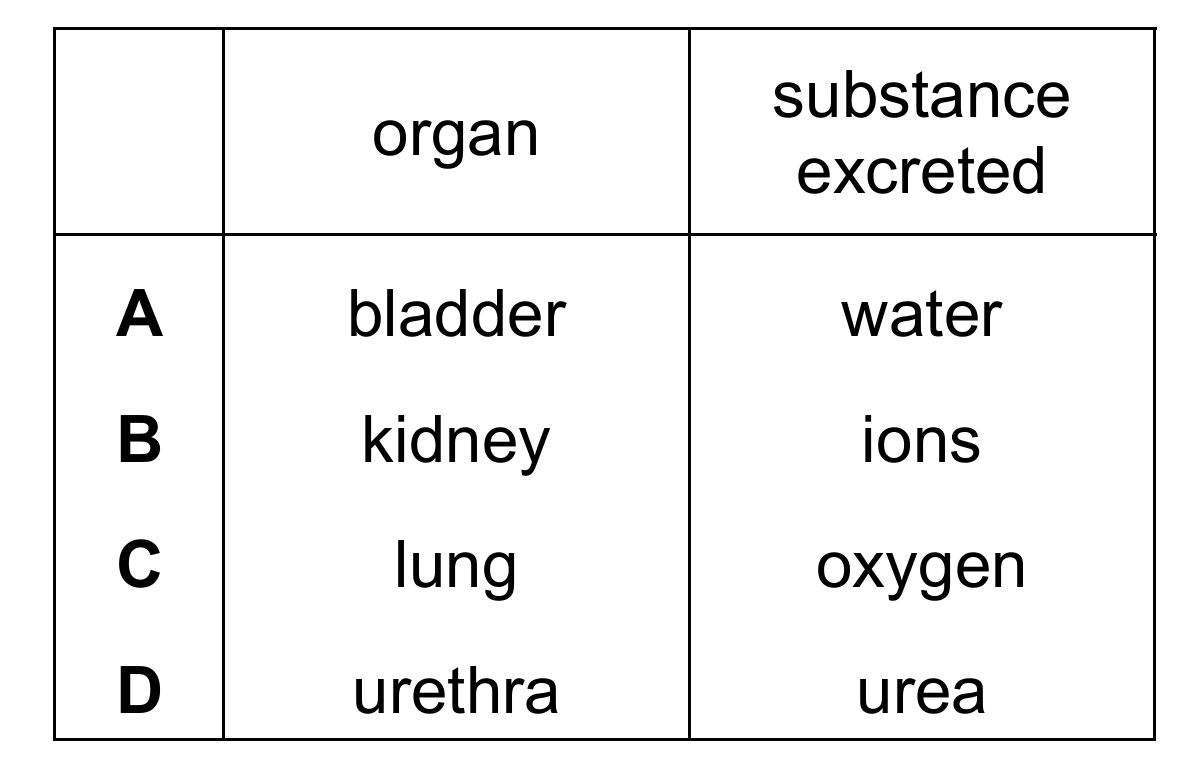
Which row shows an organ and the substance it excretes?
▶️ Answer/Explanation
Ans: B
The kidneys excrete excess ions (like sodium) in urine. The bladder stores urine (A is wrong), lungs excrete CO₂ (not O₂, C is wrong), and the urethra is a passage (not an organ, D is wrong). Thus, B is correct.
Topic: 14.1
The diagram shows a reflex arc in a human nervous system. The person’s finger has just made contact with a sharp object.
Which part is the motor neurone?

▶️ Answer/Explanation
Ans: C
In a reflex arc, the motor neurone carries signals from the central nervous system to the effector (muscle). It’s located after the relay neurone in the pathway. Without seeing the diagram, we know the correct answer is C based on the standard reflex arc structure.
Topic: 14.3
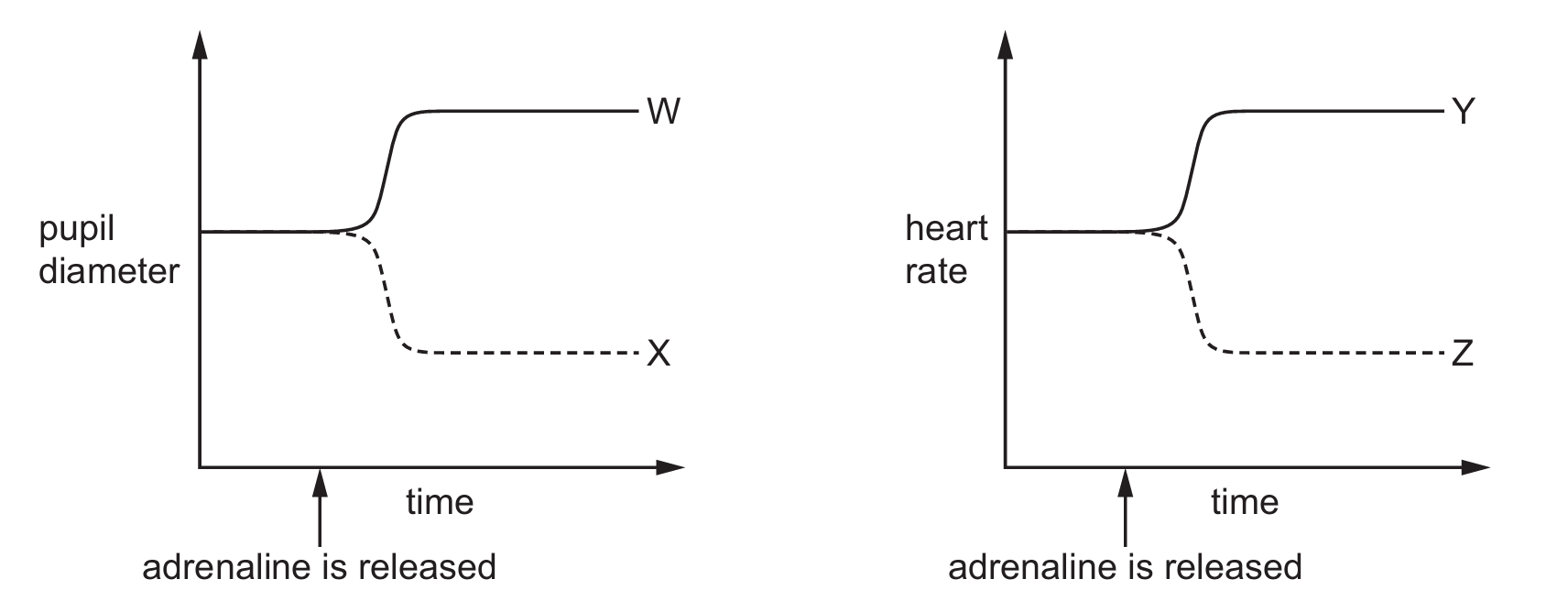
Which lines on the graphs show the effects of adrenaline on pupil diameter and heart rate?
▶️ Answer/Explanation
Ans: A
Adrenaline causes both pupil dilation (increased diameter) and increased heart rate. The lines showing these effects would both rise after adrenaline release. Without seeing the graphs, we know W and Y must represent these increases based on the correct answer.
Topic: 14.5
Which statements about tropisms in plants are correct?
1 Shoots grow towards light and away from gravity.
2 Shoots grow away from light and towards gravity.
3 Roots grow towards light and away from gravity.
4 Roots grow away from light and towards gravity.
▶️ Answer/Explanation
Ans: B
Shoots show positive phototropism (grow toward light) and negative gravitropism (grow away from gravity). Roots show negative phototropism (grow away from light) and positive gravitropism (grow toward gravity). Therefore, statements 1 and 4 are correct.
Topic: 15.1
What is defined as a substance that is taken into the body and modifies or affects chemical reactions in the body?
▶️ Answer/Explanation
Ans: B
A drug is defined as any substance (other than food) that, when taken into the body, alters its function physically or psychologically. While hormones (C) affect chemical reactions, they’re produced within the body. Antibodies (A) are proteins, and pathogens (D) cause disease.
Topic: 16.1
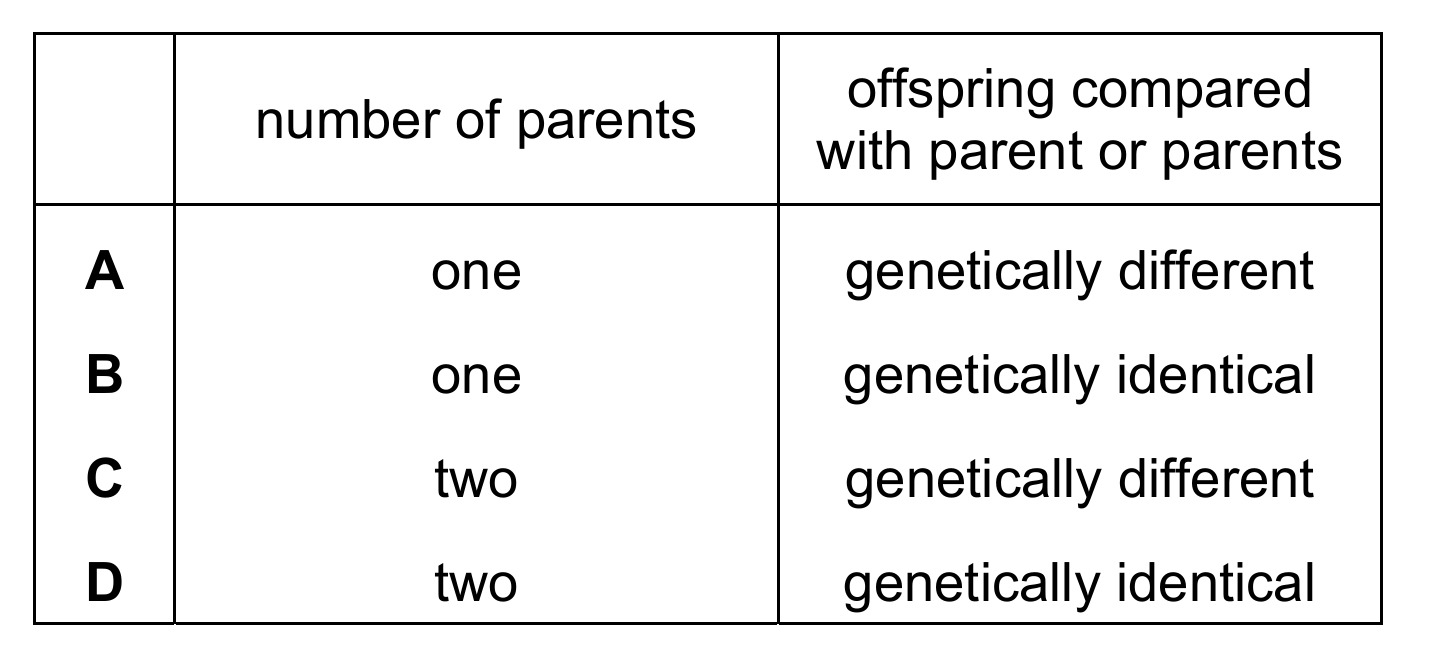
Which row is correct for asexual reproduction?
▶️ Answer/Explanation
Ans: B
Asexual reproduction involves only one parent and produces genetically identical offspring (clones). This eliminates options with two parents (C/D) or genetically different offspring (A). The correct combination is one parent with genetically identical offspring.
Topic: 16.4
The diagram shows some stages in reproduction.
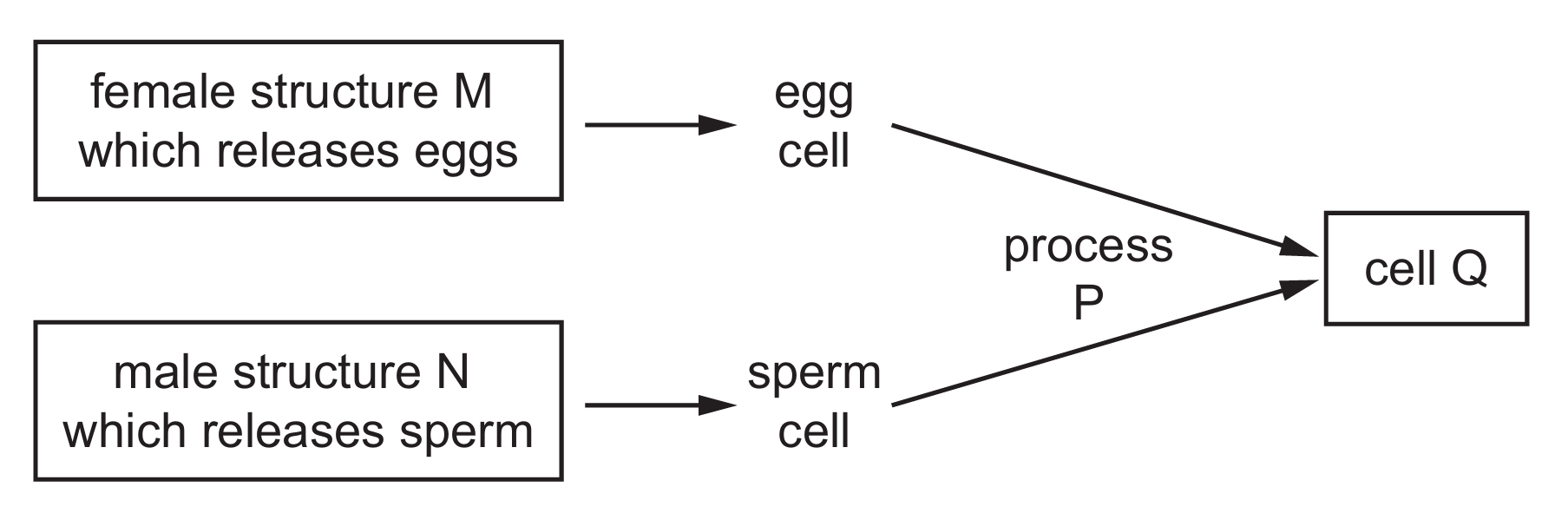
Which letter correctly identifies the structure or process?
▶️ Answer/Explanation
Ans: C
Process P represents fertilisation where the egg and sperm fuse. M is the ovary (produces eggs), N is the testis (produces sperm), and Q is the zygote (formed after fertilisation). Thus, only option C correctly identifies P as fertilisation.
Topic: 16.3
The diagram shows half a flower.
Which structure produces pollen?
▶️ Answer/Explanation
Ans: A
In flowers, pollen is produced by the anther, which is part of the stamen (male reproductive structure). Structure A is the anther, while B is the stigma, C is the style, and D is the ovary (female parts).
Topic: 17.4
Two parents have the genotypes Bb and bb for a particular feature.
What is the probability of these parents having offspring that are homozygous recessive for this feature?
▶️ Answer/Explanation
Ans: C
Using a Punnett square: Bb × bb gives 2 possible genotypes – Bb and bb. The homozygous recessive (bb) occurs in 2 out of 4 combinations, giving a 50% probability. B is dominant, so bb is the only homozygous recessive possibility.
Topic: 17.4
A genetic cross between two organisms may be shown as Tt × Tt.
What does T represent?
▶️ Answer/Explanation
Ans: A
In genetic notation, uppercase letters (T) represent dominant alleles, while lowercase (t) represent recessive alleles. Chromosomes (B/D) carry many genes, not single alleles. Thus, T is a dominant allele.
Topic: 18.1
Some phenotypes are listed.
1 blood group
2 body mass
3 height
4 seed colour in peas
Which phenotypes are examples of continuous variation?
▶️ Answer/Explanation
Ans: B
Continuous variation shows a range of values (like height/weight), while discontinuous has distinct categories (blood groups/seed color). Body mass (2) and height (3) are continuous, while blood group (1) and seed color (4) are discontinuous.
Topic: 19.2
A food chain is shown.
lettuce plant → slug → hedgehog
By which process is energy transferred from the lettuce plant to the slug?
▶️ Answer/Explanation
Ans: C
Energy is transferred when the slug ingests (eats) the lettuce plant. Egestion (A) is waste removal, excretion (B) is metabolic waste removal, and respiration (D) occurs after ingestion to release energy.
Topic: 19.2
A single bush is food for a large population of greenfly. Several ladybirds eat the greenfly. The ladybirds are eaten by a bird.
Which diagram shows the pyramid of numbers for this food chain?
▶️ Answer/Explanation
Ans: B
The pyramid should show: 1 bush (base) → many greenfly → fewer ladybirds → 1 bird (top). This decreasing number pattern matches option B, as each trophic level supports fewer organisms.
Topic: 20.1
Scientists studied the uptake of potassium ions from chemical fertilisers by wheat plants.
The results are shown.
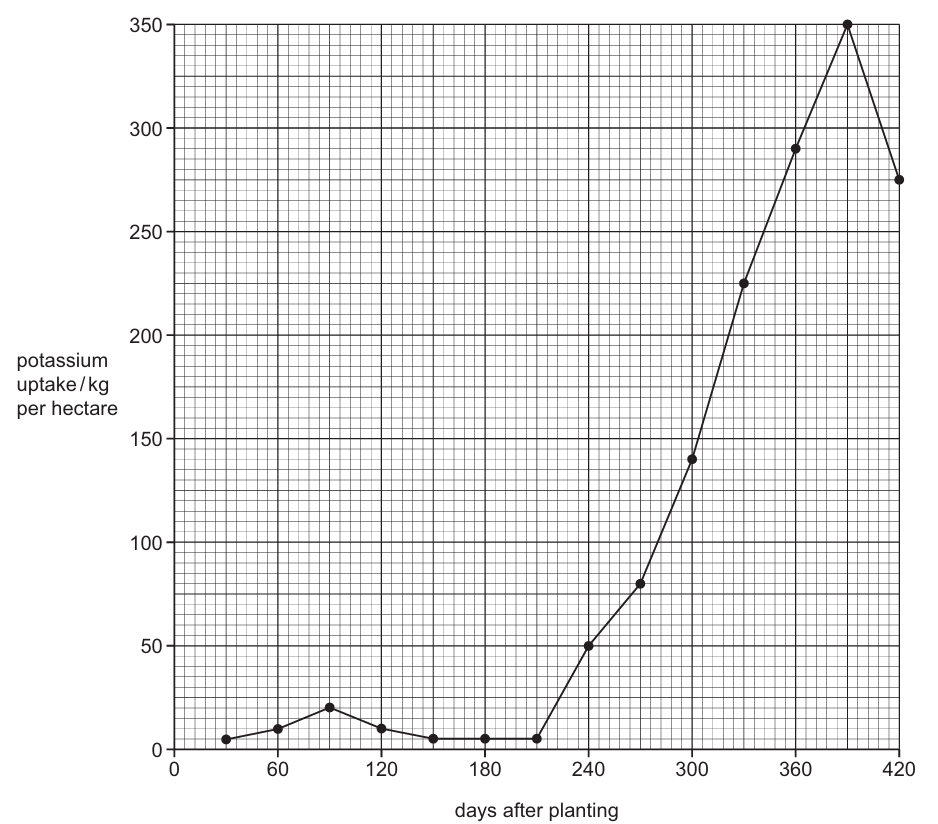
What is the difference in the uptake of potassium ions at 360 days after planting compared to 30 days after planting?
▶️ Answer/Explanation
Ans: C
At 30 days: ~75 kg/ha. At 360 days: ~360 kg/ha. Difference = 360 – 75 = 285 kg/ha. The graph shows a steady increase, with the highest uptake at 360 days.
Topic: 11.1
A student investigated gas exchange using the apparatus shown.
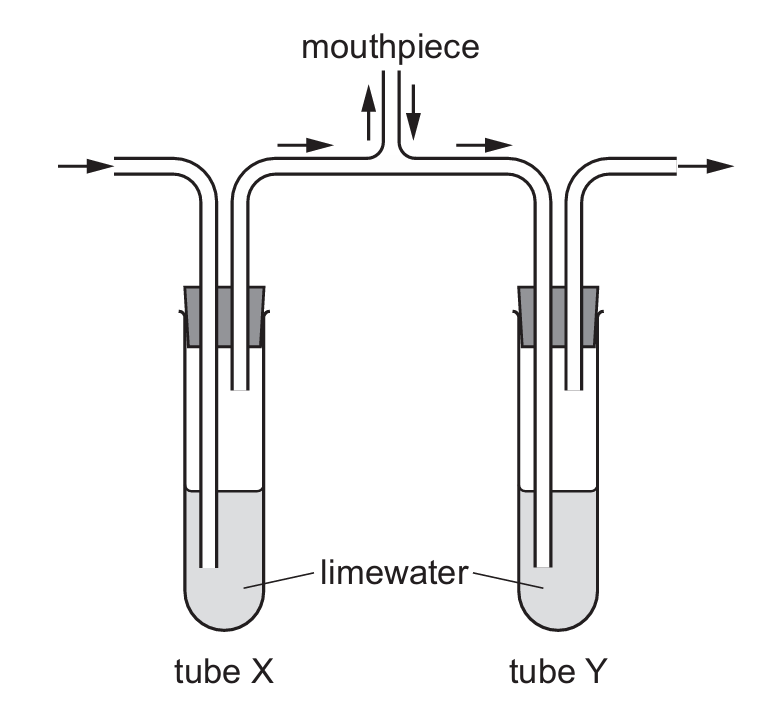
What would be the appearance of the limewater in tube X and tube Y after breathing in and out of the mouthpiece for one minute?
▶️ Answer/Explanation
Ans: B
Tube X tests inhaled air (clear, low CO₂). Tube Y tests exhaled air (cloudy, high CO₂ turns limewater milky). The apparatus separates inhaled/exhaled air flow.
Topic: 19.1
The diagram shows the flow of energy in an ecosystem.
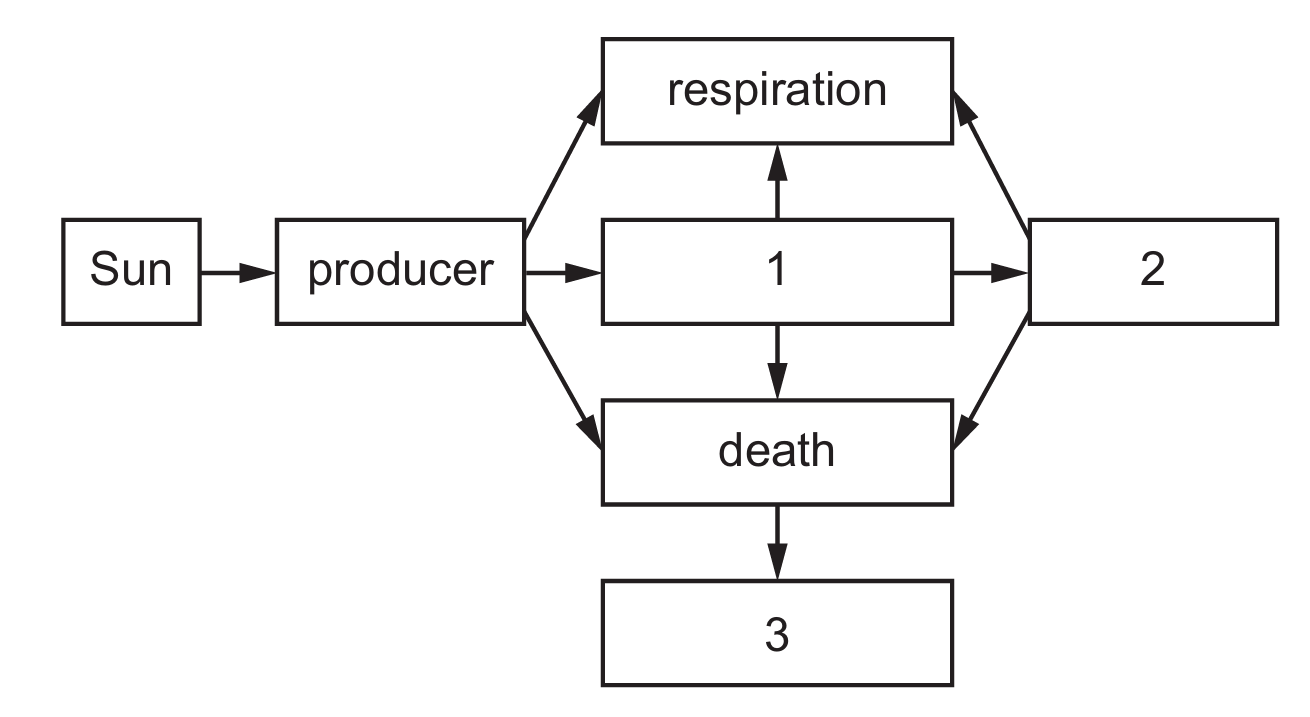
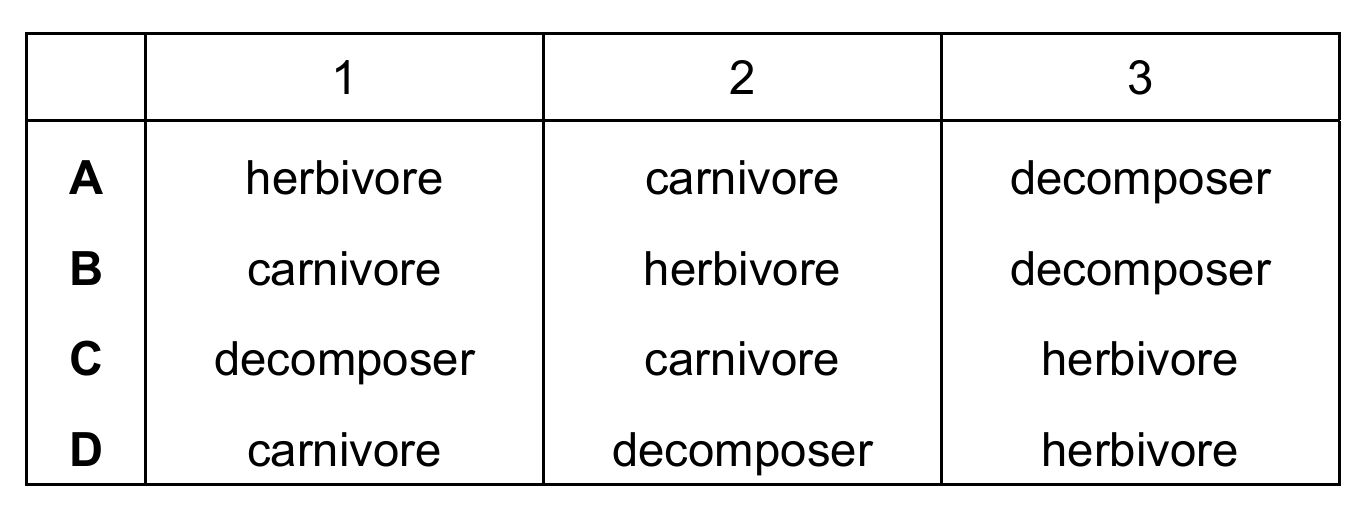
Which row correctly completes boxes 1, 2 and 3?
▶️ Answer/Explanation
Ans: A
Energy flows: producer → herbivore (1) → carnivore (2). Decomposers (3) break down dead matter. This standard trophic sequence matches option A.