Question 1
Which three characteristics apply to all organisms?
(B) egestion, movement and respiration
(C) excretion, movement and respiration
(D) excretion, photosynthesis and respiration
▶️ Answer/Explanation
All living organisms share certain basic characteristics. These are often remembered using the mnemonic MRS GREN: Movement, Respiration, Sensitivity, Growth, Reproduction, Excretion, Nutrition.
Let’s check the options:
- Excretion is the removal of metabolic waste (like carbon dioxide or urea) and is done by all organisms.
- Movement is a characteristic of life—even plants show movement (e.g., growth toward light).
- Respiration (the release of energy from food) occurs in all living cells.
- Photosynthesis is only carried out by plants, algae, and some bacteria, so it is not universal.
- Egestion refers to the removal of undigested food from the gut, which does not apply to organisms like plants.
So the correct combination—true for all organisms—is excretion, movement, and respiration.
✅ Answer: (C)
Question 2
The song thrush, Turdus philomelos, is a bird. What is the genus of this bird?
(B) song
(C) thrush
(D) Turdus
▶️ Answer/Explanation
In binomial nomenclature, each species is given a two‑part scientific name: Genus species.
For the song thrush, the scientific name is Turdus philomelos.
- The first word (Turdus) is the genus.
- The second word (philomelos) is the species identifier.
“Song” and “thrush” are common names, not scientific terms. “philomelos” is the species name, not the genus.
So the genus of the song thrush is Turdus.
✅ Answer: (D)
Question 3
How many pairs of jointed legs does an arachnid have?
(B) three pairs only
(C) four pairs only
(D) more than four pairs
▶️ Answer/Explanation
Arachnids are a class of arthropods that include spiders, scorpions, ticks, and mites.
Key features of arachnids:
- They have two main body parts (cephalothorax and abdomen).
- They have four pairs of jointed legs (so 8 legs in total).
- They do not have antennae or wings.
Compare with insects (class Insecta), which have three pairs of jointed legs.
Therefore, arachnids have four pairs of jointed legs.
✅ Answer: (C)
Question 4
Which structure is found in bacterial cytoplasm but not in the cytoplasm of animal cells?
(B) cell wall
(C) nucleus
(D) plasmid
▶️ Answer/Explanation
Let’s examine each option:
- Cell membrane – Present in both bacteria and animal cells.
- Cell wall – Present in bacteria (made of peptidoglycan) but absent in animal cells.
- Nucleus – Bacteria do not have a true nucleus (they are prokaryotic); animal cells have a nucleus (eukaryotic). The nucleus is not in the cytoplasm of either cell type; it’s a separate organelle.
- Plasmid – Small, circular DNA molecules found in the cytoplasm of bacterial cells. Animal cells do not have plasmids.
The question asks for a structure found in bacterial cytoplasm but not in animal cell cytoplasm.
While bacteria lack a nucleus, the nucleus isn’t “in the cytoplasm” of animal cells—it’s surrounded by its own membrane. The plasmid, however, is free in the bacterial cytoplasm and is never found in animal cells.
So the correct answer is plasmid.
✅ Answer: (D)
Question 5
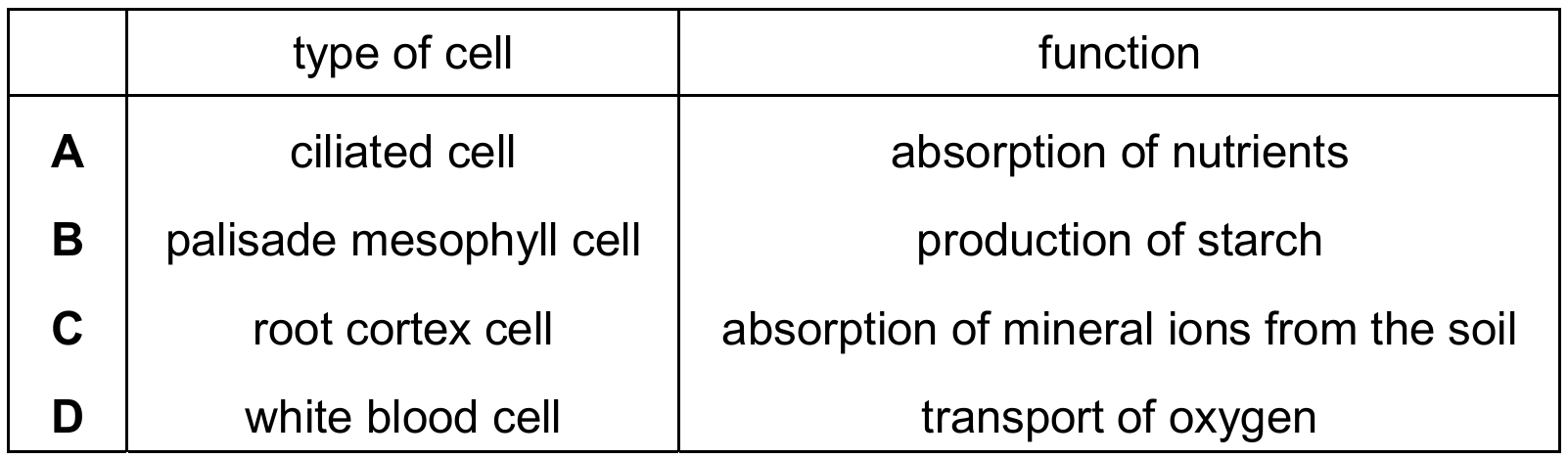
Which row correctly matches a type of specialised cell with its function?

▶️ Answer/Explanation
✅ Answer: (C)
Question 6
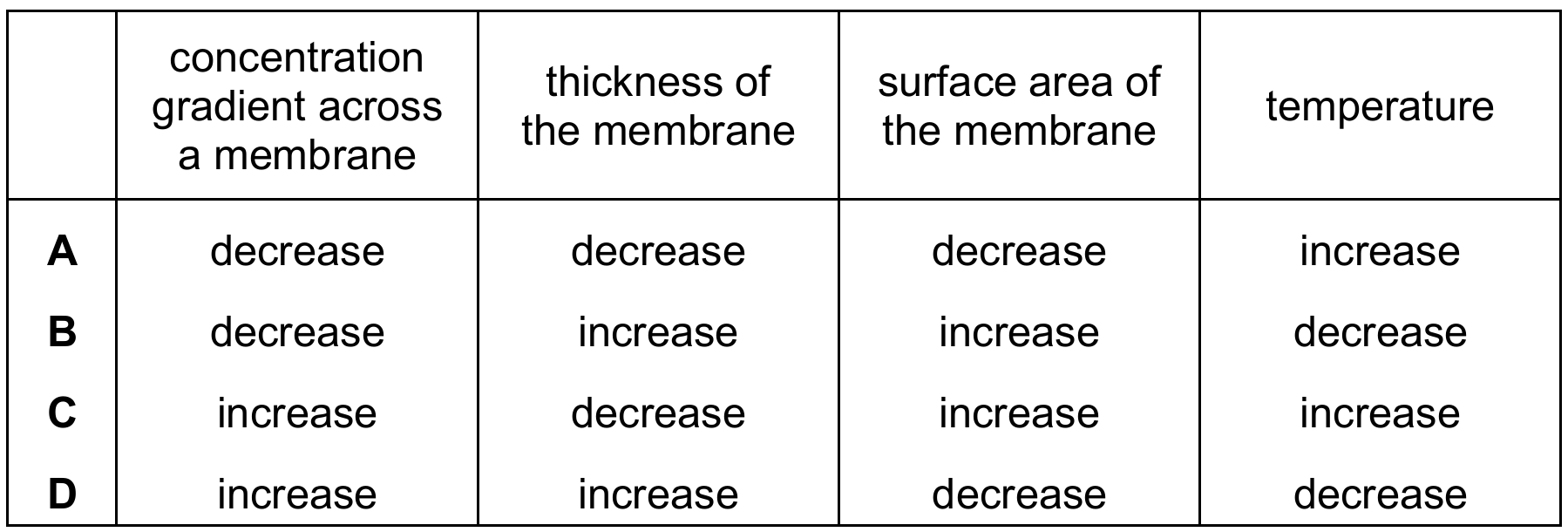
Different factors affect the rate of diffusion of molecules across a membrane.
Which row shows the changes that will result in the greatest increase in the rate of diffusion?

▶️ Answer/Explanation
✅ Answer: (C)
Question 7
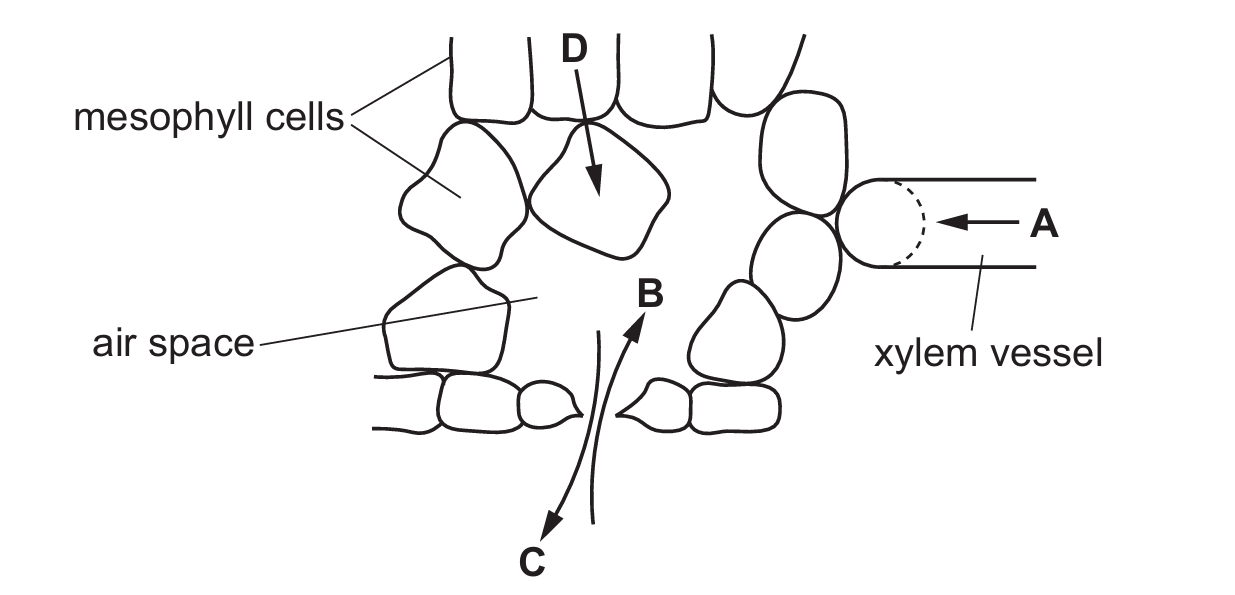
The diagram shows part of a cross-section of a leaf.
Which arrow shows the movement of water by osmosis in the leaf?

▶️ Answer/Explanation
✅ Answer: (B)
Question 8
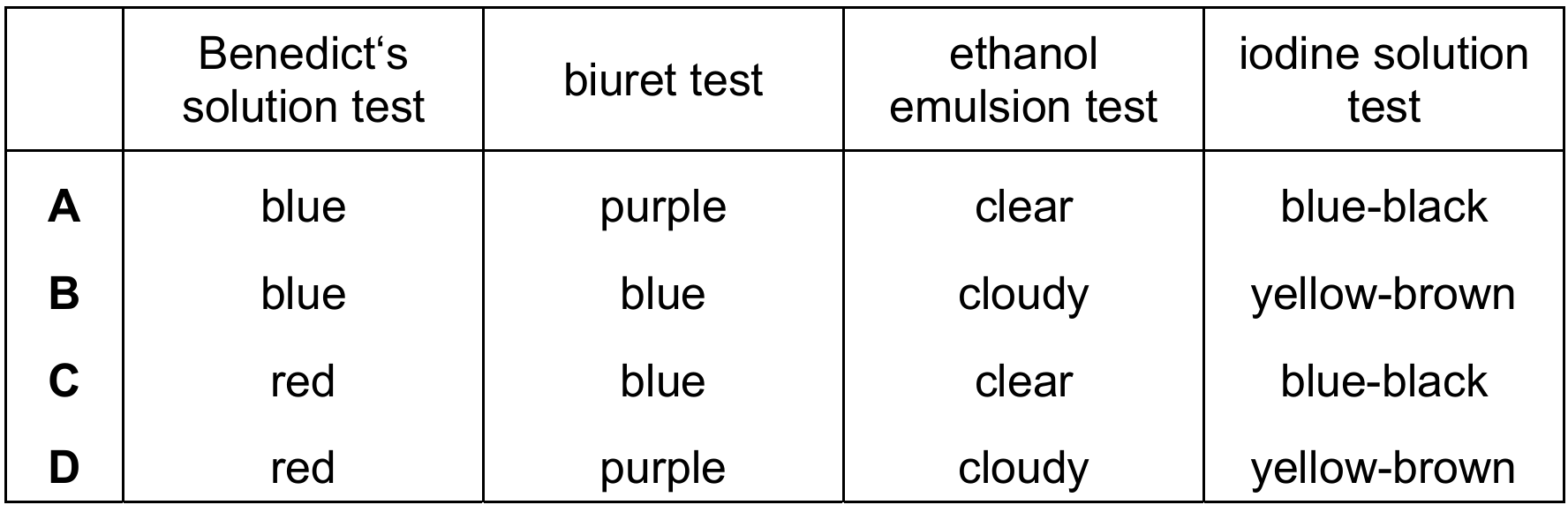
The table shows the results of some food tests.
Which row shows a food that contains carbohydrates only?

▶️ Answer/Explanation
✅ Answer: (C)
Question 9
What catalyse the chemical reaction needed to sustain life in organisms?
(B) hormones
(C) mitochondria
(D) ribosomes
▶️ Answer/Explanation
✅ Answer: (A) enzymes
Question 10
Which process in plant cells requires chlorophyll?
(B) nutrition
(C) movement
(D) respiration
▶️ Answer/Explanation
✅ Answer: (B) nutrition
Question 11
Which molecule contains nitrogen?
(B) glucose
(C) protein
(D) starch
▶️ Answer/Explanation
✅ Answer: (C) protein
Question 12
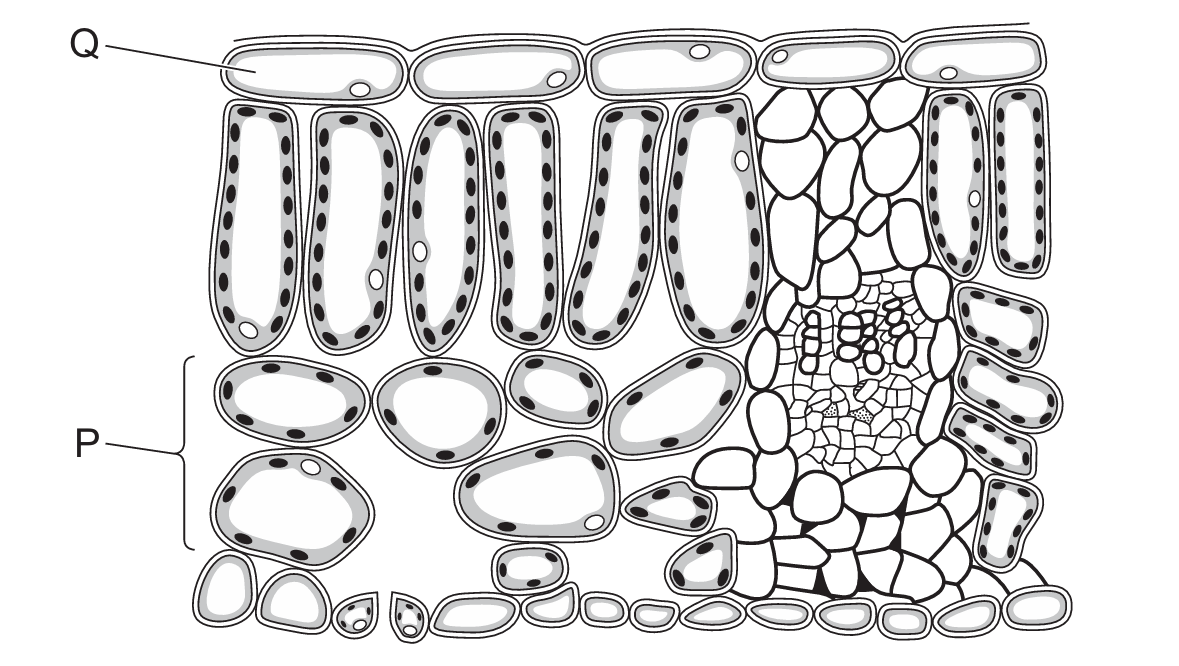
The diagram shows part of a cross-section of a leaf.

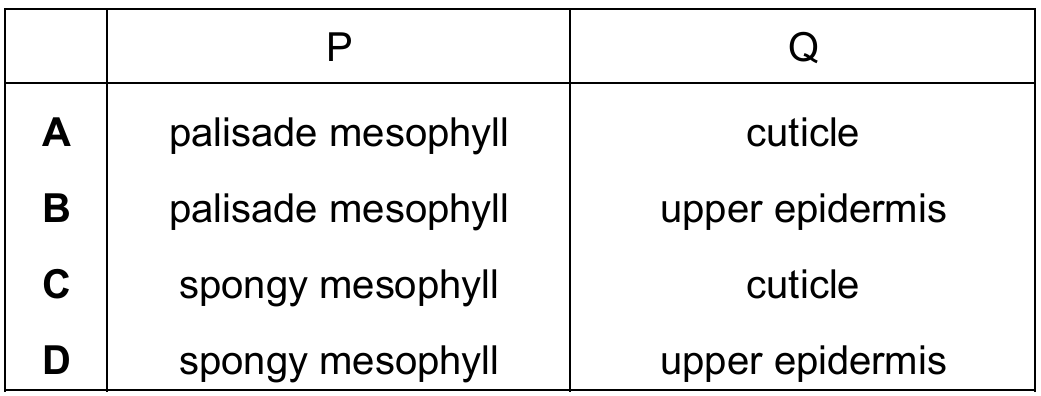
Which row correctly identifies tissue P and the tissue that contains cell Q?

▶️ Answer/Explanation
In the standard leaf cross-section diagram, cell Q is located at the top, within the upper epidermis. The tissue directly below it, P, shows irregular, loosely packed cells with large air spaces, which is characteristic of spongy mesophyll. The cuticle is a non-cellular layer, not a tissue that contains cells.
✅ Answer: (D)
Question 13
Which nutrients in the diet prevent rickets?
(B) calcium and vitamin D
(C) iron and vitamin C
(D) iron and vitamin D
▶️ Answer/Explanation
✅ Answer: (B) calcium and vitamin D
Question 14
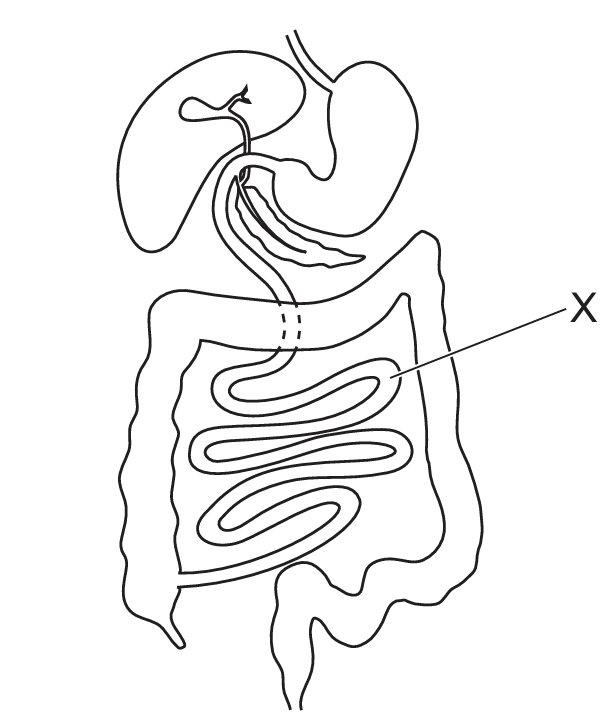
The diagram shows part of the human digestive system.

What is a function of the part labelled X?
(B) egestion
(C) excretion
(D) ingestion
▶️ Answer/Explanation
Part X is the small intestine. Its primary function is the absorption of digested nutrients (e.g., glucose, amino acids, fatty acids) into the bloodstream. Ingestion occurs in the mouth, egestion involves the removal of undigested waste via the anus, and excretion is performed by the kidneys and lungs.
✅ Answer: (A) absorption
Question 15
What increases the surface area of food for the action of enzymes?
(B) active transport
(C) respiration
(D) physical digestion
▶️ Answer/Explanation
✅ Answer: (D)
Question 16
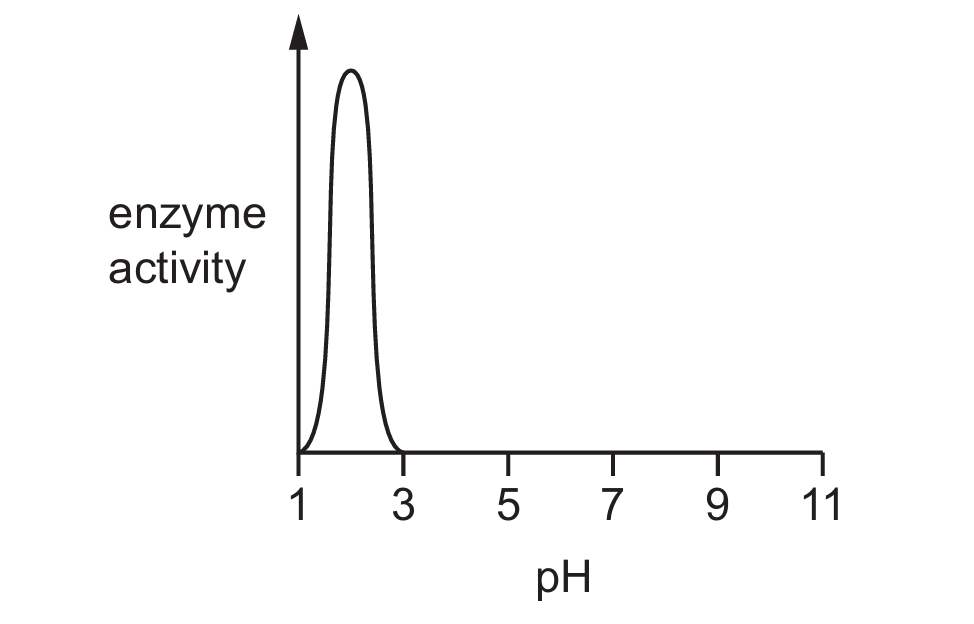
The graph shows the effect of pH on the activity of an enzyme.

In which part of the alimentary canal would this enzyme be most active?
(B) mouth
(C) small intestine
(D) stomach
▶️ Answer/Explanation
The graph shows peak enzyme activity between pH \(1\) and pH \(3\), which corresponds to a highly acidic environment. In the human alimentary canal, only the stomach maintains such a low pH (approximately \(1.5-3.5\)) due to the secretion of hydrochloric acid. Enzymes like pepsin, which digest proteins, are adapted to function optimally in this acidic range. The mouth is near neutral (pH \(\approx 7\)), the small intestine is slightly basic (pH \(\approx 7-8\)), and the large intestine is mildly acidic to neutral (pH \(\approx 5-7\)). Therefore, the enzyme is most active in the stomach.
✅ Answer: (D) stomach
Question 17
Which processes occur during transpiration?
- Water diffuses from the air spaces into the mesophyll cells.
- Water evaporates from surfaces of mesophyll cells into air spaces.
- Water from air spaces evaporates through stomata.
- Water vapour from air spaces diffuses through stomata.
(B) 1 and 4
(C) 2 and 3
(D) 2 and 4
▶️ Answer/Explanation
Transpiration begins with liquid water evaporating from the moist surfaces of mesophyll cells into the intercellular air spaces (process 2). This water vapor then diffuses out of the leaf through the stomata, driven by a concentration gradient (process 4). Process 1 describes the reverse movement (into cells), which does not occur during transpiration. Process 3 incorrectly states that evaporation happens through stomata; evaporation occurs at the cell surfaces inside the leaf, not at the stomata.
✅ Answer: (D) 2 and 4Question 18
What is the sequence in which blood flows through the circulatory system?
(B) capillaries → arteries → heart → veins
(C) capillaries → veins → heart → arteries
(D) heart → veins → arteries → capillaries
▶️ Answer/Explanation
✅ Answer: (D)
Question 19
Which row identifies methods that will reduce the spread of disease?
| treating sewage | washing hands regularly | providing clean drinking water | |
|---|---|---|---|
| A | ✓ | ✓ | ✓ |
| B | ✓ | ✓ | ✗ |
| C | ✓ | ✗ | ✓ |
| D | ✗ | ✓ | ✓ |
✓ = a method that will reduce the spread of disease
✗ = a method that will not reduce the spread of disease
▶️ Answer/Explanation
✅ Answer: (A)
Question 20
Which chemical can be used to show the presence of carbon dioxide?
(B) biuret reagent
(C) DCPIP
(D) limewater
▶️ Answer/Explanation
✅ Answer: (D)
Question 21
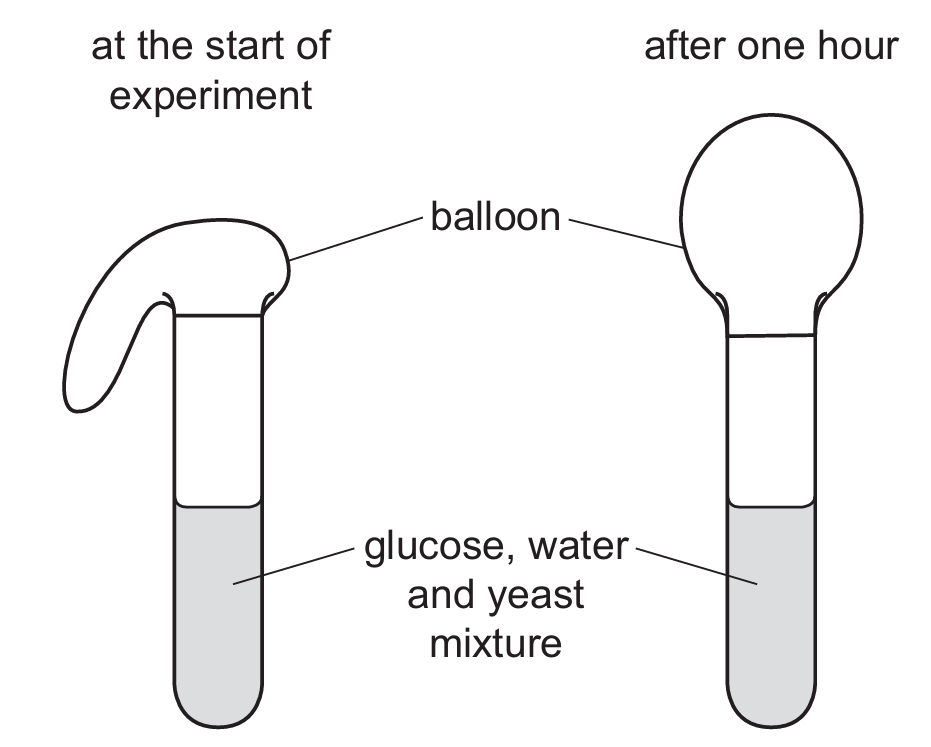
A mixture of glucose, yeast and water was placed in a test-tube. A balloon was attached to the open end of the test-tube. The apparatus was kept at 30 °C for one hour.
The diagram shows the apparatus at the start and after one hour, with the balloon inflated.

Which word equation can be used to explain what happened to the balloon after one hour?
(B) glucose → alcohol + carbon dioxide
(C) glucose → carbon dioxide + water
(D) glucose → lactic acid
▶️ Answer/Explanation
The inflation of the balloon indicates the production of a gas. In the presence of yeast (a fungus) and at the warm temperature of 30 °C, glucose undergoes anaerobic respiration, or fermentation. The products of this process are ethanol (alcohol) and carbon dioxide gas. The gas fills the balloon, causing it to inflate.
✅ Correct Equation: glucose → alcohol + carbon dioxide
✅ Answer: (B)
Question 22
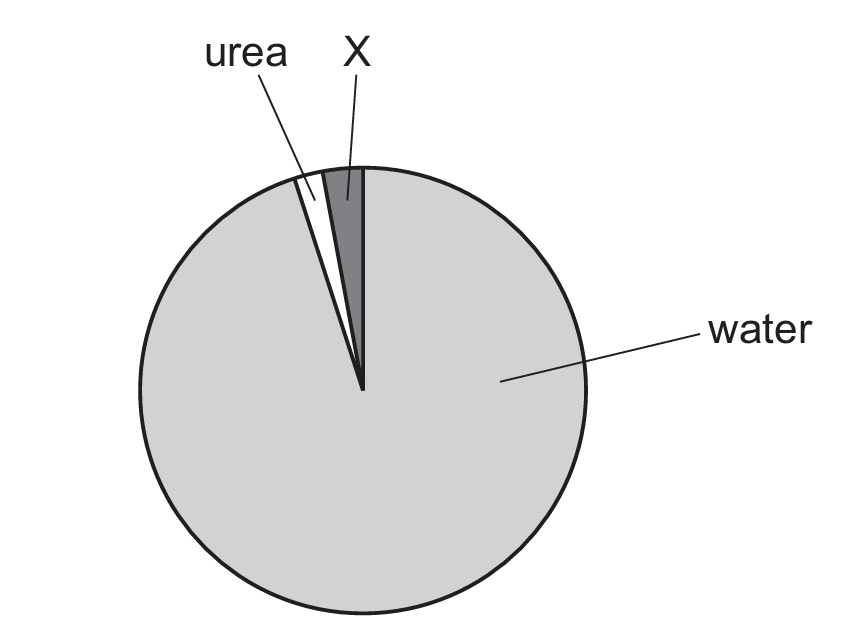
Urine is formed from the substances excreted by the kidneys. The pie chart shows the composition of urine in a healthy person.

What is label X?
(A) Ions
(B) Platelets
(C) Starch
(D) Sucrose
▶️ Answer/Explanation
The pie chart shows the composition of urine. In a healthy person, urine is approximately 95% water. The remaining 5% consists of dissolved solutes, primarily ions (such as sodium, potassium, chloride, and ammonium), urea, creatinine, uric acid, and other waste products.
Let’s evaluate the options:
- Platelets (B) are blood cells and are not normally excreted in urine.
- Starch (C) and sucrose (D) are complex and simple carbohydrates, respectively. They are not waste products excreted by kidneys in a healthy person.
- Ions (A) are a major component of the dissolved solids in urine, making them the correct label for X.
✅ Answer: (A) ions
Question 23
Which hormone increases pupil diameter and is secreted in ‘fight or flight’ situations?
(B) insulin
(C) oestrogen
(D) testosterone
▶️ Answer/Explanation
✅ Answer: (A)
Question 24
Which responses are usually shown by the root of a plant?
| gravitropism | phototropism | |
|---|---|---|
| A | – | – |
| B | – | + |
| C | + | – |
| D | + | + |
▶️ Answer/Explanation
✅ Answer: (C)
Question 25
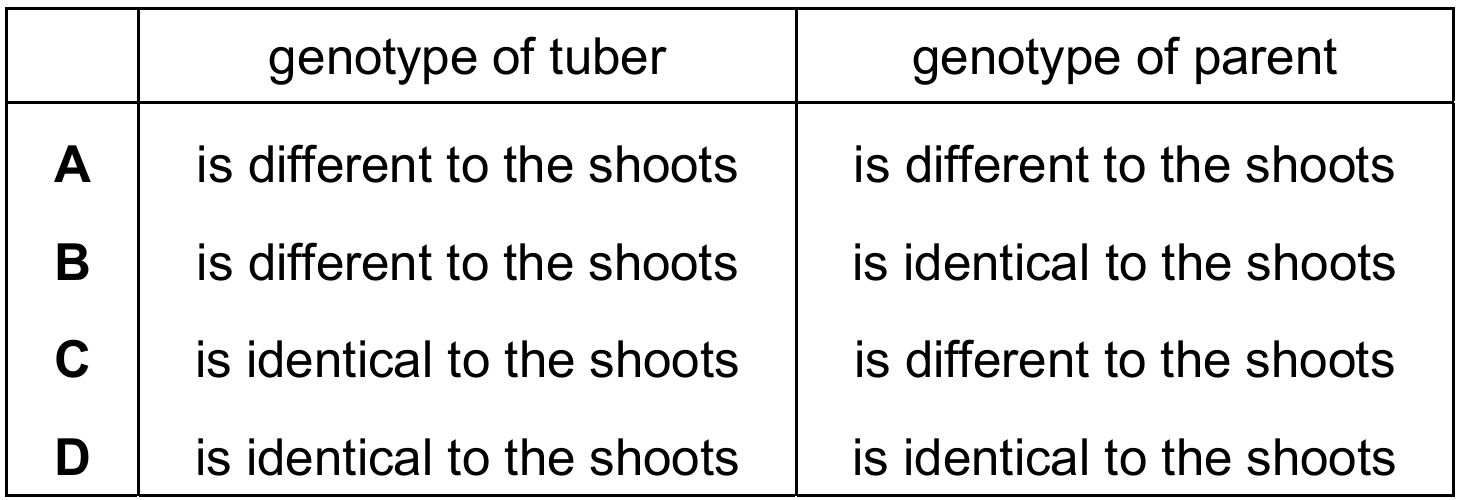
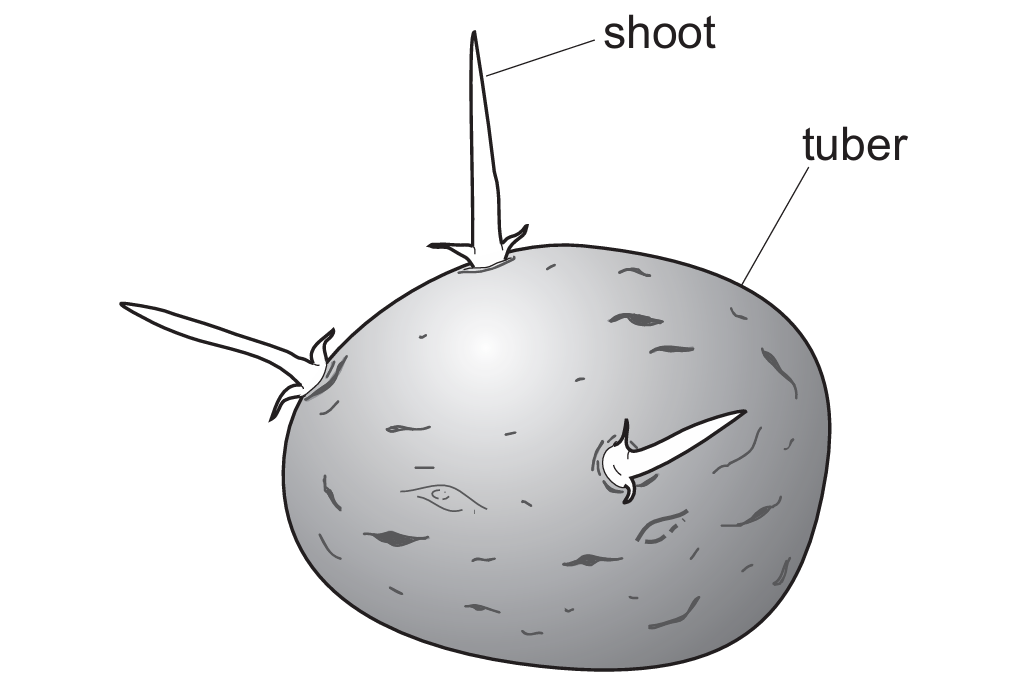
The diagram shows a potato tuber that developed from the stem of a parent potato plant. Three shoots are starting to grow from the tuber.

How do the genotypes of the shoots compare with the genotypes of the tuber and of the parent?

▶️ Answer/Explanation
A potato tuber is a modified stem that grows asexually from the parent plant. This type of reproduction, known as vegetative propagation, does not involve meiosis or gamete fusion, so no genetic recombination occurs. Therefore, the tuber is genetically identical (a clone) to the parent plant. The shoots growing from the tuber arise from its meristematic tissue through mitosis, making them genetically identical to both the tuber and the original parent.
✅ Answer: (D) – The genotypes of the tuber and the parent are both identical to the shoots.
Question 26
What is a feature of wind-pollinated flowers?
(B) large, brightly coloured petals
(C) long, feathery stigmas
(D) production of nectar
▶️ Answer/Explanation
✅ Answer: (C) long, feathery stigmas
Question 27
Which parts of the gametes fuse during fertilisation?
(B) cell walls
(C) cytoplasm
(D) nuclei
▶️ Answer/Explanation
✅ Answer: (D)
Question 28
The statements are about some hormones in the human body.
- V promotes the development of breast tissue.
- W promotes the development of stronger muscles.
- X causes the voice to deepen at puberty.
- Y is produced by the pancreas.
Which statements are correct for testosterone?
(B) V and Y
(C) W and X
(D) X and Y
▶️ Answer/Explanation
Testosterone is a male sex hormone that promotes the development of male secondary sexual characteristics.
- V (breast tissue development) is driven by estrogen, not testosterone.
- W (stronger muscles) is correct; testosterone promotes muscle growth.
- X (voice deepens) is correct; testosterone thickens vocal cords at puberty.
- Y (produced by pancreas) is incorrect; testosterone is produced mainly in the testes (and ovaries/adrenals), not the pancreas.
Thus, only W and X are correct for testosterone.
✅ Answer: (C)Question 29
Which type of organism causes an infection that may lead to AIDS?
(B) bacterium
(C) myriapod
(D) virus
▶️ Answer/Explanation
AIDS (Acquired Immunodeficiency Syndrome) is caused by the Human Immunodeficiency Virus (HIV), a retrovirus. HIV specifically targets and destroys CD4\(^+\) T lymphocytes, which are crucial for the immune system’s function. Over time, this leads to severe immunodeficiency, making the body vulnerable to opportunistic infections and cancers. Unlike bacteria or multicellular organisms like amphibians or myriapods, viruses are non-living infectious agents that require a host cell to replicate. HIV is transmitted through certain body fluids and, without treatment, can progress to AIDS. The data in the second image confirms that 100% of the responses correctly identified “virus” as the answer.
Question 30
What does a gene code for?
(B) a carbohydrate
(C) a fat
(D) a protein
▶️ Answer/Explanation
✅ Answer: (D) a protein
Question 31
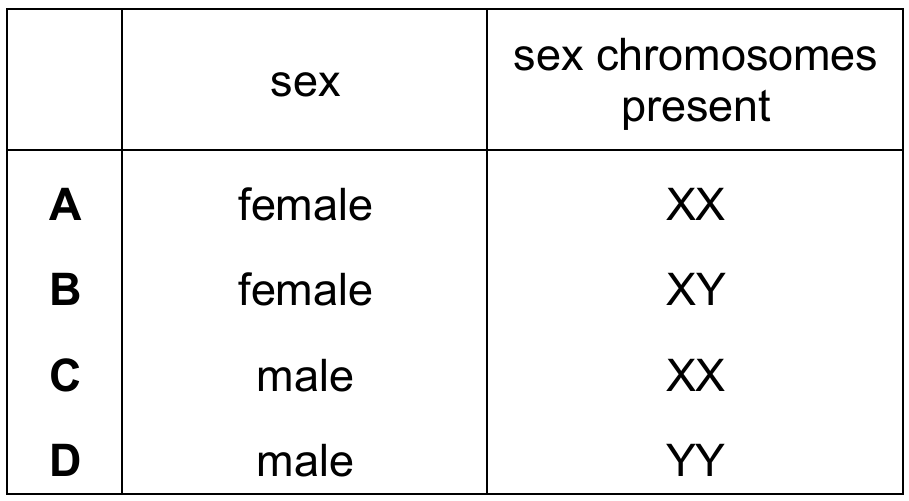
Which row shows the sex chromosomes present in human body cells?

▶️ Answer/Explanation
✅ Answer: (A)
Question 32
An individual who is homozygous dominant for a characteristic has the genotype TT. Another individual is heterozygous for this characteristic.
What is the correct percentage of genotypes for the offspring resulting from a genetic cross between these two individuals?
(B) 50% TT, 50% tt
(C) 50% TT, 50% Tt
(D) 25% TT, 50% Tt, 25% tt
▶️ Answer/Explanation
Answer: (C) 50% TT, 50% Tt
Parent 1 is homozygous dominant (TT), and parent 2 is heterozygous (Tt). The cross can be set up as:
Parent 1 gametes: T, T
Parent 2 gametes: T, t
Using a Punnett square: \[ \begin{array}{c|c c} & T & t \\ \hline T & TT & Tt \\ T & TT & Tt \\ \end{array} \] The offspring genotypes are: 2 TT and 2 Tt. This gives a 50% chance of TT and 50% chance of Tt. No tt genotype appears because one parent provides only the dominant allele (T).
Question 33
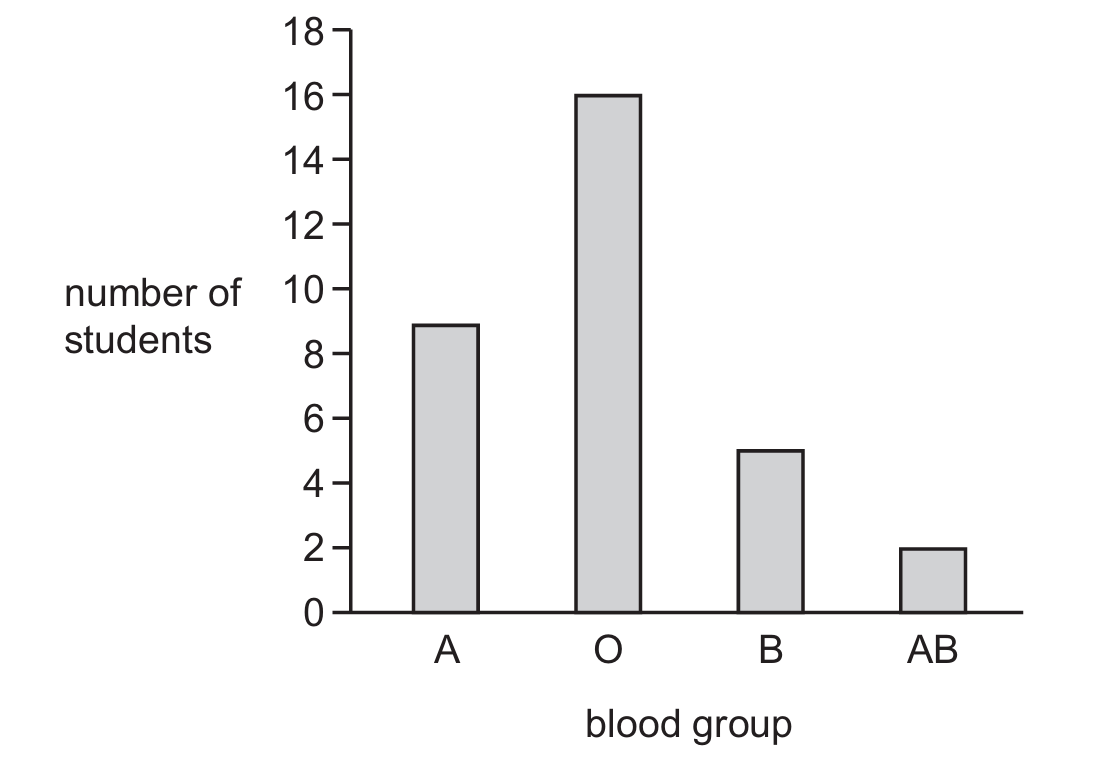
The graph shows the number of students with each blood group in a class.

What can be concluded about blood groups from the graph?
(B) Blood groups are an example of continuous variation caused by genes only.
(C) Blood groups are an example of discontinuous variation caused by genes and the environment.
(D) Blood groups are an example of discontinuous variation caused by genes only.
▶️ Answer/Explanation
✅ Answer: (D)
Question 34
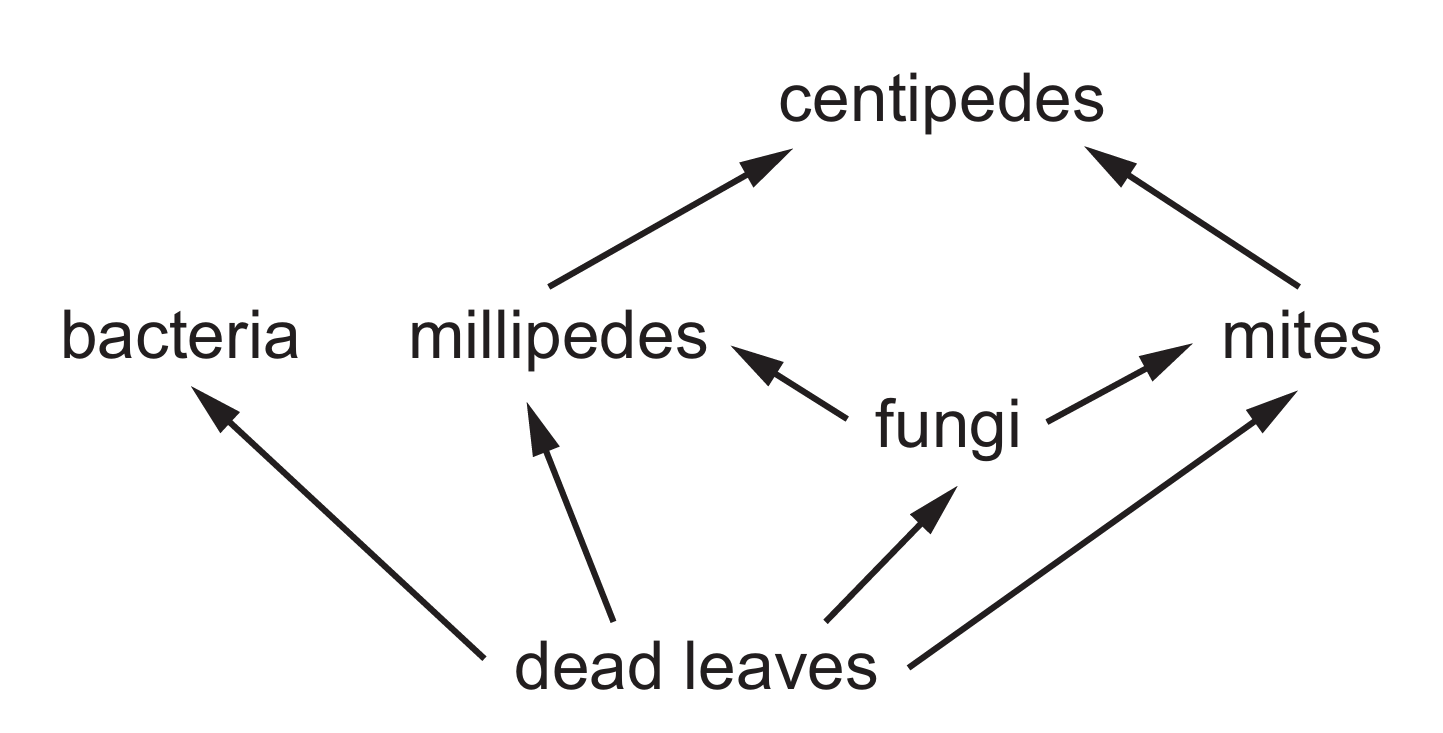
The diagram shows part of a food web in a pile of dead leaves.

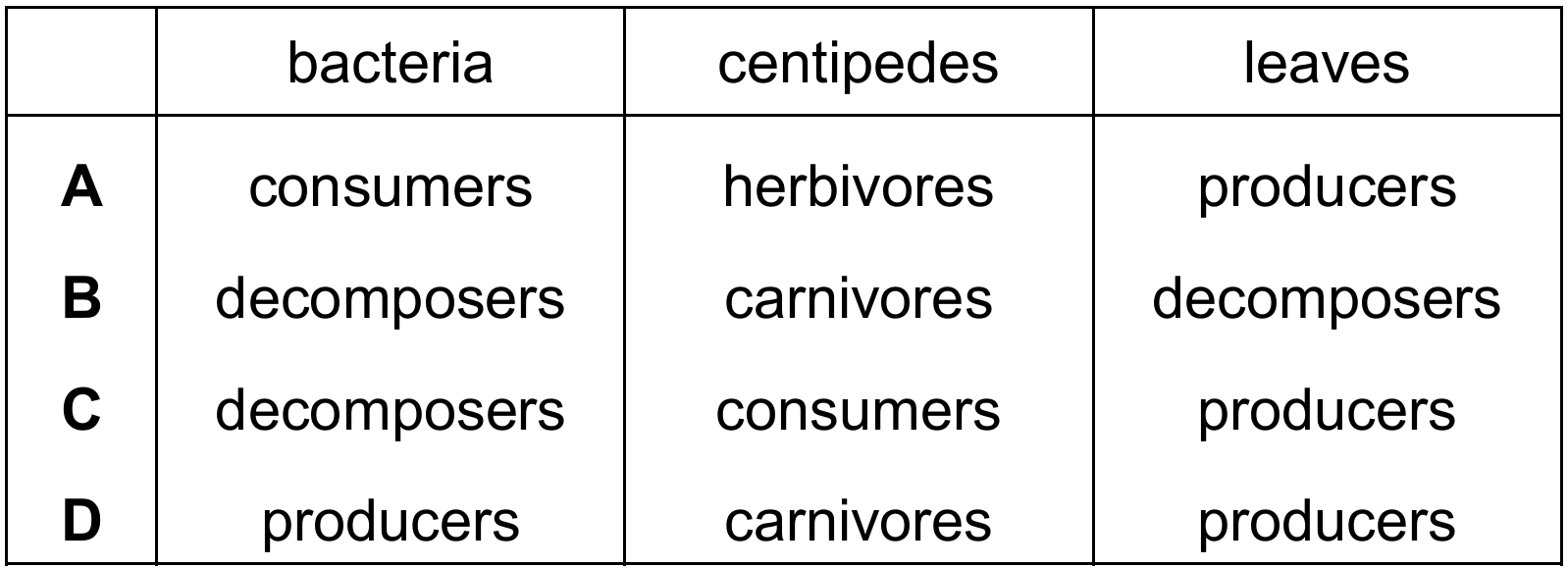
Which row correctly describes the organisms?

▶️ Answer/Explanation
✅ Answer: (C)
Question 35
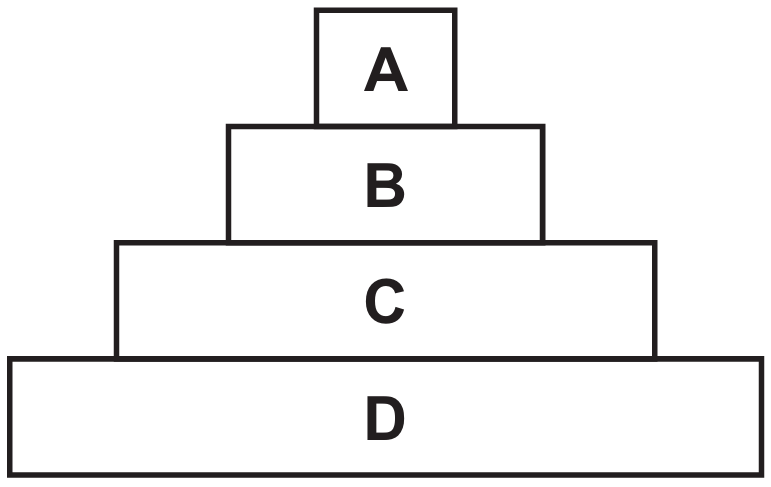
The diagram shows an ecological pyramid.
Which letter represents the producers?

▶️ Answer/Explanation
✅ Answer: (D)
Question 36
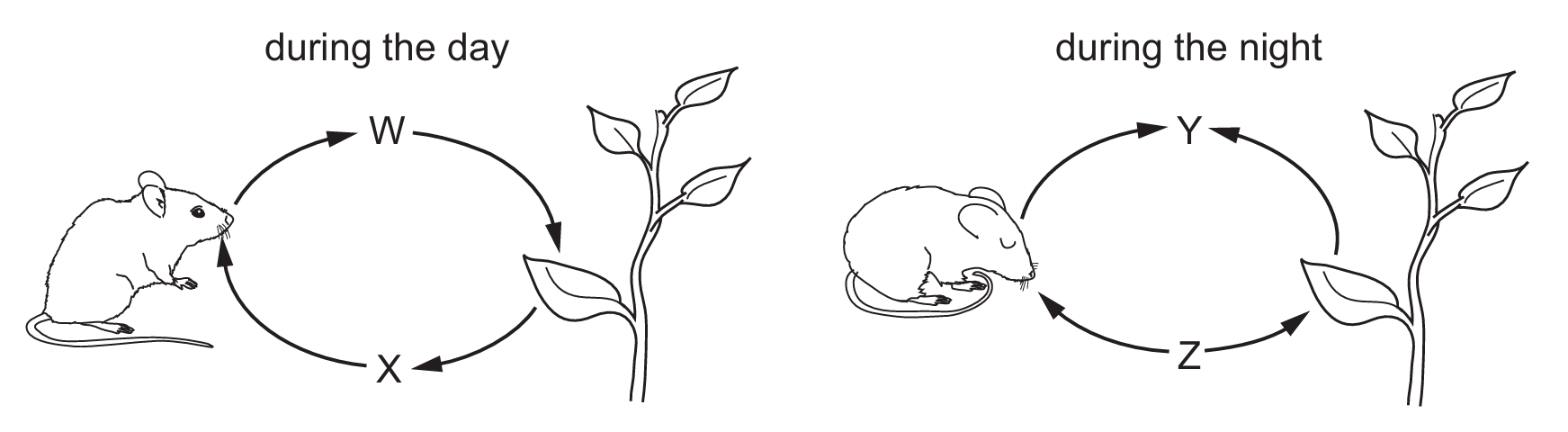
The diagrams show the movement of two gases during the day and during the night.

Which letters represent carbon dioxide?
(B) W and Z
(C) X and Y
(D) X and Z
▶️ Answer/Explanation
Correct Answer: (A) W and Y
Explanation:
During photosynthesis in plants, carbon dioxide (\(\mathrm{CO_2}\)) is taken in and oxygen (\(\mathrm{O_2}\)) is released. The question requires identifying which arrows represent \(\mathrm{CO_2}\) movement. Based on standard biological diagrams:
- During the day, \(\mathrm{CO_2}\) typically moves into the plant (represented by arrow W)
- During the night, when photosynthesis stops but respiration continues, \(\mathrm{CO_2}\) is released (represented by arrow Y)
Therefore, carbon dioxide is represented by letters W and Y.
Question 37
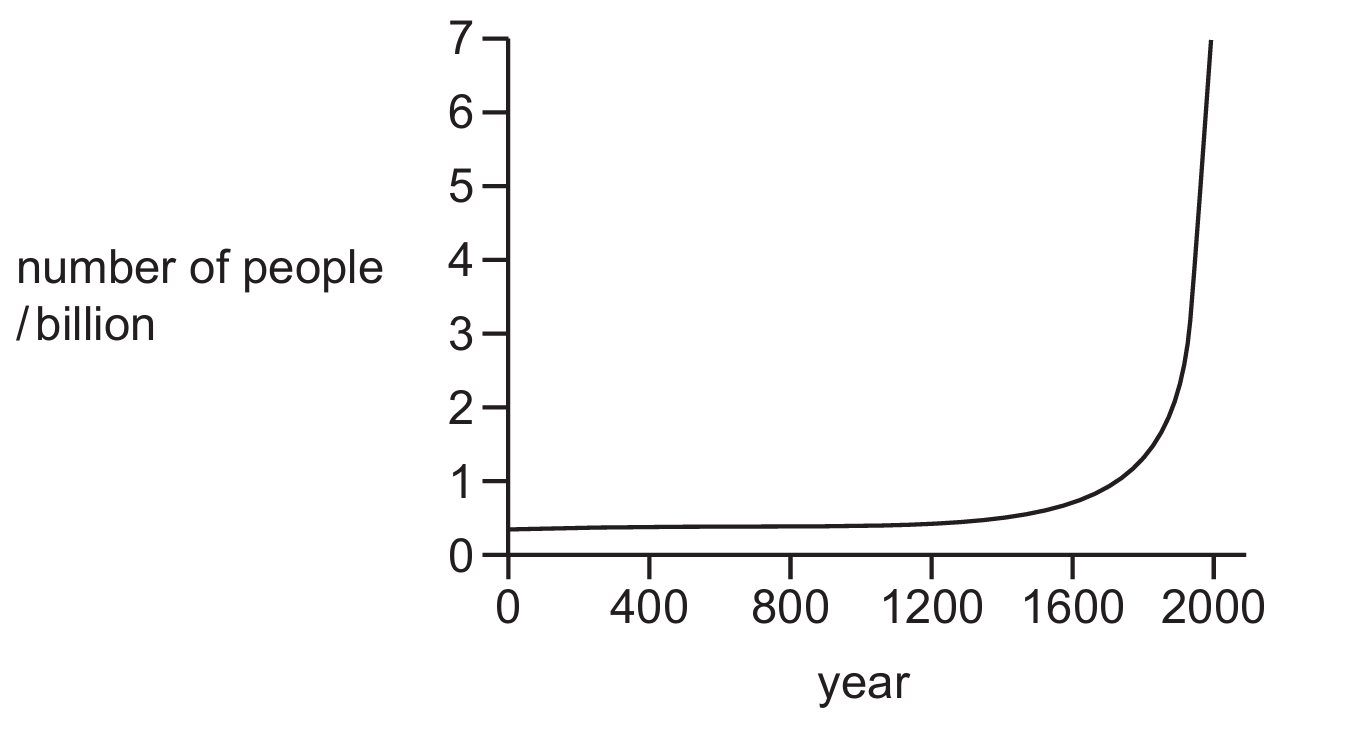
The graph shows the estimated growth of the human population.

Which phase of population growth is occurring between the years 1600 and 2000?
(B) exponential (log) phase
(C) lag phase
(D) stationary phase
▶️ Answer/Explanation
The period from 1600 to 2000 shows a rapid, accelerating increase in human population. This pattern is characteristic of exponential growth, where the growth rate becomes proportional to the current population size. In population biology, this is known as the exponential (log) phase.
The other phases do not fit: lag phase involves slow initial growth, stationary phase implies stable numbers, and death phase indicates a decline—none of which describe the steep upward curve observed from 1600 onward.
✅ Answer: (B) exponential (log) phase
Question 38
Which statement describes a sustainable resource?
(B) a resource that is produced as rapidly as it is removed from the environment
(C) a resource that is produced using genetic modification
(D) a resource that results in habitat destruction when extracted from the environment
▶️ Answer/Explanation
✅ Answer: (B)
Question 39
What increases the chance of conserving endangered species?
(B) education
(C) hunting
(D) introducing new species
▶️ Answer/Explanation
Education raises public awareness about the importance of biodiversity and the threats faced by endangered species. It promotes responsible behavior, supports conservation policies, and encourages community involvement in protection efforts. In contrast, climate change often worsens habitat loss, hunting directly reduces populations, and introducing new species can disrupt ecosystems and harm native wildlife through competition or predation.
Question 40
Four statements about genetic modification in crop plants are listed.
- They can reduce the amount of herbicide used.
- They can reduce the amount of insecticide used.
- They can reduce the damage by pests to crop plants.
- They can reduce the nutritional quality of crop plants.
Which statements give reasons why genetic modification is used in crop production?
(B) 1, 2 and 4
(C) 1, 3 and 4
(D) 2, 3 and 4
▶️ Answer/Explanation
✅ Answer: (A)