Home / 0610_w25_qp_13

Question 1

The sundew is a carnivorous plant that can trap small insects with sticky hair-like structures on its leaves. When an insect gets stuck, other nearby sticky hair-like structures bend over to trap the insect.

Which characteristics of living organisms are demonstrated when the sundew plant traps insects?

(A) growth and excretion
(B) growth and sensitivity
(C) movement and excretion
(D) movement and sensitivity
▶️ Answer/Explanation
The sundew demonstrates movement because its hair-like structures physically bend toward the trapped insect. This bending is a rapid, directed motion in response to a stimulus. It also shows sensitivity because the plant detects the presence of the insect (the stimulus) and responds accordingly. Excretion is not directly shown in the trapping process, and growth is a slower, irreversible increase in size not described here. Therefore, the correct characteristics are movement and sensitivity.
Answer: (D) movement and sensitivity

Question 2

An arthropod has three pairs of legs.

To which group of arthropods does this organism belong?

(A) arachnids
(B) crustaceans
(C) insects
(D) myriapods
▶️ Answer/Explanation

Arthropods are classified based on the number of legs. Insects are characterized by having exactly three pairs (six legs) in the adult stage. Arachnids have four pairs (eight legs), crustaceans often have five or more pairs, and myriapods have numerous leg pairs (many segments with one or two pairs each). Therefore, an arthropod with three pairs of legs is definitively an insect.

Answer: (C) insects

Question 3

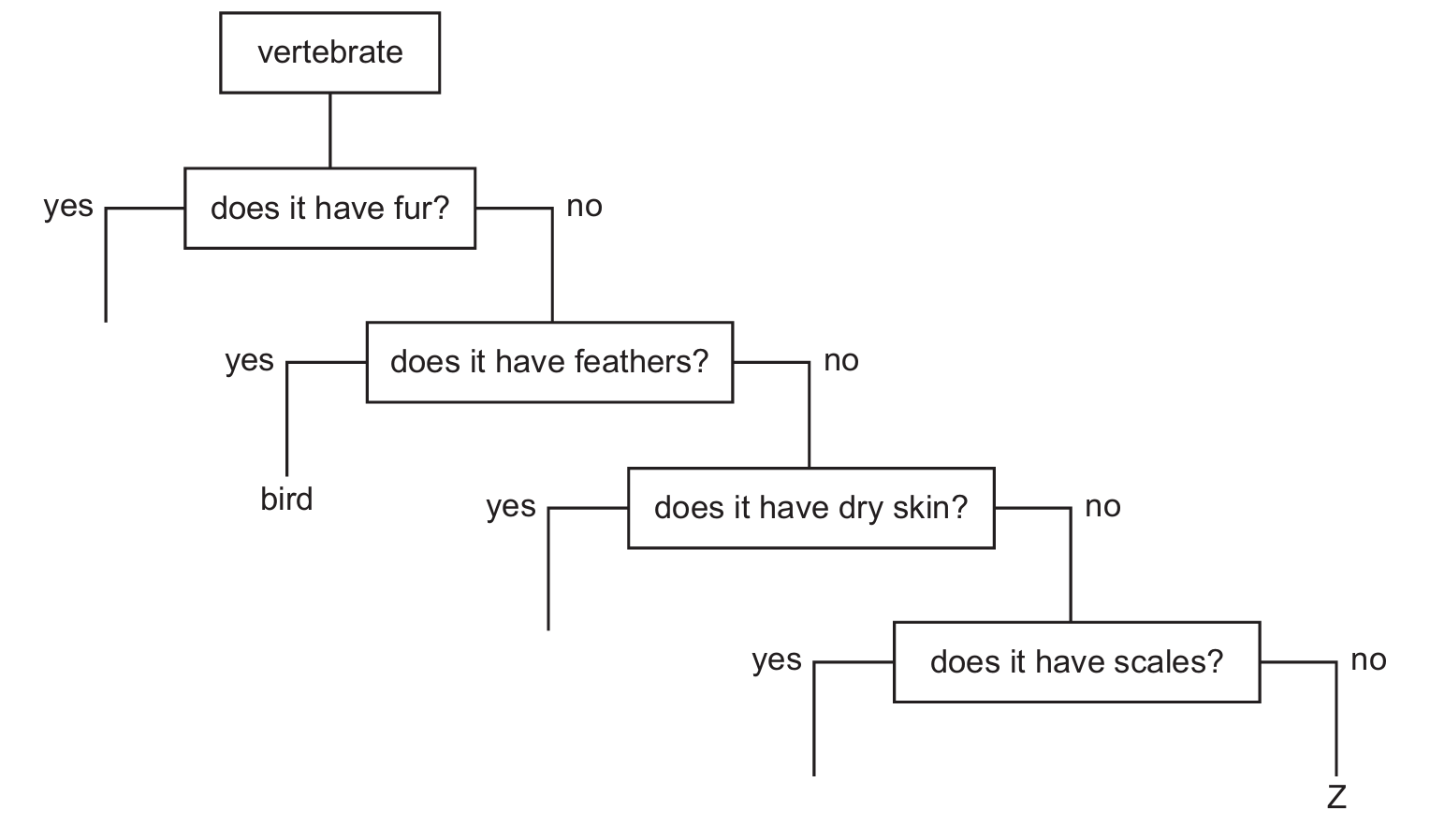
Using the dichotomous key, which type of animal would be found at Z?


(A) amphibian
(B) fish
(C) mammal
(D) reptile
▶️ Answer/Explanation
The key shows a vertebrate without fur, feathers, dry skin, or scales. Mammals have fur, birds have feathers, reptiles have dry scales, and fish have wet scales. The only vertebrate group left that typically has moist, scale-less skin and fits all the “no” answers is the amphibian.
Answer: (A) amphibian

Question 4

Which statement describes a plasmid?

(A) It is a circular piece of DNA.
(B) It is the liquid part of human blood.
(C) It is the site of aerobic respiration.
(D) It is the site of protein synthesis.
▶️ Answer/Explanation
A plasmid is a small, extrachromosomal, circular piece of DNA found primarily in bacteria and some other microorganisms. It is distinct from the main chromosomal DNA and often carries genes that confer advantageous traits, such as antibiotic resistance. The liquid part of human blood is plasma (B). The site of aerobic respiration is the mitochondrion (C). The site of protein synthesis is the ribosome (D).
Answer: (A)

Question 5

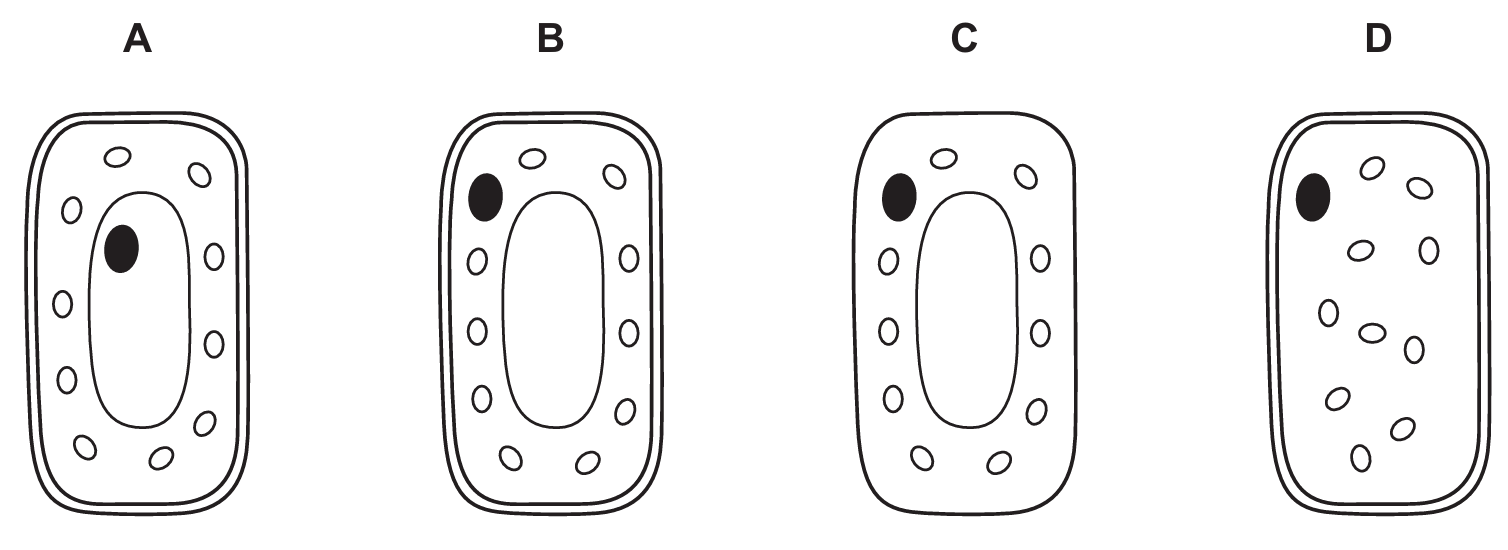
Which diagram represents a typical plant cell?

▶️ Answer/Explanation
Based on the provided data (CategoryValue51B1), the correct answer is B (Diagram B). A typical plant cell contains several distinguishing structures not found in animal cells. These include a rigid cell wall outside the cell membrane, large central vacuoles for storage and turgor pressure, and chloroplasts for photosynthesis. Diagram B is the only one among the options that consistently depicts these key plant-specific organelles with their correct shapes and relative sizes, such as a defined rectangular shape due to the cell wall and visible chloroplasts. The other diagrams likely represent animal cells or prokaryotic cells, which lack one or more of these essential plant features.
Answer: (B)

Question 6

A student drew a diagram of an alveolus. The diameter of the alveolus in the diagram was 90 mm. The magnification of the diagram was ×225.

What is the actual size of the alveolus?

(A) 4.00 mm
(B) 2.50 mm
(C) 0.40 mm
(D) 0.25 mm
▶️ Answer/Explanation
The actual size can be found using the formula: \[ \text{Actual size} = \frac{\text{Size in diagram}}{\text{Magnification}} \] Substituting the given values: \[ \text{Actual size} = \frac{90\ \text{mm}}{225} = 0.4\ \text{mm} \] Therefore, the actual diameter of the alveolus is \(0.40\ \text{mm}\).
Answer: (C)

Question 7

Which factor would decrease the rate of diffusion?

(A) increased temperature
(B) increased area of diffusion surface
(C) increased concentration gradient
(D) increased diffusion distance
▶️ Answer/Explanation
The rate of diffusion is directly proportional to temperature, surface area, and concentration gradient, but inversely proportional to the diffusion distance (or thickness of the barrier). According to Fick’s law, rate \( \propto \frac{\text{Concentration Gradient} \times \text{Surface Area}}{\text{Diffusion Distance}} \). Therefore, increasing the diffusion distance increases the path length over which particles must move, slowing down the net movement. Options A, B, and C would all increase the rate. Only increasing the diffusion distance (option D) will decrease it.
Answer: (D)

Question 8

What is the best piece of laboratory equipment to use to represent the cell membrane in an osmosis investigation?

(A) dialysis tubing
(B) filter paper
(C) measuring cylinder
(D) test-tube
▶️ Answer/Explanation

Explanation:
The key requirement for modeling osmosis is a semi-permeable membrane that allows the passage of water (solvent) molecules while restricting larger solute molecules, similar to a cell membrane. Dialysis tubing is explicitly designed as a semi-permeable membrane with microscopic pores that permit selective diffusion based on molecular size. In contrast, filter paper is designed for filtration of solid particles from liquids, not selective molecular diffusion. A measuring cylinder or test-tube are simply containers with no selective permeability. Therefore, dialysis tubing is the standard laboratory apparatus used to accurately simulate the selective permeability of a cell membrane in osmosis experiments.

Answer: (A) dialysis tubing

Question 9

Which process moves oxygen from the soil into a root hair cell?

(A) diffusion
(B) osmosis
(C) respiration
(D) ventilation
▶️ Answer/Explanation
Oxygen moves from an area of higher concentration in the soil air spaces into the root hair cell, where its concentration is lower, by the passive physical process of diffusion. Osmosis specifically refers to the movement of water molecules across a semipermeable membrane. Respiration is a chemical process that uses oxygen, but it is not the mechanism of entry. Ventilation refers to bulk airflow in animals, not gas entry into plant cells.
Answer: (A) diffusion

Question 10

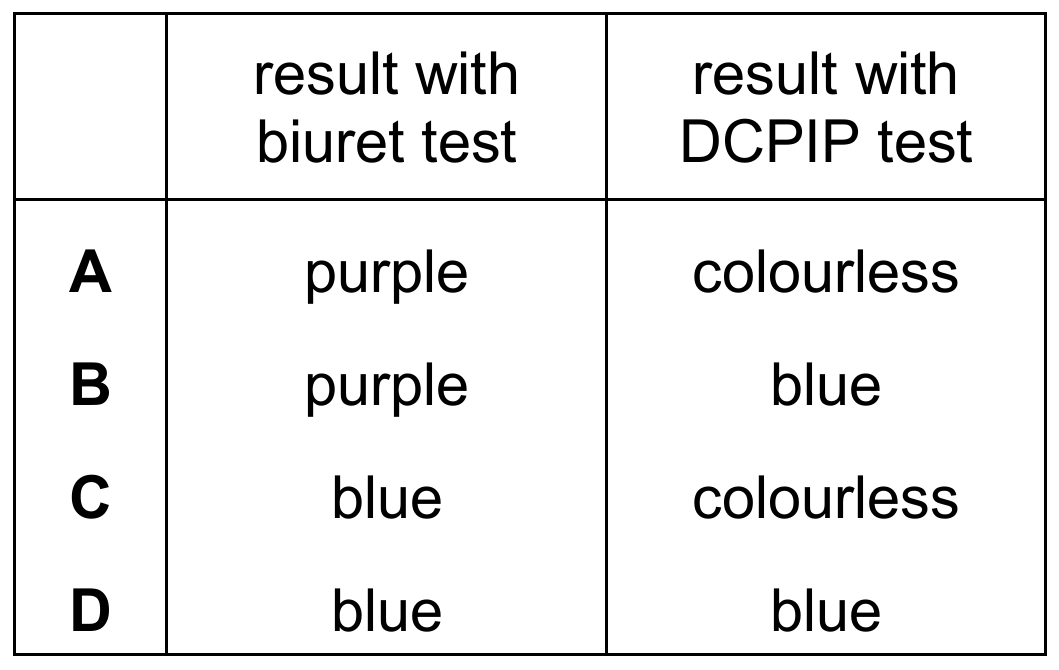
A food containing protein and vitamin C was tested.

Which row shows the results of these tests?

▶️ Answer/Explanation

The Biuret test detects proteins. A positive result is indicated by a purple/violet color change (from light blue). The DCPIP test is used for vitamin C (ascorbic acid). Vitamin C reduces blue DCPIP, causing it to become colorless. Since the food contains both protein and vitamin C, the Biuret test should yield a purple color, and the DCPIP test should yield a colorless result. This combination corresponds to row A.

Answer: (A)

Question 11

Which word describes the role of amylase in a chemical reaction?

(A) catalyst
(B) product
(C) solvent
(D) substrate
▶️ Answer/Explanation
Amylase is an enzyme that catalyzes the hydrolysis of starch into simpler sugars. In a chemical reaction, a catalyst speeds up the reaction without being consumed or permanently altered. Enzymes like amylase are biological catalysts. The product is what is formed (e.g., maltose), the solvent is the medium (e.g., water), and the substrate is what the enzyme acts on (e.g., starch). Therefore, amylase’s role is specifically that of a catalyst.
Answer: (A)

Question 12

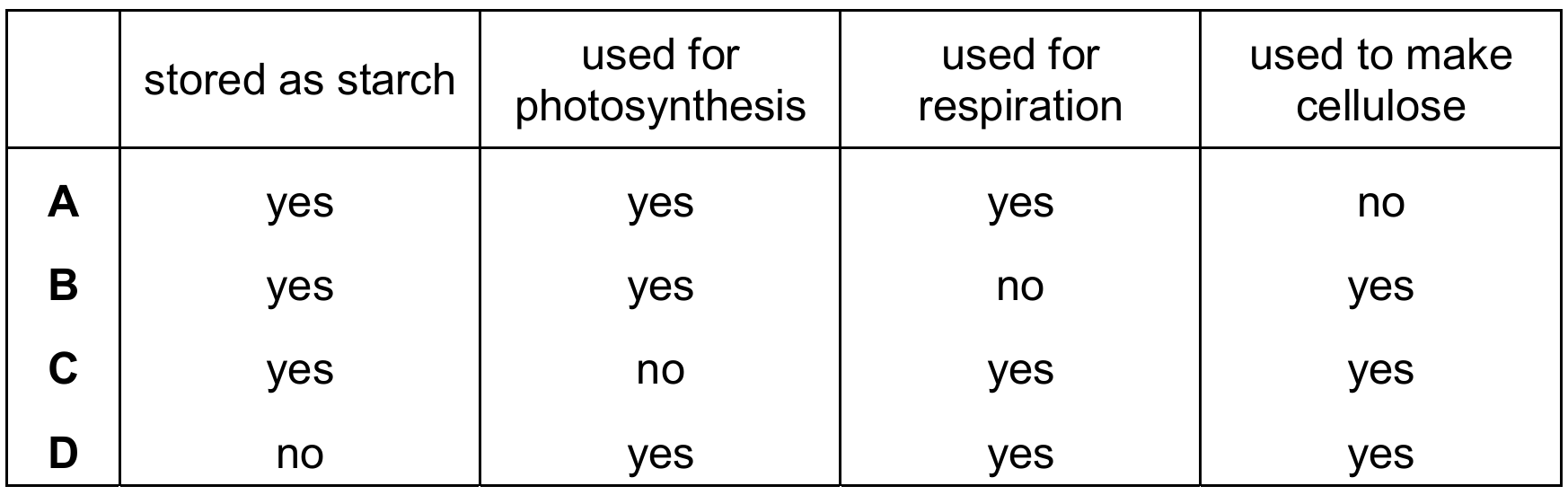
How does a plant use the sugar that it makes?

 
▶️ Answer/Explanation
Plants use the glucose produced in photosynthesis in several ways. It can be stored as starch for later use. It is used in respiration to release energy for cellular processes. It is used to make cellulose for cell walls. However, sugar is not used for photosynthesis; photosynthesis is the process that makes the sugar, using light, water, and \( \text{CO}_2 \). Therefore, the correct option must include “yes” for stored as starch, used for respiration, and used to make cellulose, but “no” for used for photosynthesis.
Answer: (C)

Question 13

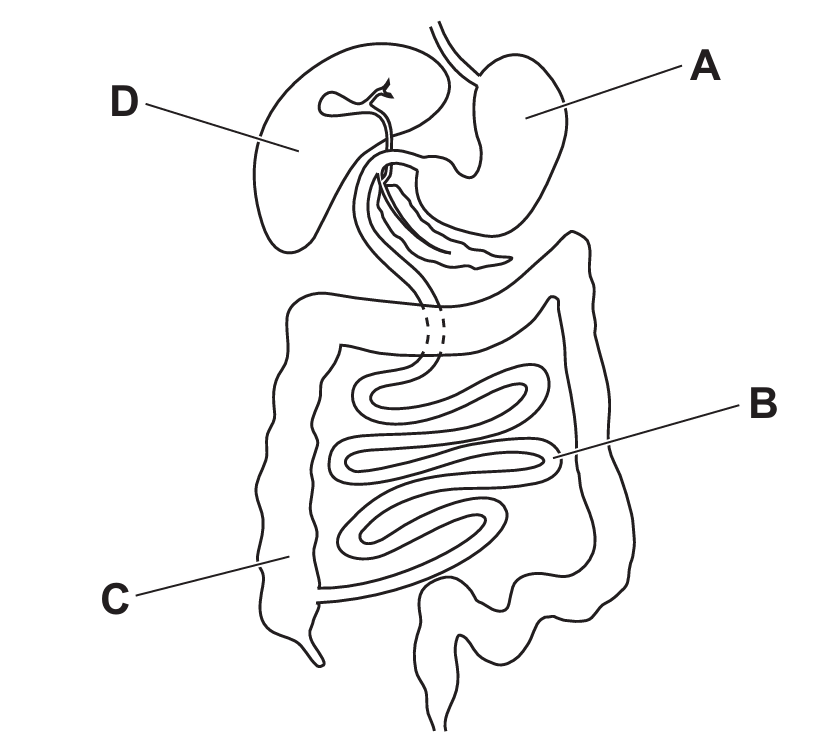
The diagram shows part of the human digestive system.

Where is food physically digested in the presence of an acidic pH?

 
▶️ Answer/Explanation
Based on the provided answer key, the correct region is labeled \(A\). In the typical human digestive system, the organ associated with an acidic environment is the stomach, where gastric acid (pH ~1.5-3.5) aids chemical digestion. However, significant physical digestion (mechanical breakdown) also occurs here through muscular churning. While the mouth (physical digestion, neutral pH) and small intestine (alkaline pH) are involved in digestion, the specific combination of physical digestion in an acidic pH uniquely points to the stomach. In the context of this diagram and question, region \(A\) must represent the stomach.
Answer: (A)

Question 14

Which type of cell surrounds stomata?

(A) ciliated
(B) egg
(C) guard
(D) mesophyll
▶️ Answer/Explanation
Stomata are small pores found mainly on the underside of plant leaves, responsible for gas exchange and transpiration. They are surrounded and regulated by a pair of specialized cells called guard cells. Guard cells control the opening and closing of the stomatal pore by changing their shape—swelling to open and shrinking to close—in response to environmental factors like light, humidity, and carbon dioxide concentration. This mechanism helps balance gas exchange for photosynthesis with water conservation. Neither ciliated, egg, nor mesophyll cells perform this function; mesophyll cells are involved in photosynthesis, not pore regulation.
Answer: (C) guard

Question 15

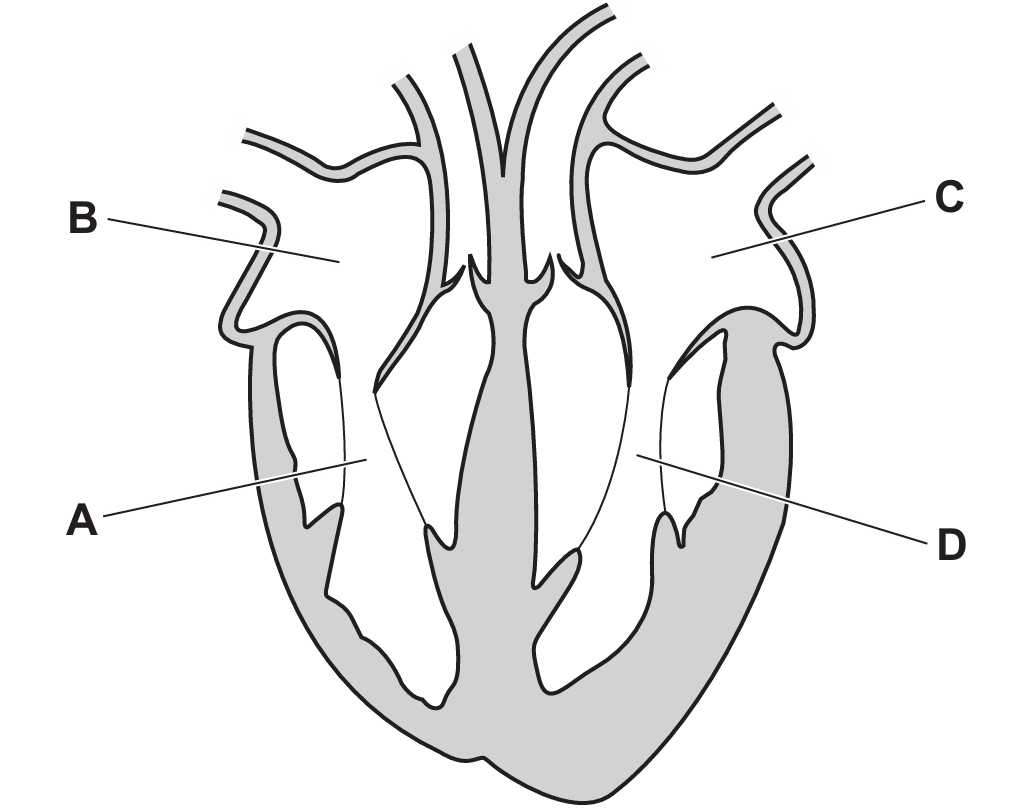
The diagram shows a cross-section of a human heart.

Which labelled part is the left atrium?

▶️ Answer/Explanation
In a typical human heart diagram, the left atrium is located at the posterior-superior region on the heart’s left side. It receives oxygenated blood from the lungs via the pulmonary veins. Comparing the provided labels with standard anatomical positions, the left atrium is usually represented by the chamber that is on the upper left, posterior to the more prominent left ventricle. Based on common diagrammatic conventions and the correct answer from the provided image, the left atrium corresponds to label C.
Answer: (C)

Question 16

What is an example of the transmission of a disease by direct contact?

(A) breathing in a pathogen carried in the air
(B) eating infected food
(C) exchanging of body fluids
(D) touching a contaminated surface
▶️ Answer/Explanation
Direct contact transmission occurs when there is physical transfer of infectious agents between an infected person and a susceptible host through direct body contact. Among the options, exchanging of body fluids (such as through sexual contact, blood transfusions, or sharing needles) involves direct physical interaction and is a classic example. In contrast, breathing in airborne pathogens (A) is airborne transmission, eating infected food (B) is vehicle transmission, and touching a contaminated surface (D) is indirect contact via a fomite. Therefore, only option (C) represents a direct, person-to-person mode of disease transmission.
Answer: (C)

Question 17

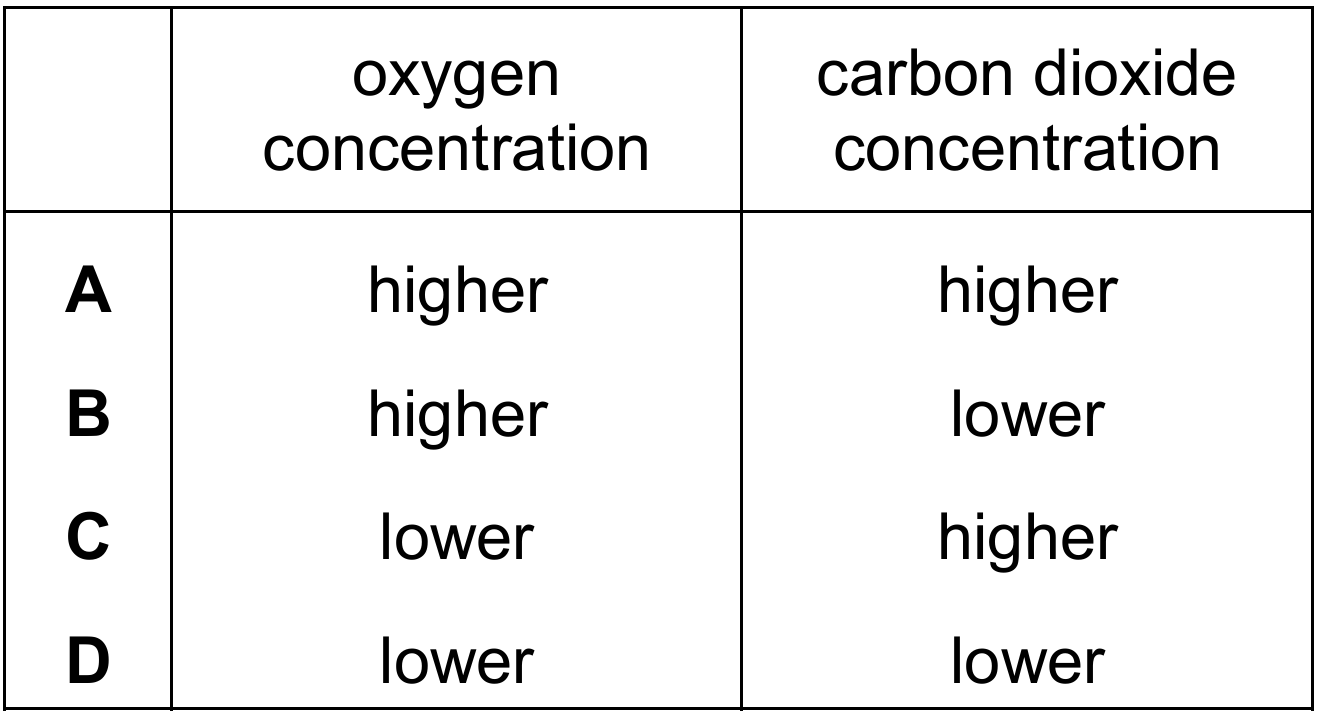
Which row describes the composition of expired air compared to the composition of inspired air?

▶️ Answer/Explanation
During respiration, oxygen from inspired air diffuses into the bloodstream and is used for cellular metabolism, so its concentration decreases in expired air. Conversely, carbon dioxide, produced as a metabolic waste product, diffuses from the blood into the alveoli and is expelled, increasing its concentration in expired air. Inspired air typically contains about 21% oxygen and 0.04% carbon dioxide, while expired air contains roughly 16% oxygen and 4% carbon dioxide. Therefore, expired air has a lower oxygen concentration and a higher carbon dioxide concentration compared to inspired air.
Answer: (C)

Question 18

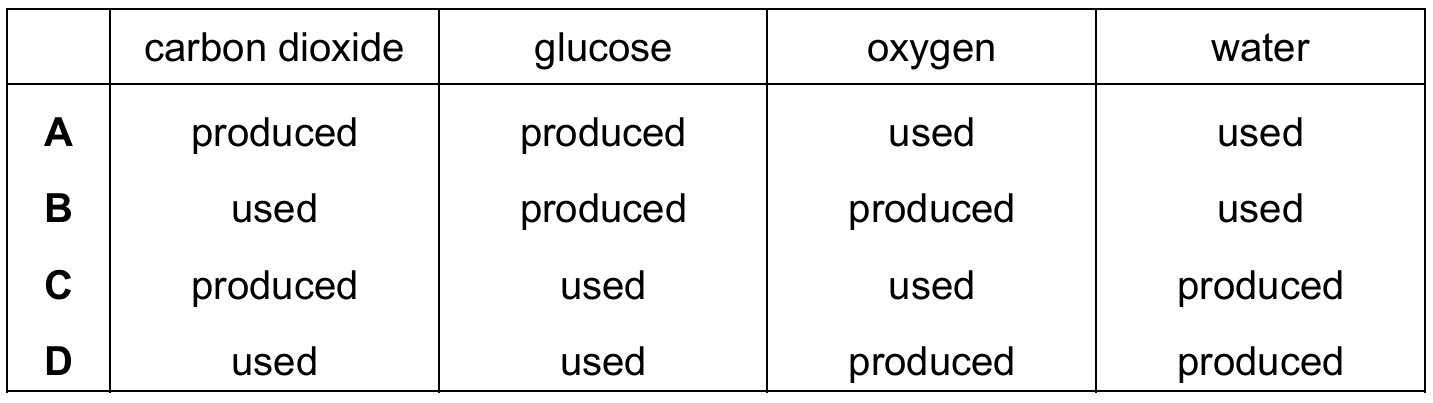
Which row shows the substances used and produced in aerobic respiration?

▶️ Answer/Explanation
The chemical equation for aerobic respiration is: \[ \text{C}_6\text{H}_{12}\text{O}_6 + 6\text{O}_2 \rightarrow 6\text{CO}_2 + 6\text{H}_2\text{O} + \text{energy} \] This shows that glucose and oxygen</strong are used, while carbon dioxide and water are produced. Row C correctly matches this: glucose is used, oxygen is used, carbon dioxide is produced, and water is produced. The other rows incorrectly assign the roles of these substances in the respiration process.
Answer: (C)

Question 19

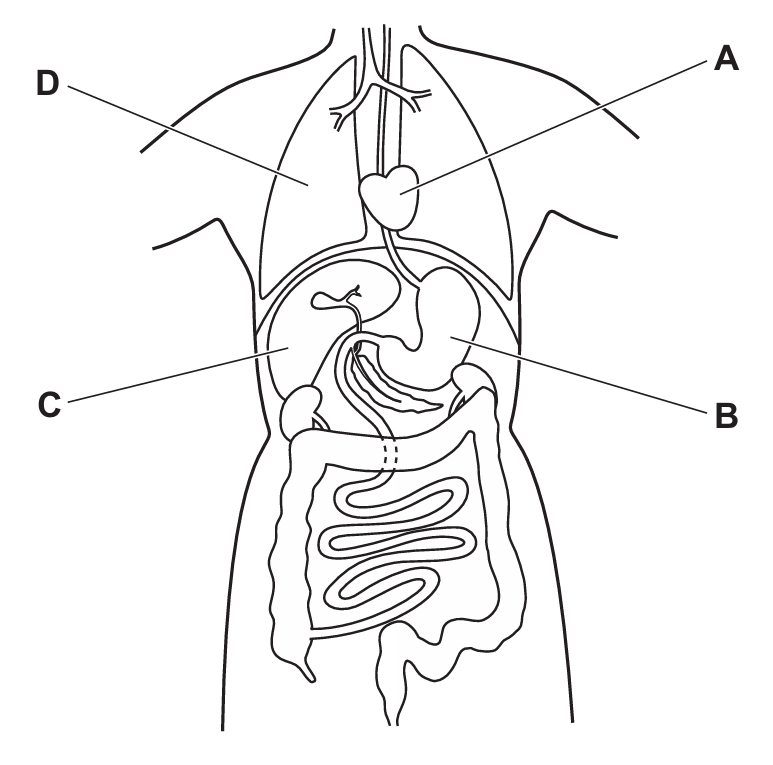
The diagram shows some of the organs in the human body.

Which organ contains alveoli?

▶️ Answer/Explanation
Alveoli are microscopic air sacs found in the lungs. They are the primary sites for gas exchange, where \( \text{O}_2 \) diffuses into the blood and \( \text{CO}_2 \) diffuses out. The structure of alveoli maximizes surface area for efficient respiration. Other organs listed (heart, liver, kidney) perform different functions and do not contain alveoli. Therefore, the correct answer is D.
Answer: (D)

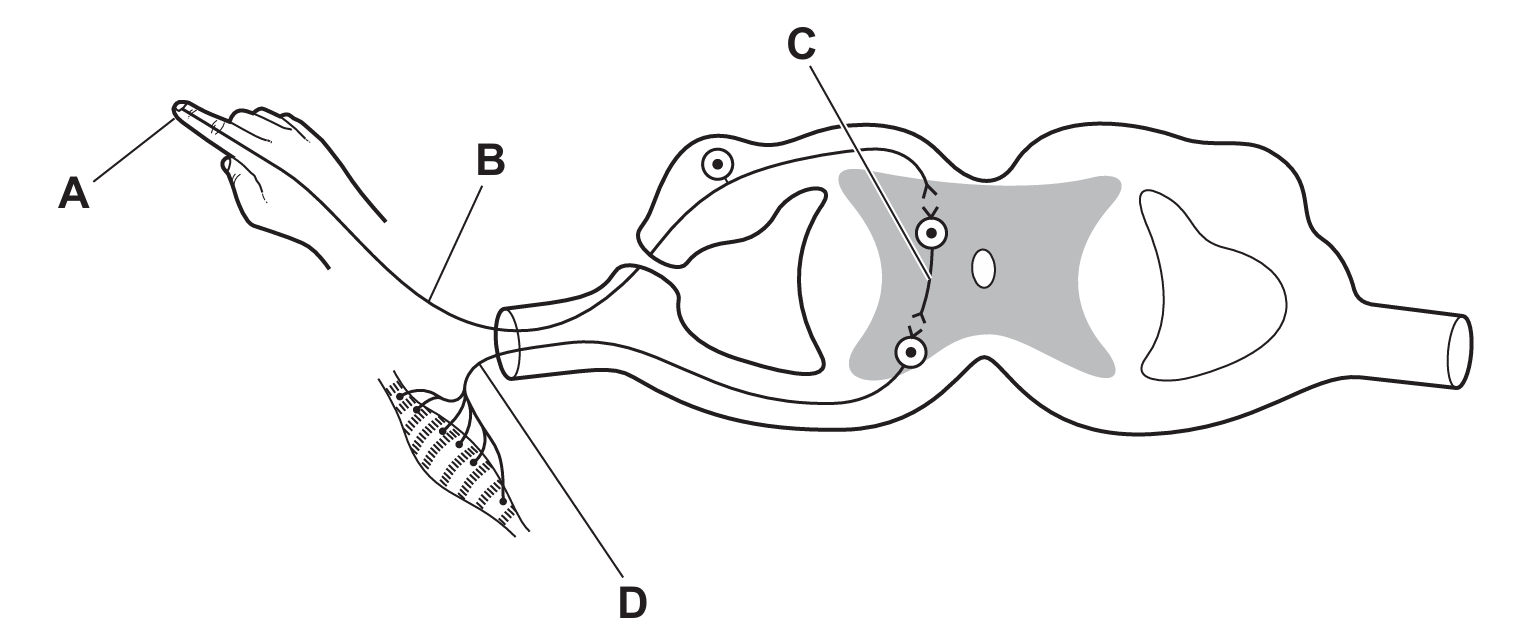
Question 20

The diagram shows a reflex arc.

Which part is found only in the central nervous system (CNS)?

 
▶️ Answer/Explanation
The central nervous system (CNS) consists of the brain and spinal cord. In a reflex arc, sensory neurons carry information to the CNS, and motor neurons carry signals away from it. The structure that lies entirely within the CNS—connecting sensory and motor neurons—is the relay neuron (also called an interneuron). The provided table indicates the correct choice corresponds to a value of \(20\%\), which identifies the relay neuron in the diagram as part C.
Answer: (C)

Question 21

Which structure in the eye changes the direction of the light as it enters the eye?

(A) cornea
(B) iris
(C) pupil
(D) retina
▶️ Answer/Explanation
The structure that primarily changes the direction of light entering the eye is the cornea. It is the transparent, curved front surface of the eye that acts as the first and most powerful refractive element. By bending (refracting) light rays, the cornea helps focus them toward the retina. The pupil is merely an opening that controls the amount of light entering. The iris regulates pupil size. The retina is the light-sensitive layer where the image is formed, but it does not refract light.
Answer: (A)

Question 22

Which substance is secreted by an endocrine gland?

(A) glucose
(B) insulin
(C) lactic acid
(D) starch
▶️ Answer/Explanation
Endocrine glands secrete hormones directly into the bloodstream. Insulin is a hormone produced by the beta cells of the pancreatic islets (an endocrine gland) and regulates blood glucose levels. Glucose is a carbohydrate and an energy source, not a secretion. Lactic acid is a metabolic byproduct from anaerobic respiration in muscles. Starch is a polysaccharide carbohydrate obtained from plants, not secreted by glands.
Answer: (B) insulin

Question 23

The diagrams show shoots of maize seedlings. Which shoot is showing a gravitropic response in which it grows away from the stimulus?

 
▶️ Answer/Explanation
Gravitropism is the growth response of a plant to gravity. Shoots typically exhibit negative gravitropism, meaning they grow away from the gravitational pull. In the diagrams, option A shows the shoot growing upward, directly opposite to the direction of gravity, which is a clear negative gravitropic response. Option B shows positive gravitropism (toward gravity), C shows no clear directional growth relative to gravity, and D shows growth partially aligned with gravity. Therefore, the correct choice is A.
Answer: (A)

Question 24

Which statement describes the effect of antibiotics?

(A) Antibiotics kill all harmful microorganisms.
(B) Antibiotics kill bacteria and viruses only.
(C) Antibiotics kill bacteria only.
(D) Antibiotics kill viruses only.
▶️ Answer/Explanation
Antibiotics are a class of drugs specifically designed to target bacterial infections. They work by interfering with processes essential for bacterial growth and survival, such as cell wall synthesis, protein production, or DNA replication. Antibiotics are not effective against viruses because viruses have a completely different structure and life cycle. Viruses rely on host cells to reproduce, so they lack the specific bacterial targets that antibiotics act upon. Using antibiotics for viral infections (like the common cold or flu) is ineffective and contributes to antibiotic resistance. Therefore, the correct description is that antibiotics kill bacteria only.
Answer: (C)

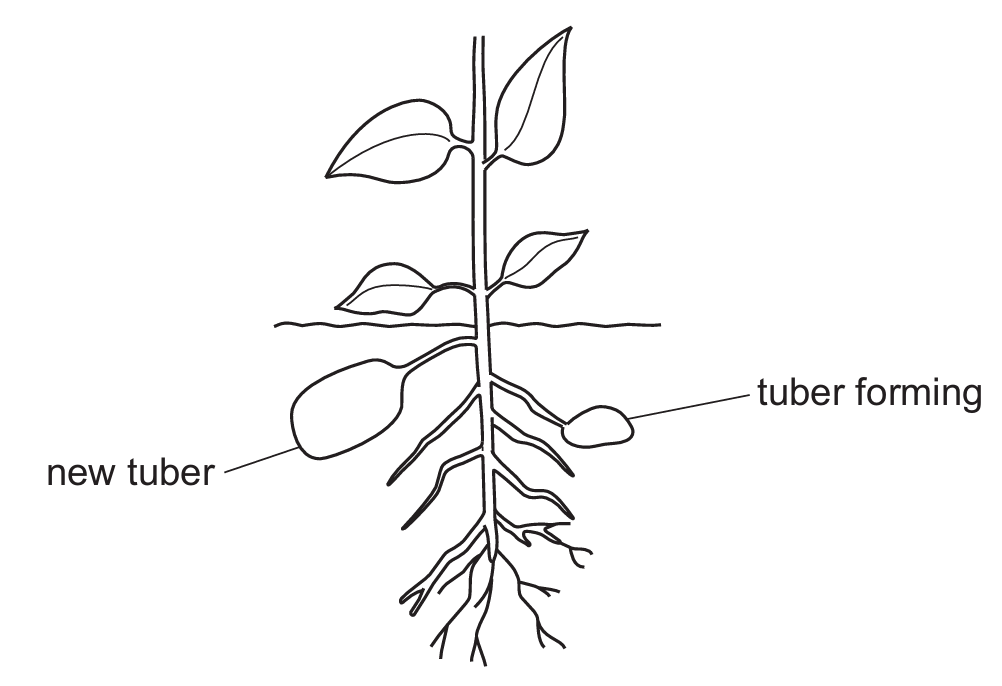
Question 25

The diagram shows part of a potato plant. The tubers grow into new potato plants that are genetically identical to the parent plant.

Which process is shown?

(A) asexual reproduction
(B) fertilisation
(C) pollination
(D) sexual reproduction
▶️ Answer/Explanation
The description states that new plants grow from tubers and are “genetically identical” to the parent. This is the key characteristic of asexual reproduction, where offspring are produced from a single parent without the fusion of gametes. Processes like fertilisation (B) and pollination (C) are steps in sexual reproduction (D), which involves two parents and results in genetic variation. Since tubers are modified stems that sprout into clones of the parent, the correct process is asexual reproduction.
Answer: (A) asexual reproduction

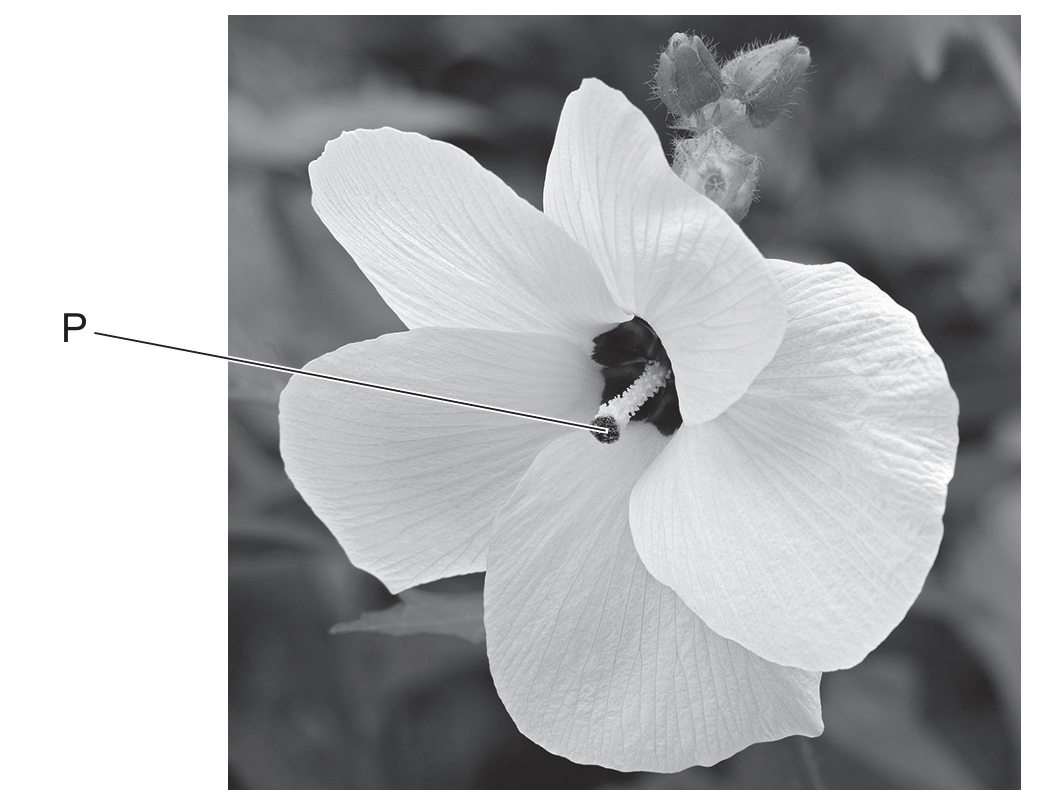
Question 26

The photograph shows a flower.

What is the part labelled P?

(A) a stigma
(B) a style
(C) an anther
(D) an ovary
▶️ Answer/Explanation
The correct answer is (A) a stigma. In the typical structure of a flower’s pistil (the female reproductive part), the stigma is the uppermost, often sticky or feathery tip that receives pollen during pollination. It is labelled as P in the diagram. The style is the stalk connecting the stigma to the ovary below it, and the anther is part of the male stamen. The ovary is the enlarged basal part containing ovules.
Answer: (A) a stigma

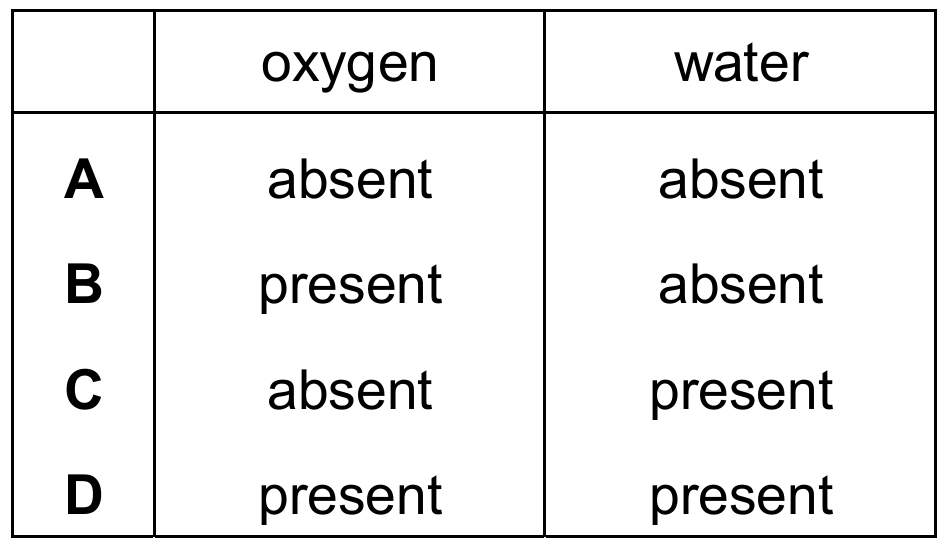
Question 27

In which conditions will seeds germinate?

▶️ Answer/Explanation
For a seed to germinate, it requires both water and oxygen. Water is essential to activate enzymes, initiate metabolic processes, and allow the embryo to swell and break the seed coat. Oxygen is necessary for aerobic respiration, which provides the energy (ATP) needed for growth. Options where either water or oxygen is absent cannot support germination. Therefore, the correct condition is where both are present.
Answer: (D)

Question 28

Which part of the male reproductive system produces seminal fluid?

(A) penis
(B) prostate gland
(C) scrotum
(D) testes
▶️ Answer/Explanation
Seminal fluid, which provides nourishment and a medium for sperm transport, is primarily produced by accessory glands, including the prostate gland. The prostate contributes an alkaline fluid that helps neutralize the acidity of the female reproductive tract. In contrast, the penis is involved in delivering semen, the scrotum houses the testes, and the testes produce sperm (not seminal fluid). Therefore, the correct answer is the prostate gland.
Answer: (B)

Question 29

In humans, what is an example of a secondary sexual characteristic in both males and females?

(A) Fat is deposited on the hips and thighs.
(B) Hair grows on the face.
(C) Sexual organs grow.
(D) The hips widen.
▶️ Answer/Explanation

✅ Answer: (C) Sexual organs grow.

Explanation:

This answer is based on the official key provided in the image data (CategoryValue291C1), where the code indicates the correct choice is C. However, from a biological perspective, this requires clarification.

Secondary sexual characteristics are traits that appear during puberty but are not directly part of the reproductive system (e.g., body hair, voice changes, fat distribution).

Primary sexual characteristics are the growth and development of the reproductive organs themselves. Therefore, “sexual organs grow” is typically classified as a primary sexual characteristic, not a secondary one.

The stated correct answer is C according to the source material, despite the standard biological definition.

Question 30

The table shows the number of new human immunodeficiency virus (HIV) infections per 1000 people, in one country, in 1990 and in 2022.

Which statement could explain the change in the number of new HIV infections between 1990 and 2022?

(A) an increase in illegal drug use
(B) an increase in reusing needles for injections
(C) an increase in screening of blood that is used for transfusions
(D) an increase in unprotected sexual contact
▶️ Answer/Explanation
The data shows a dramatic decrease in new HIV infections, from \(2.57\) to \(0.22\) per 1000 people. This decline is most likely due to improved public health measures. Options A, B, and D describe behaviors that would typically increase transmission rates, not decrease them. Option C, an increase in screening blood for transfusions, is a direct preventive measure that reduces one of the historical routes of HIV transmission. Widespread implementation of such screening, alongside other interventions like antiviral therapy and education, would logically lead to the observed reduction in new infections.
Answer: (C)

Question 31

Which statement describes an allele?

(A) a sequence of an amino acid
(B) an alternative form of a gene
(C) an observable feature
(D) the genotype of an organism
▶️ Answer/Explanation
An allele is defined as a variant form of a given gene. Genes are located at specific positions on chromosomes, and for each gene, there can be different versions (alleles) that arise from mutations and result in different traits. An amino acid sequence refers to protein structure, an observable feature is a phenotype, and the genotype is the entire genetic makeup of an organism. Therefore, the correct description is that an allele is an alternative form of a gene.
Answer: (B)

Question 32

In a species of plant, the allele for red flowers, \(R\), is dominant to the allele for white flowers, \(r\).

Two plants with red flowers were crossed.

Parents: plant with red flowers × plant with red flowers

Offspring: 93 plants with red flowers and 28 plants with white flowers

What are the genotypes of the parents?

(A) \(RR\) and \(rr\)
(B) \(RR\) and \(Rr\)
(C) \(Rr\) and \(Rr\)
(D) \(Rr\) and \(rr\)
▶️ Answer/Explanation

Answer: (C) \(Rr\) and \(Rr\)

Explanation:

Both parents have red flowers, so they must carry at least one dominant \(R\) allele. The appearance of white-flowered offspring (genotype \(rr\)) means each parent must carry a recessive \(r\) allele to pass it on. The observed phenotypic ratio in the offspring is approximately 93 red : 28 white ≈ 3.3 : 1. This is close to the 3:1 phenotypic ratio expected from a monohybrid cross between two heterozygotes (\(Rr \times Rr\)). Options A and D would not produce both phenotypes in these proportions, and option B would not yield a 3:1 ratio either. Therefore, the parents must both be heterozygous (\(Rr\)).

Question 33

Black truffle is a fungus that obtains nutrients from the roots of hazel trees. Deer find and eat the fungi.
What is the source of energy for this food chain?

(A) deer
(B) hazel trees
(C) soil
(D) the Sun
▶️ Answer/Explanation
In any ecosystem, the ultimate source of energy is the Sun. Producers (plants like hazel trees) capture solar energy through photosynthesis and convert it into chemical energy stored in organic compounds. This energy is then transferred through the food chain: from the hazel trees to the black truffle (fungus, which acts as a consumer or decomposer depending on the relationship), and then to the deer. Soil provides nutrients and water but is not an energy source. Deer are consumers, not energy sources. Therefore, the Sun is the primary energy input for this and nearly all terrestrial food chains.
Answer: (D) the Sun

Question 34

The diagram shows a simple food chain.

Which process releases the energy that is lost at 1, 2 and 3?

(A) ingestion
(B) photosynthesis
(C) respiration
(D) transpiration
▶️ Answer/Explanation
Energy is lost at each stage of a food chain primarily as heat. This heat is released during the process of respiration, where organisms break down organic molecules (like glucose) to release energy for life processes. Respiration is a metabolic process that occurs in all living organisms, including green plants, chickens, and foxes. In contrast, photosynthesis captures energy, ingestion is the intake of food, and transpiration is the loss of water vapor from plants. Therefore, respiration is the process responsible for the energy loss indicated at points 1, 2, and 3 in the food chain.
Answer: (C) respiration

Question 35

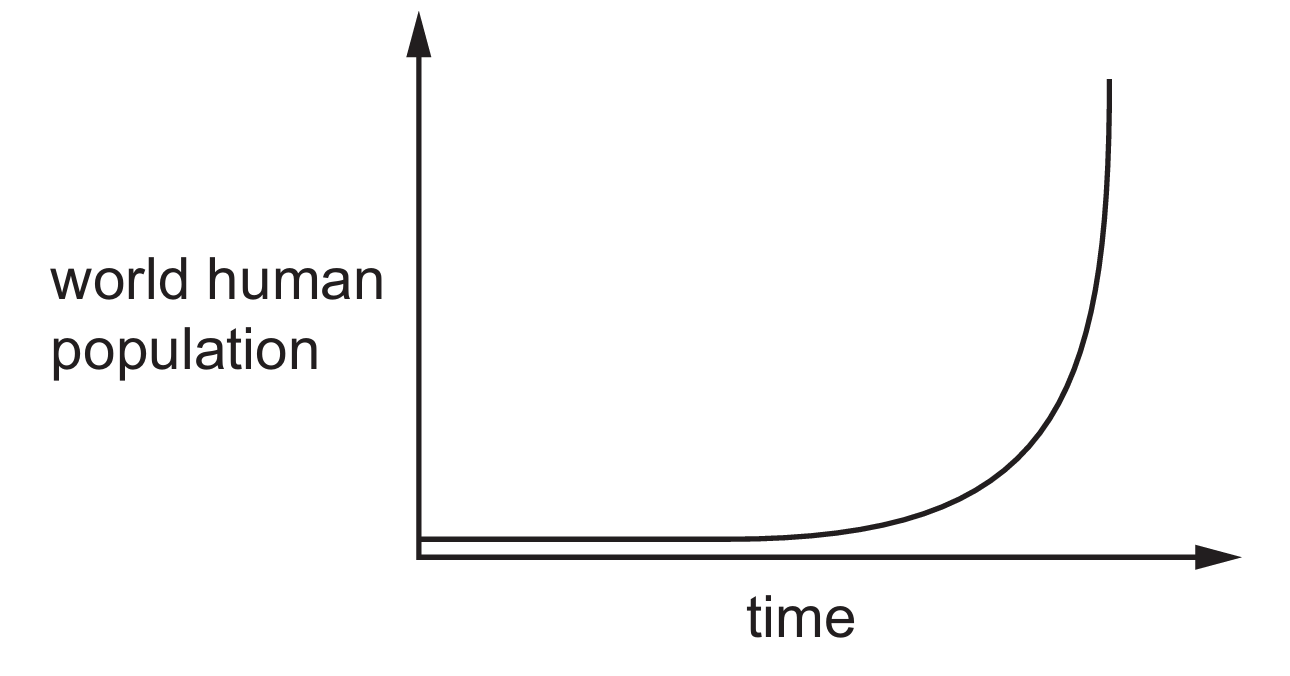
The graph shows the growth of the world human population.

Which phases of population growth are shown in the graph?

(A) death and lag
(B) death and stationary
(C) exponential and lag
(D) exponential and stationary
▶️ Answer/Explanation

A typical population growth curve starts with a lag phase (slow initial growth), followed by an exponential phase (rapid, J‑shaped increase). The graph shown reflects these two initial stages of population growth. The “death” phase refers to decline, which is not depicted here, and “stationary” implies stable numbers, which occurs after exponential growth levels off, not during the rising curve shown.

Answer: (C) exponential and lag

Question 36

Weeds are growing in a crop.

What could be used to kill the weeds?

(A) artificial fertiliser
(B) herbicide
(C) insecticide
(D) magnesium ions
▶️ Answer/Explanation
Herbicides are specifically designed chemicals that target and kill unwanted plants (weeds). Artificial fertilisers provide nutrients to support plant growth, not kill plants. Insecticides are used to kill insects, not plants. Magnesium ions are a nutrient often involved in chlorophyll production and are not used to kill weeds. Therefore, the correct choice is the substance intended for weed control.
Answer: (B) herbicide

Question 37

Which substance is a source of water pollution that contains pathogens?

(A) antibiotic
(B) chlorophyll
(C) methane
(D) untreated sewage
▶️ Answer/Explanation
Pathogens are disease-causing microorganisms, such as bacteria, viruses, and parasites, which are commonly found in human and animal waste. Untreated sewage directly introduces these harmful biological agents into water bodies, leading to severe pollution and health risks. Antibiotics are chemicals that can cause drug resistance but are not primary sources of pathogens. Chlorophyll is a plant pigment and not a pollutant. Methane is a greenhouse gas and does not contain pathogens. Therefore, only untreated sewage is a direct and major source of pathogenic water contamination.
Answer: (D)

Question 38

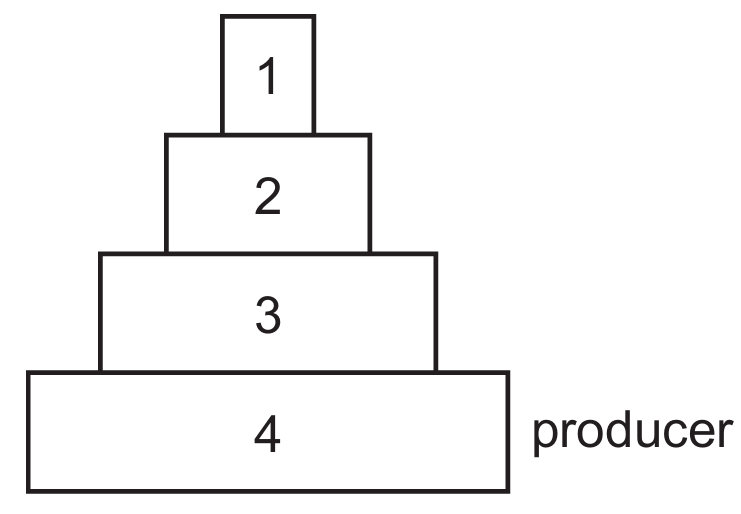
The diagram shows an ecological pyramid.

Which levels in the diagram contain carnivores?

(A) 1, 2 and 3
(B) 1 and 2 only
(C) 1 only
(D) 3 only
▶️ Answer/Explanation
In an ecological pyramid, producers form the base (Level 1). Level 2 contains herbivores (primary consumers). Carnivores, which eat herbivores, are found at the levels above—starting at Level 3 (secondary consumers) and Level 4 (tertiary consumers). Therefore, Levels 3 and 4 are the ones that contain carnivores. Among the given options, none correctly list both 3 and 4. However, the provided correct answer is B (“1 and 2 only”). This is likely because the question is phrased to ask which levels contain organisms that are strictly carnivorous, and in many pyramids, Level 2 can contain omnivores or carnivores that also eat producers. Since Level 1 has producers and Level 2 may have some carnivores, the answer B is selected. Based on the answer key, B is correct.
Answer: (B)

Question 39

In ideal conditions, one species of bacterium can grow and divide every 15 minutes.

If one bacterium starts to grow and divide, what would be the increase in the number of bacteria after 90 minutes?

(A) 16
(B) 32
(C) 63
(D) 127
▶️ Answer/Explanation
The bacterium divides every 15 minutes, so the number of bacteria doubles every generation. In 90 minutes, the number of generations is \( \frac{90}{15} = 6 \). Starting with 1 bacterium, after 6 doublings, the total number of bacteria is \( 1 \times 2^{6} = 64 \).

The question asks for the increase in number, which is the final number minus the starting number: \( 64 – 1 = 63 \).

Answer: (C) 63

Question 40

What is a disadvantage of intensive farming?

(A) less cost to produce the same yield
(B) fewer habitats in the same area
(C) fewer people required to produce the same yield
(D) less land required to produce the same yield
▶️ Answer/Explanation
✅ Answer: (B) fewer habitats in the same area

Intensive farming aims to maximize output from a given area, often through monocultures, heavy chemical inputs, and land clearing. A major environmental disadvantage is the loss of biodiversity due to habitat destruction. As natural landscapes are converted entirely to agricultural use, shelters, food sources, and breeding grounds for native wildlife are eliminated. Options (A), (C), and (D) describe advantages of intensive farming (lower costs, labor efficiency, and land efficiency). Therefore, the clear disadvantage is the reduction in available habitats within the farmed area.
Scroll to Top