Home / 0610_w25_qp_21

Question 1

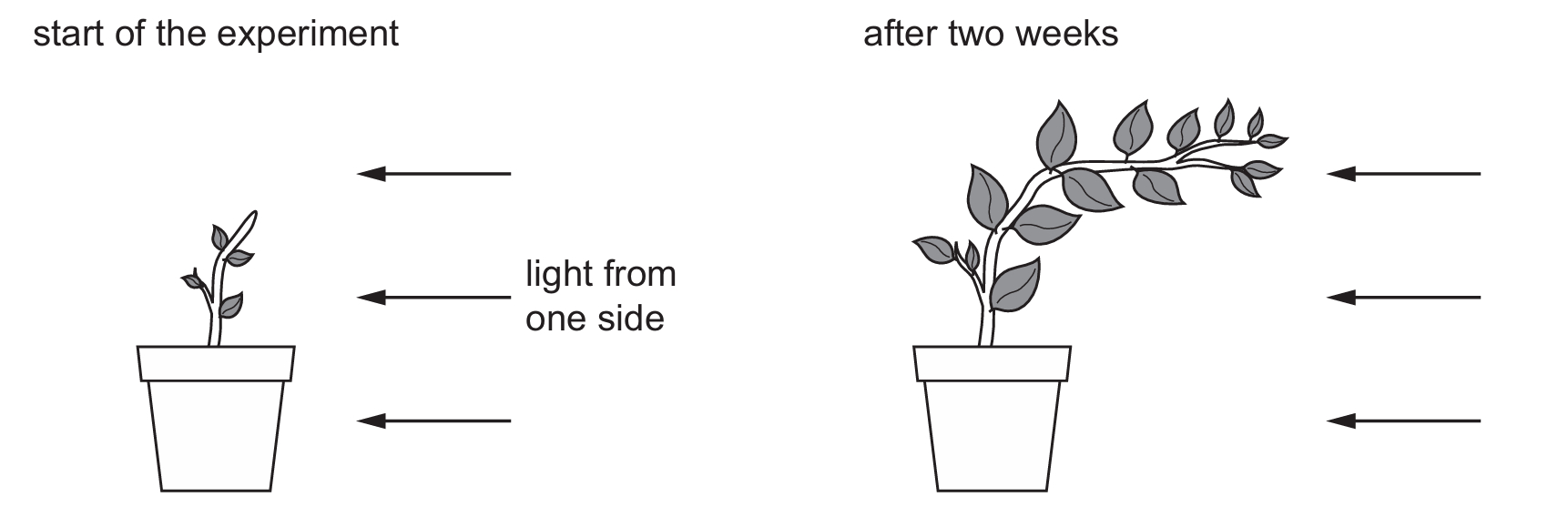
The diagrams show a plant at the start of an experiment, and the same plant two weeks later.

Which characteristics of living organisms are demonstrated by this experiment?

(A) excretion and growth
(B) excretion and reproduction
(C) growth and sensitivity
(D) sensitivity and reproduction
▶️ Answer/Explanation

This experiment demonstrates two fundamental life processes: growth and sensitivity. Over the two-week period, the plant increases in size and number of leaves, which is a clear indicator of growth. Additionally, the plant exhibits sensitivity (specifically phototropism) by detecting the directional light stimulus and responding by bending its stem toward it. There is no evidence of reproduction (producing offspring) or excretion (removal of metabolic waste) shown in these specific diagrams. Therefore, the combination of growth and the response to an external stimulus confirms the correct choice.

Answer: (C)

Question 2

What can be used to classify organisms?

(A) the number of bases in DNA
(B) the number of different types of bases in DNA
(C) the sequence of bases in DNA
(D) the sequence of bases in one protein
▶️ Answer/Explanation
Modern classification relies heavily on molecular phylogenetics. While all organisms share the same four types of nitrogenous bases ($Adenine$, $Thymine$, $Cytosine$, and $Guanine$), the specific sequence of these bases acts as a genetic blueprint. By comparing these sequences, scientists can determine how closely related two species are; the more similar the sequences, the more recent their common ancestor. The total number of bases or the types of bases do not provide enough specific information for distinct classification. Additionally, proteins are made of amino acids, not bases, making option D biologically incorrect.
Answer: (C)

Question 3

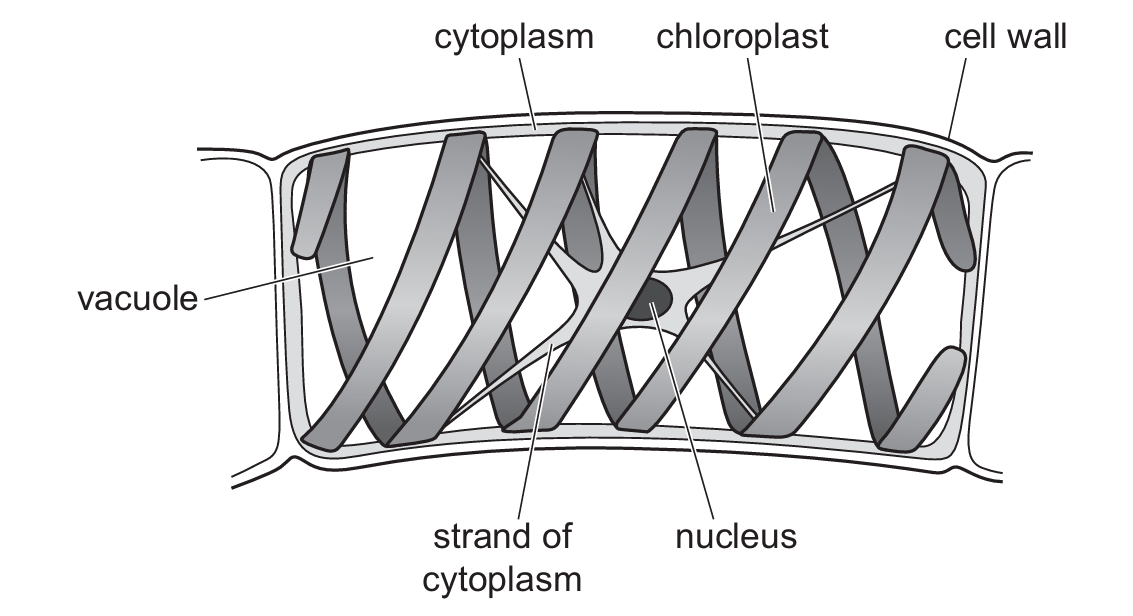
The diagram shows a single cell from an organism called Spirogyra.

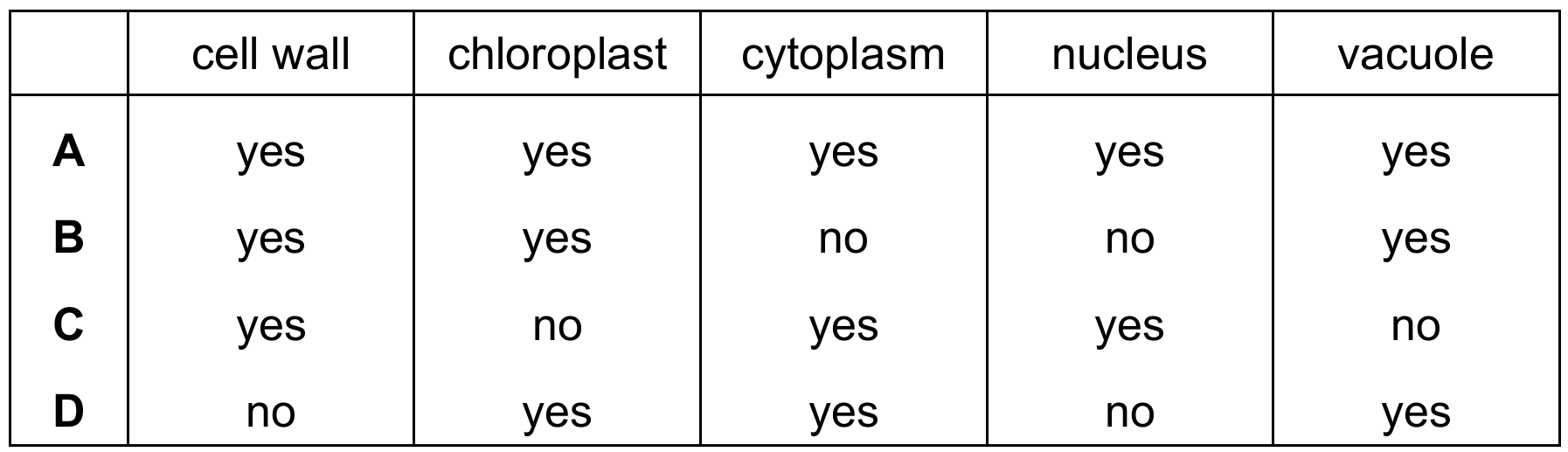
Which features does Spirogyra share with plant cells?

▶️ Answer/Explanation
Spirogyra is a genus of filamentous green algae that shares many fundamental characteristics with higher plant cells. As seen in the diagram, it possesses a cell wall for structural support and chloroplasts (notably spiral-shaped) for photosynthesis. Like all eukaryotic plant cells, it also contains a nucleus for genetic control, cytoplasm where metabolic reactions occur, and a large central vacuole for storage and turgor pressure. Since all five listed features are present in both Spirogyra and typical plant cells, option A is the only correct choice.
Answer: (A)

Question 4

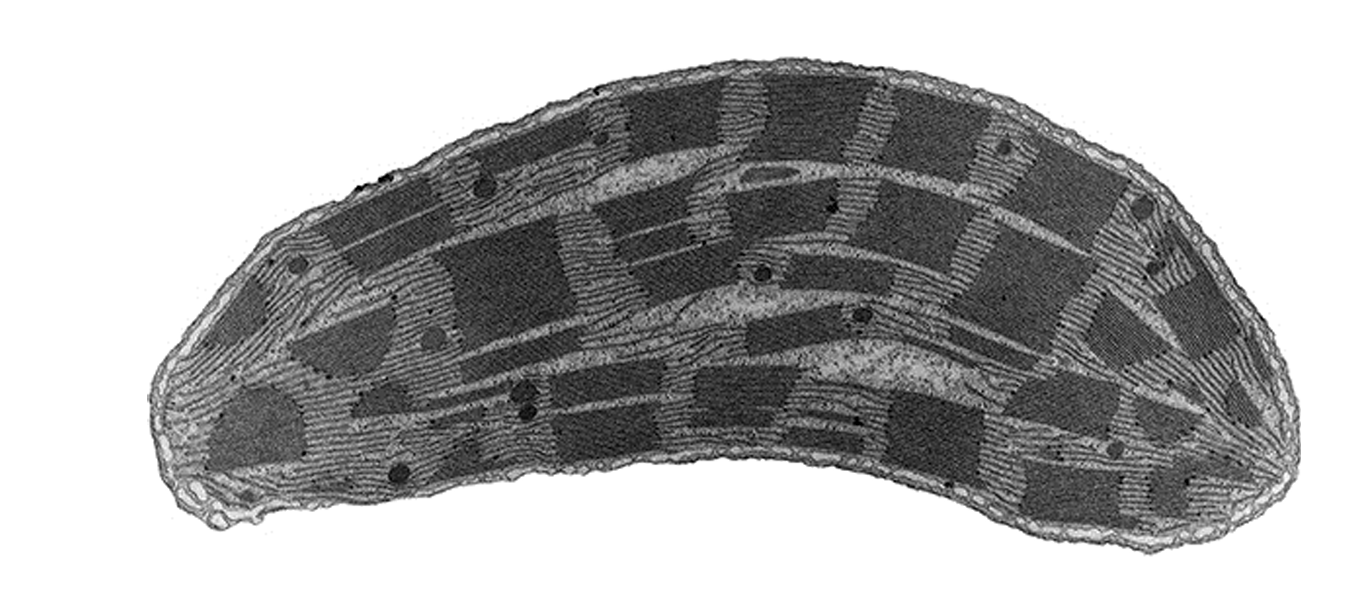
The diagram shows an image of a chloroplast. The image is $5\text{ cm}$ long.

The actual length of the chloroplast is $5\text{ }\mu\text{m}$.

What is the magnification of the image?

(A) $\times 10$
(B) $\times 1000$
(C) $\times 10\,000$
(D) $\times 100\,000$
▶️ Answer/Explanation
To find the magnification, we use the formula: $\text{Magnification} = \frac{\text{Image size}}{\text{Actual size}}$.
First, we must convert both measurements to the same units. Since $1\text{ cm} = 10\,000\text{ }\mu\text{m}$, the image length is $5 \times 10\,000 = 50\,000\text{ }\mu\text{m}$.
Now, substitute the values into the formula: $\text{Magnification} = \frac{50\,000\text{ }\mu\text{m}}{5\text{ }\mu\text{m}}$.
This simplifies to $10\,000$, which is expressed as $\times 10\,000$.
Comparing this to the given options, choice (C) is the correct calculation.
Answer: (C)

Question 5

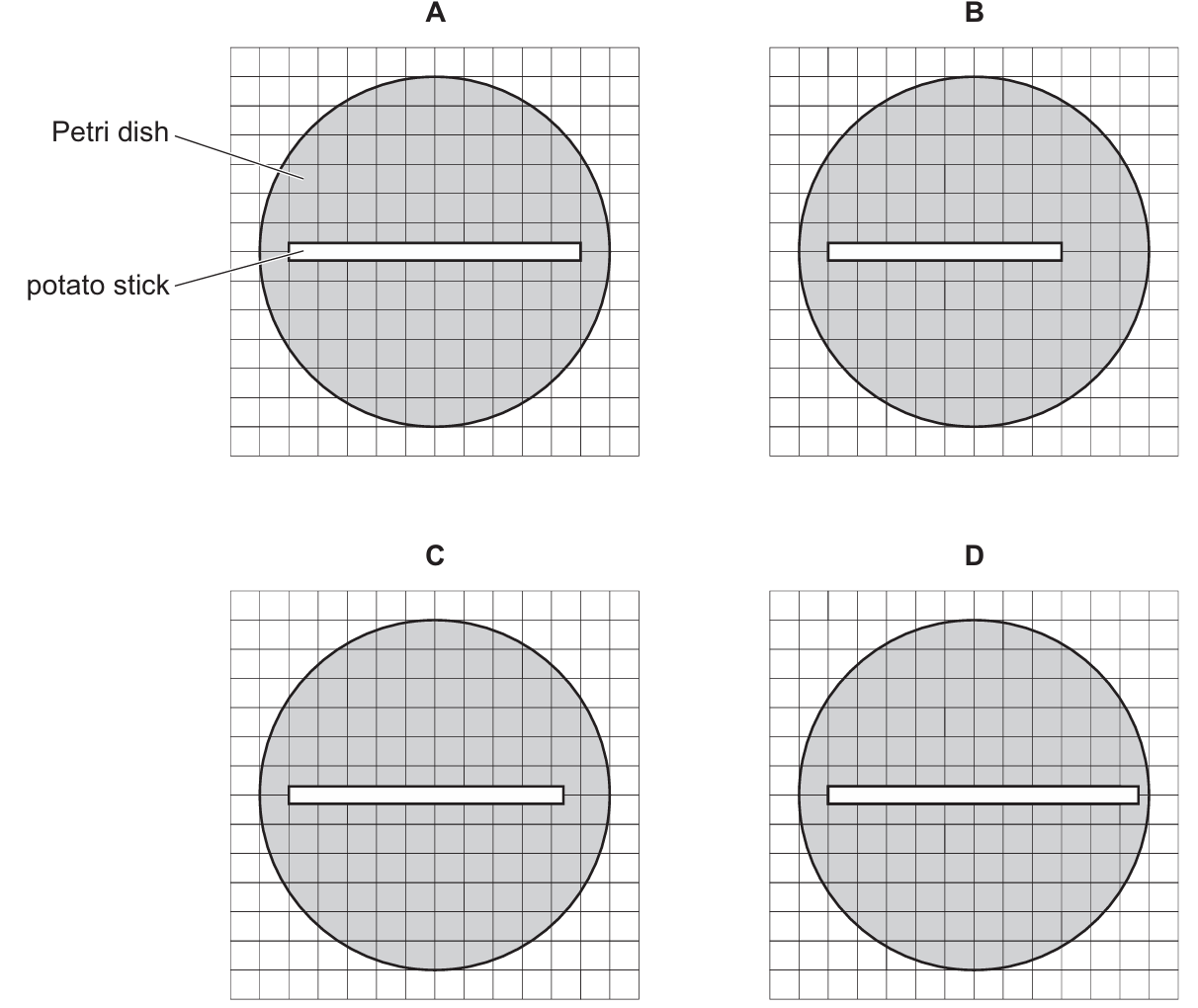
A potato was used as a source of plant tissue. Four potato sticks of identical size were cut from the same potato. At the start of the investigation, each potato stick was $10$ squares long. The potato sticks were put into four separate Petri dishes. Each Petri dish contained a different concentration of sugar solution.

The diagram shows the four Petri dishes after $24$ hours.

Which dish contains a sugar solution that has a higher water potential than the potato tissue?

▶️ Answer/Explanation
Water moves via osmosis from a region of higher water potential to a region of lower water potential across a partially permeable membrane. If the sugar solution has a higher water potential than the potato tissue, water will enter the potato cells. This influx of water increases the turgor pressure and causes the potato stick to expand and increase in length. At the start, all sticks were $10$ squares long. In dish D, the stick has grown to $11$ squares, indicating it absorbed water from the surrounding solution. In contrast, sticks in A, B, and C decreased in length, meaning they lost water to a lower water potential solution.
Answer: (D)

Question 6

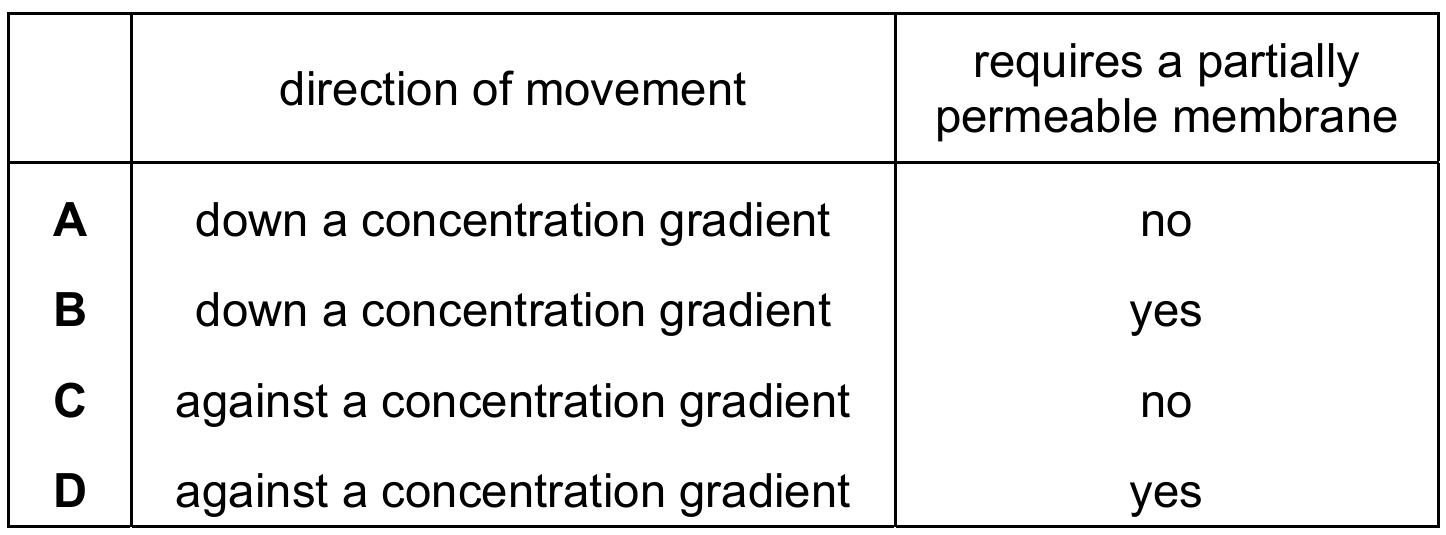
Which row shows correct statements about active transport?

▶️ Answer/Explanation
Active transport is the process by which substances move from an area of lower concentration to an area of higher concentration, which is defined as moving against a concentration gradient. This process requires energy (ATP) and specific carrier proteins embedded within a partially permeable membrane to pump the molecules across. Unlike simple diffusion, which can occur in open space, active transport is a cellular process that must occur across a biological membrane. Therefore, row D correctly identifies both the direction of movement and the necessity of a membrane.
Answer: (D)

Question 7

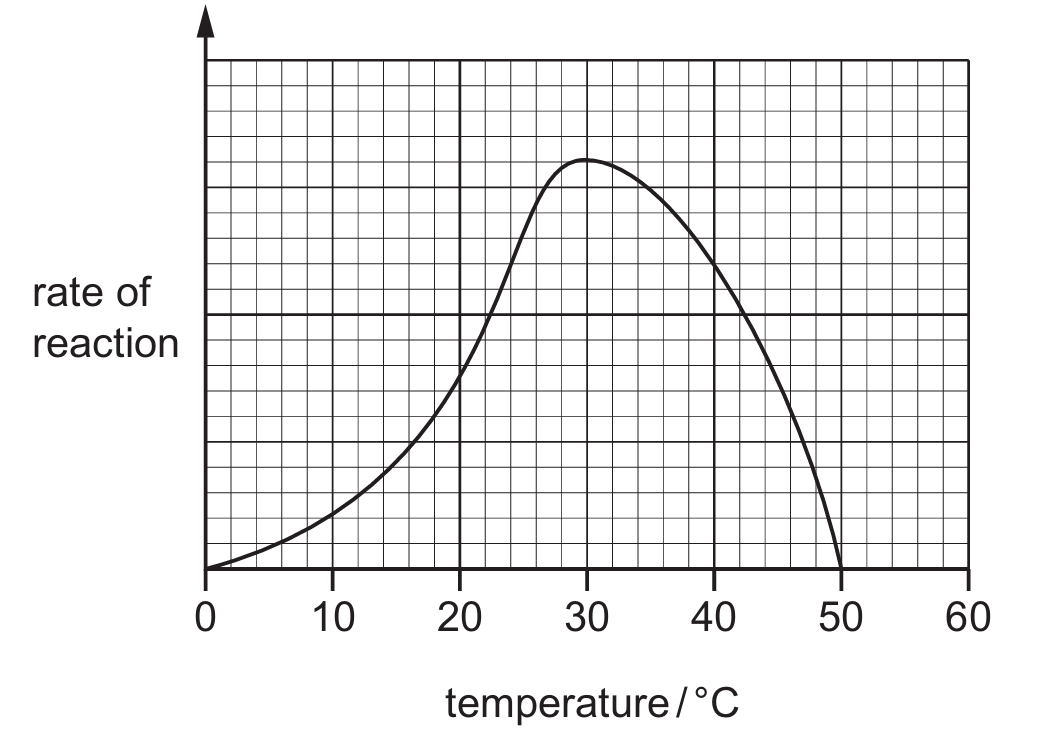
The graph shows the effect of temperature on an enzyme-controlled reaction.

Which statement describes the effect of temperature on this reaction?

(A) As the temperature increases to $25$ °C, the reaction speeds up.
(B) Between $10$ °C and $20$ °C, the enzyme denatures.
(C) Between $35$ °C and $45$ °C, frequency of effective collisions increases.
(D) The optimum temperature for this reaction is $40$ °C.
▶️ Answer/Explanation
By analyzing the graph, we can see that the rate of reaction increases steadily from $0$ °C until it reaches its peak at approximately $30$ °C. Therefore, at $25$ °C, the curve is still rising, meaning the reaction is speeding up. Statement (B) is incorrect because denaturation occurs after the optimum temperature, typically causing the rate to drop, not during the initial rise. Statement (C) is false because above the optimum temperature ($30$ °C), the enzyme’s active site changes shape, decreasing the rate despite higher kinetic energy. Finally, (D) is incorrect as the peak (optimum) is at $30$ °C, not $40$ °C.
Answer: (A)

Question 8

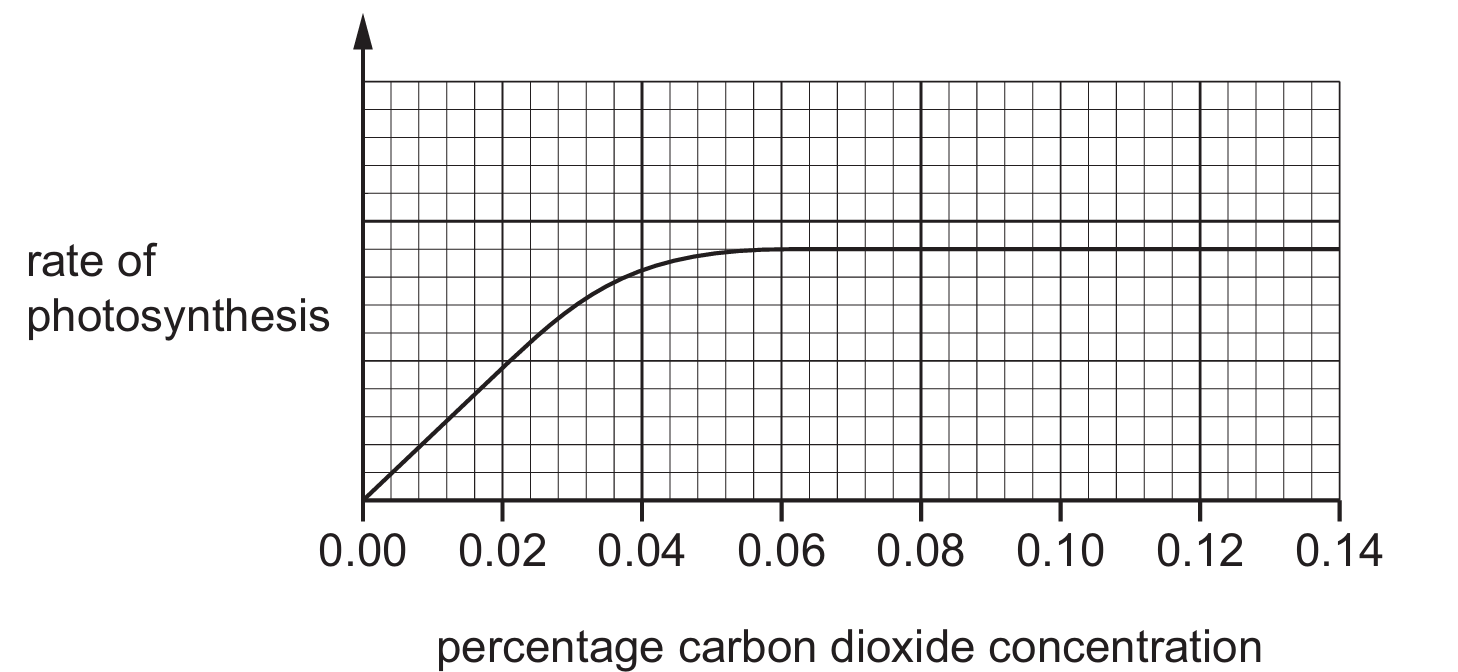
The graph shows the rate of photosynthesis of a plant in full sunlight in different concentrations of carbon dioxide. All other factors were kept constant.

What limits the rate of photosynthesis at $0.02\%$ carbon dioxide concentration?

(A) carbon dioxide concentration
(B) humidity
(C) light intensity
(D) temperature
▶️ Answer/Explanation
To identify a limiting factor from a graph, look at the region where the curve is still sloping upwards. At $0.02\%$ carbon dioxide concentration, the graph shows a steep positive gradient, meaning that as the concentration increases, the rate of photosynthesis also increases. This direct relationship indicates that the availability of $CO_{2}$ is the specific factor holding back the process. If the rate were limited by light or temperature, the curve would have already flattened out (reached a plateau) despite further increases in $CO_{2}$. Since the rate only levels off at approximately $0.06\%$, any value below that point identifies carbon dioxide as the limiting factor.
Answer: (A)

Question 9

A student wrote some statements about the palisade mesophyll and spongy mesophyll tissues.

$1$   The spongy mesophyll tissue is near the stomata for gas exchange.
$2$   Only palisade mesophyll cells have chloroplasts for photosynthesis.
$3$   Palisade cells are closely packed but there are air spaces in the spongy mesophyll tissue.

Which statements are correct descriptions of the two tissues?

(A) $1, 2$ and $3$
(B) $1$ and $2$ only
(C) $1$ and $3$ only
(D) $2$ and $3$ only
▶️ Answer/Explanation
Statement $1$ is correct because the spongy mesophyll is located in the lower part of the leaf near the stomata to facilitate the diffusion of gases. Statement $3$ is also correct as palisade cells are vertically elongated and closely packed to maximize light absorption, while spongy cells are loosely arranged with large air spaces. However, statement $2$ is incorrect; while palisade cells contain the most chloroplasts, spongy mesophyll cells also contain them to perform photosynthesis. Since only $1$ and $3$ are accurate, option C is the right choice.
Answer: (C)

Question 10

What is a role of bile?

(A) It contains enzymes that digest starch.
(B) It emulsifies fats, increasing their surface area.
(C) It kills bacteria in food.
(D) It provides the optimum $pH$ for pepsin activity.
▶️ Answer/Explanation

Bile is a fluid produced by the liver and stored in the gallbladder that plays a crucial role in mechanical digestion. It contains bile salts that act as detergents to emulsify large fat globules into much smaller droplets. This process significantly increases the surface area of the lipids, allowing the enzyme lipase to break them down into fatty acids and glycerol more efficiently. Additionally, bile is alkaline, which helps neutralize the acidic chyme coming from the stomach, though its primary role listed here is fat emulsification. Options (A), (C), and (D) are incorrect because bile does not contain digestive enzymes, nor does it create the highly acidic environment required for pepsin.

Answer: (B)

Question 11

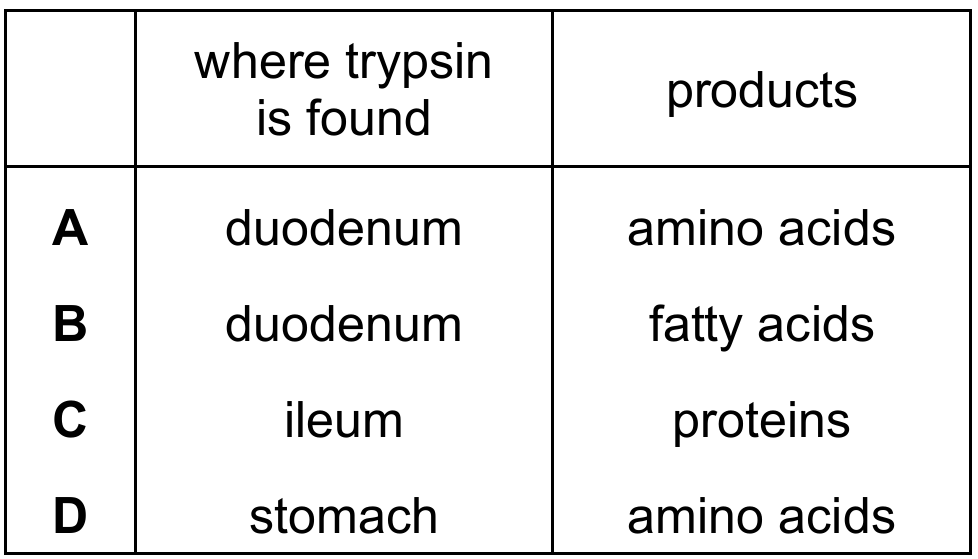
Where in the alimentary canal is the enzyme trypsin found and what are the products of the reaction trypsin catalyses?

▶️ Answer/Explanation
Trypsin is a protease produced by the pancreas in an inactive form (trypsinogen) and secreted into the duodenum, which is the first part of the small intestine. Its primary role is to catalyze the hydrolysis of peptide bonds in proteins. While trypsin specifically breaks down large polypeptides into smaller peptides, in the context of general digestive products for proteases in such assessments, it leads to the eventual production of amino acids. Option B is incorrect because fatty acids are products of lipid digestion, and Option D is incorrect because the primary protease in the stomach is pepsin, not trypsin.
Answer: (A)

Question 12

What is a structural feature of xylem vessels?

(A) contain many mitochondria
(B) made up of cells joined end to end
(C) presence of cross walls
(D) thin walls
▶️ Answer/Explanation

Xylem vessels are specialized tissues designed for the efficient transport of water and mineral ions. They are composed of dead cells joined end to end to form long, continuous tubes. During their development, the cross walls (end walls) between these cells break down, and the internal contents (cytoplasm and organelles like mitochondria) disappear to create a hollow lumen. Furthermore, xylem vessels have walls thickened with lignin for structural support, making them thick rather than thin. This architectural arrangement minimizes resistance to water flow from roots to leaves.

Answer: (B)

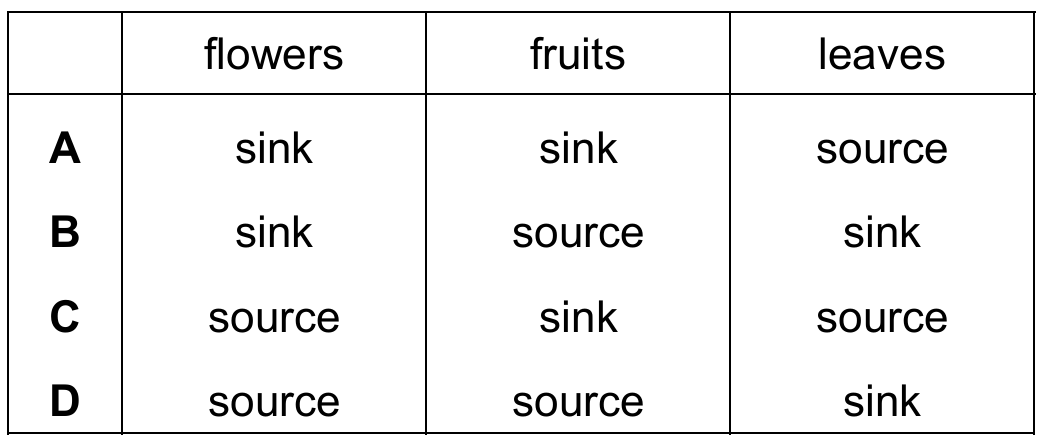
Question 13

During the growing season, tomato plants produce flowers and fruits.

Which parts of a growing tomato plant are sources, and which parts are sinks?

▶️ Answer/Explanation

In plant physiology, a source is an organ that produces or mobilizes photosynthates (like sucrose), while a sink is an organ that consumes or stores them. During the growing season, mature leaves act as the primary sources because they perform photosynthesis. Conversely, flowers and fruits are actively growing or developing organs that require a high energy supply but do not produce enough food themselves; therefore, they function as sinks. This movement of nutrients occurs through the phloem tissue. Consequently, row A correctly identifies the roles of these plant parts.

Answer: (A)

Question 14

Which statements are correct descriptions of methods of preventing pathogens from entering the body?

$1$   Fibrin is converted to fibrinogen to form a mesh.
$2$   Phagocytes produce antibodies.
$3$   Platelets clot blood.
$4$   Lymphocytes engulf pathogens.
(A) $1, 3$ and $4$
(B) $1$ and $3$ only
(C) $2$ and $4$
(D) $3$ only
▶️ Answer/Explanation

To solve this, we must evaluate each biological statement:

  • Statement $1$ is incorrect: The process is reversed; soluble fibrinogen is converted into insoluble fibrin to form a mesh.
  • Statement $2$ is incorrect: Phagocytes engulf pathogens; it is lymphocytes (specifically B-cells) that produce antibodies.
  • Statement $3$ is correct: Platelets are cell fragments that trigger the clotting cascade to seal wounds and prevent pathogen entry.
  • Statement $4$ is incorrect: Lymphocytes produce antibodies; it is phagocytes that engulf pathogens through phagocytosis.

Since only statement $3$ accurately describes a mechanism and its correct components, the answer is D.
Answer: (D)

Question 15

Which statement describes a double circulatory system?

(A) Blood goes through the lungs twice every time it goes round the body.
(B) Blood goes through the kidneys twice every time it goes round the body.
(C) Blood goes through the heart twice every time it goes round the body.
(D) Blood goes through the brain twice every time it goes round the body.
▶️ Answer/Explanation
A double circulatory system consists of two separate circuits: the pulmonary circulation and the systemic circulation. In this system, blood passes through the heart twice for every one complete circuit of the body. First, deoxygenated blood is pumped to the lungs to be oxygenated and returns to the heart. Second, this oxygenated blood is pumped out to the rest of the body before returning to the heart again. This ensures that oxygenated blood is delivered to tissues at a higher pressure than in a single circulatory system.
Answer: (C)

Question 16

Three statements about immunity are listed.

1.   Specific antibodies are produced in response to specific antigens.
2.   Pathogens have specific antigens.
3.   A vaccination stimulates an immune response.

Which statements are correct?

(A) $1$, $2$ and $3$
(B) $1$ and $3$ only
(C) $1$ only
(D) $2$ and $3$ only
▶️ Answer/Explanation
Statement $1$ is correct because the immune system produces antibodies with binding sites shaped specifically to match particular antigens. Statement $2$ is correct as pathogens (like bacteria or viruses) carry unique surface markers called antigens that allow the body to identify them as foreign. Statement $3$ is also correct because vaccines contain weakened or inactive parts of a pathogen to trigger the body’s natural defense mechanism without causing disease. Since all three statements accurately describe the biological process of immunity, the answer is A.
Answer: (A)

Question 17

Which muscles in the breathing system contract during inspiration?

(A) external intercostal and diaphragm only
(B) external intercostal and internal intercostal only
(C) external intercostal, internal intercostal and diaphragm
(D) internal intercostal and diaphragm only
▶️ Answer/Explanation
During inspiration (breathing in), the body works to increase the volume of the thorax to lower internal pressure. The diaphragm contracts and flattens downwards, while the external intercostal muscles contract to pull the ribcage upwards and outwards. In contrast, the internal intercostal muscles remain relaxed; they only contract during forced expiration to pull the ribs down. This coordinated contraction of the diaphragm and external intercostals creates the negative pressure required for air to rush into the lungs.
Answer: (A)

Question 18

Which process requires energy from respiration?

(A) diffusion
(B) osmosis
(C) protein synthesis
(D) transpiration
▶️ Answer/Explanation
Respiration provides energy in the form of ATP for metabolic activities. Protein synthesis is an anabolic process that requires significant energy to link amino acids together into polypeptide chains. In contrast, diffusion and osmosis are passive transport mechanisms that rely on the kinetic energy of particles rather than metabolic energy. Transpiration is a physical process driven by the evaporation of water and the resulting tension in the xylem. Therefore, only protein synthesis directly consumes energy generated through cellular respiration.
Answer: (C)

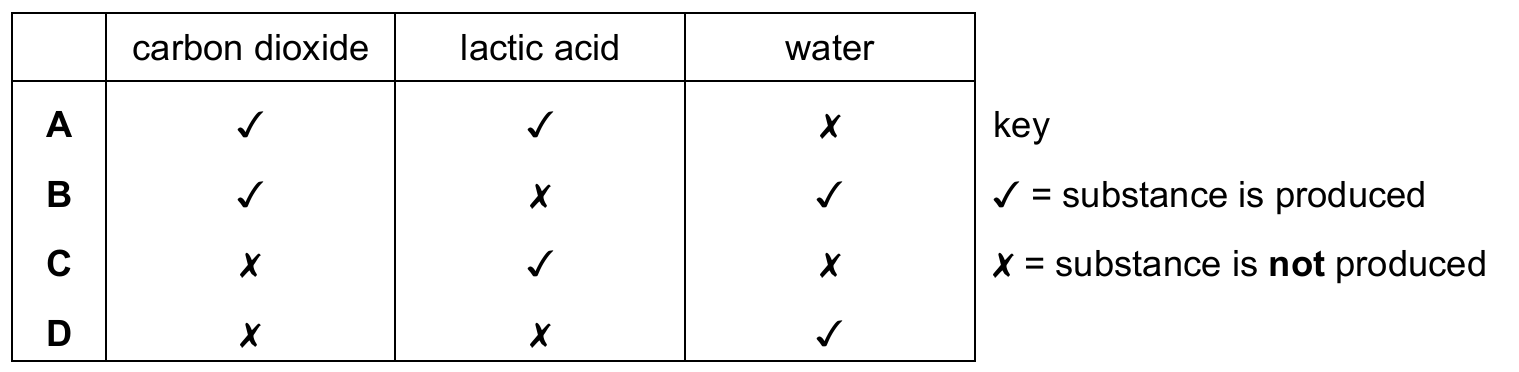
Question 19

What is produced by anaerobic respiration in human muscles?

▶️ Answer/Explanation

In human muscle cells, anaerobic respiration occurs when oxygen supply is insufficient for aerobic needs. During this process, glucose is incompletely broken down into lactic acid only. Unlike aerobic respiration, it does not produce carbon dioxide ($CO_2$) or water ($H_2O$). The word equation is:

$glucose \rightarrow lactic \ acid$

This matches row C, where only lactic acid is marked as produced. Other processes, like fermentation in yeast, produce ethanol and $CO_2$, but in humans, the lack of $CO_2$ production is a key distinction.
Answer: (C)

Question 20

Which statements are correct for a healthy person?

$1$ Blood leaving a glomerulus has the same concentration of glucose as blood entering a glomerulus.
$2$ There is no glucose in the fluid leaving a nephron.
$3$ A nephron reabsorbs all of the water and some of the ions filtered out of the blood by a glomerulus.

(A) $1$ and $3$
(B) $1$ only
(C) $2$ and $3$
(D) $2$ only
▶️ Answer/Explanation
Statement $1$ is incorrect because during ultrafiltration, a significant volume of plasma (including glucose) is forced into the Bowman’s capsule, which changes the relative concentration of solutes in the remaining blood. Statement $2$ is correct because in a healthy person, $100\%$ of the filtered glucose is selectively reabsorbed in the proximal convoluted tubule, meaning none remains in the urine leaving the nephron. Statement $3$ is incorrect because the nephron does not reabsorb all of the water; some water must remain to form urine and maintain osmotic balance. Therefore, only statement $2$ is accurate for a healthy individual.
Answer: (D)

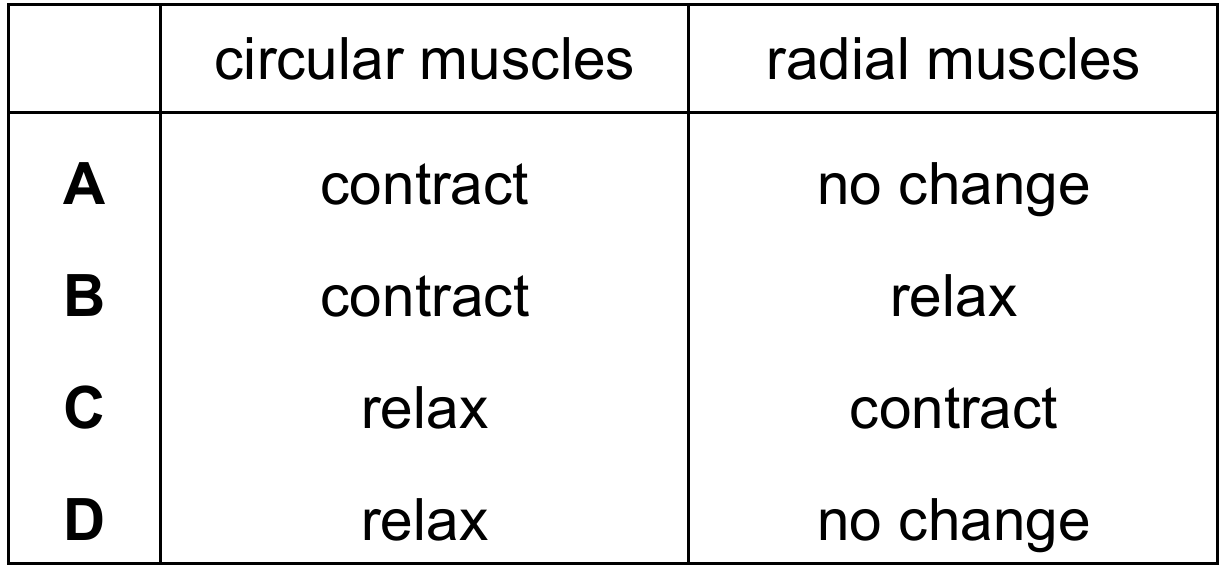
Question 21

When moving from an area with low light intensity to an area with high light intensity, how do the circular and radial muscles of the iris react?

▶️ Answer/Explanation
When moving into high light intensity, the eye triggers the pupil reflex to protect the retina from damage. This process involves the antagonistic action of the iris muscles. To constrict the pupil and reduce the amount of light entering, the circular muscles contract while the radial muscles relax. This pulls the iris inward, narrowing the central opening. Since these muscles work in opposition, option B correctly describes the necessary physiological response for pupil constriction.
Answer: (B)

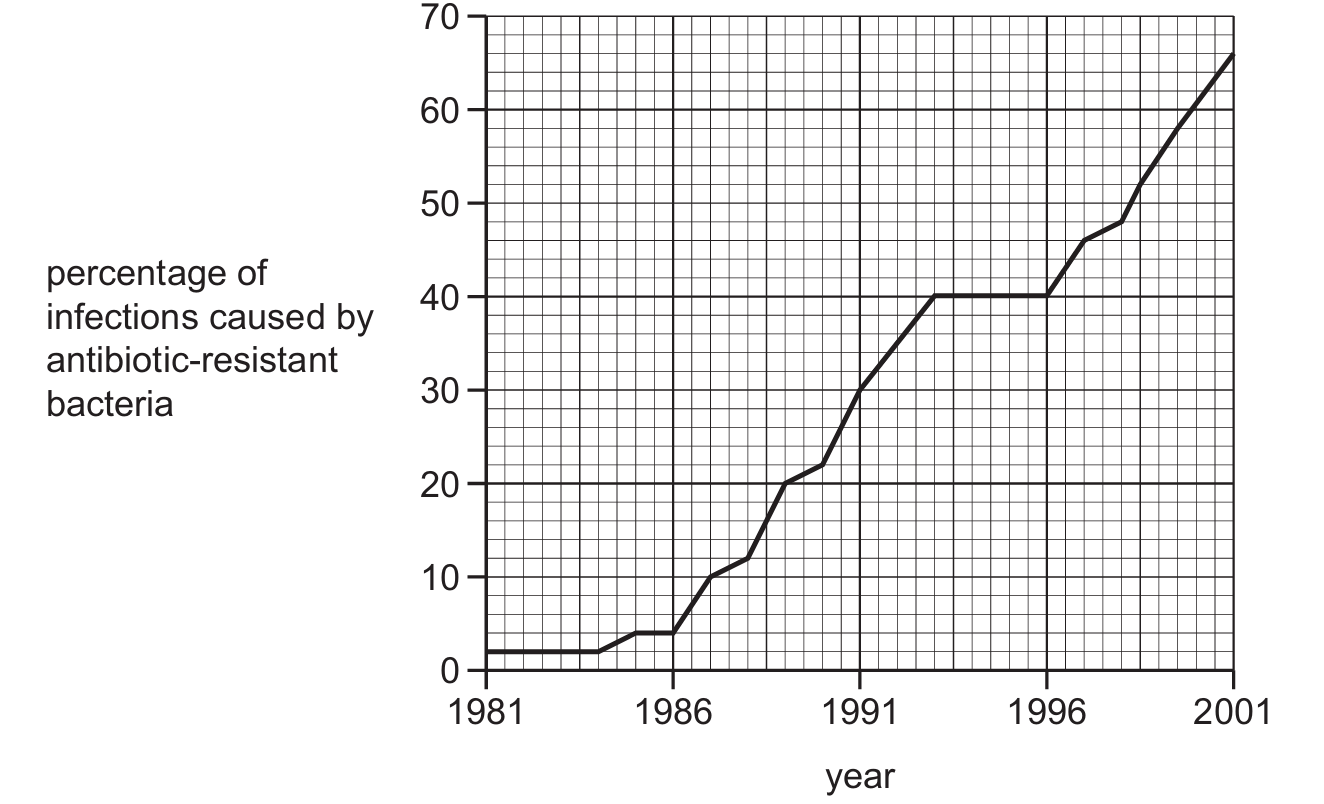
Question 22

The graph shows the change in the percentage of infections caused by antibiotic-resistant bacteria in one country.

Which statements could explain the change in the percentage of infections caused by antibiotic-resistant bacteria?

  1. The use of antibiotics has resulted in natural selection for resistant bacteria.
  2. The use of antibiotics has caused a decrease in viral diseases.
  3. The use of antibiotics when not essential increased the percentage of antibiotic-resistant infections.
(A) $1$ and $2$
(B) $1$ and $3$
(C) $2$ and $3$
(D) $3$ only
▶️ Answer/Explanation
Statement $1$ is correct because antibiotics act as a selection pressure; bacteria with resistant mutations survive and reproduce, passing on resistance genes. Statement $2$ is incorrect because antibiotics only target bacteria, not viruses, and their use does not decrease viral disease frequency. Statement $3$ is correct as the over-prescription or non-essential use of antibiotics provides more opportunities for resistant strains to be selected over non-resistant ones. Therefore, both $1$ and $3$ provide valid biological explanations for the upward trend shown in the graph.
Answer: (B)

Question 23

A gardener has a strawberry plant that produces large, sweet fruits.

How does the gardener grow more strawberry plants that all produce large, sweet fruits?

(A) Use asexual reproduction to produce offspring with no genetic variation.
(B) Use asexual reproduction to produce seeds that will grow into new plants.
(C) Use sexual reproduction and self-pollination as they only have one plant.
(D) Use sexual reproduction to reduce variation in the offspring.
▶️ Answer/Explanation

To ensure all offspring have the exact same desirable traits (large, sweet fruit) as the parent, the gardener must use asexual reproduction. This process involves only one parent and results in “clones” that are genetically identical to the original plant. Unlike sexual reproduction, which involves the fusion of gametes and leads to genetic variation through meiosis and fertilization, asexual reproduction bypasses these steps. In strawberries, this often occurs naturally via runners (stolons). Options B, C, and D are incorrect because seeds are products of sexual reproduction, and sexual reproduction inherently increases genetic diversity rather than eliminating it.

Answer: (A)

Question 24

Where does fertilisation occur in a plant?

(A) ovule
(B) pollen grain
(C) pollen tube
(D) stigma
▶️ Answer/Explanation

Fertilisation is the process where the male gamete fuses with the female gamete to form a zygote. In flowering plants, after pollination, a pollen tube grows down from the stigma, through the style, and enters the ovary. The male nuclei travel through this tube to reach the ovule, which contains the female egg cell. The actual fusion of these gametes takes place inside the ovule. Once fertilisation is complete, the ovule eventually develops into a seed, while the surrounding ovary develops into a fruit. Therefore, the ovule is the specific site where the life cycle of the next generation begins.

Answer: (A)

Question 25

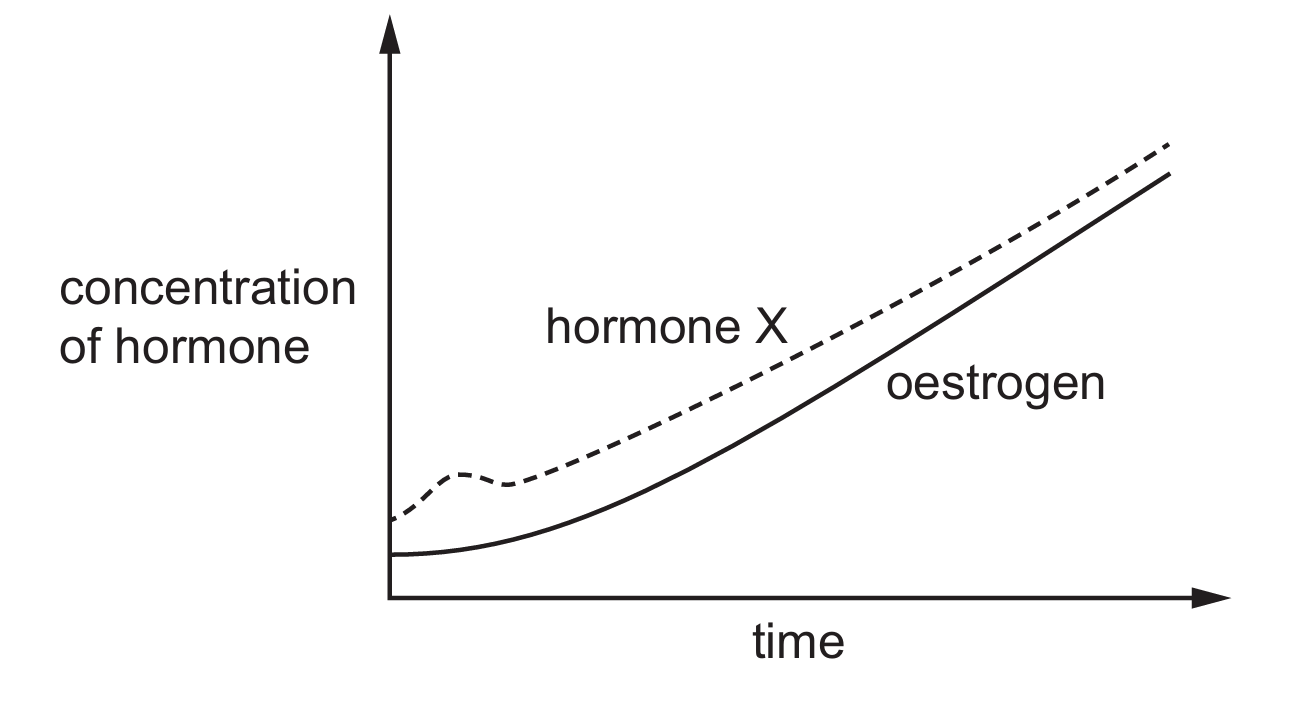
The graph shows the concentrations of two hormones during pregnancy.

Which organ secretes the most hormone $X$ in the late stages of pregnancy?

(A) ovary
(B) placenta
(C) uterus
(D) vagina
▶️ Answer/Explanation
Hormone $X$ represents progesterone, which works alongside oestrogen to maintain the uterine lining during pregnancy. While the corpus luteum in the ovary initially secretes these hormones, its role is overtaken by another organ as the pregnancy progresses. By the end of the first trimester and through the late stages of pregnancy, the placenta becomes the primary endocrine organ responsible for secreting high concentrations of both progesterone and oestrogen. This shift ensures the pregnancy is maintained and the uterine environment remains stable for the developing fetus. Therefore, in the late stages shown on the graph, the placenta is the correct source.
Answer: (B)

Question 26

A person has a $28$-day menstrual cycle.

On which day is the lining of the uterus thickest?

(A) $2$
(B) $4$
(C) $9$
(D) $21$
▶️ Answer/Explanation
In a typical $28$-day menstrual cycle, the uterine lining (endometrium) is shed during menstruation, which occurs from approximately Day $1$ to Day $5$. After menstruation, the lining begins to repair and thicken during the proliferative phase. Following ovulation (usually around Day $14$), the cycle enters the secretory phase. During this time, high levels of progesterone cause the lining to become highly vascularized and reach its maximum thickness to prepare for potential embryo implantation. This peak thickness typically occurs between Day $20$ and Day $25$. Therefore, Day $21$ is the most accurate choice among the options provided.
Answer: (D)

Question 27

Which statements describe the sex chromosomes in human gametes?

$1$ Egg cells contain either an $X$ or a $Y$ chromosome.
$2$ Egg cells contain only $X$ chromosomes.
$3$ Sperm cells contain either an $X$ or a $Y$ chromosome.
$4$ Sperm cells contain only $Y$ chromosomes.
A $1$ and $3$ B $1$ and $4$ C $2$ and $3$ D $2$ and $4$
▶️ Answer/Explanation
In humans, biological females have two $X$ chromosomes $(XX)$, so all egg cells produced via meiosis will carry a single $X$ chromosome. Biological males have one $X$ and one $Y$ chromosome $(XY)$. During meiosis, these segregate, meaning $50\%$ of sperm cells will carry an $X$ chromosome and $50\%$ will carry a $Y$ chromosome. Therefore, statement $2$ is correct because eggs never naturally contain a $Y$ chromosome, and statement $3$ is correct because sperm are the deciding factor in sex determination by carrying either type. Statements $1$ and $4$ are biologically incorrect.
Answer: (C)

Question 28

Which statement describes the effect of meiosis on chromosome number?

(A) A diploid parent cell produces diploid daughter cells.
(B) A diploid parent cell produces haploid daughter cells.
(C) A haploid parent cell produces diploid daughter cells.
(D) A haploid parent cell produces haploid daughter cells.
▶️ Answer/Explanation
Meiosis is a specialized type of cell division often referred to as “reduction division.” During this process, a single diploid cell ($2n$) undergoes two consecutive rounds of nuclear division to eventually produce four genetically unique daughter cells. Each of these resulting cells contains exactly half the number of chromosomes as the original parent, making them haploid ($n$). This reduction is critical for sexual reproduction, as it ensures that when two gametes fuse during fertilization, the resulting zygote restores the correct diploid number rather than doubling it. Consequently, the correct description is that a diploid parent cell produces haploid daughter cells.
Answer: (B)

Question 29

A female with red-green colour blindness has a child with a male who does not have red-green colour blindness. The child is male.

What is the chance of this child having red-green colour blindness?

(A) $0\%$
(B) $25\%$
(C) $50\%$
(D) $100\%$
▶️ Answer/Explanation
Red-green colour blindness is an X-linked recessive trait. A colour-blind female must have two affected X chromosomes, represented as $X^cX^c$. The male does not have the condition, so his genotype is $X^Y$. When they have a child, the mother can only pass on an $X^c$ chromosome. Since the child is specified as male, he must have received the $Y$ chromosome from his father and an $X^c$ chromosome from his mother. Therefore, the son’s genotype will inevitably be $X^cY$. Because males only have one X chromosome, possessing a single recessive allele results in the expression of the condition. Thus, there is a $100\%$ probability that the son will be colour-blind.
Answer: (D)

Question 30

What is a source of genetic variation that alters the base sequence of DNA?

(A) gene mutation
(B) mitosis
(C) random fertilisation
(D) random mating
▶️ Answer/Explanation
A gene mutation is defined as a permanent change in the nucleotide base sequence of DNA. This can occur through processes like substitution, insertion, or deletion of bases, directly creating new alleles. While random fertilisation and random mating create variation by shuffling existing genes into new combinations, they do not change the underlying genetic code itself. Mitosis is a process of cell division that results in genetically identical daughter cells, so it typically does not introduce variation unless an error occurs during replication. Therefore, only gene mutations fundamentally alter the sequence of the DNA molecule.
Answer: (A)

Question 31

Which technique is not used to conserve endangered animal species?

(A) artificial insemination
(B) captive breeding programmes
(C) in vitro fertilisation
(D) seed banks
▶️ Answer/Explanation
To conserve endangered animals, techniques like artificial insemination and in vitro fertilisation (IVF) are used to increase reproductive success in small populations. Captive breeding programmes provide a controlled environment to help these populations grow safely before potential reintroduction to the wild. However, seed banks are specifically designed for the conservation of plant genetic material (seeds) rather than animals. Since the question asks for the technique not used for animal species, seed banks is the correct choice.
Answer: (D)

Question 32

Which flowchart shows how energy is transferred from the Sun to an organism?

(A) chemical energy in carbohydrates → stored in plants → energy trapped by chlorophyll
(B) stored in plants → chemical energy in carbohydrates → energy trapped by chlorophyll
(C) stored in plants → energy trapped by chlorophyll → chemical energy in carbohydrates
(D) energy trapped by chlorophyll → chemical energy in carbohydrates → stored in plants
▶️ Answer/Explanation

The process of energy transfer begins with photosynthesis, where light energy from the Sun is first trapped by chlorophyll in the chloroplasts of plant cells. This light energy is then converted into chemical energy through the synthesis of carbohydrates like glucose. Finally, these carbohydrates are stored in the plant tissues (often as starch) or used for growth, making the energy available to the organism. Option (D) correctly sequences these stages from the initial capture of light to the final storage of chemical energy.

Answer: (D)

Question 33

Which statements about a food chain are correct?

1 Between trophic level $1$ and trophic level $2$, energy is passed from a herbivore to a carnivore.
2 Between trophic level $2$ and trophic level $3$, energy is passed from a primary consumer to a secondary consumer.
3 Between trophic level $3$ and trophic level $4$, energy is passed from a secondary consumer to a tertiary consumer.

(A) $1$ and $3$
(B) $1$ only
(C) $2$ and $3$
(D) $2$ only
▶️ Answer/Explanation
To identify the correct statements, we must define the roles at each trophic level. Trophic level $1$ always consists of producers (plants), not herbivores. Therefore, statement $1$ is incorrect because energy flows from a producer to a herbivore (primary consumer) between levels $1$ and $2$. Statement $2$ is correct as trophic level $2$ (primary consumer) passes energy to level $3$ (secondary consumer). Statement $3$ is also correct because energy moves from level $3$ (secondary consumer) to level $4$ (tertiary consumer). Since statements $2$ and $3$ are accurate, the correct option is C.
Answer: (C)

Question 34

Which process in the nitrogen cycle is involved in the breakdown of amino acids in living organisms?

(A) deamination
(B) decomposition
(C) denitrification
(D) digestion
▶️ Answer/Explanation
Deamination is the biological process that occurs primarily in the liver where an amino group is removed from an amino acid molecule. When organisms have an excess of proteins, they cannot store the amino acids; therefore, the nitrogen-containing amino group is stripped away and converted into ammonia ($NH_3$). This ammonia is later converted into less toxic urea in mammals to be excreted. While decomposition also breaks down organic matter, it happens after an organism dies, whereas deamination is a metabolic process within a living organism. Denitrification involves converting nitrates back into nitrogen gas, and digestion is the broader mechanical and chemical breakdown of food into nutrients.
Answer: (A)

Question 35

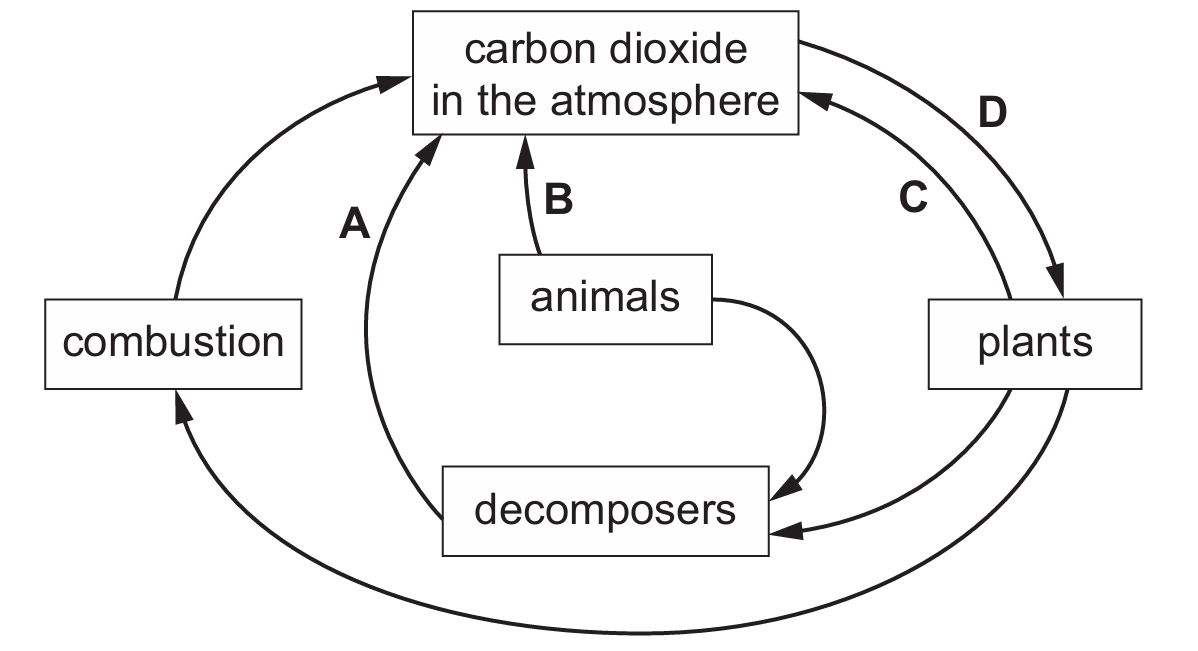
The diagram shows part of the carbon cycle.

Which arrow represents photosynthesis?

▶️ Answer/Explanation
Photosynthesis is the unique process by which green plants absorb $CO_{2}$ from the atmosphere to produce glucose. In the provided diagram, arrow D is the only one showing carbon moving from the atmosphere to plants. Conversely, arrows A, B, and C represent processes like respiration or decomposition, which release $CO_{2}$ back into the air. Combustion also acts as a source of atmospheric carbon. Therefore, arrow D correctly identifies the removal of carbon dioxide for organic synthesis.
Answer: (D)

Question 36

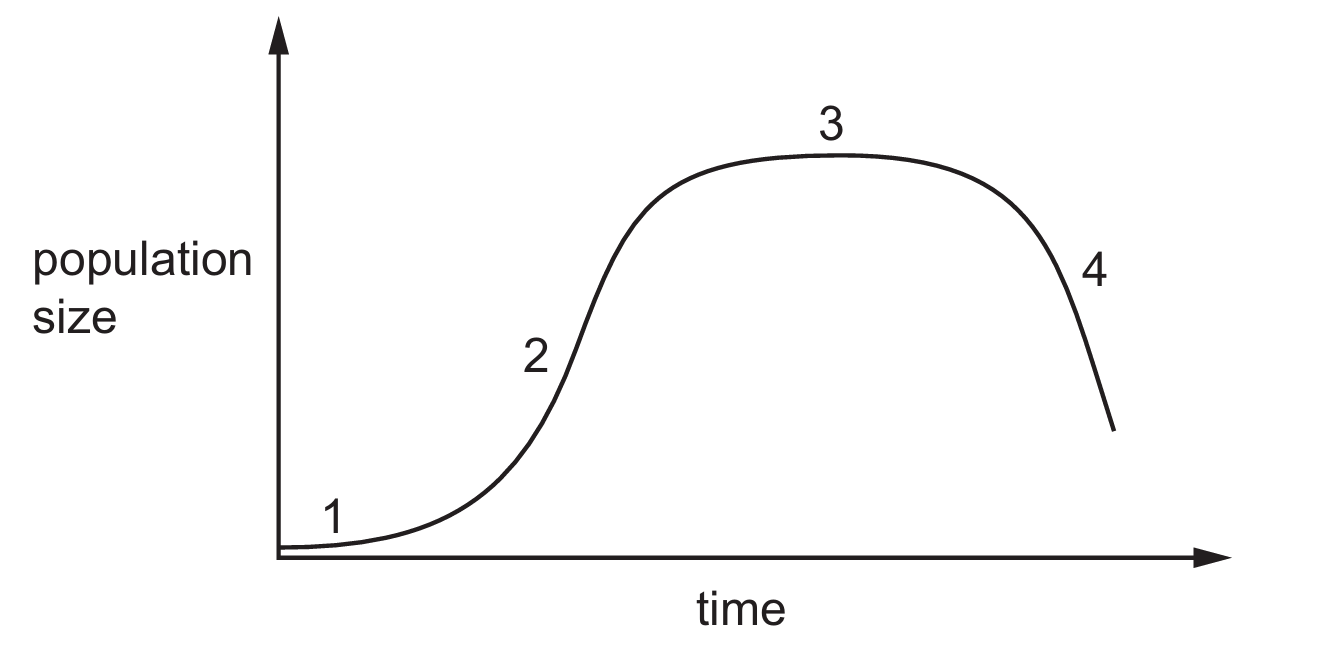
The graph shows how the size of a population changes over time.

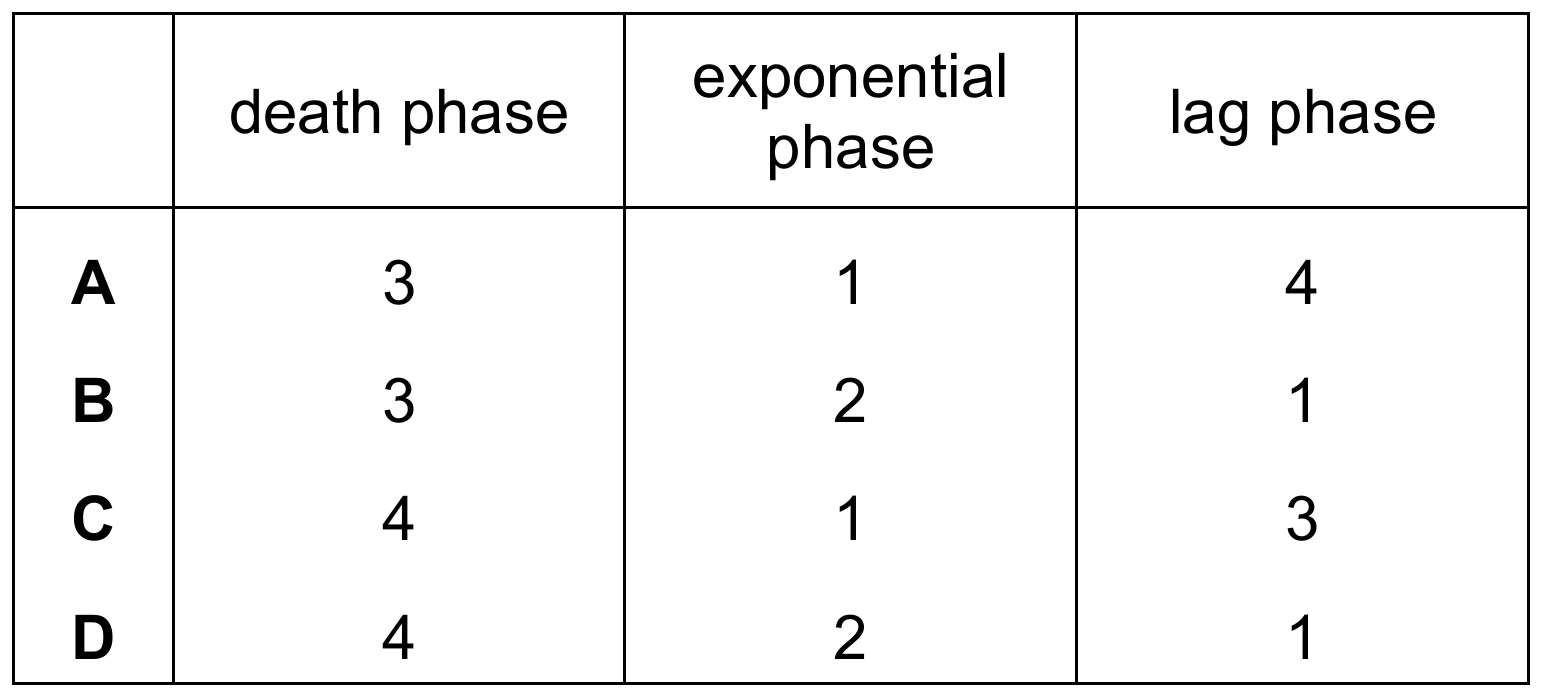
Which row identifies the phases of population growth?

▶️ Answer/Explanation
To identify the correct row, we must match the numbers on the graph to the standard biological phases of population growth. Point $1$ represents the lag phase, where the population is just starting to grow and adapting to its environment. Point $2$ is the exponential (log) phase, characterized by a rapid, steep increase in population size. Point $3$ is the stationary phase where growth levels off. Finally, point $4$ shows a sharp decline, known as the death phase, often caused by nutrient depletion or waste accumulation. Comparing these to the table, row D correctly matches all three categories.
Answer: (D)

Question 37

Eutrophication results in a reduction in the dissolved oxygen in streams and lakes.

What causes the reduction in dissolved oxygen?

(A) decreased aerobic respiration by decomposers
(B) decreased aerobic respiration by fish
(C) increased aerobic respiration by decomposers
(D) increased aerobic respiration by fish
▶️ Answer/Explanation
Eutrophication begins when excess nutrients (like nitrates and phosphates) enter a water body, causing an “algal bloom.” When these algae eventually die, they provide a massive food source for bacteria and other decomposers. These decomposers multiply rapidly and consume vast amounts of dissolved oxygen through increased aerobic respiration as they break down the dead organic matter. This depletion of oxygen creates “dead zones” where fish and other aquatic organisms cannot survive. While fish may die due to the lack of oxygen, it is the metabolic activity of the decomposers that actually drives the initial reduction.
Answer: (C)

Question 38

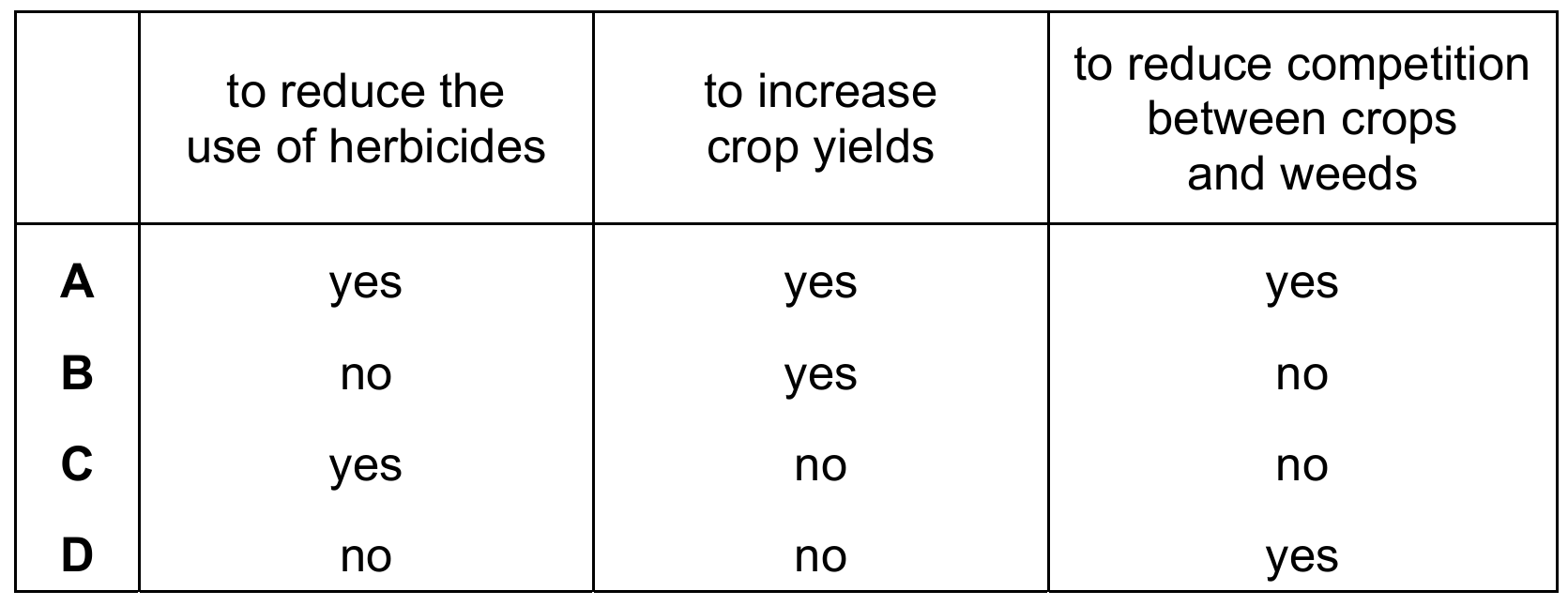
What are reasons for using chemical fertilisers in food production?

▶️ Answer/Explanation
Chemical fertilisers are primarily used to provide essential mineral ions like nitrates, phosphates, and potassium to the soil, which directly promotes plant growth and increases crop yields. However, they do not reduce the need for herbicides; in fact, fertilisers can encourage weed growth just as much as crop growth. Furthermore, fertilisers do not reduce competition with weeds; they may actually intensify it as both species vie for the extra nutrients. Therefore, only the yield increase is a valid primary reason for their use in this context.
Answer: (B)

Question 39

Why is pectinase useful in fruit juice production?

(A) Cloudier juice is produced.
(B) More juice can be extracted from the fruits.
(C) Proteins in the fruit are digested.
(D) Starch is digested to produce more sugar.
▶️ Answer/Explanation
Pectinase is an enzyme that breaks down pectin, a polysaccharide found in the primary cell walls and middle lamella of plant cells. In fruit juice production, pectin acts like a “glue” that holds cells together and traps juice within the pulp. By degrading these pectin chains, the cell structures are weakened, allowing for a much higher yield of juice to be released during pressing. Additionally, pectinase helps in clarifying the juice by breaking down suspended pectin particles that cause cloudiness. Therefore, it increases efficiency and improves the visual quality of the final product.
Answer: (B)

Question 40

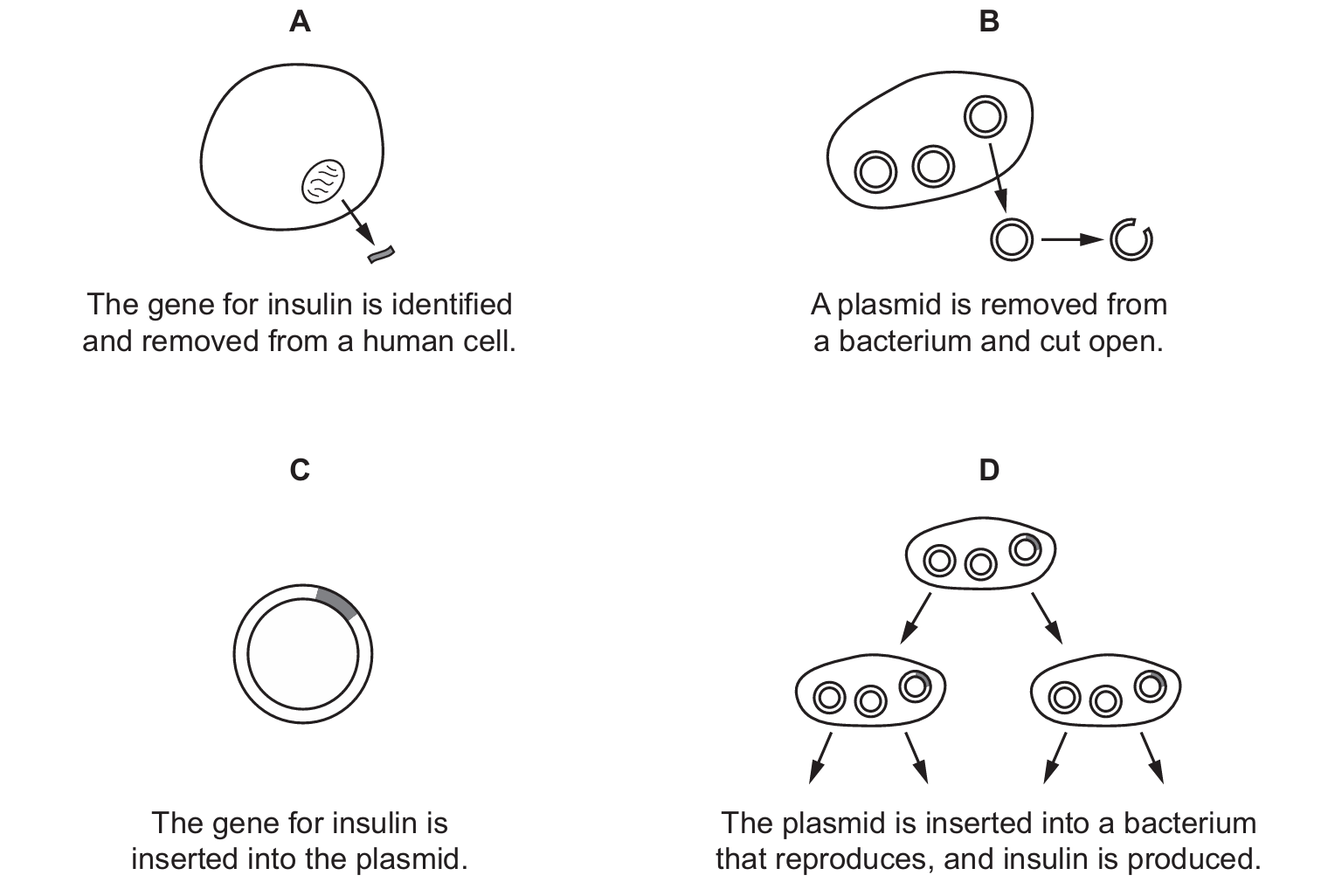
The diagrams show the stages in the production of human insulin.

Which stage uses the enzyme DNA ligase?

 
▶️ Answer/Explanation
DNA ligase is a specific type of enzyme, often called “molecular glue,” that facilitates the joining of DNA strands together by catalyzing the formation of a phosphodiester bond. In the production of human insulin, restriction enzymes are used in Stages A and B to “cut” the DNA and the plasmid. In Stage C, the human insulin gene is mixed with the opened bacterial plasmid. DNA ligase is then required to chemically bond the sugar-phosphate backbones of the two DNA fragments, creating a single molecule of recombinant DNA. Without ligase, the insulin gene would not stay permanently attached to the vector. Stage D involves transformation and protein synthesis, which do not utilize ligase in this context.
Answer: (C)
Scroll to Top