Question 1
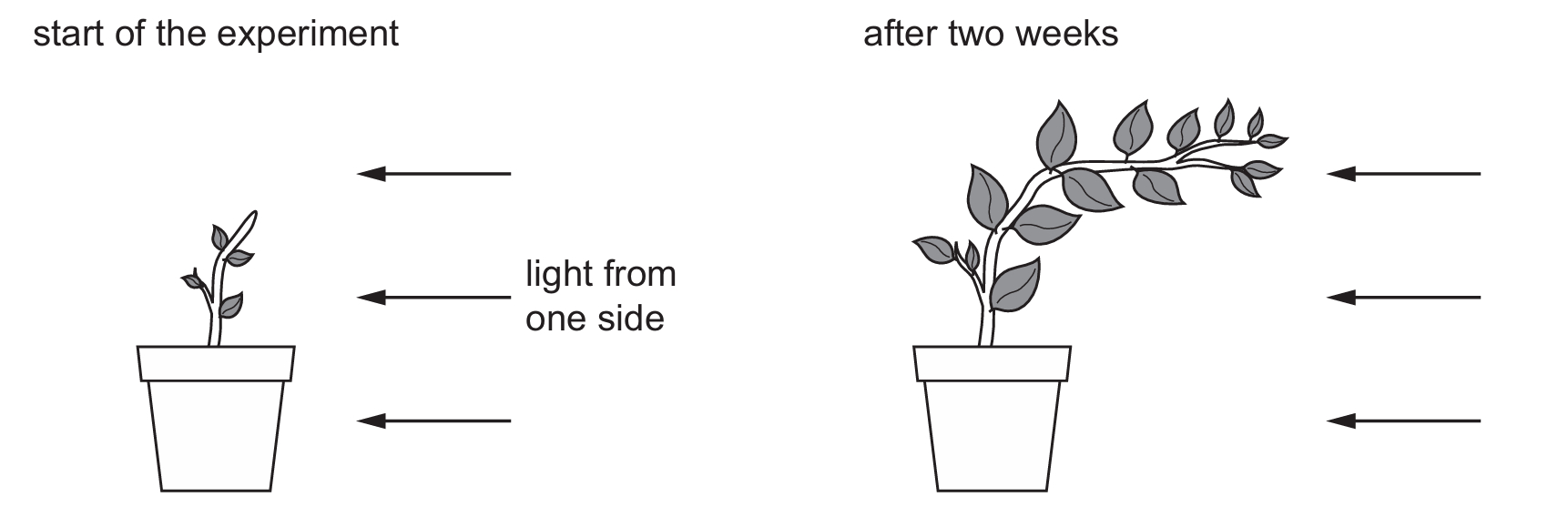
The diagrams show a plant at the start of an experiment, and the same plant two weeks later.

Which characteristics of living organisms are demonstrated by this experiment?
(B) excretion and reproduction
(C) growth and sensitivity
(D) sensitivity and reproduction
▶️ Answer/Explanation
This experiment demonstrates two fundamental life processes: growth and sensitivity. Over the two-week period, the plant increases in size and number of leaves, which is a clear indicator of growth. Additionally, the plant exhibits sensitivity (specifically phototropism) by detecting the directional light stimulus and responding by bending its stem toward it. There is no evidence of reproduction (producing offspring) or excretion (removal of metabolic waste) shown in these specific diagrams. Therefore, the combination of growth and the response to an external stimulus confirms the correct choice.
✅ Answer: (C)
Question 2
What can be used to classify organisms?
(B) the number of different types of bases in DNA
(C) the sequence of bases in DNA
(D) the sequence of bases in one protein
▶️ Answer/Explanation
✅ Answer: (C)
Question 3
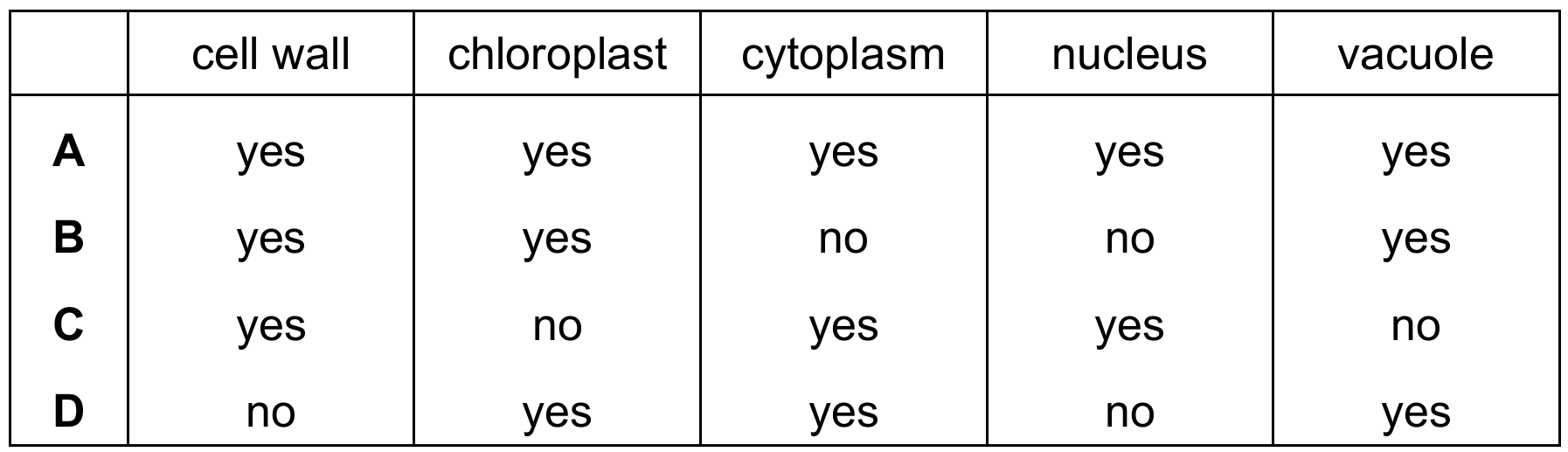
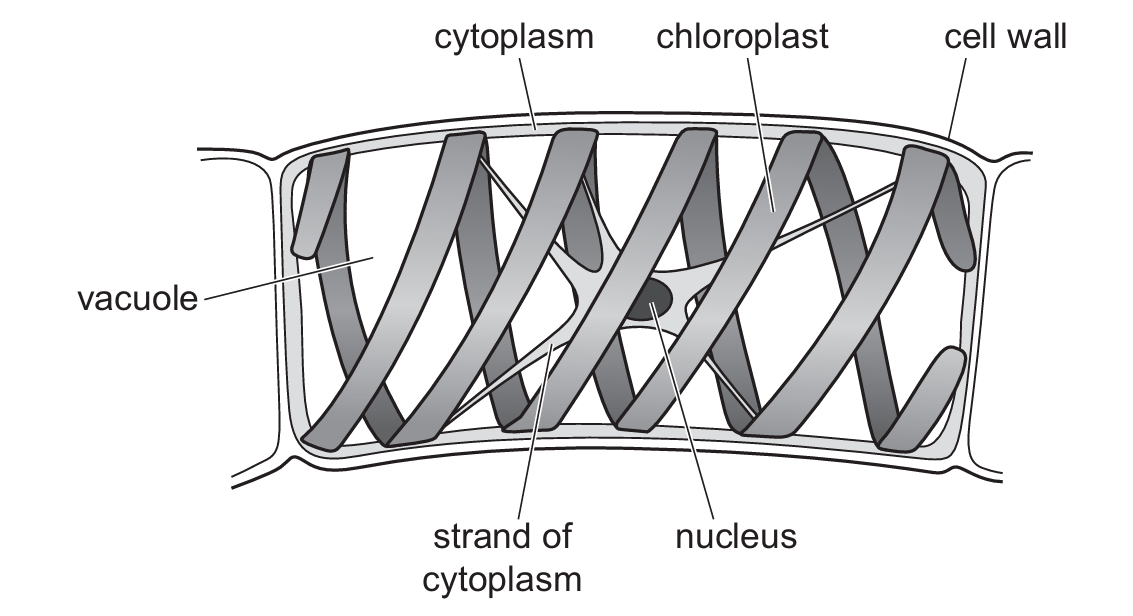
The diagram shows a single cell from an organism called Spirogyra.

Which features does Spirogyra share with plant cells?

▶️ Answer/Explanation
✅ Answer: (A)
Question 4
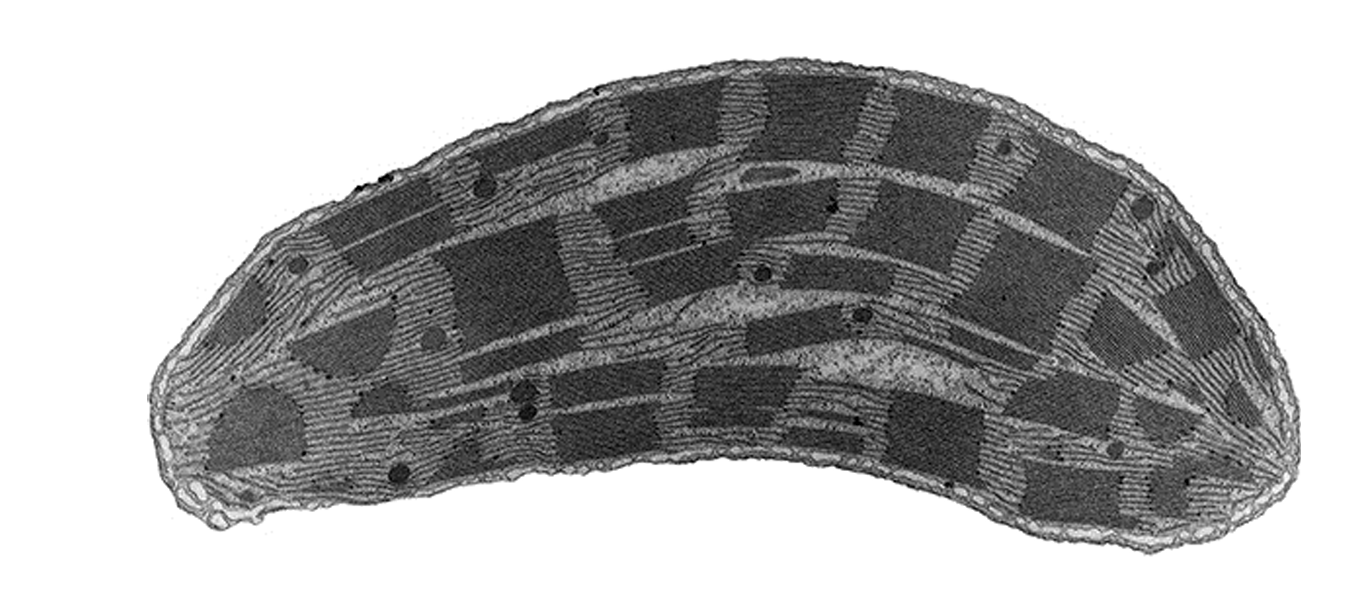
The diagram shows an image of a chloroplast. The image is $5\text{ cm}$ long.

The actual length of the chloroplast is $5\text{ }\mu\text{m}$.
What is the magnification of the image?
(B) $\times 1000$
(C) $\times 10\,000$
(D) $\times 100\,000$
▶️ Answer/Explanation
First, we must convert both measurements to the same units. Since $1\text{ cm} = 10\,000\text{ }\mu\text{m}$, the image length is $5 \times 10\,000 = 50\,000\text{ }\mu\text{m}$.
Now, substitute the values into the formula: $\text{Magnification} = \frac{50\,000\text{ }\mu\text{m}}{5\text{ }\mu\text{m}}$.
This simplifies to $10\,000$, which is expressed as $\times 10\,000$.
Comparing this to the given options, choice (C) is the correct calculation.
✅ Answer: (C)
Question 5
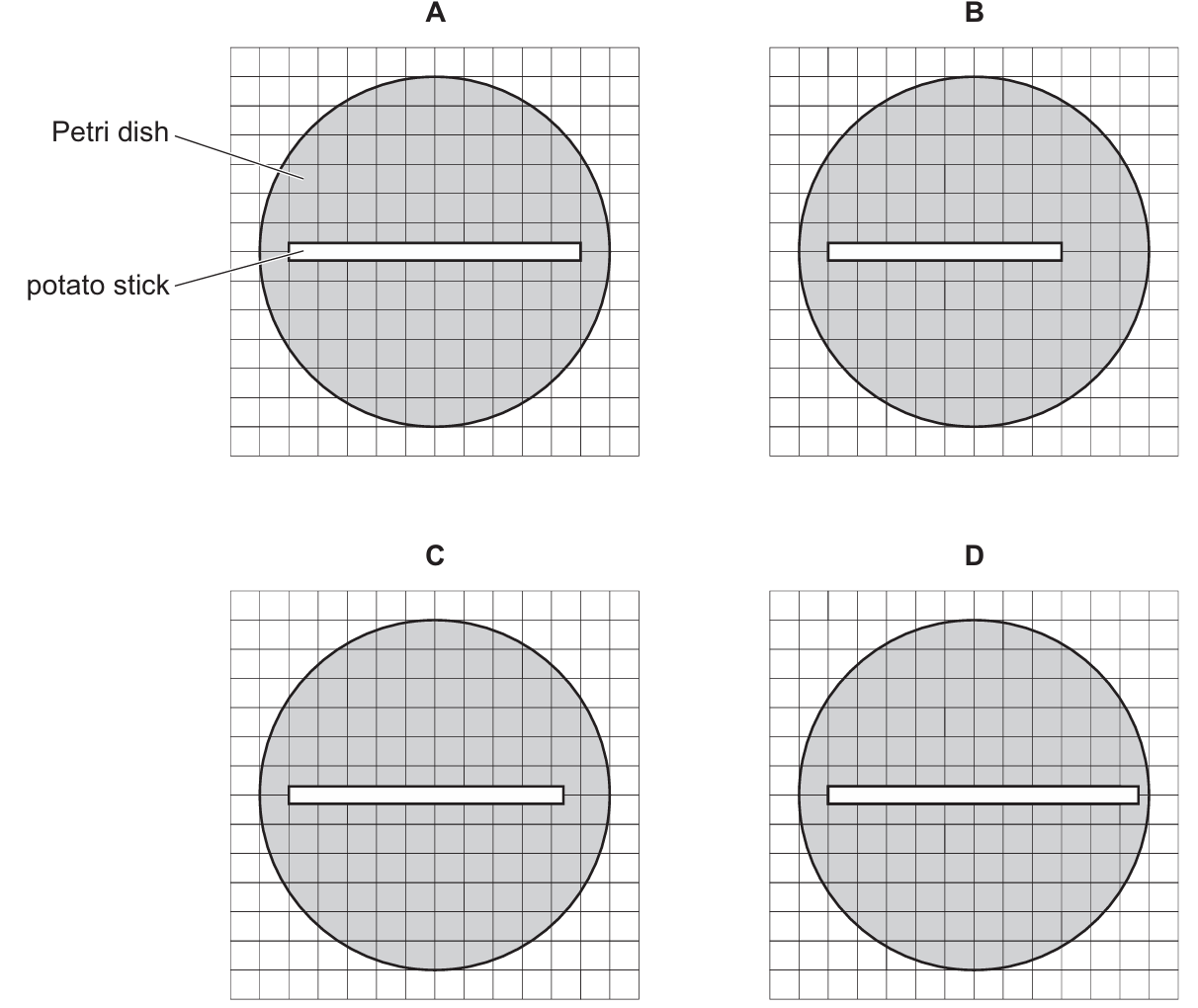
A potato was used as a source of plant tissue. Four potato sticks of identical size were cut from the same potato. At the start of the investigation, each potato stick was $10$ squares long. The potato sticks were put into four separate Petri dishes. Each Petri dish contained a different concentration of sugar solution.
The diagram shows the four Petri dishes after $24$ hours.
Which dish contains a sugar solution that has a higher water potential than the potato tissue?

▶️ Answer/Explanation
✅ Answer: (D)
Question 6
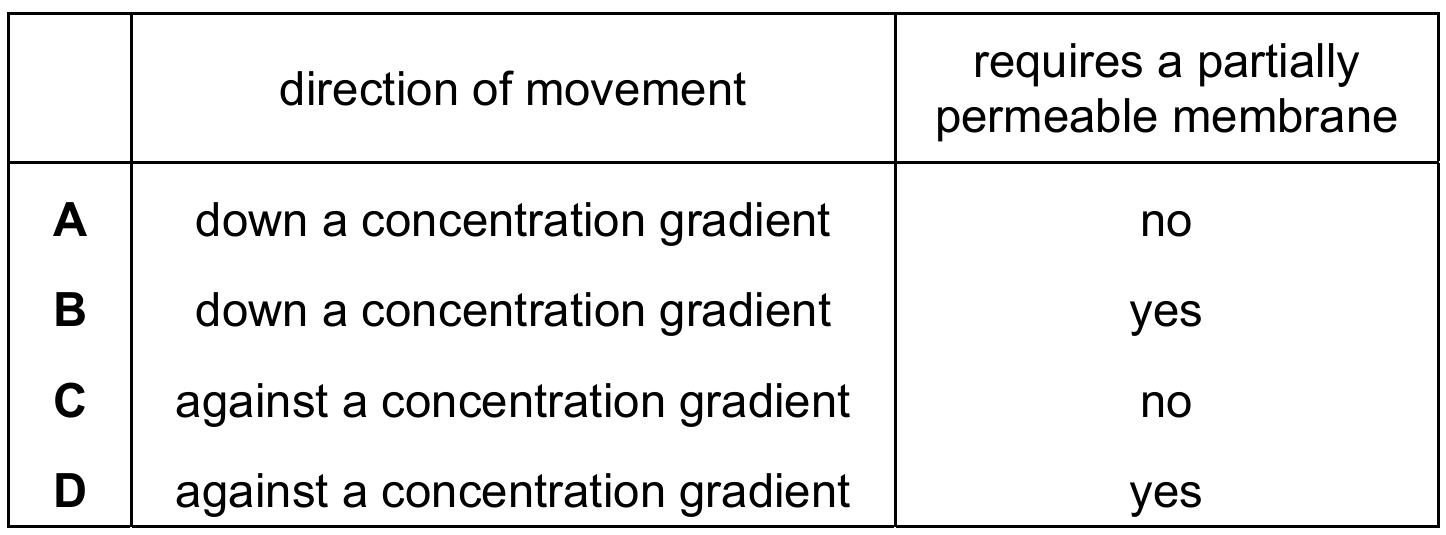
Which row shows correct statements about active transport?

▶️ Answer/Explanation
✅ Answer: (D)
Question 7
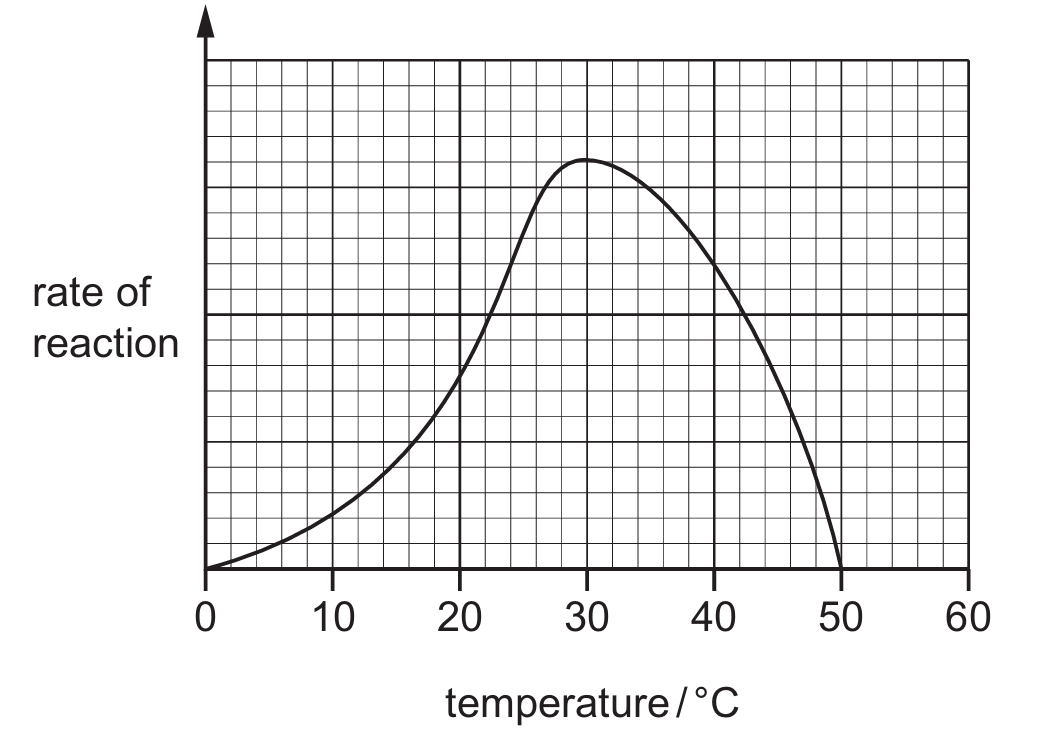
The graph shows the effect of temperature on an enzyme-controlled reaction.

Which statement describes the effect of temperature on this reaction?
(B) Between $10$ °C and $20$ °C, the enzyme denatures.
(C) Between $35$ °C and $45$ °C, frequency of effective collisions increases.
(D) The optimum temperature for this reaction is $40$ °C.
▶️ Answer/Explanation
✅ Answer: (A)
Question 8
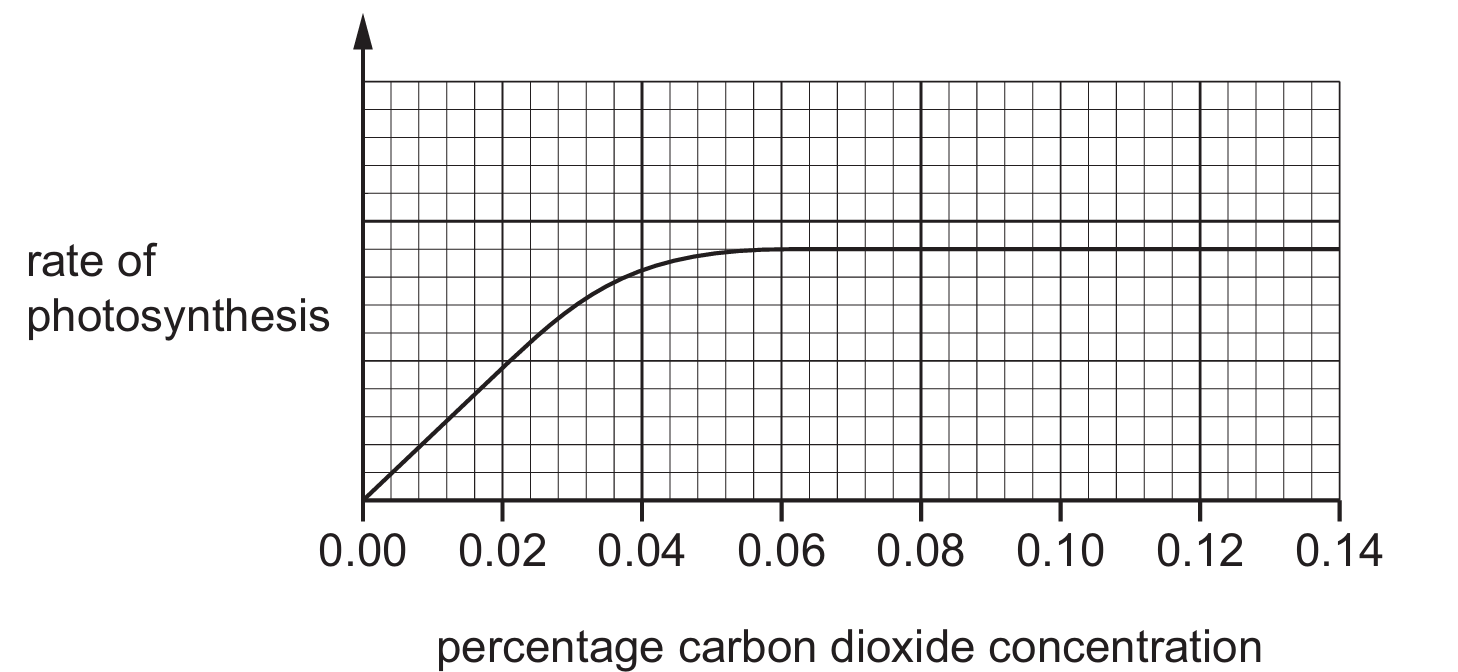
The graph shows the rate of photosynthesis of a plant in full sunlight in different concentrations of carbon dioxide. All other factors were kept constant.

What limits the rate of photosynthesis at $0.02\%$ carbon dioxide concentration?
(B) humidity
(C) light intensity
(D) temperature
▶️ Answer/Explanation
✅ Answer: (A)
Question 9
A student wrote some statements about the palisade mesophyll and spongy mesophyll tissues.
$2$ Only palisade mesophyll cells have chloroplasts for photosynthesis.
$3$ Palisade cells are closely packed but there are air spaces in the spongy mesophyll tissue.
Which statements are correct descriptions of the two tissues?
(B) $1$ and $2$ only
(C) $1$ and $3$ only
(D) $2$ and $3$ only
▶️ Answer/Explanation
✅ Answer: (C)
Question 10
What is a role of bile?
(B) It emulsifies fats, increasing their surface area.
(C) It kills bacteria in food.
(D) It provides the optimum $pH$ for pepsin activity.
▶️ Answer/Explanation
Bile is a fluid produced by the liver and stored in the gallbladder that plays a crucial role in mechanical digestion. It contains bile salts that act as detergents to emulsify large fat globules into much smaller droplets. This process significantly increases the surface area of the lipids, allowing the enzyme lipase to break them down into fatty acids and glycerol more efficiently. Additionally, bile is alkaline, which helps neutralize the acidic chyme coming from the stomach, though its primary role listed here is fat emulsification. Options (A), (C), and (D) are incorrect because bile does not contain digestive enzymes, nor does it create the highly acidic environment required for pepsin.
✅ Answer: (B)
Question 11
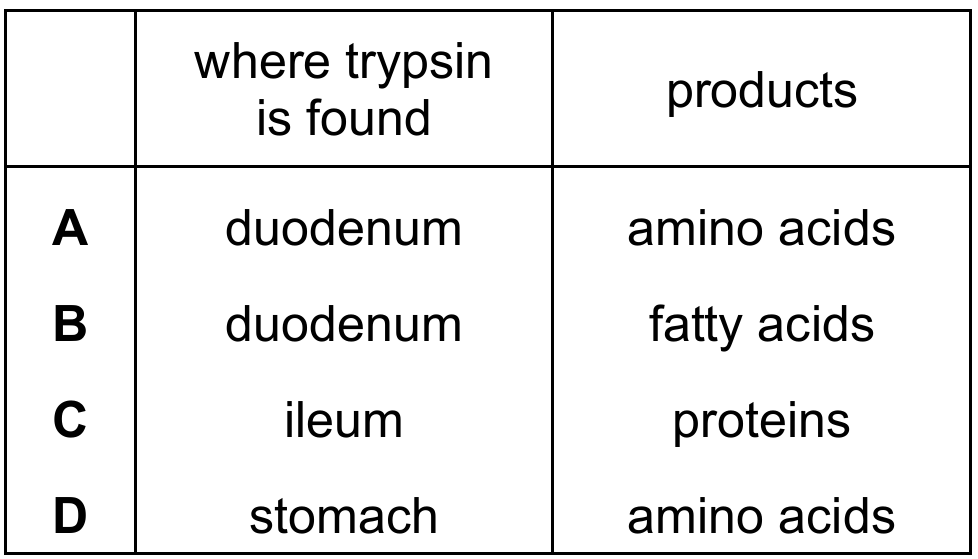
Where in the alimentary canal is the enzyme trypsin found and what are the products of the reaction trypsin catalyses?

▶️ Answer/Explanation
✅ Answer: (A)
Question 12
What is a structural feature of xylem vessels?
(B) made up of cells joined end to end
(C) presence of cross walls
(D) thin walls
▶️ Answer/Explanation
Xylem vessels are specialized tissues designed for the efficient transport of water and mineral ions. They are composed of dead cells joined end to end to form long, continuous tubes. During their development, the cross walls (end walls) between these cells break down, and the internal contents (cytoplasm and organelles like mitochondria) disappear to create a hollow lumen. Furthermore, xylem vessels have walls thickened with lignin for structural support, making them thick rather than thin. This architectural arrangement minimizes resistance to water flow from roots to leaves.
✅ Answer: (B)
Question 13
During the growing season, tomato plants produce flowers and fruits.
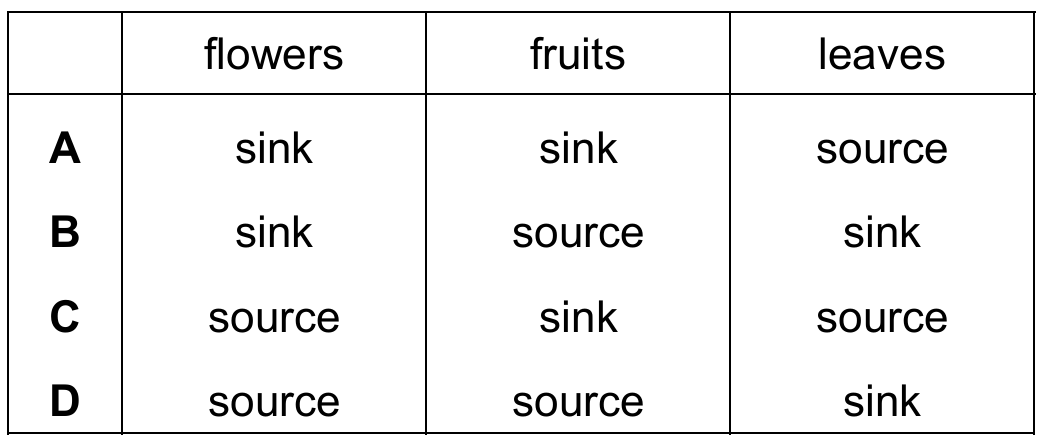
Which parts of a growing tomato plant are sources, and which parts are sinks?

▶️ Answer/Explanation
In plant physiology, a source is an organ that produces or mobilizes photosynthates (like sucrose), while a sink is an organ that consumes or stores them. During the growing season, mature leaves act as the primary sources because they perform photosynthesis. Conversely, flowers and fruits are actively growing or developing organs that require a high energy supply but do not produce enough food themselves; therefore, they function as sinks. This movement of nutrients occurs through the phloem tissue. Consequently, row A correctly identifies the roles of these plant parts.
✅ Answer: (A)
Question 14
Which statements are correct descriptions of methods of preventing pathogens from entering the body?
$2$ Phagocytes produce antibodies.
$3$ Platelets clot blood.
$4$ Lymphocytes engulf pathogens.
(B) $1$ and $3$ only
(C) $2$ and $4$
(D) $3$ only
▶️ Answer/Explanation
To solve this, we must evaluate each biological statement:
- Statement $1$ is incorrect: The process is reversed; soluble fibrinogen is converted into insoluble fibrin to form a mesh.
- Statement $2$ is incorrect: Phagocytes engulf pathogens; it is lymphocytes (specifically B-cells) that produce antibodies.
- Statement $3$ is correct: Platelets are cell fragments that trigger the clotting cascade to seal wounds and prevent pathogen entry.
- Statement $4$ is incorrect: Lymphocytes produce antibodies; it is phagocytes that engulf pathogens through phagocytosis.
Since only statement $3$ accurately describes a mechanism and its correct components, the answer is D.
✅ Answer: (D)
Question 15
Which statement describes a double circulatory system?
(B) Blood goes through the kidneys twice every time it goes round the body.
(C) Blood goes through the heart twice every time it goes round the body.
(D) Blood goes through the brain twice every time it goes round the body.
▶️ Answer/Explanation
✅ Answer: (C)
Question 16
Three statements about immunity are listed.
1. Specific antibodies are produced in response to specific antigens.
2. Pathogens have specific antigens.
3. A vaccination stimulates an immune response.
Which statements are correct?
(B) $1$ and $3$ only
(C) $1$ only
(D) $2$ and $3$ only
▶️ Answer/Explanation
✅ Answer: (A)
Question 17
Which muscles in the breathing system contract during inspiration?
(B) external intercostal and internal intercostal only
(C) external intercostal, internal intercostal and diaphragm
(D) internal intercostal and diaphragm only
▶️ Answer/Explanation
✅ Answer: (A)
Question 18
Which process requires energy from respiration?
(B) osmosis
(C) protein synthesis
(D) transpiration
▶️ Answer/Explanation
✅ Answer: (C)
Question 19
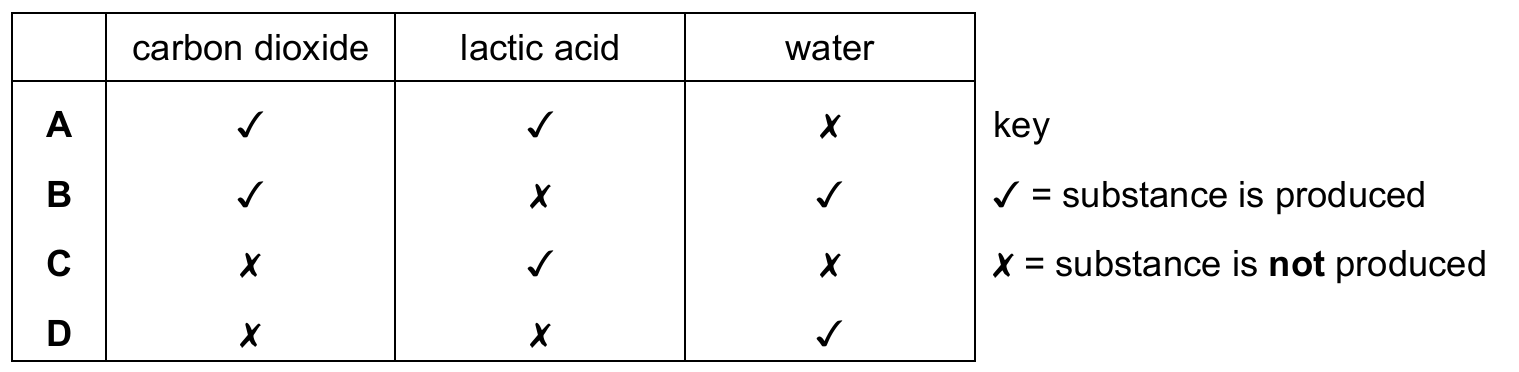
What is produced by anaerobic respiration in human muscles?

▶️ Answer/Explanation
In human muscle cells, anaerobic respiration occurs when oxygen supply is insufficient for aerobic needs. During this process, glucose is incompletely broken down into lactic acid only. Unlike aerobic respiration, it does not produce carbon dioxide ($CO_2$) or water ($H_2O$). The word equation is:
$glucose \rightarrow lactic \ acid$
This matches row C, where only lactic acid is marked as produced. Other processes, like fermentation in yeast, produce ethanol and $CO_2$, but in humans, the lack of $CO_2$ production is a key distinction.
✅ Answer: (C)
Question 20
Which statements are correct for a healthy person?
$1$ Blood leaving a glomerulus has the same concentration of glucose as blood entering a glomerulus.
$2$ There is no glucose in the fluid leaving a nephron.
$3$ A nephron reabsorbs all of the water and some of the ions filtered out of the blood by a glomerulus.
(B) $1$ only
(C) $2$ and $3$
(D) $2$ only
▶️ Answer/Explanation
✅ Answer: (D)
Question 21
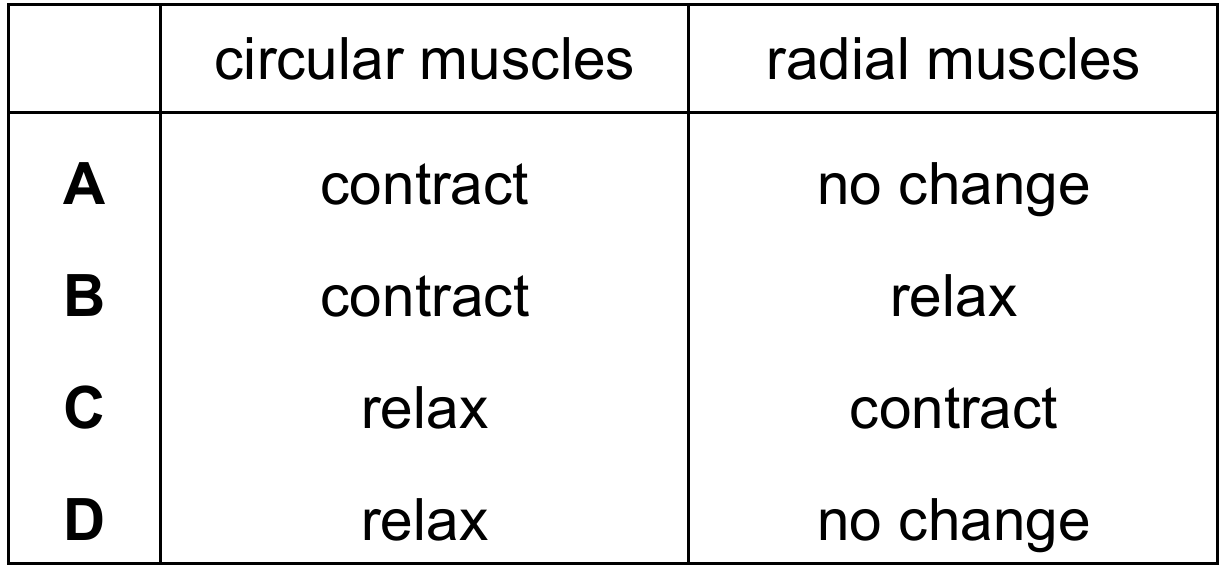
When moving from an area with low light intensity to an area with high light intensity, how do the circular and radial muscles of the iris react?

▶️ Answer/Explanation
✅ Answer: (B)
Question 22
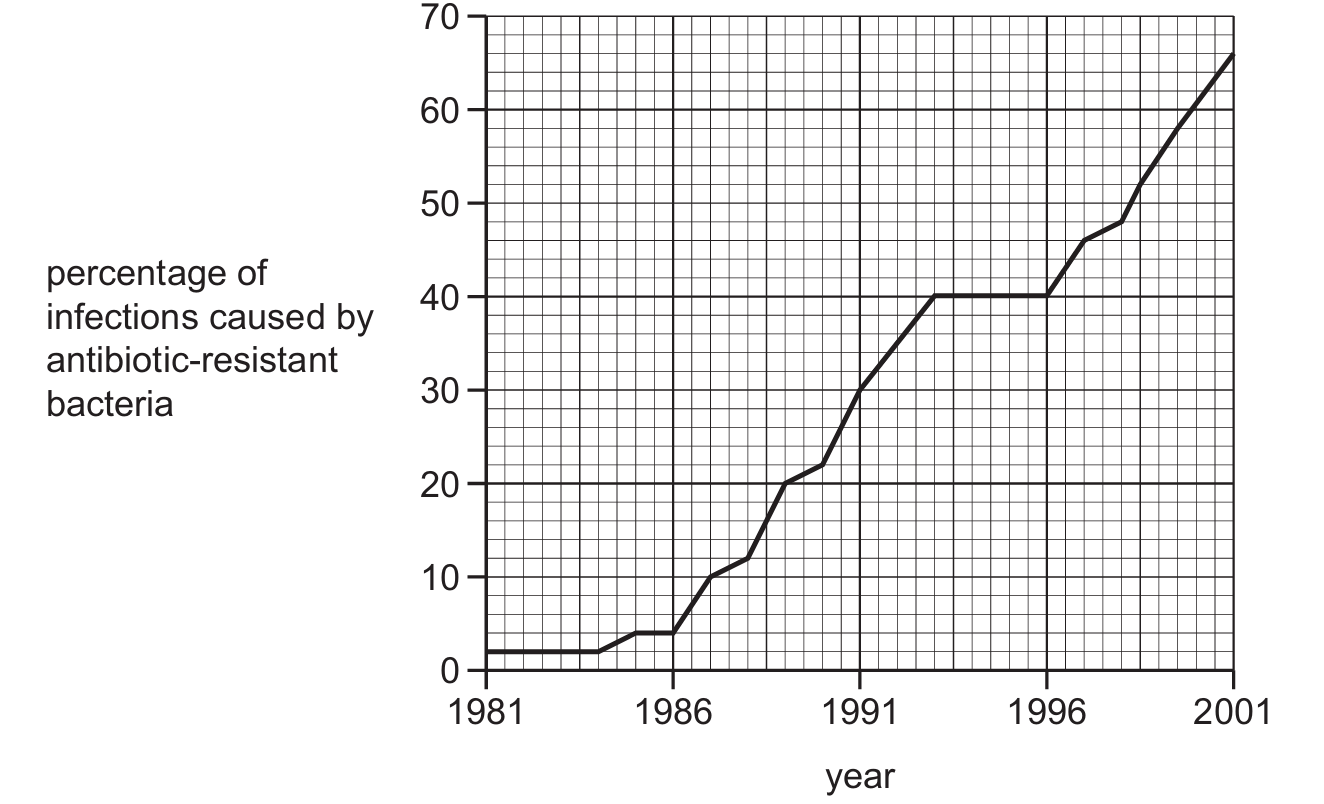
The graph shows the change in the percentage of infections caused by antibiotic-resistant bacteria in one country.

Which statements could explain the change in the percentage of infections caused by antibiotic-resistant bacteria?
- The use of antibiotics has resulted in natural selection for resistant bacteria.
- The use of antibiotics has caused a decrease in viral diseases.
- The use of antibiotics when not essential increased the percentage of antibiotic-resistant infections.
(B) $1$ and $3$
(C) $2$ and $3$
(D) $3$ only
▶️ Answer/Explanation
✅ Answer: (B)
Question 23
A gardener has a strawberry plant that produces large, sweet fruits.
How does the gardener grow more strawberry plants that all produce large, sweet fruits?
(B) Use asexual reproduction to produce seeds that will grow into new plants.
(C) Use sexual reproduction and self-pollination as they only have one plant.
(D) Use sexual reproduction to reduce variation in the offspring.
▶️ Answer/Explanation
To ensure all offspring have the exact same desirable traits (large, sweet fruit) as the parent, the gardener must use asexual reproduction. This process involves only one parent and results in “clones” that are genetically identical to the original plant. Unlike sexual reproduction, which involves the fusion of gametes and leads to genetic variation through meiosis and fertilization, asexual reproduction bypasses these steps. In strawberries, this often occurs naturally via runners (stolons). Options B, C, and D are incorrect because seeds are products of sexual reproduction, and sexual reproduction inherently increases genetic diversity rather than eliminating it.
✅ Answer: (A)
Question 24
Where does fertilisation occur in a plant?
(B) pollen grain
(C) pollen tube
(D) stigma
▶️ Answer/Explanation
Fertilisation is the process where the male gamete fuses with the female gamete to form a zygote. In flowering plants, after pollination, a pollen tube grows down from the stigma, through the style, and enters the ovary. The male nuclei travel through this tube to reach the ovule, which contains the female egg cell. The actual fusion of these gametes takes place inside the ovule. Once fertilisation is complete, the ovule eventually develops into a seed, while the surrounding ovary develops into a fruit. Therefore, the ovule is the specific site where the life cycle of the next generation begins.
✅ Answer: (A)
Question 25
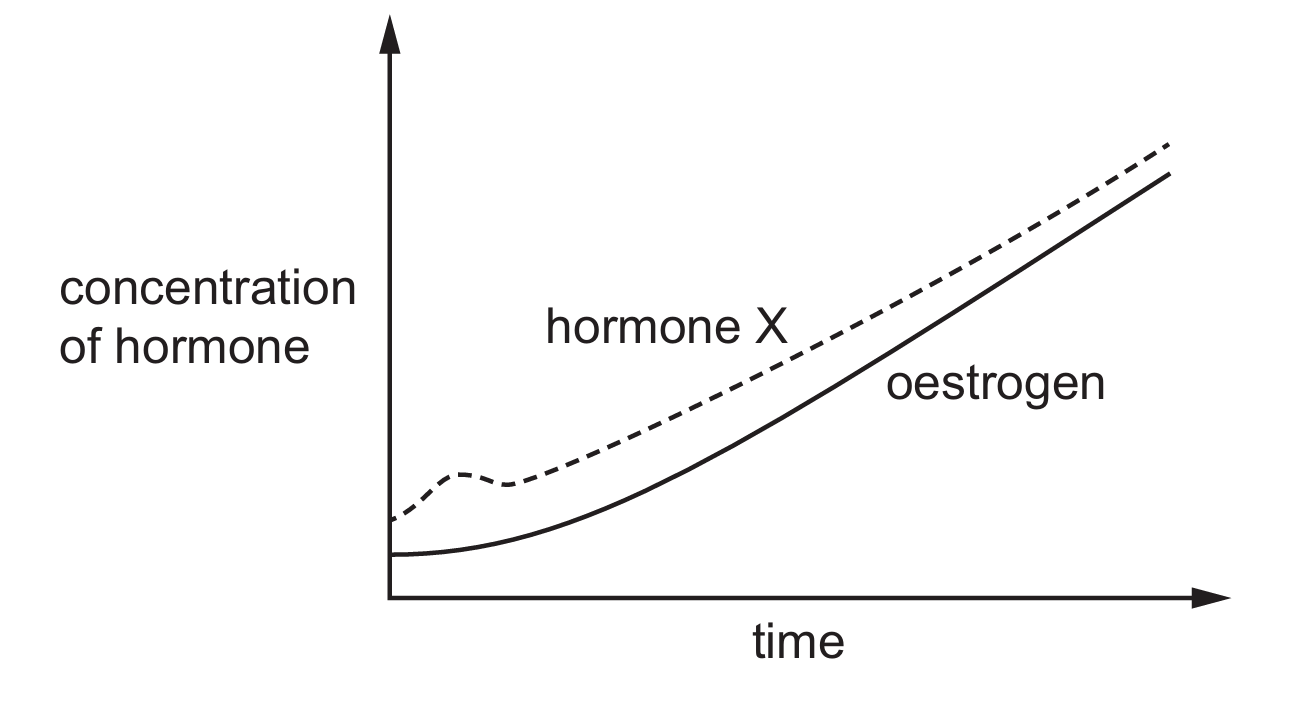
The graph shows the concentrations of two hormones during pregnancy.

Which organ secretes the most hormone $X$ in the late stages of pregnancy?
(B) placenta
(C) uterus
(D) vagina
▶️ Answer/Explanation
✅ Answer: (B)
Question 26
A person has a $28$-day menstrual cycle.
On which day is the lining of the uterus thickest?
(B) $4$
(C) $9$
(D) $21$
▶️ Answer/Explanation
✅ Answer: (D)
Question 27
Which statements describe the sex chromosomes in human gametes?
$2$ Egg cells contain only $X$ chromosomes.
$3$ Sperm cells contain either an $X$ or a $Y$ chromosome.
$4$ Sperm cells contain only $Y$ chromosomes.
▶️ Answer/Explanation
✅ Answer: (C)
Question 28
Which statement describes the effect of meiosis on chromosome number?
(B) A diploid parent cell produces haploid daughter cells.
(C) A haploid parent cell produces diploid daughter cells.
(D) A haploid parent cell produces haploid daughter cells.
▶️ Answer/Explanation
✅ Answer: (B)
Question 29
A female with red-green colour blindness has a child with a male who does not have red-green colour blindness. The child is male.
What is the chance of this child having red-green colour blindness?
(B) $25\%$
(C) $50\%$
(D) $100\%$
▶️ Answer/Explanation
✅ Answer: (D)
Question 30
What is a source of genetic variation that alters the base sequence of DNA?
(B) mitosis
(C) random fertilisation
(D) random mating
▶️ Answer/Explanation
✅ Answer: (A)
Question 31
Which technique is not used to conserve endangered animal species?
(B) captive breeding programmes
(C) in vitro fertilisation
(D) seed banks
▶️ Answer/Explanation
✅ Answer: (D)
Question 32
Which flowchart shows how energy is transferred from the Sun to an organism?
(B) stored in plants → chemical energy in carbohydrates → energy trapped by chlorophyll
(C) stored in plants → energy trapped by chlorophyll → chemical energy in carbohydrates
(D) energy trapped by chlorophyll → chemical energy in carbohydrates → stored in plants
▶️ Answer/Explanation
The process of energy transfer begins with photosynthesis, where light energy from the Sun is first trapped by chlorophyll in the chloroplasts of plant cells. This light energy is then converted into chemical energy through the synthesis of carbohydrates like glucose. Finally, these carbohydrates are stored in the plant tissues (often as starch) or used for growth, making the energy available to the organism. Option (D) correctly sequences these stages from the initial capture of light to the final storage of chemical energy.
✅ Answer: (D)
Question 33
Which statements about a food chain are correct?
1 Between trophic level $1$ and trophic level $2$, energy is passed from a herbivore to a carnivore.
2 Between trophic level $2$ and trophic level $3$, energy is passed from a primary consumer to a secondary consumer.
3 Between trophic level $3$ and trophic level $4$, energy is passed from a secondary consumer to a tertiary consumer.
(B) $1$ only
(C) $2$ and $3$
(D) $2$ only
▶️ Answer/Explanation
✅ Answer: (C)
Question 34
Which process in the nitrogen cycle is involved in the breakdown of amino acids in living organisms?
(B) decomposition
(C) denitrification
(D) digestion
▶️ Answer/Explanation
✅ Answer: (A)
Question 35
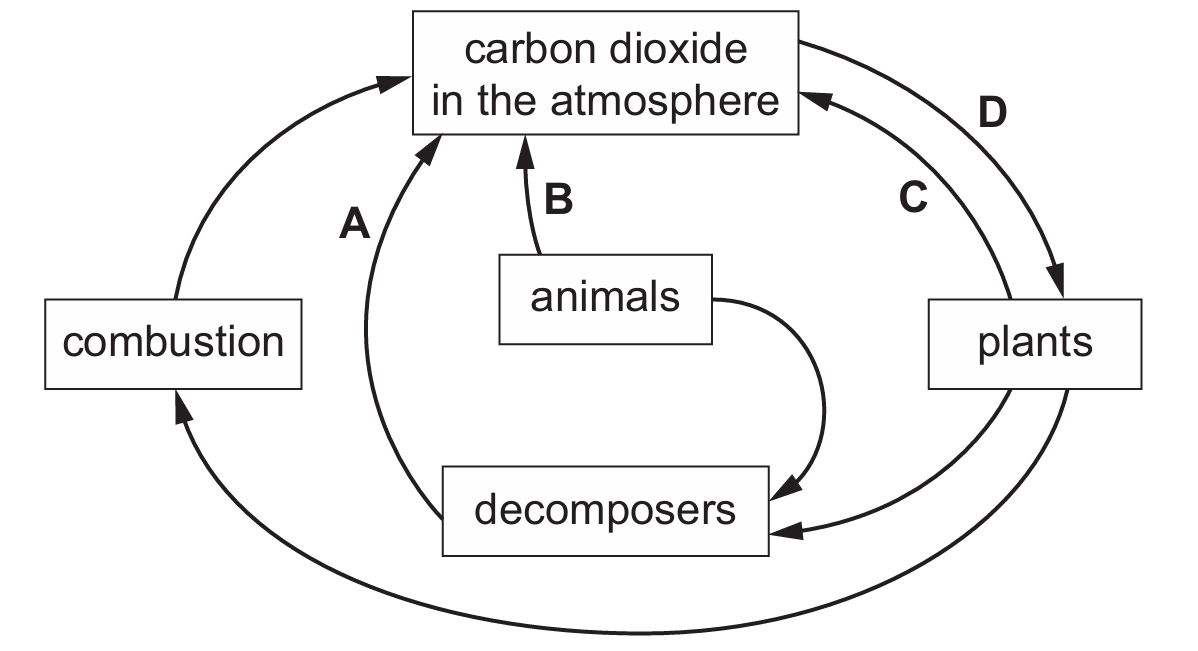
The diagram shows part of the carbon cycle.
Which arrow represents photosynthesis?

▶️ Answer/Explanation
✅ Answer: (D)
Question 36
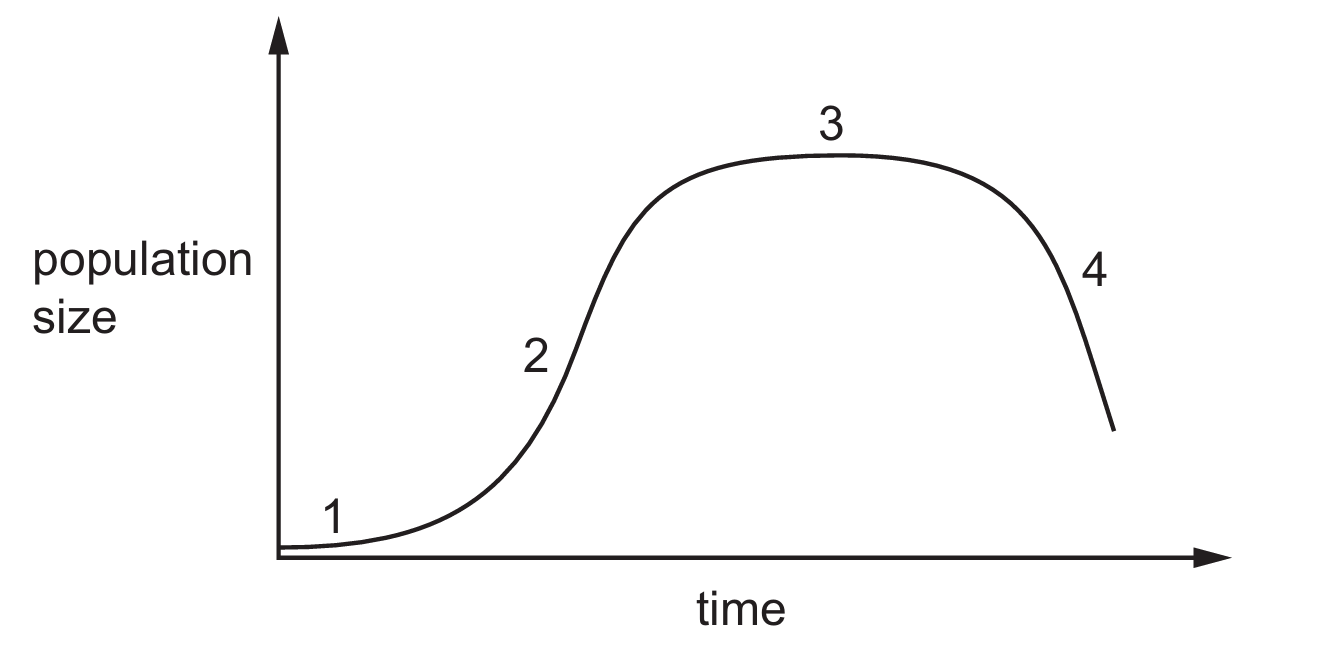
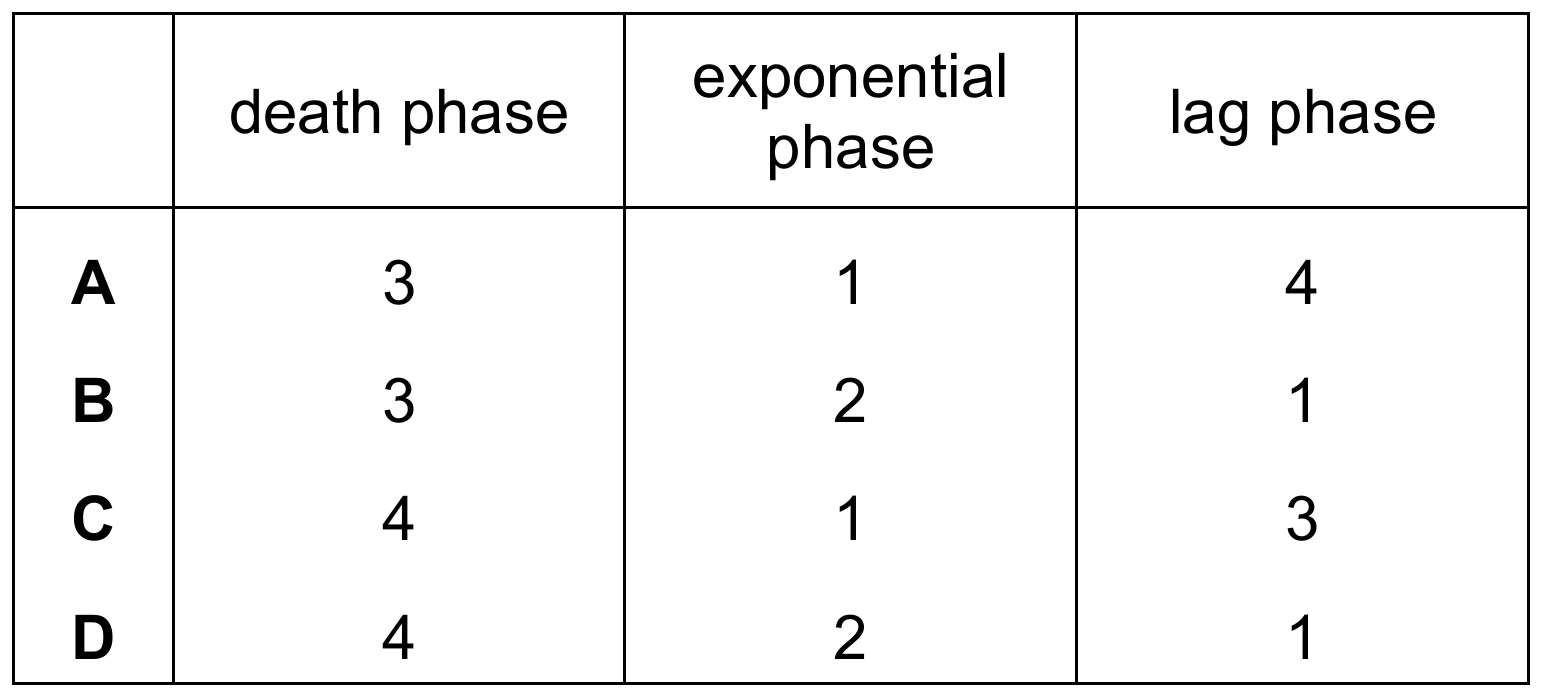
The graph shows how the size of a population changes over time.

Which row identifies the phases of population growth?

▶️ Answer/Explanation
✅ Answer: (D)
Question 37
Eutrophication results in a reduction in the dissolved oxygen in streams and lakes.
What causes the reduction in dissolved oxygen?
(B) decreased aerobic respiration by fish
(C) increased aerobic respiration by decomposers
(D) increased aerobic respiration by fish
▶️ Answer/Explanation
✅ Answer: (C)
Question 38
What are reasons for using chemical fertilisers in food production?

▶️ Answer/Explanation
✅ Answer: (B)
Question 39
Why is pectinase useful in fruit juice production?
(B) More juice can be extracted from the fruits.
(C) Proteins in the fruit are digested.
(D) Starch is digested to produce more sugar.
▶️ Answer/Explanation
✅ Answer: (B)
Question 40
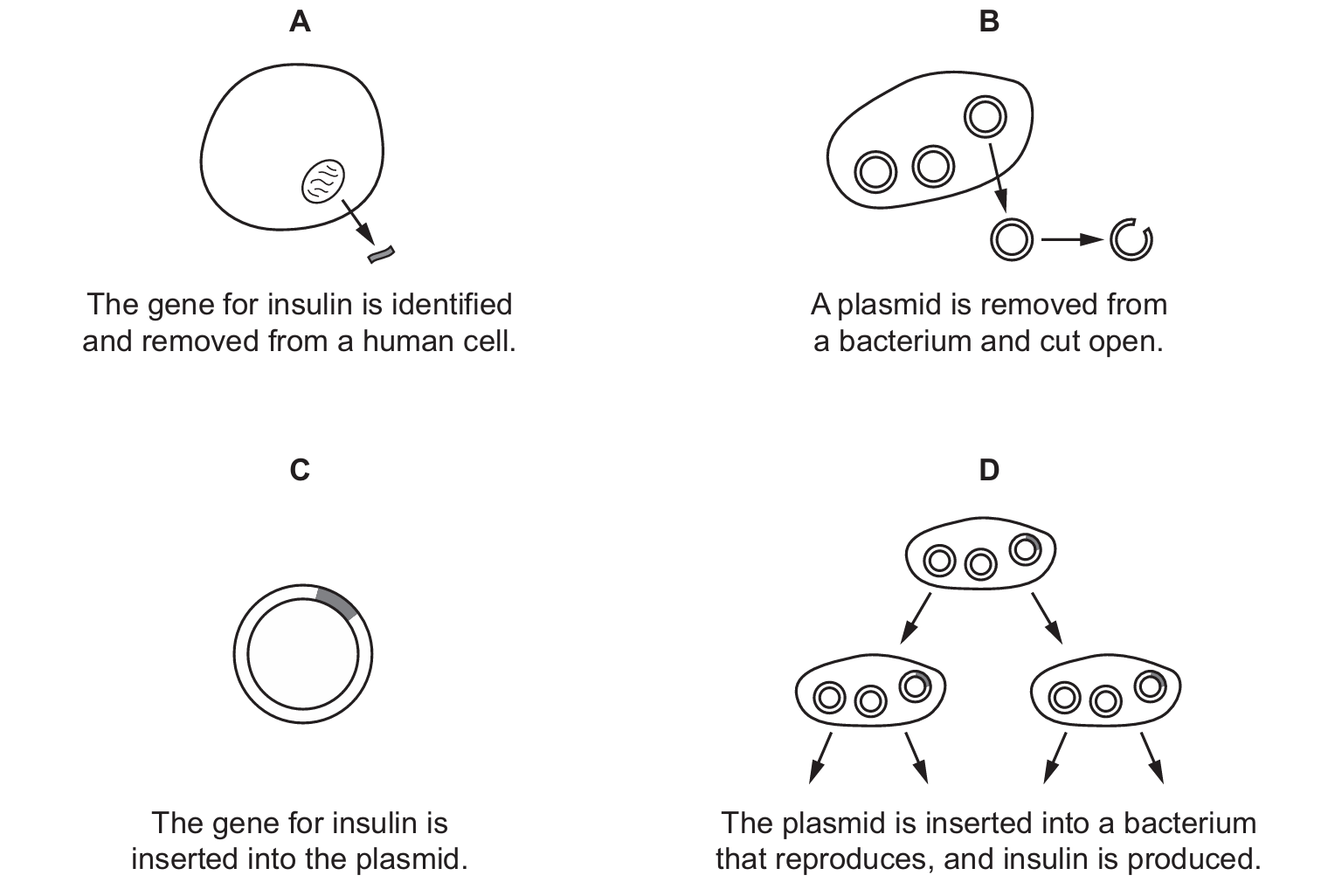
The diagrams show the stages in the production of human insulin.
Which stage uses the enzyme DNA ligase?

▶️ Answer/Explanation
✅ Answer: (C)