
▶️ Answer/Explanation
(a)(i)
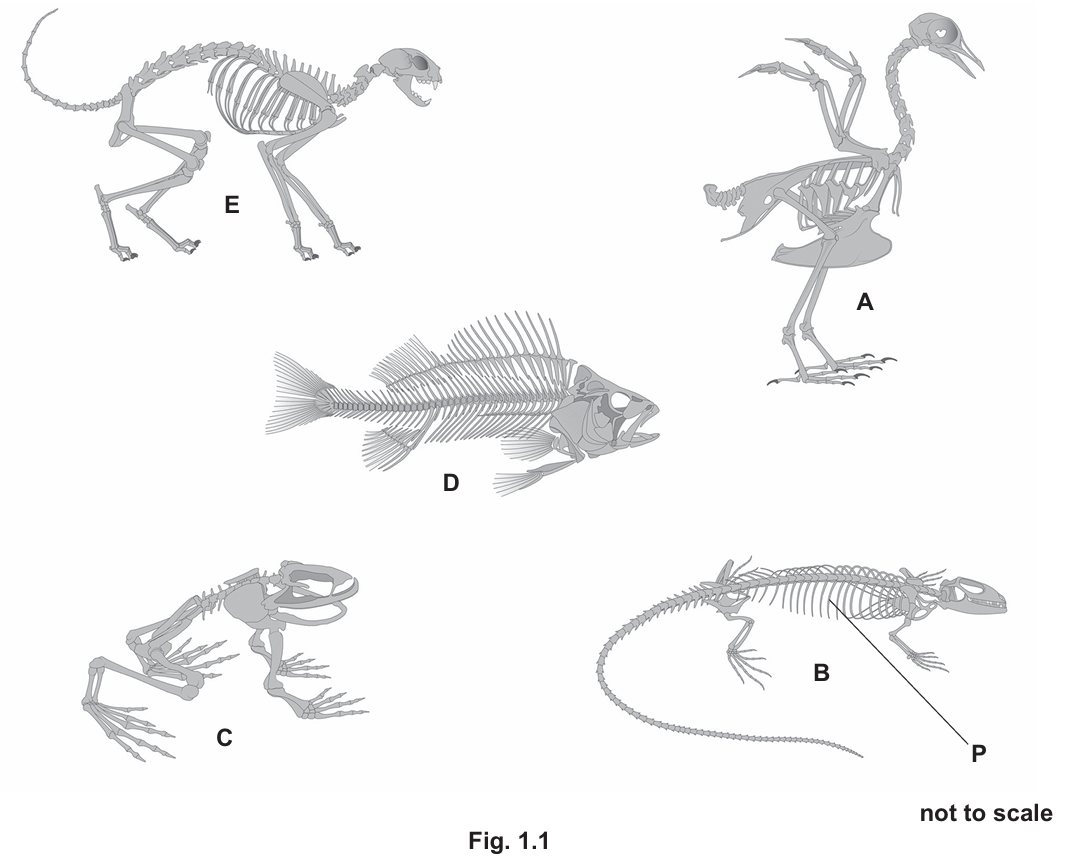
Animal (or Animalia). All organisms shown possess complex skeletal structures and are multicellular heterotrophs.
(a)(ii)
Vertebrates. The visible common feature is the presence of a vertebral column (backbone or spine).
(a)(iii)
Fin (bones) or gill (plate/operculum). These skeletal adaptations are specific to aquatic locomotion and respiration in fish.
(a)(iv)
Any two from:
- Hair or fur
- Mammary glands (to produce milk)
- Pinnae / external ears
- Four-chambered heart
- Different types of teeth (incisors, canines, molars)
(a)(v)
Rib. Structure P points to the curved bones that form the thoracic cage protecting the internal organs.
(b)(i)
colchicus. In binomial nomenclature, the first name is the Genus and the second name is the specific epithet or species.
(b)(ii)
A group of organisms with similar features that can interbreed to produce fertile offspring.
The organisms illustrated (Bird, Reptile, Amphibian, Fish, and Mammal) all belong to the Phylum Chordata. The primary diagnostic feature seen in the skeletons is the backbone, which categorizes them as vertebrates.
When identifying specific classes from skeletons, we look for specialized limbs: Organism D shows streamlined bony rays in the fins, a classic fish trait. For mammals (Organism E), while the skeleton shows heterodonty (different types of teeth), other defining biological traits include endothermy and the presence of fur.
In Binomial Nomenclature, the species name must always be written in lowercase and follows the capitalized Genus name. The definition of a species relies on the biological species concept, which emphasizes reproductive isolation—the ability to produce offspring that can themselves go on to reproduce.


▶️ Answer/Explanation
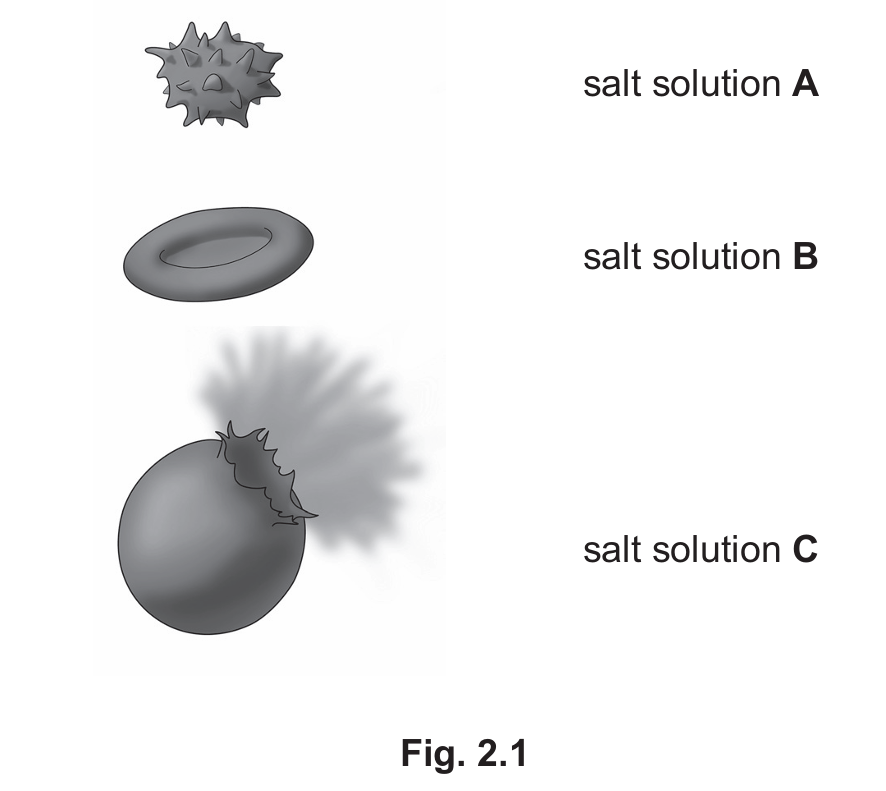
(a) (i) Salt solution: B
Explanation: The cell retains its normal biconcave shape and is neither swollen nor shrunken (crenated). This indicates that the solution is isotonic to the cell cytoplasm, meaning there is no net movement of water by osmosis.
(a) (ii) Increasing salt concentration: C $\rightarrow$ B $\rightarrow$ A
Explanation:
• C is the lowest concentration (hypotonic); water enters the cell, causing it to swell and burst (haemolysis).
• B is isotonic; the concentration matches the cell.
• A is the highest concentration (hypertonic); water leaves the cell by osmosis, causing it to shrink and become wrinkled (crenation).
(b) Any two from:
• Ions (e.g., $Na^+$, $Cl^-$)
• Nutrients (e.g., glucose, amino acids)
• Urea
• Hormones
• Carbon dioxide (as bicarbonate ions)
• Plasma proteins (e.g., fibrinogen, antibodies).
(c) Appearance:
The plant cell will become turgid (swollen/firm). Because distilled water has a higher water potential than the cell sap, water enters the cell via osmosis. The vacuole increases in size, pushing the cytoplasm against the cell wall. Unlike the animal cell in solution C, the plant cell does not burst because the rigid cell wall provides structural support.
(d) Table 2.1 Completion:
| Statement | Diffusion | Osmosis |
|---|---|---|
| happens in all living cells | $\checkmark$ | $\checkmark$ |
| particles move randomly | $\checkmark$ | $\checkmark$ |
| always involves a partially permeable membrane | $\checkmark$ | |
| ions move down a concentration gradient | $\checkmark$ |
Note: Osmosis specifically refers to the movement of water molecules through a partially permeable membrane.
(e) Active transport
Explanation: Active transport is the movement of particles from a region of lower concentration to a region of higher concentration (against a concentration gradient). This process requires energy from respiration.
▶️ Answer/Explanation
(a) (i) Two processes hindered by infection:
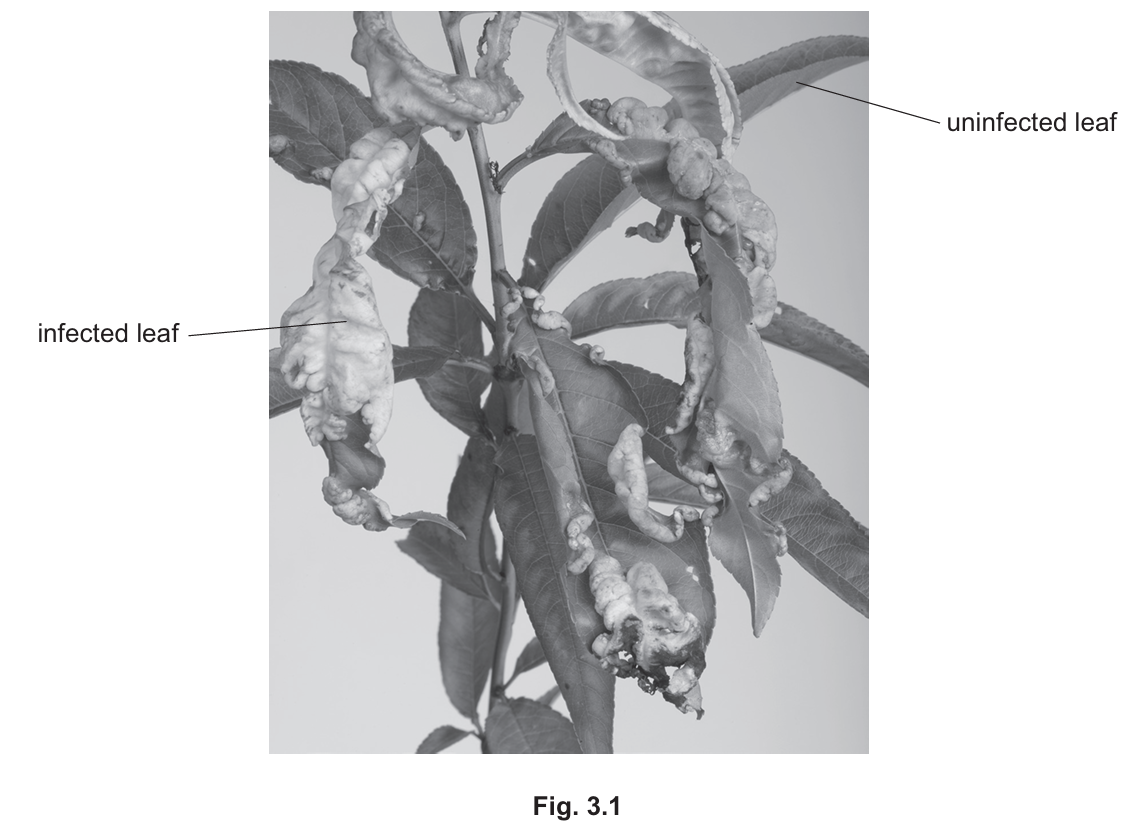
1. Photosynthesis: The physical deformation and possible loss of chlorophyll (chlorosis) in the infected leaf reduce its ability to capture light energy.
2. Gas exchange: Distortion of the leaf surface and potential blockage of stomata prevent the efficient movement of $CO_2$ and $O_2$.
(Other valid answers: Transpiration, transport of nutrients, or starch storage).
(a) (ii) Two types of pathogen:
1. Bacteria (e.g., Agrobacterium).
2. Viruses (e.g., Tobacco Mosaic Virus).
(Fungi or Protoctists are also acceptable).
(a) (iii) Transmission methods:
1. Direct contact: Branches, leaves, or roots of an infected tree physically touching a healthy tree.
2. Indirect vectors: Wind carrying spores, water runoff, or insects (like aphids) moving from one tree to another.
(b) Other causes of deforestation:
Deforestation is frequently driven by agricultural expansion (clearing land for crops or livestock), infrastructure development (building roads, housing, and factories), and logging for timber or fuel. Extraction of natural resources through mining is also a major contributor.
(c) Data Description (Fig. 3.2):
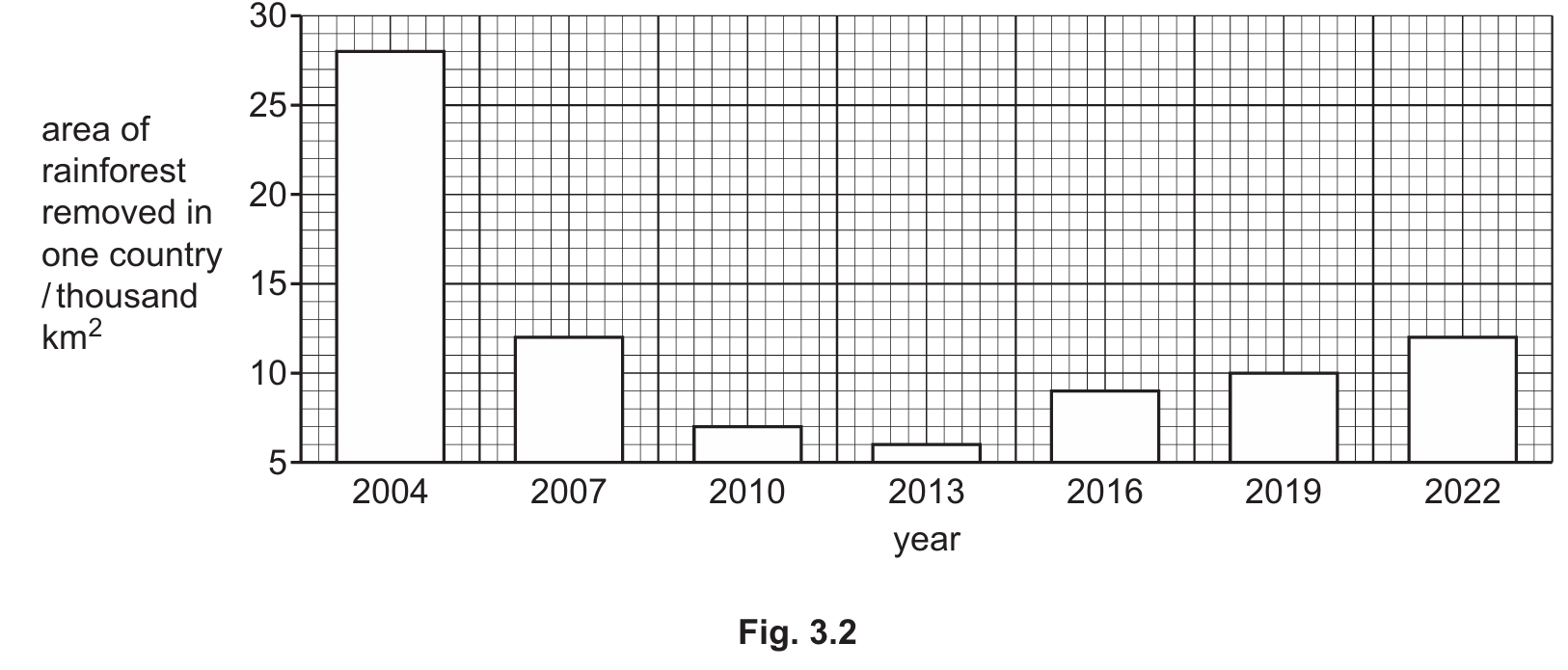
The data shows an overall decrease in the area of rainforest removed from $2004$ to $2022$. The removal peaked in $2004$ at approximately $28,000 \text{ km}^2$. There was a sharp decline until $2013$, reaching a minimum of about $6,000 \text{ km}^2$, followed by a steady increase back to $12,000 \text{ km}^2$ by $2022$.
(d) (i) Meaning of biodiversity:
Biodiversity refers to the number of different species present within a specific habitat or geographical area.
(d) (ii) Undesirable effects of deforestation:
Aside from biodiversity loss, deforestation leads to soil erosion (loss of fertile topsoil), increased risk of flooding due to reduced water uptake by roots, and an increase in atmospheric $CO_2$ levels, which accelerates the enhanced greenhouse effect and global warming.
In Part (a), the pathogen causes morphological changes. In biology, structure governs function; when the leaf curls and blisters, the palisade mesophyll cells (primary site of photosynthesis) are disrupted, and the stomatal distribution is altered, explaining why photosynthesis and transpiration fail.
For Part (c), analyzing the graph requires identifying the trend (decrease then increase), quoting extremes (max in $2004$, min in $2013$), and noting the rate of change (the initial drop was much steeper than the subsequent rise).
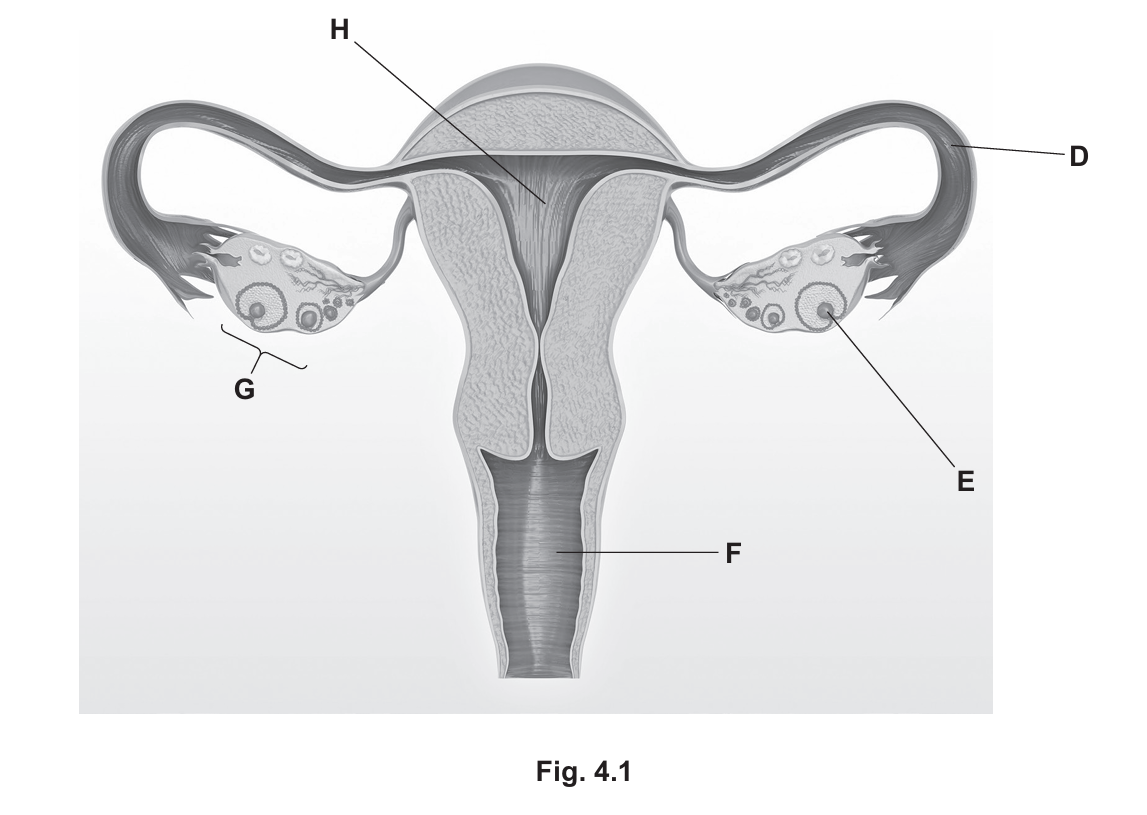
▶️ Answer/Explanation
(a)(i) Identification of parts:
• The vagina: F
• An oviduct: D
• An egg cell: E
Explanation: Looking at the diagram, D points to the fallopian tube (oviduct) connecting the ovary to the uterus. E points specifically to the ovum (egg) developing inside a follicle within the ovary. F points to the muscular canal (vagina) leading to the uterus. (For reference: G is the ovary, H is the uterus lining/endometrium).
(a)(ii) Site of fertilisation:
The letter X should be drawn with a label line ending in or on the oviduct (part D).
Explanation: Fertilisation, the fusion of the male and female gametes, normally takes place in the oviducts (fallopian tubes) shortly after ovulation, before the egg reaches the uterus.
(a)(iii) Hormone production:
• Organ: Ovary
• Function: Development of secondary sexual characteristics (e.g., breast development, widening of hips) OR regulation of the menstrual cycle OR repair/thickening of the uterus lining.
Explanation: The ovaries (G) are the primary female reproductive organs. They produce hormones such as oestrogen and progesterone. Oestrogen is responsible for the development of secondary sexual characteristics during puberty and repairing the uterus lining.
(b) Endocrine system fill-in-the-blanks:
The endocrine system contains organs called glands. These organs produce hormones.
Some hormones help to maintain a constant internal environment. This is called homeostasis.
The pancreas produces a hormone called insulin that helps to control blood glucose concentration.
Explanation:
- Glands: Endocrine glands secrete hormones directly into the bloodstream.
- Homeostasis: This is the maintenance of a stable internal environment (like temperature, water levels, and pH) despite external changes.
- Insulin & Glucose: The pancreas detects high blood glucose levels (e.g., after a meal) and secretes insulin. Insulin signals cells (liver and muscle) to absorb glucose, thereby lowering blood glucose levels to a normal range.
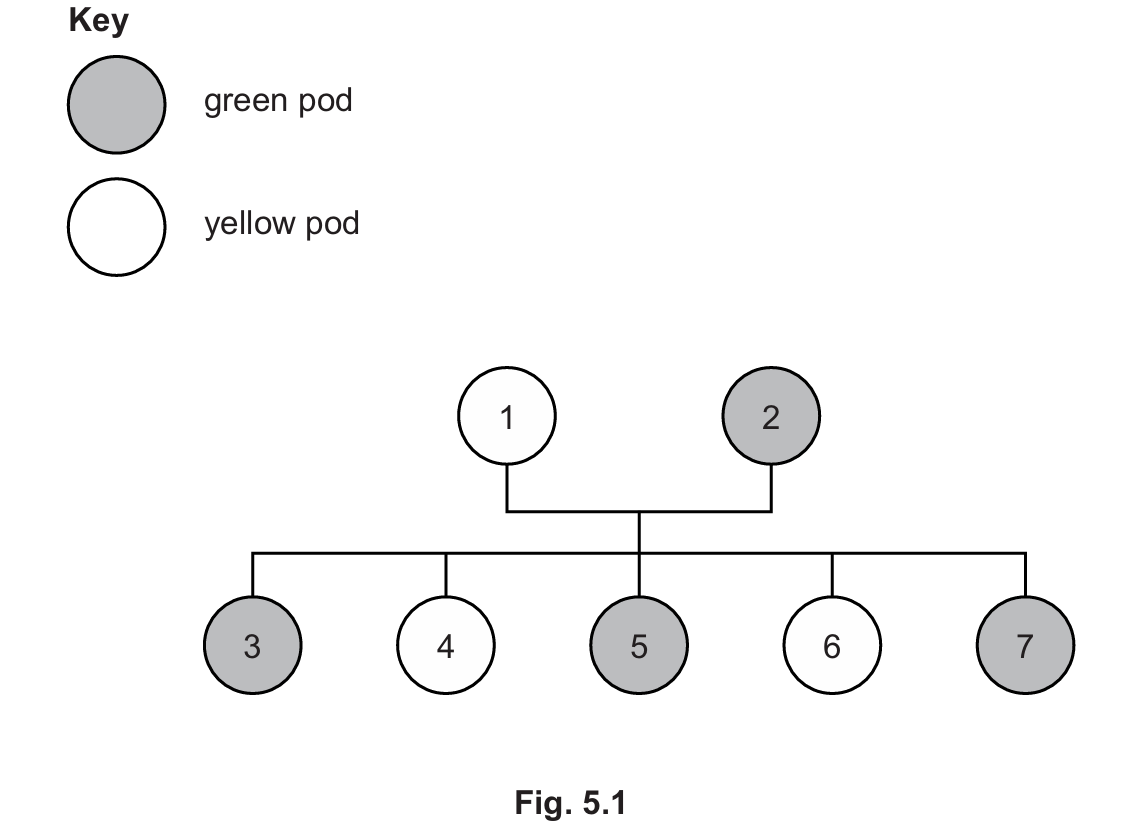

▶️ Answer/Explanation
(a) An allele is an alternative form of a gene.
(b) Individual 1: $gg$ / homozygous recessive.
[cite_start]Explanation: The individual has the recessive phenotype (yellow pods), which is only expressed when no dominant allele is present.
Individual 2: $Gg$ / heterozygous.
Explanation: The individual has the dominant phenotype (green) but produced offspring with the recessive phenotype (yellow). This means they must possess one dominant allele ($G$) and one recessive allele ($g$) to pass on to the yellow offspring.
(c) Punnett Square:
Gametes: $G$ and $g$ for both parents.
Offspring Genotypes: $GG$, $Gg$, $Gg$, $gg$.
Phenotypic ratio: 3 green pods : 1 yellow pod.
Part (a): Defining Alleles
Genes determine specific traits (like pod colour), but these genes can exist in different versions. These versions are called alleles. For example, the gene for pod colour has a “green” version (allele) and a “yellow” version (allele).
Part (b): Interpreting the Pedigree
Pedigree diagrams show how traits are passed down through generations.
- Individual 1 (Yellow): The key indicates yellow is the recessive trait ($g$). A recessive trait is only expressed in the phenotype if the genotype is homozygous recessive ($gg$). Therefore, Individual 1 must be $gg$.
- Individual 2 (Green): This individual is green, so they must have at least one dominant allele ($G$). However, they are the parent of individuals 4 and 6, who are yellow ($gg$). For a child to be $gg$, they must inherit one $g$ from the mother and one $g$ from the father. [cite_start]Since Individual 2 passed a $g$ to the offspring, their genotype must be heterozygous ($Gg$).
Part (c): Monohybrid Cross
We are crossing two heterozygous plants ($Gg \times Gg$).We use a Punnett square to predict the offspring.
| $G$ | $g$ | |
| $G$ | $GG$ (Green) | $Gg$ (Green) |
| $g$ | $Gg$ (Green) | $gg$ (Yellow) |
There are 3 outcomes that result in a green phenotype ($GG, Gg, Gg$) and 1 outcome that results in a yellow phenotype ($gg$).
Ratio: 3 : 1.
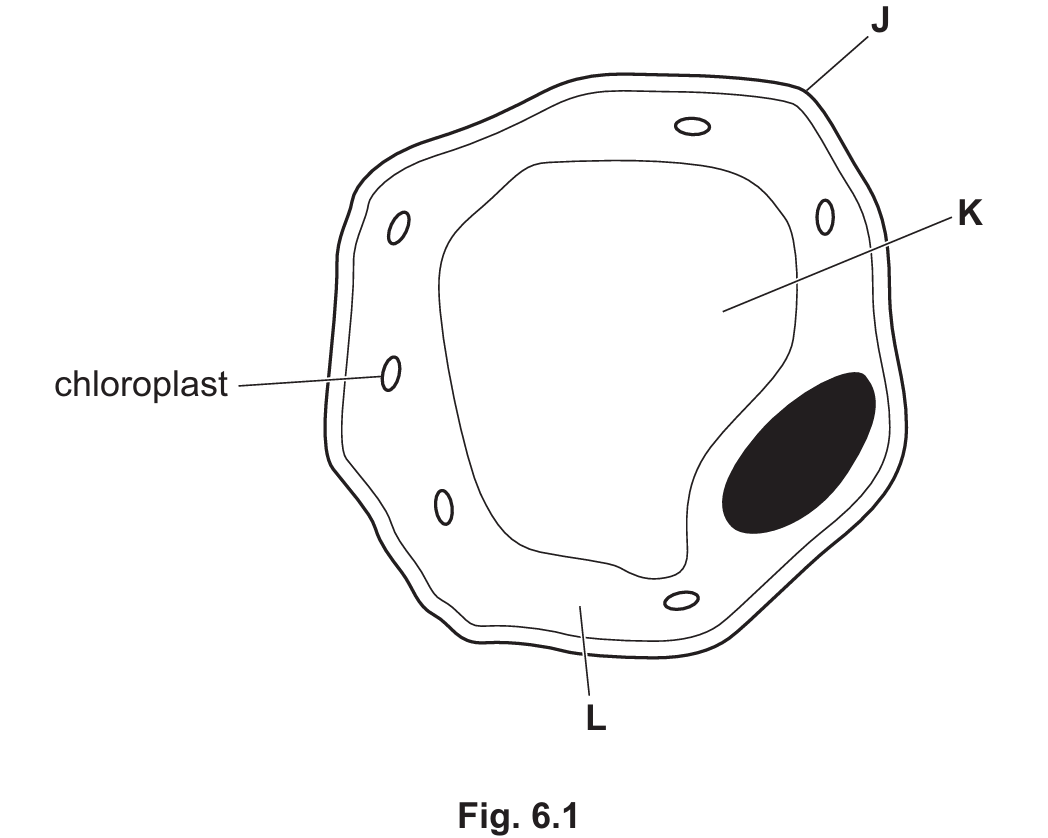
▶️ Answer/Explanation
(a)(i)
The organ is the leaf.
(a)(ii)
J: Cell wall (the rigid outer layer)
K: Vacuole (the large central space containing cell sap)
L: Cytoplasm (the jelly-like substance filling the cell)
(a)(iii)
The nucleus controls the activities of the cell (such as cell division and protein synthesis) and stores genetic information (DNA/chromosomes).
(a)(iv)
The letter M should be drawn anywhere within the cytoplasm (L), as mitochondria are organelles suspended in the cytoplasm.
(a)(v)
Mitochondria are the site of aerobic respiration, where energy is released from nutrient molecules for use by the cell.
(b)
Spongy mesophyll tissue is adapted for photosynthesis primarily through its structure which facilitates gas exchange:
- Air spaces: The cells are loosely packed with large intercellular air spaces. This allows gases (carbon dioxide and oxygen) to diffuse easily between the stomata and the photosynthesizing cells.
- Large surface area: The internal surface area provided by the moist cell walls is large, facilitating the dissolution and diffusion of gases.
- Chloroplasts: Although they contain fewer chloroplasts than palisade cells, spongy mesophyll cells still possess chloroplasts to absorb light energy for photosynthesis.
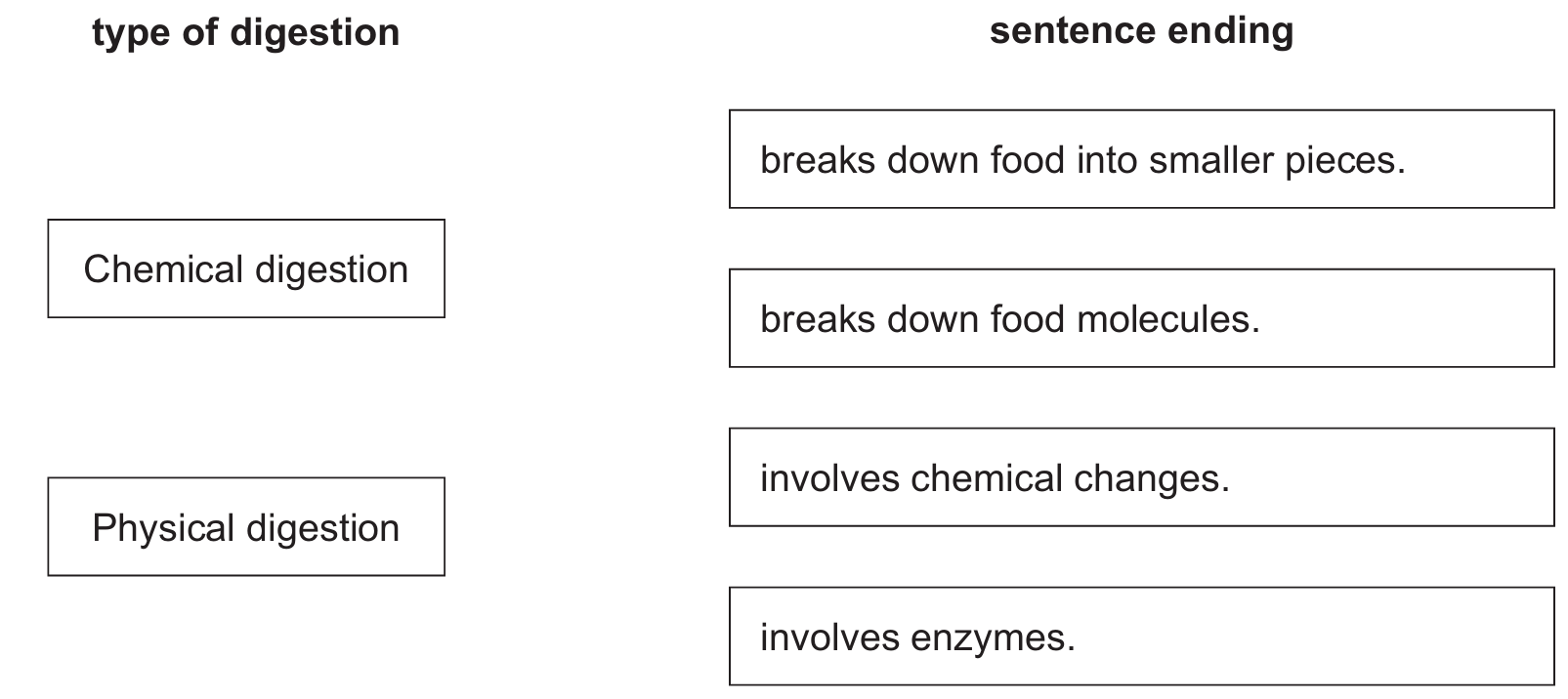
▶️ Answer/Explanation
(a) Matching Types of Digestion:
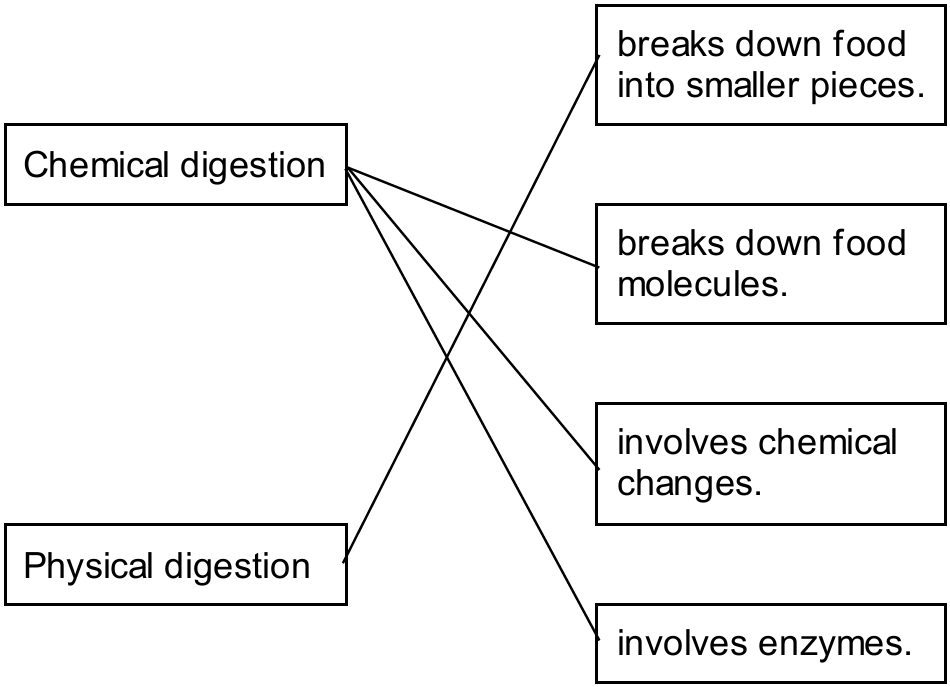
Explanation: Physical digestion (mechanical digestion) involves the breakdown of food into smaller pieces without changing the chemical structure, increasing the surface area for enzymes to work. Chemical digestion uses enzymes to break chemical bonds, turning large insoluble molecules into small soluble ones.
(b)
Anus
Explanation: Ingestion is the taking in of substances (food/drink) into the body through the mouth. Egestion is the passing out of food that has not been digested or absorbed (faeces) through the anus.
(c)(i) Structure Names:
Q: Enamel
R: Dentine
S: Gum
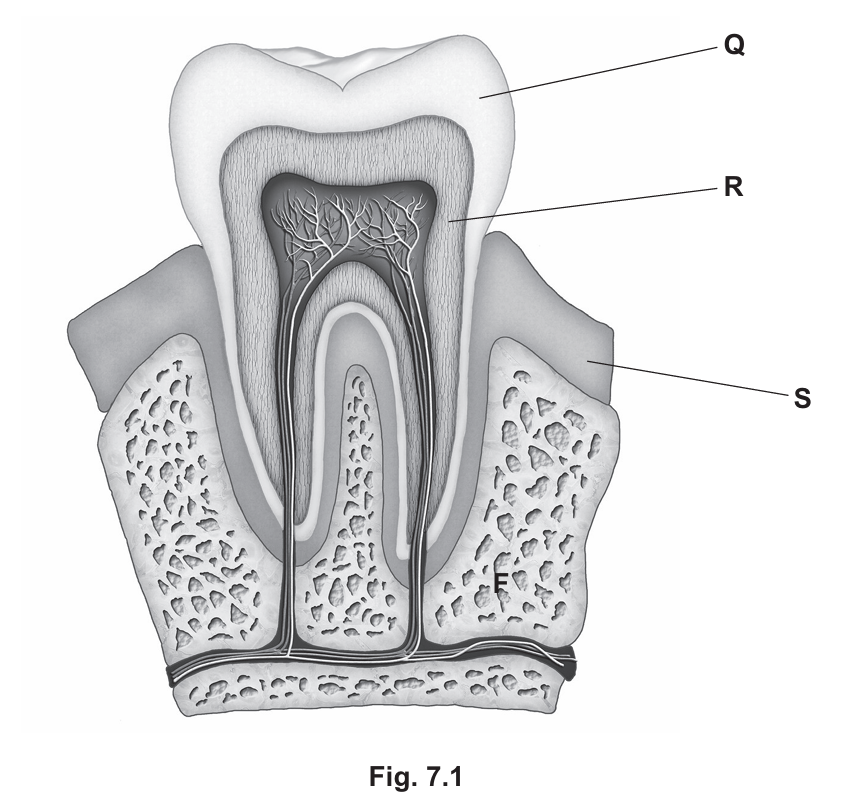
Explanation: The structure of human teeth includes enamel, dentine, pulp, nerves, blood vessels, and cement. Teeth are embedded in bone and the gums. Q is the outer layer (enamel), R is the layer beneath (dentine), and S surrounds the base (gum).
(c)(ii) Structures inside the pulp:
1. Nerves
2. Blood vessels
Explanation: The pulp contains nerves and blood vessels.
(c)(iii) Tooth Identity:
Type: Molar
Explanation: It has a flat top (or broad surface with cusps) and two/multiple roots.
Explanation: Molars are identified by their structure, which includes multiple roots and a surface adapted for crushing and grinding.