
▶️ Answer/Explanation
(a)
Physical digestion is the breakdown of food into smaller pieces without any chemical change to the food molecules. This process increases the surface area for enzymes to work on later.
(b)
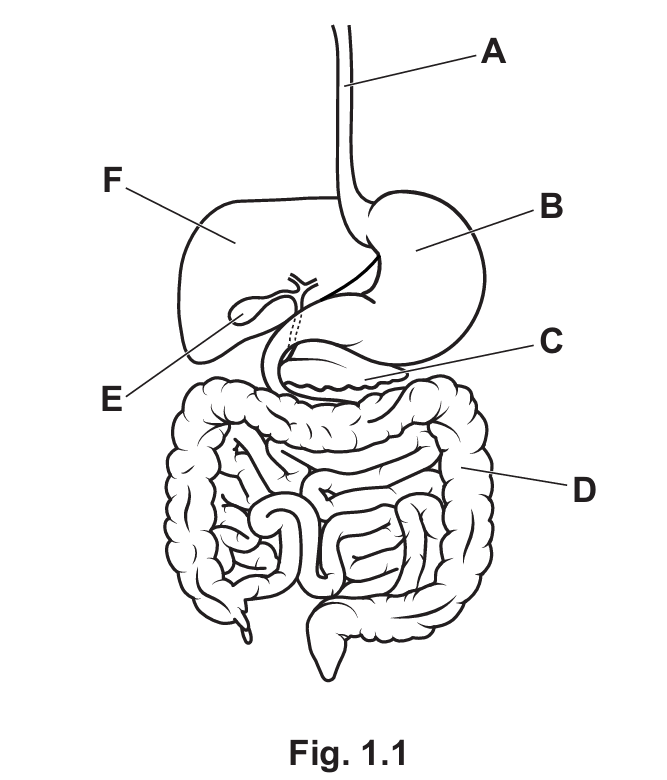
- Physical digestion occurs: B (The Stomach). The stomach walls churn the food, mechanically breaking it down.
- Glucagon is produced: C (The Pancreas). The pancreas is an endocrine gland that secretes glucagon and insulin to regulate blood sugar.
- Bile is produced: F (The Liver). Note that while bile is stored in the gall bladder (E), it is produced in the liver.
(c)
Bile plays a crucial role in physical digestion through emulsification. It breaks down large drops of fat into smaller droplets. This significantly increases the surface area of the fat, allowing the enzyme lipase to digest fats into fatty acids and glycerol more rapidly.
(d)
(Any two of the following pairs are acceptable):
- Incisors: Used for biting, cutting, or piercing food.
- Canines: Used for tearing, piercing, or holding food.
- Premolars: Used for grinding, chewing, or crushing food.
- Molars: Used for grinding, chewing, or crushing food.
(e)
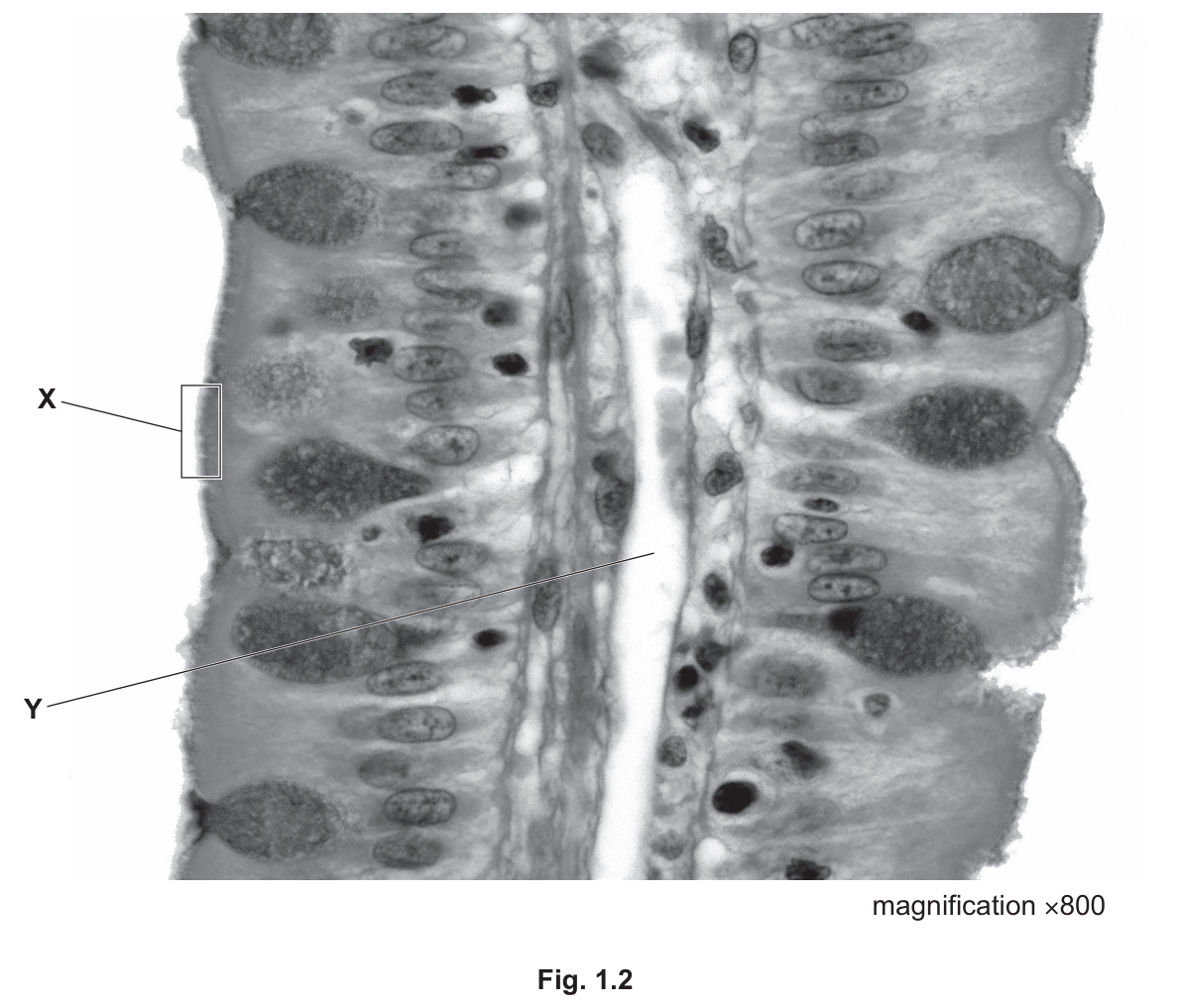
- Part X (Microvilli): These are tiny projections on the surface of the epithelial cells. Their role is to increase the surface area significantly to maximize the rate of absorption of nutrients into the blood. They also contain enzymes (like maltase) for the final stages of digestion.
- Part Y (Lacteal): This is a lymphatic vessel found in the center of the villus. Its function is the absorption of fatty acids and glycerol (the products of fat digestion), which eventually enter the bloodstream via the lymphatic system.
▶️ Answer/Explanation
(a)(i)
Any two of the following features:
- They are multicellular.
- They are producers / contain chloroplasts (or chlorophyll) / carry out photosynthesis.
- They have a cell wall made of cellulose.
- They are non-motile (do not move from place to place).
(a)(ii)
Any two of the following kingdoms:
- Animal
- Fungi
- Protoctist
- Prokaryote
(b)
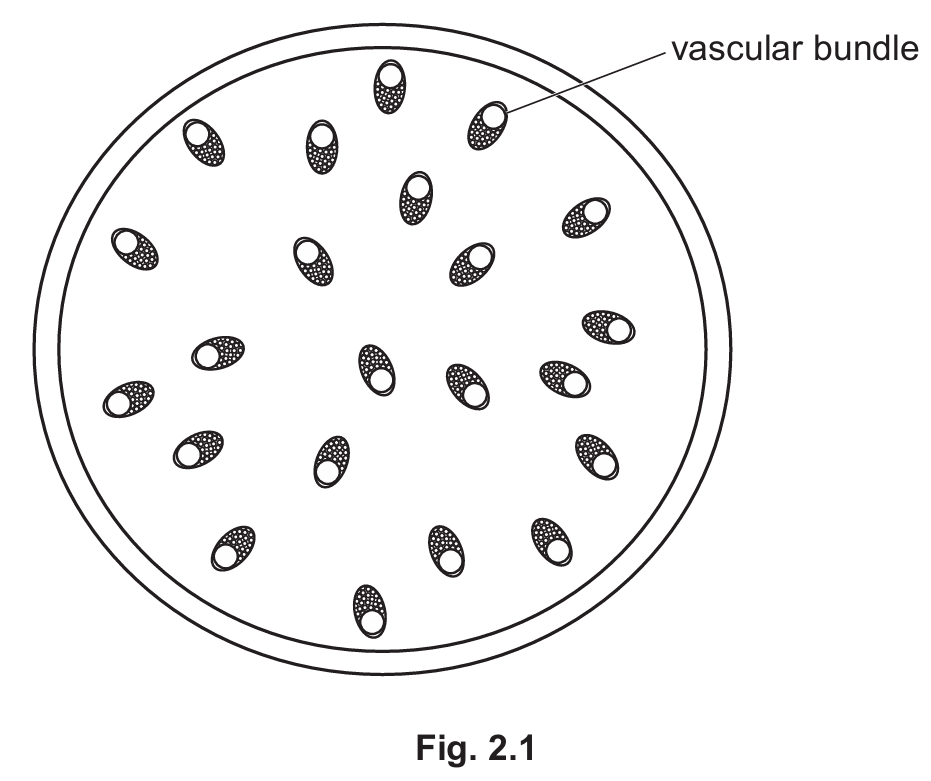
In a dicotyledonous stem, the vascular bundles are arranged in a ring (whereas they are scattered in the monocot).
(c)
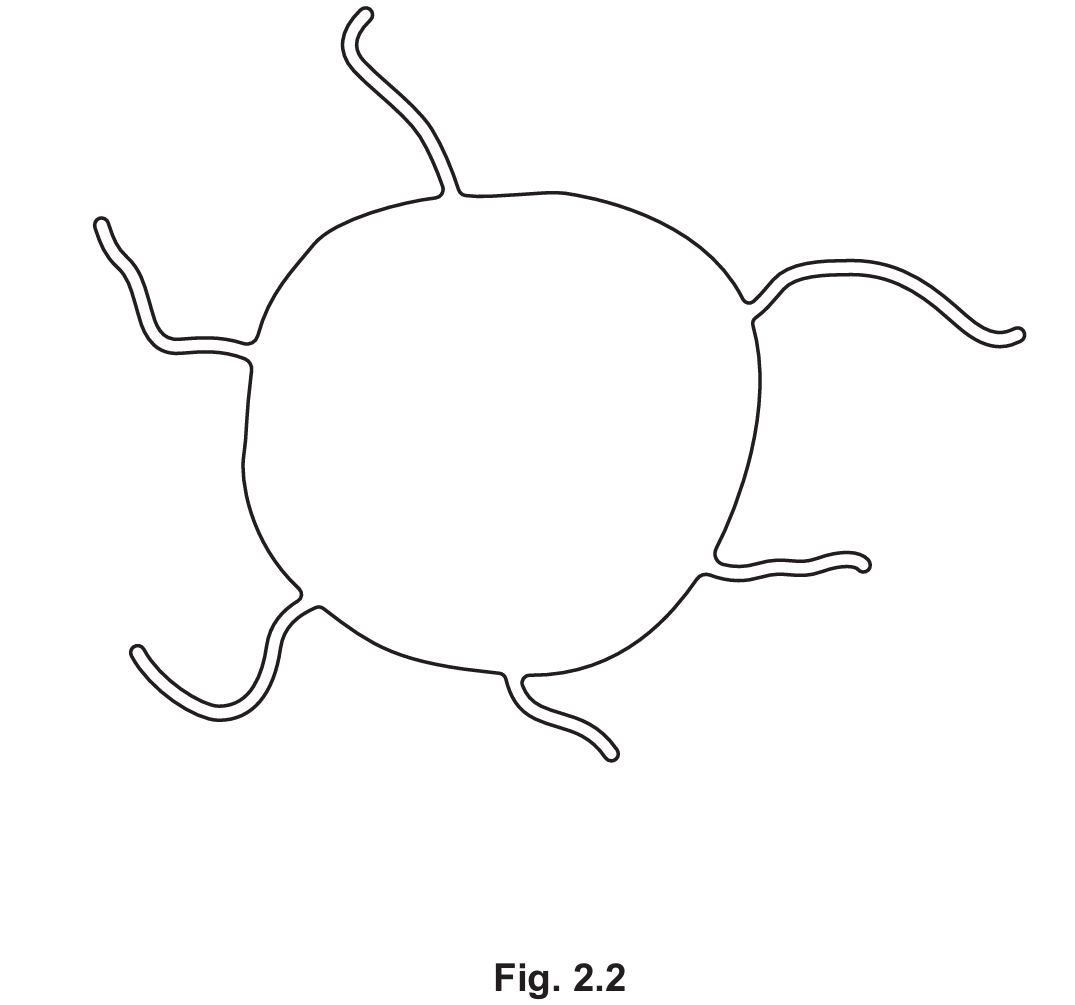
To complete the diagram of the dicot root:
- Root hair: A label pointing to one of the extensions of the epidermal cells.
- Xylem: Drawn in the center, typically in a star or cross shape.
- Phloem: Drawn in the spaces between the arms of the xylem star.
(d)
Any two of the following functions:
- Transport of water.
- Transport of mineral ions (minerals).
- Physical support for the plant.
(e)
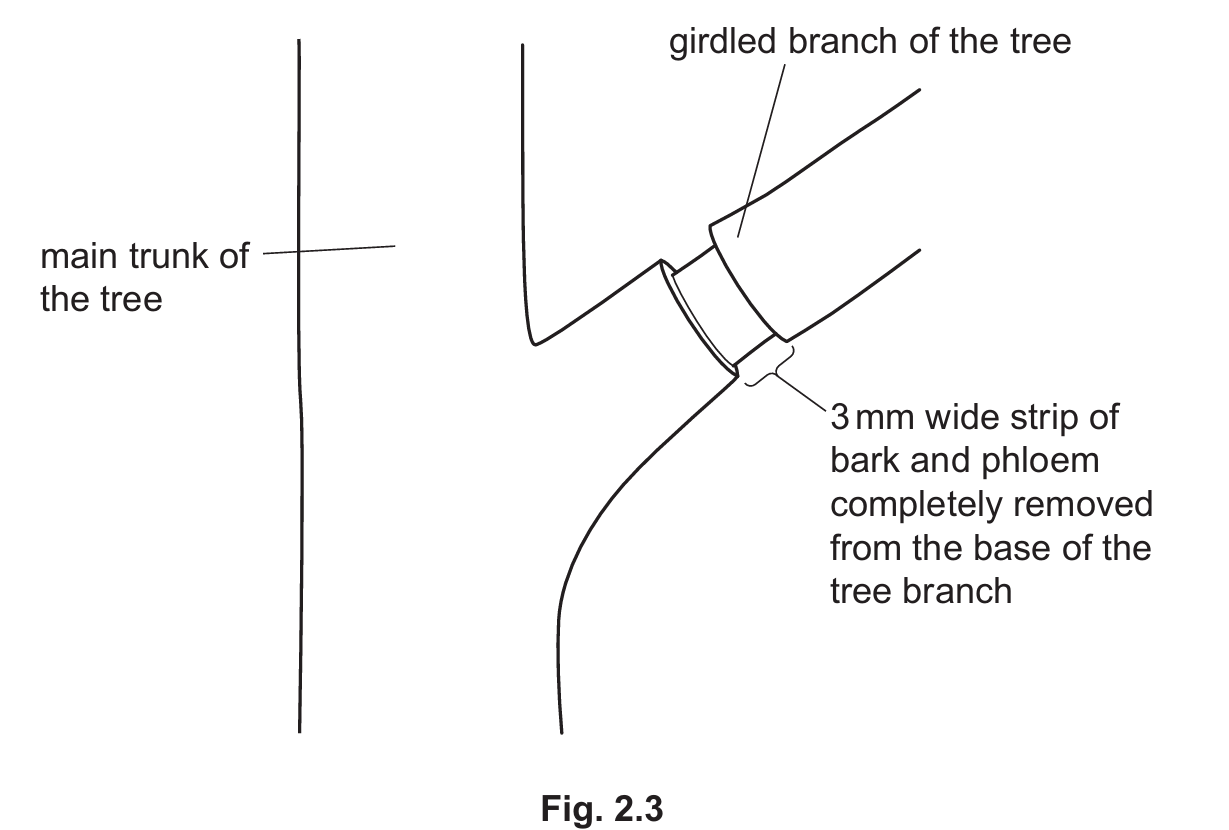
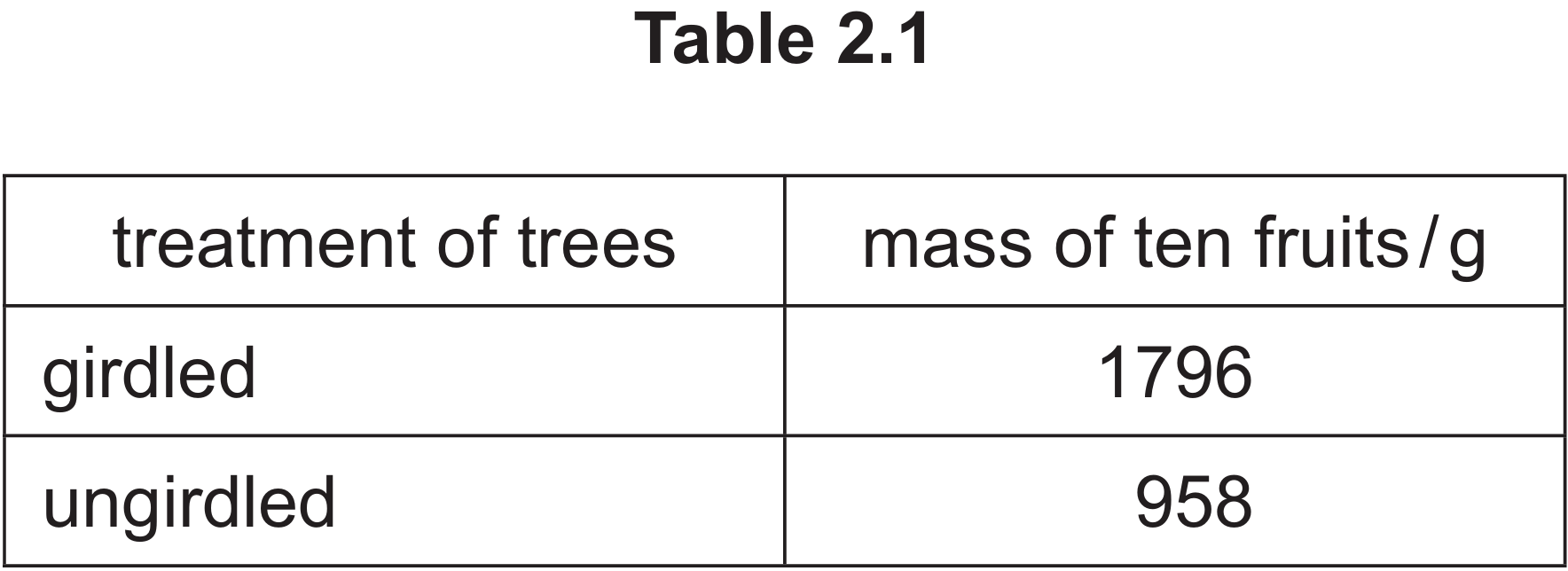
Description: The girdled trees produced a significantly greater mass of fruit ($1796$ g) compared to the ungirdled trees ($958$ g).
Explanation:
- The removal of the bark includes the removal of the phloem tissue.
- Phloem is responsible for translocation, the transport of sucrose (sugar) and amino acids.
- Sugars produced in the leaves (the source) via photosynthesis are usually transported downwards to the roots.
- Because of the girdle, these sugars cannot pass below the cut; they accumulate in the branch above the girdle.
- These excess sugars are then used for the growth of the fruit (the sink), leading to increased mass.
(f)
Pectinase.
Classification (Topic 1.3): All plants share specific features that distinguish them from other kingdoms. They are autotrophs (producers) that use sunlight to synthesize nutrients using chloroplasts, and their cells are structurally supported by cellulose cell walls. The other kingdoms of life include Animals, Fungi, Prokaryotes (bacteria), and Protoctists.
Plant Transport Anatomy (Topic 8.1): The arrangement of vascular tissue differs between monocots and dicots.
• Stems: Monocots have vascular bundles scattered throughout the stem (like chocolate chips in a cookie), while dicots have them arranged in a neat ring near the outside.
• Roots: In a dicot root, the vascular tissue is central to withstand pulling forces. The xylem forms a central “star” or “X” shape, and the phloem fills the pockets between the xylem arms.
Xylem Function (Topic 8.1): Xylem vessels are long, hollow tubes made of dead cells strengthened by lignin. Their primary roles are to conduct water and dissolved minerals from the roots to the leaves and to provide mechanical strength to keep the plant upright.
Translocation Experiment (Topic 8.4): The “girdling” or “ringing” experiment demonstrates the pathway of food transport. Phloem vessels are located in the inner bark, while xylem is deeper in the wood. Removing a ring of bark removes the phloem but leaves the xylem intact (so water still goes up). However, sugars made in the leaves cannot go down to the roots. They accumulate above the ring, forcing more resources into the fruit on that branch, making them larger.
Biotechnology (Topic 21.2): In fruit juice production, the enzyme pectinase is added to the crushed fruit. Pectin is a substance that holds plant cell walls together. Pectinase breaks this down, releasing more juice from the cells and making the juice clearer (less cloudy).
▶️ Answer/Explanation
(a)
A catalyst is a substance that increases the rate of a chemical reaction and is not changed (or used up) by the reaction.
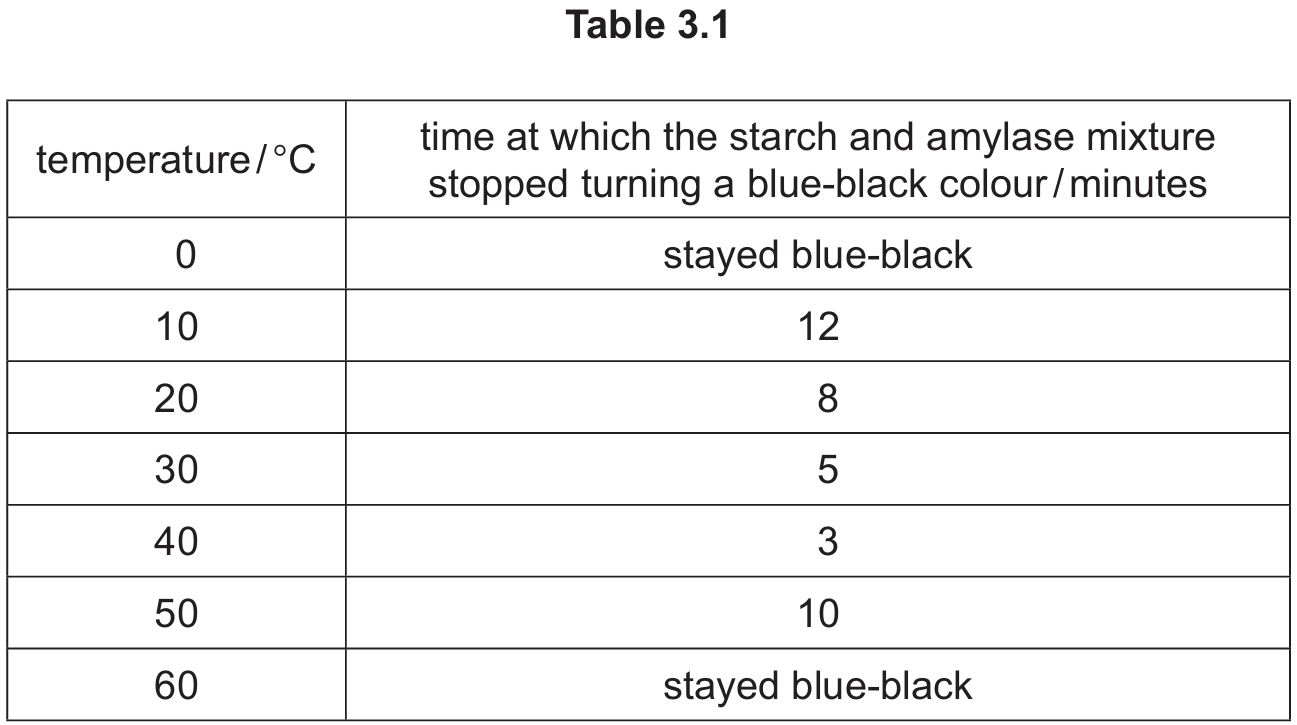
(b)(i) Explanation of results ($0^{\circ}\text{C}$ to $40^{\circ}\text{C}$):
The question requires explaining the trend where the time taken for starch to disappear decreases as temperature increases (indicating a faster reaction rate).
Key points include:
- Substrate identification: Amylase breaks down starch.
- Indicator role: Iodine solution turns blue-black in the presence of starch. If the color disappears, starch has been digested.
- Low Temperature ($0^{\circ}\text{C}$): At the start, there is the least starch breakdown (enzyme activity is low). This is because the particles (enzyme and substrate) have low kinetic energy, resulting in the fewest successful collisions and fewer enzyme-substrate complexes forming.
- Increasing Temperature: As temperature rises towards $40^{\circ}\text{C}$, the kinetic energy of the molecules increases. This causes the starch and amylase molecules to move faster and collide more frequently and successfully. Consequently, more enzyme-substrate complexes form per second, leading to a faster breakdown of starch.
- Optimum: The data shows that $40^{\circ}\text{C}$ is the optimum temperature (shortest time = fastest rate).
(b)(ii) protease investigation:
The samples remained blue-black because the starch was not broken down. This is due to enzyme specificity:
- Protease is an enzyme specific to proteins, not starch.
- The active site of protease has a specific shape that is complementary only to protein molecules.
- The shape of the starch molecule is not complementary to the active site of protease.
- Therefore, starch cannot bind to protease to form an enzyme-substrate complex, so no digestion occurs, and the iodine test remains positive.
(c)
Another factor affecting enzyme action is pH. (Other valid answers could include substrate concentration or enzyme concentration).
▶️ Answer/Explanation
(a)(i)
Grasshopper OR marmot.
(a)(ii)
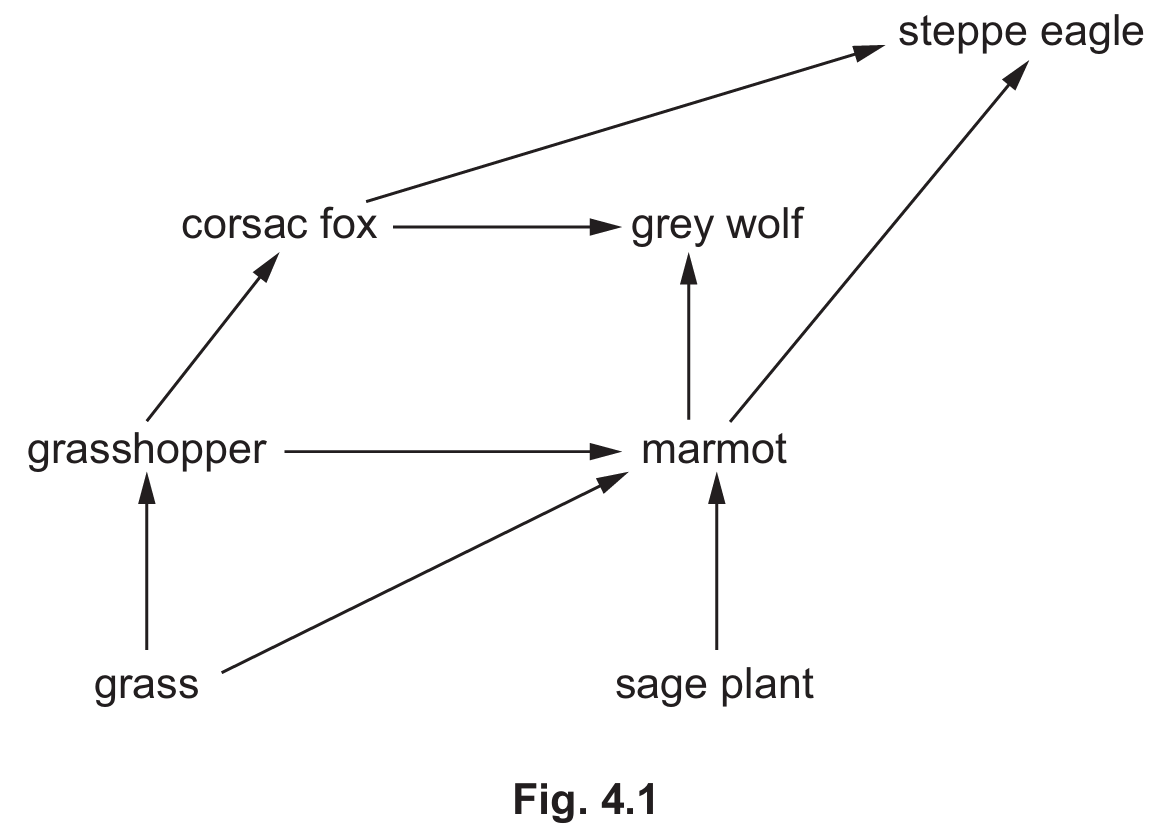
Grass $\rightarrow$ grasshopper $\rightarrow$ corsac fox $\rightarrow$ steppe eagle
OR
Grass $\rightarrow$ grasshopper $\rightarrow$ marmot $\rightarrow$ steppe eagle
(a)(iii)
Any two from:
• Energy is lost between each trophic level.
• Named example of energy loss (e.g., respiration, heat loss, movement, excretion/egestion, inedible parts).
• If less energy is available, then less biomass can be supported at the higher level.
(b)(i)
Any three from:
• Little genetic variation (small gene pool).
• Increased risk of genetic/inherited disease.
• Inbreeding (breeding between closely related individuals).
• Decreased heterozygosity / greater chance of being homozygous recessive.
• Less likely to adapt to changes in the environment.
• Increased susceptibility to transmissible disease.
(b)(ii)
Any four from:
• Protection of habitat (reserves/parks).
• Legislation protecting species / banning hunting (poaching).
• Monitoring / tracking populations.
• Education / awareness campaigns for local people.
• Provision of food / nutrients / veterinary care.
• Removal of predators.
• Removal of invasive species.
(c)
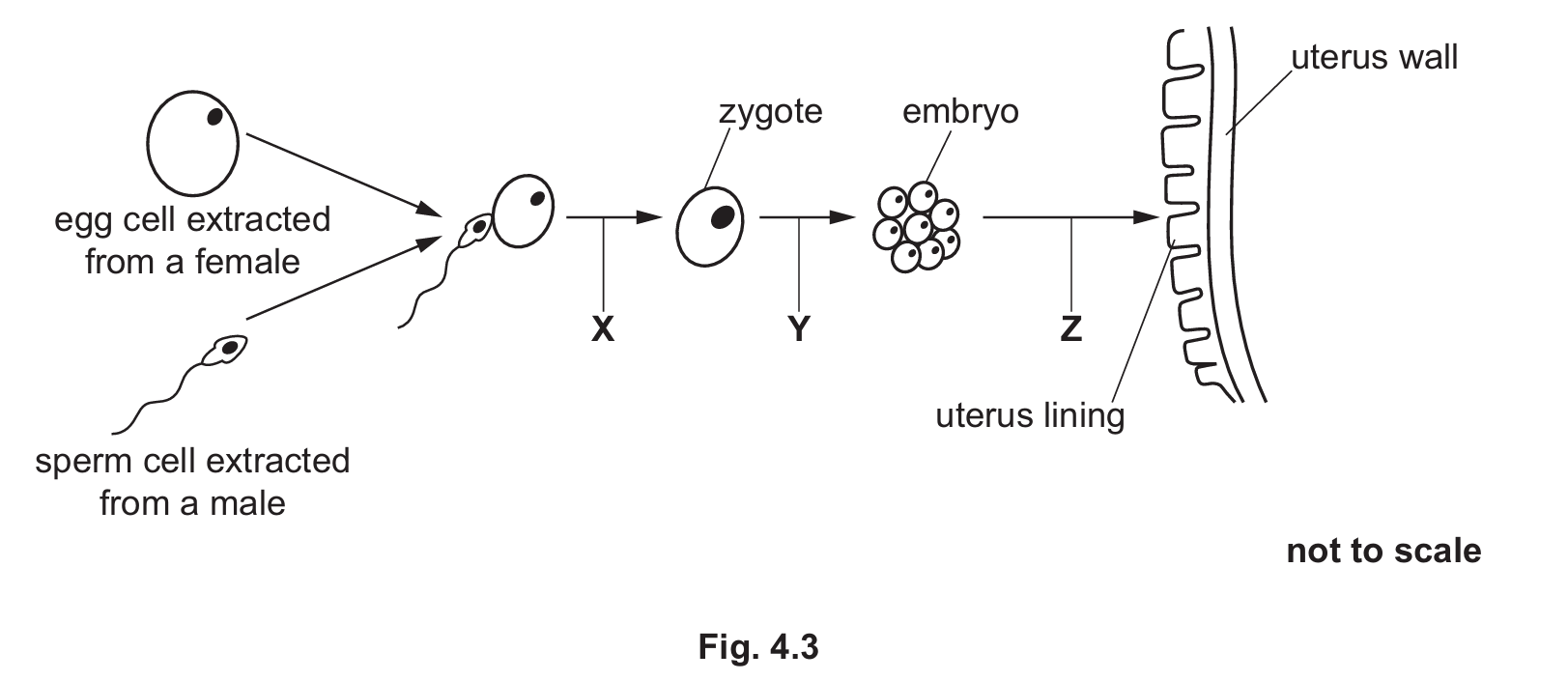
X: Fertilisation
Y: Mitosis / Cell division
Z: Implantation
Explanation:
Part (a): Food Webs and Energy Flow
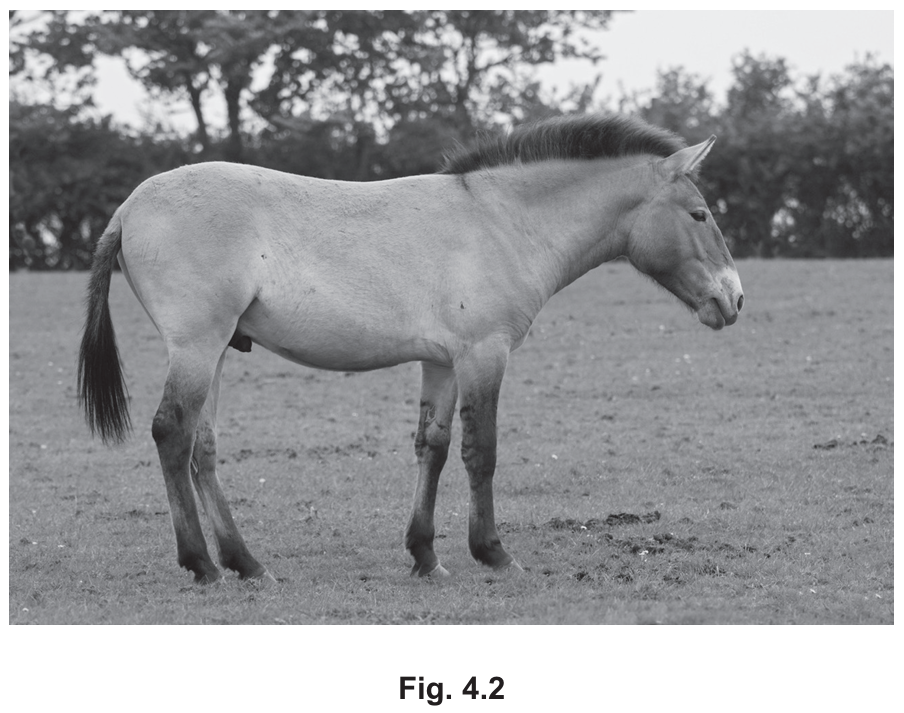
Primary consumers are herbivores that feed directly on producers. In Fig. 4.1, the arrows originate from the grass and sage plant (producers) and point to the grasshopper and marmot. To construct a four-level food chain ending in the steppe eagle, we follow the arrows: Grass (1) is eaten by the grasshopper (2), which is eaten by the corsac fox (3), which is finally eaten by the steppe eagle (4). Populations decrease up trophic levels because energy transfer is inefficient (approx. 10% is passed on). Energy is lost as heat from respiration, movement, and waste, meaning there is insufficient energy to support a large population of predators.
Part (b): Conservation and Genetics
Starting a breeding programme with only 12 individuals creates a “bottleneck,” resulting in very low genetic diversity. This forces inbreeding, increasing the likelihood that harmful recessive alleles will pair up (homozygous recessive), causing genetic diseases. A lack of variation also reduces the population’s ability to adapt to new threats, such as a new pathogen or climate change. To maintain the population in the wild, active management is required, such as legal protection against poachers, monitoring their health and numbers, and ensuring their habitat remains intact.
Part (c): IVF and Development
The diagram illustrates the early stages of development often used in assisted reproduction.
• Process X shows a sperm cell fusing with an egg cell, which is the definition of fertilisation.
• Process Y shows the single-celled zygote dividing into a ball of cells (embryo) without growing in size; this type of cell division is mitosis.
• Process Z shows the embryo embedding itself into the lining of the uterus (endometrium), known as implantation.
▶️ Answer/Explanation
(a) Advantages of intensive livestock production:
Intensive farming is highly efficient because it requires less land compared to extensive farming, which can help reduce deforestation as fewer trees need to be cut down for pasture. This method provides a higher yield and more consistent quality of products (like meat or milk), leading to increased food security and higher profits for the farmer.
(b) Need for antibiotics:
Because animals are kept in close proximity or overcrowded conditions, diseases can spread very rapidly. Antibiotics are used to treat or prevent the spread of these bacterial infections to maintain a healthy herd.
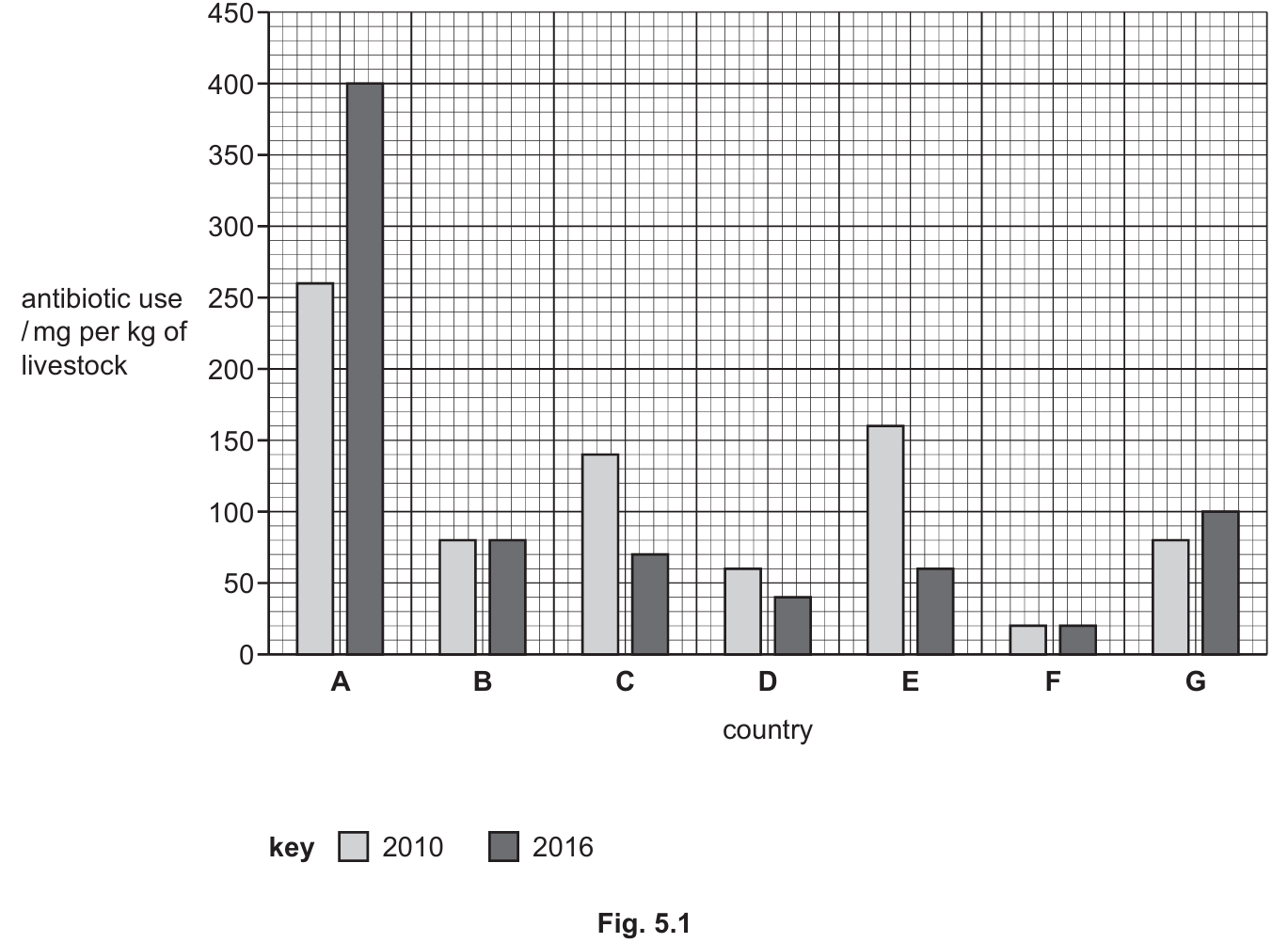
(c)(i) Countries below the limit ($50\text{ mg/kg}$):
Looking at the dark grey bars (2016) in Fig. 5.1, the countries below the $50$ line are D and F.
(c)(ii) Percentage Increase Calculation:
• Value in 2010 (Country A): $260\text{ mg/kg}$
• Value in 2016 (Country A): $400\text{ mg/kg}$
• Increase: $400 – 260 = 140$
• Percentage Increase: $\frac{140}{260} \times 100 \approx 53.846\%$
• To two significant figures, the answer is $54\%$.
(c)(iii) Development of antibiotic resistance:
This is a process of natural selection. It begins when a random mutation occurs in the DNA of a bacterium, giving it resistance to an antibiotic. When the antibiotic is applied, it kills the non-resistant bacteria, while the resistant bacteria survive. These survivors then reproduce and pass on the alleles for resistance to their offspring. Over time, the frequency of the resistant allele increases in the population, making the antibiotic ineffective.
▶️ Answer/Explanation
(a)
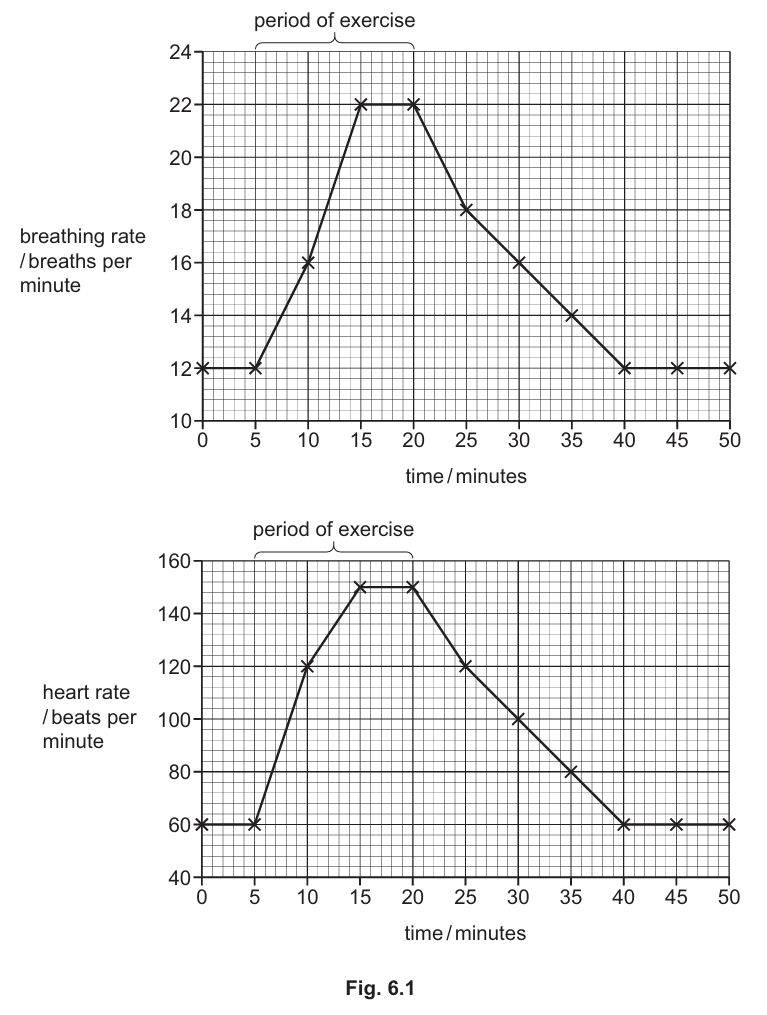
After exercise, it takes 20 minutes for the athlete’s breathing rate to return to its resting rate.
The heart rate decreases by 90 beats per minute between 20 and 40 minutes.
The heart rate and breathing rate do not immediately return to their resting rates because anaerobic respiration has occurred.
Lactic acid has built up in muscles / blood causing an oxygen debt.
The heart rate remains high to transport lactic acid to the liver.
The breathing rate remains high to supply oxygen for the aerobic respiration of lactic acid.
Explanation for (a):
- Graph Analysis: The graphs show the “period of exercise” ending at minute $20$. Looking at the top graph, the breathing rate returns to the baseline level ($12$ breaths/min) at minute $40$. The time taken is $40 – 20 = 20$ minutes. For the heart rate, the value at minute $20$ is $150$ bpm, and at minute $40$, it is $60$ bpm. The decrease is $150 – 60 = 90$ bpm.
- Biological Context (Oxygen Debt): During vigorous exercise, the body respires anaerobically, producing lactic acid which accumulates in the muscles and blood. This creates an “oxygen debt.” To remove this toxic lactic acid, it must be transported to the liver. There, it is broken down, a process that requires oxygen (specifically, the aerobic respiration of lactic acid). This is why heart rate (for transport) and breathing rate (for oxygen supply) remain elevated after exercise stops.
(b)(i) liver
Explanation: Excess amino acids are broken down in the liver via a process called deamination to produce urea.
(b)(ii) kidney
Explanation: The kidneys filter the blood to remove urea, which is then excreted from the body in urine.
(c) $C_{6}H_{12}O_{6} \rightarrow 2C_{2}H_{5}OH + 2CO_{2}$
Explanation: This is the balanced chemical equation for anaerobic respiration in yeast (fermentation). Glucose ($C_{6}H_{12}O_{6}$) is broken down into ethanol ($C_{2}H_{5}OH$) and carbon dioxide ($CO_{2}$) without the use of oxygen.
(d) bread (or alcohol / wine / beer)
Explanation: In bread making, the carbon dioxide produced by yeast during anaerobic respiration gets trapped in the dough, causing it to rise.