
Question 1
ammonia
argon
bromine
carbon dioxide
fluorine
iron
magnesium
magnesium chloride
nitrogen
oxygen
potassium
Most-appropriate topic codes (Cambridge IGCSE Chemistry 0620):
• Topic 8.2 — Group I properties (Parts (a), (c))
• Topic 9.6 — Extraction of metals (Part (b))
• Topic 10.3 — Air quality and climate (Part (d))
• Topic 12.5 — Identification of ions and gases (Part (e))
• Topic 8.3 — Group VII properties (Part (f))
• Topic 9.2 — Uses of metals (Part (g))
• Topic 8.4 — Transition elements (Part (h))
▶️ Answer/Explanation
(a) potassium
Explanation: Potassium is a Group I alkali metal. It has one electron in its outer shell, which it readily loses to form a \(\text{K}^{+}\) ion with a \(1+\) charge. This is characteristic of all Group I elements.
(b) iron
Explanation: Iron is extracted from its ore, hematite (\(\text{Fe}_2\text{O}_3\)), in the blast furnace using carbon (coke) as the reducing agent. The blast furnace operates at high temperatures to reduce iron(III) oxide to molten iron.
(c) potassium
Explanation: Potassium is a Group I metal that is softer and more reactive than sodium. Reactivity increases down Group I because the outer electron is further from the nucleus and more easily lost. Therefore potassium, being below sodium in Group I, is more reactive.
(d) nitrogen
Explanation: Clean, dry air has the approximate composition: \(78\%\) nitrogen (\(\text{N}_2\)), \(21\%\) oxygen (\(\text{O}_2\)), and the remainder being noble gases (mainly argon) and carbon dioxide.
(e) ammonia
Explanation: Ammonia gas (\(\text{NH}_3\)) is the only common alkaline gas. When it comes into contact with damp red litmus paper, it dissolves slightly in the moisture and produces hydroxide ions, turning the litmus paper blue.
(f) bromine
Explanation: Among the given substances, only bromine exists as a liquid at room temperature and pressure (r.t.p.). It is a red-brown liquid. Mercury is another liquid element at r.t.p., but it is not in the given list.
(g) aluminium
Explanation: Aluminium is used in food containers (such as foil and cans) because of its excellent resistance to corrosion. This is due to the formation of a thin, protective layer of aluminium oxide (\(\text{Al}_2\text{O}_3\)) on its surface when exposed to air, which prevents further reaction.
(h) iron
Explanation: Transition elements are metals that have high densities, high melting points, form coloured compounds, and often act as catalysts. Iron is a classic transition element, forming coloured compounds such as iron(II) salts (pale green) and iron(III) salts (yellow/brown), and acting as a catalyst in the Haber process.
Question 2
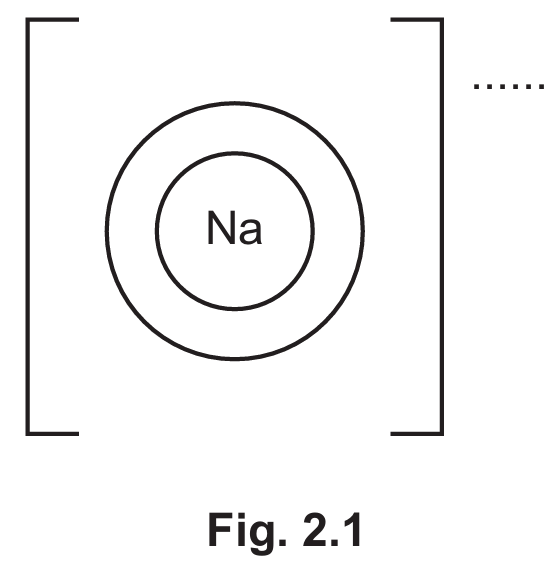
- the electronic configuration of a sodium ion
- the charge on the ion.
Most-appropriate topic codes (Cambridge IGCSE Chemistry 0620):
• Topic 3.2 — Relative masses of atoms and molecules (Part (a)(ii))
• Topic 7.3 — Preparation of salts / solubility rules (Part (a)(iii))
• Topic 12.5 — Identification of ions and gases (Part (b))
• Topic 2.2 — Atomic structure and electronic configuration (Part (c))
• Topic 1.1 — Solids, liquids and gases (Part (d))
• Topic 2.4 — Ions and ionic bonds (Part (e))
• Topic 10.1 — Water (Part (f))
▶️ Answer/Explanation
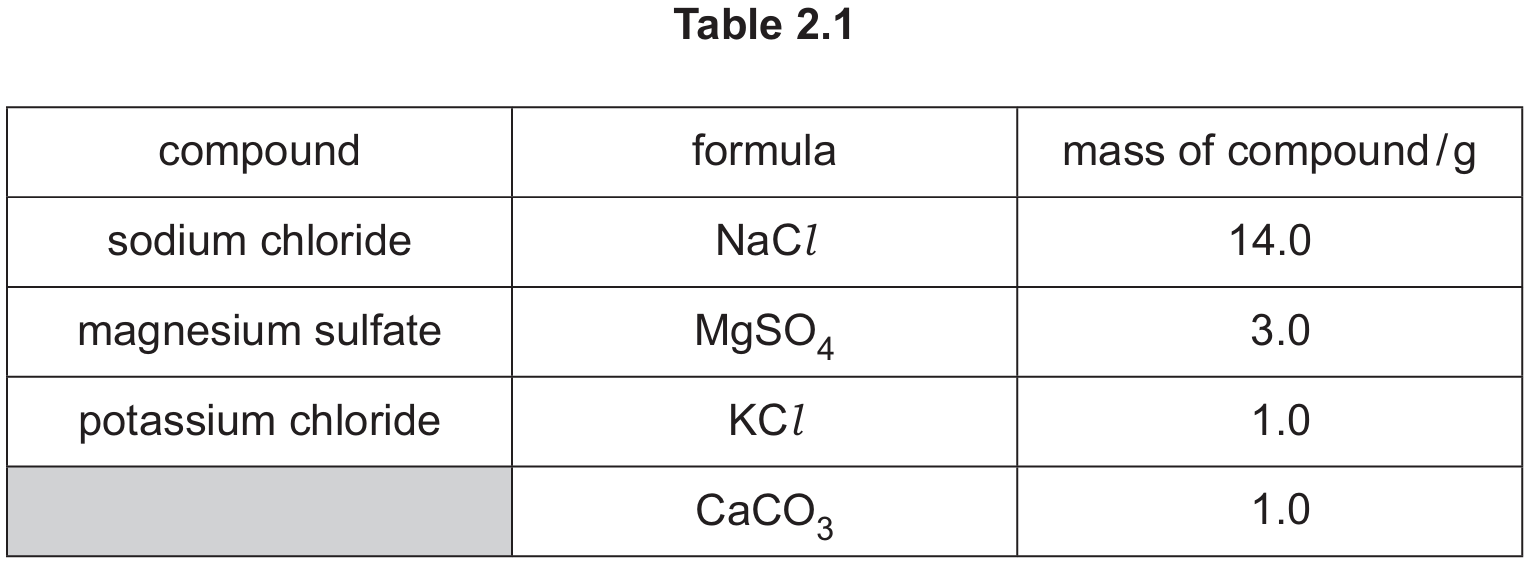
(a)(i) calcium carbonate
Explanation: \(\text{CaCO}_3\) consists of calcium ions (\(\text{Ca}^{2+}\)) and carbonate ions (\(\text{CO}_3^{2-}\)). The chemical name is therefore calcium carbonate. This compound is found in limestone, marble, and chalk, and is also present in sea shells.
(a)(ii) \(33.25 \, \text{g}\)
Explanation/Calculation:
Mass of compounds per \(\text{cm}^3\) of sea water = \(\dfrac{19.0}{1000} = 0.019 \, \text{g/cm}^3\)
Mass from \(1750 \, \text{cm}^3\) = \(0.019 \times 1750 = 33.25 \, \text{g}\)
Alternatively, using proportion: \(\dfrac{19.0 \times 1750}{1000} = 33.25 \, \text{g}\)
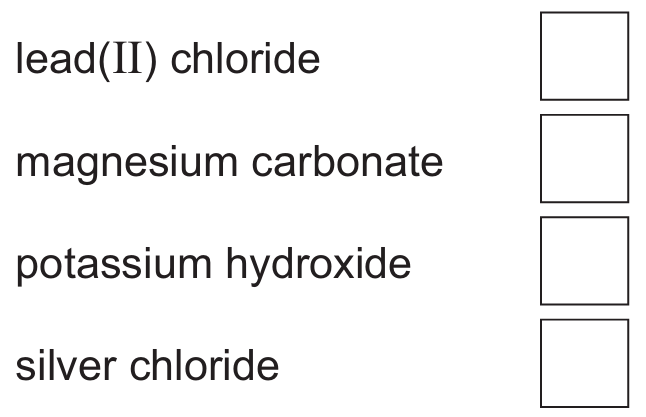
(a)(iii) Tick (\(\checkmark\)) either sodium chloride or potassium chloride.
Explanation: According to the solubility rules: all sodium, potassium, and ammonium salts are soluble; all nitrates are soluble; most chlorides are soluble (except lead and silver). Both sodium chloride and potassium chloride are soluble in water. However, calcium carbonate is insoluble (most carbonates are insoluble except those of sodium, potassium, and ammonium).
(b) Test: (add dilute nitric acid then) add aqueous silver nitrate.
Observations: white precipitate (of silver chloride) formed.
Explanation: The test for chloride ions involves acidifying the solution with dilute nitric acid (to remove any carbonate ions that might interfere) and then adding aqueous silver nitrate. Chloride ions react with silver ions to form a white precipitate of silver chloride (\(\text{Ag}^+ + \text{Cl}^- \rightarrow \text{AgCl}\)). The precipitate is insoluble in dilute nitric acid.
(c) Electronic configuration: \(2,8\) (with no other electron shells shown).
Charge on the ion: \(1+\) or \(+1\) (written outside the brackets).
Explanation: A sodium atom (\(\text{Na}\)) has electronic configuration \(2,8,1\). When it loses its one outer electron to form a sodium ion (\(\text{Na}^+\)), it achieves the stable electronic configuration of neon, \(2,8\). The ion has 11 protons but only 10 electrons, giving it an overall charge of \(1+\).
(d) Arrangement: irregular / no particular arrangement / random arrangement.
Motion: (particles) sliding over each other / moving past each other.
Explanation: In a liquid, particles are still close together (like in a solid) but they are arranged irregularly rather than in a fixed lattice. The particles have enough kinetic energy to overcome some of the attractive forces between them, allowing them to slide and move past one another. This gives liquids a fixed volume but no fixed shape.
(e) Any two from:
1. high melting point / high boiling point
2. conducts electricity when molten / conducts electricity when aqueous (dissolved in water)
3. does not conduct electricity when solid
Explanation: Ionic compounds have giant lattice structures with strong electrostatic attractions between oppositely charged ions. This requires a lot of energy to overcome, giving them high melting and boiling points. In the solid state, ions are fixed in position and cannot move, so ionic solids do not conduct electricity. However, when molten or dissolved in water, the ions are free to move and carry electric charge, allowing electrical conductivity.
(f) oxygen
Explanation: Dissolved oxygen in water is essential for the survival of aquatic organisms such as fish, which use it for respiration. Without sufficient dissolved oxygen, aquatic life cannot survive.
Question 3
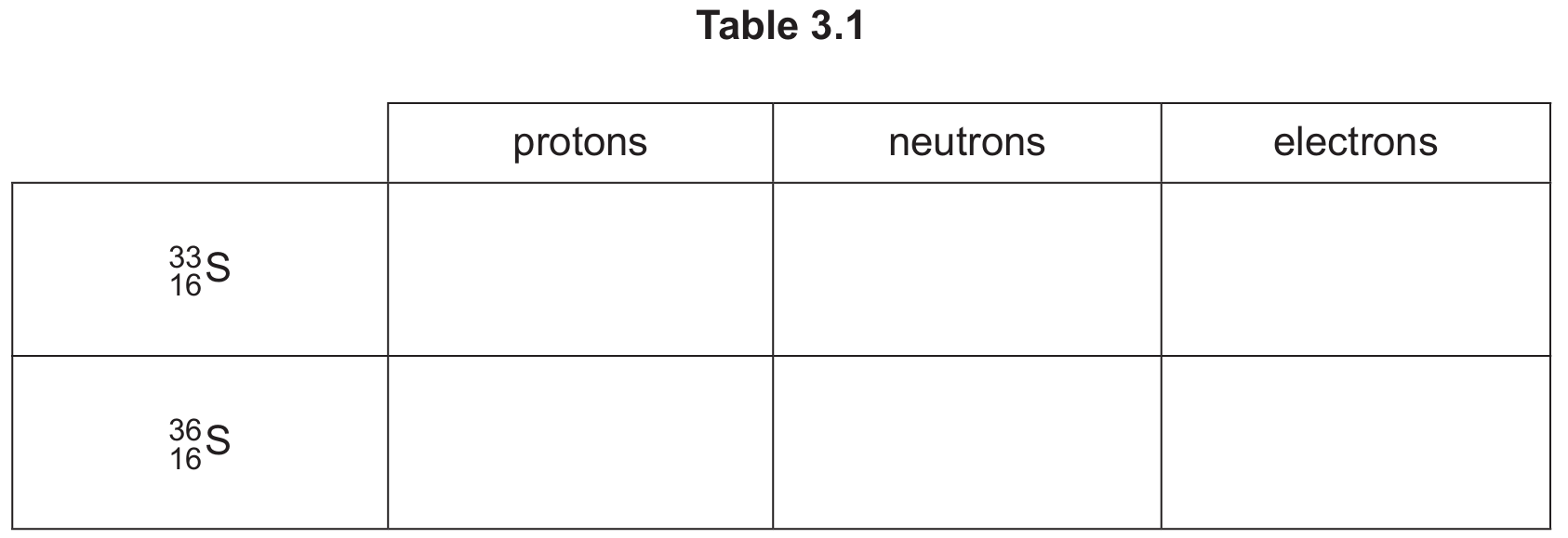
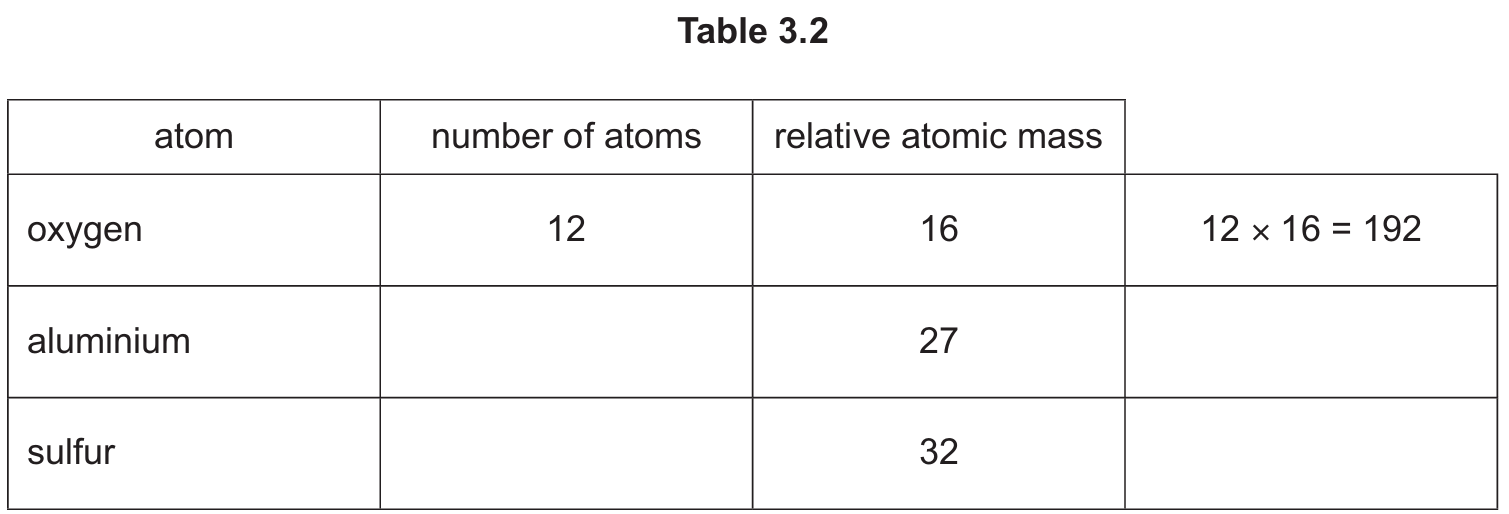
Most-appropriate topic codes (Cambridge IGCSE Chemistry 0620):
• Topic 2.2 — Atomic structure and the Periodic Table (Part (a)(i))
• Topic 2.3 — Isotopes (Part (a)(ii))
• Topic 10.3 — Air quality and climate (Parts (b)(i), (b)(ii))
• Topic 6.4 — Redox / balancing equations (Part (b)(iii))
• Topic 2.5 — Simple molecules and covalent bonds (Part (b)(iv))
• Topic 3.2 — Relative masses of atoms and molecules (Part (c))
▶️ Answer/Explanation
(a)(i) Sulfur has 6 electrons in its outer shell. (The group number for Groups I to VII equals the number of outer shell electrons.)
Explanation: In the Periodic Table, elements are arranged in groups based on the number of electrons in their outermost shell. Sulfur has electronic configuration \(2,8,6\), with 6 electrons in its outer shell, which places it in Group VI.
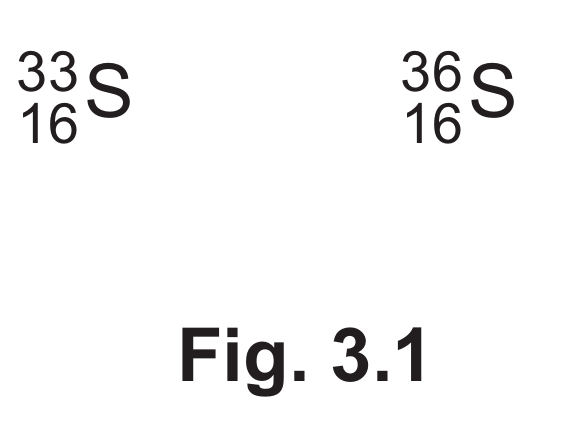
(a)(ii)
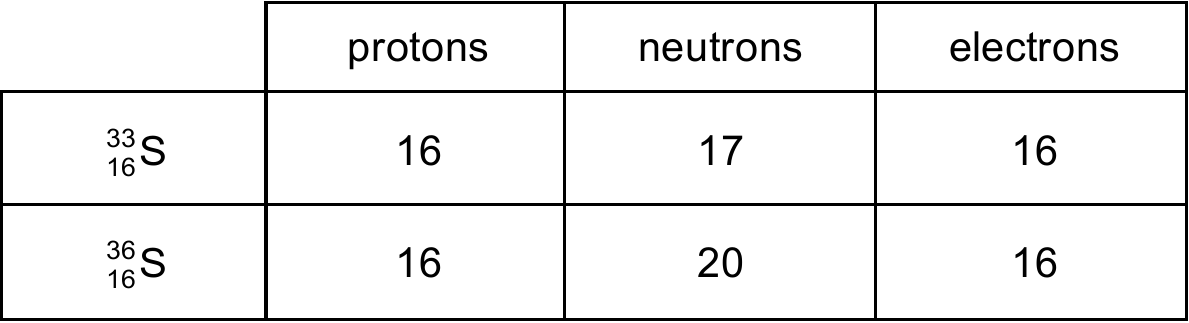
Explanation: The atomic number (subscript, 16) gives the number of protons. In a neutral atom, the number of electrons equals the number of protons (16). The mass number (superscript) is the sum of protons and neutrons. For \(\frac{33}{16}\text{S}\): neutrons = \(33 – 16 = 17\). For \(\frac{36}{16}\text{S}\): neutrons = \(36 – 16 = 20\).
(b)(i) Combustion / burning of fossil fuels (which contain sulfur compounds) / volcanic eruptions.
Explanation: Fossil fuels such as coal and petroleum often contain sulfur compounds as impurities. When these fuels undergo combustion, the sulfur is oxidised to sulfur dioxide (\(\text{SO}_2\)), which is released into the atmosphere.
(b)(ii) Acid rain.
Explanation: Sulfur dioxide reacts with water and oxygen in the atmosphere to form sulfuric acid (\(\text{H}_2\text{SO}_4\)), which falls as acid rain. This damages buildings (especially limestone), acidifies lakes and rivers (harming aquatic life), and damages forests and vegetation.
(b)(iii) \(3\,\text{S}\) and \(2\,\text{H}_2\text{O}\)
\[\text{SO}_2 + 2\text{H}_2\text{S} \rightarrow 3\text{S} + 2\text{H}_2\text{O}\]
Explanation: Balancing the equation:
Left side: 1 S (from \(\text{SO}_2\)), 2 S (from \(2\text{H}_2\text{S}\)) = 3 S atoms; 4 H atoms; 2 O atoms.
Right side must have: 3 S atoms, 4 H atoms (so \(2\text{H}_2\text{O}\)), 2 O atoms (from \(2\text{H}_2\text{O}\)). Equation balanced.
(b)(iv) covalent (bonding)
Explanation: Sulfur dioxide is a molecular compound where sulfur and oxygen are both non-metals. They share electrons to form covalent bonds, resulting in discrete \(\text{SO}_2\) molecules.
(c) Aluminium: \(2 \times 27 = 54\) (2 atoms); Sulfur: \(3 \times 32 = 96\) (3 atoms).
Relative formula mass = \(192 + 54 + 96 = 342\).
Explanation: \(\text{Al}_2(\text{SO}_4)_3\) contains: 2 Al atoms, 3 S atoms, and \(3 \times 4 = 12\) O atoms. The relative formula mass is the sum of the relative atomic masses of all atoms present:
\(\text{Al}\): \(2 \times 27 = 54\), \(\text{S}\): \(3 \times 32 = 96\), \(\text{O}\): \(12 \times 16 = 192\)
Total \(M_r = 54 + 96 + 192 = 342\).
Question 4
- the name of this process
- the conditions needed for this process to take place
- the products of this process.
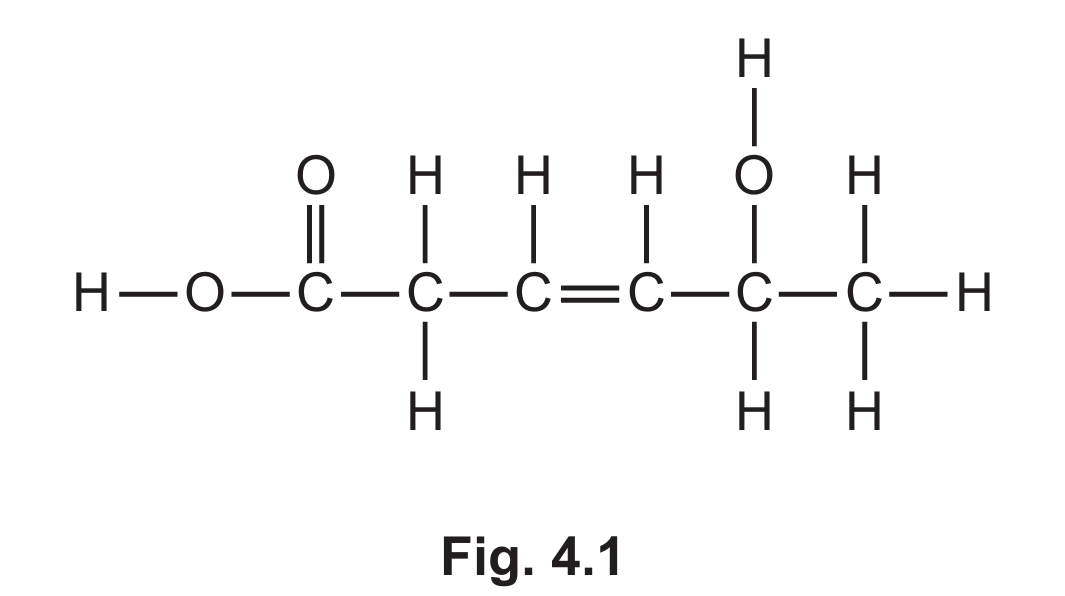
Most-appropriate topic codes (Cambridge IGCSE Chemistry 0620):
• Topic 11.3 — Fuels (Parts (a)(i), (a)(ii), (a)(iii))
• Topic 11.5 — Alkenes / cracking (Parts (b)(i), (b)(ii))
• Topic 11.1 — Formulae, functional groups (Part (c))
• Topic 11.6 — Alcohols (Parts (d)(i), (d)(ii))
• Topic 11.1 — Formulae, functional groups / saturated vs unsaturated (Parts (e)(i), (e)(ii))
▶️ Answer/Explanation
(a)(i) fractional distillation
Explanation: Petroleum (crude oil) is a mixture of hydrocarbons with different boiling points. Fractional distillation separates this mixture into useful fractions (such as refinery gas, petrol, kerosene, diesel, fuel oil, and bitumen) by heating and collecting components at different temperature ranges in a fractionating column.
(a)(ii) Fuel used in ships / fuel used in home heating systems.
Explanation: The fuel oil fraction from petroleum distillation has high boiling points and is viscous. It is used as fuel in large ships (bunker fuel) and in some industrial and domestic heating systems.
(a)(iii) Circle methane
Explanation: Natural gas is predominantly methane (\(\text{CH}_4\)), typically comprising 70–90% of the mixture. Ethane, propane, and butane may also be present in smaller amounts. Carbon dioxide and ethanol are not major components of natural gas.
(b)(i)
Name of process: cracking
Conditions: high temperature / heat; (and) catalyst
Products: alkene(s) / hydrogen
Explanation: Cracking is the thermal decomposition reaction where long-chain alkanes are broken down into smaller, more useful molecules. The reaction requires high temperature (typically around 600–700°C) and often uses a catalyst (catalytic cracking). The products include shorter-chain alkanes, alkenes (which are more reactive and useful for making polymers), and sometimes hydrogen.
(b)(ii) The products (short chain molecules) have more uses / are more in demand / are more valuable.
Explanation: Short chain hydrocarbons such as petrol and alkenes are in higher demand than the long chain fractions like fuel oil and bitumen. Cracking helps match supply with demand by converting less useful long chain molecules into economically valuable short chain ones.
(c)
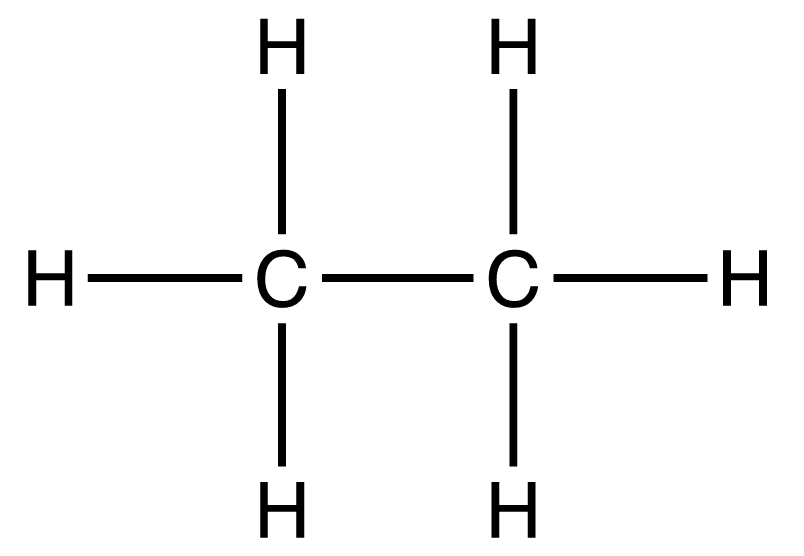
Explanation: Ethane (\(\text{C}_2\text{H}_6\)) is an alkane with two carbon atoms joined by a single covalent bond. Each carbon atom forms four covalent bonds – one to the other carbon and three to hydrogen atoms. The displayed formula shows all atoms and all bonds.
(d)(i) Any two from:
1. temperature 25–35 °C
2. anaerobic / absence of oxygen
3. yeast
Explanation: Fermentation is the process where enzymes in yeast break down glucose into ethanol and carbon dioxide. The optimal temperature is 25–35 °C because enzymes are most active in this range; higher temperatures denature the enzymes. The process must be anaerobic (no oxygen) because in the presence of oxygen, the glucose would be oxidised to carbon dioxide and water instead (aerobic respiration).
(d)(ii) Solvent / fuel
Explanation: Ethanol is widely used as a solvent in the manufacture of paints, perfumes, medicines, and other chemicals. It is also used as a biofuel, either on its own or blended with petrol (gasohol), as it burns cleanly to produce carbon dioxide and water.
(e)(i) \(\text{C}_6\text{H}_{10}\text{O}_3\) (as indicated in the mark scheme for the specific molecule shown in Fig. 4.1).
Explanation: The molecular formula is deduced by counting each type of atom in the displayed formula: number of carbon atoms, hydrogen atoms, and oxygen atoms.
(e)(ii) The molecule has a C=C bond / has a carbon-carbon double bond.
Explanation: An unsaturated compound is defined as one that contains one or more carbon-carbon double bonds (C=C) or triple bonds. Saturated compounds have only single carbon-carbon bonds. The presence of a C=C double bond in the displayed formula means the molecule is unsaturated.
Question 5
Most-appropriate topic codes (Cambridge IGCSE Chemistry 0620):
• Topic 9.4 — Reactivity series (Part (a)(i))
• Topic 6.2 — Rate of reaction (Part (a)(ii))
• Topic 12.5 — Identification of ions and gases (Part (a)(iii))
• Topic 7.1 — Characteristic properties of acids (Part (a)(iv))
• Topic 9.3 — Alloys and their properties (Parts (b)(i), (b)(ii))
▶️ Answer/Explanation
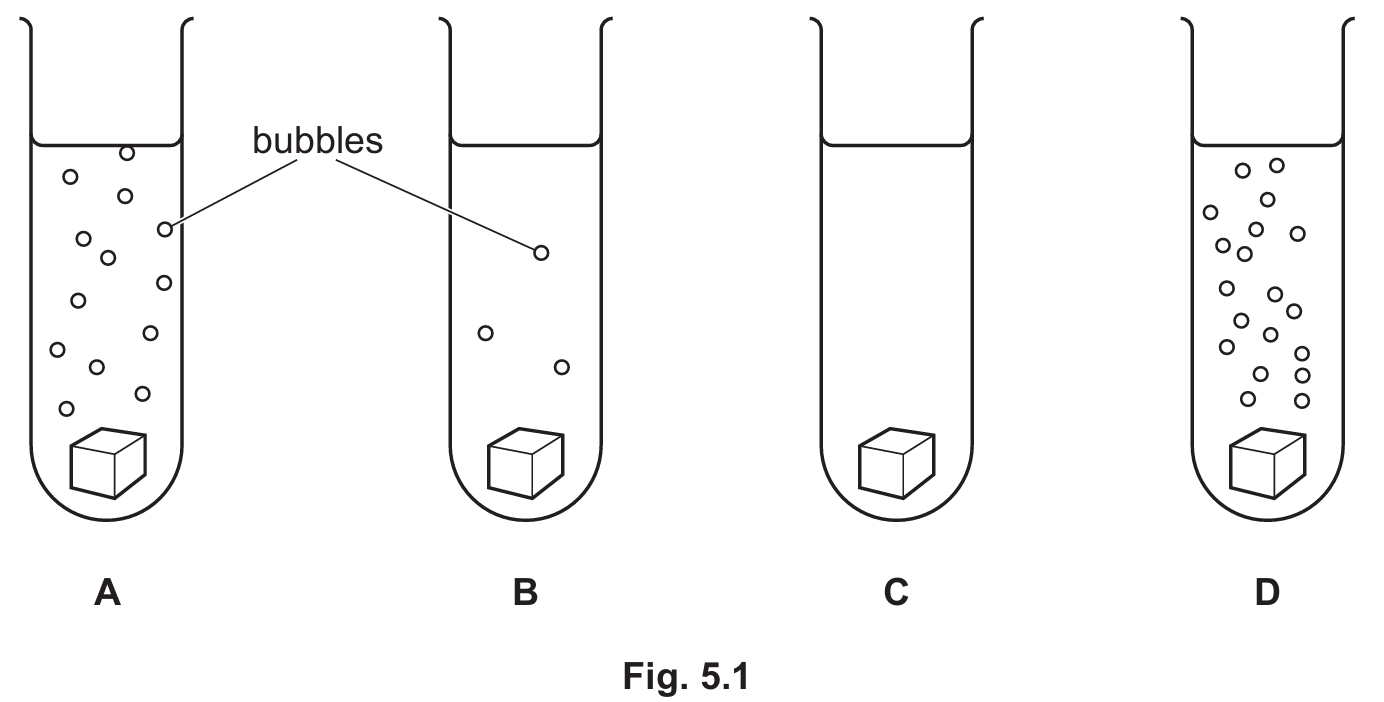
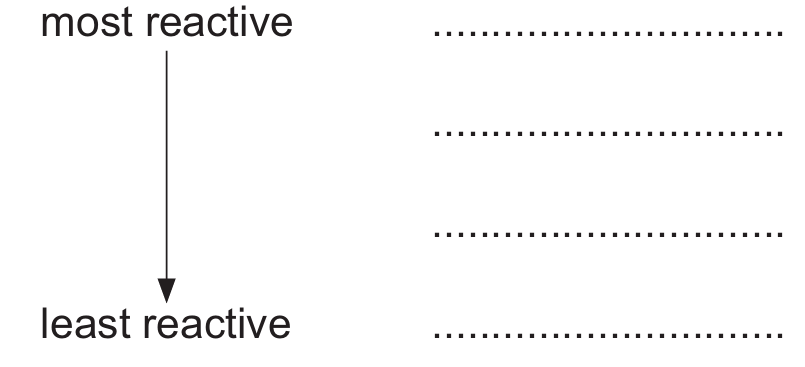
(a)(i) most reactive — D, A, B, C — least reactive
Explanation: The order of reactivity is deduced from the rate of effervescence (bubbling) observed in Fig. 5.1. Metal D produced the most vigorous effervescence, indicating the fastest rate of reaction and thus highest reactivity. Metal C showed the slowest or no reaction, indicating lowest reactivity.
(a)(ii) Any two from:
1. increase temperature (of the acid)
2. add a catalyst
3. increase (surface) area of metal / use smaller pieces of metal / powder the metal
Explanation: Increasing temperature increases the kinetic energy of particles, leading to more frequent and more energetic collisions. Adding a suitable catalyst provides an alternative reaction pathway with lower activation energy. Increasing the surface area of the metal (by crushing or cutting into smaller pieces) exposes more metal atoms to the acid, increasing the frequency of collisions.
(a)(iii) Test: (use a) lighted splint / lighted spill.
Observations: (squeaky) pop (sound).
Explanation: Hydrogen gas burns with a characteristic ‘squeaky pop’ sound when ignited. A lighted splint is brought to the mouth of the test tube containing the gas. If hydrogen is present, it ignites rapidly, producing a small explosion accompanied by a distinctive popping sound.
(a)(iv) \(\text{H}^+\) (hydrogen ion)
Explanation: Acids are defined as substances that produce hydrogen ions (\(\text{H}^+\)) when dissolved in water. For example, hydrochloric acid ionises as: \(\text{HCl} \rightarrow \text{H}^+ + \text{Cl}^-\). The presence of \(\text{H}^+\) ions is what gives acids their characteristic properties.
(b)(i) An alloy is a mixture of metals / a mixture of a metal with another element (e.g. carbon or other metals).
Explanation: Alloys are formed by mixing a metal with one or more other elements, typically other metals or non-metals like carbon. The different sized atoms in the alloy disrupt the regular layers of metal atoms, making it harder for the layers to slide over each other, which often makes alloys harder and stronger than pure metals.
(b)(ii) Hardness / resistance to rusting (corrosion resistance).
Explanation: Stainless steel is an alloy of iron with chromium, nickel, and carbon. The chromium forms a protective chromium oxide layer on the surface, giving stainless steel excellent resistance to rusting. It is also very hard and durable, making it ideal for cutlery that must withstand repeated use and washing without corroding or losing its edge.
Question 6

- remove the excess copper(II) oxide from the reaction mixture
- crystallise the copper(II) chloride
- dry the crystals.
- anode
- molten lithium iodide.
Most-appropriate topic codes (Cambridge IGCSE Chemistry 0620):
• Topic 7.1 — Characteristic properties of acids / reactions with carbonates (Part (a))
• Topic 7.3 — Preparation of salts (Part (b))
• Topic 4.1 — Electrolysis (Parts (c)(i), (c)(ii), (c)(iii))
• Topic 2.5 — Simple molecules and covalent bonds (Part (d))
▶️ Answer/Explanation
(a) magnesium carbonate + nitric acid → magnesium nitrate + carbon dioxide + water
Explanation: This follows the general word equation for the reaction of an acid with a carbonate:
acid + metal carbonate → salt + water + carbon dioxide
Magnesium carbonate (\(\text{MgCO}_3\)) reacts with nitric acid (\(\text{HNO}_3\)) to produce magnesium nitrate (\(\text{Mg(NO}_3)_2\)), carbon dioxide (\(\text{CO}_2\)), and water (\(\text{H}_2\text{O}\)). The symbol equation is:
\(\text{MgCO}_3 + 2\text{HNO}_3 \rightarrow \text{Mg(NO}_3)_2 + \text{CO}_2 + \text{H}_2\text{O}\)
(b)
1. Remove excess copper(II) oxide: filtration / filter (off the excess copper(II) oxide).
2. Crystallise the copper(II) chloride: evaporate to point of crystallisation / evaporate until saturated solution is formed / heat until crystals just appear (then allow to cool).
3. Dry the crystals: dry with (filter) paper / allow to dry in air / place in a warm oven (below decomposition temperature).
Explanation: Excess copper(II) oxide is used to ensure all the acid is neutralised. The unreacted solid CuO is removed by filtration, leaving a solution of copper(II) chloride. The solution is then heated to evaporate some water until crystallisation point is reached (crystals begin to form on cooling). The crystals are separated and dried by pressing between filter paper, which absorbs excess moisture without damaging the crystals.
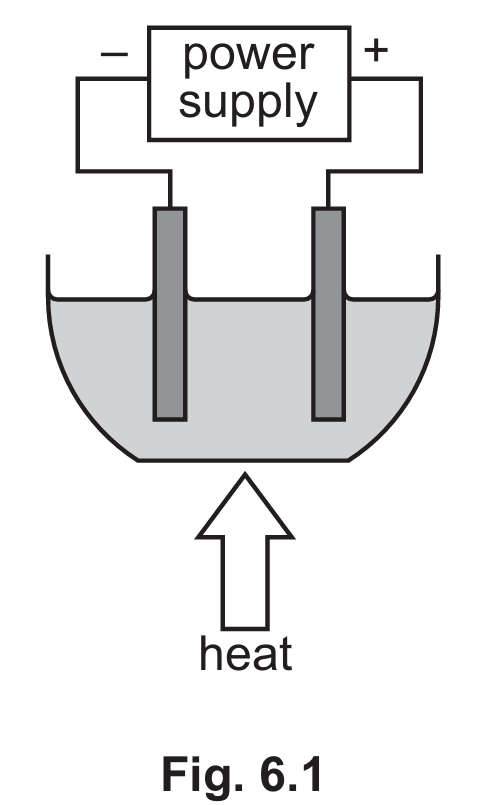
(c)(i) The right-hand electrode (or the electrode labelled as positive terminal) is labelled anode.
The liquid in the electrolysis cell is labelled molten lithium iodide.
Explanation: In electrolysis, the anode is the positive electrode (connected to the positive terminal of the power supply). The electrolyte is the molten or aqueous ionic substance being decomposed, which in this case is molten lithium iodide.
(c)(ii) Graphite / carbon
Explanation: Graphite and carbon are commonly used as inert electrode materials. They conduct electricity due to the presence of delocalised electrons between the layers in graphite, and they are chemically unreactive under most electrolysis conditions. They are also much cheaper than platinum.
(c)(iii) Positive electrode (anode): iodine
Negative electrode (cathode): lithium
Explanation: In molten lithium iodide (\(\text{LiI}\)), the ions present are \(\text{Li}^+\) and \(\text{I}^-\). During electrolysis:
• At the cathode (negative electrode): \(\text{Li}^+\) ions gain electrons (reduction) to form lithium metal: \(\text{Li}^+ + e^- \rightarrow \text{Li}\)
• At the anode (positive electrode): \(\text{I}^-\) ions lose electrons (oxidation) to form iodine: \(2\text{I}^- \rightarrow \text{I}_2 + 2e^-\)
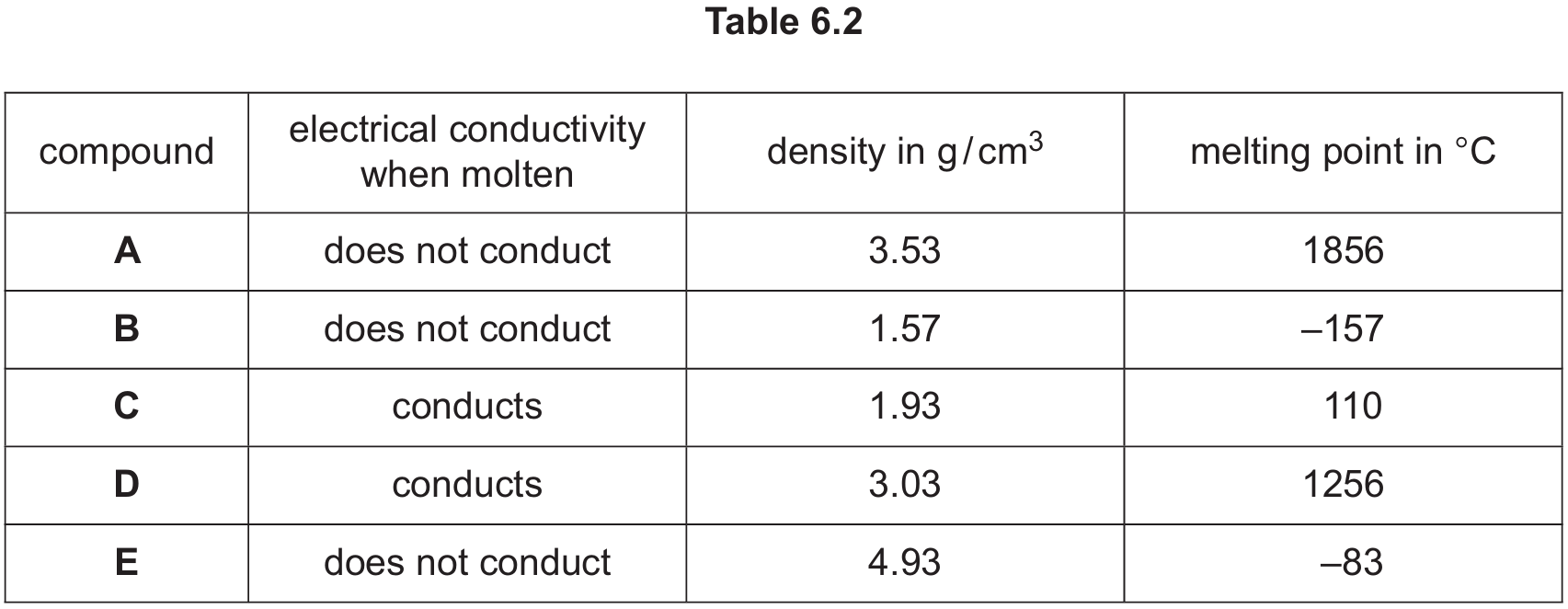
(d) Compounds: B and E
Reason 1: low melting point (B has m.p. \(-157\,°\text{C}\); E has m.p. \(-83\,°\text{C}\))
Reason 2: does not conduct electricity when molten
Explanation: Simple molecular compounds consist of small molecules held together by weak intermolecular forces. These weak forces require little energy to overcome, resulting in low melting and boiling points. Since simple molecular compounds do not contain ions or free electrons, they cannot conduct electricity in any state – solid, liquid, or molten. Compounds B and E both exhibit these characteristics. In contrast, A has a high melting point and does not conduct, suggesting a giant covalent structure (like silicon dioxide). C and D conduct when molten, indicating they are ionic compounds.
Question 7
- the vertical axis
- the reactants
- the products.
Most-appropriate topic codes (Cambridge IGCSE Chemistry 0620):
• Topic 5.1 — Exothermic and endothermic reactions (Parts (a)(i), (a)(ii), (a)(iii))
• Topic 1.1 — Solids, liquids and gases (Part (b))
▶️ Answer/Explanation
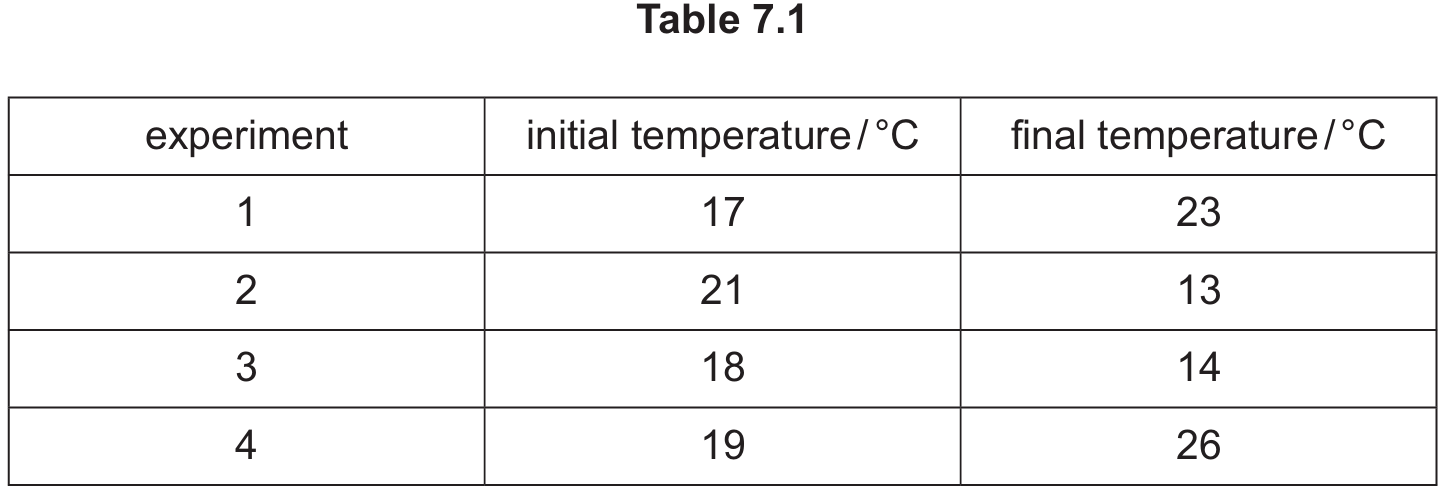
(a)(i) Experiment 2
Explanation: Temperature change = final temperature − initial temperature.
Experiment 1: \(23 – 17 = +6\,°\text{C}\)
Experiment 2: \(33 – 21 = +12\,°\text{C}\) — largest change
Experiment 3: \(14 – 18 = -4\,°\text{C}\)
Experiment 4: \(26 – 19 = +7\,°\text{C}\)
The greatest magnitude of temperature change is \(12\,°\text{C}\), occurring in Experiment 2.
(a)(ii) \(\text{Zn} + \mathbf{2}\,\text{HCl} \rightarrow \text{ZnCl}_2 + \mathbf{H_2}\)
Explanation: Zinc reacts with hydrochloric acid to produce zinc chloride and hydrogen gas. To balance:
Left: 1 Zn, ? H, ? Cl. Right: 1 Zn, 2 Cl, ? H.
To have 2 Cl on the left, we need 2 HCl. Then left side has 1 Zn, 2 H, 2 Cl. Right side must have 2 H, so hydrogen is \(\text{H}_2\). This is a typical metal + acid → salt + hydrogen reaction.
Note: The reaction is exothermic (temperature increases from 19 °C to 26 °C in Experiment 4).
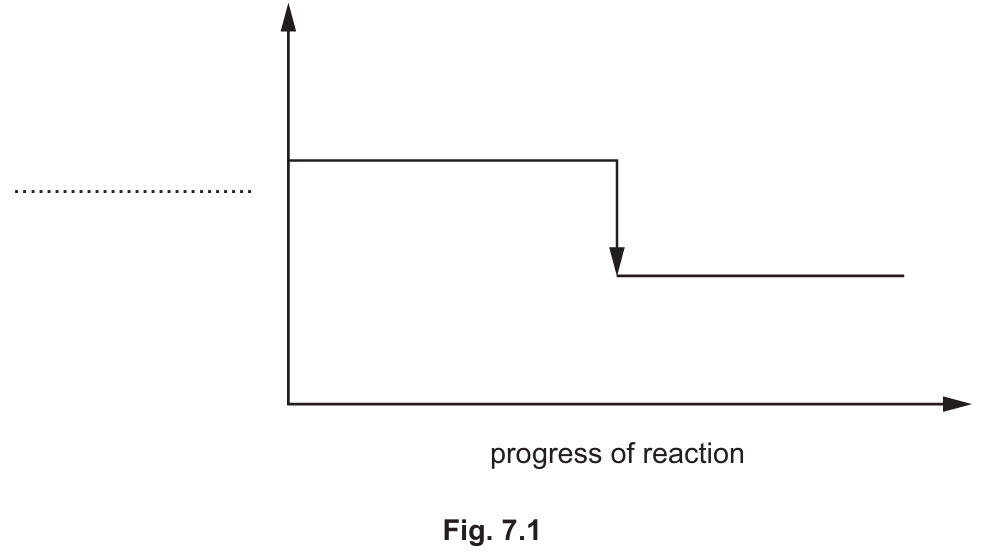
(a)(iii) Vertical axis: energy (or enthalpy).
Left-hand line (higher energy level): reactants.
Right-hand line (lower energy level): products.
Explanation: In a reaction pathway diagram for an exothermic reaction (temperature increases), the reactants start at a higher energy level than the products because energy is released to the surroundings. The vertical axis represents energy or enthalpy. The left side of the diagram shows the energy of the reactants, and the right side shows the energy of the products.
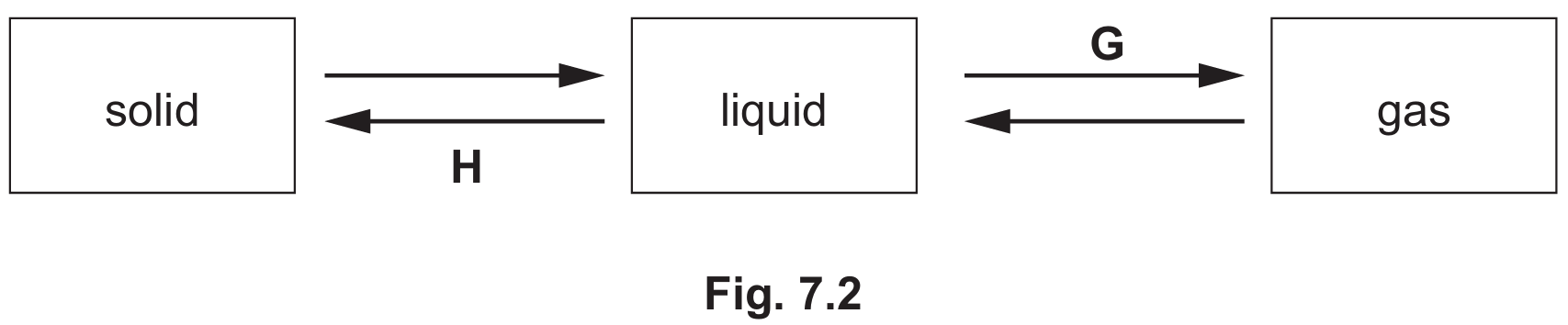
(b) G: evaporation (or boiling / vaporisation)
H: freezing (or solidification)
Explanation: In Fig. 7.2, G represents the change from liquid to gas, which is evaporation (or boiling/vaporisation). H represents the change from liquid to solid, which is freezing (or solidification). The reverse processes would be condensation (gas to liquid) and melting (solid to liquid).
Question 8
Most-appropriate topic codes (Cambridge IGCSE Chemistry 0620):
• Topic 10.1 — Water (Parts (a), (b), (c))
• Topic 10.3 — Air quality and climate (Part (d))
▶️ Answer/Explanation
(a) Addition of carbon: to remove tastes and odours (from the water).
Chlorination: to kill microbes / germs / bacteria (to disinfect the water).
Explanation: Activated carbon (charcoal) is used in water treatment because it has a large surface area and can adsorb organic compounds that cause unpleasant tastes and smells. Chlorine is added as a disinfectant to kill harmful microorganisms such as bacteria, viruses, and protozoans that could cause diseases like cholera and typhoid.
(b) Heat the sample and measure its boiling point. / Heat to 100 °C and observe if it boils.
Pure water boils at exactly 100 °C (at standard atmospheric pressure). If the boiling point is higher than 100 °C (or if it boils over a range of temperatures), the water is impure.
Explanation: The presence of dissolved impurities (such as salts) elevates the boiling point of water – this is known as boiling point elevation, a colligative property. Pure water has a sharp boiling point of 100 °C, while impure water will boil at a temperature above 100 °C and may boil over a temperature range rather than at a single temperature.
(c) Distilled water contains fewer (chemical) impurities (than tap water) / distilled water is purer / tap water contains dissolved salts and minerals that may interfere with chemical reactions.
Explanation: Tap water contains dissolved minerals (such as calcium, magnesium, sodium, chloride, and sulfate ions) and may also contain additives like chlorine and fluoride. These impurities can interfere with chemical tests and reactions in practical chemistry by causing unwanted side reactions or giving false results. Distilled water, produced by boiling and condensation, leaves behind these impurities and is therefore more suitable for precise chemical work.
(d) Carbon monoxide: toxic / poisonous (when inhaled).
Methane: global warming / climate change (as a greenhouse gas).
Explanation: Carbon monoxide (\(\text{CO}\)) is a colourless, odourless gas that binds irreversibly to haemoglobin in red blood cells, preventing oxygen transport and causing suffocation at the cellular level. It is produced by incomplete combustion of carbon-containing fuels. Methane (\(\text{CH}_4\)) is a potent greenhouse gas that traps heat in the atmosphere, contributing significantly to global warming and climate change. It is produced by decomposition of vegetation, waste gases from animals, and natural gas leaks.