
Question 1

Most-appropriate topic codes (Cambridge IGCSE Chemistry 0620):
• Topic 9.3 — Alloys and their properties (Part (a)(i))
• Topic 12.5 — Identification of ions and gases (Parts (a)(ii), (a)(v))
• Topic 4.2 — Hydrogen-oxygen fuel cells (Part (a)(iii))
• Topic 2.2 — Atomic structure and the Periodic Table (Part (a)(iv))
• Topic 2.1 — Elements, compounds and mixtures (Part (a)(vi))
• Topic 8.1 — Arrangement of elements (Part (b))
▶️ Answer/Explanation
(a)(i) Zn
Brass is an alloy of copper and zinc, so the element zinc (Zn) from the periodic table is a component of brass.
(a)(ii) Ca
Calcium ions (Ca²⁺) produce a characteristic brick-red or orange-red colour in a flame test, distinguishing them from other metal ions.
(a)(iii) H
Hydrogen (H) is the key reactant in a hydrogen-oxygen fuel cell, where it combines with oxygen to produce electricity and water.
(a)(iv) Al
Aluminium (Al) is in Period 3 of the Periodic Table, meaning its atoms have electrons occupying only three shells (K, L, and M shells).
(a)(v) Fe
Iron(III) ions (Fe³⁺) react with aqueous ammonia to form a red-brown precipitate of iron(III) hydroxide, a characteristic test for iron(III).
(a)(vi) I
Iodine (I) is a halogen (Group VII) that readily gains one electron to form a negatively charged iodide ion (I⁻) with a 1- charge.
(b) Lithium (Li), potassium (K), and rubidium (Rb) have similar chemical properties because they belong to the same group (Group I, the alkali metals). They each have one electron in their outermost shell (valence shell), and chemical properties are determined by the number of valence electrons. This identical outer electron configuration causes them to react in similar ways, such as forming 1+ ions and reacting vigorously with water.
Question 2
Oxygen, water and ethene have simple molecular structures.
(a) (i) State the percentage of oxygen in clean, dry air.
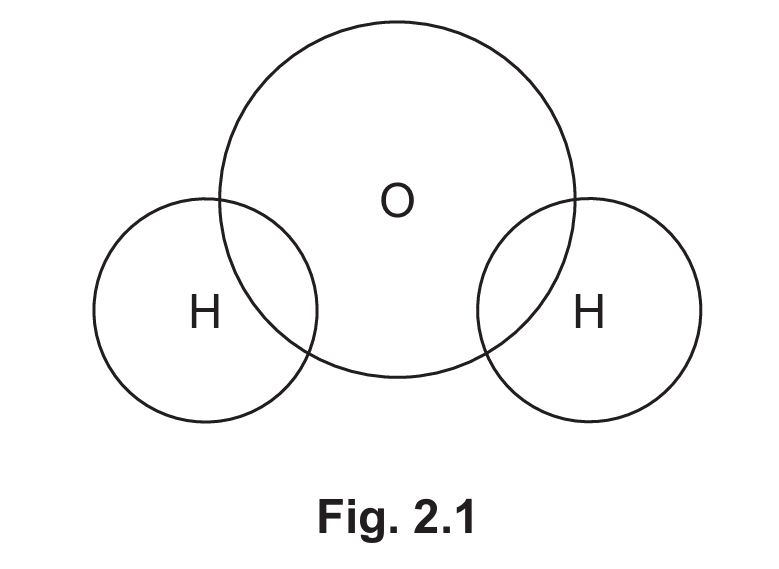
(ii) Complete Fig. 2.1 to show the dot-and-cross diagram for a molecule of water. Show outer shell electrons only.
(iii) Ethene is a small molecule used to make polymers. State the name of the polymer formed from ethene.
(iv) Complete this sentence about polymers. Polymers are large molecules built up from many smaller molecules called ________.
(b) Potassium chloride is an ionic compound.
(i) State two physical properties of ionic compounds.
(ii) Choose the correct statement that describes ionic bonding.
□ It is a weak electrostatic attraction between anions and cations.
□ It is a weak electrostatic attraction between cations.
□ It is a strong electrostatic attraction between anions.
□ It is a strong electrostatic attraction between cations and anions.
Most-appropriate topic codes (Cambridge IGCSE Chemistry 0620):
• Topic 10.3 — Air quality and climate (Part (a)(i))
• Topic 2.5 — Simple molecules and covalent bonds (Part (a)(ii))
• Topic 11.8 — Polymers (Parts (a)(iii) and (a)(iv))
• Topic 2.4 — Ions and ionic bonds (Parts (b)(i) and (b)(ii))
▶️ Answer/Explanation
(a)(i)
21%
Clean, dry air is composed of approximately 78% nitrogen, 21% oxygen, and 1% other gases (argon, carbon dioxide, etc.), as stated in the syllabus topic 10.3.
(a)(ii)
The completed diagram should show the oxygen atom sharing one electron with each of the two hydrogen atoms (single covalent bonds), with oxygen having two lone pairs (four non-bonding electrons) remaining on its outer shell.
(a)(iii)
poly(ethene)
Ethene monomers undergo addition polymerisation to form poly(ethene) (commonly known as polyethylene), where the carbon-carbon double bond opens up to form a long chain.
(a)(iv)
monomers
Polymers are macromolecules constructed by covalently bonding many smaller repeating units called monomers.
(b)(i)
High melting points / boiling points, and conduct electricity when molten or in aqueous solution.
Ionic compounds have high melting points due to strong electrostatic forces requiring significant energy to overcome, and they conduct when molten or dissolved because ions are free to move.
(b)(ii)
The correct statement is: “It is a strong electrostatic attraction between cations and anions.”
Ionic bonding is defined as the strong electrostatic attraction between oppositely charged ions (cations positive, anions negative) in a giant lattice, as per syllabus topic 2.4.
Question 3
Most-appropriate topic codes (Cambridge IGCSE Chemistry 0620):
• Topic 10.1 — Water (Parts (a), (b), (c), (d))
• Topic 2.6 — Giant covalent structures (Part (e))
▶️ Answer/Explanation
(a)
oxygen
Oxygen is essential for aquatic life as it is required for respiration by fish and other aquatic organisms. The other gases (argon, hydrogen, nitrogen) do not support respiration.
(b)
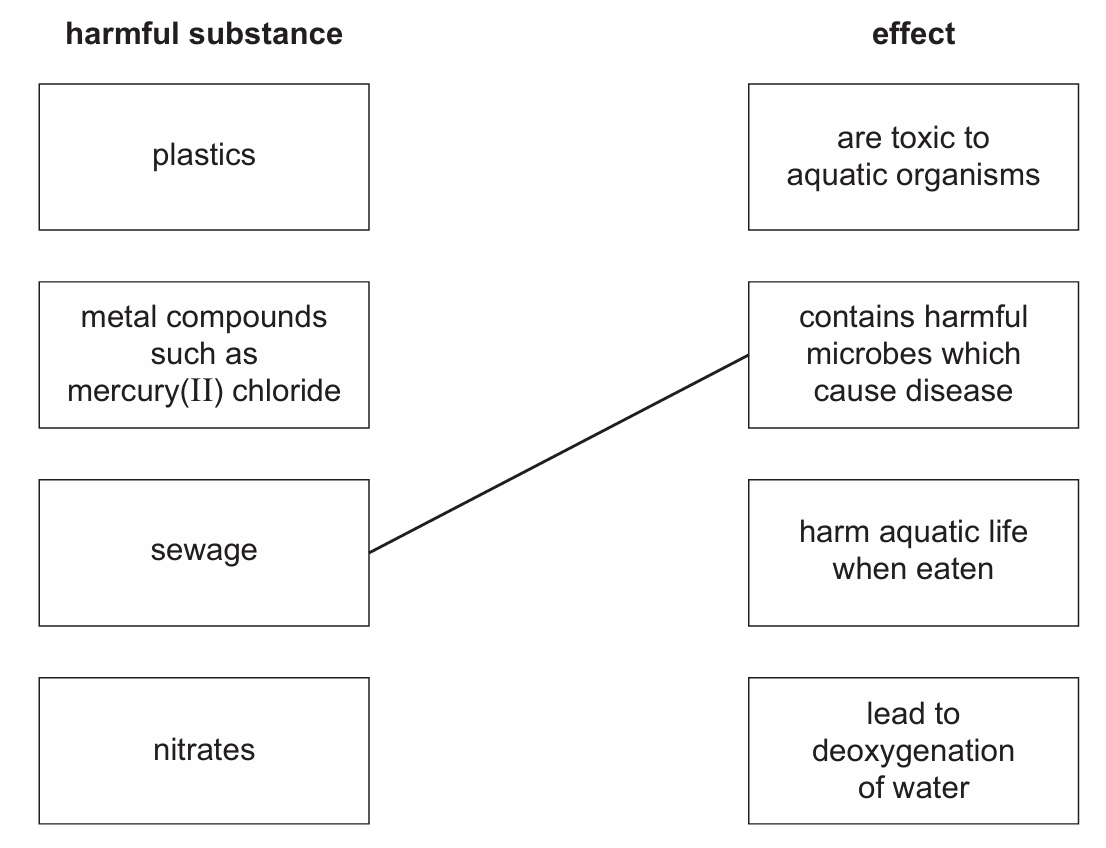
Correct pairings:
• metal compounds → are toxic to aquatic organisms
• plastics → harm aquatic life when eaten
• nitrates → lead to deoxygenation of water
• sewage → contains harmful microbes which cause disease
Metal compounds such as lead or mercury are toxic. Plastics can be ingested by aquatic animals causing harm. Nitrates cause eutrophication leading to deoxygenation. Sewage introduces pathogens that cause waterborne diseases.
(c)(i)
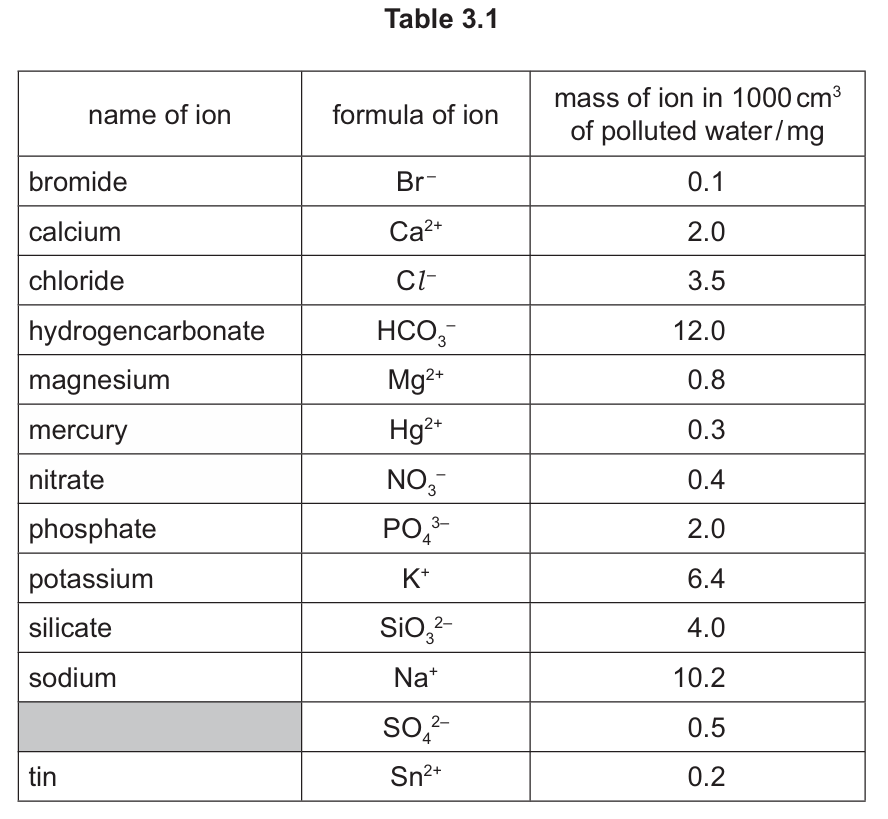
tin (Sn2+)
From the table, the positive ion with the lowest mass (0.2 mg per 1000 cm³) is tin(II) ions (Sn²⁺).
(c)(ii)
sulfate
The SO₄²⁻ ion is named sulfate. This is a common polyatomic anion derived from sulfuric acid.
(c)(iii)
0.8 mg
Calculation: (6.4 mg ÷ 1000 cm³) × 125 cm³ = 0.8 mg. The concentration of potassium ions is 6.4 mg per 1000 cm³, so scaling down to 125 cm³ (which is 1/8 of 1000 cm³) gives 6.4 ÷ 8 = 0.8 mg.
(d)
Possible answers:
• Carbon (activated charcoal): to remove tastes and odours
• Chlorine: to kill harmful microbes (disinfection)
• Alum (aluminium sulfate): to coagulate suspended particles (sedimentation)
• Fluoride: to help prevent tooth decay (in some regions)
Carbon adsorbs organic impurities. Chlorination kills bacteria and viruses. Alum causes fine particles to clump together and settle. Fluoride strengthens tooth enamel.
(e)
SiCl₄ + 2H₂O → SiO₂ + 4HCl
To balance: The left side has 1 Si, 4 Cl, 4 H, 2 O. The right side needs 4 Cl → 4 HCl, which gives 4 H. The remaining oxygen (2 O) forms SiO₂ with the silicon atom. Thus 2 water molecules are required.
Question 4
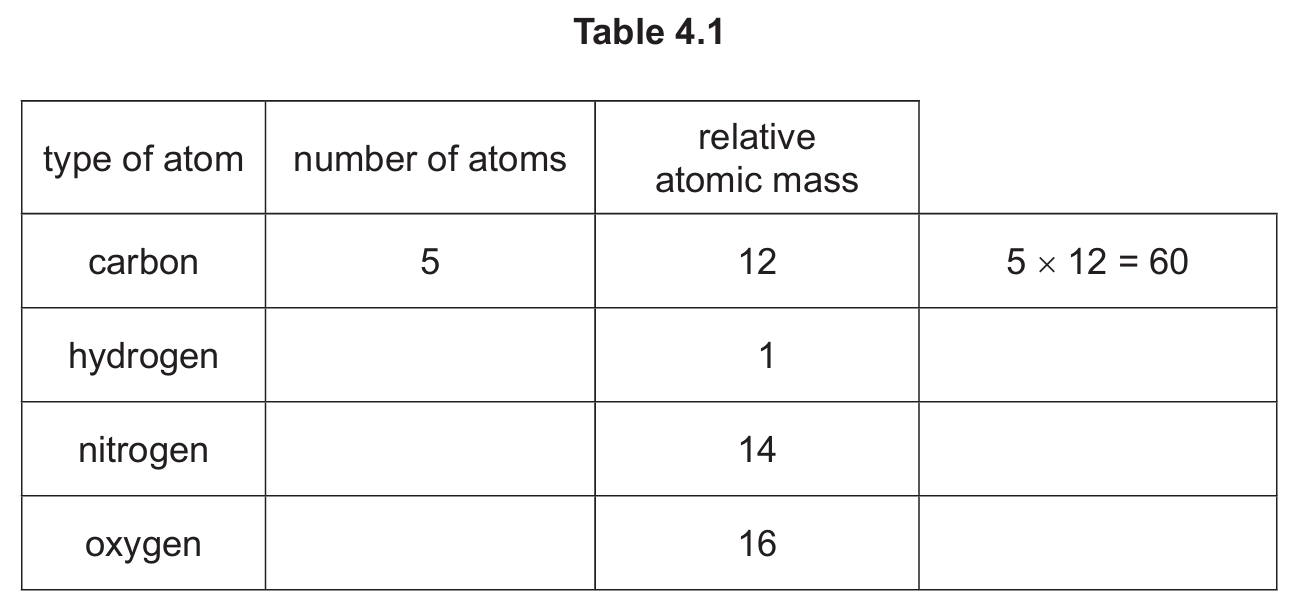
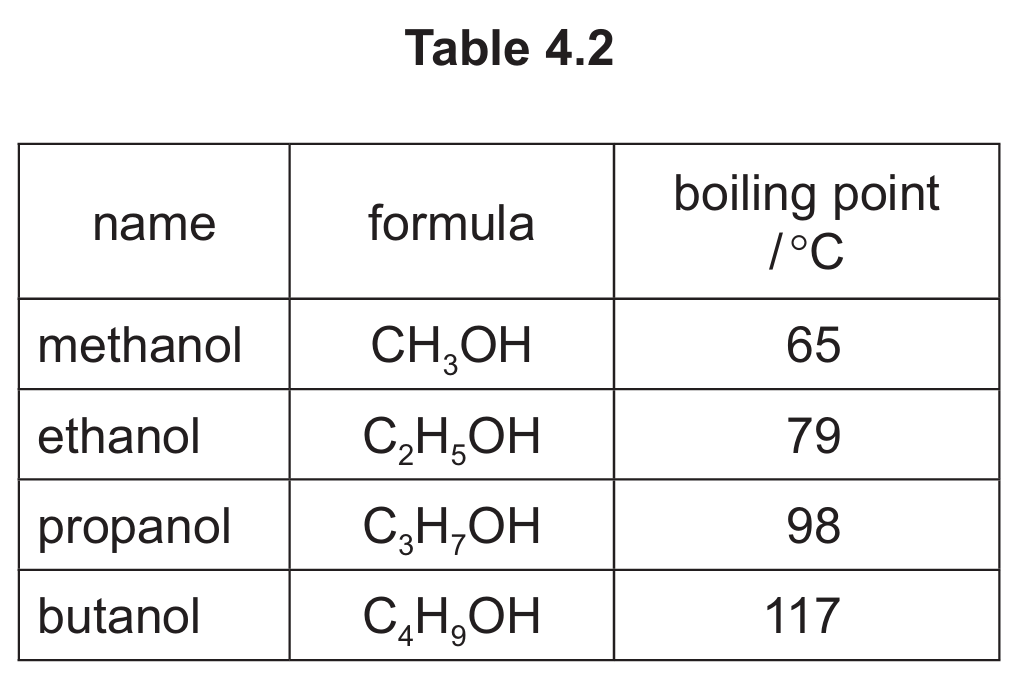
Most-appropriate topic codes (Cambridge IGCSE Chemistry 0620):
• Topic 11.1 — Formulae, functional groups and terminology (Parts (a)(i), (a)(ii), (c)(i), (c)(ii), (c)(iii))
• Topic 3.2 — Relative masses of atoms and molecules (Part (b))
• Topic 11.6 — Alcohols (Parts (d)(i), (d)(ii), (d)(iii))
▶️ Answer/Explanation
(a)(i)
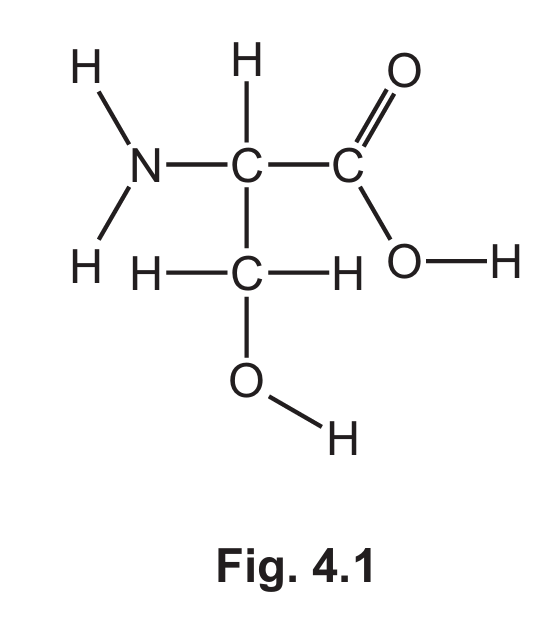
Circle the -COOH group (carbon atom double-bonded to oxygen and single-bonded to the -OH group).
The carboxylic acid functional group is -COOH, consisting of a carbonyl group (C=O) and a hydroxyl group (-OH) attached to the same carbon. In the displayed formula, this specific arrangement must be clearly circled to identify the functional group responsible for acidic properties.
(a)(ii)
\( \mathrm{C_3H_7NO_3} \)
By counting all atoms in the displayed formula: there are 3 carbon atoms, 7 hydrogen atoms, 1 nitrogen atom, and 3 oxygen atoms. This gives the molecular formula C₃H₇NO₃, which corresponds to the amino acid alanine (with the amino group on the second carbon).
(b)
133
Relative molecular mass is calculated as: (5 × 12) for carbon + (11 × 1) for hydrogen + (1 × 14) for nitrogen + (3 × 16) for oxygen = 60 + 11 + 14 + 48 = 133. This value has no units as it is a relative mass compared to 1/12th of carbon-12.
(c)(i)
alcohol(s)
Methanol, ethanol, propanol and butanol all contain the hydroxyl (-OH) functional group attached to a saturated carbon chain. This -OH group defines the alcohol homologous series, where all members share similar chemical properties due to the same functional group.
(c)(ii)
\( \mathrm{C_nH_{2n+1}OH} \) or \( \mathrm{C_nH_{2n+2}O} \)
For n=1 (methanol): CH₃OH; n=2 (ethanol): C₂H₅OH; n=3 (propanol): C₃H₇OH; n=4 (butanol): C₄H₉OH. The pattern shows a saturated alkyl chain (CₙH₂ₙ₊₁) bonded to a hydroxyl group (-OH).
(c)(iii)
increases / gets higher
As the number of carbon atoms increases, molecular size and surface area increase, leading to stronger London dispersion forces between molecules. More energy is required to overcome these stronger intermolecular forces during boiling, resulting in a higher boiling point.
(d)(i)
Substances: ethene and steam/water
Conditions: 300 °C temperature and 6000 kPa (60 atm) pressure with a phosphoric acid catalyst
The industrial manufacture of ethanol by addition reaction (hydration) uses ethene (C₂H₄) and steam (H₂O). The reaction requires a high temperature of 300 °C, high pressure of about 6000 kPa, and an acid catalyst (typically phosphoric acid on a silica support) to achieve an economically viable yield.
(d)(ii)
For the correct diagram: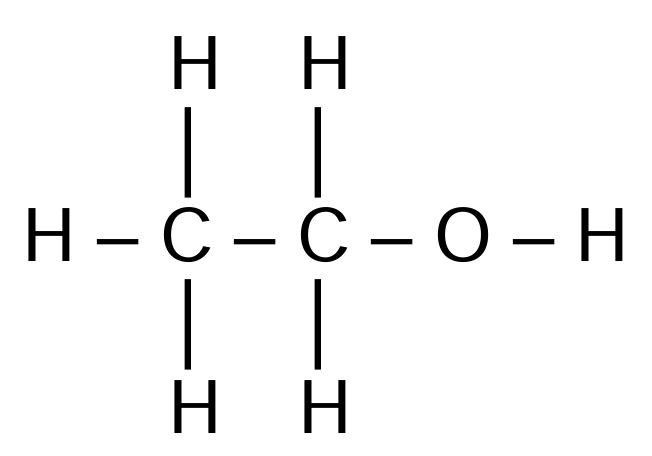
The displayed formula for ethanol (C₂H₅OH) shows all atoms and bonds explicitly: a central carbon-carbon single bond, with three hydrogen atoms attached to the first carbon, two hydrogens and the -OH group attached to the second carbon, and the O-H bond shown separately.
(d)(iii)
carbon monoxide (CO)
Incomplete combustion occurs when there is insufficient oxygen supply. Instead of producing carbon dioxide and water, ethanol undergoes partial oxidation to form toxic carbon monoxide gas (which binds irreversibly to haemoglobin) and carbon particles (soot), along with water vapour.
Question 5
(a) Table 5.1 shows some properties of five halogens.
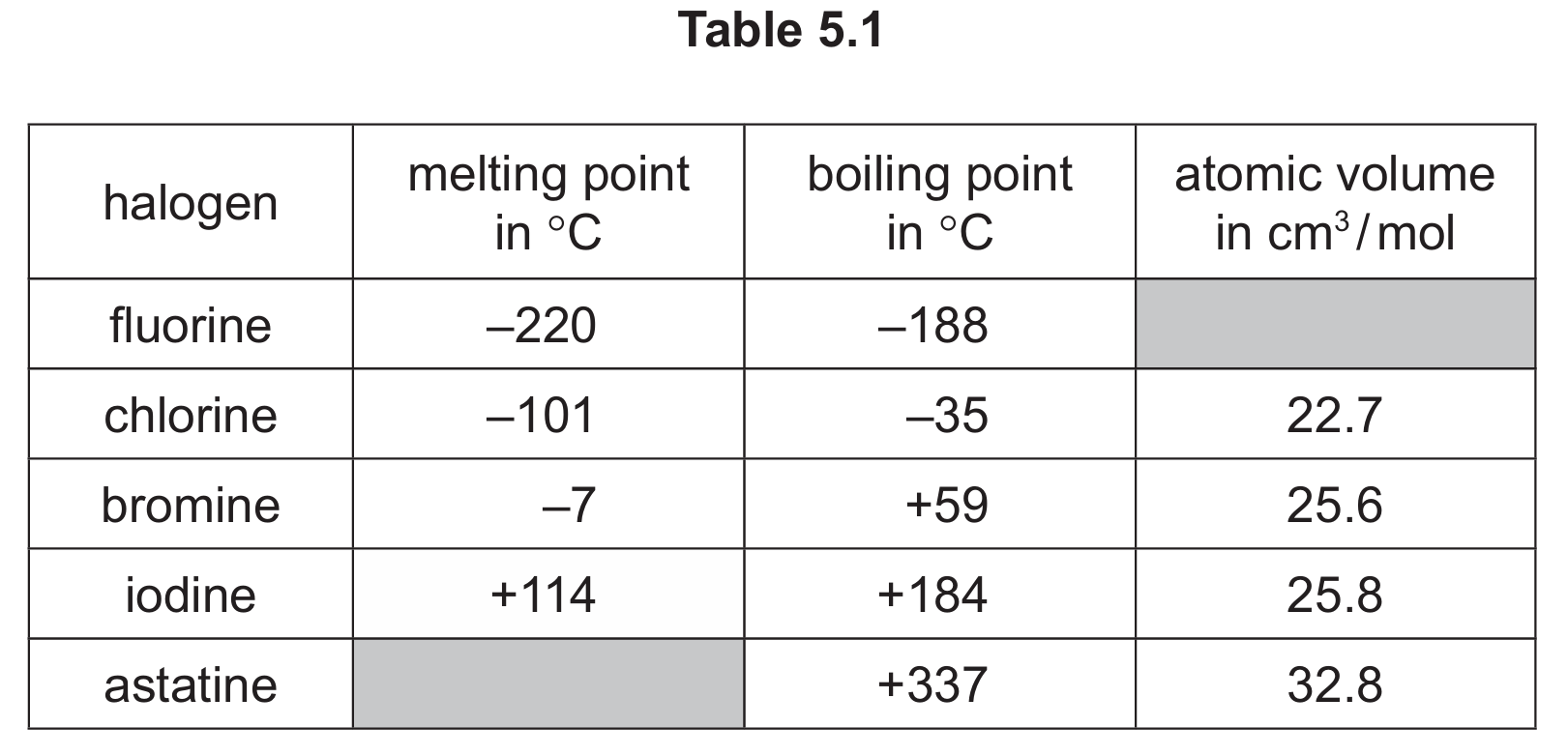
Use the information in Table 5.1 to predict:
(i) the melting point of astatine
(ii) the atomic volume of fluorine
(iii) the physical state of fluorine at −240°C. Give a reason for your answer.
(b) Aqueous chlorine reacts with aqueous sodium iodide.
(i) Complete the word equation for this reaction.

(ii) Explain why aqueous bromine does not react with aqueous sodium chloride.
(c) Fluorine reacts with water to produce hydrogen fluoride and oxygen.
Complete the symbol equation for this reaction.
\[ 2F_2 + \ldots H_2O \rightarrow 4HF + \ldots \]
(d) Name an anhydrous compound used to test for water. State the colour of the compound after water is added.
Most-appropriate topic codes (Cambridge IGCSE Chemistry 0620):
• Topic 8.3 — Group VII properties (Parts (a), (b))
• Topic 10.1 — Water (Part (d))
▶️ Answer/Explanation
(a)(i) Between 116°C and 335°C (inclusive)
Looking at the trend in melting points down Group 17 (halogens), we see they increase: F (-220°C), Cl (-101°C), Br (-7°C), I (114°C). Astatine, being below iodine, would have a higher melting point than iodine but lower than its boiling point of 337°C.
(a)(ii) Less than 22.7 cm³/mol (but not below 1.0)
The atomic volume increases down the group: Cl (22.7), Br (25.6), I (25.8), At (32.8). Fluorine, being above chlorine, would have a smaller atomic radius and thus a smaller atomic volume.
(a)(iii) Solid, because −240°C is below fluorine’s melting point of −220°C.
At temperatures below its melting point, a substance exists as a solid. Since −240°C is 20 degrees below fluorine’s melting point (-220°C), it would be solid.
(b)(i) iodine + sodium chloride
This is a displacement reaction where the more reactive chlorine displaces iodine from sodium iodide. The products formed are iodine (which colors the solution brown) and sodium chloride.
(b)(ii) Bromine is less reactive than chlorine / chlorine is more reactive than bromine.
In the reactivity series of halogens, reactivity decreases down the group. Chlorine is above bromine, meaning it can displace bromine, but bromine cannot displace chlorine from its salts.
(c) 2, O₂ (Resulting equation: 2F₂ + 2H₂O → 4HF + O₂)
This is a redox reaction. Balancing requires 2 water molecules to provide 4 hydrogen atoms for the 4 HF molecules and 2 oxygen atoms to form 1 O₂ molecule. Fluorine is reduced (0 to -1), oxygen is oxidized (-2 to 0).
(d) Copper(II) sulfate → blue OR Cobalt(II) chloride → red/pink.
Anhydrous copper(II) sulfate is white and turns blue when it absorbs water to become hydrated copper(II) sulfate. Anhydrous cobalt(II) chloride is blue and turns pink upon hydration.
Question 6
This question is about metals.
(a) Metals are malleable and ductile.
State three other typical physical properties of metals.
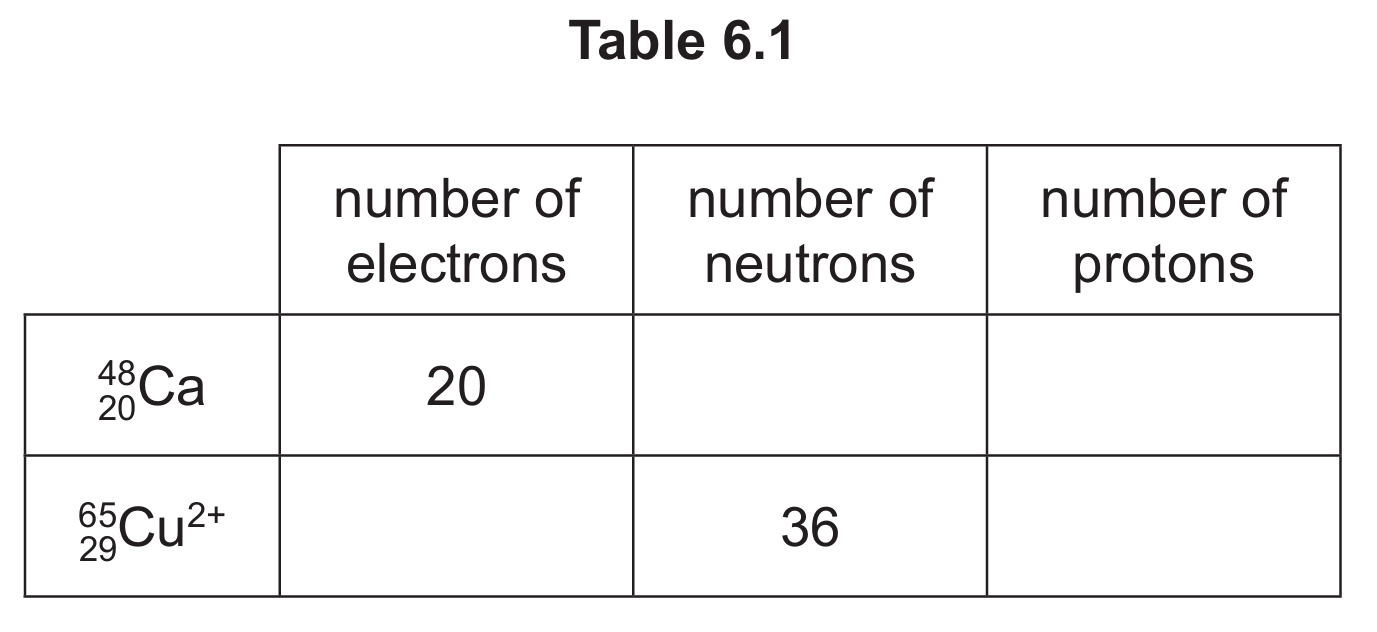
(b) (i) Complete Table 6.1 to show the number of electrons, neutrons and protons in the calcium atom and copper ion shown.
(ii) Write the electronic configuration of the calcium atom.
(c) Copper is a transition element.
Choose the correct statement about transition elements.
They have low densities.
They often act as catalysts.
They have low melting points.
All their compounds are white.
(d) Table 6.2 shows the observations when four different metals react with concentrated nitric acid.
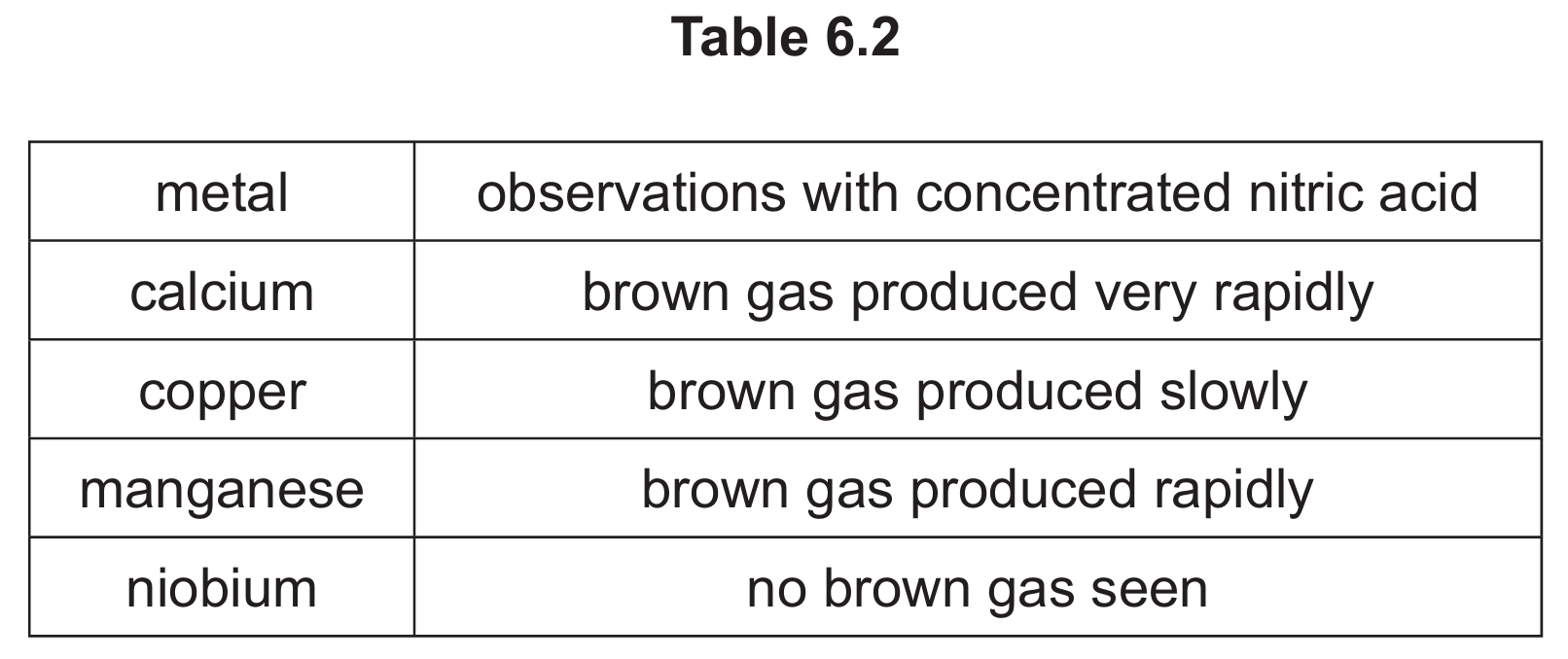
Put the four metals in order of their reactivity.
Put the least reactive metal first.

(e) Manganese(IV) oxide is reduced by aluminium.
\[3MnO_2 + 4Al \rightarrow 3Mn + 2Al_2O_3\]
Explain how this equation shows that manganese(IV) oxide is reduced.
Most-appropriate topic codes (Cambridge IGCSE Chemistry 0620):
• Topic 9.1 — Properties of metals (Part (a))
• Topic 2.2 — Atomic structure and the Periodic Table (Part (b))
• Topic 8.4 — Transition elements (Part (c))
• Topic 9.4 — Reactivity series (Part (d))
• Topic 6.4 — Redox (Part (e))
▶️ Answer/Explanation
(a)
1. High melting point / High boiling point
2. Good electrical conductivity
3. Good thermal conductivity
Metals have high melting and boiling points because of strong electrostatic forces between positive ions and delocalised electrons. They conduct electricity and heat well due to the mobility of delocalised electrons throughout the metallic lattice structure.
(b)(i)
For \(^{48}_{20}\mathrm{Ca}\): neutrons = 28, protons = 20.
For \(^{65}_{29}\mathrm{Cu}^{2+}\): protons = 29, electrons = 27.
Number of neutrons is mass number minus proton number (48 – 20 = 28). A Cu²⁺ ion has lost two electrons, so its electron count is atomic number (29) minus the charge (2), giving 27 electrons.
(b)(ii)
2,8,8,2
Calcium has atomic number 20. The first shell holds 2 electrons, the second holds 8, the third holds 8, and the remaining 2 electrons occupy the fourth shell, following the 2,8,8,2 configuration.
(c)
They often act as catalysts.
Transition elements like copper, iron, and nickel are known for their catalytic properties (e.g., iron in the Haber process). They typically have high densities, high melting points, and form coloured compounds, making the other three statements incorrect.
(d)
niobium < copper < manganese < calcium
The reactivity is determined by the rate of brown nitrogen dioxide gas production. Niobium produces no gas (least reactive), copper produces gas slowly, manganese rapidly, and calcium very rapidly (most reactive), establishing this order.
(e)
Manganese(IV) oxide loses oxygen.
In terms of oxygen gain/loss, reduction is the loss of oxygen. In the equation, MnO₂ loses oxygen atoms to become Mn metal, while aluminium gains oxygen to form Al₂O₃, proving MnO₂ is reduced.
Question 7
Most-appropriate topic codes (Cambridge IGCSE Chemistry 0620):
• Topic 7.1 — Characteristic properties of acids and bases (Parts (a), (b), (d))
• Topic 5.1 — Exothermic and endothermic reactions (Parts (c)(i), (c)(ii), (c)(iii))
▶️ Answer/Explanation
(a)(i)
(l)
At room temperature and pressure, water is a liquid. The state symbol (l) must be added to the product side to complete the balanced equation correctly.
(a)(ii)
Filtration
Zinc oxide is an insoluble solid (it does not dissolve in water). Filtration using filter paper and a funnel separates the excess solid residue from the liquid solution (the filtrate).
(a)(iii)
Heat the solution gently to evaporate some water until a saturated solution is formed (or until crystals first appear on a cold glass rod). Allow the solution to cool slowly so that crystals of zinc chloride form. Filter to separate the crystals from the remaining solution. Dry the crystals between two sheets of filter paper or in a warm oven.
(b)
H+
According to the Brønsted-Lowry theory, all acids are proton donors. In aqueous solution, they produce hydrogen ions (H+), which are responsible for acidic properties like turning litmus red and reacting with metals.
(c)(i)
An exothermic reaction is a chemical reaction that transfers thermal energy to the surroundings, leading to an increase in the temperature of the surroundings.
(c)(ii)
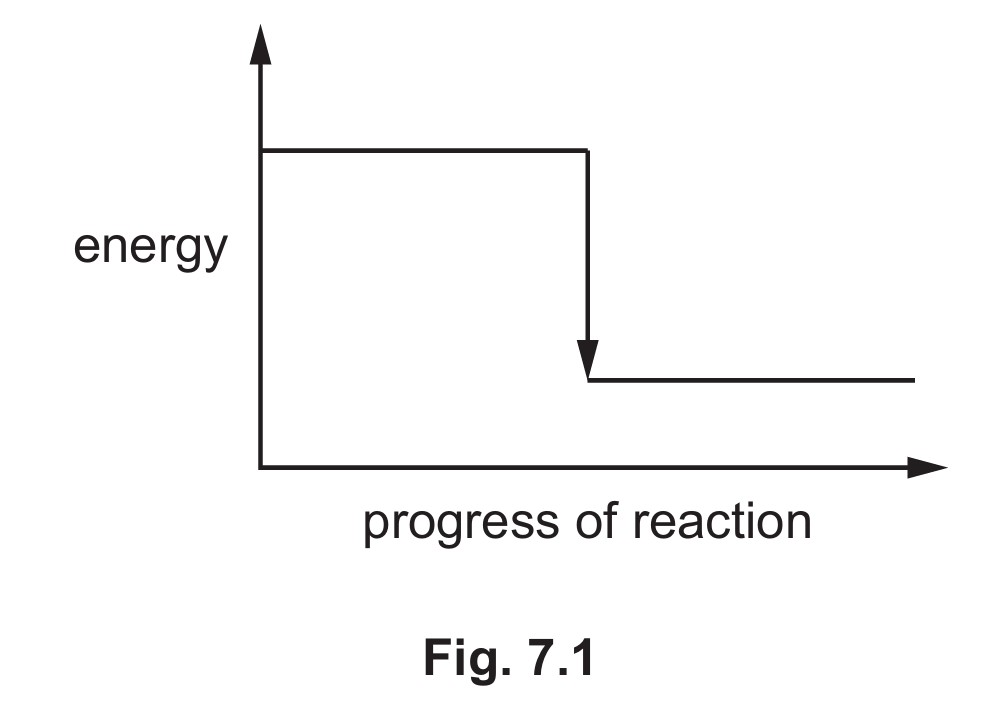
The higher horizontal line on the left (reactants) should be labelled “ZnO + 2HCl”. The lower horizontal line on the right (products) should be labelled “ZnCl2 + H2O”. The downward arrow represents the energy released.
(c)(iii)
The diagram shows that the energy level of the reactants (ZnO + 2HCl) is higher than the energy level of the products (ZnCl2 + H2O). The difference in energy (ΔH) is shown as a downward arrow, which is negative and indicates energy is released.
(d)
pH 2: Red / Pink
pH 12: Blue
Litmus is a pH indicator. In strongly acidic conditions (pH 2), litmus turns red. In strongly alkaline/ basic conditions (pH 12), litmus turns blue. It remains purple at neutral pH 7.
Question 8
(a) A student investigates the reaction of small pieces of magnesium oxide with excess dilute hydrochloric acid of three different concentrations.
The time taken for each reaction to finish is recorded.
The three concentrations of the acid are:
- 0.4 mol/dm³
- 0.8 mol/dm³
- 1.6 mol/dm³
All other conditions stay the same.
Table 8.1 shows the time taken for each reaction to finish.
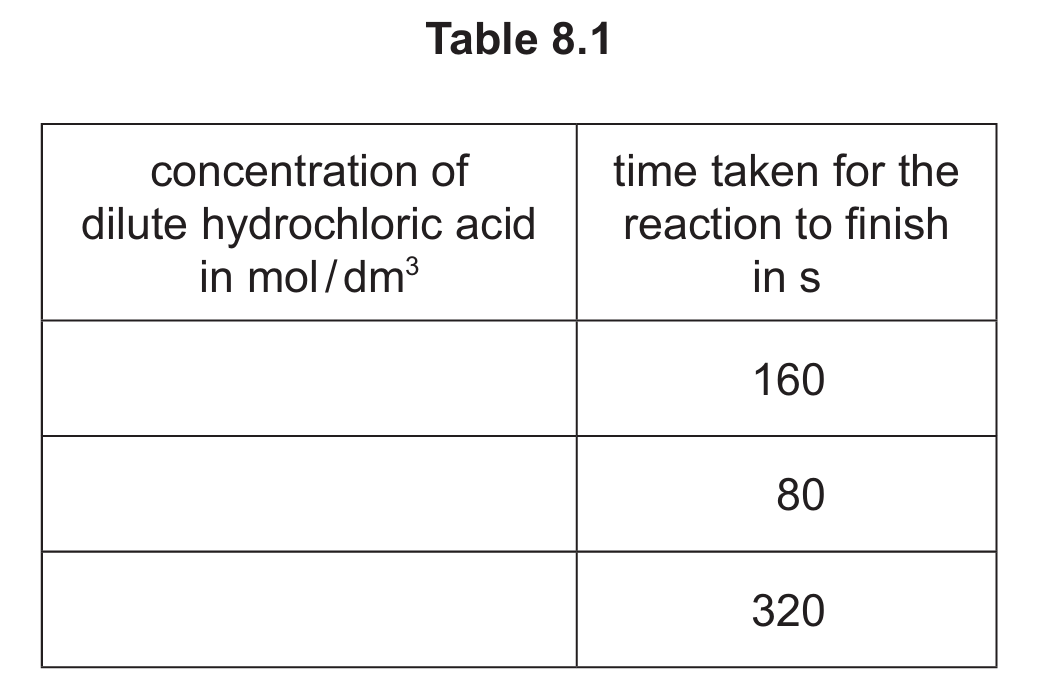
(i) Complete Table 8.1 by writing the concentrations in the first column.
(ii) Describe the effect on the time taken for the reaction to finish when the reaction is carried out at a lower temperature. All other conditions stay the same.
(iii) Describe the effect on the time taken for the reaction to finish when large pieces of magnesium oxide are used instead of small pieces of magnesium oxide. All other conditions stay the same.
(b) Molten magnesium chloride is electrolysed using inert electrodes.
(i) Name the products at the positive and negative electrodes.
(ii) Describe the arrangement, motion and separation of the particles in liquid magnesium chloride.
Most-appropriate topic codes (Cambridge IGCSE Chemistry 0620):
• Topic 6.2 — Rate of reaction (Part (a))
• Topic 4.1 — Electrolysis (Part (b)(i))
• Topic 2.4 — Ions and ionic bonds (Part (b)(ii))
▶️ Answer/Explanation
(a)(i)
The completed table should have the highest concentration with the shortest time:
1.6 mol/dm³ -> 80 s; 0.8 mol/dm³ -> 160 s; 0.4 mol/dm³ -> 320 s.
Increasing concentration increases the number of acid particles per unit volume, leading to more frequent successful collisions per second, thus finishing the reaction faster.
(a)(ii)
The time taken for the reaction to finish would increase (the reaction becomes slower).
Lower temperature reduces the kinetic energy of particles, decreasing the frequency and energy of collisions, meaning fewer collisions exceed the activation energy per unit time.
(a)(iii)
The time taken for the reaction to finish would increase (the reaction becomes slower).
Using large pieces of magnesium oxide reduces the total surface area exposed to the acid, which decreases the frequency of collisions between the solid and the acid particles.
(b)(i)
Positive electrode (anode): Chlorine (gas).
Negative electrode (cathode): Magnesium (metal).
In the molten state, MgCl₂ dissociates into Mg²⁺ and Cl⁻ ions. Mg²⁺ ions are reduced at the cathode (Mg²⁺ + 2e⁻ → Mg), while Cl⁻ ions are oxidized at the anode (2Cl⁻ → Cl₂ + 2e⁻).
(b)(ii)
Arrangement: Irregular / random / not in fixed positions.
Motion: Ions slide past each other / vibrate and translate.
Separation: Close together but with some space to move.
In a liquid (molten) ionic compound, the ions have enough energy to overcome some of the lattice forces. They are free to move throughout the liquid but remain in close contact due to strong electrostatic forces.