
Question 1
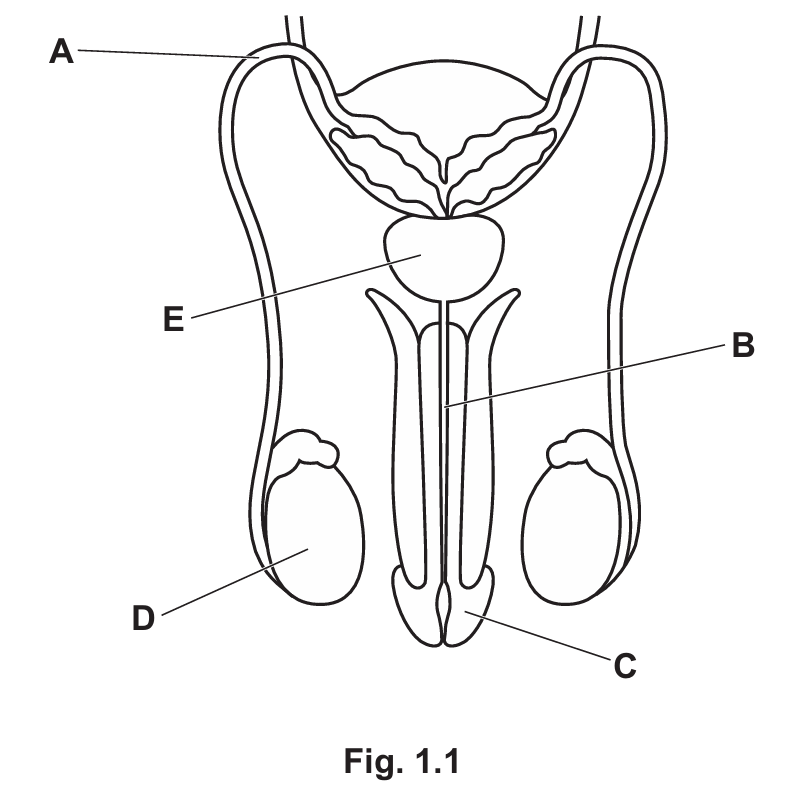
carries urine and semen ………………………………
produces sperm ………………………………
transfers sperm to the urethra. ………………………………
Sperm cells are 0.05 mm in length.
Female gametes are 0.1 mm in length.
Respiration releases the ……………………………… needed for cell division and movement.
Most-appropriate topic codes (Cambridge IGCSE Co-ordinated Sciences 0654):
• Topic B15.4 — Sexual reproduction in humans (Parts (a), (b), (d))
• Topic B12.1 — Respiration (Part (c))
▶️ Answer/Explanation
(a)(i) carries urine and semen = B; produces sperm = D; transfers sperm to urethra = A
The urethra (B) is the shared tube for urine and semen.
The testis (D) is the site of sperm production.
The sperm duct (A) carries sperm from the testis to the urethra.
(a)(ii) X drawn on the prostate gland (the structure labelled E, below the bladder)
The prostate gland surrounds the urethra just below the bladder.
It adds fluid to semen to nourish and help transport sperm.
(b)(i) egg cell / ovum
The female gamete in humans is called the egg cell, ovum, or oocyte.
(b)(ii) 2 times
Using \( \dfrac{0.1}{0.05} = 2 \).
So the female gamete is twice as long as the male gamete.
(c)(i) glucose + oxygen → carbon dioxide + water
Aerobic respiration requires oxygen to fully break down glucose.
The products are carbon dioxide and water, with energy released.
(c)(ii) energy
Respiration releases the energy needed for cell division (mitosis/meiosis) and for the movement of the flagellum/tail of the sperm.
(d) Fusion of the nucleus of the sperm with the nucleus of the egg cell; this occurs in the oviduct
Fertilisation is the fusion of the male gamete (sperm) nucleus with the female gamete (egg) nucleus.
This forms a single diploid nucleus in the resulting zygote.
In humans, fertilisation takes place in the oviduct (fallopian tube).
Question 2
chlorine
copper(II) sulfate
ethanol
limestone
sulfur
Most-appropriate topic codes (Cambridge IGCSE Co-ordinated Sciences 0654):
• Topic C10.1 — Water (Part (a)(i), (a)(v))
• Topic C9.2 — Uses of metals (Part (a)(iii))
• Topic C2.1/C3.1 — Elements, compounds and formulas (Part (a)(ii), (a)(iv), (a)(vi), (b))
• Topic C9.4 — Reactivity series (Part (c)(i), (c)(ii))
▶️ Answer/Explanation
(a)(i) copper(II) sulfate
Anhydrous (white) copper(II) sulfate turns blue when water is added.
This colour change is the standard chemical test for water.
(a)(ii) ethanol
Ethanol is a common organic solvent used to dissolve substances that do not dissolve well in water.
(a)(iii) aluminium
Aluminium has a low density and good strength, making it ideal for aircraft parts.
(a)(iv) sulfur
Sulfur is burned to produce sulfur dioxide, which is converted to sulfur trioxide and then sulfuric acid (Contact Process).
(a)(v) chlorine
Chlorine is added to water supplies to kill microbes (pathogens), making water safe to drink.
(a)(vi) limestone
Limestone (calcium carbonate) is a base; it neutralises excess acid in soil.
(b)(i) 7 atoms
Counting atoms in \( \text{H}_2\text{SO}_4 \): 2 hydrogen + 1 sulfur + 4 oxygen = 7 atoms in total.
(b)(ii) 3 different elements
The three different elements present are hydrogen (H), sulfur (S), and oxygen (O).
(c)(i) magnesium sulfate and hydrogen
From the equation, the two products formed are magnesium sulfate (\( \text{MgSO}_4 \)) and hydrogen gas (\( \text{H}_2 \)).
(c)(ii) filtration
Filtration separates the insoluble unreacted solid magnesium from the magnesium sulfate solution.
The solid remains as residue on the filter paper while the solution passes through as filtrate.
Question 3
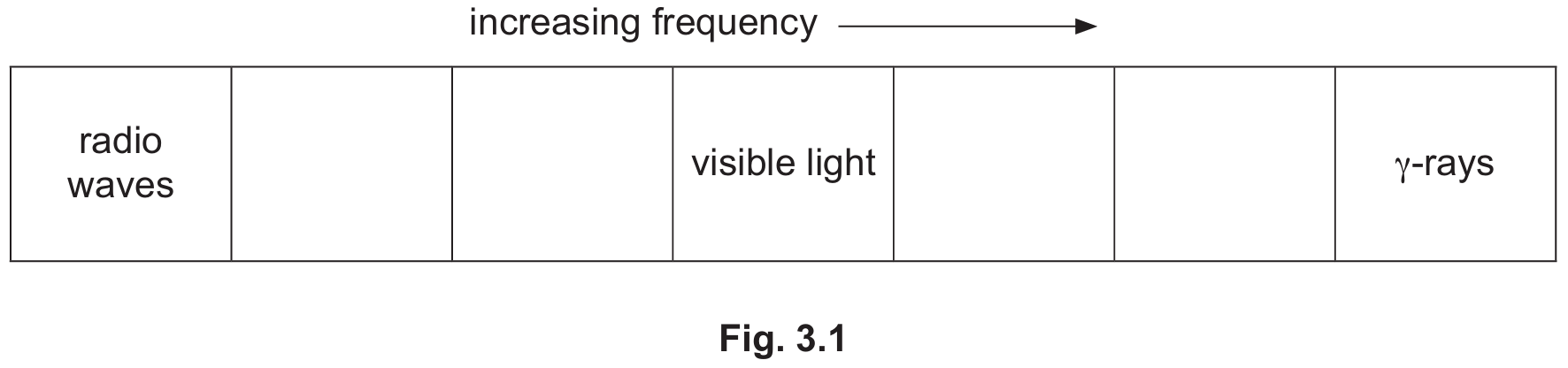
State the speed of infrared waves in a vacuum.
State what is meant by an echo.
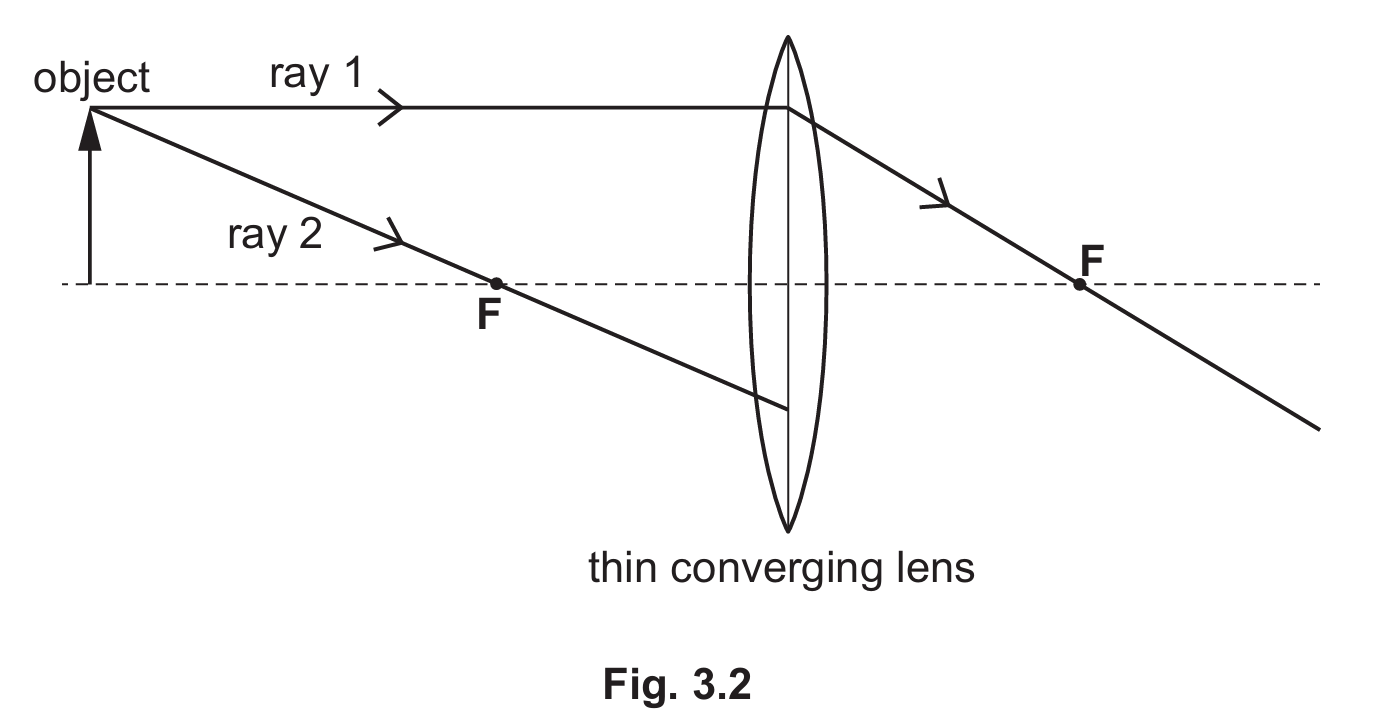
- draw a line to complete the path of ray 2
- draw the image formed
- label the image.
Most-appropriate topic codes (Cambridge IGCSE Co-ordinated Sciences 0654):
• Topic P3.3 — Electromagnetic spectrum (Part (a))
• Topic P3.4 — Sound (Part (b))
• Topic P3.2.3 — Thin converging lens (Part (c))
• Topic P1.2 — Motion (Part (d))
▶️ Answer/Explanation
(a)(i) 
Frequency increases left to right, so infrared sits just before visible light.
Ultraviolet sits just after visible light, before γ-rays.
(a)(ii) 300 000 000 m/s
All electromagnetic waves, including infrared, travel at the same speed in a vacuum: \( 3.0 \times 10^8 \, \text{m/s} \).
(b) An echo is the reflection of a sound wave
Sound waves bounce off a hard surface and return to the source.
This reflected sound is heard as a delayed repeat of the original sound.
(c)(i) principal focus / focal point
F marks the point where parallel rays converge after passing through a converging lens.
(c)(ii) Ray 2 travels straight through the centre of the lens; image formed is inverted and real, located where rays 1 and 2 cross
Ray 2 (through the optical centre) continues in a straight line without bending.
The image forms where the two rays intersect, and is real, inverted, and diminished.
Label this intersection point as the “image”.
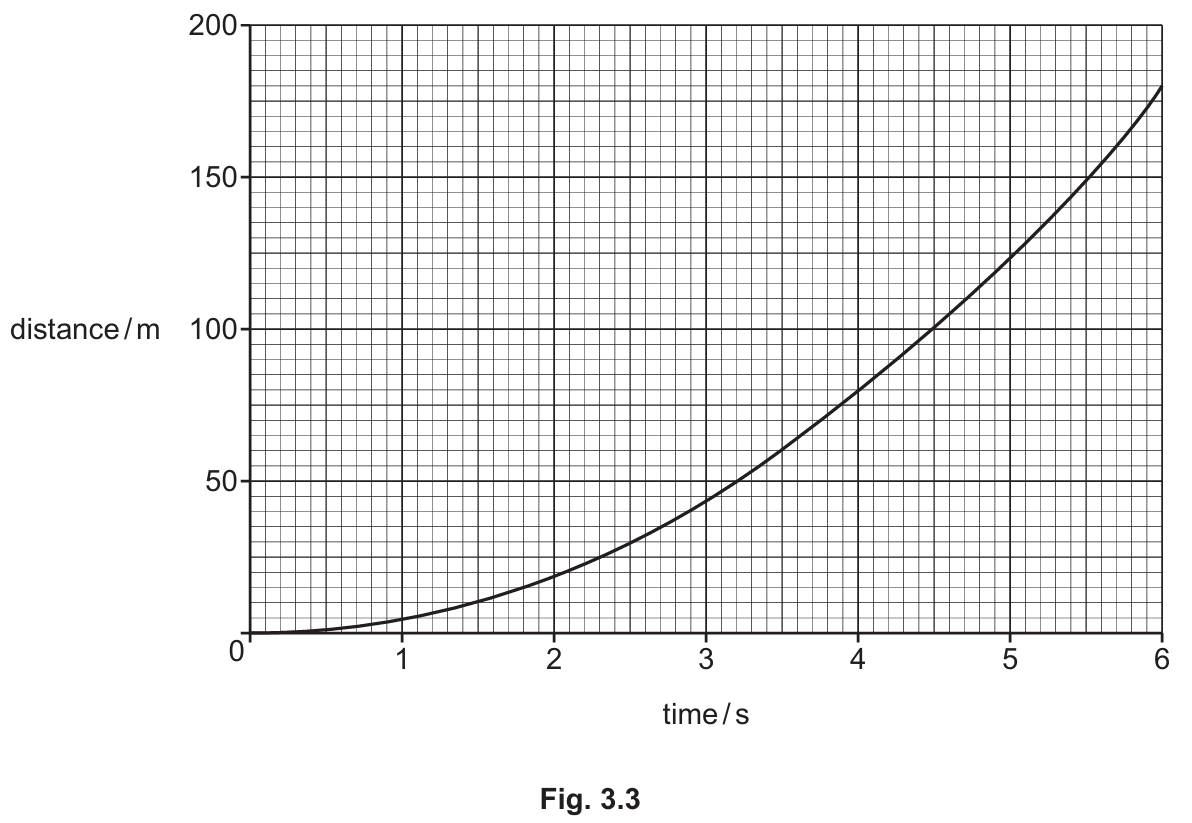
(d) 30 m/s
From the graph, total distance travelled in 6.0 s = 180 m.
Average speed \( = \dfrac{\text{distance}}{\text{time}} = \dfrac{180}{6.0} = 30 \, \text{m/s} \).
Question 4
Most-appropriate topic codes (Cambridge IGCSE Co-ordinated Sciences 0654):
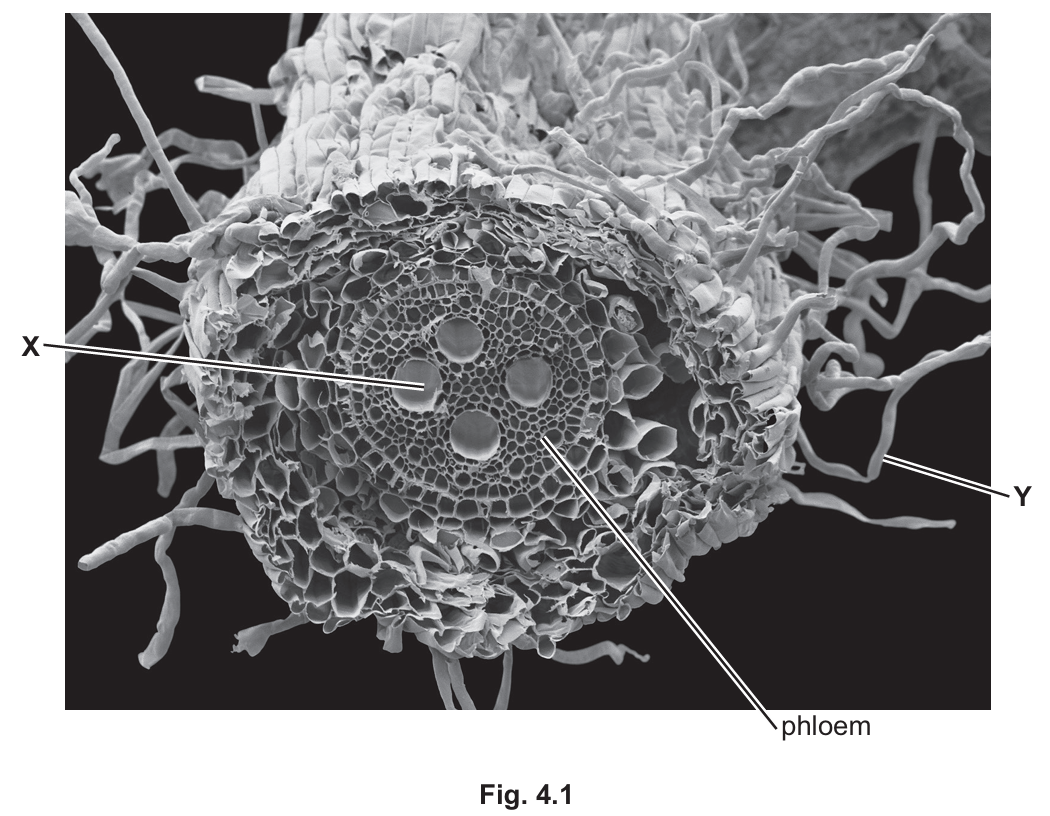
• Topic B8.1 — Xylem and phloem (Part (a), (b))
• Topic B6.1 — Photosynthesis (Part (c), (d))
▶️ Answer/Explanation
(a) 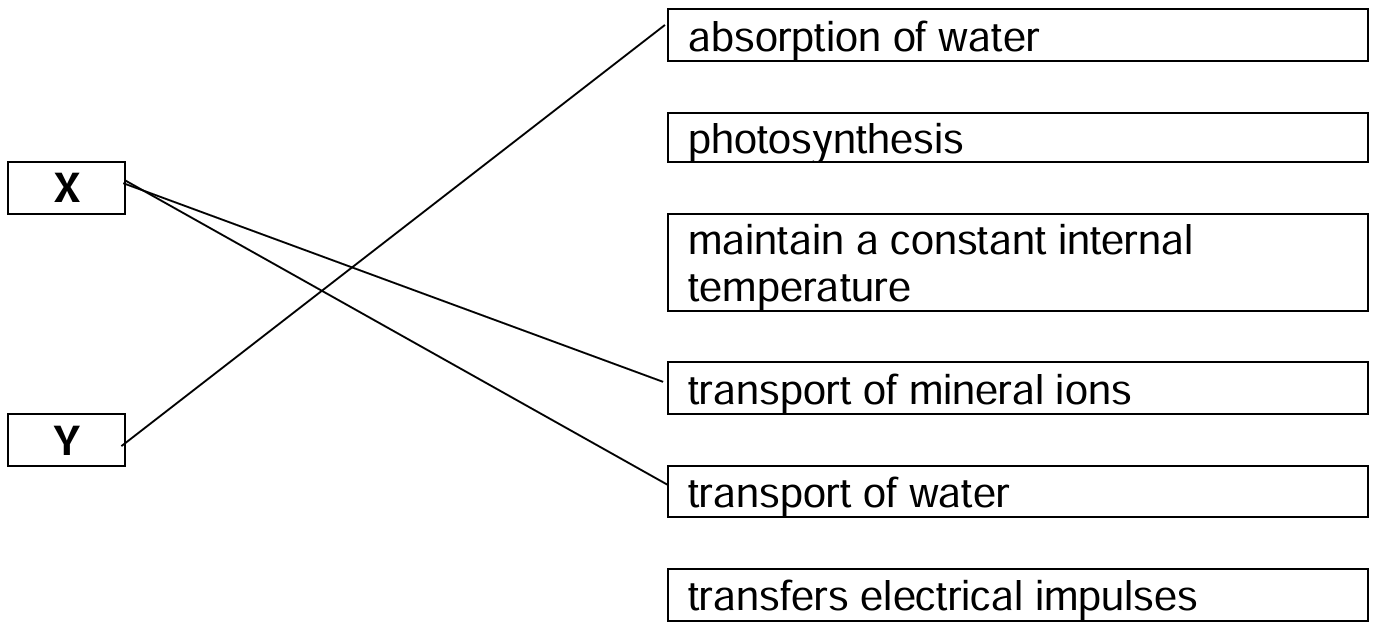
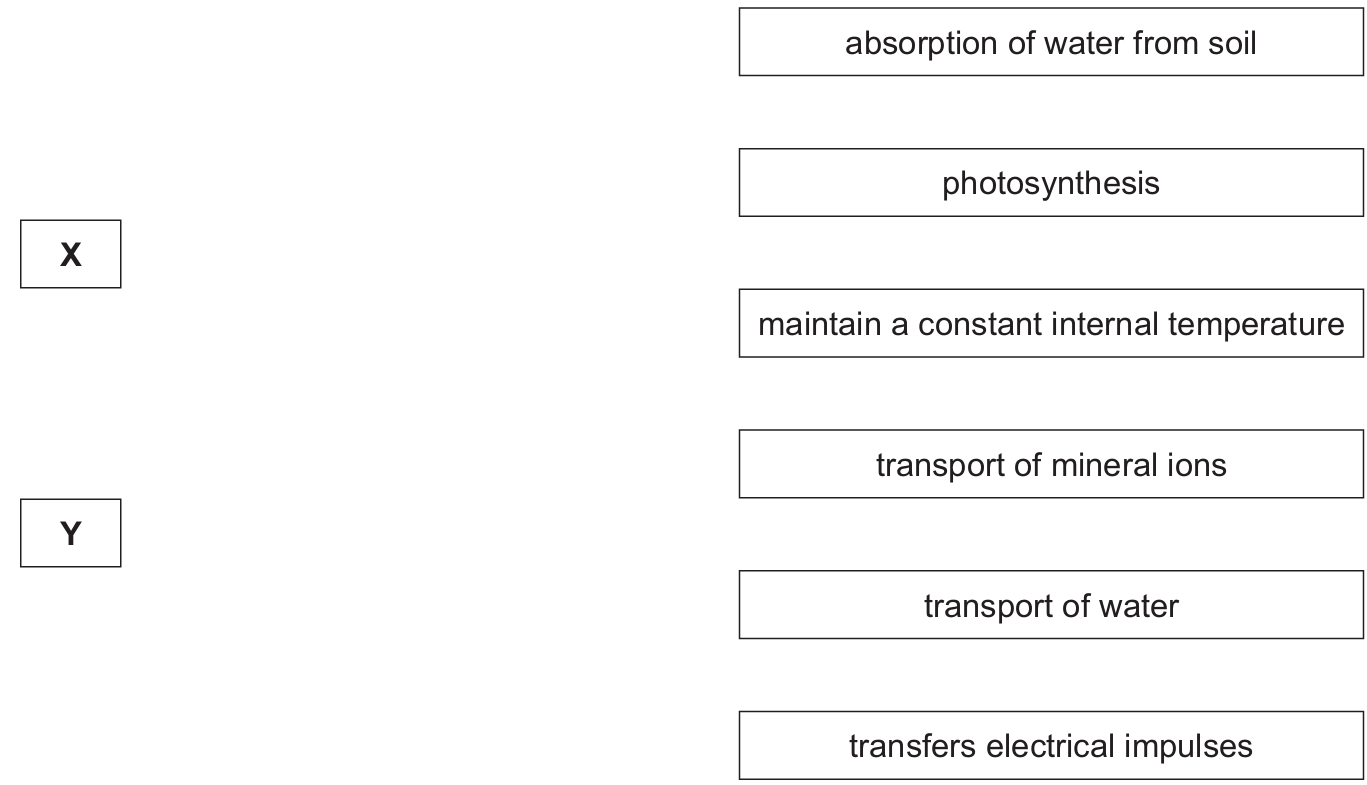
X labels the xylem vessels in the centre of the root, which transport water and dissolved mineral ions upward.
Y labels the root hair, which absorbs water and mineral ions from the soil due to its large surface area.
(b) Transport of dissolved sugars (sucrose) and amino acids
Phloem moves the products of photosynthesis, mainly sucrose and amino acids, from leaves to other parts of the plant (translocation).
(c)(i) Nitrate ions are needed to make amino acids, which make up proteins required for growth
Nitrate ions provide the nitrogen needed to synthesise amino acids.
These amino acids are then built into proteins, which are essential for cell growth and repair.
(c)(ii) chlorophyll
Magnesium is a key component of the chlorophyll molecule, the green pigment needed to absorb light energy for photosynthesis.
(d) 
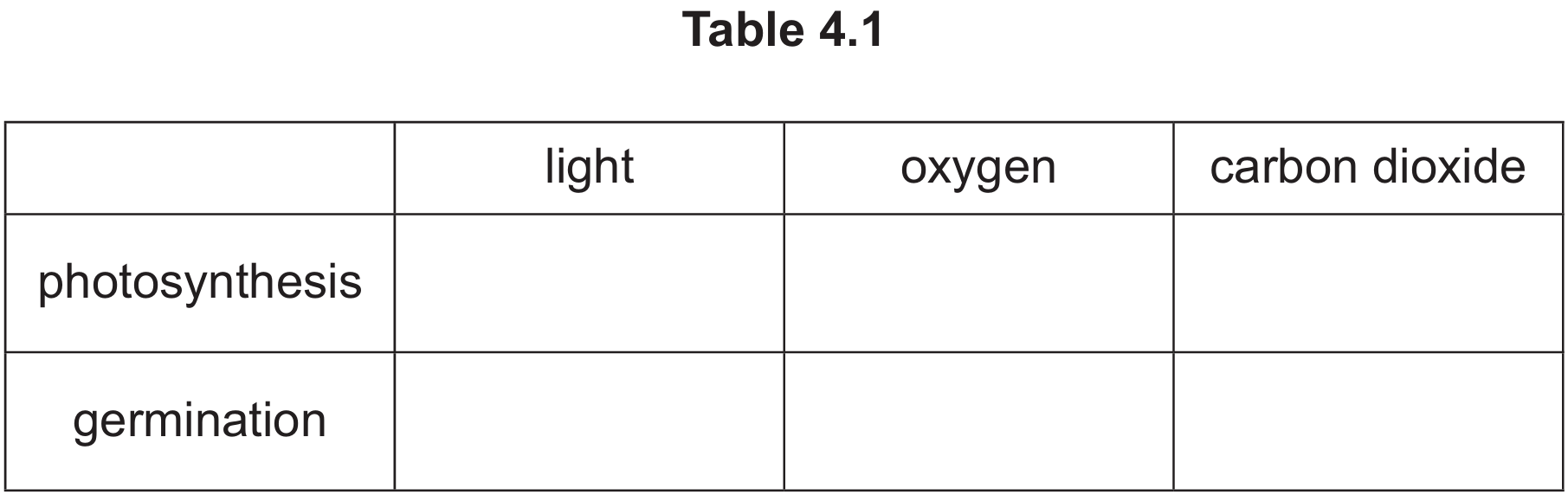
Photosynthesis requires light energy and carbon dioxide as raw materials to produce glucose.
Germination requires oxygen for aerobic respiration to release energy for the growing seedling; it does not require light or carbon dioxide.
Question 5
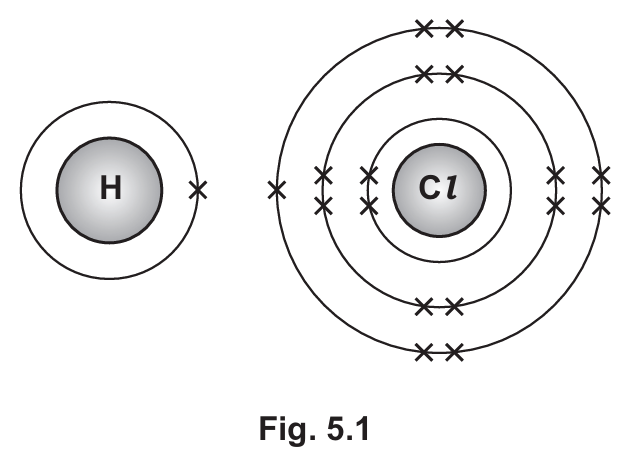
Explain why hydrogen chloride gas is a covalent compound and not an ionic compound.
The pH of the hydrochloric acid is found using a pH probe.
Describe one other way of finding the pH of dilute hydrochloric acid.
Use ideas about electrons in your answer.
Most-appropriate topic codes (Cambridge IGCSE Co-ordinated Sciences 0654):
• Topic C2.5 — Simple molecules and covalent bonds (Part (a)(i)–(iii))
• Topic C7.1 — Characteristic properties of acids and bases (Part (a)(iv), (v))
• Topic C8.3 — Group VII properties (Part (b))
▶️ Answer/Explanation
(a)(i) hydrogen + chlorine → hydrogen chloride
Hydrogen gas reacts directly with chlorine gas to form hydrogen chloride gas.
(a)(ii) Both hydrogen and chlorine are non-metals
Ionic bonds form between metals and non-metals through electron transfer.
Since both atoms here are non-metals, they share electrons instead, forming a covalent bond.
(a)(iii) One shared (bonding) pair of electrons between H and Cl, with Cl retaining its three lone pairs
H contributes one electron and Cl contributes one electron to the shared pair.
Chlorine’s remaining six outer electrons are shown as three lone pairs around the Cl symbol.
(a)(iv) Use universal indicator solution (or paper) and match the colour produced to a pH colour chart
Universal indicator changes colour depending on the pH of the solution.
Comparing the resulting colour to a standard chart gives an estimate of the pH.
(a)(v) Any value from 1 to 3
Dilute hydrochloric acid is a strong acid, so it has a low pH, typically between 1 and 3.
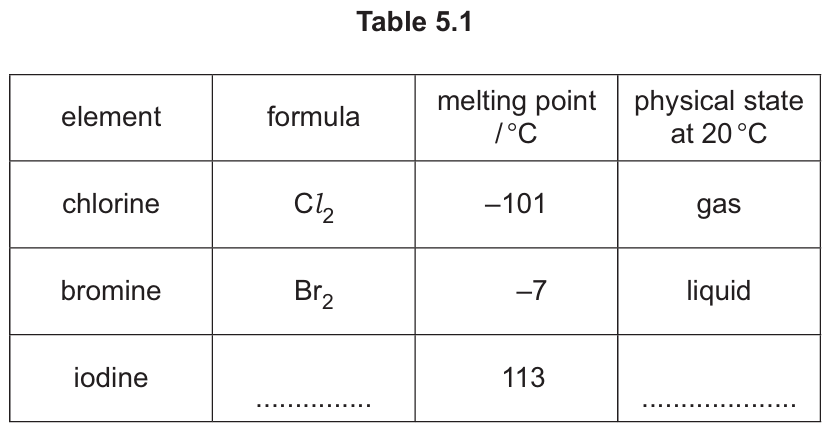
(b)(i) 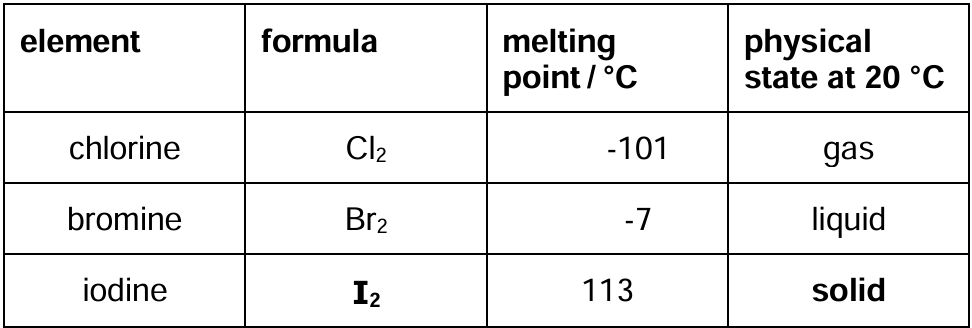
Like chlorine and bromine, iodine exists as a diatomic molecule, \( \text{I}_2 \).
Since its melting point (113°C) is above 20°C, iodine is a solid at room temperature.
(b)(ii) halogens
Group VII elements are collectively known as the halogens.
(b)(iii) They all have seven electrons in their outer shell
Elements are grouped together in the Periodic Table based on having the same number of outer-shell electrons, which gives them similar chemical properties.
Question 6
most ionising ………………..
least ionising ………………..
Most-appropriate topic codes (Cambridge IGCSE Co-ordinated Sciences 0654):
• Topic P5.2.2 — The three types of nuclear emission (Part (a))
• Topic P3.3 — Electromagnetic spectrum / Topic P3.4 — Sound (Part (b))
• Topic P2.1.1 — States of matter (Part (c))
▶️ Answer/Explanation
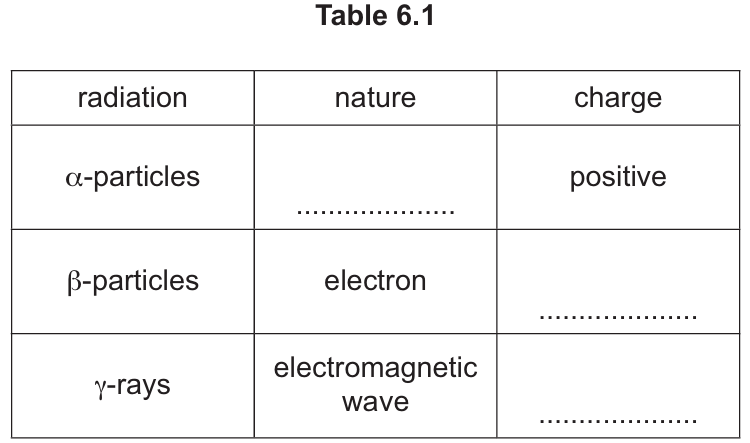
(a)(i) 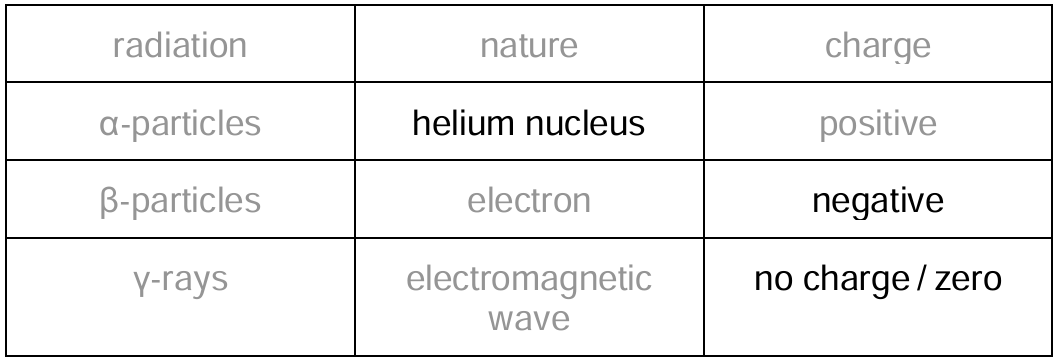
α-particles are helium nuclei (2 protons + 2 neutrons), giving them a positive charge.
β-particles are fast-moving electrons, giving them a negative charge.
γ-rays are electromagnetic waves and therefore carry no electrical charge.
(a)(ii) most ionising: α-particles; then β-particles; least ionising: γ-rays
α-particles are large and slow-moving, causing many ionising collisions.
γ-rays are pure energy waves with no mass, so they ionise far less per unit path length.
(a)(iii) γ-rays
γ-rays are the most penetrating because they are uncharged and pass through most materials with little interaction.
(b)(i) Medical imaging/scanning of bones, or security scanning
X-rays pass more easily through soft tissue than dense bone, producing images used to diagnose fractures and other internal conditions.
(b)(ii) Any value above 20 000 Hz
The human audible range is approximately 20 Hz to 20 000 Hz.
Ultrasound is defined as sound above this range, so any frequency greater than 20 000 Hz is acceptable.
(c) The most energetic molecules escape from the surface of the liquid, leaving behind molecules with lower average kinetic energy, which lowers the temperature
Evaporation occurs when the fastest-moving (most energetic) ethanol molecules escape from the liquid surface.
This removes energy from the remaining liquid.
The average kinetic energy of the remaining molecules decreases, lowering the temperature of the liquid and the skin it touches.
Question 7
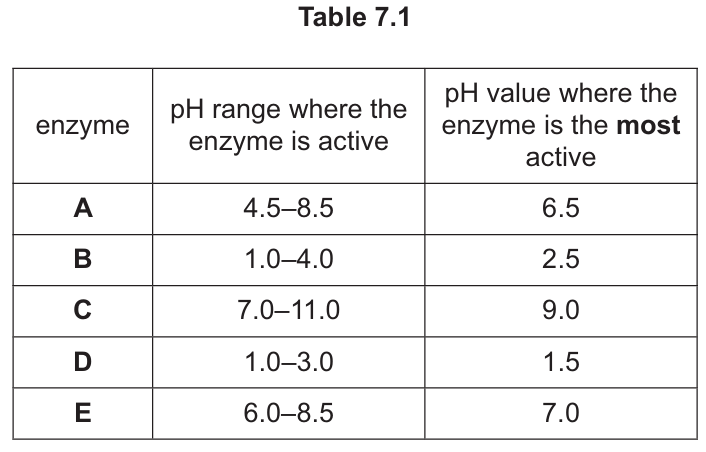
- have the widest pH range of activity …………………….. and ……………………..
- is active at pH 5.5 …………………………………………
- is most active in alkaline conditions. …………………………………………
hormones proteins solvents
oesophagus pancreas small intestine
mechanical digestion …………………..
egestion ……………………
ingestion …………………….
Most-appropriate topic codes (Cambridge IGCSE Co-ordinated Sciences 0654):
• Topic B5.1 — Enzymes (Part (a), (b))
• Topic B7.2 — Digestive system (Part (c), (d))
▶️ Answer/Explanation
(a)(i) widest range: A and C; active at pH 5.5: A; most active in alkaline: C
Enzyme A (4.5–8.5) and enzyme C (7.0–11.0) both span 4.0 pH units, the widest ranges in the table.
Only enzyme A’s range (4.5–8.5) includes pH 5.5.
Enzyme C has the highest “most active” pH value (9.0), which is alkaline.
(a)(ii) Temperature (or substrate concentration)
Enzyme activity is also affected by temperature, since kinetic energy and denaturation depend on it.
(b) catalysts and proteins
Enzymes are biological catalysts that speed up reactions without being used up.
Structurally, enzymes are made of protein.
(c) mechanical digestion: mouth; egestion: anus; ingestion: mouth
Mechanical digestion (chewing) occurs in the mouth, physically breaking food into smaller pieces.
Egestion (removal of undigested waste as faeces) occurs at the anus.
Ingestion (taking food into the body) occurs at the mouth.
(d) Both involve the movement of digested food / nutrient molecules
Absorption is the movement of digested nutrients from the intestine into the blood, while assimilation is their uptake and use by cells — both processes involve the movement of soluble nutrient molecules.
Question 8
Electrolysis is the breakdown of a covalent compound when solid or in aqueous solution by the passage of electricity.
This definition of electrolysis is not correct.
Circle the two words in the definition that are not correct.
Most-appropriate topic codes (Cambridge IGCSE Co-ordinated Sciences 0654):
• Topic C9.6 — Extraction of metals / recycling (Part (a)(i))
• Topic C1.1 — Solids, Liquids and Gases (Part (a)(ii))
• Topic C4.1 — Electrolysis (Part (b))
▶️ Answer/Explanation
(a)(i) Copper ore is a finite/limited resource
Recycling conserves the limited supply of copper ore, reducing the need for new mining.
(a)(ii) Arrangement: solid is regular, liquid is irregular; Motion: solid atoms only vibrate about a fixed point, liquid atoms can move/slide past each other
In solid copper, atoms are arranged in a fixed, regular lattice.
In molten (liquid) copper, the arrangement becomes irregular/random.
Solid atoms vibrate in place, whereas liquid atoms have enough energy to move around each other.
(b)(i) cathode
In electroplating, the object to be coated (the coin) is made the negative electrode (cathode), so positive copper ions are attracted to and deposited on it.
(b)(ii) copper sulfate solution (or copper chloride solution)
A solution containing copper ions is needed so that copper can be deposited onto the coin during electrolysis.
(b)(iii) “covalent” and “solid” should be circled
Electrolysis breaks down an ionic compound, not a covalent one.
It must be molten or in aqueous solution (so ions are free to move), not solid, since ions cannot move in a solid lattice.
Question 9
A Coal burns to produce thermal energy.
B A turbine drives a generator.
C Steam is produced.
D Steam turns a turbine.
E Thermal energy boils water.
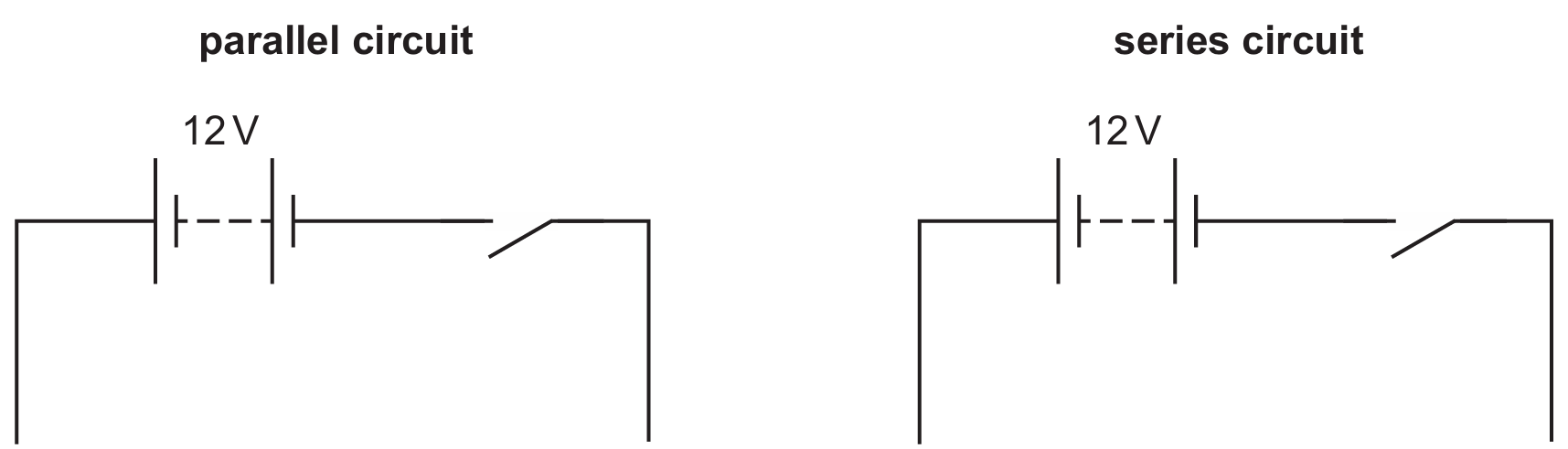
Use two lamps in each circuit.
Most-appropriate topic codes (Cambridge IGCSE Co-ordinated Sciences 0654):
• Topic P1.6.3 — Energy resources (Part (a))
• Topic P1.6.3 — Energy resources / efficiency (Part (b), (c))
• Topic P4.3.2 — Series and parallel circuits (Part (d))
▶️ Answer/Explanation
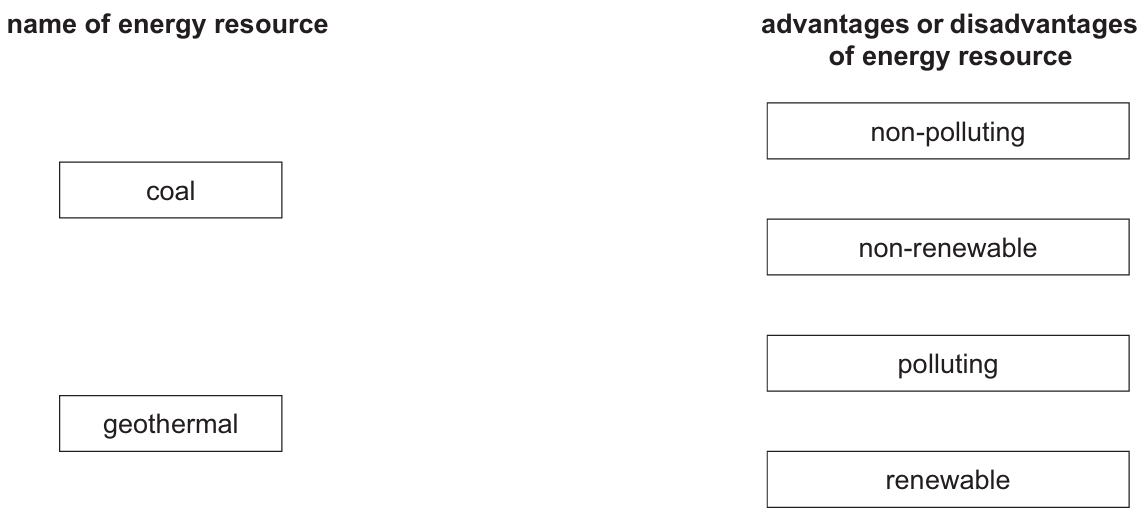
(a) coal → non-renewable AND polluting; geothermal → renewable AND non-polluting
Coal is a fossil fuel that cannot be replaced once used up, and burning it releases pollutants.
Geothermal energy comes from the Earth’s heat, which is naturally replenished and produces no pollution.
(b)(i) A → E → C → D → B → electricity is generated
Coal burns (A), releasing thermal energy that boils water (E), producing steam (C).
The steam turns a turbine (D), which drives a generator (B) to produce electricity.
(b)(ii) 100 °C
Water boils at 100 °C at standard atmospheric pressure.
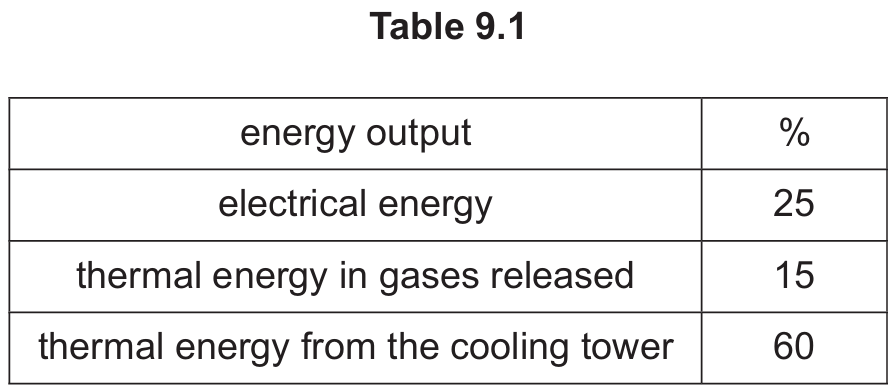
(c)(i) The percentages add up to 100%
Since \( 25 + 15 + 60 = 100 \), all the input energy is accounted for in the listed outputs, showing none is lost overall.
(c)(ii) Most of the energy output is wasted as thermal energy, with only 25% converted into useful electrical energy
A power station is inefficient because the majority (75%) of energy ends up as unwanted heat rather than being converted into useful electrical output.
(d)(i) Parallel circuit: two lamps each on separate branches across the battery; Series circuit: two lamps in a single loop one after another
In a parallel circuit, each lamp is on its own branch, connected independently across the supply.
In a series circuit, both lamps share the same single current path, one after the other.
(d)(ii) Each lamp can be switched on/off independently, or if one lamp fails the others continue to work, or each lamp gets the full mains voltage
In a parallel circuit, the failure of one lamp does not break the circuit for the others, and each lamp receives the same full voltage as the supply.
Question 10
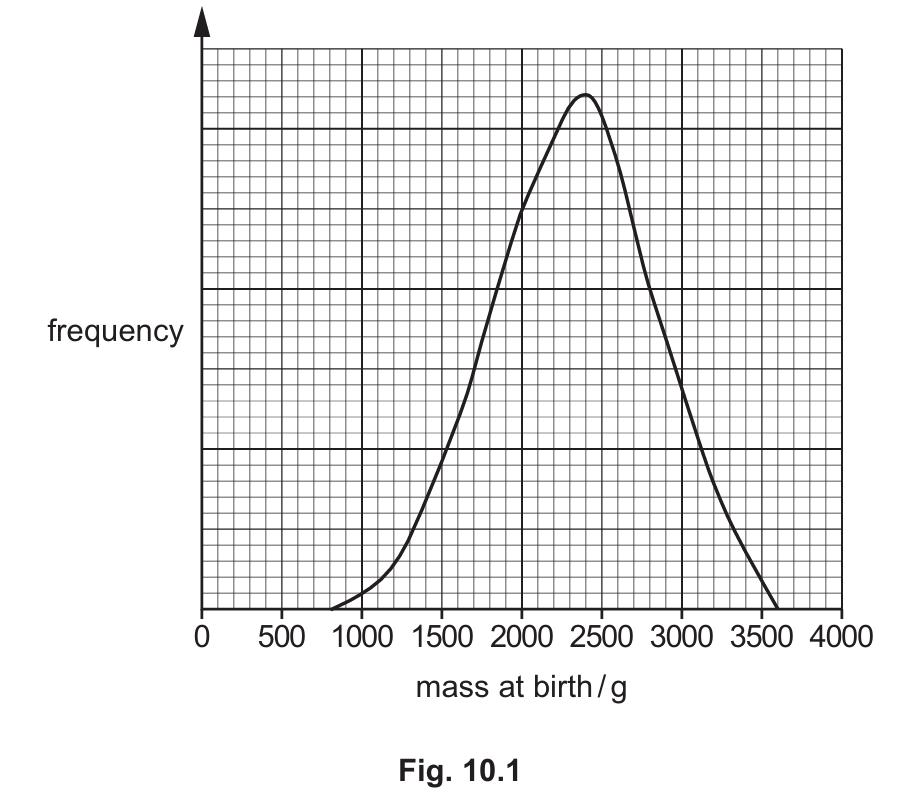
The lowest mass at birth was …………………. g.
The most frequent mass at birth was ………………. g.
Fig. 10.1 shows that mass of babies at birth is an example of continuous variation. This is because there is a …………………. of phenotypes between two extremes.
A phenotype is defined as the …………………. features of an organism.
A There is competition for resources.
B Those with adaptations best suited to their environment survive and reproduce.
C This process is repeated over several generations.
D There is variation in a population.
E Alleles are passed on to the next generation.
Complete the answer spaces to show the correct order. One has been done for you.
Most-appropriate topic codes (Cambridge IGCSE Co-ordinated Sciences 0654):
• Topic B17.1 — Variation (Part (a))
• Topic B17 — Variation and selection / natural selection (Part (b))
• Topic B16.1/B16.3 — Chromosomes, genes and alleles (Part (c))
▶️ Answer/Explanation
(a)(i) lowest mass = 800 g; most frequent mass = 2400 g; range; observable
Reading the graph, the curve starts at approximately 800 g (lowest value plotted).
The peak of the curve (highest frequency) occurs at approximately 2400 g.
Continuous variation shows a full range of values between two extremes, with no distinct categories.
A phenotype refers to the observable features of an organism.
(a)(ii) Height (or another example such as foot size, hand span)
Height in humans varies continuously across a population, with no fixed discrete categories — making it a valid example.
(b) D → A → B → C → E
There must first be variation (D) in a population for competition (A) for resources to matter.
Those best adapted survive and reproduce (B), and this is repeated over generations (C), with alleles passed on (E).
(c)(i) An allele is an alternative form of a gene
Different alleles of the same gene can produce different versions of a characteristic (e.g., different alleles for eye colour).
(c)(ii) In the nucleus
Alleles are sections of DNA found on chromosomes, which are located in the nucleus of the cell.
Question 11
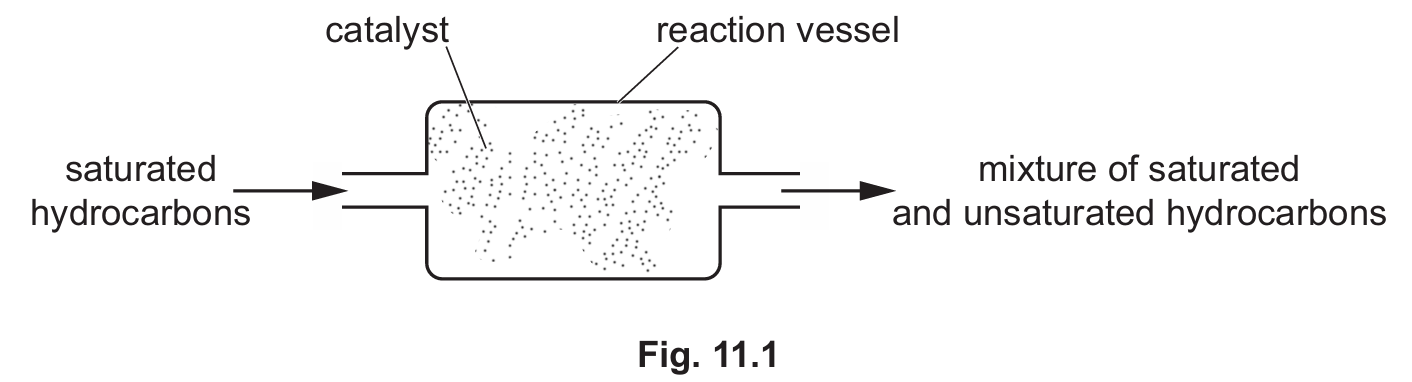
Describe the result of the test with a saturated hydrocarbon.
State the name of the two gases found in clean air in the greatest proportions.
Most-appropriate topic codes (Cambridge IGCSE Co-ordinated Sciences 0654):
• Topic C2.2 — Atomic structure and the Periodic Table (Part (a))
• Topic C11.1/C11.4 — Formulas and terminology / Alkanes (Part (b))
• Topic C11 — Cracking / Topic C5.1 — Exothermic and endothermic reactions (Part (c))
• Topic C10.2 — Air quality and climate (Part (d))
▶️ Answer/Explanation
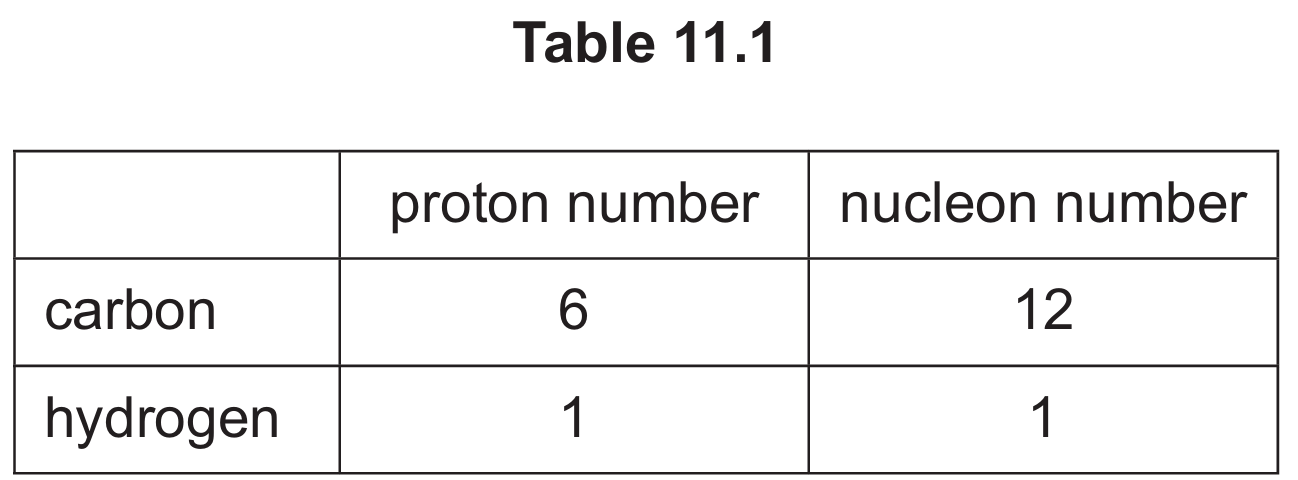
(a)(i) carbon = 6 neutrons; hydrogen = 0 neutrons
Number of neutrons = nucleon number − proton number.
Carbon: \( 12 – 6 = 6 \). Hydrogen: \( 1 – 1 = 0 \).
(a)(ii) 6 electrons
In a neutral atom, the number of electrons equals the number of protons, so carbon has 6 electrons.
(b)(i) A saturated hydrocarbon has only single carbon–carbon bonds, while an unsaturated hydrocarbon has at least one carbon–carbon double bond
This is the key structural difference that defines whether a hydrocarbon is saturated or unsaturated.
(b)(ii) Aqueous bromine remains orange/brown (no colour change)
Saturated hydrocarbons do not react with bromine water, so it stays orange.
In contrast, unsaturated hydrocarbons decolourise it.
(c)(i) To speed up the reaction (without being used up)
The catalyst lowers the activation energy needed for cracking, allowing the reaction to proceed faster at a lower temperature.
(c)(ii) An endothermic reaction is one that takes in thermal energy from the surroundings, causing a decrease in temperature
Energy must be absorbed to break the strong carbon–carbon and carbon–hydrogen bonds during cracking.
(d)(i) Methane (or water vapour)
Methane is a greenhouse gas released from decomposing vegetation and animal digestion.
(d)(ii) Oxygen
Oxygen in the air reacts with hydrocarbons during combustion to produce carbon dioxide and water.
(d)(iii) Nitrogen and oxygen
Clean, dry air is approximately 78% nitrogen and 21% oxygen, making these the two most abundant gases.
Question 12
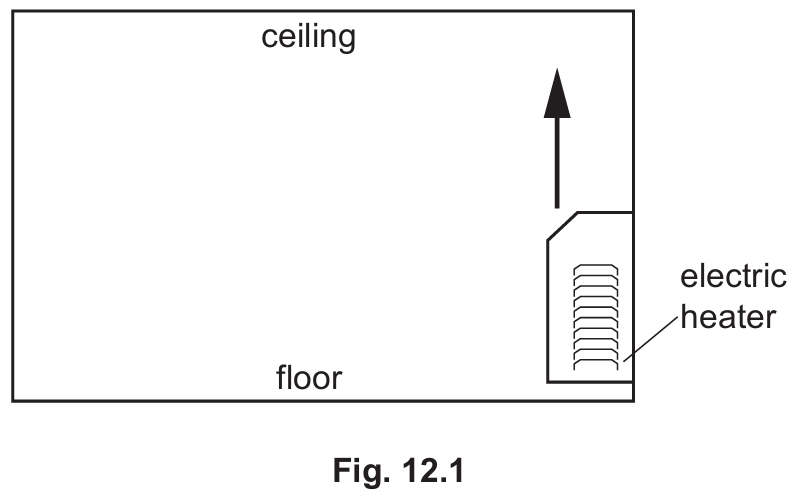
One arrow has been drawn for you.

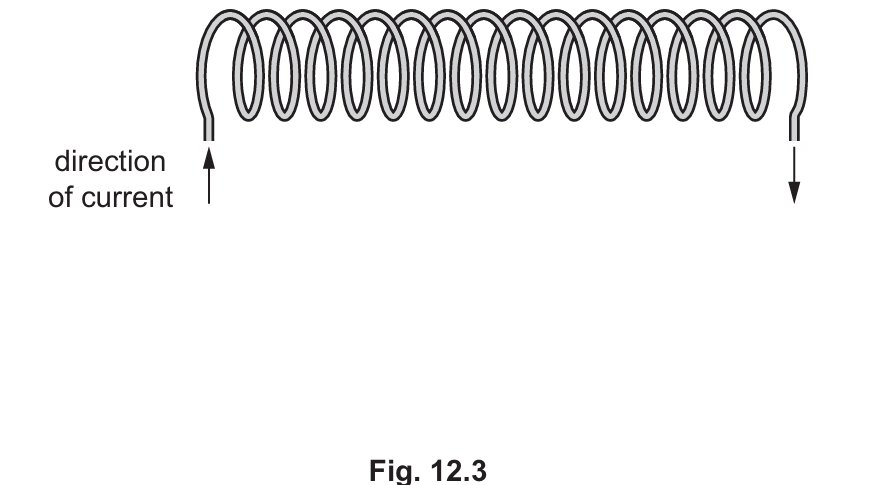
Most-appropriate topic codes (Cambridge IGCSE Co-ordinated Sciences 0654):
• Topic P2.3.2 — Convection (Part (a))
• Topic P2.2.1 — Thermal Expansion of Solids, Liquids and Gases (Part (b))
• Topic P3.4 — Sound (Part (c)(i))
• Topic P4.5.3 — Magnetic effect of current (Part (c)(ii))
▶️ Answer/Explanation
(a)(i) Arrow rising from the heater, moving across the ceiling, dropping down the far wall, and moving back along the floor toward the heater
Warm air rises because it becomes less dense.
It cools as it moves along the ceiling and across, then sinks and returns along the floor, forming a complete convection current loop.
(a)(ii) Convection
Convection is the transfer of thermal energy through the bulk movement of a fluid (here, warm air rising and cool air sinking).
(b)(i) Celsius
The scale shown (with markings such as −10 to 110 °C) is the Celsius temperature scale.
(b)(ii) Alcohol (or mercury)
Both alcohol and mercury are commonly used liquids in liquid-in-glass thermometers.
(b)(iii) Volume (or density)
As temperature increases, the liquid expands, increasing its volume (and decreasing its density), which is used to indicate temperature change.
(c)(i) There is no medium for sound to travel through in a vacuum
Sound is a mechanical wave that requires particles to vibrate and pass on the wave.
A vacuum contains no particles, so sound has nothing to propagate through.
(c)(ii) Field lines run parallel and close together inside the solenoid (like a bar magnet), curving out and around the outside from one end to the other
Inside the solenoid, the magnetic field is strong and uniform, with lines running along the axis.
Outside, the field lines curve from the north end to the south end, similar to a bar magnet’s field pattern.