
Question 1
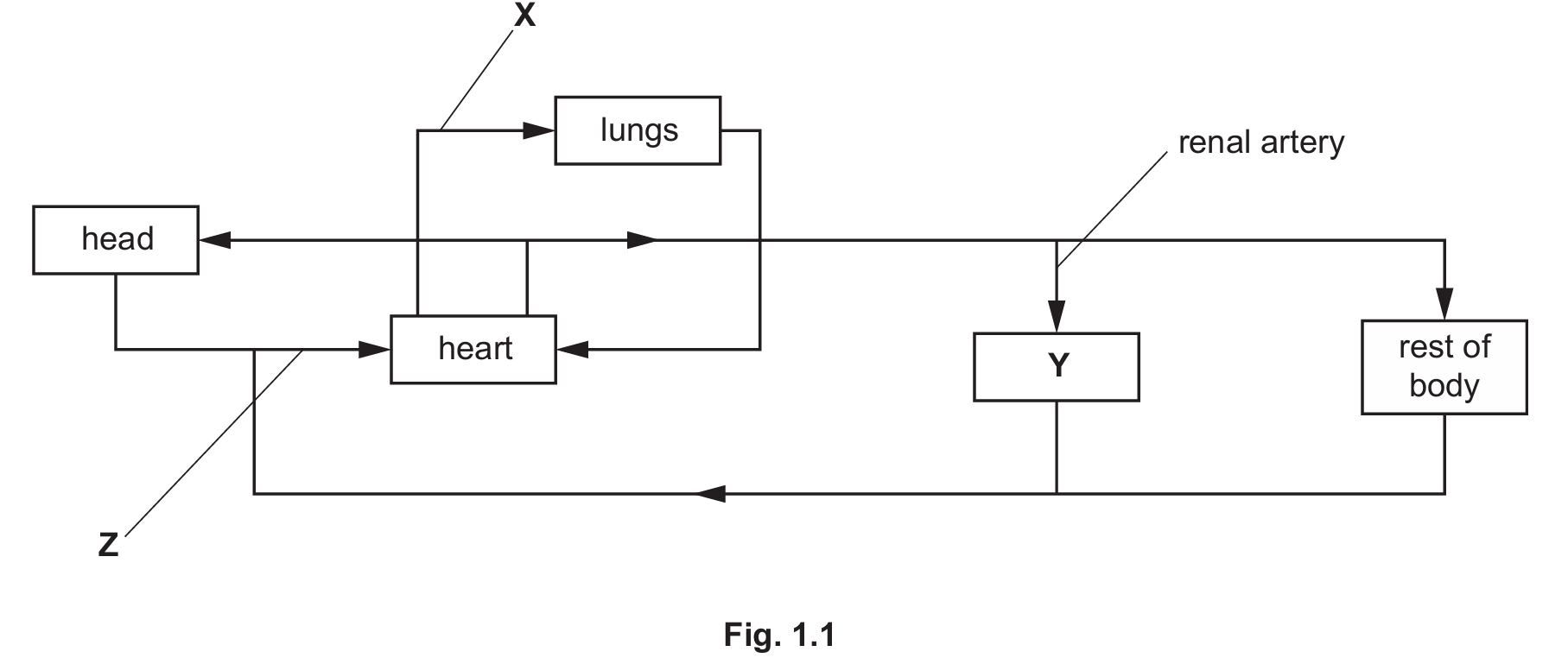
Fig. 1.1 is a simplified diagram of the circulatory system in horses.
The arrows represent the direction of blood flow.
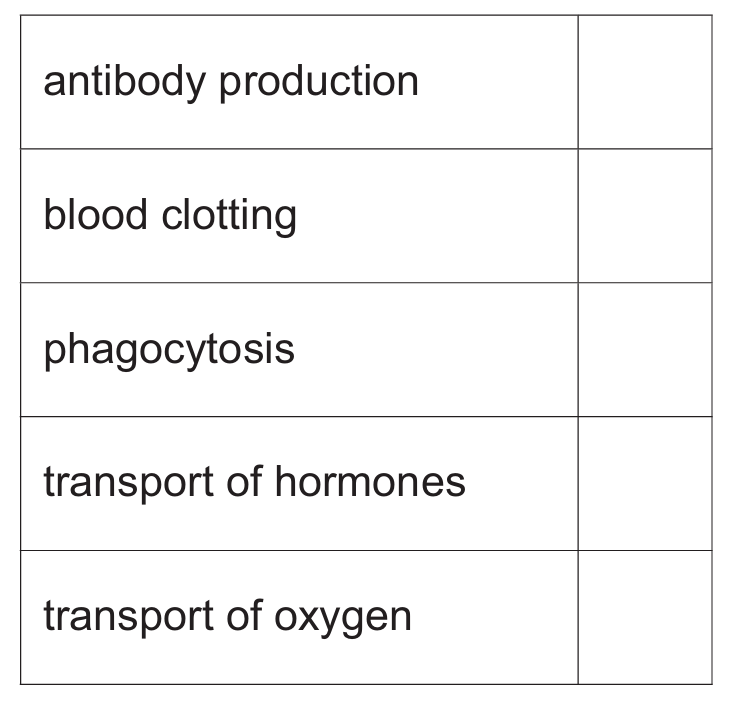
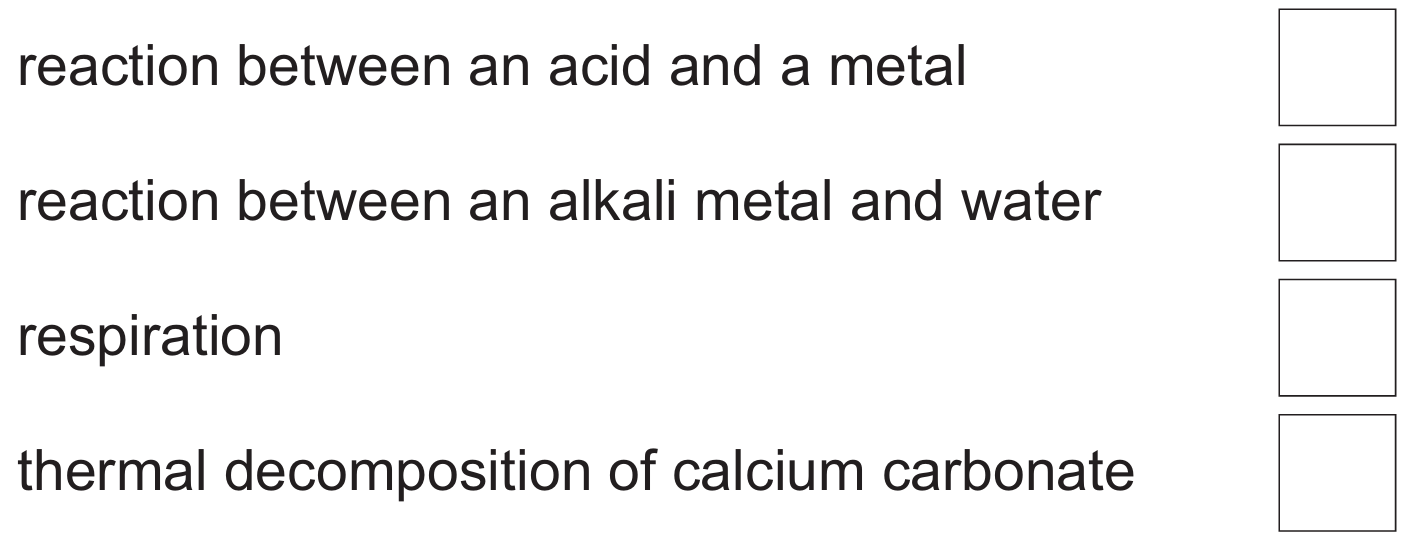
Tick (✓) all the boxes that show the correct functions of white blood cells.
Most-appropriate topic codes (Cambridge IGCSE Co-ordinated Sciences 0654, 2025–2027 syllabus):
• Topic B9.1/B9.3 — Circulatory systems & blood vessels (Part (a))
• Topic B17.1 — Variation (ABO blood groups) (Part (b)(i))
• Topic B9.4 — Blood (Part (b)(ii))
• Topic B9.3 — Blood vessels (Part (c))
▶️ Answer/Explanation
(a)(i) X = pulmonary artery; Y = kidney; Z = vena cava
\(X\) carries blood from the heart to the lungs, so it is the pulmonary artery.
\(Y\) receives blood from the renal artery, so it must be the kidney.
\(Z\) returns blood from the head to the heart, so it is the vena cava.
(a)(ii) Two separate loops through the heart
The diagram shows blood passing through the heart twice in one full circuit.
One loop goes heart → lungs → heart (oxygenation).
The second loop goes heart → rest of body/head/kidney → heart (delivery to tissues), confirming a double circulation.
(b)(i) Any two of: A, B, AB, O
Human blood is classified into the ABO blood group system.
This is an example of discontinuous variation with no intermediate phenotypes.
Any two of the four groups (A, B, AB, O) are acceptable.
(b)(ii) 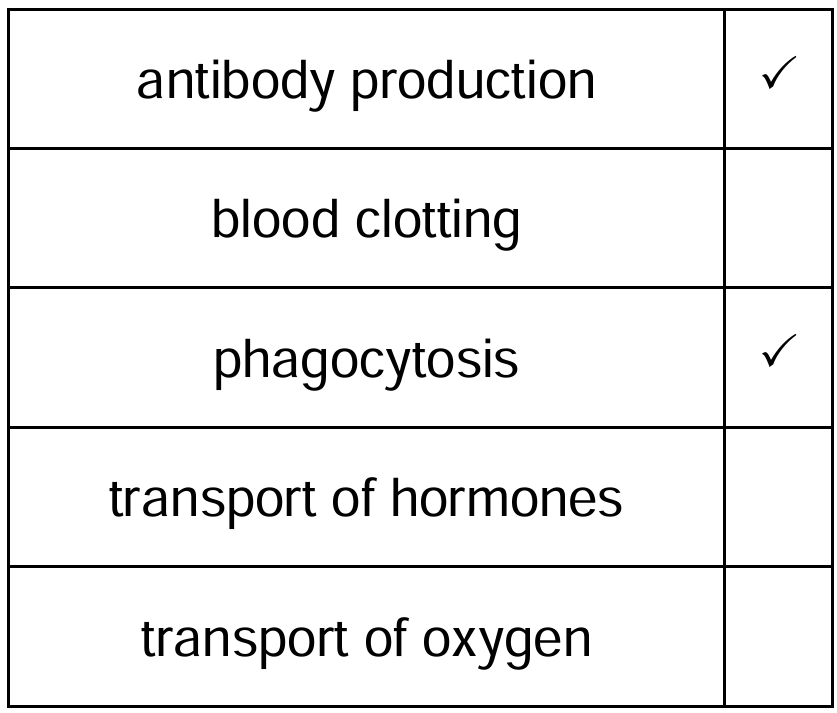
White blood cells defend the body against pathogens.
Lymphocytes produce antibodies, while phagocytes engulf and digest pathogens.
Blood clotting, hormone transport, and oxygen transport are not functions of white blood cells (these belong to platelets, plasma, and red blood cells respectively).
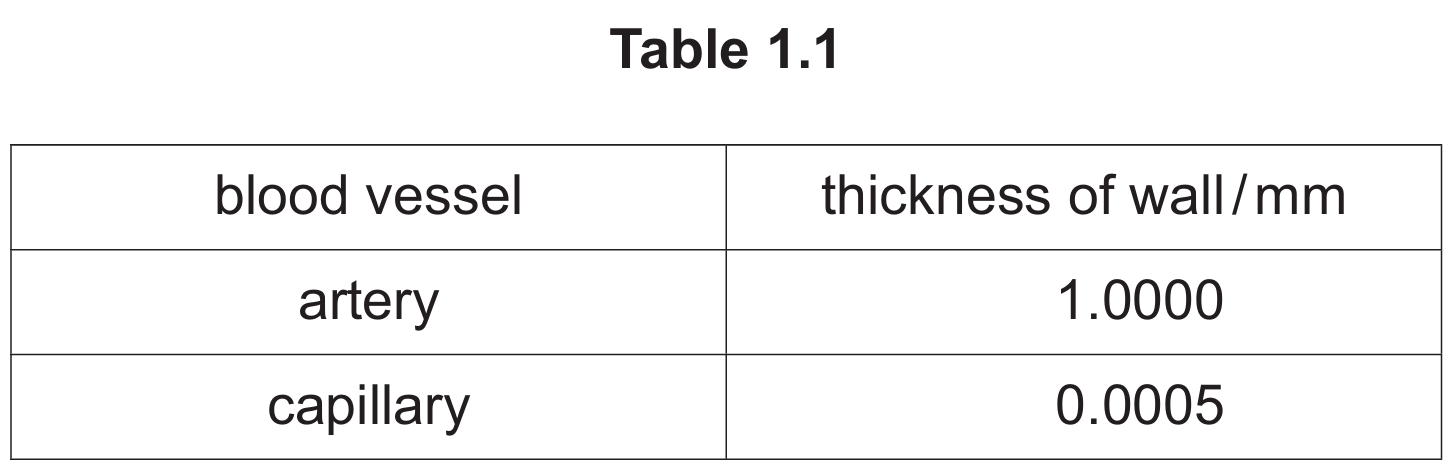
(c)(i) 2000 times
\( \dfrac{1.0000}{0.0005} = 2000 \)
The artery wall is 2000 times thicker than the capillary wall.
(c)(ii) Different functions require different wall thickness
The artery wall is thick (and muscular/elastic) to withstand and maintain the high pressure of blood leaving the heart.
The capillary wall is only one cell thick to provide the shortest possible diffusion distance for the exchange of substances such as oxygen, carbon dioxide, and nutrients between blood and tissues.
Question 2
You only need to draw the outer-shell electrons.
Most-appropriate topic codes (Cambridge IGCSE Co-ordinated Sciences 0654, 2025–2027 syllabus):
• Topic B12 — Respiration / Topic C9.4 — Extraction of metals (thermal decomposition) (Part (a))
• Topic C10.2 — Air quality and climate (Part (b))
• Topic C7.2 — Oxides (Part (c))
• Topic C2.5 — Simple molecules and covalent bonds (Part (d))
▶️ Answer/Explanation
(a) 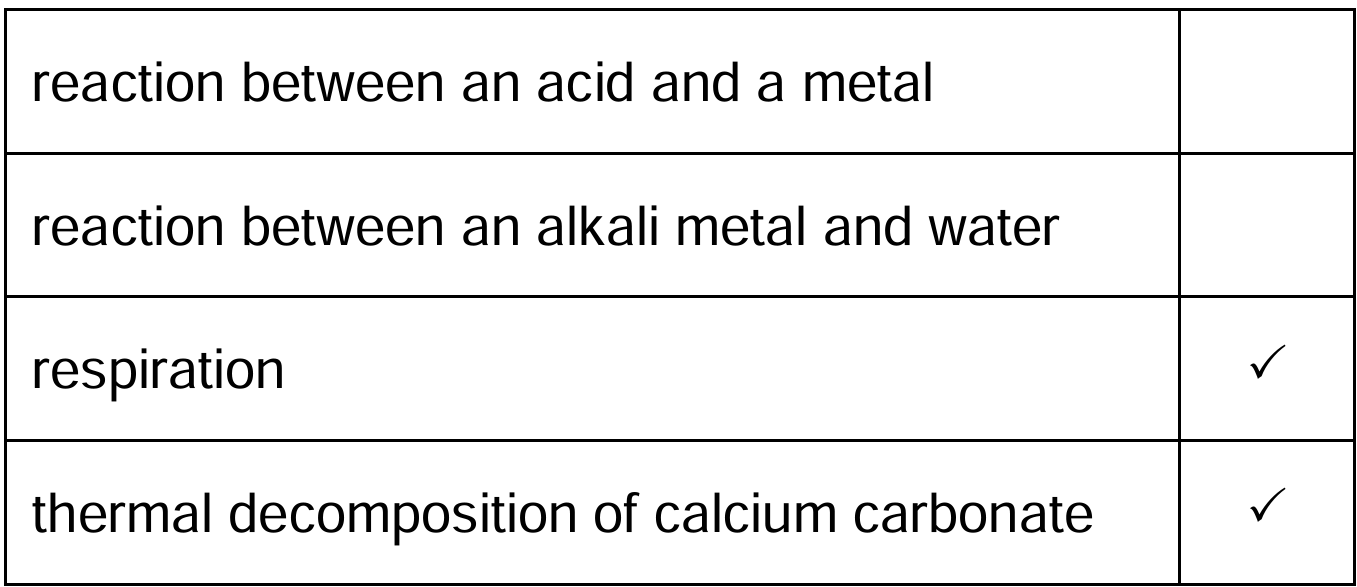
Respiration releases \(CO_2\) as a waste product: \(glucose + oxygen \rightarrow carbon\ dioxide + water\).
Thermal decomposition of calcium carbonate also releases \(CO_2\): \(CaCO_3 \rightarrow CaO + CO_2\).
A reaction between an acid and a metal produces hydrogen gas, not \(CO_2\), and an alkali metal with water also produces hydrogen gas.
(b) Carbon dioxide is a greenhouse gas
Carbon dioxide absorbs and re-emits thermal energy radiated from the Earth, contributing to the (enhanced) greenhouse effect.
Increasing concentrations of this and other greenhouse gases lead to global warming and climate change.
(c) Acidic
Carbon is a non-metal, and oxides of non-metals are classified as acidic oxides.
Carbon dioxide dissolves in water to form a weakly acidic solution (carbonic acid).
(d)(i) Covalent bonding
Carbon dioxide is a simple molecule formed when atoms share pairs of electrons.
Each oxygen atom shares two pairs of electrons with the carbon atom, forming two C=O double covalent bonds.
(d)(ii) 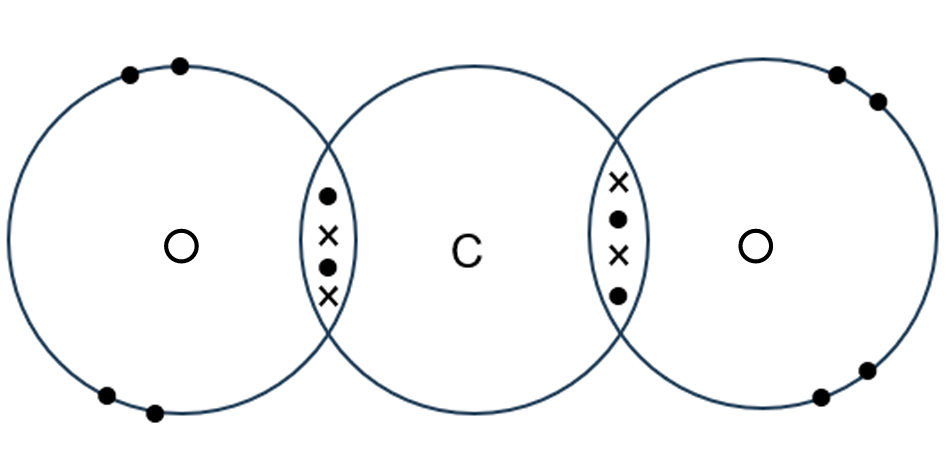
The diagram should show \(O::C::O\) with two double bonds.
Each double bond consists of two shared pairs of electrons (one shown as dots, one as crosses) between carbon and each oxygen.
Each oxygen atom also has two non-bonding (lone) pairs of electrons shown only as dots or crosses belonging to that oxygen, giving carbon 8 outer electrons and each oxygen 8 outer electrons.
Question 3
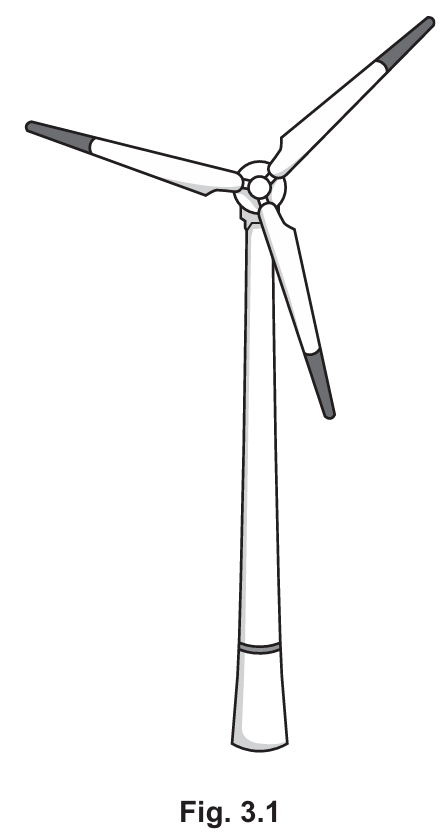
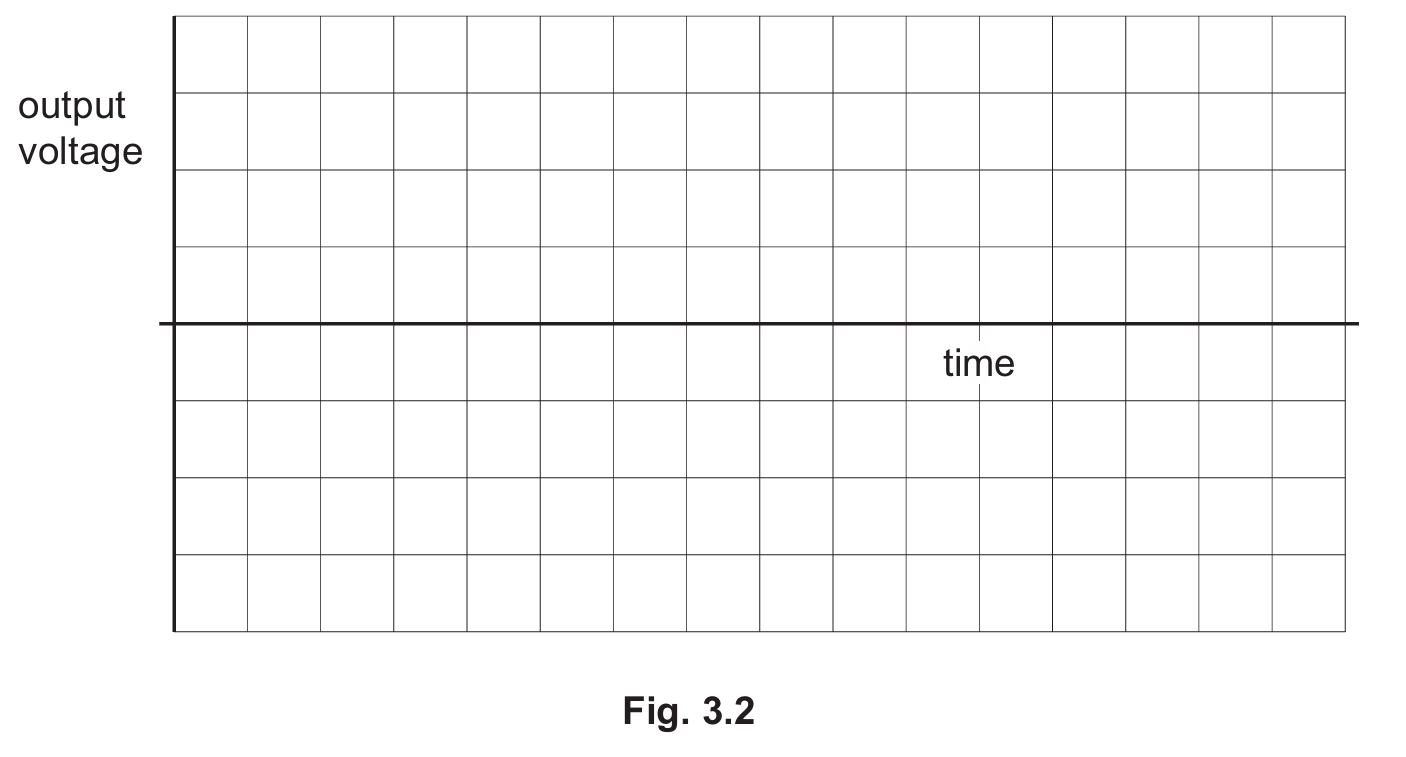
On Fig. 3.2, sketch a graph of output voltage against time for the a.c. generator when the wind turbine is turning at a constant speed.
Describe the construction of a basic step-up transformer.
You may include a labelled diagram to aid your description.
Each blade has a surface area of \(90\,\text{m}^2\).
Calculate the force exerted by the wind on each turbine blade.
Describe, in terms of oscillations and energy transfer, what is meant by a longitudinal wave.
Most-appropriate topic codes (Cambridge IGCSE Co-ordinated Sciences 0654, 2025–2027 syllabus):
• Topic P1.6.3 — Energy resources (Part (a))
• Topic P4.5.2 — The a.c. generator (Part (b))
• Topic P4.5.6 — The transformer (Part (c))
• Topic P1.7 — Pressure (Part (d))
• Topic P3.4 — Sound / Topic P3.1 — General properties of waves (Part (e))
▶️ Answer/Explanation
(a) Does not release \(CO_2\) / renewable / no fuel costs
Wind turbines generate electricity without burning fossil fuels.
This means no greenhouse gases are released and the energy source (wind) is renewable.
(b) Sinusoidal waveform
The trace should be a smooth sine wave, alternating above and below the time axis.
Both the amplitude and the time period of the wave must stay constant, since the turbine turns at constant speed.
(c) Soft-iron core with two coils
A basic transformer has a soft iron core linking two separate coils of wire.
The primary and secondary coils are both wound around the same core.
For a step-up transformer, the number of turns on the secondary coil is greater than the number of turns on the primary coil.
(d) \(648\,000\,\text{N}\) (≈ \(6.5\times10^{5}\,\text{N}\))
Force is calculated using \(F = P \times A\).
\(F = 7200 \times 90 = 648\,000\,\text{N}\), which rounds to \(650\,000\,\text{N}\) (2 s.f.).
(e)(i) \(20\,\text{Hz}\)
The typical range of human hearing is approximately \(20\,\text{Hz}\) to \(20\,000\,\text{Hz}\).
\(20\,\text{Hz}\) is therefore the accepted minimum audible frequency for a healthy human ear.
(e)(ii) Oscillations parallel to energy transfer
In a longitudinal wave, the particles oscillate back and forth in the same direction that the energy is being transferred.
This produces alternating regions of compression and rarefaction along the direction of travel.
Question 4
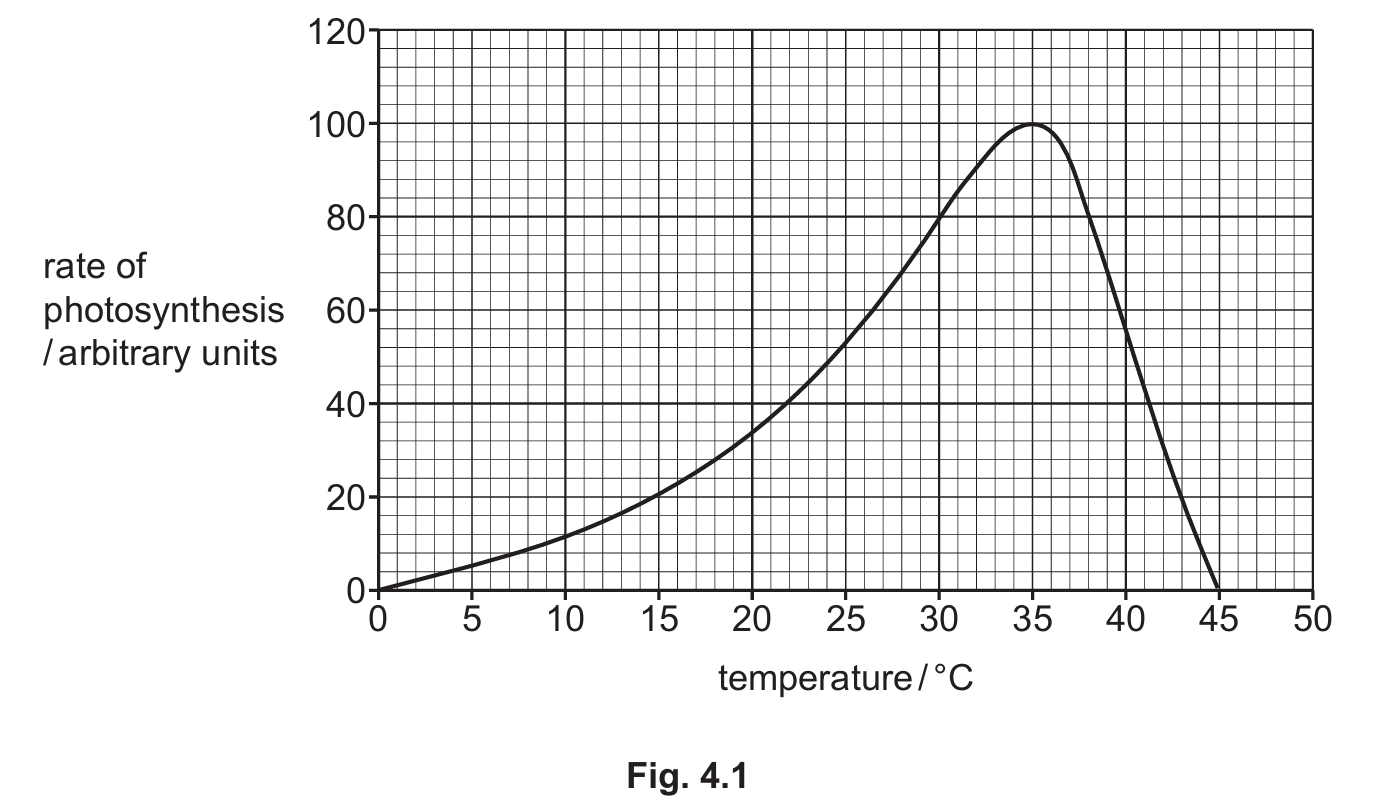
The rate increases because the particles gain more ____ energy causing more ____ collisions.
At 45°C the enzymes are ____. Photosynthesis stops because the ____ of the enzyme has changed shape so the substrate can no longer fit.
During photosynthesis chlorophyll transfers ____ energy into ____ energy.
State the name of the carbohydrate in plants that is used for storage and for transport.
State the name of the cells
- in the leaf that are adapted for efficient photosynthesis
- that are adapted for absorption of water from the soil.
Most-appropriate topic codes (Cambridge IGCSE Co-ordinated Sciences 0654, 2025–2027 syllabus):
• Topic B6.1 — Photosynthesis (Parts (a) and (c))
• Topic B5.1 — Enzymes (Part (b))
• Topic B4.1 — Biological molecules / Topic B8 — Transport in plants (Part (d))
• Topic B2.1 — Cell structure (Part (e))
▶️ Answer/Explanation
(a) \(6CO_2 + 6H_2O \rightarrow C_6H_{12}O_6 + 6O_2\)
Carbon dioxide and water are the reactants, combined using light energy absorbed by chlorophyll.
Glucose and oxygen are the products, and the equation must be balanced on both sides.
(b) 35; kinetic; successful/frequent; denatured; active site
The rate of photosynthesis is highest at the optimum temperature of \(35\,^{\circ}C\), as read from the peak of the graph.
Increasing temperature gives particles more kinetic energy, causing more frequent/successful collisions between enzyme and substrate.
At \(45\,^{\circ}C\) the enzymes are denatured, because the shape of the active site has changed permanently so the substrate can no longer bind.
(c) Light energy into chemical energy
Chlorophyll absorbs light energy from sunlight.
This light energy is converted into chemical energy, stored in the bonds of glucose molecules.
(d) Storage = starch; Transport = sucrose
Glucose made in photosynthesis is converted to starch for storage, since starch is insoluble and does not affect water potential.
Glucose is converted to sucrose for transport around the plant in the phloem, as sucrose is more soluble and stable for translocation.
(e) Palisade mesophyll cells; root hair cells
Palisade mesophyll cells are packed with chloroplasts and are positioned near the top of the leaf for efficient photosynthesis.
Root hair cells have a large surface area, adapting them for efficient absorption of water (and mineral ions) from the soil.
Question 5
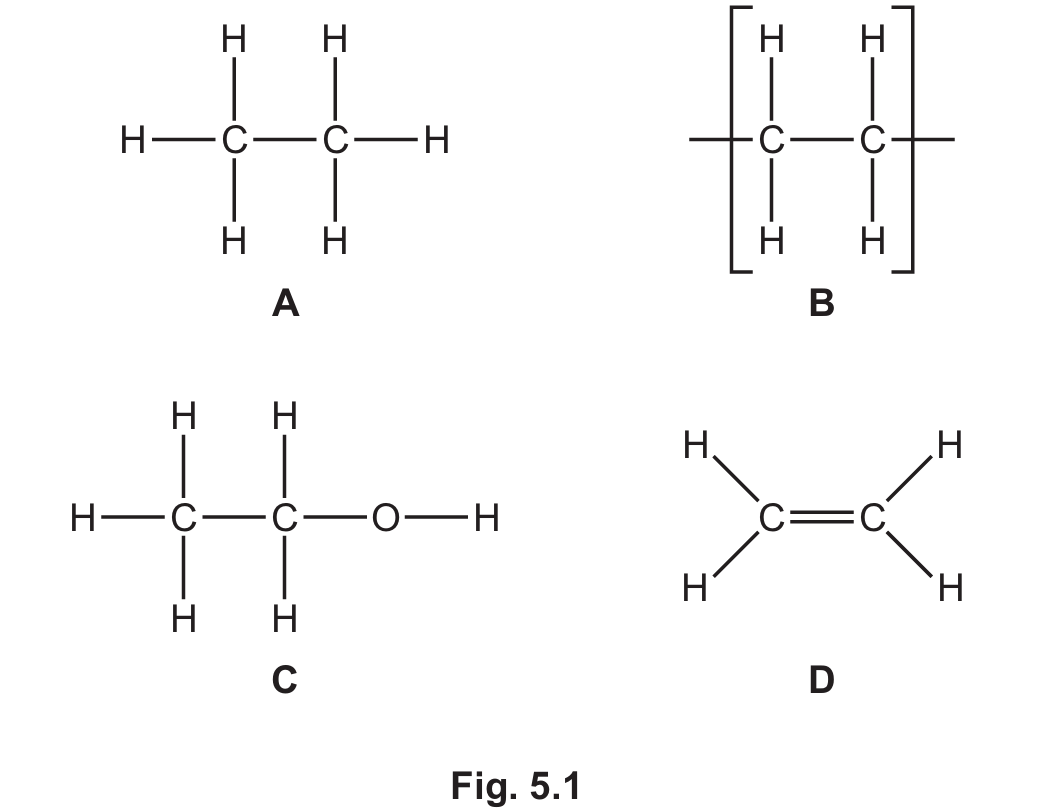
Choose from A, B, C or D.
Choose from A, B, C or D.
State what type of reaction takes place.
State two similarities between the members of a homologous series.
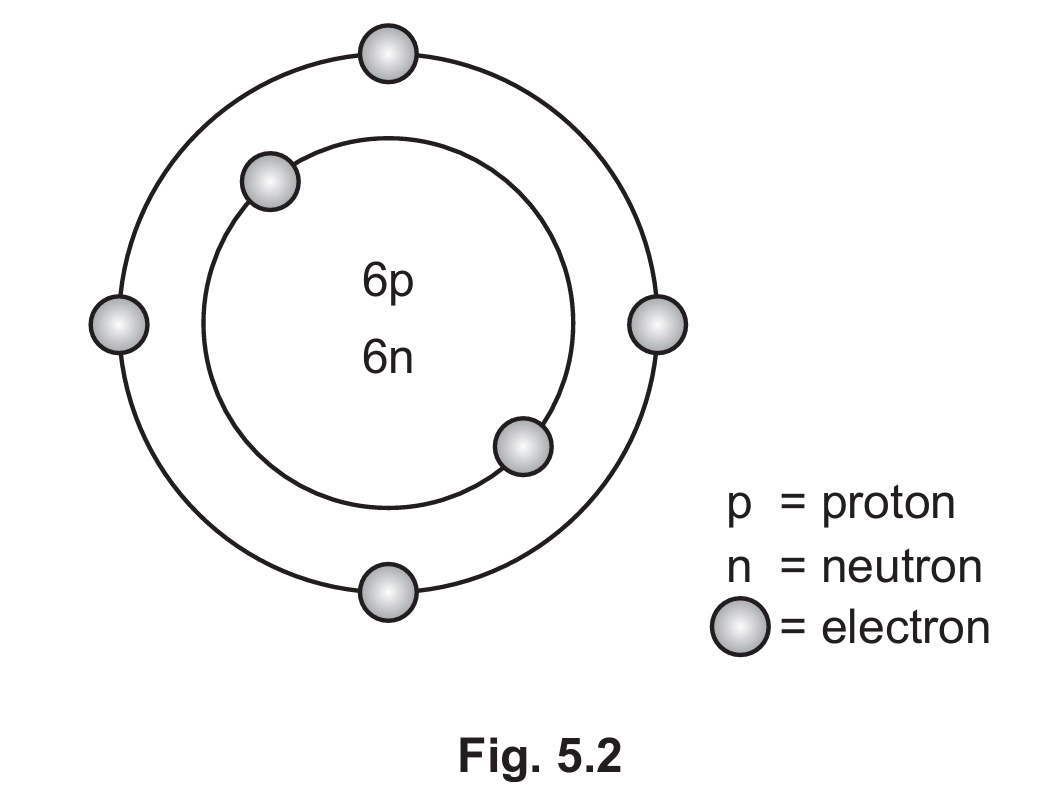
Describe how to deduce from Fig. 5.2 that carbon is in Group IV.
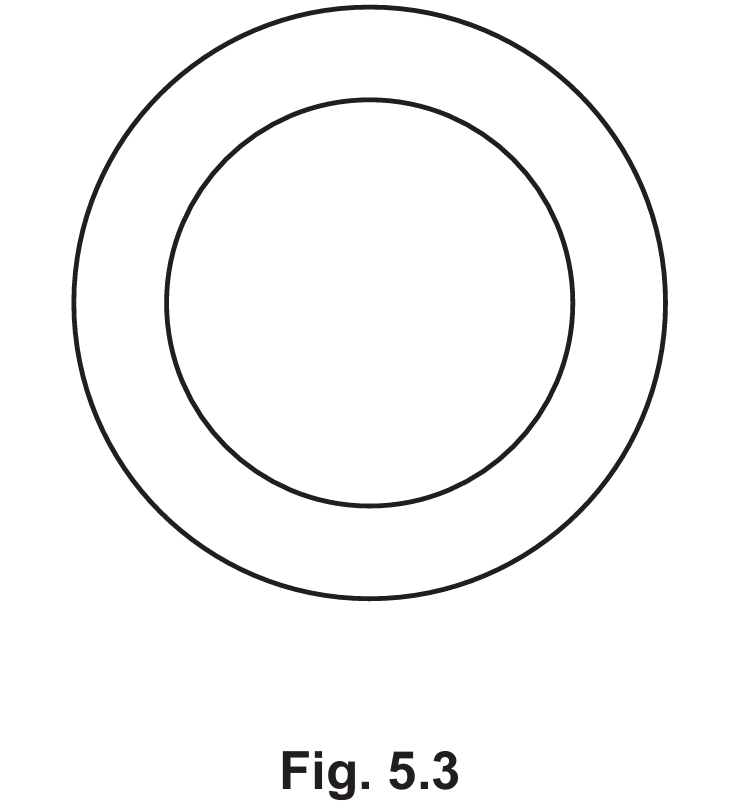
Complete Fig. 5.3 to show a different isotope of carbon from that shown in Fig. 5.2.
Most-appropriate topic codes (Cambridge IGCSE Co-ordinated Sciences 0654, 2025–2027 syllabus):
• Topic C11.5 — Alkenes (Parts (a)(i)–(iii))
• Topic C11.6 — Alcohols (Part (a)(iv))
• Topic C11.1 — Formulas and terminology (Part (a)(v))
• Topic C2.2 — Atomic structure and the Periodic Table (Part (b)(i))
• Topic C2.3 — Isotopes (Part (b)(ii))
▶️ Answer/Explanation
(a)(i) D
Compound D has the structure \(H_2C=CH_2\), which is ethene.
(a)(ii) D
Compound D contains a C=C double bond, making it an unsaturated hydrocarbon.
Compounds A and B contain only single C–C bonds (saturated), and compound C contains an oxygen atom so is not a hydrocarbon.
(a)(iii) Addition polymerisation
Many ethene (D) monomer molecules join together by opening their double bonds.
This forms the long-chain polymer poly(ethene), shown as compound B.
(a)(iv) Addition of steam using a catalyst
Ethene (D) reacts with steam (\(H_2O\)) in the presence of a catalyst (e.g. phosphoric acid).
This addition reaction converts the C=C double bond into a single bond and adds an –OH group, forming ethanol (C).
(a)(v) Same general formula; similar chemical properties
Members of a homologous series all fit the same general formula.
They show a gradual change in physical properties (e.g. boiling point) but similar chemical properties, differing by a \(CH_2\) unit between consecutive members.
(b)(i) 4 electrons in the outer shell
Fig. 5.2 shows carbon has 4 electrons in its outer shell.
The Group number of an element corresponds to the number of electrons in its outer shell, so carbon is in Group IV.
(b)(ii) Same protons, different neutrons
The diagram should keep 6 protons (same as Fig. 5.2, since isotopes are atoms of the same element).
The electron arrangement of 2,4 must also be shown to be correct.
The number of neutrons drawn must be different from 6 (e.g. 7 or 8), since isotopes differ only in their number of neutrons.
Question 6
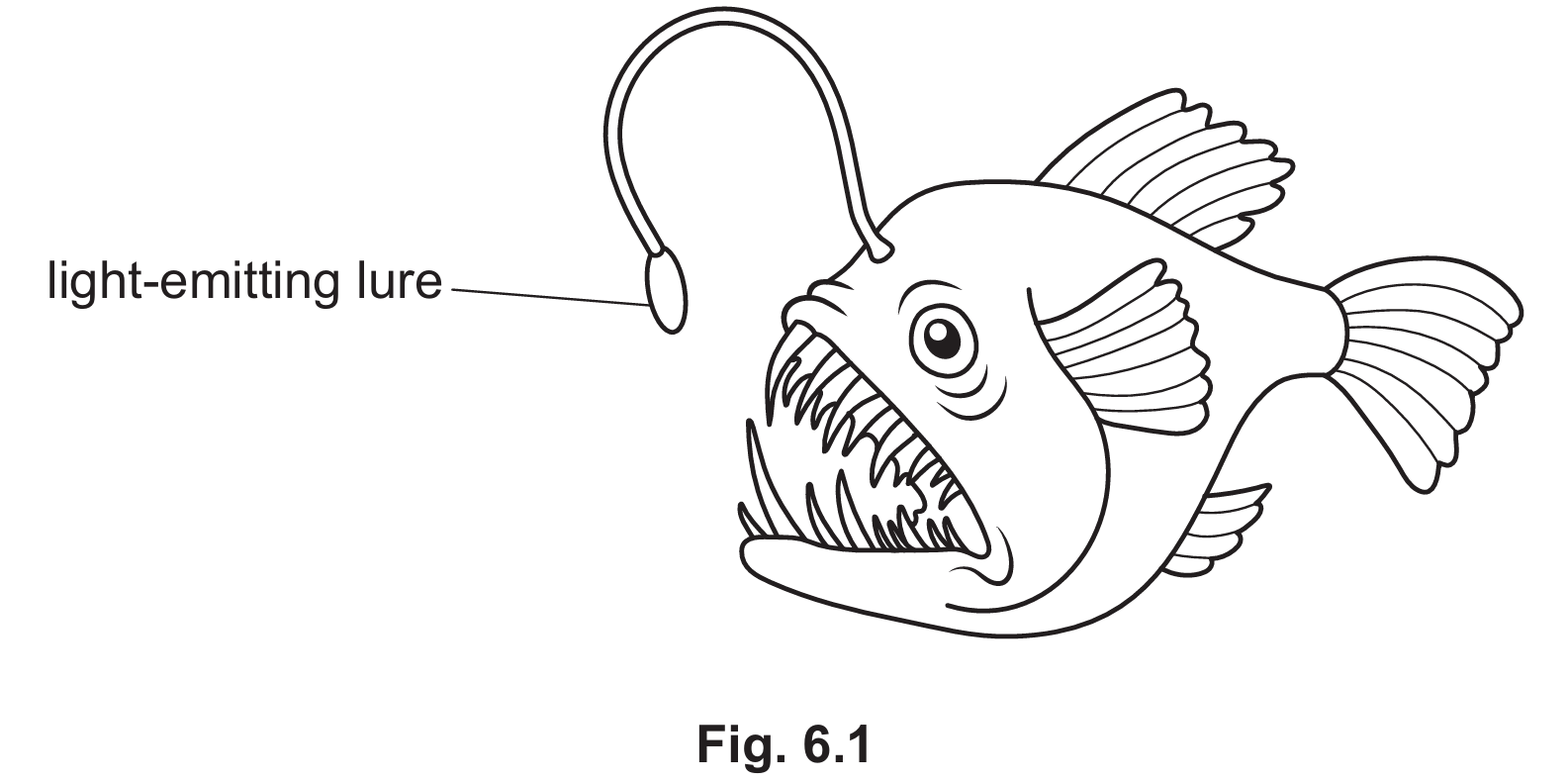
Fig. 6.1 shows an angler fish.
Calculate the speed of light in water.
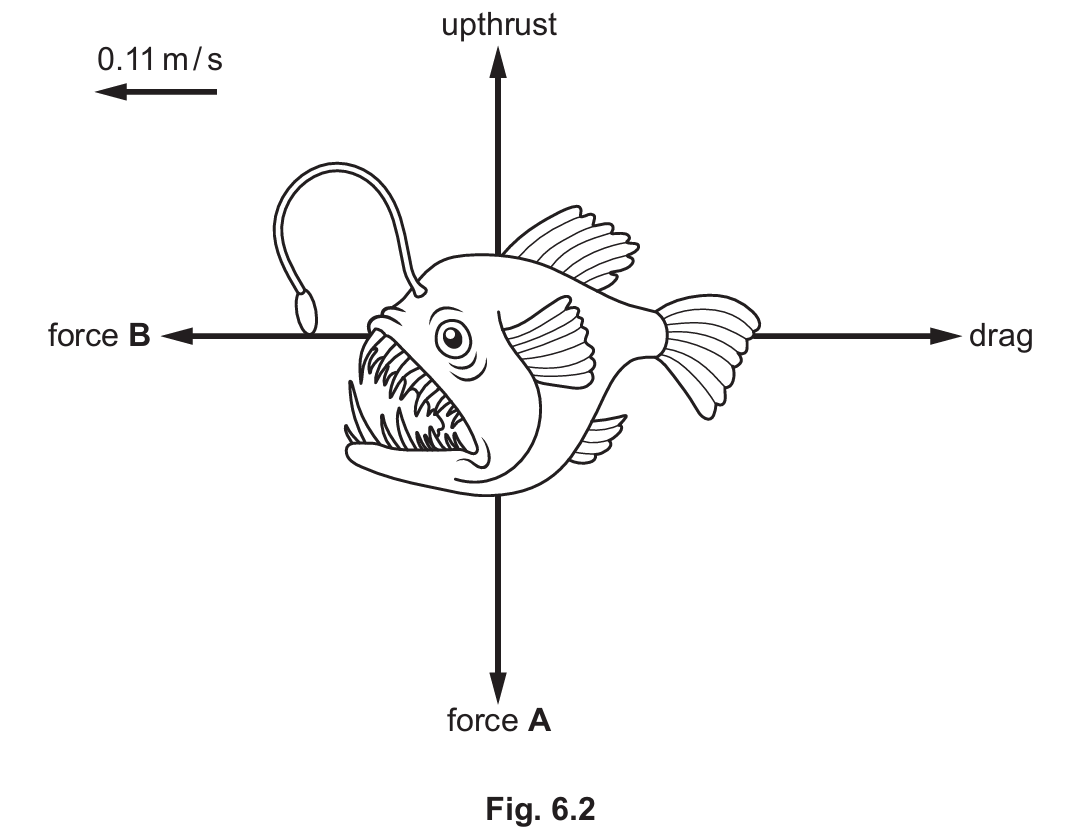
Force A is called the ____.
Force A has the same magnitude as the ____, and force B has the same magnitude as the ____.
There is no resultant force acting on the angler fish. Therefore, there is no ____, so the angler fish moves at constant speed.
Most-appropriate topic codes (Cambridge IGCSE Co-ordinated Sciences 0654, 2025–2027 syllabus):
• Topic P3.2.2 — Refraction of light (Part (a))
• Topic P1.6.1 — Energy (Part (b)(i))
• Topic P1.5.1 — Effects of forces (Part (b)(ii))
▶️ Answer/Explanation
(a)(i) \(2.3 \times 10^{8}\,\text{m/s}\)
Wave speed is calculated using \(v = f\lambda\).
\(v = (5.0\times10^{14}) \times (4.5\times10^{-7}) = 2.25\times10^{8} \approx 2.3\times10^{8}\,\text{m/s}\).
(a)(ii) \(1.3\)
Refractive index is calculated using \(n = \dfrac{c}{v}\), where \(c = 3.0\times10^{8}\,\text{m/s}\) is the speed of light in a vacuum/air.
\(n = \dfrac{3.0\times10^{8}}{2.3\times10^{8}} \approx 1.3\).
(b)(i) \(0.17\,\text{J}\)
Kinetic energy is calculated using \(KE = \tfrac{1}{2}mv^2\).
\(KE = 0.5 \times 28 \times 0.11^2 = 0.5 \times 28 \times 0.0121 \approx 0.17\,\text{J}\).
(b)(ii) Weight; upthrust and drag; acceleration
Force A acts downwards on the fish, so it is the weight of the fish.
Since the fish moves at constant velocity, the resultant force is zero: force A (weight) balances the upthrust, and force B balances the drag.
With no resultant force, there is no acceleration, so the fish continues to move at a constant speed.
Question 7
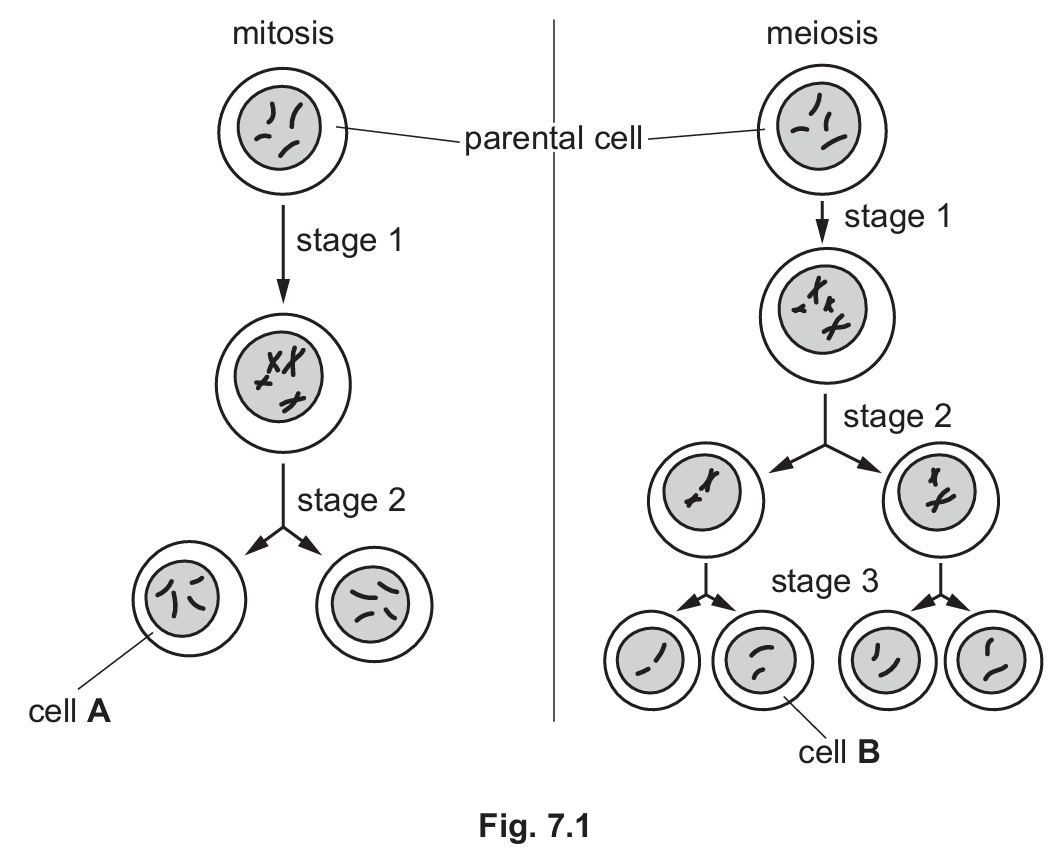
Identify the actual number of chromosomes in cell A and cell B.
Most-appropriate topic codes (Cambridge IGCSE Co-ordinated Sciences 0654, 2025–2027 syllabus):
• Topic B16.2 — Cell division (all parts)
▶️ Answer/Explanation
(a)(i) Cell A = 24; Cell B = 12
Mitosis produces daughter cells with the same chromosome number as the parent cell, so cell A has 24 chromosomes.
Meiosis halves the chromosome number, so cell B (a gamete) has 12 chromosomes.
(a)(ii) Gametes (sex cells / haploid cells)
Cell B is produced by meiosis and contains half the chromosome number, identifying it as a gamete.
(a)(iii) Duplication/replication of chromosomes
Before division, each chromosome is copied exactly, producing two identical chromatids joined together.
(a)(iv) Diploid
The parental cell contains chromosomes in pairs (the full chromosome number), making the nucleus diploid.
(a)(v) Paired (arranged in homologous pairs)
In a diploid nucleus, chromosomes are arranged in pairs, with one chromosome of each pair inherited from each parent.
(b) Growth and repair of damaged tissues (any two of: growth, repair, replacement of cells, asexual reproduction)
Mitosis produces genetically identical cells, allowing an organism to grow by increasing cell number.
It is also used to repair damaged tissues and replace worn-out cells.
Question 8
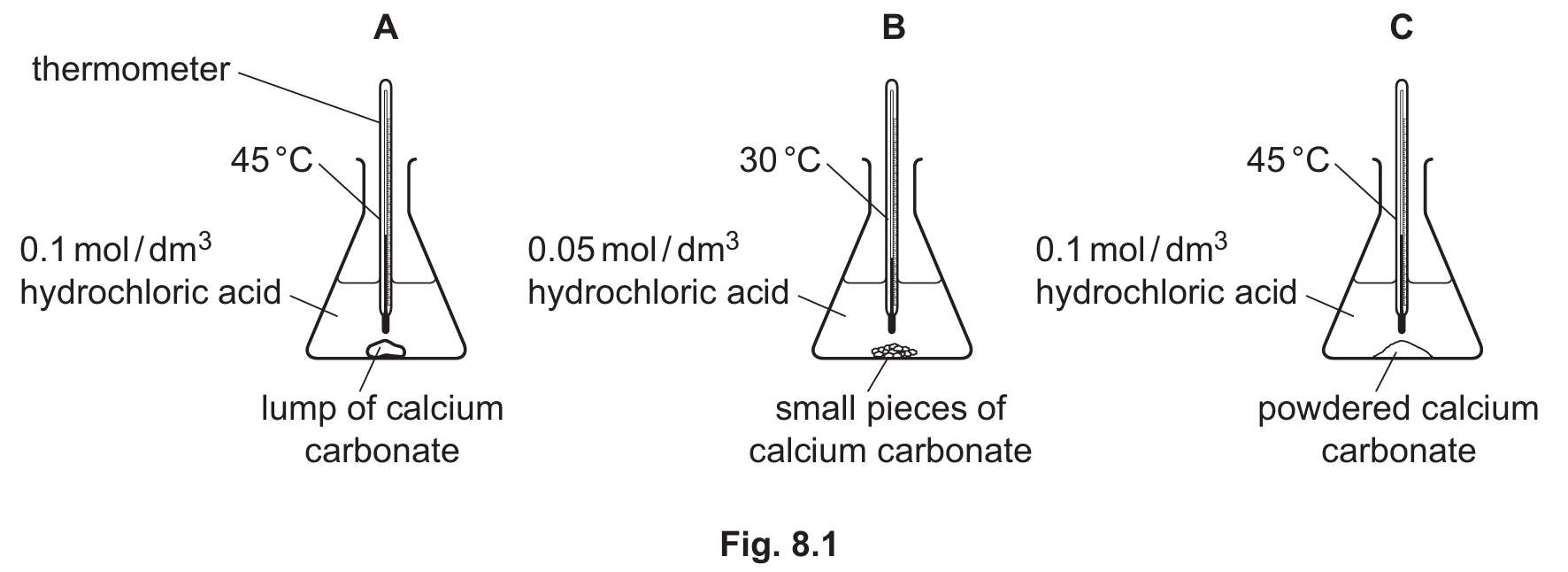
The student does the experiment using three different sets of conditions, A, B and C.
All other variables are kept the same.
Fig. 8.1 shows the three sets of conditions.
The volume of one mole of any gas is \(24\,\text{dm}^3\) at r.t.p. Show your working.
[\(A_r\): C, 12; O, 16]
State what is meant by an exothermic reaction.
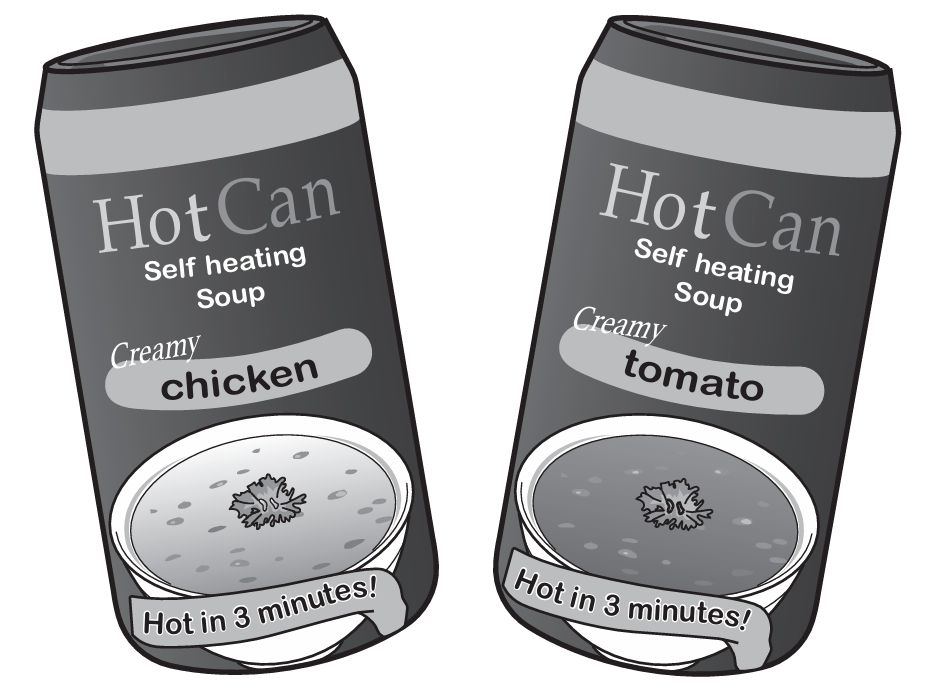
Fig. 8.2 shows the reaction profiles for the three reactions, X, Y and Z.
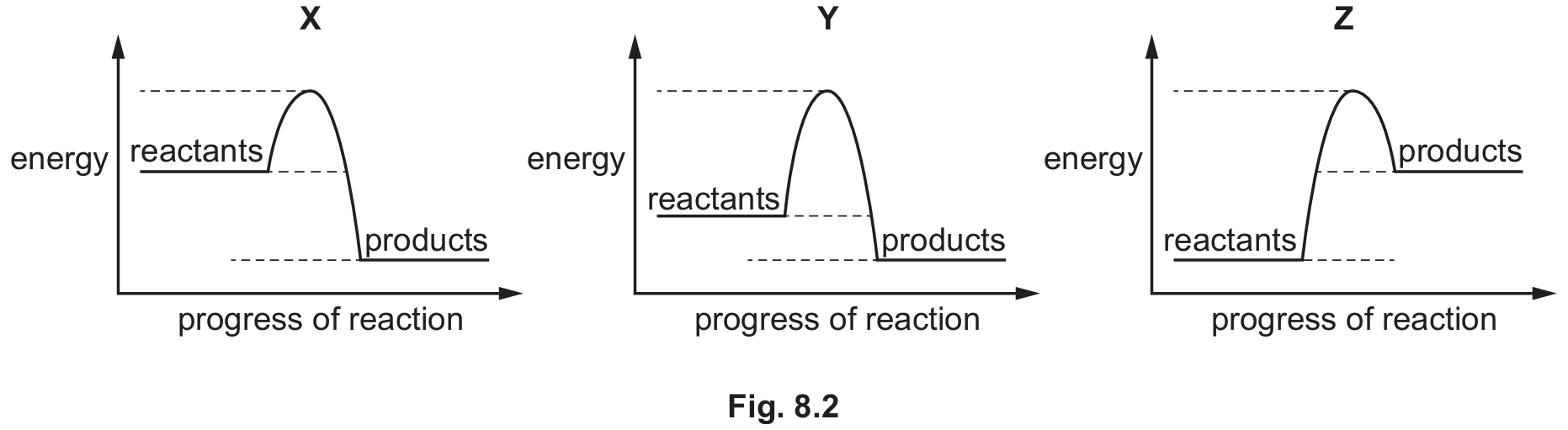
- the energy change in the reaction
- the activation energy of the reaction.
Most-appropriate topic codes (Cambridge IGCSE Co-ordinated Sciences 0654, 2025–2027 syllabus):
• Topic C6.2 — Rate of reaction (Part (a))
• Topic C3.1 — Formulas (Part (b))
• Topic C5.1 — Exothermic and endothermic reactions (Parts (c) and (d))
▶️ Answer/Explanation
(a) C
Condition C uses powdered calcium carbonate, which has the largest surface area of the three options.
A larger surface area allows more frequent collisions with acid particles, giving the fastest rate of reaction (both A and C are at the same temperature and acid concentration, isolating surface area as the variable).
(b) \(2.2\,\text{g}\)
The relative molecular mass of \(CO_2 = 12 + (16\times2) = 44\).
Moles of \(CO_2 = \dfrac{1.2}{24} = 0.05\,\text{mol}\).
Mass of \(CO_2 = 0.05 \times 44 = 2.2\,\text{g}\).
(c) A reaction that gives out heat/energy
In an exothermic reaction, energy is transferred from the reacting chemicals to the surroundings, usually shown by a temperature rise.
(d)(i) Minimum energy needed for a reaction to occur
Activation energy is the minimum amount of energy that colliding particles must have for a reaction to take place.
It corresponds to the energy difference between the reactants and the peak of the reaction profile curve.
(d)(ii) Reaction X
Reaction X is exothermic, releasing heat as the products have less energy than the reactants — essential for a self-heating can.
Reaction Z is endothermic (it absorbs heat rather than releasing it), so it would not heat the soup.
Reaction X has a lower activation energy than reaction Y, meaning it releases its heat more readily/quickly, which is more suitable for a “hot in 3 minutes” product.
Question 9
The student repeats the experiment using different thicknesses of cotton wool.
Fig. 9.1 shows a graph of the results.
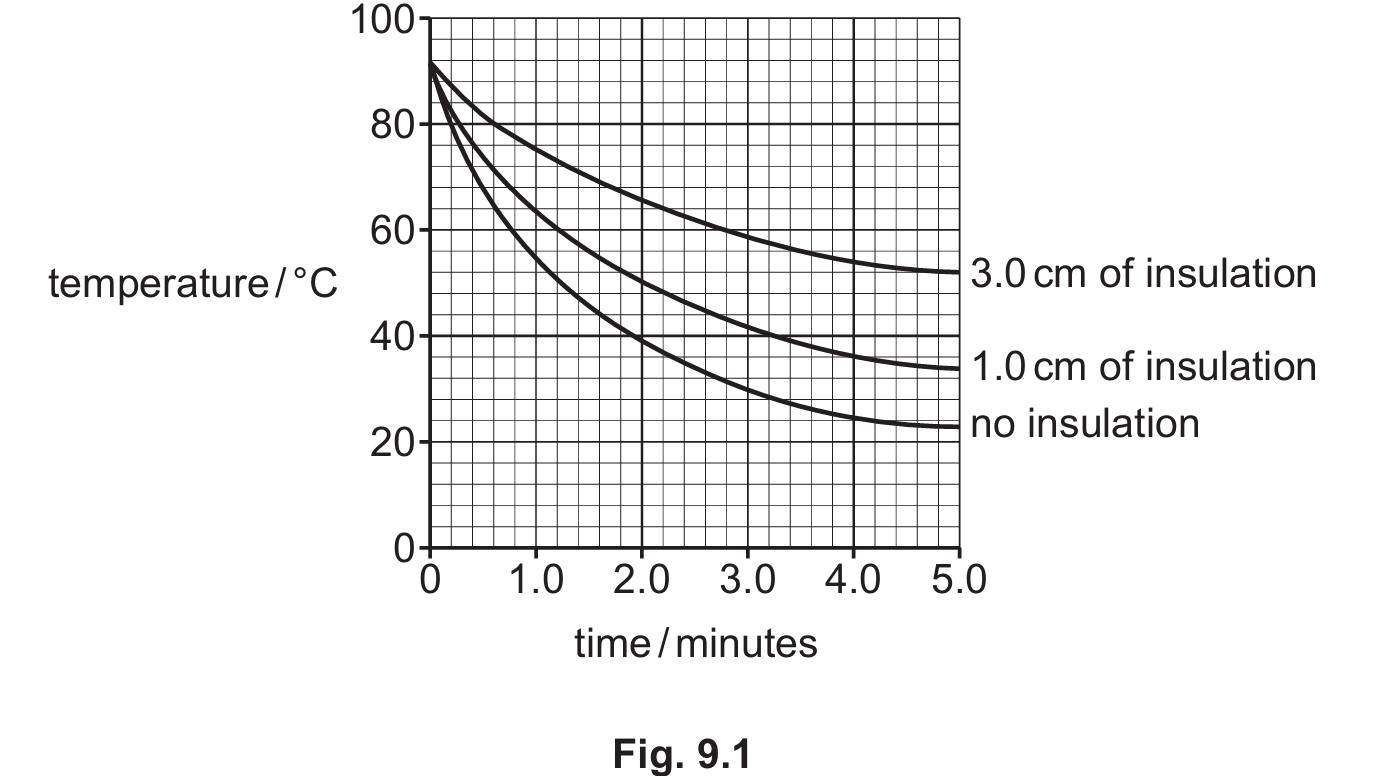
Use the results shown in Fig. 9.1 to explain your answer.
The digital thermometer contains two wires made of different metals.
The wires are joined together at each end to form two junctions.
This arrangement is known as a ____.
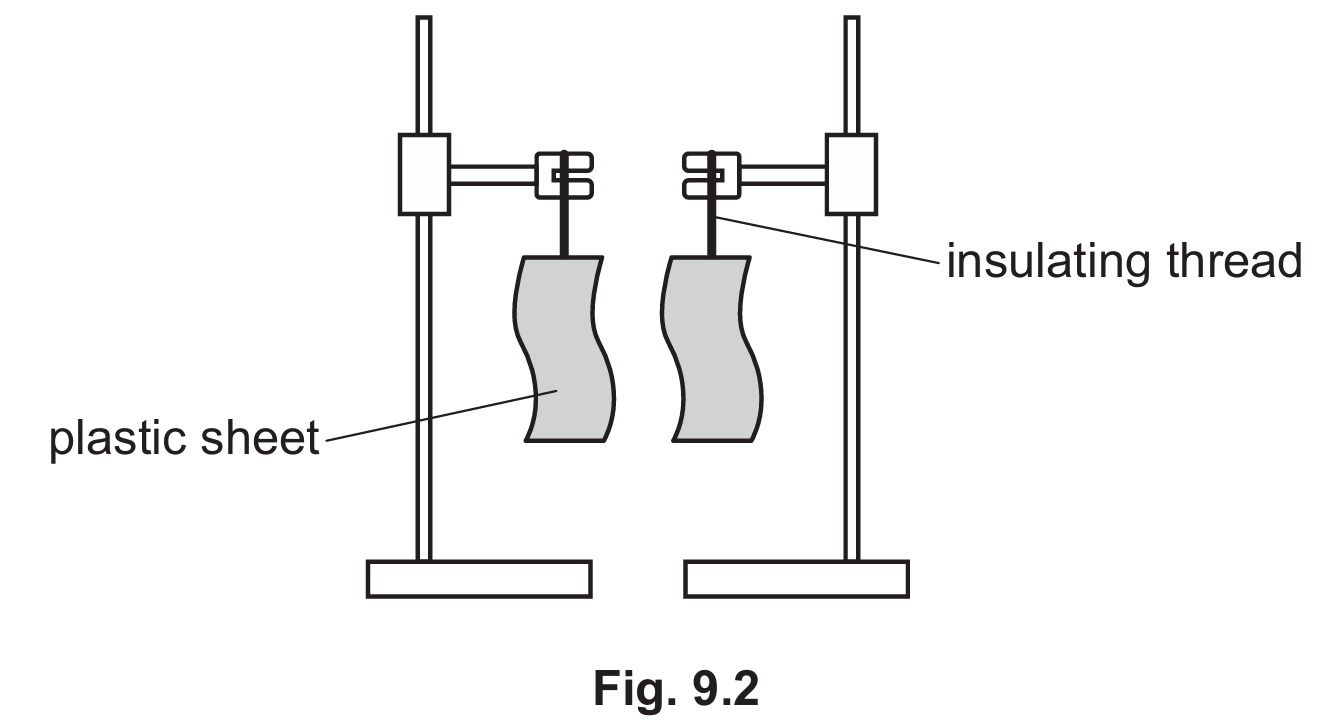
(i) Explain what is observed when the two plastic sheets are moved close to each other.
Most-appropriate topic codes (Cambridge IGCSE Co-ordinated Sciences 0654, 2025–2027 syllabus):
• Topic P2.3.1 — Conduction (Part (a)(i))
• General physics knowledge — temperature sensors (Part (a)(ii))
• Topic P4.2.4 — Resistance (Part (b))
• Topic P4.2.1 — Electrical charge (Part (c))
▶️ Answer/Explanation
(a)(i) Any value from 36°C to 50°C
A 2.0 cm thickness lies between the 1.0 cm and 3.0 cm curves shown on the graph.
Since 2.0 cm reduces the rate of heat loss (conduction to the surroundings) more than 1.0 cm of insulation but less than 3.0 cm, its final temperature should lie between the two curves at 5.0 minutes.
(a)(ii) Thermocouple
Two different metal wires joined at two junctions form a thermocouple, which generates a small voltage dependent on the temperature difference between the junctions, allowing temperature to be measured electronically.
(b) \(32\,\Omega\)
Current is found using \(I = \dfrac{P}{V} = \dfrac{1800}{240} = 7.5\,\text{A}\).
Resistance is then found using \(R = \dfrac{V}{I} = \dfrac{240}{7.5} = 32\,\Omega\).
(c)(i) They move apart
Both plastic sheets carry the same (positive) charge.
Like charges repel each other, so the sheets will move apart/swing away from each other.
(c)(ii) Charging by friction
Rubbing the plastic sheet against another surface causes friction between the two materials.
This transfers electrons from the plastic sheet to the other surface, leaving the plastic sheet with an overall positive charge (a deficit of electrons).
Question 10
Most-appropriate topic codes (Cambridge IGCSE Co-ordinated Sciences 0654, 2025–2027 syllabus):
• Topic B13.3 — Homeostasis (all parts)
▶️ Answer/Explanation
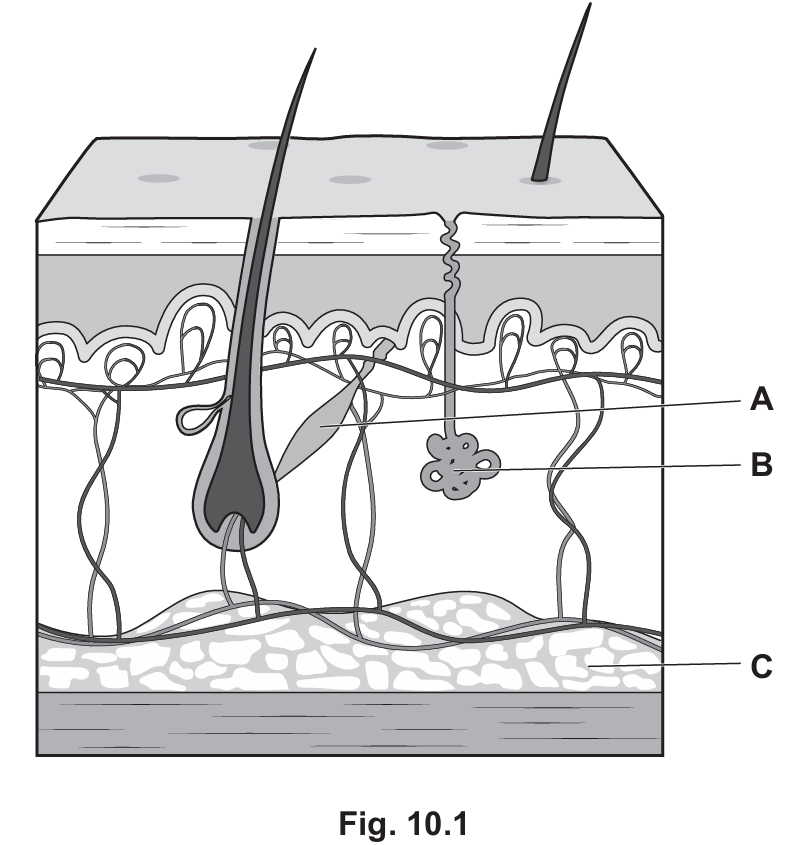
(a) A = (hair) erector muscle; B = sweat gland; C = fatty (adipose) tissue
A points to the small muscle attached to the hair follicle, which is the erector muscle.
B points to the coiled structure that produces sweat, the sweat gland.
C points to the layer beneath the dermis, made of fatty/adipose tissue, which provides insulation.
(b) Vasodilation of blood vessels
When external temperature increases, arterioles near the skin surface widen (vasodilation).
This allows more blood to flow through the capillaries near the surface of the skin.
More heat is therefore lost from the blood (by radiation/conduction) at the skin surface, helping to cool the body back towards normal temperature.
(c) Negative feedback
The body detects a change in temperature and triggers a response that counteracts (reverses) that change, which is the definition of negative feedback.
Question 11
Electrolysis is the breakdown of an ____ compound when ____ or in aqueous solution by the passage of electricity.
The binary salt will always break down into its elements.
Complete the sentence about the electrolysis of a binary salt.
The ____ is formed at the cathode and the ____ is formed at the anode.
- the bonding in sodium chloride and in chlorine
- attractive forces.
Most-appropriate topic codes (Cambridge IGCSE Co-ordinated Sciences 0654, 2025–2027 syllabus):
• Topic C4.1 — Electrolysis (Parts (a), (b), (c))
• Topic C2.4 — Ions and ionic bonds / Topic C2.5 — Simple molecules and covalent bonds (Part (d))
▶️ Answer/Explanation
(a) Ionic compound; molten
Electrolysis only works on ionic compounds, because the ions must be free to move and carry charge.
This requires the compound to be either molten or dissolved in water (aqueous).
(b) Metal at the cathode; non-metal at the anode
Positively charged metal ions are attracted to and discharged at the negative cathode.
Negatively charged non-metal ions are attracted to and discharged at the positive anode.
(c)(i) Loss of electrons
Oxidation is defined as the loss of electrons.
In the equation, chloride ions (\(Cl^-\)) lose electrons to form chlorine gas, so this is oxidation.
(c)(ii) \(2H^{+} + 2e^{-} \rightarrow H_2\)
Hydrogen gas is produced at the cathode during electrolysis of concentrated sodium chloride solution.
Positive hydrogen ions gain electrons (reduction) at the cathode, and the equation must be balanced for charge and atoms.
(d) Ionic vs covalent bonding
Sodium chloride is an ionic compound, held together by strong electrostatic forces of attraction between oppositely charged ions, which require a large amount of energy to overcome.
Chlorine is a simple covalent (molecular) substance, where only weak intermolecular forces exist between separate \(Cl_2\) molecules.
Since the weak intermolecular forces in chlorine need much less energy to break than the strong ionic bonds in sodium chloride, chlorine has a much lower melting point.
Question 12
The activity of a sample of polonium-210 is measured as 680 counts per minute.
Calculate the time taken, in days, for the activity to decrease to 85 counts per minute.
Calculate the volume occupied by \(235\,\text{g}\) of solid polonium.
Most-appropriate topic codes (Cambridge IGCSE Co-ordinated Sciences 0654, 2025–2027 syllabus):
• Topic P5.2.1 — Detection of radioactivity (Part (a))
• Topic P2.1.2 — Particle model (Part (b)(i))
• Topic P1.4 — Density (Part (b)(ii))
▶️ Answer/Explanation
(a)(i) Alpha particle
The mass number decreases by 4 (\(210 \rightarrow 206\)) and the atomic/proton number decreases by 2 (\(84 \rightarrow 82\)).
This change is characteristic of the emission of an alpha particle (\(^4_2He\)).
(a)(ii) 420 days
The activity falls from 680 to 85 counts per minute: \(\dfrac{680}{85} = 8 = 2^3\), so 3 half-lives have passed.
Time taken \(= 3 \times 140 = 420\) days.
(b)(i) Atoms vibrate in a fixed, regular arrangement
Both samples contain the same number of atoms, since they have the same mass.
In the solid, atoms vibrate about fixed positions in a regular, closely-packed arrangement.
In the liquid, atoms are free to move and are arranged randomly/irregularly, with more space between them, so the liquid takes up a larger volume for the same mass.
(b)(ii) \(25\,\text{cm}^3\)
Volume is calculated using \(V = \dfrac{m}{\rho}\).
\(V = \dfrac{235}{9.4} = 25\,\text{cm}^3\).