Topic: 2.1
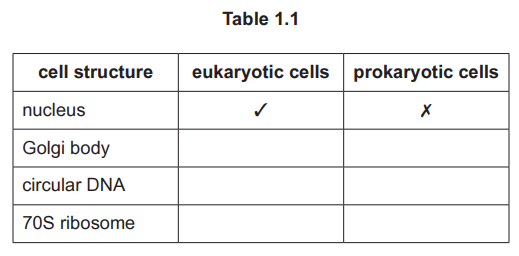
(a) Table 1.1 lists cell structures that can be found in eukaryotic cells or prokaryotic cells. Some of these cell structures can be found in both types of cell. Complete the table using a tick (✓) to show that the cell structure can be present in a particular type of cell and a cross (✗) to show that the cell structure cannot be present. Put a tick or a cross in every box. The top row has been completed for you.

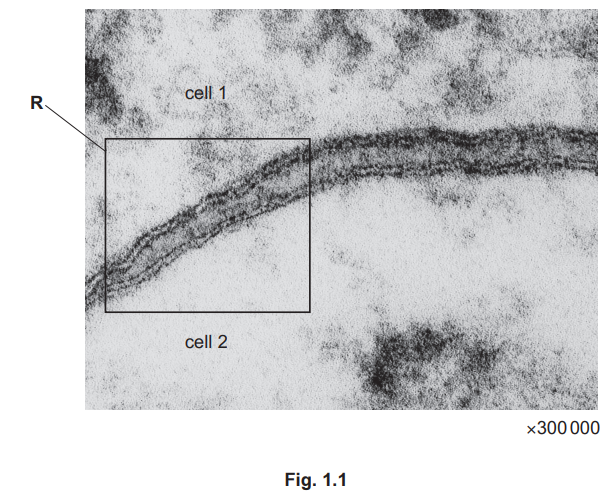
(b) All cells have a cell surface membrane. Fig. 1.1 shows a transmission electron micrograph of part of two adjacent animal cells, cell 1 and cell 2.

In the space provided, draw a diagram of the region in the box labelled R on Fig. 1.1. Your diagram should show the four dark lines.
Label the diagram to identify what is shown by the dark lines and each of the three spaces between them.
space for diagram:
(c) Mitogens are short chains of amino acids that function as cell-signalling molecules. Mitogens are released from secretory cells and travel in the blood to target cells, where the mitogens bind to cell surface receptors. The target cells respond by progressing from the \(G_1\) phase to the \(\mathrm{S}\) phase of the mitotic cell cycle.
(i) Outline what happens in the \(G_1\) phase and \(S\) phase of the mitotic cell cycle.
(ii) As a result of mutation, the production and release of mitogens into the blood can be greatly increased.
Suggest a possible consequence for target cells of increased concentrations of mitogens in the blood.
▶️ Answer/Explanation
(a)
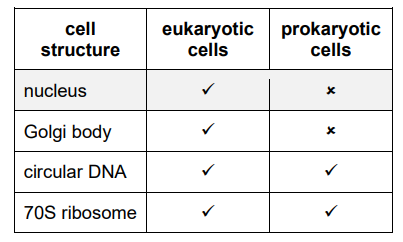
Explanation: The table is completed by identifying which structures are present in eukaryotic cells (✓ for nucleus, mitochondria, Golgi apparatus, etc.) and prokaryotic cells (✓ for cell wall, plasmids, ribosomes, etc.). Structures like the nucleus are exclusive to eukaryotes (✗ in prokaryotes), while ribosomes are present in both (✓ in both).
(b)
Explanation: The diagram should show the four dark lines representing the phospholipid bilayers of the two adjacent cell membranes. The dark lines are the phosphate heads, the spaces between them are the fatty acid tails (hydrophobic core), and the central space is the intercellular space (interstitial fluid).
(c)(i)
Explanation: In the \(G_1\) phase, the cell grows and synthesizes RNA, proteins, and organelles. In the \(S\) phase, DNA replication occurs, doubling the DNA content and forming sister chromatids.
(c)(ii)
Explanation: Increased mitogen concentrations can lead to uncontrolled cell division, as more cells are stimulated to progress from \(G_1\) to \(S\) phase. This may result in excessive mitosis and potential tumor formation.
Topic: 2.3
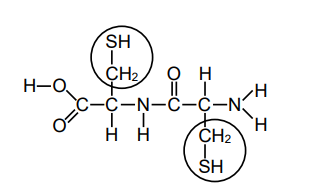
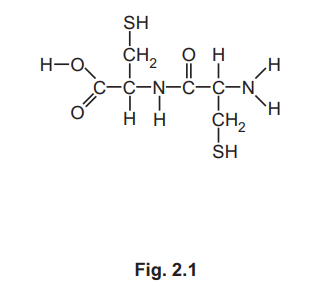
(a) Cysteine is an amino acid containing sulfur. Fig. 2.1 shows the structure of the molecule formed by joining two cysteine molecules together.

Draw a circle around an R-group in the molecule shown in Fig. 2.1.
(b) Goblet cells in the human gas exchange system produce proteins called mucins.
(i) The ends of mucin molecules contain many cysteine residues. Mucin strands are formed by joining the ends of mucin molecules together through covalent bonds between R-groups.
State the name of these covalent bonds.
(ii) Mucin strands are transported out of the goblet cells and then absorb water to form mucus.
Suggest and explain how mucin strands are transported out of the goblet cells.
Cystic fibrosis is a genetic disease caused by a mutation in the human CFTR gene. This results in mucus that is thicker than normal.
(c) Suggest how thicker mucus interferes with the maintenance of healthy gas exchange surfaces in the lungs.
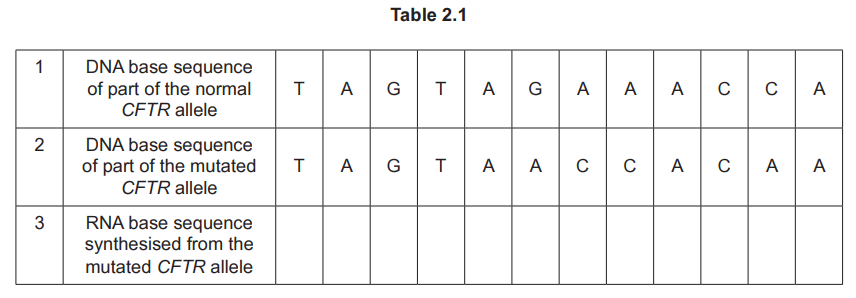
(d) Row 1 and row 2 of Table 2.1 show the DNA base sequences of part of the normal CFTR allele and the same part of a mutated CFTR allele. The base sequences shown are for the DNA strands used in the synthesis of RNA. When Table 2.1 is completed, row 3 will show the base sequence of the RNA synthesised from the same part of the mutated CFTR allele.

(i) The difference between the DNA base sequence in row 1 and the DNA base sequence in row 2 of Table 2.1 is caused by a single gene mutation.
State the name of this type of gene mutation.
(ii) Row 1 and row 2 in Table 2.1 show the DNA strands used in the synthesis of RNA.
State the term used to describe the DNA strand that is used in the synthesis of RNA.
(iii) Complete Table 2.1 to show the missing bases in row 3.
(iv) The normal CFTR allele is approximately 189000 base pairs in length. The CFTR polypeptide consists of only 1480 amino acids.
Explain the reasons for this difference between the number of base pairs and the number of amino acids.
▶️ Answer/Explanation
(a)

Explanation: The R-group in cysteine is the side chain containing sulfur (—CH2SH). Circling either of the R-groups in the molecule is correct as they are identical in structure.
(b)(i) Disulfide bonds.
Explanation: The covalent bonds formed between the sulfur-containing R-groups of cysteine residues are called disulfide bonds (—S—S—). These bonds stabilize the structure of mucin strands.
(b)(ii) Exocytosis.
Explanation: Mucin strands are transported out of goblet cells via exocytosis. This process involves vesicles containing mucins fusing with the cell membrane to release their contents outside the cell. It requires ATP and is facilitated by the cytoskeleton.
(c)
Explanation: Thicker mucus hinders the movement of cilia, preventing effective clearance of pathogens. This leads to accumulation of harmful microorganisms, increasing the risk of infections and damaging the gas exchange surfaces.
(d)(i) Deletion.
Explanation: The mutation is a deletion, as one base (T) is missing in the mutated sequence compared to the normal sequence.
(d)(ii) Template strand.
Explanation: The DNA strand used for RNA synthesis is called the template strand (or antisense strand). RNA polymerase reads this strand to produce complementary mRNA.
(d)(iii) AUC AUU GGU GUU.
Explanation: The RNA sequence is derived by transcribing the mutated DNA strand (TAG TAA CCA CAA), replacing T with U, resulting in AUC AUU GGU GUU.
(d)(iv)
Explanation: The difference arises because: (1) Only exons code for amino acids, while introns are non-coding and spliced out. (2) Three DNA bases (a triplet) code for one amino acid. (3) Some sequences (e.g., promoters, terminators) regulate transcription but do not encode amino acids.
Topic: 7.1
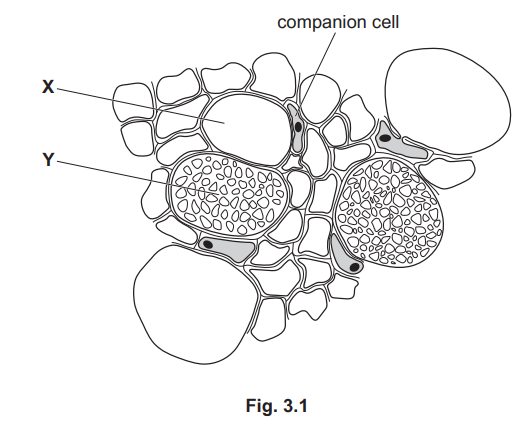
(a) Fig. 3.1 is a diagram of an area of phloem tissue from a transverse section through the stem of a squash plant, Cucurbita pepo.

(i) Cell X and cell Y in Fig. 3.1 are sieve tube elements.
Explain why cell X and cell Y have very different appearances in this transverse section.
(ii) Sucrose is formed from the glucose synthesised by mesophyll cells in the leaves of C. pepo.
Explain how companion cells are involved in the transfer of sucrose into phloem sieve tubes.
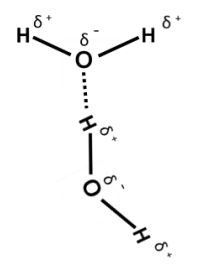
(b) Hydrogen bonding is important in the movement of water in xylem.
(i) Explain how hydrogen bonding occurs between two water molecules.
(ii) Outline how hydrogen bonding is involved in water transport in the xylem of a plant stem.
(iii) Hydrogen bonding between water molecules gives water a relatively high latent heat of vaporisation.
Suggest why it is important to plants that water has a high latent heat of vaporisation.
▶️ Answer/Explanation
(a)(i) Cell Y shows a sieve plate/sieve pores, whereas the section misses the sieve plate in cell X. The sieve plates are at different heights in the stem, leading to their different appearances.
Explanation: Sieve tube elements have sieve plates at intervals. In a transverse section, some cells (like Y) may show these plates, while others (like X) may not, depending on where the cut is made.
(a)(ii) Companion cells use ATP to pump protons into the apoplast, creating a proton gradient. Protons then re-enter the companion cell with sucrose via cotransport, moving sucrose against its gradient. Sucrose diffuses into sieve tubes through plasmodesmata.
Explanation: This active transport mechanism ensures efficient sucrose loading into the phloem for translocation.
(b)(i) Hydrogen bonding occurs between the slightly positive hydrogen of one water molecule and the slightly negative oxygen of another.
Explanation: Due to water’s polar nature, oxygen attracts electrons more strongly, creating partial charges that facilitate hydrogen bonding.
(b)(ii) Hydrogen bonds create cohesion between water molecules and adhesion to xylem walls. This forms a continuous column pulled up by transpiration.
Explanation: Cohesion-tension theory relies on these bonds to maintain an unbroken water column during transport.
(b)(iii) High latent heat means evaporation removes significant heat, cooling leaves during photosynthesis and reducing enzyme denaturation.
Explanation: This property helps plants regulate temperature and minimize water loss in hot conditions.
Topic: 10.1
Tuberculosis (TB), influenza and polio are examples of infectious diseases.
(a) (i) Explain what is meant by an infectious disease.
(ii) Name a species of organism that causes TB.
(b) Immunity can be described as artificial or natural and passive or active.
Name the type of immunity that a mother gives to her baby through breast milk.
(c) The influenza virus can mutate frequently to produce different strains of the virus. A new vaccine is often necessary to stimulate the production of new antibodies to these new strains. Explain why different antibodies need to be produced to give immunity to these new strains.
(d) Polio is a serious viral disease affecting young children. In 1996, polio caused paralysis in more than 75000 children across Africa. A long-term vaccination programme allowed the World Health Organization (WHO) to declare that Africa was largely free of polio in 2020.
(i) Explain how vaccination programmes can help to control the spread of infectious diseases, such as polio.
(ii) Antibiotics, such as penicillin, do not help to prevent the spread of viral diseases, such as polio.
Explain why penicillin is not effective against viruses.
▶️ Answer/Explanation
(a)(i) An infectious disease is caused by pathogens and can be transmitted from one organism to another.
Explanation: Infectious diseases are caused by microorganisms like bacteria, viruses, or fungi. They spread through direct/indirect contact, vectors, or contaminated surfaces.
(a)(ii) Mycobacterium tuberculosis or Mycobacterium bovis.
Explanation: TB is caused by bacteria from the Mycobacterium genus, primarily M. tuberculosis in humans.
(b) Natural and passive immunity.
Explanation: Antibodies are transferred from mother to baby via breast milk, providing temporary protection (passive) without immune system activation (natural).
(c) Different antibodies are needed because mutations change viral antigens, making previous antibodies ineffective due to their specificity.
Explanation: Antibodies bind to specific antigens. When the influenza virus mutates, its surface proteins (e.g., hemagglutinin) change shape, requiring new antibodies for recognition.
(d)(i) Vaccination programmes control spread by inducing herd immunity, preventing transmission, and creating memory cells for long-term protection.
Explanation: Vaccines train the immune system to recognize pathogens, reducing susceptible individuals and breaking transmission chains in populations.
(d)(ii) Penicillin targets bacterial cell wall synthesis, but viruses lack cell walls and cellular structures.
Explanation: Viruses are acellular and replicate inside host cells, making them unaffected by antibiotics that target bacterial processes like peptidoglycan formation.
Topic: 8.1
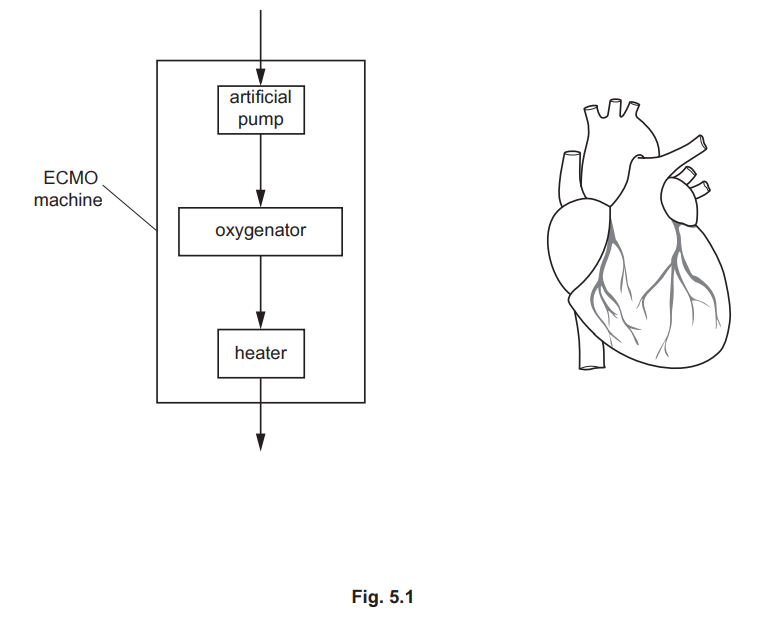
Pneumonia is a severe lung disease that can interfere with gas exchange. A person with pneumonia can be connected to an ECMO machine. This machine performs the gas exchange functions of the lungs.
A cannula (tube) is inserted into the right atrium and this takes blood to the ECMO machine. In the ECMO machine, blood is passed firstly to an artificial pump and then to an oxygenator, where gas exchange occurs. The blood is then warmed and returns by another cannula to the vena cava.
(a) Complete Fig. 5.1 to show how the ECMO machine is connected to the right atrium and to the vena cava. Use a single line to represent each cannula.

(b) In the oxygenator, a partially permeable membrane separates the blood from air that has been enriched with extra oxygen.
(i) State the name of a structure in the gas exchange system that has the same function as the partially permeable membrane of the oxygenator.
(ii) In the oxygenator, blood and oxygen-enriched air flow in opposite directions. Suggest and explain how the oxygenator carries out the functions of gas exchange that normally occur in the lungs.
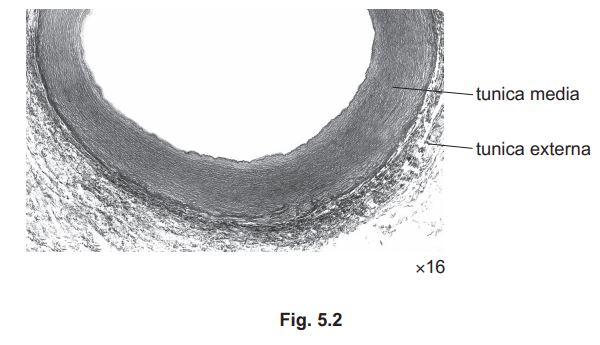
(c) Fig. 5.2 is a photomicrograph showing a transverse section of part of the human aorta.

Explain how the structure of the tunica media in Fig. 5.2 is different from the structure of the tunica media in a muscular artery and relate the difference to the function of the aorta.
(d) Some biologists investigated the transport of carbon dioxide in the blood of Caiman latirostris, a type of reptile.
The biologists found that when C. latirostris respires:
• most of the carbon dioxide is converted into hydrogencarbonate ions in red blood cells
• the hydrogencarbonate ions combine with haemoglobin inside the red blood cells
• the hydrogencarbonate ions remain combined with haemoglobin until the blood reaches the lungs.
(i) Explain why the physiology of C. latirostris requires carbonic anhydrase.
(ii) Explain why the physiology of C. latirostris does not require the chloride shift.
▶️ Answer/Explanation
(a)
Answer: Line drawn from right atrium to the arrow into the pump and line drawn from the arrow out of the heater back to the (inferior/superior) vena cava.
Explanation: The ECMO machine is connected via two cannulas—one takes deoxygenated blood from the right atrium to the pump, and the other returns oxygenated blood from the heater to the vena cava.
(b)(i)
Answer: Alveolar wall / alveolar epithelium.
Explanation: The partially permeable membrane in the oxygenator functions similarly to the alveolar wall in the lungs, allowing gas exchange (O2 and CO2) by diffusion.
(b)(ii)
Answer:
- Oxygen diffuses from the oxygen-enriched air into the blood, and CO2 diffuses out of the blood.
- The counter-current flow maintains a steep concentration gradient, enhancing gas exchange efficiency.
- The thin membrane provides a short diffusion pathway, similar to alveoli.
Explanation: The oxygenator mimics lung function by enabling diffusion across a membrane, with opposite flow ensuring continuous gradient and efficient exchange.
(c)
Answer: The tunica media in the aorta has more elastin than a muscular artery, allowing it to stretch during systole and recoil during diastole, maintaining blood pressure and flow.
Explanation: The aorta’s elastic structure accommodates high-pressure blood flow from the heart, preventing vessel damage and ensuring smooth circulation.
(d)(i)
Answer: Carbonic anhydrase catalyzes the conversion of CO2 and water into carbonic acid, which dissociates into hydrogencarbonate ions.
Explanation: This enzyme speeds up CO2 transport in the blood, essential for efficient respiration.
(d)(ii)
Answer: Since hydrogencarbonate ions remain bound to haemoglobin, there is no need for chloride ions to balance charges (no chloride shift).
Explanation: The physiology of C. latirostris avoids charge imbalance by retaining hydrogencarbonate ions inside red blood cells.
Topic: 2.2
(a) Collagen is the most common structural protein in vertebrates. Collagen provides the skin with flexibility and strength.
Explain how the structure of a collagen fibre provides the skin with strength.
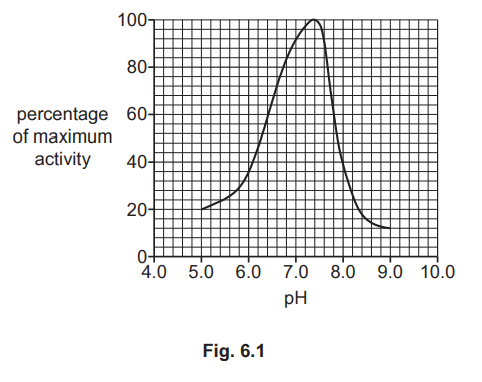
(b) The enzyme collagenase breaks down collagen. Collagenase has several important medical uses, such as in the treatment of burnt skin. Scientists investigated the effect of \(\mathrm{pH}\) on the activity of collagenase at \(37^{\circ} \mathrm{C}\). The results of their investigation are shown in Fig. 6.1.

Explain why the activity of collagenase is lower at pH 8.0 than at the optimum pH.
▶️ Answer/Explanation
(a)
Explanation: The strength of collagen in the skin arises from its structural properties. Covalent bonds between collagen molecules (specifically between R groups) provide strong intermolecular linkages. Additionally, the staggered arrangement of collagen molecules ensures there are no weak points, distributing tensile strength uniformly. In the skin, collagen fibres are arranged in layers running in different directions, enhancing resistance to forces from multiple angles.
(b)
Explanation: At pH 8.0, collagenase activity decreases because the altered pH disrupts ionic and hydrogen bonds within the enzyme’s active site. This changes the shape of the active site, reducing its complementarity to the collagen substrate. As a result, fewer enzyme-substrate complexes form, leading to lower catalytic efficiency. The enzyme undergoes partial denaturation, further diminishing its activity compared to the optimum pH.