Question 1
(a) Photosynthesis is a complex process involving the transfer of light energy into chemical energy.
(I) Describe the role of photosynthetic pigments.
………………………………………………………………………………………………………………………….
………………………………………………………………………………………………………………………….
………………………………………………………………………………………………………………………….
………………………………………………………………………………………………………………………….
……………………………………………………………………………………………………………………. [2]
(ii) Name the precise location in a chloroplast of photosynthetic pigments.
……………………………………………………………………………………………………………………. [1]
(iii) Name a practical technique to separate photosynthetic pigments.
……………………………………………………………………………………………………………………. [1]
(b) The rate of photosynthesis is affected by many environmental factors.
A student carried out an experiment to investigate the relationship between the concentration of carbon dioxide available to an aquatic plant, Cabomba caroliniana, and its rate of photosynthesis.
Fig. 1.1 shows the experimental set-up for this investigation.
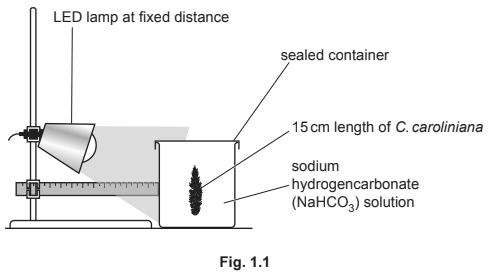
• Sodium hydrogencarbonate solution was used as a source of carbon dioxide.
• The concentration of carbon dioxide was varied using six different concentrations of sodium hydrogencarbonate solution.
• All C. caroliniana plants were kept in the dark before the light was switched on at the start of the experiment.
• Five replicates were carried out at each concentration.
• The rate of photosynthesis was obtained by calculating the percentage change in dissolved oxygen concentration in the solution over five minutes.
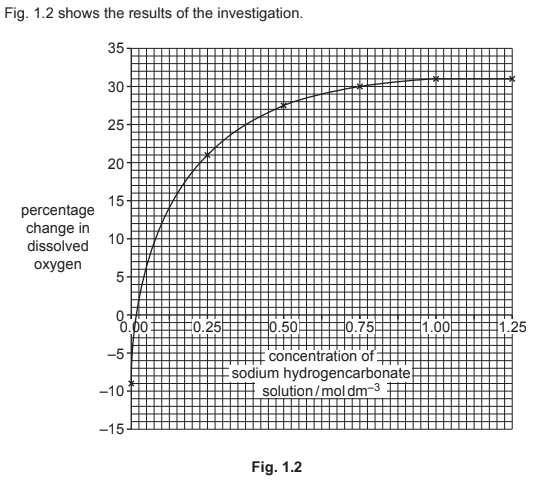
(I) With reference to Fig. 1.2, explain the pattern of results obtained between 0.25moldm–3 and 1.25moldm–3 of sodium hydrogencarbonate solution.
………………………………………………………………………………………………………………………….
………………………………………………………………………………………………………………………….
………………………………………………………………………………………………………………………….
………………………………………………………………………………………………………………………….
………………………………………………………………………………………………………………………….
………………………………………………………………………………………………………………………….
………………………………………………………………………………………………………………………….
……………………………………………………………………………………………………………………. [3]
(ii) The percentage change in dissolved oxygen for C. caroliniana at 0.00moldm–3 of sodium hydrogencarbonate solution is negative.
Suggest reasons for this negative value.
………………………………………………………………………………………………………………………….
………………………………………………………………………………………………………………………….
………………………………………………………………………………………………………………………….
……………………………………………………………………………………………………………………. [2]
(iii) To minimise temperature changes, the student decided to use an LED lamp as a light source. LED lamps release very little heat energy.
Explain the importance of minimising temperature changes in this experiment.
………………………………………………………………………………………………………………………….
………………………………………………………………………………………………………………………….
………………………………………………………………………………………………………………………….
………………………………………………………………………………………………………………………….
………………………………………………………………………………………………………………………….
………………………………………………………………………………………………………………………….
………………………………………………………………………………………………………………………….
……………………………………………………………………………………………………………………. [3]
[Total: 12]
Answer/Explanation
Answer:
1(a)(I) any two from:
1 absorb / harvest / capture / trap, light / photons ;
2 (to) excite electrons ;
3 (for, cyclic / non-cyclic) photophosphorylation / electron transport chain ;
4 accessory pigment passes energy to, primary pigment / reaction centre ;
5 (pigments) form a, light harvesting cluster / photosystem / PSI / PSII ;
1(a)(ii) thylakoid membrane(s) / granum / grana / lamella(e) ;
1(a)(iii) chromatography ;
1(b)(I) 1 (from 0.25) to 1.00 (mol dm–3), concentration / CO2, is limiting factor
or
at / >, 1.00 (mol dm–3), concentration / CO2, no longer limiting factor ;
2 at / >, 1.00 (mol dm–3), light intensity / temperature, is limiting factor ;
3 CO2, needed / used, for Calvin cycle / for light independent stage
or
CO2, reacts with / fixed by, RuBP ;
1(b)(ii) little / no, photosynthesis ;
(aerobic) respiration uses oxygen ;
1(b)(iii) any three from:
1 to control a variable / to ensure a fair test / so CO2 is the only variable ;
2 low, temperature / kinetic energy, decreases, rate / reaction / photosynthesis / O2 production / O2 increase ;
3 low, temperature / kinetic energy, decreases, (named) enzyme-substrate, collisions / complexes ;
4 low(er) temperature, is a limiting factor / may limit rate ;
5 high, temperature / kinetic energy, decreases, rate / reaction / photosynthesis / O2 production / O2 increase ;
6 high, temperature / kinetic energy, denatures (named) enzyme(s) ;
7 high / increased, temperature, causes / increases, photorespiration ;
Question 4
(a) Genetic engineering involves the manipulation of naturally occurring enzymes and processes.
List the enzymes used in genetic engineering (genetic modification) and outline their roles in natural processes.
…………………………………………………………………………………………………………………………………
…………………………………………………………………………………………………………………………………
…………………………………………………………………………………………………………………………………
…………………………………………………………………………………………………………………………………
…………………………………………………………………………………………………………………………………
…………………………………………………………………………………………………………………………………
…………………………………………………………………………………………………………………………………
…………………………………………………………………………………………………………………………………
…………………………………………………………………………………………………………………………………
…………………………………………………………………………………………………………………………………
…………………………………………………………………………………………………………………………… [5]
(b) Genetically modified organisms (GMOs) include crop plants. Genetically modified (GM) crop plants have been grown in North America in increasing quantities since 1996. They are now grown in many areas of the world and are eaten by millions of people and farm animals.
Table 4.1 compares the area of land used to grow GM crop plants on six continents in 2013.
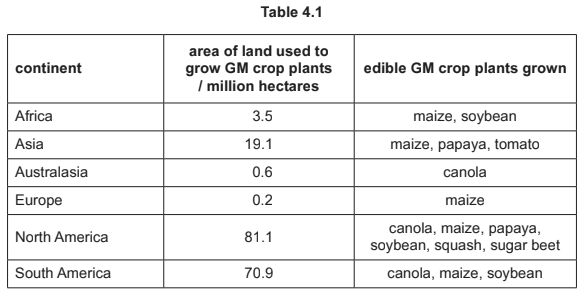
(I) Suggest how North America and South America benefit from growing large areas of GM crop plants rather than non-GM crop plants.
………………………………………………………………………………………………………………………….
………………………………………………………………………………………………………………………….
………………………………………………………………………………………………………………………….
………………………………………………………………………………………………………………………….
………………………………………………………………………………………………………………………….
………………………………………………………………………………………………………………………….
……………………………………………………………………………………………………………………. [3]
(ii) Only a small area of land is used to grow GM crop plants in Europe. This is mainly because most of Europe uses a ‘precautionary principle’. The precautionary principle prevents GM crop plants being grown if there is a possible risk of harm to human health or to the environment, even if there is no proof of harm.
Many European citizens have concerns about the safety of eating GM food, but Europe imports large quantities of GM maize and GM soybean to feed farm animals.
Use this information and Table 4.1 to deduce two arguments in favour of growing more GM crop plants in Europe.
1 ………………………………………………………………………………………………………………………..
………………………………………………………………………………………………………………………….
………………………………………………………………………………………………………………………….
2 ………………………………………………………………………………………………………………………..
………………………………………………………………………………………………………………………….
………………………………………………………………………………………………………………………….
[2]
(iii) Explain why the data in Table 4.1 are not enough to calculate the extent to which different continents have replaced traditional crop plants with GM versions.
………………………………………………………………………………………………………………………….
………………………………………………………………………………………………………………………….
………………………………………………………………………………………………………………………….
………………………………………………………………………………………………………………………….
……………………………………………………………………………………………………………………. [2]
[Total: 12]
Answer/Explanation
Answer:
4(a) any five from:
1 (named) restriction, enzyme / endonuclease ;
2 cut / fragment, DNA ;
3 produced by / present in, bacteria / archaea / prokaryotes
or
to defend against, viruses / (bacterio)phages ;
4 (DNA) ligase ;
5 joins DNA / forms phosphodiester bonds / seals sugar-phosphate backbone ;
6 during DNA, repair / replication
or
joins Okazaki fragments ;
7 reverse transcriptase ;
8 forms / makes, (c)DNA from mRNA (template) ;
9 produced by / present in, retroviruses ;
10 DNA / Taq, polymerase ;
11 replicates / copies, DNA (at high temperatures) ;
12 produced by / present in, Thermus aquaticus ;
4(b)(I) any three from:
1 increased / higher / more, yield / production / harvest / food ;
2 increased / higher / better, quality of, produce / crops / food ;
3 decreased / lower / less, insecticide / pesticide, needed / used ;
4 decreased / lower / less, fuel use / CO2 emissions ;
5 potential for, set-aside / conservation areas (as less land needed for crops) ;
6 (described) comparative economic benefit ;
4(b)(ii) any two from:
1 people in other (named) continents eat GM, food / crops ;
2 GM, food / crops, already in (European) food chain ;
3 ref. to economic benefit of reducing GM (animal food) imports ;
4(b)(iii) 1 do not know / need to know, total crop area / non-GM crop area ;
2 so can work out, percentage / fraction, of, GM / non-GM ;
Question 5
(a) Nerves consist of bundles of different types of neurones.
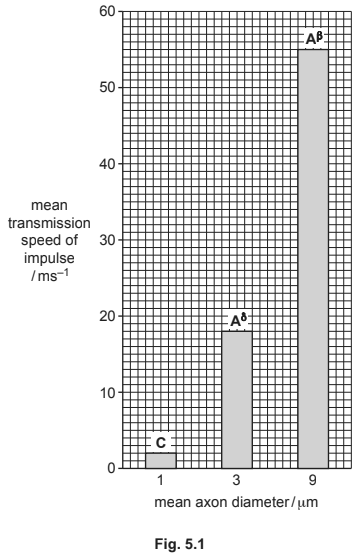
Fig. 5.1 shows the mean transmission speed of impulses for three types of sensory neurone, C, Aδ and Aβ.
• Impulses from pain receptors in the skin are sent along sensory neurones C and Aδ.
• Sensory neurones C and Aδ synapse in the spinal cord with relay neurones known as projection neurones.
• Projection neurones send impulses to the part of the brain that perceives pain.
• Impulses from touch receptors in the skin pass along sensory neurones Aβ, which can also synapse with the projection neurones in the spinal cord.
• Sensory neurones Aδ and Aβ are myelinated.
• Sensory neurones C are unmyelinated.
(I) Describe the results shown in Fig. 5.1 and suggest explanations for these results.
………………………………………………………………………………………………………………………….
………………………………………………………………………………………………………………………….
………………………………………………………………………………………………………………………….
………………………………………………………………………………………………………………………….
………………………………………………………………………………………………………………………….
………………………………………………………………………………………………………………………….
……………………………………………………………………………………………………………………. [3]
(ii) Gently rubbing a damaged area of skin can reduce the perception of pain. Suggest an explanation for this.
………………………………………………………………………………………………………………………….
………………………………………………………………………………………………………………………….
……………………………………………………………………………………………………………………. [1]
(b) Back pain in humans can be reduced by using a transcutaneous electrical nerve stimulation (TENS) machine.
A TENS machine uses electrical impulses to stimulate nerve endings near the site of the pain.
It is thought that TENS triggers the release of natural painkillers called endorphins at synapses.
Fig. 5.2 shows synapses in a pain pathway.
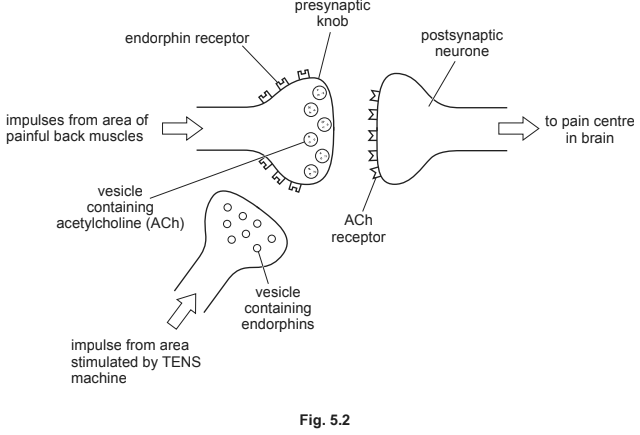
(I) Suggest and explain how endorphins may act to reduce pain.
………………………………………………………………………………………………………………………….
………………………………………………………………………………………………………………………….
………………………………………………………………………………………………………………………….
………………………………………………………………………………………………………………………….
………………………………………………………………………………………………………………………….
………………………………………………………………………………………………………………………….
………………………………………………………………………………………………………………………….
………………………………………………………………………………………………………………………….
………………………………………………………………………………………………………………………….
………………………………………………………………………………………………………………………….
……………………………………………………………………………………………………………………. [4]
(ii) Suggest one disadvantage of using pharmaceutical drugs for reducing pain compared to using TENS.
………………………………………………………………………………………………………………………….
……………………………………………………………………………………………………………………. [1]
[Total: 9]
Answer/Explanation
Answer:
5(a)(I) any three from:
1 wider / thicker / larger diameter → increases / higher, speed ;
2 large(r) membrane surface area so more ion movement ;
3 myelin → increases / faster / higher, speed ;
4 saltatory conduction (in myelinated) ;
5 pairwise data comparison ;
5(a)(ii) any one from:
1 impulses, for touch / in Aβ neurones, travel faster ;
2 (Aβ neurones) inhibit, spinal cord / relay / projection, neurones ;
3 AVP ;
5(b)(I) any four from:
1 endorphins bind to (endorphin) receptors ;
2 stop, calcium ions / Ca2+, entering presynaptic knob ;
3 no / fewer, vesicles, move towards / fuse with, (presynaptic) membrane ;
4 no / less, acetylcholine / ACh, released ;
5 no / less, binding of ACh to postsynaptic receptors ;
6 no / less, depolarisation of postsynaptic, neurone / membrane ;
7 no / fewer, action potentials / impulses, to, pain centre / brain ;
5(b)(ii) any one from:
1 (drug) dependency / addiction / tolerance ;
2 (drug) side-effects ;
3 expensive ;
4 work more slowly ;
Question 6
(a) Thermoregulation is the control of the core temperature of the body.
Thermoreceptors send information about a change in core temperature to the hypothalamus. The hypothalamus controls the core temperature by sending impulses to activate several physiological responses.
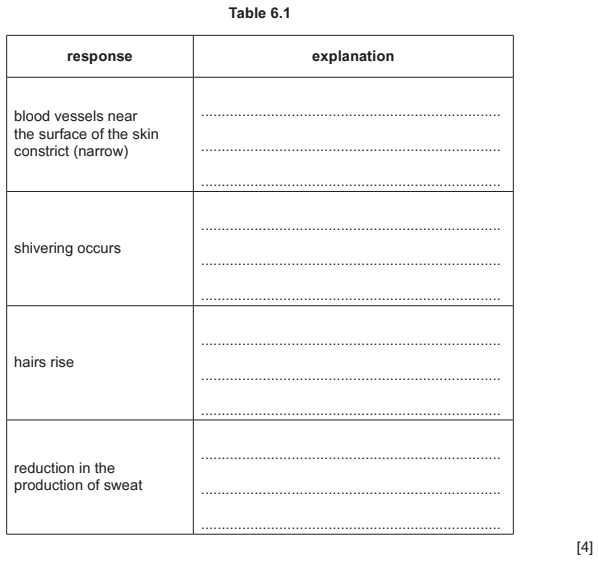
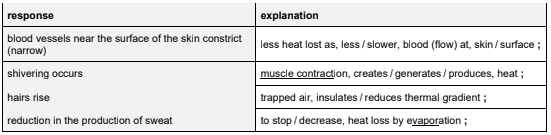
Table 6.1 lists physiological responses to a decrease in core temperature.
Complete Table 6.1 to explain how each response contributes to maintaining a core temperature within narrow limits.
(b) Animals can also use behaviour to adapt to temperature changes.
Suggest why some animals curl up their bodies in cold weather.
…………………………………………………………………………………………………………………………………
…………………………………………………………………………………………………………………………… [1]
(c) The Sitatunga deer, Tragelaphus spekii, and the Nile monitor lizard, Varanus niloticus, live in Africa.
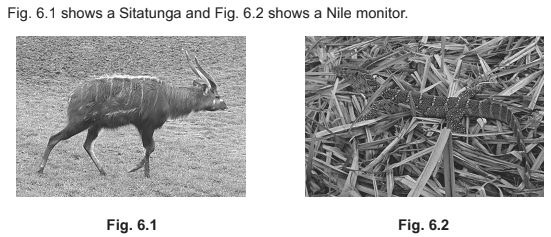
An investigation was carried out to measure the core temperature of the Sitatunga and the Nile monitor as the environmental temperature was increased.
The results are shown in Fig. 6.3.
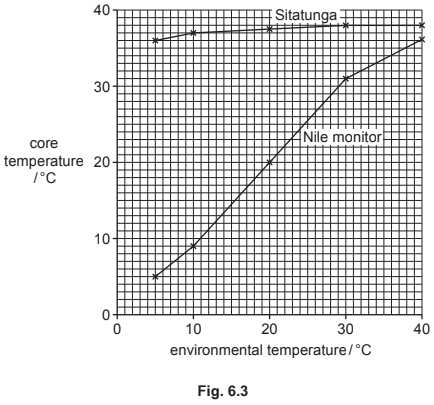
(I) Describe the results shown in Fig. 6.3.
………………………………………………………………………………………………………………………….
………………………………………………………………………………………………………………………….
………………………………………………………………………………………………………………………….
………………………………………………………………………………………………………………………….
………………………………………………………………………………………………………………………….
………………………………………………………………………………………………………………………….
………………………………………………………………………………………………………………………….
……………………………………………………………………………………………………………………. [3]
(ii) When the environmental temperature is low, Nile monitors are relatively inactive.
Suggest one disadvantage to the Nile monitor of being inactive.
………………………………………………………………………………………………………………………….
………………………………………………………………………………………………………………………….
……………………………………………………………………………………………………………………. [1]
(d) Thermoregulation relies on negative feedback.
Explain what is meant by negative feedback.
…………………………………………………………………………………………………………………………………
…………………………………………………………………………………………………………………………………
…………………………………………………………………………………………………………………………………
…………………………………………………………………………………………………………………………………
…………………………………………………………………………………………………………………………………
…………………………………………………………………………………………………………………………………
…………………………………………………………………………………………………………………………… [3]
[Total: 12]
Answer/Explanation
Answer:
6(a)
6(b) decrease / less, surface area to, conserve / retain heat
or
decrease / less, surface area so less heat lost ;
6(c)(I) any three from:
1 Sitatunga’s (core / body) temperature (fairly) constant ;
2 Nile monitor’s / lizard’s, (core / body) temperature rises as environmental temperature rises ;
3 figures for two animals at one temperature with units
or
one animal at two temperatures with units ;
4 AVP ;
6(c)(ii) problem with, catching prey / feeding / avoiding predation ;
6(d) 1 ref. to set point / norm(al) / ideal value ;
2 rise / fall / change / fluctuation ;
3 reversed / corrected / counter-acted ;
Question 7
People vary in which molecules are present on the surface of their red blood cells. For example, in the ABO blood group system, people may be categorised into one of four blood groups: A, B, AB and O.
A single gene, I, with three alleles, determines these blood groups. Gene I is an example of a gene with multiple alleles.
• Alleles IA and IB are codominant.
• Allele Io is recessive to alleles IA and IB.
(a) Explain what is meant by codominant and recessive.
codominant ……………………………………………………………………………………………………………….
…………………………………………………………………………………………………………………………………..
recessive …………………………………………………………………………………………………………………..
…………………………………………………………………………………………………………………………………..
[3]
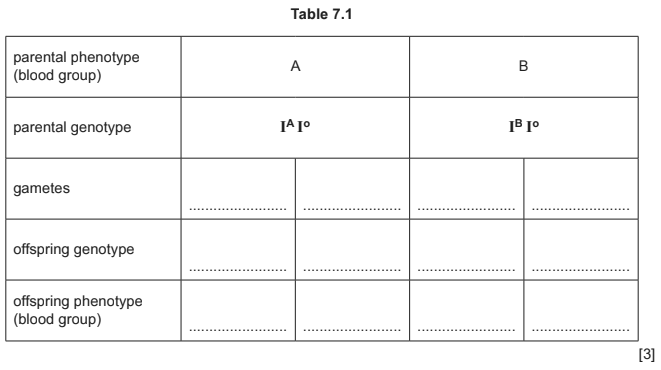
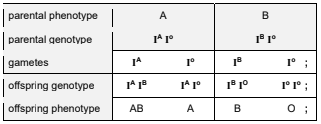
(b) Table 7.1 shows a cross between a person with blood group A and a person with blood group B.
Complete Table 7.1.
(c) Haemophilia is a blood condition where bleeding continues for a long period of time after a blood vessel has been damaged.
A person with haemophilia has a mutation in a gene on the X chromosome, which results in the lack of a blood clotting factor.
Explain why a man who has haemophilia cannot pass the condition to his male offspring.
…………………………………………………………………………………………………………………………………
…………………………………………………………………………………………………………………………………
…………………………………………………………………………………………………………………………………
…………………………………………………………………………………………………………………………………
…………………………………………………………………………………………………………………………………
…………………………………………………………………………………………………………………………………
…………………………………………………………………………………………………………………………… [3]
[Total: 9]
Answer/Explanation
Answer:
7(a) codominant
1 both (alleles), affect / seen in / expressed in / contribute to (phenotype) ;
2 in heterozygote ;
recessive
3 affects / seen in / expressed / contributes to, (phenotype) (only) when dominant (allele) absent / in homozygotes ;
7(b)
7(c) any three from:
1 males / men / boys, are, XY / have (only) one X chromosome ;
2 man / father, passes Y to, male offspring / son ;
3 man / father, does not pass X to, ♂ offspring / son ;
4 man / father, passes, X / mutation, to, female offspring / daughter ;
5 woman / mother, passes X / mutation, to, male offspring / son ;
Question 9
(a) Describe how you would carry out an investigation to calculate the effect of substrate concentration on the rate of respiration of yeast in anaerobic conditions using a redox indicator, such as DCPIP or methylene blue. [8]
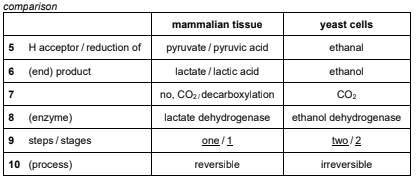
(b) Compare respiration in anaerobic conditions in mammalian tissue and in yeast cells. [7]
[Total: 15]
Answer/Explanation
Answer:
9(a) any eight from:
1 vary / different / range of, glucose / fructose, concentrations ;
2 control / same, volume of yeast (suspension) ;
3 control / same, volume of glucose (solution) ;
4 control / same, volume / concentration, of indicator (solution) ;
5 control temperature (between 20–45oC) ;
6 oil layer to exclude, air / oxygen ;
7 indicator turns from blue (start / oxidised) to colourless (end / reduced) ;
8 due to, hydrogen atoms / H+ / electrons, from, glycolysis / dehydrogenation / respiration ;
9 time how long it takes for colour change OR fix time interval and measure with colorimeter ;
10 repeat experiment ;
11 calculate mean(s) ;
12 graph with glucose concentration (on x axis) and, time taken / % absorbance / % transmission / rate (on y) ;
13 rate is 1/t ;
14 AVP ;
9(b) any seven from:
both
1 occur in cytoplasm ;
2 (only) involve glycolysis ;
3 make, 2 (net) / small amount of, ATP ;
4 regenerate NAD (from NADH) ;