Home / 9700_w23_qp_22
Question 1

Topic: 5.1

During interphase and mitosis of the cell cycle, the chromosomes within a cell go through a number of changes. Each chromosome is composed of DNA complexed with proteins.

(a) In interphase, individual chromosomes are too diffuse (long and thin) to be visible using a microscope. In this stage, the chromosomal material is known as chromatin.

State the term used to describe the proteins that are complexed with DNA and form part of chromatin.

(b) When viewed through a microscope, a chromosome is most clearly visible during the metaphase stage of mitosis.

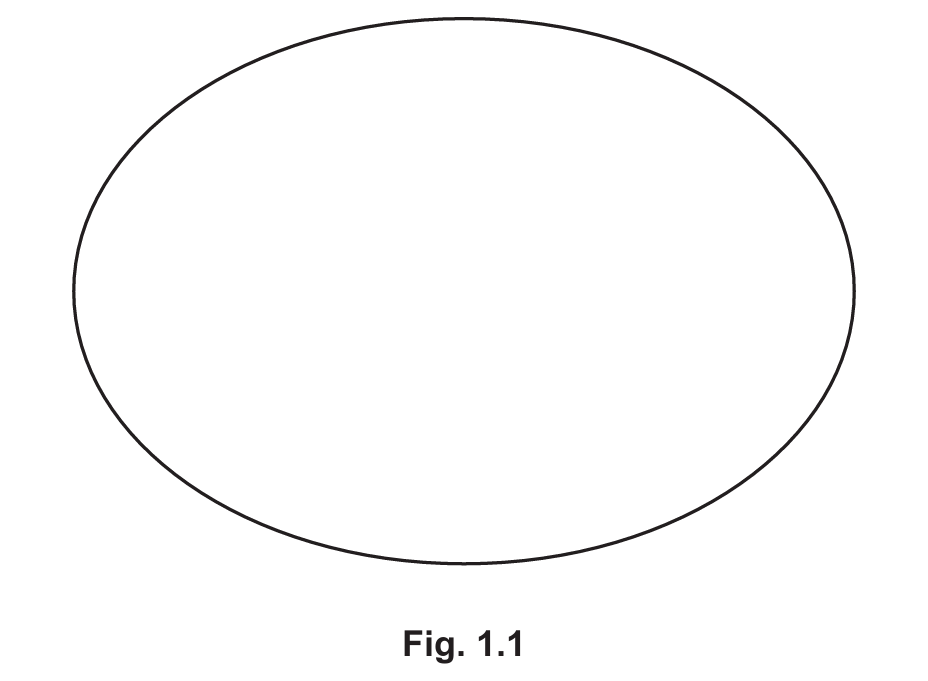
Complete Fig. 1.1 to produce a labelled diagram of the metaphase stage of mitosis in an animal cell with two chromosomes.

(c) Outline the changes that occur to the structure and behaviour of a chromosome:

  • from the start of the S phase to the end of interphase
  • during prophase of mitosis.
▶️ Answer/Explanation
Solution

(a) histones

Explanation: The proteins that are complexed with DNA to form chromatin are called histones. These are basic proteins that help in the packaging of DNA into structural units called nucleosomes. Histones play a crucial role in gene regulation and DNA replication.

(b)

Diagram should show:

  • Two chromosomes, each with two chromatids, aligned along the metaphase plate (equator of the cell)
  • Spindle fibers attached to the centromeres of each chromosome
  • Centrioles at opposite poles of the cell (if drawing includes them)
  • Labels for: chromosomes, spindle fibers, centromeres, and poles

Explanation: During metaphase, chromosomes are at their most condensed state and align at the cell’s equator. The spindle apparatus, composed of microtubules, attaches to the centromeres of each chromosome. This alignment ensures equal distribution of genetic material to daughter cells.

(c)

From start of S phase to end of interphase:

  • DNA replication occurs during S phase, resulting in identical copies of each chromosome
  • The replicated DNA complexes with histones to form sister chromatids
  • Chromatin remains diffuse and not visible under light microscope
  • Nuclear material doubles in preparation for cell division

During prophase of mitosis:

  • Chromatin condenses into visible chromosomes (each consisting of two sister chromatids)
  • Nuclear envelope begins to break down
  • Spindle fibers begin to form from the centrosomes
  • Centrosomes move to opposite poles of the cell
  • Chromosomes become attached to spindle fibers via their centromeres

Explanation: These changes ensure proper segregation of genetic material. The S phase prepares the cell by duplicating DNA, while prophase organizes this DNA for division. Condensation makes chromosomes manageable for movement, while spindle formation provides the mechanism for chromosome separation.
Question 2

Topic: 2.1

Keratin is the structural protein in feathers of birds. Keratin polypeptides are composed of a high proportion of cysteine amino acids, which have sulfur-containing R groups.

Keratin polypeptides form filaments. The two main types of keratin in feathers are α-keratin, which consists of many α-helices, and β-keratin, consisting of many β-pleated sheets.

(a) Keratin can be classified as α-keratin or β-keratin based on a study of protein structure.

Suggest the level of protein structure used to classify a protein as α-keratin or β-keratin.

(b) Protease enzymes hydrolyse proteins. Many proteases are able to hydrolyse more than one type of protein.

Suggest why it is possible for a protease to act on different types of protein.

(c) Proteases known as keratinases vary in the extent to which they can hydrolyse keratin.

Feathers are not easily degraded (broken down) because keratin is a very stable protein.

Suggest features of keratin structure that contribute to its stability.

Keratinases are used to degrade the large quantities of waste feathers from chickens and turkeys that are processed in the food industry.
The products of feather degradation can be used in animal feed.

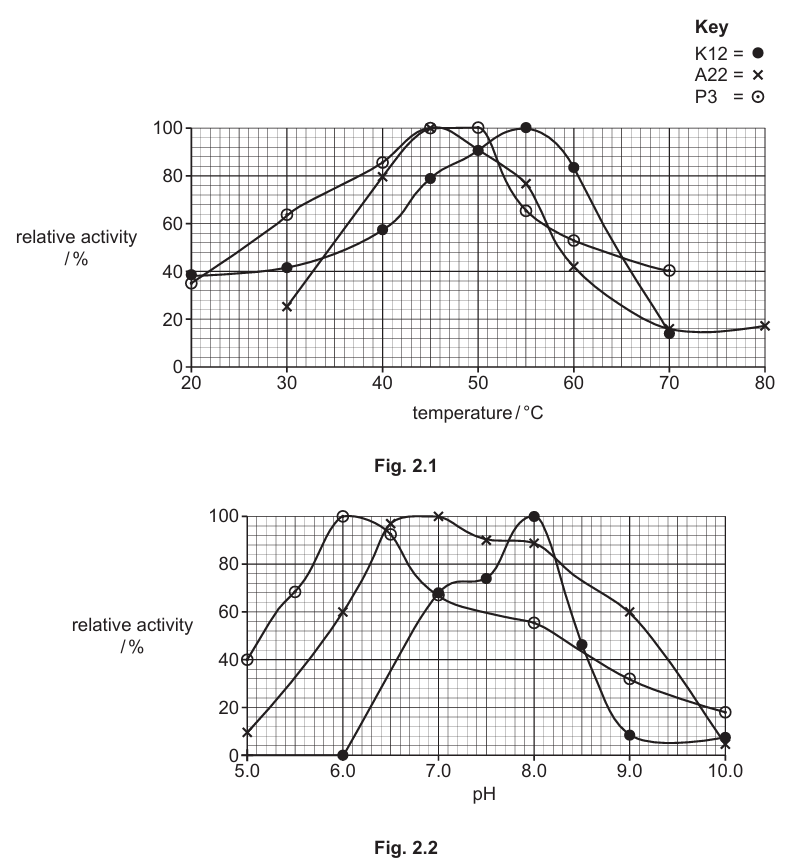
Scientists investigated whether three different keratinases, K12, A22 and P3, were suitable as industrial enzymes. These enzymes were extracted from three different soil bacteria. The effects of temperature and pH on the activity of each keratinase were investigated.
The results are shown in Fig. 2.1 and Fig. 2.2.

(d) To degrade feather waste from industry, it is an advantage to use keratinases that show at least 60% relative activity in conditions where temperature and pH can vary widely.

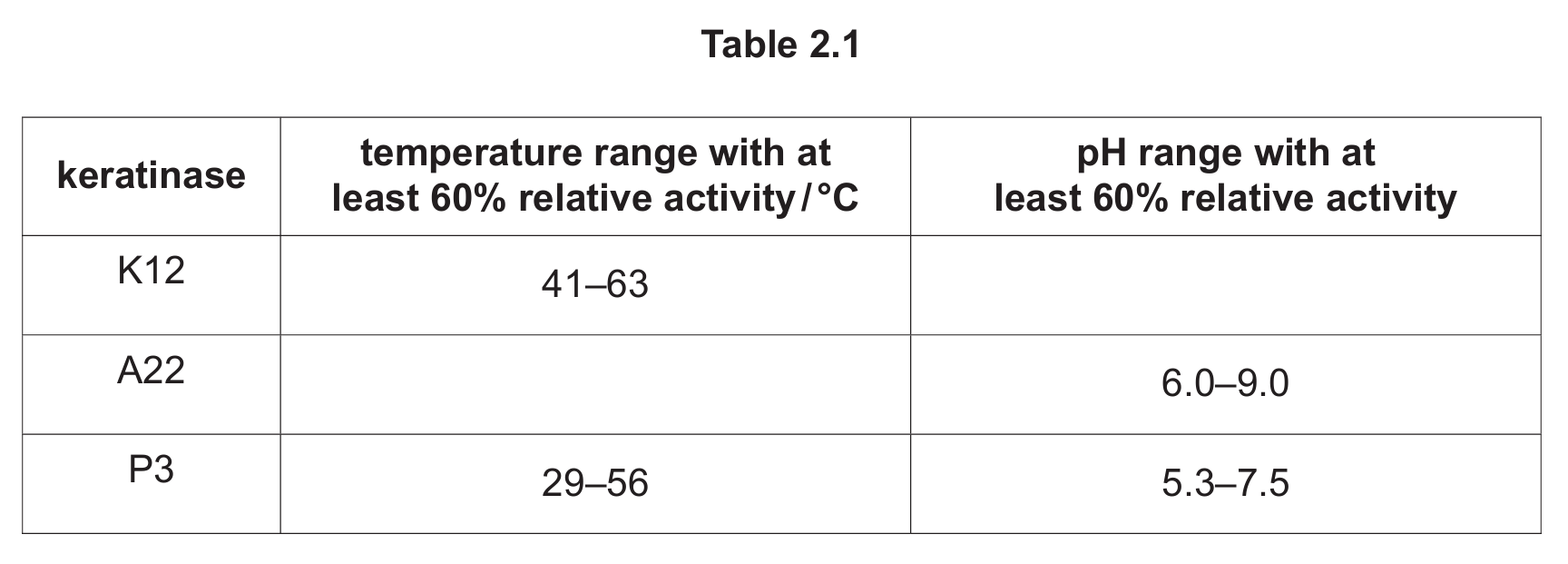
Table 2.1 shows, for each keratinase, the working range of temperature and pH where at least 60% relative activity is obtained.

Use Fig. 2.1 and Fig. 2.2 to complete Table 2.1 and use the completed table to:

  • name the keratinase that has the widest working range of temperature
  • name the keratinase that has the widest working range of pH.

Keratinase with a relative activity of at least 60% that has:

  • the widest working range of temperature
  • the widest working range of pH

(e) Some detergents contain proteases to remove stains from clothes. These enzymes have a high relative activity in alkaline conditions.

The scientists reported that K12 and A22 could be suitable for use in the detergent industry.

With reference to Fig. 2.1 and Fig. 2.2, discuss the advantages and disadvantages of using K12 and A22 in the detergent industry.

▶️ Answer/Explanation
Solution

(a) Secondary (structure).

Explanation: The classification of keratin as α-keratin or β-keratin is based on the secondary structure of the protein. α-keratin contains many α-helices, while β-keratin contains many β-pleated sheets. These are both types of secondary structure formed by hydrogen bonding between amino acids in the polypeptide chain.

(b) Any one from:

  • The area to be hydrolysed could be between the same amino acids in different proteins
  • The active site has some flexibility for hydrolysing similar substrates
  • Proteins have similar shapes so they can fit the active site
  • The active site and substrates still have complementary shapes

Explanation: Proteases can act on different proteins because they target peptide bonds, which are common to all proteins. The active site of the enzyme may have some flexibility to accommodate different amino acid sequences, or different proteins may have similar regions where the peptide bonds are accessible to the enzyme.

(c) Any three from:

  • Fibrous nature of the protein
  • Insolubility in water
  • High proportion of disulfide bonds between cysteine residues
  • Many hydrogen bonds between polypeptides
  • Many hydrophobic interactions
  • Tight packing of polypeptide chains

Explanation: Keratin’s stability comes from multiple structural features. The disulfide bonds between cysteine residues create strong covalent cross-links. The hydrogen bonds and hydrophobic interactions between polypeptide chains make the structure resistant to breaking. The tight packing of fibers and insolubility make it difficult for enzymes to access the peptide bonds for hydrolysis.

(d)
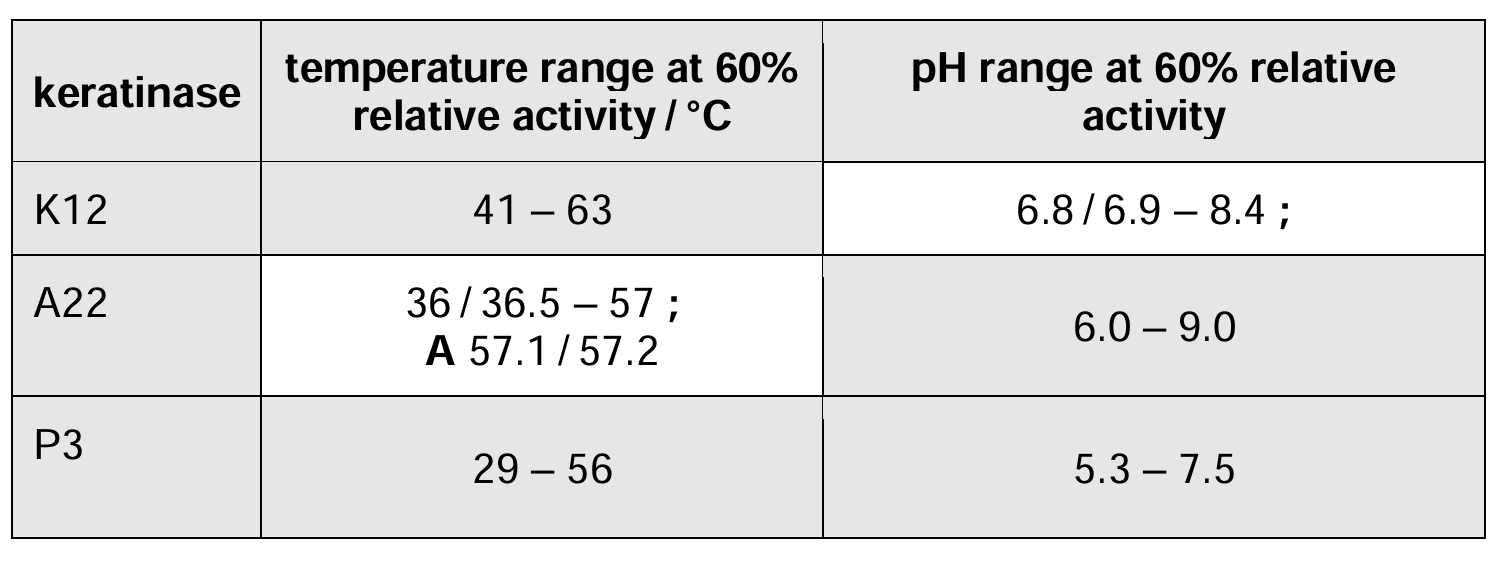
Keratinase with a relative activity of at least 60% that has:

  • the widest working range of temperature: P3
  • the widest working range of pH: A22

Explanation: From the data, P3 has the widest temperature range (29-56°C, a span of 27°C), while A22 has the widest pH range (6.0-9.0, a span of 3 pH units). This means P3 would be more tolerant to temperature variations, while A22 would work across a broader range of pH conditions.

(e) Any three from:

Advantages:

  • A22 and K12 are active at a wide range of temperatures (A22: 36-57°C, K12: 41-63°C)
  • K12 shows good activity at lower temperatures (around 40% at 20°C)
  • A22 has greatest activity at pH 7.5-8.0 and maintains at least 60% activity up to pH 9.0
  • K12 is active between pH 7.5-8.5 with optimum at pH 8.0

Disadvantages:

  • A22 has low activity at 30°C and 70-80°C
  • K12 has low activity at 20°C and 30°C
  • Activity decreases at higher pH values for both enzymes

Explanation: For detergent use, the enzymes need to work across various washing conditions. A22’s broad pH range makes it suitable for different detergent formulations, while K12’s temperature range allows it to work in both warm and hot washes. However, their reduced activity at certain temperatures might limit their effectiveness in some washing conditions. The alkaline tolerance is good for detergent use as most laundry detergents are alkaline.
Question 3

Topic: 8.1

The liver receives blood from the hepatic artery and from the hepatic portal vein. The hepatic portal vein transports blood from the digestive system.

Hepatocytes are the main cell type of the liver. They have a wide range of functions, including:

  • the synthesis of triglycerides and plasma proteins
  • detoxifying waste
  • energy storage.

(a) The hepatic artery branches from the main artery that transports blood from the heart.

Name the main artery that transports blood to the hepatic artery.

(b) Blood arriving at the liver enters specialised blood vessels known as sinusoids.

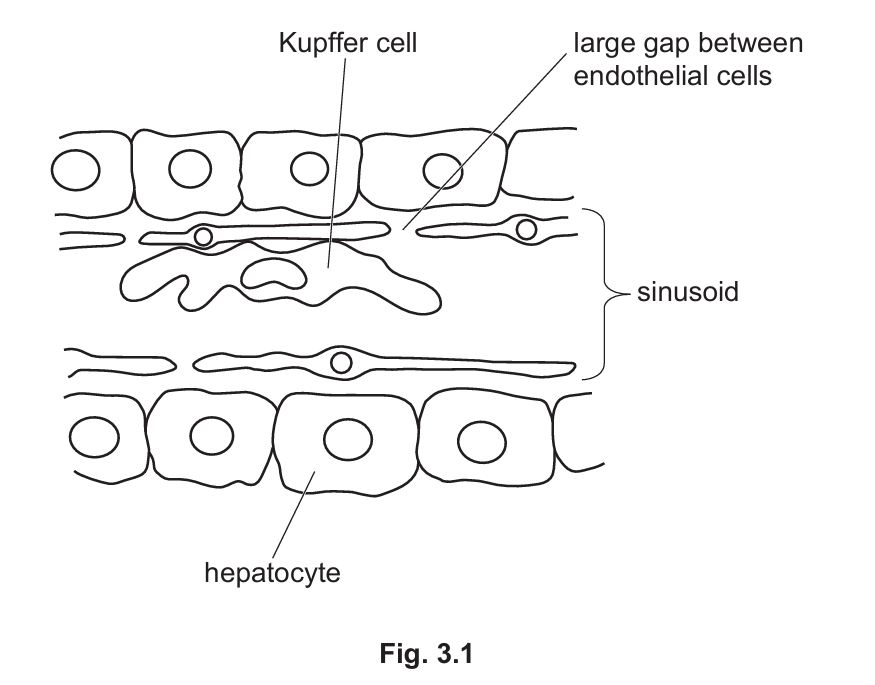
Fig. 3.1 is a diagram of part of a sinusoid and surrounding hepatocytes. A second type of cell found in the liver, a Kupffer cell, is also shown.

Kupffer cells are phagocytic cells of the immune system.

(i) Suggest one advantage of having large gaps between the endothelial cells of the sinusoid, as shown in Fig. 3.1.

(ii) In addition to removing bacteria present in the blood inside the sinusoid, Kupffer cells are also able to remove old or damaged red blood cells.

Describe the mode of action of a Kupffer cell in removing and breaking down a damaged red blood cell.

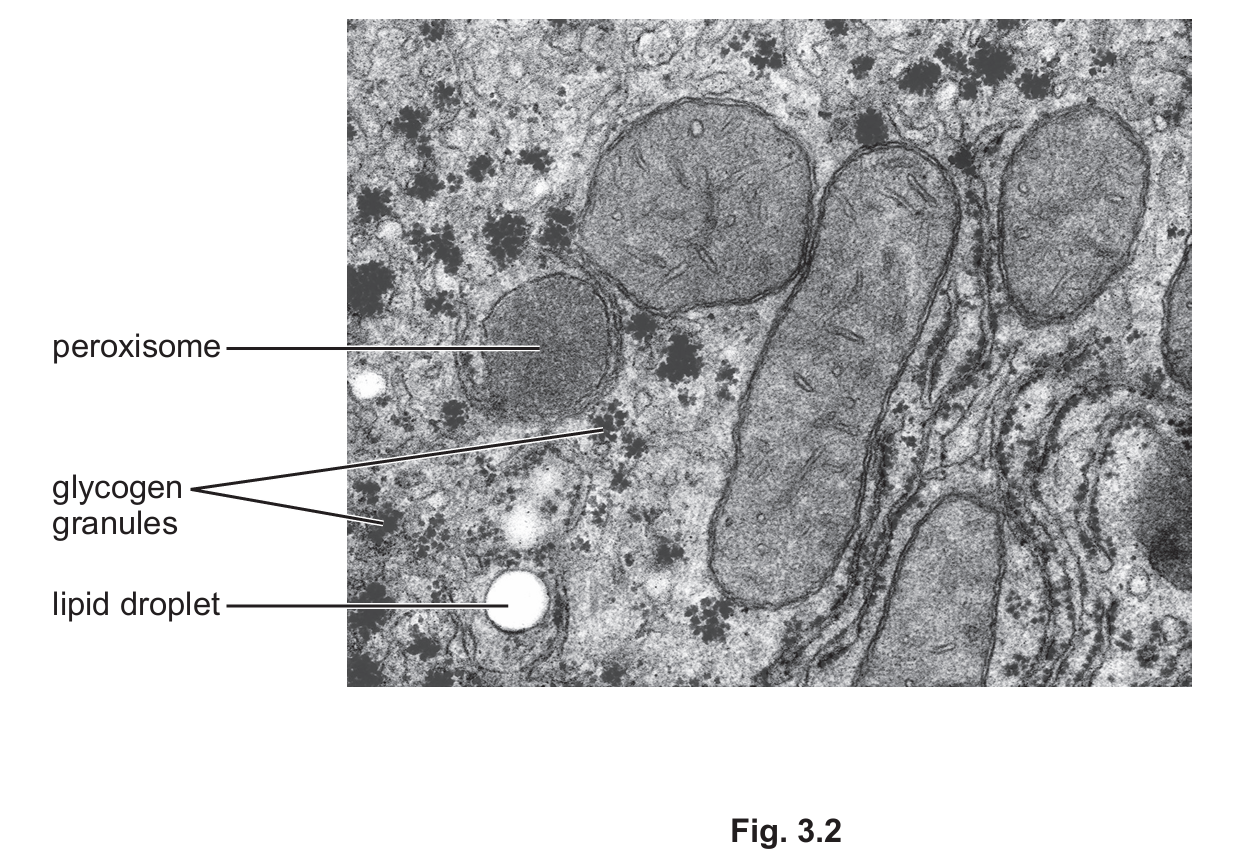
(c) Fig. 3.2 is a transmission electron micrograph of part of a hepatocyte showing some cell structures.

The peroxisome shown in Fig. 3.2 is a spherical organelle bound by a single membrane. It carries out a variety of enzyme-catalysed metabolic reactions, including detoxification. Some of these reactions require oxygen.

(i) Describe the evidence visible in Fig. 3.2, apart from the presence of a peroxisome, that indicates some of the functions of a hepatocyte.

Add labels to Fig. 3.2 to identify the location of any cell structures, if not already labelled, that are part of your evidence.

(ii) The mitochondria in Fig. 3.2 are larger than the peroxisome.

State one other difference, visible in Fig. 3.2, between a peroxisome and a mitochondrion.

(iii) Some of the enzymes used within mitochondria can be synthesised by the organelle. Peroxisomes cannot synthesise any of the enzymes that they contain.

Suggest why a mitochondrion can synthesise enzymes, but a peroxisome cannot synthesise enzymes.

▶️ Answer/Explanation
Solution

(a) aorta / dorsal aorta

Explanation: The hepatic artery branches directly from the aorta, which is the main artery carrying oxygenated blood from the heart to the rest of the body. The aorta gives rise to various branches that supply different organs, with the hepatic artery specifically supplying oxygen-rich blood to the liver.

(b)(i) Higher rate of/easier exchange/movement of substances

Explanation: The large gaps between endothelial cells in liver sinusoids facilitate efficient exchange of materials between the blood and hepatocytes. This unique structure allows plasma proteins and other large molecules to pass through easily, enabling the liver to perform its vital functions in metabolism, detoxification, and protein synthesis more effectively.

(b)(ii)

  1. Phagocytosis occurs where the Kupffer cell engulfs the damaged red blood cell
  2. The red blood cell is enveloped by pseudopodia extending from the Kupffer cell
  3. A phagocytic vacuole (phagosome) forms around the red blood cell
  4. A lysosome fuses with the phagosome, releasing digestive enzymes
  5. The enzymes break down the red blood cell into components like haem and globin
  6. These components are further processed or recycled by the cell

Explanation: Kupffer cells are specialized macrophages in the liver that play a crucial role in cleaning the blood by removing old or damaged red blood cells through phagocytosis. This process involves recognition of the damaged cells, engulfment, and enzymatic breakdown within the phagolysosome. The iron from haem can be recycled, while globin proteins are broken down into amino acids for reuse.

(c)(i)

  • Presence of glycogen granules indicates energy storage function
  • Lipid droplets visible, showing fat storage capability
  • Numerous mitochondria present, suggesting high metabolic activity
  • Rough endoplasmic reticulum visible, indicating protein synthesis
  • Smooth endoplasmic reticulum present, involved in lipid metabolism and detoxification

Explanation: The electron micrograph provides multiple visual clues about hepatocyte functions. Glycogen granules appear as dark clusters, demonstrating the liver’s role in glucose storage. Lipid droplets are clear evidence of fat storage. The abundance of mitochondria reflects the high energy demands of liver cells for their diverse metabolic activities. The presence of both rough and smooth ER indicates the cell’s involvement in both protein synthesis and lipid metabolism/detoxification.

(c)(ii) Mitochondria have a double membrane while peroxisomes have a single membrane

Explanation: This structural difference is fundamental to their distinct functions. The double membrane of mitochondria, with its folded inner membrane (cristae), provides a large surface area for ATP production during cellular respiration. The single membrane of peroxisomes is sufficient for their role in oxidative reactions and detoxification processes.

(c)(iii)

  • Mitochondria contain their own DNA and ribosomes (70S) for protein synthesis
  • They have the complete machinery for transcription and translation
  • Peroxisomes lack genetic material and protein-synthesizing machinery
  • All peroxisomal enzymes are encoded by nuclear DNA and imported from the cytosol

Explanation: This difference stems from the endosymbiotic origin of mitochondria, which were once free-living bacteria that retained some of their original genetic machinery. Mitochondria can produce some of their own proteins, particularly those involved in oxidative phosphorylation. Peroxisomes, in contrast, are not derived from endosymbionts and rely entirely on the cell’s nuclear genome for their enzyme complement, which must be imported after synthesis in the cytosol.
Question 4

Topic: 7.1

The alveoli of the lungs are the main gas exchange surface in humans.

(a) Explain how blood flow through the alveolar capillaries helps to maintain steep diffusion gradients for gas exchange.

(b) Ventilation of the lungs is the process of inhalation and exhalation. Ventilation helps to maintain steep diffusion gradients.

Explain the role of elastic fibres in the alveolar wall during ventilation.

(c) Some cells in the alveolar wall are specialised to secrete surfactant to prevent collapse of the alveoli at the end of exhalation. In these cells, surfactant is stored in membrane-bound organelles known as lamellar bodies. Surfactant is a mixture of lipids, mainly phospholipids, and some proteins.

A protein known as ATP-binding cassette transporter A3 (ABCA3) is needed to move surfactant phospholipids into lamellar bodies from the surrounding cytosol (fluid part of cytoplasm).

Suggest and explain the features of protein ABCA3 that make it suited to its function.

(d) The gene ABCA3 codes for protein ABCA3. The gene is 80kb (80 000 base pairs) long and is composed of introns and exons. Protein ABCA3 is composed of 1704 amino acids.

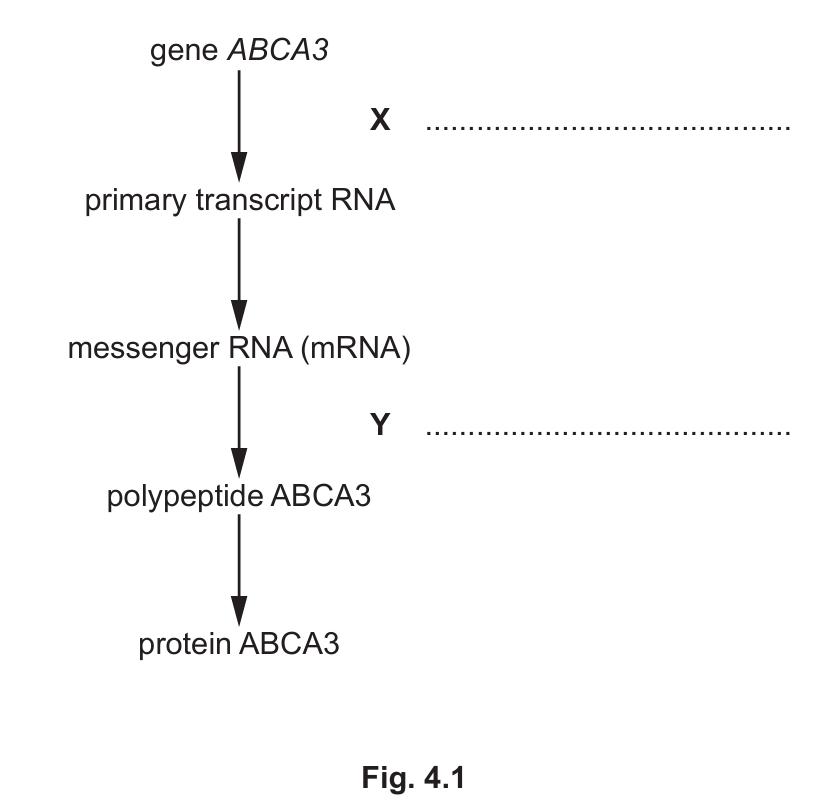
(i) Fig. 4.1 shows the flow of genetic information in the production of ABCA3.


Complete Fig. 4.1 to name the processes occurring at X and Y.

(ii) A triplet of bases codes for one amino acid. This fact only partly explains how the activity of gene ABCA3, which is 80kb long, can result in the protein ABCA3, which is only 1704 amino acids long.

Suggest other reasons to explain the difference in the number of base pairs in gene ABCA3 compared with the number of amino acids in protein ABCA3.

▶️ Answer/Explanation
Solution

(a)

1. Blood arriving at the alveoli is deoxygenated (has low partial pressure of oxygen) while the alveoli contain oxygen-rich air, creating a steep concentration gradient for oxygen diffusion.

2. The continuous flow of blood removes oxygenated blood and brings in more deoxygenated blood, maintaining the concentration gradient by constantly replacing blood that has picked up oxygen.

Explanation: The efficient exchange of gases relies on maintaining steep concentration gradients. The blood flow system ensures that oxygen-poor blood is always arriving at the alveoli while oxygen-rich blood is constantly being carried away, preventing equilibrium from being reached and thus maintaining the diffusion gradient.

(b)

1. Elastic fibers allow alveoli to expand during inhalation by stretching, accommodating the incoming air.

2. They prevent overstretching and potential damage to alveoli during deep inhalation.

3. During exhalation, the elastic fibers recoil, helping to push air out of the lungs and return the alveoli to their resting size.

Explanation: The elastic properties of alveolar walls are crucial for the ventilation process. During inhalation, the fibers stretch to allow lung expansion, while their recoil during exhalation helps passively expel air. This elastic behavior maintains the structure and function of alveoli through repeated breathing cycles.

(c)

1. ABCA3 is a membrane transport protein specifically designed to move phospholipids across membranes.

2. It has specific binding sites that recognize and bind surfactant phospholipids.

3. It uses energy from ATP hydrolysis to actively transport phospholipids against their concentration gradient into lamellar bodies.

4. The protein undergoes conformational changes to move phospholipids across the membrane.

Explanation: As an ATP-binding cassette transporter, ABCA3 has several specialized features. Its binding sites specifically interact with surfactant phospholipids. The ATP hydrolysis provides energy for the active transport process, moving phospholipids into the lamellar bodies where they’re stored until secretion. This active transport is necessary to concentrate the surfactant components within the storage organelles.

(d)(i)

X: Transcription

Y: Translation

Explanation: The process begins with transcription (X), where the DNA sequence of the ABCA3 gene is copied into a primary RNA transcript. This is then processed into mRNA which undergoes translation (Y) at ribosomes to produce the polypeptide chain that will fold into the functional ABCA3 protein.

(d)(ii)

1. The gene contains non-coding introns that are removed during RNA processing, so they don’t contribute to the final protein sequence.

2. Only the coding exons are spliced together to form the mature mRNA that gets translated.

3. Some DNA sequences are regulatory elements that control gene expression but don’t code for protein.

4. Stop codons terminate translation and don’t code for amino acids.

Explanation: Eukaryotic genes typically contain much more DNA than needed to code for their proteins. Introns are intervening sequences that are transcribed but then spliced out of the primary transcript. Additionally, there are untranslated regions and regulatory sequences that don’t contribute to the amino acid sequence. The start codon (usually coding for methionine) may also be removed post-translationally in some proteins.
Question 5

Topic: 11.1

Tuberculosis (TB) is an infectious disease caused by a bacterium. In the majority of people, only the lungs are affected.

In most cases, the transmission of TB from an infected person to an uninfected person involves Mycobacterium tuberculosis. A different species of bacterium is involved in the transmission of TB from cattle, such as dairy cows, to humans.

(a) Name the species of bacterium causing the transmission of TB from dairy cows to humans.

(b) In some areas, cattle cannot be regularly tested or treated for TB. In these areas, milk and dairy products from infected dairy cattle may enter the human food chain.

Outline a control measure that can be taken to protect people that consume milk and dairy products from these infected cattle.

(c) Cattle are not usually affected by M. tuberculosis, but the pathogen can cause disease in other animals.

A few cases of transmission of TB from people to animals have been reported.

Explain the most likely mode of transmission of TB from an infected person to an animal.

(d) In most people, the response of the immune system to the infection of lung tissue by M. tuberculosis can prevent the spread of the bacterium to other organs of the body. The bacterium is contained in the lungs in a dormant state. This is known as latent TB.

Outline the treatment that is used to kill M. tuberculosis in latent TB infections.

(e) M. tuberculosis can spread in the blood and lymph to other organs in the body.

In very rare cases, a disease known as mycotic aneurysm can be caused by infection of the arterial wall, particularly in elastic arteries. The damage caused by the pathogen can lead to a rupture (bursting) of the artery.

With reference to the structure of the wall of elastic arteries, suggest how damage caused by M. tuberculosis infection can lead to the rupture of the artery.

You may draw a diagram if you wish.

▶️ Answer/Explanation
Solution

(a) Mycobacterium bovis

Explanation: The species responsible for transmitting TB from dairy cows to humans is Mycobacterium bovis, often abbreviated as M. bovis. This is a distinct species from M. tuberculosis, though both are part of the Mycobacterium tuberculosis complex.

(b) Pasteurizing milk / drinking pasteurized milk.

Explanation: The most effective control measure is heat treatment of milk through pasteurization. This process involves heating milk to a specific temperature (typically 72°C for 15 seconds) to kill any pathogenic bacteria, including M. bovis, without significantly altering the milk’s nutritional value. Alternatively, boiling milk or using pasteurized milk to make dairy products would also be effective. This prevents the transmission of TB through contaminated dairy products.

(c) The infected person coughs/sneezes/talks, releasing bacteria in droplets which the animal inhales.

Explanation: The most likely transmission route is through aerosol or droplet infection. When an infected person coughs, sneezes, or even talks, they expel tiny droplets containing M. tuberculosis bacteria into the air. If an animal is nearby and inhales these contaminated airborne droplets, the bacteria can establish infection in the animal’s lungs. This is the same primary transmission method as between humans.

(d) Treatment involves antibiotics (e.g., rifampicin, isoniazid) typically for 6-12 months, often using combination therapy.

Explanation: Latent TB is treated with a course of antibiotics to eliminate the dormant bacteria before they become active. The standard treatment involves:

  • A combination of antibiotics (usually isoniazid and rifampicin) to prevent drug resistance
  • Extended treatment duration (typically 6-12 months) because mycobacteria grow slowly and are protected by thick cell walls
  • Regular monitoring to ensure treatment compliance and effectiveness

Shorter courses (3-4 months) may be used with certain antibiotic combinations, but the longer duration is often necessary to completely eradicate the bacteria.

(e) Damage to elastic fibers and collagen in arterial walls weakens the vessel, preventing recoil and leading to rupture under pressure.

Explanation: The rupture occurs due to structural damage to the arterial wall layers:

  1. Tunica media damage: The middle layer contains elastic fibers and smooth muscle that allow arteries to stretch and recoil with each heartbeat. Infection damages these elastic fibers, impairing the artery’s ability to withstand pressure changes.
  2. Tunica externa damage: The outer layer’s collagen fibers provide tensile strength. When these are damaged by infection, the artery loses its structural support.
  3. Consequence: Without intact elastic fibers and collagen, the artery cannot maintain its structural integrity. The damaged area balloons outward (aneurysm) under blood pressure and eventually ruptures when the wall becomes too thin.

The infection also triggers inflammation which further weakens the arterial wall through enzymatic degradation of structural proteins.

Question 6

Topic: 9.1

Water that is absorbed from the soil solution by the roots of a plant enters xylem vessels and is transported to the leaves and buds.

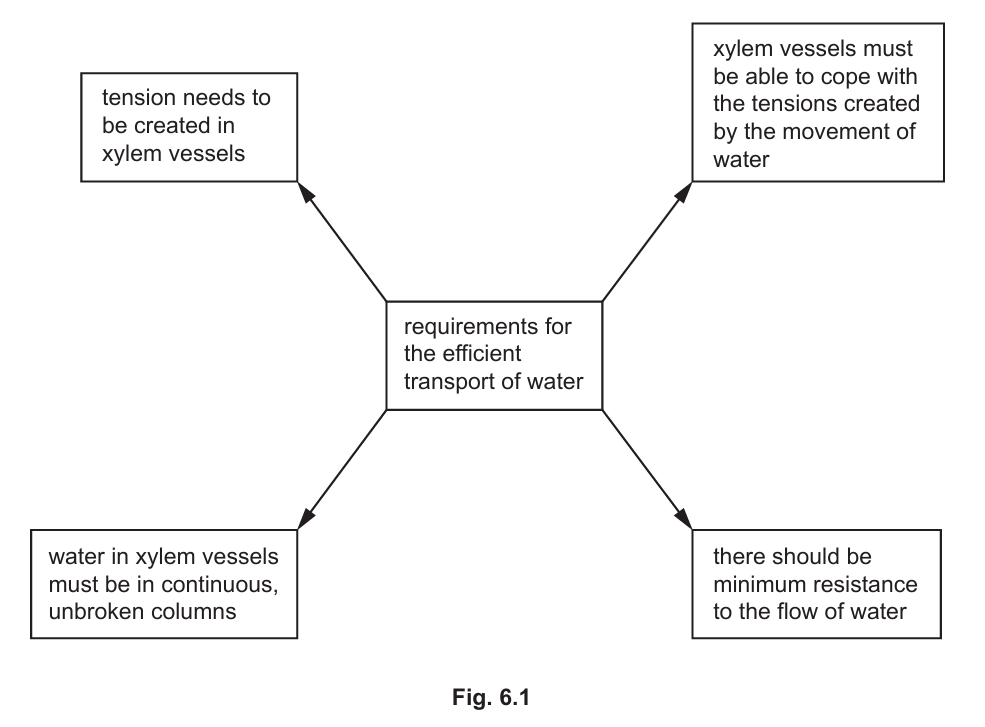
Fig. 6.1 shows four important requirements for the efficient transport of water from the roots to the leaves of a plant.


(a) Name the specialised cells that are arranged end to end to form xylem vessels.

(b) Explain how tension is created in the xylem vessels.

(c) Fig. 6.1 highlights how the structure of xylem vessels must be related to their function. This means that during the development of xylem vessels changes need to occur to the cells forming the vessels.

(i) The walls of the cells forming the xylem vessel walls become lignified during development.

Explain how this feature is important for the efficient transport of water.

(ii) During the development of xylem vessels, the end walls of the cells forming the vessels break down. This contributes to minimising resistance to the flow of water.

Describe one other main change that needs to occur to these cells so that their structure becomes suited to their function.

▶️ Answer/Explanation
Solution

(a) Xylem vessel elements

Explanation: Xylem vessels are formed by specialized cells called xylem vessel elements. These cells are arranged end-to-end to form continuous tubes that facilitate water transport throughout the plant. The term “xylem vessel elements” specifically refers to these specialized cells that make up the xylem tissue.

(b)

Explanation: Tension in xylem vessels is created primarily through the process of transpiration. As water evaporates from the leaves’ surfaces (transpiration), it creates a pulling force called the transpiration pull. This occurs because:

  • Water molecules are cohesive (stick to each other) and adhesive (stick to xylem walls)
  • The evaporation creates a negative pressure (tension) at the top of the xylem
  • This tension is transmitted down the continuous water column in the xylem
  • The overall water potential gradient from roots (higher) to leaves (lower) maintains this tension

The combination of cohesion, adhesion, and transpiration pull creates and maintains the tension necessary for water transport against gravity.

(c)(i)

Explanation: Lignification of xylem vessel walls is crucial for efficient water transport because:

  • Lignin provides mechanical strength to prevent collapse of the vessels under the tension created by water movement
  • The rigid structure maintains the vessel’s shape and diameter despite the negative pressures
  • Lignin contains hydrophilic groups that help maintain water adhesion to the vessel walls
  • The waterproof nature of lignin prevents water loss from the vessels, maintaining continuous water columns
  • Secondary thickening with lignin allows the cells to become hollow tubes ideal for water transport

Without lignification, the xylem vessels would collapse under the tension created by transpiration, disrupting water transport.

(c)(ii)

Explanation: Another crucial change during xylem vessel development is the programmed cell death (apoptosis) of the vessel elements. This process involves:

  • Complete loss of cell contents including cytoplasm and organelles
  • Breakdown and removal of the nucleus
  • Loss of protoplasm, leaving only the cell wall
  • Formation of a completely hollow tube

This change is essential because it eliminates any internal obstructions to water flow, minimizing resistance and creating an open pipeline for efficient water transport. The empty lumen allows for maximum flow capacity while the remaining cell wall provides structural support.

Scroll to Top