Topic: 15.1
Different species of animal have neurones with different characteristics.
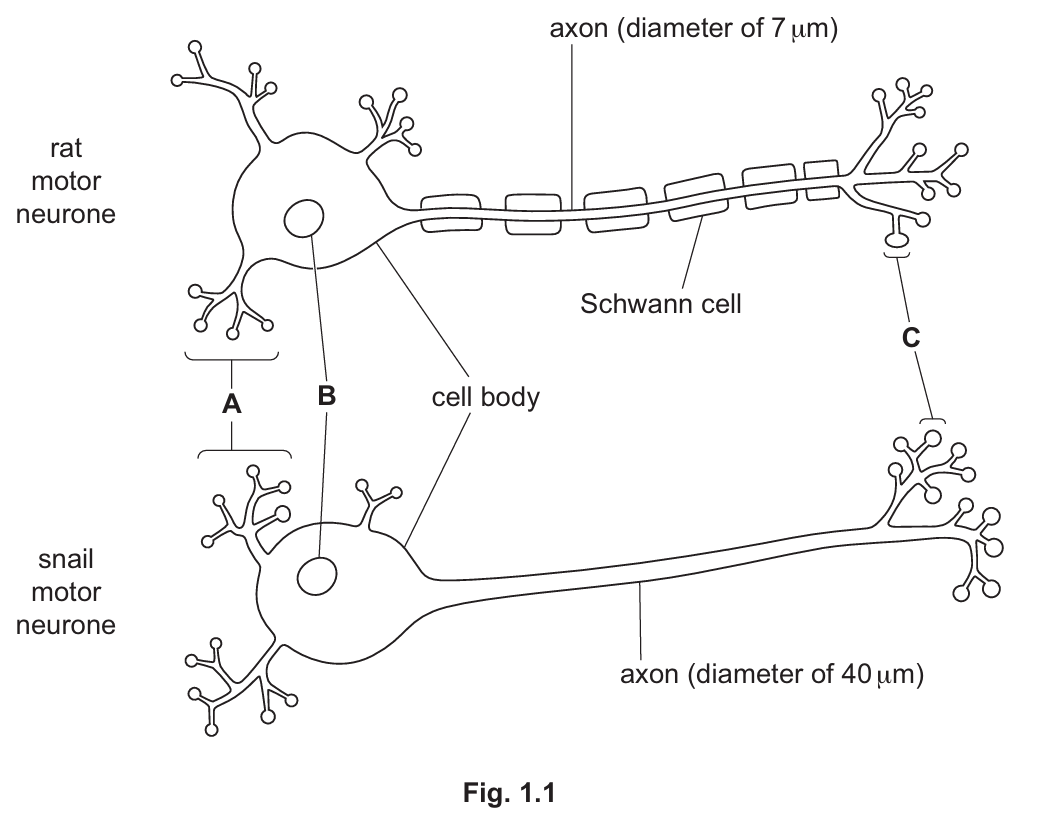
(a) Fig. 1.1 is a diagram of a motor neurone of a rat and a motor neurone of a snail.

(i) Name the structures labelled A, B and C on Fig. 1.1.
(ii) The rat motor neurone has an impulse transmission speed of 50 m s-1. The snail motor neurone has an impulse transmission speed of 8 m s-1.
Explain why the rat motor neurone has a faster impulse transmission speed than the snail motor neurone.
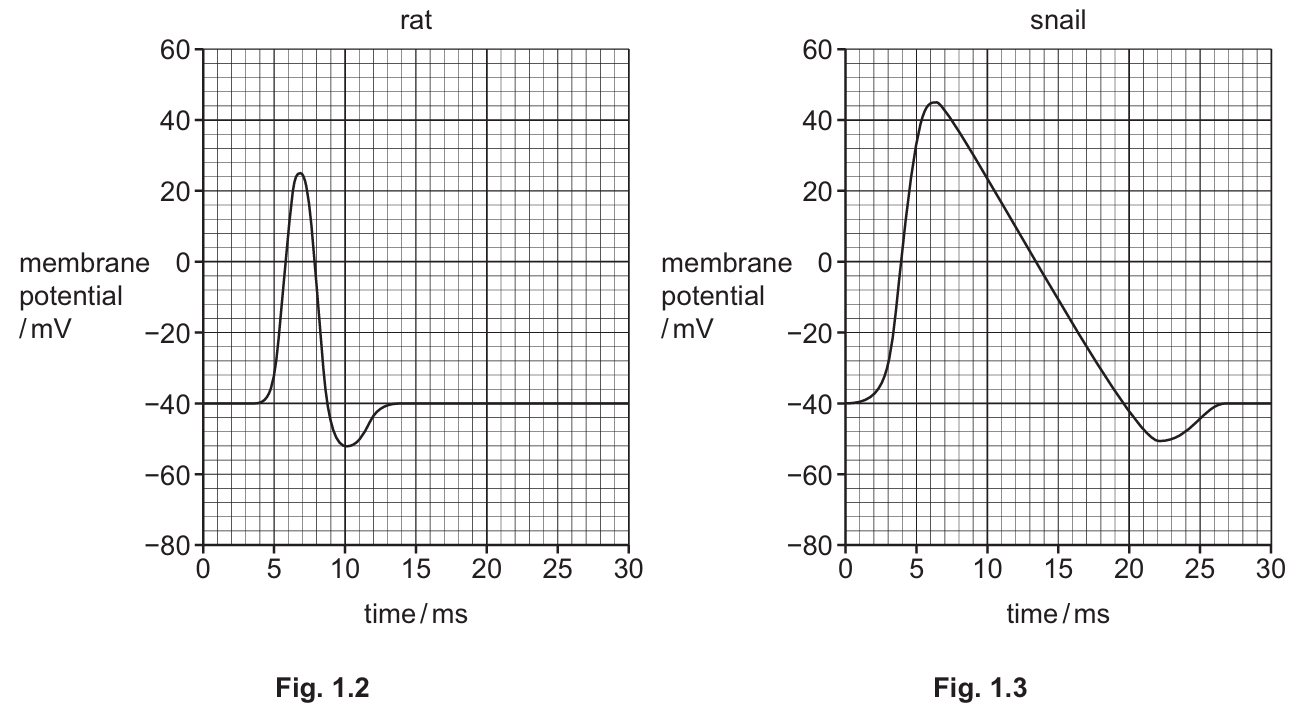
(b) Fig. 1.2 shows an action potential in a rat neurone and Fig. 1.3 shows an action potential in a snail neurone.

Contrast the two action potentials shown in Fig. 1.2 and Fig. 1.3.
▶️ Answer/Explanation
(a)(i)
A = dendrites
B = nucleus
C = synaptic knob
Explanation: The diagram shows key structures of motor neurones. A points to the branched extensions (dendrites) that receive signals. B indicates the nucleus, which contains genetic material. C marks the synaptic knob at the end of the axon where neurotransmitters are released.
(a)(ii)
The rat motor neurone has a myelin sheath/Schwann cells which allow saltatory conduction where the impulse jumps between nodes of Ranvier, making transmission faster. The snail neurone lacks this myelination.
Detailed Explanation: The rat’s motor neurone is myelinated, meaning it has Schwann cells wrapped around the axon forming an insulating layer. This allows the action potential to “jump” from one node of Ranvier to the next (saltatory conduction), significantly increasing transmission speed. Additionally, the rat’s axon has a larger diameter (40 μm vs snail’s 7 μm), which reduces resistance to ion flow. The snail’s unmyelinated neurone requires continuous propagation of the action potential along the entire axon, which is slower.
(b)
1. The snail action potential shows greater depolarization (higher peak membrane potential) compared to the rat.
2. The snail action potential takes longer to return to resting potential (slower repolarization).
3. The snail neurone has a longer refractory period before it can fire again.
Detailed Explanation: The graphs reveal significant differences in action potential characteristics between species. The snail’s action potential reaches a higher peak voltage (about +40mV vs rat’s +30mV) and has a more prolonged duration. The repolarization phase in snails is much slower, resulting in a longer absolute refractory period where the neurone cannot fire again. This slower recovery is likely due to differences in ion channel density and kinetics. The rat’s action potential is more rapid, allowing for faster neural processing, which is adaptive for its more complex nervous system requirements. The hyperpolarization (undershoot) phase is also more pronounced in the snail, suggesting differences in potassium channel activity.
Topic: 14.1
The leaves of many plants have stomata that show a regular daily rhythm of opening and closing over a period of 24 hours.
(a) Explain why it is important for plants to open and close their stomata in a daily rhythm.
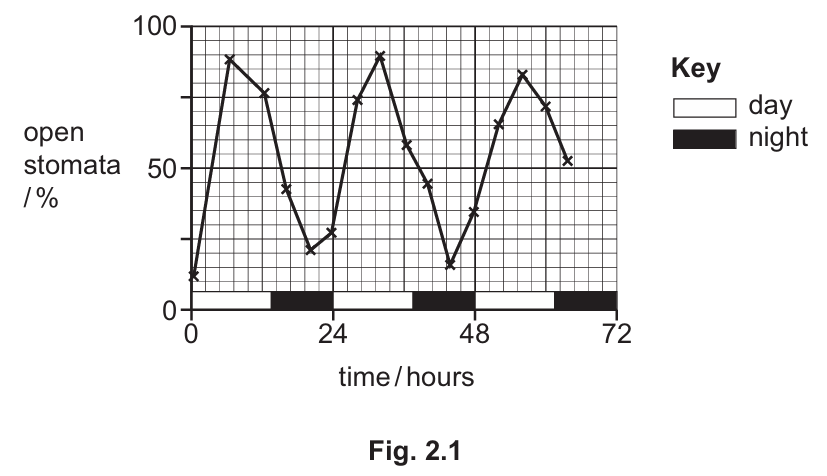
(b) Fig. 2.1 shows the results of an experiment to monitor this rhythm over three days and nights for the plant Arabidopsis thaliana. The percentage of open stomata is shown. Each day consisted of 14 hours of light (white bar) and each night consisted of 10 hours of darkness (black bar).

Fig. 2.1 shows that the percentage of open stomata increases in the first seven hours of the experiment. Describe the sequence of changes that occurs in the guard cells that leads to the stomata opening.
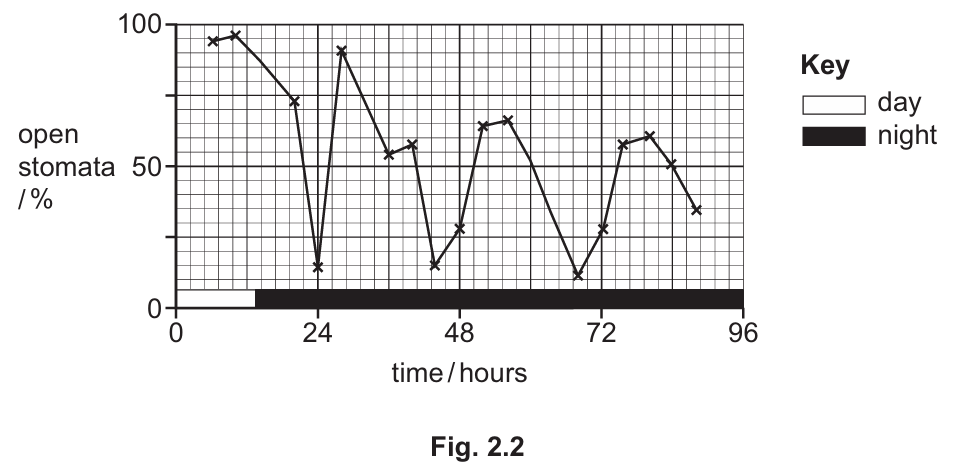
(c) The experiment was repeated with A. thaliana plants that were left in darkness from 14 to 96 hours. The results are shown in Fig. 2.2.

With reference to Fig. 2.1, explain what Fig. 2.2 shows about the role of genes and the role of the environment in controlling the rhythm of stomatal opening and closing in A. thaliana.
▶️ Answer/Explanation
(a)
Plants open and close their stomata in a daily rhythm because:
- Stomata open during the day/light periods to allow carbon dioxide to enter for photosynthesis (light-independent stage/Calvin cycle).
- They close during the night/dark periods to reduce water loss through transpiration when photosynthesis isn’t occurring.
- This rhythm helps balance the plant’s need for CO₂ uptake with the need to conserve water.
Explanation: The daily rhythm of stomatal opening is crucial for plant survival. During daylight hours when photosynthesis is active, open stomata allow CO₂ to diffuse into leaves. However, open stomata also lead to water loss through transpiration. At night when photosynthesis stops, closing stomata conserves water while minimally affecting CO₂ uptake. This rhythm represents an evolutionary adaptation to optimize both gas exchange and water conservation.
(b)
The sequence of changes in guard cells leading to stomatal opening:
- Protons (H⁺ ions) are actively pumped out of guard cells using ATP energy.
- This creates a more negative charge inside the cells and opens potassium ion (K⁺) channels.
- K⁺ ions enter the guard cells through facilitated diffusion.
- Chloride ions (Cl⁻) also move into the cells to balance the charge.
- The increased solute concentration lowers the water potential in guard cells.
- Water enters the cells by osmosis, making them turgid.
- The guard cells’ unique structure (thicker inner walls) causes them to bend outward when turgid, opening the stoma.
Explanation: The process begins with light activation of blue-light receptors in guard cells, triggering proton pumps. As ions accumulate, the osmotic gradient drives water influx. The resulting turgor pressure changes are possible because guard cells have radial cellulose microfibrils that constrain expansion in certain directions, causing the characteristic kidney-shaped curvature that opens the pore between them.
(c)
Fig. 2.2 shows:
- The environment (light) is needed to maintain the normal rhythm and achieve the same peak percentage of stomatal opening seen in Fig. 2.1.
- Genes play a role because a regular rhythm/pattern continues even in continuous darkness, though with decreasing amplitude.
- This demonstrates that stomatal rhythm is controlled by both environmental cues (light) and an endogenous circadian clock (genetic control).
Explanation: The persistence of rhythmic opening in darkness indicates an underlying biological clock (controlled by genes) that can maintain approximate 24-hour cycles without external cues. However, the decreasing amplitude shows that environmental light is required to fully sustain and synchronize the rhythm. This is characteristic of circadian rhythms in general – they’re genetically programmed but require environmental input (zeitgebers) to remain precisely timed to 24 hours. The experiment demonstrates that A. thaliana has evolved both genetic and environmental response mechanisms to optimize stomatal function.
Topic: 12.2
During aerobic respiration, cells respire substrates such as glucose to produce ATP.
Some events that occur during aerobic respiration are:
- The respiratory substrate breaks down into smaller and smaller molecules. These series of reactions are described as catabolism.
- Coenzymes take part in various reactions. In some reactions, coenzymes are reduced or oxidised.
- Carbon dioxide is released.
(a) Aerobic respiration occurs in four successive stages: glycolysis (G), link reaction (LR), Krebs cycle (KC) and oxidative phosphorylation (OP).
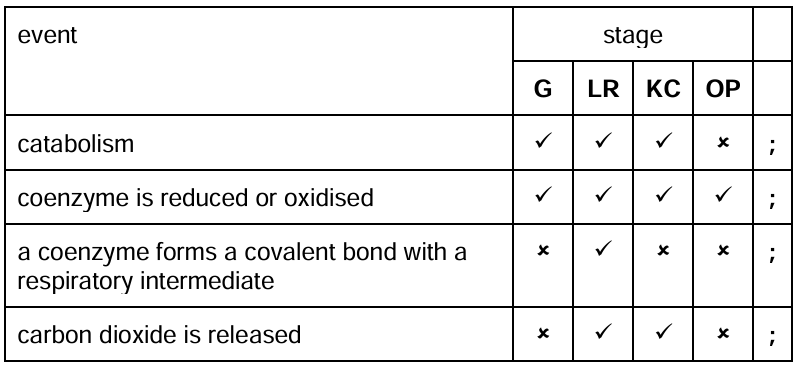
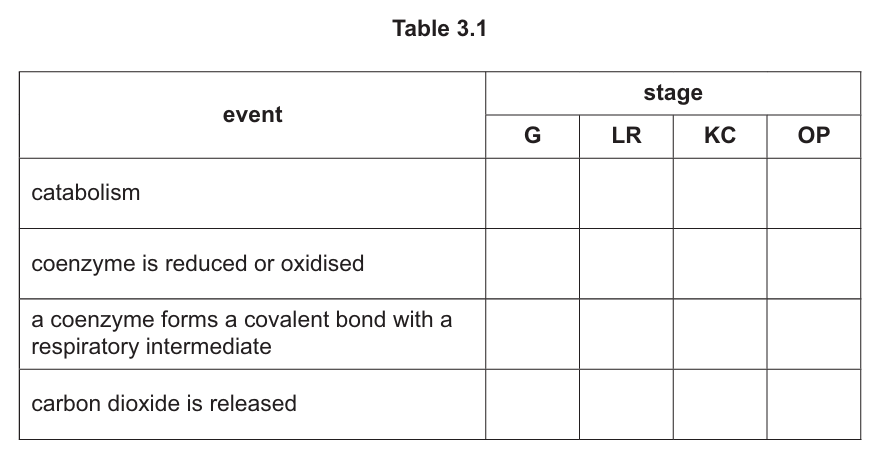
Complete Table 3.1 to show which events occur in each stage of aerobic respiration. Use a tick (✓) to show that the event does occur or a cross (✗) to show that the event does not occur.

(b) A new hand-held technological device shows the main type of respiratory substrate being used in the cells of a person.
The device consists of a carbon dioxide sensor and air-flow meter. The person inhales through the device for a fixed time and then exhales into it.
The device calculates the respiratory quotient (RQ) value to show whether the cells are mainly respiring carbohydrates or lipids.
(i) Explain how the device calculates the RQ value and how this shows whether the cells are mainly respiring carbohydrates or lipids.
(ii) State the difference in the relative energy values of carbohydrates and lipids as respiratory substrates, and explain the reasons for the difference.
▶️ Answer/Explanation
(a) 
Table 3.1 completed:
Explanation:
In glycolysis (G), glucose is broken down (catabolism) and NAD+ is reduced to NADH, but no CO₂ is released. The link reaction (LR) involves pyruvate decarboxylation (CO₂ release), reduction of NAD+, and formation of acetyl-CoA (coenzyme covalent bonding). The Krebs cycle (KC) continues catabolism, reduces NAD+ and FAD, and releases CO₂. Oxidative phosphorylation (OP) involves redox reactions of coenzymes but no catabolism or CO₂ release.
(b)(i)
The device calculates RQ as the ratio of CO₂ produced to O₂ consumed (RQ = CO₂/O₂). For carbohydrates, RQ = 1 (C₆H₁₂O₆ + 6O₂ → 6CO₂ + 6H₂O). For lipids, RQ ≈ 0.7 (more O₂ needed per CO₂ produced). The air-flow meter measures O₂ inhaled, and the CO₂ sensor measures CO₂ exhaled. Higher RQ values indicate carbohydrate respiration, while lower values indicate lipid respiration.
Explanation:
The respiratory quotient differs because lipids contain more hydrogen atoms per carbon atom than carbohydrates, requiring more oxygen for complete oxidation. The device measures both gases to determine which substrate is primarily being metabolized. This is useful for understanding metabolic states like fasting (lipid-dominated) or high-carb diets.
(b)(ii)
Lipids have higher energy value (~37 kJ/g) than carbohydrates (~16 kJ/g). This is because:
- Lipids contain more C-H bonds which release energy when oxidized
- Lipids are more reduced molecules, yielding more reduced NAD/FAD
- Greater proton gradient is generated from lipid oxidation
- Lipids are anhydrous while carbohydrates are hydrated
Explanation:
The higher energy content of lipids stems from their chemical structure. Fatty acids have long hydrocarbon chains with many C-H bonds that release substantial energy when broken. Additionally, the complete oxidation of lipids generates more electron carriers (NADH and FADH₂) which drive oxidative phosphorylation to produce more ATP compared to carbohydrates.
Topic: 14.1
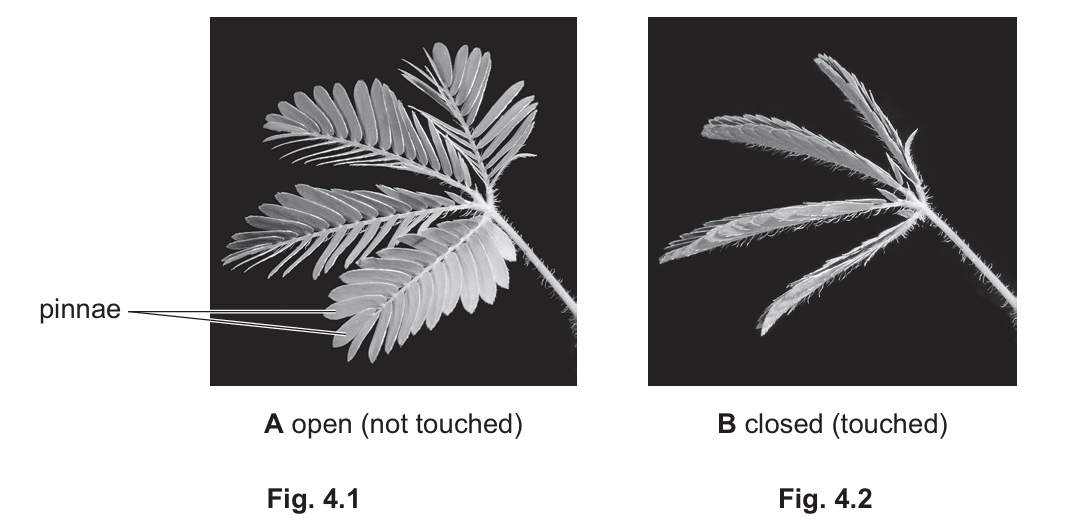
The leaves of Mimosa pudica plants are made of a number of structures known as pinnae. The pinnae fold when the leaf is touched. This closes the leaf.
Fig. 4.1 shows an open leaf of M. pudica before it is touched. Fig. 4.2 shows the same leaf that has closed after being touched.

(a) A touch stimulus to an M. pudica leaf causes an action potential to be generated.
The action potential results in changes in cells, which cause the leaf to close.
Fig. 4.3 shows the mechanism in M. pudica cells that causes the leaf to close.

The leaves of M. pudica and the leaves of Venus fly traps move in response to touch stimuli, but the mechanisms that cause the responses are different.
Describe the differences between the mechanism shown in Fig. 4.3 and the mechanism that causes the closure of the modified leaves in Venus fly traps.
(b) The rate of photosynthesis decreases by 40% when the leaves of M. pudica close.
Explain why the rate of photosynthesis decreases when the leaves of M. pudica close.
(c) Plants can carry out cyclic photophosphorylation and non-cyclic photophosphorylation during the light-dependent stage of photosynthesis. These processes occur at the grana of chloroplasts.
Outline the similarities and differences between cyclic photophosphorylation and non-cyclic photophosphorylation.
▶️ Answer/Explanation
(a)
The mechanism in Mimosa pudica involves:
- Protons being pumped into extensor cells
- Chloride (Cl⁻) and potassium (K⁺) ions moving out of cells
- Water moving out of cells by osmosis
- Cells becoming flaccid and causing leaf closure
In contrast, Venus fly traps:
- Require two sensory hairs to be touched (not just one)
- Have protons leaving hinge cells (rather than entering)
- Have calcium ions (Ca²⁺) moving into cells (rather than K⁺ and Cl⁻ moving out)
- Have water moving into cells (rather than out), making them turgid
Explanation: While both plants show rapid movement responses, their cellular mechanisms are quite different. Mimosa pudica’s response is essentially a loss of turgor pressure, while Venus fly traps create turgor pressure changes in opposite directions in different cells to snap the trap shut.
(b)
- The closed leaves have less surface area exposed to light, reducing light absorption
- Fewer chloroplasts are exposed to light when the leaves are folded
- The closed position may limit gas exchange, reducing CO₂ availability
- Some stomata become covered when leaves fold, further limiting CO₂ intake
Explanation: Photosynthesis requires both light and carbon dioxide. When the leaves fold, they receive less light because the surface area facing the light source decreases. Additionally, the folding may cover some stomata, limiting CO₂ diffusion into the leaf. Both factors contribute to the significant 40% reduction in photosynthetic rate.
(c)
Similarities:
- Both occur in the thylakoid membranes of chloroplasts
- Both involve photoactivation of chlorophyll (PSI)
- Both use electron transport chains to create a proton gradient
- Both produce ATP through chemiosmosis
Differences:
- Cyclic uses only PSI while non-cyclic uses both PSI and PSII
- Non-cyclic produces NADPH (reduced NADP) while cyclic does not
- Non-cyclic involves photolysis of water and oxygen evolution while cyclic does not
- In cyclic, electrons return to PSI while in non-cyclic they end up in NADPH
- Non-cyclic produces both ATP and NADPH while cyclic produces only ATP
Explanation: These two pathways represent different strategies for light-dependent reactions. Non-cyclic photophosphorylation is the main pathway that produces both ATP and NADPH needed for the Calvin cycle, while cyclic photophosphorylation serves as a supplementary pathway that generates extra ATP when needed, without producing NADPH or oxygen.
Topic: 16.2
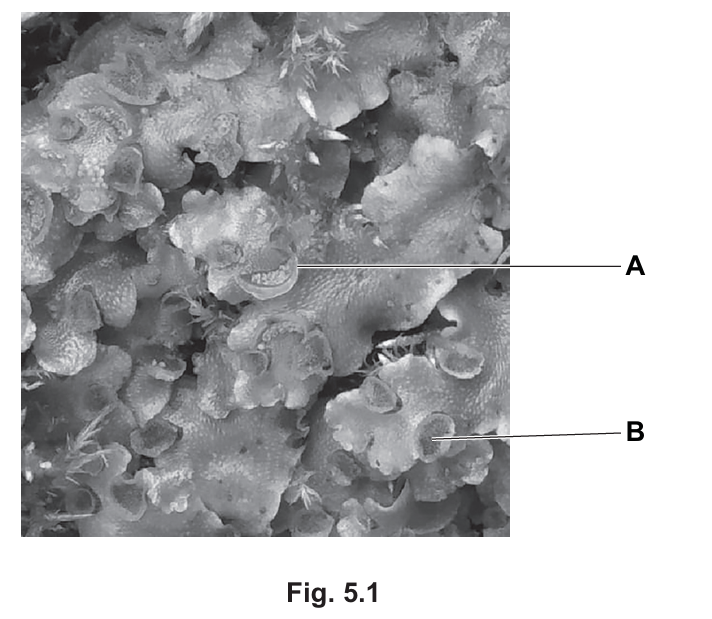
Lunularia cruciata is a primitive plant. Its body consists of a flattened sheet of photosynthetic tissue called a thallus.
Fig. 5.1 shows L. cruciata with two different types of reproductive structure, labelled A and B, on its surface.

(a) Structures A and B and the thallus of L. cruciata are haploid. Explain what is meant by haploid.
(b) Structure A contains pale discs of tissue, C, that can germinate into new L. cruciata. The new plants that develop from C are genetically identical to the parent plant in Fig. 5.1.
Structure B contains male sperm that are chemically attracted to swim to female eggs on a neighbouring parent plant. When the egg and sperm fuse, they form structure D. Structure D develops to produce spores that grow into new plants that are genetically different from the two parent plants.
Identify which of the structures A, B, C and D are:
- associated with sexual reproduction,
- produced by mitosis,
- the site of meiosis.
Each letter may be used once, more than once, or not at all.
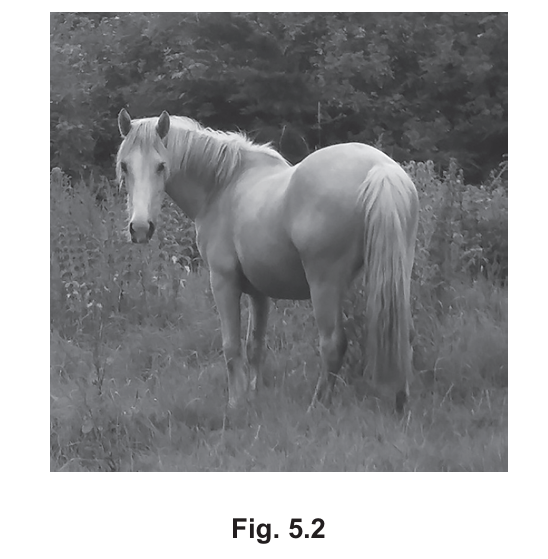
(c) Fig. 5.2 shows a horse, Equus caballus. Horses are diploid animals that reproduce sexually. Male and female horses produce gametes, which fuse to form genetically different offspring.

Explain the need for a reduction division during meiosis in the production of gametes in animals such as horses.
▶️ Answer/Explanation
(a)
Haploid means having a single set of chromosomes (n) rather than two sets (2n). In haploid cells:
- The chromosomes are not in homologous pairs
- Each chromosome is different in size, shape, and gene content
- The cell contains half the number of chromosomes found in diploid cells
- This is typical of gametes and some primitive plants like L. cruciata
(b)
Associated with sexual reproduction: B and D
Produced by mitosis: A, B, C, D (any two correct)
The site of meiosis: D
Explanation:
Structure B (male reproductive structure) and D (zygote/spore-producing structure) are involved in sexual reproduction as they participate in fertilization. Structures A, B, C, and D can all be produced by mitosis as they represent vegetative reproduction (A and C) or growth stages (B and D). Meiosis occurs in structure D to produce haploid spores from the diploid zygote.
(c)
Reduction division during meiosis is essential for:
- Maintaining the species’ chromosome number across generations (from diploid parents to diploid offspring)
- Preventing chromosome number doubling with each generation
- Creating genetic variation through independent assortment and crossing over
- Producing haploid gametes (sperm and eggs) that can combine to form a diploid zygote
- Ensuring proper chromosome segregation during gamete formation
Detailed Explanation:
In horses, which are diploid organisms, meiosis reduces the chromosome number by half to create haploid gametes. This is crucial because when two gametes fuse during fertilization, the resulting zygote will have the correct diploid number. Without reduction division, the chromosome number would double with each generation, leading to genetic abnormalities. Additionally, meiosis introduces genetic variation through processes like crossing over and independent assortment, which is important for the evolutionary fitness of the species. The first meiotic division separates homologous chromosome pairs (reduction division), while the second division separates sister chromatids, similar to mitosis.
Topic: 15.2
The mammalian kidney is responsible for:
- the excretion of urea
- osmoregulation (the homeostatic control of the water potential of the blood).
(a) (i) Outline how and where the excretory product urea is made in the body.
(ii) Homeostatic control of the water potential of blood includes receptors, effectors and target cells.
Identify the names and locations of these components of homeostatic control in osmoregulation.
(b) The glomerulus and Bowman’s capsule of the nephron are important in the formation of urine.
Outline the role of the glomerulus and Bowman’s capsule in the formation of urine.
(c) Concentrated urine contains a high concentration of solutes and a small volume of water. Different species of mammals vary in their ability to produce urine with a high solute concentration.
Table 6.1 compares the ratio of the solute concentration of urine (U) to the solute concentration of blood plasma (P) in some mammal species. The habitats of the mammal species are also shown.
| mammal species | maximum ratio of solute concentration of urine to solute concentration of blood plasma (U : P) | habitat |
|---|---|---|
| beaver | 1.7:1 | rivers and lakes |
| human | 4.5:1 | variable |
| camel | 8.0:1 | desert |
| rat | 9.0:1 | variable |
| kangaroo rat | 16.0:1 | desert |
Table 6.1
With reference to Table 6.1, suggest what the different values of U : P show about the ability of these mammal species to tolerate a shortage of water in their environment.
▶️ Answer/Explanation
(a)(i)
1. (Excess) amino acids are deaminated (have amino group removed).
2. This occurs in the liver.
Explanation: Urea is formed through the deamination of excess amino acids in the liver. The process involves removing the amino group (-NH2) from amino acids, which is then converted into ammonia and subsequently combined with carbon dioxide to form urea through the ornithine cycle. This urea is then transported to the kidneys for excretion.
(a)(ii)
1. Osmoreceptors in hypothalamus (detect change/are receptors).
2. Effector(s): collecting duct/distal convoluted tubule/nephron.
3. Target cells: collecting duct (cells).
Explanation: The homeostatic control of water potential involves specialized osmoreceptors in the hypothalamus that detect changes in blood water potential. When blood becomes too concentrated, these receptors stimulate the posterior pituitary to release ADH (antidiuretic hormone). The effectors are the collecting ducts and distal convoluted tubules in the nephrons of the kidneys, with the principal cells in the collecting ducts being the main target cells that respond to ADH by increasing water reabsorption.
(b)
1. Ultrafiltration/forms glomerular filtrate.
2. High hydrostatic/blood pressure in glomerulus/capillaries.
3. So water/(named) solutes move (out of glomerulus/into Bowman’s capsule).
4. Through two of: fenestrae/fenestrations, basement membrane, slit pores/filtration slits/between podocytes.
Explanation: The glomerulus and Bowman’s capsule work together to perform ultrafiltration. The high hydrostatic pressure in the glomerular capillaries forces water and small solutes (like glucose, amino acids, and urea) out of the blood and into Bowman’s capsule. This filtration occurs through three layers: the fenestrated endothelium of the capillaries, the basement membrane, and the podocyte filtration slits. Larger molecules like proteins and blood cells remain in the blood. The resulting filtrate then moves into the renal tubule for further processing.
(c)
1. High(er/est) U:P ratio → can tolerate water shortage.
2. High(er/est) U:P ratio → much water reabsorbed/small volume of urine produced.
3. High(er/est) U:P ratio → can concentrate urine/conserve water OR high(er/est) U:P ratio → (well) adapted to dry environment.
Explanation: The U:P ratio indicates how effectively a mammal can concentrate its urine. Desert species like the kangaroo rat (16:1) and camel (8:1) have much higher ratios than aquatic species like the beaver (1.7:1), showing their superior water conservation abilities. The higher the ratio, the more water is reabsorbed in the kidneys, producing more concentrated urine. This adaptation is crucial for survival in arid environments where water is scarce. The kangaroo rat’s extremely high ratio allows it to survive without drinking water, obtaining all needed water from its food and metabolic processes. In contrast, the beaver, living in water-rich environments, doesn’t need to conserve water as aggressively.
Topic: 17.3
Spea multiplicata is one of several species of American spadefoot toad.
(a) Young spadefoot toads are called tadpoles and live in water in ponds.
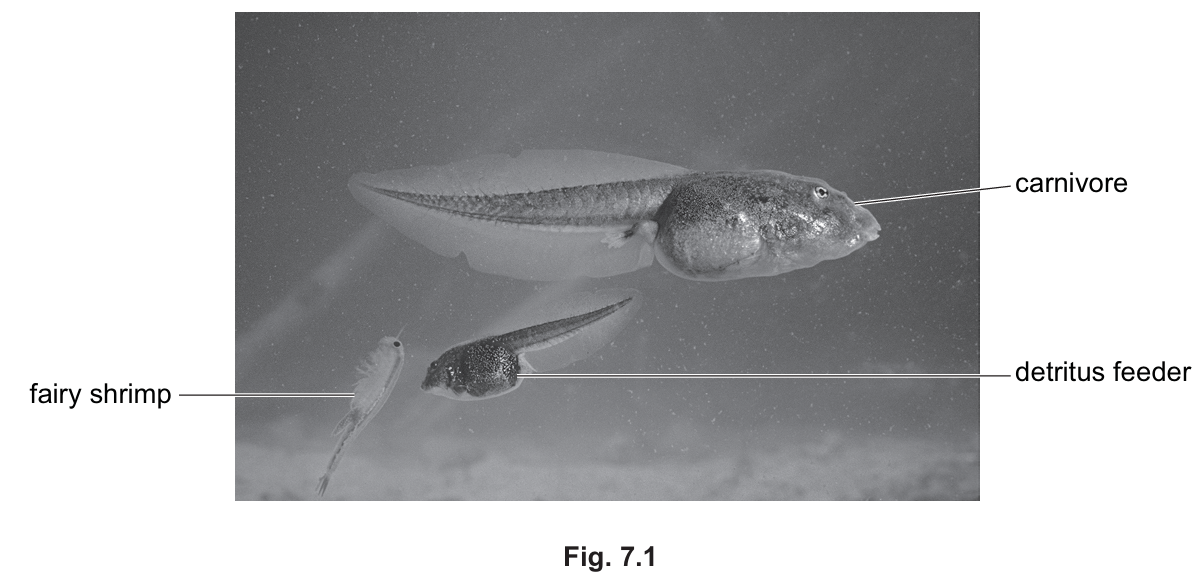
S. multiplicata tadpoles show three different phenotypes due to genetic variation. The three phenotypes are: detritus feeder, intermediate and carnivore.
Detritus feeders are small, and carnivores are large. Intermediates vary in size between the two extremes.
A detritus feeder and a carnivore are shown in Fig. 7.1.

Detritus feeders:
- eat detritus (small pieces of dead organic matter) and algae (photosynthetic protoctists)
- have smooth mouthparts, small jaw muscles and long intestines.
Intermediates:
- can eat all available food (detritus, algae and fairy shrimps)
- have teeth-like mouthparts, medium-sized jaw muscles and medium-sized intestines.
Carnivores:
- eat fairy shrimps and other small animals
- have teeth-like mouthparts, large jaw muscles and short intestines.
Scientists counted the number of each type of tadpole in two different ponds: pond 1 and pond 2.
(i) In pond 1, the scientists observed:
- a high density of tadpoles
- a low abundance of food
- that most of the tadpoles they counted were either detritus feeders or carnivores, with very few intermediates present.
Describe and suggest explanations for the type of natural selection that appears to be acting in pond 1.
(ii) In pond 2, the scientists observed:
- a low density of tadpoles
- sufficient food availability for all tadpoles
- that most of the tadpoles they counted were intermediates, with fewer detritus feeders or carnivores.
Describe and suggest explanations for the type of natural selection that appears to be acting in pond 2.
(iii) The intestine length of S. multiplicata tadpoles shows continuous variation.
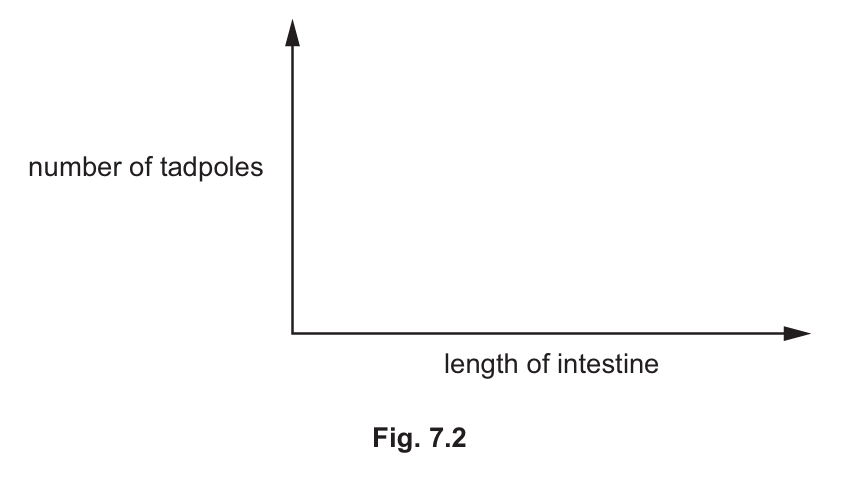
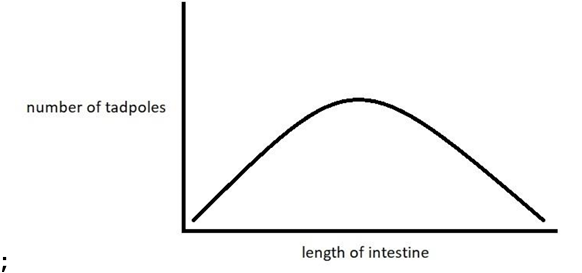
Sketch a curve on Fig. 7.2 to show how intestine length varies in the tadpole population in pond 2.

(iv) A student suggested that the variation in S. multiplicata tadpoles could lead to sympatric speciation in some populations.
Outline the features of sympatric speciation.
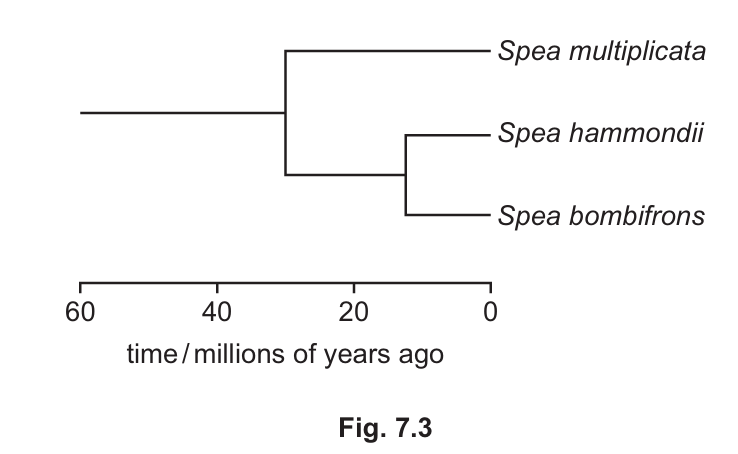
(b) Fig. 7.3 shows the evolutionary relationships between three species of American spadefoot toad.

Explain how analysis of DNA allowed the evolutionary relationships shown in Fig. 7.3 to be determined.
▶️ Answer/Explanation
(a)(i)
The type of natural selection acting in pond 1 is disruptive or diversifying selection.
Explanation: In pond 1, we observe that the extreme phenotypes (detritus feeders and carnivores) are more common while the intermediate phenotype is rare. This occurs because:
- The high density of tadpoles creates intense competition for limited food resources
- Intermediates are outcompeted as they aren’t specialized enough for either food source
- Detritus feeders specialize in eating detritus/algae while carnivores specialize in eating fairy shrimps
- The lack of food acts as a selection pressure favoring the specialized forms
(a)(ii)
The type of natural selection acting in pond 2 is stabilizing selection.
Explanation: In pond 2, we see the opposite pattern where intermediates are most common. This happens because:
- With sufficient food and low density, there’s less competition
- Intermediates have an advantage as they can utilize all food sources
- They have greater dietary flexibility which improves their growth and survival
- The extremes are selected against as they’re too specialized for this environment
(a)(iii) 
Explanation: For pond 2 where intermediates are favored, the intestine length variation would follow a normal distribution curve (bell curve), with most tadpoles having medium-length intestines and fewer having very short or very long intestines.
(a)(iv)
Features of sympatric speciation:
- New species form while living in the same geographical area (without physical separation)
- Reproductive isolation develops due to ecological or behavioral differences
- In this case, different feeding specializations could lead to reproductive isolation
- Genetic differences accumulate over time between the subpopulations
- Eventually they become distinct species that can no longer interbreed
(b)
DNA analysis allows determination of evolutionary relationships by:
- Comparing DNA sequences of all three species to identify similarities and differences
- Counting nucleotide/base differences between species (fewer differences indicate closer relationship)
- Using bioinformatics tools/databases to analyze sequence data
- From Fig. 7.3, we can see S. hammondii and S. bombifrons share more recent common ancestor as they diverged more recently (20 mya) compared to S. multiplicata (40 mya)
- This suggests S. hammondii and S. bombifrons have fewer genetic differences between them
Topic: 19.2
Scientists use many different techniques in genetic engineering.
(a) Sometimes the gene for genetic engineering cannot be extracted from the donor organism. Instead, the gene is synthesised using one of two different methods.
Outline the two methods for synthesising a gene for use in genetic engineering.
(b) DNA ligase and DNA polymerase are two enzymes that are used in genetic engineering.
Complete Table 8.1 to show the roles of DNA ligase and DNA polymerase in genetic engineering.
Use a tick (✓) if the enzyme has the role or a cross (×) if the enzyme does not have the role.
| role in genetic engineering | DNA ligase | DNA polymerase |
|---|---|---|
| joins two sections of sugar phosphate backbone in DNA | ||
| adds a gene to a plasmid | ||
| adds free activated DNA nucleotides to a polynucleotide |
(c) The polymerase chain reaction (PCR) is used to make many copies of a gene.
Three temperatures are used in a PCR cycle.
State the three temperatures that are used, and outline what happens at each temperature during a PCR cycle.
▶️ Answer/Explanation
(a)
The two methods for synthesizing a gene are:
- Making cDNA from mRNA: This involves using reverse transcriptase enzyme to create complementary DNA (cDNA) from messenger RNA (mRNA). The mRNA is isolated from cells where the gene is expressed, and then reverse transcriptase synthesizes a DNA strand complementary to the mRNA.
- Chemical synthesis from nucleotides: Genes can be chemically synthesized by joining nucleotides together in the correct sequence. This method uses known amino acid or nucleotide sequences from databases to determine the DNA sequence to be synthesized.
Explanation: When the original gene cannot be extracted, scientists can either work backwards from the mRNA product (method 1) or build the gene from scratch using nucleotide building blocks (method 2). The first method is useful when working with eukaryotic genes that contain introns, while the second method allows for creation of completely novel gene sequences.
(b)
| role in genetic engineering | DNA ligase | DNA polymerase |
|---|---|---|
| joins two sections of sugar phosphate backbone in DNA | ✓ | × |
| adds a gene to a plasmid | ✓ | × |
| adds free activated DNA nucleotides to a polynucleotide | × | ✓ |
Explanation: DNA ligase is responsible for forming phosphodiester bonds between DNA fragments, which is essential for joining genes to plasmids or sealing nicks in DNA. DNA polymerase, on the other hand, adds nucleotides to growing DNA strands during processes like PCR or DNA replication, but cannot join separate DNA fragments together.
(c)
The three temperatures used in PCR and their purposes are:
- 90-98°C (Denaturation): At this high temperature, the hydrogen bonds between the two DNA strands break, causing the double-stranded DNA to separate into single strands. This provides the template for replication.
- 50-65°C (Annealing): At this lower temperature, short DNA primers bind (anneal) to their complementary sequences on the single-stranded DNA templates. The temperature depends on the primer sequence and length.
- 68-75°C (Extension): At this intermediate temperature, Taq DNA polymerase synthesizes new DNA strands by adding nucleotides to the primers in the 5′ to 3′ direction, creating copies of the target DNA sequence.
Explanation: These three temperatures form one PCR cycle, which is typically repeated 25-35 times to exponentially amplify the target DNA sequence. The use of a thermostable DNA polymerase (like Taq polymerase) is crucial as it can withstand the repeated high temperatures without denaturing.
Topic: 18.3
Lichens are found growing on trees, walls, rocks and soil.
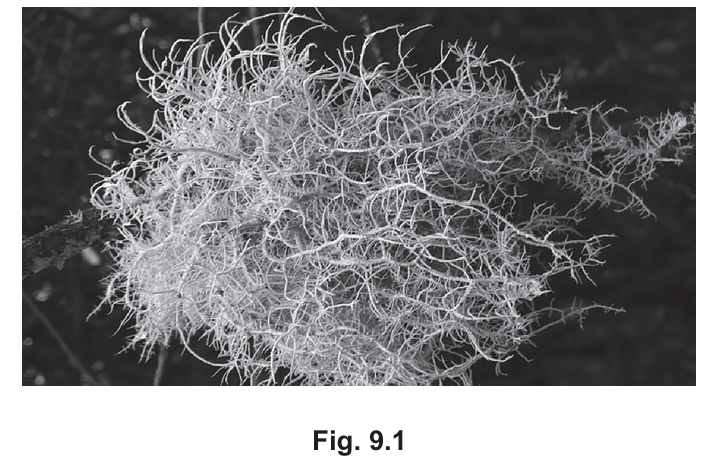
Fig. 9.1 shows a lichen of the genus Usnea. Usnea can tolerate only low concentrations of sulfur dioxide and does not grow in places where the air is polluted with sulfur dioxide.

Usnea is composed of a mixture of two types of cell:
- photosynthetic cells that are classified in the kingdom Protoctista
- fungal cells that are classified in the kingdom Fungi.
(a) Outline the characteristic features of the kingdoms Protoctista and Fungi.
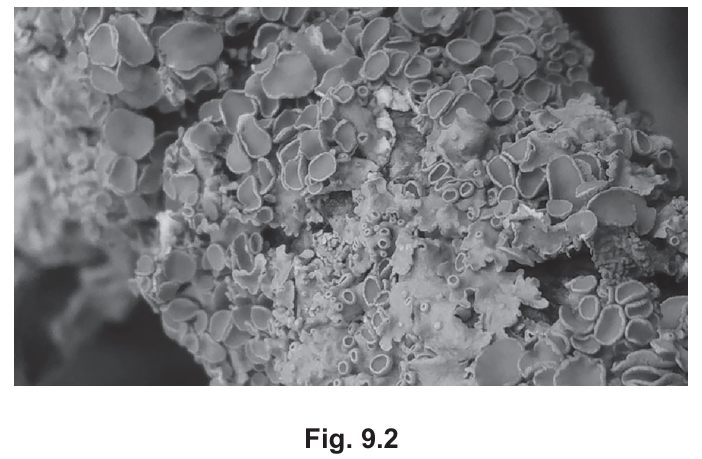
(b) Xanthoria is a lichen that can grow in places where there is a high concentration of sulfur dioxide in the air, for example in towns where homes, factories and vehicles burn fuels.
Fig. 9.2 shows a lichen of the genus Xanthoria.

(i) A student planned a method to measure the relative abundance of Usnea and Xanthoria on trees along a transect from the town centre at 0 km to unpolluted countryside at 4 km.
Suggest why measuring the relative abundance of the two types of lichen gives information that is useful for conservation.
(ii) Although a large biodiversity of lichens can be found in a range of habitats, most people ignore them.
Outline why forms of life that are usually ignored, such as lichens, should be conserved.
▶️ Answer/Explanation
(a) Characteristic features of Protoctista and Fungi:
Protoctista:
- Eukaryotic organisms that don’t fit into other kingdoms
- Mostly unicellular but some are multicellular (like algae)
- Can be autotrophic (like algae) or heterotrophic (like protozoa)
- No specialized tissues
- Cell walls when present are made of cellulose
- Reproduce both sexually and asexually
Fungi:
- Eukaryotic heterotrophs that absorb nutrients
- Cell walls made of chitin
- Body composed of hyphae that form mycelium
- Reproduce via spores (both sexually and asexually)
- Store food as glycogen
- Often multinucleate (many nuclei per cell)
- Important decomposers in ecosystems
(b)(i) Measuring lichen abundance for conservation:
Measuring the relative abundance of Usnea and Xanthoria provides valuable information for conservation because:
- Lichens are excellent bioindicators of air quality, particularly sulfur dioxide pollution
- The transition from pollution-sensitive Usnea to pollution-tolerant Xanthoria along the transect shows the gradient of air pollution
- This data can help identify areas needing pollution control measures
- Changes in lichen populations over time can monitor the effectiveness of pollution reduction policies
- Protecting lichen diversity helps maintain ecosystems as they provide food and habitat for other organisms
(b)(ii) Importance of conserving often-ignored organisms like lichens:
Even though often overlooked, lichens and similar organisms should be conserved because:
- They play crucial roles in ecosystems as pioneer species that colonize bare surfaces and begin soil formation
- Lichens contribute to nitrogen fixation in nutrient-poor environments
- They provide food and shelter for many small invertebrates
- Some have medicinal properties (e.g., usnic acid from Usnea has antibiotic properties)
- They help clean the air by absorbing pollutants
- Maintaining biodiversity ensures ecosystem resilience to environmental changes
- They may have undiscovered benefits that could be important for future human needs
- All species have intrinsic value regardless of their perceived usefulness to humans
Topic: 17.2
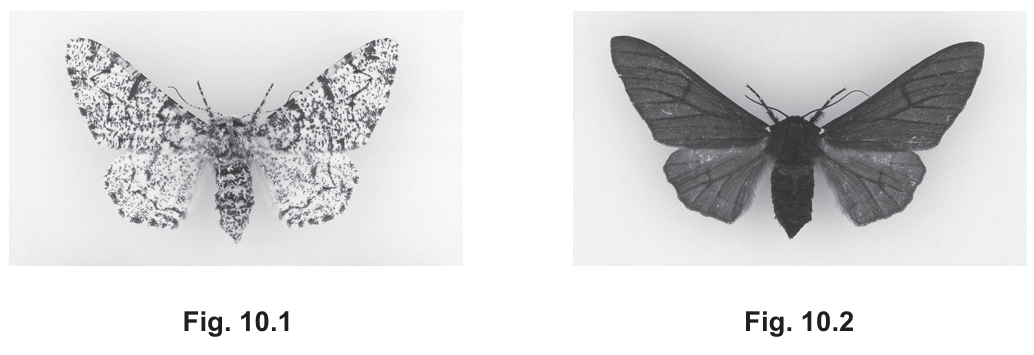
Populations of the moth Biston betularia live in Europe and in North America. The most common phenotype on both continents is a pale wing colour with light-grey shading (the typical form).
A moth phenotype with dark wing colour (the melanic form) also occurs on both continents.
Fig. 10.1 shows the typical form of the moth.
Fig. 10.2 shows the melanic form of the moth.

(a) Two melanic European moths were crossed together. The wing colours of the offspring were 15 typical and 41 melanic.
Construct a genetic diagram to explain these results. You may use the symbols A and a to represent the alleles.
(b) In a similar experiment, two melanic North American moths were crossed together. The colours of the offspring were 10 typical and 31 melanic.
What can be concluded about the allele that causes the melanic form in the moth populations in both continents?
(c) Researchers did not know if the allele causing the melanic form in European moths occurred at the same locus as the allele causing the melanic form in North American moths. To find out, they carried out the following crosses:
- Cross 1: European moths that were heterozygous at the European melanic locus only were crossed with North American moths that were heterozygous at the North American melanic locus only.
- Cross 2: The melanic and the typical offspring of cross 1 were mated together.
(i) Explain why cross 2 is a test cross.
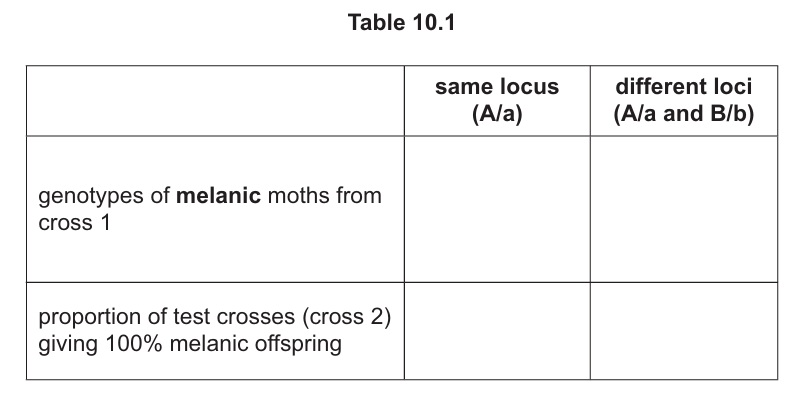
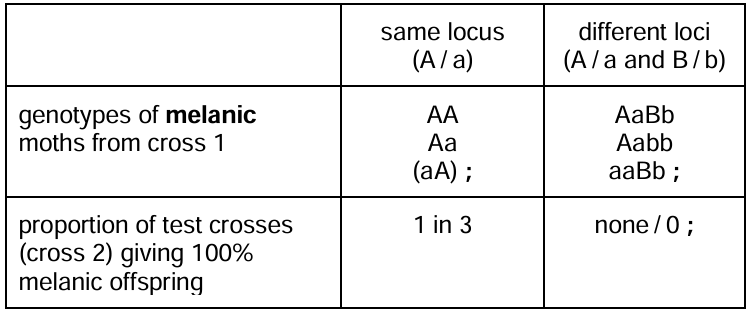
(ii) Complete Table 10.1 to show the predicted results if:
- the European and North American melanic alleles are on the same locus (A/a)
- the European and North American melanic alleles are on two different loci (A/a and B/b).

(d) A light trap was used to estimate the total size of a population of B. betularia in a woodland. On night one, 24 moths were captured. These were marked with a small spot of harmless paint. On night two, 29 moths were captured, and 8 of these showed a spot of paint.
Use the Lincoln index formula provided to calculate the size of the population.
Show your working.
\[ N = \frac{n_1 \times n_2}{m_2} \]
Key to symbols:
N = estimate of population size
n1 = number of individuals captured in first sample
n2 = number of individuals (both marked and unmarked) captured in second sample
m2 = number of marked individuals recaptured in second sample
▶️ Answer/Explanation
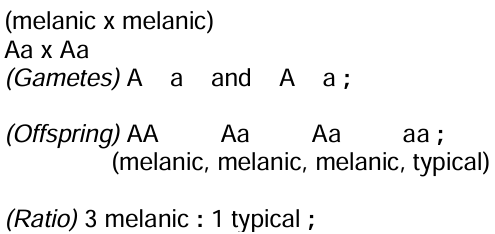
(a) 
Explanation: The 3:1 ratio in the offspring indicates that the melanic form is dominant and both parents were heterozygous (Aa). The genetic diagram shows that when two heterozygous individuals mate, they produce offspring in a 3:1 phenotypic ratio (3 melanic:1 typical), which matches the observed data of 41 melanic to 15 typical (approximately 3:1).
(b) The allele that causes the melanic form is dominant.
Explanation: The similar 3:1 ratio in both European and North American populations (10 typical to 31 melanic is approximately 1:3) strongly suggests that in both populations, the melanic form is caused by a dominant allele. This consistent pattern across geographically separated populations indicates the same genetic mechanism is at work.
(c)(i) Cross 2 is a test cross because the melanic/dominant phenotype is crossed with homozygous recessive.
Explanation: A test cross is specifically designed to determine the genotype of an individual with a dominant phenotype by crossing it with a homozygous recessive individual. In this case, the melanic offspring from cross 1 (which could be either homozygous dominant or heterozygous) are being crossed to reveal their exact genotype.
(c)(ii) 
Explanation: If the alleles are at the same locus, some crosses (specifically AA × aa) will produce 100% melanic offspring. If they’re at different loci, no crosses will produce 100% melanic offspring because the traits would segregate independently. This difference helps researchers determine whether the same gene is involved in both populations.
(d) Calculation:
\[ N = \frac{24 \times 29}{8} = 87 \]
Explanation: Using the Lincoln index formula for mark-recapture population estimation: n1 (first capture) = 24, n2 (second capture) = 29, m2 (marked recaptured) = 8. Plugging these values into the formula gives an estimated population size of 87 moths in the woodland.