
8.2.A.1 – How Organisms Use Energy
🧠 Big Idea:
Every living organism needs energy to survive – for body functions, growth, reproduction, and keeping things balanced inside (homeostasis).
⚙️ Temperature Regulation & Metabolism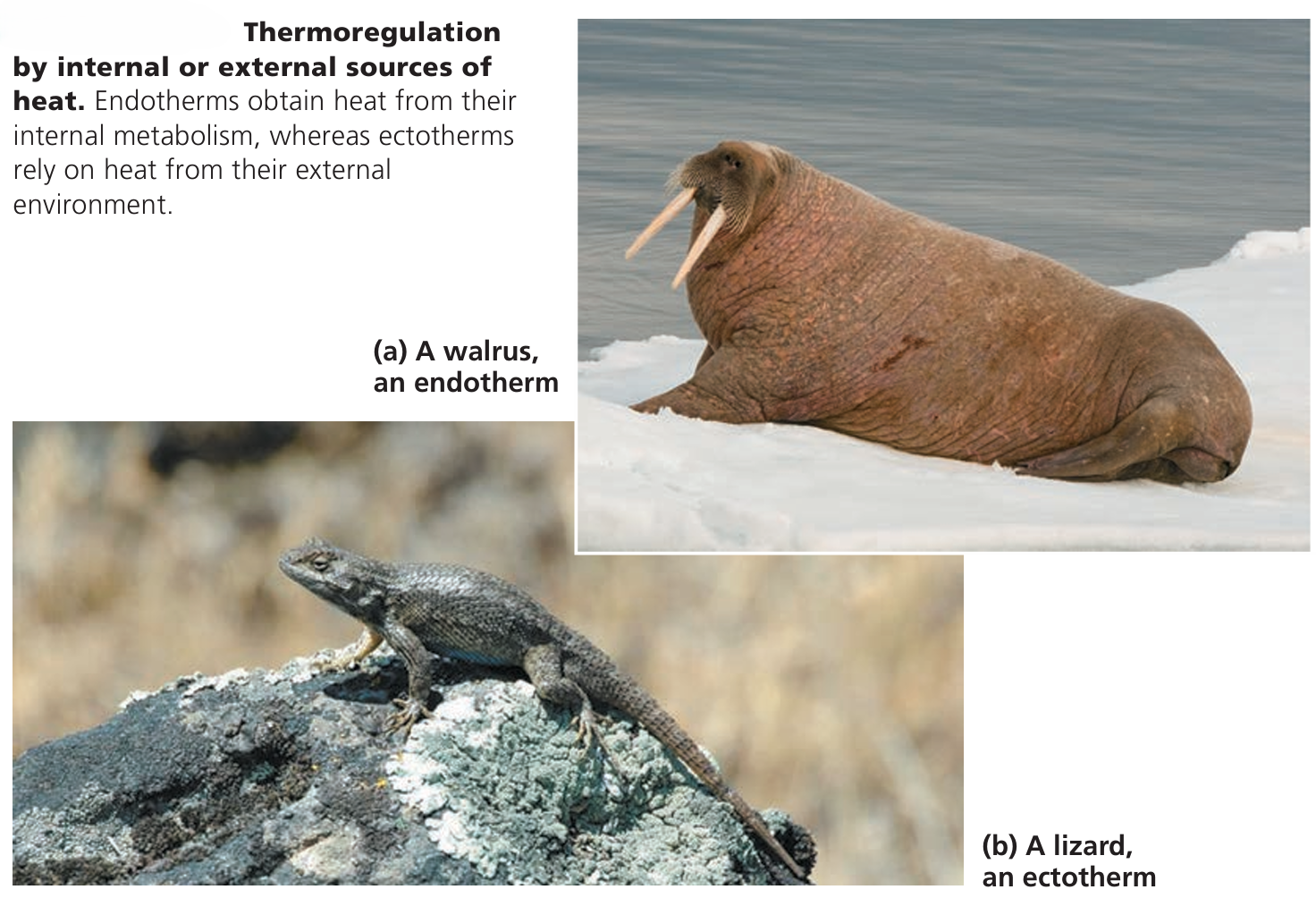
🔥 Endotherms (Warm-blooded):
- Use internal metabolism to generate heat.
- Maintain a constant body temperature, even if the outside changes.
- Need more food/energy to fuel this.
- Examples: Humans, dogs, birds
❄️ Ectotherms (Cold-blooded):
- Can’t make enough internal heat.
- Body temperature changes with the environment.
- Regulate temp by behavior: sunbathing, hiding in shade, or huddling.
- Use less energy overall.
- Examples: Snakes, frogs, lizards
⚖️ What Happens with a Net Gain in Energy?
✅ More energy than needed = stored energy
Leads to:
- Growth
- Reproduction
- Survival through tough times (like winter or food shortage)
⛔ What Happens with a Net Loss in Energy?
❌ Less energy than needed
Leads to:
- Weight/mass loss
- Less reproduction (or none at all)
- Eventually: death if the energy gap continues
📝 Summary:
- Organisms must balance energy intake and use:
- Endotherms use a lot to stay warm.
- Ectotherms use less, but rely more on the environment.
- Gaining energy = good! More growth and babies.
- Losing energy = bad. Less survival, fewer offspring.
8.2.A.2 – Reproductive Strategies & Energy Availability
🧠 Big Idea:
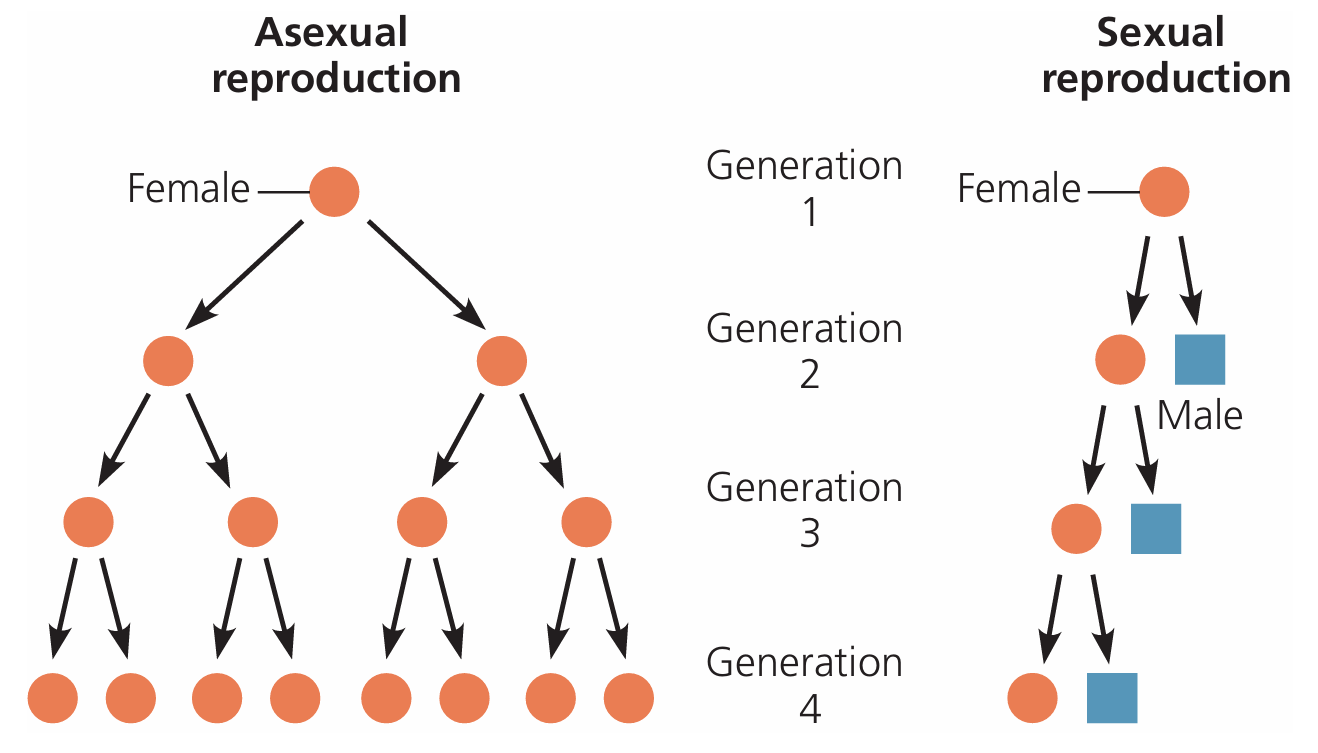
Organisms don’t just reproduce randomly they adjust their strategy depending on how much energy is available in the environment.
⚖️ Energy = Key Resource for Reproduction
Reproduction takes energy.
If there’s plenty of energy (like food, warmth, stable environment), organisms may:
- Reproduce more often
- Invest in sexual reproduction for genetic diversity
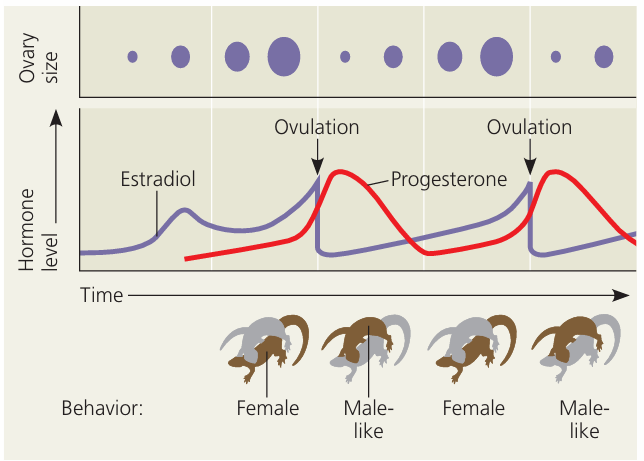
If energy is limited, they may:
- Reproduce less often
- Use asexual reproduction (which costs less energy)
- Pause or delay reproduction until conditions improve
🔁 Switching Between Asexual & Sexual Reproduction
Some organisms can alternate based on energy conditions:
| Energy Levels | Strategy Used | Why? |
| 🌱 Low Energy | Asexual reproduction | Fast, efficient, no mate needed |
| 💥 High Energy | Sexual reproduction | Increases genetic variation & long-term survival |
Example: Certain fungi, algae, and invertebrates can switch modes!
💡 Summary:
- Reproductive strategy depends on energy availability.
- Organisms optimize reproduction to increase survival chances.
- Some can switch between asexual & sexual reproduction depending on the environment.
8.2.B – Energy Flow & Matter Cycling Through Trophic Levels
🧠 Big Idea:
In ecosystems, energy flows in one direction, but matter is recycled. This all happens through trophic levels (who eats whom).
🌱 Trophic Levels:
| Trophic Level | Role | Example |
| Producers | Convert solar → chemical energy via photosynthesis | Plants, algae |
| Primary consumers | Eat producers | Herbivores (e.g., rabbit) |
| Secondary consumers | Eat primary consumers | Carnivores (e.g., fox) |
| Tertiary consumers | Top predators | Hawk, tiger |
| Decomposers | Break down dead matter | Fungi, bacteria |
⚡ Energy Flow 🔽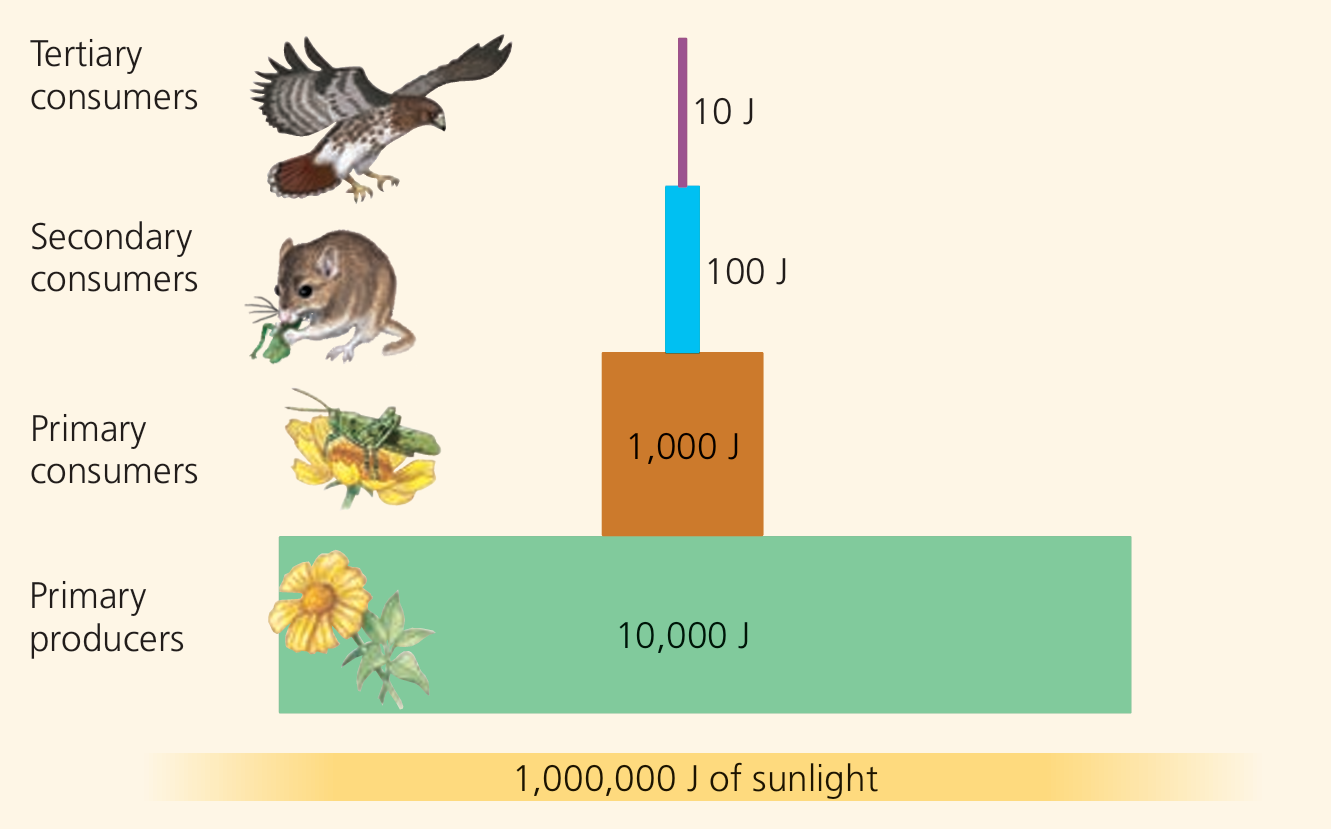
- Only ~10% of energy is passed to the next level (rest is lost as heat).
- So, energy flow = non-cyclic (one-way).
- That’s why food chains rarely go beyond 4–5 levels.
🔺 Pyramid of Energy:
- Wide base (lots of energy at producer level)
- Narrow top (less energy for top consumers)
🔁 Matter Cycles ♻️
- Unlike energy, matter (like carbon, nitrogen, water) is recycled.
- Decomposers break down dead organisms → return nutrients to soil/air → used by producers again.
Examples:
- Carbon Cycle: CO₂ taken in by plants → passed along food chain → released during respiration/decomposition.
- Water Cycle: Transpiration, condensation, precipitation.
- Nitrogen Cycle: Nitrogen fixed by bacteria → used by plants → animals eat → returned via waste/decomposition.
💡 Summary:
- Energy flows one-way through ecosystems → each level gets less.
- Matter is cycled → used again and again.
- Decomposers are key for matter recycling.
8.2.B.2 – Energy Flow & Nutrient Cycling in Ecosystems
🧠 Key Idea:
Energy flows one way through ecosystems.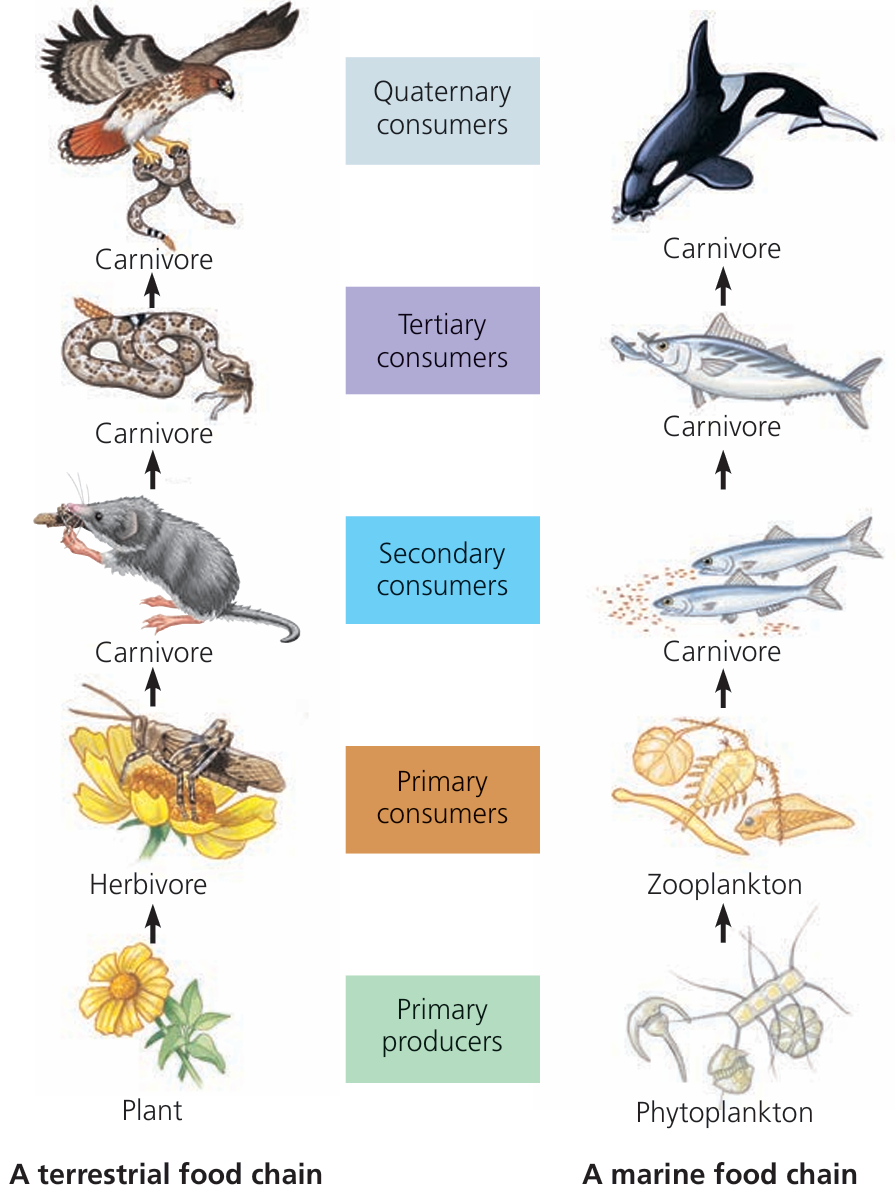
Matter cycles within ecosystems.
🔋 Energy Flow:
- Energy enters ecosystems through sunlight ☀️
- Plants (producers) convert light energy → chemical energy via photosynthesis 🌿
Energy flows up through trophic levels:
- Producers (plants)
- Primary consumers (herbivores)
- Secondary/Tertiary consumers (carnivores)
- Decomposers (bacteria, fungi)
🔻 Important:
Energy is lost as heat at each level (10% rule). It doesn’t cycle!
♻️ Matter/Nutrient Cycling:
While energy flows, matter (atoms, nutrients) like carbon and nitrogen get recycled in biogeochemical cycles.
🔄 Major Cycles You Should Know:
1️⃣ Water Cycle 💧
- Evaporation → Condensation → Precipitation → Runoff → Infiltration
- Water moves between air, land, and living things
2️⃣ Carbon Cycle 🌬️
- CO₂ from atmosphere → used in photosynthesis
- Returned via respiration, combustion, and decomposition
3️⃣ Nitrogen Cycle ⚡
- Bacteria convert atmospheric nitrogen (N₂) → usable forms for plants
- Involves nitrogen fixation, nitrification, and denitrification
4️⃣ Phosphorus Cycle 🪨
- No atmosphere involved!
- Phosphorus cycles through rocks, soil, water, and living things
🧬 Why It Matters:
- These cycles ensure matter is conserved
- Organisms depend on them for essential elements
- Disruption in one cycle affects all others
💡 Summary:
- Energy flows one way and is eventually lost as heat
- Matter (nutrients) cycles continuously and connects all life
- These cycles support life and maintain ecosystem stability
8.2.B.4 – The Hydrologic (Water) Cycle
🧠 Key Idea:
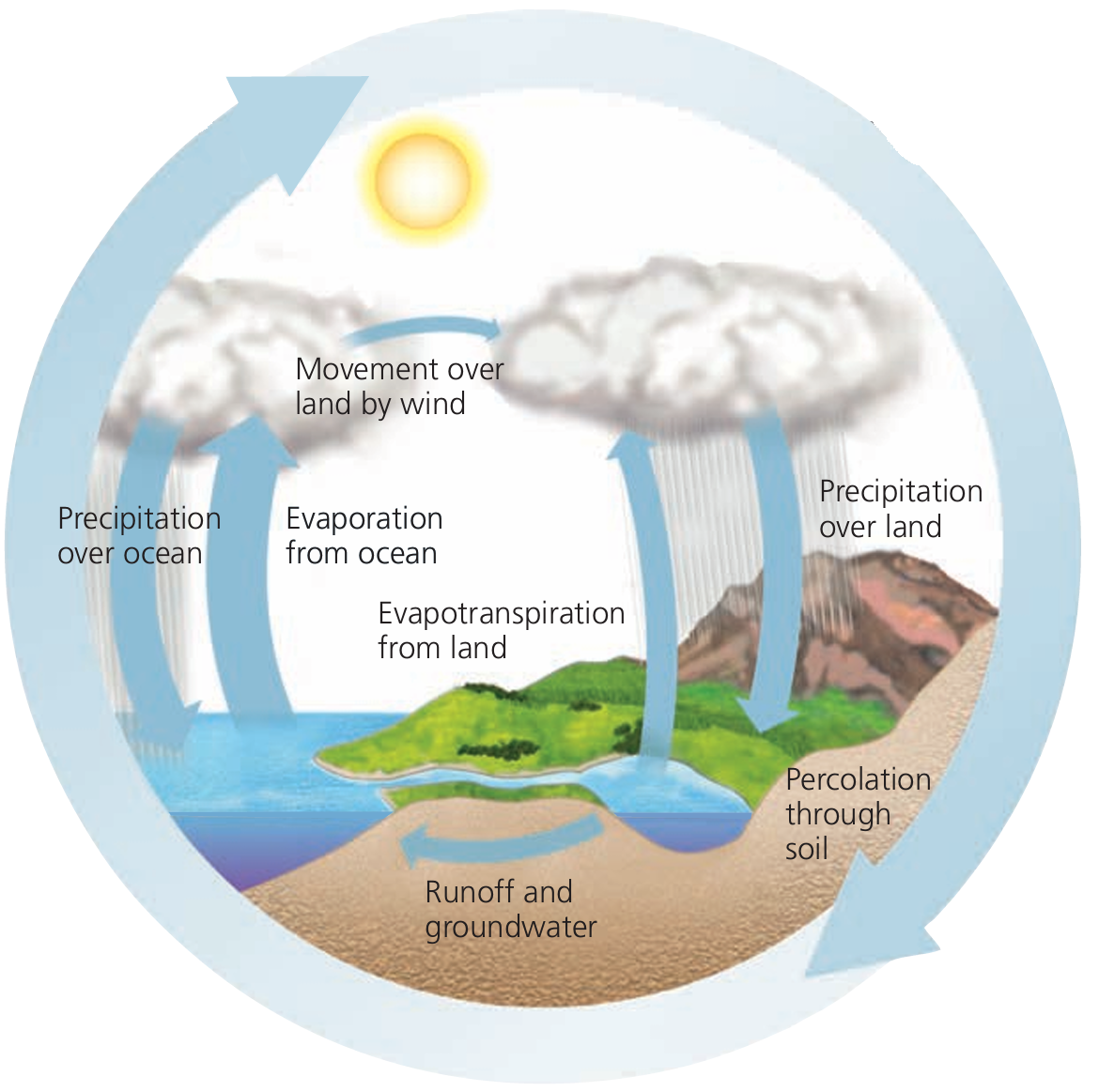
The hydrologic cycle describes how water moves through Earth’s systems – from oceans to the sky to land and living things.
📦 Main Reservoirs (Water Storage Areas):
Where water is stored during the cycle:
- Oceans – largest reservoir
- Atmosphere – as water vapor (clouds)
- Surface Water – lakes, rivers, glaciers
- Living Organisms – plants, animals, humans
🔄 Key Processes (Water Movement):
1. Evaporation
- Liquid water → vapor (gas)
- Sun heats water from oceans, lakes, soil
2. Condensation
- Water vapor → clouds (liquid droplets)
- Happens high in the atmosphere
3. Precipitation
- Water falls to Earth (rain, snow, hail)
4. Transpiration
- Plants release water vapor from their leaves into the air
🌍 Why It Matters:
- Keeps ecosystems hydrated
- Distributes heat and energy across the planet
- Connects living and non-living systems
🧬 Tip:
The water cycle is a biogeochemical cycle involving both abiotic reservoirs (oceans, atmosphere) and biotic roles (transpiration from plants).
It’s powered by solar energy ☀️
8.2.B.5 – The Carbon Cycle
🧠 Key Idea:
The carbon cycle moves carbon atoms between the environment 🌎 and living things 🧬. It’s essential for building organic molecules like carbohydrates, proteins, and fats.
🔁 Main Steps in the Carbon Cycle: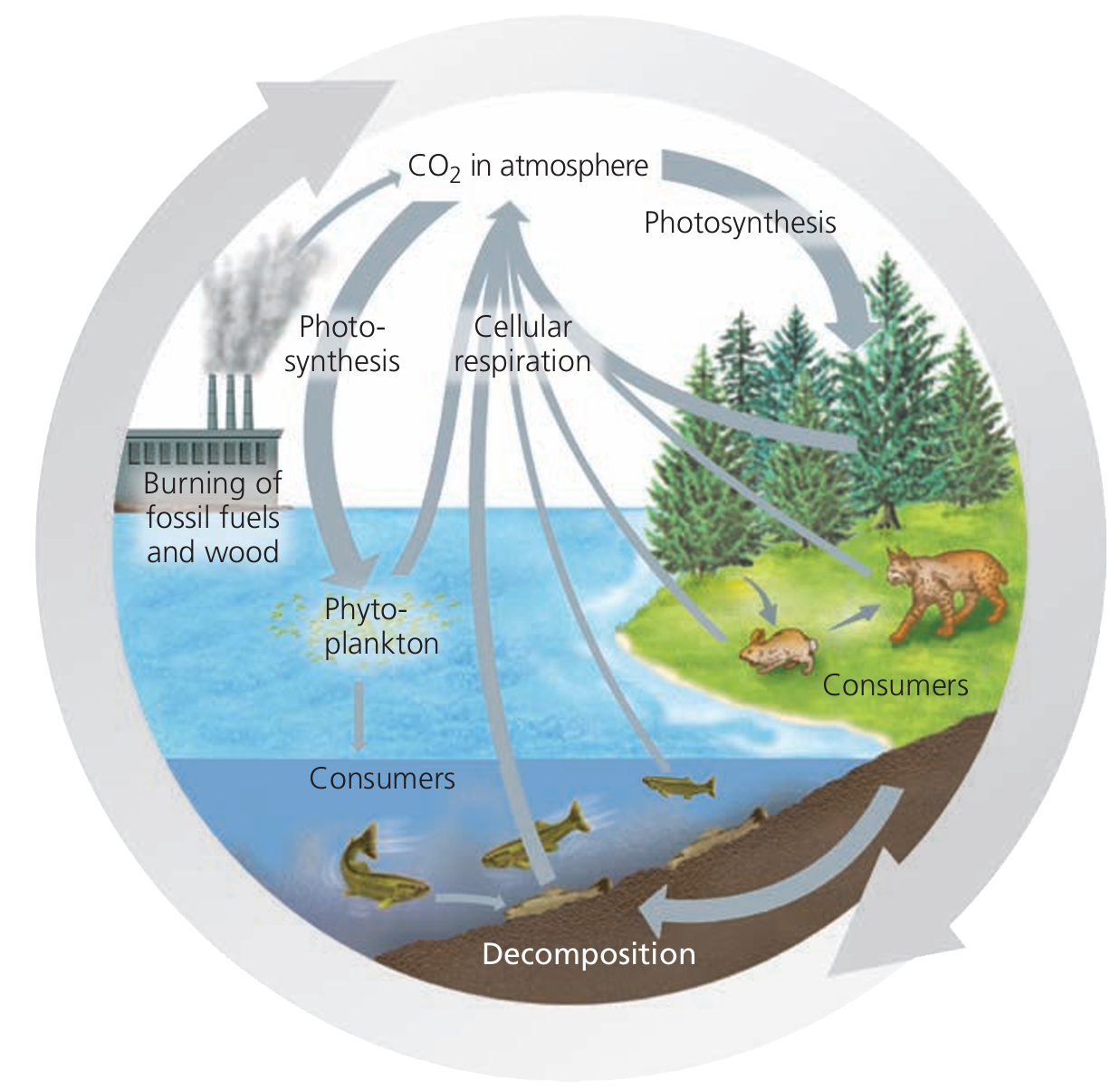
1. Photosynthesis
- Plants take in CO₂ from the air
- Use sunlight to convert it into glucose (C₆H₁₂O₆)
- Carbon is stored in plant biomass (sugars, starch)
2. Cellular Respiration
- Plants, animals, fungi, and microbes break down glucose
- Carbon is released back as CO₂ during ATP production
- Happens in mitochondria
3. Decomposition
- When organisms die, decomposers (like fungi and bacteria) break down their bodies
- Carbon is returned to the soil and atmosphere as CO₂
4. Combustion
- Burning of fossil fuels (coal, oil, gas) or biomass (wood)
- Rapidly releases CO₂ into the atmosphere
🧬 Carbon Reservoirs:
- Atmosphere: as CO₂ gas
- Biosphere: in living organisms
- Fossil fuels: underground carbon storage
- Oceans: dissolve and store CO₂
🌍 Why It Matters:
- Carbon is the backbone of life 🧬
- Cycle helps maintain the Earth’s climate 🌡️
- Disruptions (like burning fossil fuels) increase greenhouse gases = global warming
💡 Note:
- Photosynthesis and cellular respiration form a biological carbon loop
- Combustion adds extra CO₂ to the cycle → disrupts balance = climate issues 🌫️
8.2.B.6 – The Nitrogen Cycle
🧠 Key Idea:
The nitrogen cycle moves nitrogen (N) between the atmosphere, soil, and living organisms. It’s essential for building proteins, nucleic acids (DNA/RNA), and ATP in all organisms.
🌀 Major Steps in the Nitrogen Cycle: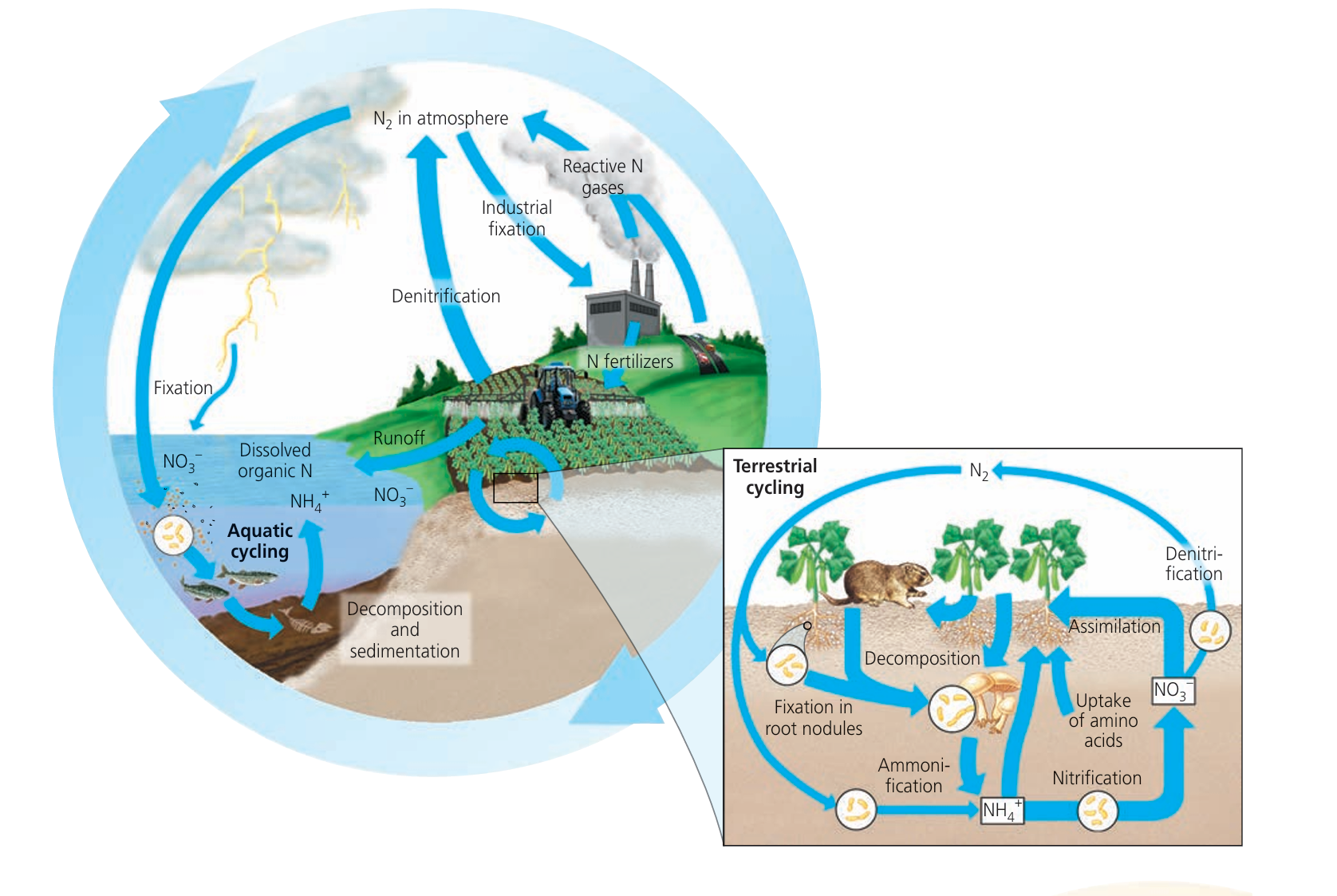
1. Nitrogen Fixation
- Converts N₂ gas (from the air) → Ammonia (NH₃)
- Done by nitrogen-fixing bacteria (e.g., Rhizobium) in root nodules of legumes 🌱
- Ammonia (NH₃) → Ammonium (NH₄⁺) by picking up H⁺ in soil
2. Assimilation
- Plants absorb NH₄⁺ or NO₃⁻ (nitrate)
- Incorporate nitrogen into amino acids and nucleotides
- Animals get nitrogen by eating plants or other animals
3. Ammonification
- Decomposers convert organic nitrogen (from dead organisms/waste) → NH₄⁺
- Recycles nitrogen back into the soil
4. Nitrification
- Two-step process by nitrifying bacteria:
- NH₄⁺ → Nitrite (NO₂⁻)
- NO₂⁻ → Nitrate (NO₃⁻)
- Plants prefer nitrate for uptake
5. Denitrification
- Anaerobic bacteria convert NO₃⁻ back into N₂ gas
- Releases nitrogen into the atmosphere
- Closes the nitrogen loop
🌍 Nitrogen Reservoirs:
- Main reservoir: atmosphere (N₂ gas, ~78%)
- Soil, oceans, living organisms = minor reservoirs
💡 Note:
- Microorganisms play a critical role in every step
- Nitrogen cycle maintains ecosystem productivity
- Disruptions (like fertilizer overuse) cause eutrophication in water bodies.
8.2.B.7 – The Phosphorus Cycle
🧠 Key Idea:
- The phosphorus cycle moves phosphate (PO₄³⁻) through the lithosphere, soil, water, and organisms – and does NOT involve the atmosphere!
- Phosphorus is essential for DNA, RNA, ATP, and phospholipids.
🔁 Steps of the Phosphorus Cycle: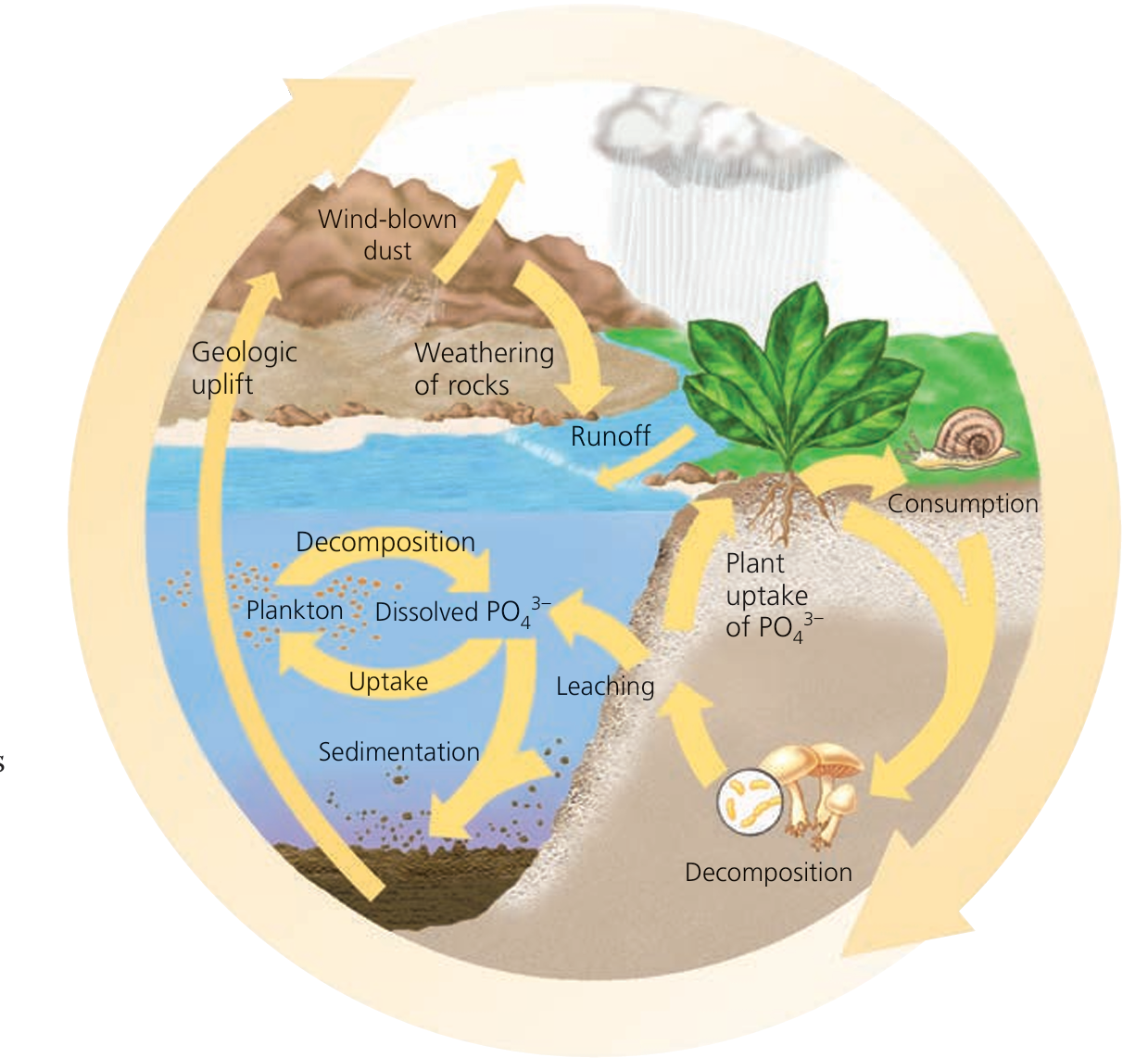
1. Weathering of Rocks
- Phosphorus is stored in rocks as phosphate (PO₄³⁻)
- Over time, weathering releases phosphate into soil and water
2. Uptake by Producers
- Plants absorb phosphate from soil
- Use it to build nucleic acids, ATP, and membranes
3. Transfer to Consumers
- Animals eat plants (or other animals) → phosphorus moves up the food chain
4. Return via Decomposition
- When organisms die or produce waste:
- Decomposers break down tissues
- Phosphate is returned to the soil or water
5. Sedimentation (Long-Term Storage)
- In aquatic systems, phosphate can settle and form sedimentary rock
- Over millions of years → becomes available again through weathering
🚫 No Atmospheric Phase:
Unlike nitrogen or carbon, phosphorus doesn’t cycle through the air.
🌱 Importance of Phosphorus:
- Limits plant growth in ecosystems – often the limiting nutrient
- Excess from fertilizer → causes eutrophication in lakes/oceans
💡Tip:
- Nitrogen = microbes + atmosphere
- Phosphorus = no gas phase, rock-based, slower cycle
8.2.C.1 – How Energy Availability Affects Population Size
🧠 Core Idea:
Every organism needs energy to survive, grow, and reproduce. If the energy in an ecosystem change, population sizes respond accordingly.
🔋 What Happens When Energy Changes?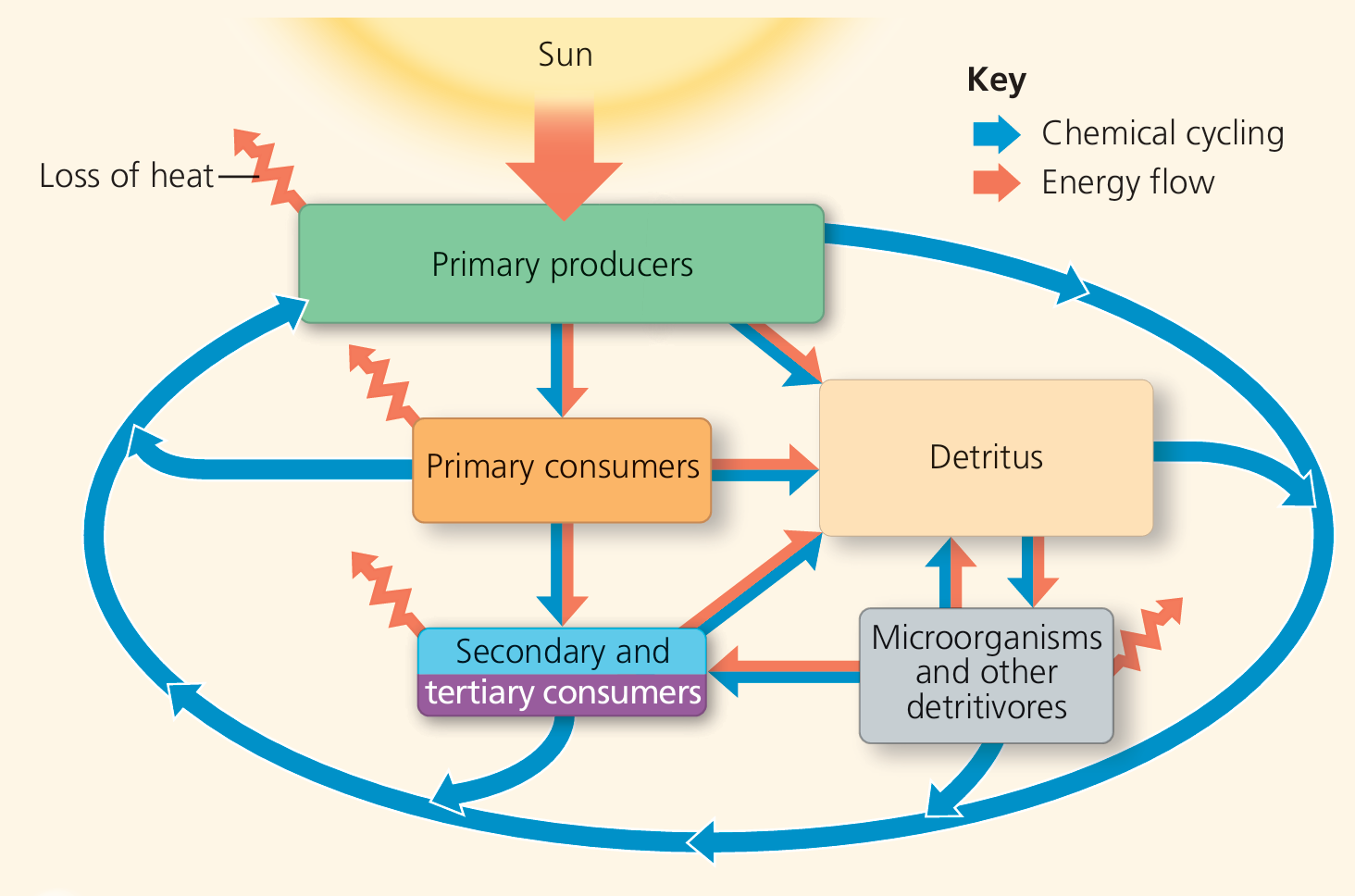
🔼 When Energy Increases
- More sunlight, food, or nutrients = more energy available
- Organisms can grow faster, reproduce more, and live longer
- Result: Population increases
📌 Example: In summer, more sunlight = more plants = more food for herbivores → herbivore population rises
🔽 When Energy Decreases
- Less energy means less food and harder survival
- Fewer offspring, more competition, or migration
- Result: Population declines
📌 Example: In a cold winter, plant growth slows down → herbivores can’t find enough food → population drops
🔁 Energy Flow → Population Dynamics
Organisms at each trophic level depend on energy from the level below.
So, if producers decline (like plants), it affects everything above them in the food chain.
💡 In Short:
- More energy = larger population
- Less energy = smaller population
- Ecosystems are sensitive to changes in energy flow.
8.2.D.1 – Autotrophs: Capturing Energy for Life
🧠 Key Idea:
Autotrophs are self-feeders – they capture energy from their surroundings and use it to build organic molecules (like glucose). This process supports all other life in an ecosystem.
🌱 Photosynthetic Autotrophs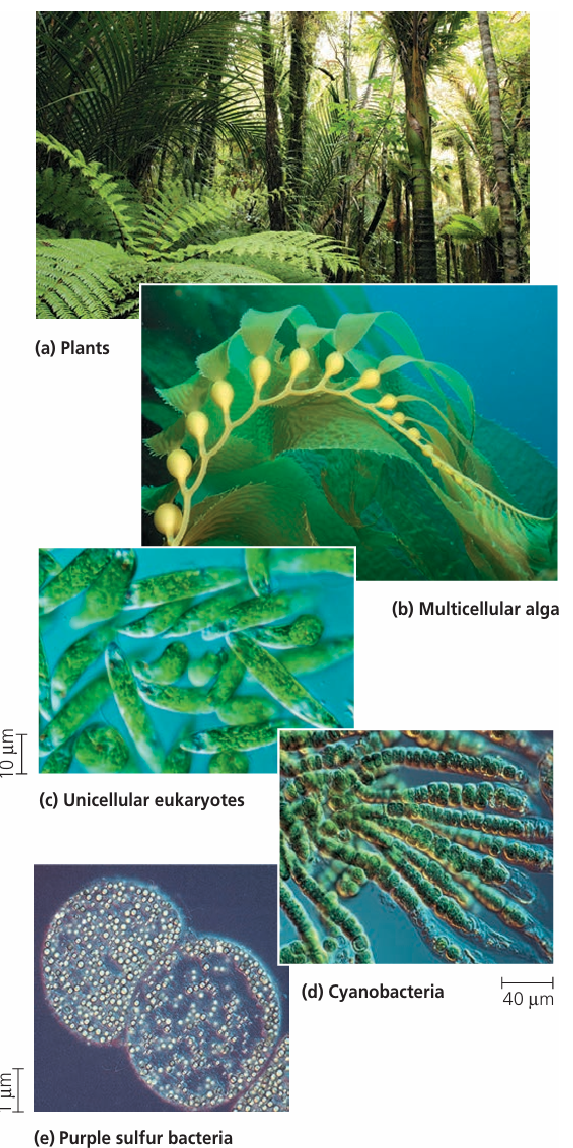
These organisms capture sunlight energy using pigments like chlorophyll to carry out photosynthesis.
🧪 Basic formula:
\( \mathrm{CO_2} + \mathrm{H_2O} + \text{sunlight} \rightarrow \mathrm{C_6H_{12}O_6} \text{ (glucose)} + \mathrm{O_2} \)
✅ Examples:
- Plants
- Algae
- Cyanobacteria
🌍 Contribution:
Photosynthesis powers primary productivity, meaning it’s the starting point for energy flow in most ecosystems.
🌋 Chemosynthetic Autotrophs
These organisms don’t need sunlight — they extract energy from small inorganic molecules in the environment (like \( \mathrm{H_2S} \) or \( \mathrm{NH_3} \)) to make food.
🧪 Example reaction (in deep-sea vents):
\( \mathrm{H_2S} + \mathrm{O_2} \rightarrow \text{sulfur compounds} + \text{energy (used to make sugars)} \)
✅ Examples:
- Bacteria in hydrothermal vents
- Nitrifying bacteria in soil
🌍 Importance:
They’re key in dark, extreme environments like the deep ocean, where no sunlight reaches – yet ecosystems still exist!
📌 Summary
Autotrophs = the foundation of all ecosystems → Whether using light (photosynthesis) or chemicals (chemosynthesis), they convert non-living energy into food, making life possible for all heterotrophs.