AP Biology 8.5 Community Ecology Study Notes - New Syllabus Effective 2025
AP Biology 8.5 Community Ecology Study Notes- New syllabus
AP Biology 8.5 Community Ecology Study Notes – AP Biology – per latest AP Biology Syllabus.
LEARNING OBJECTIVE
Describe the structure of a community according to its species composition and diversity.
Key Concepts:
- Community Ecology
8.5.A – Community Structure: Species Composition & Diversity
๐ง What is a community?
A community is all the different populations of species living and interacting in the same area.
๐ฟ 1. Species Composition: Who’s There?
Refers to which species are present in a community.
Every species has a role (called a niche).
Examples:
- A forest might include oak trees, deer, birds, fungi, and insects.
- A coral reef might include corals, fish, algae, and invertebrates.
๐ 2. Species Diversity: How Varied?
Species diversity includes:
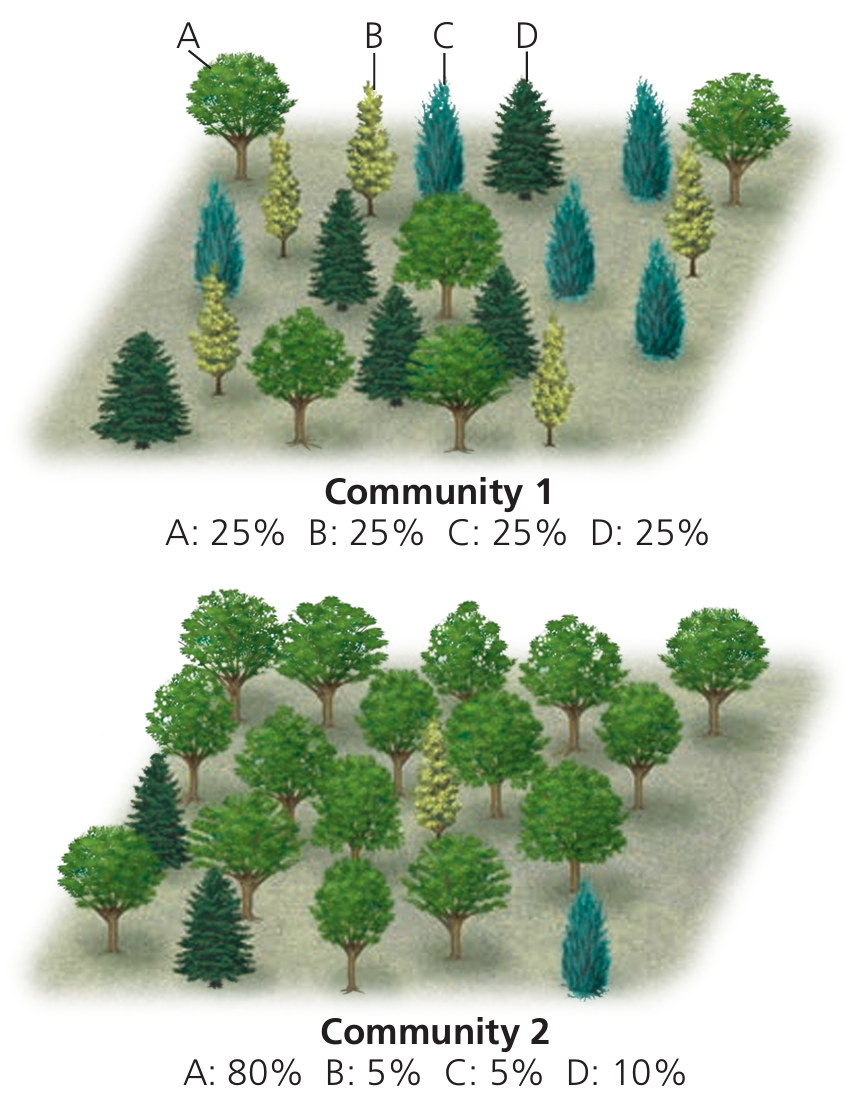
- Species richness โ number of different species.
- Species evenness โ how evenly individuals are distributed among those species.
๐ High diversity = more stable and resilient community.
๐ Low diversity = more vulnerable to disturbances like diseases or habitat changes.
๐งฌ Why Species Diversity Matters
- Communities with high diversity can withstand environmental stress better.
- More diverse communities are often more productive (e.g., in energy transfer and biomass).
๐ Example:
- A tropical rainforest has:
- High species richness (tons of different plants and animals),
- High evenness (no single species dominates).
- But a cornfield has:
- Low richness (mostly corn),
- Low evenness (corn dominates heavily).
๐ Summary:
A community’s structure is shaped by which species live there (composition) and how many and how balanced they are (diversity). Greater diversity usually means a healthier, more stable ecosystem.
8.5.A.1 – How We Measure Community Structure
๐ Community Structure = Composition + Diversity
- Species Composition โก๏ธ Which species are present?
- Species Diversity โก๏ธ How many species + how evenly theyโre distributed?
๐ Simpsonโs Diversity Index (D)
This is a mathematical way to measure how diverse a community is.
๐ Formula:
\( D = 1 – \sum \left(\frac{n}{N}\right)^2 \)
Where:
- n = total number of individuals of a particular species
- N = total number of all organisms (of all species)
๐ง Higher D value = more diversity
๐ This index considers both richness (how many species) and evenness (how balanced).
๐งช Example:
| Species | Individuals |
|---|---|
| A | 50 |
| B | 25 |
| C | 25 |
Total = 100 organisms
So,
\( D = 1 – \left[\left(\frac{50}{100}\right)^2 + \left(\frac{25}{100}\right)^2 + \left(\frac{25}{100}\right)^2 \right] \)
\( = 1 – [0.25 + 0.0625 + 0.0625] = 0.625 \)
โ Summary:
Simpsonโs Diversity Index helps ecologists quantify how biodiverse a community is. A higher value = more diverse and usually more stable.
8.5.B – How Interactions Influence Community Structure
๐ง Key Idea:
The way species interact within (same species) and among (different species) populations shapes the structure and stability of a community.
๐ฑ Types of Interactions Between Populations:
| Interaction | Effect on Species 1 | Effect on Species 2 | Example |
|---|---|---|---|
| Competition | Harmed | Harmed | Two bird species competing for the same nesting site |
| Predation | Benefited | Harmed | Lion eating a zebra |
| Parasitism | Benefited | Harmed | Tick feeding on a dog |
| Mutualism | Benefited | Benefited | Bees pollinating flowers |
| Commensalism | Benefited | No effect | Barnacles on a whale |
| Amensalism | Harmed | No effect | Large tree shading out smaller plants |
๐งฌ Intraspecific Interactions (within same species)
- Includes competition for food, mates, territory, etc.
- Affects population size, growth rate, and reproductive success.
๐ Example: Male deer fighting for females affects who passes on genes.
๐ Why It Matters:
These interactions influence:
- Which species dominate?
- How energy flows?
- How stable the ecosystem is?
Some species (like predators or mutualists) can control entire community dynamics.
๐ฅ Key Term:
Keystone Species: A species that has a disproportionate impact on its environment (like wolves controlling deer population and forest structure).
โ Summary:
Interactions between organisms – whether friendly, harmful, or neutral – shape who survives, who thrives, and how ecosystems function.
8.5.B.1 – Communities Change Over Time Due to Species Interactions
๐ง Key Concept:
- A community = different populations of different species living and interacting together in the same area.
- These interactions cause communities to change over time.
๐ How Do Communities Change?
Interactions Shape Structure
- Species compete, prey, help each other, or live side by side.
- These interactions decide which species survive, increase, or disappear.
Some Interactions Are Stronger Than Others
- Example: Predators keep prey in check.
- Example: Mutualism (like bees & flowers) can keep both species stable.
Populations Rise or Fall Together
- If one species decline (like a plant), animals that depend on it may also decline.
Environmental Changes Also Affect Interactions
- Climate shifts, disasters, or human impact can change how species interact.
๐งฌ Example:
- Algae (producer) โ supports insects
- Insects โ eaten by frogs
- Frogs โ eaten by snakes
๐ If algae die off, the whole food chain is affected.
๐ก Summary:
Communities arenโt static. They change over time because the populations inside them interact constantly. These relationships affect who survives and who doesnโt, shaping the structure of the entire community.
8.5.B.2 – How Interactions Affect Energy and Matter in a Community
๐ง Key Idea:
The way populations interact (like competing, hunting, helping) decides how they get energy and matter in a community.
โก What Does That Mean?
- Every organism needs energy (to grow, move, reproduce) and matter (like nutrients or food).
- But how they get it depends on their role in the community and who else is around.
๐ Types of Interactions & Their Effects:
- Predation: One species eats another. Helps transfer energy up the food chain.
- Competition: Species fight (directly or indirectly) for the same food, space, or light. Losers may get less energy/matter or even go extinct.
- Mutualism (win-win): Two species benefit – like bees & flowers. Helps both get resources they might not access alone.
- Commensalism (win-neutral): One species benefit, the other is unaffected – like birds nesting in trees.
- Parasitism (win-lose): One species gains energy/matter by harming the host – like tapeworms in animals.
๐ Flow of Energy & Matter:
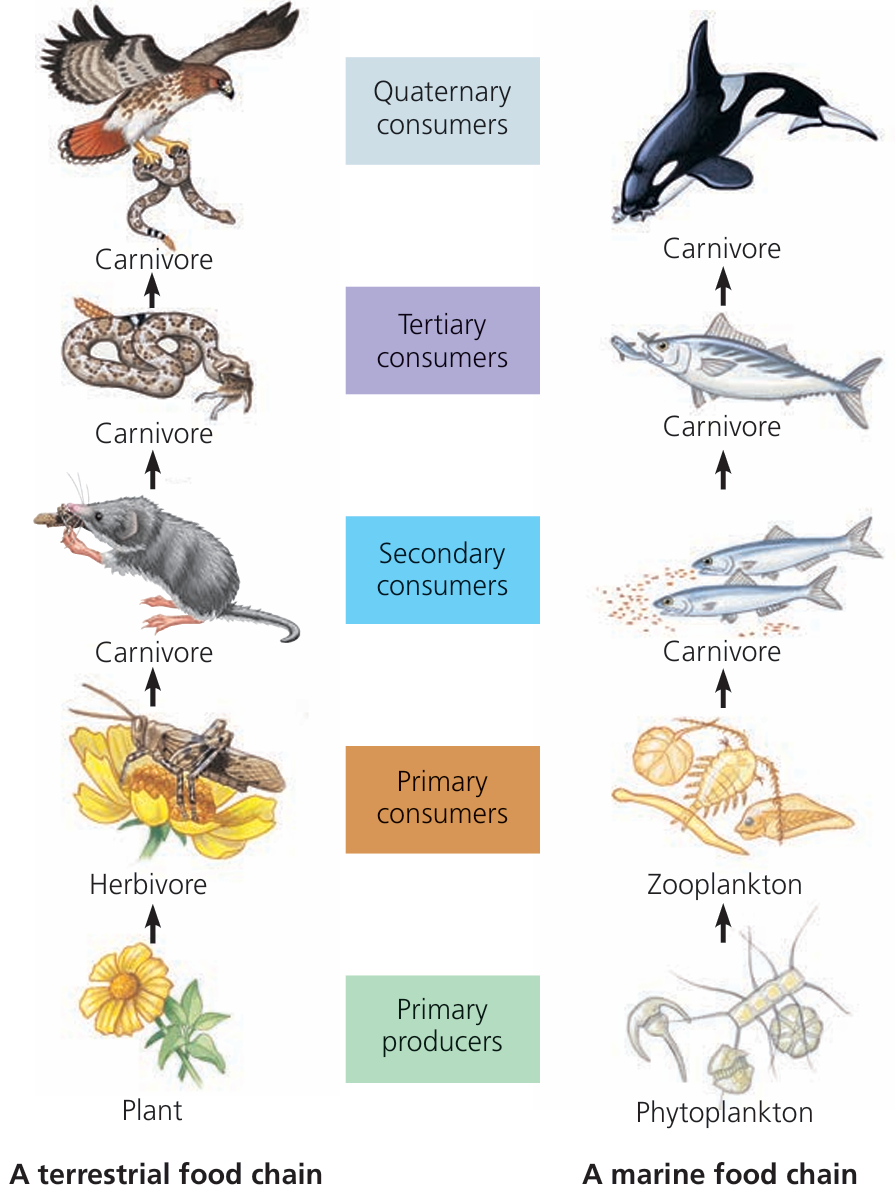
- Energy flows one way: Sun โ Producers โ Consumers โ Decomposers
- Matter (like carbon, nitrogen) cycles through organisms and the environment.
๐ Example:
In a forest:
- Trees (producers) use sunlight to make food.
- Deer (herbivores) eat the trees.
- Wolves (carnivores) eat the deer.
- Fungi (decomposers) break down waste and return nutrients to the soil.
All these interactions determine who gets energy/matter and how it moves through the system.
โ Summary:
Interactions between species like who eats who or who helps who shape the flow of energy and matter in a community. This keeps ecosystems balanced and functioning.
8.5.B.3 – Modeling Relationships Among Interacting Populations
๐ง Big Idea:
Species in a community donโt live in isolation they interact, and these interactions can have positive (+) or negative (โ) effects on each other. We can model these to understand how communities function.
๐ Types of Relationships:
๐ฆ Predator/Prey Interaction
- One benefits (+), one is harmed (โ).
- Predator gets food, prey gets eaten.
- Populations affect each otherโs size (if prey โ, predators also โ later).
- Example:
- Wolves (predators) eat deer (prey).
- If wolves increase, deer decrease โ less food โ wolves decrease โ deer recover.
๐ค Cooperation
- Both species benefit (+/+).
- They work together to survive or thrive.
- Example:
- Cleaner fish clean parasites off larger fish – both win!
๐ Trophic Cascade
- Top-down effect: One change (often at the top of the food chain) causes a ripple effect through lower levels.
- Example:
- Removing wolves โ deer overpopulate โ overgrazing โ plant loss โ erosion
๐งฉ Niche Partitioning
- Species divide up resources to reduce competition.
- Everyone gets a piece of the pie ๐
- Example:
- Two bird species might eat insects at different heights in the same tree.
๐ก Summary Table:
| Interaction Type | Effect | Description |
|---|---|---|
| Predator/Prey | + / โ | Predator gains food, prey loses life |
| Cooperation | + / + | Both species help each other |
| Trophic Cascade | Chain | One change affects many trophic levels |
| Niche Partitioning | + / + | Reduces direct competition |
Understanding these relationships helps us predict how changes (like extinction or invasive species) can impact entire ecosystems.
8.5.B.4 – Interactions That Drive Population Dynamics
๐ง Big Idea:
Species interact in different ways, and these interactions can shape population sizes, drive evolution, and influence who survives or thrives in a community. Letโs break them down:
โ๏ธ 1. Competition (โ / โ)
Both species are harmed because theyโre competing for limited resources (like food, water, space, or mates).
- Can be intraspecific (within the same species) or interspecific (between different species).
- Reduces the population size or fitness of both species.
Example:
Two bird species fighting for the same nesting sites.
๐ 2. Predation (+ / โ)
One species benefit (the predator), and the other is harmed (the prey).
- Affects prey population size โ which in turn influences predator numbers (predator-prey cycles).
- Drives adaptations like camouflage, speed, or defense mechanisms.
Example:
Owl hunting mice at night
๐ค 3. Symbiosis (Living closely together)
๐ฆ A. Parasitism (+ / โ)
- Parasite benefits by living off the host, which is harmed.
- Doesnโt usually kill the host right away.
- Example: Tapeworms in animal intestines
๐ B. Mutualism (+ / +)
- Both species benefit.
- Common in nature builds stable relationships.
- Example: Bees pollinate flowers while collecting nectar
๐ C. Commensalism (+ / 0)
- One species benefits, and the other is unaffected.
- Kind of a one-sided friendship.
- Example: Barnacles sticking to whales – they get a ride; the whale doesnโt mind.
๐ Impact on Population Dynamics:
| Interaction | Who Benefits? | Population Impact |
|---|---|---|
| Competition | No one | โ for both due to resource limits |
| Predation | Predator | Prey โ โ cycles in both groups |
| Parasitism | Parasite | Host โ over time |
| Mutualism | Both | โ Survival and reproduction |
| Commensalism | One species | Neutral for host, helps the other |
ย