Home / AP® Exam / Pre AP Biology / Pre AP Biology

ECO 1.1 Hydrologic Cycle- Pre AP Biology Study Notes - New Syllabus.

ECO 1.1 Hydrologic Cycle- Pre AP Biology Study Notes

ECO 1.1 Hydrologic Cycle- Pre AP Biology Study Notes – New Syllabus.

LEARNING OBJECTIVE

ECO 1.1(a) Explain how the unique properties and phase changes of water enable and regulate biological reactions and/or processes.
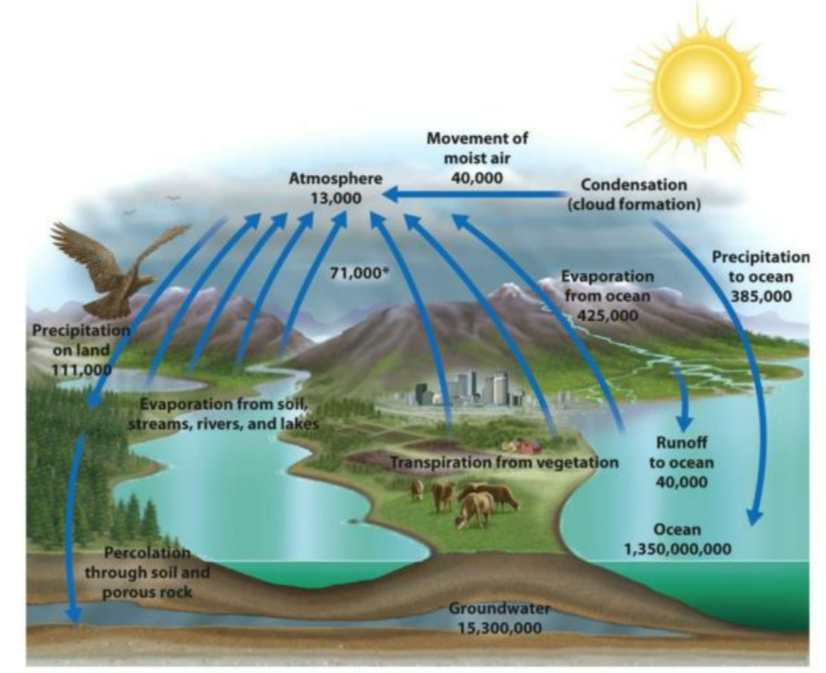
ECO 1.1(b) Create and/or use a model to explain how biological systems function in the hydrologic cycle as water is transferred, transported, and/or stored.

Key Concepts: 

  • ECO 1.1.1 Water cycles between abiotic and biotic systems in a process known as the hydrologic cycle.
    a. The polar nature of water results in properties on which biological systems depend, such as dissolving organic and inorganic nutrients.
    b. The hydrologic cycle is driven by energy from the sun and gravity.
    c. The largest reservoir of water in the global hydrologic cycle is the world’s oceans.
    d. Only a small portion of the water on Earth is fresh water, which is required for life by all terrestrial organisms, including humans

Pre AP Biology-Concise Summary Notes- All Topics

How the special properties and phase changes of water help living things survive

🌱 Introduction

Water is not just a drink. It is the base of all life processes.
Every cell, every reaction, and every ecosystem depends on how water behaves.
Its unique nature helps living things carry nutrients, control temperature, grow, and stay alive.

🧬 Why Water is a Unique Molecule

Water molecules have a slight positive and negative side.
This special arrangement is called polarity.
Because of this polarity, water shows amazing properties that life depends on.

🔑 Key Properties of Water and Their Biological Roles

1) Universal Solvent

  • Water dissolves most substances.
  • Dissolves salts, sugars, minerals, gases.
  • Helps transport nutrients in blood and plant xylem.
  • Allows chemical reactions to occur inside cells.

Why it matters
Cells are like tiny bags of water where dissolved substances react smoothly.

Memory Trick: Water is like a “school bus” carrying nutrients everywhere.

2) Cohesion and Adhesion

  • Cohesion: water sticks to water
  • Adhesion: water sticks to other surfaces
  • Helps plants pull water upward during transpiration.
  • Allows water droplets to form.
  • Keeps surfaces moist (like inside lungs).

Why it matters
Without these forces, tall trees wouldn’t get water to their top leaves.

3) High Heat Capacity

  • Water absorbs a lot of heat without getting too hot.
  • Helps organisms maintain body temperature.
  • Keeps lakes and oceans stable across seasons.
  • Protects aquatic life from sudden temperature changes.

Why it matters
Water works like Earth’s “thermal blanket.”

4) Density and Ice Floating

  • Ice is lighter than liquid water.
  • Ice floats and forms an insulating layer on lakes.
  • Aquatic organisms survive winter under the ice.
  • Saves ecosystems from freezing solid.

Why it matters
If ice sank, entire lakes would freeze and life would vanish.

5) Surface Tension

  • Water molecules cling tightly at the surface.
  • Allows small insects to walk on water.
  • Helps water rise in small tubes (capillarity).
  • Maintains cell shape by resisting external force.

🌫️ Water Phase Changes & Their Biological Importance

Water changes between solid, liquid, and gas, and each change controls natural processes.

1) Evaporation

  • Liquid water becomes vapor.
  • Cools organisms (example: sweating, transpiration).
  • Drives the water cycle by forming clouds.
  • Removes heat from ecosystems.

2) Transpiration

  • Evaporation from plant leaves.
  • Helps plants pull water from roots to leaves.
  • Adds water vapor to the atmosphere.
  • Controls plant temperature.

3) Condensation

  • Water vapor cools and becomes liquid.
  • Forms clouds, fog, and dew.
  • Returns fresh water to land through precipitation.
  • Maintains the supply of drinking water and river flow.

4) Freezing

  • Water becomes ice.
  • Protects organisms under frozen lakes.
  • Stores freshwater in glaciers.
  • Slows down enzyme reactions, helping organisms survive cold.

5) Melting

  • Ice becomes liquid.
  • Releases stored water back to rivers and oceans.
  • Supports seasonal water supply for plants and animals.

📌 How These Properties Regulate Biological Processes

  • Enable cellular reactions: Water dissolves molecules, making it the perfect reaction medium.
  • Transport material inside organisms: Blood plasma in humans; xylem and phloem in plants.
  • Regulate temperature: Sweat evaporation cools the body; oceans stabilize climate.
  • Maintain ecosystem balance: Water cycle distributes freshwater globally.
  • Support biodiversity: Floating ice and stable temperatures protect life.

📊 Summary Table

Property / Phase ChangeWhat It MeansBiological Role
PolarityPositive & negative endsDissolves nutrients
SolventDissolves substancesTransport in blood, cells
Cohesion & AdhesionSticking forcesWater movement in plants
High Heat CapacityAbsorbs heat slowlyTemperature regulation
Ice FloatsLess dense solidProtects aquatic life
EvaporationLiquid to gasCooling, water cycle
TranspirationWater loss from leavesPulls water upward
CondensationGas to liquidClouds, rain
Freezing/MeltingState changeSeasonal survival

📦 Quick Recap 
Water is a polar molecule.
Its properties make life possible: solvent, cohesion, adhesion, heat capacity, surface tension, ice floating.
Phase changes drive the water cycle.
These regulate temperature, transport, reactions, and ecosystem stability.
Without water’s unique behavior, life on Earth could not exist.

Hydrologic Cycle and Living Organisms

🌱 Introduction

Water is very important for all living things.
Plants, animals, and humans cannot live without water.

Water does not stay in one place. It keeps moving from:

  • air
  • land
  • water bodies
  • living organisms

This continuous movement of water is called the hydrologic cycle or water cycle.

Living organisms are a part of this cycle, not separate from it.

🔄 What is the Hydrologic Cycle

The hydrologic cycle is the circular movement of water on Earth:

  • from the atmosphere
  • to land and water bodies
  • into living organisms
  • and back to the atmosphere

This cycle goes on again and again.

🧠 What is a Model?

A model is a simple way to understand something big and difficult.

The hydrologic cycle model helps us understand:

  • how water moves
  • where water is stored
  • how plants and animals use water

☀️ What Makes the Water Cycle Work

1) Sun

  • The sun gives heat energy.
  • Heat causes water to change into water vapor.
  • This starts the water cycle.

2) Gravity

  • Gravity pulls water downward.
  • It helps rain fall, water flow in rivers, and seep into soil.

💦 Steps of the Hydrologic Cycle with Living Organisms

Step 1 Evaporation

Evaporation is the process by which liquid water changes into water vapor.

  • Water evaporates from oceans, rivers, lakes.
  • Heat from the sun causes evaporation.

Role of Living Things

  • Humans and animals lose water by sweating.
  • Plants lose water from leaves (this is called transpiration).

Step 2 Transpiration

Transpiration is the loss of water from plant leaves.

  • Plants take water from soil using roots.
  • Water moves upward through the stem.
  • Water is released from leaves into the air.

Why transpiration is important

  • Cools the plant.
  • Helps water move inside the plant.
  • Adds water vapor to the atmosphere.

Step 3 Condensation

Condensation is the process by which water vapor changes back into liquid water.

  • Water vapor cools in the sky.
  • Clouds are formed.

Importance for Life

  • Clouds help bring rain.
  • Rain provides freshwater for plants and animals.

Step 4 Precipitation

Precipitation occurs when water falls from clouds to the Earth.

  • It may fall as rain or snow.

Role of Living Things

  • Plants use rainwater for growth.
  • Animals drink rainwater collected in ponds and rivers.

Step 5 Absorption by Plants

  • Rainwater enters the soil.
  • Plant roots absorb water from soil.
  • Water is used for making food and growth.

Step 6 Runoff

Runoff is water that flows over land.

  • Rainwater flows into rivers, lakes, and oceans.

Importance

  • Supplies water to water bodies.
  • Supports aquatic plants and animals.

Step 7 Seepage and Groundwater

  • Some water goes deep into the soil.
  • This water becomes groundwater.

Importance

  • Plants use groundwater during dry seasons.
  • Humans use groundwater from wells.

Step 8 Storage in Oceans

  • Oceans store the largest amount of water.
  • Water evaporates again from oceans.
  • The cycle repeats.

📌 How Living Organisms Help the Water Cycle

Plants

  • Absorb water
  • Release water by transpiration
  • Reduce soil erosion

Animals

  • Drink water
  • Release water through urine and sweat

Microorganisms

  • Improve soil quality
  • Help water stay in soil

📊 Summary Table

Part of CycleWhat HappensRole of Living Things
EvaporationWater becomes vaporCooling of body
TranspirationWater leaves plantsAdds vapor to air
CondensationClouds formLeads to rainfall
PrecipitationRain fallsWater for life
RunoffWater flowsFills rivers
GroundwaterWater storedUsed by plants

📦 Quick Recap 
Hydrologic cycle means movement of water.
Sun and gravity control the cycle.
Plants and animals are part of the cycle.
Transpiration is very important.
Oceans store most of the water.
Water cycle repeats continuously.

Scroll to Top