GEN 4.3 Chromosomal Disorders- Pre AP Biology Study Notes - New Syllabus.
GEN 4.3 Chromosomal Disorders- Pre AP Biology Study Notes
GEN 4.3 Chromosomal Disorders- Pre AP Biology Study Notes – New Syllabus.
LEARNING OBJECTIVE
GEN 4.3(a) Describe how some organisms have structurally altered chromosomes in their genome.
GEN 4.3(b) Predict how altered chromosome numbers may affect organisms.
Key Concepts:
GEN 4.3.1 Chromosomal disorders occur when the structure or number of chromosomes has been altered, which often impairs normal function and development in organisms.
a. Unequal crossing-over events can lead to chromosomal disorders.
b. Random nondisjunction events may occur in meiosis when chromosomes fail to separate. This may result in viable offspring with an abnormal number of chromosomes.
Structurally Altered Chromosomes
🌿 Introduction
Chromosomes are large DNA structures that contain many genes arranged in a specific order.
The structure of a chromosome is important because:
- The sequence and position of genes must be correct
- Genes must be present in proper amounts
- DNA segments must remain intact
Sometimes, during meiosis, chromosomes become structurally altered.
A structurally altered chromosome means: The physical arrangement of DNA segments has changed.
This can disrupt gene function and normal development.
🧠 What Does “Structurally Altered” Mean?
Structural alteration refers to changes in:
- The length of a chromosome
- The arrangement of gene segments
- The number of gene copies
Unlike point mutations (which affect a single base), structural alterations affect large sections of DNA.
These changes occur at the chromosome level.
🔬 How Structural Alterations Occur – Unequal Crossing-Over
The syllabus specifically highlights: Unequal crossing-over
To understand this, we must first recall normal crossing-over.
🔁 Normal Crossing-Over
During Prophase I of meiosis:
- Homologous chromosomes pair
- They form tetrads
- They exchange equal segments of DNA
This process:
- Increases genetic variation
- Maintains balanced gene content
⚠ Unequal Crossing-Over
Sometimes homologous chromosomes do not align perfectly.
If misalignment occurs:
- Crossing-over may involve unequal segments
- One chromosome gains extra DNA
- The other loses DNA
This is called unequal crossing-over.
🧬 Structural Changes Caused by Unequal Crossing-Over
Unequal crossing-over can result in:
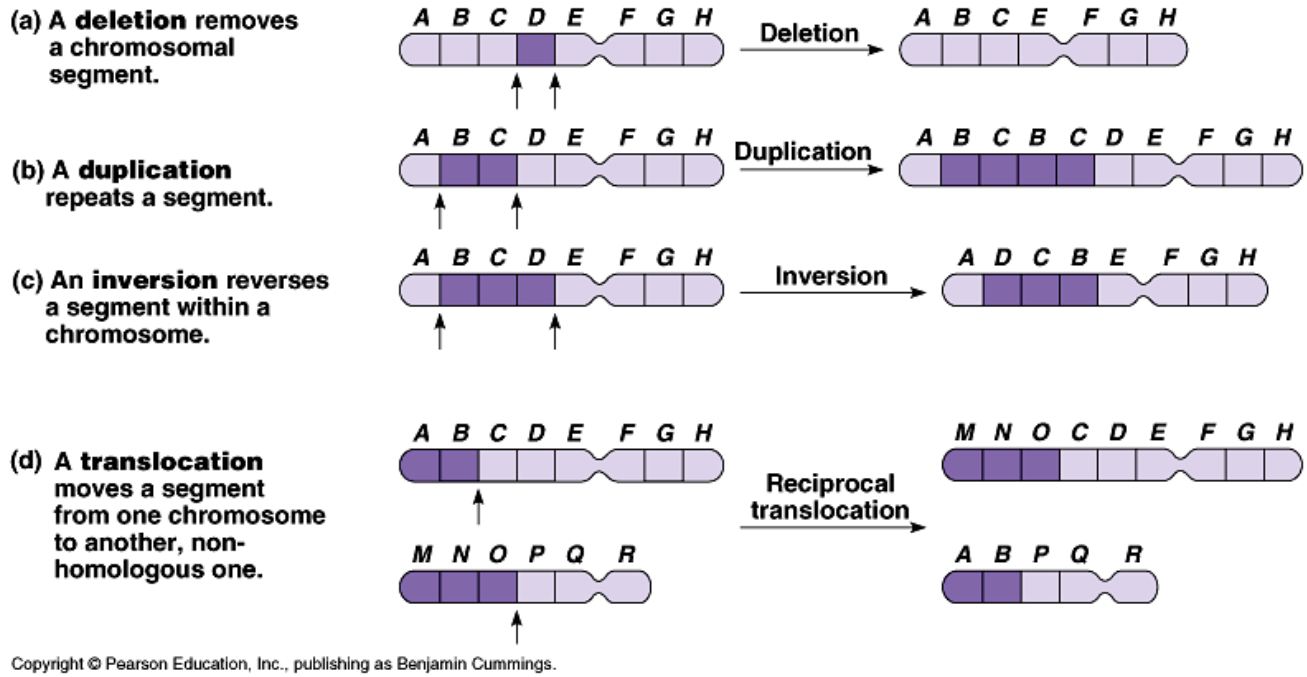
A) Duplication
A chromosome may receive an extra copy of a gene or region.
This means:
- Extra gene copies
- Increased production of certain proteins
- Gene dosage imbalance
Too much of a protein can disrupt normal cellular function.
B) Deletion
A chromosome may lose a segment of DNA.
This means:
- Missing genes
- Loss of important proteins
- Reduced gene dosage
If essential genes are deleted, development may be impaired.
🧠 Why Structural Changes Affect Organisms
Genes contain instructions for proteins.
If chromosome structure changes:
- Gene sequence may be altered
- Gene position may change
- Gene copy number may change
This affects:
- Protein production
- Regulation of gene expression
- Developmental processes
Structural chromosome changes often disrupt:
- Growth
- Organ development
- Normal cell function
🧬 Gene Dosage and Its Importance
Gene dosage refers to:
The number of copies of a gene present in a cell.
Normal diploid cells have:
- Two copies of each gene
If duplication occurs:
- Three or more copies may exist
If deletion occurs:
- Only one copy or none may exist
Imbalanced gene dosage can:
- Disrupt protein levels
- Interfere with cell signaling
- Cause developmental abnormalities
🧠 Why These Changes Are Significant
Structural chromosome alterations are significant because:
- They affect large regions of DNA
- Many genes may be impacted at once
- Effects are often more severe than small mutations
Unlike single-base mutations:
Structural changes can alter multiple genes simultaneously.
This increases the likelihood of functional disruption.
📊 Summary Table
| Structural Change | What Happens | Effect on Genes | Possible Impact |
|---|---|---|---|
| Duplication | Extra chromosome segment | Extra gene copies | Overproduction of proteins |
| Deletion | Missing chromosome segment | Missing genes | Loss of protein function |
| Unequal crossing-over | Misaligned exchange | Imbalanced gene dosage | Developmental disruption |
📦 Quick Recap
Structural alteration = large chromosome segment change
Caused by unequal crossing-over
Misalignment → duplication or deletion
Duplication = extra gene copies
Deletion = missing genes
Gene dosage imbalance → developmental disruption
Predict How Altered Chromosome Numbers May Affect Organisms
🌿 Introduction
Every species has a specific chromosome number.
In most body cells:
- Chromosomes exist in pairs
- Cells are diploid (2N)
Maintaining the correct chromosome number is essential for:
- Balanced gene expression
- Normal development
- Proper cell function
When chromosome number changes, it disrupts genetic balance.
This can significantly affect an organism.
🧠 How Altered Chromosome Numbers Occur
Changes in chromosome number usually result from: Nondisjunction
Nondisjunction occurs during meiosis when:
Homologous chromosomes fail to separate in Meiosis I
or
Sister chromatids fail to separate in Meiosis II
As a result:
- Some gametes receive too many chromosomes
- Some receive too few
When fertilization occurs, the zygote may have:
An extra chromosome
or
A missing chromosome
🧬 Types of Chromosome Number Alterations
A) Trisomy (Extra Chromosome)
Trisomy occurs when:
An organism has three copies of a chromosome instead of two
Normal: 2 copies
Trisomy: 3 copies
This means:
- Extra gene copies
- Increased gene dosage
B) Monosomy (Missing Chromosome)
Monosomy occurs when:
An organism has only one copy of a chromosome instead of two
Normal: 2 copies
Monosomy: 1 copy
This means:
- Missing gene copies
- Reduced gene dosage
🧠 Why Chromosome Number Matters – Gene Dosage
Each chromosome contains:
- Hundreds or thousands of genes
Cells are designed to function with:
- Two copies of each gene
When chromosome number changes: Gene dosage becomes unbalanced.
Gene dosage refers to:
The amount of gene product produced.
Extra chromosome → too much protein
Missing chromosome → too little protein
Cells rely on balanced protein levels for normal function.
🧬 Predicting Effects of Altered Chromosome Numbers
To predict the impact, ask:
- Is there an extra or missing chromosome?
- How many genes are located on that chromosome?
- Are those genes essential for development?
Effects of Trisomy
Extra chromosome leads to:
- Overexpression of genes
- Disruption of normal development
- Imbalanced cell signaling
Possible outcomes:
- Developmental delays
- Abnormal physical traits
- Organ system disruption
Some trisomy’s are compatible with life.
Many are not.
Effects of Monosomy
Missing chromosome leads to:
- Under expression of genes
- Loss of essential genetic information
Monosomy is often:
- More severe than trisomy
- Frequently incompatible with survival
Because missing genes cannot be compensated for.
🧠 Severity of Impact
The severity depends on:
- Which chromosome is affected
- Number of genes involved
- Importance of those genes
General prediction:
Larger chromosomes → more genes → greater disruption
Smaller chromosomes → fewer genes → potentially milder effects
🧬 Population-Level Impact
Altered chromosome numbers can:
- Reduce survival rates
- Decrease reproductive success
- Affect population genetic stability
Some chromosomal changes may still allow survival but cause noticeable differences.
📊 Summary Table
| Condition | Chromosome Number | Gene Dosage Effect | Likely Outcome |
|---|---|---|---|
| Normal | 2 copies | Balanced | Normal development |
| Trisomy | 3 copies | Too much gene product | Developmental disruption |
| Monosomy | 1 copy | Too little gene product | Often severe effects |
| Severe imbalance | Many missing/extra genes | Major dosage imbalance | Often nonviable |
📦 Quick Recap
Nondisjunction → abnormal chromosome number
Trisomy = extra chromosome
Monosomy = missing chromosome
Alters gene dosage
Disrupts protein balance
May impair development
