
Pre AP Biology -CELLS 2.1 Cell Structure and Function- MCQ Exam Style Questions -New Syllabus 2025-2026
Pre AP Biology -CELLS 2.1 Cell Structure and Function- MCQ Exam Style Questions – New Syllabus 2025-2026
Pre AP Biology -CELLS 2.1 Cell Structure and Function- MCQ Exam Style Questions – Pre AP Biology – per latest Pre AP Biology Syllabus.
Question
b. a mature ovary
c. a mature ovule
d. a mature megaspore
▶️ Answer/Explanation
The correct option is c. a mature ovule.
In seed plants, the ovule is the structure that contains the female gametophyte.
After fertilization occurs, the zygote develops into an embryo.
The integuments of the ovule thicken and harden to become the seed coat.
Therefore, a seed is biologically defined as a ripened or mature ovule.
By contrast, a mature ovary typically develops into the fruit.
The endosperm is merely a nutrient tissue found inside many seeds.
A megaspore is a haploid cell that precedes the formation of the ovule’s contents.
Question
▶️ Answer/Explanation
Translocation begins with phloem loading, where sucrose is moved into the phloem.
Companion cells use ATP to actively pump \(H^+\) ions out, creating a gradient.
Sucrose is then moved into companion cells via cotransport with these \(H^+\) ions.
From companion cells, sucrose is pumped into sieve tube members against its concentration gradient.
This high solute concentration causes water to enter from the xylem, increasing turgor pressure.
The resulting pressure gradient drives the bulk flow of sap from source to sink.
Question
▶️ Answer/Explanation
The correct answer is b.
In an open container, the pressure potential of the solution ($\Psi_{p,\text{sol}}$) is $0\text{ MPa}$.
Therefore, the water potential of the solution is $\Psi_{w,\text{sol}} = \Psi_{s,\text{sol}} = -0.3\text{ MPa}$.
Since the cell maintains a constant volume, it is in dynamic equilibrium with the solution.
This means the cell’s water potential ($\Psi_{w,\text{cell}}$) must also be $-0.3\text{ MPa}$.
Using the formula $\Psi_w = \Psi_s + \Psi_p$, we set $-0.3 = -0.65 + \Psi_{p,\text{cell}}$.
Solving for pressure potential gives $\Psi_{p,\text{cell}} = -0.3 – (-0.65) = +0.35\text{ MPa}$.
Question
▶️ Answer/Explanation
The correct option is a.
Plants often require a higher concentration of mineral ions inside their root cells than what is available in the surrounding soil.
To move these ions against a concentration gradient, the plant must use active transport.
This process requires energy in the form of $ATP$ to power specific membrane pump proteins.
Because the internal ion concentration is higher than the soil, passive transport (diffusion) would actually move ions out of the root.
Therefore, root hair cells utilize active transport to effectively “pull” nutrients inward.
This ensures the plant maintains the necessary electrochemical gradients for growth and water uptake.
Question
b. lipoprotein
c. glycoprotein
d. polysaccharides
▶️ Answer/Explanation
The correct answer is a. protein.
A viral capsid is the protective shell that encloses the genetic material ($DNA$ or $RNA$).
It is constructed from individual structural subunits called capsomeres.
These capsomeres are composed entirely of protein molecules.
While some viruses have an outer lipid envelope, the capsid itself is strictly proteinaceous.
Its primary functions are to protect the genome and aid in attachment to host cells.
Question
▶️ Answer/Explanation
The correct answer is c.
A virus is an infectious agent consisting of a nucleic acid core ($DNA$ or $RNA$).
This genetic material is encased within a protective protein shell called a capsid.
Unlike cells, viruses lack ribosomes and metabolic machinery for protein synthesis.
Option a describes viroids, which are smaller than viruses and lack proteins.
Option b refers to prions, which are infectious proteins lacking nucleic acids.
Therefore, an entity of proteins and nucleic acids accurately defines the viral structure.
Question
b. It would be a part of the cell wall.
c. It would be a part of the plasma membrane.
d. It would be produced by an archaeon.
▶️ Answer/Explanation
Endotoxins are lipopolysaccharides ($LPS$) found in Gram-negative bacteria.
They are structural components of the outer membrane of the cell wall.
Unlike exotoxins, they are not secreted by living bacterial cells.
They are typically released only when the bacterial cell wall lyses.
Option a describes exotoxins, which are proteins secreted during growth.
Option c is incorrect as they reside in the outer membrane, not the inner plasma membrane.
Option d is incorrect because endotoxins are bacterial, while archaea lack $LPS$.
Question
▶️ Answer/Explanation
The correct option is b. ribosomes.
Prokaryotic cells lack membrane-bound organelles like mitochondria and a nuclear membrane.
Unlike plants, prokaryotic cell walls are made of peptidoglycan, not cellulose.
Ribosomes are universal structures required for protein synthesis in all living cells.
Prokaryotes specifically contain $70S$ ribosomes, while eukaryotes have $80S$ ribosomes.
Therefore, ribosomes are the only structure listed that is present in prokaryotes.
Question
b. $48\%$
c. $36\%$
d. $16\%$
▶️ Answer/Explanation
The frequency of the dominant allele $M$ is given as $p = 0.60$.
Since $p + q = 1$, the frequency of the recessive allele $m$ is $q = 1 – 0.60 = 0.40$.
The question asks for the percentage of mice containing both alleles, which represents the heterozygous genotype ($Mm$).
According to the Hardy–Weinberg equation, the frequency of heterozygotes is calculated as $2pq$.
Substituting the values: $2 \times 0.60 \times 0.40 = 0.48$.
To find the percentage, multiply the frequency by $100$: $0.48 \times 100 = 48\%$.
Therefore, the correct option is b.
Question
b. about $300$
c. about $10\,000$
d. about $1\,000\,000$
▶️ Answer/Explanation
The correct answer is b. about $300$.
Research on “minimal genomes” suggests a free-living cell needs a set of essential genes.
These genes cover metabolism, DNA replication, transcription, and translation.
Organisms like Mycoplasma genitalium function with approximately $482$ genes.
Synthetic biology models, such as JCVI-syn3.0, have reduced this to $473$ genes.
A theoretical minimum for a self-replicating cell is estimated to be around $250$ to $300$ genes.
Options like $50$ are too few for basic metabolism, while $10\,000$ exceeds many bacterial genomes.
Question
b. helicase
c. telomerase
d. primase
▶️ Answer/Explanation
During replication, DNA polymerase I removes RNA primers using its $5′ \rightarrow 3’$ exonuclease activity.
This process involves breaking the phosphodiester bonds (covalent bonds) in the sugar-phosphate backbone.
In contrast, helicase only breaks the hydrogen bonds between nitrogenous bases to unzip the double helix.
Primase and telomerase are involved in the synthesis of nucleic acid strands, not the breaking of the backbone.
Therefore, among the listed enzymes, only DNA polymerase I actively cleaves the covalent backbone during primer removal.
The energy for backbone formation usually comes from the hydrolysis of deoxynucleoside triphosphates ($\text{dNTPs}$).
Question
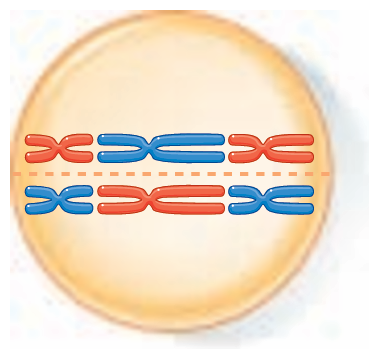
b. meiotic metaphase I
c. meiotic metaphase II
d. could be either mitotic metaphase or meiotic metaphase II
▶️ Answer/Explanation
The correct answer is b. meiotic metaphase I.
The organism’s diploid number is $2n = 6$, meaning there are $3$ pairs of homologous chromosomes.
In the figure, chromosomes are arranged in homologous pairs (bivalents) along the metaphase plate.
There are $3$ pairs visible, totaling $6$ chromosomes aligned in two rows.
In mitotic metaphase, all $6$ chromosomes would align in a single row.
In metaphase II, only $3$ individual chromosomes (the haploid number $n$) would be present.
Since homologous pairs are paired up, this must be metaphase I of meiosis.
Question
▶️ Answer/Explanation
The correct answer is a. the centrosome, composed of centrioles.
In animal cells, the centrosome serves as the primary microtubule-organizing centre ($MTOC$).
It consists of a pair of centrioles surrounded by pericentriolar material.
Microtubules nucleate from this region to form the cell’s cytoskeleton and mitotic spindle.
Chromatin and chromosomes are genetic structures located within the nucleus, not $MTOCs$.
The mitotic spindle is made of microtubules (tubulin), while actin forms microfilaments.
Therefore, only option a correctly identifies the structure and its composition.
Question
▶️ Answer/Explanation
The correct option is c.
Light energy excites electrons which move through the electron transport chain (ETC).
As electrons move, energy is used to pump $H^+$ ions into the thylakoid lumen.
This creates a proton gradient necessary for ATP synthesis via chemiosmosis.
At the end of the chain, electrons are transferred to $\text{NADP}^+$ to form $\text{NADPH}$.
Both $\text{NADPH}$ and the proton gradient are essential products of the light-dependent reactions.
These products then provide the chemical energy and reducing power for the Calvin Cycle.
Question
b. Hydrogen peroxide is formed when a single electron is donated to $O_2$.
c. Cytochrome oxidase is a major source of reactive oxygen species.
d. Strict anaerobes often lack the enzyme(s) superoxide dismutase and/or catalase.
▶️ Answer/Explanation
The “paradox of aerobic life” refers to the fact that oxygen, while essential for energy production, is also inherently toxic.
Organisms that utilize oxygen must possess specialized defense mechanisms to survive its byproduct chemicals.
Strict anaerobes cannot survive in the presence of $O_2$ specifically because they lack protective enzymes.
Superoxide dismutase (SOD) is required to neutralize the superoxide radical ($O_2^{\bullet-}$).
Catalase is necessary to break down hydrogen peroxide ($H_2O_2$) into water and oxygen.
Therefore, the absence of these enzymes in strict anaerobes (Option d) best illustrates why oxygen is lethal to them.
Correct Option: d
Question
b. It synthesizes additional $\text{NADH}$ for the citric acid cycle.
c. It allows for pyruvate to be oxidized in mitochondria.
d. By activating oxidative phosphorylation, it allows for the synthesis of extra $\text{ATP}$.
▶️ Answer/Explanation
The correct answer is a.
In the absence of oxygen, the electron transport chain stops operating.
Glycolysis requires a steady supply of $\text{NAD}^+$ to convert glyceraldehyde-3-phosphate into 1,3-bisphosphoglycerate.
Fermentation reduces pyruvate (or its derivatives) to recycle $\text{NADH}$ back into $\text{NAD}^+$.
This regeneration allows glycolysis to continue producing a net of $2$ $\text{ATP}$ molecules per glucose.
Without this process, the cell’s supply of $\text{NAD}^+$ would be exhausted, halting all $\text{ATP}$ production.
Question
b. At high temperatures, the structural integrity of the enzyme breaks down.
c. At high temperatures, the rate of catalysis stays high and constant; it saturates.
d. At low but increasing temperatures, the rate of collisions between substrate and enzyme molecules increases.
▶️ Answer/Explanation
[Image of enzyme activity vs temperature graph]
Question
▶️ Answer/Explanation
The correct answer is c.
Enzymes are biological catalysts whose activity is highly dependent on their environment.
Fungal amylase and human salivary amylase both catalyze the hydrolysis of starch.
However, they have evolved to function at the specific \(pH\) and temperature of their respective hosts.
Human amylase works best at approximately \(37^\circ\text{C}\) and a near-neutral \(pH\).
Fungal enzymes may have different optimal conditions suited for soil or decaying matter.
Option d is incorrect because enzymes are never independent of environmental conditions.
Question
▶️ Answer/Explanation
The correct answer is c.
An exergonic reaction is defined by a negative change in Gibbs free energy, denoted as \(\Delta G < 0\).
This occurs when the free energy of the products is lower than the free energy of the reactants.
While enthalpy (\(\Delta H\)) and entropy (\(\Delta S\)) contribute to the value of \(\Delta G\), neither alone guarantees an exergonic process.
The relationship is defined by the equation \(\Delta G = \Delta H – T\Delta S\).
Because \(\Delta G\) is negative, these reactions are spontaneous and release energy into the surroundings.
Question
▶️ Answer/Explanation
The correct answer is b.
Enzymes function as biological catalysts by lowering the activation energy ($E_a$) required for a reaction.
They do not change the Gibbs free energy ($\Delta G$) or the equilibrium of a reaction.
Enzymes cannot make a non-spontaneous (endergonic) reaction spontaneous on their own.
They work by stabilizing the transition state, allowing the reaction to proceed faster at lower temperatures.
Many enzymes can bind multiple substrates simultaneously depending on the specific metabolic pathway.
Question
b. reproducing
c. moving
d. growing
▶️ Answer/Explanation
The correct answer is c. moving.
A flagellum is a specialized, whip-like appendage found on many living cells.
Its primary biological function is to provide locomotion (movement).
By rotating or whipping, it allows the cell to navigate through liquid environments.
While the other processes (synthesizing proteins, reproducing, and growing) are essential for life…
…they are not specifically defined or enabled by the presence of a flagellum.
Therefore, based only on the presence of a flagellum, movement is the inferred ability.
Question
b. It is metabolically inactive.
c. It is synthesizing and secreting proteins.
d. It is synthesizing and metabolizing lipids.
▶️ Answer/Explanation
The correct option is d.
The smooth endoplasmic reticulum (SER) lacks ribosomes on its surface.
Its primary function is the synthesis of lipids, including phospholipids and steroids.
It also plays a key role in carbohydrate metabolism and detoxification of drugs.
Cells with extensive SER are typically involved in hormone production or lipid processing.
In contrast, protein synthesis occurs in the rough ER due to the presence of ribosomes.
ATP synthesis is primarily the responsibility of the mitochondria, not the ER.
Question
b. They are building blocks.
c. The surface area of a cell increases as the cube of the linear dimension.
d. The volume of a cell increases to the cube of the linear dimension.
▶️ Answer/Explanation
The correct answer is d.
As a cell grows, its linear dimension $l$ increases.
The surface area ($SA$) is proportional to the square of the linear dimension: $SA \propto l^2$.
The volume ($V$) increases much faster, as the cube of the linear dimension: $V \propto l^3$.
This causes the surface area-to-volume ratio to decrease as cells get larger.
A small ratio makes it difficult for the cell to exchange enough nutrients and waste via the membrane to support its internal volume.
Therefore, cells must remain small to maintain a high $SA:V$ ratio for efficient transport.
Question
b. chloroplasts and mitochondria
c. mitochondria and plasma membrane
d. nucleus and ER
▶️ Answer/Explanation
The correct answer is a. chloroplasts and centrioles.
Chloroplasts are organelles responsible for photosynthesis and are typically found in plant cells but absent in animal cells.
Centrioles are part of the centrosome and are primarily found in animal cells to aid in cell division.
Mitochondria, nuclei, and ER (Endoplasmic Reticulum) are common to both eukaryotic cell types.
The plasma membrane is a universal component of all living cells.
Therefore, identifying these two specific structures allows for the clear differentiation between the two origins.
Question
▶️ Answer/Explanation
The correct answer is d. confocal laser scanning microscope.
This microscope uses a laser to scan specimens labeled with fluorescent dyes.
It captures images from specific depths, known as optical sections.
A pinhole aperture eliminates out-of-focus light, ensuring high-resolution clarity.
Multiple $2D$ scans are digitally stacked to create a $3D$ reconstruction.
Options a, b, and c primarily produce $2D$ images of thin or transparent specimens.
Question
▶️ Answer/Explanation
The correct answer is a. a plant cell.
The presence of mitochondria identifies the cell as eukaryotic, ruling out prokaryotes.
A cell wall is present, which is characteristic of plants, fungi, and bacteria, but not animal cells.
Human fingernail cells (keratinocytes) and sperm cells are animal cells and lack a cell wall.
Prokaryotic cells (Option b) lack membrane-bound organelles like mitochondria.
Therefore, a cell with both a cell wall and mitochondria must be a plant cell.
Question
b. microfilaments, intermediate filaments, and microtubules
c. microtubules, cilia, and microfilaments
d. flagella, microtubules, and intermediate filaments
▶️ Answer/Explanation
The correct option is b.
The eukaryotic cytoskeleton is composed of three primary types of protein fibers.
Microfilaments (actin filaments) provide shape and enable cell movement.
Intermediate filaments offer mechanical strength and anchor organelles.
Microtubules act as tracks for transport and are essential for cell division.
Cilia and flagella are external organelles that contain microtubules but are not the cytoskeleton itself.
Question
▶️ Answer/Explanation
The correct answer is b.
After synthesis, many proteins travel to the Golgi complex for post-translational modification.
In this organelle, enzymes add lipids (lipoproteins) or carbohydrates (glycoproteins) to the protein structure.
These modifications act as “tags” that determine the protein’s final destination.
Option a and d are incorrect because proteins are typically synthesized at the rough ER, not transported to it later.
Option c is incorrect because secreted proteins move through the endomembrane system, not directly through the cytosol.
Question
b. A plasmodesma that helps cells communicate their activities
c. A desmosome forming a buttonlike spot or a belt to keep cells joined
d. A gap junction that communicates between cells of the stomach lining and its muscular wall
▶️ Answer/Explanation
The correct answer is a.
Tight junctions create a water-tight seal between adjacent animal cells.
They prevent extracellular fluid and digestive contents from leaking between cells.
This is achieved through the direct fusion of specialized transmembrane proteins.
Desmosomes (c) act like rivets for mechanical strength but do not provide a leak-proof seal.
Gap junctions (d) and plasmodesmata (b) are designed for intercellular communication, not sealing.
Therefore, tight junctions are essential for maintaining the integrity of the digestive tract lining.
Question
b. lysosome, ribosome, Golgi complex, and mitochondria
c. ribosome, rough ER, mitochondria, and lysosome
d. lysosome, mitochondria, Golgi complex, and secretory vesicles
▶️ Answer/Explanation
The correct option is a.
Proteins are first synthesized by ribosomes located on the rough ER.
These proteins are then transported to the Golgi complex for modification and sorting.
Finally, the processed proteins are packaged into secretory vesicles.
These vesicles fuse with the plasma membrane to release the proteins outside the cell.
Other organelles like mitochondria provide energy but are not direct “manufacturing” structures.
Lysosomes are involved in degradation rather than the secretion pathway.
Question
▶️ Answer/Explanation
The correct answer is c. ribosomes.
$\text{Archaea}$ are prokaryotic organisms, meaning they lack a nuclear envelope.
They do not possess a complex cytoskeleton containing eukaryotic microtubules.
Plasmodesmata are specialized channels found only in plant cells (Eukaryotes).
Ribosomes are universal structures required by all living cells for protein synthesis.
Archaeal ribosomes are $70\text{S}$ in size, similar to bacteria but with unique protein sequences.
Therefore, ribosomes are the only structure listed that is present in $\text{Archaea}$.
Question
▶️ Answer/Explanation
The correct option is C.
Enzymes are proteins, and secretory proteins are synthesized by ribosomes on the Rough ER.
These proteins are then transported via vesicles to the next destination.
The Golgi apparatus modifies, sorts, and packages these proteins for secretion.
Since the pancreas is a secretory organ, it requires a highly developed endomembrane system.
Options A and B are incorrect as they include chloroplasts, which are only found in plant cells.
Option D is less likely because lysosomes are for intracellular digestion, not extracellular secretion.
Question
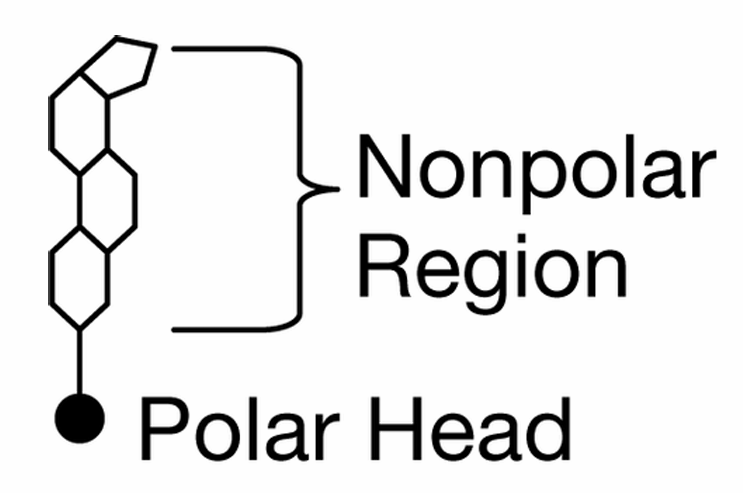
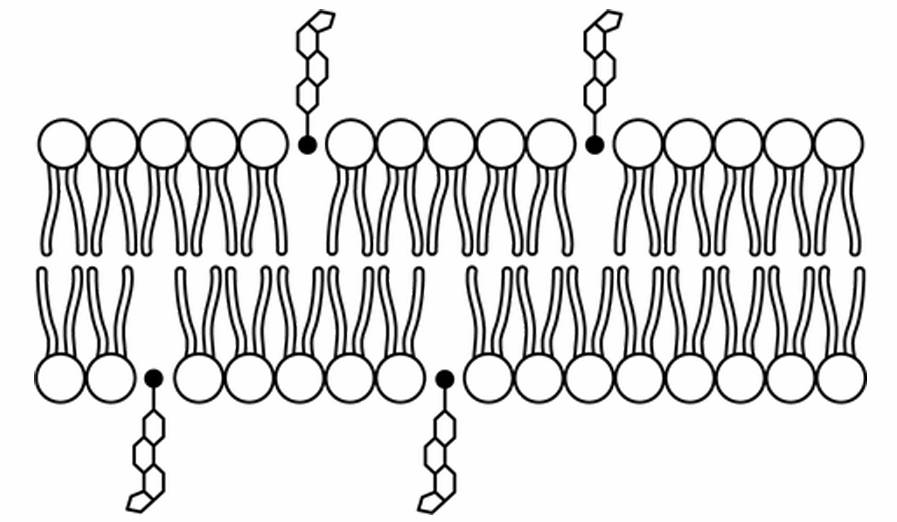
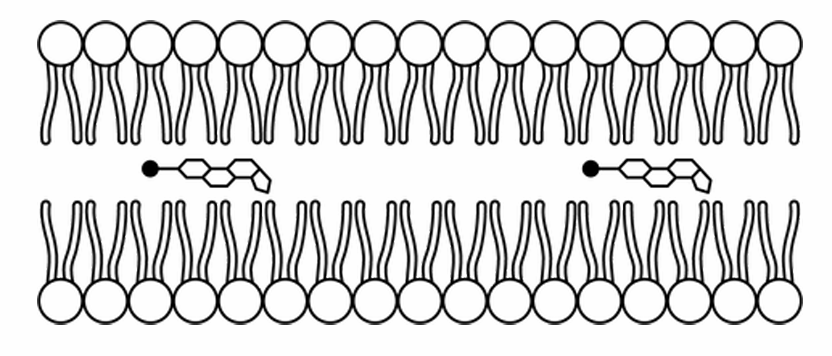
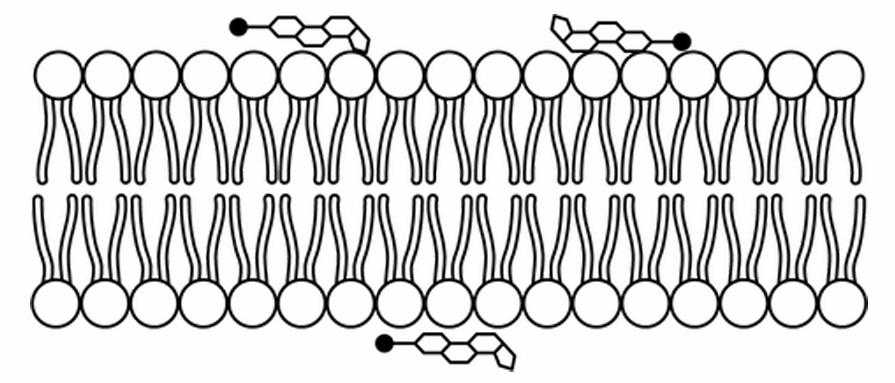
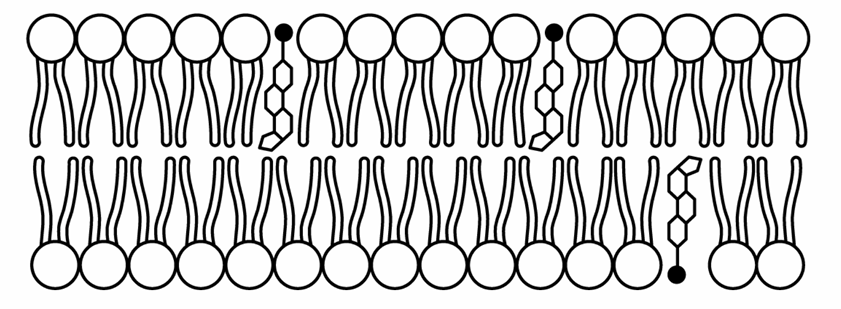
▶️ Answer/Explanation
The correct option is D.
Phospholipids are amphipathic, containing hydrophilic phosphate heads and hydrophobic fatty acid tails.
Cholesterol is also amphipathic, possessing a small polar hydroxyl head and a large nonpolar hydrocarbon body.
Thermodynamically, the polar head of cholesterol must align with the polar heads of the phospholipids to interact with water.
The nonpolar region of cholesterol inserts itself between the hydrophobic tails of the bilayer.
Model D correctly depicts the cholesterol heads pointing toward the aqueous environment, integrated into the surface.
This orientation allows cholesterol to regulate membrane fluidity by preventing tight packing of tails.
Question
B. lysosomes
C. ribosomes
D. chloroplasts
▶️ Answer/Explanation
The correct answer is not explicitly listed among the primary options, as lipid synthesis primarily occurs in the Smooth Endoplasmic Reticulum (SER).
However, looking at the provided choices:
Vacuoles are used for storage of water, nutrients, or waste.
Lysosomes contain digestive enzymes to break down macromolecules.
Ribosomes are the sites of protein synthesis, not lipids.
Chloroplasts are the site of photosynthesis and do synthesize some specific membrane lipids.
In most introductory biology contexts, if the Smooth ER is missing, the question may imply a defect in an organelle with metabolic capabilities like the chloroplast (in plants).
If this is a multiple-choice error, the Smooth ER is the standard biological answer for general lipid synthesis.
Question
B. Membrane-bound organelles allow the cell to compartmentalize and specialize.
C. Membrane-bound organelles allow the cell to produce $ATP$ in any location.
D. Membrane-bound organelles allow the cell to evolve faster.
▶️ Answer/Explanation
The correct answer is B.
Membranes create distinct internal environments within the cell.
This compartmentalization allows incompatible chemical reactions to occur simultaneously.
Specific enzymes and substrates are concentrated in specialized areas, like the lysosome or mitochondria.
It increases metabolic efficiency by preventing interference between different pathways.
Other options like $ATP$ production (C) are restricted to specific organelles rather than “any location.”
Faster reproduction (A) and evolution (D) are not direct functions of internal membranes.
Question
A. Cell wall
B. Mitochondria
C. Plasma membrane
D. Chloroplast
E. Nucleus
F. Endoplasmic reticulum
G. Ribosome
H. (Central) Vacuole
I. Lysosome
J. Golgi apparatus
K. Vesicle
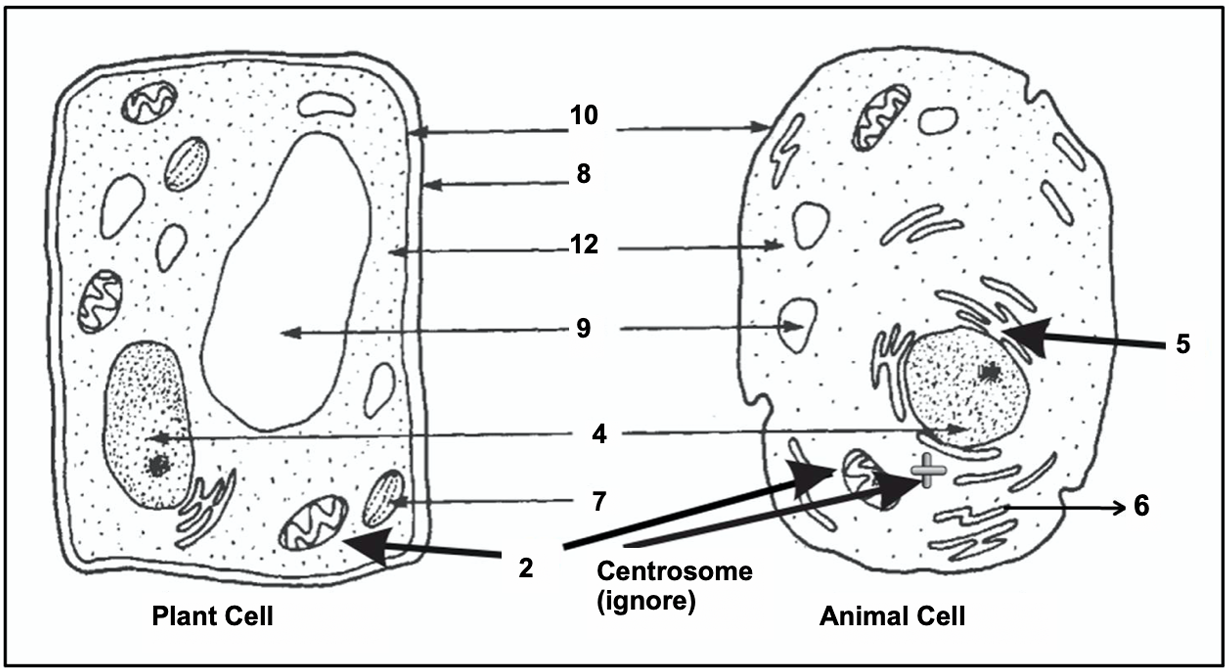
▶️ Answer/Explanation
$A$. G. Ribosome
Ribosomes are the sites of protein synthesis.
They translate genetic information (mRNA) into polypeptide chains.
They can be found floating freely in the cytoplasm or attached to the rough Endoplasmic Reticulum.
$A$. B. Mitochondria
Mitochondria are known as the “powerhouse” of the cell.
They perform cellular respiration to generate $ATP$ (energy).
The inner membrane is folded into cristae to increase surface area for reactions.
$A$. I. Lysosome
Lysosomes are the cell’s waste disposal system.
They contain acidic hydrolytic enzymes.
These enzymes digest biomolecules, old organelles, and invading pathogens.
$A$. E. Nucleus
The nucleus houses the cell’s DNA (chromatin/chromosomes).
It regulates gene expression and cell division.
It is surrounded by a double membrane called the nuclear envelope.
$A$. F. Endoplasmic reticulum
The ER is a network of membranes involved in synthesis.
Rough ER (studded with ribosomes) produces and processes proteins.
Smooth ER synthesizes lipids and detoxifies chemicals.
$A$. J. Golgi apparatus
The Golgi apparatus acts as the cell’s “post office”.
It receives proteins from the ER, modifies them (e.g., glycosylation), and packages them into vesicles.
These vesicles are then transported to their specific destinations.
$A$. D. Chloroplast
Chloroplasts are found in plant cells and algae.
They contain chlorophyll which captures light energy.
This energy is used to convert $CO_2$ and water into glucose (photosynthesis).
$A$. A. Cell wall
The cell wall is a rigid outer layer found in plants, fungi, and bacteria.
In plants, it is composed mainly of cellulose.
It provides structural support and protection against mechanical stress.
$A$. H. (Central) Vacuole
Plant cells have a large central vacuole that takes up most of the cell’s volume.
It stores water, nutrients, and waste products.
The water pressure inside (turgor pressure) keeps the plant cell rigid and upright.
$A$. C. Plasma membrane
Also known as the cell membrane, it defines the cell boundary.
It is a phospholipid bilayer with embedded proteins (fluid mosaic model).
It is semi-permeable, regulating the transport of substances in and out of the cell.
Question
(B) Nutritional disease
(C) Deficiency in iron
(D) Mutation of the tumour suppressor gene
▶️ Answer/Explanation
The correct answer is (B) Nutritional disease.
Iodine is an essential micronutrient obtained through the diet.
It is a key structural component of the hormone thyroxin (\(T_4\)).
A lack of iodine in the diet leads to a deficiency-related nutritional disease.
During pregnancy, this deficiency impairs the development of the foetal skeletal and nervous systems.
This condition is historically referred to as congenital iodine deficiency syndrome.
Options (A) and (D) are incorrect as the cause is environmental/dietary, not chromosomal.
Option (C) is incorrect because the text explicitly identifies iodine, not iron, as the missing element.