
▶️ Answer/Explanation
Detailed solution
(a) Role of antibodies and concentration changes:
- Role: Specific antibodies bind to the antigens on the surface of S. pyogenes. This can lead to agglutination (clumping together of bacteria), which prevents them from spreading and makes it easier for phagocytes to locate and engulf them.
- Opsonization: Antibodies coat the bacteria, serving as markers that enhance engulfment by macrophages and neutrophils (phagocytosis).
- Neutralization: Antibodies may bind to toxins produced by the bacteria or block the adhesion molecules the bacteria use to attach to host cells, thereby neutralizing the threat.
- Concentration Change (Timeline):
- Lag Phase: Immediately after infection, there is a delay (lag phase) where antibody concentration remains low while B cells detect the antigen and undergo clonal expansion.
- Log Phase: The concentration of antibodies (IgM followed by IgG) increases rapidly as differentiated plasma cells begin mass secretion.
- Peak & Decline: The concentration reaches a peak as the infection is cleared. Once the bacteria are eliminated, antibody levels decline, though they remain above baseline due to the persistence of memory cells.
(b) Justification for the placebo recipient:
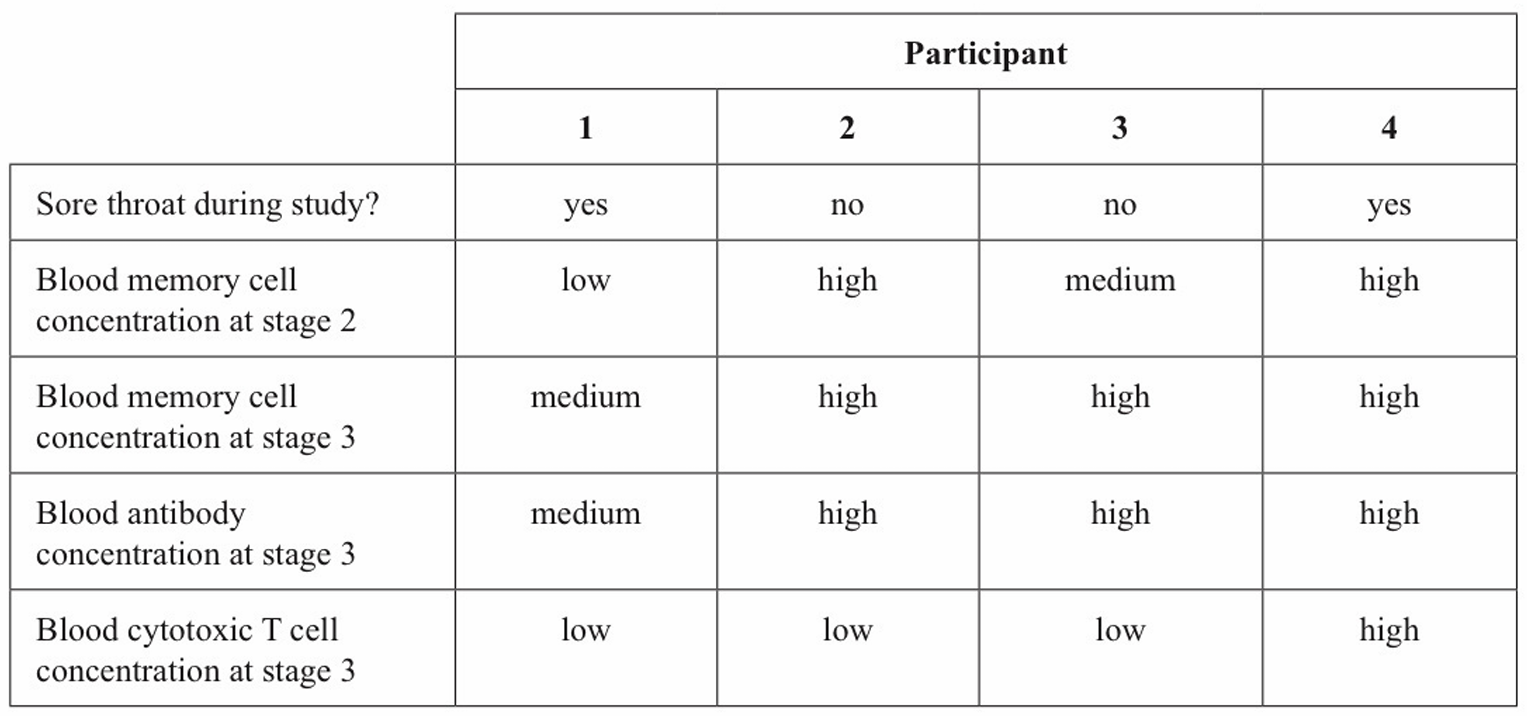
Participant 1 is the most likely to have received the placebo.
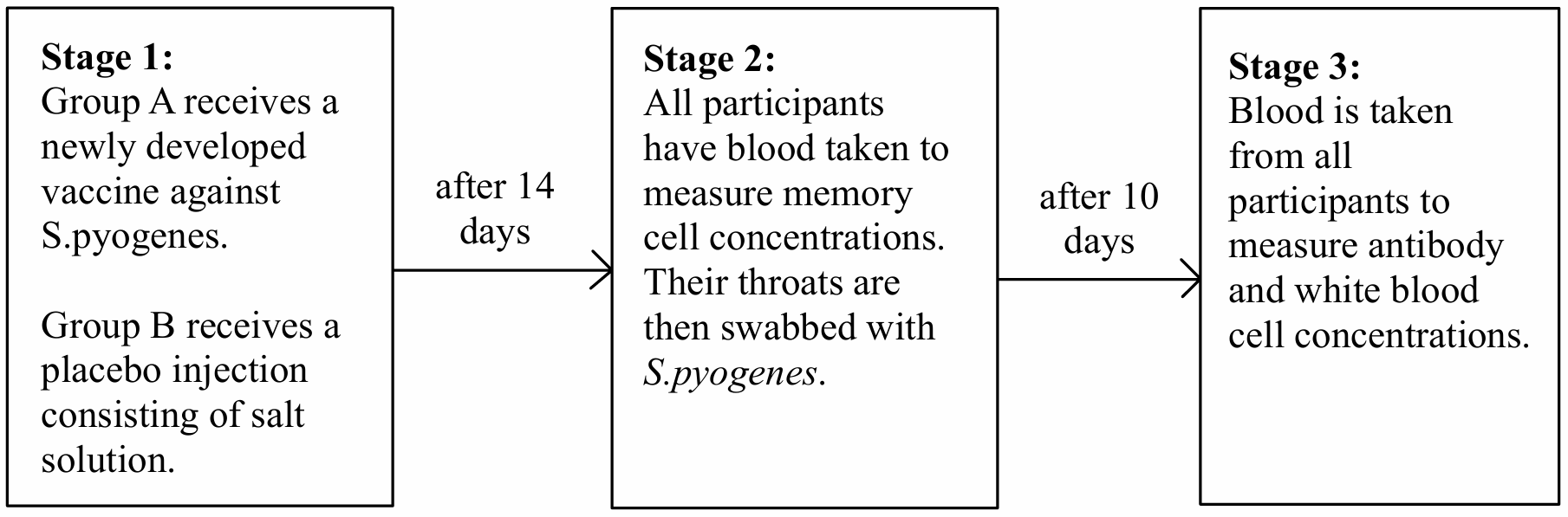
- Stage 2 Evidence (Key Justification): At Stage 2, which occurs $14$ days after the initial injection but before the throat swab with bacteria, Participant 1 has a low memory cell concentration.
- This indicates that the initial injection did not provoke an immune response or the creation of immunological memory, which is characteristic of a placebo (salt solution) rather than a vaccine. Conversely, Participants 2 and 4 show “high” memory cell concentrations at this stage, indicating a successful response to a vaccine.
- Symptom Evidence: Participant 1 developed a “sore throat,” indicating that they were susceptible to the infection when exposed to S. pyogenes in Stage 2, which aligns with a lack of prior protection.
- Stage 3 Response: The increase in memory cells and antibodies to “medium” at Stage 3 represents a primary immune response triggered by the actual infection (the swab) rather than a secondary response to vaccination.