Pre AP Biology -ECO 2.3 Food Webs and Transfer of Energy in Ecosystems- MCQ Exam Style Questions -New Syllabus 2025-2026
Pre AP Biology -ECO 2.3 Food Webs and Transfer of Energy in Ecosystems- MCQ Exam Style Questions – New Syllabus 2025-2026
Pre AP Biology -ECO 2.3 Food Webs and Transfer of Energy in Ecosystems- MCQ Exam Style Questions – Pre AP Biology – per latest Pre AP Biology Syllabus.
Question
▶️ Answer/Explanation
The correct answer is c.
A grazing food web is defined by its start with living photosynthetic producers.
Primary consumers (herbivores) must be present to graze upon these living plants.
Secondary consumers (carnivores) are needed to represent the higher trophic levels.
Options including detritivores or decomposers refer to the detrital food web.
In a grazing web, energy flows from producers $\rightarrow$ herbivores $\rightarrow$ carnivores.
Including all three groups ensures the experimental model mimics natural energy transfer.
Question

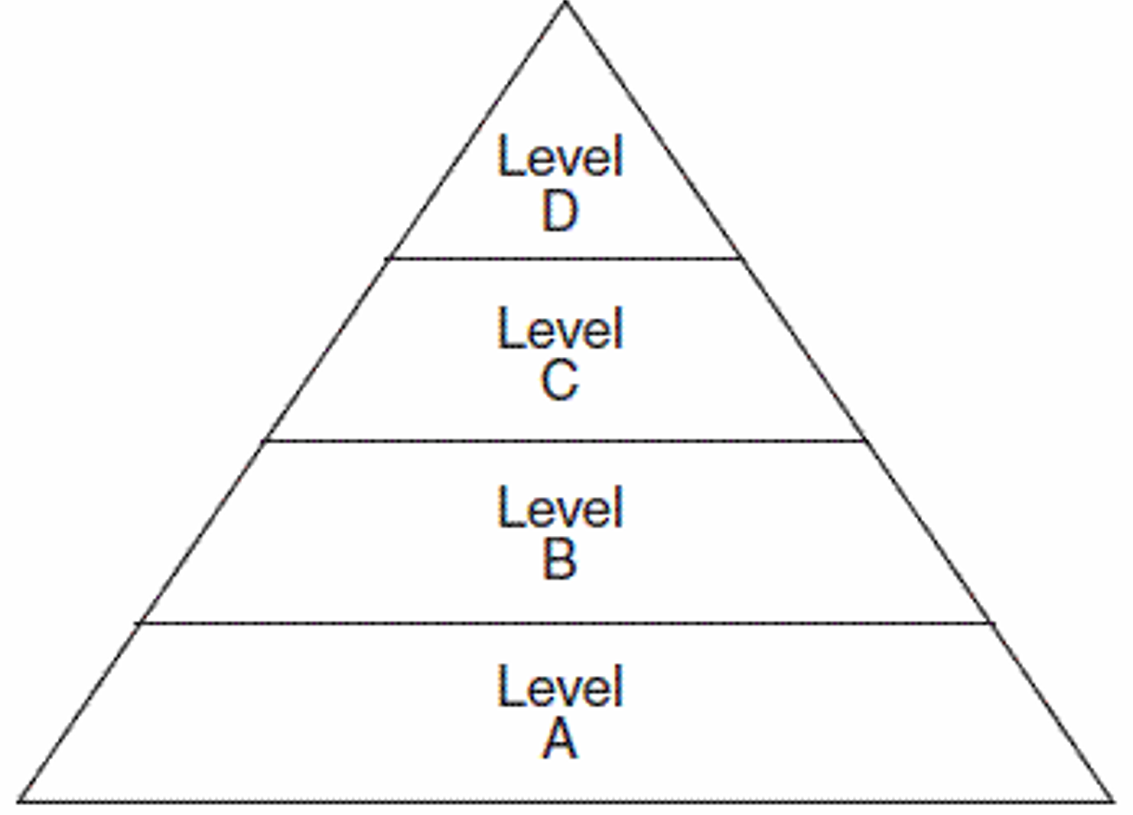
B. the Sun.
C. Level B.
D. Level D.
B. \(20,000\) ; \(180,000\)
C. \(100,000\) ; \(100,000\)
D. \(190,000\) ; \(10,000\)
▶️ Answer/Explanation
A: B. the Sun.
Level A is at the bottom of the pyramid, representing the producers.
Producers are autotrophs that synthesize their own food.
They utilize light energy to power photosynthesis.
Thus, the original source of energy is the Sun.
A: B. \(20,000\) ; \(180,000\)
According to the \(10\%\) rule, only \(10\%\) of energy transfers to the next level.
Energy transferred to Level D \(= 200,000 \times 0.10 = 20,000 \text{ J}\).
The remaining \(90\%\) is lost as heat or waste.
Energy lost \(= 200,000 – 20,000 = 180,000 \text{ J}\).
Question

▶️ Answer/Explanation
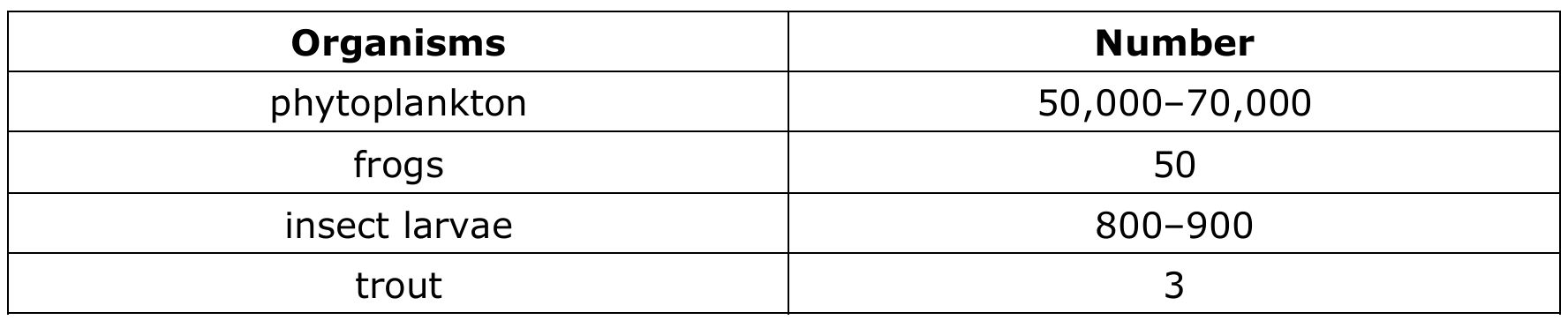
Phytoplankton are producers that convert solar energy into chemical energy via photosynthesis.
In an ecological pyramid, producers must have the largest biomass and population to support higher levels.
As energy moves up the food chain (from larvae to frogs to trout), approximately $90\%$ of energy is lost as heat.
Because only $10\%$ of energy is transferred to each succeeding level, fewer organisms can be supported at the top.
Therefore, a massive base of phytoplankton is required to sustain a very small number of apex predators like trout.
Question
A. 
B. 
C. 
D. 
▶️ Answer/Explanation
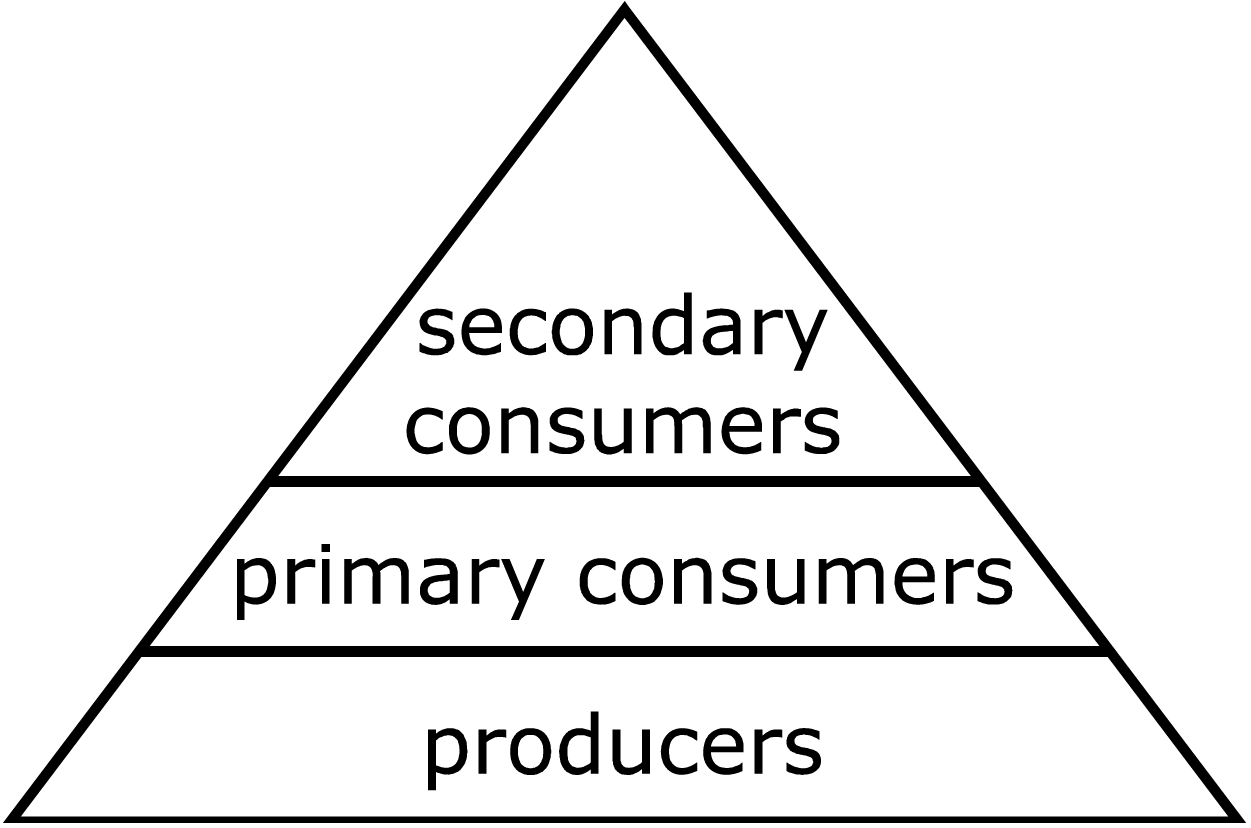
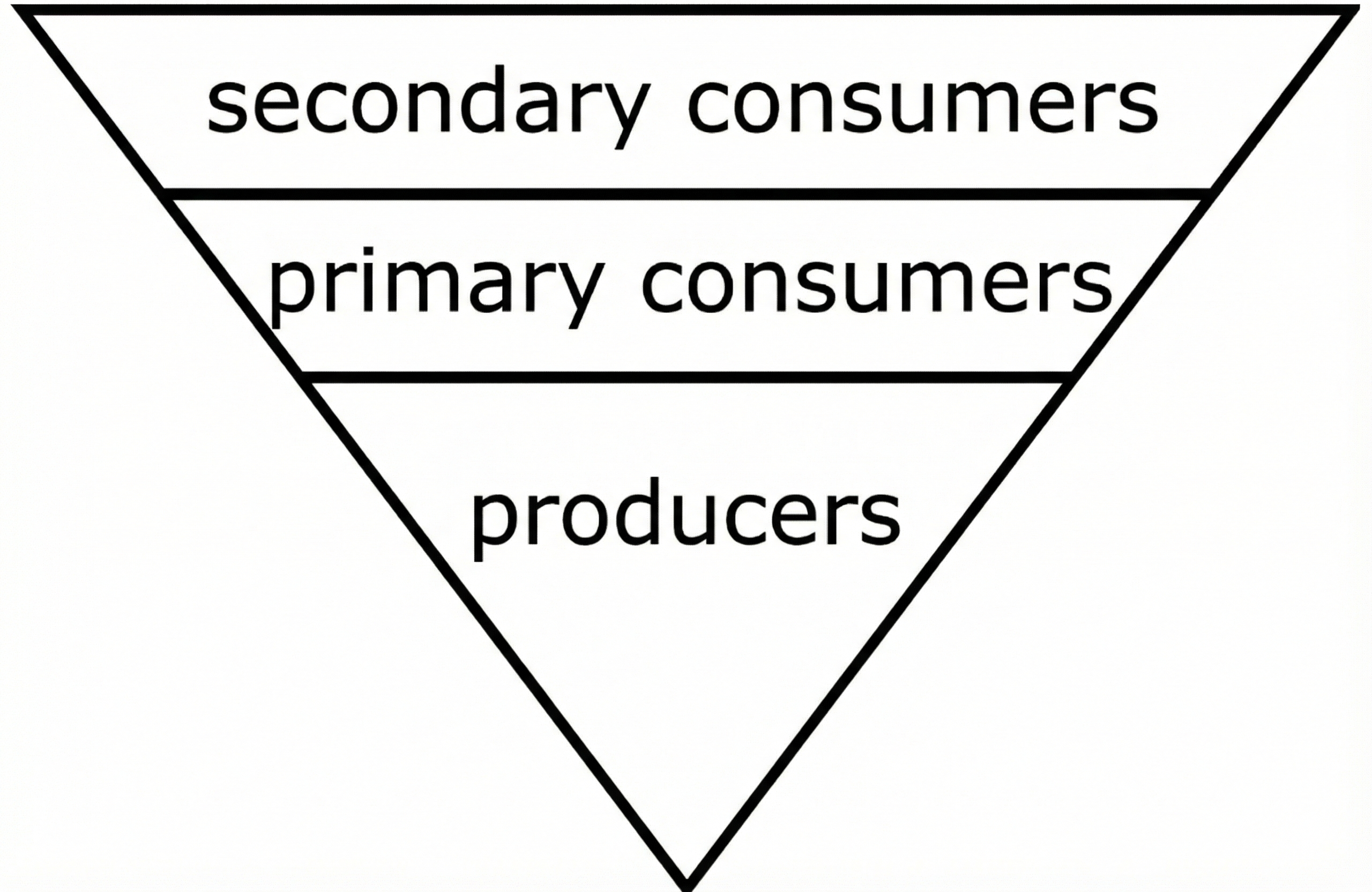
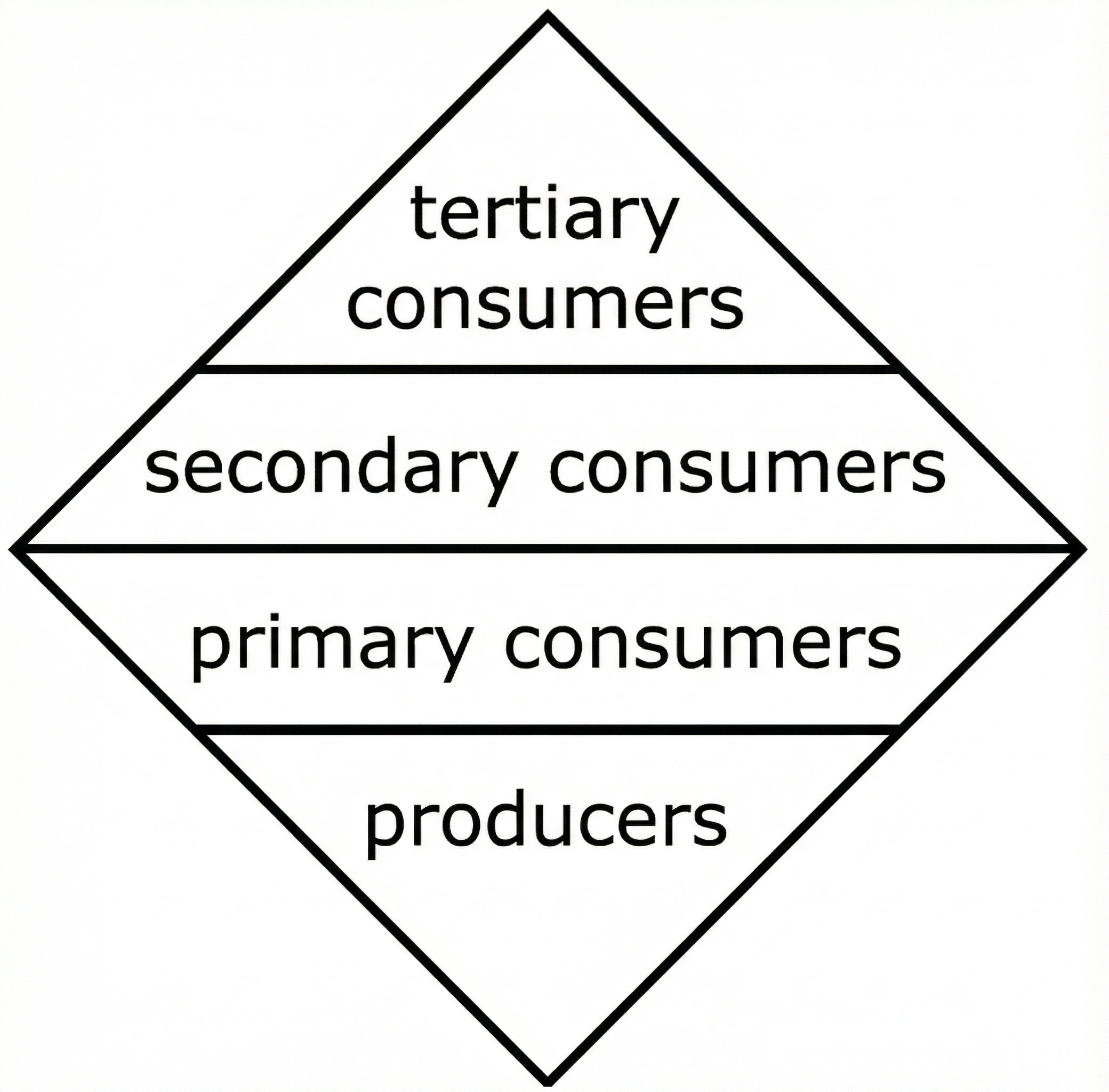
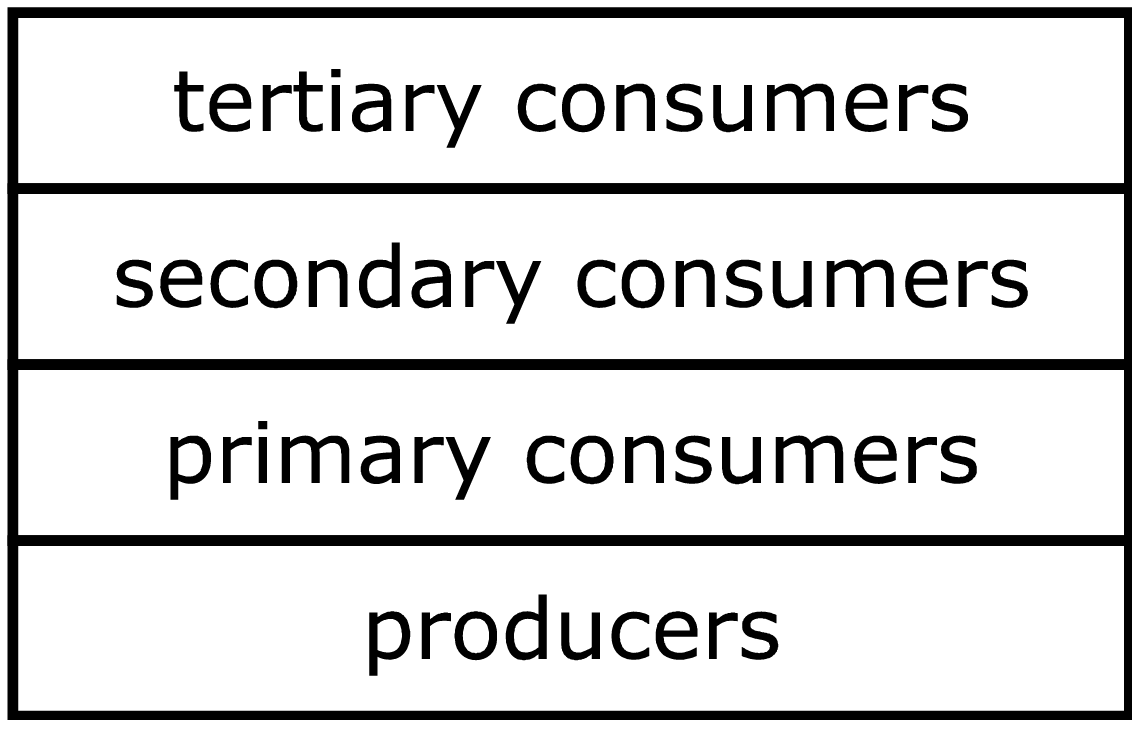
Energy transfer in an ecosystem is always inefficient, with only about $10\%$ of energy moving to the next level.
Producers must contain the most energy to support the subsequent trophic levels.
As energy is lost as heat and through metabolic processes, each higher level receives significantly less energy.
Model B represents this “Energy Pyramid” where the base (producers) is the largest.
The narrowing shape reflects the decreasing energy available to primary, secondary, and tertiary consumers.
A stable ecosystem requires this broad base of producers to maintain higher-level consumers.
Question
The Brackish Life
Finger mullets are small fish that play a critical role in North Carolina’s estuary ecosystems. Estuaries are ecosystems of change, and life is not always easy for finger mullets there.
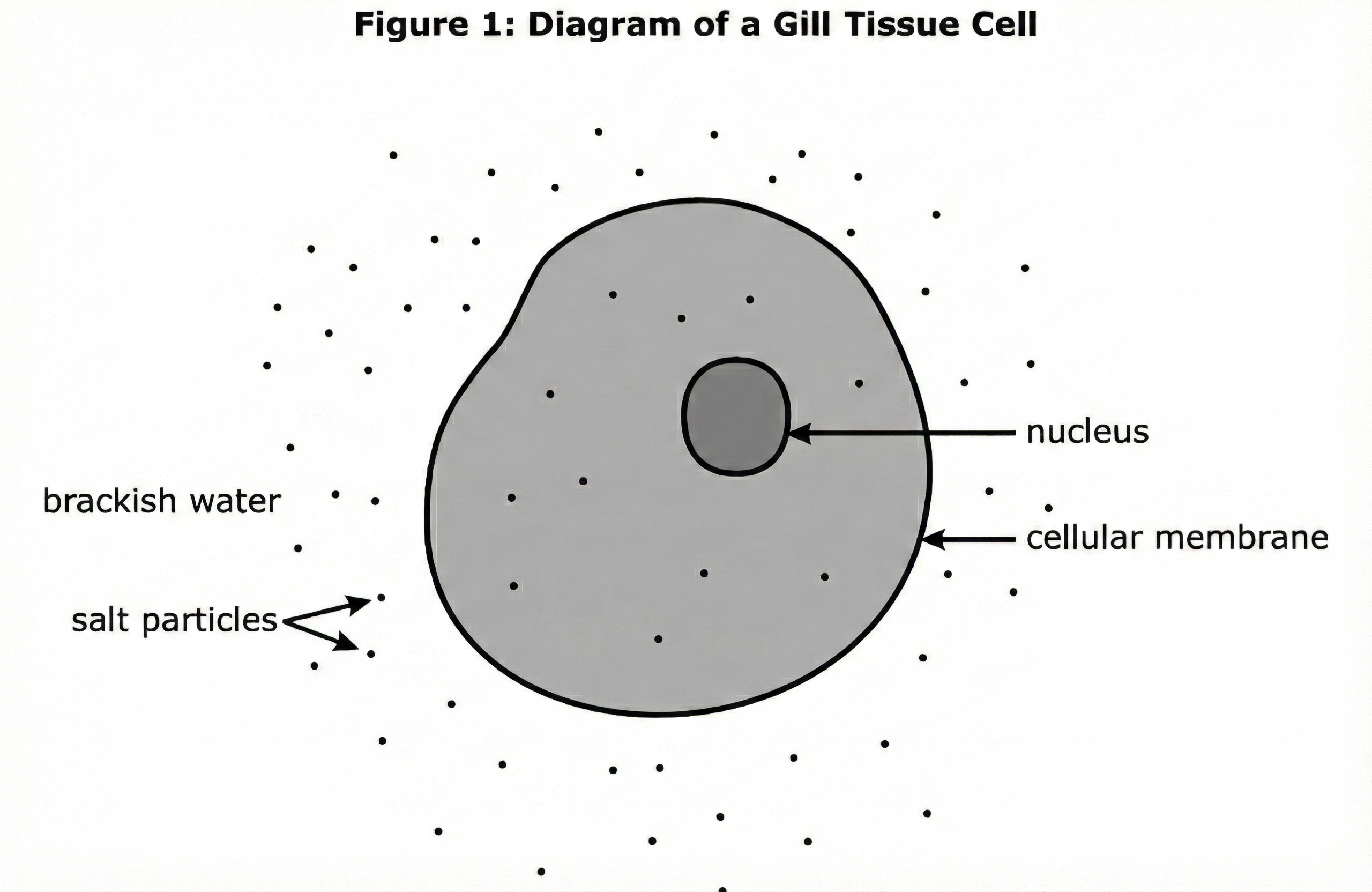
An estuary is a brackish water environment. Salinity changes in response to tidal changes. At high tide, the estuary is filled with more ocean water, and the salinity increases. The salinity decreases at low tide, when the ocean waters recede and fresh water from the mouth of the river is allowed in. Organisms that live in this environment are specially adapted for constantly changing salinity levels. When the salinity of the water changes, the cells of the organisms that live there must adjust by either taking in water or releasing it. Figure 1 represents a cell from the gill tissue of a finger mullet in a high-salinity environment.

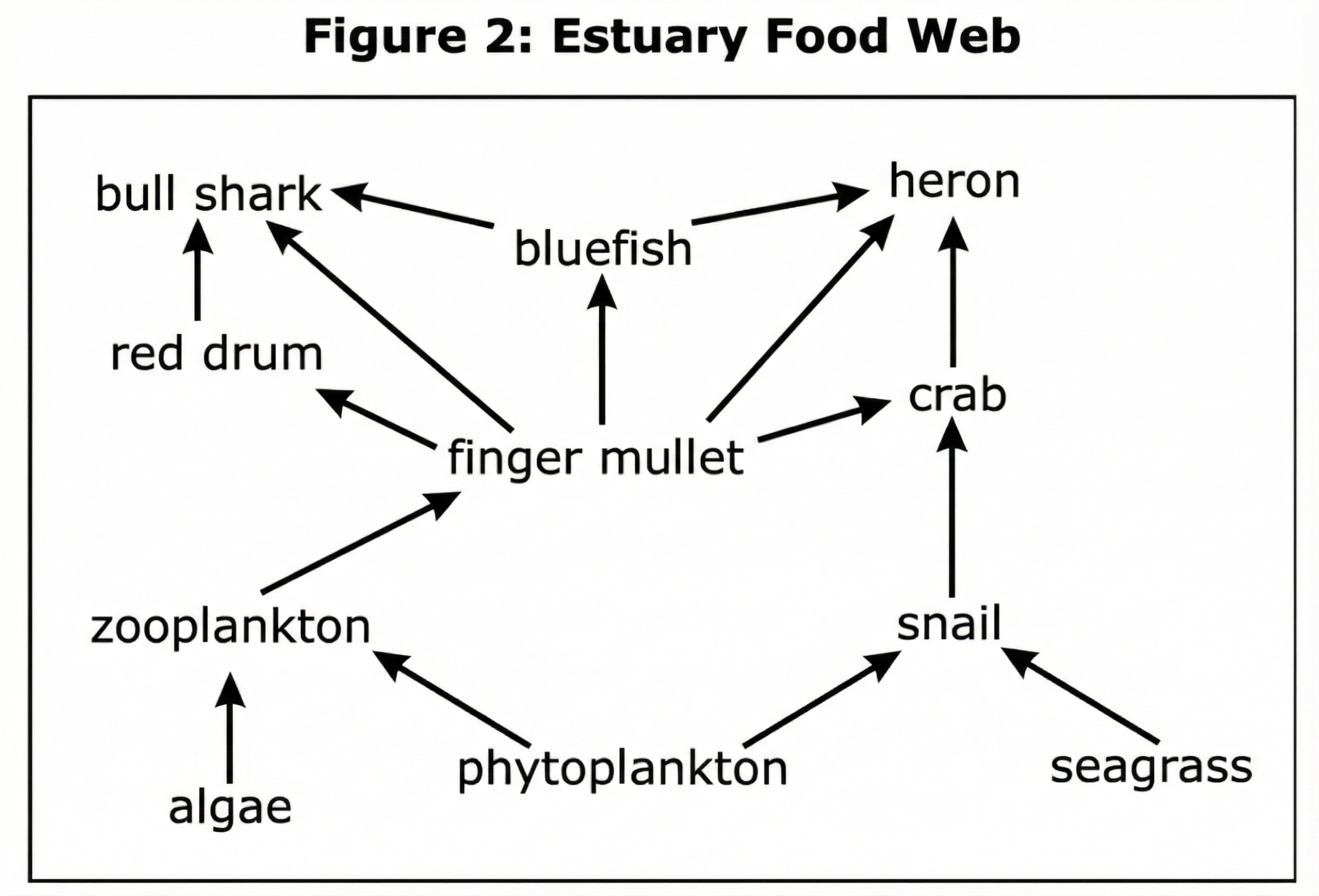
Along with salt and other nutrients, the tides also sweep organisms into and out of the estuaries. Small invertebrates and fish are carried with the currents, and predators often enter estuary areas as they follow the food. This food web represents some of the complicated relationships among estuary organisms, with the finger mullet at its center.

Q. How does the cellular membrane of the finger mullet’s cell contribute to homeostasis within the cell?
- (A) It serves as a solid membrane, allowing no materials to pass into and out of the cell.
- (B) It serves as an impermeable membrane, allowing only water to move into and out of the cell.
- (C) It serves as a selectively permeable membrane, allowing water and other materials to move into and out of the cell as needed.
- (D) It serves as a permeable membrane, allowing any material to easily pass into and out of the cell, whether needed or not.
Q. Place the phrases to correctly complete the statement, so that it explains how the cellular membrane shown in Figure 1 helps support the finger mullet in a high-salinity environment.
“The cell membrane ____ by allowing water ____.”
- (A) maintains homeostasis; to enter the cell.
- (B) maintains homeostasis; to exit the cell.
- (C) disrupts homeostasis; to enter the cell.
- (D) disrupts homeostasis; to exit the cell.
Q. A researcher hypothesizes that water will move out of the cell more quickly when the concentration of salt in the water outside the cell is greater. Which experiment would best test this hypothesis?
- (A) A researcher places three cells of the same type in varying concentrations of salt water. Then the researcher measures the size of each cell every minute during a 5-minute period of time.
- (B) A researcher places three cells of the same type in the same concentration of salt water. Then the researcher measures the size of each cell every minute during a 5-minute period of time.
- (C) A researcher places cells from three different fish in varying concentrations of salt water. Then the researcher measures the size of each cell at the end of a 5-minute period of time.
- (D) A researcher places cells from three different fish in the same concentration of salt water. Then the researcher measures the size of each cell at the end of a 5-minute period of time.
Q. Based on the food web (Figure 2), what effect will a decrease in the algae population have on the finger mullet population in the estuary?
- (A) The finger mullet population will increase because the zooplankton population will decrease.
- (B) The finger mullet population will decrease because the zooplankton population will increase.
- (C) The finger mullet population will decrease because the zooplankton population will decrease.
- (D) The finger mullet population will stay the same because algae is not a direct food source for the mullets.
Q. Based on the food web (Figure 2), which statements are true? Select (click) three true statements.
- (1) The red drum only receives energy by consuming finger mullets.
- (2) The seagrass obtains its energy from the phytoplankton and algae.
- (3) The phytoplankton produce oxygen and glucose the heron needs to survive.
- (4) The phytoplankton produce carbon dioxide and glucose the algae need to survive.
- (5) The bull shark and heron populations have the most energy available because they are at the top of the food chain.
- (6) The phytoplankton population has the most energy available because it is at the bottom of the food chain.
▶️ Answer/Explanation
A. Answer: C
The cell membrane contributes to homeostasis by acting as a selectively permeable barrier.
This means it regulates the passage of substances, allowing essential materials like water and nutrients to enter while keeping harmful substances out.
Option A is incorrect because a completely solid membrane would prevent necessary exchanges.
Option B is incorrect because cells need to transport ions and nutrients, not just water.
Option D is incorrect because unregulated transport would disrupt the internal balance.
A. Answer: B
The correct statement is: “The cell membrane maintains homeostasis by allowing water to exit the cell.”
In a high-salinity environment (hypertonic solution), the salt concentration outside the cell is higher than inside.
Water naturally moves from an area of high water concentration (inside) to low concentration (outside) via osmosis.
By allowing water to exit, the cell balances its internal concentration with the environment, preventing damage.
A. Answer: A
To test the hypothesis, the experiment must vary the salt concentration (the independent variable) while keeping the cell type constant.
Option A correctly uses the same cell type across different concentrations and measures size frequently to determine the speed of water movement.
Option B is incorrect because it uses only one concentration, so no comparison can be made.
Options C and D introduce a confounding variable (different fish species) and fail to measure the rate of change over time.
A. Answer: C
The food web shows a direct energy flow: Algae → Zooplankton → Finger Mullet.
If the algae population decreases, the zooplankton will have less food available, causing their population to decline.
With fewer zooplankton to eat, the finger mullet population will also decrease due to a lack of food resources.
This illustrates the “bottom-up” effect where changes at the producer level impact all higher consumer levels.
A. Answer: Statements 1, 3, and 6
Statement 1: The food web diagram shows only one arrow pointing to the red drum, coming from the finger mullet, meaning it is its sole energy source.
Statement 3: Phytoplankton are producers that create glucose and oxygen through photosynthesis; these products support the entire ecosystem, including the heron.
Statement 6: Energy is highest at the producer level (phytoplankton) and decreases by approximately 90% at each trophic level as heat.
Statements 2, 4, and 5 are false because seagrass is a producer (not consumer), algae produce their own glucose, and top predators have the least available energy.