
▶️ Answer/Explanation
1.
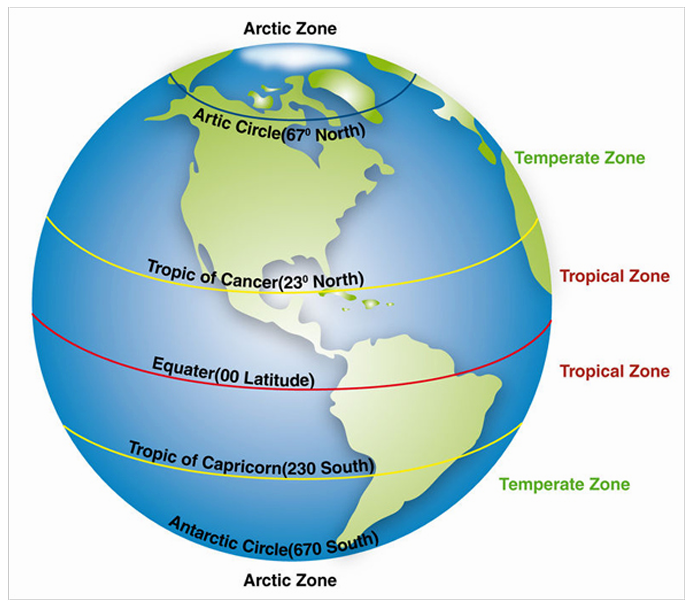
Terrestrial biomes include all the land areas on Earth where organisms live. Examples include tundras, temperate forests and grasslands, chaparral, temperate and tropical deserts, and tropical forests and grasslands .
Explanation: Terrestrial biomes are classified by geographic locations and the abiotic factors that shape the unique ecological communities. Two major abiotic factors that help define terrestrial biomes are climate (temperature, precipitation) and soil type.
2.
Climate is the average weather in an area over a long period of time, whereas weather refers to the conditions of the atmosphere from day to day.
Explanation: Climate represents the long-term patterns and statistical averages of moisture and temperature, while weather represents the immediate, daily state of the atmosphere.
3.
The amount of moisture depends on both precipitation and evaporation. Precipitation increases moisture, while evaporation decreases moisture.
Explanation: This balance determines the classification of climates (e.g., arid vs. humid). In the hydrologic cycle, water is transferred and stored, driven by energy from the sun .
4.
Climate determines the growing season and soil quality, which affect the five basic needs of plants: air, warmth, sunlight, water, and nutrients .
Explanation: Species have a range of tolerance for abiotic resources such as sunlight, nutrients, and temperature. These factors define the ecological niche and the productivity of the community .
5.
Plants grow best in soil that contains plenty of nutrients and organic matter, which are added when plant litter and dead organisms decompose. Decomposition rates are climate-dependent; temperate climates typically offer the most balanced environment for nutrient accumulation .
Explanation: Elements that are building blocks of macromolecules are transported from abiotic to biotic systems through nutrient cycles. Availability of resources like nitrates in soil can be a limiting factor for plant growth.