
▶️ Answer/Explanation
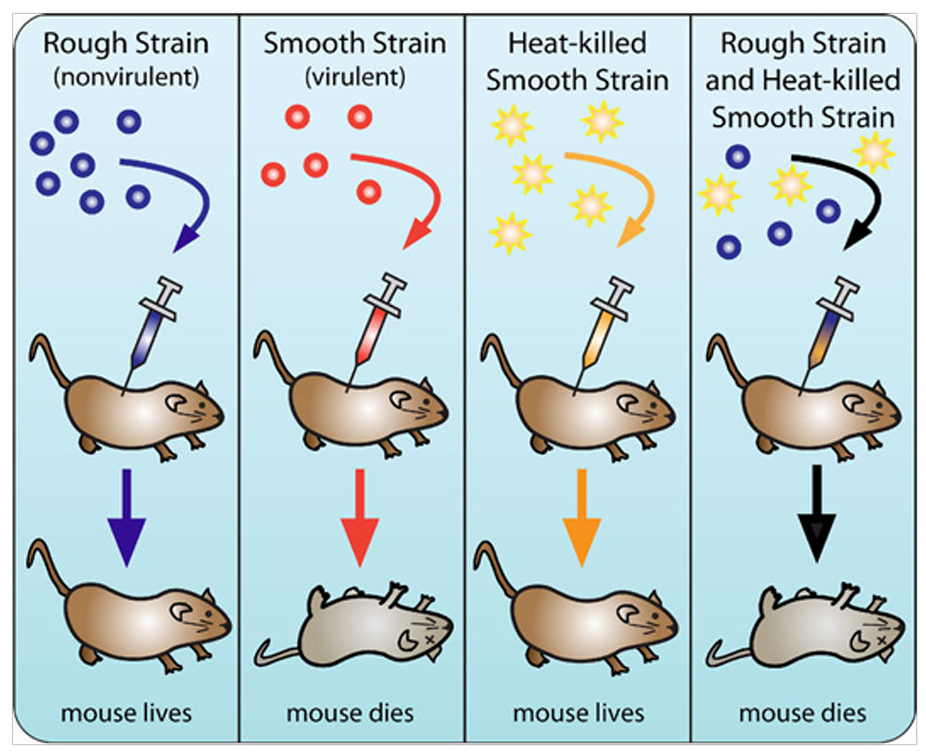
1. Answer: The mice were killed by the live S (smooth) strain bacteria and the mixture of live R (rough) strain with heat-killed S-strain bacteria.
Explanation: Griffith’s research identified the S-strain as virulent. While the heat-killed S-strain alone was harmless, mixing it with the live R-strain resulted in a lethal combination.
2. Answer: They killed the mice because a “substance” (later identified as DNA) was transferred from the dead S-strain to the live R-strain, transforming the R-strain into a deadly version.
Explanation: This demonstrates that DNA is the genetic material found in all living organisms. The R-strain acquired heritable genetic information that changed its phenotype to become virulent.
3. Answer: Viruses are not considered cells because they are basically DNA inside a protein coat and cannot reproduce without a host cell.
Explanation: Structurally, viruses lack the ability to perform reactions that require energy, such as replicating their own genetic material. They must hijack the cellular machinery of a host to produce viral proteins and genomes.
4. Answer: Hershey and Chase identifies DNA as the specific molecule that viruses insert into bacteria to reproduce.
Explanation: By using radioactive labels, they confirmed that DNA—not protein—is the genetic material passed into the cell to direct viral replication. This supports the enduring understanding that the molecular structure of DNA enables its function of storing life’s genetic information.
5. Answer: The term “transformation” is appropriate because the harmless R-strain bacteria were physically and genetically changed into a virulent form.
Explanation: In biology, this refers to a heritable change in the DNA sequence. The bacteria’s characteristics were transformed as they expressed new proteins from the acquired DNA.