
▶️ Answer/Explanation
(a)
Translation is the process by which the genetic code carried by the mature mRNA is decoded into a specific sequence of amino acids to form a polypeptide. This occurs at the ribosome in the cytoplasm.
The process involves the following steps:
- Initiation: The mRNA binds to the ribosome. The ribosome scans for the start codon (AUG) to begin the process.
- Elongation: tRNA molecules transport specific amino acids to the ribosome. Each tRNA has an anticodon that is complementary to a specific codon on the mRNA. As the ribosome moves along the mRNA, it catalyzes the formation of peptide bonds between adjacent amino acids.
- Termination: This continues until a stop codon is reached, at which point the polypeptide chain is released.
(b)
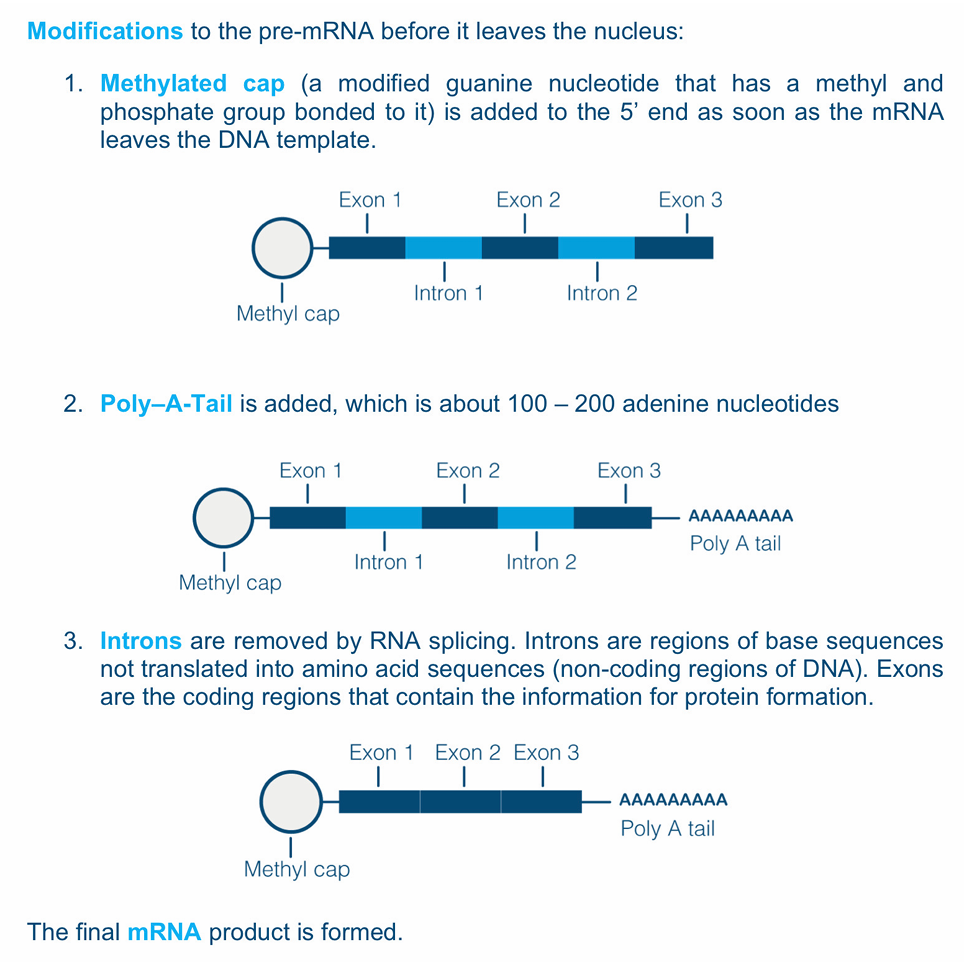
Introns are non-coding regions that must be removed from the pre-mRNA through a process called splicing to create the functional mature mRNA.
A mutation in the intron \(1\) region (particularly at the splice donor or acceptor sites) can disrupt the spliceosome’s ability to recognize where the intron begins or ends. This can lead to:
- Intron Retention: The intron \(1\) sequence is not removed and remains in the mature mRNA.
- Reading Frame Shift: When the ribosome translates this aberrant mRNA, the inclusion of the intron changes the sequence of amino acids or introduces a premature stop codon.
As a result, the synthesized polypeptide will have an incorrect primary structure and will fail to fold into the specific 3D shape required for insulin to bind to its receptors, rendering the protein non-functional.