
▶️ Answer/Explanation
(a)
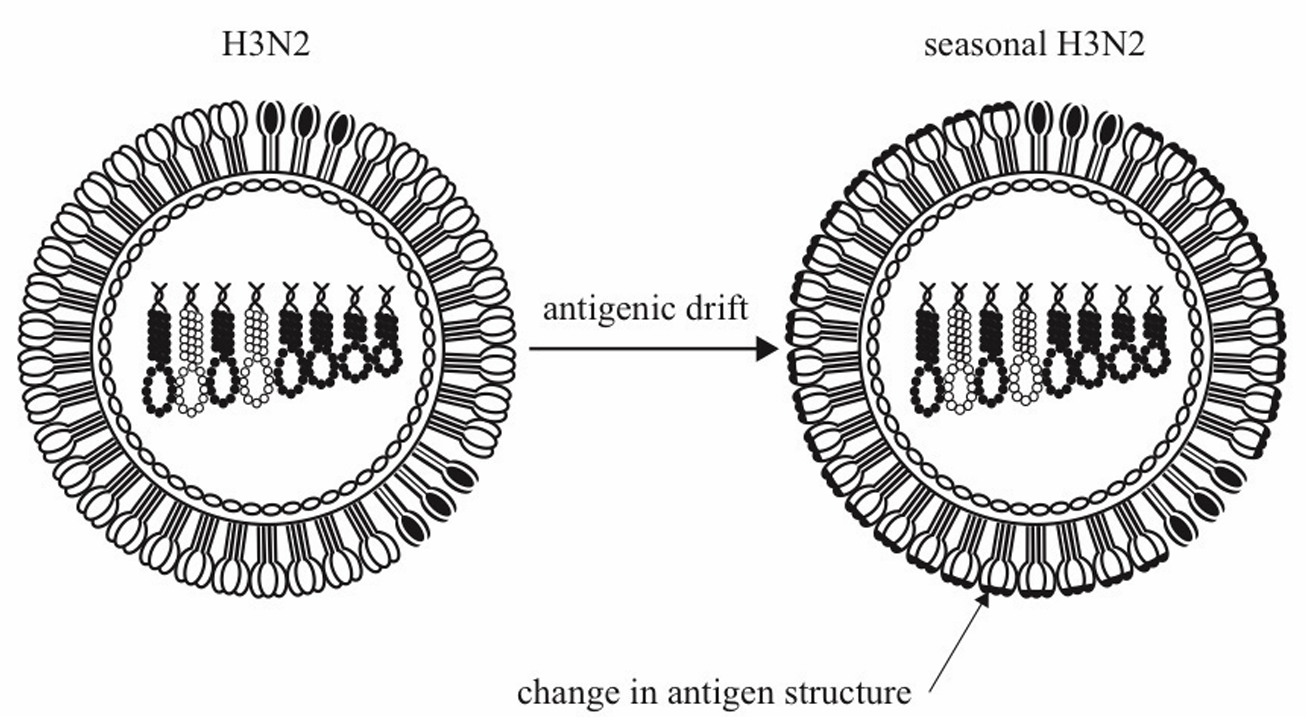
The process of changing surface proteins involves the following steps based on polypeptide synthesis and mutation:
1. Mutation in the Genome: A random mutation occurs in the viral RNA genome. This involves a change in the nucleotide sequence (such as a substitution, insertion, or deletion).
2. Change in Codons: This change in the RNA sequence alters the codons (triplets of nucleotides) that code for specific amino acids.
3. Translation / Polypeptide Synthesis: During the process of translation at the ribosome, the altered codons direct the incorporation of different amino acids into the growing polypeptide chain.
4. Altered Protein Structure: This change in the primary structure (amino acid sequence) affects the bonding (e.g., hydrogen bonds, disulfide bridges) within the protein, leading to a change in its tertiary structure (3D folding).
5. Result: Consequently, the shape of the surface antigen proteins is modified, as seen in the transition from H3N2 to seasonal H3N2.
(b)
Vaccinations are required yearly due to the progressive nature of antigenic drift:
1. Specificity of Vaccines: Vaccines work by stimulating the immune system to produce memory cells and antibodies that bind specifically to the shape of antigens on the current virus strains.
2. Accumulation of Changes: Through antigenic drift, the influenza virus accumulates mutations over the course of a year, resulting in surface antigens with significantly different shapes.
3. Loss of Recognition: The antibodies produced in response to the previous year’s vaccine (or previous infection) are no longer complementary to the new, altered antigen shape. They cannot effectively bind to or neutralize the new strain.
4. Need for Update: Therefore, a new vaccine containing the updated antigen strains is necessary each year to induce an immune response that matches the currently circulating virus.