Home / AP® Exam / Pre AP Biology / Exam Style Questions

Pre AP Biology -GEN 4.2 Sexual Reproduction (Meiosis)- FRQ Exam Style Questions -New Syllabus

Pre AP Biology -GEN 4.2 Sexual Reproduction (Meiosis)- FRQ Exam Style Questions – New Syllabus 2025-2026

Pre AP Biology -GEN 4.2 Sexual Reproduction (Meiosis)- FRQ Exam Style Questions – Pre AP Biology – per latest Pre AP Biology Syllabus.

Pre AP Biology – FRQ Exam Style Questions- All Topics

Question

Cytochrome C is a protein crucial for ATP synthesis in cells, a vital process for all living organisms. Due to its essential role, cytochrome c is found in all organisms and is highly conserved. This conservation makes it an ideal molecule for studying evolutionary relationships. The similarity of cytochrome c molecules across different species can indicate how closely related those species are. The more similar the cytochrome c molecules are, the closer the evolutionary relationship between the species.
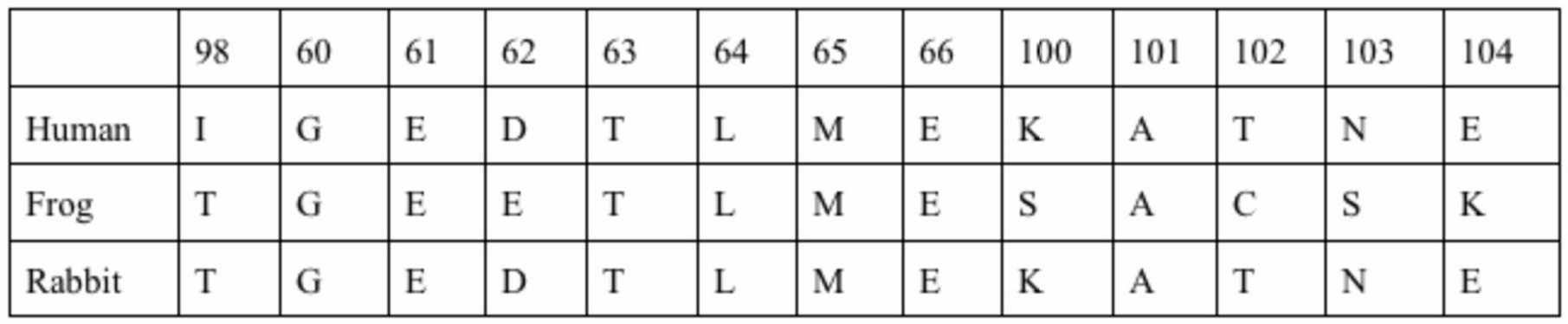
This table shows cytochrome c data for three different kinds of organisms. Each of the letters corresponds to a particular amino acid in the cytochrome c molecule for each organism.
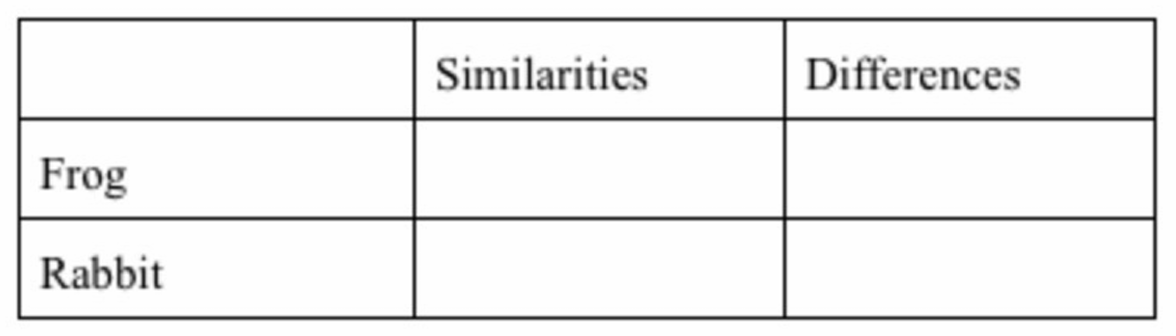
(a) Record how many similar and different amino acids there are between frogs and humans, and rabbits and humans.
(b) What conclusions about evolutionary relationships between the human, frog and rabbit can be drawn from the data. Explain how the data supports this.
(c) A student observes the mode of fertilisation in humans, rabbits and frogs in their natural habitats. How are differences in the mode of fertilisation and reproduction supported by the cytochrome C data?

Most-appropriate topic codes (Pre-AP Biology):

TOPIC: EVO 1.1 – Theory Of Evolution: Comparisons of molecular homologies are used to determine the degree of divergence from a common ancestor — parts (a), (b), (c)
TOPIC: GEN 4.2 – Sexual Reproduction (Meiosis): Sexual reproduction occurs via fertilization — part (c)
Science Practice 4 — Data Analysis: Interpretation of experimental data and comparison of models — parts (a), (b)
▶️ Answer/Explanation
Detailed solution

(a)
Comparing the amino acid sequences provided in the table:

  • Frog vs Human: Differences occur at positions 98 (I/T), 62 (D/E), 100 (K/S), 102 (T/C), 103 (N/S), and 104 (E/K).
  • Rabbit vs Human: A difference occurs only at position 98 (I/T). All other positions are identical.
 SimilaritiesDifferences
Frog\(7\)\(6\)
Rabbit\(12\)\(1\)

(b)
Conclusion: Humans are more closely related to rabbits than they are to frogs.
Explanation: The data supports this because there are fewer differences in the amino acid sequence of cytochrome c between humans and rabbits (\(1\) difference) compared to humans and frogs (\(6\) differences). In evolutionary biology, a higher degree of similarity in conserved proteins like cytochrome c indicates a more recent common ancestor. Therefore, the lineage leading to humans and rabbits diverged much more recently than the lineage leading to humans/rabbits and frogs.

(c)
Humans and rabbits both utilize internal fertilisation and are classified as mammals. In contrast, frogs typically utilize external fertilisation and are amphibians. The cytochrome c data supports this physiological and reproductive divergence. The organisms that share the same complex reproductive method (humans and rabbits) show a very high genetic similarity (\(12\) out of \(13\) amino acids match), suggesting they are evolutionarily close. The organism with the different reproductive mode (frog) is genetically more distant, reflecting the greater evolutionary time that has passed since their lineages split.

Scroll to Top