
1.13.A.1 Elements of a Well-Designed Experiment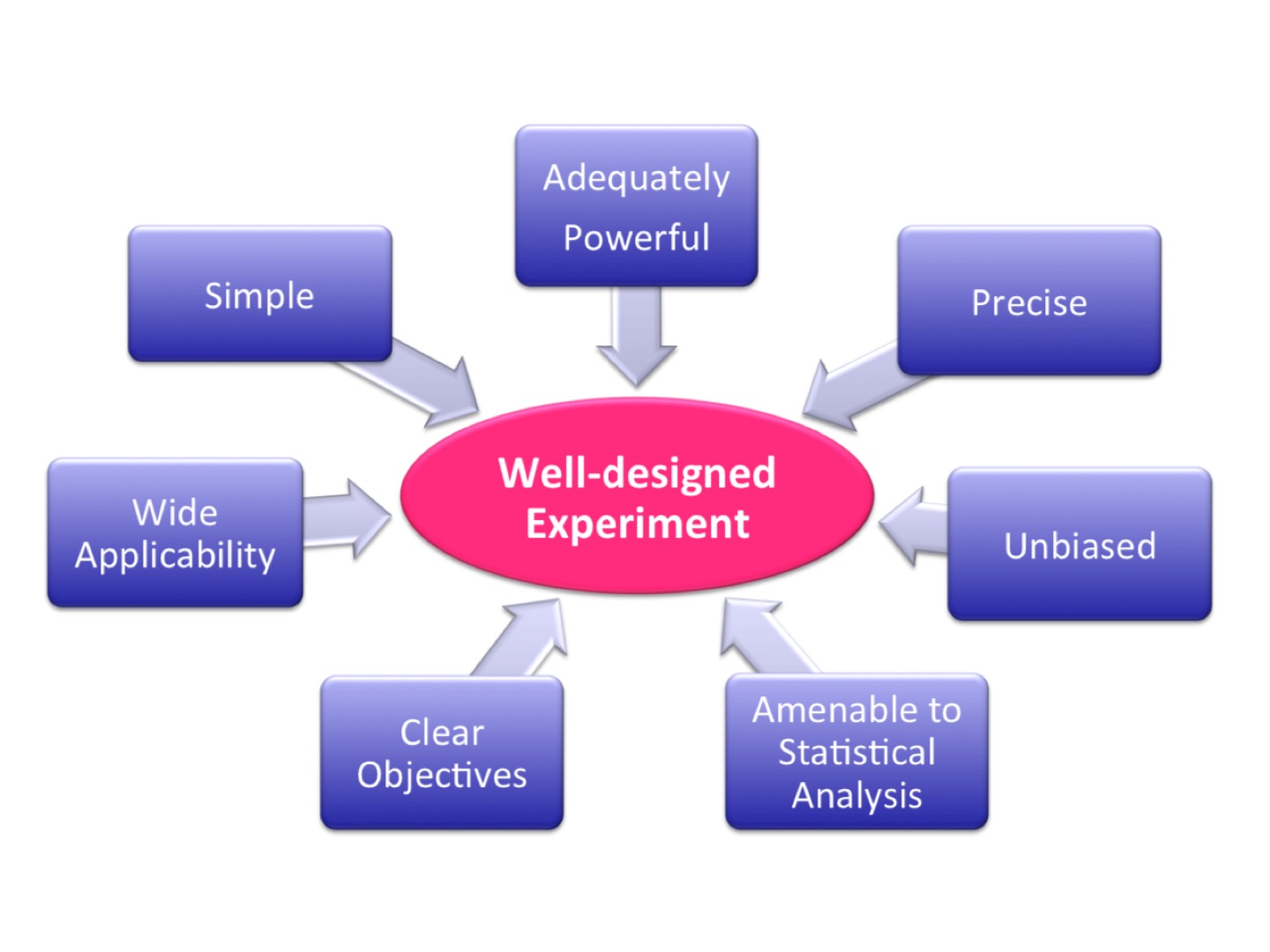
A well-designed experiment should include four essential elements:
- Comparison
- Random Assignment
- Replication
- Control
Each element helps eliminate alternative explanations for the observed results.
| Element | Purpose |
|---|---|
| Comparison | Determines whether the treatment has an effect. |
| Random Assignment | Creates similar treatment groups and reduces bias. |
| Replication | Reduces the impact of random variation. |
| Control | Reduces the influence of outside variables. |
1.13.A.1.i Comparison of Treatment Groups
A well-designed experiment must compare at least two treatment groups.
One group receives the treatment of interest, while another group receives either: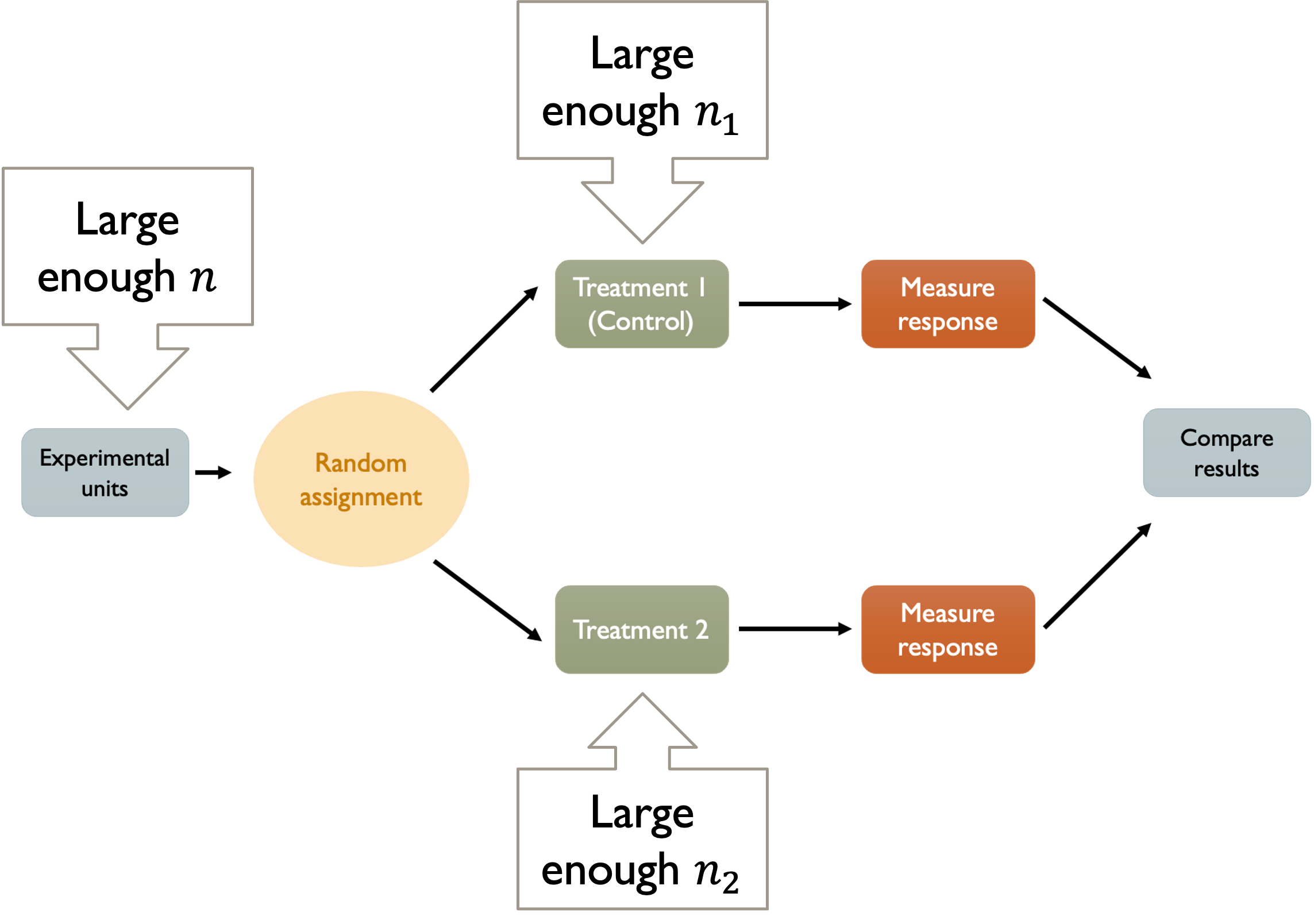
- A different treatment.
- No treatment.
- A placebo.
- The standard treatment currently in use.
Without comparison, researchers cannot determine whether the treatment actually caused the observed results.
The comparison group provides a baseline against which the treatment group can be evaluated.
Example
- Group 1 receives a new blood pressure medication.
- Group 2 receives a placebo.
Researchers compare the average blood pressure of the two groups after treatment.
1.13.A.1.ii Random Assignment
Random assignment is the process of randomly assigning experimental units to treatment groups.
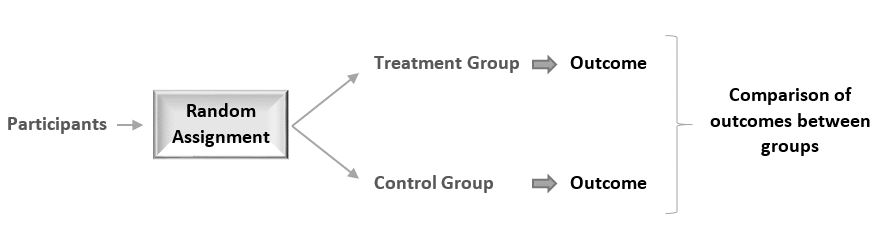
- Every experimental unit has an equal chance of receiving any treatment.
- Random assignment helps create treatment groups that are similar before the experiment begins.
This reduces the effect of confounding variables and allows researchers to make cause-and-effect conclusions.
Important AP Statistics Idea
- Random Sampling helps researchers generalize results to a population.
- Random Assignment allows researchers to establish cause-and-effect relationships.
These two concepts are commonly confused on the AP Exam.
1.13.A.1.iii Replication
Replication means applying each treatment to many experimental units, not just one or two.
- Using many individuals helps reduce the effects of random chance.
- If only one subject receives each treatment, it is impossible to know whether the results occurred because of the treatment or because of natural individual differences.
Larger treatment groups provide more reliable evidence.
Example
Instead of testing a new medicine on only one patient, researchers test it on hundreds of patients.
This improves the reliability of the results.
1.13.A.1.iv Control of Extraneous Variables
An extraneous variable is any variable other than the treatment that could affect the response variable.
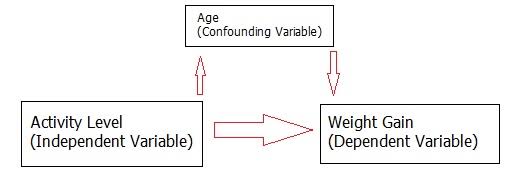
- A well-designed experiment attempts to keep these variables the same for every treatment group.
- This process is called control.
Examples of variables that researchers often control include:
- Temperature
- Lighting
- Time of day
- Amount of exercise
- Diet
- Testing conditions
Controlling these variables ensures that differences between treatment groups are caused primarily by the treatments themselves.
| Extraneous Variable | How It Can Be Controlled |
|---|---|
| Temperature | Keep the room at the same temperature. |
| Testing Time | Test everyone at the same time of day. |
| Diet | Provide identical meals to all participants. |
1.13.A.2 Control Group
A control group is a treatment group created for comparison.
The control group usually does not receive the treatment of interest.
Instead, the control group may receive:
- No treatment.
- A placebo.
- The standard treatment currently used.
Researchers compare the treatment group to the control group to determine whether the treatment has an effect.
If both groups are treated similarly except for the treatment itself, any meaningful differences in the response variable can reasonably be attributed to the treatment.
Placebo
A placebo is an inactive treatment that appears identical to the actual treatment but contains no active ingredient.
Placebos help control for the placebo effect, in which participants improve simply because they believe they are receiving treatment.
| Group | Receives | Purpose |
|---|---|---|
| Treatment Group | Treatment of interest | Measure treatment effect |
| Control Group | Placebo, no treatment, or standard treatment | Provide a baseline for comparison |
Example
Researchers want to determine whether a new fertilizer increases plant growth.
One group of plants receives the new fertilizer, while another group receives ordinary water.
Plants are randomly assigned to the two groups, both groups are grown under identical sunlight and temperature conditions, and each group contains 100 plants.
Identify the four elements of a well-designed experiment.
▶️ Answer / Explanation
Comparison:
Two treatment groups are compared (fertilizer vs. water).
Random Assignment:
Plants are randomly assigned to the two groups.
Replication:
Each treatment is applied to many plants (100 plants per group).
Control:
Sunlight, temperature, and other growing conditions are kept the same for both groups.
This experiment includes all four characteristics of a well-designed experiment.
Example
A pharmaceutical company tests a new headache medication.
Half of the participants receive the new medication, while the other half receive a pill containing no active ingredients.
What is the purpose of the control group in this experiment?
▶️ Answer / Explanation
The participants receiving the inactive pill form the control group.
The control group provides a baseline for comparison with the treatment group.
Using a placebo helps determine whether improvements are caused by the medication itself rather than participants’ expectations.
1.13.A.3 Placebo Effect
The placebo effect is the improvement in a participant’s response that occurs simply because the participant believes they are receiving an effective treatment, even though the treatment has no active ingredient.
In other words, the participant’s expectations alone may influence the outcome.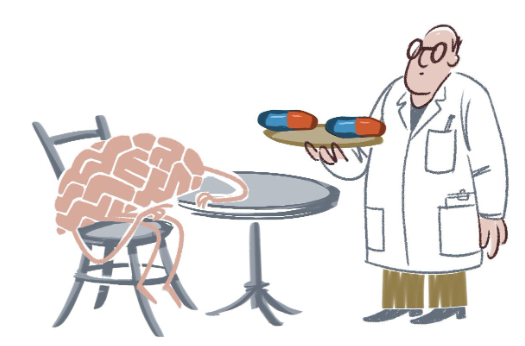
To measure the true effect of a treatment, researchers often compare:
- A treatment group receiving the actual treatment.
- A control group receiving a placebo.
The placebo effect is defined as the difference between:
- The average response to a placebo.
- The average response to receiving no treatment at all.
Because participants may improve simply from believing they are being treated, researchers must account for the placebo effect when evaluating new treatments.
Example of the Placebo Effect
- Suppose participants receive a sugar pill that contains no medicine.
- Some participants report that their headaches improve even though they did not receive any real medication.
This improvement is caused by the placebo effect rather than the treatment itself.
| Treatment Received | Possible Response |
|---|---|
| Actual Medication | Improvement due to the medication and possibly the placebo effect. |
| Placebo | Improvement due only to participants’ expectations. |
| No Treatment | No placebo effect is present. |
Example
Researchers are testing a new allergy medication.
One group receives the medication, while another group receives a pill containing only sugar.
Some participants taking the sugar pill report that their allergy symptoms improved.
What explains this improvement?
▶️ Answer / Explanation
The improvement is due to the placebo effect.
Although the pill contained no active medicine, participants believed they were receiving treatment.
Their expectations caused an improvement in their reported symptoms.
1.13.A.4 Single-Blind (Single-Masked) Experiment
A single-blind experiment, also called a single-masked experiment, is an experiment in which one group does not know which treatment is being received.
Usually: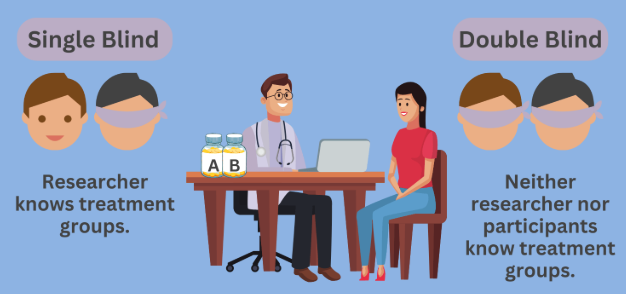
- The participants do not know whether they receive the treatment or the placebo.
- The researchers interacting with the participants know which treatment each participant receives.
In some experiments, the reverse may occur:
- The researchers are unaware of the treatment assignments.
- The participants know which treatment they receive.
The purpose of a single-blind experiment is to reduce response bias caused by participants’ expectations.
| Participants Know Treatment? | Researchers Know Treatment? | Experiment Type |
|---|---|---|
| No | Yes | Single-Blind |
Example
Patients participating in a medical study do not know whether they receive a new medication or a placebo.
However, the doctors administering the treatments know which participants receive each treatment.
Identify the type of experiment.
▶️ Answer / Explanation
This is a single-blind experiment.
The participants are unaware of their treatment assignments, but the researchers know who receives each treatment.
1.13.A.5 Double-Blind (Double-Masked) Experiment
A double-blind experiment, also called a double-masked experiment, is an experiment in which neither the participants nor the researchers interacting with them know which treatment each participant receives.
Only after all data have been collected are the treatment assignments revealed.
Double-blind experiments help eliminate both:
- Participant bias.
- Researcher bias.
Because neither group knows who received which treatment, expectations are much less likely to influence the results.
| Participants Know Treatment? | Researchers Know Treatment? | Experiment Type |
|---|---|---|
| No | No | Double-Blind |
Important AP Statistics Idea
Double-blind experiments are considered the best design for many medical studies because they greatly reduce bias.
Example
A pharmaceutical company tests a new vaccine.
Neither the patients nor the nurses administering the injections know who receives the vaccine and who receives the placebo.
Identify the type of experiment.
▶️ Answer / Explanation
This is a double-blind experiment.
Neither the participants nor the researchers interacting with them know the treatment assignments.
This design minimizes both participant and researcher bias.
1.13.A.6 Extraneous Source of Variation (Extraneous Variable)
An extraneous source of variation, also called an extraneous variable, is a variable that is not the explanatory variable being studied but may still affect the response variable.
- If extraneous variables are not controlled, they can make it difficult to determine whether differences in the response variable are caused by the treatment or by other factors.
- Researchers attempt to control these variables so that the treatment is the primary difference between the experimental groups.
Examples of Extraneous Variables
- Age of participants.
- Diet.
- Exercise habits.
- Room temperature.
- Lighting conditions.
- Time of day.
- Amount of sleep.
| Variable | Role in the Experiment |
|---|---|
| Treatment | Explanatory variable being studied. |
| Extraneous Variable | May influence the response but is not being investigated. |
Important AP Statistics Idea
- Extraneous variables are not the focus of the experiment, but they can influence the results.
- Researchers should keep these variables as similar as possible across all treatment groups.
Example
Researchers are studying whether a new study technique improves exam scores.
Some students study in a quiet classroom, while others study in a noisy cafeteria.
Identify an extraneous variable in this experiment.
▶️ Answer / Explanation
The study environment (quiet classroom versus noisy cafeteria) is an extraneous variable.
It may affect exam scores even though it is not the treatment being investigated.
To improve the experiment, researchers should keep the study environment the same for all participants.
1.13.A.7 Purpose of Random Assignment
The primary purpose of random assignment is to create treatment groups that are as similar as possible before the treatments are applied.
- When participants are randomly assigned, every experimental unit has an equal chance of being placed into any treatment group.
- Because the assignment is random, important characteristics such as age, height, health, intelligence, or previous experience tend to be distributed similarly among all treatment groups.
- As a result, the groups become approximately equal with respect to extraneous sources of variation.
This helps ensure that any differences observed after the experiment are likely due to the treatment itself rather than differences that already existed between the groups.
Important AP Statistics Idea
Random assignment does not guarantee perfectly identical groups.
Instead, it makes the treatment groups approximately similar, especially when the sample size is large.
| Without Random Assignment | With Random Assignment |
|---|---|
| Treatment groups may differ before the experiment begins. | Treatment groups are approximately similar before treatments are applied. |
| Extraneous variables may influence the results. | Extraneous variables are balanced across treatment groups. |
Example
Researchers randomly assign 200 patients to receive either a new medication or a placebo.
Why is random assignment important in this experiment?
▶️ Answer / Explanation
Random assignment helps create treatment groups that are similar before the experiment begins.
Characteristics such as age, overall health, and medical history are likely to be distributed similarly between the two groups.
Therefore, differences in the response are more likely to be caused by the medication rather than pre-existing differences between the patients.
1.13.A.8 Confounding Variable
A confounding variable is a variable that is related to the explanatory variable in such a way that it becomes difficult to determine which variable is actually causing the change in the response variable.
- When confounding occurs, the effects of the explanatory variable and the confounding variable become mixed together.
- As a result, researchers cannot confidently determine which variable produced the observed response.
A well-designed experiment reduces the possibility of confounding by using: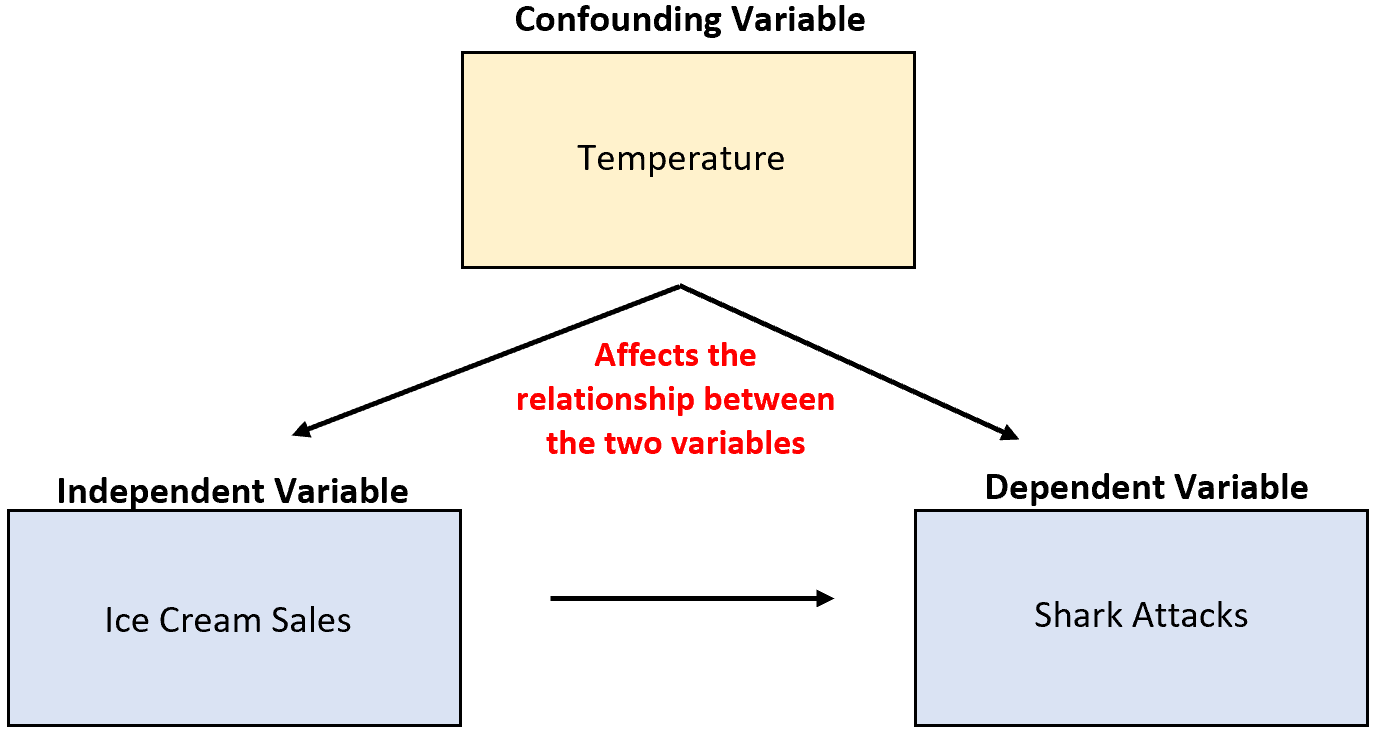
- Random assignment.
- Control of extraneous variables.
- Replication.
Example of Confounding
Suppose researchers want to determine whether a new exercise program improves fitness.
Participants following the new program also receive a special healthy diet, while the comparison group does not.
If the treatment group shows greater improvement, researchers cannot determine whether the improvement was caused by:
- The exercise program.
- The healthier diet.
- Both together.
The diet is a confounding variable.
| Explanatory Variable | Confounding Variable |
|---|---|
| Variable intentionally studied. | Variable that unintentionally influences the response. |
| Researchers want to measure its effect. | Makes interpretation of the treatment effect difficult. |
Important AP Statistics Idea
Random assignment greatly reduces the risk of confounding because it balances many potential confounding variables across treatment groups.
Example
Researchers want to study whether a new teaching method improves mathematics scores.
Students taught using the new method also receive two additional hours of tutoring each week.
Identify the confounding variable.
▶️ Answer / Explanation
The additional tutoring is the confounding variable.
Researchers cannot determine whether higher mathematics scores are caused by the new teaching method, the extra tutoring, or both.
1.13.A.9 Replication
Replication means assigning more than one experimental unit to each treatment.
- Instead of testing each treatment on only one subject, researchers apply the treatment to many experimental units.
- Replication helps reduce the influence of random variation and increases the reliability of the experiment.
The larger the number of experimental units receiving each treatment, the more reliable the comparison between treatment groups becomes.
Benefits of Replication
- Reduces random variability.
- Produces more reliable results.
- Prevents unusual individuals from overly influencing the conclusions.
- Improves the precision of treatment comparisons.
| Without Replication | With Replication |
|---|---|
| One experimental unit per treatment. | Many experimental units per treatment. |
| Results may be due to chance. | Results are more dependable. |
Example
A researcher tests two fertilizers.
Each fertilizer is applied to 150 plants.
Why is replication important in this experiment?
▶️ Answer / Explanation
Replication means that many plants receive each treatment.
Using many experimental units reduces the effects of random variation and provides a more reliable comparison between the two fertilizers.
1.13.A.10 Direct Control
Direct control means keeping certain extraneous variables the same for every experimental unit.
- Researchers intentionally control these variables so that the treatment is the primary difference between the treatment groups.
- Keeping other conditions constant reduces unnecessary variation in the response variable and makes it easier to detect the true effect of the treatment.
Examples of Variables That Can Be Controlled
- Room temperature.
- Lighting.
- Amount of water.
- Length of the experiment.
- Testing environment.
- Time of day.
If these conditions vary between treatment groups, they may influence the response variable and reduce the validity of the experiment.
| Extraneous Variable | Method of Direct Control |
|---|---|
| Temperature | Keep every room at the same temperature. |
| Water | Give every plant the same amount of water. |
| Testing Time | Test all participants at the same time of day. |
Important AP Statistics Idea
- Direct control does not eliminate all variability.
- Instead, it minimizes variability caused by known extraneous variables, allowing researchers to better isolate the effect of the treatment.
Example
Researchers are studying whether a new fertilizer increases plant growth.
Every plant receives the same amount of water, sunlight, soil, and fertilizer schedule.
Identify how direct control is used in this experiment.
▶️ Answer / Explanation
The researchers are using direct control by keeping environmental conditions the same for every plant.
Water, sunlight, soil, and the fertilizer schedule are controlled so that differences in plant growth are more likely to be caused by the fertilizer being studied.
1.13.B.1 Completely Randomized Design
A completely randomized design (CRD) is an experimental design in which treatments are assigned to experimental units completely at random.
- Every experimental unit has an equal chance of receiving any treatment.
- No grouping or blocking is performed before random assignment.
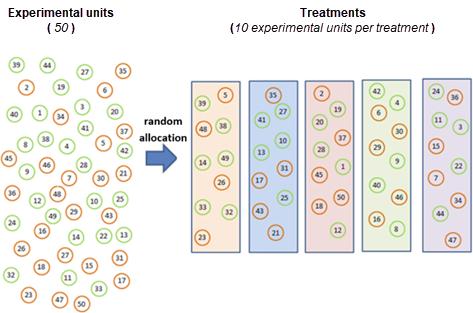
Although researchers often assign the same number of experimental units to each treatment group, equal group sizes are not required.
Steps in a Completely Randomized Design
- Select the experimental units.
- Randomly assign each unit to one of the treatment groups.
- Apply the treatments.
- Measure and compare the responses.
| Feature | Completely Randomized Design |
|---|---|
| Grouping before randomization | None |
| Treatment assignment | Completely random |
| Equal group sizes required? | No |
When is it most appropriate?
A completely randomized design works best when experimental units are already fairly similar and there are no important extraneous variables that should be controlled before assigning treatments.
Example
A researcher wants to compare three different fertilizers.
Sixty plants are selected.
Each plant is randomly assigned to receive one of the three fertilizers.
Identify the experimental design.
▶️ Answer / Explanation
This is a completely randomized design.
The plants were assigned directly to treatments using random assignment without first being divided into groups.
1.13.B.2 Randomized Block Design
A randomized block design is an experimental design in which experimental units are first divided into groups called blocks.
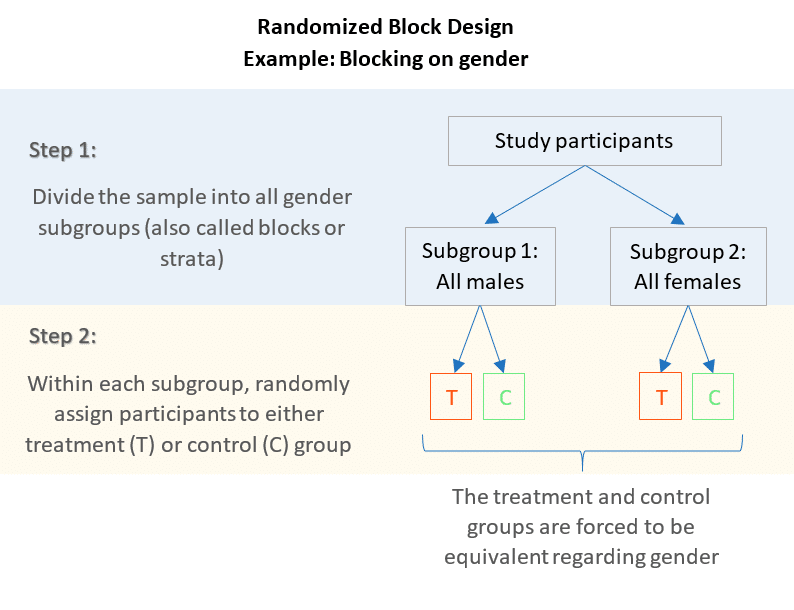
- The blocks are formed using a blocking variable, which is an extraneous variable that is expected to influence the response variable.
- Individuals within each block are similar (homogeneous) with respect to the blocking variable.
- After the blocks are created, treatments are randomly assigned within each block.
As a result, every treatment appears in every block.
Blocking Variable
A blocking variable is an extraneous variable that researchers expect may affect the response variable.
Instead of allowing this variable to increase variability, researchers control its effect by creating blocks.
Steps in a Randomized Block Design
- Identify an important blocking variable.
- Divide the experimental units into homogeneous blocks.
- Randomly assign treatments within every block.
- Compare the responses.
| Blocking Variable | Possible Blocks |
|---|---|
| Gender | Male, Female |
| Age Group | Children, Adults, Seniors |
| School Grade | Grade 9, Grade 10, Grade 11, Grade 12 |
1.13.B.3 Purpose of Blocking
The purpose of blocking is to remove the variation caused by the blocking variable from the treatment comparison.
- By comparing treatments only within similar groups, researchers reduce unexplained variability.
- This leads to more precise estimates of treatment effects.
Within a block, researchers do not have to worry about differences caused by the blocking variable because all experimental units are already similar.
Example
Suppose researchers want to compare two teaching methods.
- Students are first divided by grade level.
- Within each grade, students are randomly assigned to one of the teaching methods.
Any differences caused by grade level are controlled through blocking.
Important AP Statistics Idea
Blocking is used before treatments are assigned.
Random assignment still occurs—but only within each block.
| Without Blocking | With Blocking |
|---|---|
| Greater unexplained variability. | Less unexplained variability. |
| Treatment comparisons are less precise. | Treatment comparisons are more precise. |
Example
Researchers want to compare two exercise programs.
Participants are first divided into three age groups.
Within each age group, participants are randomly assigned to one of the exercise programs.
Identify the experimental design and explain why blocking is used.
▶️ Answer / Explanation
This is a randomized block design.
Age is the blocking variable.
Blocking reduces variation caused by differences in age, allowing a more accurate comparison of the two exercise programs.
1.13.B.4 Matched Pairs Design
A matched pairs design is a special type of randomized block design involving only two treatments.
- Experimental units are first paired so that the two members of each pair are as similar as possible with respect to one or more important extraneous variables.
- After the pairs are formed, one treatment is randomly assigned to one member of the pair, and the other treatment is assigned to the second member.
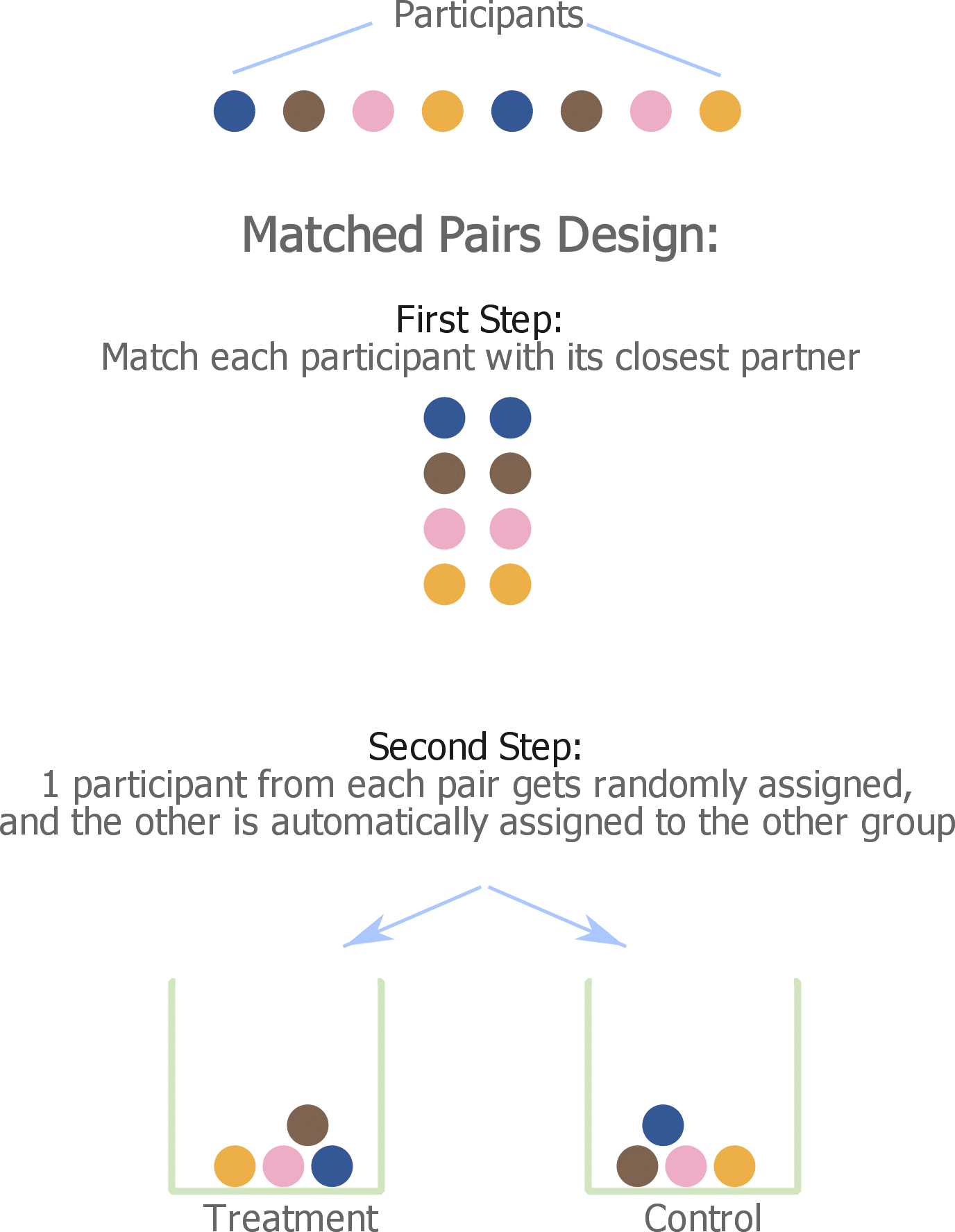
Another common matched pairs design occurs when the same experimental unit receives both treatments, with the order of the treatments determined randomly.
Two Forms of Matched Pairs Designs
- Two similar experimental units are paired, and each receives a different treatment.
- The same experimental unit receives both treatments in random order.
| Matched Pairs | Randomized Block Design |
|---|---|
| Exactly two treatments. | Can have two or more treatments. |
| Blocks contain exactly two similar units or one unit receiving both treatments. | Blocks may contain many experimental units. |
Why Use a Matched Pairs Design?
Matching greatly reduces variability because each comparison is made between very similar experimental units (or within the same individual).
This often produces a more precise estimate of the treatment effect than a completely randomized design.
Example
Researchers want to compare two headache medications.
Each participant receives both medications on separate occasions.
The order in which the medications are taken is determined randomly.
Identify the experimental design.
▶️ Answer / Explanation
This is a matched pairs design.
Each participant receives both treatments.
The order of the treatments is randomized so that the comparison is made within the same participant.AP Statistics Memory Table
1.13.D.1 Cause-and-Effect Conclusions
One of the greatest advantages of a well-designed experiment is that it allows researchers to make cause-and-effect conclusions.
This is possible because treatments are randomly assigned to the experimental units.
- Random assignment helps create treatment groups that are approximately similar before the treatments are applied.
- As a result, potential confounding variables are balanced across the treatment groups.
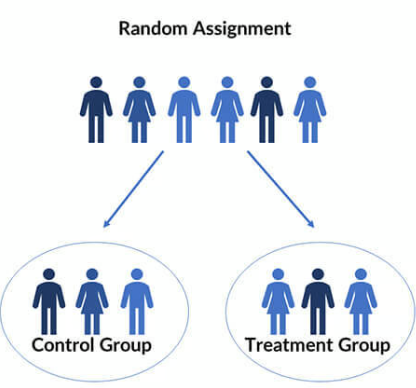
Since the treatment is the primary systematic difference between the groups, researchers can conclude that any significant differences in the response variable were caused by the treatment itself.
Important AP Statistics Idea
- Random assignment is what allows researchers to make cause-and-effect conclusions.
- Without random assignment, differences between treatment groups may be caused by confounding variables rather than the treatment.
| Study Feature | Conclusion Allowed |
|---|---|
| Random Assignment | Cause-and-effect conclusions may be made. |
| No Random Assignment | Cause-and-effect conclusions cannot be justified. |
AP Statistics Tip
Do not confuse:
- Random Sampling → Allows researchers to generalize results to a population.
- Random Assignment → Allows researchers to conclude that the treatment caused the observed effect.
Example
Researchers randomly assign 300 patients to receive either a new blood pressure medication or a placebo.
After eight weeks, the treatment group has a significantly lower average blood pressure than the placebo group.
What type of conclusion can the researchers make?
▶️ Answer / Explanation
Because the treatments were randomly assigned, the researchers may conclude that the new medication caused the decrease in blood pressure.
Random assignment reduced the effects of confounding variables, allowing a cause-and-effect conclusion.
1.13.D.2 Generalizing Experimental Conclusions
Although a well-designed experiment may establish a cause-and-effect relationship, researchers must also consider who the conclusions apply to.
- In many experiments, randomly selecting participants from the entire population is impractical, expensive, or unethical.
- Instead, researchers often rely on volunteers who choose to participate in the study.
- When volunteers are used instead of a random sample, the results may not represent the entire population.
Instead, the conclusions should be generalized only to populations that are similar to the volunteers who participated.
Examples of Situations Where Random Sampling Is Difficult
- Testing new medications.
- Medical surgery experiments.
- Psychological research.
- Nutrition studies.
- Exercise programs.
Researchers cannot ethically force randomly selected individuals to participate in many of these studies.
| Participants Obtained By | Population to Which Results Apply |
|---|---|
| Random Sample | Entire population from which the sample was selected. |
| Volunteers | People similar to the volunteers who participated. |
Important AP Statistics Idea
- A study may allow a cause-and-effect conclusion but still not allow researchers to generalize the results to the entire population.
- Generalization depends on how the participants were selected, not on how treatments were assigned.
Cause-and-Effect vs. Generalization
| Random Sampling? | Random Assignment? | Cause-and-Effect? | Generalize to Population? |
|---|---|---|---|
| Yes | Yes | ✔ Yes | ✔ Yes |
| No (Volunteers) | Yes | ✔ Yes | Only to populations similar to the volunteers. |
| Yes | No | ✘ No | ✔ Yes |
| No | No | ✘ No | ✘ No |
Example
Researchers recruit 500 volunteers to participate in a study of a new weight-loss program.
The volunteers are randomly assigned to either the new program or the standard program.
The new program results in significantly greater weight loss.
What conclusions can the researchers make?
▶️ Answer / Explanation
Because the treatments were randomly assigned, the researchers may conclude that the new program causes greater weight loss.
However, because the participants were volunteers rather than a random sample of the population, the results should be generalized only to people who are similar to those volunteers.
Example
Researchers randomly select 800 adults from a city.
Instead of randomly assigning treatments, each participant chooses whether to participate in a fitness program.
Participants who choose the program lose more weight than those who do not.
Can the researchers conclude that the program caused the weight loss?
▶️ Answer / Explanation
No.
Although the participants were randomly selected, they were not randomly assigned to treatments.
Because individuals chose their own treatment, confounding variables may explain the difference in weight loss.
Therefore, a cause-and-effect conclusion cannot be made.