
Linear Equations (One Variable)
A linear equation in one variable is an equation that can be written in the form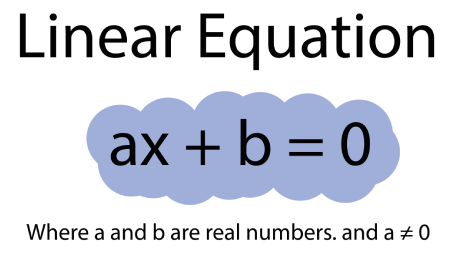
\( ax + b = c \)
where \( a \), \( b \), and \( c \) are constants and \( x \) is the unknown. The solution is the value of \( x \) that makes both sides equal.
On the DIGITAL SAT, these equations often appear inside word problems and may include fractions, parentheses, and variables on both sides.
Key Principle
To solve an equation, perform the same operation to both sides so the equality remains true.
You may:
- Add or subtract the same number from both sides
- Multiply or divide both sides by the same nonzero number
General Solving Strategy
- Remove parentheses
- Clear fractions (if present)
- Collect variable terms on one side
- Combine constants
- Isolate the variable
Important DIGITAL SAT Skill
The SAT frequently tests whether you correctly distribute negative signs:
\( -(x – 5) = -x + 5 \)
Many mistakes happen because students forget to change both signs.
Example 1 (Fractions):
A streaming service charges a monthly fee plus a one-time activation fee. After the first month, a customer paid \$34. The monthly fee is \( \dfrac{x}{2} \) dollars and the activation fee is \$9.
Which value of \( x \) represents the monthly fee calculation?
\( \dfrac{x}{2} + 9 = 34 \)
▶️ Answer/Explanation
Subtract 9 from both sides:
\( \dfrac{x}{2} = 25 \)
Multiply both sides by 2:
\( x = 50 \)
Conclusion: The value of \( x \) is 50.
Example 2 (Brackets and Distribution):
A taxi company charges a base fare of \$4 plus \$3 per mile. A customer paid \$25 for a ride. Let \( x \) be the number of miles traveled.
\( 3(x – 1) + 4 = 25 \)
▶️ Answer/Explanation
Distribute:
\( 3x – 3 + 4 = 25 \)
Combine constants:
\( 3x + 1 = 25 \)
Subtract 1:
\( 3x = 24 \)
Divide by 3:
\( x = 8 \)
Conclusion: The ride was 8 miles.
Example 3 (Variables on Both Sides):
A gym membership plan includes a sign-up credit. After applying the credit, the total cost becomes equal to another promotional plan:
\( 5x – 12 = 3x + 18 \)
Find \( x \).
▶️ Answer/Explanation
Move variable terms to one side:
\( 5x – 3x – 12 = 18 \)
\( 2x – 12 = 18 \)
Add 12:
\( 2x = 30 \)
Divide by 2:
\( x = 15 \)
Conclusion: \( x = 15 \).
Identities vs Conditional Equations
When solving linear equations on the DIGITAL SAT, not every equation has a single solution. Some equations are true for all values of the variable, while others are true for no values. Understanding the difference is very important because the SAT frequently asks you to interpret what your final simplified statement means.
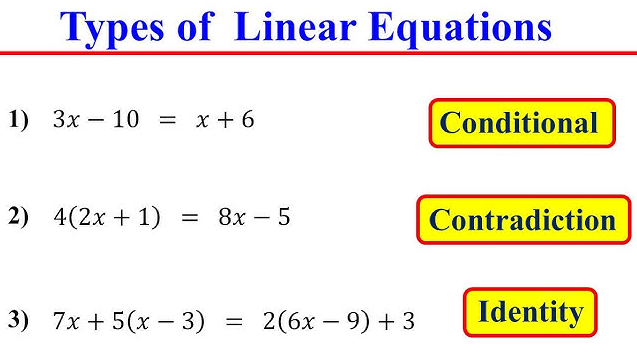
Conditional Equation
A conditional equation is true only for a specific value of the variable.
Example form:
\( 3x + 5 = 20 \)
This equation produces a single solution after solving.
Identity
An identity is an equation that is true for every real value of the variable.
After simplifying, the variable disappears and you get a true statement such as:
\( 8 = 8 \)
This means there are infinitely many solutions.
No-Solution Equation
Sometimes you simplify and obtain a false statement:
\( 5 = 12 \)
This means the equation has no solution.
How the SAT Tests This
Instead of asking “solve the equation,” the SAT often asks:
- How many solutions does the equation have?
- For what value of a constant does the equation have infinitely many solutions?
- Which statement must be true about the equation?
Key Recognition Rule
- Variable cancels and true statement → Identity
- Variable cancels and false statement → No solution
- Variable remains → One solution (conditional equation)
Example 1 (Conditional Equation):
A student solves the equation
\( 4x – 7 = 2x + 9 \)
What value of \( x \) makes the equation true?
▶️ Answer/Explanation
Move variable terms together:
\( 4x – 2x – 7 = 9 \)
\( 2x – 7 = 9 \)
Add 7:
\( 2x = 16 \)
Divide by 2:
\( x = 8 \)
Conclusion: The equation has exactly one solution. It is a conditional equation.
Example 2 (Identity):
A researcher models two equivalent pricing plans and obtains
\( 3(x + 4) + 2x = 5x + 12 \)
How many solutions does the equation have?
▶️ Answer/Explanation
Distribute:
\( 3x + 12 + 2x = 5x + 12 \)
Combine like terms:
\( 5x + 12 = 5x + 12 \)
Subtract \( 5x \) from both sides:
\( 12 = 12 \)
This is a true statement.
Conclusion: The equation is true for every real number. It is an identity and has infinitely many solutions.
Example 3 (No Solution):
A student simplifies an equation and gets
\( 2(3x + 5) = 6x + 1 \)
Determine the number of solutions.
▶️ Answer/Explanation
Distribute:
\( 6x + 10 = 6x + 1 \)
Subtract \( 6x \) from both sides:
\( 10 = 1 \)
This is false.
Conclusion: The equation has no solution.
Word Problems → Forming Linear Equations
On the DIGITAL SAT, many questions do not directly give you an equation. Instead, you must translate words into algebra. The hardest part is usually not solving the equation but correctly creating it.
Step-by-Step Method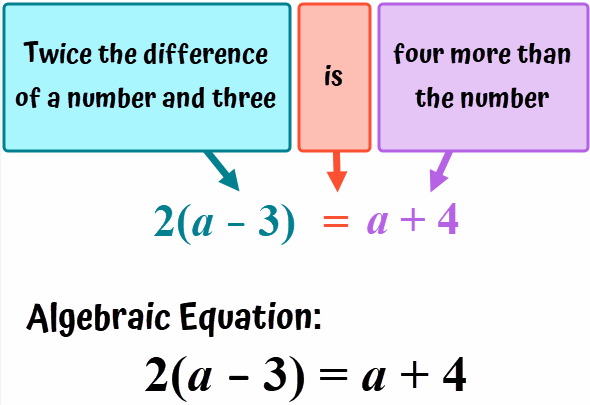
- Define a variable (what does \( x \) represent?)
- Translate each sentence into math
- Write an equation using “equals” meaning “is the same as”
- Solve
- Check if the answer makes sense in context
Common Translation Phrases
- “total” → addition
- “difference” → subtraction
- “per” or “each” → multiplication
- “of” → multiply
- “is” or “equals” → \( = \)
- “more than” → add after the number
- “less than” → subtract after the number (order matters!)
Important SAT Tip
The phrase “5 less than a number” means
\( x – 5 \)
NOT \( 5 – x \). The order is a very common SAT trap.
Example 1 (Age Problem):
A student is 6 years older than their younger sibling. The sum of their ages is 24. How old is the student?
▶️ Answer/Explanation
Let the younger sibling’s age be \( x \).
Student’s age:
\( x + 6 \)
Sum of ages is 24:
\( x + (x + 6) = 24 \)
Solve:
\( 2x + 6 = 24 \)
\( 2x = 18 \)
\( x = 9 \)
Student’s age:
\( 9 + 6 = 15 \)
Conclusion: The student is 15 years old.
Example 2 (Rate/Cost):
A printing company charges a fixed setup fee plus \$0.20 per flyer. A customer paid \$18 for an order of 50 flyers. What is the setup fee?
▶️ Answer/Explanation
Let the setup fee be \( x \).
Cost of flyers:
\( 0.20 \times 50 = 10 \)
Total cost:
\( x + 10 = 18 \)
Solve:
\( x = 8 \)
Conclusion: The setup fee is \$8.
Example 3 (Consecutive Integers):
The sum of three consecutive integers is 72. What is the smallest integer?
▶️ Answer/Explanation
Let the smallest integer be \( x \).
Next two integers:
\( x + 1 \) and \( x + 2 \)
Sum is 72:
\( x + (x+1) + (x+2) = 72 \)
Solve:
\( 3x + 3 = 72 \)
\( 3x = 69 \)
\( x = 23 \)
Conclusion: The smallest integer is 23.
Word Problems and Interpreting Solutions
On the DIGITAL SAT, linear equations often appear inside real-world situations. Instead of being given an equation directly, you must translate a word problem into an equation, solve it, and then interpret what the solution means.
Step-by-Step Strategy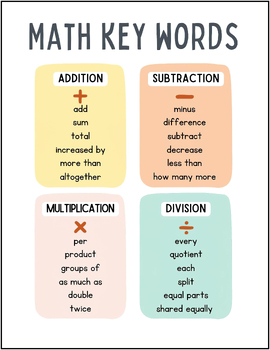
- Define a variable
- Translate the words into an equation
- Solve the equation
- Interpret the answer in context
- Check that the answer makes sense
Common Translation Patterns
- “twice a number” → \( 2x \)
- “five less than a number” → \( x – 5 \)
- “three more than twice a number” → \( 2x + 3 \)
- “half a number” → \( \dfrac{x}{2} \)
- “total” or “sum” → addition
- “is” or “equals” → \( = \)
Interpreting the Solution
After solving the equation, the number you obtain must be interpreted according to the variable you defined. The SAT frequently asks what the solution represents, not just the numeric value.
DIGITAL SAT Tip
Always reread the question after solving. Many wrong answers occur because students stop after finding \( x \) but forget that the question may ask for a related quantity.
Example 1 (Forming the Equation):
Five more than twice a number is 21. What is the number?
▶️ Answer/Explanation
Let the number be \( x \).
\( 2x + 5 = 21 \)
\( 2x = 16 \)
\( x = 8 \)
Conclusion: The number is 8.
Example 2 (Real-World Context):
A gym charges a $\$25$ membership fee plus $\$15$ per month. If a customer pays $\$115$ in total, how many months did the customer use the gym?
▶️ Answer/Explanation
Let \( x \) be the number of months.
\( 15x + 25 = 115 \)
\( 15x = 90 \)
\( x = 6 \)
Conclusion: The customer used the gym for 6 months.
Example 3 (Interpreting the Solution):
A taxi company charges a $\$4$ starting fee plus $\$3$ per mile. If the total cost of a ride is $\$28$, how many miles were traveled?
▶️ Answer/Explanation
Let \( x \) represent the number of miles.
\( 3x + 4 = 28 \)
\( 3x = 24 \)
\( x = 8 \)
Conclusion: The taxi ride was 8 miles.