
Characteristics of Living Organisms
📝 Introduction
- Living things can be recognised because they all share certain basic features.
- These features separate living organisms from non-living things.
👉 To remember them, we use the classic mnemonic MRSGREN:
Movement • Respiration • Sensitivity • Growth • Reproduction • Excretion • Nutrition (+ Control of internal conditions = Homeostasis).
🍎 Nutrition
- All living things need a source of food/nutrients.
 Nutrients provide:
- Energy → for movement, repair, and keeping warm.
- Raw materials → for growth and cell repair.
- Plants → make food by photosynthesis.
- Animals → eat plants/other animals.
🔥 Respiration
- A chemical process in cells that releases energy from glucose.
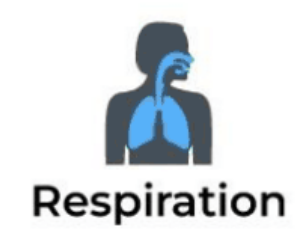 Energy is used for growth, repair, movement, and temperature control.
- Two main types:
- Aerobic (with oxygen, more energy released).
- Anaerobic (without oxygen, less energy, produces lactic acid or ethanol + CO₂).
🚮 Excretion
- Removal of toxic waste products made inside cells.
 Key examples:
- Carbon dioxide (from respiration, breathed out).
- Urea (from protein breakdown, excreted in urine).
- Oxygen (in plants, released after photosynthesis).
- ❌ Not the same as egestion (which is removal of undigested food).
👀 Sensitivity (Response to Stimuli)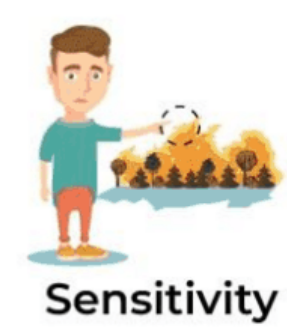
- The ability to detect and respond to changes in the environment.
- Examples:
- Plants grow towards light (phototropism).
- Humans pull back hand from a hot object.
- Helps survival → finding food, escaping danger, adapting to surroundings.
🏃 Movement
- A change in position of the whole organism or a part of it.
- Animals → run, fly, swim, walk to find food or avoid danger.
- Plants → slower movements (roots grow down, shoots grow up, flowers open/close).
⚖️ Control of Internal Conditions (Homeostasis)
- Maintaining a stable internal environment, even if the outside changes.
- Examples:
- Humans keep body temperature close to 37°C.
- Cells regulate water content and pH.
- Important so enzymes can work efficiently.
👶 Reproduction
- Producing new individuals of the same species → ensures survival.
- Types:
- Asexual reproduction → one parent, offspring are identical (clones).
- Sexual reproduction → two parents, offspring show variation.
🌱 Growth & Development
- Growth → permanent increase in size and dry mass (new cells made by cell division).
- Development → cells change and become specialised for different functions.
- In general:
- Animals → grow up to a certain point.
- Plants → can keep growing throughout life.
📊 Summary Table – MRSGREN
| Feature | Meaning | Example |
|---|---|---|
| Nutrition | Taking in food for energy & growth | Humans eat, plants photosynthesise |
| Respiration | Energy release from glucose | Aerobic (with O₂), Anaerobic (without O₂) |
| Excretion | Removing waste from cells | CO₂ exhaled, urea in urine |
| Sensitivity | Responding to surroundings | Eye detects light, plant bends to sun |
| Movement | Change in position | Animals run, roots grow down |
| Homeostasis | Controlling internal conditions | Body temp ~37°C |
| Reproduction | Producing offspring | Humans have babies, plants form seeds |
| Growth | Increase in size & mass | Seed → plant, baby → adult |
⚡ Quick Recap
MRSGREN = Movement, Respiration, Sensitivity, Growth, Reproduction, Excretion, Nutrition (+ Homeostasis)
✔ Nutrition → food for energy & growth
✔ Respiration → energy release from glucose
✔ Excretion → removal of toxic wastes
✔ Sensitivity → response to environment
✔ Movement → change in position
✔ Homeostasis → stable internal conditions
✔ Reproduction → new offspring
✔ Growth → permanent increase in size