
2.2 Cell Structures
📝 Introduction
Cells are the fundamental units of life and are responsible for carrying out all the processes necessary for an organism’s survival. Although cells may vary greatly in size, shape, and function, they all contain specialised internal structures known as organelles.
Each organelle performs a specific function that contributes to the overall activity of the cell. Just as different departments in a factory perform different jobs, different cell structures work together to ensure that the cell functions efficiently.
🏗️ Overview of Cell Structures
The main cell structures required by the iGCSE specification are:
- Nucleus
- Cytoplasm
- Cell Membrane
- Cell Wall
- Mitochondria
- Chloroplasts
- Ribosomes
- Vacuole
Each structure has a specialised role that contributes to the survival of the cell.
🧠 Nucleus
What is the Nucleus?
The nucleus is a large membrane-bound organelle found in most eukaryotic cells. It is often the most prominent structure within the cell and acts as the control centre of cellular activities.
Structure
- The nucleus is surrounded by a nuclear membrane (nuclear envelope) that separates its contents from the cytoplasm.
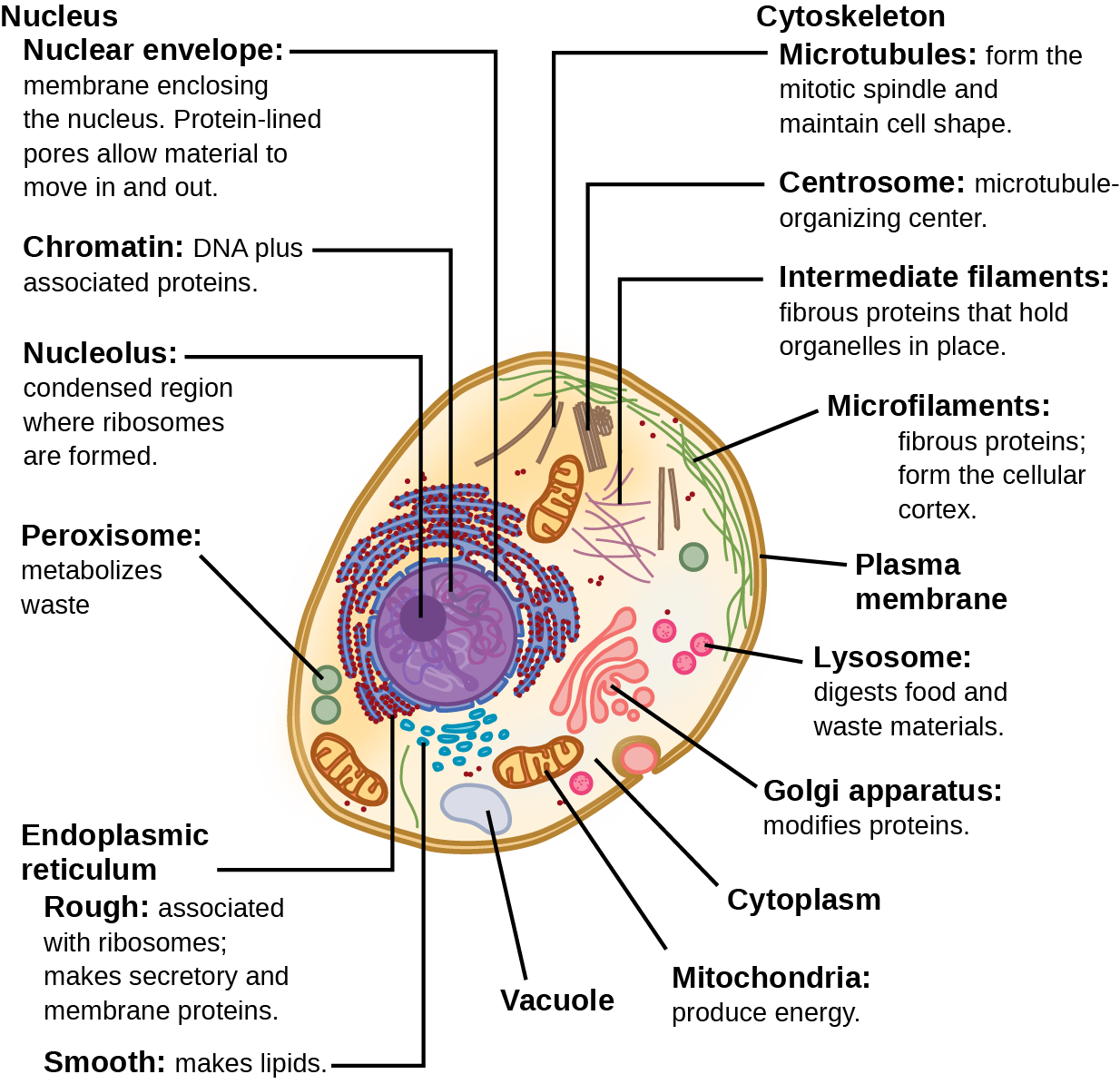
- Inside the nucleus is genetic material in the form of DNA.
- The DNA is organised into chromosomes and contains genes that determine the characteristics and activities of the cell.
Functions
Controls Cell Activities
- Growth
- Metabolism
- Reproduction
- Protein synthesis
- Cell division
Stores Genetic Information
- DNA contains instructions for making proteins and controlling cell behaviour.
- These instructions are passed from one generation to the next during reproduction.
Coordinates Protein Production
- The nucleus contains the genetic code needed for building proteins.
- Proteins produced according to these instructions determine how the cell functions.
Importance
Without a nucleus, a cell loses control over its activities and cannot function normally. The nucleus therefore acts as the cell’s information and control centre.
Important Point
- Present in plant, animal, fungal, and protoctist cells.
- Absent in bacteria.
- Absent in viruses.
💧 Cytoplasm
What is the Cytoplasm?
The cytoplasm is a jelly-like substance that fills most of the cell interior. It surrounds the organelles and provides a medium in which many cellular activities occur.
Structure
The cytoplasm consists mainly of:
- Water
- Dissolved nutrients
- Enzymes
- Salts
- Proteins
Organelles are suspended within the cytoplasm.
Functions
Site of Chemical Reactions
Many metabolic reactions occur in the cytoplasm, including:
- Protein synthesis
- Breakdown of nutrients
- Enzyme-controlled reactions
Supports Organelles
- The cytoplasm helps maintain the position of organelles inside the cell.
Transport Medium
- Dissolved substances can move through the cytoplasm to reach different parts of the cell.
Importance – Without cytoplasm, organelles would not be able to function together efficiently and essential biochemical reactions could not occur.
Important Point – The cytoplasm is the main site of chemical activity inside the cell.
🛡️ Cell Membrane
What is the Cell Membrane?
The cell membrane is a thin, flexible boundary surrounding the cell. It separates the cell contents from the external environment.
Structure
The membrane consists mainly of:
- Lipids
- Proteins
It is extremely thin and can only be seen clearly using an electron microscope.
Functions
Controls Movement of Substances
The membrane regulates what enters and leaves the cell.
Substances entering may include:
- Oxygen
- Water
- Glucose
- Mineral ions
Substances leaving may include:
- Carbon dioxide
- Waste products
Protection
- The membrane protects internal structures from changes in the external environment.
Communication
- Special proteins within the membrane help cells detect signals from their surroundings.
Partially Permeable Nature
- Some substances can pass through.
- Other substances cannot pass through.
This allows the cell to maintain a stable internal environment.
Importance – The ability to control the movement of substances is essential for maintaining life.
Important Point – The cell membrane is present in all living cells.
🧱 Cell Wall
What is the Cell Wall?
The cell wall is a rigid outer layer found outside the cell membrane in certain organisms. It provides additional support and protection.
Plant Cell Walls
Composition
Plant cell walls are made primarily of cellulose.
Cellulose fibres form a strong framework around the cell.
Functions
- Provides support
- Maintains shape
- Prevents bursting when water enters
- Strengthens plant tissues
Fungal Cell Walls
Fungal cell walls are made of chitin rather than cellulose.
Bacterial Cell Walls
Bacterial cell walls are made of substances different from both cellulose and chitin.
Importance
The cell wall allows plant cells to withstand internal water pressure without bursting.
This contributes to the rigidity and upright structure of plants.
Important Point – Animal cells do not possess a cell wall.
🔋 Mitochondria
What are Mitochondria?
Mitochondria are specialised organelles responsible for releasing energy from food. They are often called the powerhouses of the cell because they provide the energy required for cellular activities.
Structure
Mitochondria are surrounded by two membranes:
- Outer membrane
- Highly folded inner membrane
The folds increase the surface area available for respiration.
Functions
Site of Aerobic Respiration
Mitochondria carry out aerobic respiration.
During respiration:
- Glucose is broken down
- Oxygen is used
- Energy is released
ATP Production
The released energy is stored in ATP molecules which power cellular processes.
Importance
Energy released by mitochondria is needed for:
- Active transport
- Muscle contraction
- Growth
- Cell division
- Protein synthesis
Adaptations
Cells with high energy demands contain many mitochondria.
Examples include:
- Muscle cells
- Sperm cells
- Root hair cells
Important Point – The number of mitochondria usually reflects the energy requirements of a cell.
🌱 Chloroplasts
What are Chloroplasts?
Chloroplasts are specialised organelles found in plant cells and some protoctists. They are responsible for photosynthesis.
Structure
Chloroplasts contain the green pigment chlorophyll.
Chlorophyll absorbs light energy from the Sun.
Functions
Photosynthesis
Chloroplasts are the site where photosynthesis occurs.
During photosynthesis:
- Light energy is absorbed
- Carbon dioxide and water are used
- Glucose is produced
- Oxygen is released
Food Production
Photosynthesis allows plants to manufacture their own food.
Importance – The food produced in chloroplasts supports plant growth and ultimately provides energy for most food chains.
Distribution
Chloroplasts are most abundant in:
- Leaves
- Young green stems
They are absent from roots because roots do not receive sufficient light.
Important Point – Only cells capable of photosynthesis contain chloroplasts.
⚙️ Ribosomes
What are Ribosomes?
Ribosomes are extremely small organelles found in all living cells. They are among the smallest structures within the cell.
Structure
Ribosomes do not possess a surrounding membrane.
They may occur:
- Freely in the cytoplasm
- Attached to rough endoplasmic reticulum
Functions
Protein Synthesis
Ribosomes join amino acids together to form proteins.
This process is called protein synthesis.
Importance of Proteins
Proteins are needed for:
- Enzymes
- Hormones
- Cell structures
- Growth
- Tissue repair
Without ribosomes, cells would be unable to manufacture the proteins required for life.
Important Point
Although tiny, ribosomes are essential because every cell depends on proteins.
💦 Vacuole
What is a Vacuole?
A vacuole is a membrane-bound sac used mainly for storage. The size and importance of vacuoles vary between plant and animal cells.
Vacuole in Plant Cells
Structure
Plant cells usually contain a large permanent central vacuole.
It is filled with cell sap.
Cell Sap Contains
- Water
- Sugars
- Mineral ions
- Amino acids
- Dissolved substances
Functions
Storage
Stores useful substances required by the cell.
Maintains Turgor Pressure
Water inside the vacuole pushes against the cell wall.
This pressure is called turgor pressure.
Provides Support
Turgor pressure keeps stems and leaves firm and upright.
Without sufficient water, vacuoles shrink and plants wilt.
Vacuoles in Animal Cells
Animal cells may contain small temporary vacuoles.
These are much smaller than the large central vacuole found in plant cells.
Important Point – The large permanent vacuole is one of the most distinctive features of plant cells.
🔄 How Cell Structures Work Together
No organelle works independently. All cell structures cooperate to maintain life.
Example
- The nucleus provides instructions.
- Ribosomes produce proteins.
- Mitochondria supply energy.
- Cytoplasm provides the medium for reactions.
- The cell membrane controls substance movement.
- The vacuole stores materials.
- Chloroplasts manufacture food in plants.
- The cell wall provides support.
📊 Summary Table
| Structure | Main Function | Found In |
|---|---|---|
| Nucleus | Controls activities and stores DNA | Plant and animal cells |
| Cytoplasm | Site of chemical reactions | All cells |
| Cell Membrane | Controls movement of substances | All cells |
| Cell Wall | Support and protection | Plants, fungi, bacteria |
| Mitochondria | Aerobic respiration and energy release | Plant and animal cells |
| Chloroplasts | Photosynthesis | Plant cells |
| Ribosomes | Protein synthesis | All cells |
| Vacuole | Storage and support through turgor pressure | Mainly plant cells |
⚡ Quick Recap
- Cells contain specialised structures called organelles.
- The nucleus controls cell activities and contains DNA.
- Cytoplasm is the site of many chemical reactions.
- The cell membrane controls movement of substances into and out of the cell.
- The cell wall provides support and protection.
- Mitochondria are the site of aerobic respiration and energy release.
- Chloroplasts contain chlorophyll and carry out photosynthesis.
- Ribosomes are responsible for protein synthesis.
- Vacuoles store substances and help maintain turgor pressure in plant cells.
- All organelles work together to ensure the survival and efficient functioning of the cell.