
2.6B Stem Cells in Medicine – Advantages and Disadvantages
📝 Introduction
Stem cells are special cells that have not yet developed a specific function.
They are called undifferentiated cells.
Stem cells can:
- Divide many times by mitosis.
- Develop into specialised cells through differentiation.
Because of these properties, stem cells have great potential in medicine.
🧬 Types of Stem Cells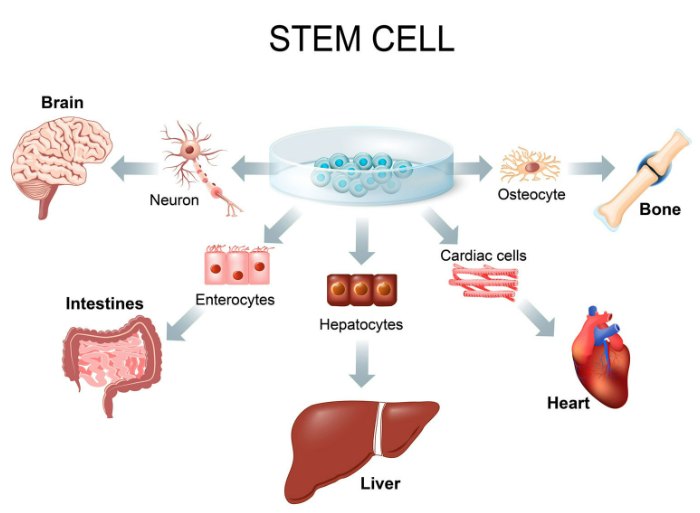
👶 Embryonic Stem Cells
- Found in early embryos.
- Can develop into almost any type of body cell.
- Known as pluripotent stem cells.
Examples of cells they can form:
- Nerve cells
- Muscle cells
- Blood cells
- Skin cells
🦴 Adult Stem Cells
- Found in some adult tissues.
- Most commonly found in bone marrow.
- Can only develop into a limited range of cell types.
- Known as multipotent stem cells.
Example:
- Bone marrow stem cells can produce different blood cells.
✅ Advantages of Using Stem Cells in Medicine
🔄 Replacing Damaged Cells and Tissues
Stem cells can be used to replace cells that have been damaged by disease or injury. This may restore normal function to tissues and organs.
Examples:
- Bone marrow transplants treat leukaemia.
- Skin stem cells can be used to repair severe burns.
- Corneal stem cells can help repair damaged eyes.
Why is this important?
Many body cells cannot naturally repair themselves. Stem cells provide a way to replace lost or damaged cells.
🩺 Potential Treatment for Serious Diseases
Scientists believe stem cells could help treat diseases that currently have no cure. New healthy cells could replace damaged or non-functioning cells.
Possible treatments:
Diabetes
- Damaged insulin-producing cells in the pancreas could be replaced.
- This may help control blood glucose levels.
Parkinson’s Disease
- Nerve cells in the brain gradually die.
- Stem cells could replace these damaged nerve cells.
Spinal Cord Injuries
- Damaged nerve tissue may be repaired.
- This could improve movement and sensation.
Heart Disease
- Damaged heart muscle cells could potentially be replaced after a heart attack.
🧪 Drug Testing and Medical Research
Stem cells can be grown in laboratories. Scientists use them to test new medicines.
Benefits
- Allows researchers to study how drugs affect human cells.
- Reduces risks before medicines are tested on patients.
- Helps scientists understand diseases better.
🫀 Reduced Need for Organ Transplants
Stem cells may one day be used to grow replacement tissues and organs. This could reduce the shortage of donor organs.
Benefits
- More patients could receive treatment.
- Waiting times for transplants could decrease.
- Fewer people would die waiting for donor organs.
🛡️ Reduced Risk of Rejection
A patient’s own stem cells can sometimes be used. The cells are genetically identical to the patient.
Advantage
- The immune system is less likely to attack the transplanted cells.
- Fewer anti-rejection drugs may be needed.
❌ Disadvantages and Risks of Stem Cells
⚖️ Ethical Issues
Embryonic stem cells are obtained from embryos. The embryo is destroyed during the process.
Why is this controversial?
- Some people believe embryos have the right to life.
- They believe destroying embryos is morally wrong.
- Others believe the medical benefits justify their use.
- This is one of the biggest debates surrounding stem cell research.
⚠️ Risk of Tumour Formation
Stem cells divide rapidly. If cell division is not controlled properly, tumours may develop.
Problem
- Tumours can become cancerous.
- This makes stem cell treatments potentially risky.
Scientists must carefully monitor stem cell growth.
🛡️ Immune Rejection
Stem cells taken from another person may be recognised as foreign. The immune system may attack the transplanted cells.
Result
- Treatment may fail.
- Patients may need drugs to suppress their immune system.
💰 High Cost
Stem cell treatments are expensive. Special equipment and highly trained scientists are required.
Problems
- Treatments may not be available to everyone.
- Research and development costs are very high.
🔬 Limited Knowledge and Long-Term Risks
Stem cell therapy is still developing. Scientists do not yet understand all of the long-term effects.
Concerns
- Unexpected side effects may occur.
- Some treatments are still experimental.
- More research is needed before widespread use.
📊 Summary Table – Advantages
| Advantage | How it Helps | Example |
|---|---|---|
| Cell replacement | Repairs damaged tissues | Bone marrow transplant |
| Disease treatment | Replaces damaged cells | Diabetes, Parkinson’s disease |
| Drug testing | Tests medicines safely | Laboratory research |
| Reduced organ shortage | May grow replacement tissues | Future organ production |
| Reduced rejection | Patient’s own cells can be used | Personalised therapy |
📊 Summary Table – Disadvantages
| Disadvantage | Explanation |
|---|---|
| Ethical concerns | Embryos are destroyed |
| Tumour risk | Uncontrolled division may cause cancer |
| Immune rejection | Donor cells may be attacked |
| High cost | Treatment is expensive |
| Unknown long-term effects | More research is needed |
⚡ Quick Recap
- Stem cells are undifferentiated cells.
- They can divide and become specialised cells.
- Embryonic stem cells are pluripotent.
- Adult stem cells are multipotent.