
Nervous vs Hormonal Communication
📝 Introduction
- Living organisms must respond to changes in their surroundings called stimuli.
- These responses help the body survive and maintain a stable internal environment.
- The body uses two main communication systems:
- Nervous system → fast electrical responses
- Hormonal (endocrine) system → slower chemical responses
- Both systems work together to control body activities in a coordinated way.
⚡ Nervous System – Fast Communication
What is the Nervous System?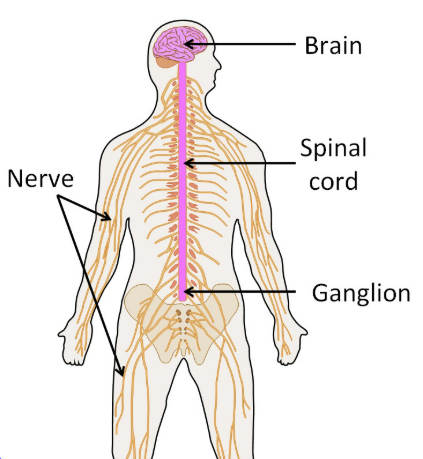
- A system that controls body responses using electrical impulses.
- Messages travel through special cells called neurons (nerve cells).
- Controlled mainly by the brain and spinal cord (CNS).
How Nervous Communication Works
- A stimulus is detected (e.g. heat, light, pain).
- Receptors in sense organs detect the change.
- Electrical impulses are sent through sensory neurons to the CNS.
- CNS processes the information.
- Motor neurons carry impulses to effectors (muscles or glands).
- Effectors produce a quick response.
Key Features of Nervous Communication
- Very fast response.
- Short duration of action.
- Highly specific (only one muscle or gland is affected).
- Uses electrical signals.
- Works through a fixed pathway of neurons.
Examples
- Pulling hand away from a hot object.
- Blinking when something approaches the eye.
- Knee-jerk reflex action.
💉 Hormonal System – Chemical Communication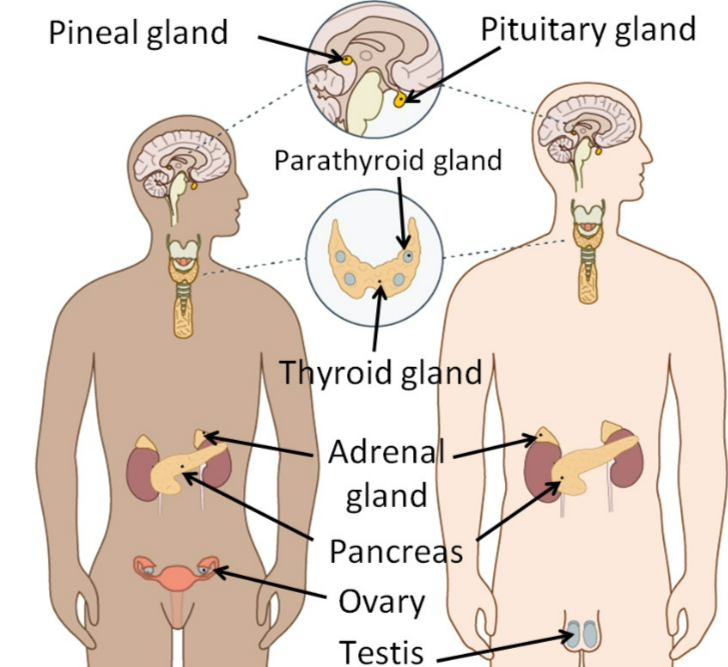
What is the Hormonal System?
- A system that uses hormones to control body activities.
- Hormones are chemical messengers released by endocrine glands.
- Hormones are carried in the bloodstream to target organs.
How Hormonal Communication Works
- An endocrine gland detects a change in the body.
- The gland releases a hormone into the blood.
- The hormone travels throughout the body.
- Only target cells with specific receptors respond.
- The target organ produces a response.
Key Features of Hormonal Communication
- Slower response compared to nervous system.
- Long-lasting effects.
- Can affect many organs at the same time.
- Uses chemical signals (hormones).
- Carried by blood, not nerves.
Examples
- Insulin lowers blood glucose levels after eating.
- Adrenaline prepares the body for “fight or flight”:
- Increases heart rate
- Increases breathing rate
- Increases blood glucose release
⚖️ Differences Between Nervous and Hormonal Systems
| Feature | Nervous System | Hormonal System |
|---|---|---|
| Type of signal | Electrical impulses | Chemical hormones |
| Speed of response | Very fast | Slower |
| Duration | Short-term effect | Long-lasting effect |
| Transport system | Nerves (neurons) | Bloodstream |
| Area affected | Specific target | Widespread effect |
| Control center | Brain and spinal cord | Endocrine glands |
| Example | Reflex action | Insulin, adrenaline |
🔗 How Both Systems Work Together
- The nervous system handles quick reactions.
- The hormonal system controls long-term processes.
- Both systems ensure the body responds properly to changes.
- Together they help maintain homeostasis (stable internal conditions like temperature and glucose level).
🌟 Why Two Systems Are Needed
- Some responses must be instant → nervous system is used.
- Some processes need long-term regulation → hormonal system is used.
- Using both systems gives better control and balance in the body.
📊 Quick Comparison
- Nervous system = fast message through wires (nerves).
- Hormonal system = slow message through blood (chemicals).
- Nervous = quick action.
- Hormonal = long control.
📌 Quick Recap
Nervous = fast, electrical, short-term, specific.
Hormonal = slow, chemical, long-term, widespread.
Both = vital for coordination + survival.