
Genes and Alleles – Inherited Characteristics
📝 Introduction
- Every living organism inherits characteristics from its parents through genes.
- A gene does not always exist in only one form. It can exist in different versions.
- These different versions of the same gene are called alleles.
- Different alleles can produce different forms of the same characteristic.
- The combination of alleles inherited from the parents determines many of an individual’s inherited characteristics.
🧬 What is a Gene?
- A gene is a section of DNA found on a chromosome.
- Each gene contains the instructions for making one specific protein.
- The protein produced by the gene helps determine a particular characteristic of an organism.
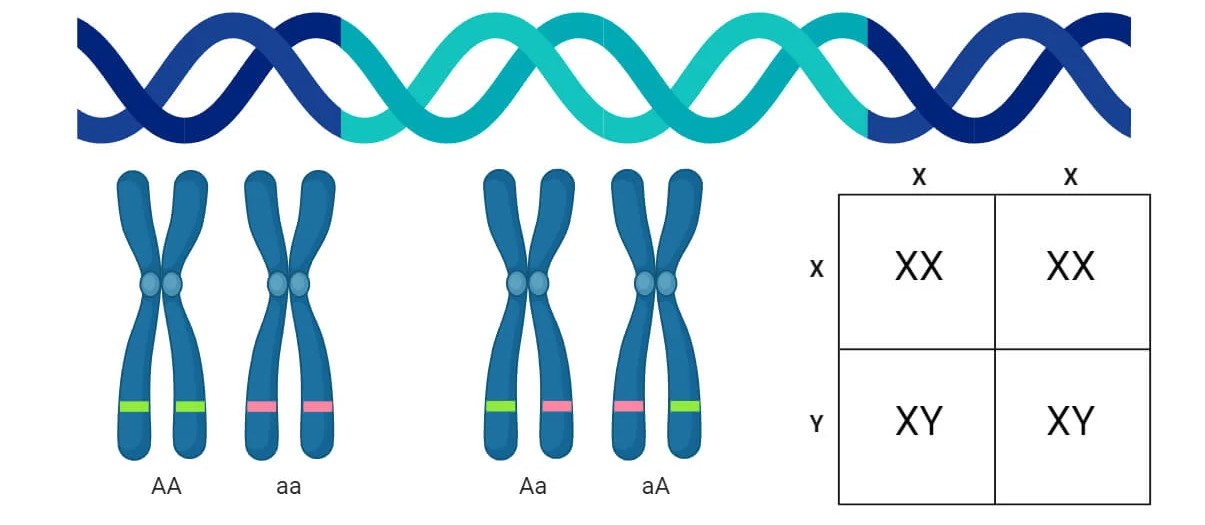
Key Points
- Genes are made of DNA.
- Genes are located on chromosomes.
- Each gene has a specific position (locus) on a chromosome.
- A gene usually controls one particular characteristic by coding for a specific protein.
Example
A gene may control:
- Eye colour
- Flower colour
- Blood group
- Seed shape
- Hair colour
What is an Allele?
- An allele is an alternative form of the same gene.

- Although alleles control the same characteristic, they may produce different versions of that characteristic.
Simple Definition: Alleles are different forms of the same gene that produce different inherited characteristics.
Why Does a Gene Have Different Alleles?
- A gene can exist in different forms because there are small differences in its DNA base sequence.
- These small differences may change the protein that is produced.
- As a result, different versions of a characteristic are seen.
Example
- A gene controls flower colour.
- Different alleles of this gene may produce:
- Purple flowers
- White flowers
- The characteristic remains flower colour, but the appearance is different.
How Are Alleles Inherited?
- Every body cell contains two copies of each chromosome.
- Therefore, every individual usually has two alleles for each gene.
- One allele is inherited from the mother.
- One allele is inherited from the father.
- These two alleles work together to determine the characteristic shown by the individual.
Example
- Eye colour gene
- One allele comes from the mother.
- One allele comes from the father.
- The combination of these alleles determines the person’s eye colour.
Alleles Control the Same Characteristic
- It is important to remember that:
- Alleles do not control different characteristics.
- They control the same characteristic but produce different forms of it.
Examples
| Characteristic | Different Alleles Can Produce |
|---|---|
| Eye colour | Brown eyes or blue eyes |
| Flower colour | Purple flowers or white flowers |
| Seed shape | Round seeds or wrinkled seeds |
| Blood group | Different blood groups |
How Alleles Produce Different Characteristics
- Genes work by producing proteins.
- Different alleles may produce:
- Different forms of the same protein.
- Different amounts of a protein.
- A protein that works differently.
- Because proteins control body characteristics, different alleles can produce different inherited traits.
Simple Flow: Gene → Allele → Protein → Characteristic
Alleles Cause Variation
- Variation means differences between individuals of the same species.
- Different combinations of alleles cause people, animals and plants to have different inherited characteristics.
Examples of Variation
- Height
- Eye colour
- Hair colour
- Blood group
- Flower colour
Even brothers and sisters usually have different combinations of alleles, so they do not look exactly the same.
Importance of Alleles
- Alleles are important because they:
- Produce variation within a species.
- Explain why offspring are not identical to their parents.
- Increase genetic diversity.
- Help populations survive environmental changes.
- Provide the raw material for evolution through natural selection.
🔗 Relationship Between DNA, Genes and Alleles
- The genetic information is organised in levels.
- DNA makes up chromosomes.
- Chromosomes contain many genes.
- Each gene may exist in different forms called alleles.
- Alleles influence the proteins that are produced.
- Proteins determine inherited characteristics.
Simple Flow: DNA → Chromosome → Gene → Allele → Protein → Characteristic
📊 Gene vs Allele
| Feature | Gene | Allele |
|---|---|---|
| Definition | Section of DNA that codes for a protein | Different form of the same gene |
| Function | Controls a characteristic | Produces different forms of that characteristic |
| DNA | Part of DNA | Different version of the same DNA sequence |
| Number in an individual | Usually two copies (one from each parent) | Two alleles for each gene (one inherited from each parent) |
| Example | Gene for eye colour | Brown allele or blue allele |
📊 Examples of Characteristics and Alleles
| Gene | Possible Alleles | Characteristic Produced |
|---|---|---|
| Eye colour | Brown, Blue | Brown eyes or blue eyes |
| Flower colour | Purple, White | Purple or white flowers |
| Seed shape | Round, Wrinkled | Round or wrinkled seeds |
| Blood group | Different blood group alleles | Different blood groups |
🌟 Key Points to Remember
- A gene is a section of DNA that codes for a protein.
- A gene may exist in different forms called alleles.
- Alleles control the same characteristic but may produce different versions of that characteristic.
- Every individual usually inherits one allele from the mother and one allele from the father.
- Different combinations of alleles produce different inherited characteristics.
- Alleles are responsible for much of the variation seen within a species.
📌 Quick Recap
– Genes can exist in different forms = alleles.
– Allele combinations determine the phenotype.
– Dominant allele shows up if at least one copy is present.
– Recessive allele shows only if both copies are recessive.
– Homozygous = same alleles, Heterozygous = different alleles.
Mnemonic: “Alleles = Alternative, Dominant hides Recessive”