
Polygenic Inheritance
📝 Introduction
- Some inherited characteristics are controlled by only one gene, but many characteristics are controlled by several genes working together.
- When a characteristic is controlled by more than one gene, it is called polygenic inheritance.
- Most phenotypic features in humans, animals and plants are the result of polygenic inheritance.
- Polygenic inheritance produces a wide range of variations, so individuals show many different forms of the same characteristic.
🧬 What is Polygenic Inheritance?
Definition
- Polygenic inheritance is the inheritance of a characteristic that is controlled by two or more genes.
- Each gene contributes a small effect to the final characteristic.
- The combined effect of all these genes determines the phenotype.
Simple Definition
- Polygenic inheritance is when several genes work together to control a single characteristic.
Why is it Called “Polygenic”?
The word polygenic can be divided into two parts:
- Poly = Many
- Genic = Genes
So, polygenic means “controlled by many genes.”
How Polygenic Inheritance Works
- Unlike a characteristic controlled by a single gene, polygenic characteristics are influenced by many genes at the same time.
- Each gene adds a small contribution.
- The final phenotype depends on the combined effect of all these genes.
Simple Flow
Many Genes → Combined Effects → One Characteristic
Features of Polygenic Inheritance
- Controlled by two or more genes.
- Each gene has a small effect on the characteristic.
- No single gene completely determines the phenotype.
- Produces continuous variation rather than only a few distinct categories.
- Individuals show many different forms of the same characteristic.
What is a Phenotypic Feature?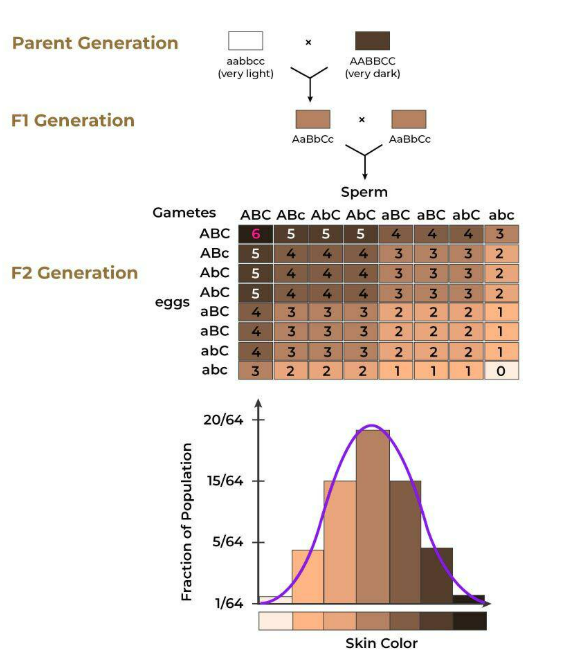
Definition
- A phenotypic feature is any observable characteristic of an organism.
- It is what we can see or measure.
Examples include:
- Height
- Skin colour
- Eye colour
- Body mass
- Hair colour
Phenotypic features are produced by the interaction of genes and, in some cases, the environment.
Most Phenotypic Features are Polygenic
- Many characteristics do not have only two forms.
- Instead, they show a wide range of differences between individuals.
- This happens because they are controlled by several genes.
Examples
- Some people are very tall.
- Some are of average height.
- Some are shorter.
There are many heights in between, not just “tall” or “short.”
This continuous range is a result of polygenic inheritance.
🌸 Examples of Polygenic Characteristics
1. Human Height
- Height is controlled by many genes.
- Each gene contributes a small amount to the person’s final height.
As a result:
- Very short individuals
- Short individuals
- Medium height individuals
- Tall individuals
- Very tall individuals
All are possible.
Nutrition and health during growth can also affect final height.
2. Skin Colour
- Skin colour is influenced by several genes.
- Each gene affects the amount of melanin produced.
- Different combinations of these genes produce many different skin tones.
- Instead of only light or dark skin, there is a continuous range of skin colours.
3. Body Mass
- Body mass is influenced by many genes.
- Genes affect:
- Growth
- Fat storage
- Muscle development
Lifestyle factors such as diet and exercise also influence body mass.
4. Eye Colour
- Eye colour is mainly controlled by several genes.
- Different gene combinations produce many eye colours such as:
- Brown
- Hazel
- Green
- Blue
- Grey
📈 Continuous Variation
What is Continuous Variation?
- Continuous variation means there are many possible values for a characteristic rather than only a few categories.
Examples:
- Height can range from very short to very tall.
- Skin colour shows many shades.
- Body mass varies continuously.
There are no clear boundaries between the different forms.
Polygenic Inheritance vs Single Gene Inheritance
Single Gene Inheritance
- Controlled by one gene.
- Usually produces a small number of distinct phenotypes.
- Characteristics fall into clear categories.
Examples
- Blood group
- Ability to roll the tongue (commonly used as a simple genetic example)
- Some inherited disorders
Polygenic Inheritance
- Controlled by many genes.
- Produces a wide range of phenotypes.
- Characteristics vary continuously.
Examples
- Height
- Skin colour
- Body mass
- Eye colour
🌍 Effect of the Environment
- Many polygenic characteristics are also affected by environmental factors.
- This means the final phenotype depends on both genes and the environment.
Examples
Height
- Genes determine the potential height.
- However, poor nutrition or illness during childhood may reduce growth.
Body Mass
- Genes influence body mass.
- Diet and physical activity also affect body mass.
Skin Colour
- Genes determine natural skin colour.
- Sunlight can increase melanin production, making the skin darker.
📊 Single Gene vs Polygenic Inheritance
| Feature | Single Gene Inheritance | Polygenic Inheritance |
|---|---|---|
| Number of genes involved | One gene | Two or more genes |
| Number of phenotypes | Few distinct types | Many different forms |
| Variation | Discontinuous | Continuous |
| Examples | Blood group, some genetic disorders | Height, skin colour, body mass, eye colour |
📊 Examples of Polygenic Characteristics
| Characteristic | Number of Genes | Environmental Influence |
|---|---|---|
| Height | Many | Yes |
| Skin colour | Many | Yes |
| Body mass | Many | Yes |
| Eye colour | Many | Slight influence |
🌟 Why is Polygenic Inheritance Important?
- Polygenic inheritance:
- Produces variation within a population.
- Explains why individuals look different from one another.
- Creates a wide range of phenotypes.
- Helps populations adapt to changing environments.
- Contributes to biodiversity.
📌 Quick Recap
– Polygenic inheritance = many genes control one trait.
– Produces continuous variation (smooth range, not categories).
– Examples: height, skin color, weight, eye color.
– Contrast: Monogenic inheritance → single gene, discrete categories (like blood groups).
✨ Trick: Poly = Many → Polygenic = Many genes for one trait.